de Beaumont Rares
debeaumontrares@gmail.com
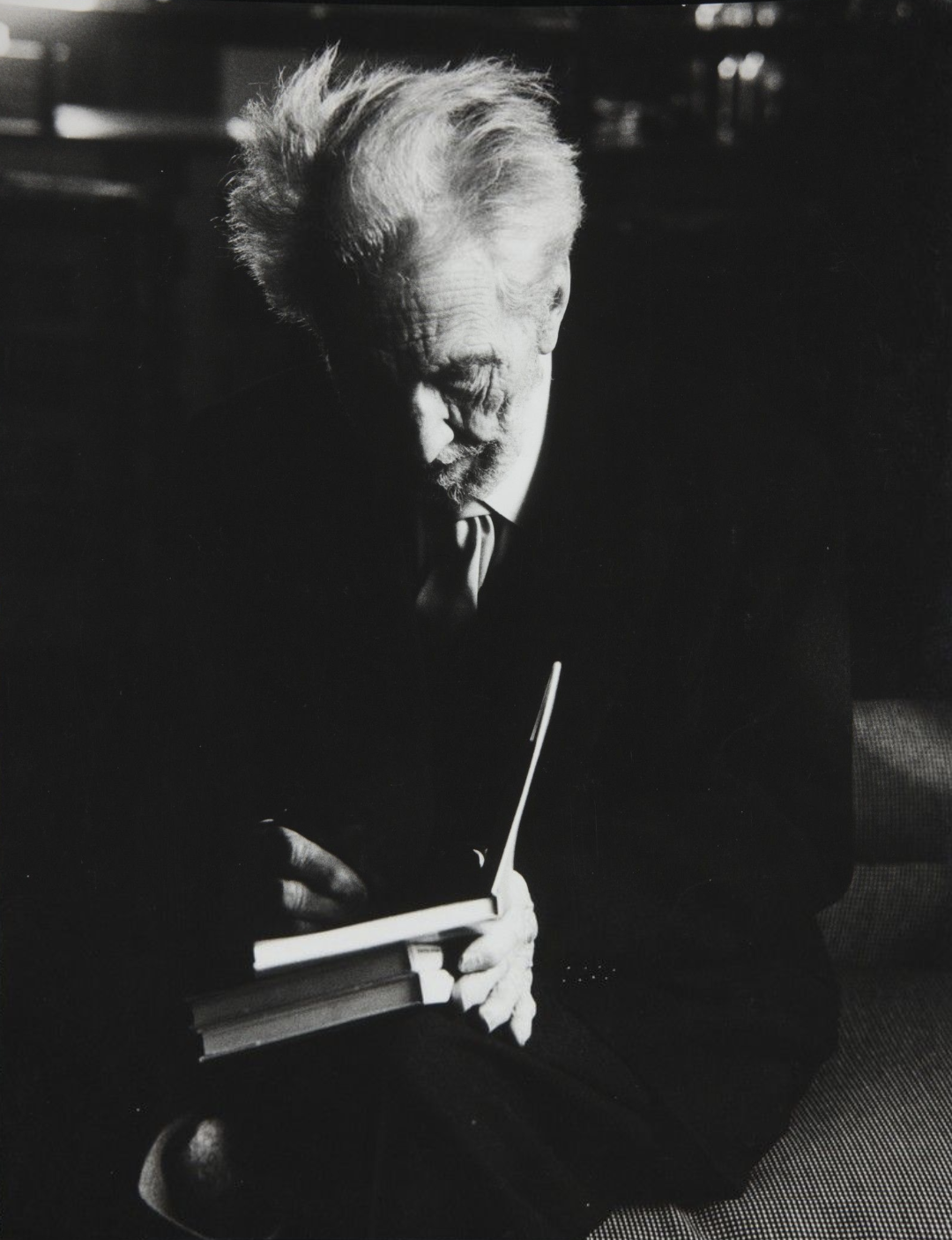
Ezra Pound, IX
Selection of Poundiana.
30 August 26
tap to cycle
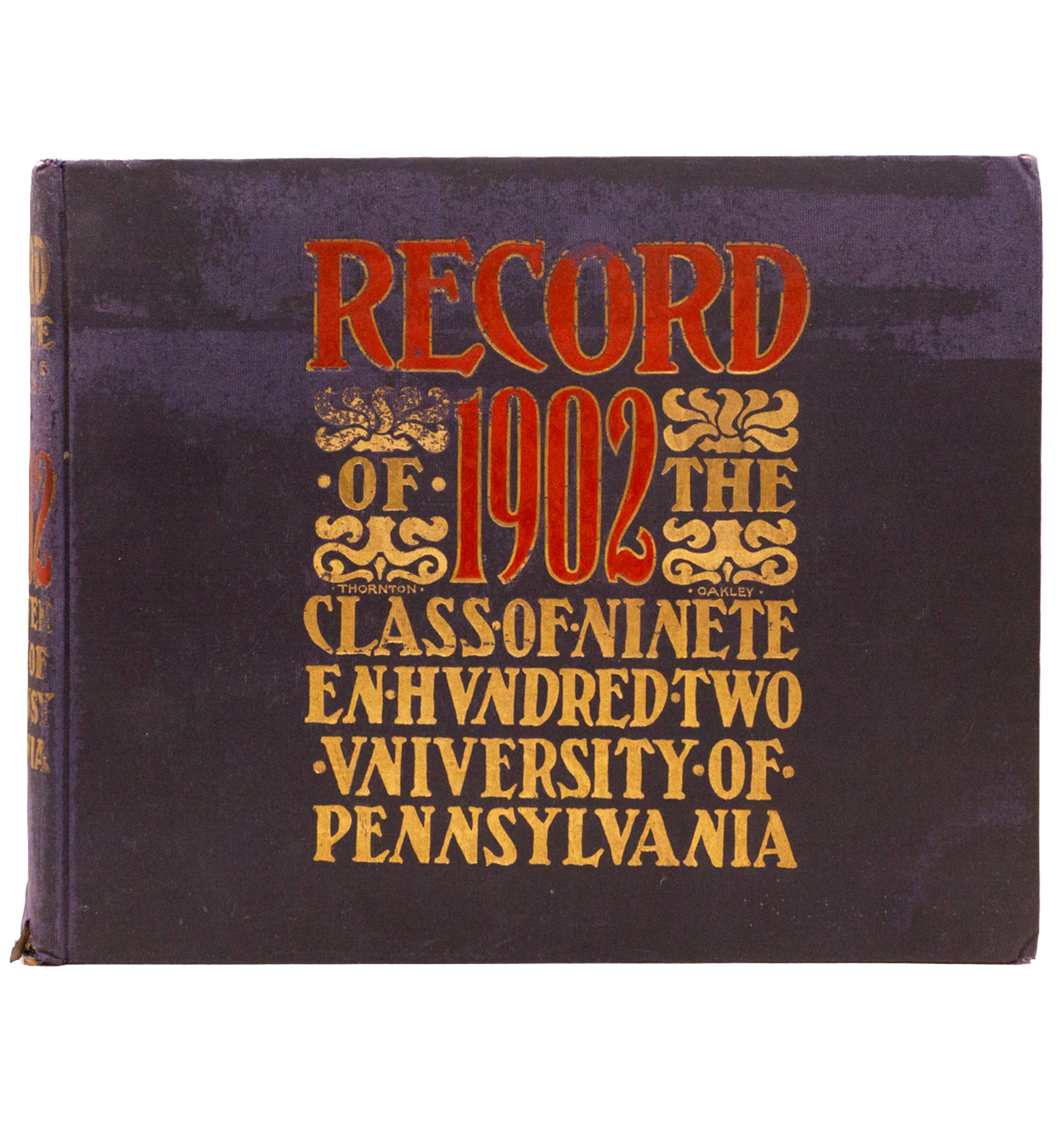
The University of Pennsylvania’s Record of the Class of Nineteen-two
[Ezra Pound]
Published University of Pennsylvania, 1902
213pp. ; 20 x 25.1 cm. Blue cloth boards stamped in red and gold to front and spine.
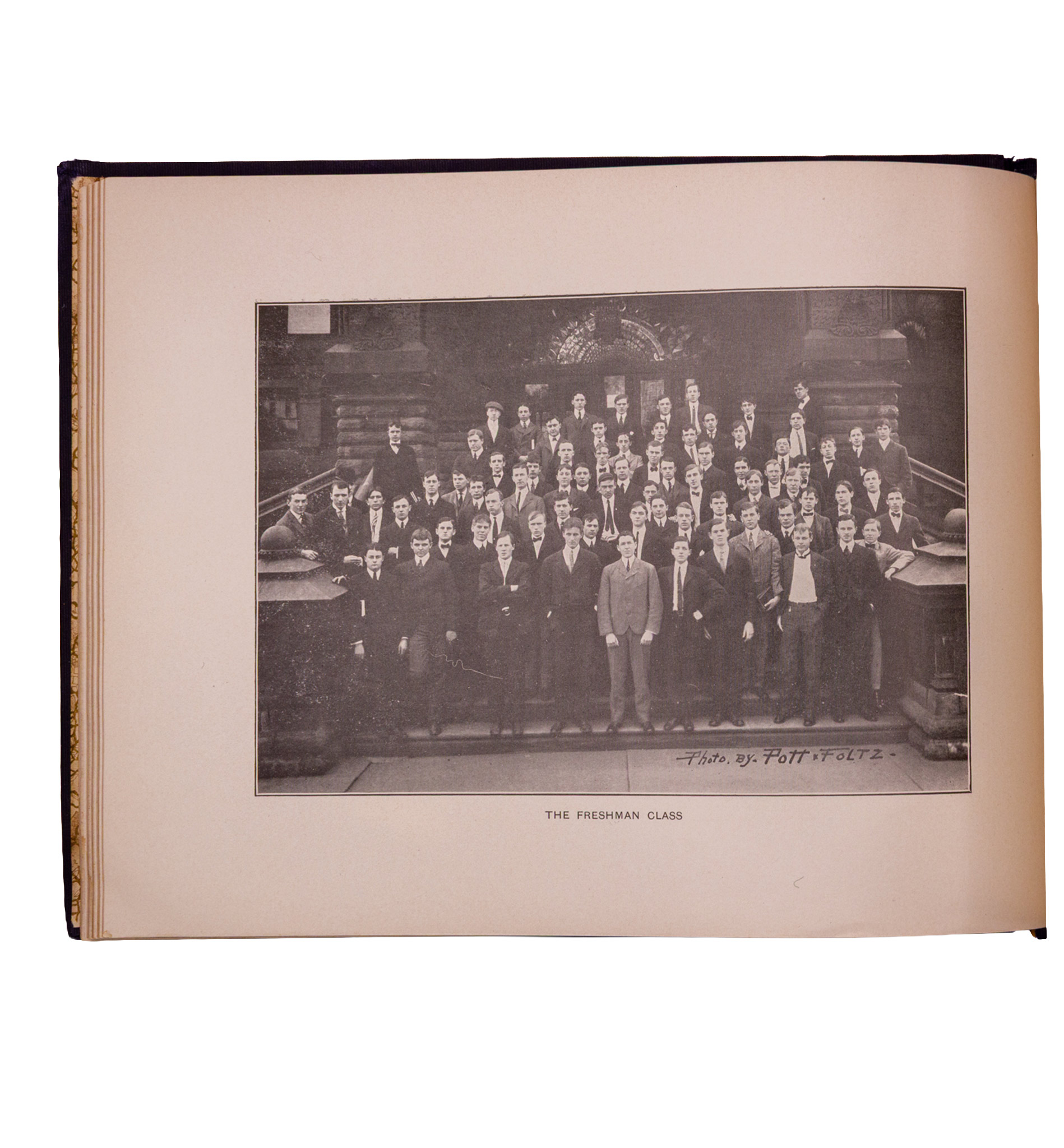
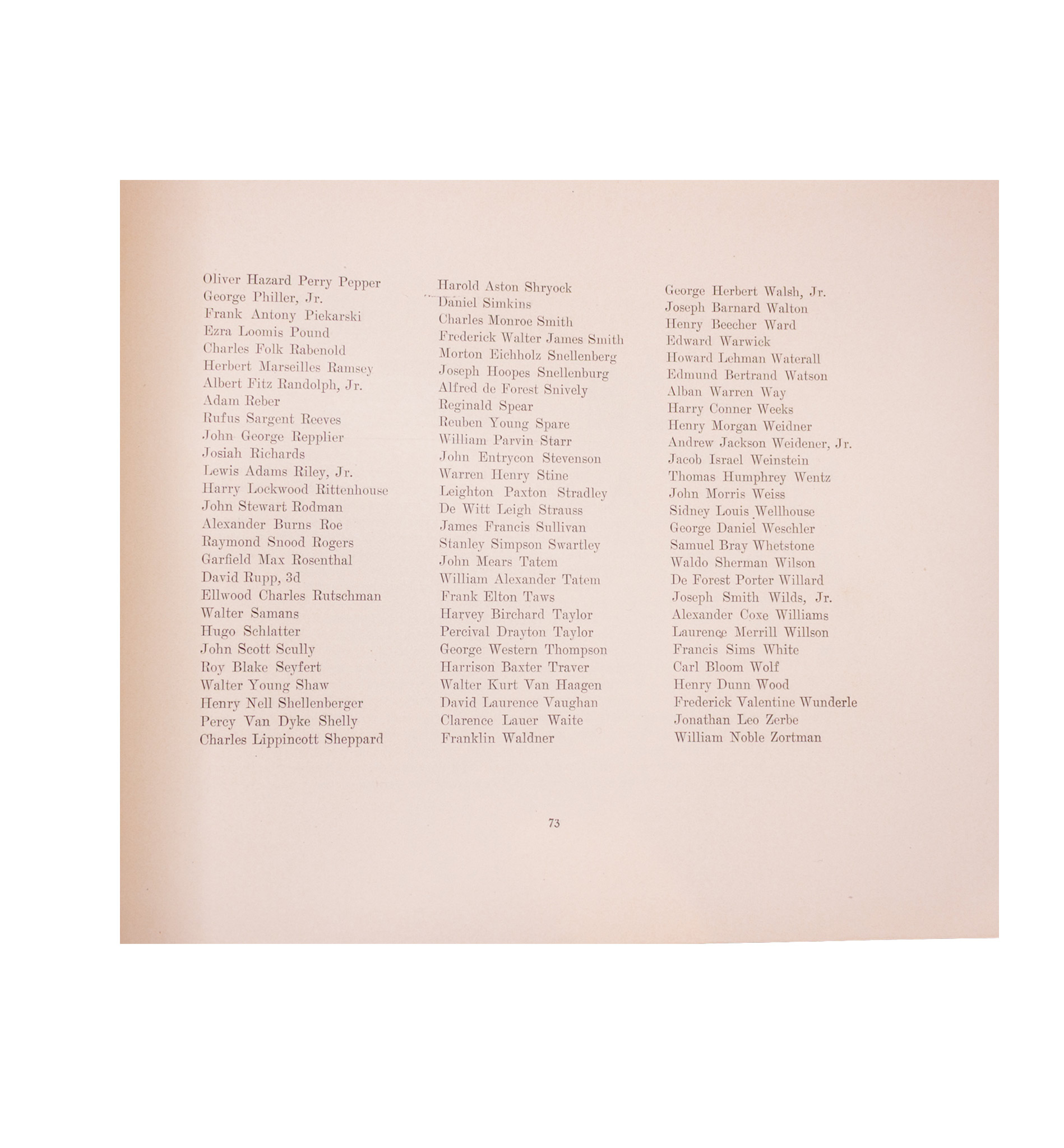
Yearbook for the University of Pennsylvania’s Class of 1902, in which “Ezra Loomis Pound” appears photographed as a Freshman, standing out in the back left, wearing a beret.
Pound joined UPenn’s College of Liberal Arts in 1901 at the age of fifteen, an advance of two years on most of his peers, and would have been sixteen here, at the end of a year of struggling against the University’s curriculum. In the following year Pound would change from a regular degree to a special non-degree course, “to avoid irrelevant subjects,” but only in transferring to Hamilton College, where he studied from 1903-1905 before returning to UPenn to complete a Masters, would Pound’s curiosity be encouraged.
A particularly heavy item which has burdened its binding, both covers with quite a lot of give and the endpapers split along the gutter exposing the linen. Externally, rubbing to the cloth on both covers and spine; corners bumped and split, short break at the bottom of the spine. Leaves and tissue guards generally fine.
tap to cycle
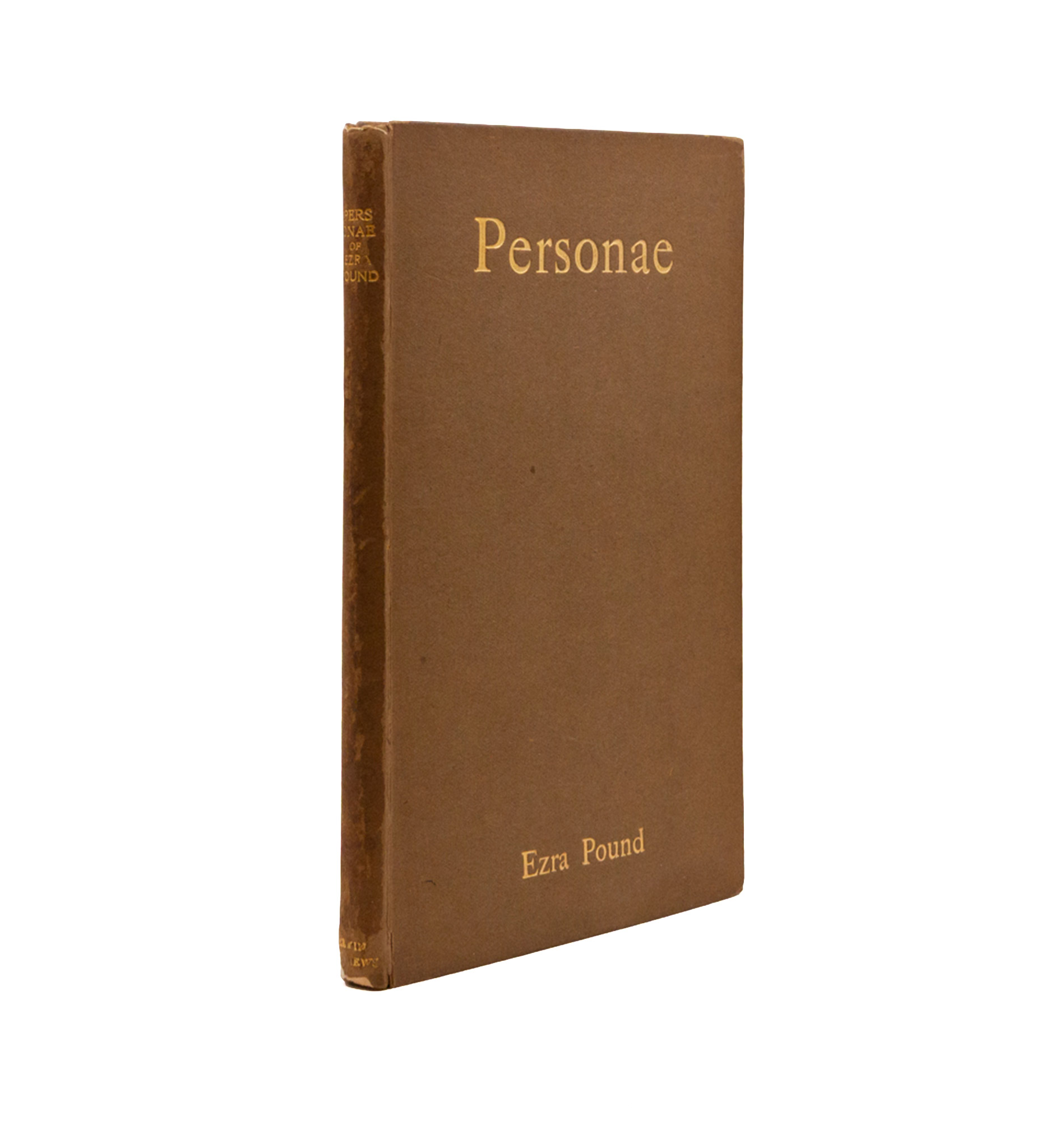
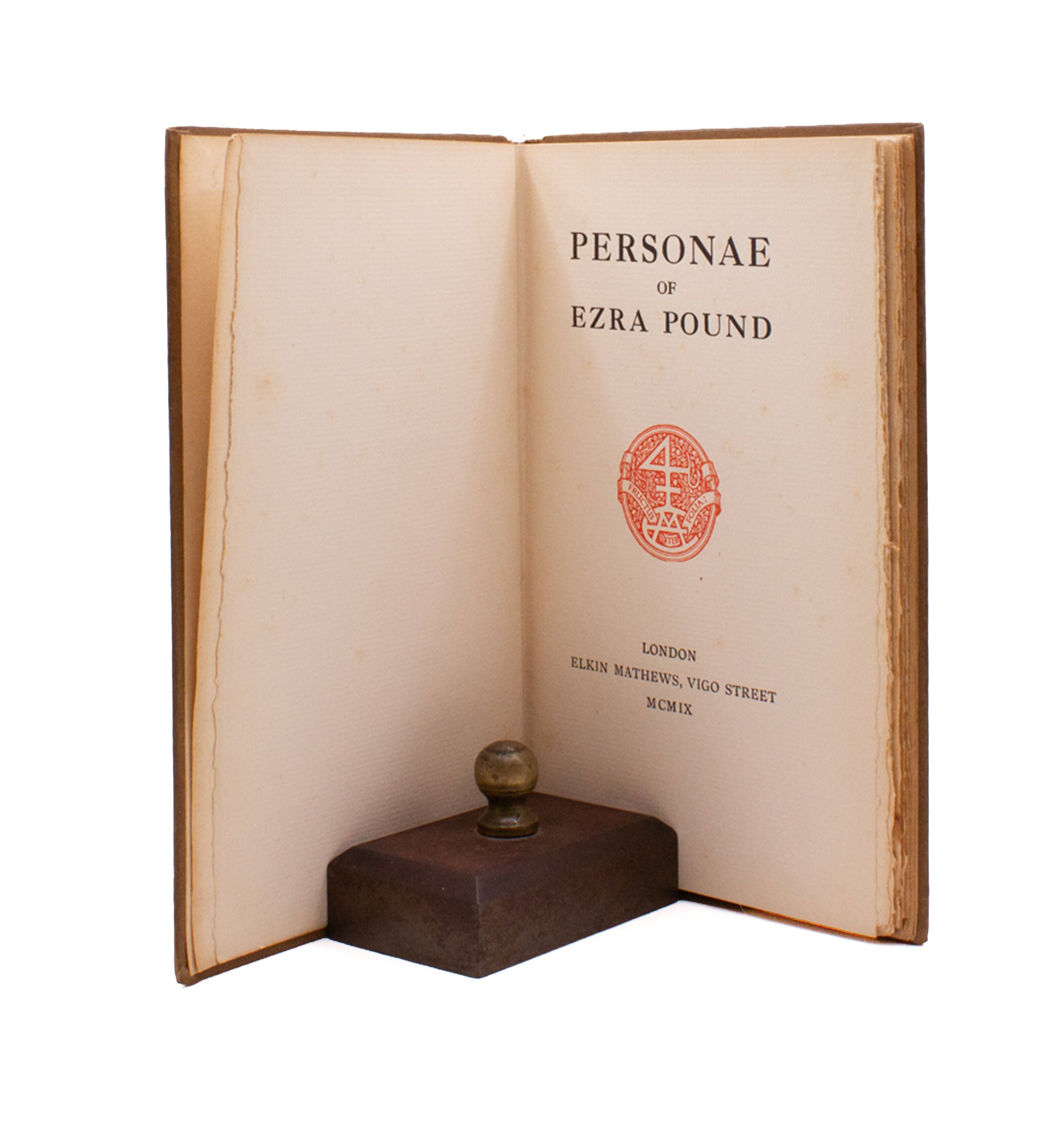
Personae
Ezra Pound
Published London: Elkin Mathews, 1909
59pp.; 17.7 x 11.5 cm. Light brown paper covered boards stamped in gold on front cover and spine.
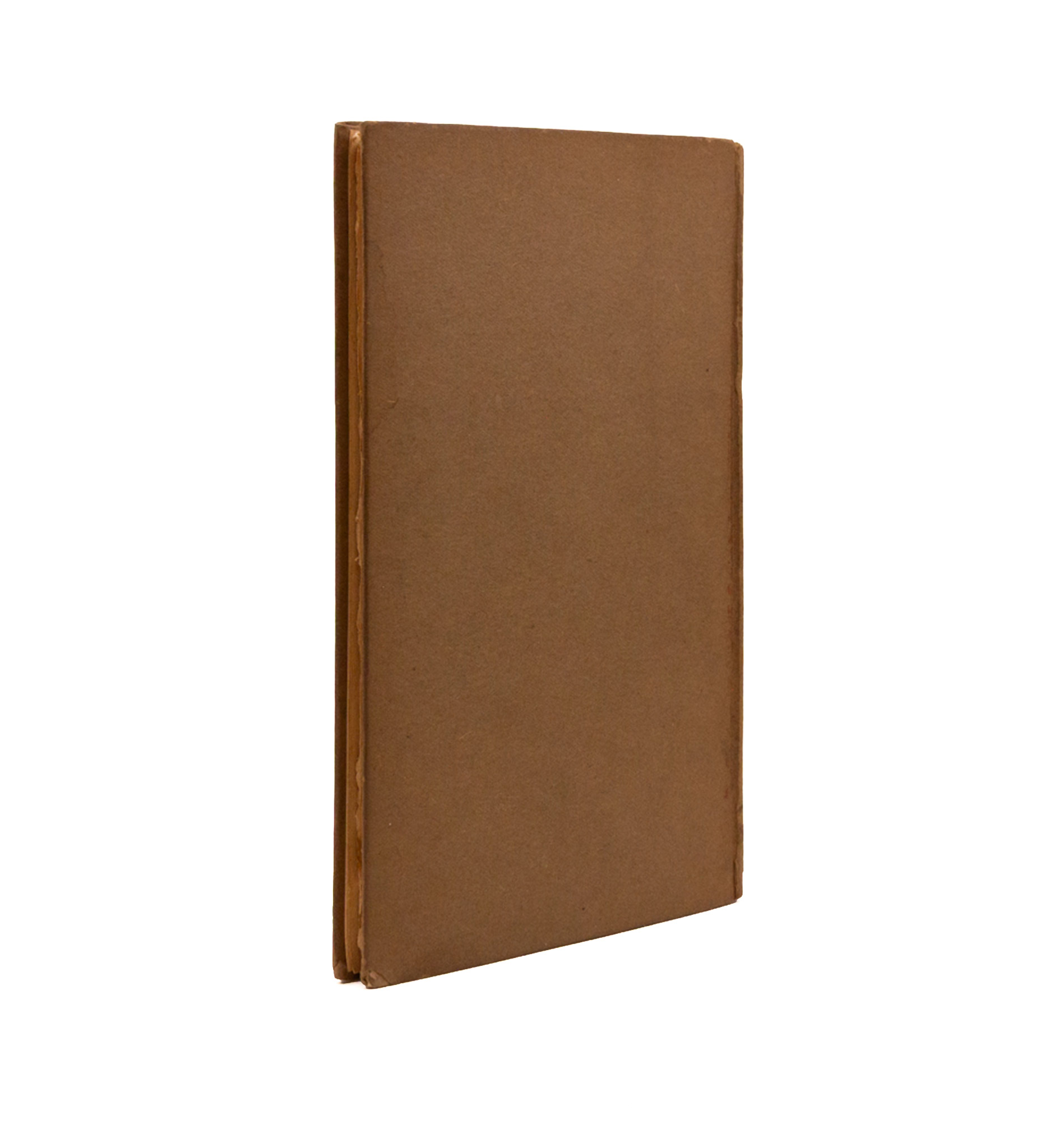
Pound’s first collection of poetry published after his arrival in London in August 1908. First edition, second state binding with the shorter lettering on the spine. A very good copy of a beautiful book; light rubbing to the spine with a little lost of the covering paper at top and bottom, a light stain to the rear board, light occasional foxing, a short tear to p. 18. Gallup A3a.
tap to cycle
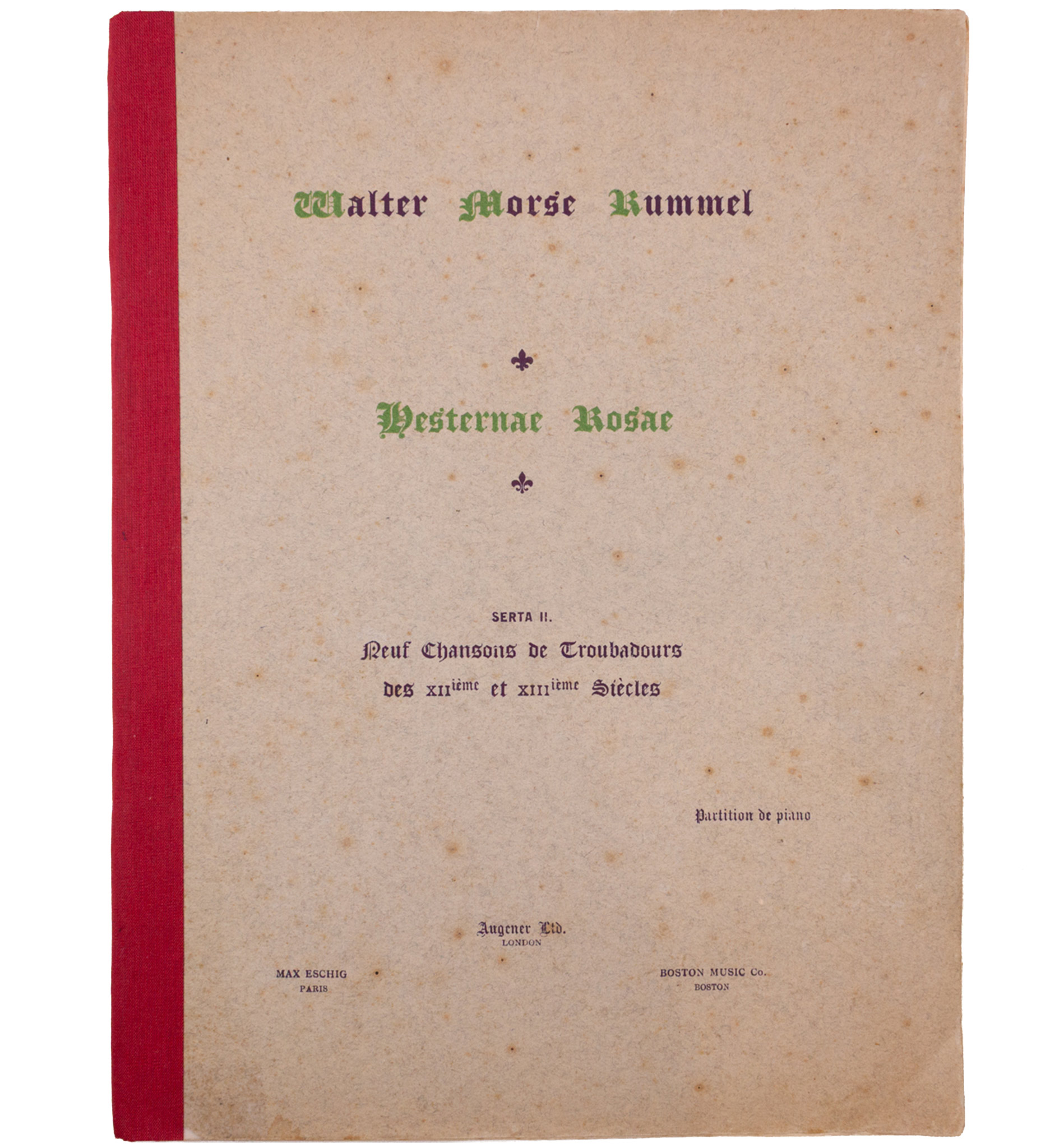
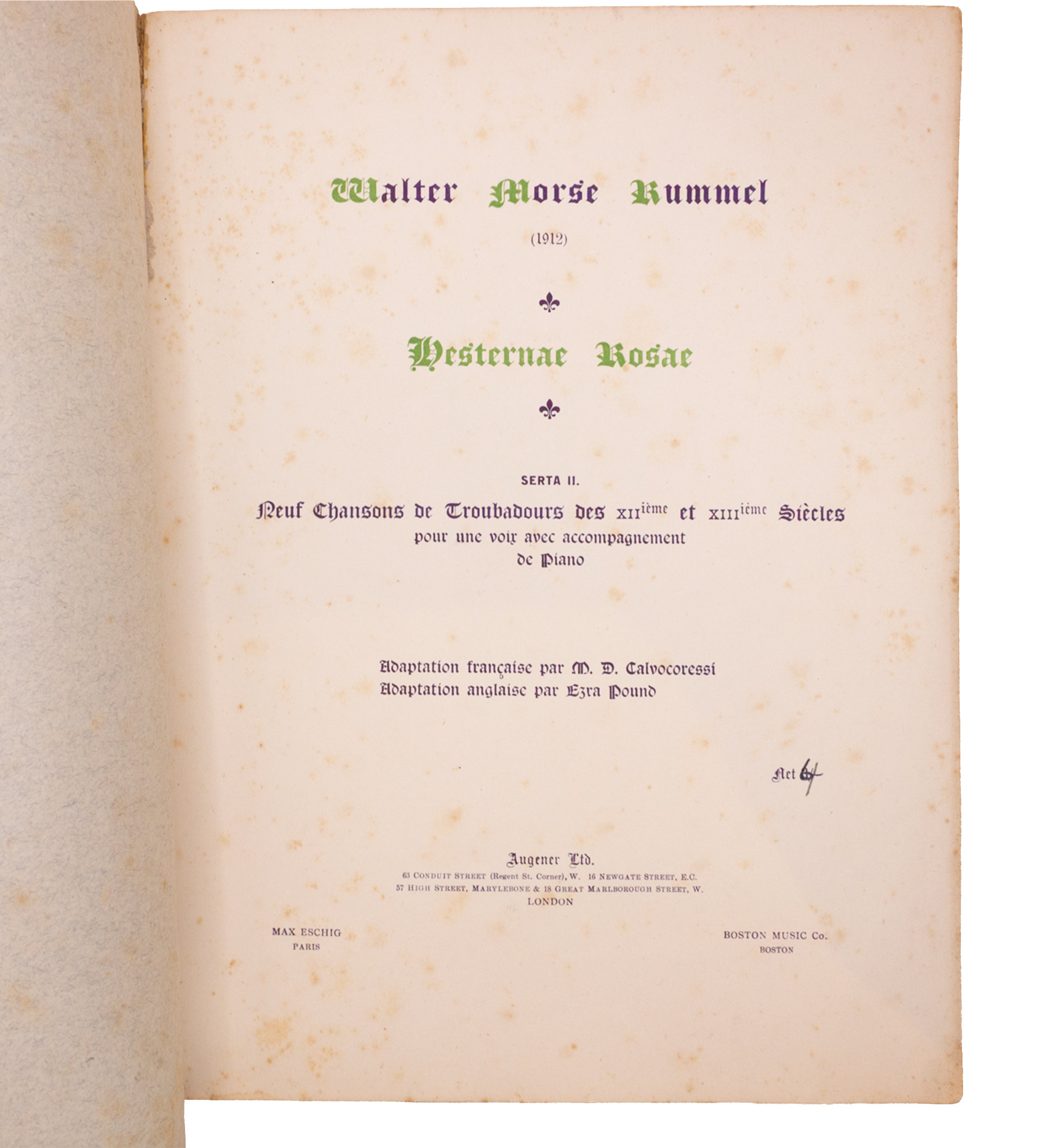
Hesternae Rosae, Serta II
Walter Morse Rummel, Ezra Pound
Published London: Augener Ltd., 1913
[vi], 42pp.; 31 x 23.6 cm. Heavy grey paper wraps printed in green and dark blue.
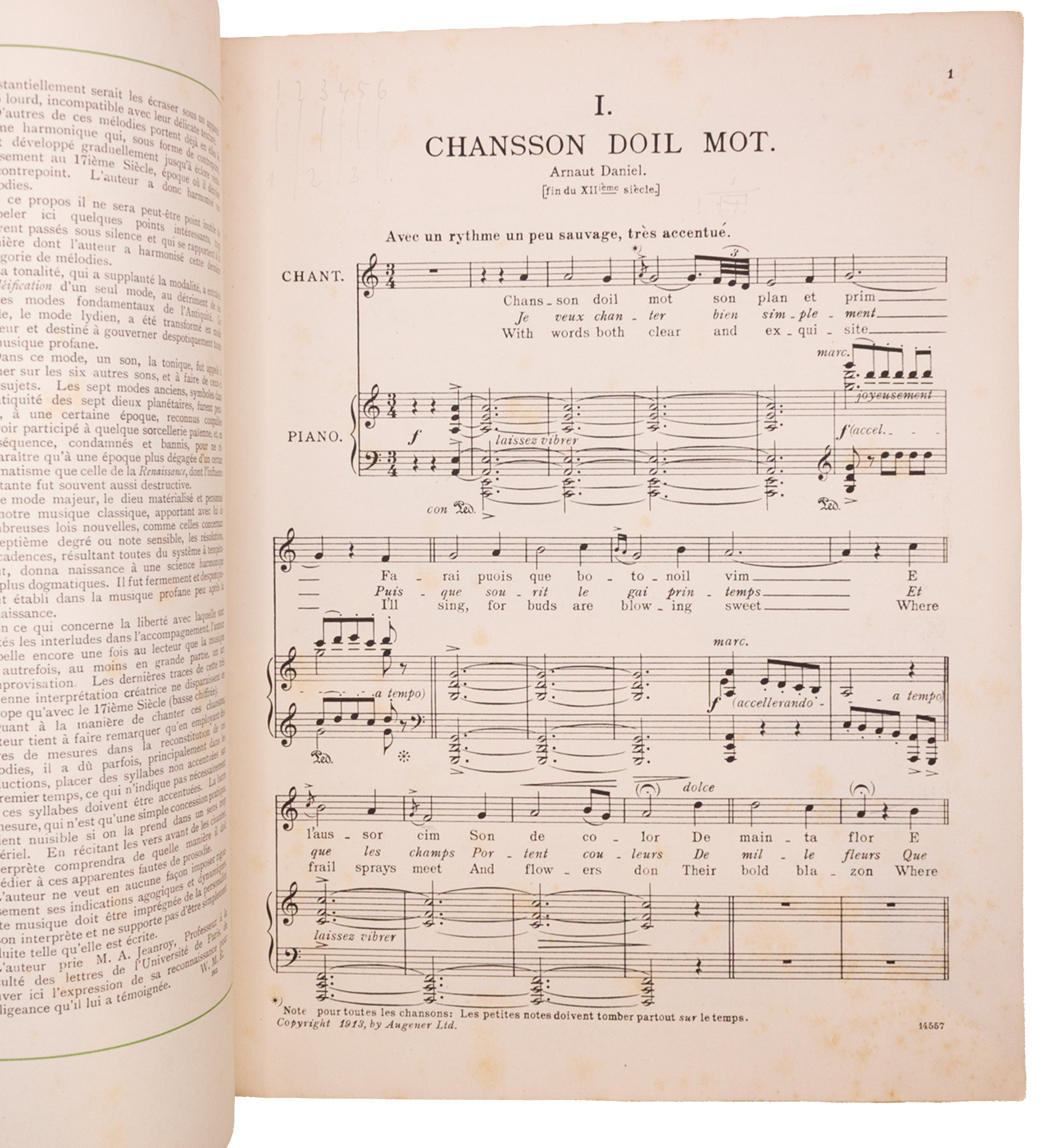
A collaboration between Pound and Rummel, Neuf Chansons de Troubadours des XIIième et XIIIième Siècles, arranged for piano by Rummel with English lyrics by Pound. The collection opens with two songs by Arnaut Daniel, doubtless Pound’s favourite troubadour (and Dante’s miglior fabbro), which as W. M. R. details in his preface,
…are here published for the first time to the writer’s knowledge, and he is indebted to Mr. Ezra Pound, M.A., for communicating them from the Milan Library.
This text, unfortunately rare, is an important part of Pound’s history with the troubadours who informed so much of his poetic and artistic education and feature in his work throughout his life.First performed publicly at EPIC, Edinburgh 2023. This copy with a pianist’s brief pencil annotations to p.1, and no further. Light foxing to covers and throughout. Wraps backed or strengthened with red linen tape; a working copy in nice condition. Gallup B5.
tap to cycle
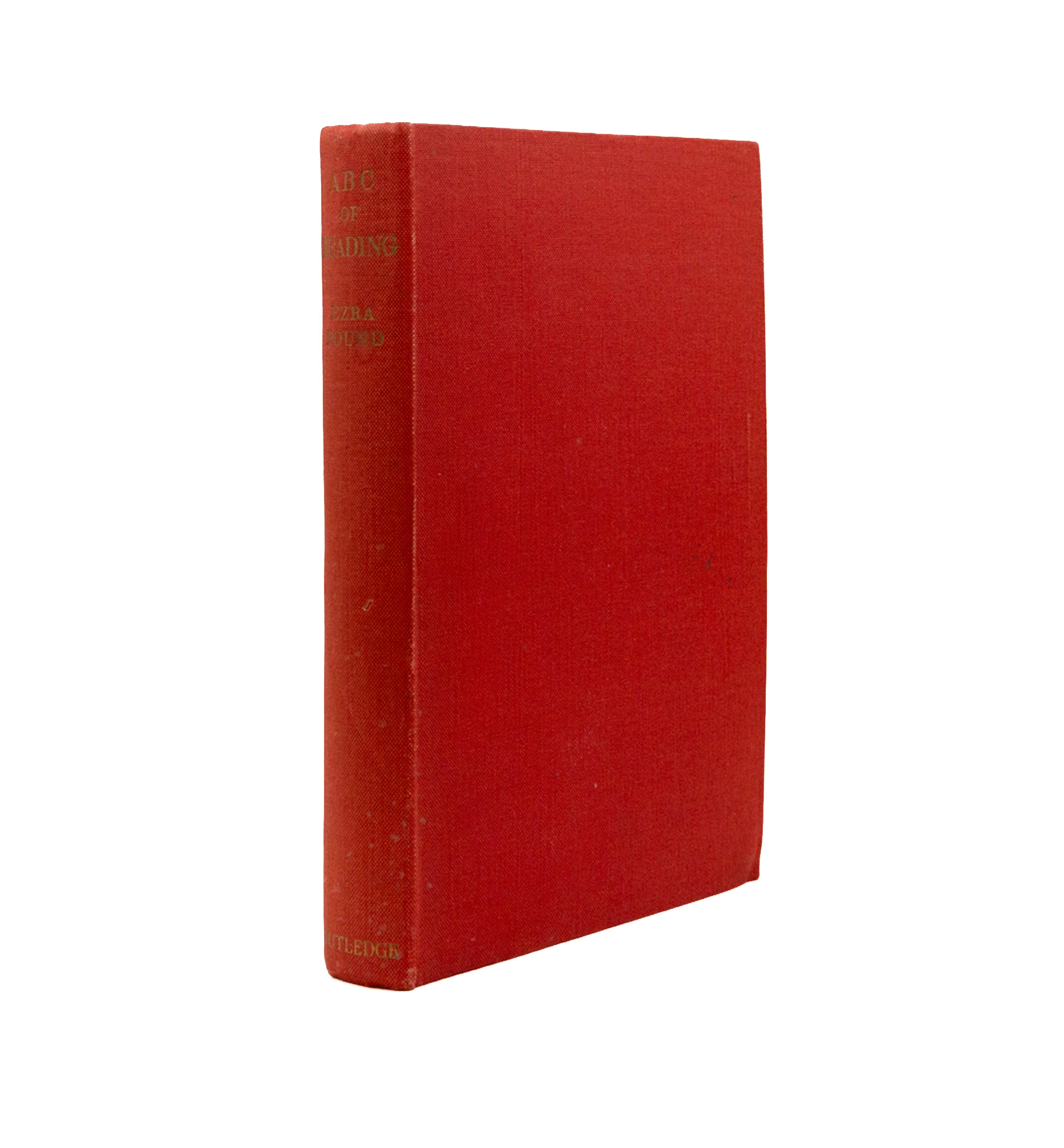
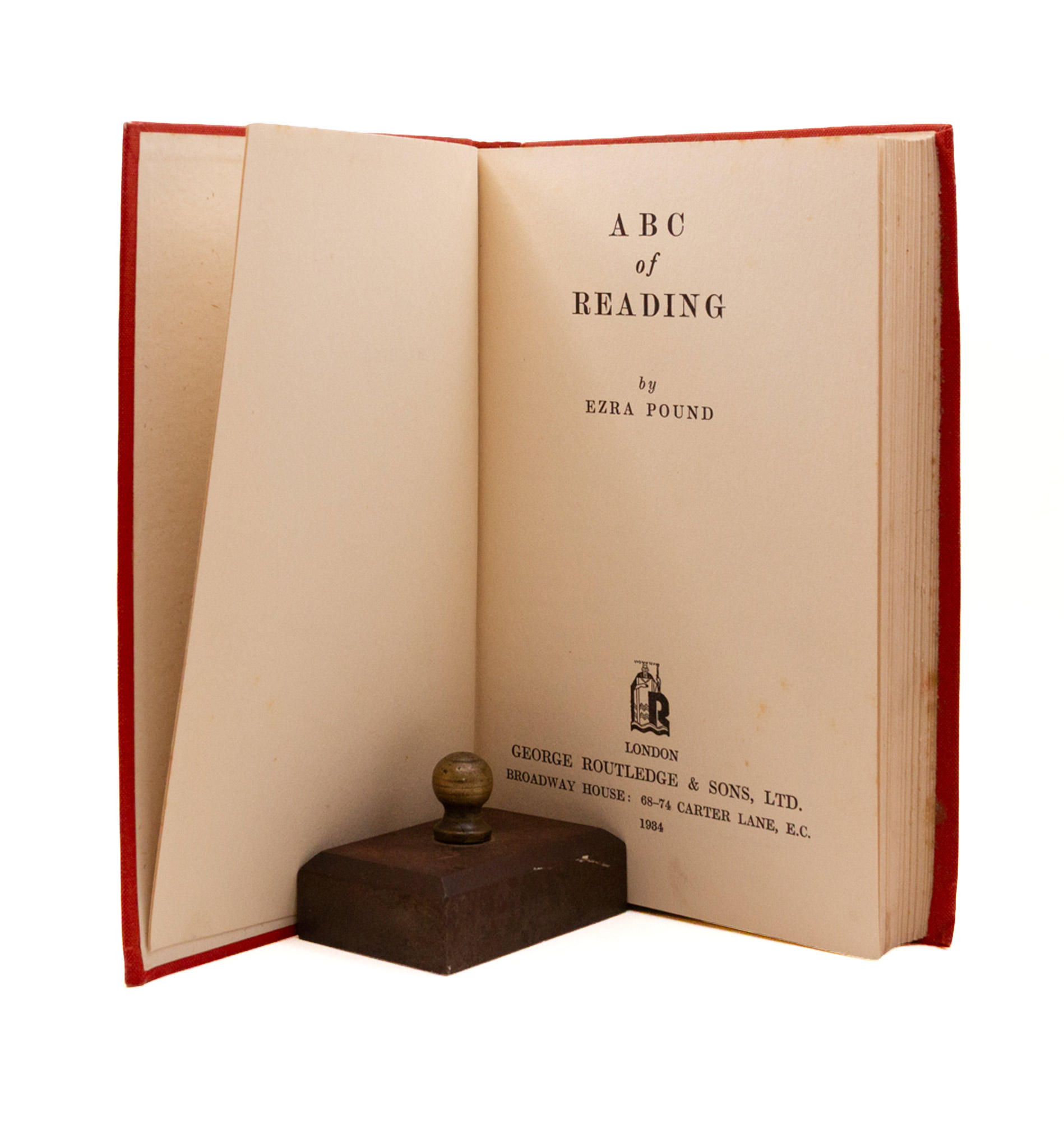
ABC of Reading
Ezra Pound
Published London: George Routledge & Sons, 1934
197pp.; 19.1 x 12.9 cm. Red cloth boards stamped in gold on spine.
Pound’s text-book on the study of poetry, an explanation of the method outlined in How To Read (1931, Gallup A33). First edition, first issue in the fine grain cloth. A good readers copy, clean and straight with a few light marks and scuffs to the cloth, the corners bumped. Gallup A35a.
tap to cycle
Personae (1926); inscribed to Arioste Londechard
Ezra Pound
Published [New York:] New Directions, [1946]
231pp.; 22 x 14.7 cm. Blue cloth boards stamped in gold on front cover and spine.
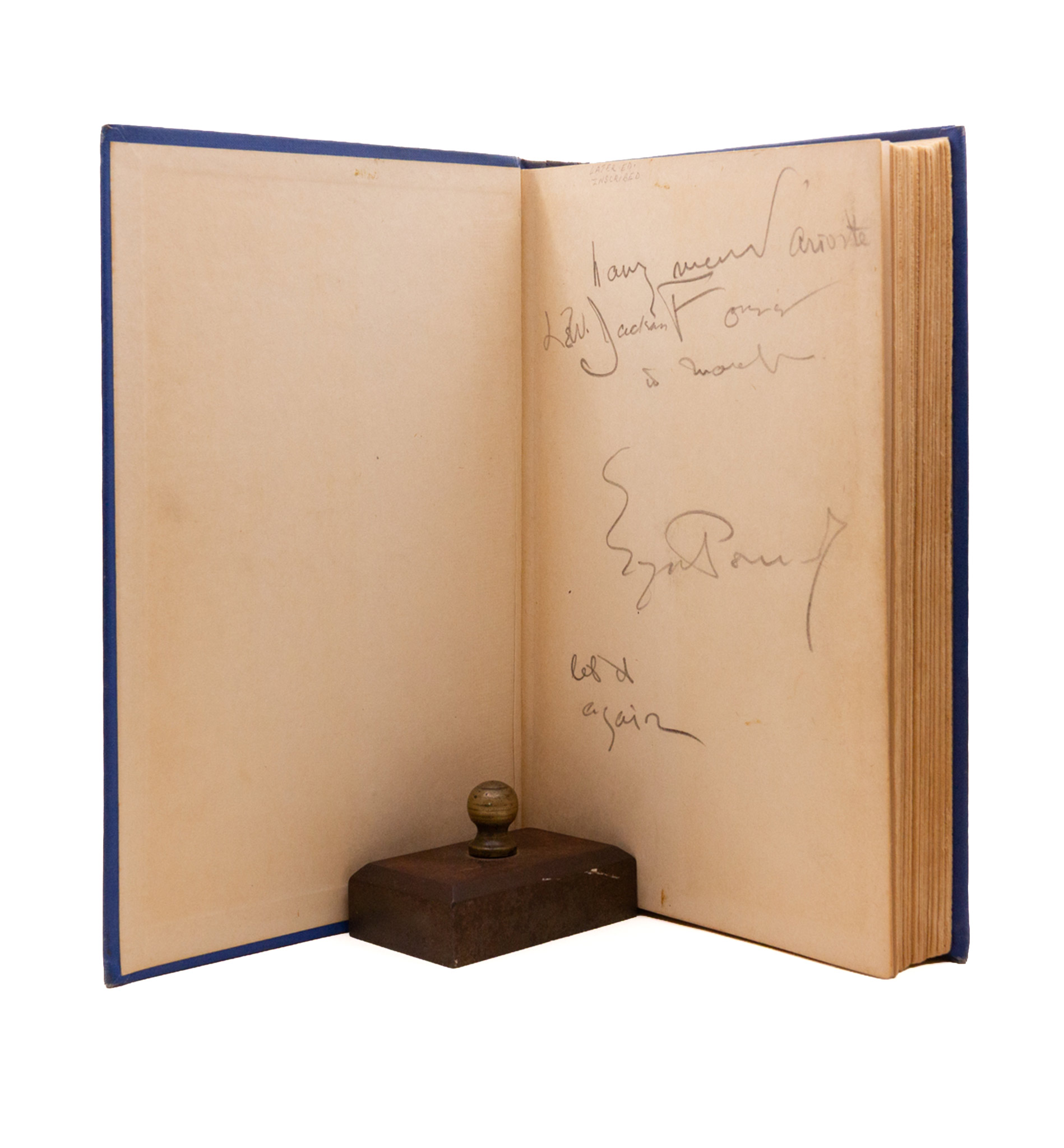
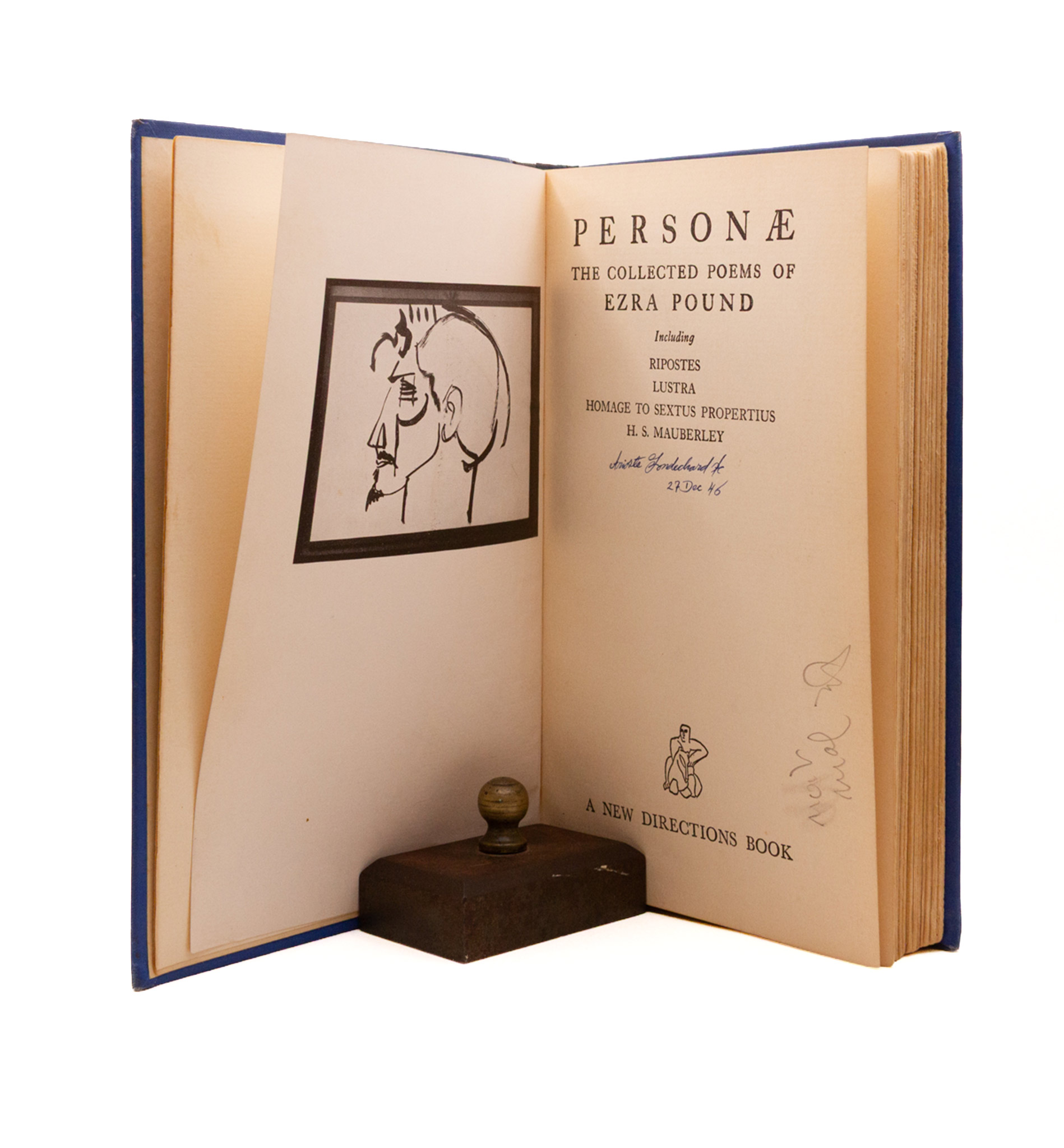
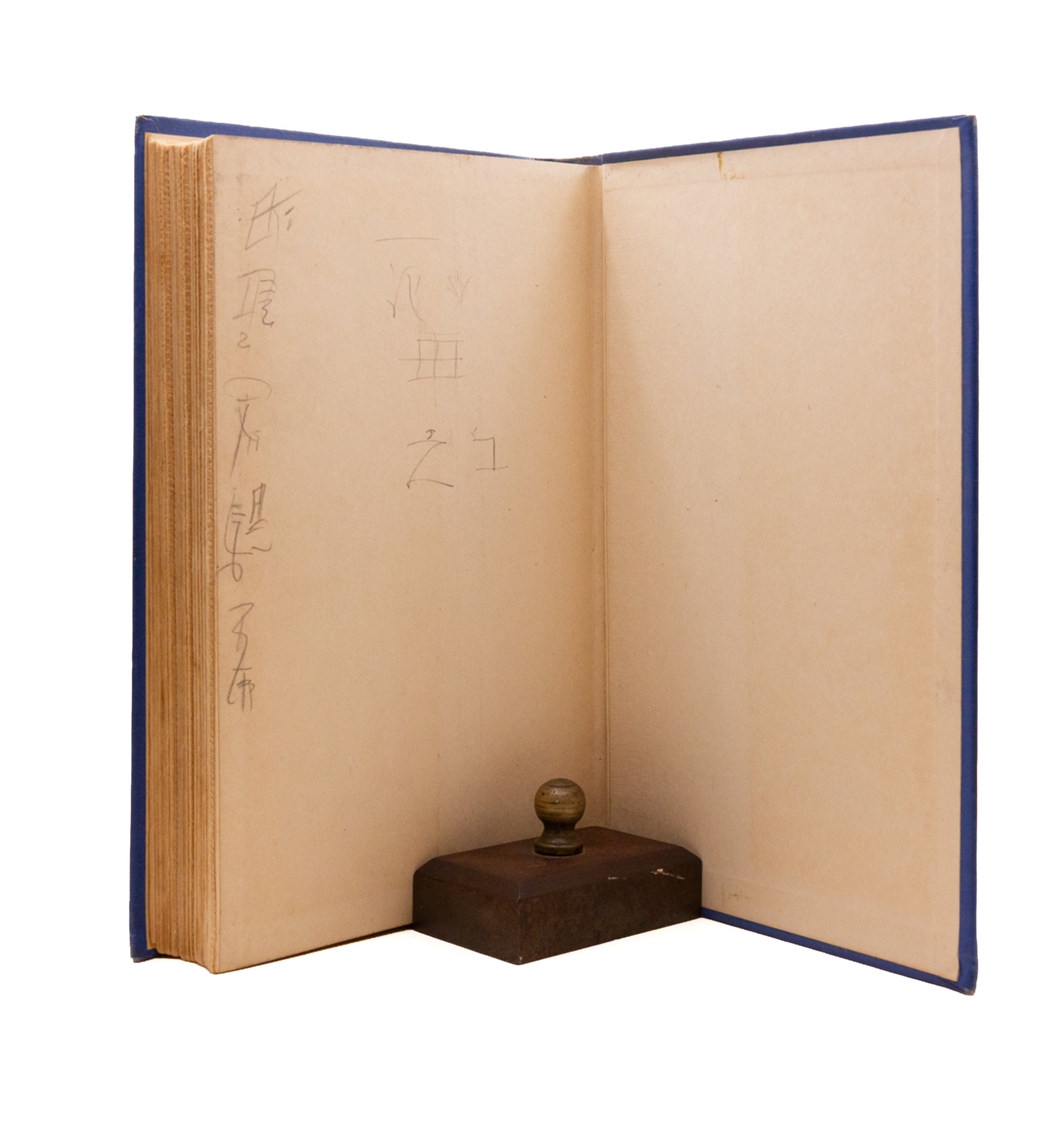
Arioste Londechard’s copy of Pound’s Personae (1926), purchased in December 1946, and inscribed to Londechard by Pound on Londechard’s first visit to St Elizabeths in March 1947, with further annotation and ideograms from Pound, and annotations throughout by Londechard.
Londechard (pseud. James Finley) remains an undocumented figure. His letters to Pound, housed at the Lilly, reveal an eccentric young poet living itinerantly in Greenwich Village, often receiving mail care-of another. It appears Londechard was one of the earliest of Pound’s visitors from the American scene; in a letter to Jackson MacLow, dated June 1947, Pound writes,
do you see any group
[Marianne] moore, arioste, etc.
might send me census of the not-dead
if I am home [in] time
young Finlay (arioste) only one I know anything about
Londechard seems to have been a terrible poet, and unaware of how bad he was; having seen Robert Lowell (“who ought to end it all”) give a reading, he leaves celebrating himself as “the best poet in that university collection of eager serious sincere young men.” His failure to organise the magazine, which it seems was to be called “Mind and Organ,” is drawn out and ends in one swift paragraph blaming some other. When Dallam Simpson arrives on the scene, Londechard tries to assert himself as editor and swiftly is lost from the effort. Later Londechard will criticise “Olson or Moores & Co bourgeois attitudes on how we must all act the same fellows huh!” and seems too to be lost off his contemporaries. The 165 pages of correspondence at the Lilly reveals, however, a lasting affection between Pound and Londechard, and document Londechard’s struggle to find his feet, to find work, to succeed in the scene, his marriage to Irene and the birth of their son Paris (at which occasion EP sends a cheque), and their hopes of moving to Italy.
Londechard’s first letter to Pound was written 27 January 1947. In it Londechard references this book as his second of Pound’s publications,
For more than a year now Jack Moschell an admirer of yours has exPounded me y’r merits, which I investigated in y’r ideogrammic prose until No Dire Actions gave me Eternal Poet’s Masks.
Pound’s inscription remains somewhat illegible. To the ffep, one finds something like,having met arioste / LEW. Jackson Fowlie / in march / Ezra Pound / let it again
The mention of “Jackson” to the ffep suggests that Jackson MacLow may also have been at this same meeting. “Fowlie,” which it may be, could refer to Wallace Fowlie, American writer and prof. of literature who Londecahrd mentions in a 1949 postcard to Pound, and who, like Londechard, was a translator of Rimbaud. We also have Jackson Mathews, translator of Paul Valéry to consider.The inscription to the title page appears to read “non mal / EP” (the monogram visible at an angle) and is coherent with Londechard’s speaking primarily (bad) French at their first meeting before Pound asked him to speak English. To the rfep Pound has written two sentences in Chinese, in around ten ideograms, whose translation or sourcing await. Otherwise, Londechard’s annotations are found throughout, a total of eight or so comments, with a further four poems scored and an index of pages verso of rfep.
First edition, sixth impression. One of 465 already bound copies taken over from Liveright by New Directions (a.k.a. No Dire Actions), with “Liveright” on the spine, and published “late 1946,” around the same time Londechard purchased it. See Gallup A27a, Notes. A little shelf wear with a short tear to the cloth top and tail of spine; boards with some light marks with gentle toning at edges. Internally clean and straight.
tap to cycle
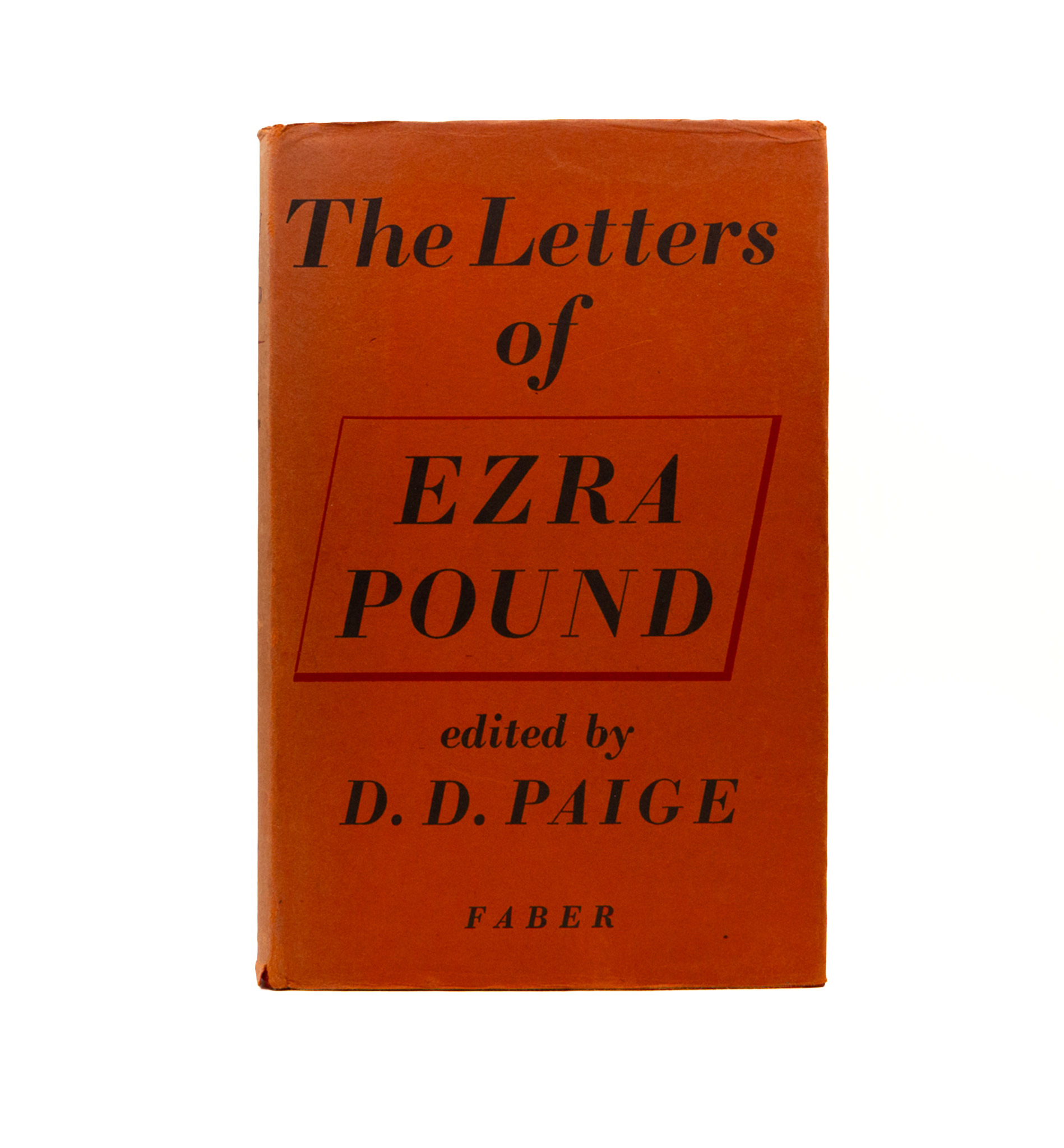
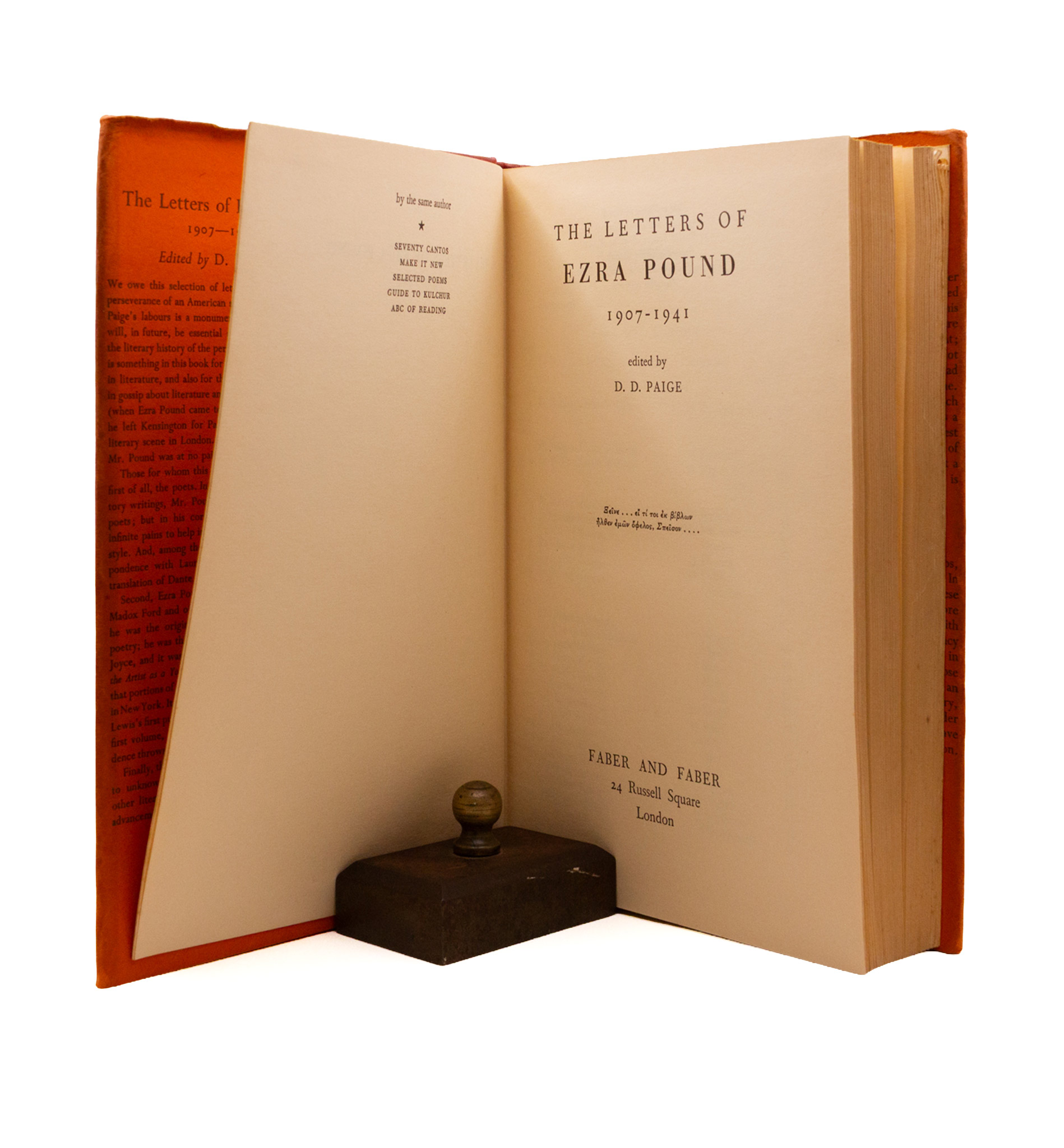
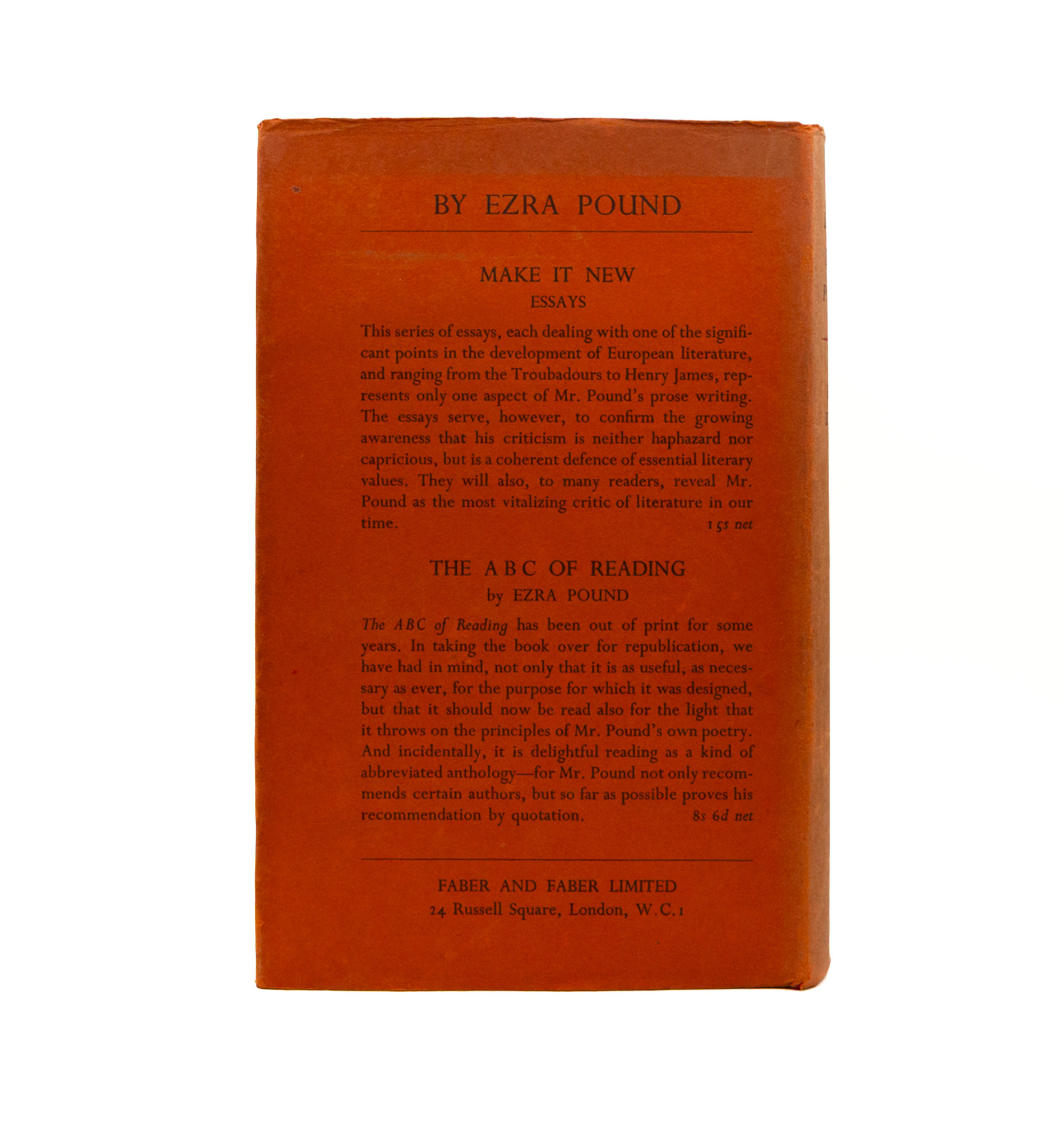
The Letters of Ezra Pound, 1907-1941
D. D. Paige, editor
Published London: Faber and Faber, 1951
464pp.; 22.5 x 14.6 cm. Red cloth boards stamped in gold on spine. Orange dust-jacket printed in black.
The Letters: Paige’s edit of Pound’s outgoing, the first selection to be published, documenting Pound’s own literary theories, his help editing, publishing and promoting fellow writers, and his involvement with the little mags of the day. First English edition, one year after the American. A near fine book with a few folds to the top-edge of the index pages in a very good jacket, no tears, a little edge-worn with fading to top edges, and spine. Gallup A64b.
tap to cycle
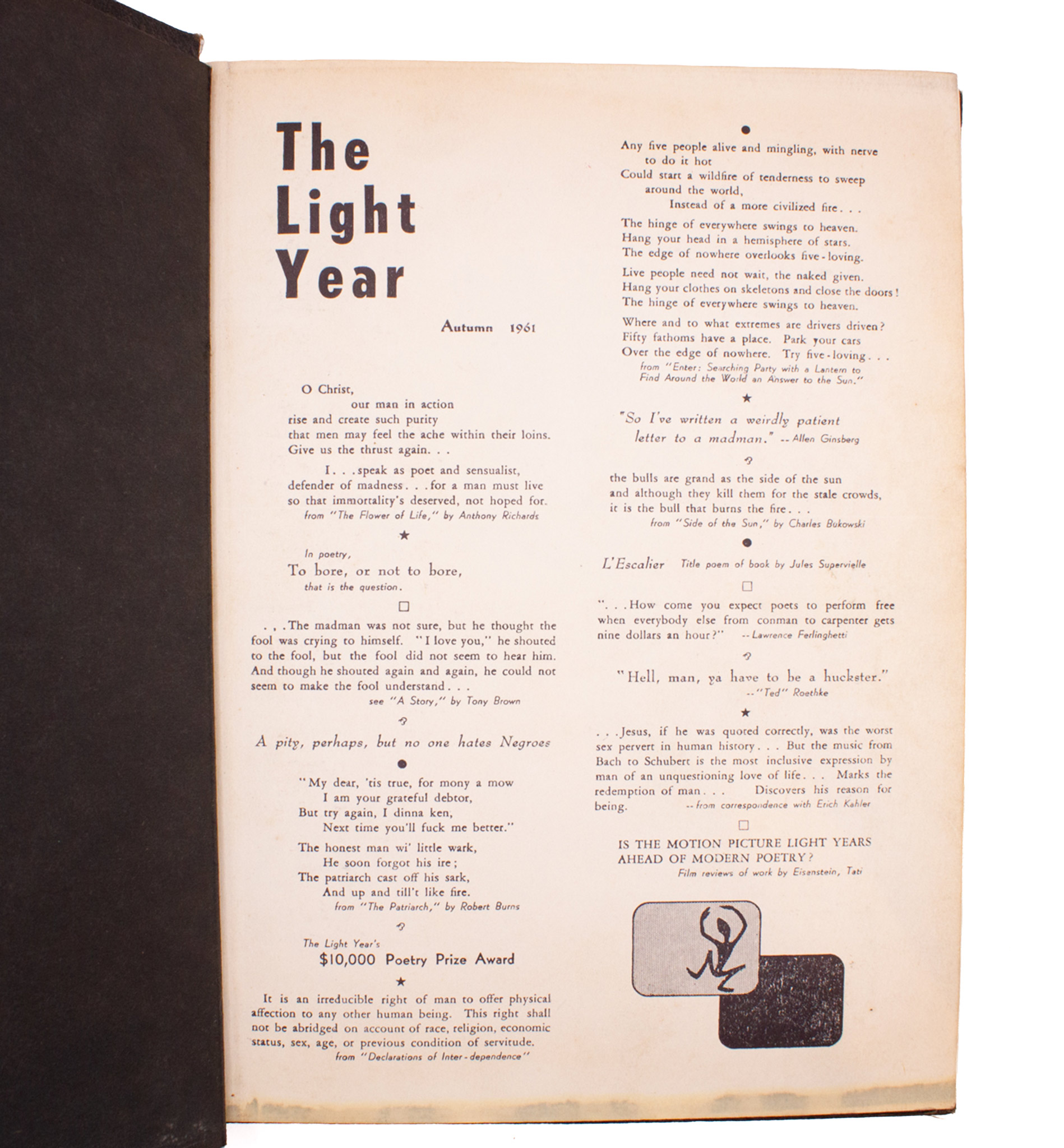
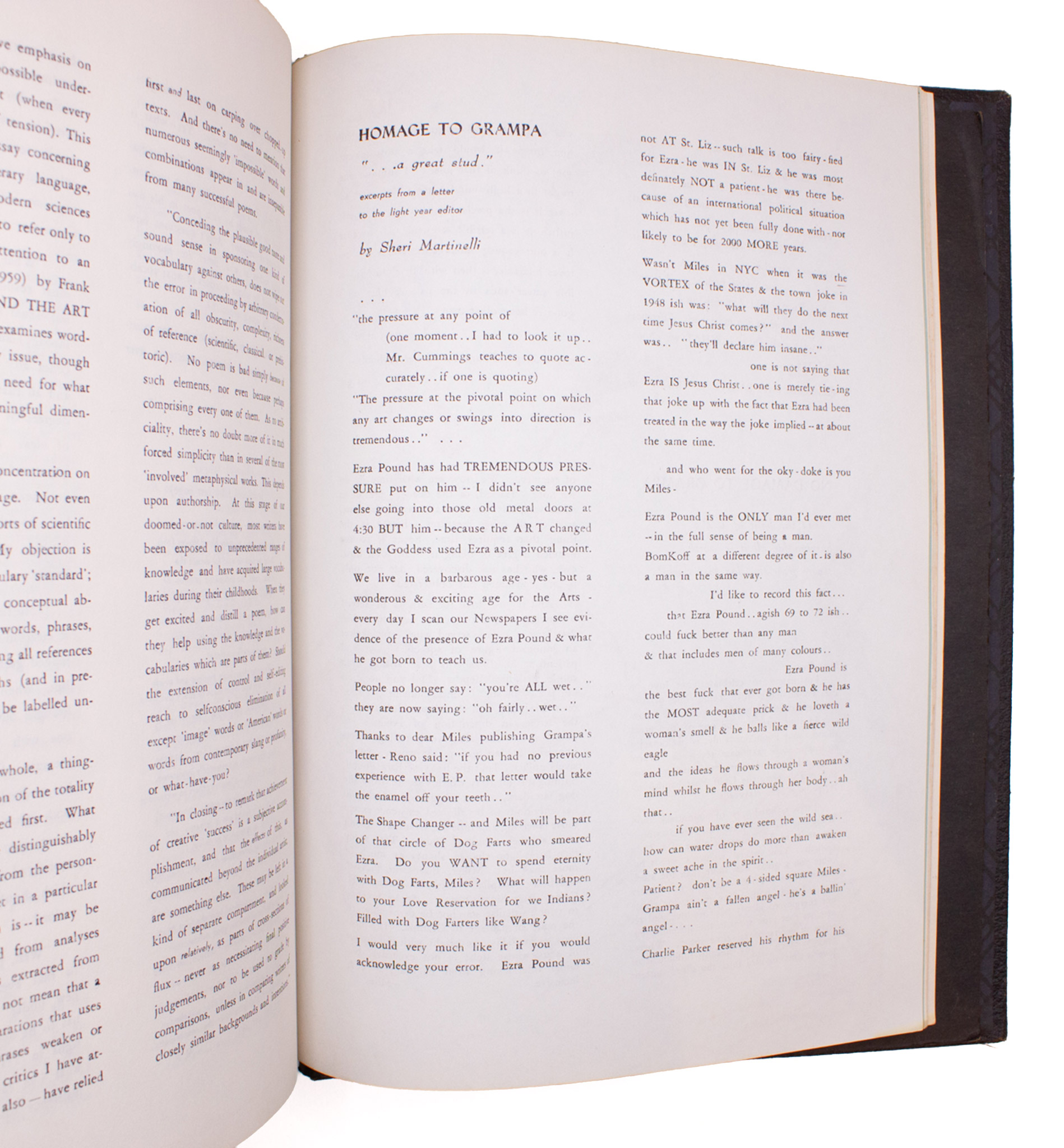
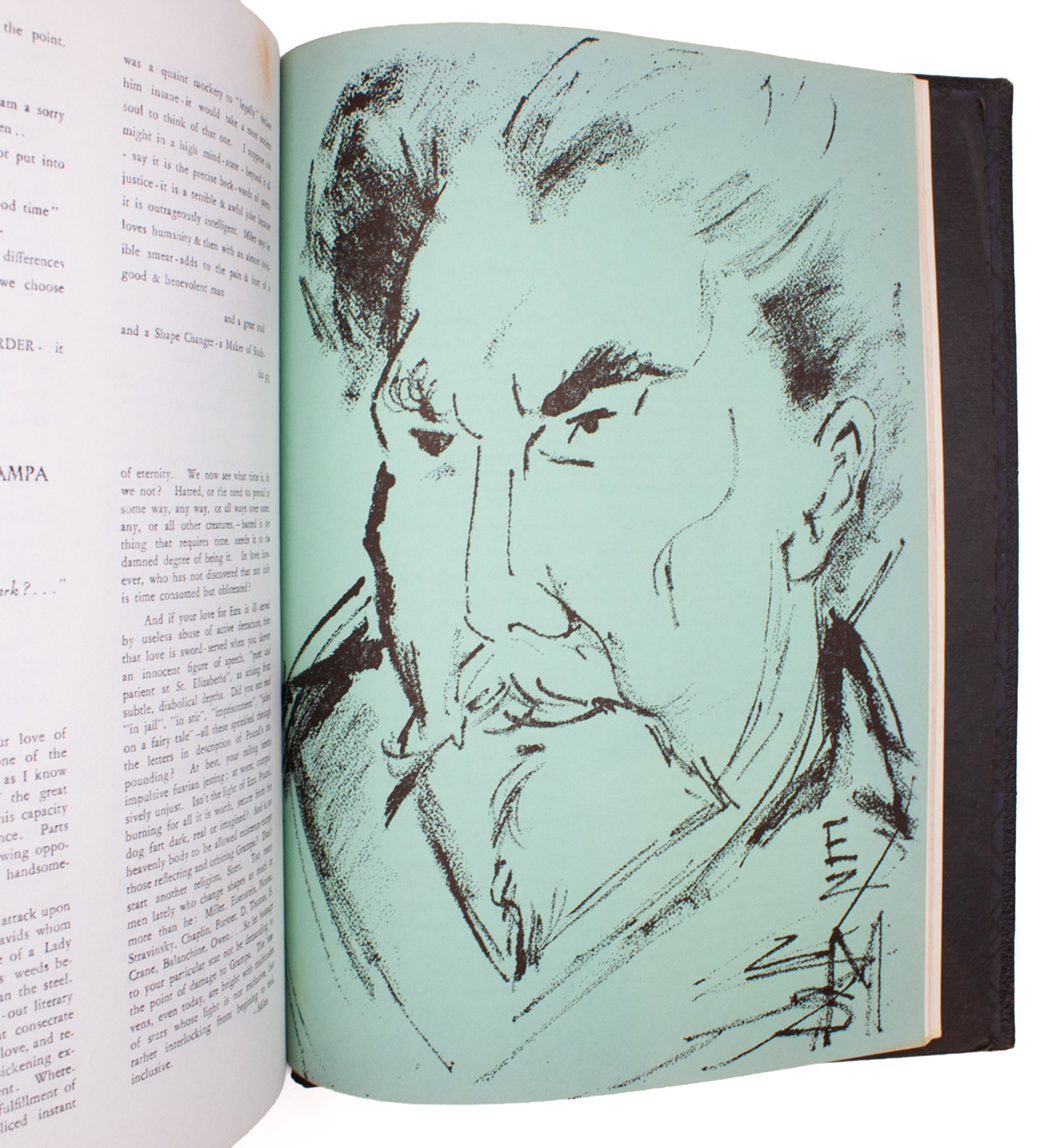
Homage to Grampa; in The Light Year, Autumn 1961
Miles Payne, editor
Sheri Martinelli, contributor
Published San Diego: The Light Year Press, 1961
95ll.; 28 x 22 cm. Heavy paper wrappers printed in black; open binding, bound by fibre and glue, dyed in red.
The Poundian’s issue of Miles Payne’s The Light Year, which ran from 1958 to 1962. The whole magazine is wild and erratic, in the main consisting of short articles or statements by, apparantly, Payne, quoting variously from Pound, Mary Barnard’s Sappho, from R. P. Blackmur (on Pound), the Bible, Dylan Thomas, Longinus, and so on.
Payne also reproduces letters to him, and prints his response. Lawrence Ferlinghetti, for example writes, “Listen, how come you take me seriously and expect the poets to eat if you consume their books free and so forth?” with Payne responding, “Jesus Christ!, Larry, I don’t ‘consume’ poetry books like ice cream cones or brassiere cups!” It is in this context that Sheri Martinelli’s “Homage to Grampa… excerpts from a letter to the light year editor” is printed. Martinelli is apparently responding to Payne’s response to a letter The Light Year received and published from Pound, accusing Miles of being “part of that circle of Dog Farts who smeared Ezra,” and goes on,
I’d like to record this fact…
that Ezra Pound..agish 69 to 72 ish..
could fuck better than any man
& that includes men of many colours..
Ezra Pound is
the best fuck that ever got born & he has
the MOST adequate prick & he loveth a
woman’s smell & he balls like a fierce wild
eagle
and the ideas he flows through a woman’s
mind whilst he flows through her body..ah
that..
This copy preserved in a black leather covered folder with stiff black endpapers. It holds the magazine tightly at the spine, but hasn’t damaged it and it can be removed. A thin line of staining on the bottom edge of the first, second and last page. Otherwise nice. Signed by Payne in blue ink above his contact details, with a further squiggle to the last page.
tap to cycle
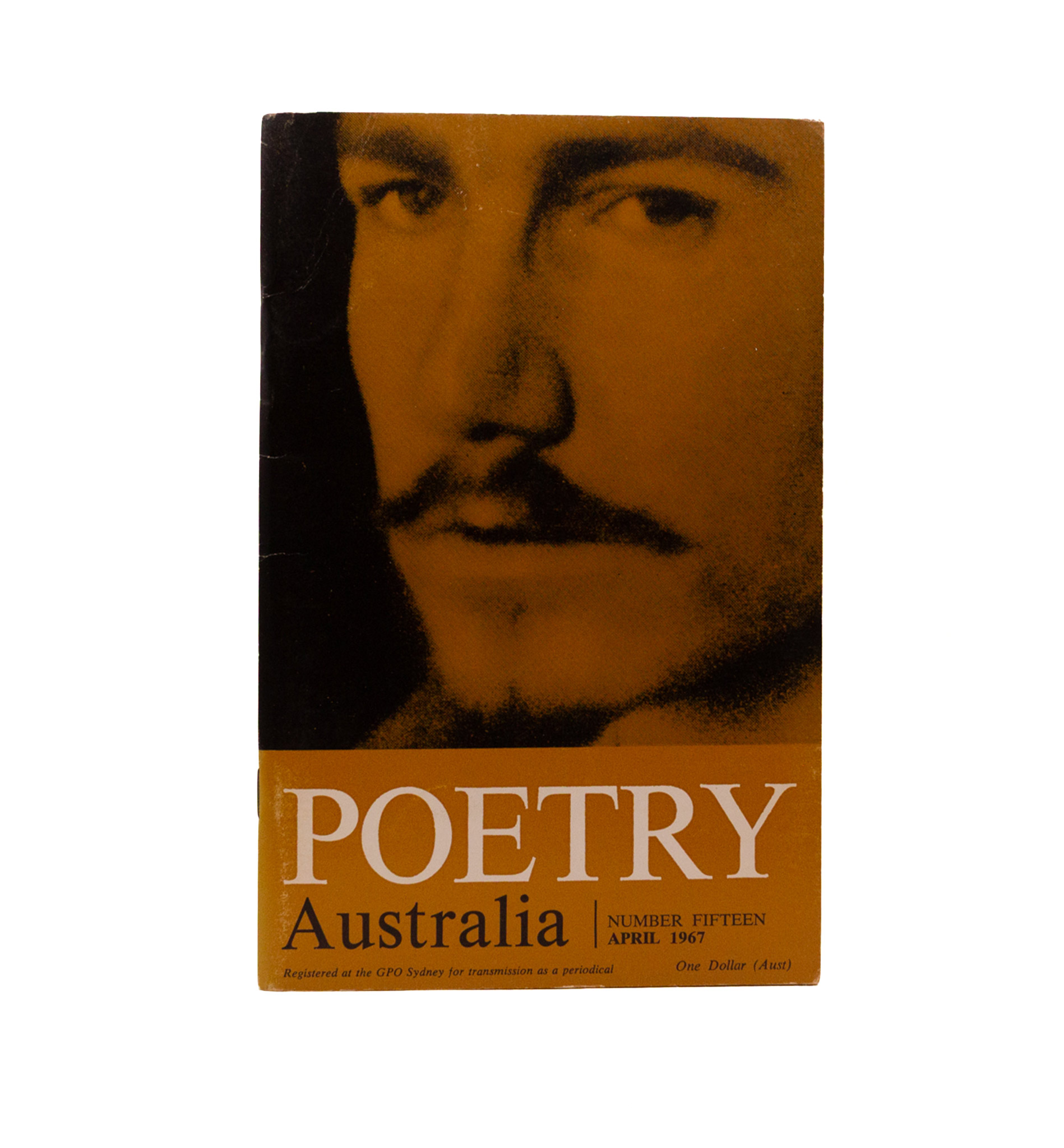
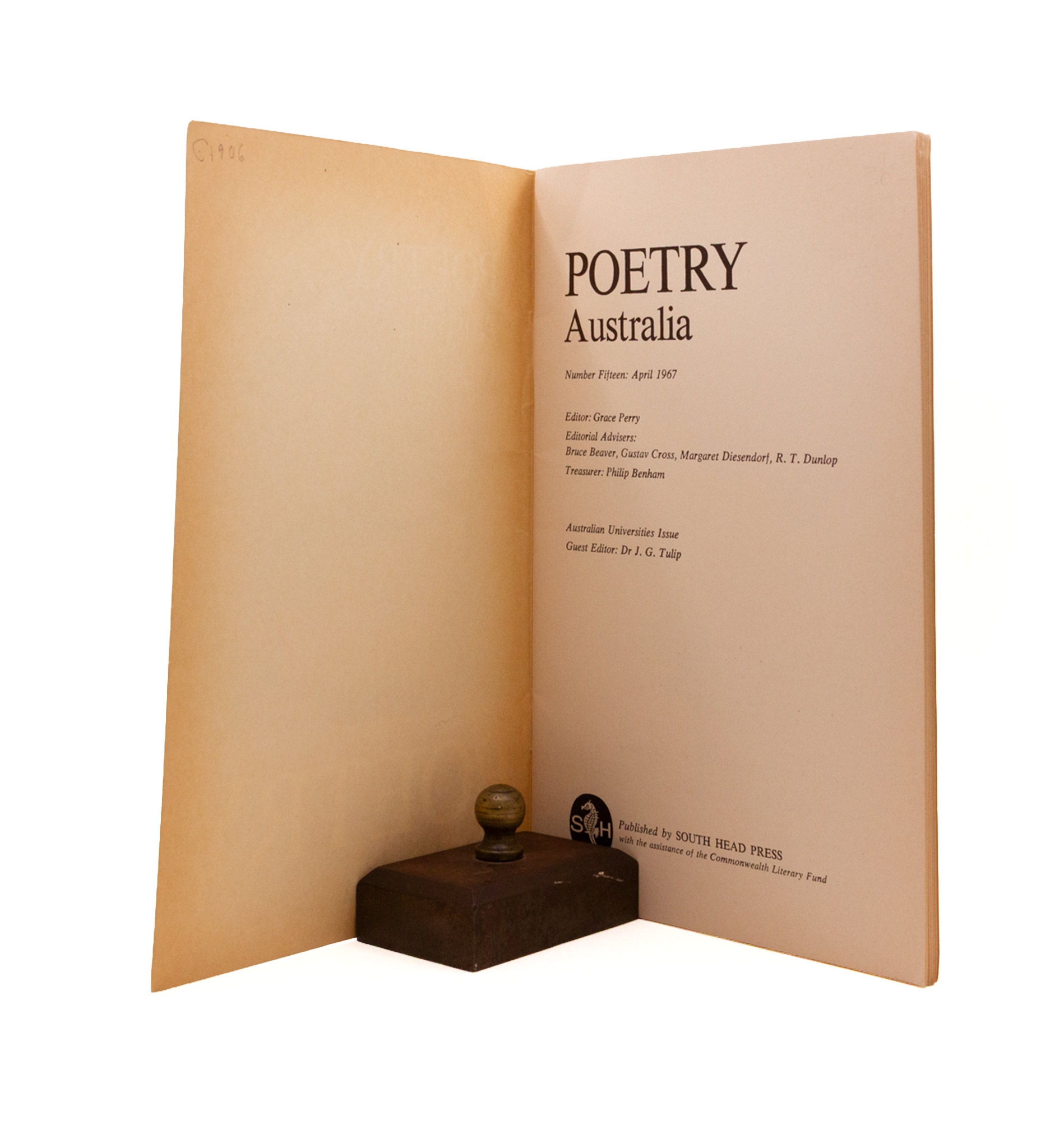
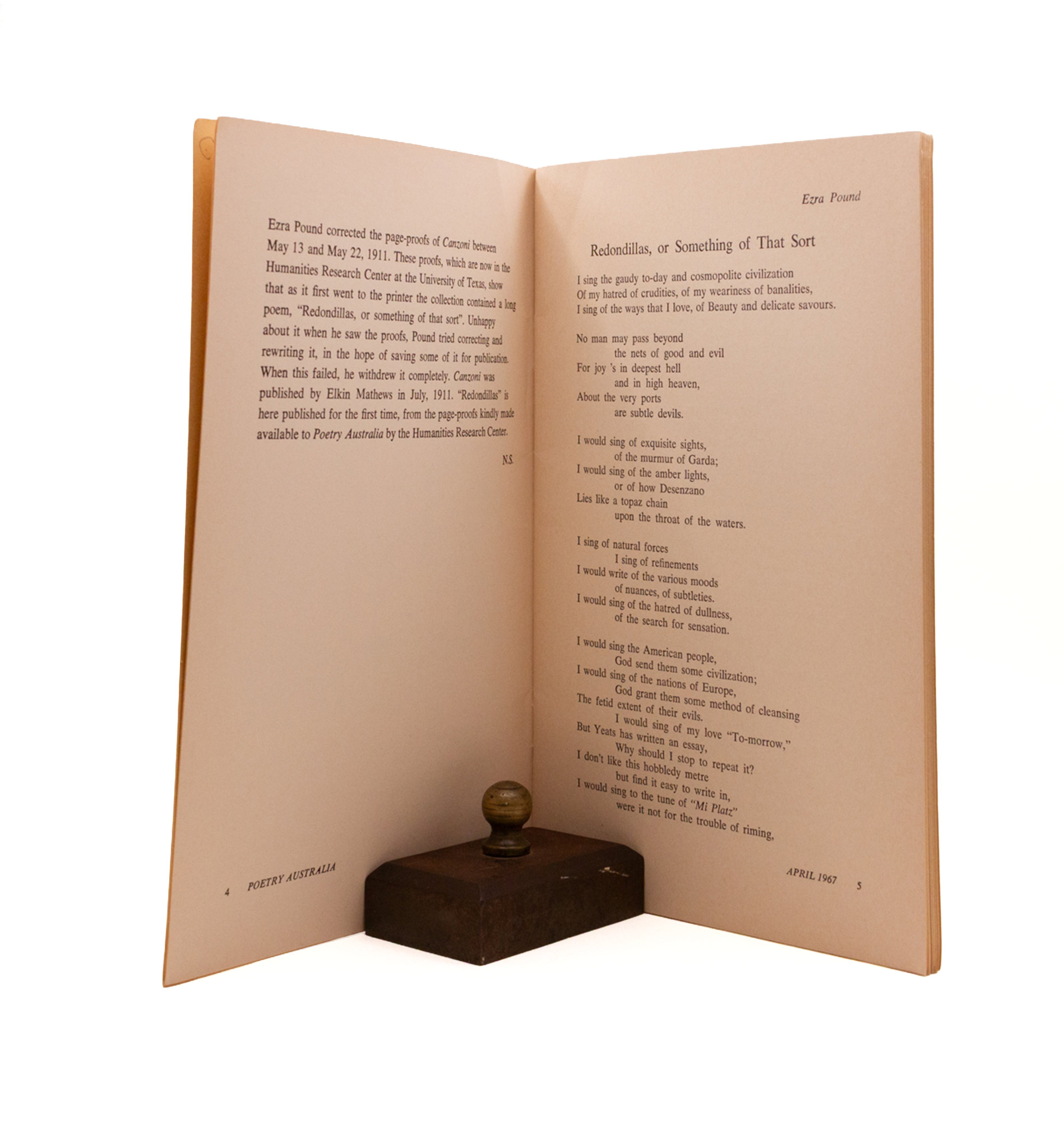
Redondillas; in Poetry: Australia, Number 15 (April 1967)
Grace Perry, editor
Ezra Pound, contributor
Published Sydney: South Head Press, 1967
56pp.; 21.9 x 14.1 cm. Stiff white paper wraps printed in black and brown.
The first appearance of Pound’s Redondillas, or Something of That Sort, written in 1911 and drafted in the proofs for Canzoni (1911, Gallup A7) but could not be saved in Pound’s eye and was deleted. Discovered in the proofs housed at the Humanities Research Center, University of Texas, and printed here by Perry with Pound’s permission. A very good copy, wraps lightly worn around the spine. Gallup C1915.
tap to cycle
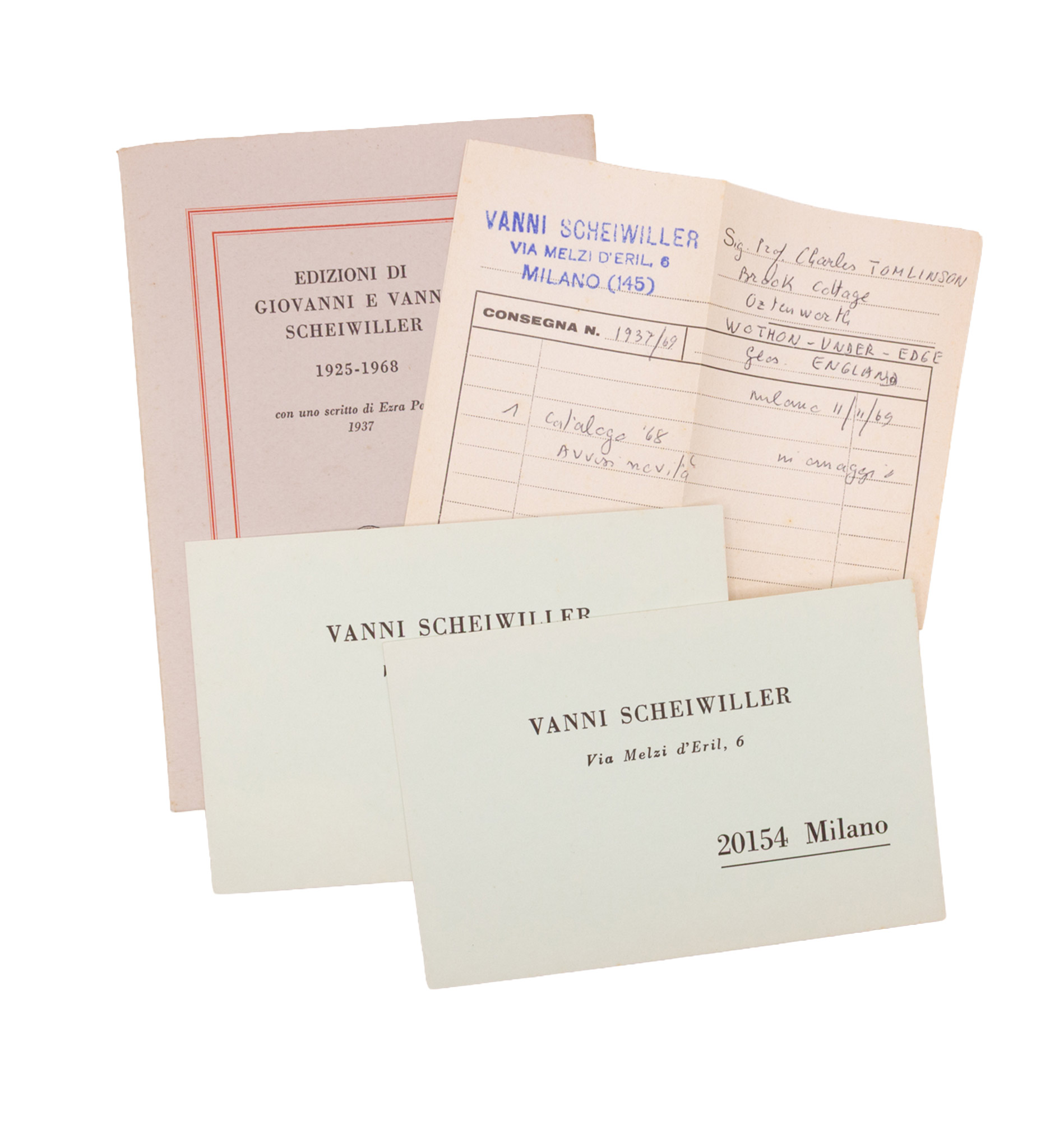
Edizioni di Giovanni e Vanni Scheiwiller; Charles Tomlinson’s copy
Ezra Pound, contributor
Published Milan: All’Insegna del Pesce d’Oro, 1967
88pp.; 17.2 x 12.2 cm. Grey paper wraps printed in red and black to front, back, and up spine.
A catalogue of Scheiwiller editions from 1925-1968, with an essay by Pound praising Scheiwiller Senior dated 1937. With a price-list of Litografie di Giuseppe Viviani laid-in towards the rear. This copy was sent by Vanni Scheiwiller to poet and professor Charles Tomlinson, with a receipt to the effect, accompanied by two unused green order cards printed in black. Light foxing to prelims, brief dot of ink to front cover, fore-edge bumped.
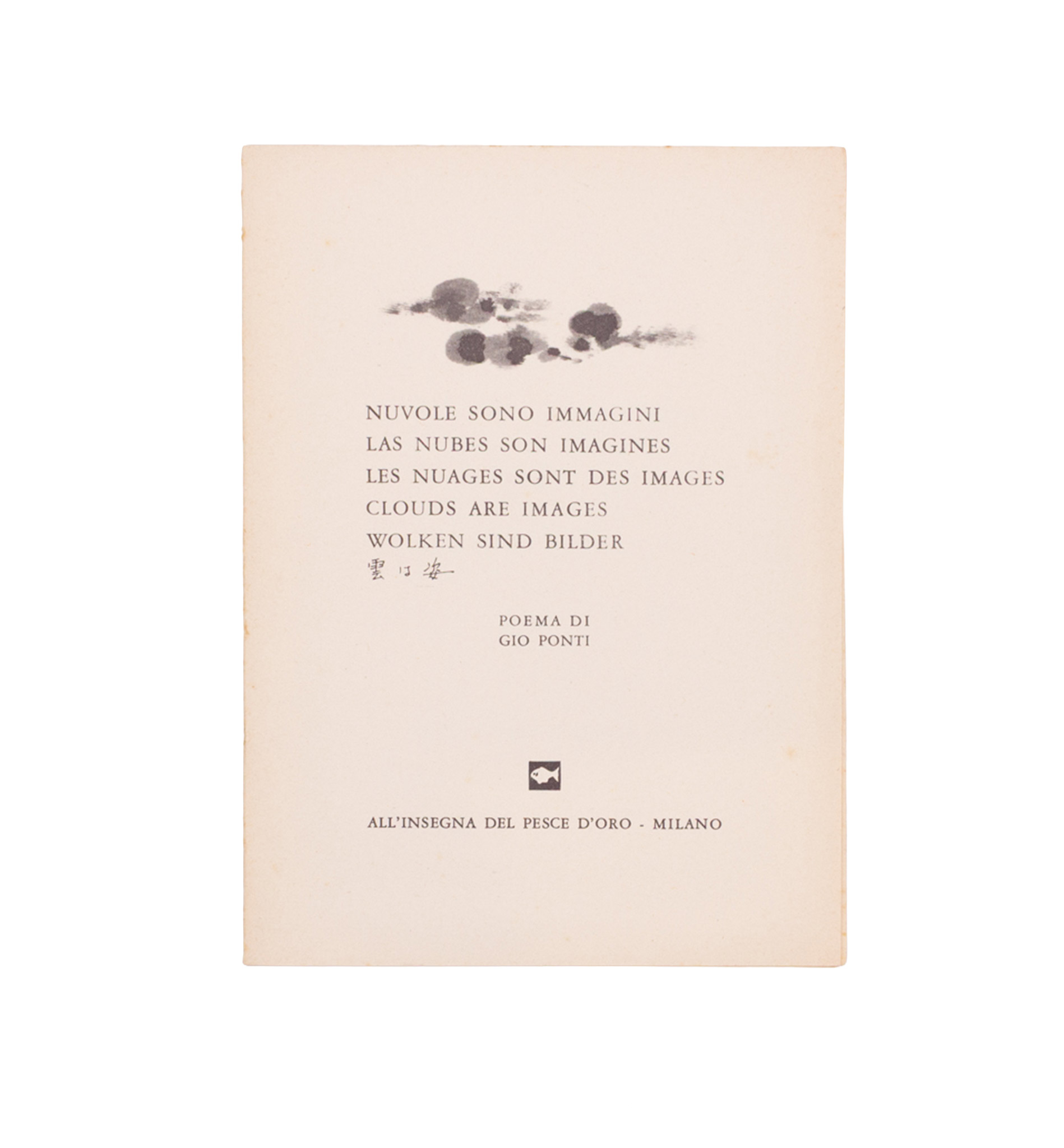
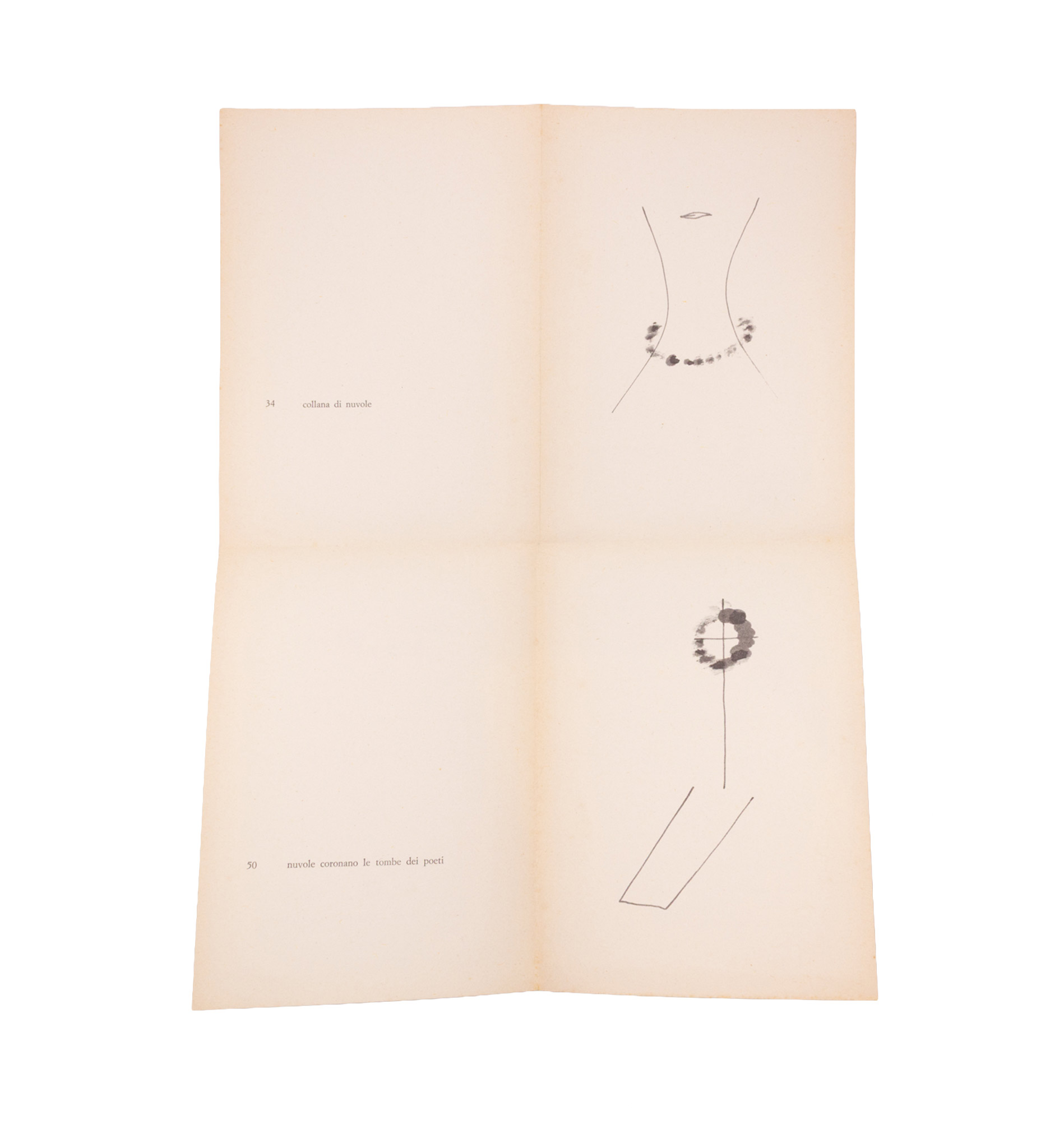
Together with a promotional leaflet for Nuvole Sono Immagini by Gio Ponti, published by Pesce d’Oro at around the same time. The leaflet reproduces three of the original 50 lithographs, with their texts translated in all six languages. A very good, straight copy, light toning to the edges.
tap to cycle
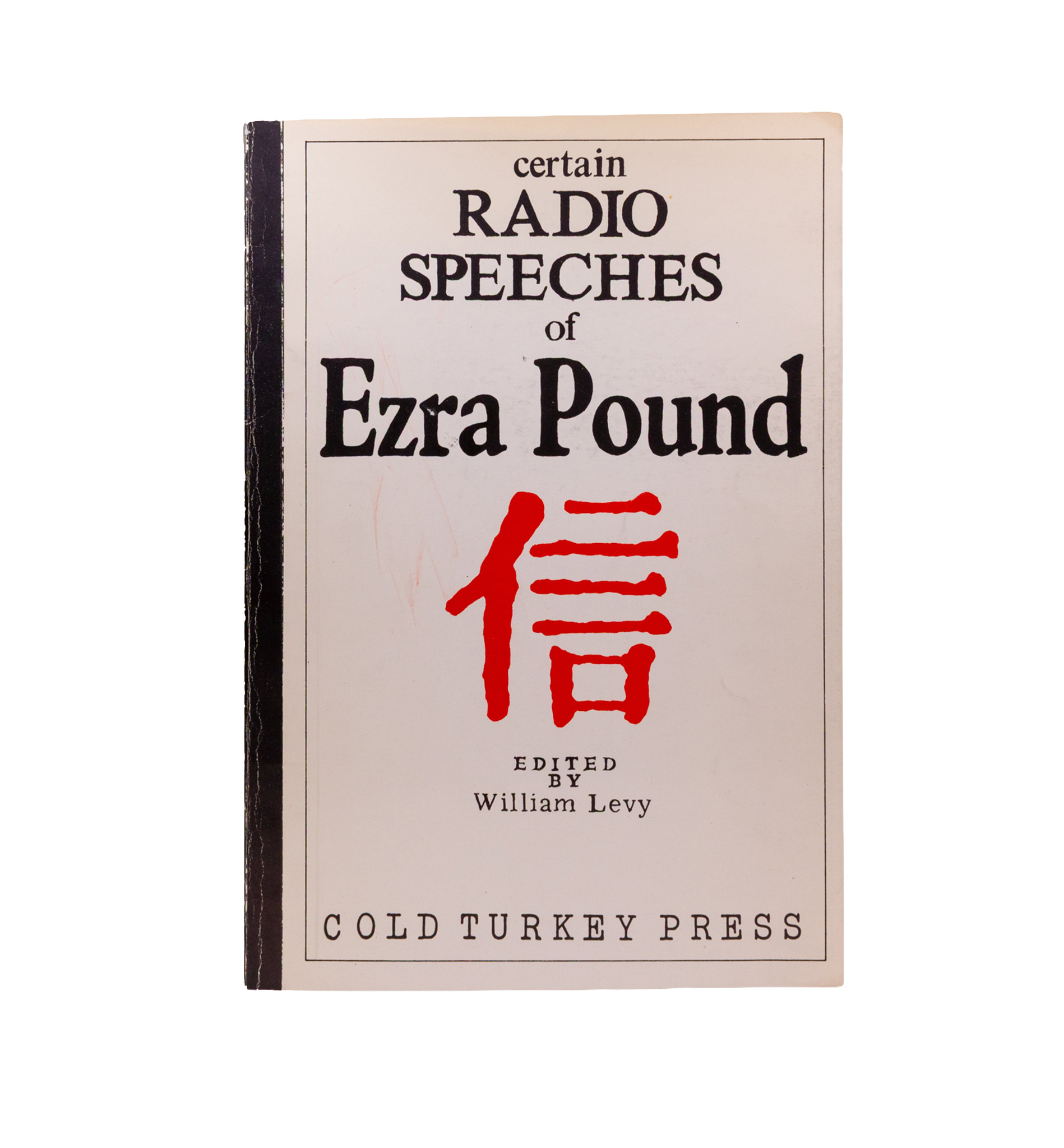
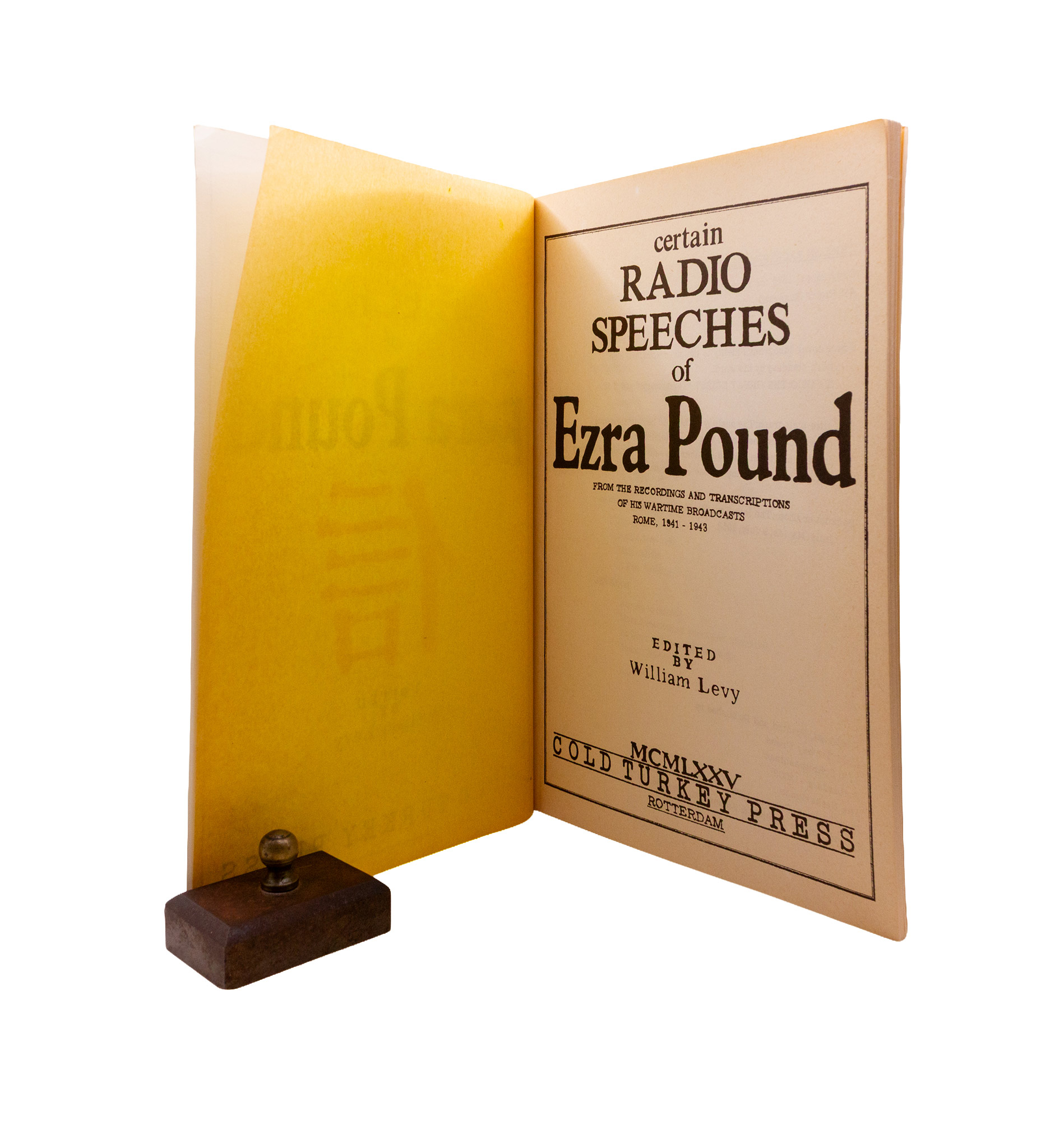
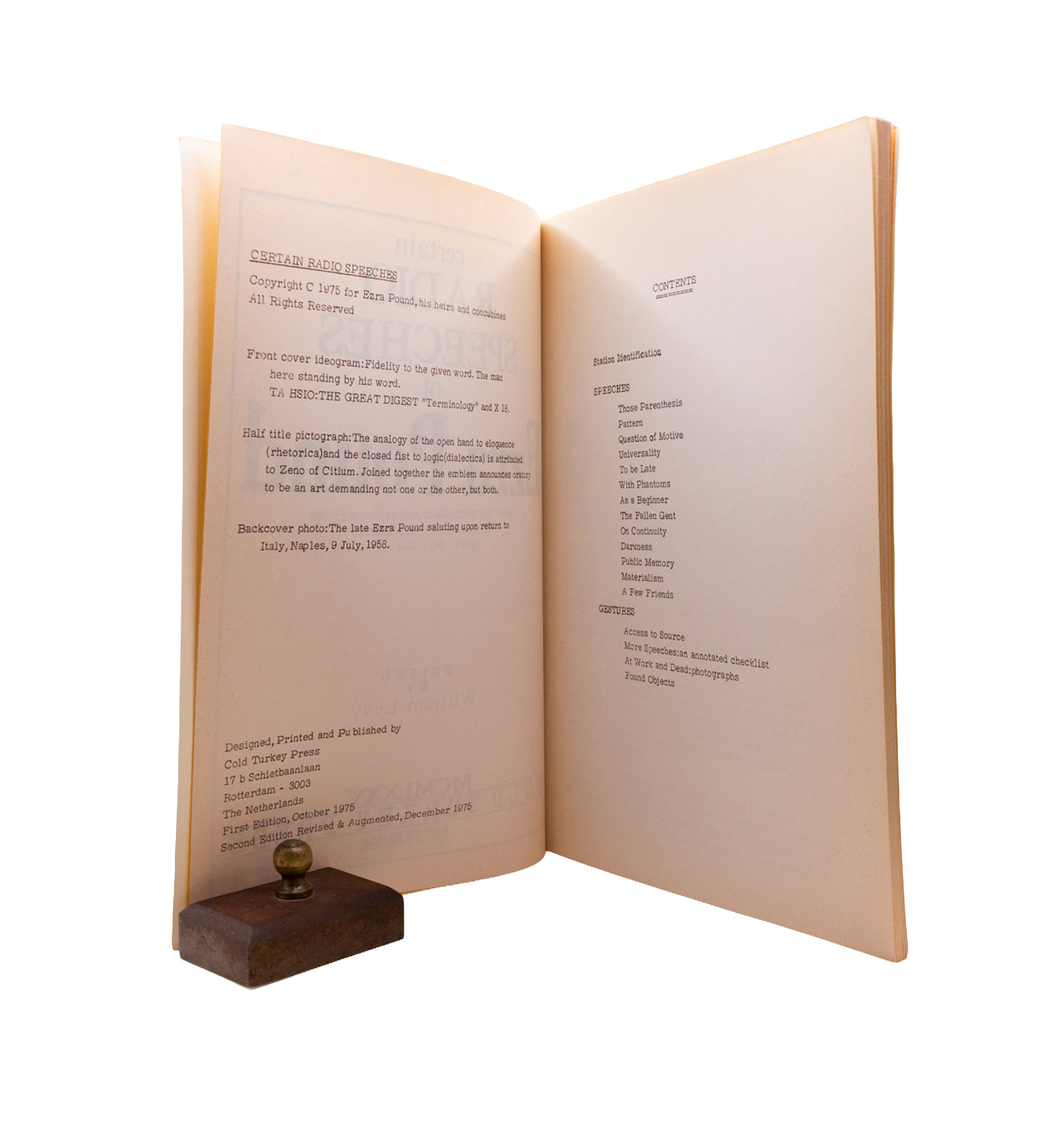
Certain Radio Speeches of Ezra Pound
William Levy, editor
Published Rotterdam: Cold Turkey Press, 1975
54ll.; 29.3 x 20.2 cm. White paper wrappers printed in black and red. Yellow glassine endpapers.
Second edition, “Revised & Augmented, December 1975” after the October 1975 first edition of 250 copies. Transcribed by Levy from recordings held at the National Archives and Records Service, Washington, D.C.; with a new addendum to the letter from the National Archives to Levy, and two photographs of EP not found in the first edition. A very good copy; spine wrinkled to white, some light rubbing to the front-cover with a faint figure in red pencil in the style of Wyndham Lewis (not a suggestion); toning to back cover. Gallup A96.
tap to cycle
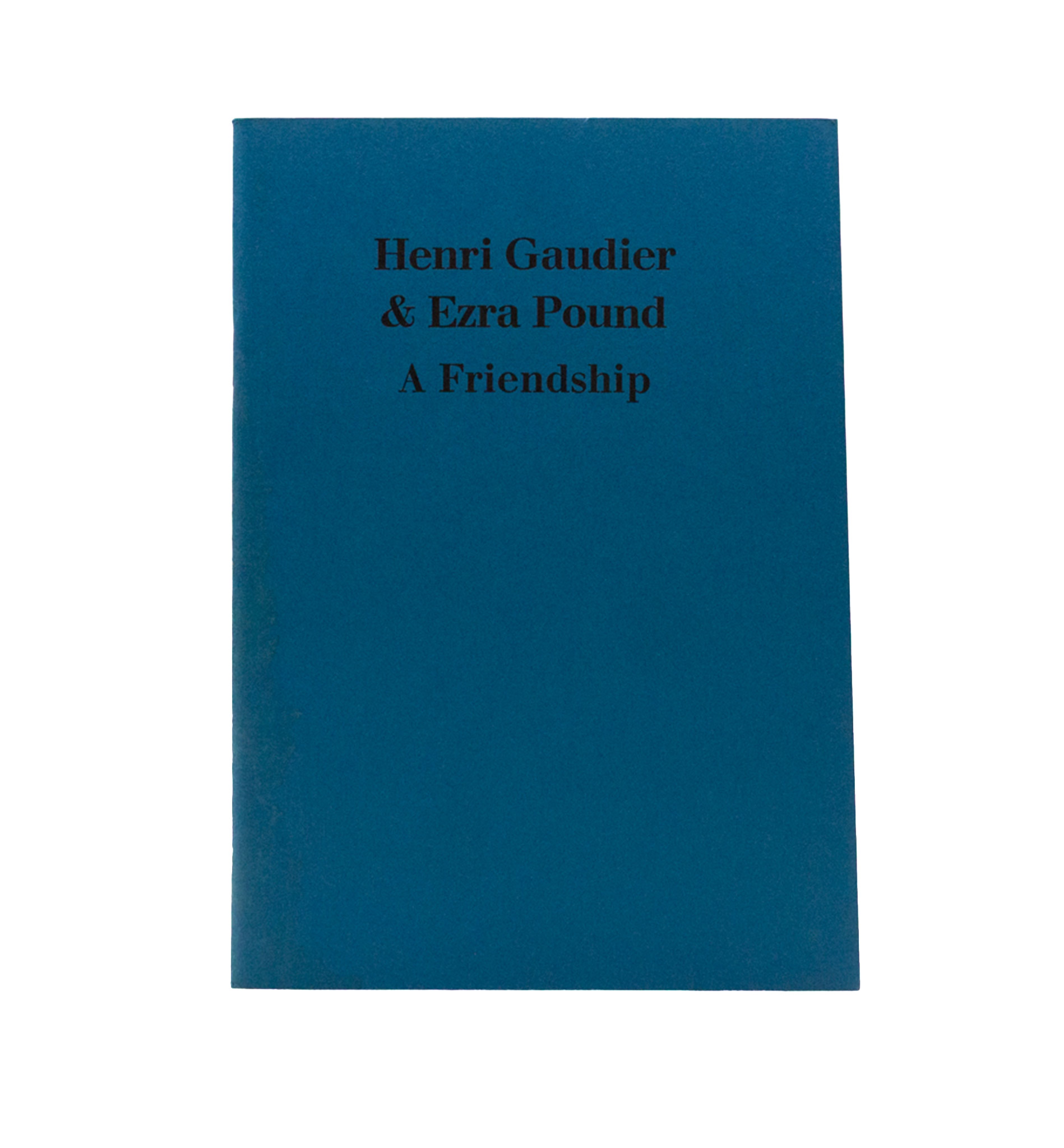
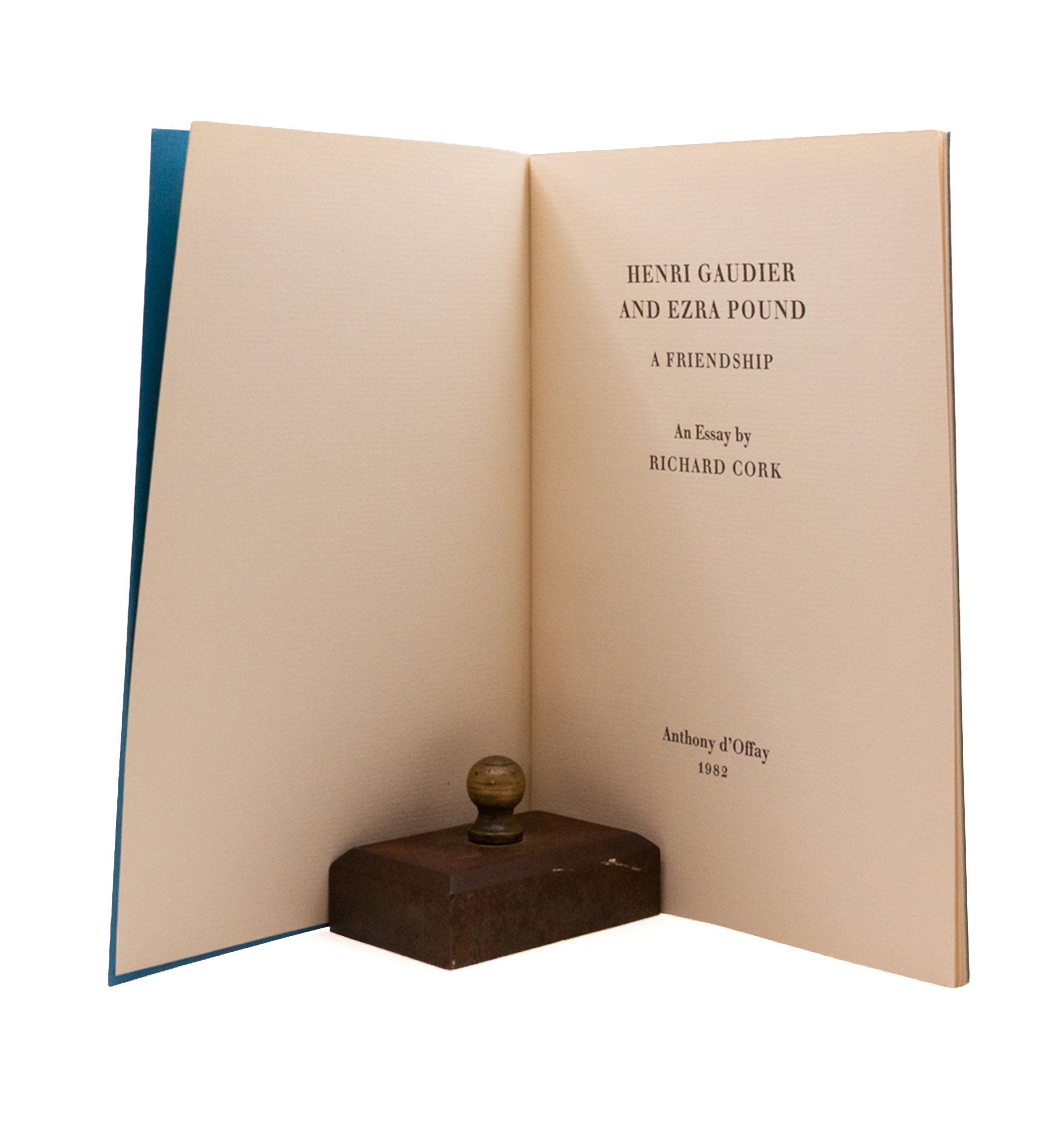
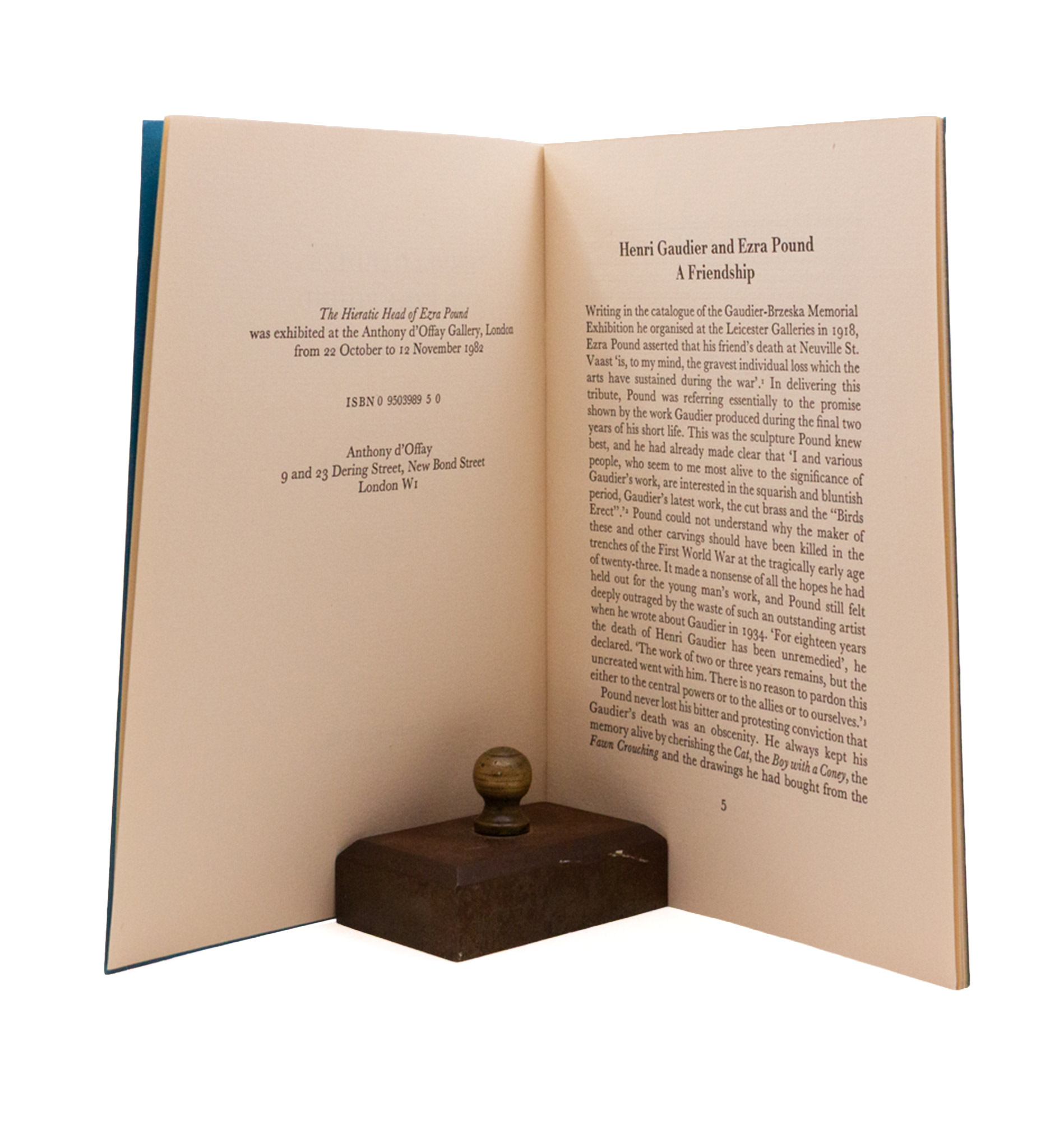
Henri Gaudier-Brzeska & Ezra Pound: A Friendship
Richard Cork
Published London: Anthony d’Offay Gallery, 1982
23pp.; 19 x 13.5 cm. Blue paper wraps printed in black; stapled.
An essay by Richard Cork to accompany the exhibition of The Hieratic Head of Ezra Pound at the Anthony d’Offay Gallery, London, 22 Oct to 12 Nov 1982. A very good copy, the top corner lightly bumped, the spine with some light staining. Illustrated, printed at the Curwen Press.
tap to cycle
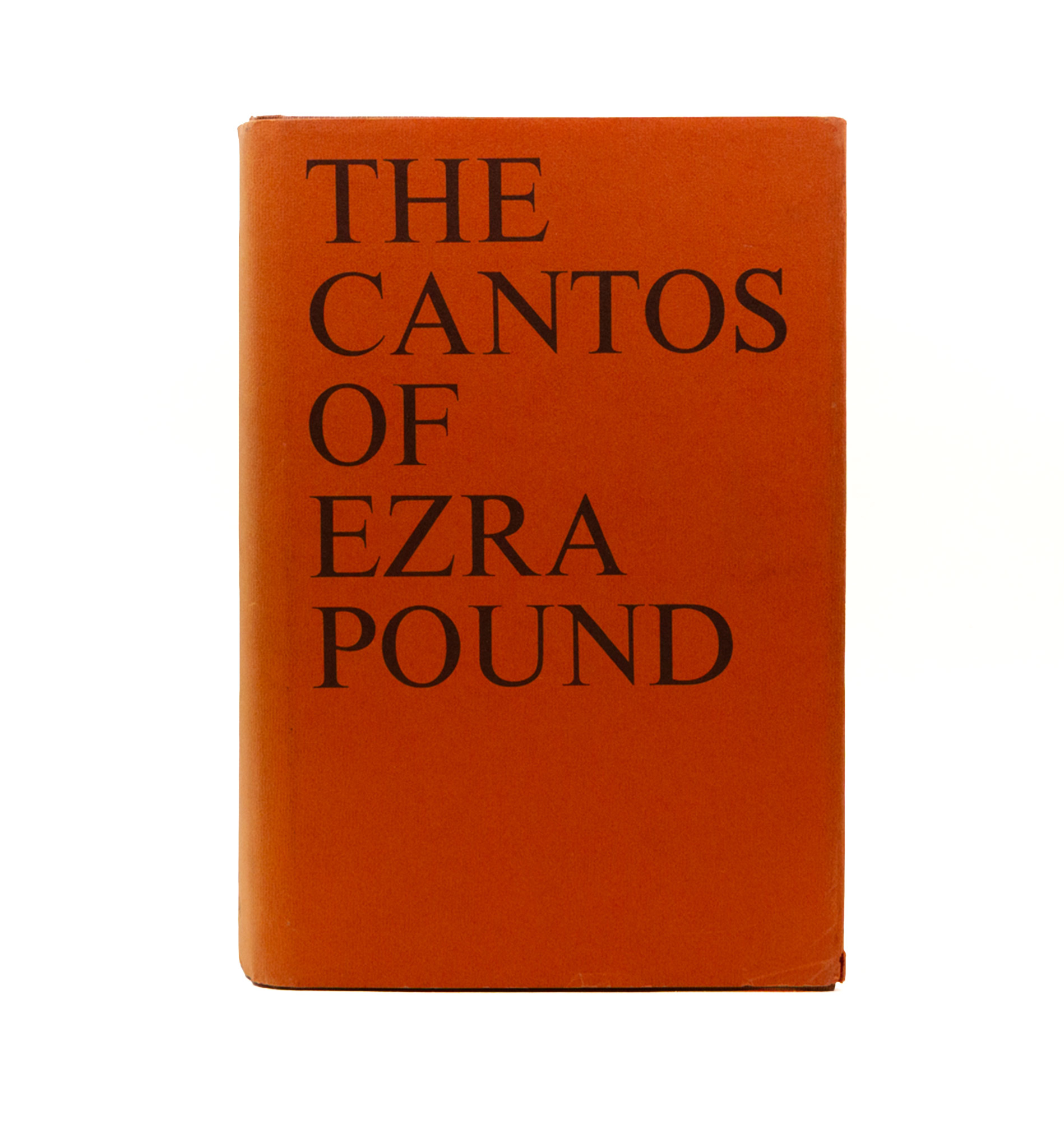
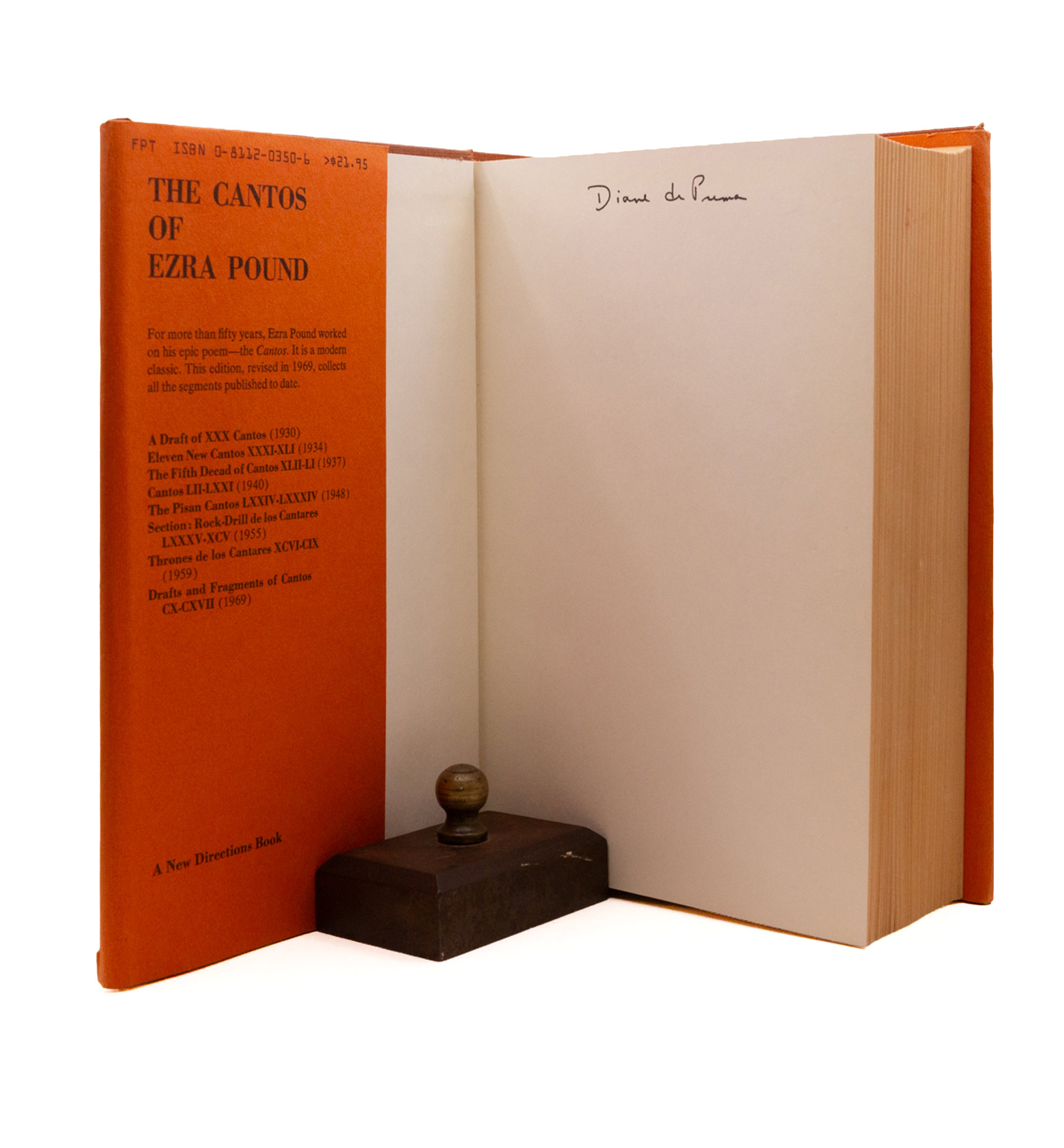
The Cantos; Diane di Prima’s copy
Ezra Pound
Published New York: New Directions, 1983
803pp.; 21 x 14.3 cm. Pale red cloth stamped in black to spine. Orange dust-jacket printed in black.
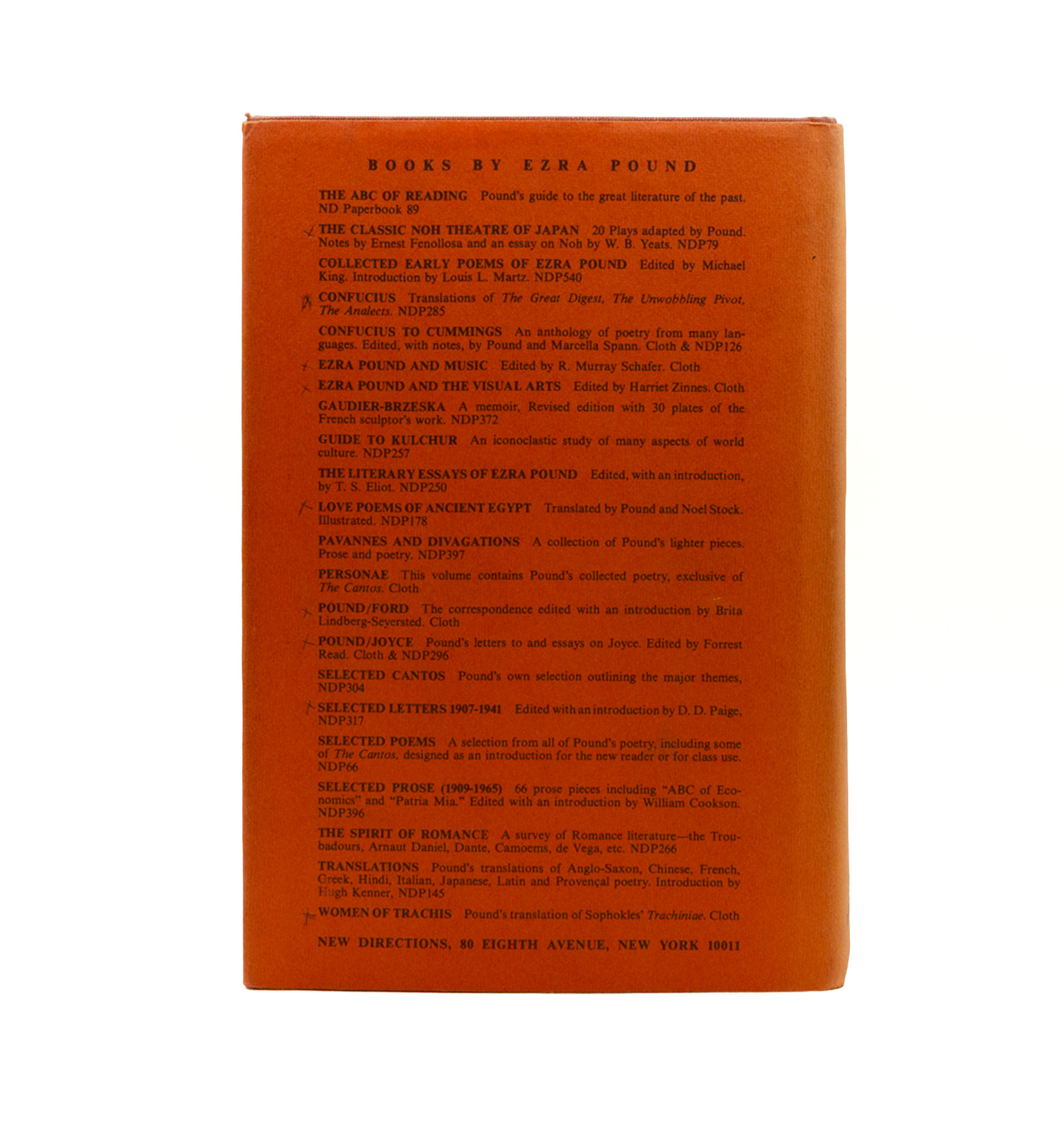
Beat poet Diane di Prima’s copy of The Cantos, with her ownership inscription, undated, to the ffep. di Prima’s only annotation is an underlining in black ink of “imperceptible” in Canto 81; as a grace quasi imperceptible. Otherwise the ownership is very subtle, two accidental pencil marks; the occasional yet regular sharp indent in the upper corner, as if by nail; a light stain to one page; pressure on the fore-edge of Canto 74. The rear cover of the jacket has been used as a checklist, with 9 (cancelled to 8) out of 22 titles marked.
The Ninth Printing on a particularly nice but probably cheaper brown stock, collecting all sections other than the Italian Cantos, and without the Olga fragment, thus ending in “To be men not destroyers.”
A little edgewear to the jacket, spine faded with a crease running down its middle and a light stray pencil score. Book near fine, spine gently worked, with a little shelf-wear.
tap to cycle
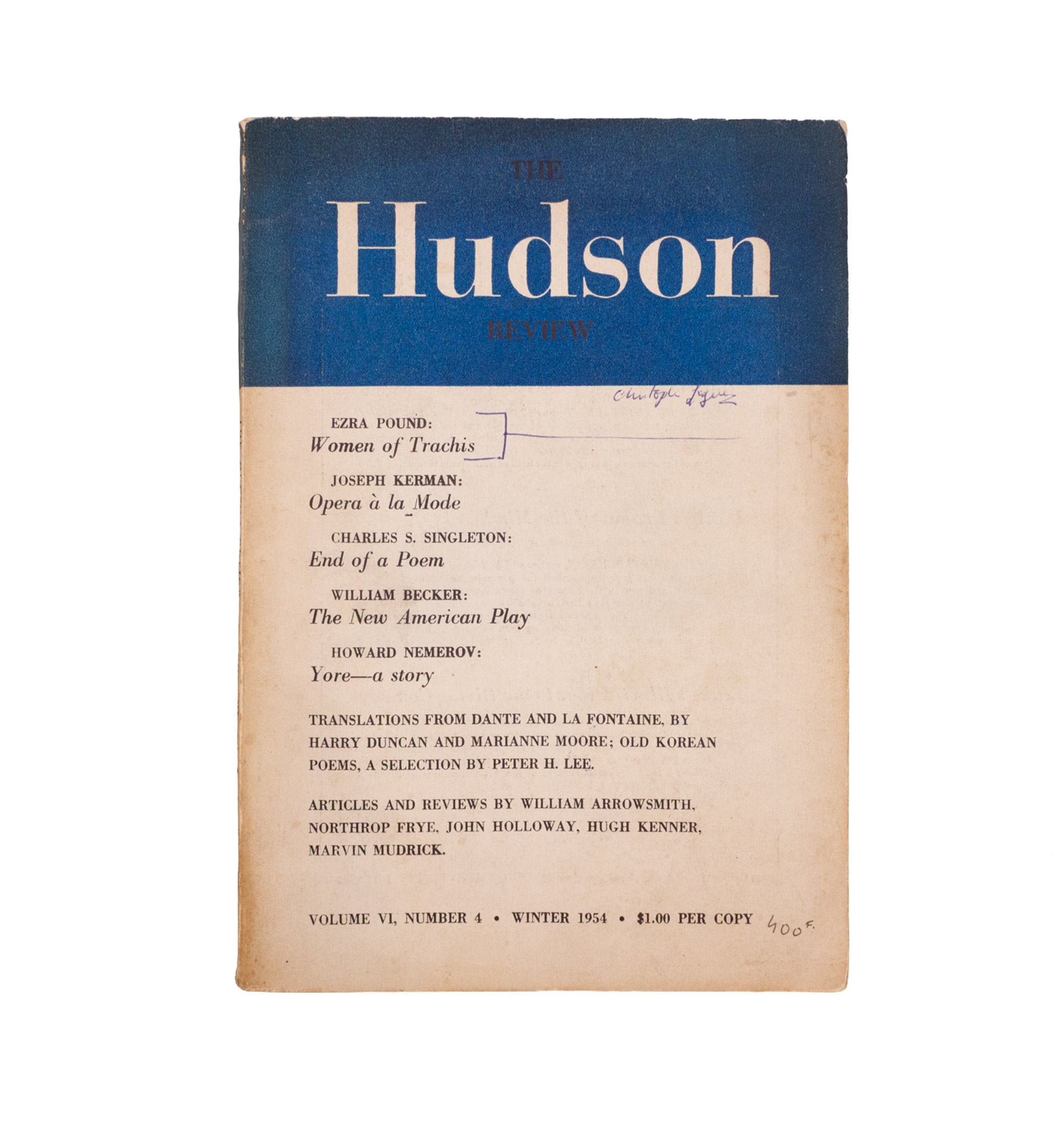
The Women of Trachis in the Hudson Review; Christopher Logue’s copy
Ezra Pound
Published New York: The Hudson Review, 1954
164pp.; 24.9 x 17.5 cm. Heavy paper wraps printed in blue and black.
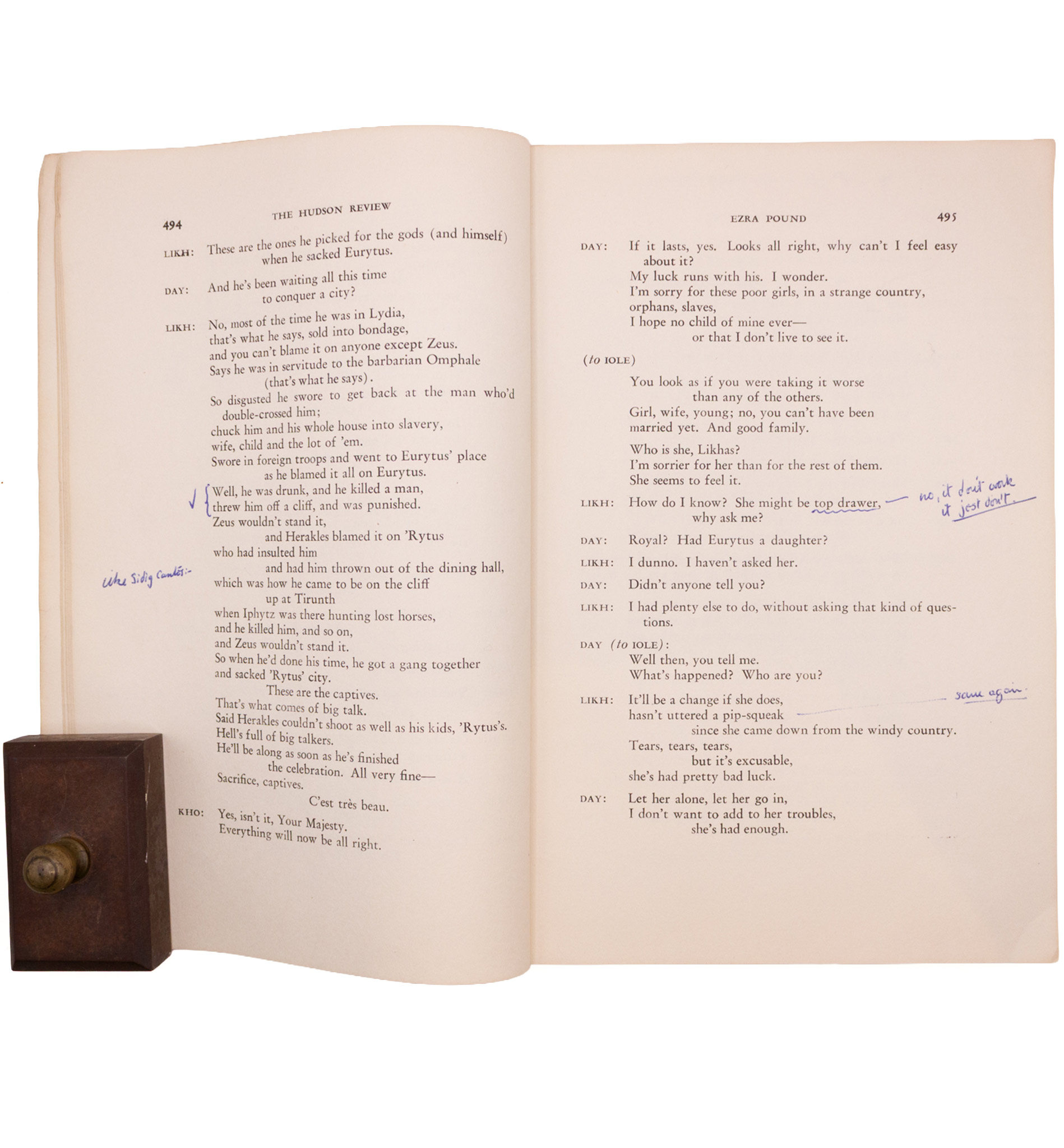
Christopher Logue’s copy of Trax, its first appearance in the Hudson Review, Vol. VI No. 4 (Winter 1954), annotated throughout,
ouch!
oh no! no!
no, it don’t work / it jest don’t.
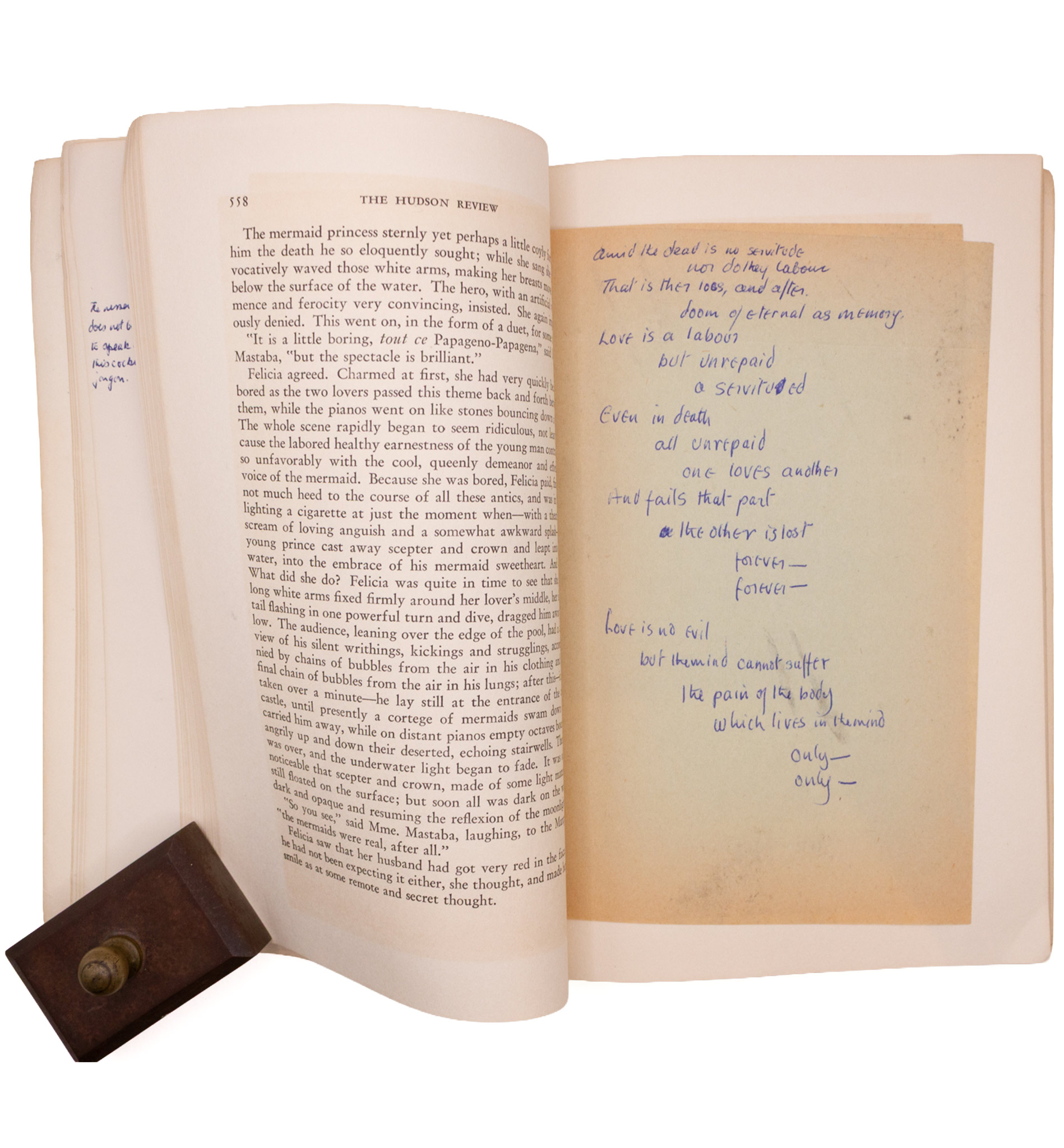
With a laid-in poem in Logue’s hand on a thin, faded piece of green paper which has left offsetting to p. 558-9, that reads
amid the dead is no servitude
nor do they labour
That is their loss, and after
doom of eternal as memory.
Love is a labour
but unrepaid
a servitued
Even in death
all unrepaid
one loves another
And fails that part
the other is lost
forever—
forever—
Love is no evil
but the mind cannot suffer
the pain of the body
which lives in the mind
only—
only—

tap to cycle
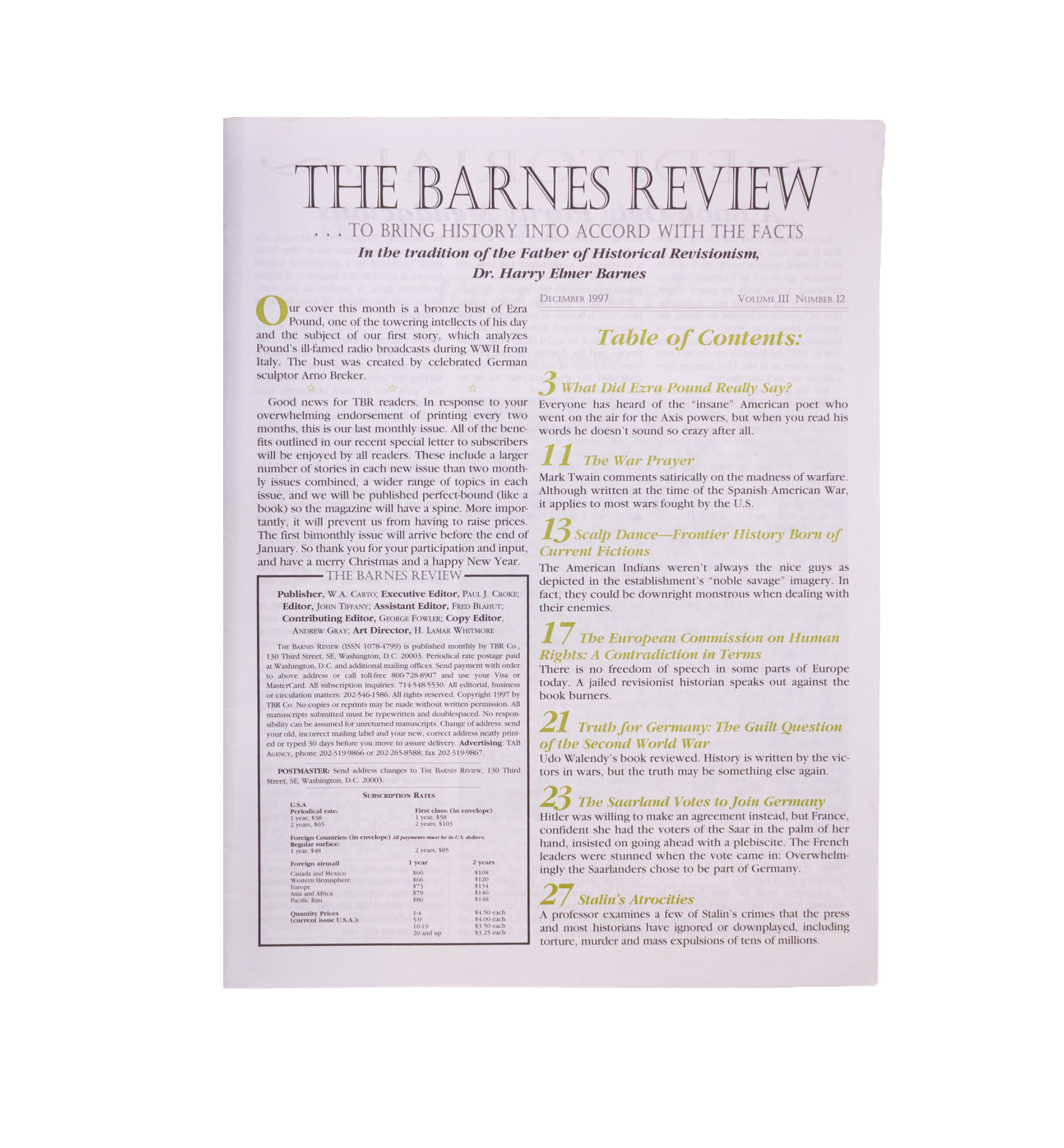
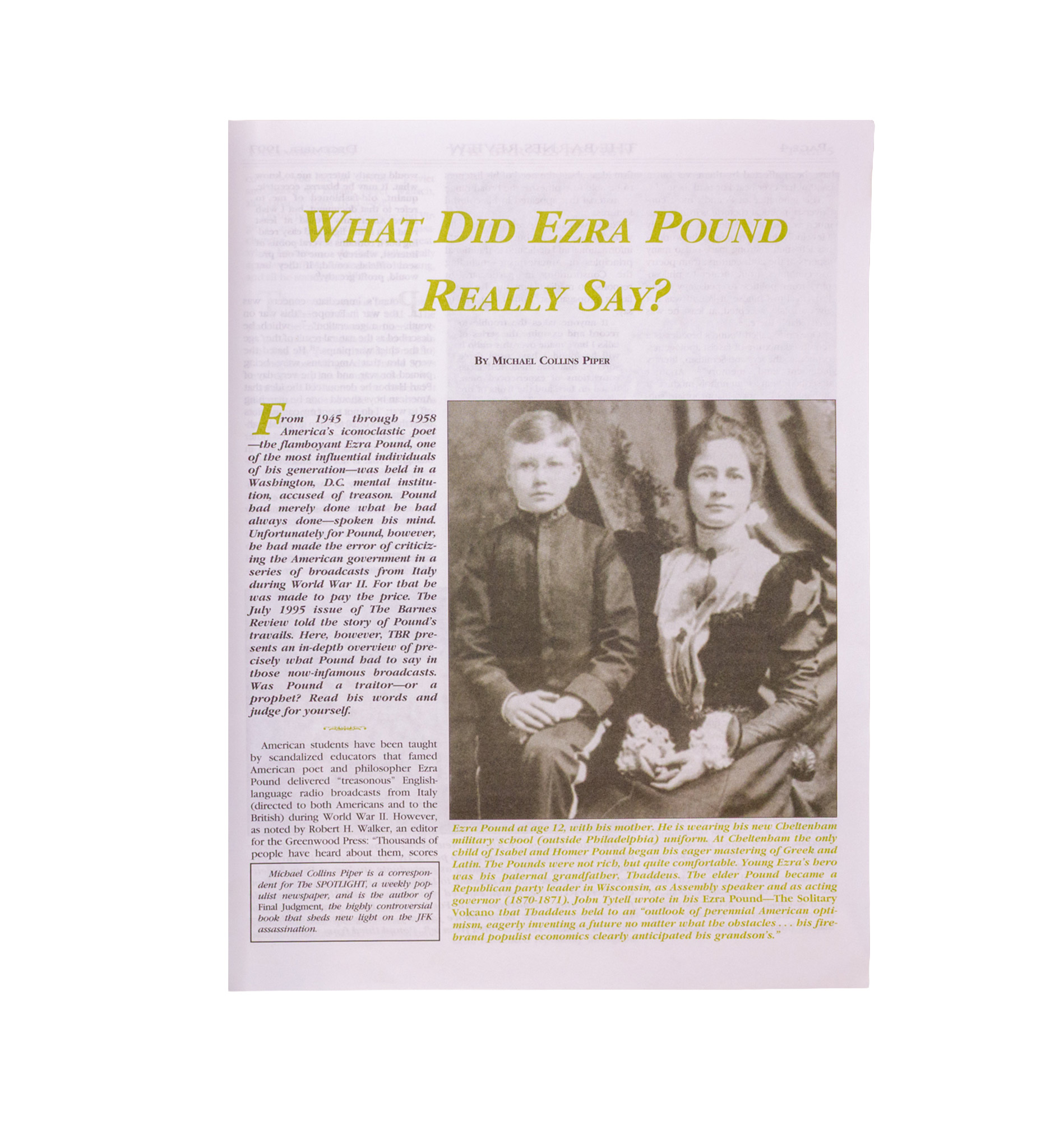
What Did Ezra Pound Really Say?; in The Barnes Review, December 1997
John Tiffany, editor
Michael Collins Piper, contributor
Published Washington, D.C.: W. A. Carto, The Barnes Review Co., 1997
32pp.; 17.7 x 21.3 cm. Printed paper wraps, stapled.
TBR Vol. III No. 12. Containing an article by Michael Collins Piper on Pound’s geopolitical attitudes formed, save the sequiturs, entirely from the Radio Speeches edited by Doob. Reproduces an image of Pound’s bust by Arno Breker to front cover, with further pics of EP and St Lizs throughout the article.
tap to cycle
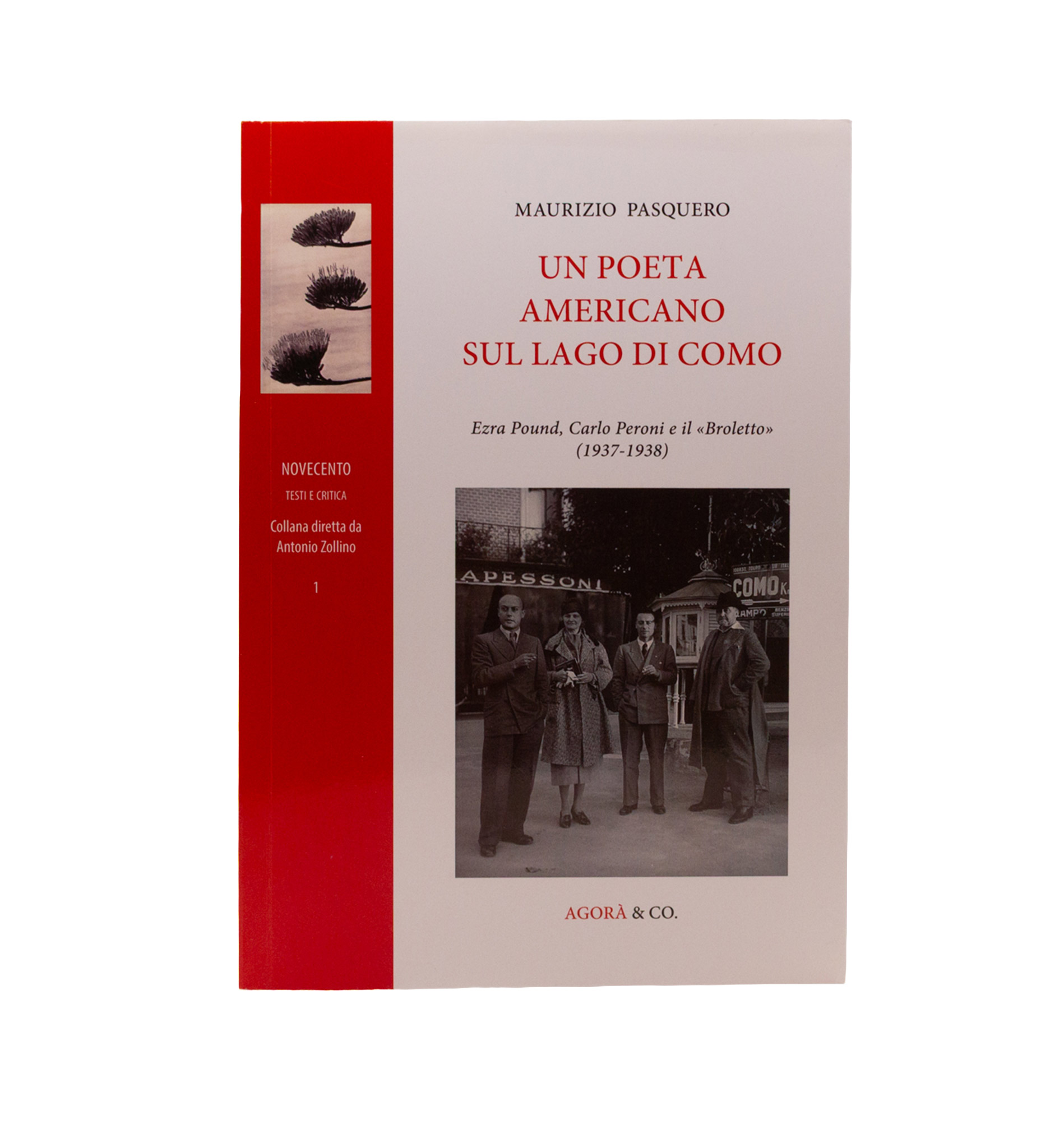
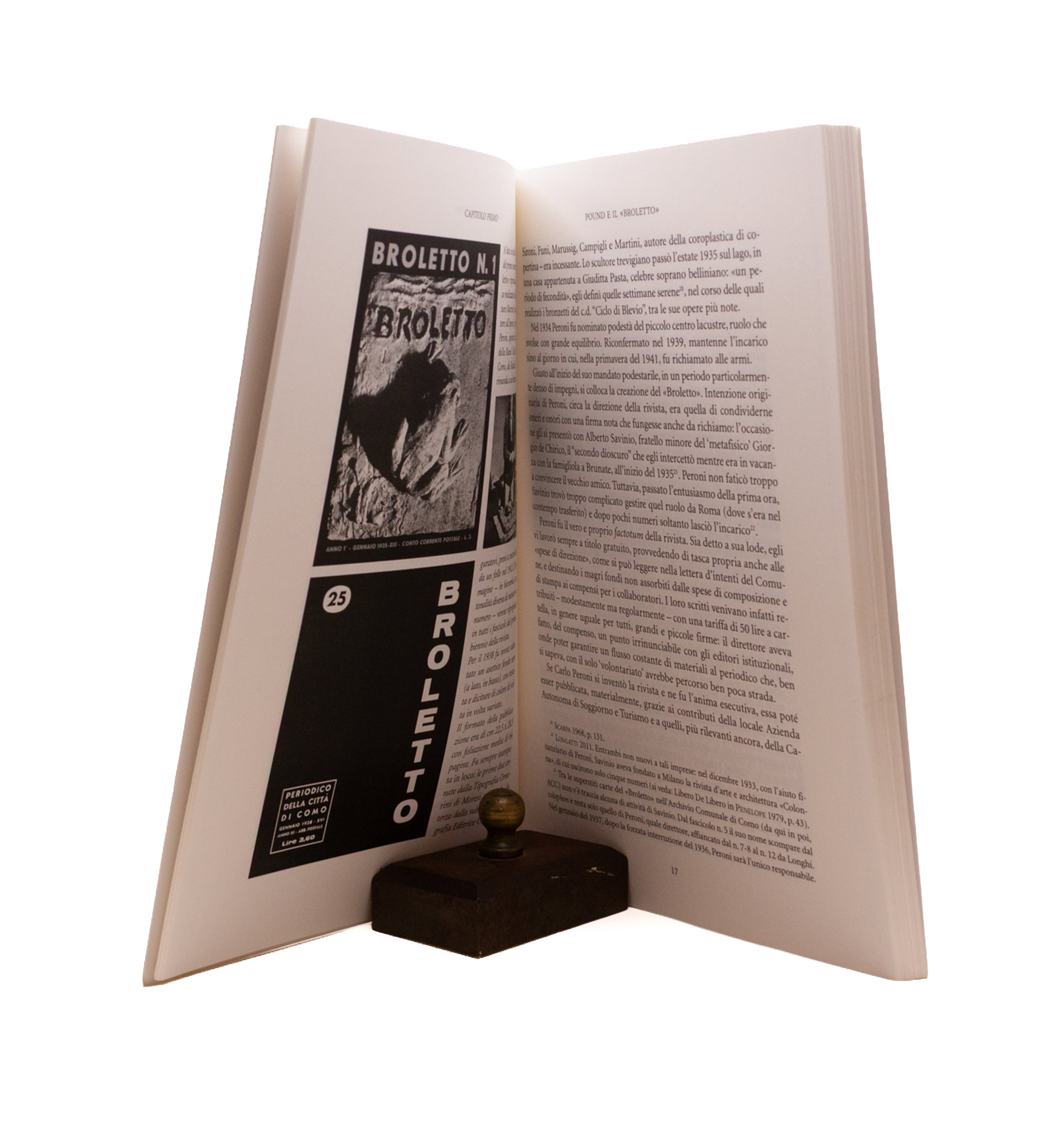
Un Poeta American sul Lago di Como: Ezra Pound, Carlo Peroni e il «Broletto»
Maurizio Pasquero
Published Lugano: Agorà & Co., 2014
158pp.; 13.5 x 16.6 cm. Stiff white paper wrappers printed in red and black.
A selection of contributions to the Italian journal Broletto, edited and introduced in three chapters by Pasquero. Authors of articles include EP, Lina Caico, Ubaldo degli Uberti, Edmund Dodsworth, Carlo Izzo, Katue Kitasono and Olga Rudge. A near fine copy, lightly handled and faintest toning to top-edge.