de Beaumont Rares
debeaumontrares@gmail.com

A. David Moody
Books from the library of A. David Moody, Emeritus Professor of English and Related Literature at the University of York, author of the three volume critical biography, Ezra Pound: Poet. A Portrait of the Man & His Work, contributor to Agenda and Paideuma, and recipient of the Ezra Pound Society Book Prize in 2011 for his editing, alongside Joanna Moody and Mary de Rachewiltz, of Ezra Pound to His Parents. Letters 1895-1929.
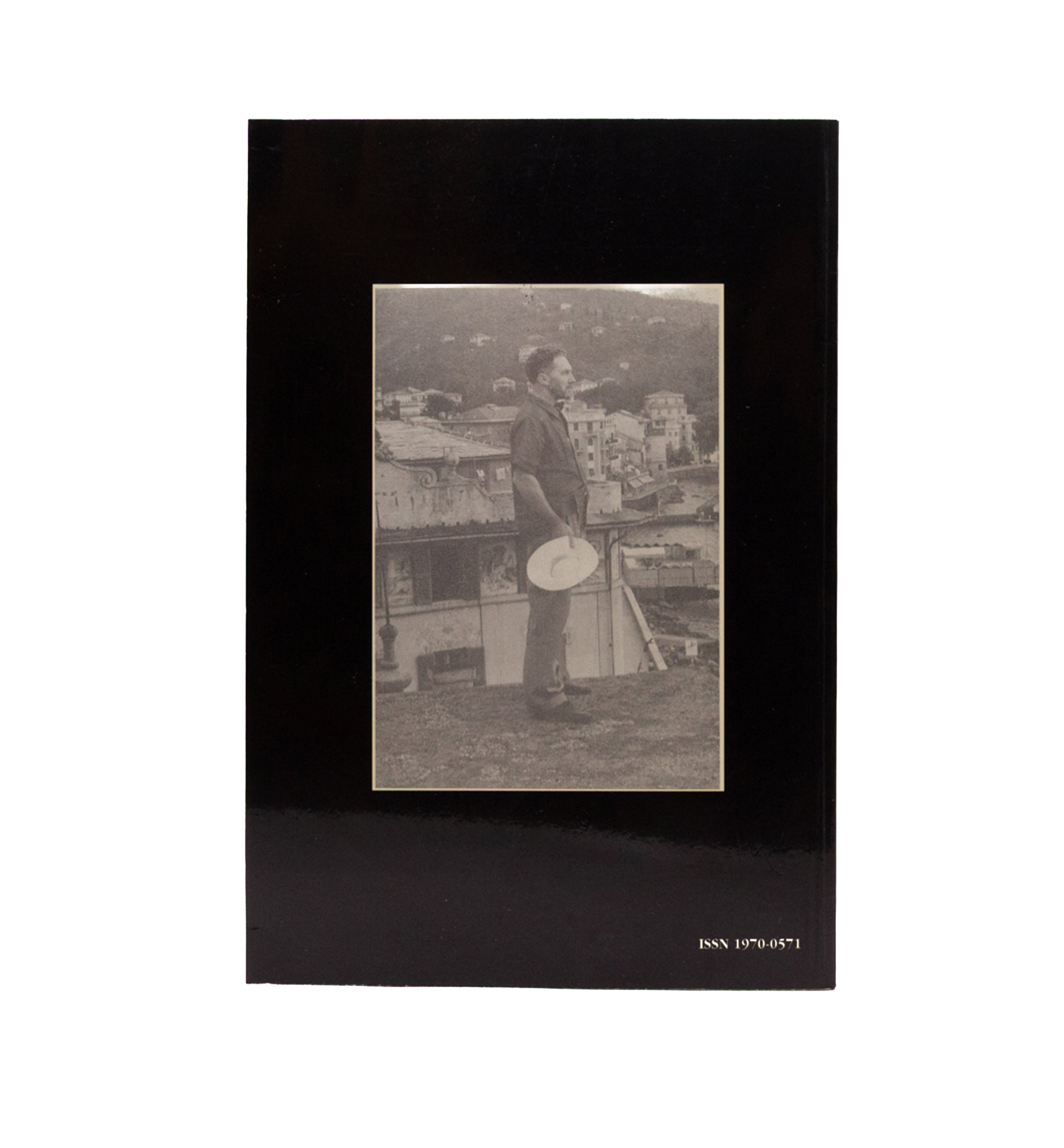
Cover photo by Walter Baumann, Brunnenburg, 1991.
tap to cycle
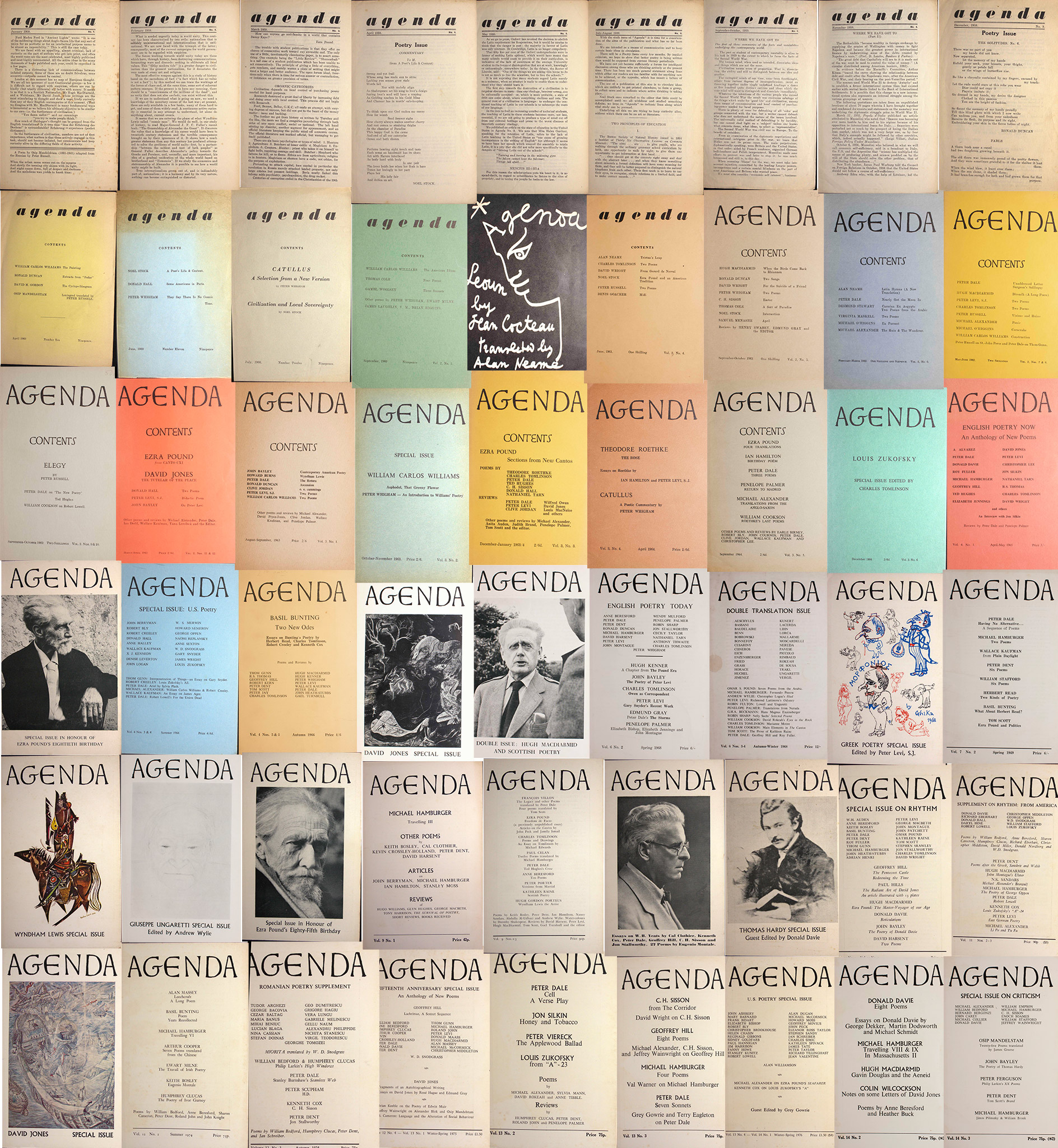
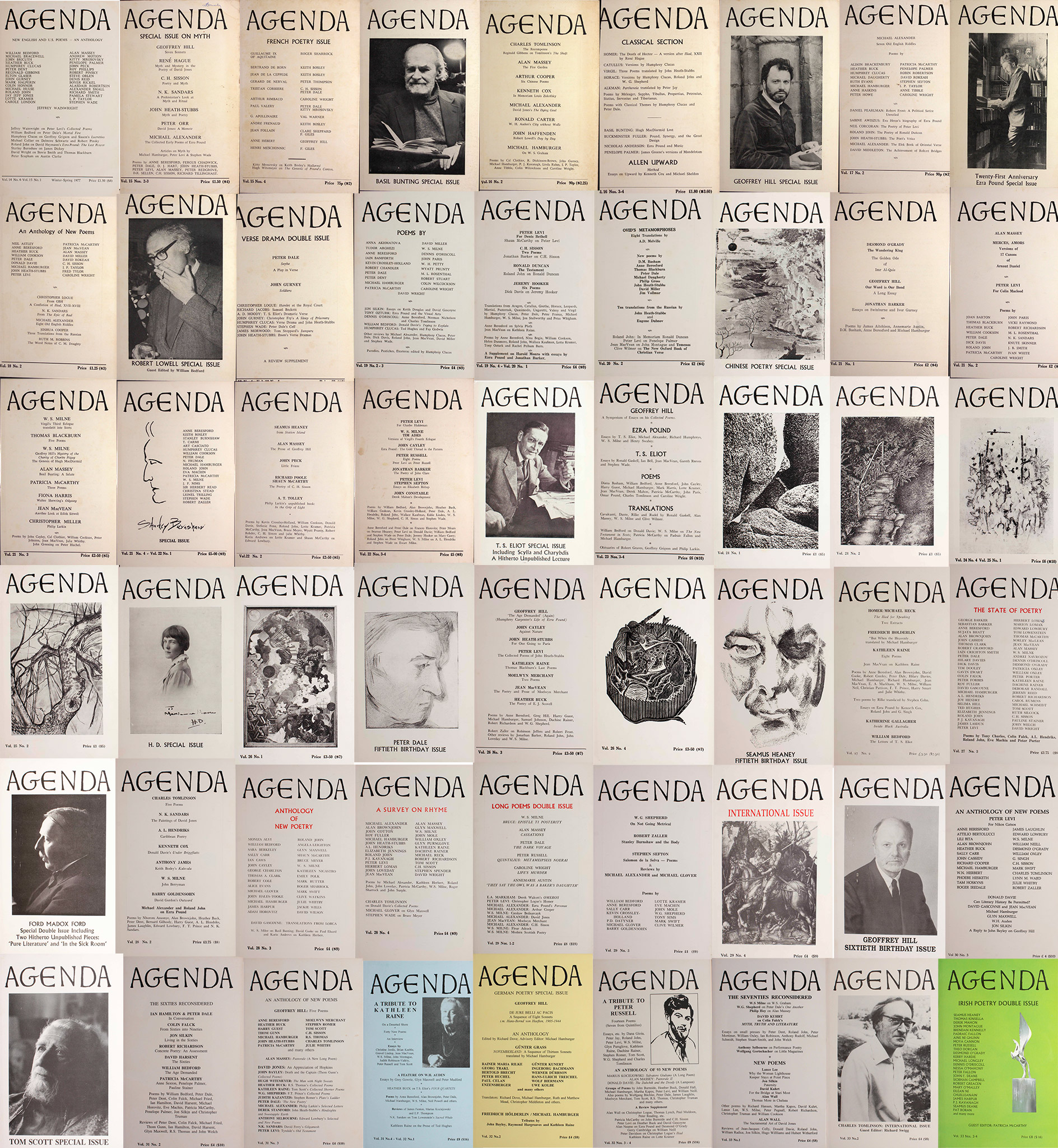
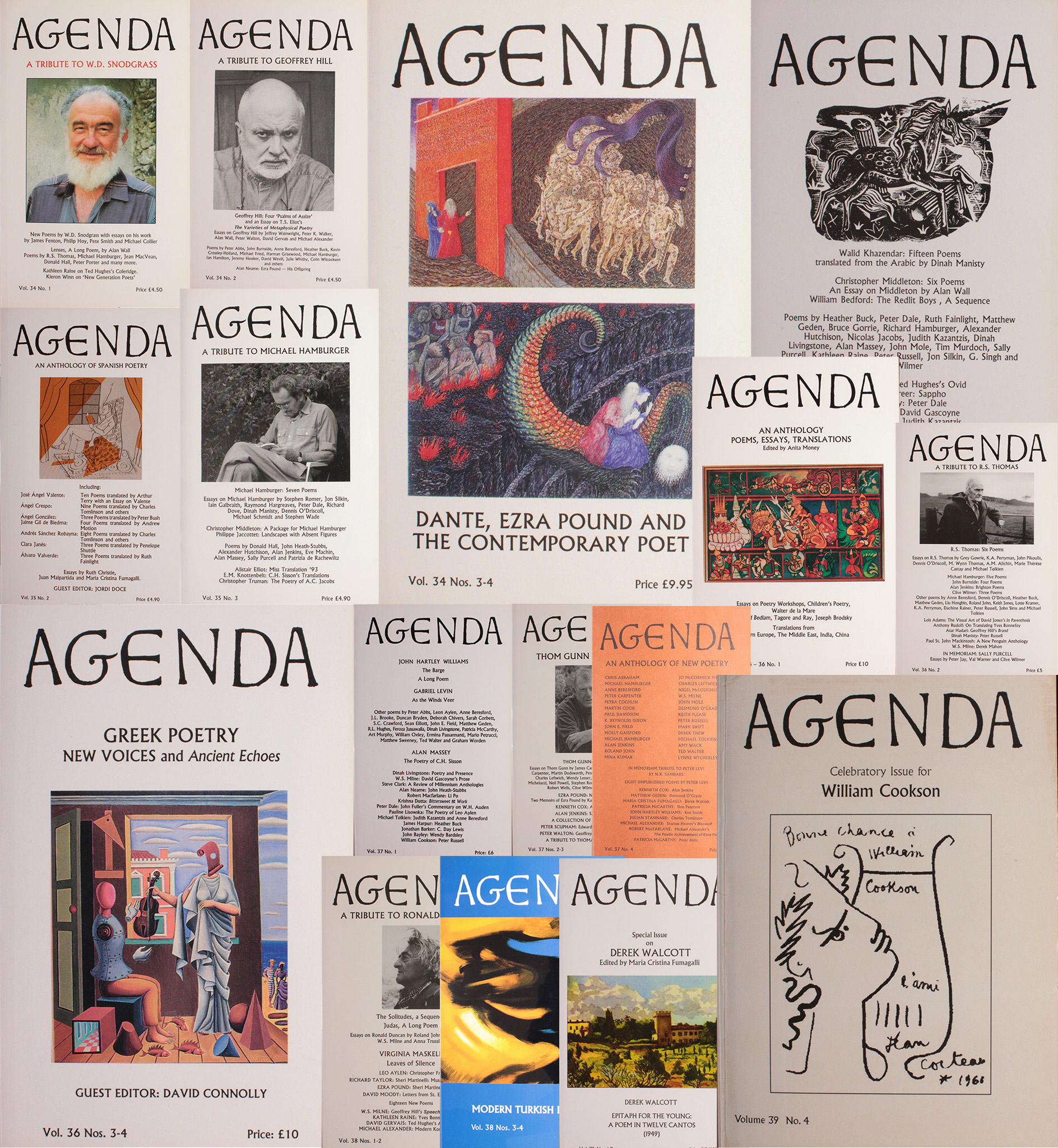
Agenda; a complete set
William Cookson, editor
Published London: Agenda, 1959-2003
125 issues. The first 9, a single sheet folded once, printed in black; 22.9 x 14.6 cm. The following 21 issues bound in oversized coloured wraps, wire-stitched and printed in black; each c. 21.5 x 14 cm with outliers. After which all issues are perfect-bound, mostly in white, stiff, glossy paper wraps measuring 21.4 x 14.4 cm.
Part of Periodicals, I
39 consecutive and complete volumes over 125 issues. A complete set under William Cookson’s editorship, up to and including the Celebratory Issue for William Cookson, edited by Patricia McCarthy, accompanied by the first “Broadsheet 1.”
Consists in the main of curated issues, either upon a theme (e.g. “Rhyme Issue,” or “Myth Issue”) or dedicated to a certain writer, modern (Pound, Williams, H. D., Eliot), contemporary (Charles Tomlinson, Kathleen Raine, Basil Bunting) or historic (Arnaut Daniel, Dante) to name but a few from this diverse, expansive, Pound-appreciating magazine of poetry.
At least a very good set; light, general aging throughout. With ephemera as issued laid-in throughout.

tap to cycle
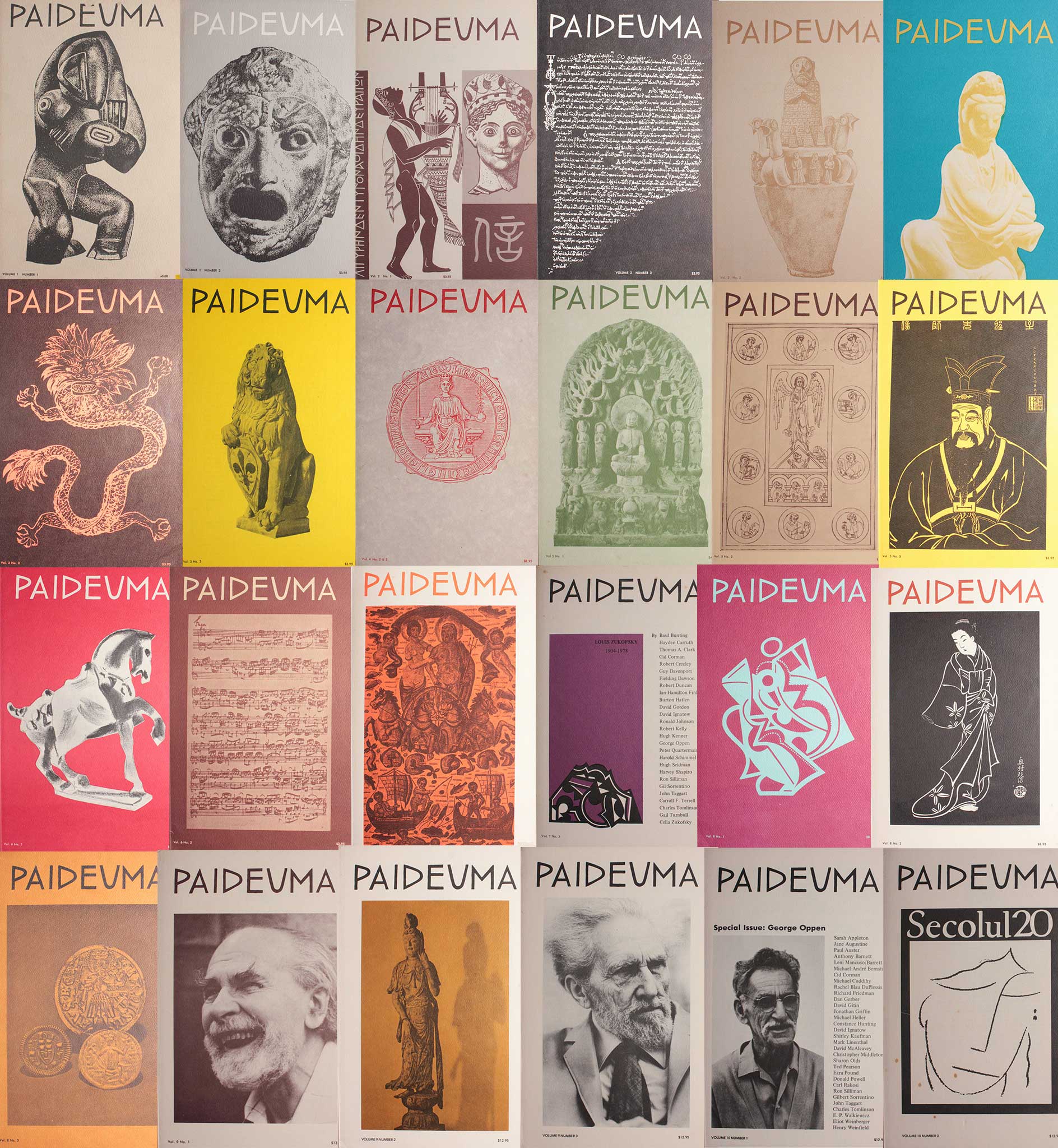
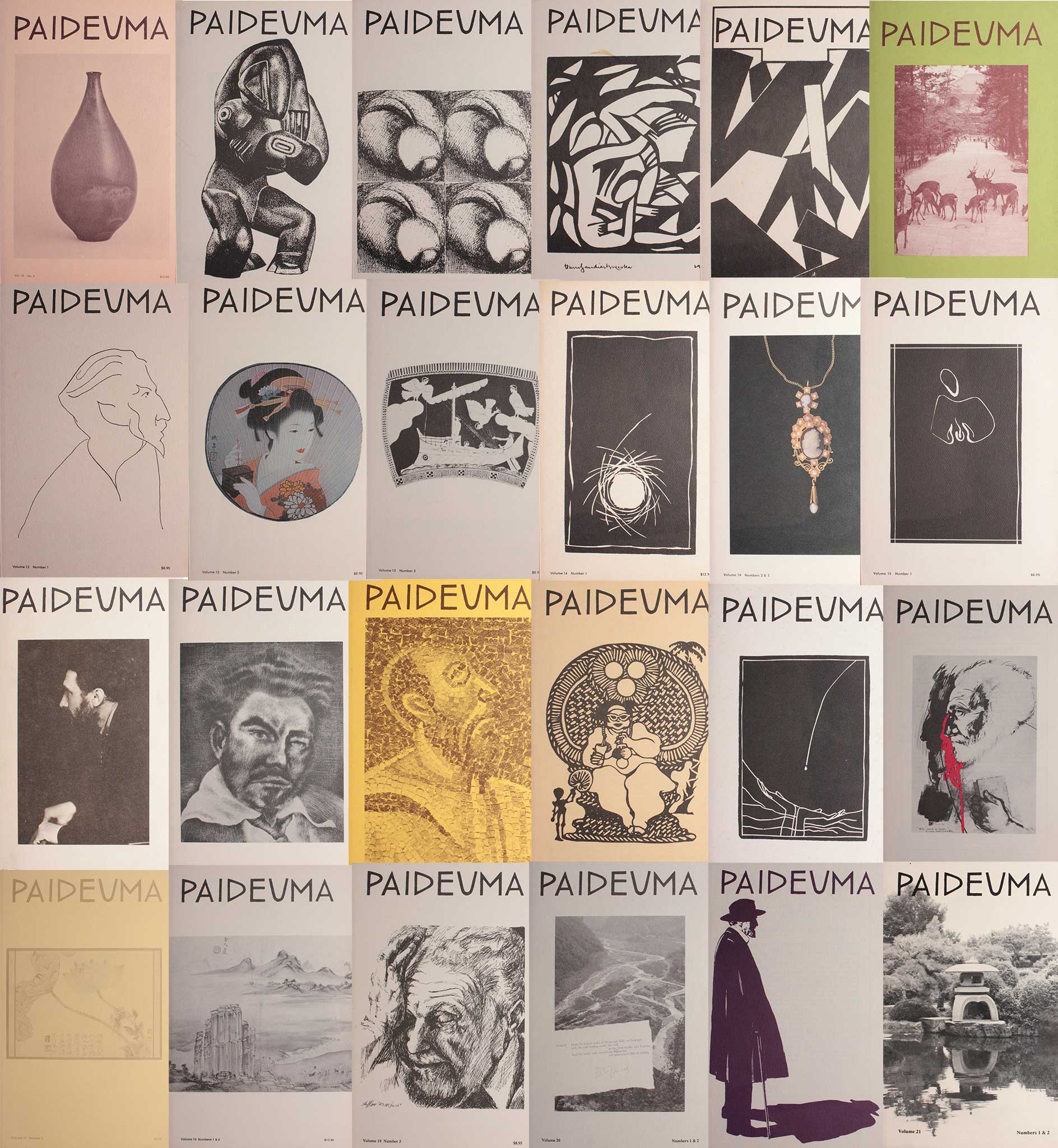
Paideuma; a complete set
Carroll F. Terrell, editor
Published Orono: University of Maine, 1972-2016
84 issues; c. 22.8 x 15.2 cm each. Printed paper wraps.
Part of Periodicals, I
43 consecutive and complete volumes across 84 issues. The centre of Poundian scholarship for the latter half of the twentieth century, containing thousands of contributions, essays, reviews, bibliographic studies, poems, photographs, and letters.
The journal ran for 31 volumes as A Journal Devoted to Ezra Pound Scholarship, but with C. F. Terrell’s retirement and passing (Volume 31 containing a laid-in “In Memoriam” and Volume 32 containing a laid-in invite to a memorial celebration), the journal was redirected to Studies in American and British Modernist Poetry which continue to this day (every volume postdating this set available at paideuma.wordpress.com).
Very good or better, with minimal foxing and rubbing to covers, occasional tears to spine; Vols. 20 onwards at least near fine. With ephemera as issued throughout, the occasional sheet of notes or marginalia from David Moody.
tap to cycle
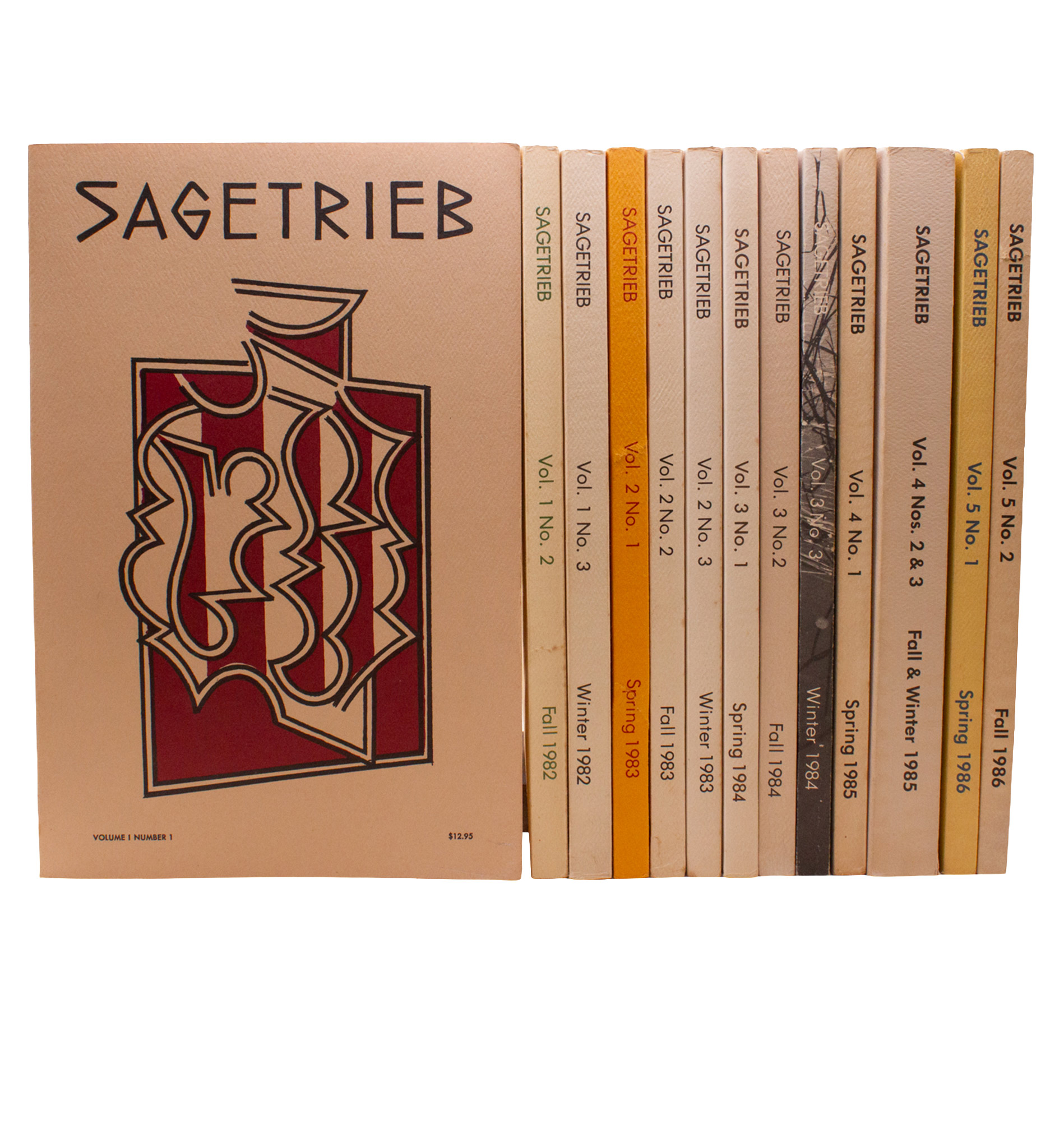
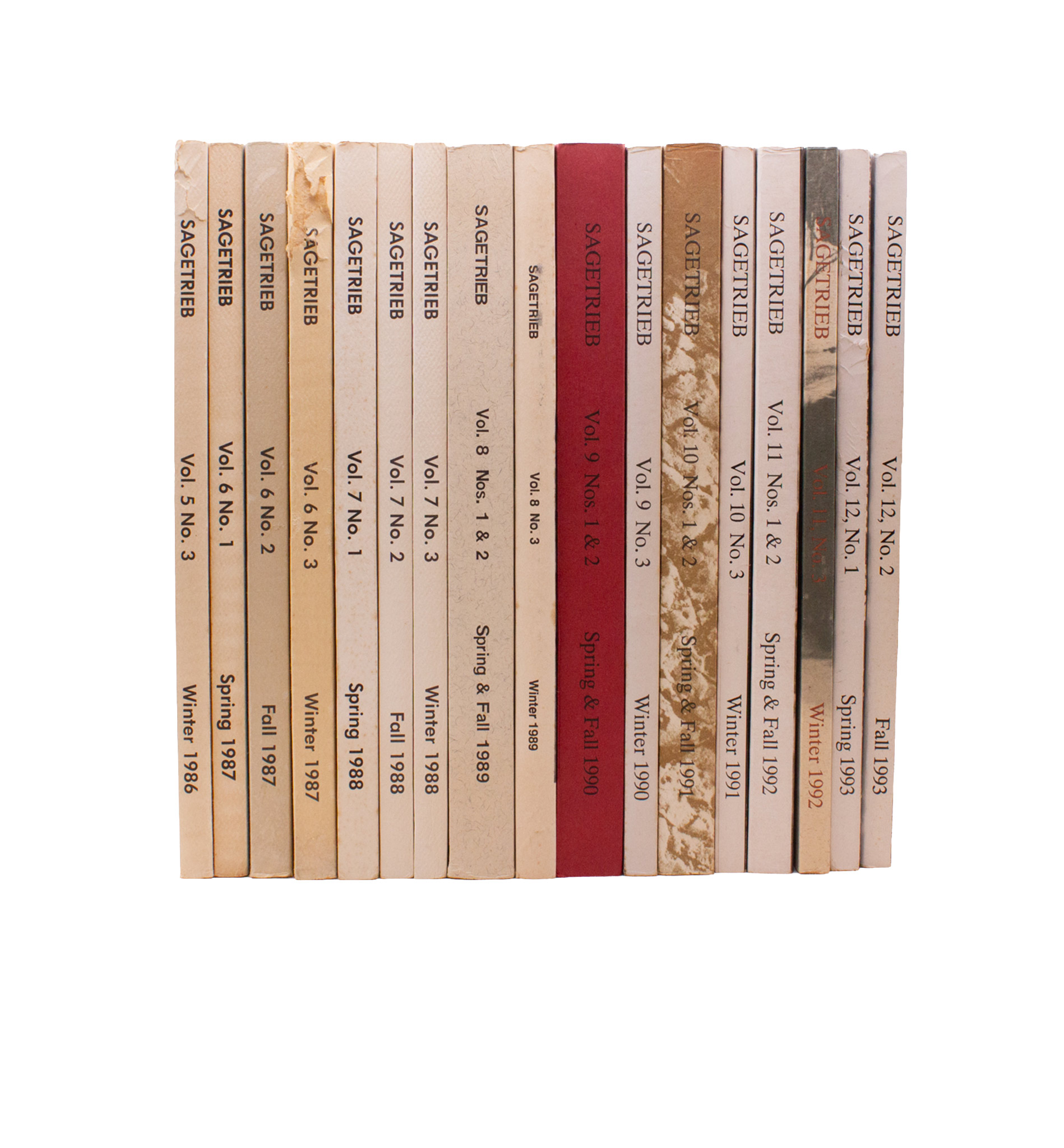
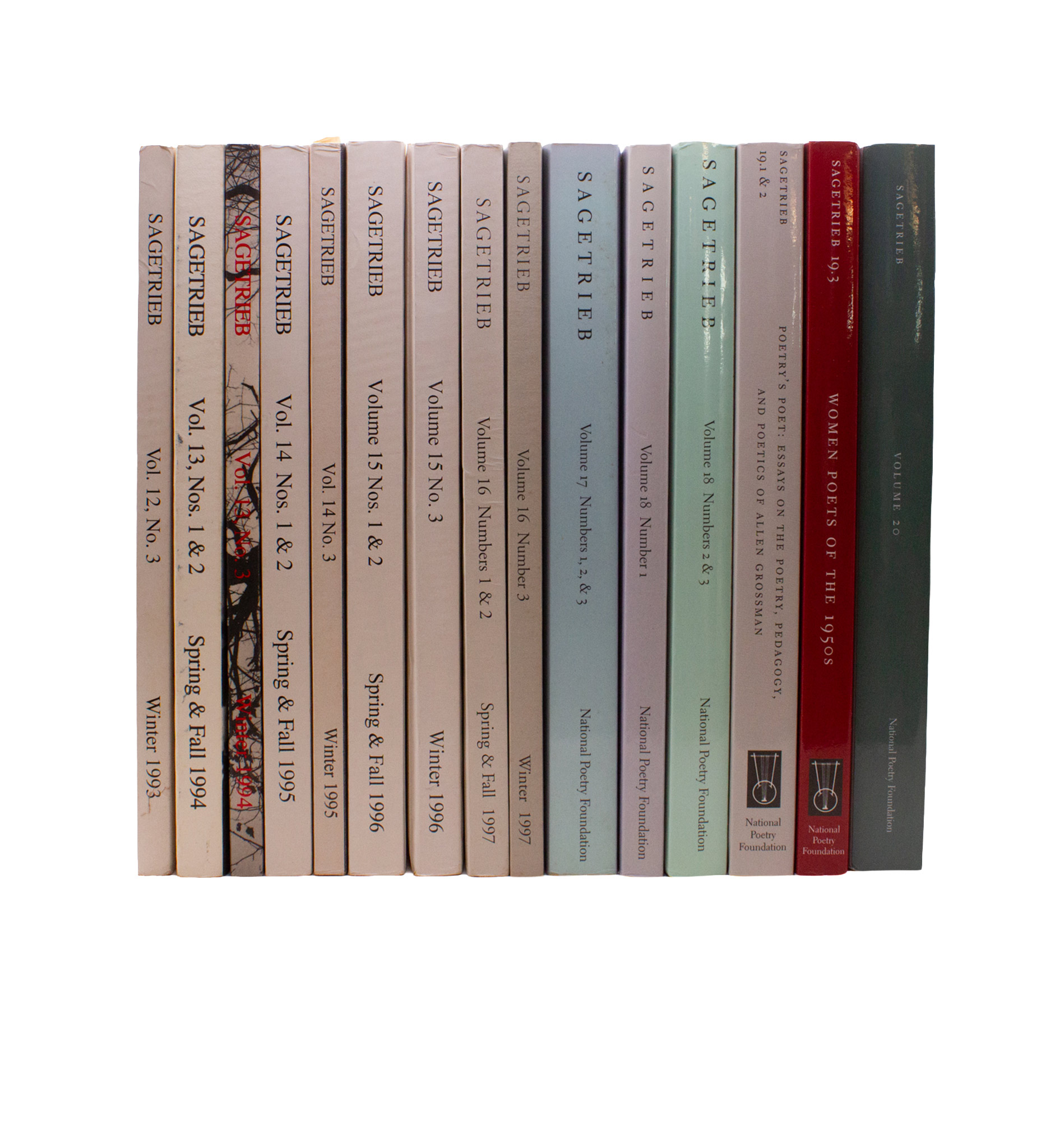
Sagetrieb; a complete set
Carroll F. Terrell, editor
Burton Hatlen, executive editor
Published Orono: University of Maine, 1960-61
45 issues; c. 22.8 x 15.2 cm each. Printed paper wraps, later glossy. Same as Paideuma.
Part of Periodicals, I
20 volumes consecutive and complete across 45 issues. Founded by C. F. Terrell, Sagetrieb served as compliment the Pound-centric nature of Paideuma, published in the same format with similar sectioning, bringing in a greater range of scholarship on writers such as W. C. Williams, H. D. (especially), Louis Zukofsky, George Oppen, Marianne Moore, Charles Reznikoff, Charles Olson, e. e. cummings, Basil Bunting, and on.
Primarily edited by Burton Hatlen (1936-2008) under Terrell’s aegis, the last issue (contents same as Paideuma Vol. 40) a tribute to Hatlen edited by Demetres Tryphonopoulos.
Most copies near fine; a little spotting on the covers of the older ones, cover of Vol. 5 No. 2 creased, the spine of the Marianne Moore Special Issue partly damaged. With the issue of “Bean News” laid-into the back of Vol. 15 No. 3.
tap to cycle
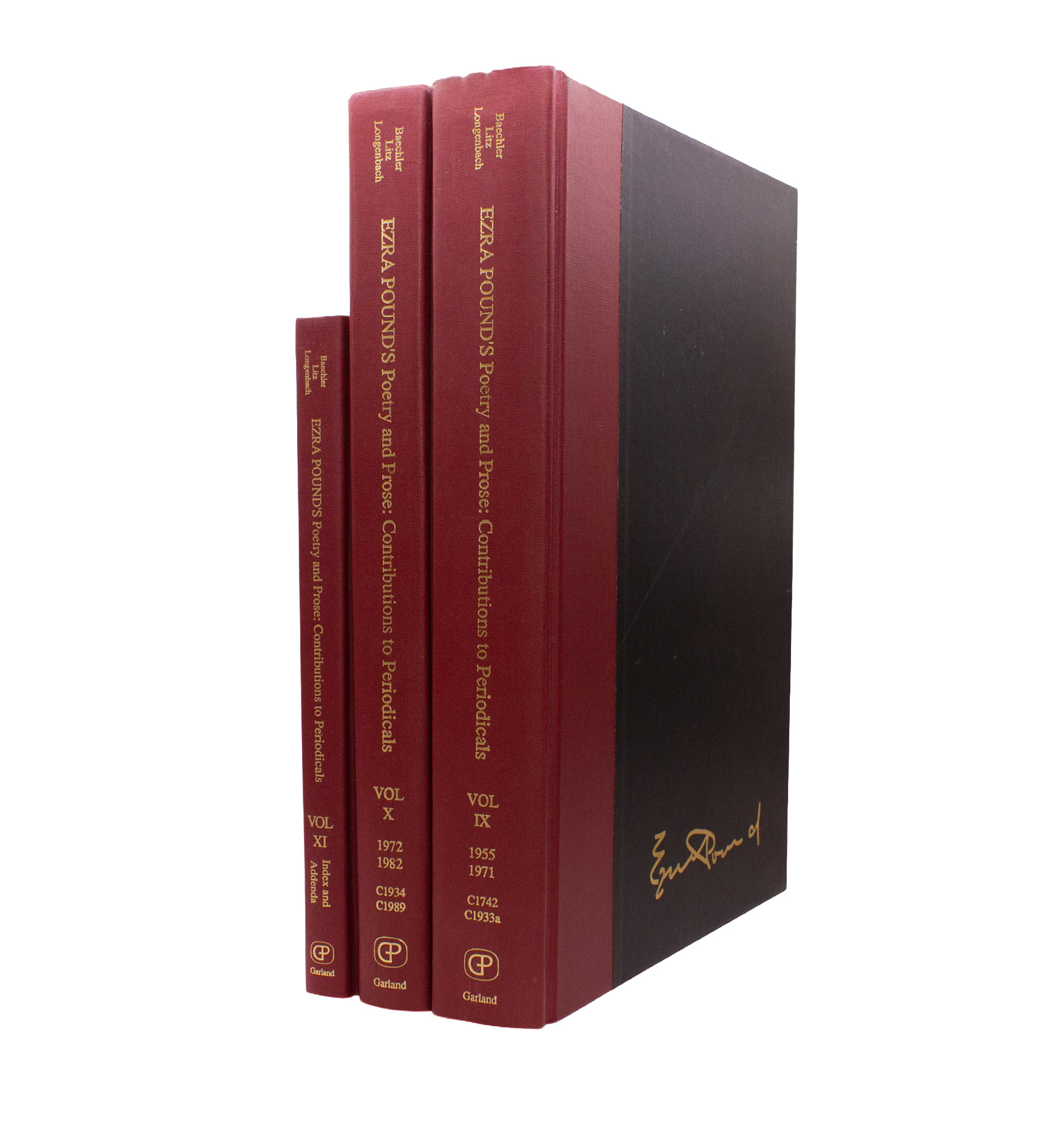
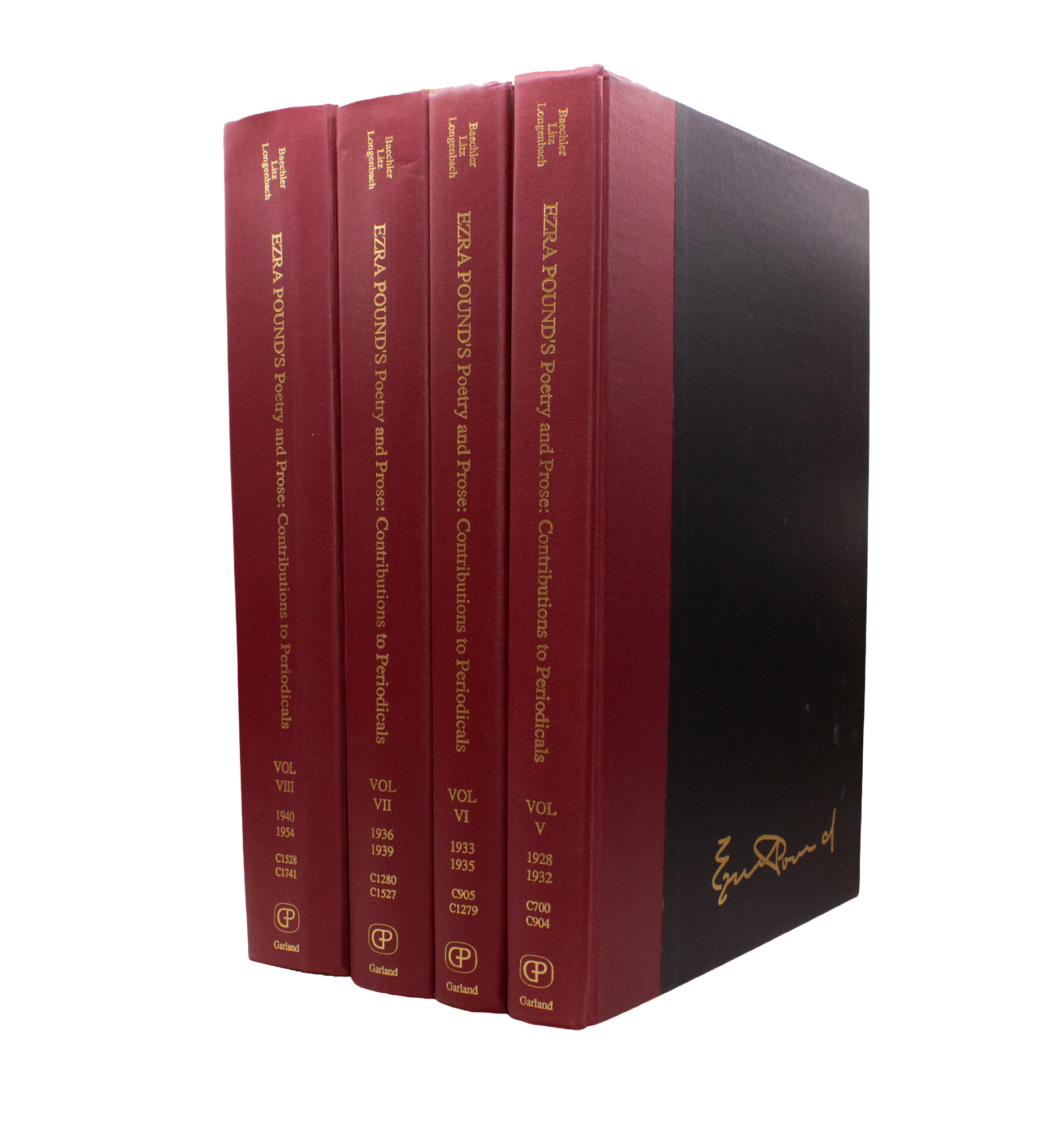
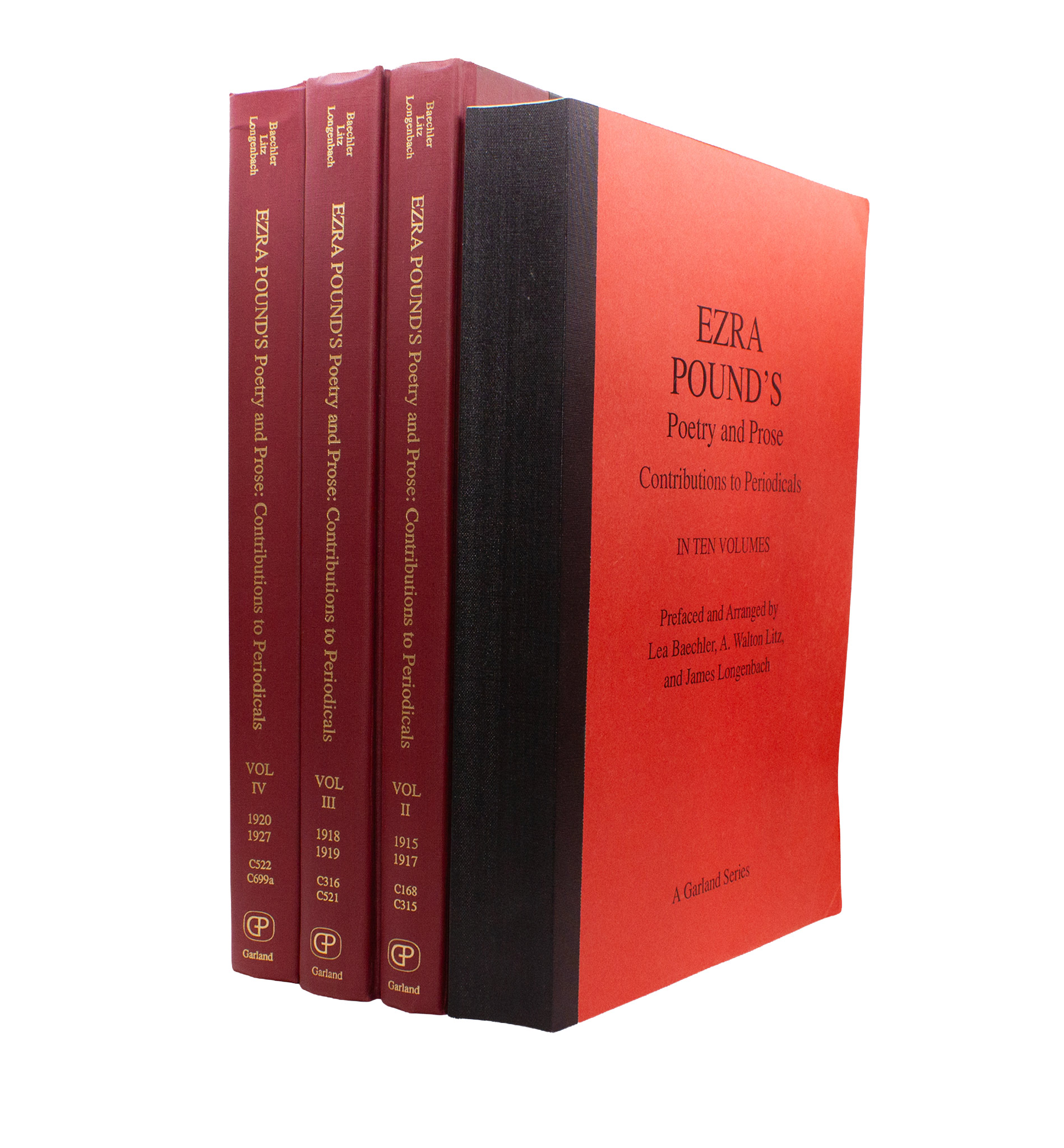
Contributions to Periodicals; a complete set
Ezra Pound
Lea Baechler, A. Walton Litz and James Longenbach, editors
Published New York and London: Garland Publishing, Inc., 1991
Vol. I: 320pp. recto only (i.e. 320ll.); 29.4 x 20.9 cm. Red paper wrappers printed in black, backed in heavy black cloth tape.
Vol. II-X: 3800pp. total; each c. 31 x 23.5 cm. Black paper cover boards printed in gold, backed in maroon cloth printed in gold down spine; maroon endpapers and pastedowns.
Vol. XI: 160pp.; 23.5 x 15.8 cm. Binding identical to II-X.
Part of Periodicals, I
A set of the most crucial resource in Pound studies, Ezra Pound’s Poetry and Prose: Contributions to Periodicals, containing scans of very nearly every item of Gallup C, over 2000 items spanning ten volumes plus a smaller eleventh Index and Addenda. A very good set, the occasional light scuffing to boards. The first volume is a photocopy reproduction from an original held at the University of York made by one of David Moody’s students; though purchased directly from the publisher, this set never came with a Vol. I.

tap to cycle
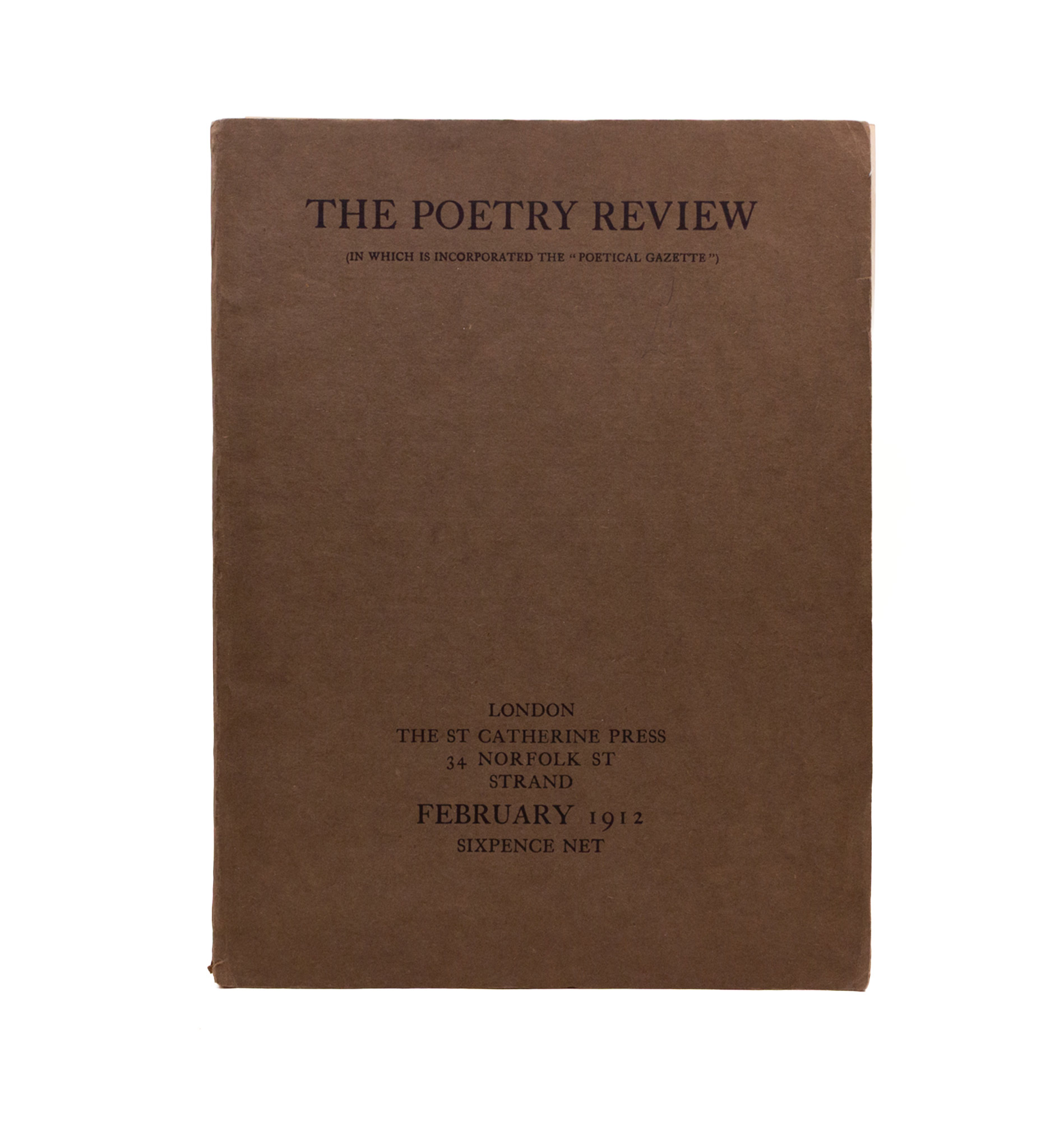
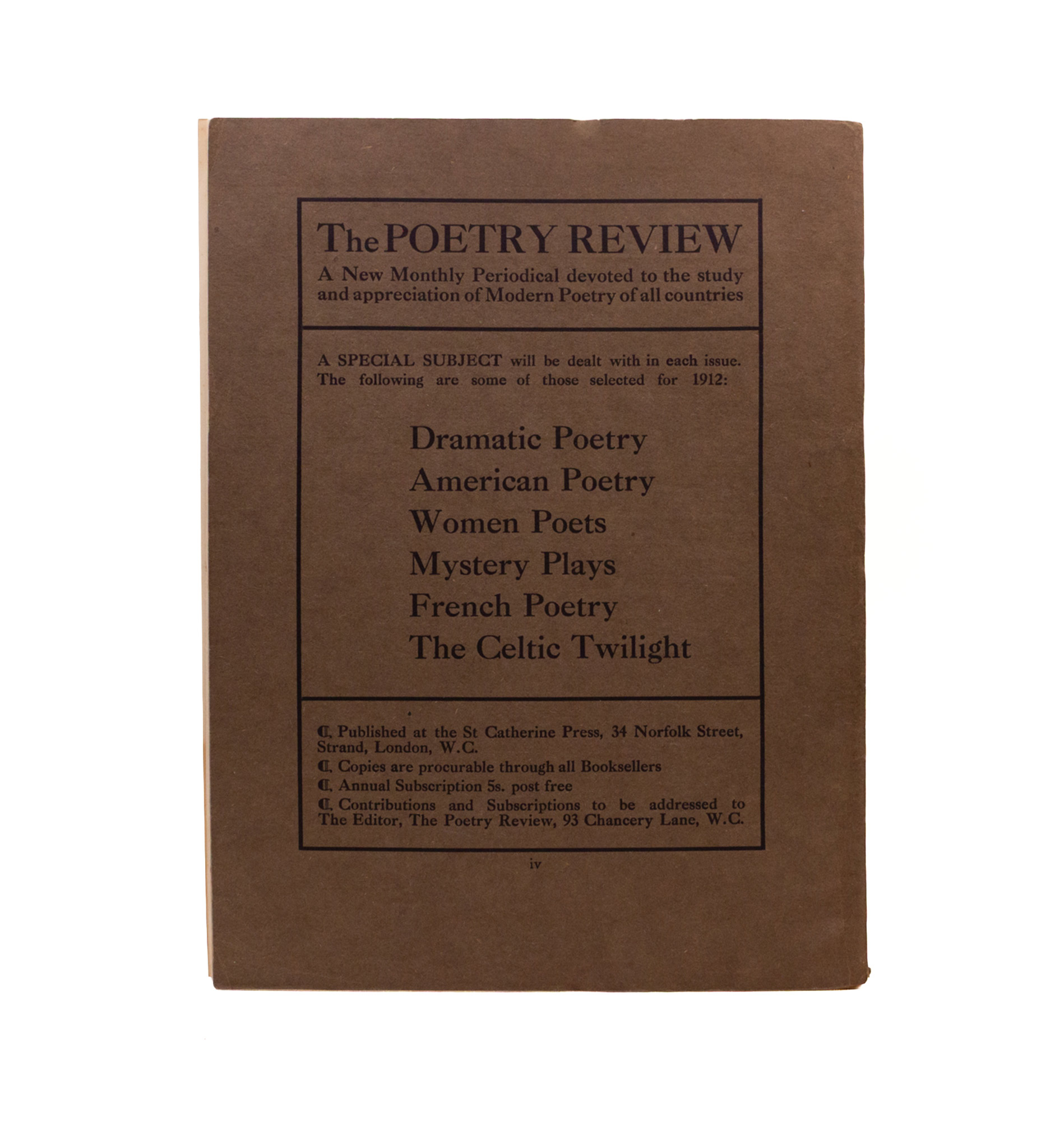
Oboes; in The Poetry Review, February 1912
Ezra Pound, contributor
Published London: The St Catherine Press, 1912
44pp.; 24.4 x 18.5 cm. Brown paper wraps printed in black.
Part of Periodicals, I
The Poetry Review, Number II, containing a number of contributions from EP, being Oboes (I. For a beery voice; II. After Heine; III. An Immorality)—Sub mare—L’Invitation—Dieu! Qu’il la fait—Δώρια, each appearing here for the first time. “Sub mare”, “Dieu! Qu’il la fait”, and “Δώρια” next appear in Ripostes, October 1912; “L’Invitation” not until the Collected Early Poems, 1976; and of “Oboes”, “An Immorality” appeared in Ripostes apart from the other two, which appeared without their “Immorality” in Umbra, 1920. An appeasing large paper production which unfortunately prints Pound’s verse in a smaller quotation size. A very good copy; small break to wraps at bottom of spine, pencil annotation “£1” to both front cover and contents page; small bump along top edge. Lay in on p.70-71 advertising drawings by Henry Ospovat, with a little foxing around there. Publisher’s errata for the January issue laid into p.82-3. Gallup C39.

tap to cycle
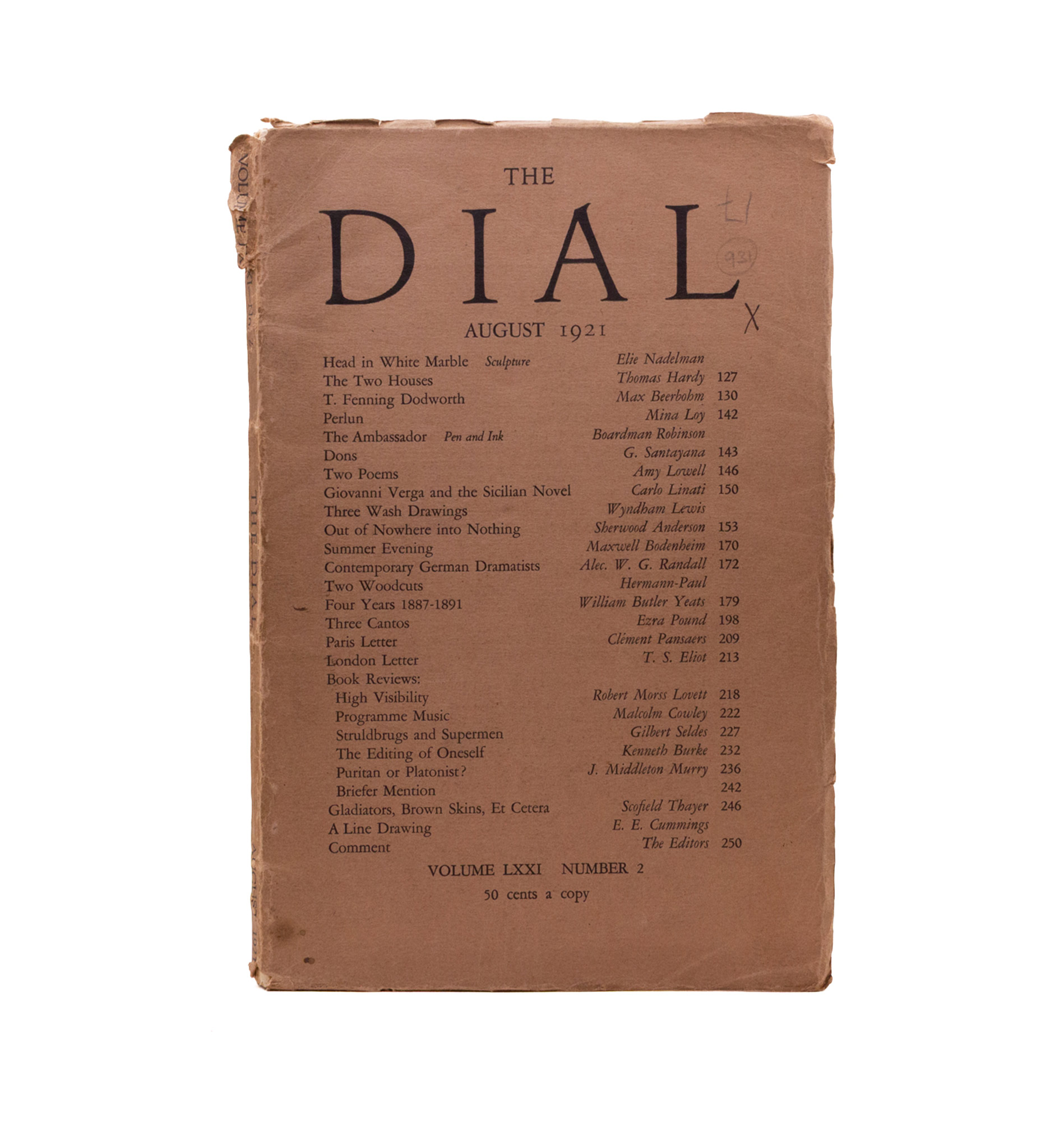
Three Cantos; in The Dial, August 1921
Scofield Thayer, editor
Ezra Pound, Mina Loy, Wyndham Lewis, T. S. Eliot, contributors
Published New York: The Dial Publishing Company, 1921
125pp.; 14.8 x 16.6 cm. Heavy tan paper wrappers printed in black.
Part of Periodicals, I
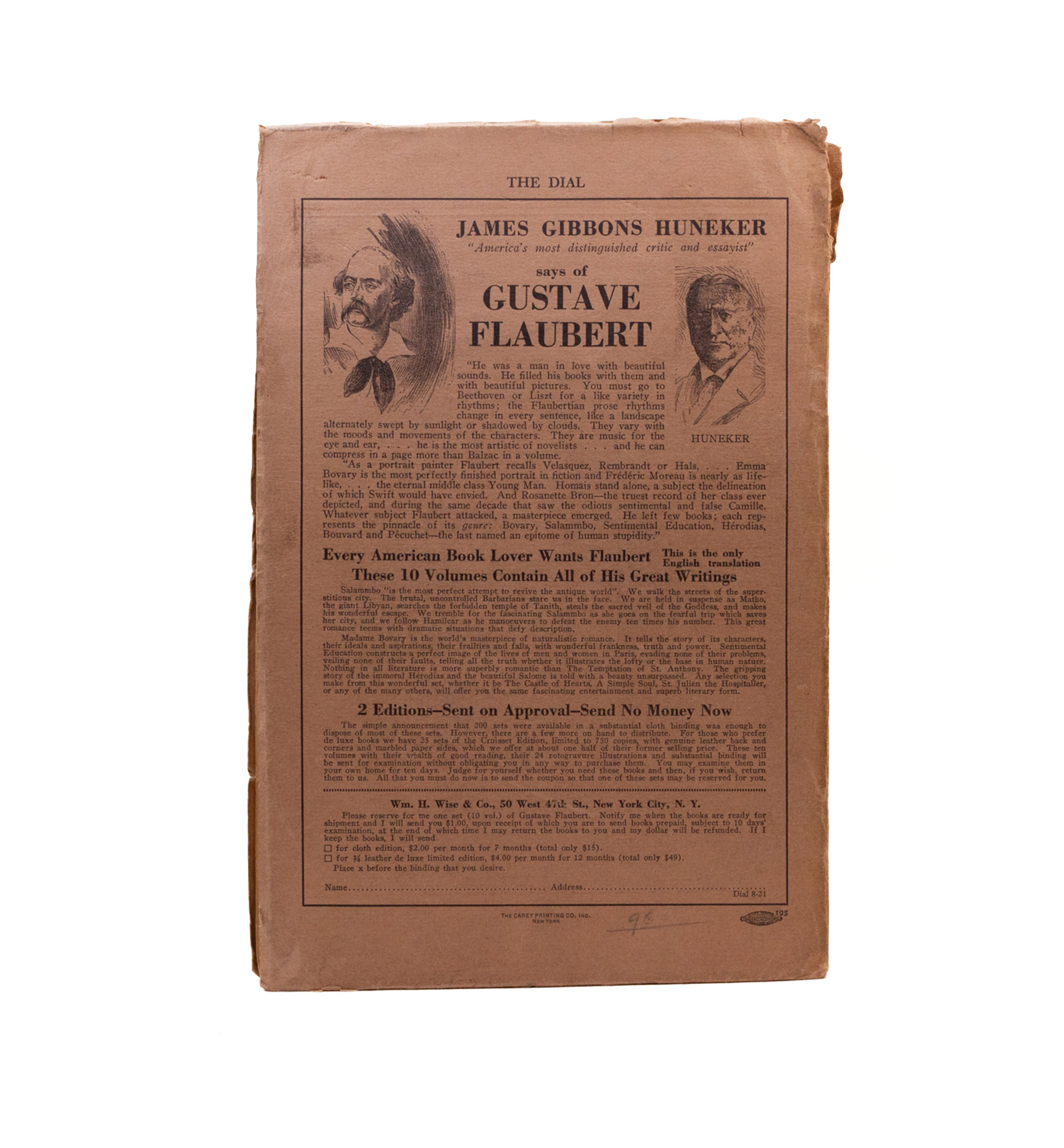
An important issue of The Dial containing EP’s “Three Cantos,” being the first appearance of the Fifth, the Sixth, and the Seventh Cantos. The Fifth and Seventh mostly consistent with later printings — minor syntactical and melodic differences; the Greek rendered in Roman for Canto V — while the Sixth here is very different (not, as Gallup says, the “first two-thirds only”). A range of other good contributions, poems from Amy Lowell and Mina Loy, prose from WBY and TSE, illus from WL and eec. A good copy only, the bottom of p.241-2 cut out thus losing the end of J. Middleton Murray’s essay “Puritan or Platonist?” and (the cause of the cutting) the “Briefer Mention” to Harry Johnston’s The Man Who Did the Right Thing; otherwise complete with illustrations. Top of spine broken; some pen and pencil to the front cover, wraps a little worn. Gallup C625.

tap to cycle
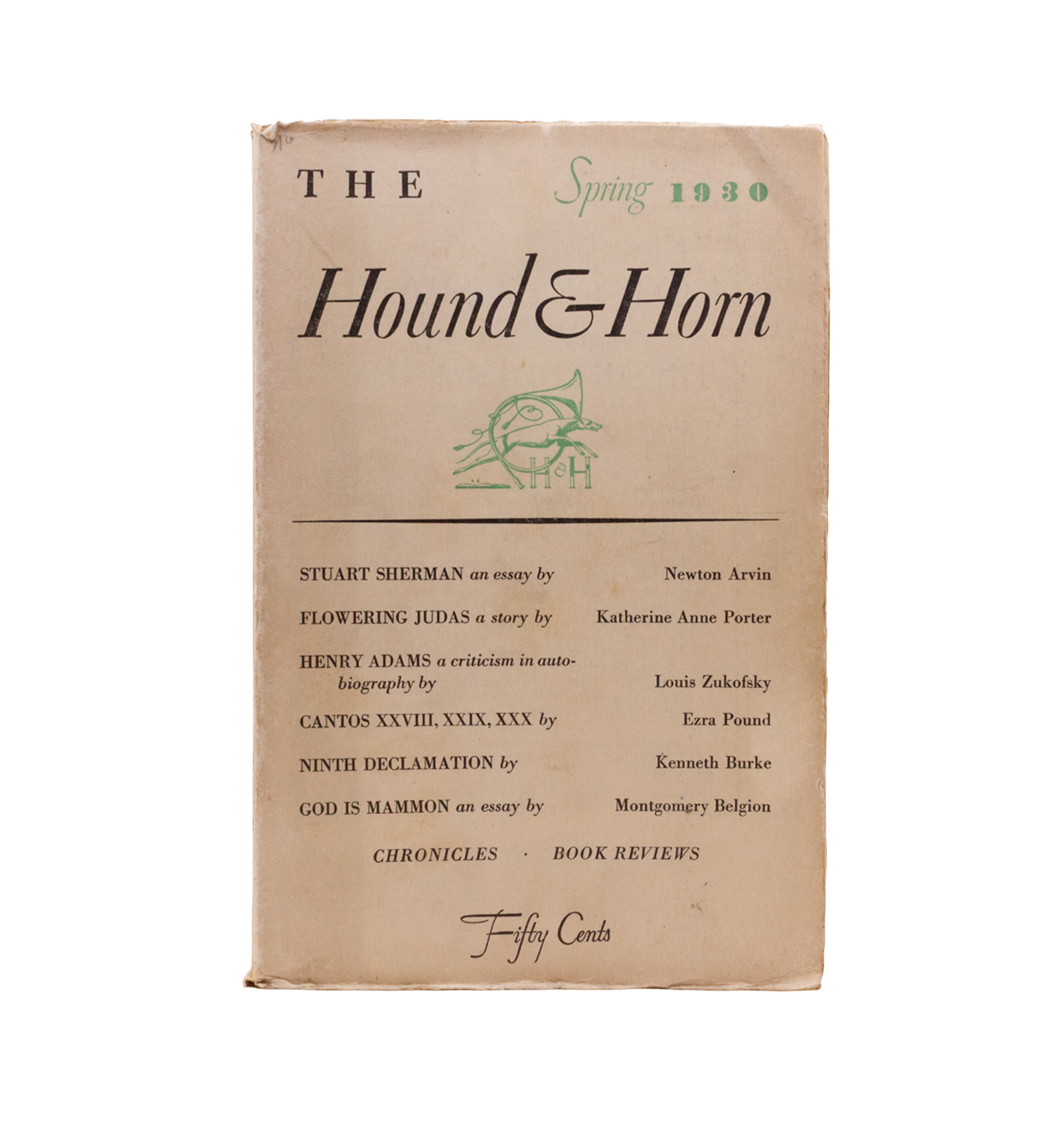
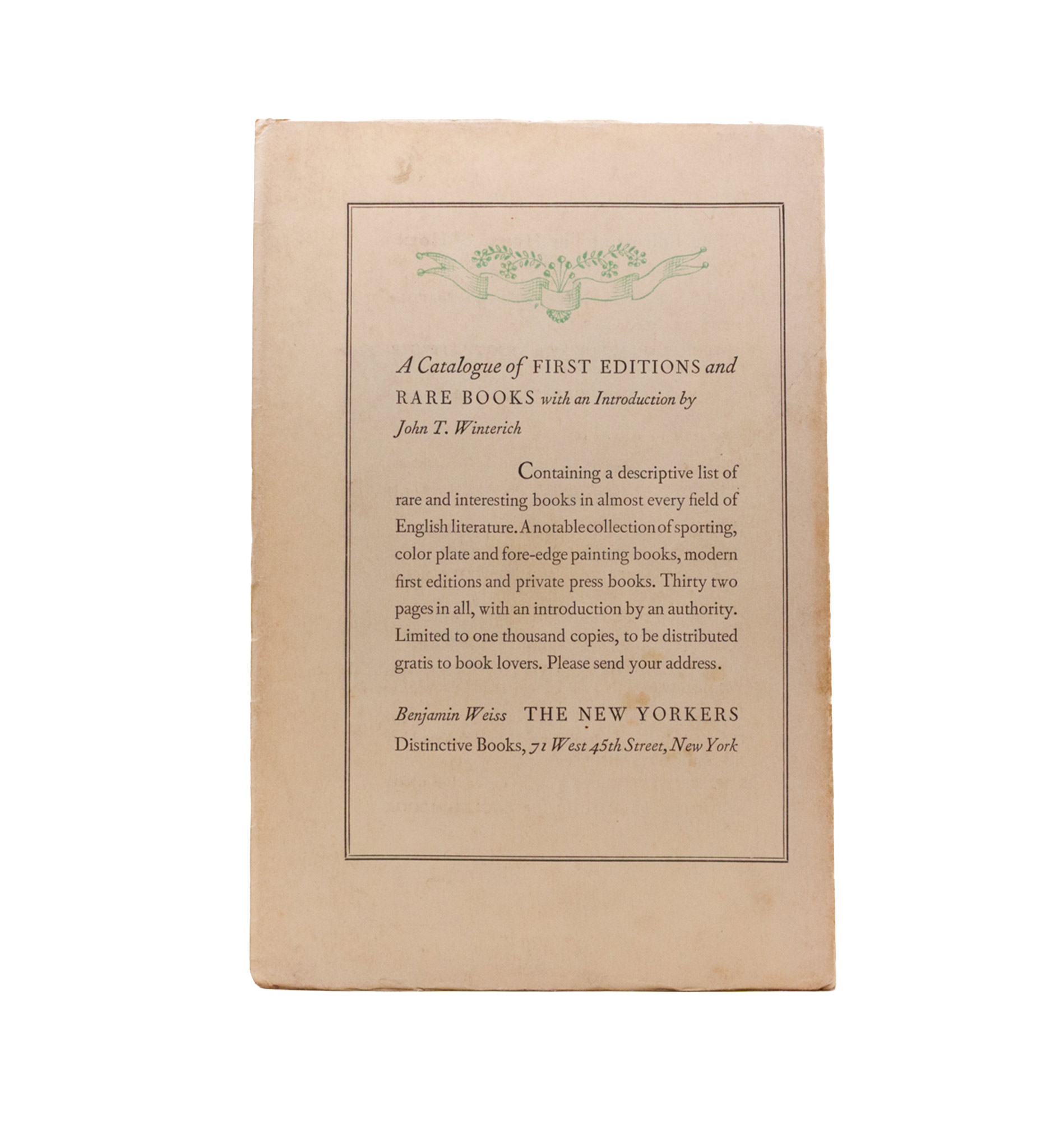
The Hound & Horn, Spring 1930
Lincoln Kirstein and Bernard Bandler, editors
Ezra Pound, Louis Zukofsky, Yvor Winters, Kenneth Burke, contributors
Published Concord, New Haven: Hound and Horn, 1930
159pp.; 22.5 x 15 cm. Heavy white paper wraps printed in black and green.
Part of Periodicals, I
Or the Bitch & Bugle, Vol. III No. 3, April-June 1930, containing the first appearance of Cantos XXVIII, XXIX and XXX, following John Rodker’s A Draft of Cantos 17-27 (1928) and preceding Nancy Cunard’s Draft of XXX Cantos by a few months (August 1930), and any American appearance by a few years (1933). Also contains a cultural review by EP slating America for failing to publish a few writers and artists, titled “And the Remainder,” starting
“One person out of every twenty-two in New York state spends a certain period in an insane asylum.”
Paris edition of an American daily paper.
tap to cycle
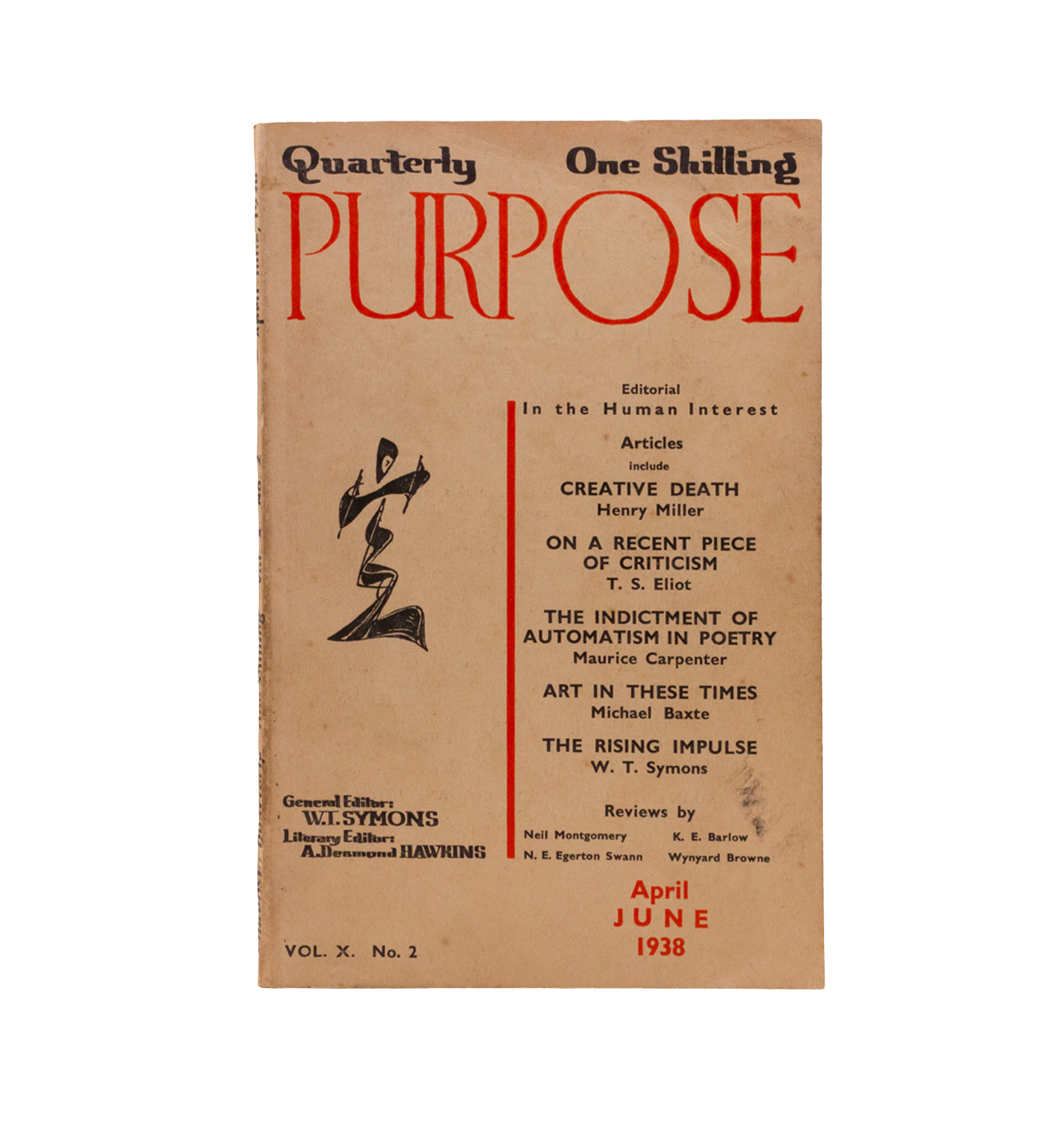
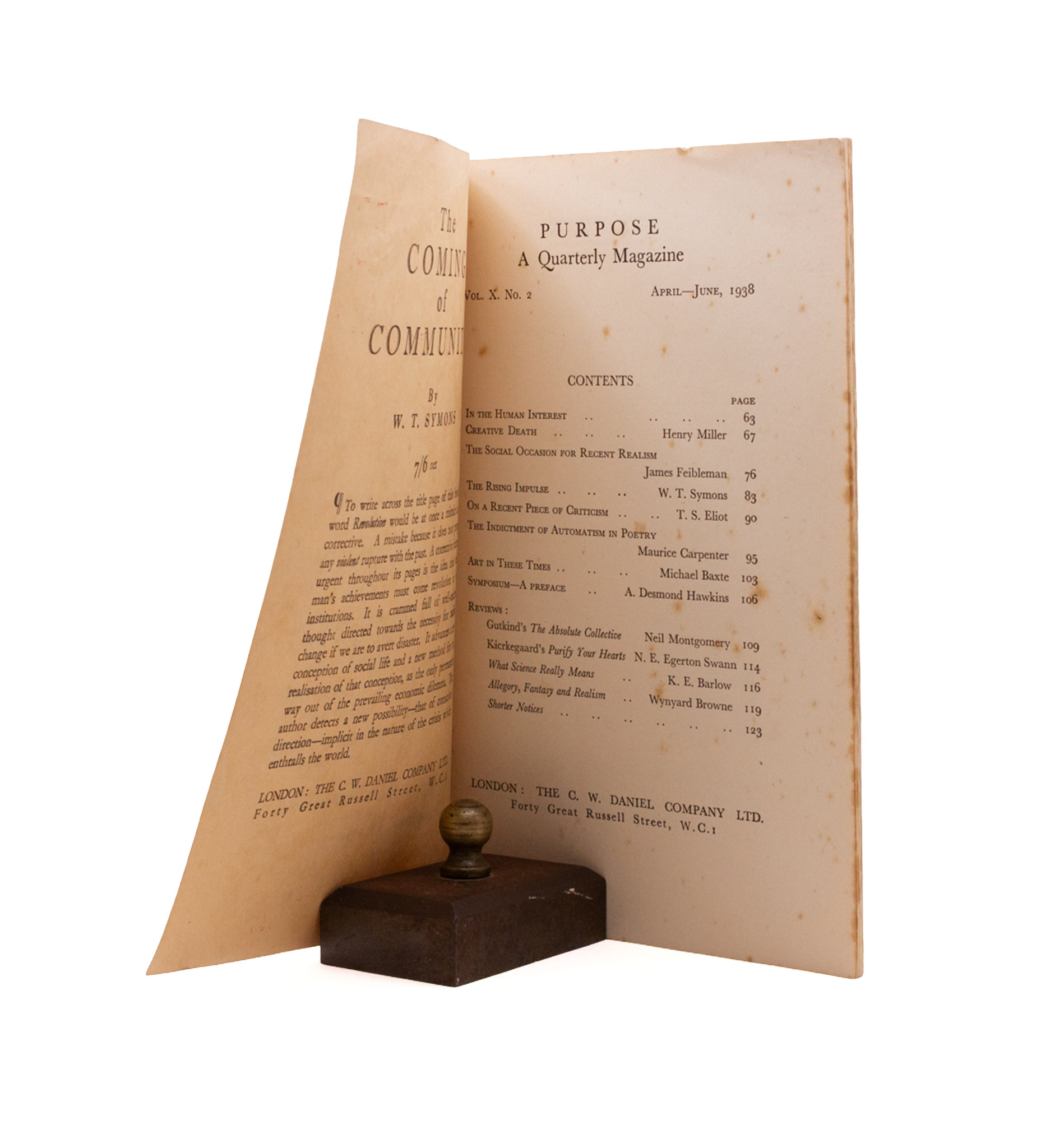
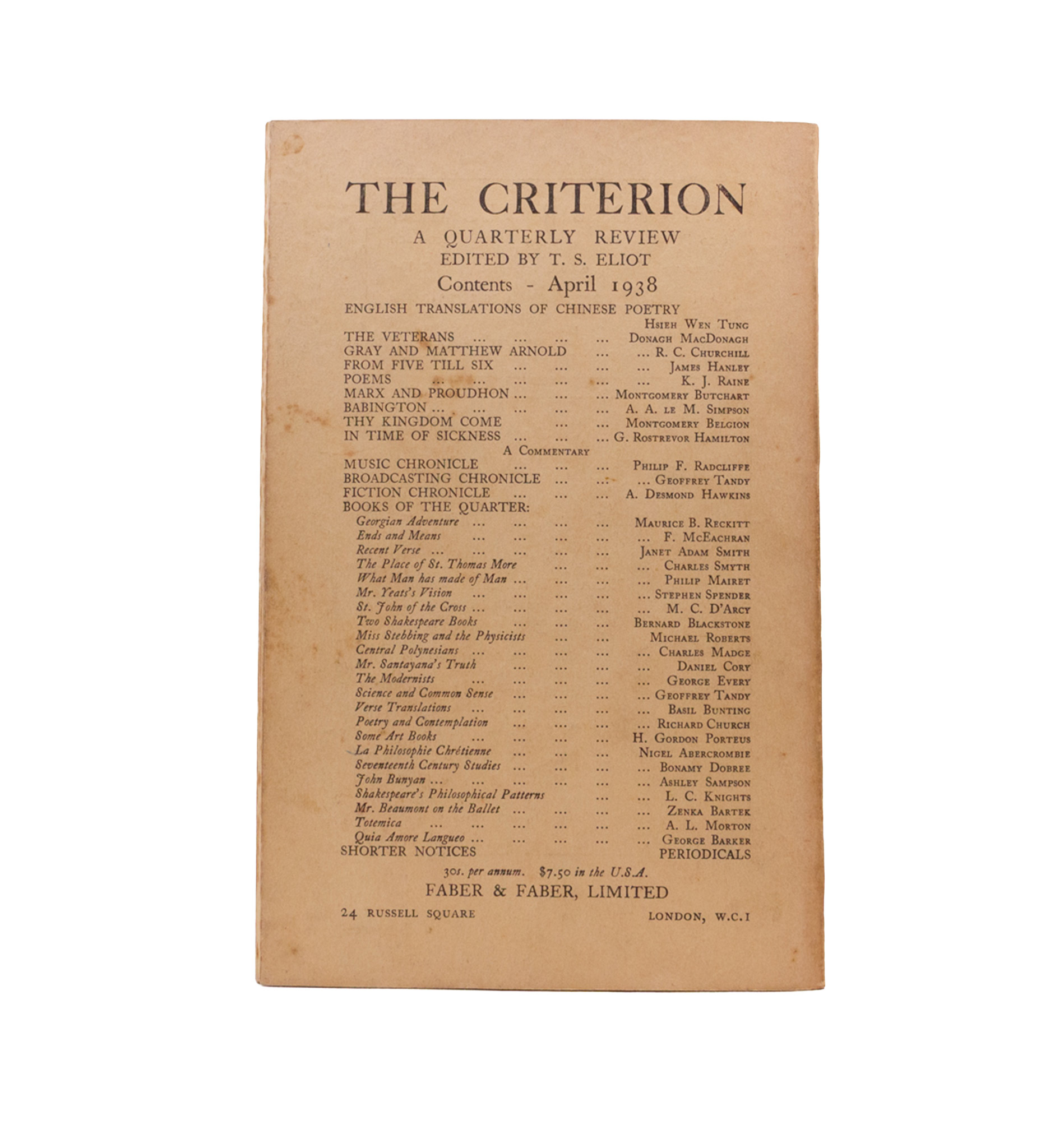
Purpose, A Quarterly Magazine, Vol. X No. 2, April-June 1938
W. T. Symons, A. Desmond Hawinks, editors
Henry Miller, T. S. Eliot, contributors
Published London: The C. W. Daniel Company Ltd., 1938
61pp.; 21.6 x 14.1 cm. Stiff tan paper wraps printed in red and black.
Part of Periodicals, I
Another copy, some foxing mainly to the title-page and fore-edge occasionally spilling in, a black smudge to the front cover, and a pencil ‘X’ to the essay by Eliot; still very good.

tap to cycle
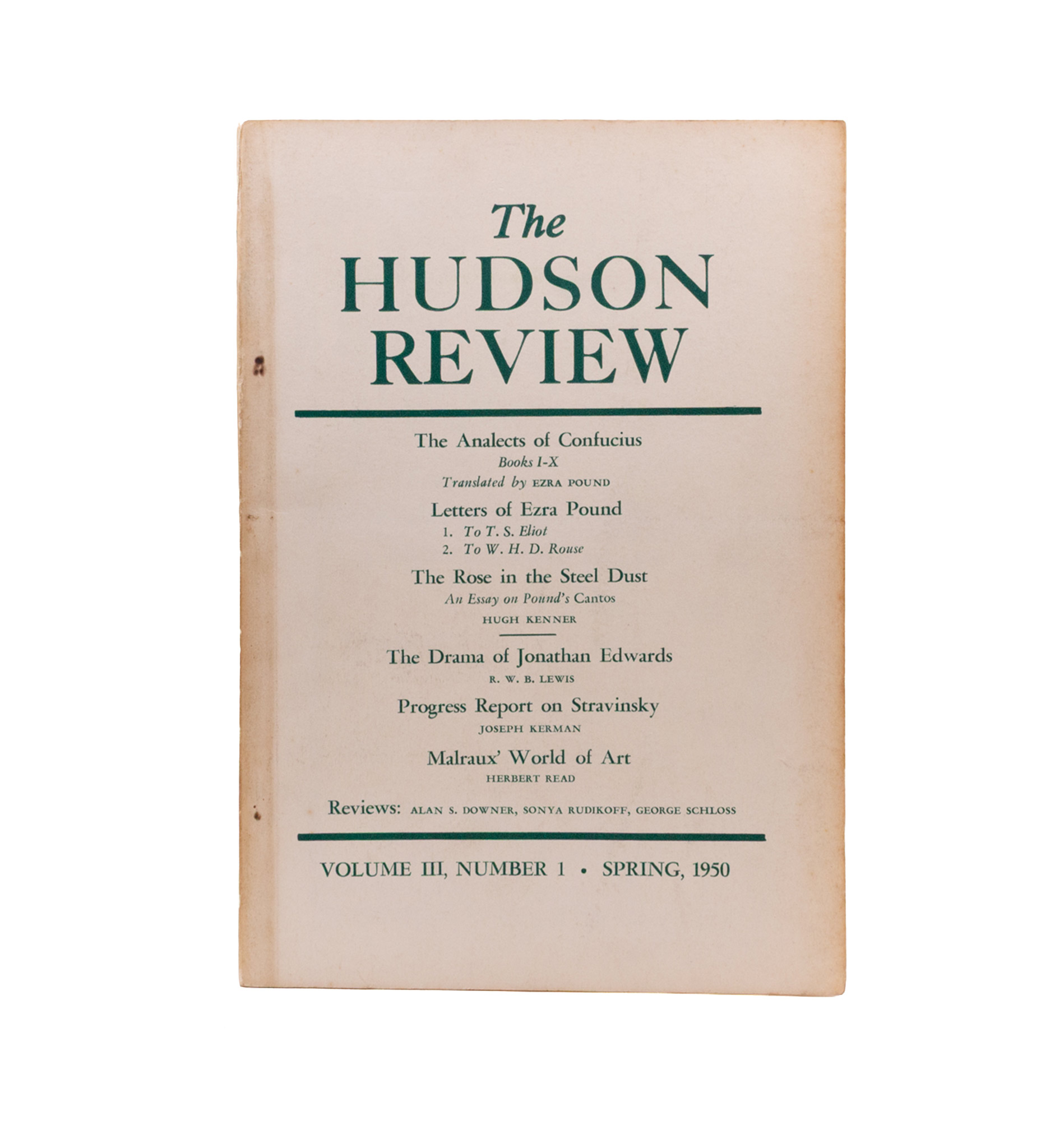
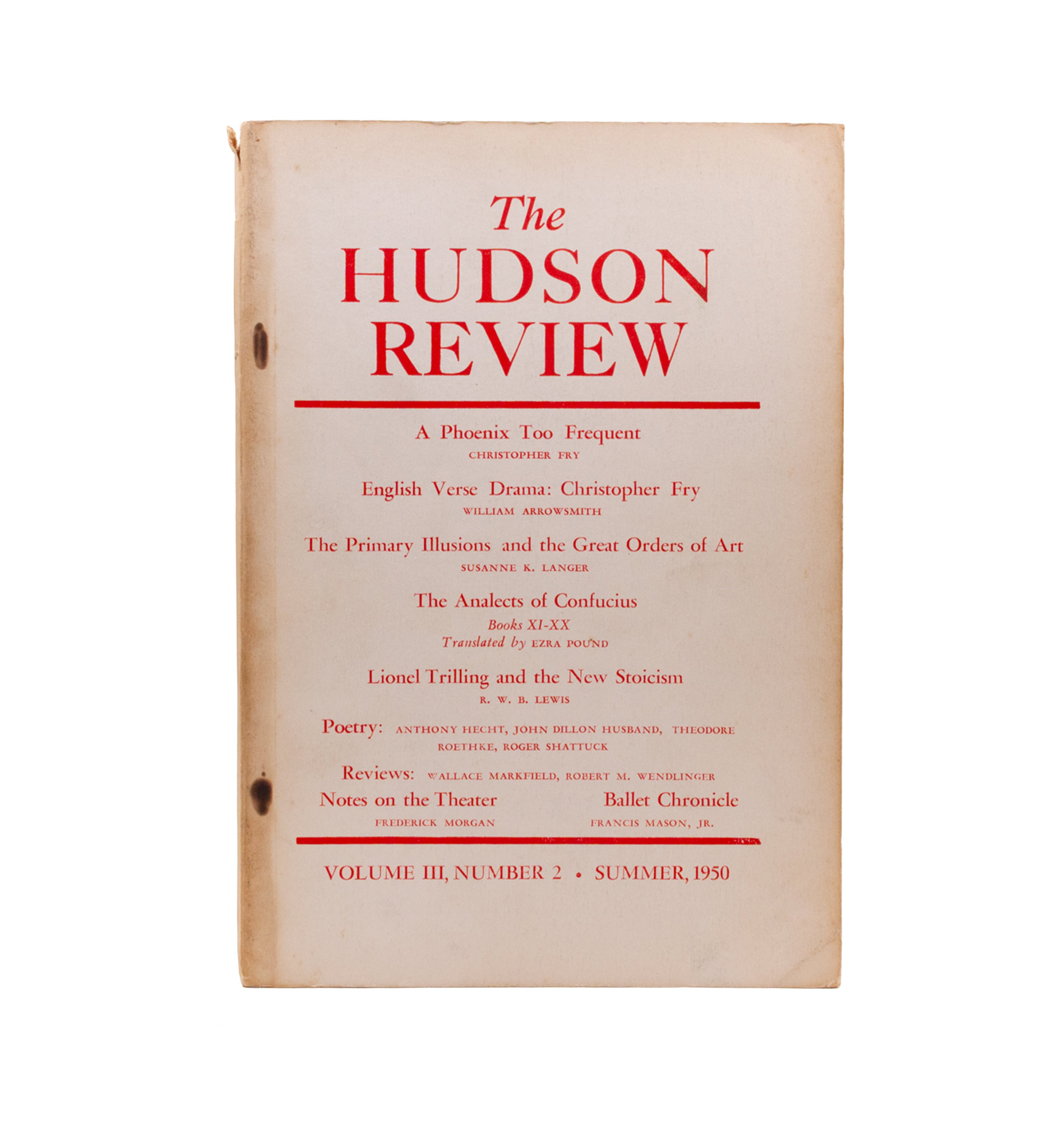
The Analects of Confucius; in The Hudson Review, Spring & Summer 1950
Joseph Bennett, Frederick Morgan, editors
Ezra Pound, D. D. Paige, Hugh Kenner, contributors
Published New York: The Hudson Review, Inc., 1950
160pp.; 25 x 17.5 cm. Cream wrappers printed in green.
idem. Cream wrappers printed in red.
Part of Periodicals, I
The first appearance of Pound’s complete translation of the Confucian Analects over two successive issues of The Hudson Review; preceded by the Fish of Gold leaflet, Confucius: Digest of the Analects (Milan 1937, Gallup A44) — a selected translation — and followed by the complete Peter Owen edition, Confucian Analects (London 1951, Gallup A65). The Spring issue further containing “Letter of Ezra Pound” to T. S. Eliot and W. H. D. Rouse, and “The Rose in the Steel Dust, An Essay on Pound’s Cantos” by Hugh Kenner. A very nice set, both clean internally, in the main retaining their original colour: top and fore-edge only lightly sunned, spines darkened, staples leaking a little; bottom corner to Summer issue with a light crease for 30 pages. Gallup C1720 and C1725.
tap to cycle
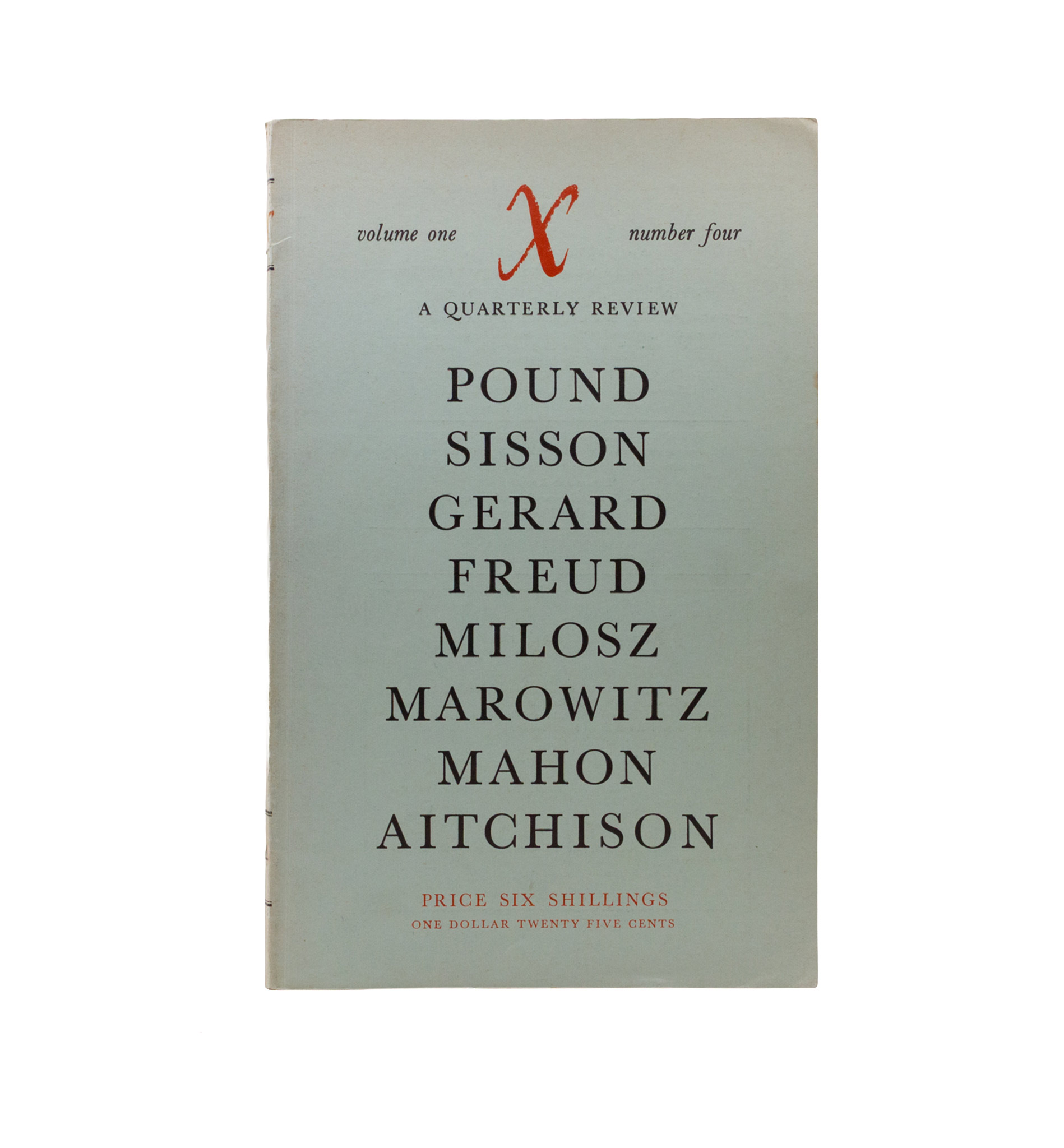
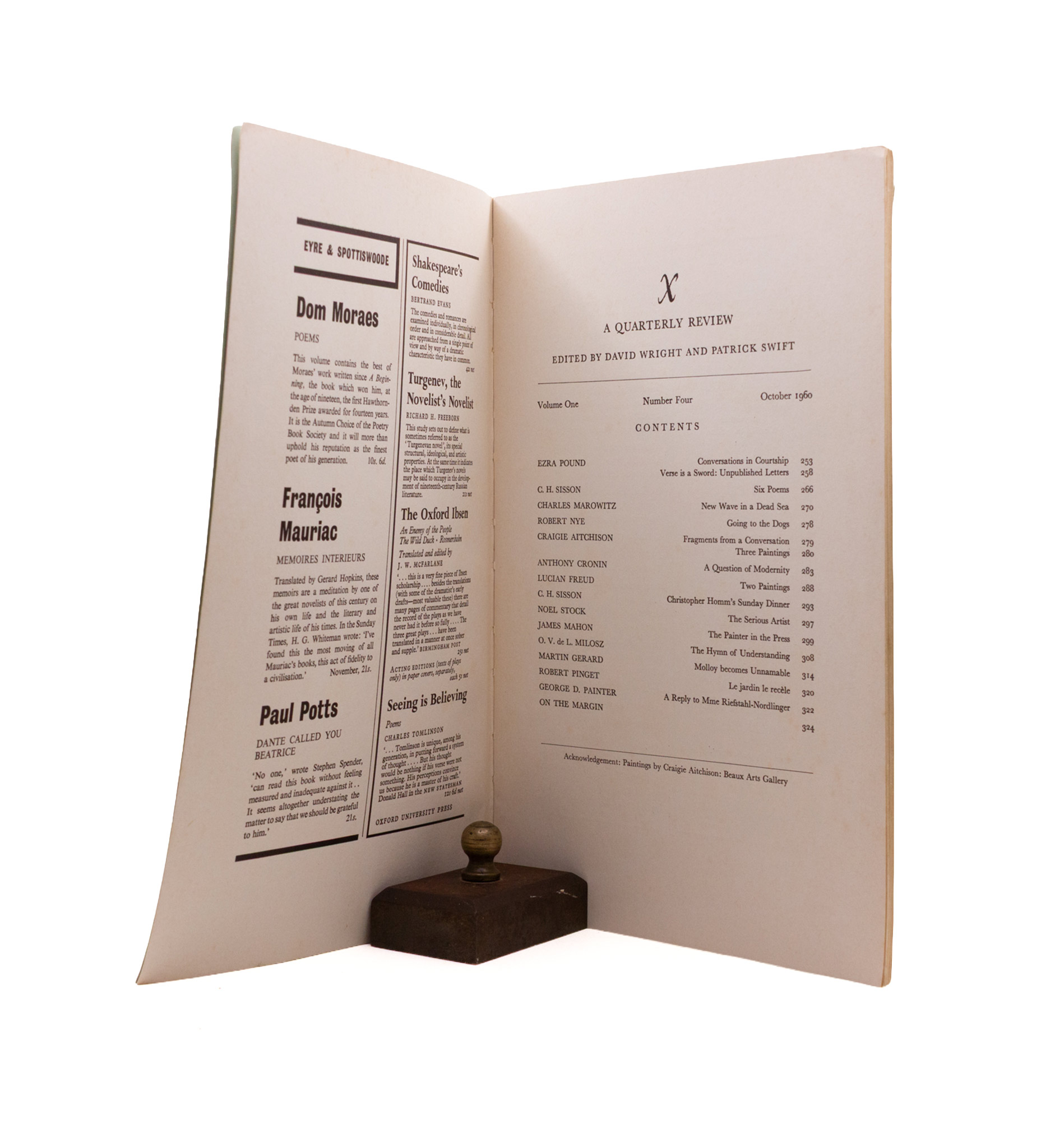
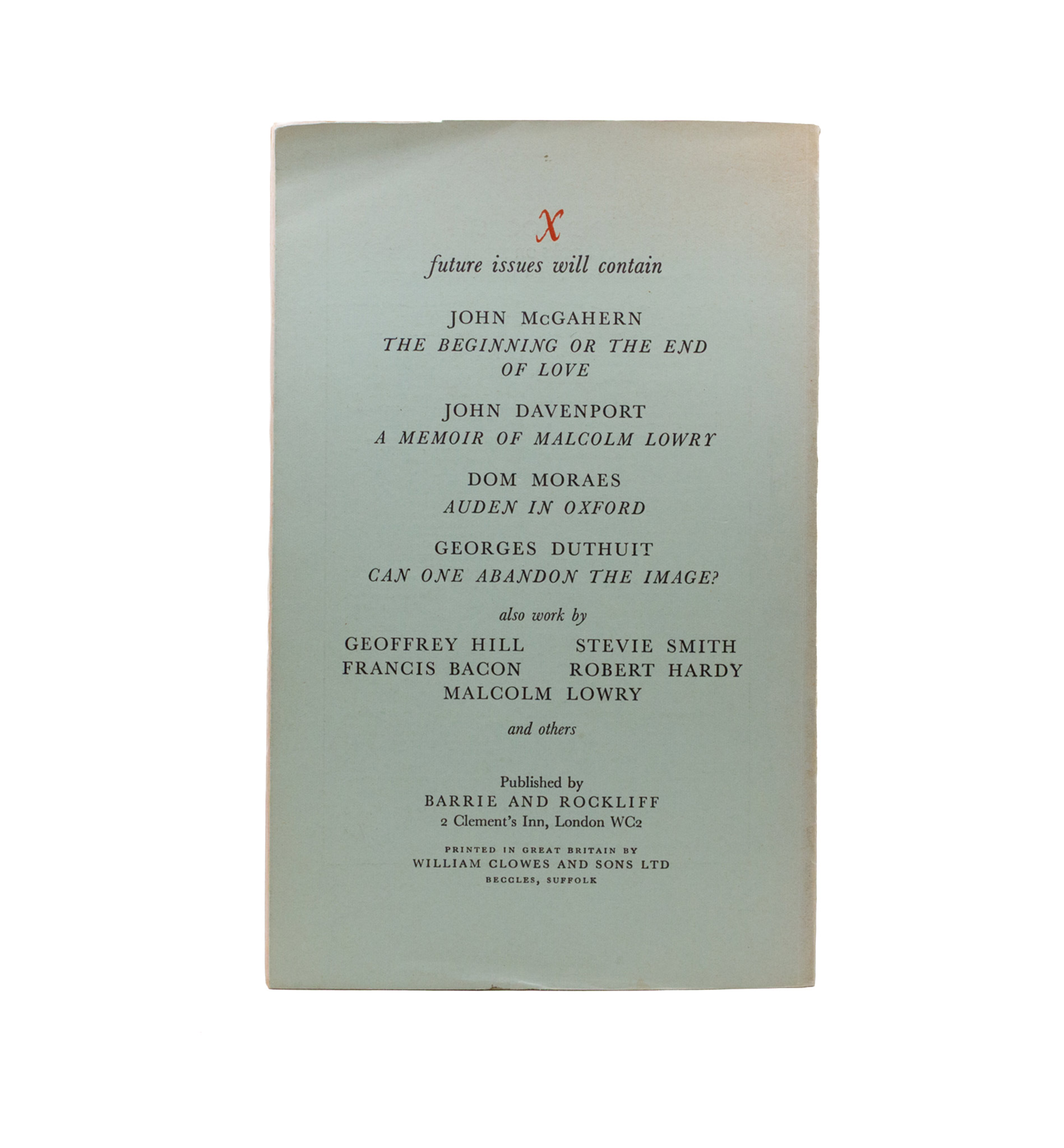
“Conversations in Courtship” and “Verse is a Sword”; in X: A Quarterly Review, October 1960
David Wright, Patrick Swift, editors
Ezra Pound, contributor
Published London: Barrie and Rockliff, 1960
75pp.; 26.6 x 17 cm. Light sea green paper wraps printed in black and red.
Part of Periodicals, I
Containing two contributions from EP, “Conversations in Courtship” and “Verse is a Sword: Unpublished Letters”. The former is a He Says, She Says, Pound’s translation of Boris de Rachewiltz’s literal Italian rendering from an ancient Egyptian papyrus. The latter twelve letters from Pound each to different recipients from 1935 to 1940, edited by Noel Stock to show Pound’s search for and dissemination of knowledge in current affairs. This copy inscribed by George D. Painter at the top of his article on p.322. With a newspaper cliping “New Nesting-Box for Fresh Talent by Cyril Connolly” annotated “25/12/60 Observer” laid-in. Subscription card bound in; Index to Volume One, 1959-1960 laid-in. A very good copy, clean wraps, the spine a little worn with a light fold to the back cover. Gallup C1882a and under C1881.
tap to cycle
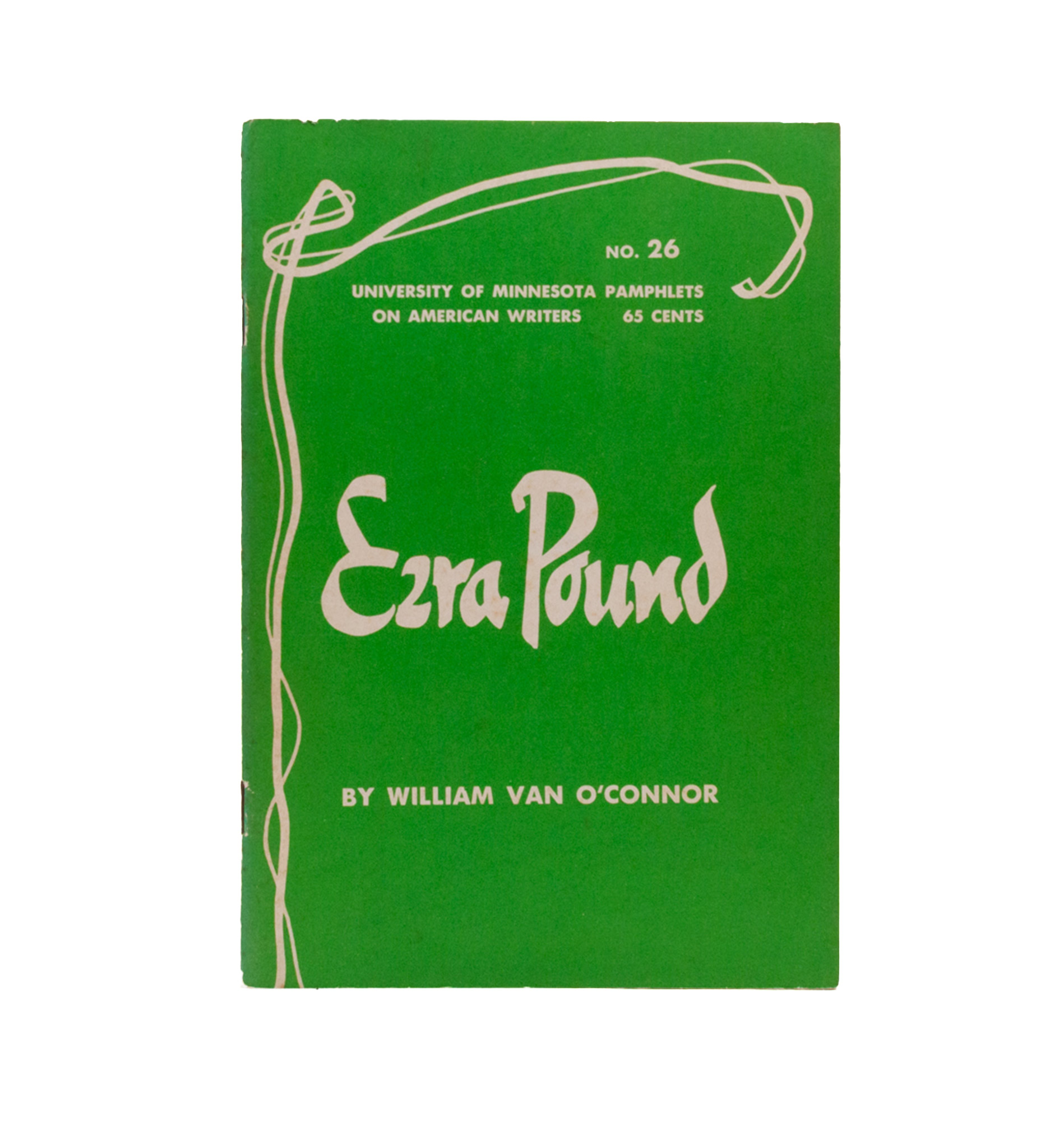
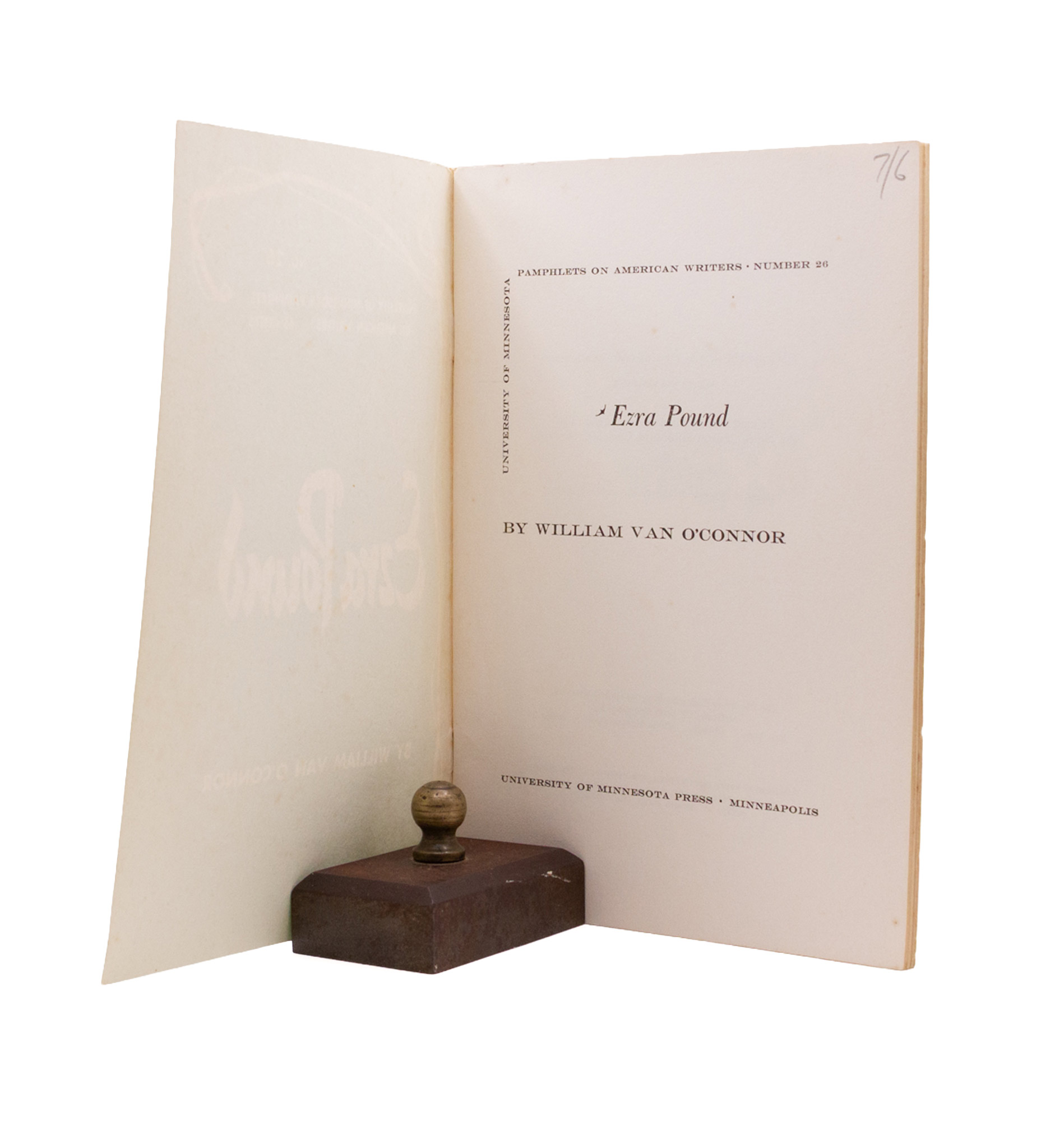
Ezra Pound
William Van O’Connor
Published Minneapolis: University of Minnesota Press, 1963
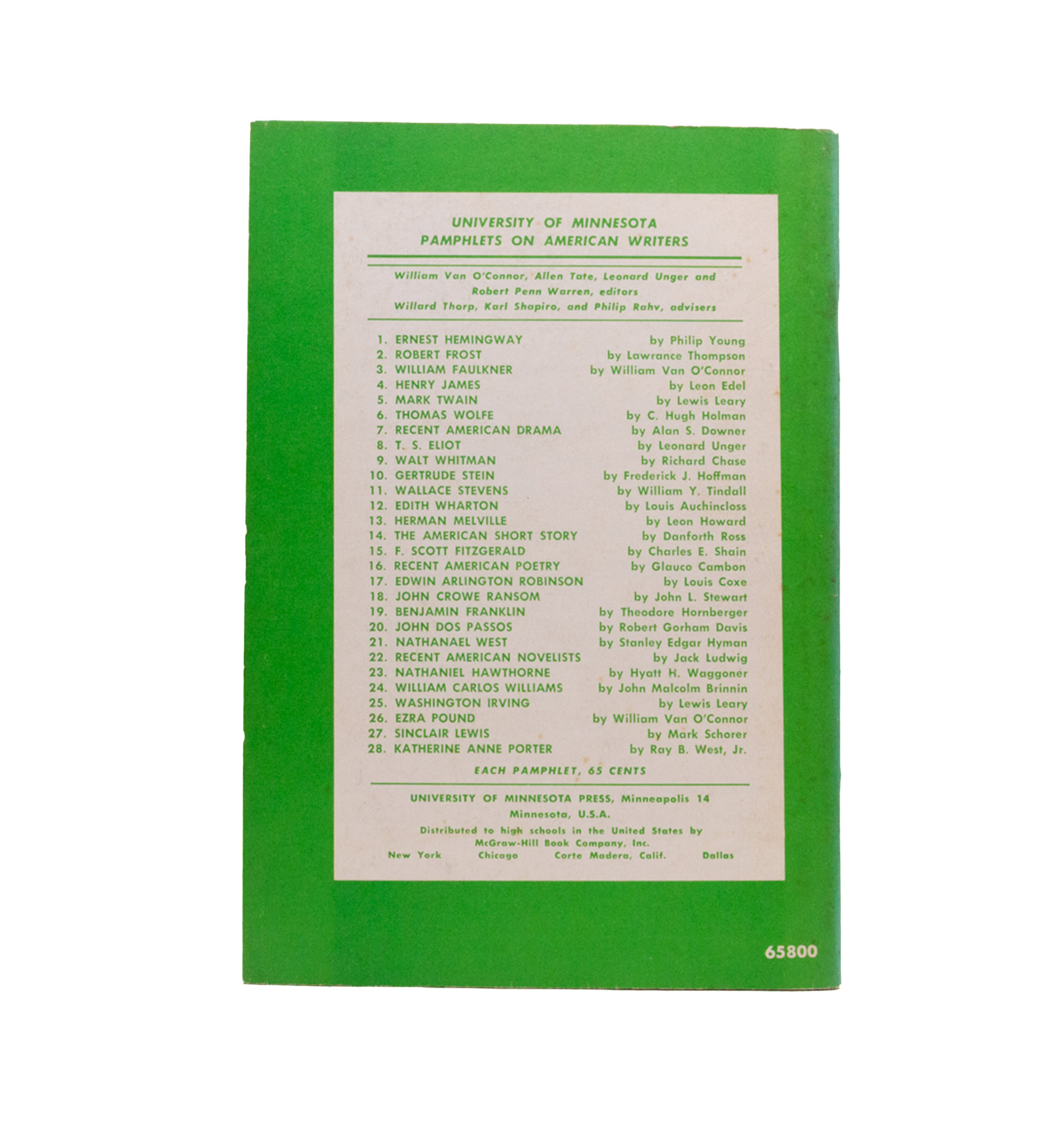
48pp.; 20.3 x 14 cm. White paper wrappers printed in green; wire-stitched.
Part of Periodicals, I
Number 26 in the University of Minnesota’s series Pamphlets on American Writers, being solely Van O’Connor’s (an editor of the series) essay on Pound. A very good copy, wraps lightly aged.

tap to cycle
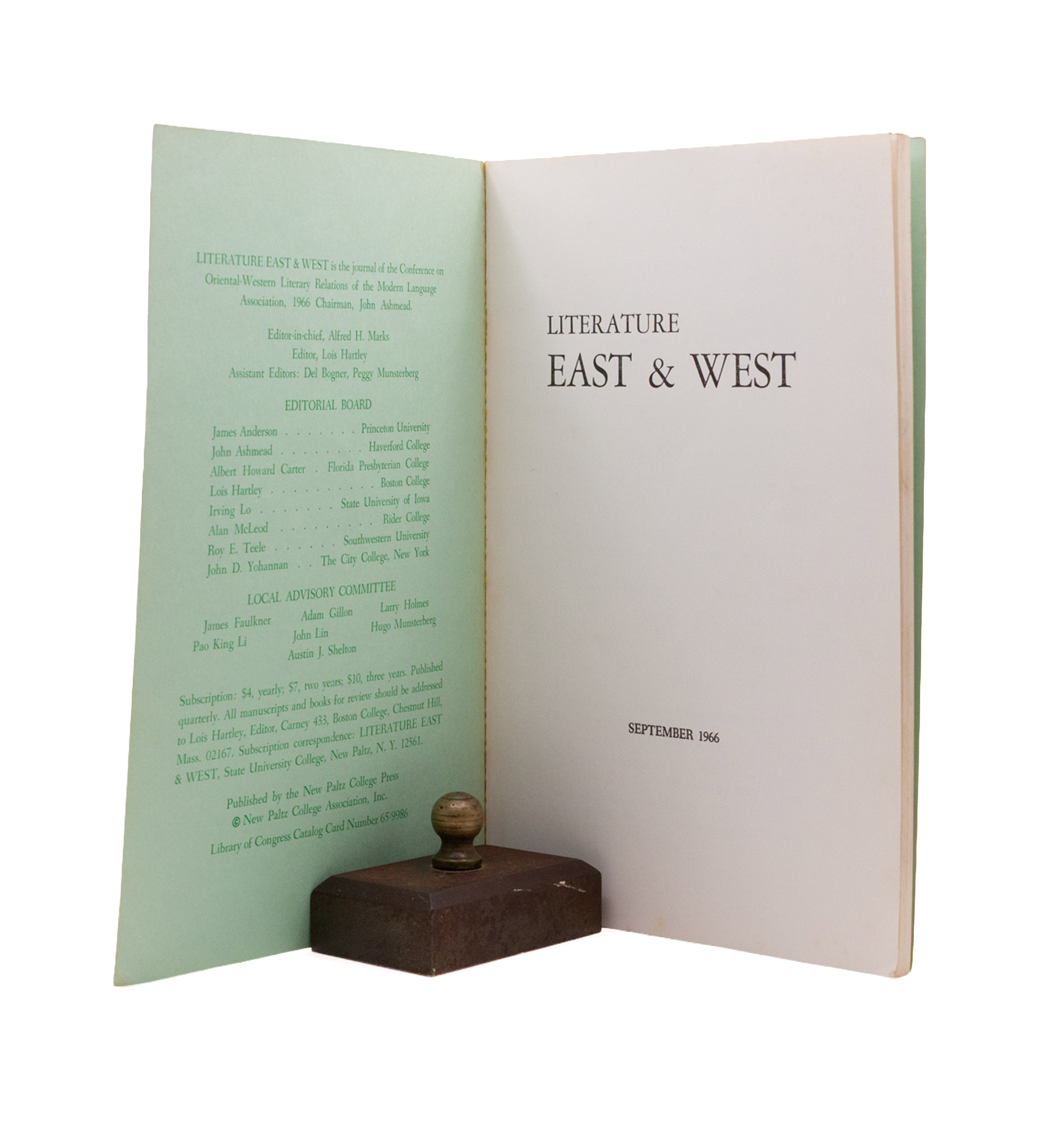
Literature East & West, September 1966
Alfred H. Marks, Lois Hartley, editors
Published New York: New Paltz College Press, 1966
102pp.; 21.7 x 13.9 cm. Stiff green paper wraps printed in green.
Part of Periodicals, I
LE&W, Vol. X No. 3. A great periodical on the meeting of Eastern and Western literature, containing three Poundian contributions: “The Quality of Cathay: Ezra Pound’s Early Translations of Chinese Poems” by Pen-Ti Lee and Donald Murray; ‘“The Stone is Alive in My Hand” — Ezra Pound’s Chinese Translations’ by Angela Jung Palandri; and ‘A Gloss on Pound’s “Four Poems of Departure”’ by Richard P. Benton. This copy signed by Suzanne Henig above her poem on p.312, with her contribution circled on the contents page. A very good copy, the spine lightly worn and the wraps a little discoloured with light marks. Scarce.

tap to cycle
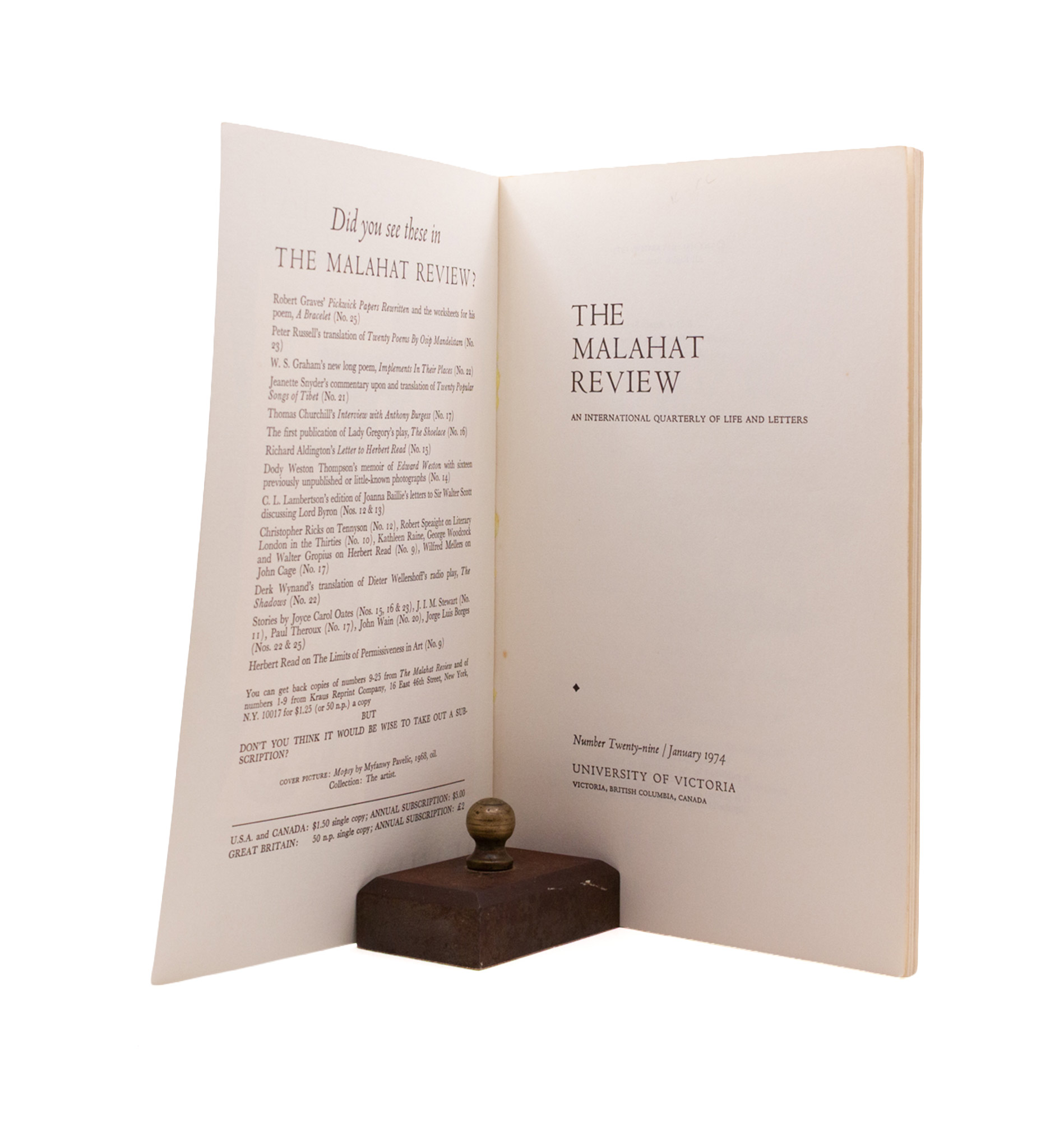
The Malahat Review, January 1974
Robin Skelton, editor
Peter Russell, contributor
Published British Columbia: University of Victoria, 1974
140pp.; 22.7 x 15.3 cm. Heavy white paper wrappers printed in light blue and black.
Part of Periodicals, I
With a contribution, “Ezra Pound: The Last Years” from Peter Russell, undersigned “Venice, December 1972.” Russell, who had worked with Pound remotely (printing him in the early 50’s) but had been estranged for some years discusses his own decision to live in Venice, his first meeting and conversation with Pound in Rapallo, 1964, and their time spent together in Venice, of many encounters and excursions, from which Russell records a number of Pound’s attitudes at the time; a further rare first-hand account of Pound’s funeral. With David Moody’s annotations in the margin throughout the 34 page essay, mostly naughts showing Moody mining a wealth of information. A very good copy, light aging to the wraps. Scarce.

tap to cycle
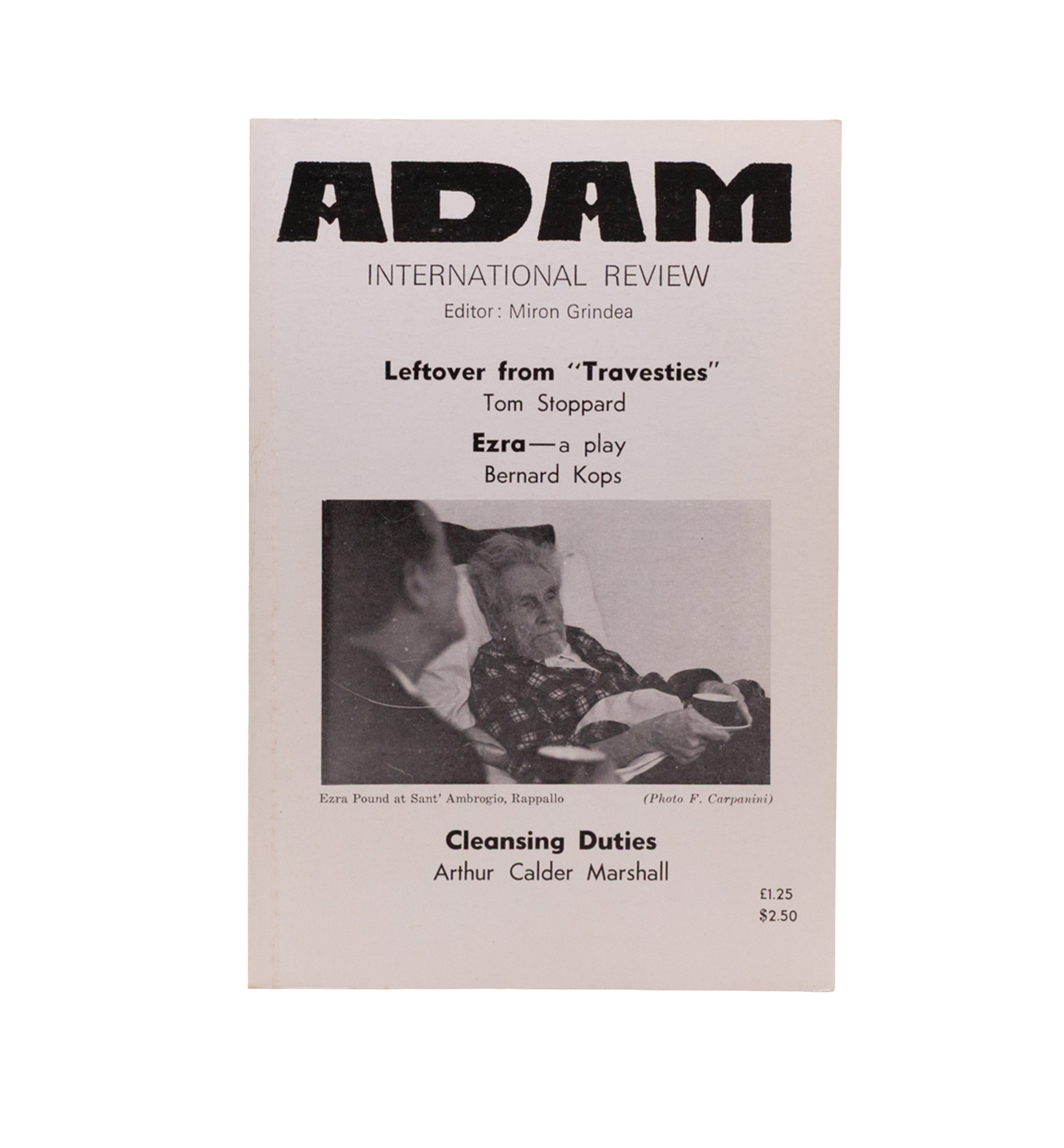
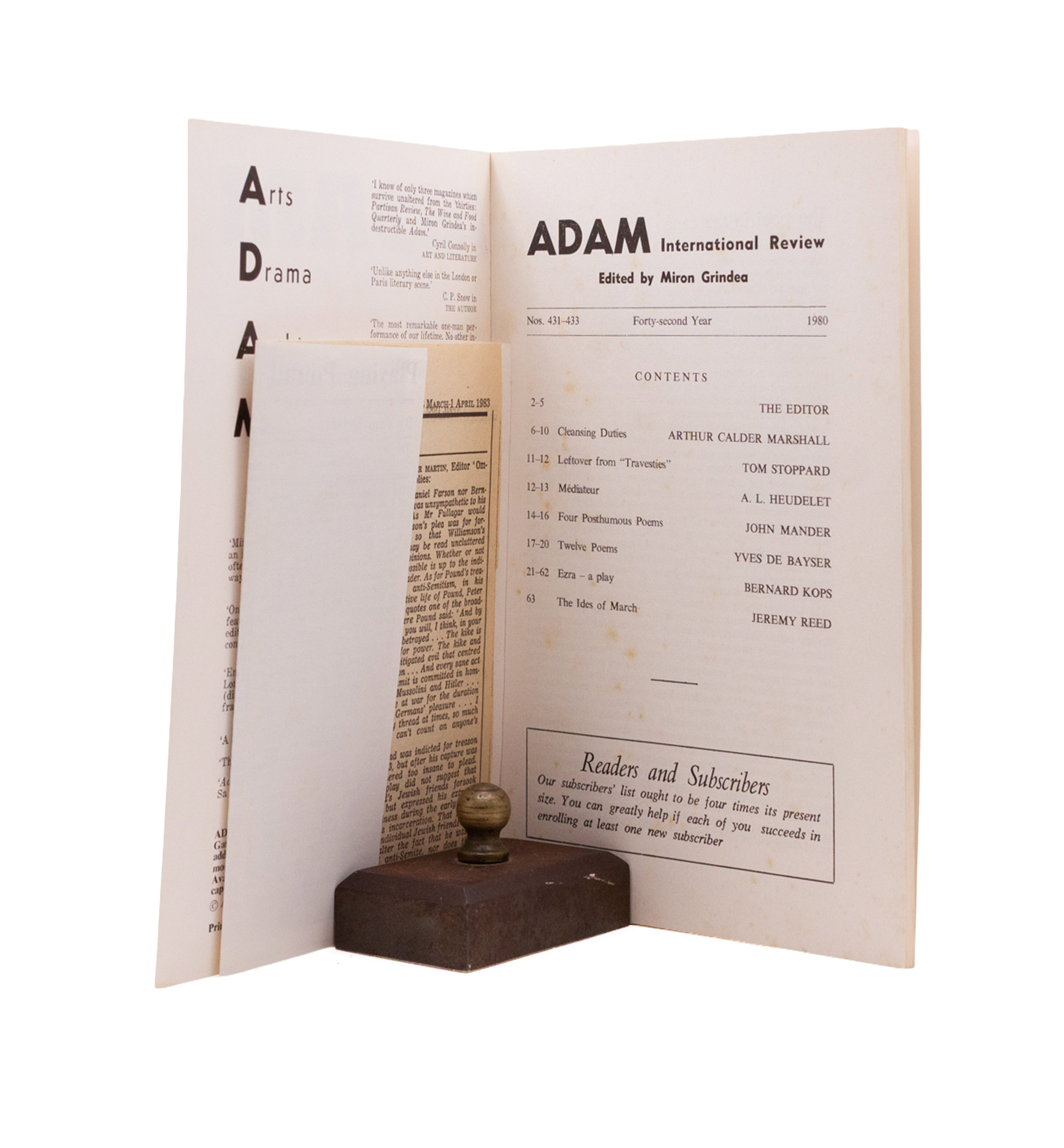
ADAM International Review, Nos. 431-433
Miron Grindea, editor
Bernard Kops, contributor
Published London: ADAM International Review, 1980
63pp.; 21 x 14.2 cm. Stiff white paper wraps printed in black.
Part of Periodicals, I
The first appearance of Bernard Kops’ play, Ezra, in ADAM (Arts, Drama, Architecture, Music) Nos. 431-433, 1980. With one photocopy of the TLS (6 Nov. 81) laid-in, containing a review “Playing Pound safe” by Paul Driver of the first performance of the play at the New Half Moon Theatre, 1981; and another original newspaper clipping dated 26 March - 1 April 1983 containing a letter, “Freedom of speech,” by William Cookson defending Pound’s right to broadcast his radio speeches, and referencing Kops: “Bernard Kops’s suggestion that Pound’s Jewish friends forsook him in the end is a fabrication.” Reproduces a photo of Pound on the front-cover. Near fine, just a little age to wraps.


tap to cycle
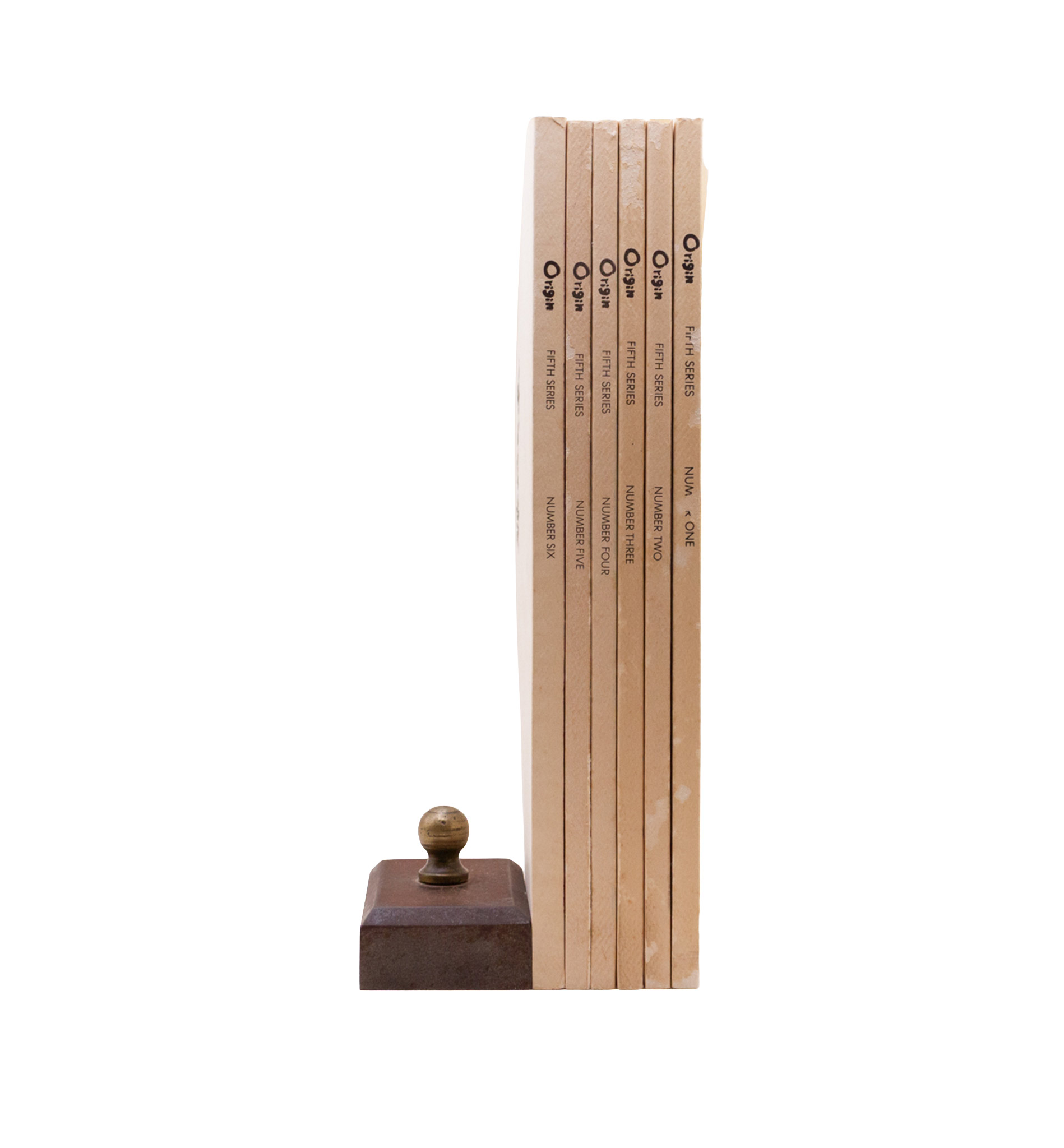
Origin; Fifth Series, Nos. 1-6
Cid Corman, editor
Published Maine: National Poetry Foundation, 1983-1985
6 issues; c. 22.8 x 15.8 cm each. Printed paper wrappers.
Part of Periodicals, I
The fifth series of six of Cid Cormon’s Origin (1951-1985 and 2007), published by the NPF with Carroll F. Terrell’s assistance. A scarce complete Fifth Series of this periodical central to the Black Mountain poets and Objectivism in the 1950’s. Contributions from Omar Pound, Charles Olson, Gael Turnbull and more, including a translation of Ungaretti’s L’Allegria. All very good, light fading to spines, occasional foxing to back covers, No. 5’s covers a little worn.


tap to cycle
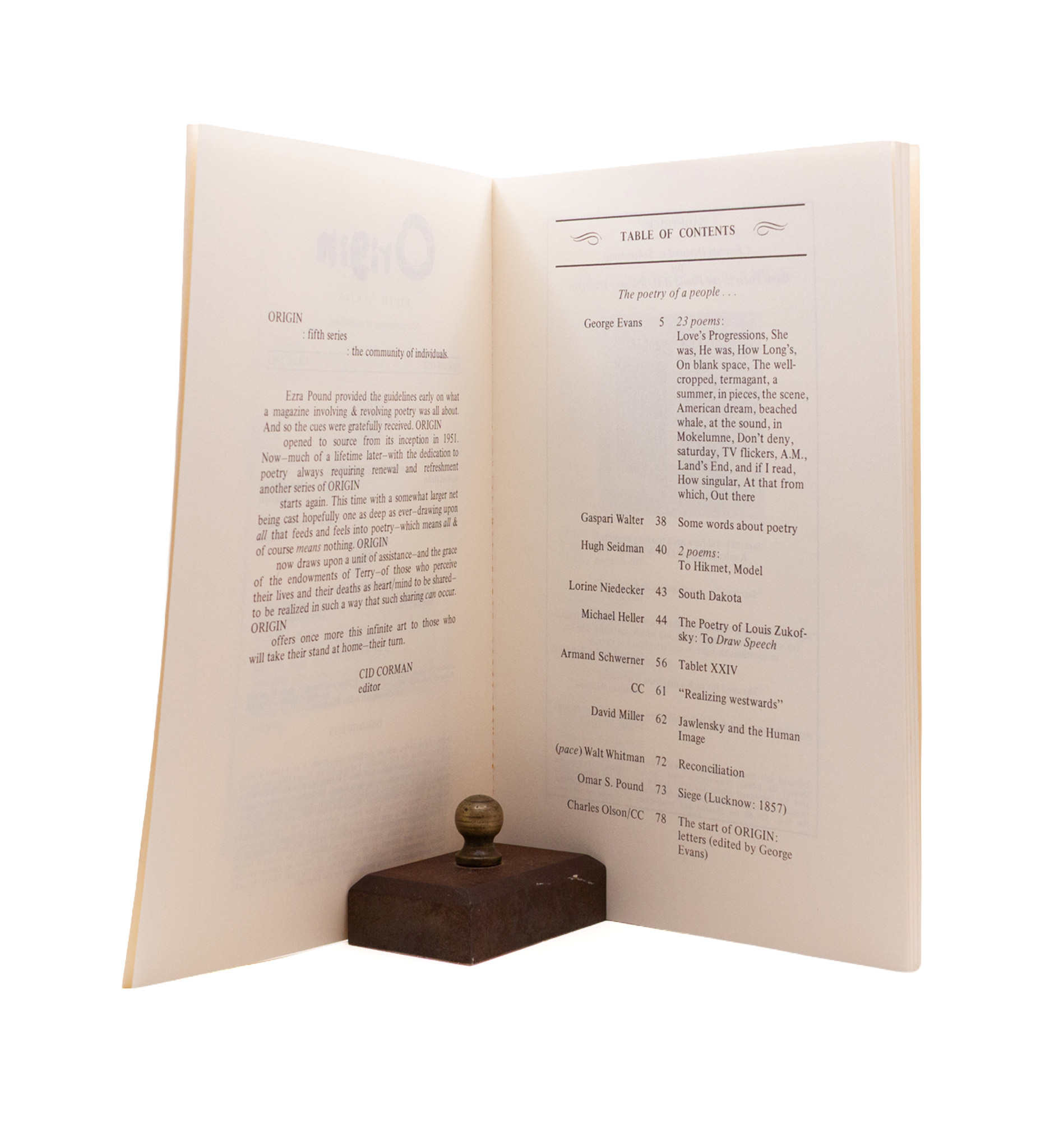
Origin; Fifth Series, No. 1
Cid Corman, editor
Published Maine: National Poetry Foundation, 1983
6 issues; c. 22.8 x 15.8 cm each. Printed paper wrappers.
Part of Periodicals, I
The first issue of the Fifth Series of Cid Cormon’s Origin, featuring a statement by the editor on the influence EP had in the way a little mag should be run, with contributions from George Evans, Omar Pound, and the correspondence between Charles Olson and the editor regarding the start of Origin. A little fading around the spine and top edge; one scuff and a couple of spots to the front cover; perfectly fine inside.
tap to cycle
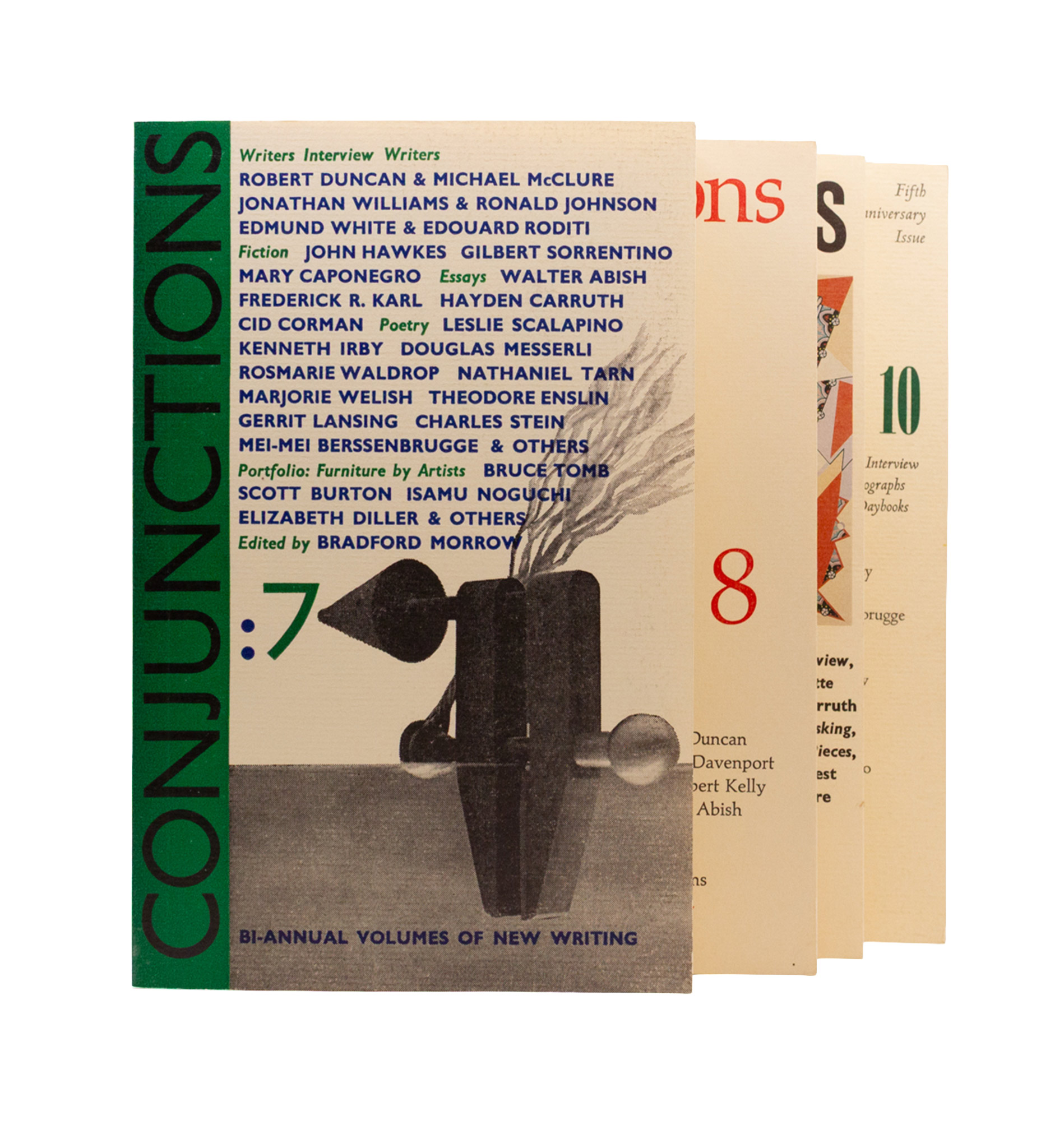
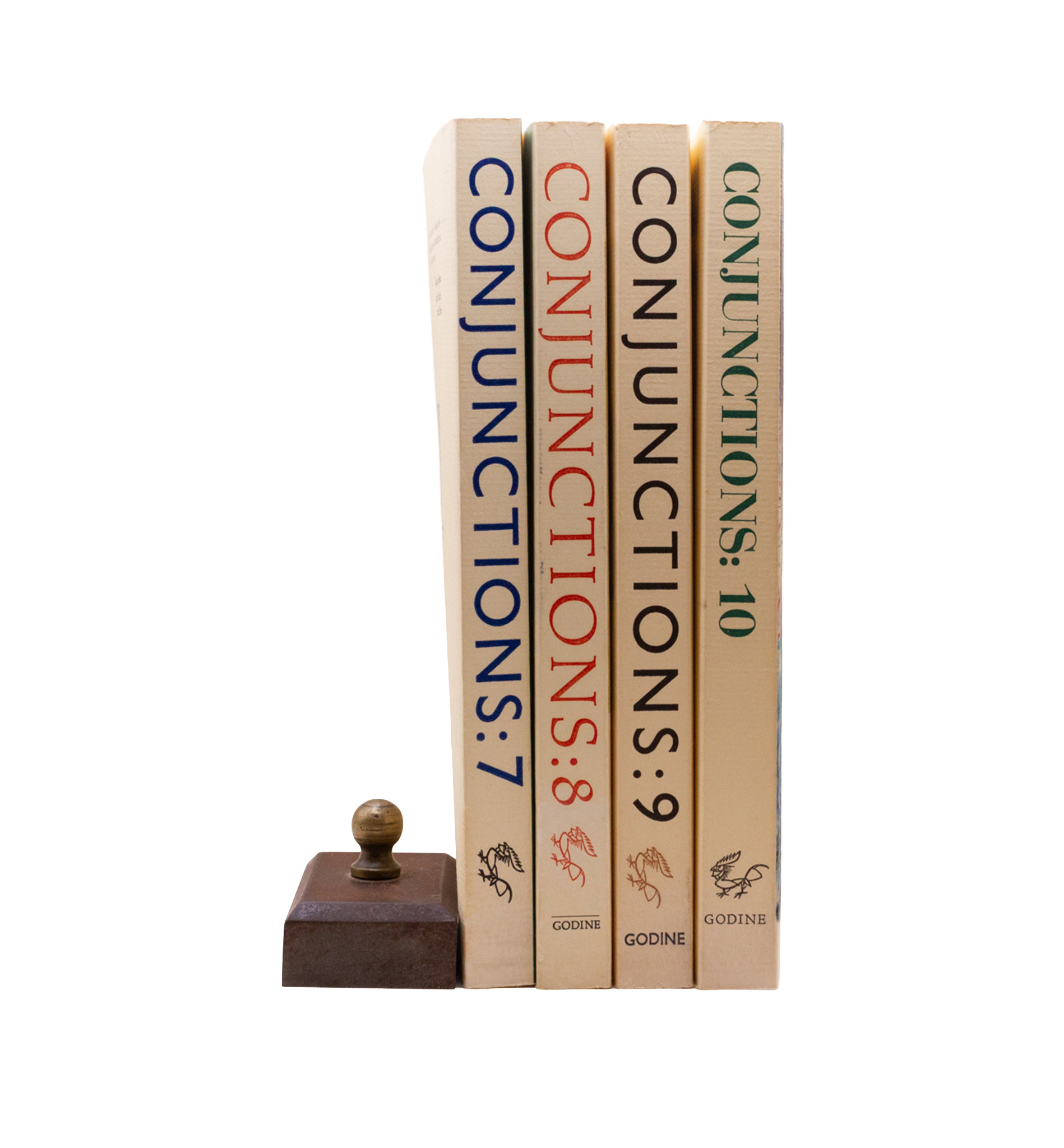
Conjunctions; Nos. 7-10
Bradford Morrow, editor
Published New York: David R. Godine, 1985-1987
4 issues; c. 22.8 x 14.8 cm each. Printed heavy paper wraps.
Part of Periodicals, I
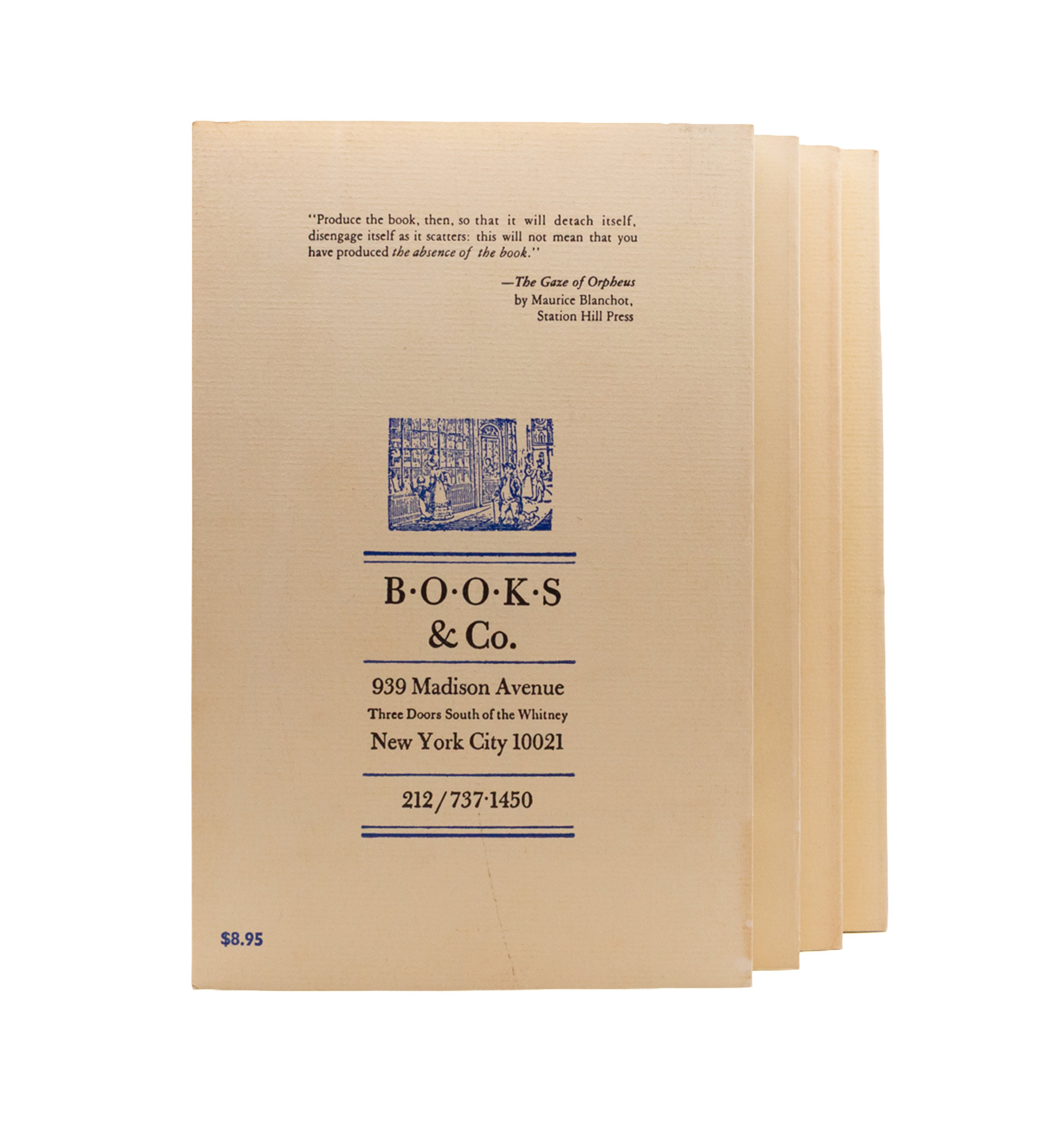
Bradford Morrow’s “living notebook,” Conjunctions, a journal that has published writers no less than David Foster Wallace, Joyce Carol Oates, Robert Bolaño and more; in these issues Jonathan Williams (plus his tribute to Basil Bunting), Robert Duncan, George Oppen, and William Burroughs to name a very few. Conjunction’s first 11 issues were published with Godine (these, with the Gaudier-Brzeska logo), shortly handled by Collier’s for issues 12-14, and from then on and to this day published by Bard College (see conjunctions.com). All great copies, No. 7 with a light crease to back cover, No. 8 with a bump to bottom corner of front cover, spotting on top edges and a very little scuffing to two spines.



tap to cycle
Conjunctions, No. 7
Bradford Morrow, editor
Published New York: David R. Godine, 1985
22.8 x 14.8 cm each. Printed heavy paper wraps.
Part of Periodicals, I
Containing, in particular, Robert Duncan in interview with Michael McClure on Duncan’s organic and simultaneous poetics; with a little pencil marginalia from David Moody. A very good copy with light wear to the wraps.


tap to cycle
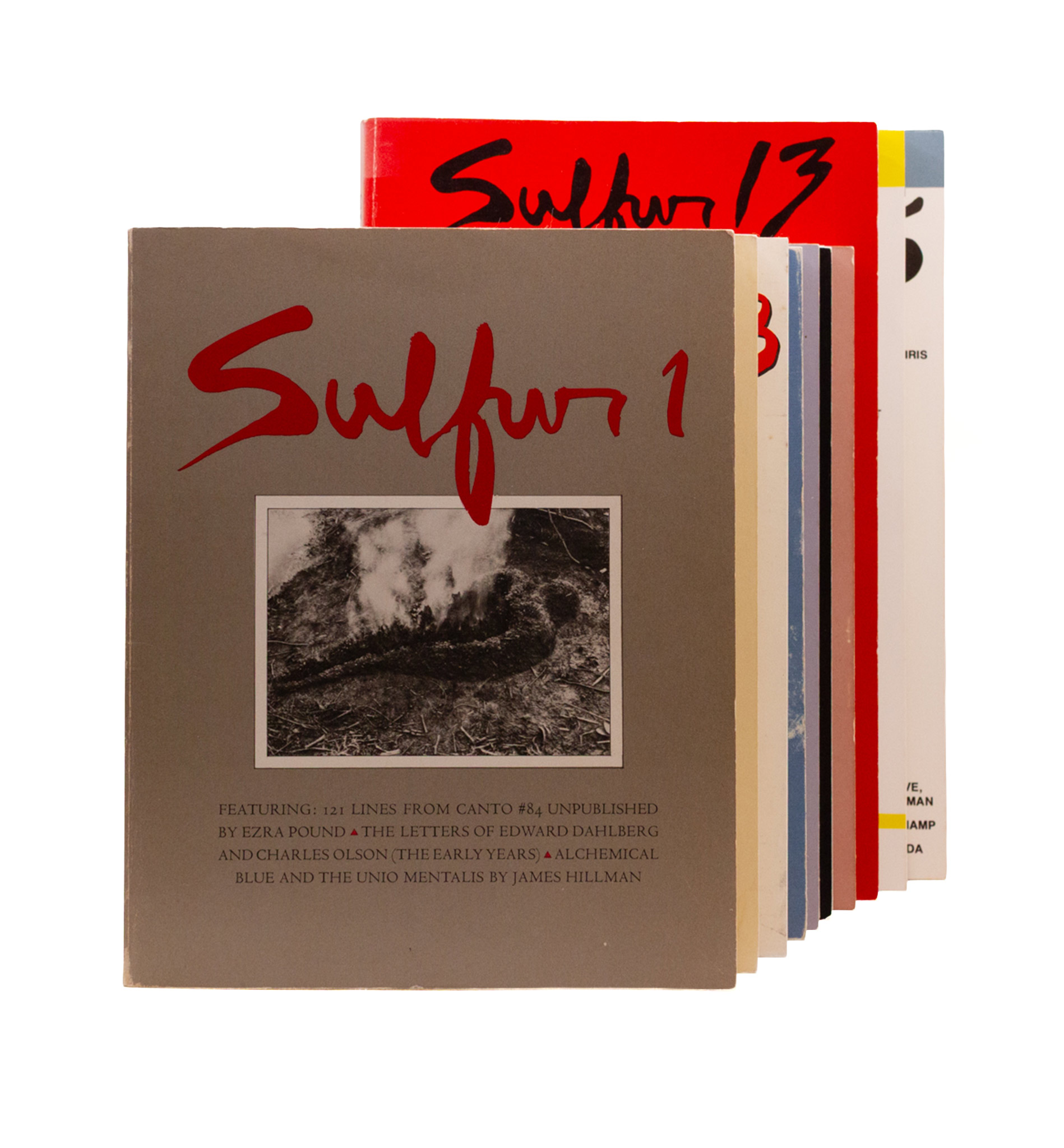
Sulfur; Nos. 1-7, 13-15
Clayton Eshleman, editor
Published Pasadena: California Institute of Technology, 1981-1986
7 issues; c. 19 x 15 cm each. Printed paper wrappers.
3 issues; c. 22.3 x 15.3 cm each. idem.
Part of Periodicals, I
10 issues of Clayton Eshleman’s Sulfur; A Literary Tri-Quarterly of the Whole Art, a literary magazine from the California Institute of Technology founded in 1981, running for 46 issues in total to Spring 2000. Of Poundian interest particularly for issue 1, containing “From an Unpublish Draft of Canto LXXXIV,” 123 lines Pound removed from the final typescript largely accounting for his walk from Rome to Gais after the fall of Rome (where he and James Strachey Barnes were at the time, and deliberated a few days before both leaving in their own ways).
Many further items of interest in the run, including a three part serialisation of the correspondence of Edward Dahlberg and Charles Olson, essays from William Carlos Williams, poems from Rachel Blau DuPlessis, Boris Pasternak, Elsa von Freytag-Loringhoven. The later issues containing poems from Charles Olson, criticism by DuPlessis and Marjorie Perloff, and criticism on modern art including Giacometti and Duchamp, together with a translation by Richard Sieburth.
Mostly very good condition, the cover of No. 4 a little rubbed; spots along the top-edge.
tap to cycle
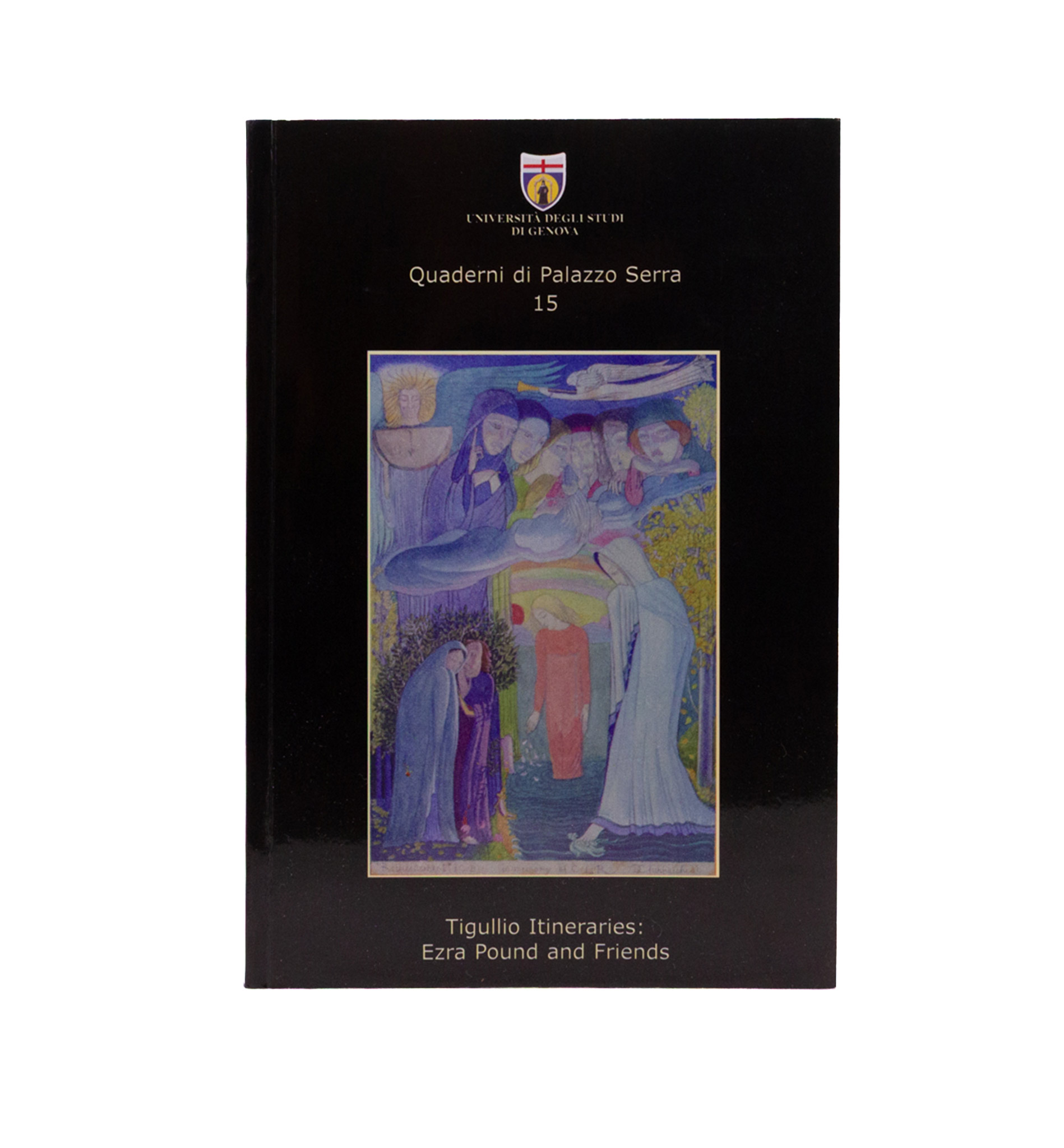
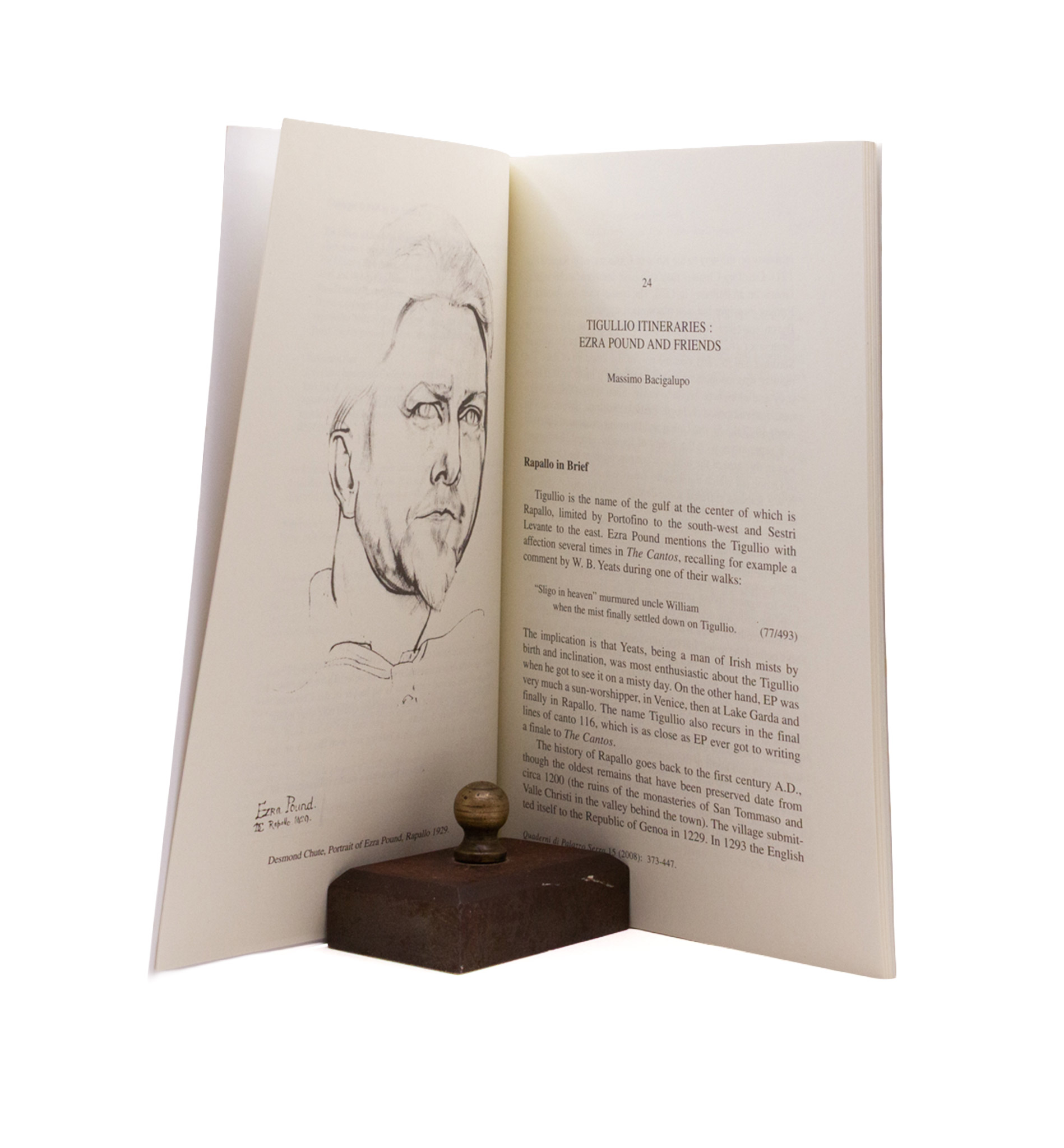
Tigullio Itineraries: Ezra Pound and Friends; in Quaderni di Palazzo Serra, 15
Massimo Bacigalupo, William Pratt, editors
Published Università degli Studi di Genova, 2008
104pp.; 20.6 x 14 cm. Stiff white printed paper wraps.
Part of Periodicals, I
Quaderni di Palazzo Serra, 15; “Tigullio Itineraries: Ezra Pound and Friends,” Number IV in the Ezra Pound, Language and Persona Series. An awesome little publication giving “The Dorothy Pound Walk,” “The W. B. Yeats Walk,” “The Homer and Isabel Pound Walk,” “The Hemingway Walk - Montallegro,” “The Gerhart Hauptmann Walk,” “The Olga Rudge Walk - Sant’Ambrogio,” and “The Max Beerbohm Walk - To Zoagli and Chiavari,” illustrated with maps of the routes, annotated with points of interests, and further photographs. Near fine.
tap to cycle
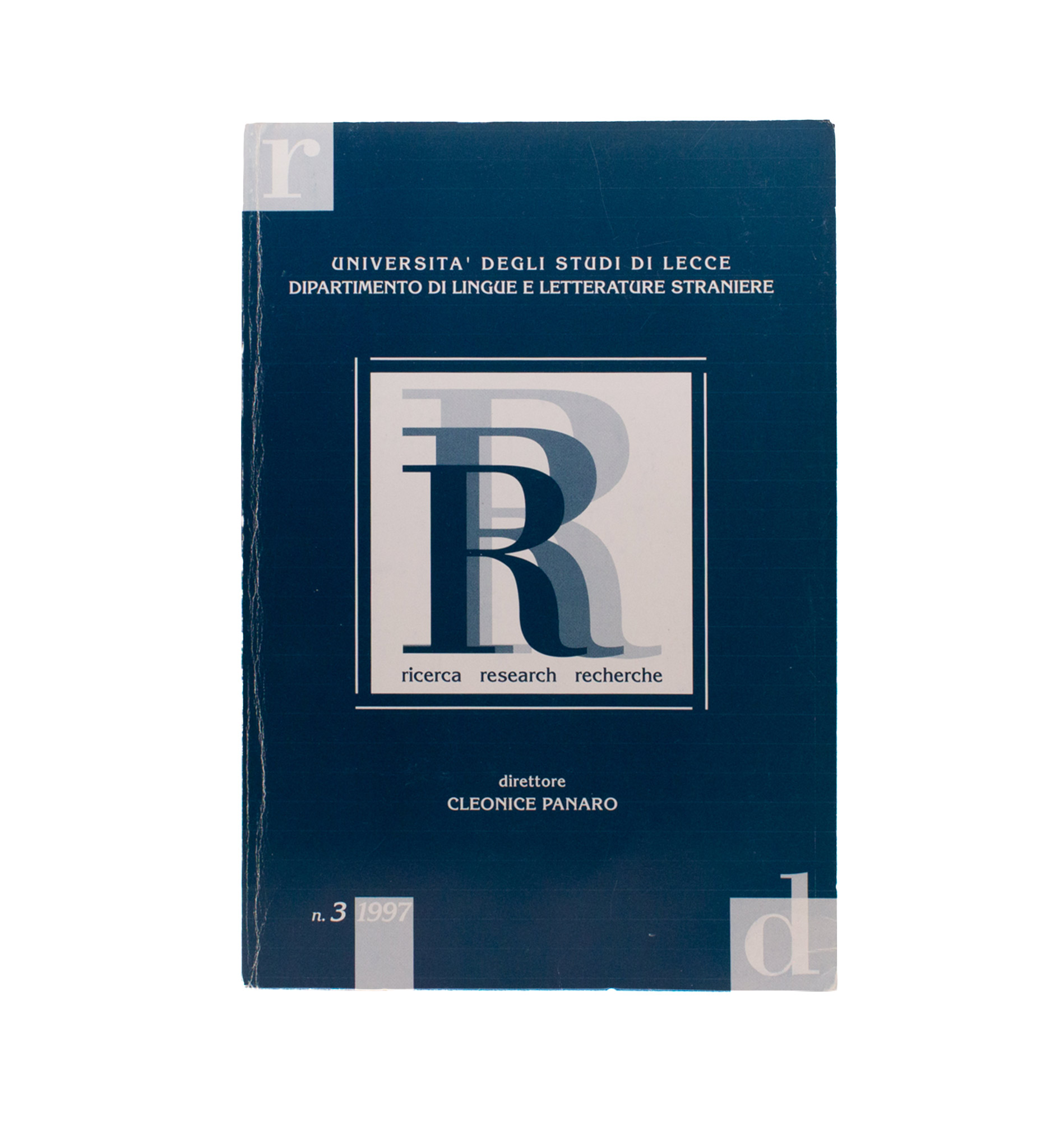
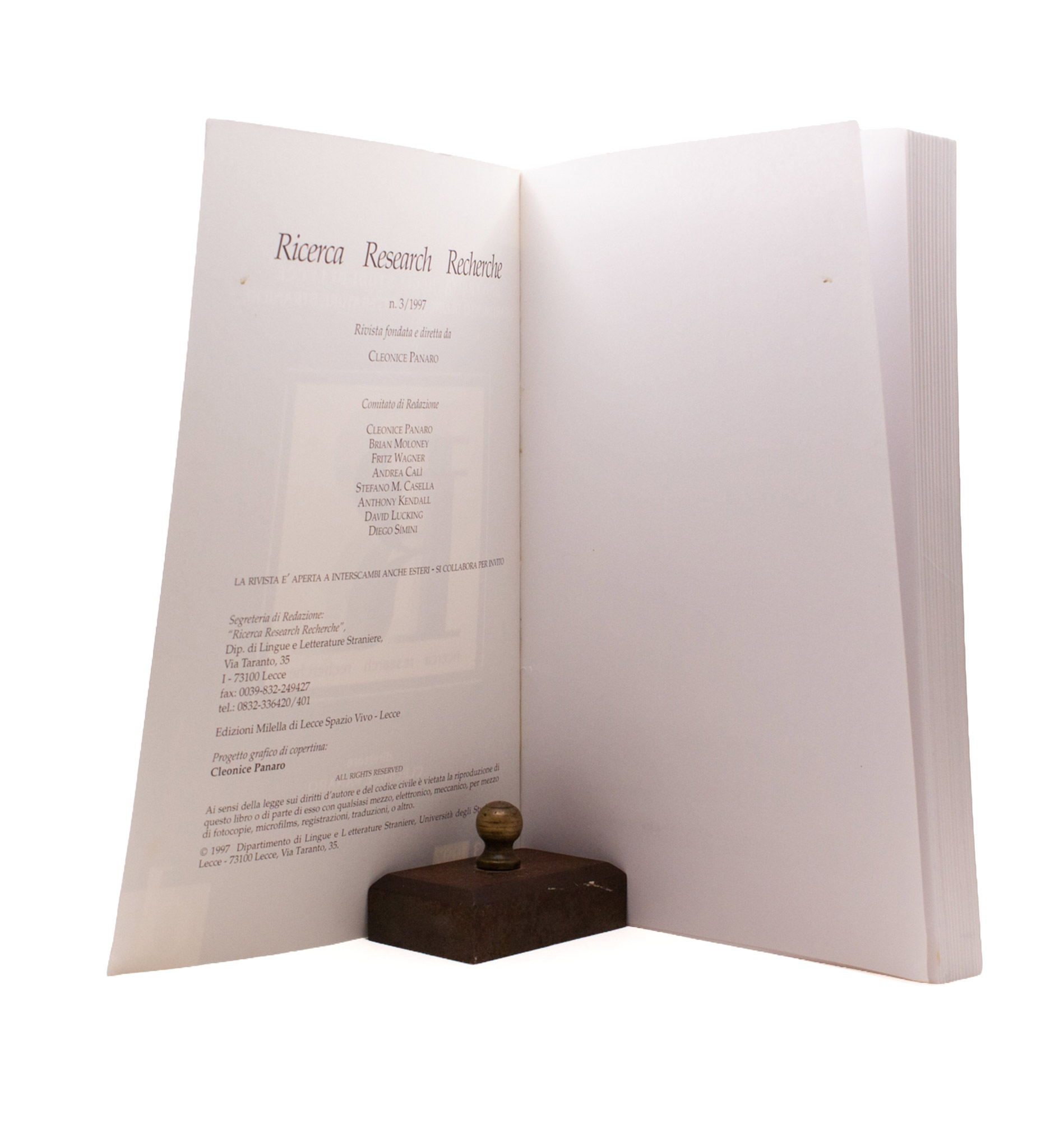
Ricerca Research Recherche; n. 3
Cleonice Panaro, direttore
Published Puglia: Università degli Studi di Lecce, 1997
406pp.; 23.8 x 16.8 cm. White paper wraps printed in blue.
Part of Periodicals, I
Scholarly periodical from the Dipartimento di Lingue e Letterature Straniere at the Università degli Studi di Lecce containing, of Poundian interest,
- Stefano Maria Casella, “Ezra Pound fra teatro, opera e radiodramma: Le testament de Villon e Cavalcanti”
- Ezra Pound, “Tredici lettere inedite, a cura di Stefano Maria Casella”
- Cleonice Panaro, “Whiteman, Pound, Eliot, Stevens: la ‘poesia’ e il ‘mestiere del poeta’”



tap to cycle
Three National Poetry Foundation Catalogues
Published Maine: National Poetry Foundation, [1979], 1984, [2004]
[8pp.]; 22.8 x 15.1 cm. White paper wrappers printed in black; stapled.
[36pp.]; 22.7 x 15.1 cm. idem.
16pp.; 21.5 x 14.1 cm. Glossy paper wrappers printed in black; stapled.
Part of Periodicals, I
Three catalogued from the NPF at The University of Maine advertising their recent publications, with order forms part of the binding, suggesting one send in the whole catalogue to make an order. Catalogue for 1984 filled with advertisements for Poundian literature, including the NPF reprint of del Mar’s History of Monetary Systems, and Upward’s Divine Mystery with quotes from EP on the back; as well as C. F. Terrell’s On That Day advertised as “Not recommended.” Advertisements for Paideuma and Sagetrieb (and in the ’84, Origin) throughout. A photo of C. F. Terrell (1917-2003) by Walter Baumann in the 2004 number, aside a statement about the NPF. Condition mostly fine, a little spotting to the first.

tap to cycle
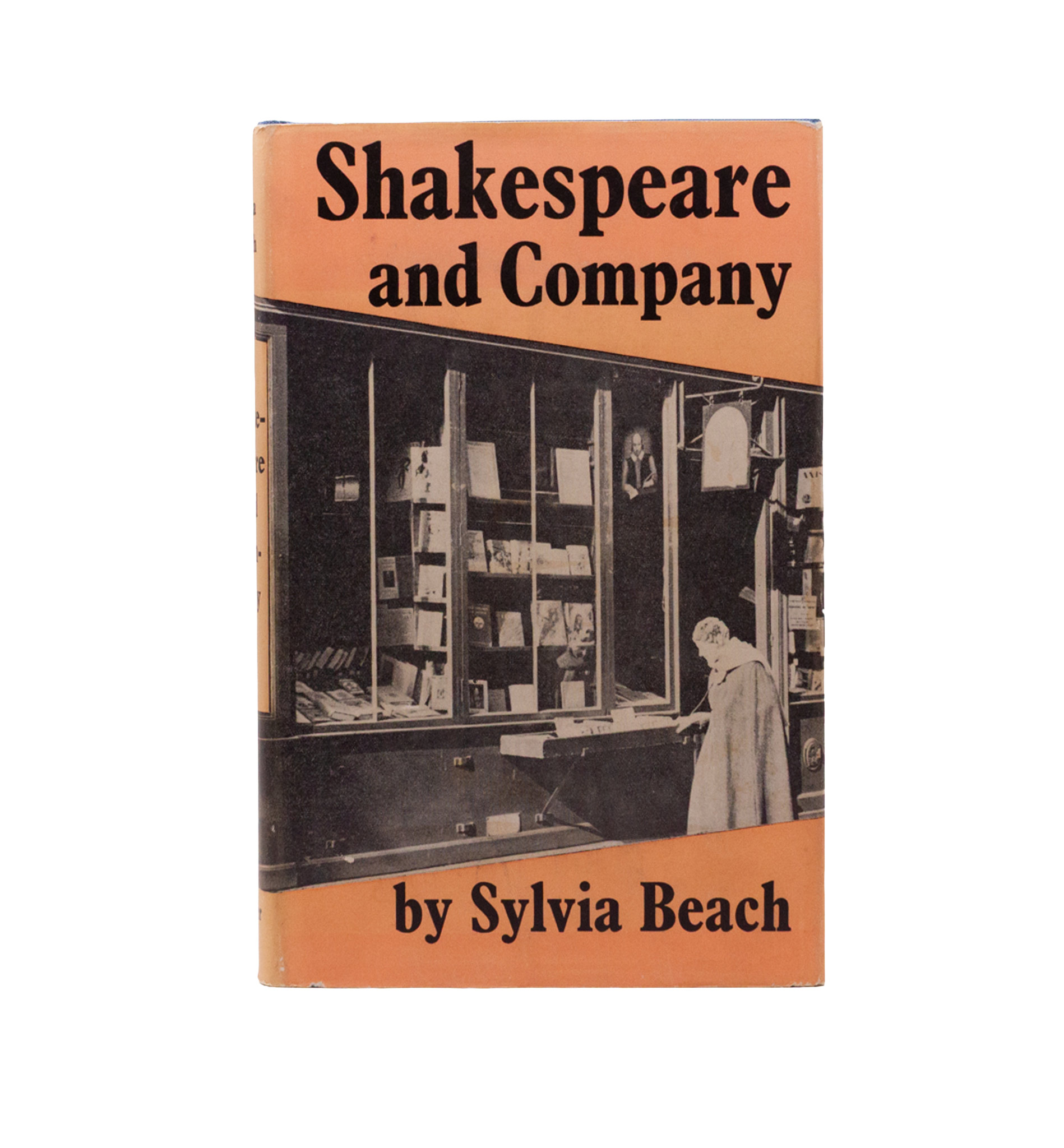
Shakespeare and Company
Sylvia Beach
Published London: Faber and Faber, 1960
232pp.; 22.2 x 14.5 cm. Blue cloth boards printed in black and stamped in gold on spine. White dust-jacket printed in salmon pink and black.
Part of Contemporaries, III
First edition of Sylvia Beach’s memoir of her Left Bank bookshop, an epicentre of literary modernism between the wars. A fine book in a very good just with a tiny bit of edgewear and some marks to the back cover.
tap to cycle
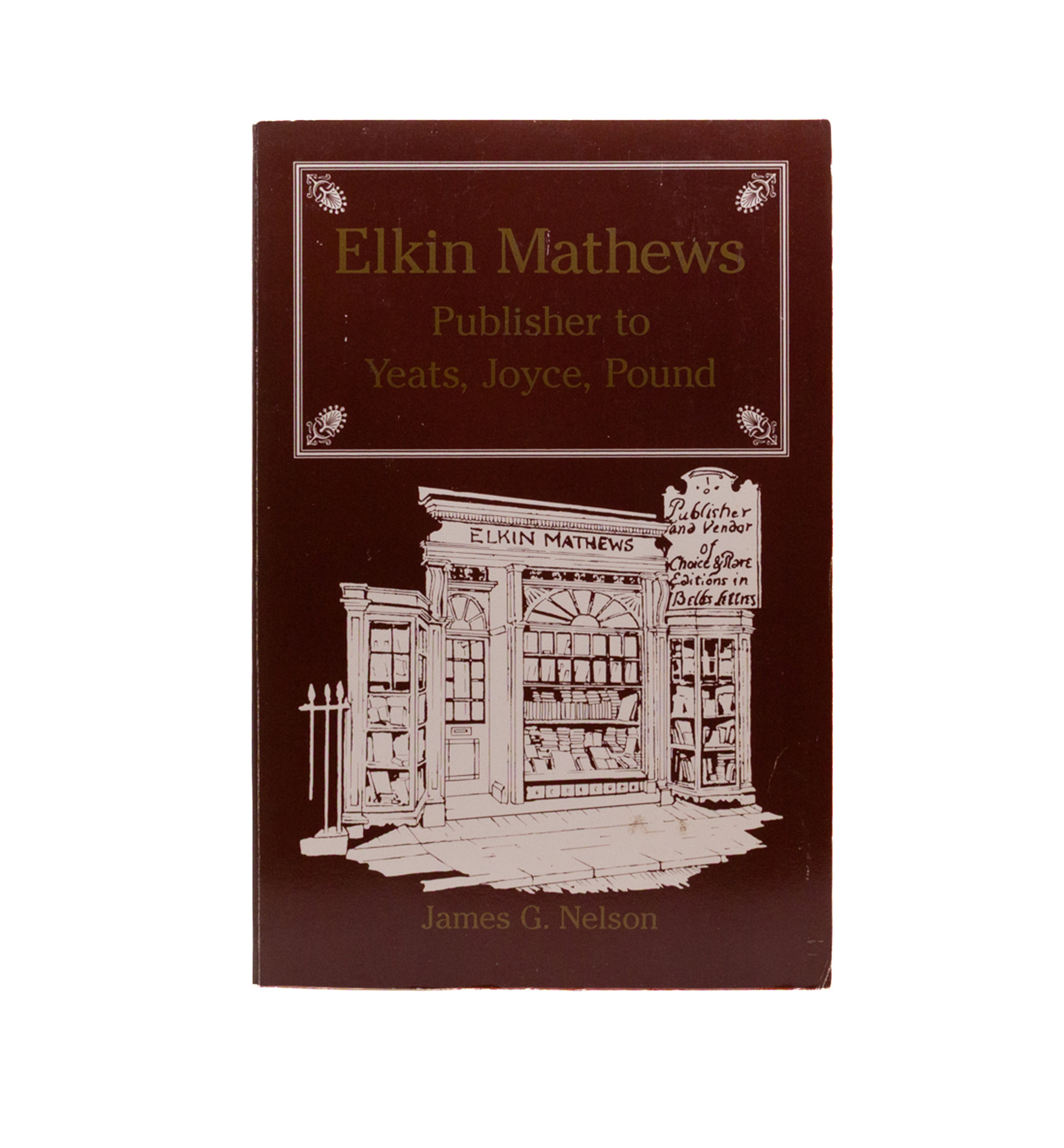
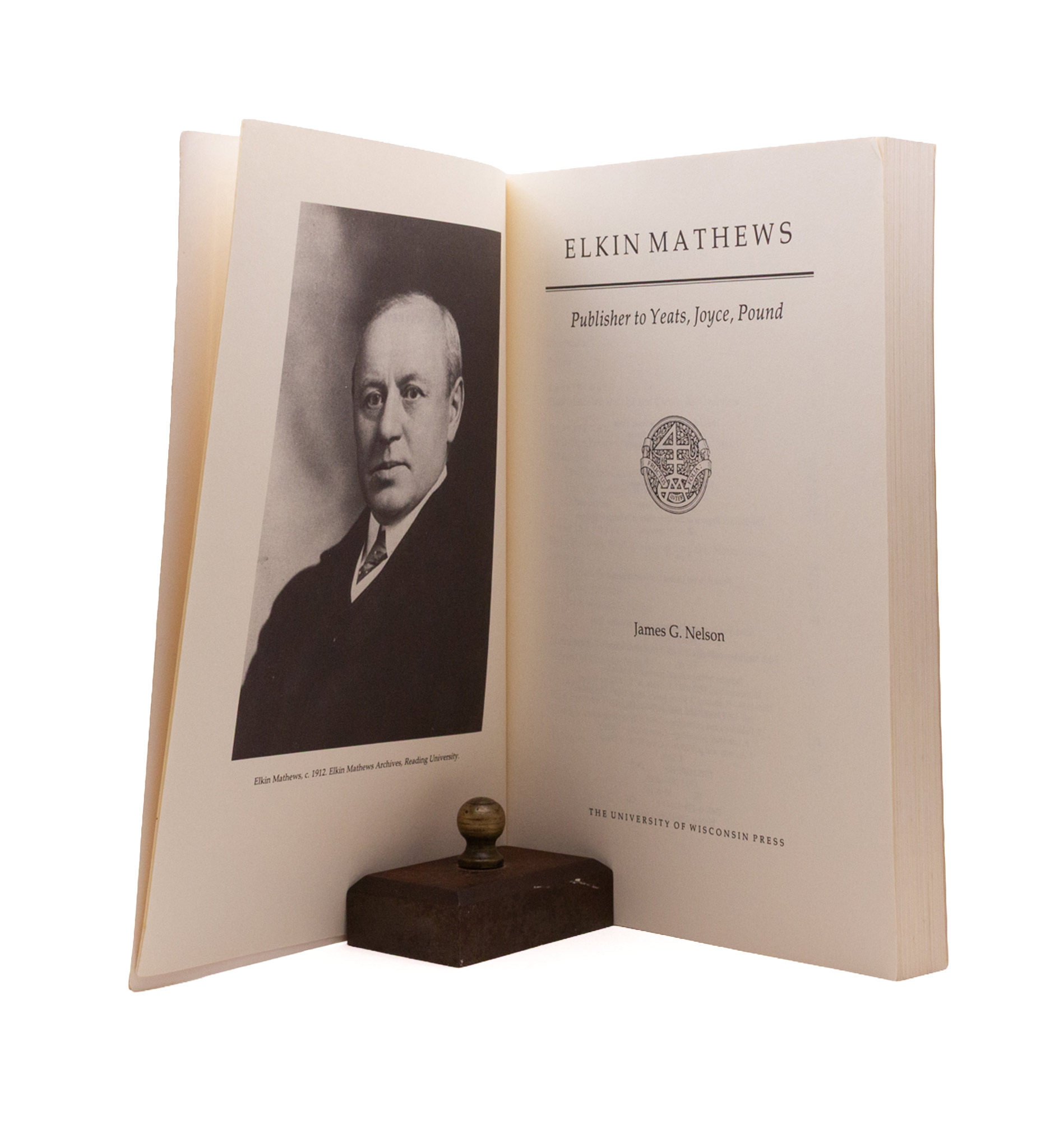
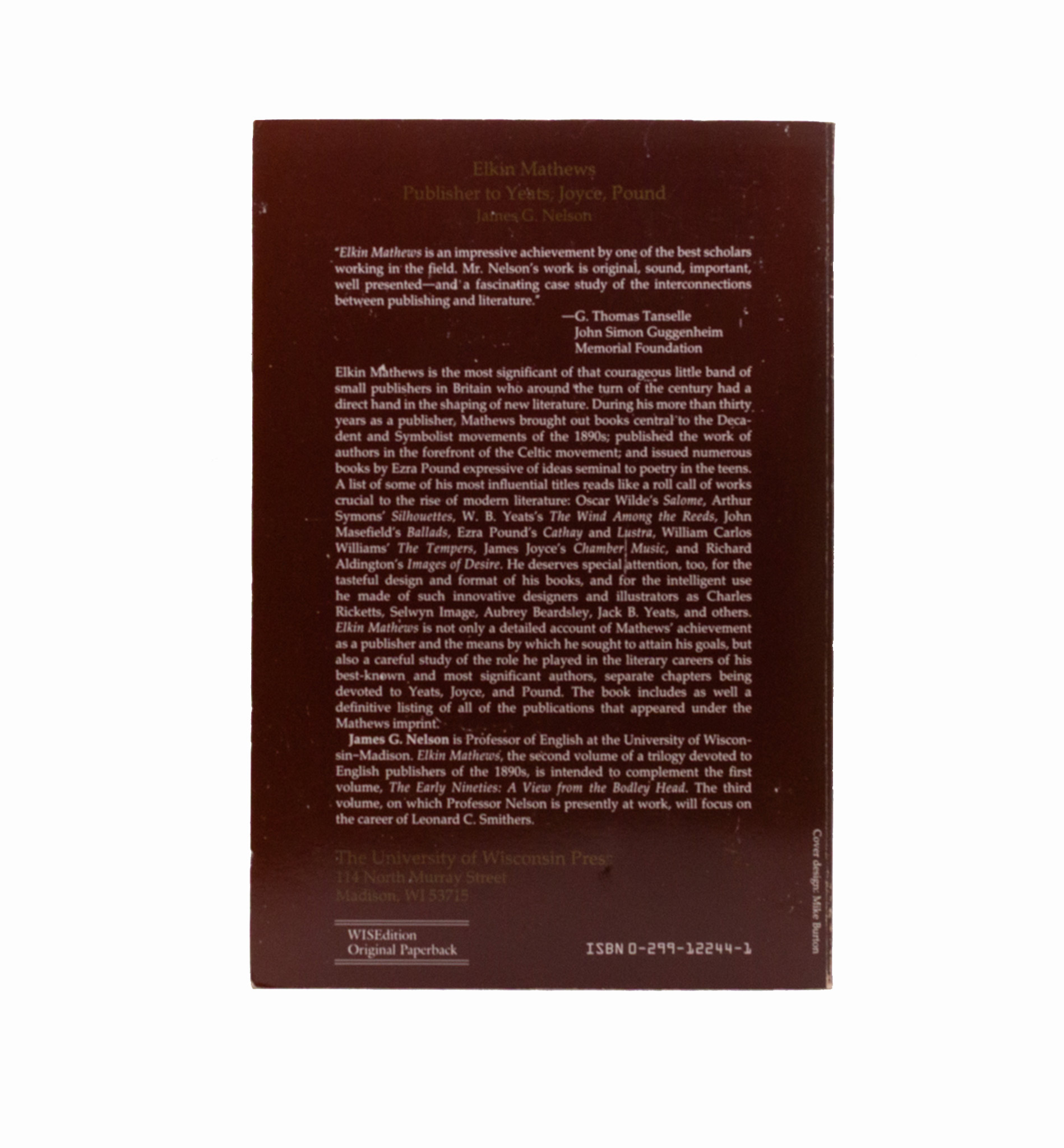
Elkin Mathews, Publisher to Yeats, Joyce, Pound
James G. Nelson
Published The University of Wisconsin Press, 1989
299pp.; 23 x 15.4 cm. Stiff paper wraps printed in brown and gold.
Part of Contemporaries, III
On Charles Elkin Mathews and the Elkin Mathews publishing house, Pound and Joyce’s first publisher. First edition, paperback issue; light wear to wraps. From David Moody’s library, with extensive annotations and notes laid-in in places.
tap to cycle
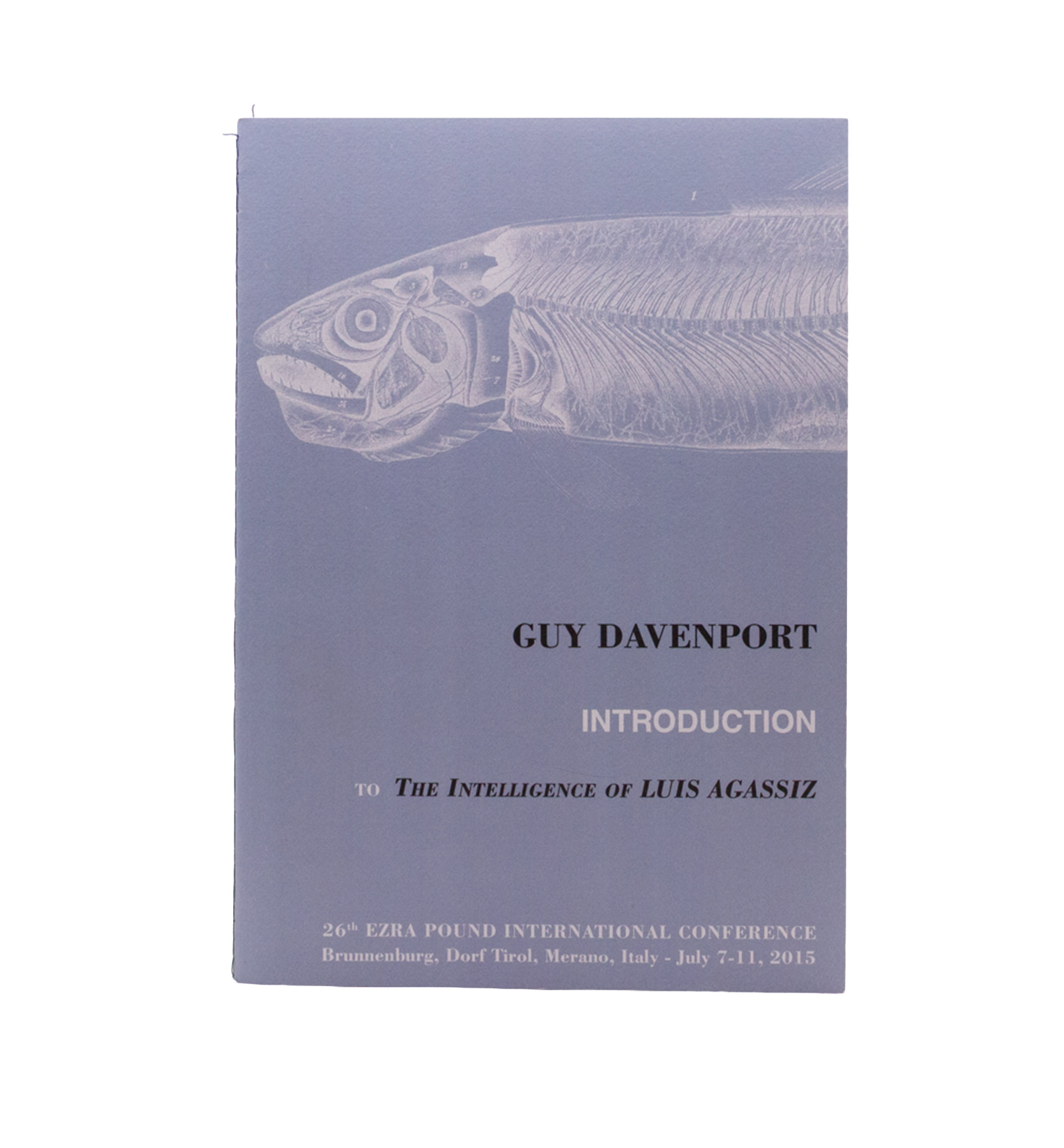
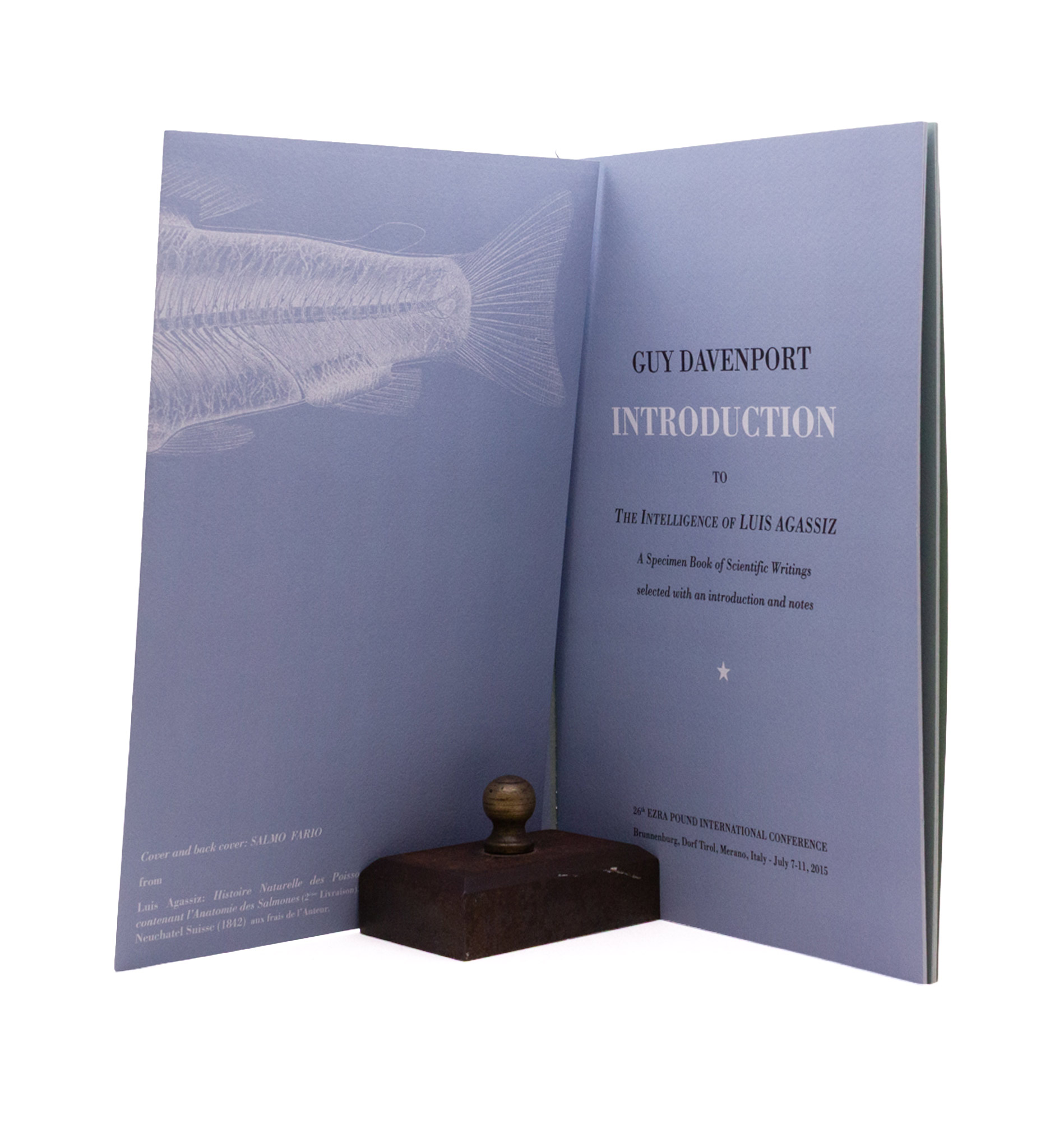
Introduction to the Intelligenze of Luis Agassiz
Guy Davenport
Published Rome: Addenda, 2015
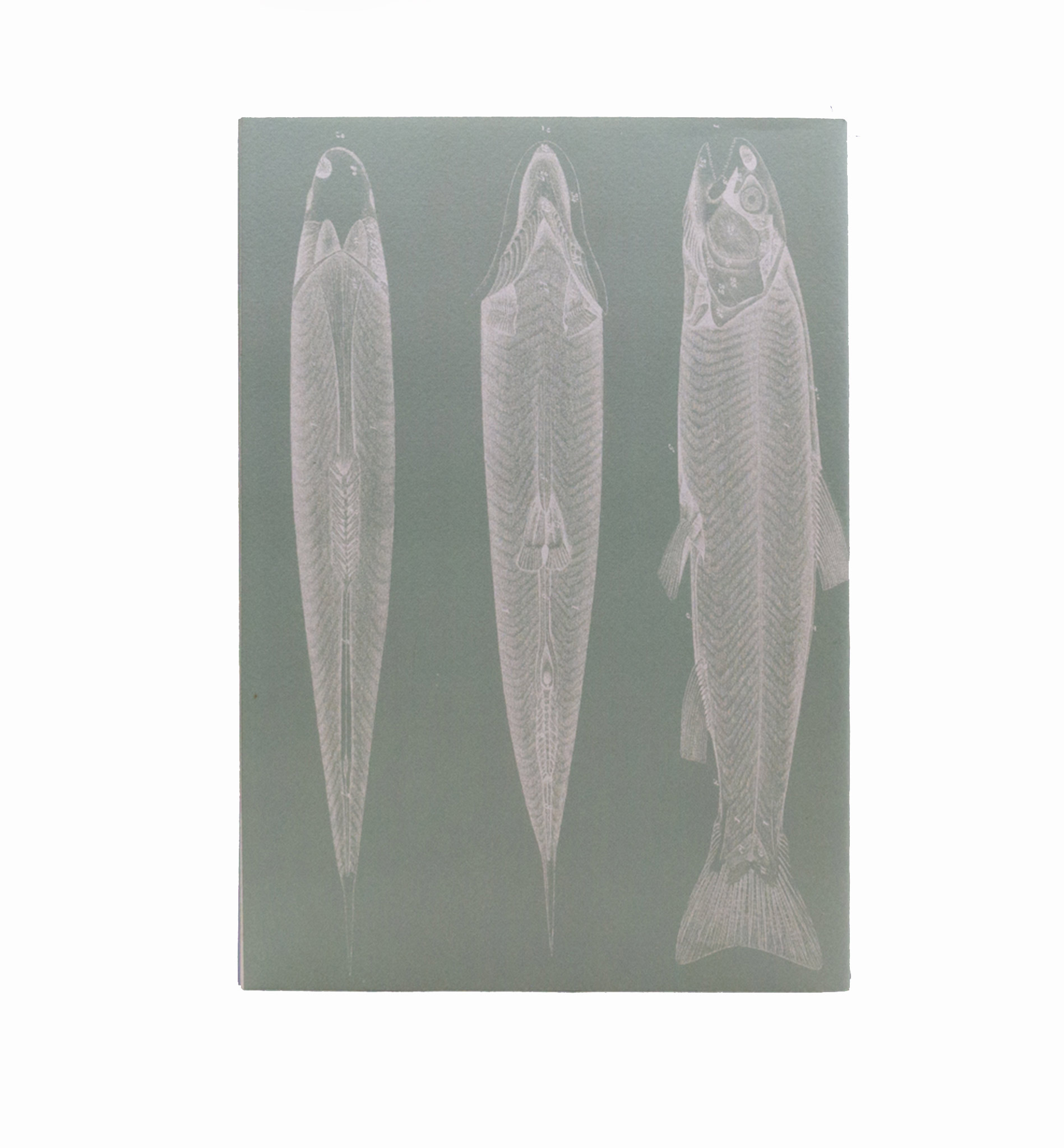
25pp.; 21 x 14.9 cm. Two-part blue-green paper, printed in black and white; finely stitched up spine with blue thread.
Part of Contemporaries, III
An anastatic reprint of Guy Davenport’s 25 page introduction to The Intelligence of Louis Agassiz first published by Beacon Books in 1965, and Davenport’s first publication outside of journals. Reproduced here by the small Poundian printhouse Addenda for the 26th EPIC, in an edition of 200 not for sale. An unusual production printed on two-toned paper, the first half of the book thus blue, the latter half green. Near fine; light handling and a small scratch to the front-cover.


tap to cycle
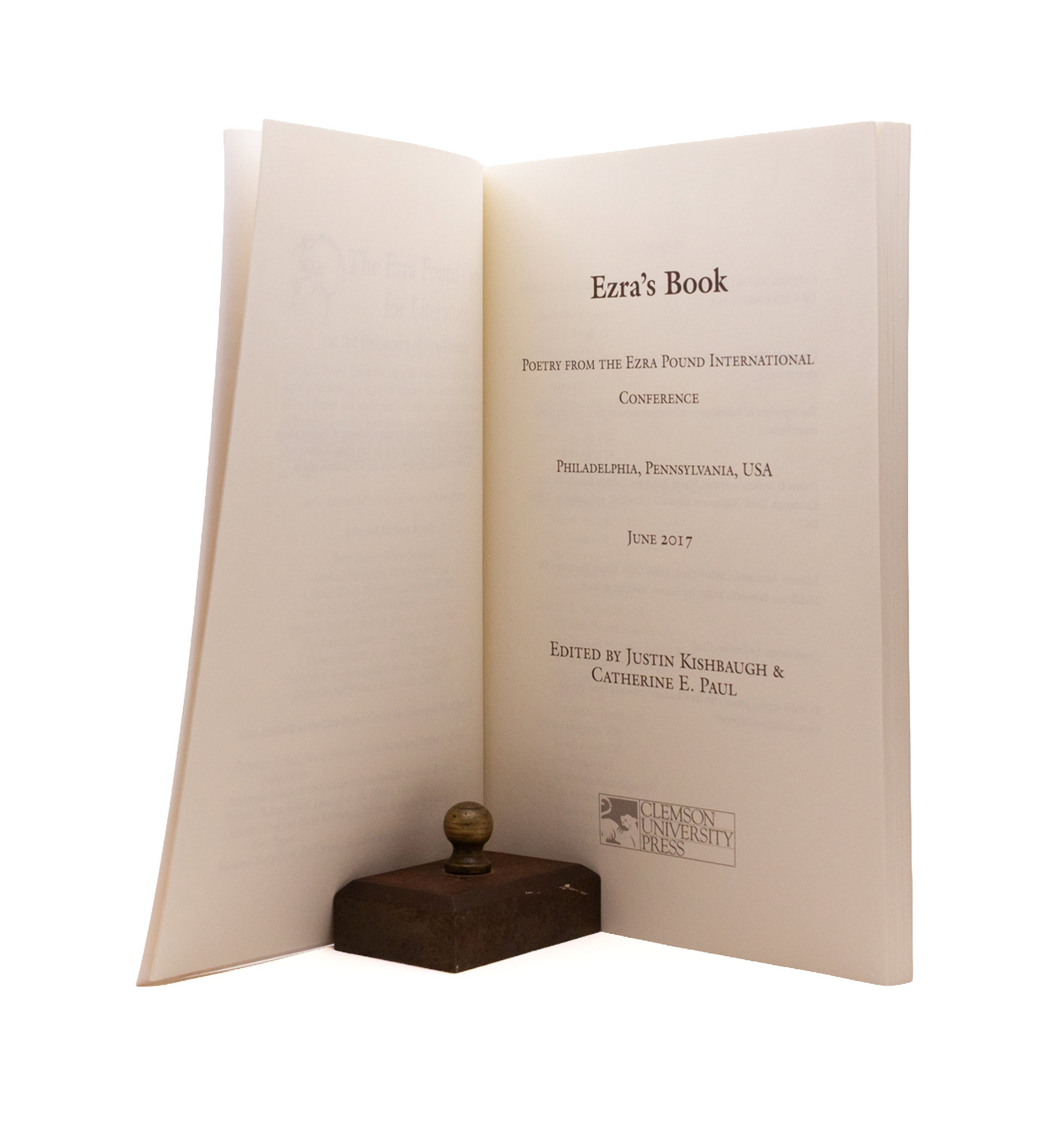
Ezra’s Book
Justin Kishbaugh, Catherine E. Paul, editors
Published South Carolina: Clemson University Press, 2019
115pp.; 22.7 x 15.8 cm. Printed paper wrappers.
Part of Ezra Pound, VIII
Poetry from the [27th] Ezra Pound International Conference, Philadelphia, Pennsylvania, USA; June 2017 (see here) and part of John Gery’s Ezra Pound Center for Literature Book Series at the University of New Orleans. Near fine.

tap to cycle
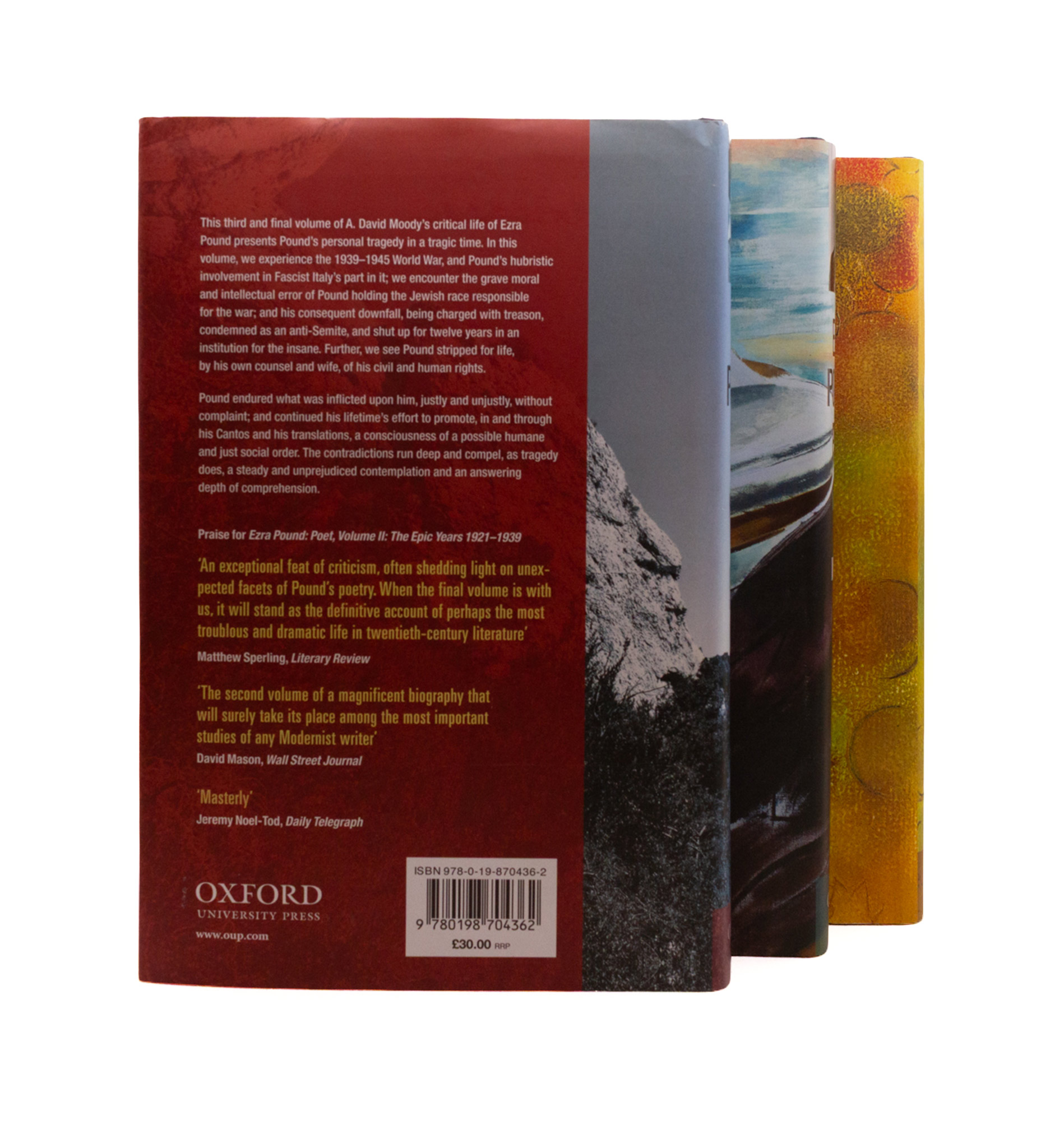
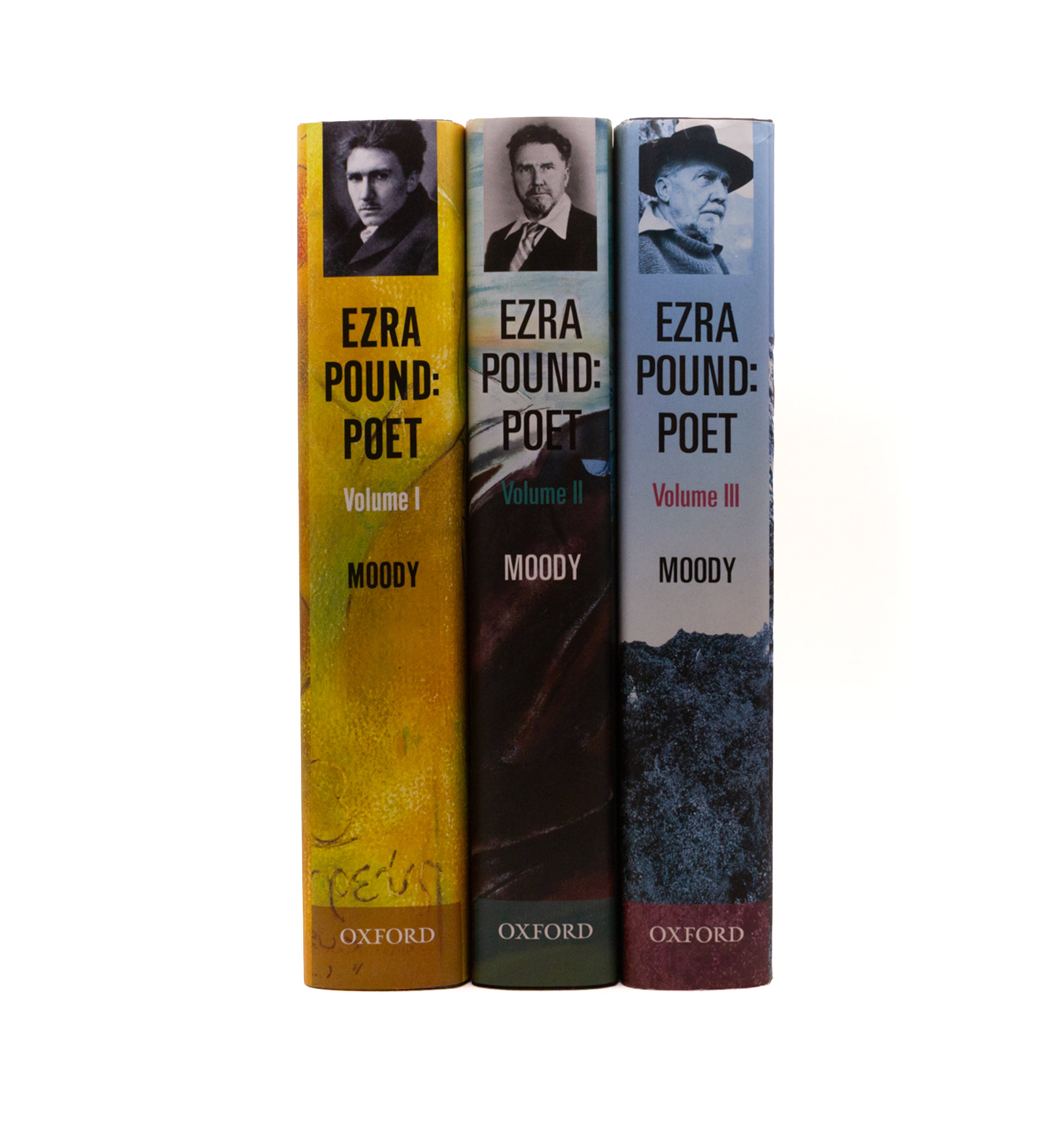
Ezra Pound: Poet; a complete set
David Moody
Published Oxford University Press, 2007-2015
507pp.; 24.1 x 16 cm. Black paper covered boards lettered in gold on spine. White dust-jacket printed in greens, browns and black, with Sheri Martinelli’s self-portrait as Zagreus.
421pp.; 24.1 x 16 cm. Black paper covered boards lettered in gold on spine. White dust-jacket printed in blues and black, with Wyndham Lewis’s portrait of Pound.
654pp.; 24.1 x 16.2 cm. Black paper coveredboards lettered in gold on spine. White dust-jacket printed in red and black.
Part of Ezra Pound, VIII
A complete set of the standard Pound biography by Professor A. David Moody at the University of York, published with Oxford. All first, hardcover editions; fine or near fine, Vol. 3 with a little bumping at the top of the spine on jacket.


tap to cycle
Diptych: Odysseus / Zagreus
Sheri Martinelli
[no date]
Gouache on rag paper. Frames measuring 38.6 x 30.3 and 31.1 x 38 cm; inner borders 29.5 x 22.1 and 22.1 x 29.5 cm.
Part of Ezra Pound & Art
“my bikini is worth your raft”
That the wave crashed, whirling the raft, then
Tearing the oar from his hand,
broke mast and yard-arm
And he was drawn down under wave,
The wind tossing,
Notus, Boreas,
as it were thistle-down.
Then Leucothea had pity,
“mortal once
Who now is a sea-god:
νόστυ
γαίης Φαιήκωυ
Κρήδεμνον… [veil]
κρήδεμνον…
and the wave concealed her,
dark mass of great water.
The Sheri-Zagreus avatar does not, on the other hand, feature in the literature. Zagreus is rendered abnormally as female, and the title is underwritten L’Mart (Pound’s nickname of Sheri, La Martinelli, also the title to the catalogue of Sheri’s works Pound had published by Vanni Scheiwiller in 1956) surplus to the signatures “SM” that appear on both portraits. David Moody interprets Sheri’s identification with Zagreus as the “bringer of life to Pound in St Elizabeths”; Sheri thus looking back to the Pisan Canto 77 which closes, “bringest to focus / Zagreus / Zagreus”. While Zagreus is decorated with grapes, Martinelli renders Odysseus with Dionysean characteristics, adorning his head with vine-leaf in a manner reminiscent of Canto II. This offers a vital connection between the two paintings, that of the divine dressing the mortal and offering her protection. In my own reading Zagreus also positions herself behind the right shoulder of Odysseus: the strong line of shoulder, which passes upwards to the neck, obscures the cheek of Zagreus. In this configuration we see, instead of the two gazes crossing each other, Odysseus looking outward while Zagreus stands behind him, not the object of his gaze but something of a support, a narrative true to the St. Liz years, communicated fully through The Cantos, where Martinelli healed Pound. By this the diptych comes together. Not two portraits of mythological avatars, but a encoding of their relationship through ancient stories.
Executed in gouache on cotton rag paper, by brush; the back of the brush used to indent the lettering (“L’Mart” almost appearing to be biro) then followed in colour, as well as the grapes and eyes of Zagreus. With a blank back of the brush Martinelli has scored various symbols into the paint of Odysseus, including one hard to read Chinese ideogram, and a quite visible “EP” on Odysseus’s right cheek. Both signed with Martinelli’s monogram “SM” which appears at least as early as 1961 in Martinelli’s portrait “EZ” published in Miles Payne’s The Light Year (Autumn 1961).
Unopened; no defects. Purchased by David Moody from Peter Bennett, a New Zealand born poet who sold a number of works on Martinelli’s behalf, at the 13th EPIC, Essex, where Bennett held an exhibition of Martinelli’s work (photo available on request). Notes pasted to the back of each by David Moody, as well as stickers from The Maritime Gallery, Brightlingsea.

tap to cycle
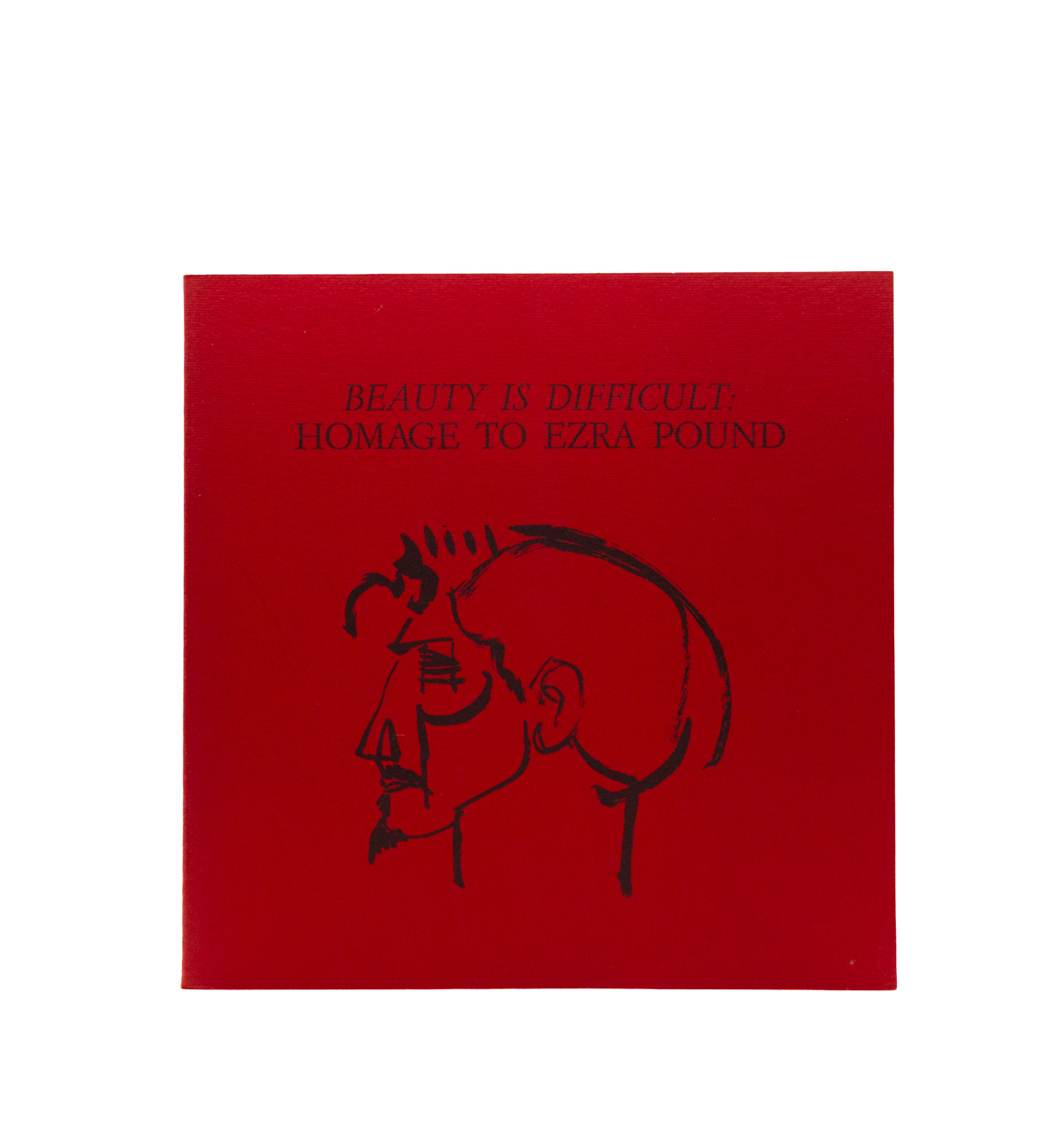
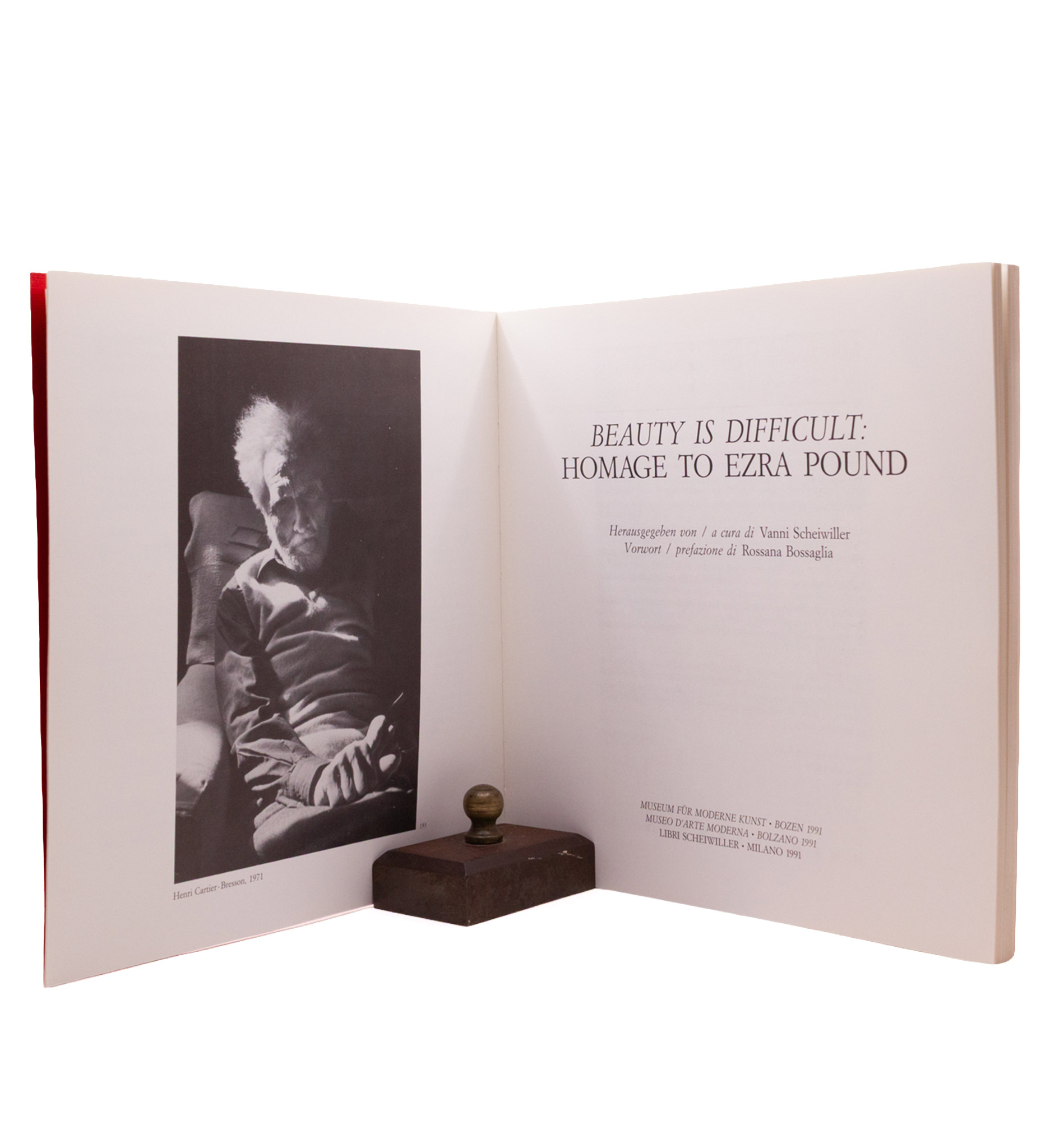
Beauty is Difficult: Homage to Ezra Pound
Vanni Scheiwiller, a cura di
Published Bolzano: Museuo d’Arte Moderna, 1991
162pp.; 21 x 21 cm. Heavy red paper wrappers printed in black.
Part of Ezra Pound & Art
A beautiful catalogue to an exhibition held in the Museo d’Arte Moderna, Bolzano, 31 May - 28 July 1991, in collaboration with Libri Scheiwiller, opening with a 1445 portrait of Sigismondo Malatesta by Pisanello. Preceded by a number of texts in German and Italian by the museum’s president, Karl Nicolussi-Leck, Rossana Bossaglia (trans. Ferruccio Delle Cave), Mary de Rachewiltz (trans. Andreas Hapkemeyer), Piero Dorazio (trans. AH.), Piero Sanavio (trans. AH.), Maria Luisa Ardizzone (trans. FDC), and Vanni Scheiwiller (trans. AH.). With one further essay, “una definizione del bello è: utilità” by Eugen Gomringer printed on a light-grey leaf, inserted, with German trans. verso. A near fine copy, the spine with signs of reading.

tap to cycle
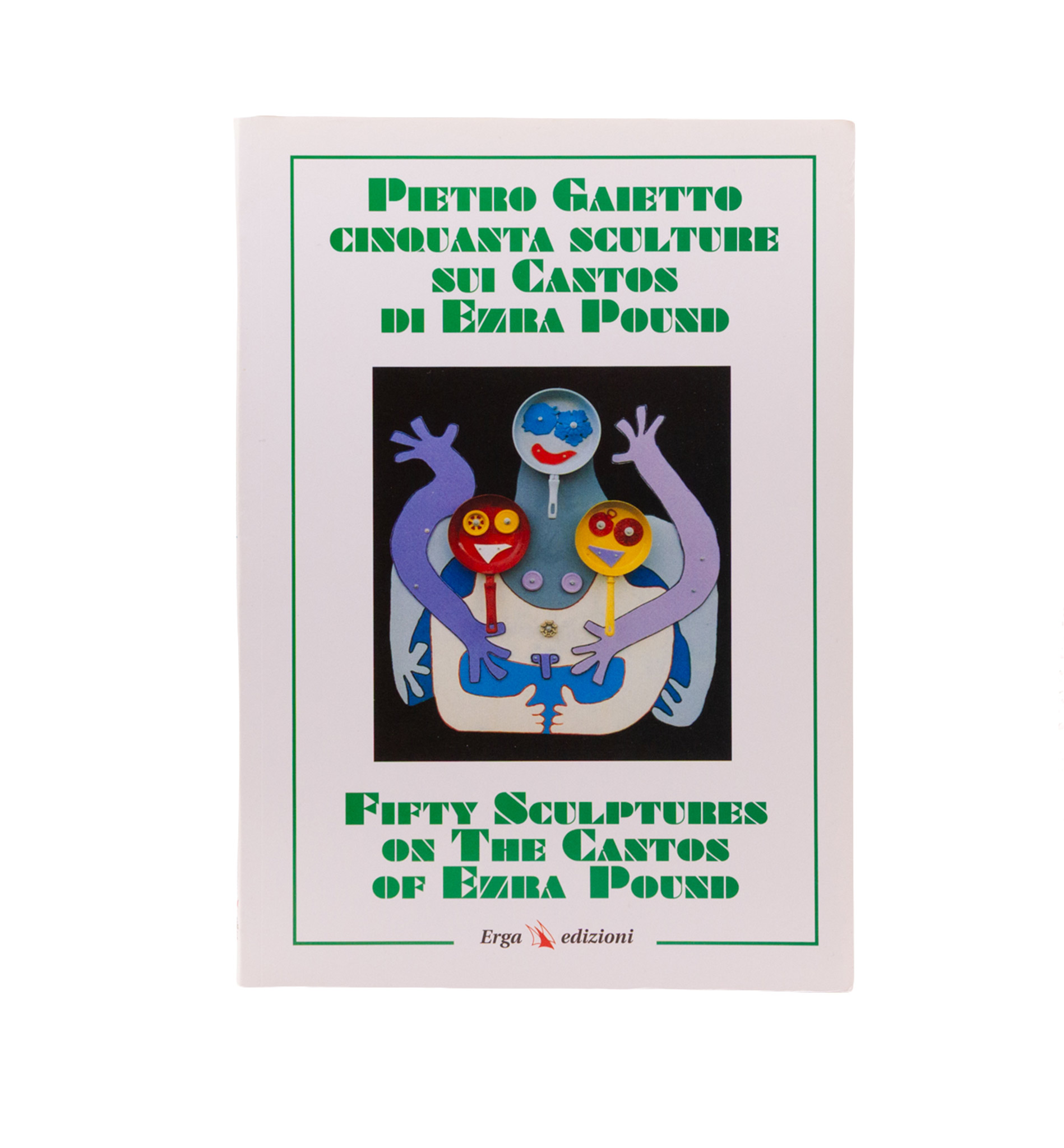
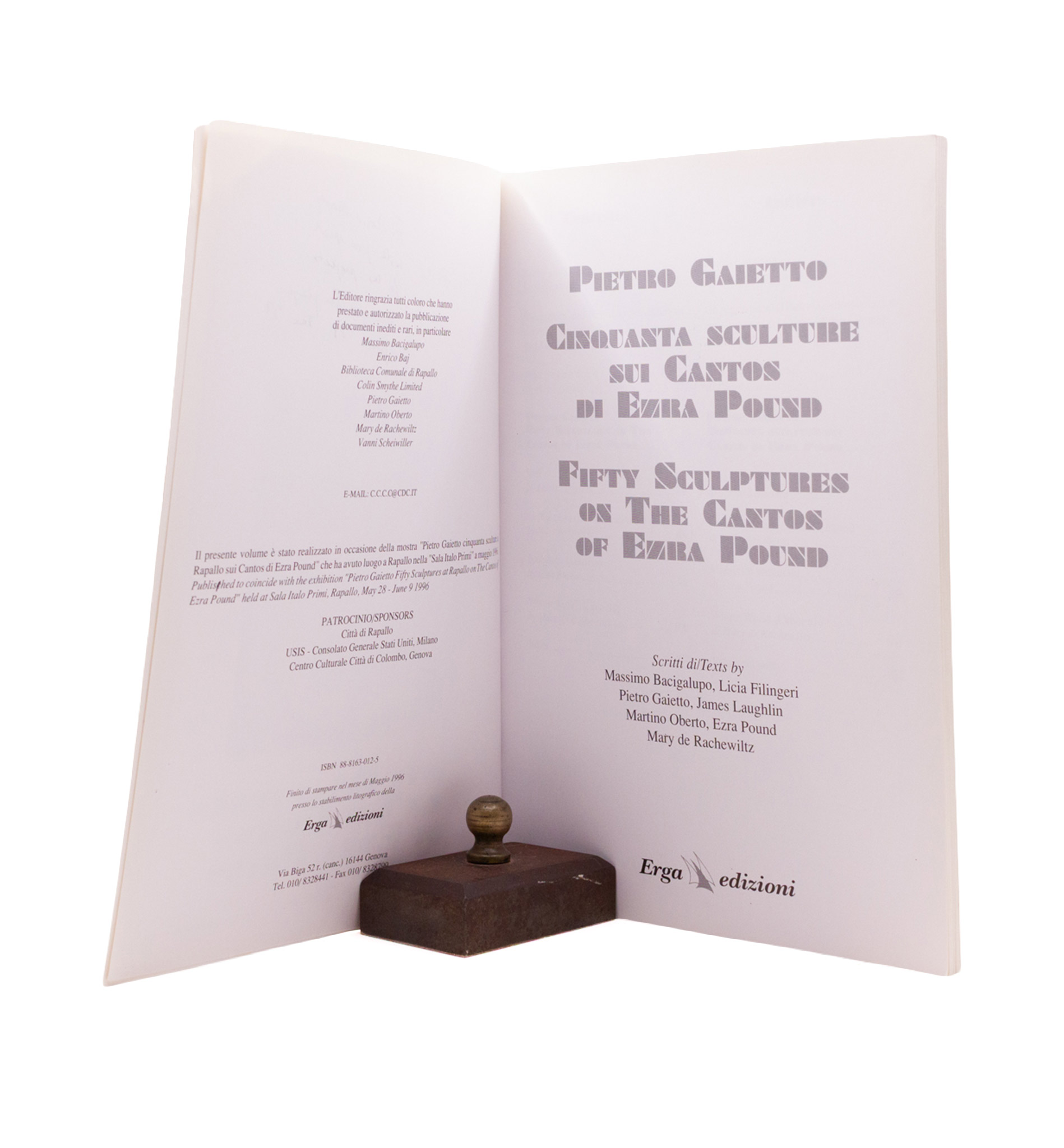
Cinquanta Sculture sui Cantos di Ezra Pound / Fifty Sculptures on The Cantos of Ezra Pound
Pietro Gaietto
Massimo Bacigalupo, Licia Filingeri, James Laughlin, Martino Oberto, Ezra Pound, Mary de Rachewiltz, contributors
Published Genova: Erga edizioni, 1996
104pp.; 23.9 x 17 cm. Stiff white printed paper wrappers.
Part of Ezra Pound & Art
Published to coincide with the exhibition “Pietro Gaietto Fifty Sculptures at Rapallo on The Cantos of Ezra Pound” held at the Sala Italo Primi, Rapallo, May 28 - June 9 1996. Seven texts printed in English and Italian, vis-à-vis, illustrated with photos throughout. With colour illustrations of all fifty of Gaietto’s sculptures, together with their quote from The Cantos. Light wear; a very good copy. Inscribed on the ffep to David Moody from Massimo Bacigalupo, 1997.
tap to cycle
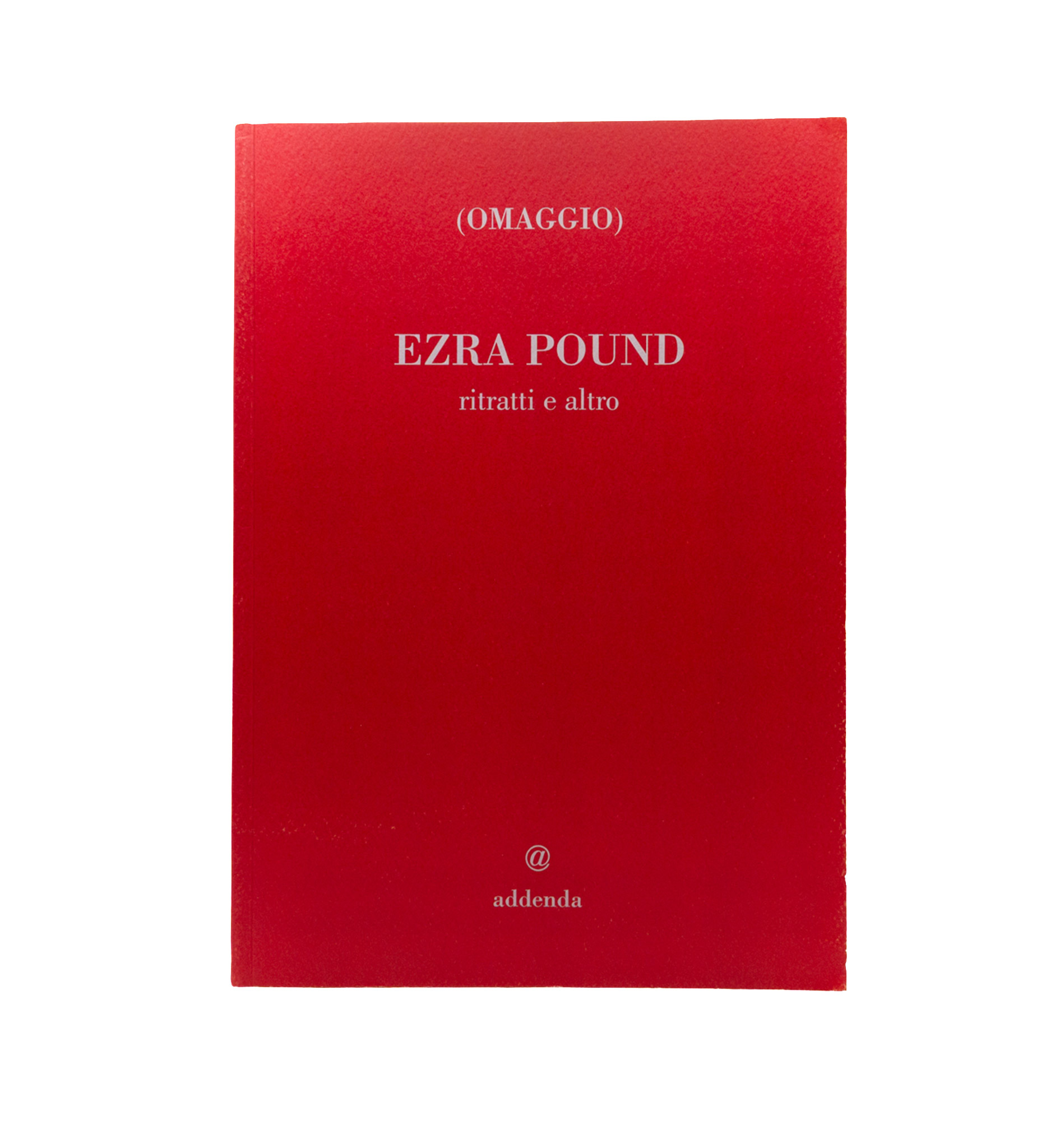
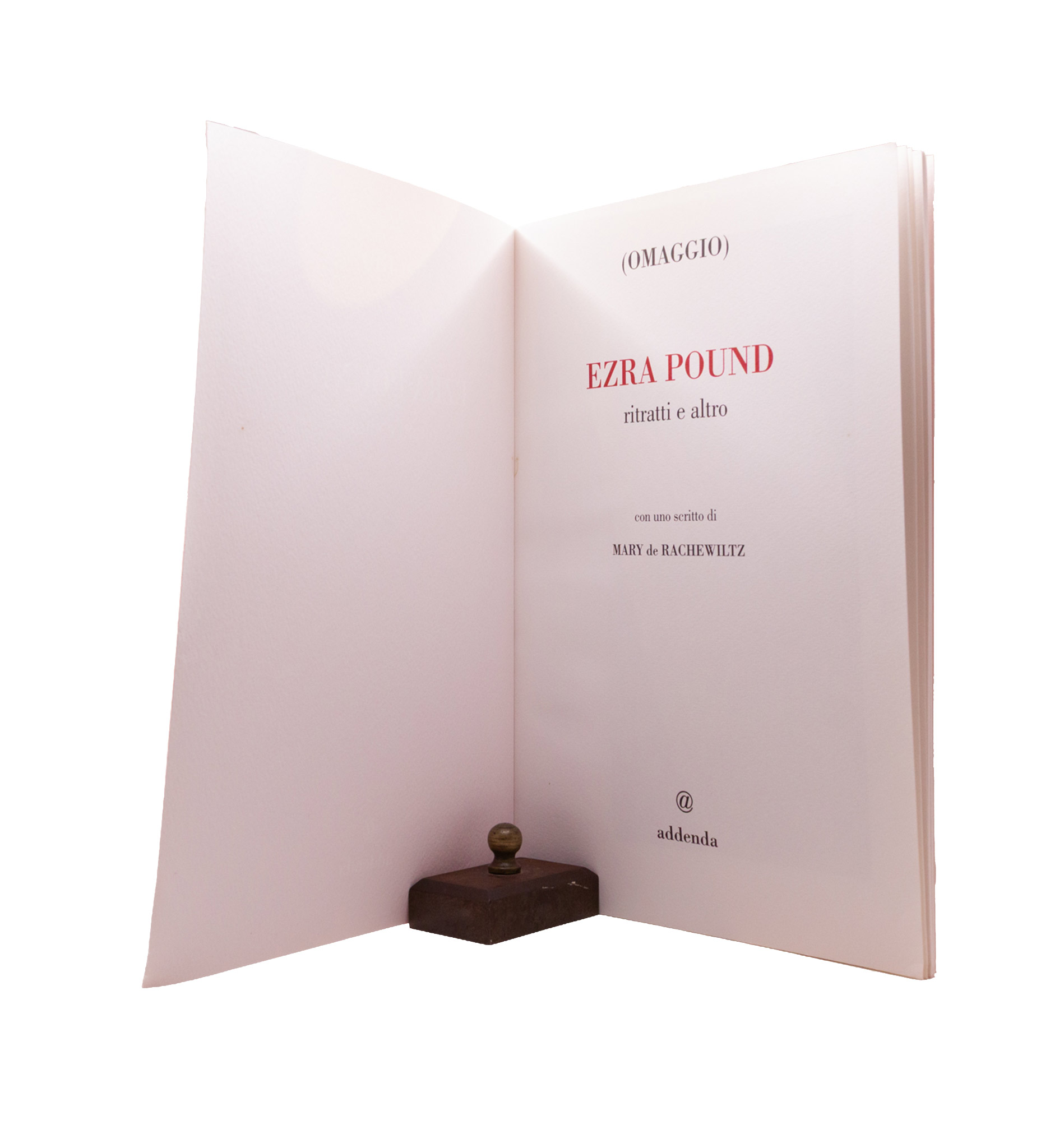
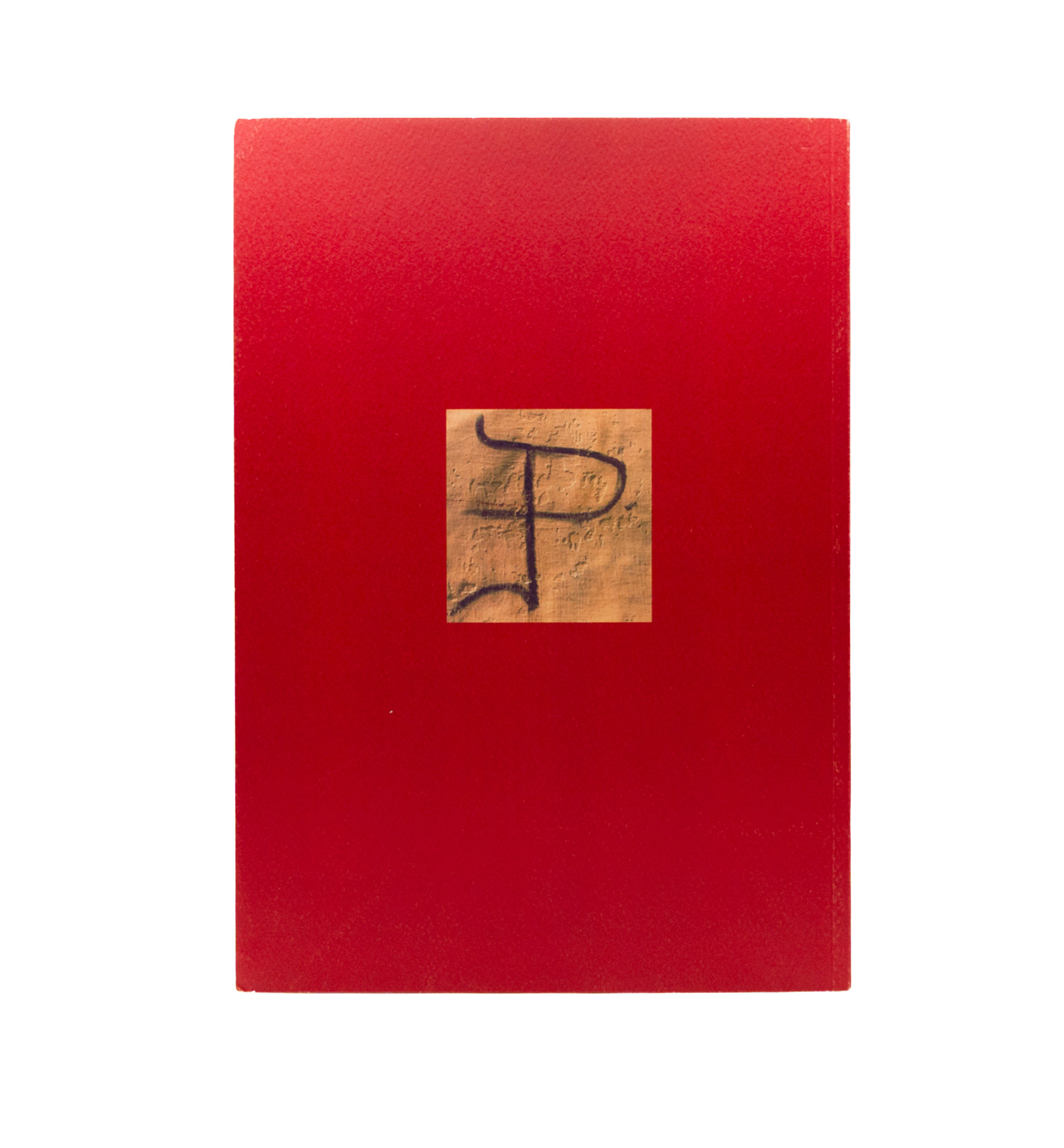
Ezra Pound, ritratti e altro
Mary de Rachewiltz, foreword
Published Rome: La Diagonale, 2009
36pp.; 29.8 x 21.6 cm. Heavy red paper wraps printed in light blue.
Part of Ezra Pound & Art
Catalogue for an exhibition held at La Diagonale library, Rome, for the 23rd Ezra Pound International Conference, 29 June - 4 July 2009. Large reproductions of the works with the detail opposite. Slightest life to the fore-edge / bottom corner, little rubbing to spine, otherwise fine.
tap to cycle
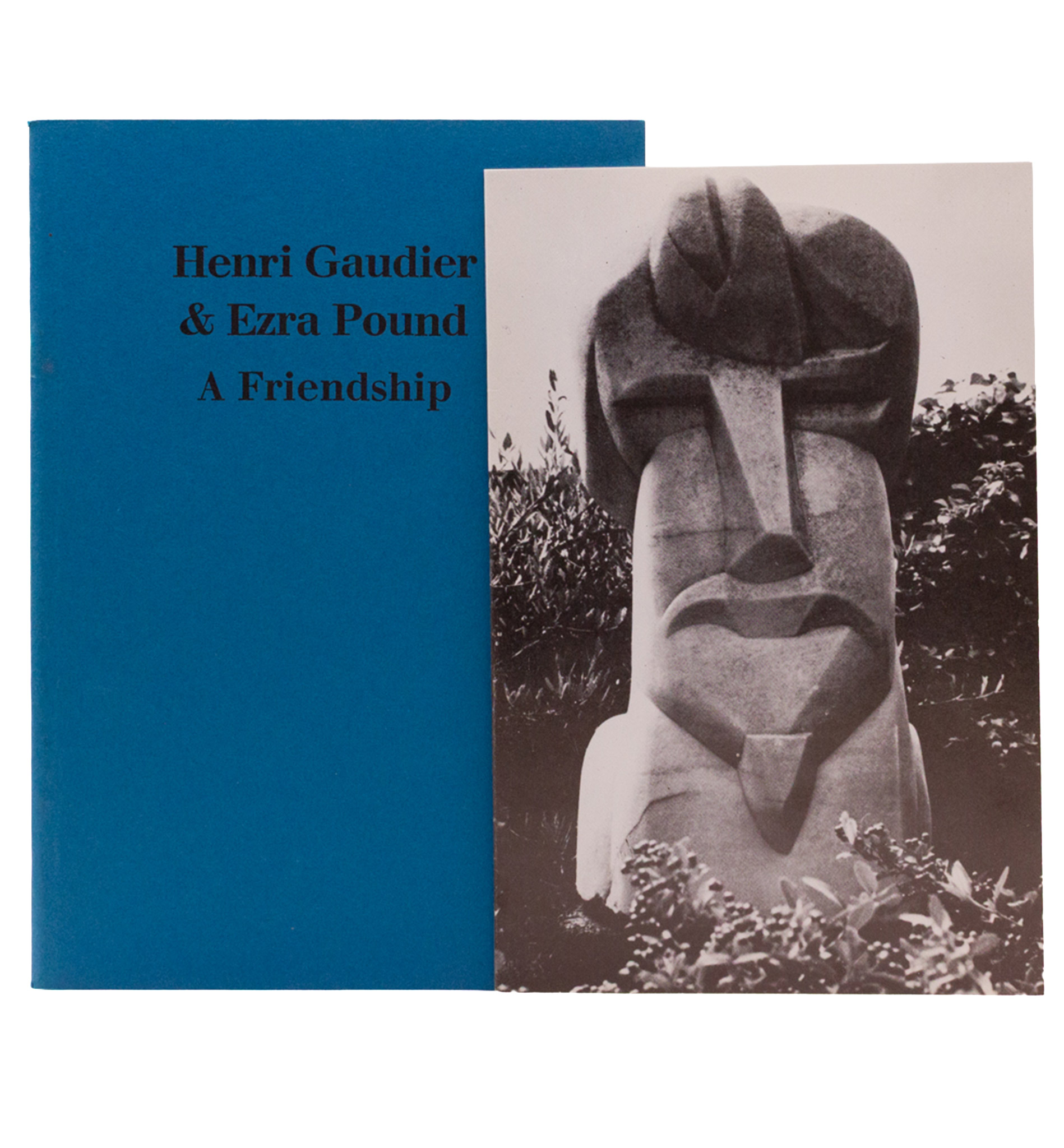
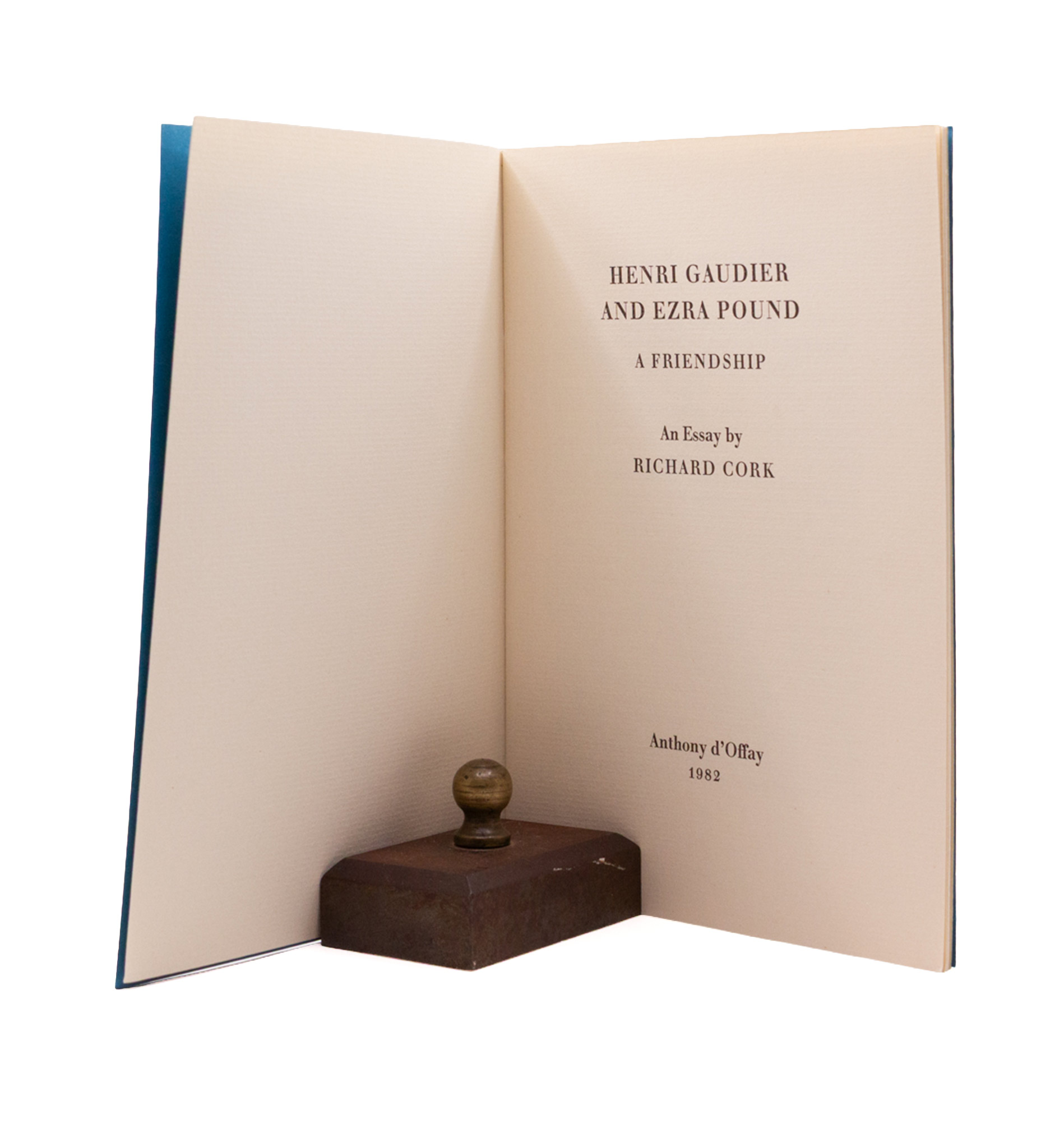
Henri Gaudier-Brzeska & Ezra Pound: A Friendship
Richard Cork
Published London: Anthony d’Offay Gallery, 1982
23pp.; 19 x 13.5 cm. Blue paper wraps printed in black; stapled.
Part of Ezra Pound & Art
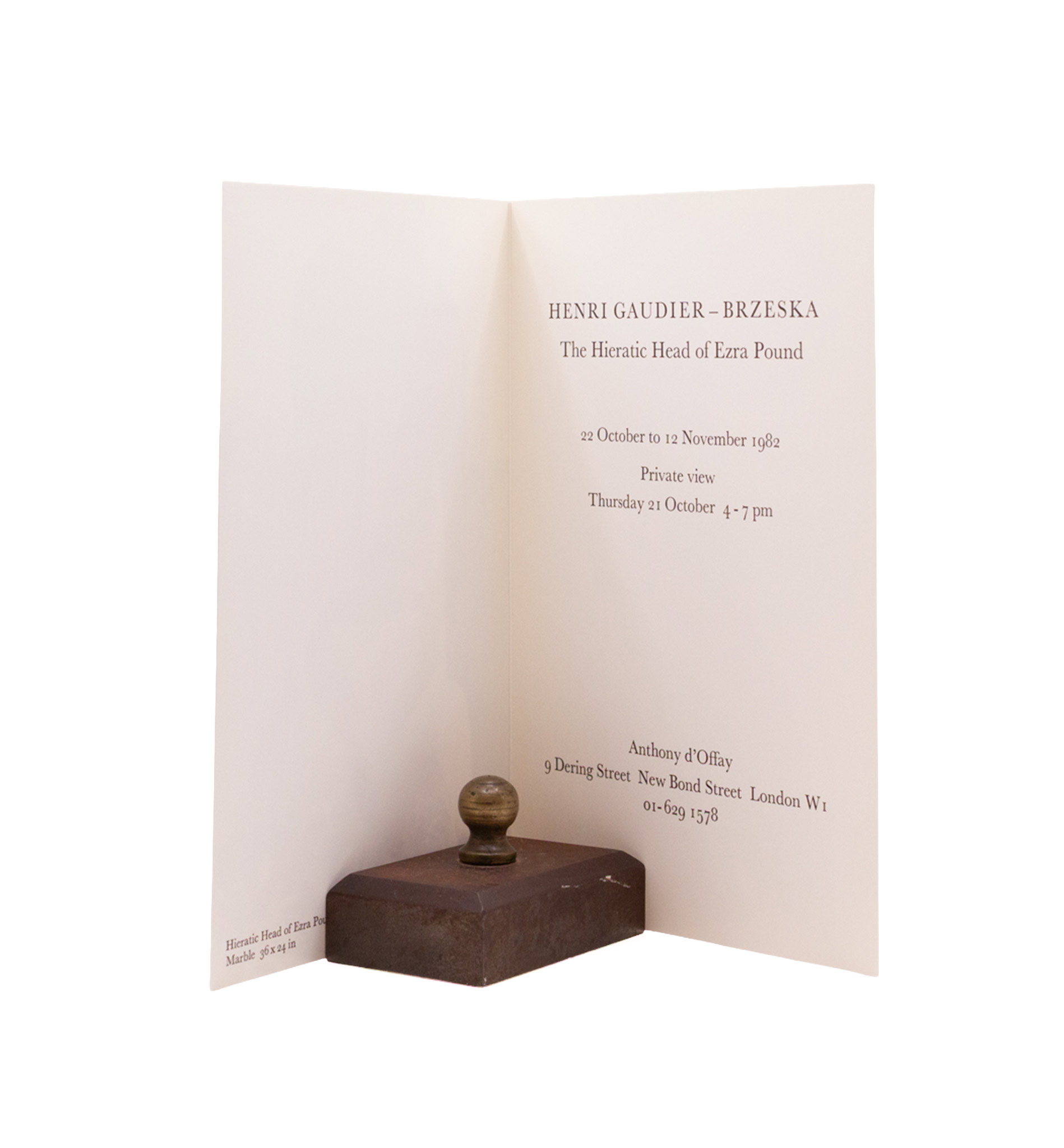
An essay by Richard Cork to accompany the exhibition of The Hieratic Head of Ezra Pound at the Anthony d’Offay Gallery, London, 22 Oct to 12 Nov 1982. A fine copy, illustrated, printed at the Curwen Press. Together with a rare invite to the private view; 17.9 x 11.8 cm, a single piece of card printed in black, folded once.

tap to cycle
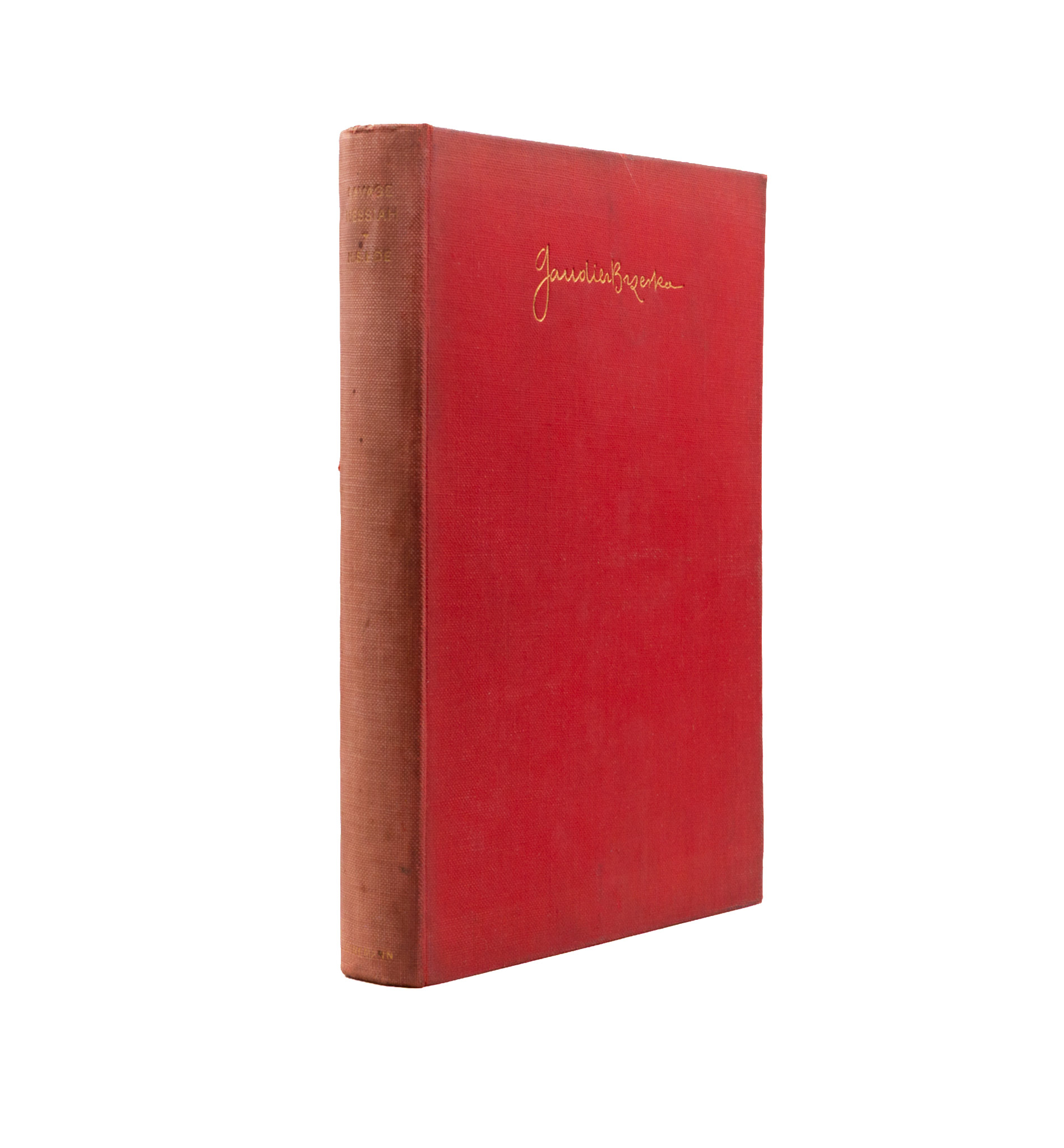
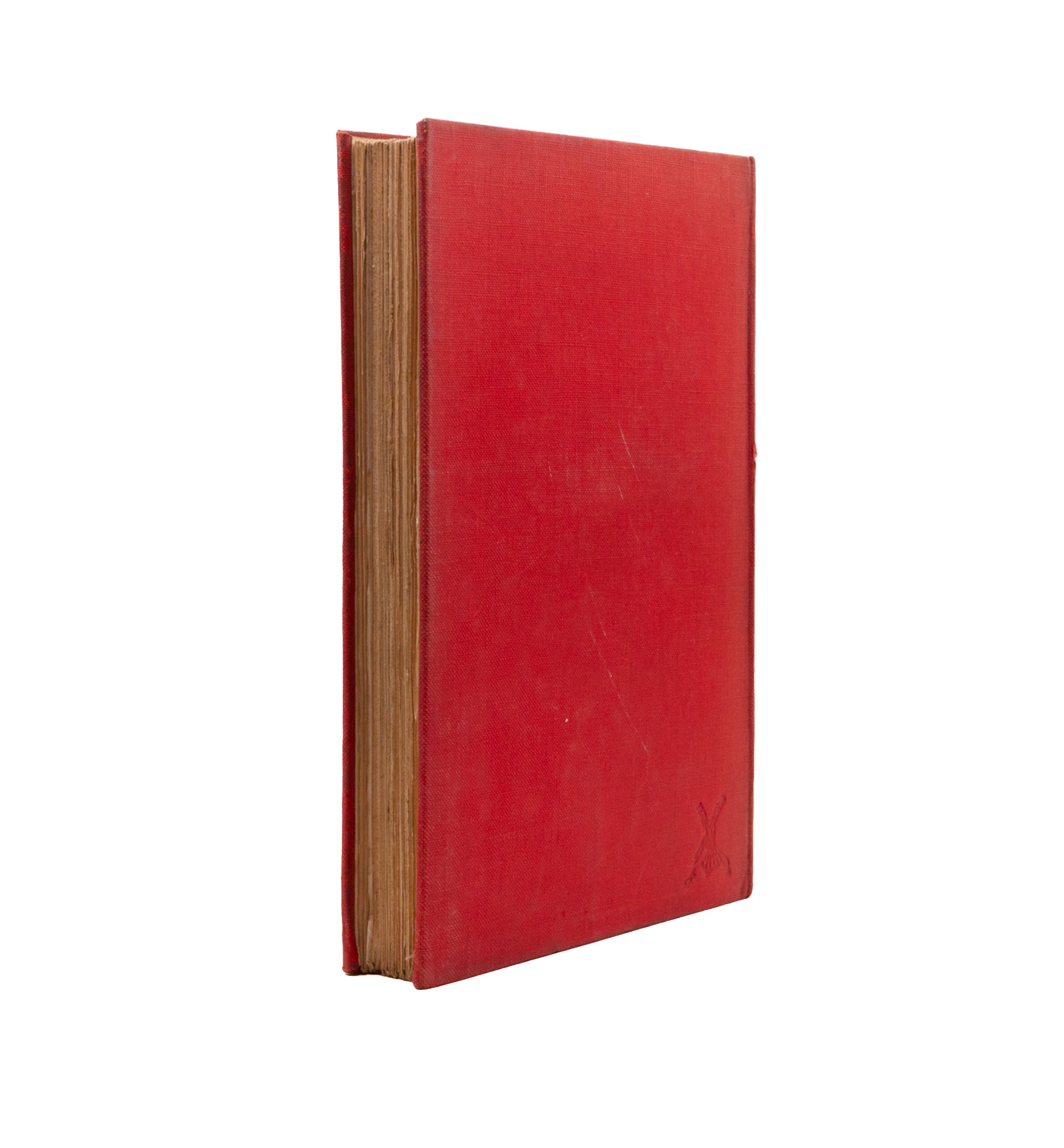
Savage Messiah
H. S. Ede
Published London: William Heinemann Ltd, 1931
272pp.; 22.5 x 15.1 cm. Red cloth boards stamped in gold to front and spine, and in blind to rear.
Part of Ezra Pound & Art
H. S. (Jim) Ede’s novelistic account of the life of Henri Gaudier-Brzeska, and his relationship with Sophie Brzeska, later made into a film by Ken Russell and Christopher Logue under the same title (1972). Illustrated. A great piece of appreciative literature from Ede, founder of Kettle’s Yard, who acquired the estates of Sophie Brzeska and Henri Gaudier-Brzeska in 1927 after Sophie Brzeska’s death in 1925. First edition, first impression. Internally a fine copy with a small bookseller’s label to fpd. Cloth a little grubbied, the spine sunned, but straight and sound. Laid in is a tourist’s information leaflet of Les Batailles d’Artois 1914-1918 showing a number of monuments at Neuville-Saint-Vaast, where HGB. was killed.

tap to cycle
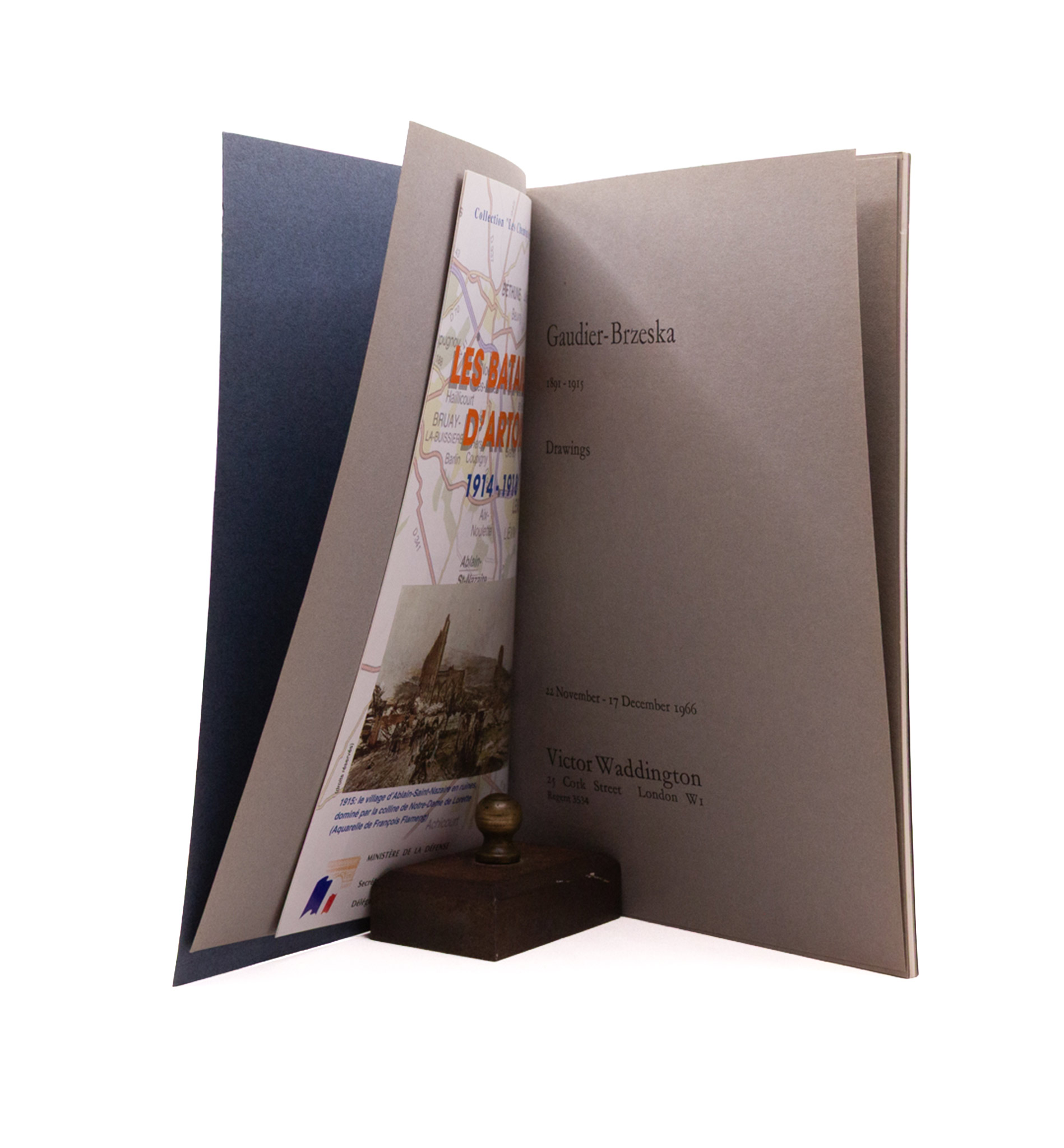
Gaudier-Brzeska (1891-1915): Drawings
Alan Bowness, foreword
Published London: Victor Waddington, 1966
16ll.; 22.9 x 16.1 cm. Stiff blue paper wraps printed in black.
Part of Ezra Pound & Art
A catalogue of the drawings of Henri Gaudier-Brzeska compiled for an exhibition at Victor Waddington on Cork Street, London, 22 Nov - 17 Dec 1966. All items coming from the collection of Jim Ede, with proceeds going to The Kettle’s Yard Foundation, “which is destined for the University of Cambridge.” With a foreword drawing heavily from Ede’s Savage Messiah (1931) and from Pound’s Letters (ed. D. D. Paige) and Pound’s Gaudier-Brzeska, a memoir. A fine copy, the spine marginally sunned. With another copy of the tourist information leaflet, Les Batailles d’Artois 1914-1918 laid in.


tap to cycle
Gaudier-Brzeska (1891-1915): Drawings
Alan Bowness, foreword
Published London: Victor Waddington, 1966
16ll.; 22.9 x 16.1 cm. Stiff blue paper wraps printed in black.
Part of Ezra Pound & Art
Another copy, without Les Batailles. A near fine copy, just a dash of graphite to the front cover, spine also lightly sunned.
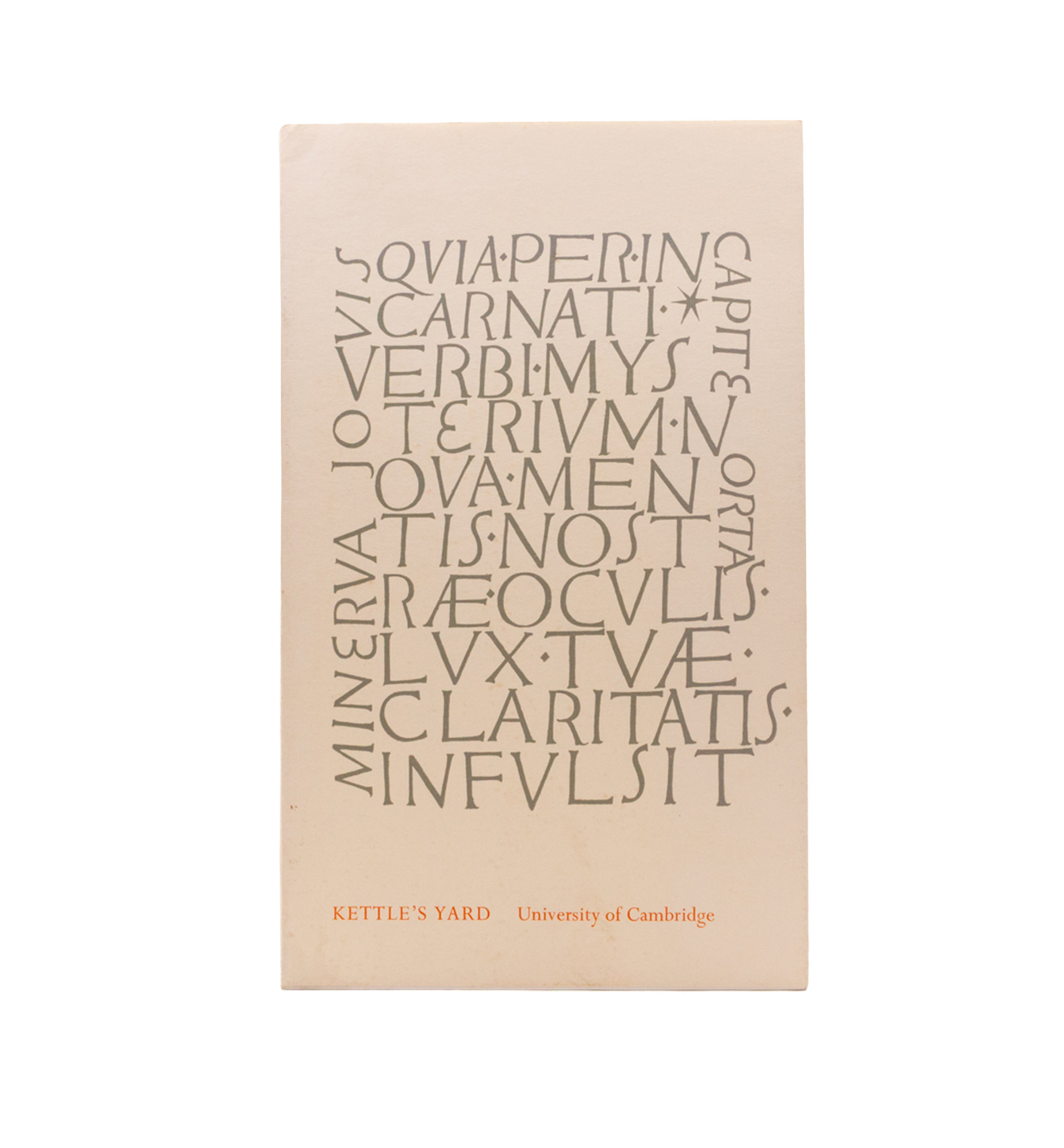


tap to cycle
Kettle’s Yard: An illustrated handlist of the paintings, sculptures and drawings
Duncan and Elizabeth Robinson
Jim Ede, introduction
Published Cambridge: Kettle’s Yard, 1970
48pp.; 24.8 x 15.2 cm. Plain white paper wraps. Tan paper dust-jacket printed in grey and red.
Part of Ezra Pound & Art
A catalogue made shortly after Jim Ede’s gift of Kettle’s Yard to the University of Cambridge in 1966, not only the gallery, being Ede’s home, but its contents: books, furniture, sculptures, paintings, drawings, and other objects integral to the setting. With over 100 items of Gaudier-Brzeska. Black and white photography of the gallery and objects throughout. A very good copy.
tap to cycle
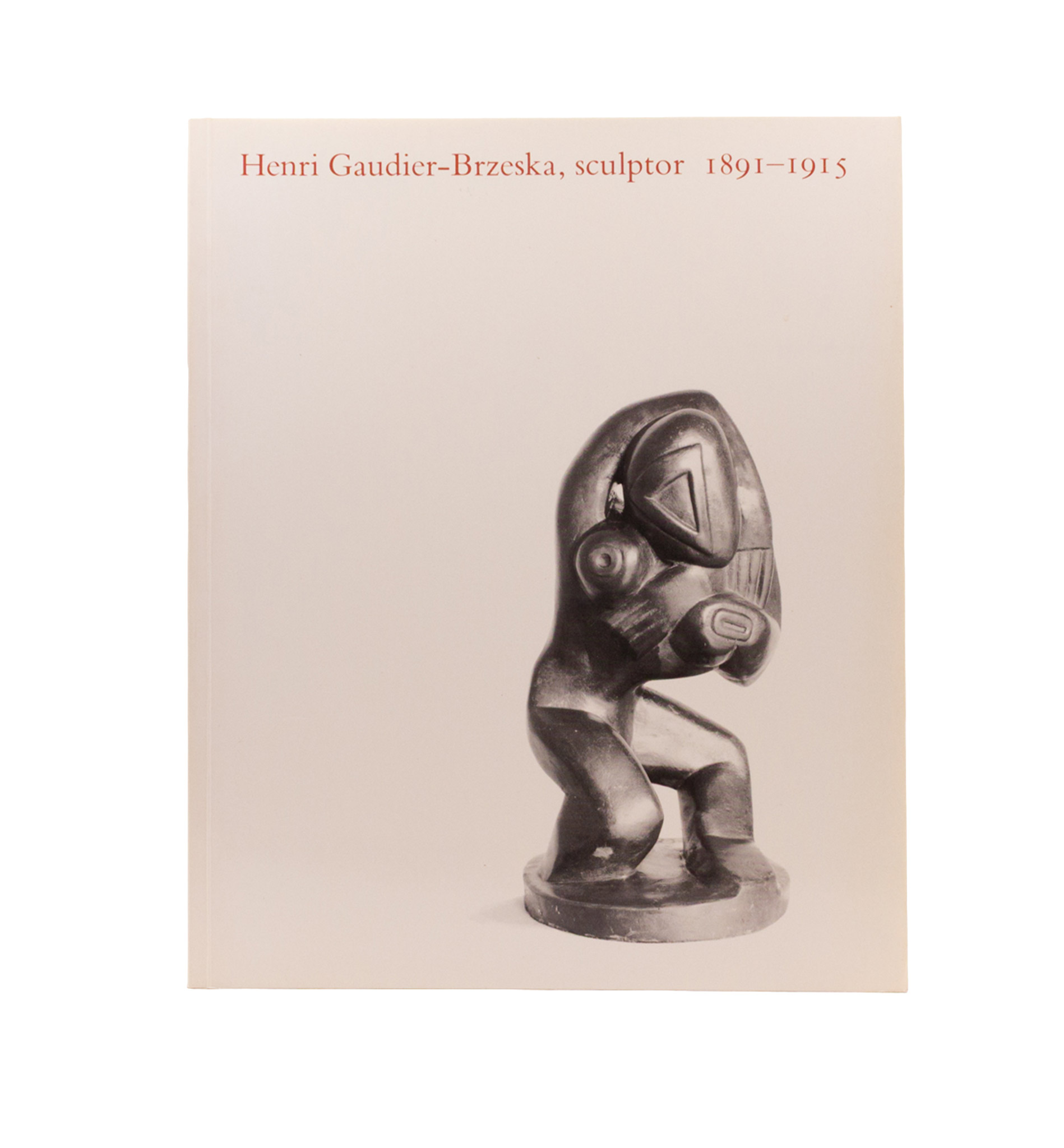
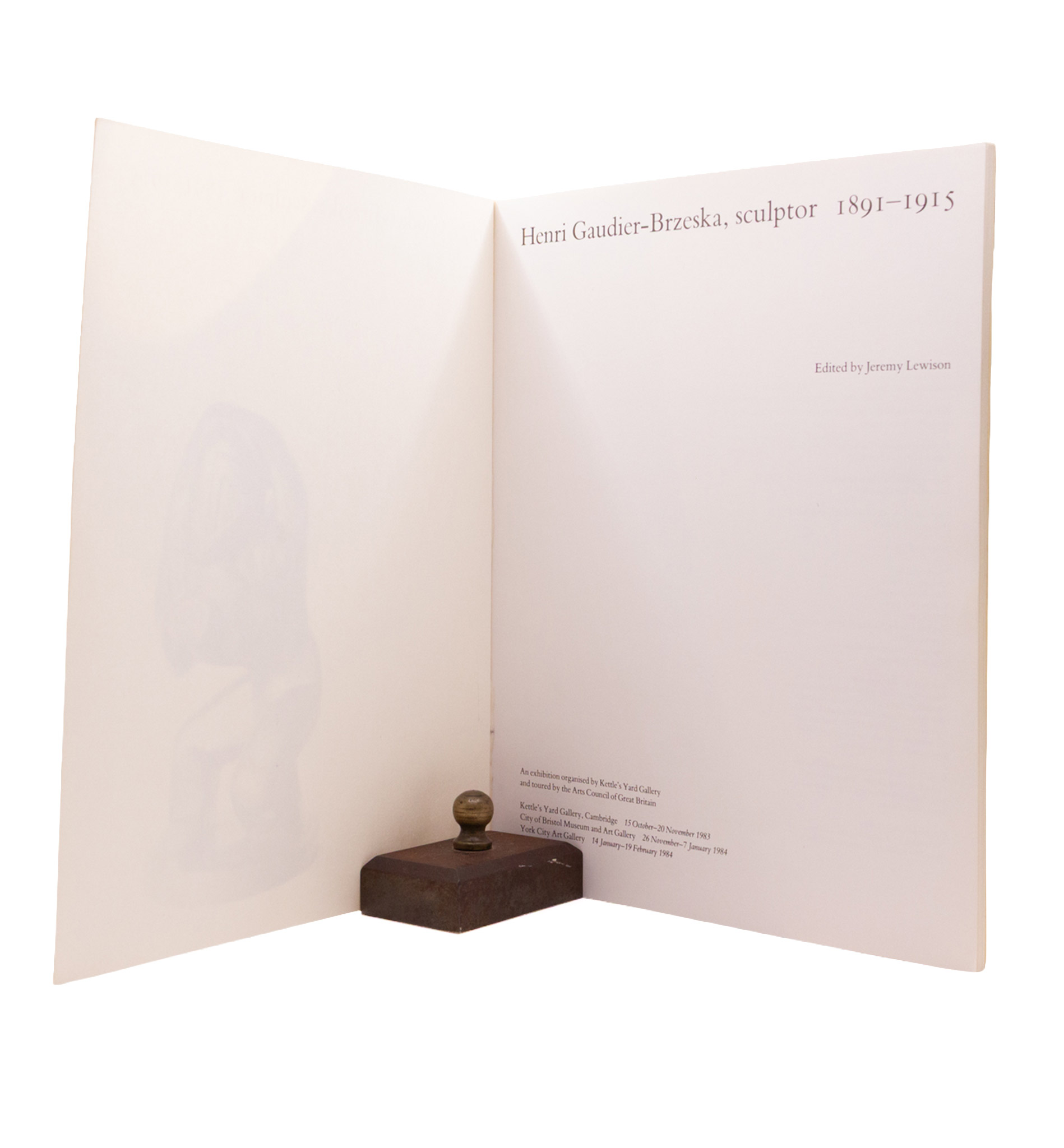
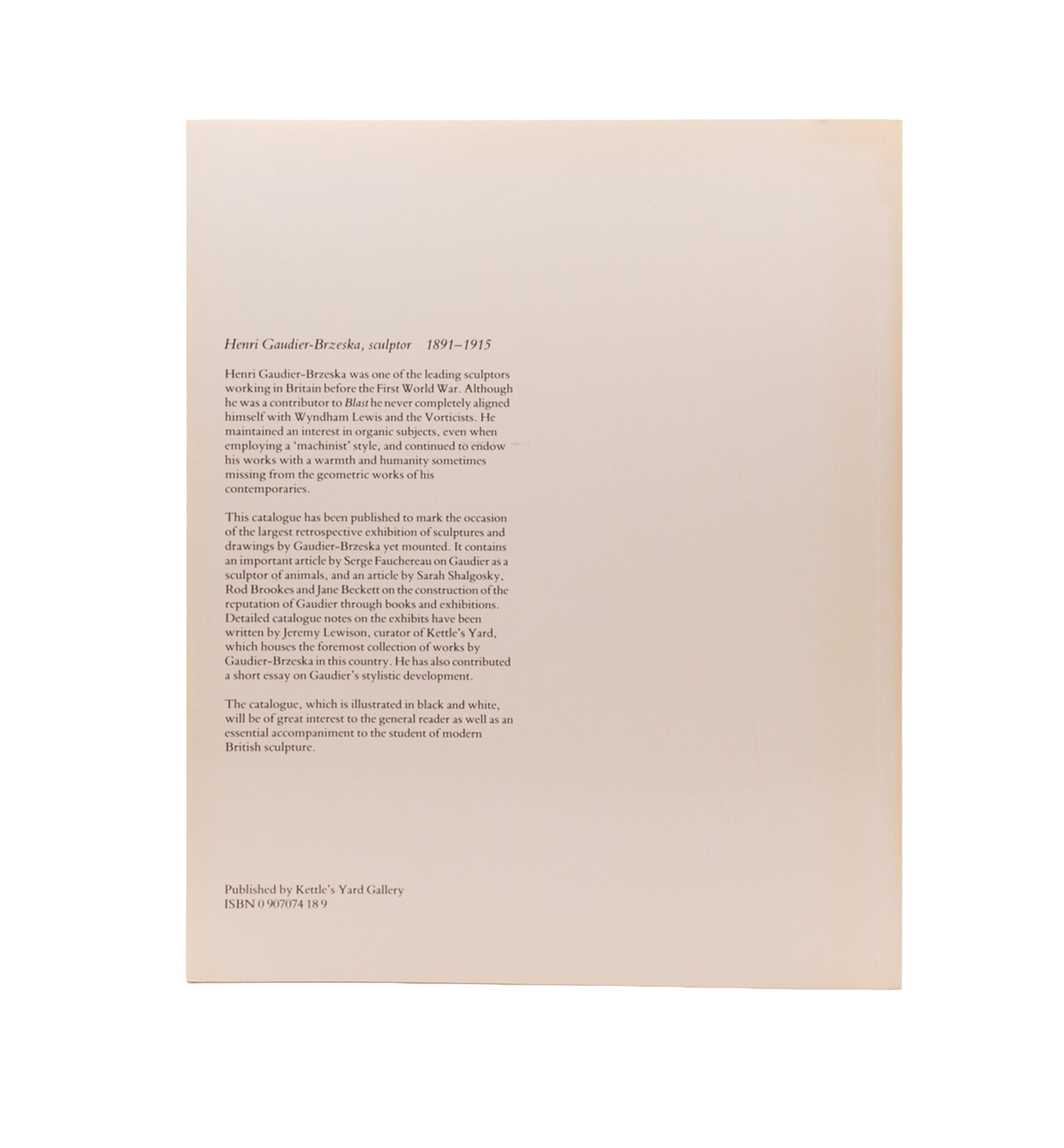
Henri Gaudier-Brzeska, sculptor 1891-1915
Jeremy Lewison, editor
Published Cambridge: Kettle’s Yard Gallery, 1983
63pp.; 25.4 x 21.1 cm. Stiff white paper wraps printed in red and black.
Part of Ezra Pound & Art
Catalogue of an exhibition of the works of Henri Gaudier-Brzeska, organised by Kettle’s Yard Gallery, held there 15 Oct - 20 Nov 1983, and then toured by the Arts Council to the City of Bristol Museum and Art Gallery 26 Nov - 7 Jan 1984 and York City Art Gallery 14 Jan - 19 Feb 1984. Foreword by the editor, then curator of Kettle’s Yard, with further essays by Serge Faucherau (trans. Anne Bain), Sarah Shalgosky, Rod Brookes, and Jane Beckett on Gaudier’s animalist influences and the making of Gaudier into an ‘artistic subject’. Illustrated with a number of Gaudier’s sculptures, drawings, and portraits, including that of Pound. Near fine.

tap to cycle
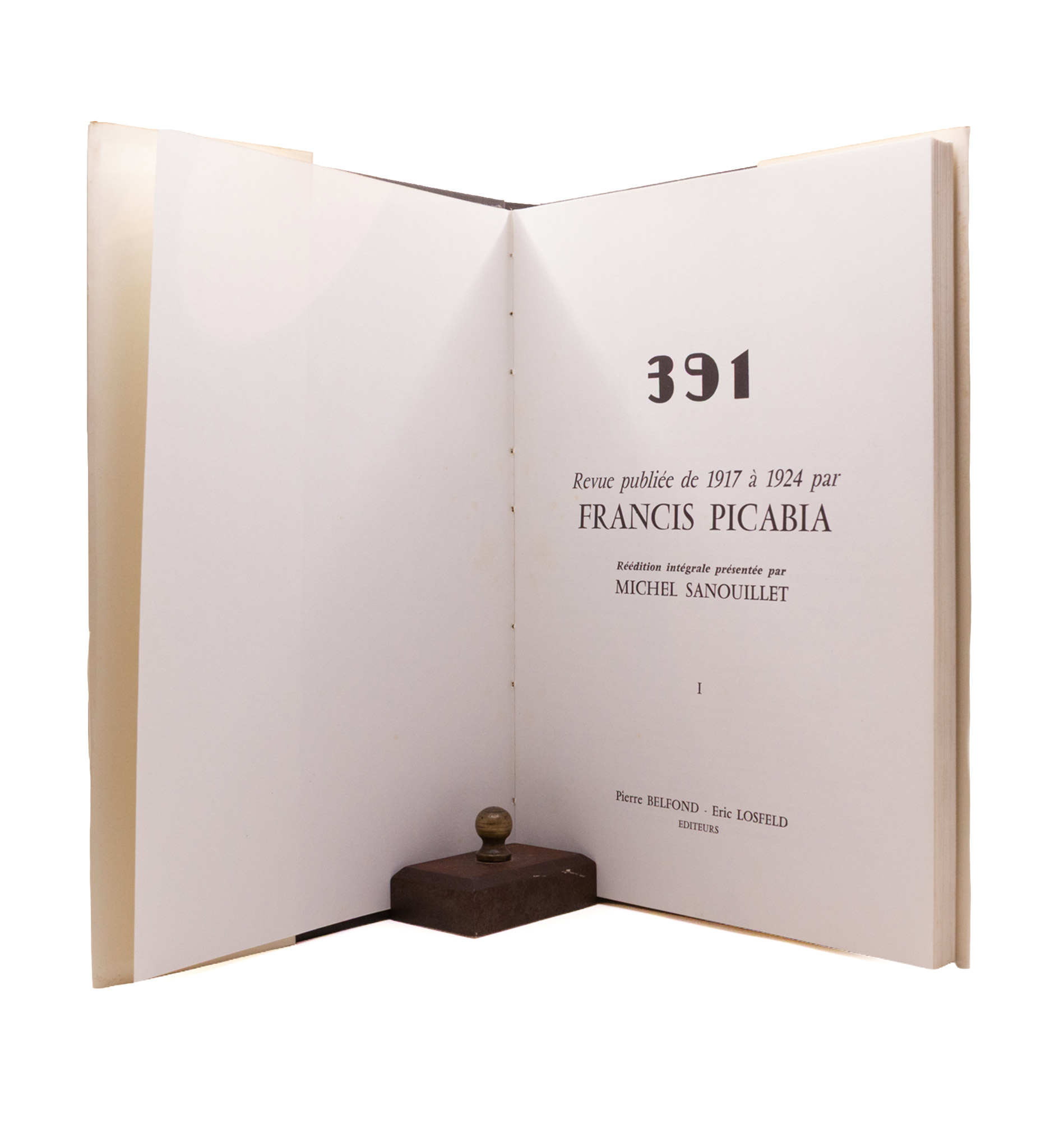
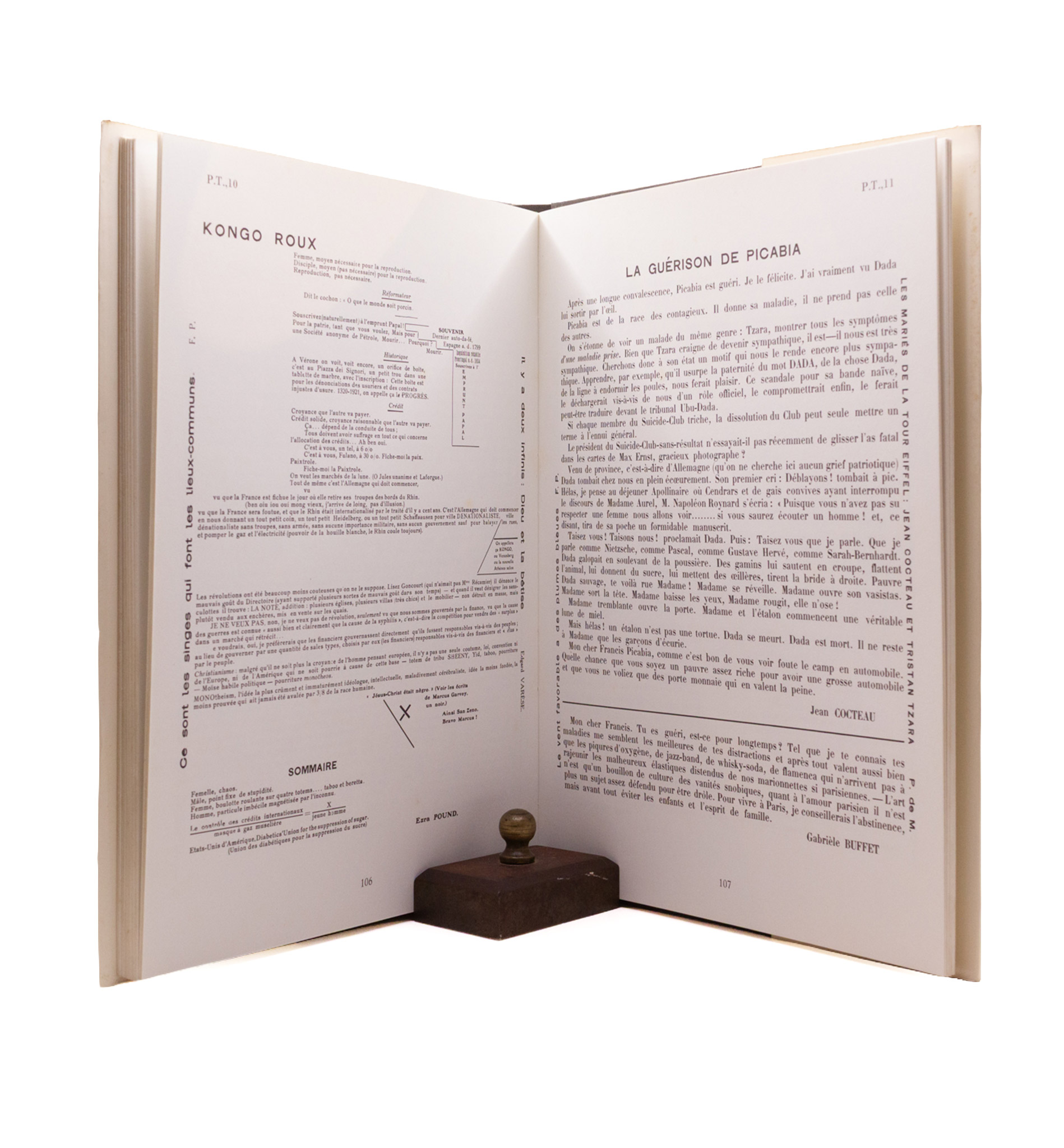
391; Revue publiée de 1917 à 1924 par Francis Picabia
Michel Sanouillet, editor
Published Paris: Pierre Belfond - Eric Losfeld, 1976
158pp.; 28.2 x 20.9 cm. Plain black cloth boards. White dust-jacket printed in black and red.
Part of Ezra Pound & Art
Contains a facsimile reproduction of Picabia’s 391 revue, originally published in Barcelona in 1917, then variously in Barce, New York, Zurich, and Paris for 19 issues until 1924; all issues reproduced in black and white in this edition, with a preface, in French, a bibliography and a list of works and contributors to include, Cocteau, Desnos, Duchamp, Eluard, Man-Ray, EP, Ernst, Tzara, etc. First only of two volumes, the second being a study of Picabia and the review. A fine copy, some pencil to half-title, in a very good jacket, a little rubbed.


tap to cycle
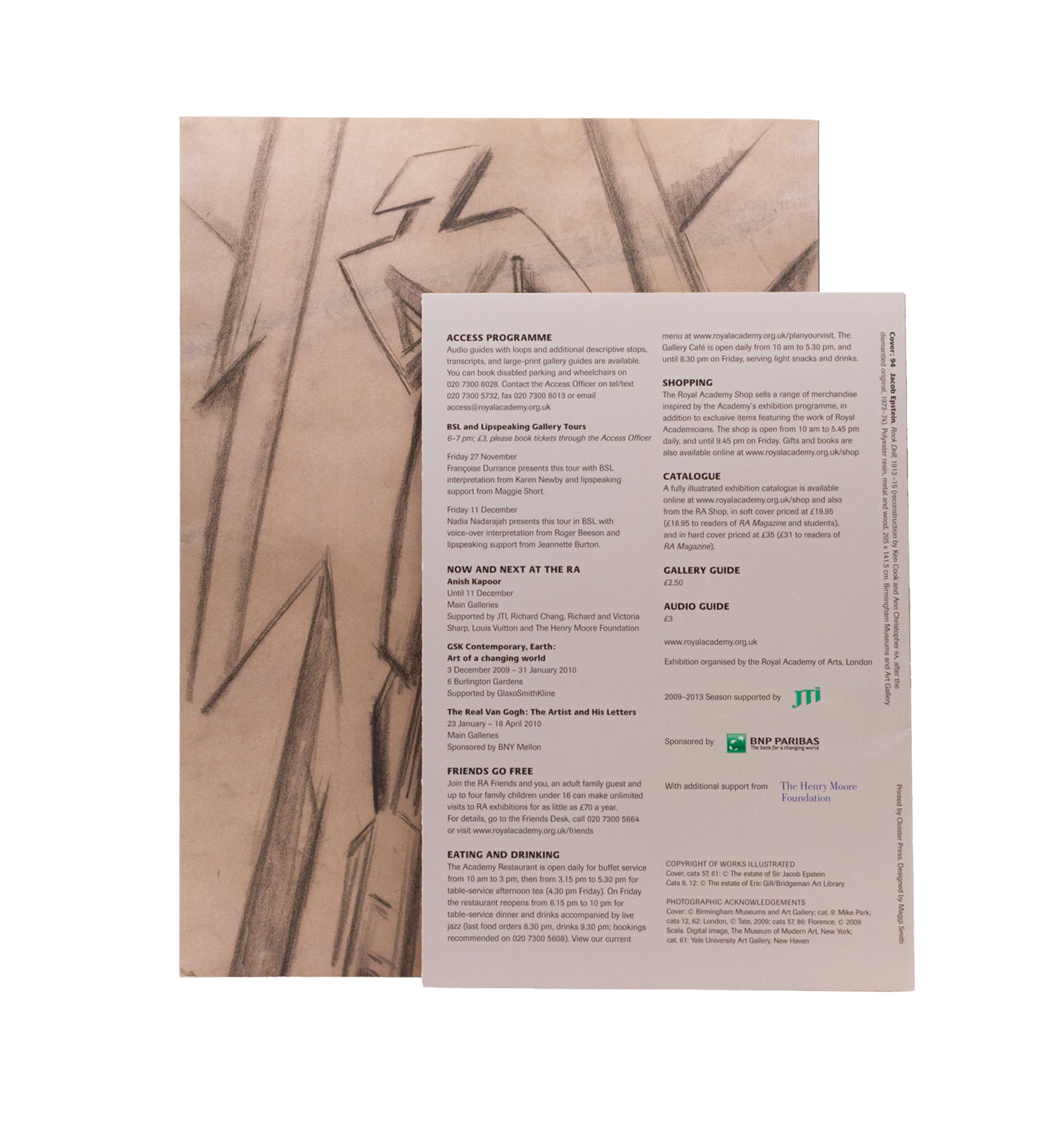
Wild Thing: Epstein, Gaudier-Brzeska, Gill
Richard Cork
Published London: Royal Academy of Arts, 2009
191pp.; 26.5 x 19.9 cm. Stiff white paper wraps printed in black, greys and orange; french folds.
Part of Ezra Pound & Art
“When Ezra Pound encountered Henri Gaudier-Brzeska for the first time in 1913, he was immediately impressed and likened the young Frenchman to ‘a well-made young wolf or some soft-moving, bright eyed wild thing.’”
Published on the occasion of the Wild Thing exhibition at the Royal Academy of Arts, London, 24 Oct 2009 - 24 Jan 2010. Cork’s study on the three sculptors, illustrated throughout. With the original Gallery Guide for the exhibition laid-in. A bit of trouble to the bottom right corner for the first two pages, otherwise fine.


tap to cycle
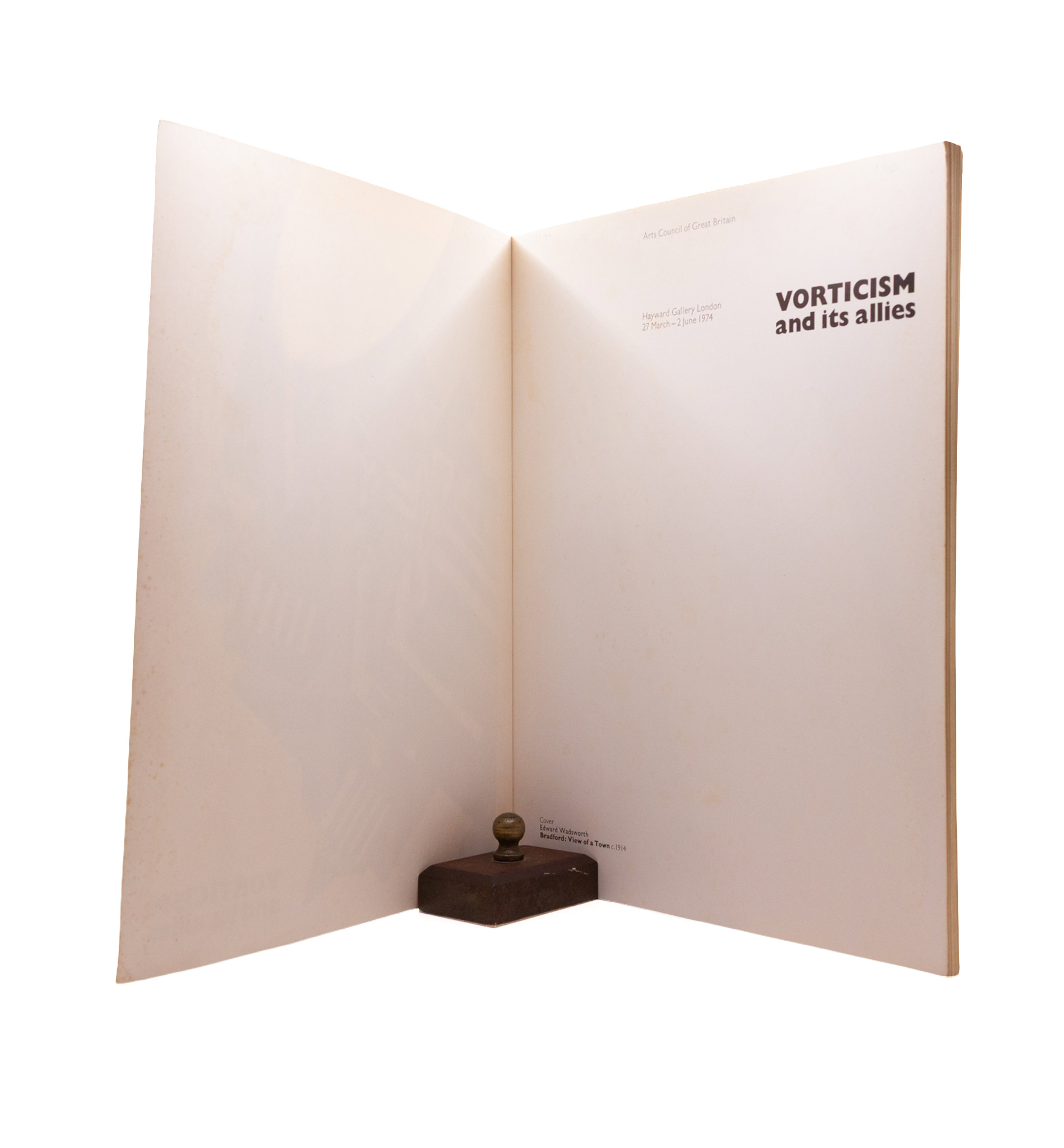
Vorticism and its allies
Richard Cork, introduction
Published Arts Council of Great Britain, 1974
112pp.; 30.5 x 24.7 cm. Heavy white paper wraps printed in black.
Part of Ezra Pound & Art
Catalogue to an exhibition held at the Hayward Gallery, London, 27 March - 2 June 1974, featuring works by Lewis, Gaudier-Brzeska and Epstein, reproductions from Blast, and vortographs of Pound by Alvin Langdon Coburn. A very good copy, some foxing to the front cover.



tap to cycle
BLAST, 3 vols.
Wyndham Lewis, editor
Bradford Morrow, foreword
Published Santa Barbara: Black Sparrow Press, 1981
vii, 160pp.; 30.3 x 23.5 cm. Pink paper wraps printed in black.
102pp.; 30.3 x 23.4 cm. Tan paper wraps printed in black.
356pp.; 30.4 x 22.9 cm. Yellow paper wraps printed in black, green and red.
Part of Ezra Pound & Art
The Black Sparrow facsimile reissue of BLAST volumes 1 and 2 (originally published in 1914 and 1915 respectively), together with BLAST 3 (1984) edited by Seamus Cooney, a compendium in honour of Lewis and BLAST, featuring a number of illustrations by Brzeska and Lewis, and a large number of contributions by the likes of Guy Davenport, Charles Olson, with a number of unpublished letters from EP; the original 33.3 rpm vinyl inserted at ffep. The complete set, each in near fine condition; spine to first issue a little sunned, minor edge-wear variously.


tap to cycle
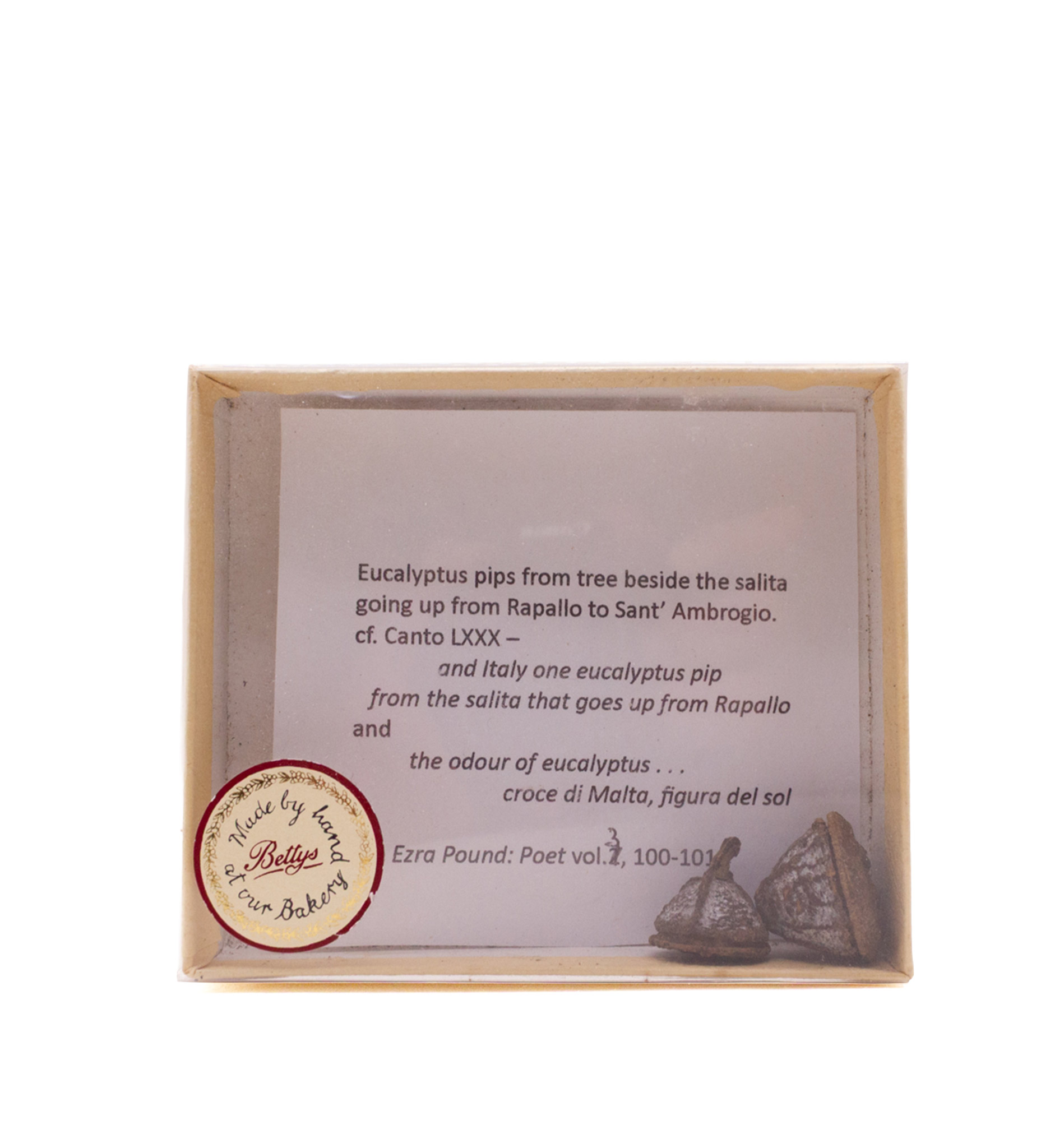
Eucalyptus Pips
[David Moody]
Published Rapallo to Sant’Ambrogio: A Eucalyptus Tree, [no date]
8.6 x 10.2 x 2.2 cm. Open top cream paper covered cardboard case with plastic cover; insert.
Part of Ephemera
Thursday 3 May, 1944, EP is collected from the house at Sant’Ambrogio by two ex-Fascist crooks hoping to make a buck by handing him in to the Americans. They walked him down the hill to Rapallo, this footpath the salita, to be driven on to Zoagli; during which descent EP stopped to collect a dried eucalyptus pip from beneath its tree.
Curious, is it not, that Mr Eliot
has not given more time to Mr Beddoes
(T.L.) prince of morticians
where none can speak his language
centuries hoarded
to pull up a mass of algae
(and pearls)
or the odour of eucalyptus or sea wrack
cat-faced, croce di Malta, figura del sol
to each tree its own mouth and savour
“Hot hole hep cat”
or words of similar volume
. . . .
the cat-faced eucalyptus nib
is where you cannot get at it
. . . .
so that leaving America I brought with me $80
and England a letter of Thomas Hardy’s
and Italy one eucalyptus pip
from the salita that goes up from Rapallo
(if I go)
. . . .
— Canto XXX


tap to cycle
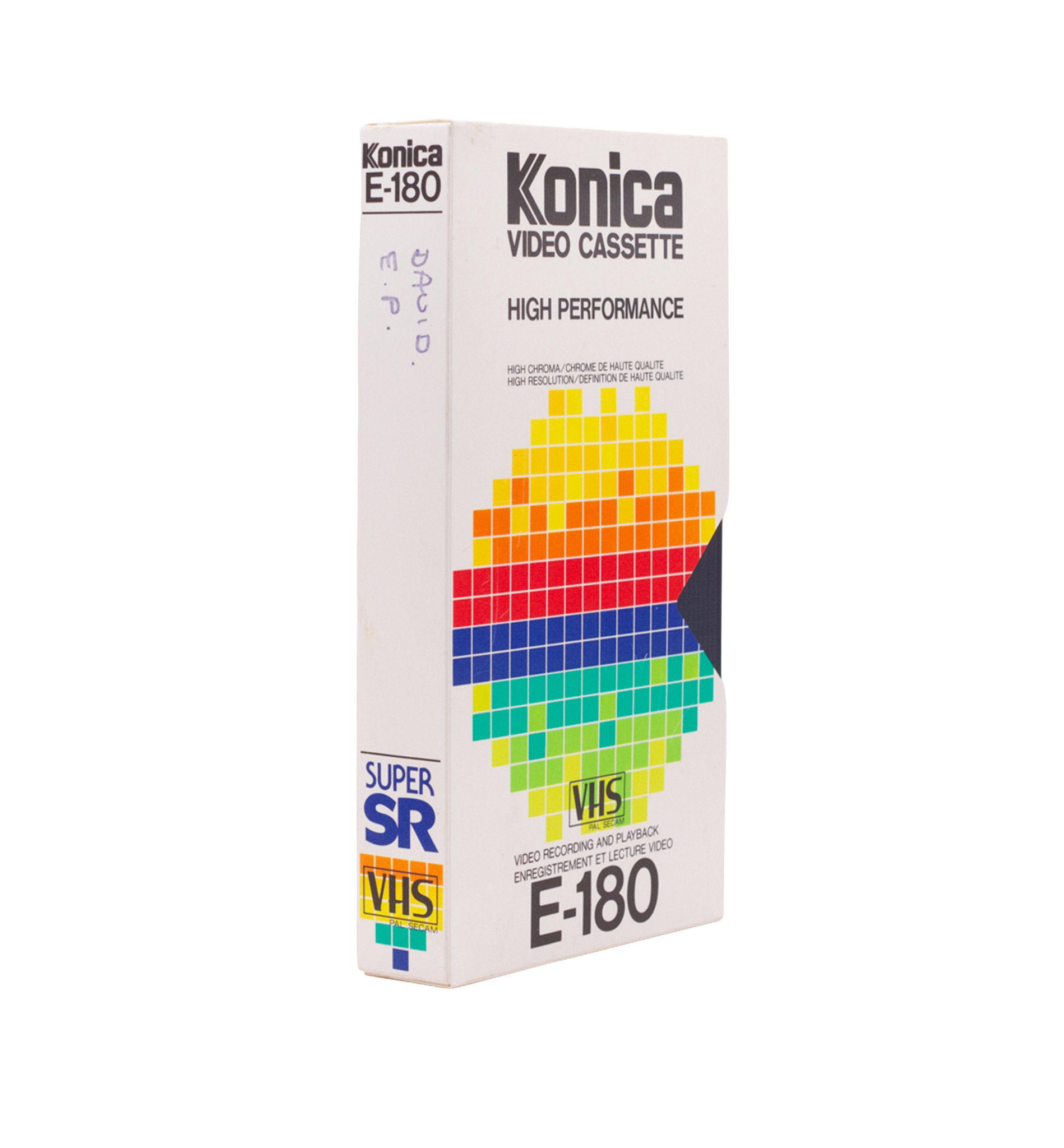
Ezra Pound: American Odyssey
Lawrence Pitkethly, director
Paul Hecht, narrator
Published [Home Recording] New York: New York Center for Visual History, [1985]
Konica VHS, label annotated in ink; 180 mins. White stiff paper slipcase, spine annotated in ink.
Part of Ephemera
A home recording of Ezra Pound: American Odyssey (1985), a film documentary on the life of Ezra Pound. Untested. A home recording from the first broadcast, thus preceding the Mystic Fire Video Voices and Visions: Ezra Pound (1995) re-release by ten years. Playtime c. 55 mins. Light aging to the slipcase.

tap to cycle
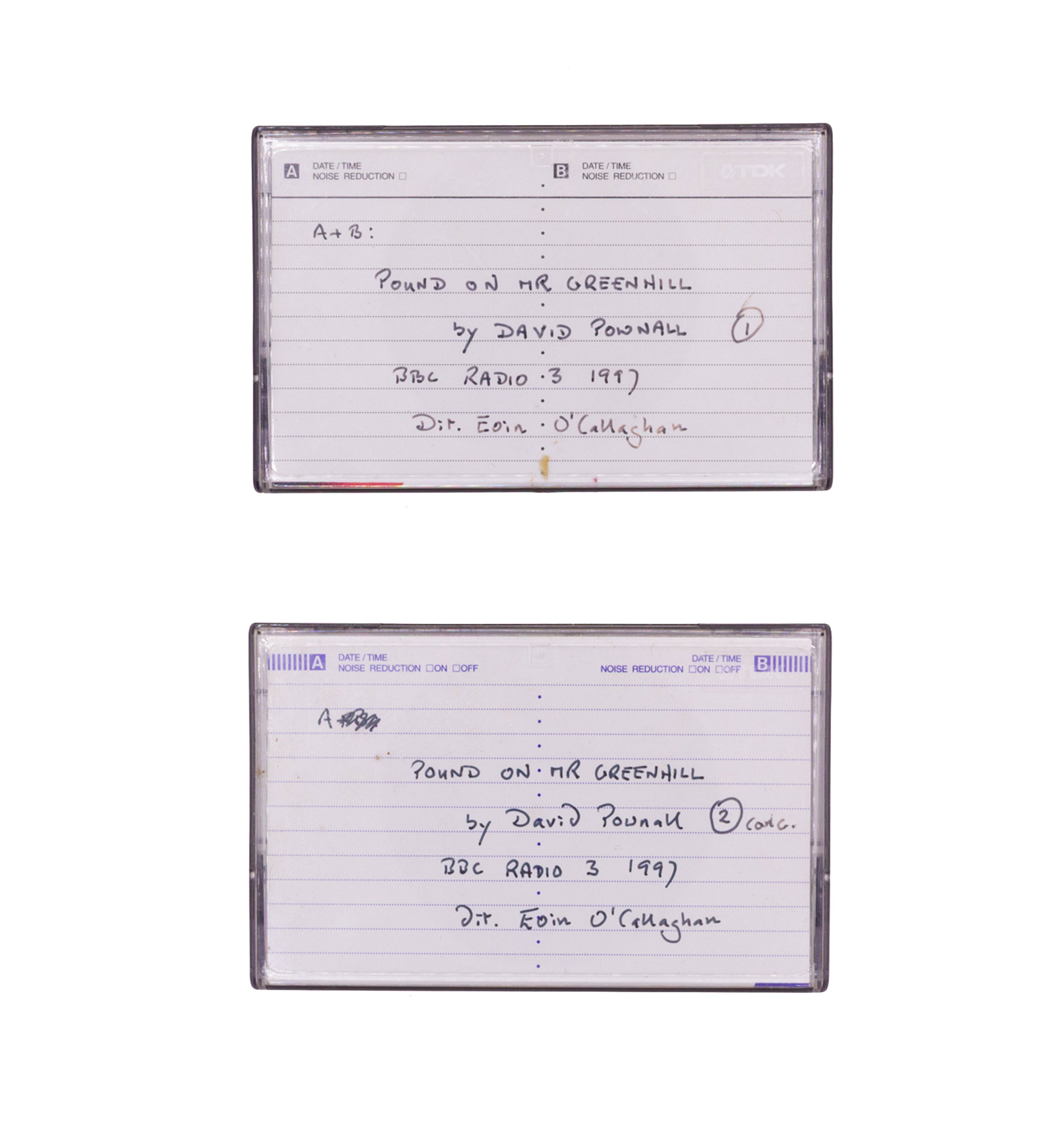
Pound on Mr Greenhill
David Pownall
Eoin O’Callaghan, director
Richard Johnson, Ezra Pound
Ronald Pickup, Mr. Greenhill
Claire Higgins, Olga Rudge
Published [Home Recording] BBC Radio 3, 1997
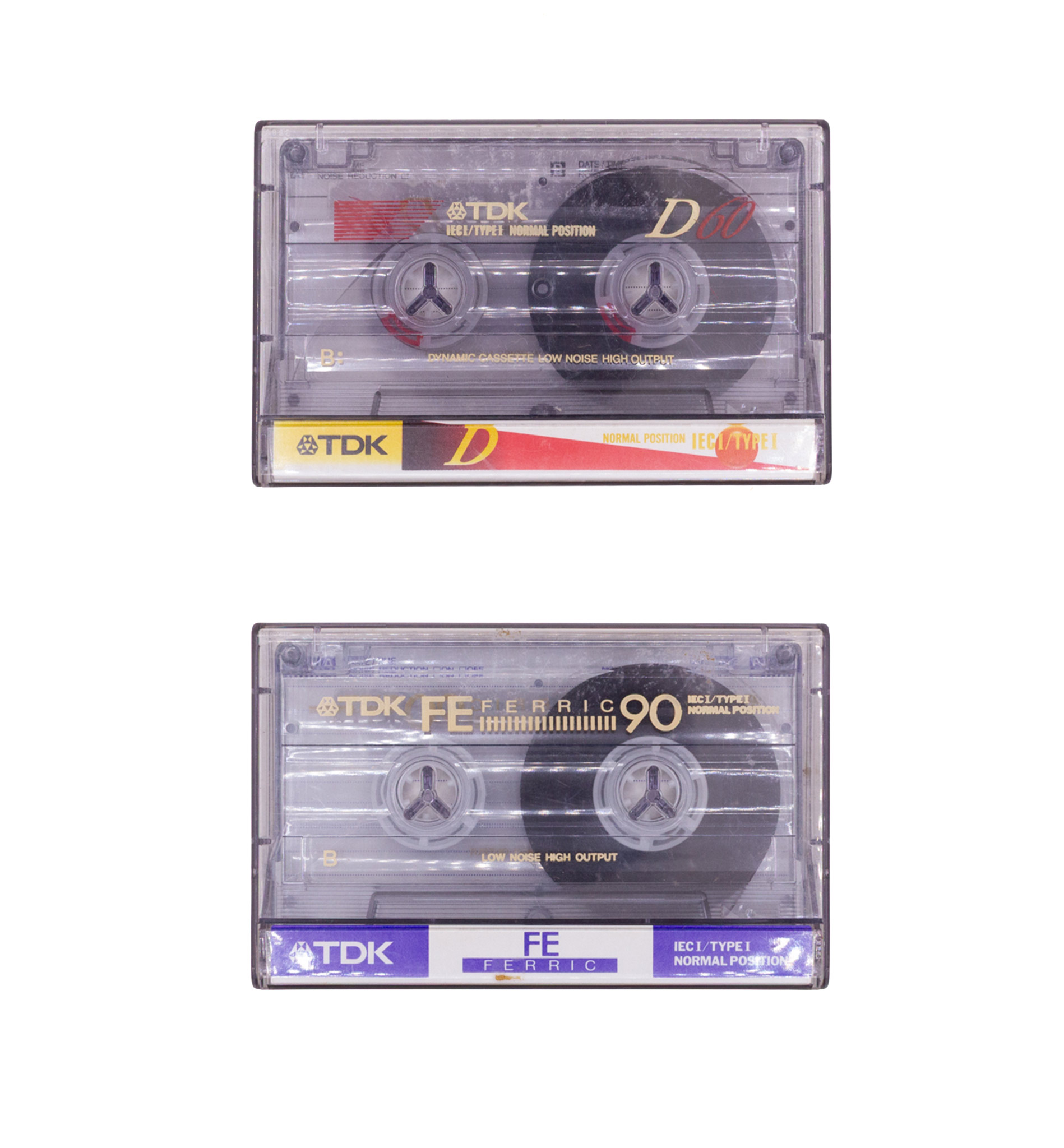
2 TDK audiocassettes in separate cases; labels titled in ink.
Part of Ephemera
A radio play about Pound in Venice in the 60’s, his friendship with his gondaliere Mr. Greenhill (i.e. Monteverdi), his visiting by a young fan whose belief in Pound’s economics creates tensions with his father, a sly pair of journalists, an amusing Allen Ginsberg, and a protective Olga Rudge. Brilliantly researched, voiced and performed; one of the very best dramatic pieces after Pound. Home recordings from the BBC Broadcast, 2 March 1997. Unavailable till now, here.

tap to cycle
Ezra and Olga: Poetry and Music
Celia Donoghue, producer
Trish Taylor, presenter
Anne Conover, Desmond O’Grady, Sergio Perosa, Paul Herriott, contributors
Published RTÉ lyric fm, 2006
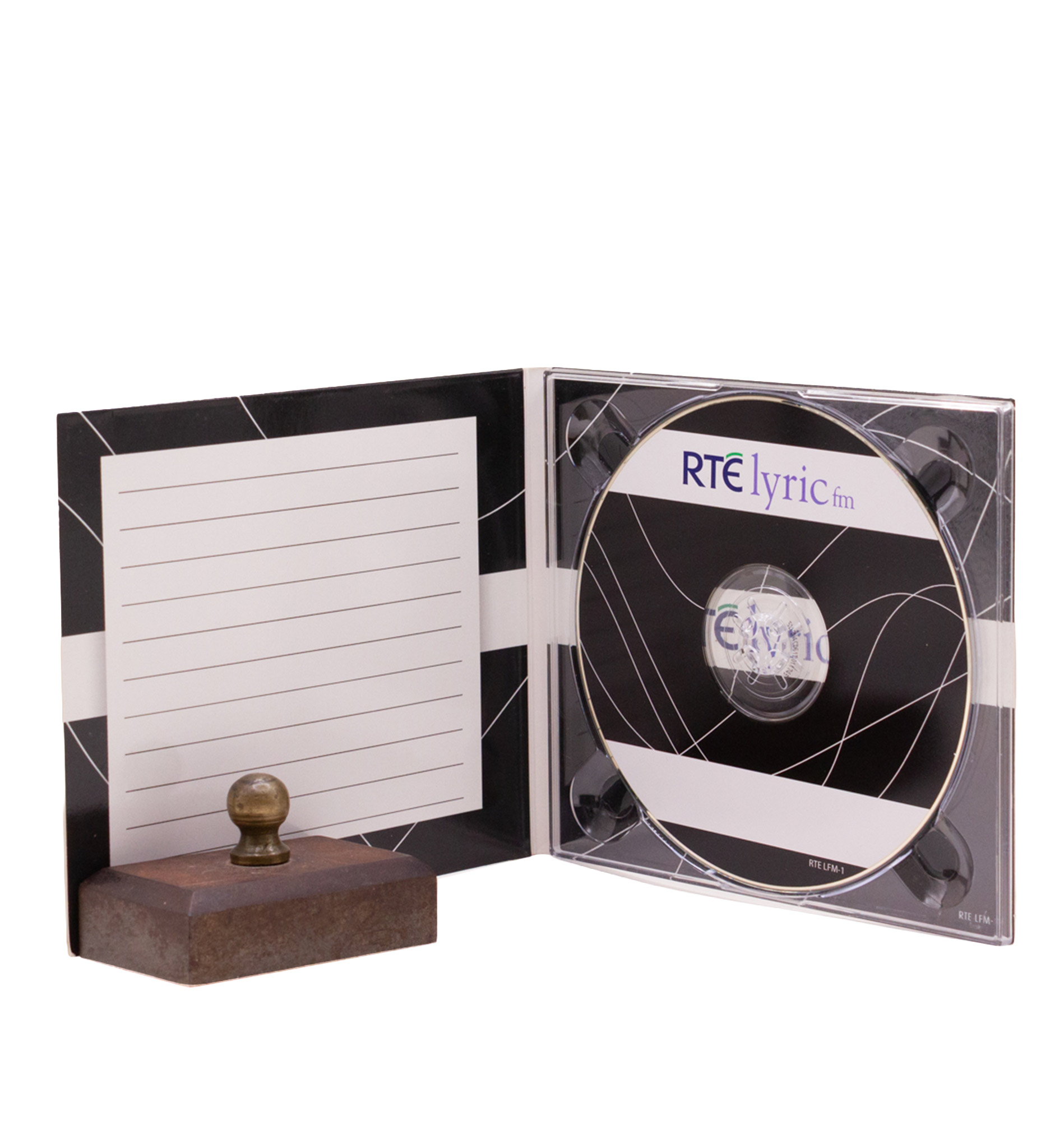
RTÉ lyric fm branded CD in a like case with detail printed on paper and attached with tape.
Part of Ephemera
A radio documentary on Olga Rudge, her career as an internationally renowned violinist, secretary of the Accademia Musica Chiggiana, and her dedication to Ezra Pound. CD, from the broadcasting house. Annotated in ink, “£70”. Title and credits attached by two pieces of tape, otherwise an anonymous disc in anonymous case. Unavailable till now, here.


tap to cycle
Sunday Feature: The Trial of Ezra Pound
Sean Street, presenter
Julian May, producer
Mary de Rachewiltz, A. David Moody, Helen M. Dennis, Bernard Kops, contributors
Published [Home Recording] BBC Radio 3, 2008
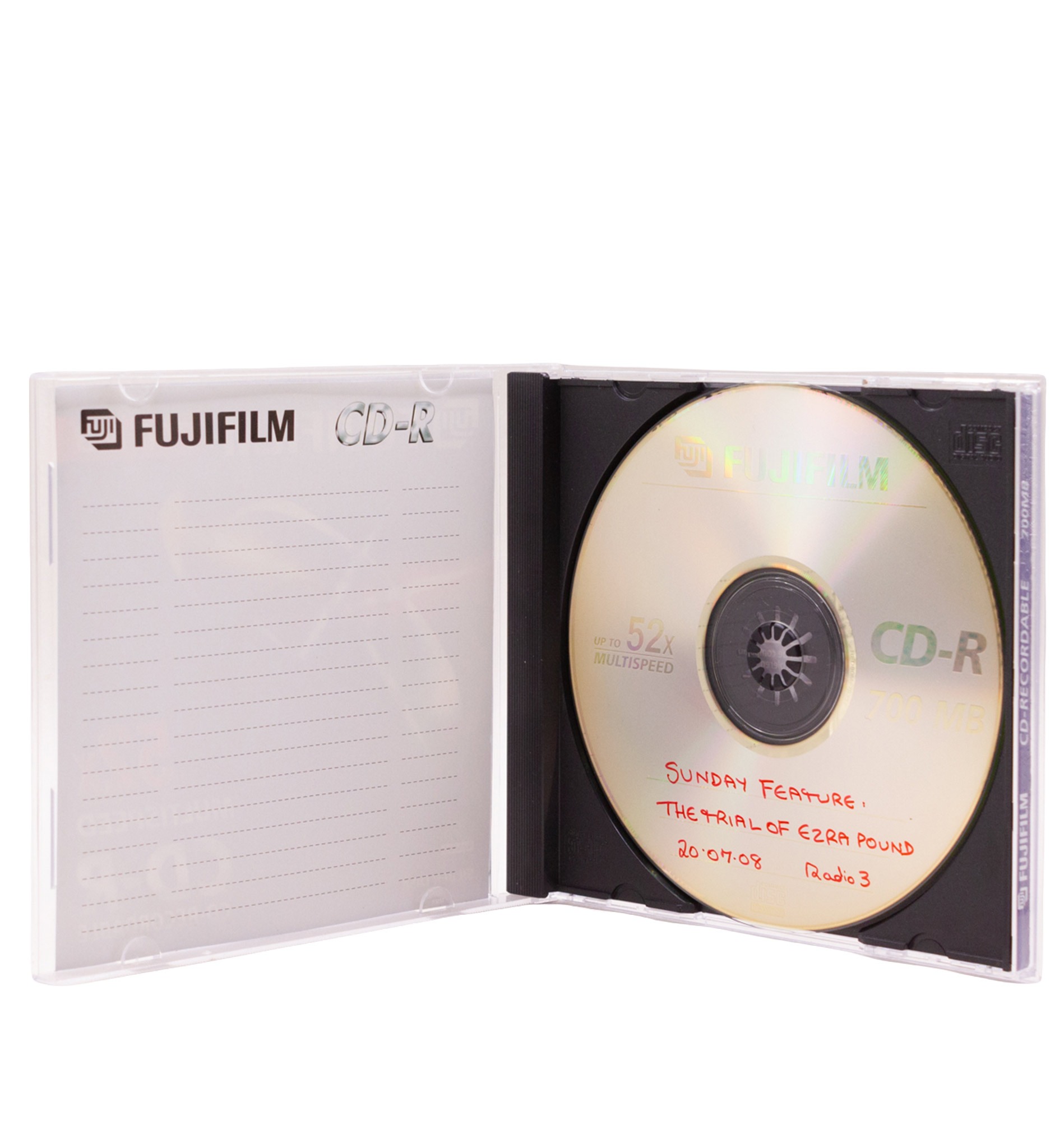
700 MB Fujifilm CD-R, titled in red ink with a custom front slip.
Part of Ephemera
A look at Pound’s politics of the 30’s and 40’s, his trial, the public’s reaction, and his release. Interviews with Mary de Rachewiltz, David Moody, Helen Dennis and Bernard Kops, a number of audio clips also included from his play Ezra. A home recording after the original BBC Radio 3 broadcast, Sunday 20th July 2008. Unavailable until now, here.



tap to cycle
A Few Don’ts
Lavinia Greenlaw, presenter
Frances Byrnes, producer
A BBC Radio 4 production, first broadcast 2 December 2012. On Pound’s Imagiste doctrine, in discussion with a number of poets on their relationship with Pound’s Don’ts, as well as David Moody in interview. CD from the broadcasting house. Unavailable until now, here.

tap to cycle
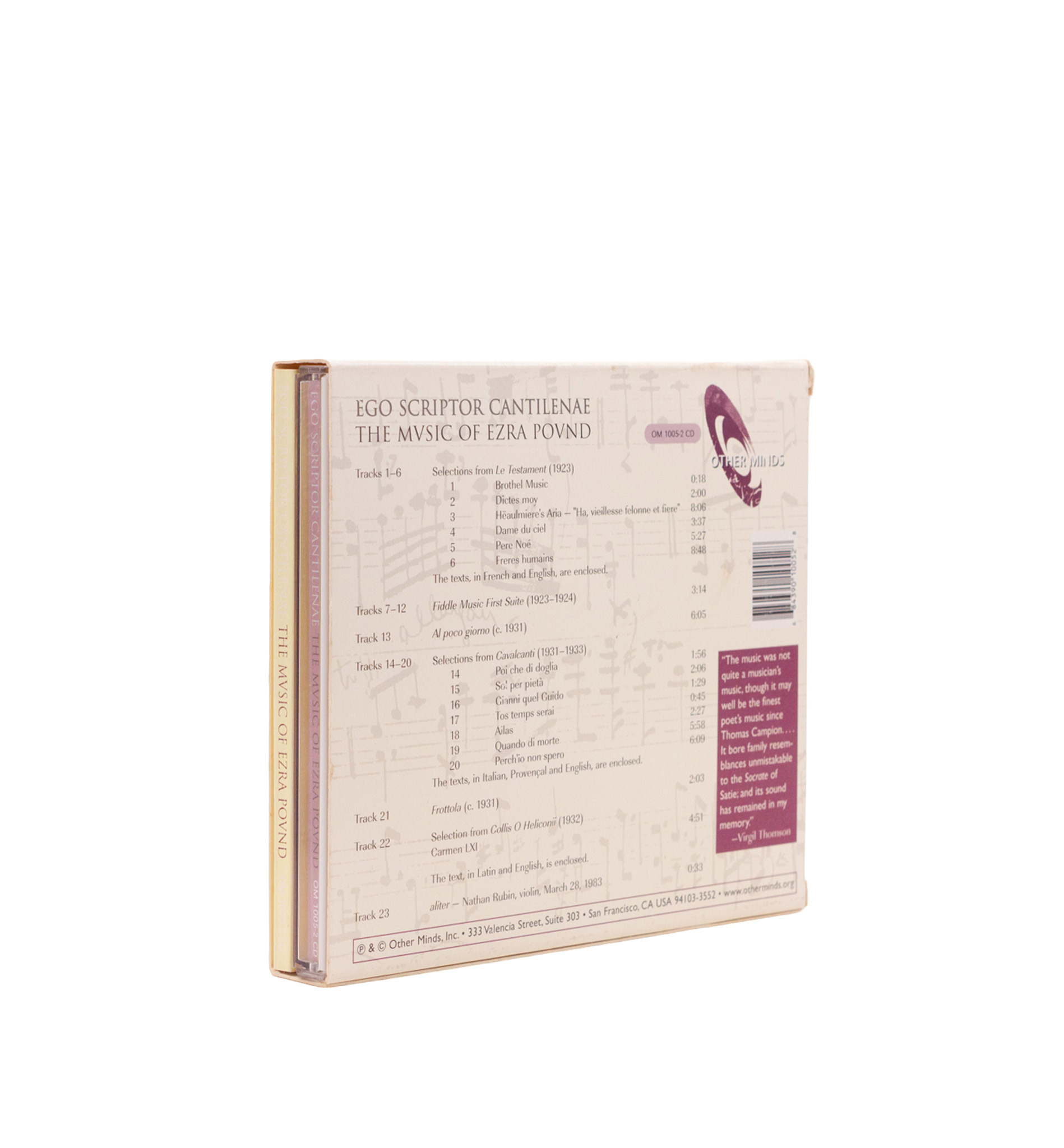
Ego Scriptor Cantilenae: The Music of Ezra Pound
Robert Hughes, conductor
Nathan Rubin, violin
Published San Francisco: Other Minds, 2003
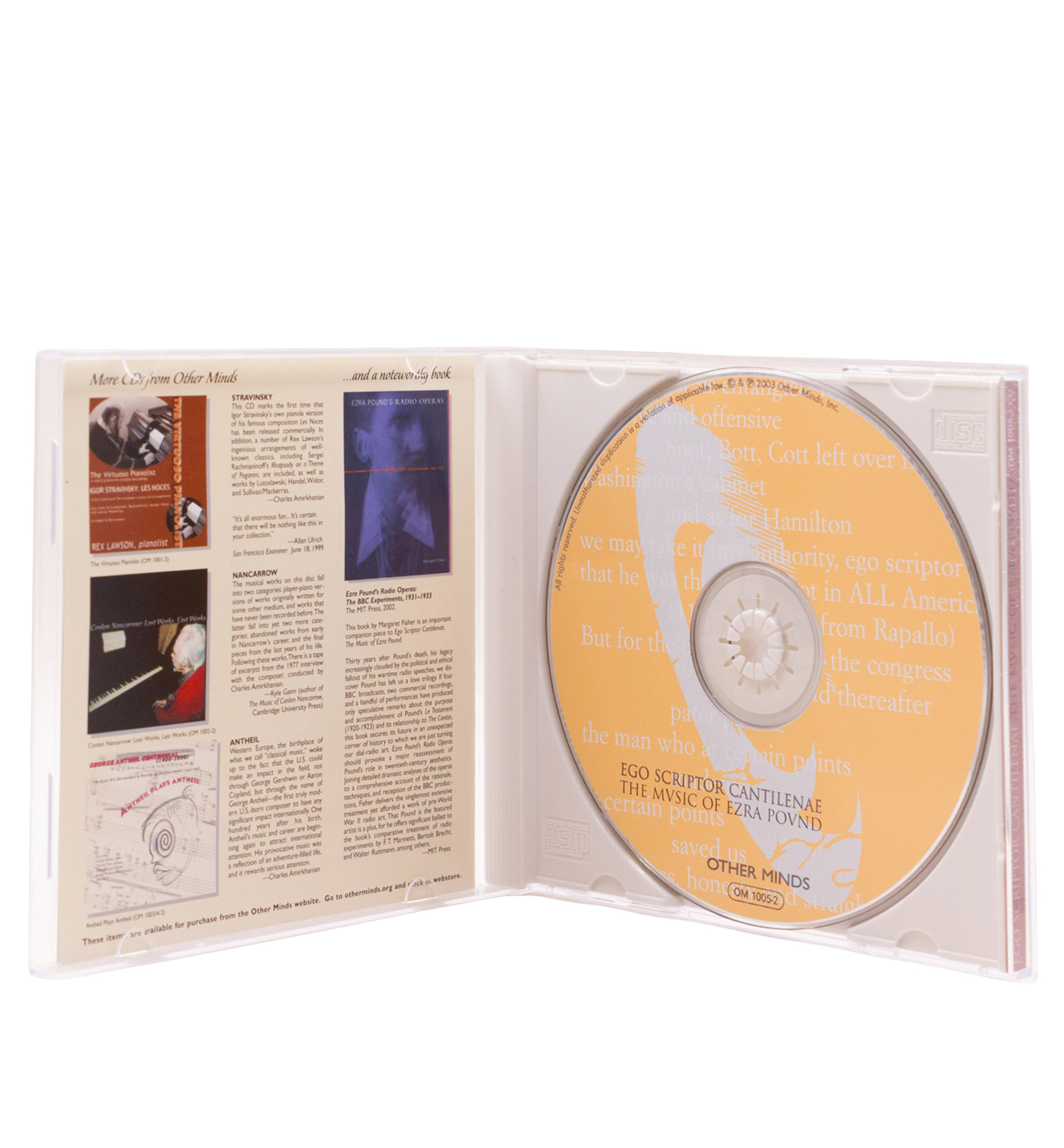
CD in plastic case with paper insert; booklet 81pp. measuring 12.3 x 14.2 cm, stiff printed wrappers and errata slip; card slipcase measuring 12.6 x 14.4 cm.
Part of Ephemera
Selections of Pound’s compositions in the main from Le Testament (1923, E3h), Fiddle Music (1923-33, E3d) and Cavalcanti (1932, E3a). Conducted by Robert Hughes, one of the great Poundian musicologists who visited Pound in St. Elizabeths in 1958 and composed a number of pieces after Pound’s poetry (listen to The Music of Robert Hughes and the Poetry of Ezra Pound here). CD and case in fine condition. Booklet sunned to spine; errata slip laid-in, occasional pencil annotation from David Moody. Slipcase with one scuff to bottom corner of spine and a little wear on the fore-edge, mostly fine.
tap to cycle
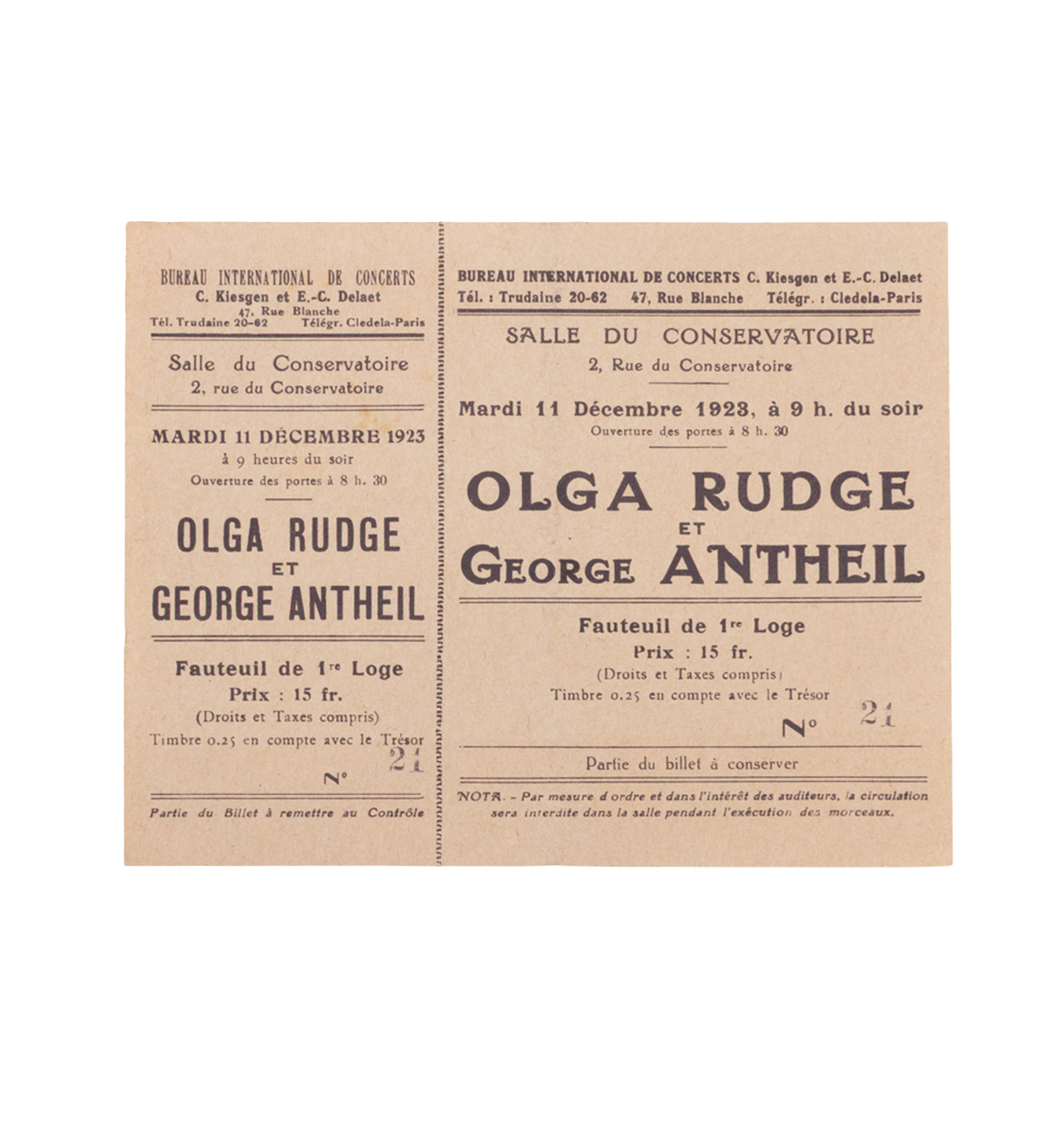
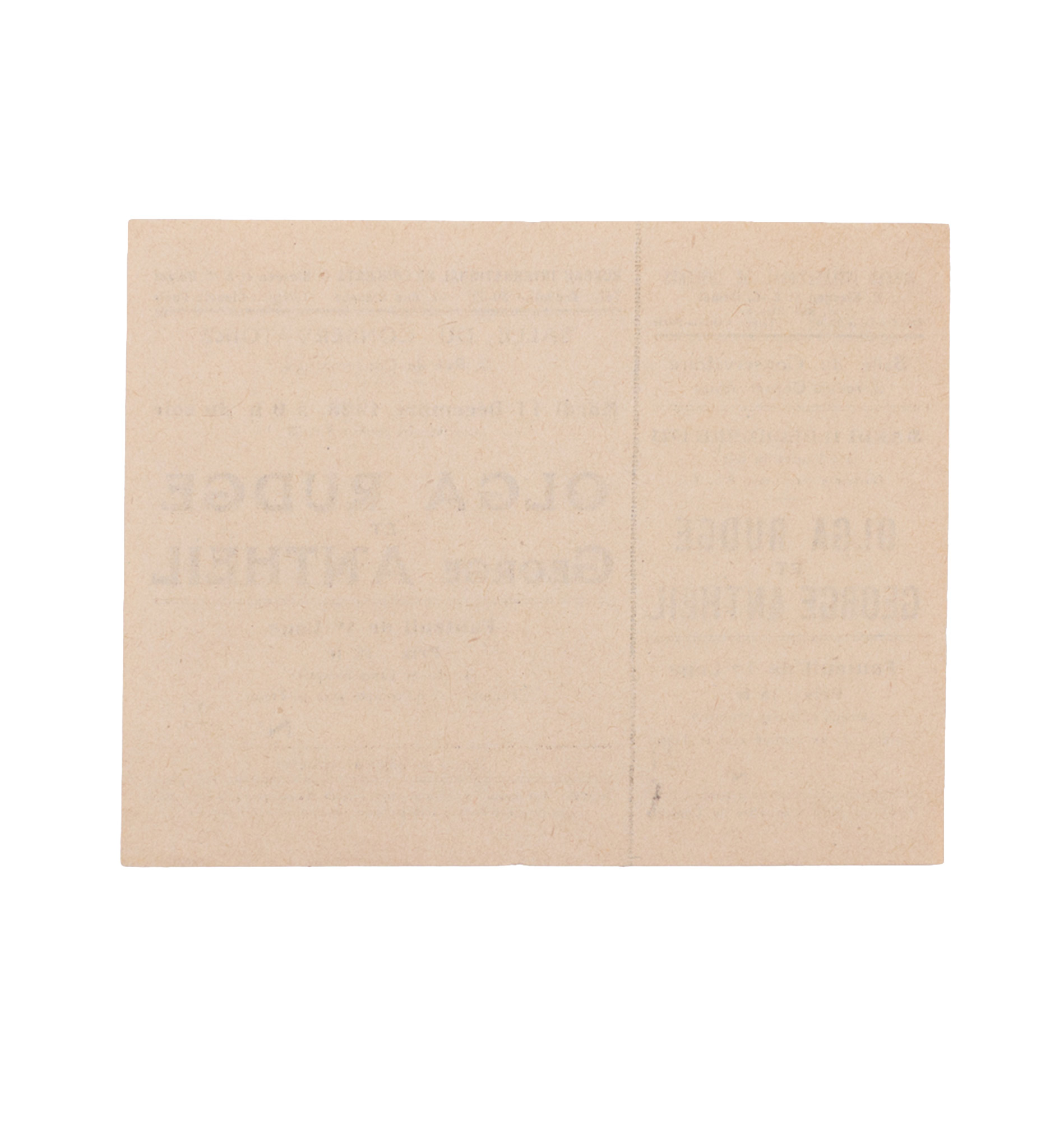
Olga Rudge et George Antheil, 11 December 1923, Concert Ticket
Ezra Pound, socialite, sollicité
Published Paris: Salle du Conservatoire, 1923
10.6 x 13.6 cm. Single leaf printed in black.
Part of Ephemera
A ticket to the joint piano and violin recital held at the Salle du Conservatoire (or Ancien Conservatoire; photos), Paris, Tuesday 11 December 1923 by Olga Rudge and George Antheil. Pound met Antheil in the June of 1923, of which Antheil wrote in his autobiography, “Ezra asked me to get some of my music and go with him to the home of a friend who had a piano. I did so, went with him, played for hours, and Ezra seemed very pleased with it.” This friend was Olga Rudge, whom Pound had met the previous autumn. As Conover writes (Olga Rudge & Ezra Pound), ‘Olga suggested Pound’s initial interest in her was her mother’s piano—for Ezra, she insisted, work came first. Antheil soon set to composing a violin sonata for Olga, determined to make the music, he wrote to Ezra, “as wildly strange as she looked…”’ Pound at this time was also composing music. On his first visit to Olga’s home on the rue Chamfort, he brought with him the score of his Testament de Villon, and in 1923 was both transcribing a twelfth-century air by Gaucelm Faidet, “Plainte pour la mort du Richard Coeur de Lion,” and composing an original work, Sujet pour Violon (Resineux), (Gallup E3g) both of which, interposed by a Gavotte by J. S. Bach, were performed by Rudge as the opening to this concert. To follow was a “Première Sonate pour Violon et Piano” (Antheil), “Concerto en la majeur” (Mozart), and a “Deuxième Sonate pour Violon et Piano” (Antheil) each performed by the both, with, as reported by Irvinge Schwerke in a review dated December 15, EP turning the pages. A scarce item, with only two copies appearing in institutional holdings (both at the University of Indiana, vide); Yale appearing only to have the programme (here). Ticket numbered No. 21 of around a potential capacity of c. 750 audience members, and presumably one of 150 in the stalls. Faint suggestion of a vertical fold in middle, similar to top left corner, a little brown around “Decembre” in the left column (stub part); mostly fine.
tap to cycle
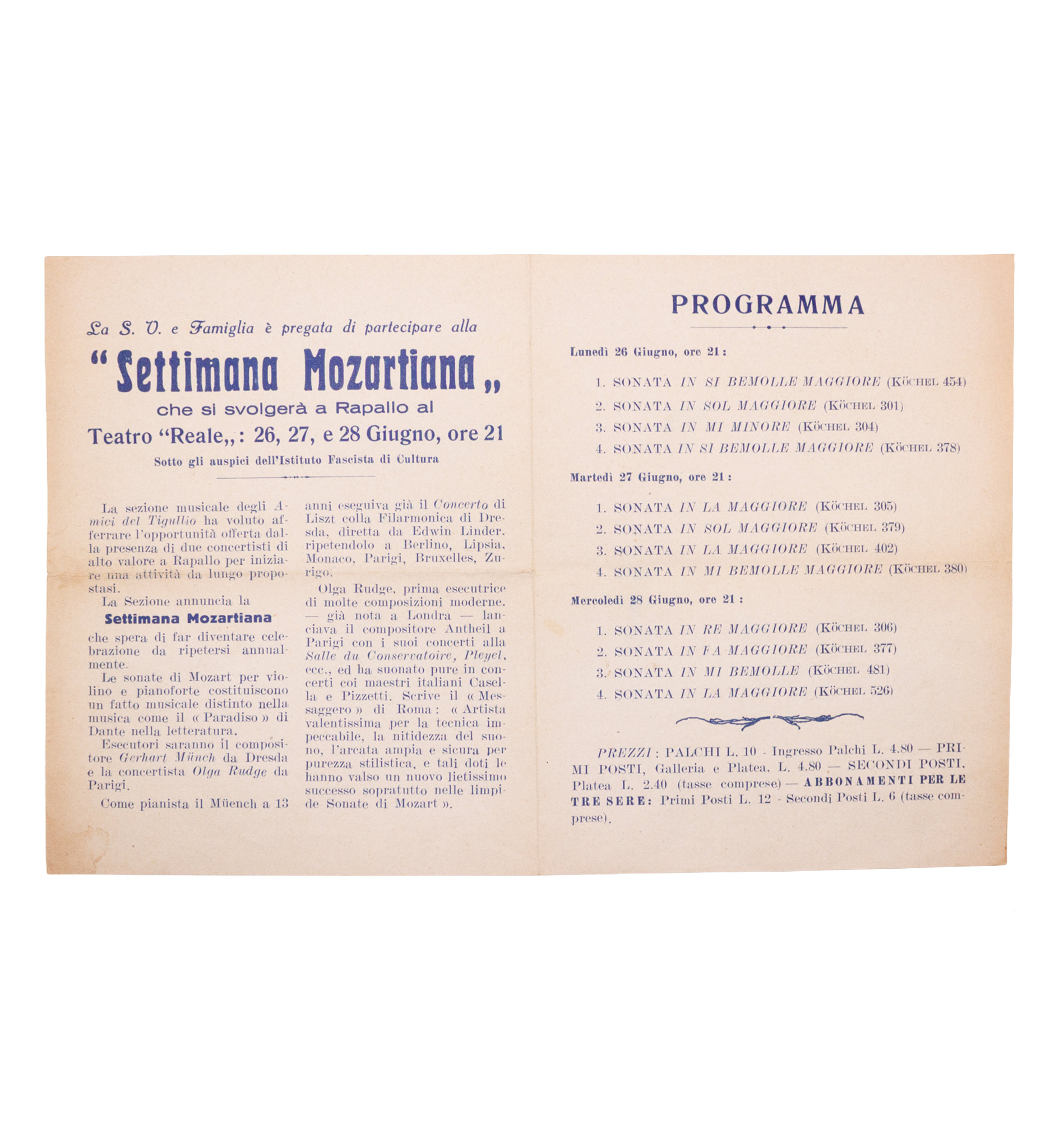
“Settimana Mozartiana”
Gli Amici del Tigullio; [Ezra Pound]
Published Rapallo: Teatro “Reale”, [1933]
17.5 x 27.3 cm. Single leaf printed in blue.
Part of Ephemera
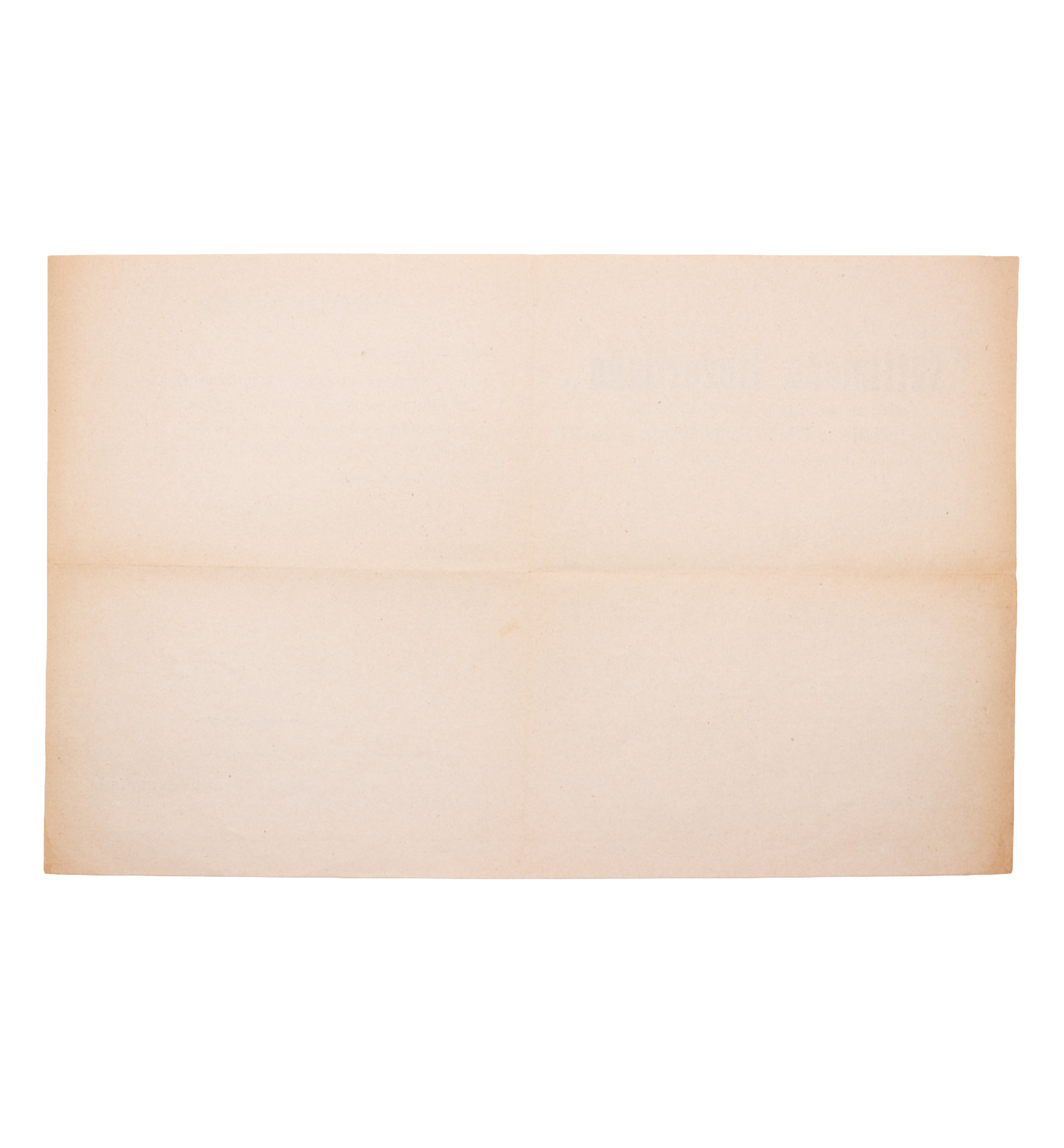
A programme to accompany the “Settimana Mozartiana,” three evenings of Mozart’s Sonatas for violin and piano, performed by Olga Rudge (violin) and Gerhart Munch (piano), held at the Teatro “Reale” (“the local cinema house” — Schafer), Rapallo, June 26-28 1933. The first of the Rapallese Concerts organised by Pound, who composed the copy on this programme, of which there were around forty between 1933 and 1939. The entirety of Mozart’s sonatas for violin and piano were performed around this time, the further twenty-two “done privately so that a few of us heard the whole set,” Pound seeking to understand “what Mozart meant by the form or what the form meant to him.” (See Pound to Tibor Serly in Paige’s Letters, p. 442, and Schafer’s EP and Music, p. 331). With prices advertised for Boxes, First Seats, and Second Seats, taxes paid. “Sotto gli auspici dell’Istituto Fascista di Culture.” Lightly folded in four, as published; a few spots around Wednesday’s progamming, the left edge darkened with a small stain at bottom.

tap to cycle
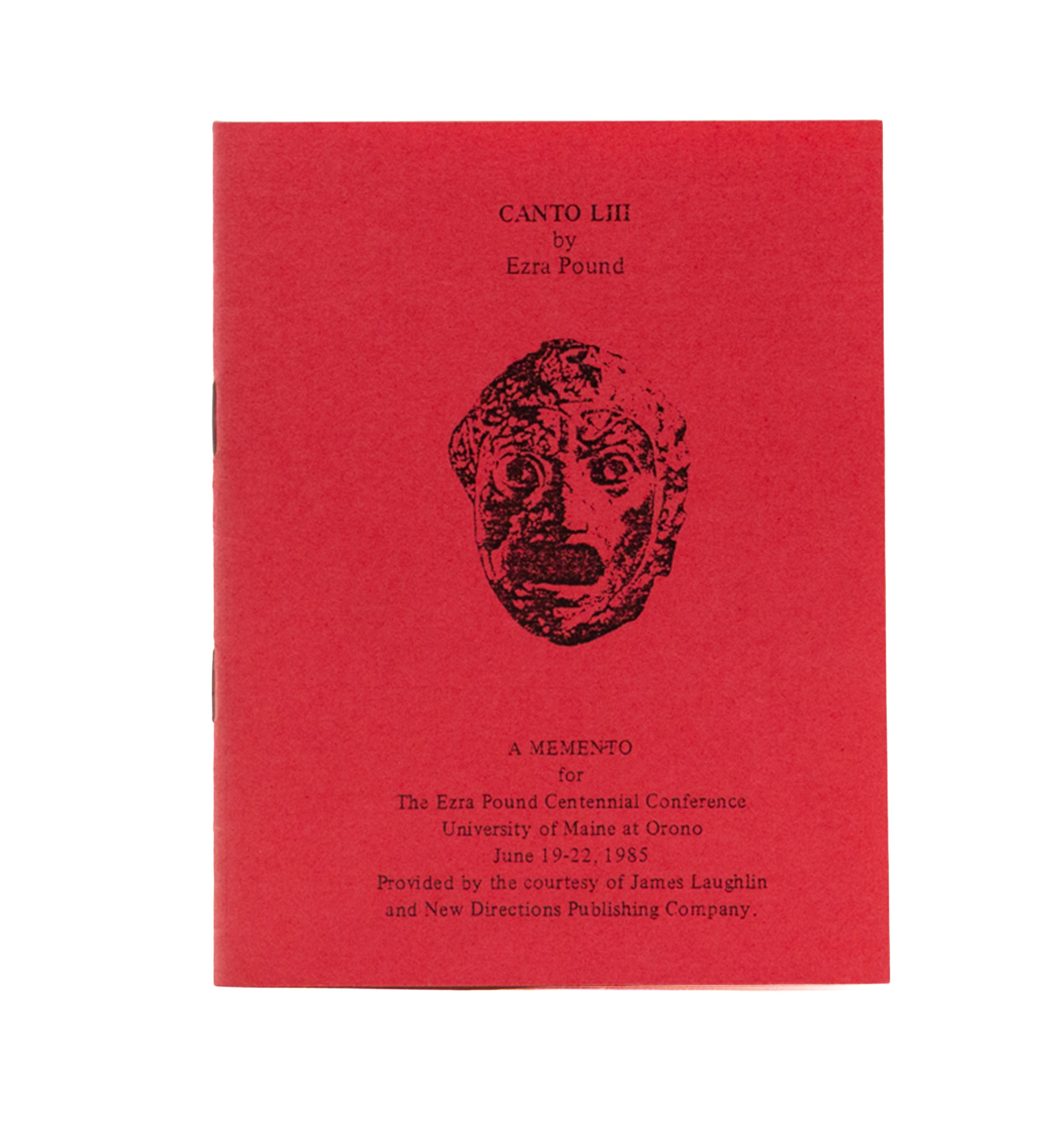
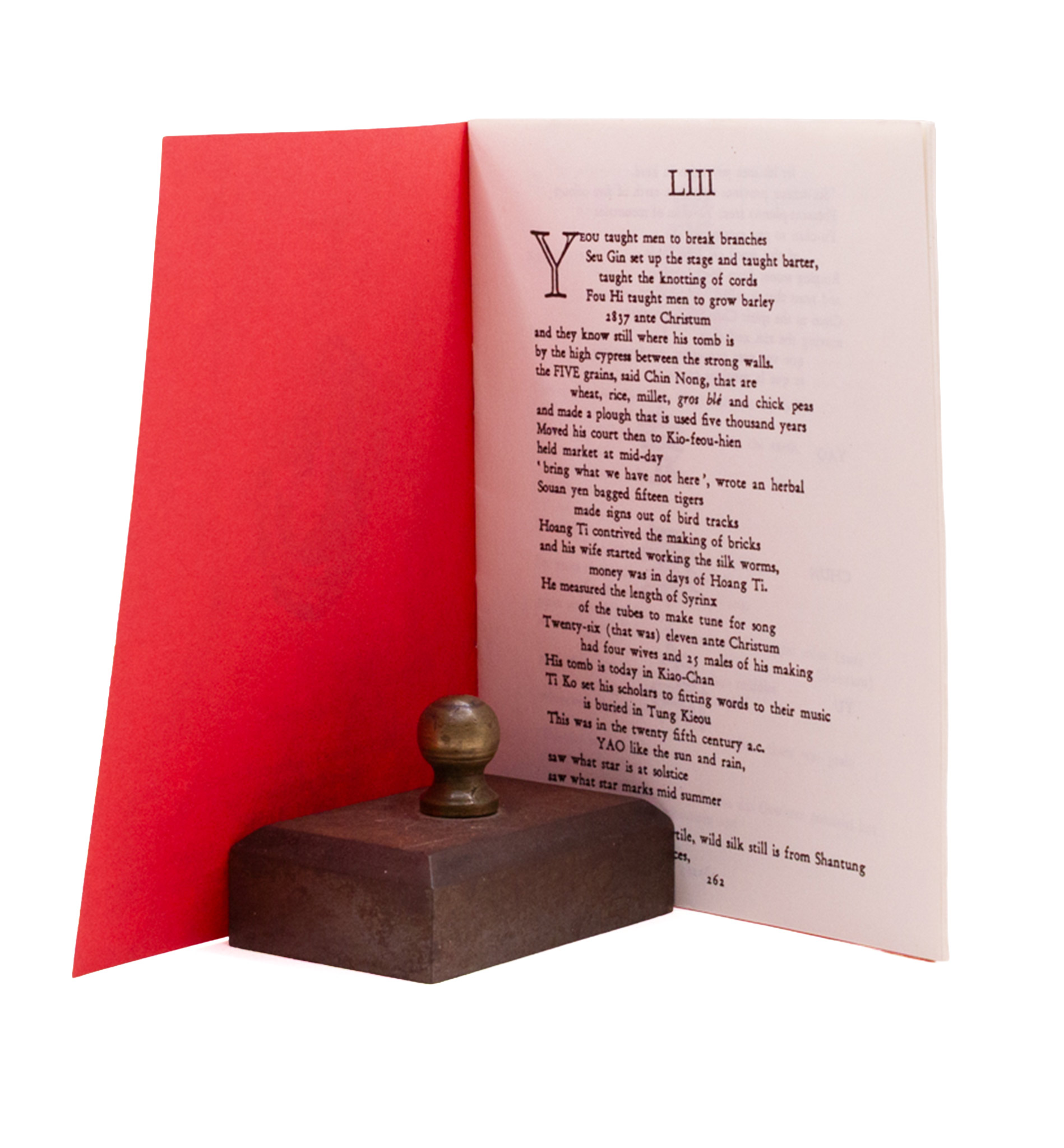
Canto LIII
Ezra Pound
Published New York: James Laughlin and New Directions, 1985
12pp.; 14 x 11 cm. Red paper wraps printed in black, stapled twice.
Part of Ephemera
A memento from The Ezra Pound Centennial Conference, 19-22 June 1985, held at the University of Maine at Orono. Canto printed offset from a New Directions edition, with page number at bottom, spilling over from the leaves and concluded verso of the rear cover. Very near fine; bottom corner of rear cover lightly creased. Too late for Gallup.
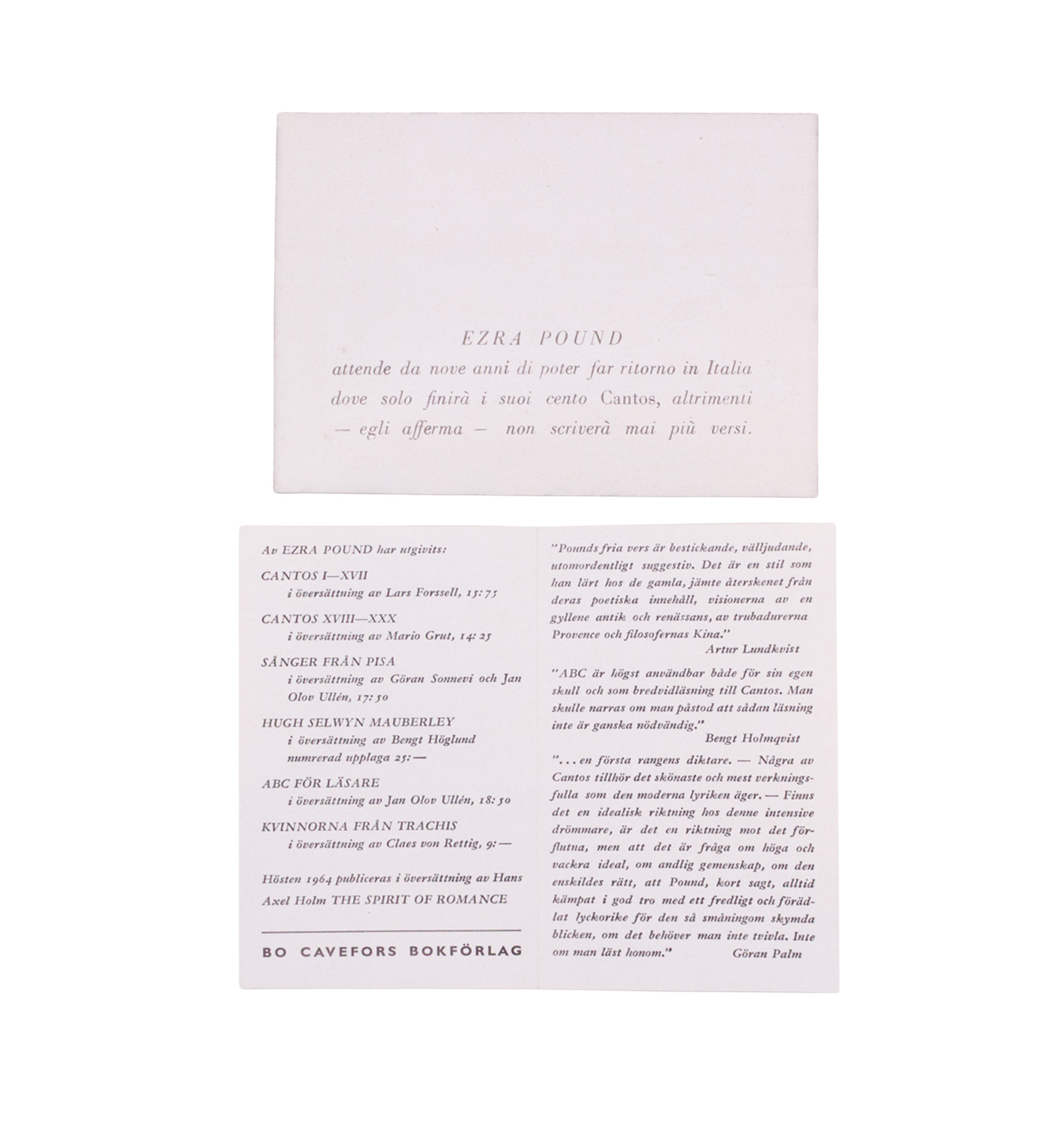
tap to cycle
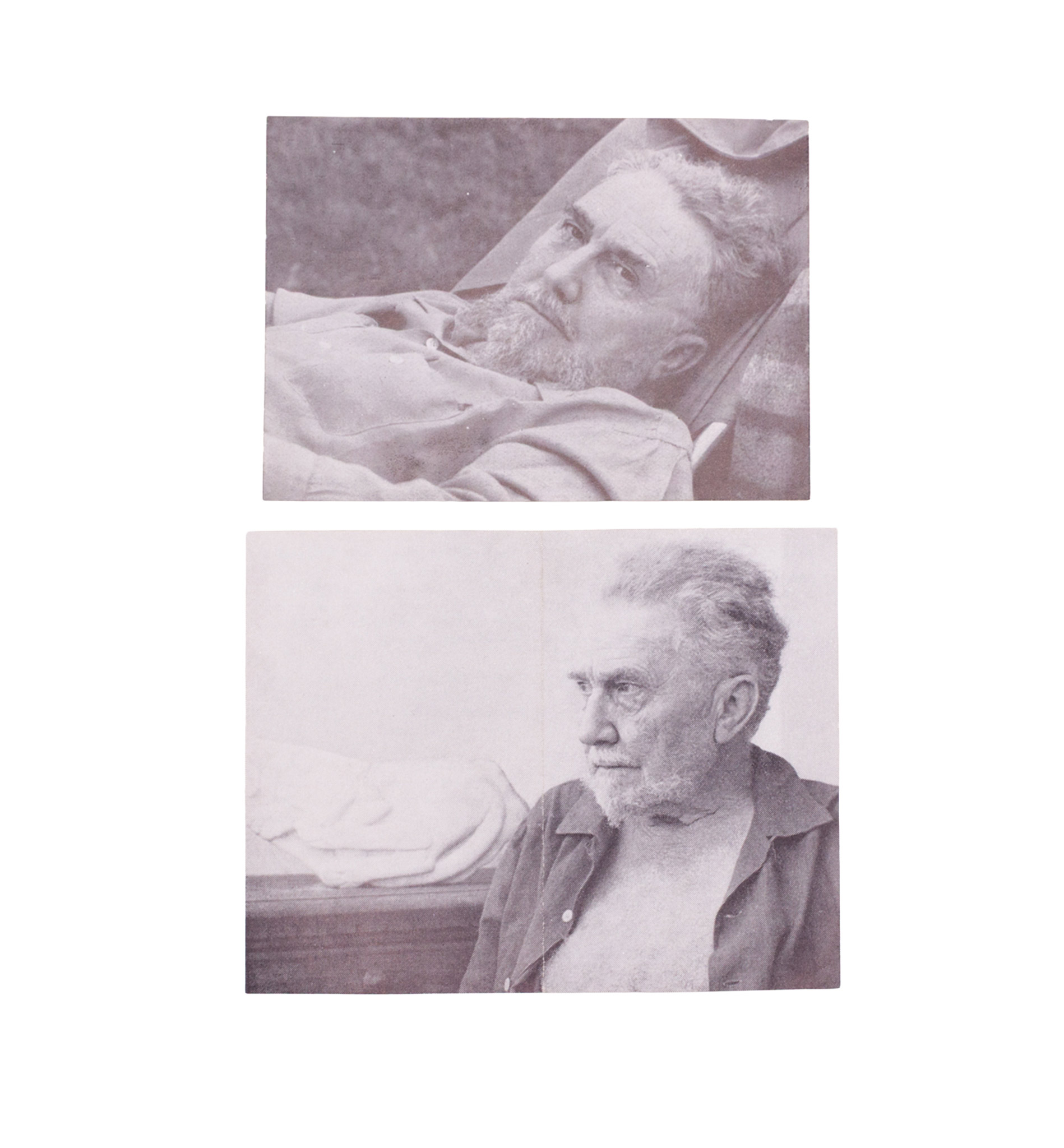
Two small prints of EP by Bo Caveford Bokförlag
Published MalméLund: Bo Cavefors Bokförlag, [1964]
8.1 x 10.5 cm. Single leaf, printed in black, folded once.
6.8 x 9.6 cm. Single leaf printed in black.
Part of Ephemera
Promotional ephemera from Swedish publisher Bo Cavefors Bokförlag who published a number of translations of Pound’s works between 1959 and 1972. Each a small piece of plain paper with monochrome printings of photographs of Pound post St. Elizabeths, by an unknown photographer but possibly Olga Rudge, with text verso. The photograph of EP aside the sculpture by Gaudier-Brzeska features adverts for six Swedish editions of EP published by Bo Cavefors Bokförlag, and quotes by Artur Lundkvist, Bengt Holmqvist and Göran Palm in a second column, aside the publisher’s vertical fold. The books advertised were published 1959-1962, and an announcement for an upcoming translation of The Spirit of Romance by Alex Holm for 1964, which was actually published in 1965; hence my estimated date of these items at circa 1964. The photograph of EP in the park features an Italian announcement verso that Pound has been waiting nine years to return to Italy where he will finish his 100 Cantos, otherwise he will never write verse again (from the Appunto biografico in Tre Cantos tradotti da Mary de Rachewiltz in collaborazione personale con l’autore, All’Insegna del Pesce d’Oro, 1954). Both quite fine, a little age.
tap to cycle
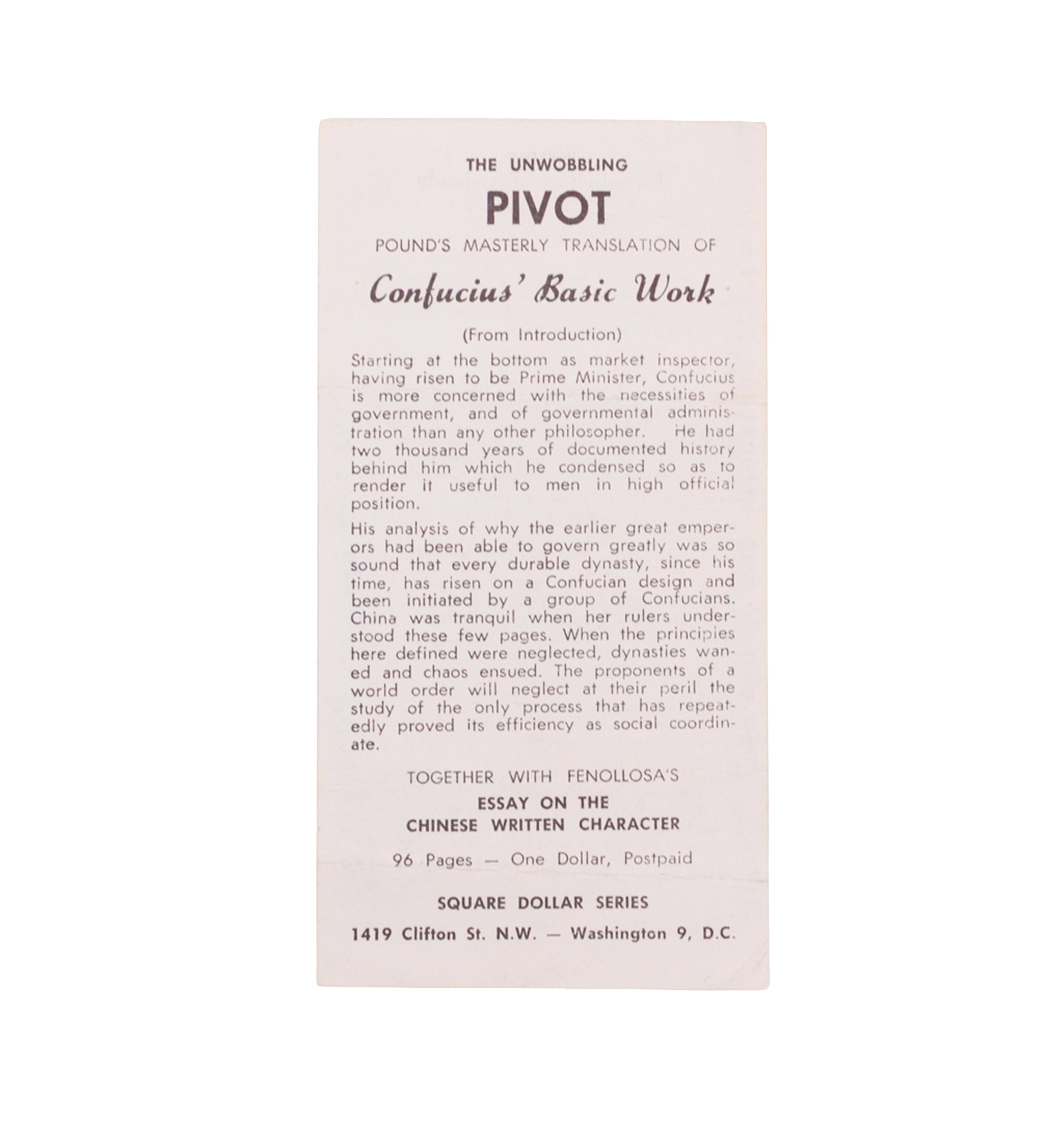
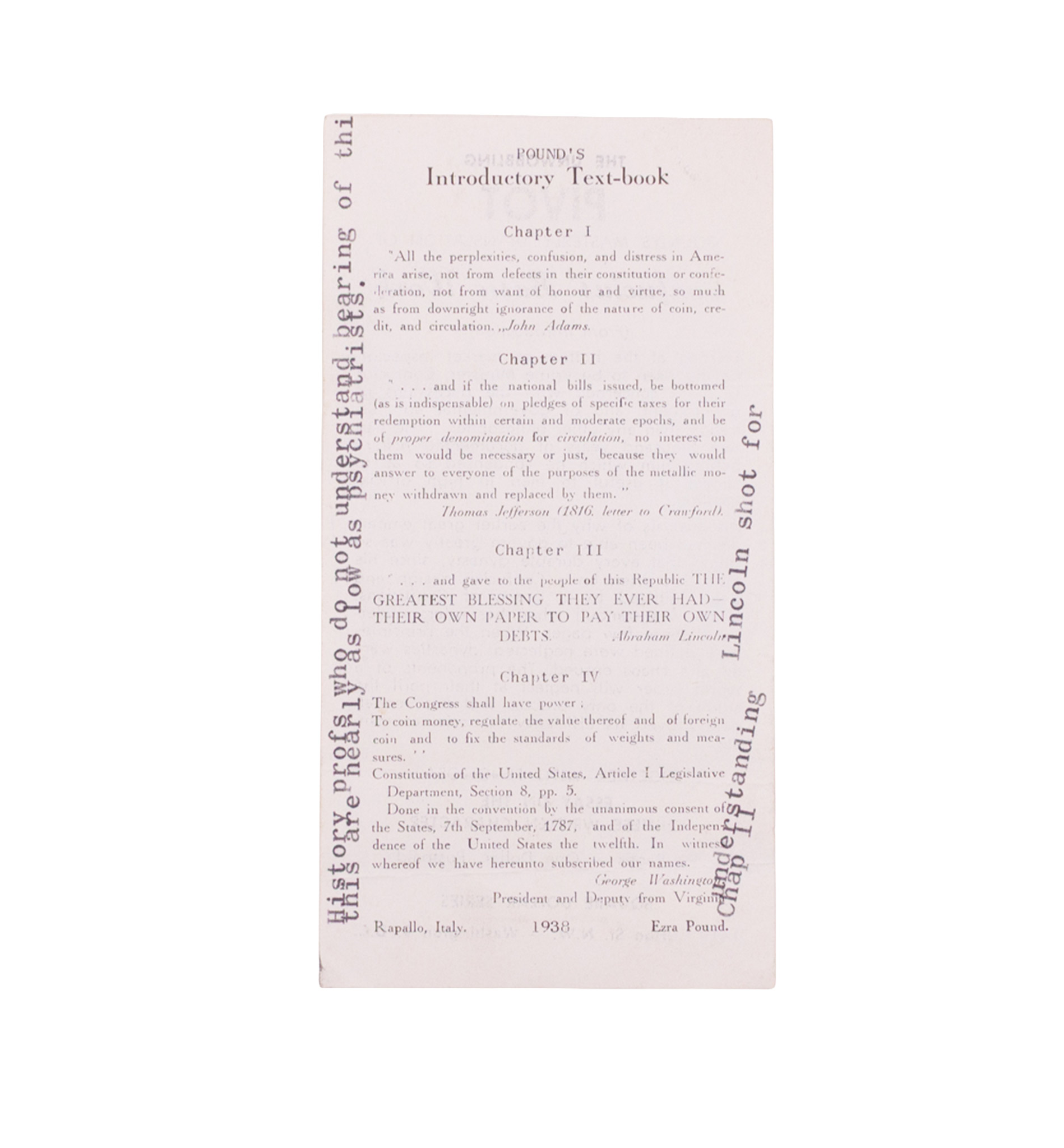
The Unwobbling Pivot; Pound’s Masterly Translation of Confucius’ Basic Work; together with Pound’s Introductory Text-book
Ezra Pound
Published Washington, D.C.: Square $ Series, [no date]
Single leaf, 14 x 7.2 cm. Printed in black both sides.
Part of Ephemera
The later advertisement leaf for the Square $ Series’ publication of The Unwobbling Pivot & The Great Digest; together with Ernest Fenollosa’s Essay on the Chinese Written Character, ([1951]). “(From Introduction)” is taken from Pound’s Note to The Great Digest, p.29. Price given as “One Dollar, Postpaid” in coherence with the name of the series. With Pound’s Introductory Text-book printed overleaf, signed Rapallo 1938, originally privately printed by Bonner and Company, London in 1939 (see Gallup E2r, and for other appearances of the Introductory Text-book: E2s, C1511 and C1724). This appearance recorded by Gallup under E2r who gives the date as late 1950s. Contary to Gallup’s find that ‘at least some copies with a typed statement added along the lefthand side: “Lincoln was shot for understanding what Jeff wrote to Crawford in 1816” (see B36a note)’, this copy has two amateurish typewritten notes, the first a simplified statement, “Lincoln shot for / understanding Chap II,” the second, “History profs who do not understand bearing of [this] are nearly as low as psychiatrists.” A wonderful rare piece of ephemera and given the whim of the type, possibly unique (possibly even Pound’s type?). Three light horizontal folds, otherwise quite fine.

tap to cycle
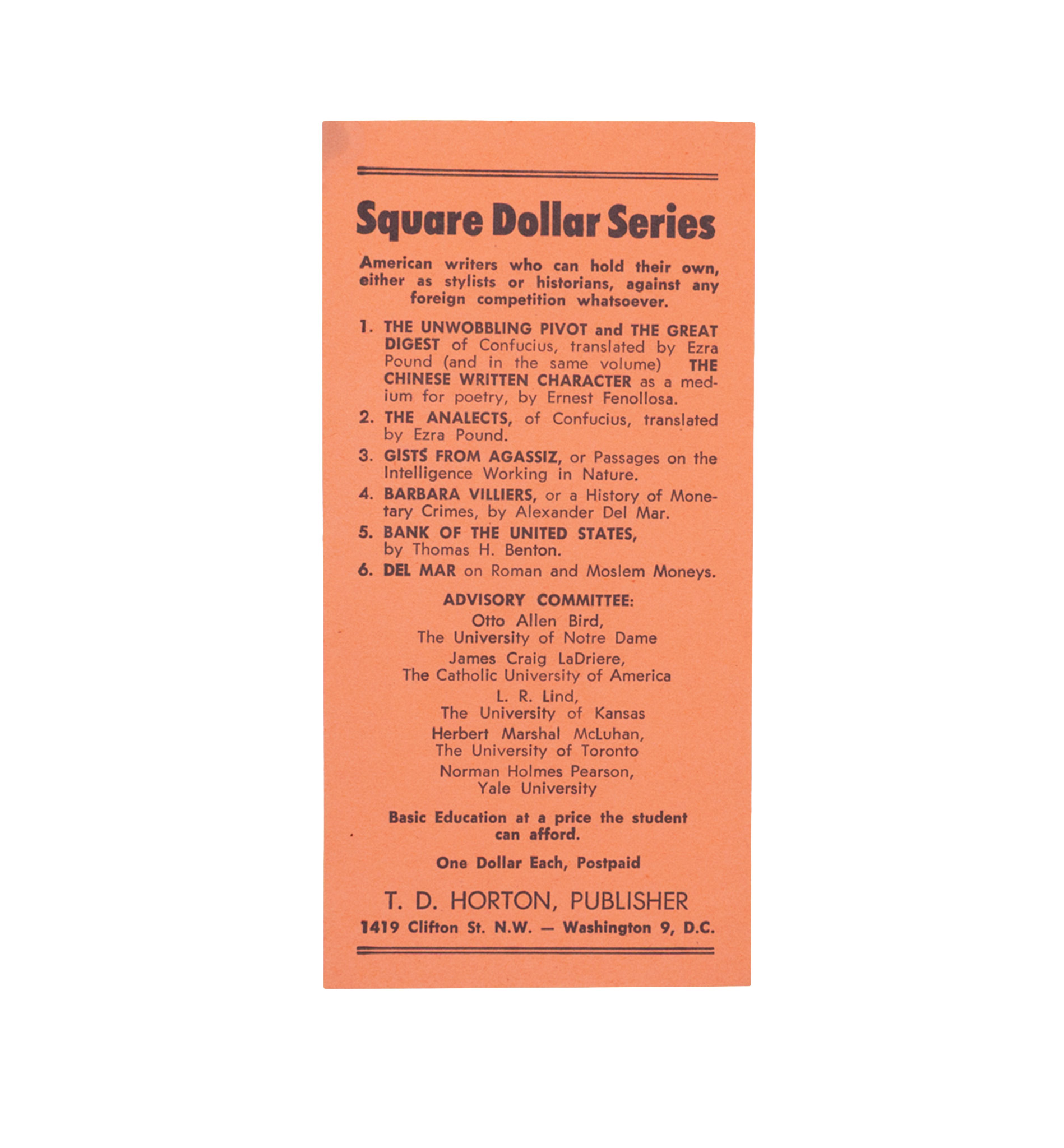
Square $ Series: List of 6 books
[Ezra Pound]
Published Washington: T. D. Horton, Publisher, [no date]
Single leaf, 15.4 x 7.7 cm. Printed in black.
Part of Ephemera
An advertisement for the six books of the Square $ Series, Pound’s requirement on anybody “allowed into Congress [or] to vote” (Interview with D. G. Bridson, 1959). Reproduces a blurb for the series, “American writers who can hold their own…” anonymously written by Pound, which first appeared on the back flap of the sixth and final book of the series, del Mar’s Roman and Moslem Moneys. No mention of this leaf in Gallup or much anywhere else. Post-dating at least the publication of Roman and Moslem Moneys, with a Washington address possibly concurrent with the Washington P. O. Box given on the rear cover of Roman. The absence of Kasper, i.e. the contact given as T. D. Horton, Publisher, may be of some use dating this. Very near fine, a faint, dark stain top left; paper cut at slight skew to the text-block.

tap to cycle
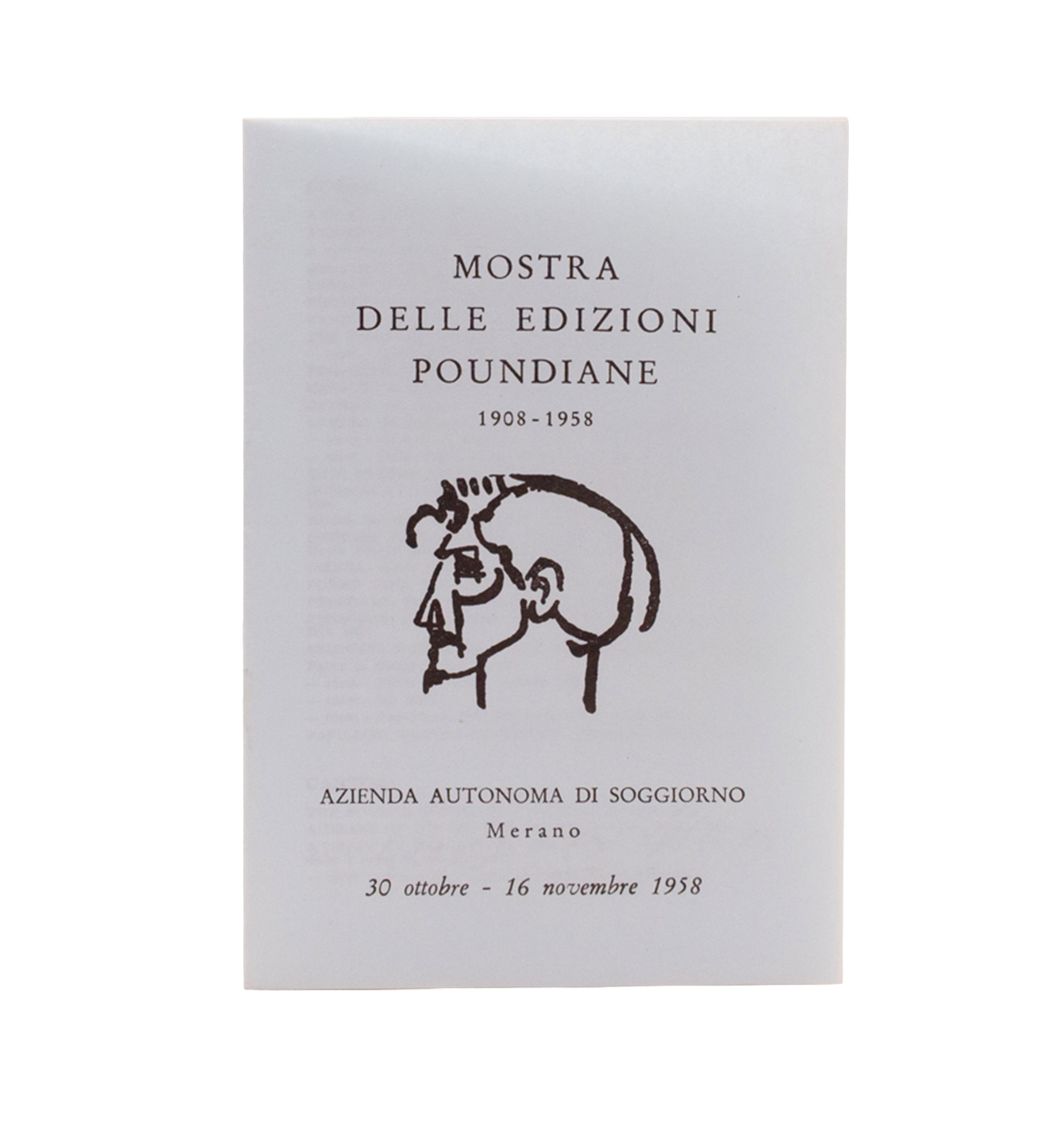
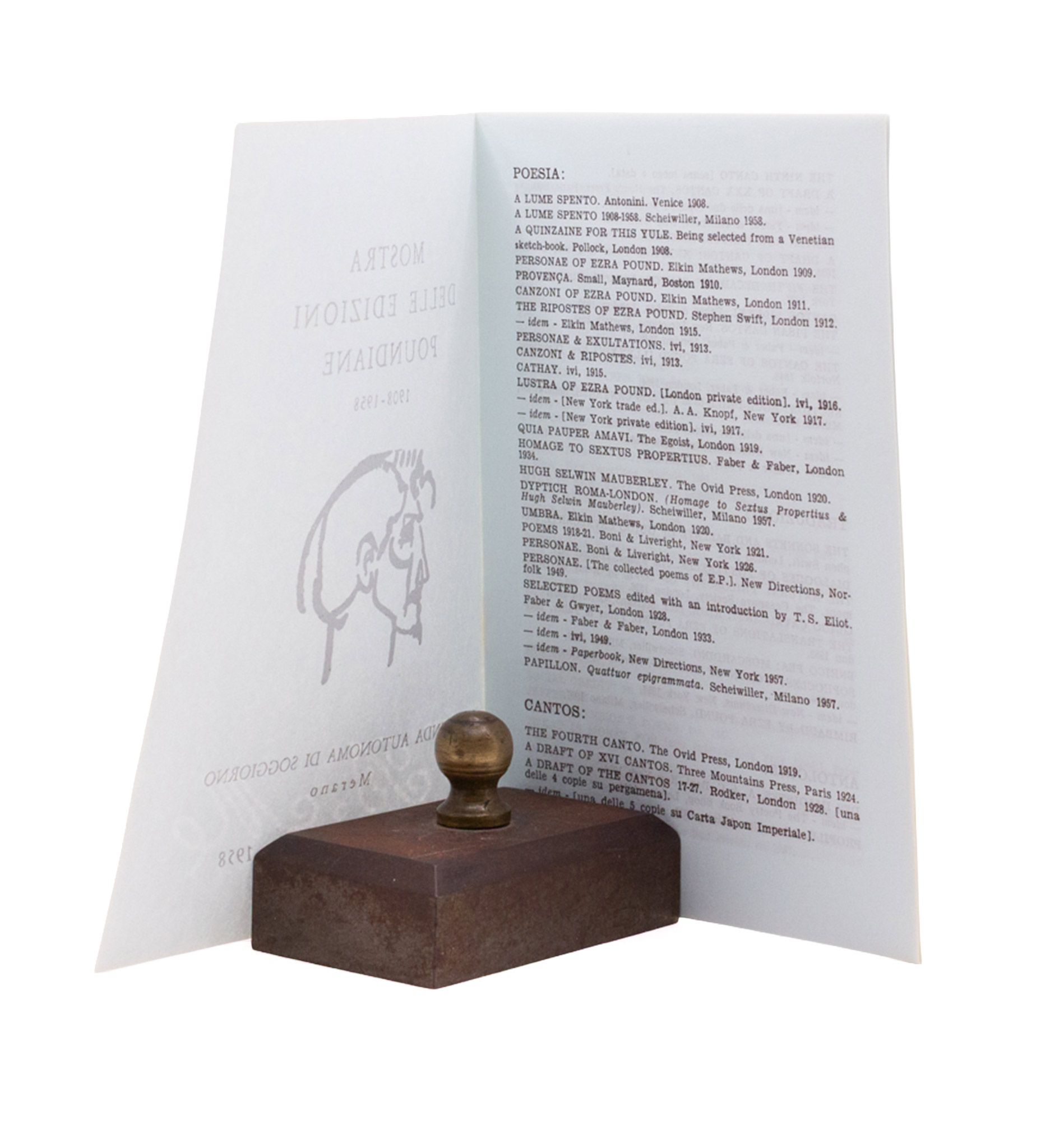
Mostra delle Edizioni Poundiane, 1908-1958
Published Merano: Azienda Autonoma di Soggiorno, 1958
3 leaves; 15.2 x 10.5 cm. Pale blue paper, printed in black, folded and stapled once.
Part of Ephemera
Catalogue to an exhibition of Poundian Editions held at the Azienda Autonoma di Soggiorno, Merano, 30 October - 16 November 1958. A very well supplied exhibition with texts ranging from A Lume Spento (A. Antonini, 1908) to two copies of John Rodker’s Draft of Cantos 17-27 (one of four on vellum, and one of five on Imperial Japan, 1928), an undated and unplaced Ninth Canto, and later ephemeral publications and foreign translations. With further artwork from Gaudier-Brzeska, Lewis, Martinelli, a photocopy of a declaration by the people and Mayor of Rapallo that EP has never carried out fascist or antisemitic activities (1948) and a death mask of EP made in 1921 by Nancy Cox MacCormack. A fine copy.

tap to cycle
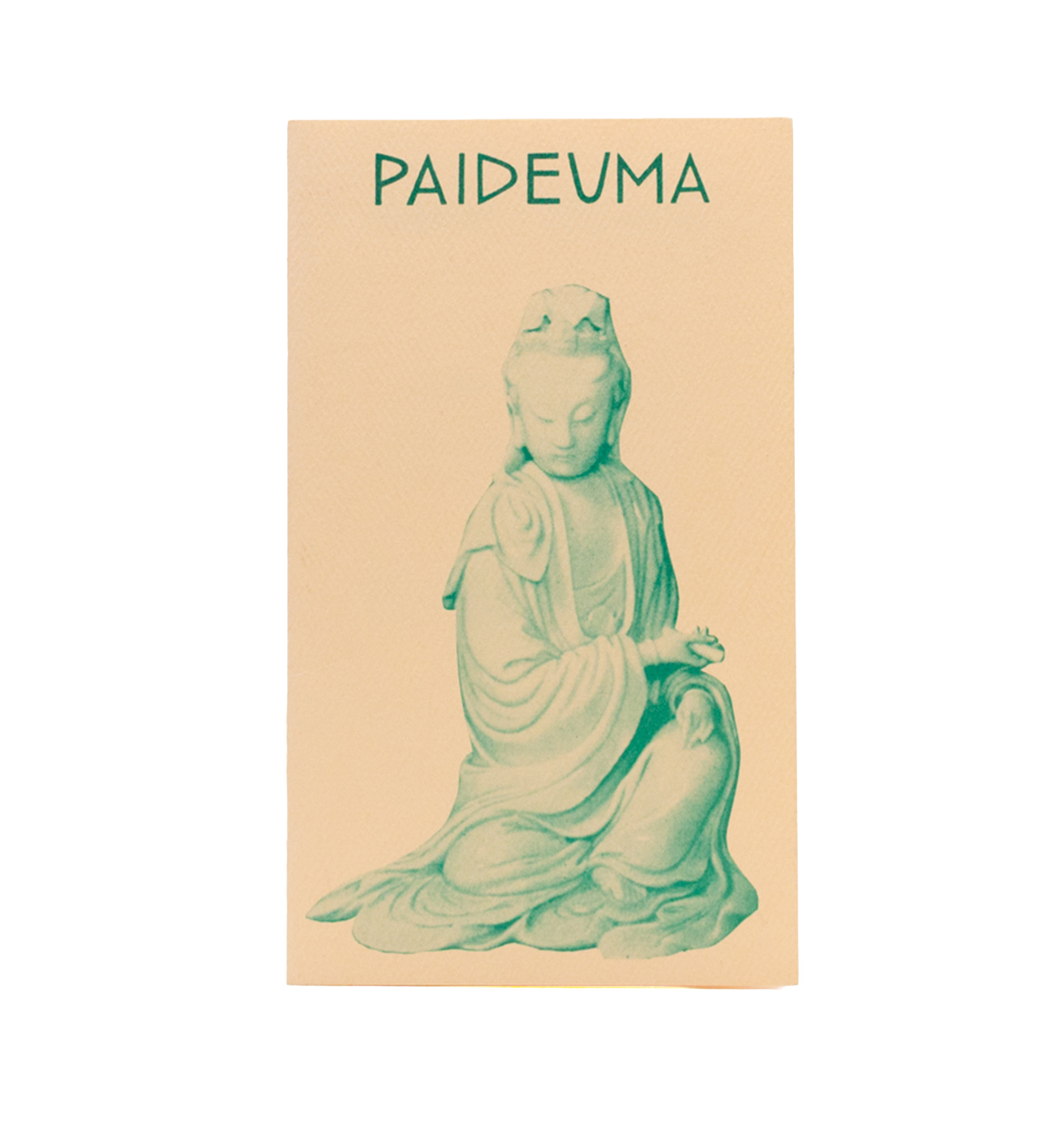
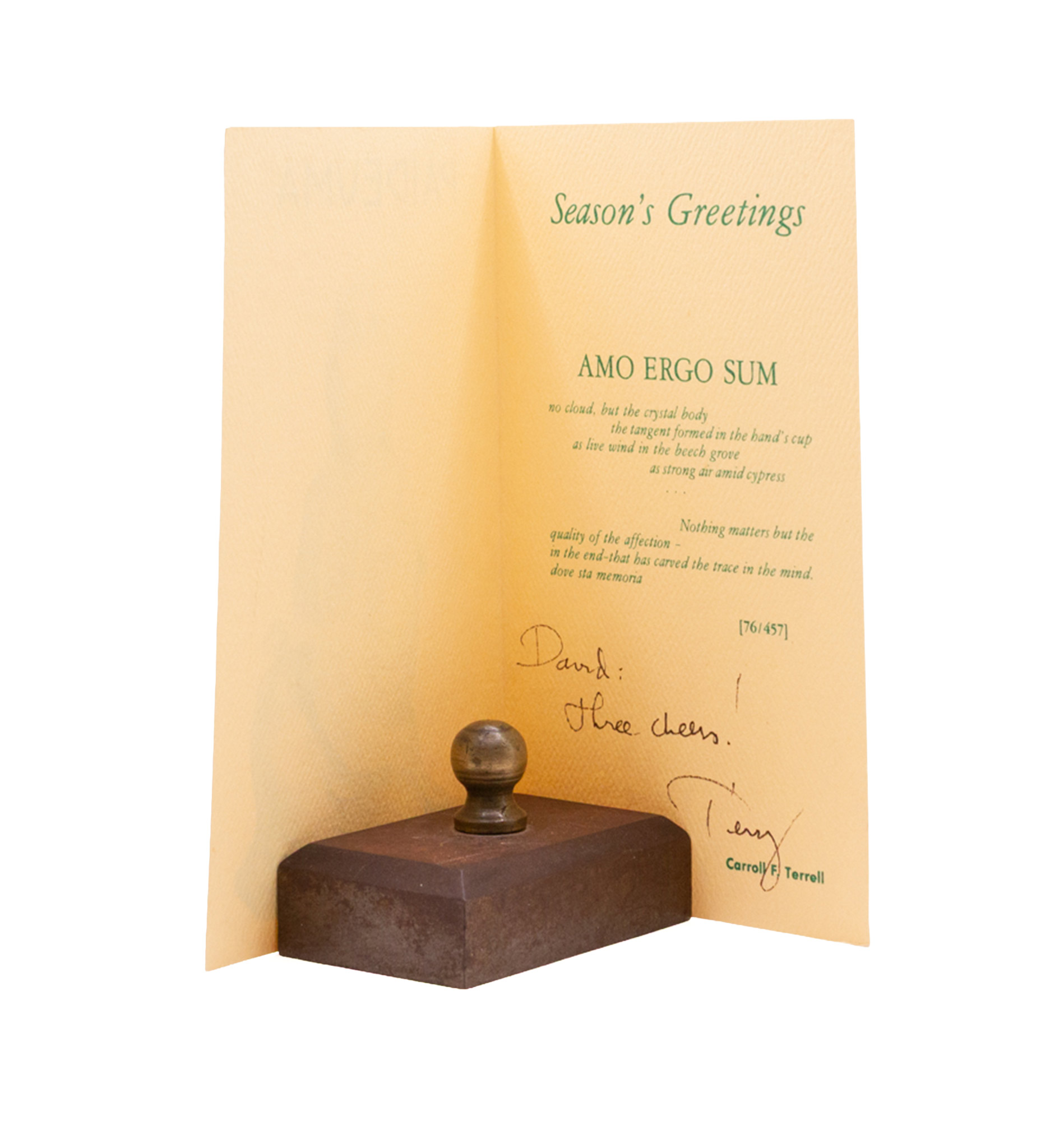
Paideuma: Season’s Greetings
Carroll F. Terrell
Published Maine: The University of Maine at Orono, [no date]
15.3 x 9 cm. A single piece of heavy laid yellow paper, printed in green, folded once.
Part of Ephemera
A Christmas card printed by Paideuma for C. F. Terrell, addressed in hand from Carroll F. Terrell to A. David Moody, with two fragments of Canto 76 printed. With an illustration of a Guanyin (or Bodhisattva) to the front cover, undated but probably contemporary with Paideuma Vol. 5 No. 1, Spring 1975 whose front cover, printed in a duller green, reproduces a stone Sakyamuni flanked by four disciples and two Bodhisattvas, reproduced courtesy of the Exhibition of Archeological finds of the Peoples Republic of China at National Gallery of Arts, Washington, D.C.; thus 1974-5. Fine.
tap to cycle
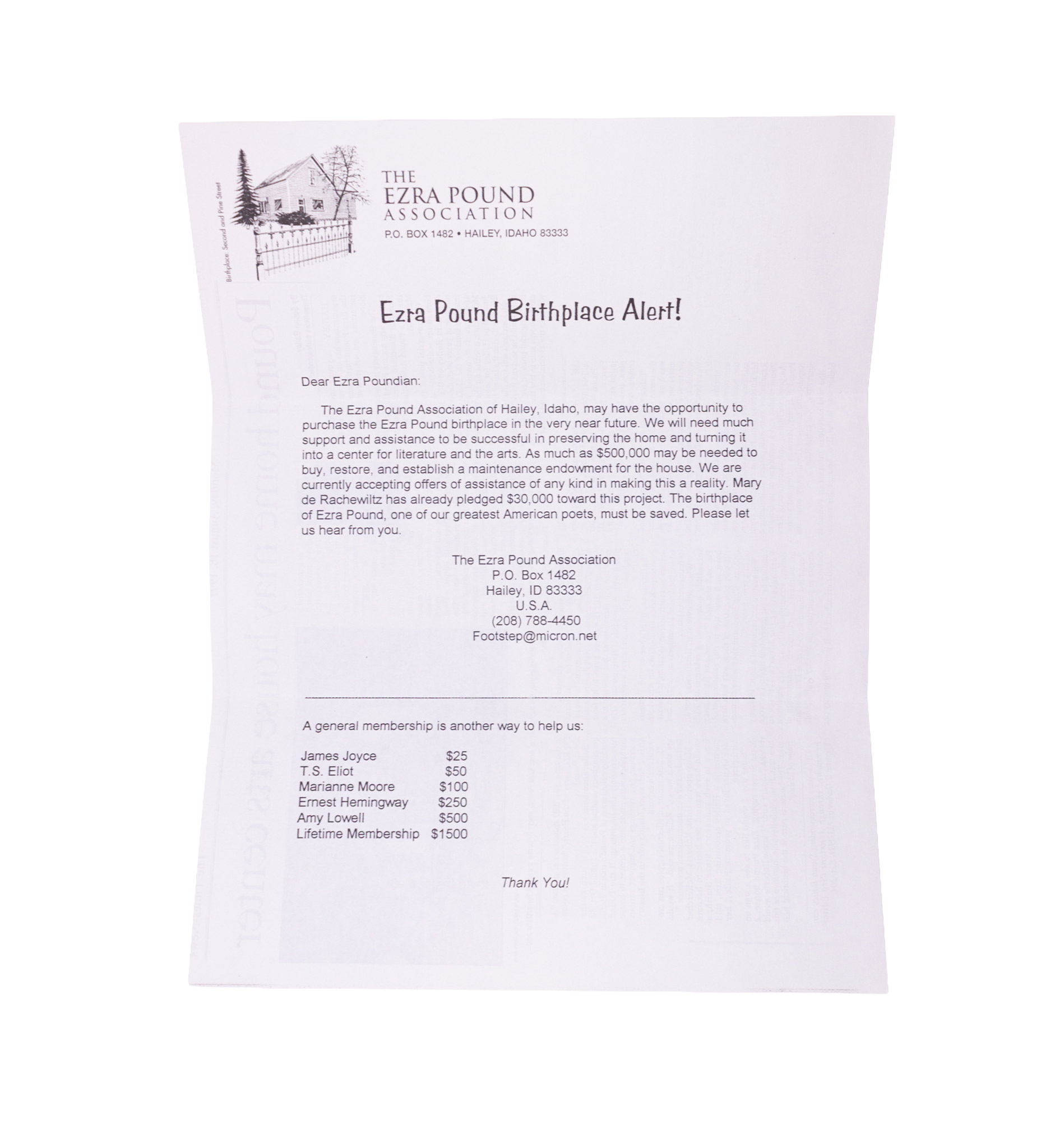
Ezra Pound Birthplace Alert!
The Ezra Pound Association
Published Haily, Idaho: The Ezra Pound Association, [no date]
Single A4 leaf, printed in black, with envelope.
Part of Ephemera
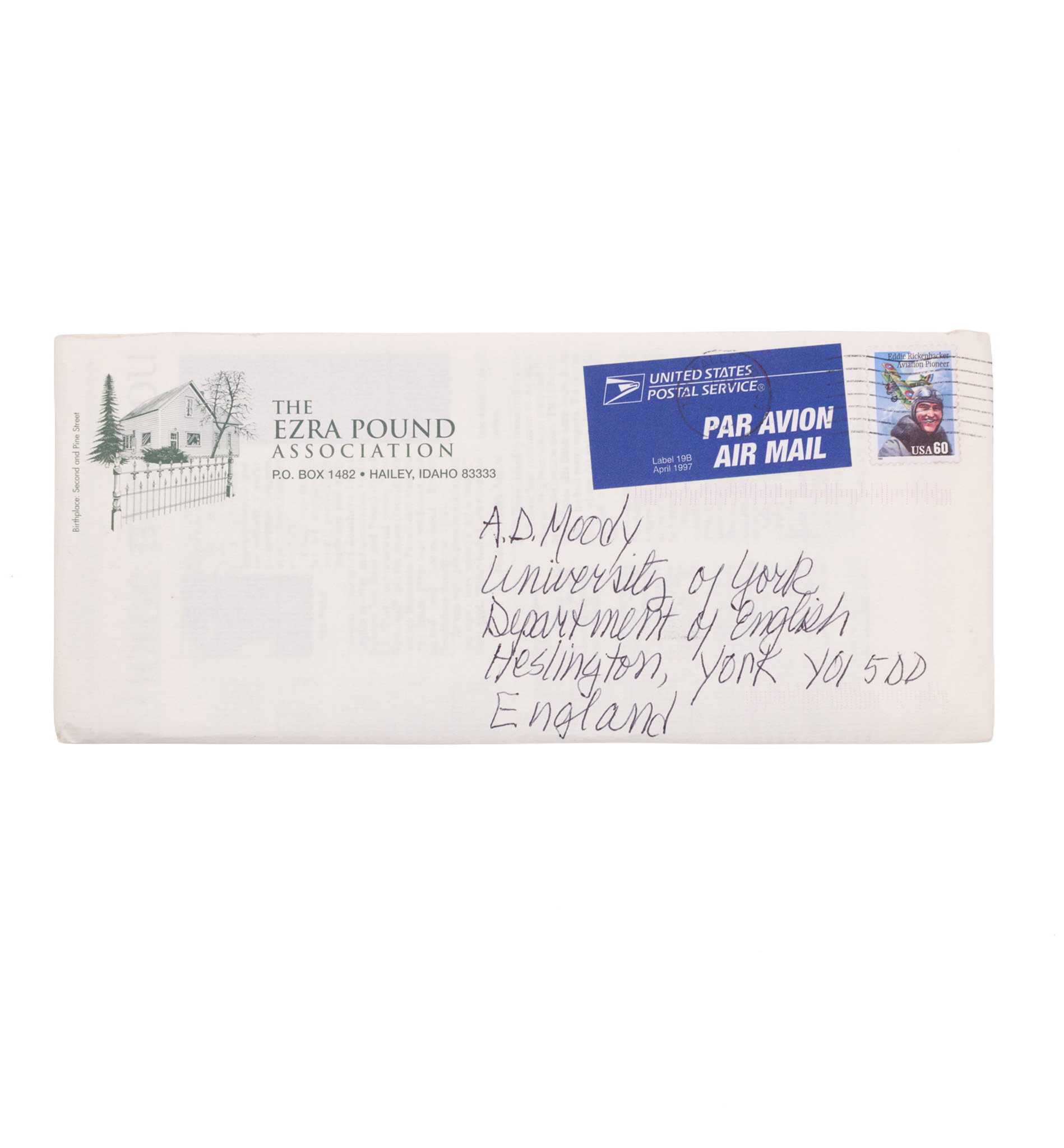
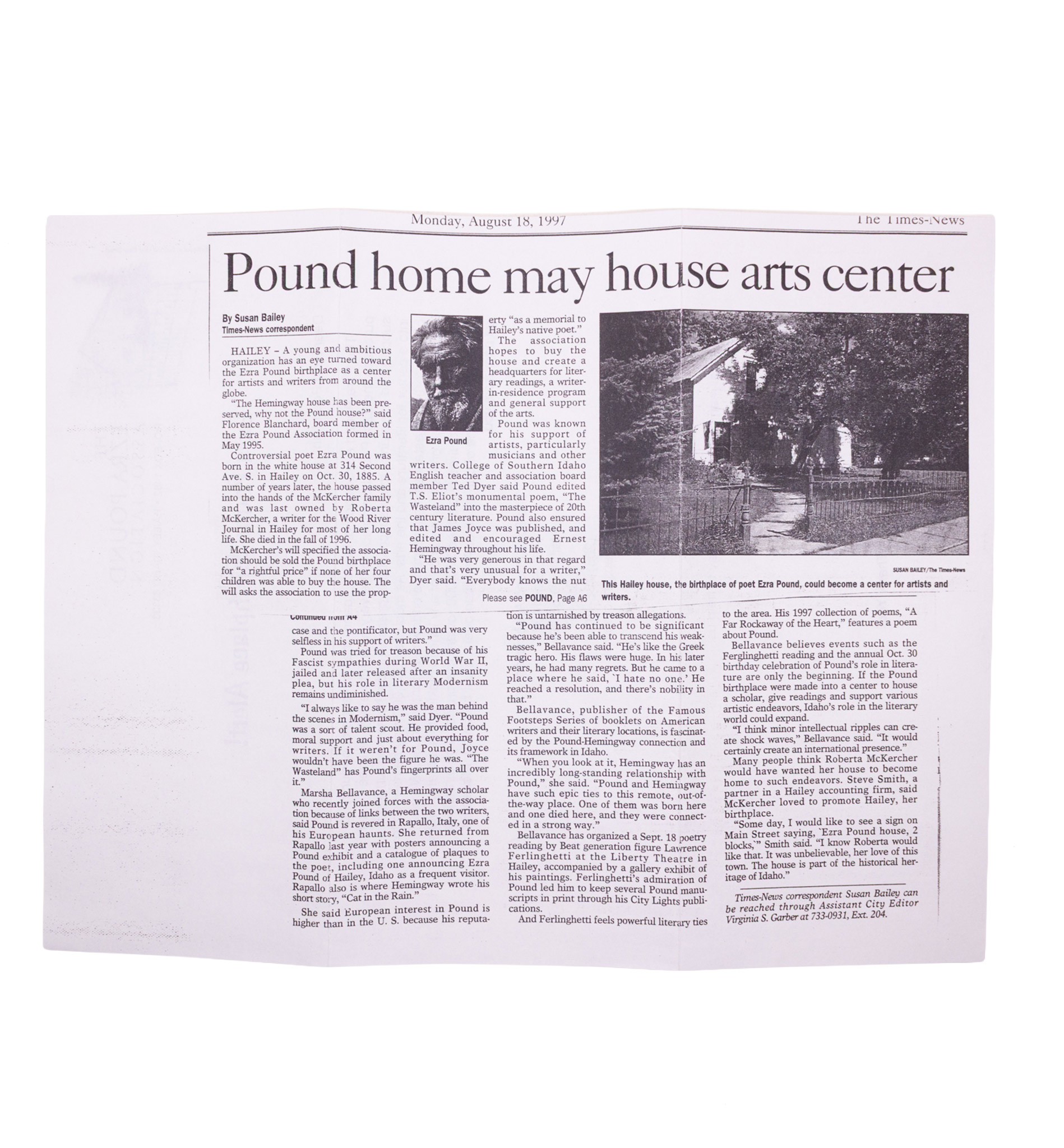
An announcement from The Ezra Pound Association requesting for donations for the purchase the place of Ezra Pound’s birth, 314 Second Avenue South (or 314 Second and Pine Street), Hailey, Idaho, where the Pound family resided till 1887. In Indiscretions (1923) Pound wrote that the Hailey experience “enriched his parents’ table talk for life” and through them Idaho left its mark on him (see this Idaho Heritage Trust article). 314 Second and Pine is registered as The Homer Pound House on the National Register of Historic Places. It was gifted to the Sun Valley Museum of Art in 2005 and is used today by them for local cultural events (see here). With an article on the possible use of the house as an arts center to rear, from The Times-News, August 18, 1997. Together with the original envelope with The Ezra Pound Association’s header printed, addressed in hand to A. David Moody, opened cleanly along the top edge. Fine.

tap to cycle
Albero Della Poesia / The Tree of Poetry
ITINERARI 80: Giancarlo Da Lio, Tiziana Baracchi, etc., in collaboration with Mary de Rachewiltz
Published Dorf Tirol: Brunnenburg, 1997
15.2 x 10.4 cm. Heavy white paper printed in green.
Part of Ephemera
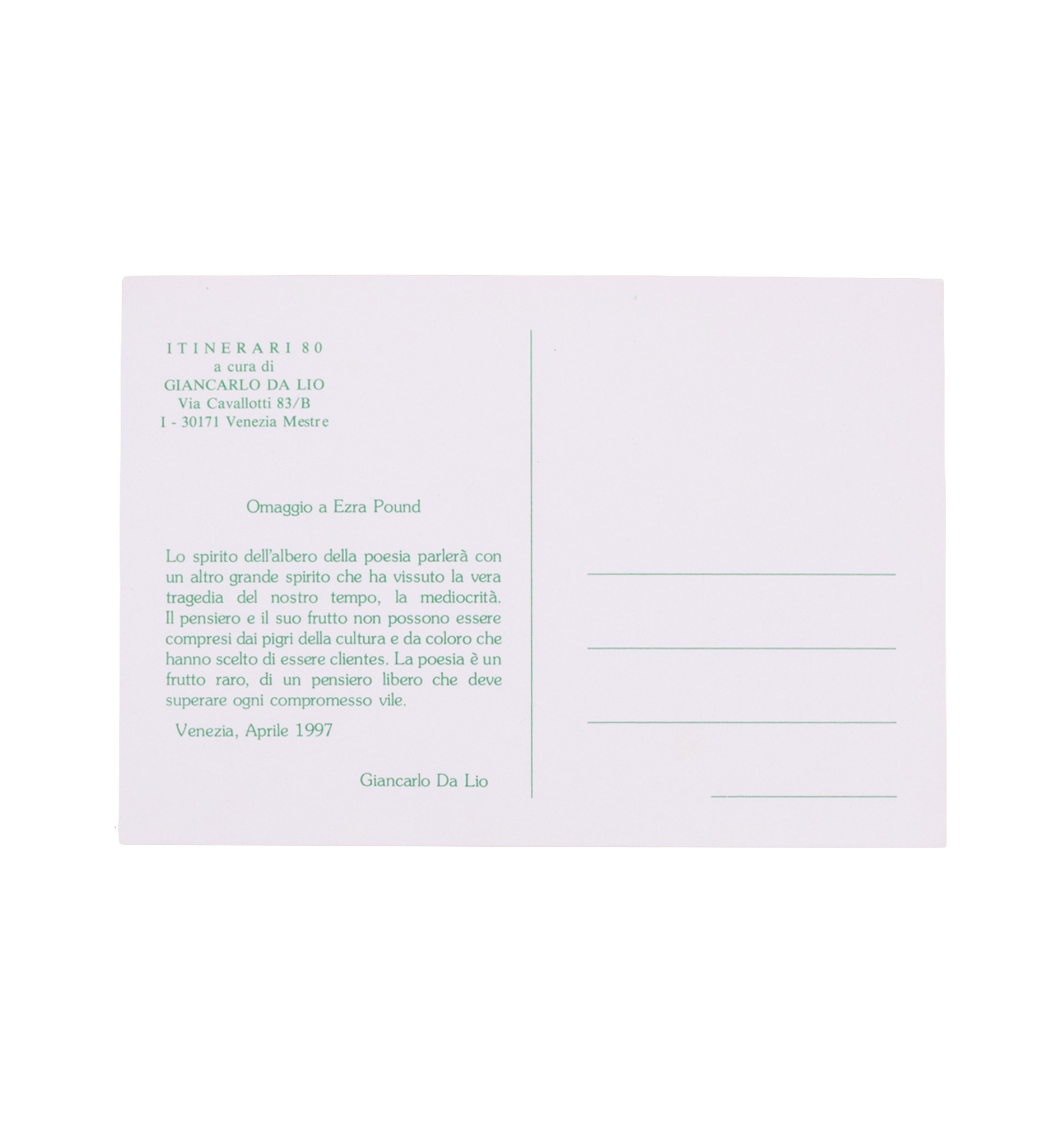
Namely a maple in the garden of Via Cavallotti 83/B, Venezia Mestre, on which on the 25 April 1989 a number of Venetian and local poets hung poems; after which the address received thousands of works to be hung, often just addressed to L’Albero della Poesia. The Tree assumed a number of locations, a number of trees over the next twenty years, in 1997 shortly before the 17th EPIC, held at Brunnenburg, becoming the maple standing tall in the courtyard of Brunneburg, from which Pound used to tap syrup. The artists featured here were all members of the Hyperspatialist Movement (Iperspazialismo), who signed their Hyperspatialist Manifesto in the previous year (1996). Both Iperspazialismo and L’Albero della Poesia were (or became) Mail-Art movements (whose International Union still exists today). An apt, then, postcard from the 1997 residency of The Tree at Brunnenburg, in fine condition with one corner so lightly bumped.
tap to cycle
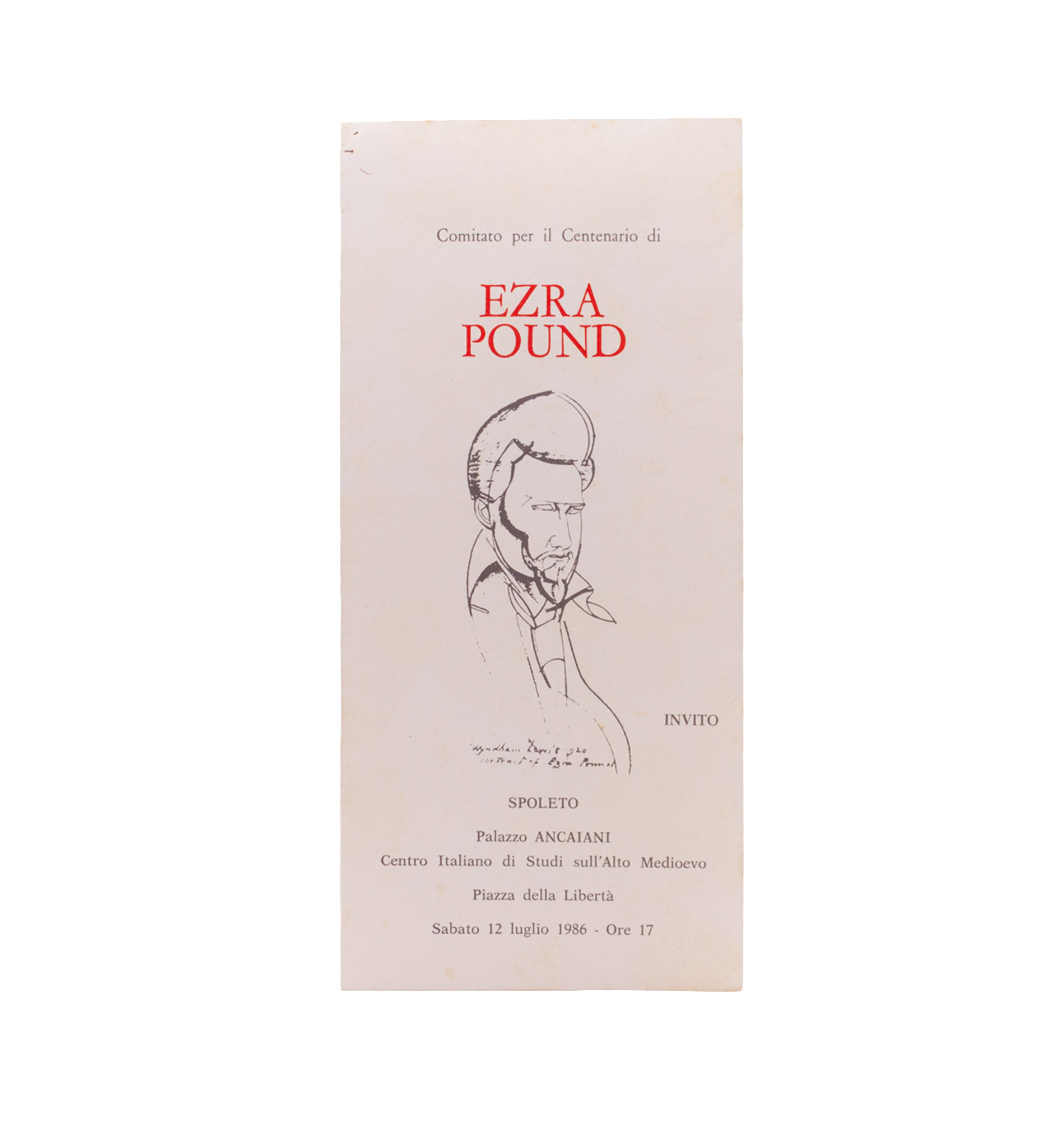
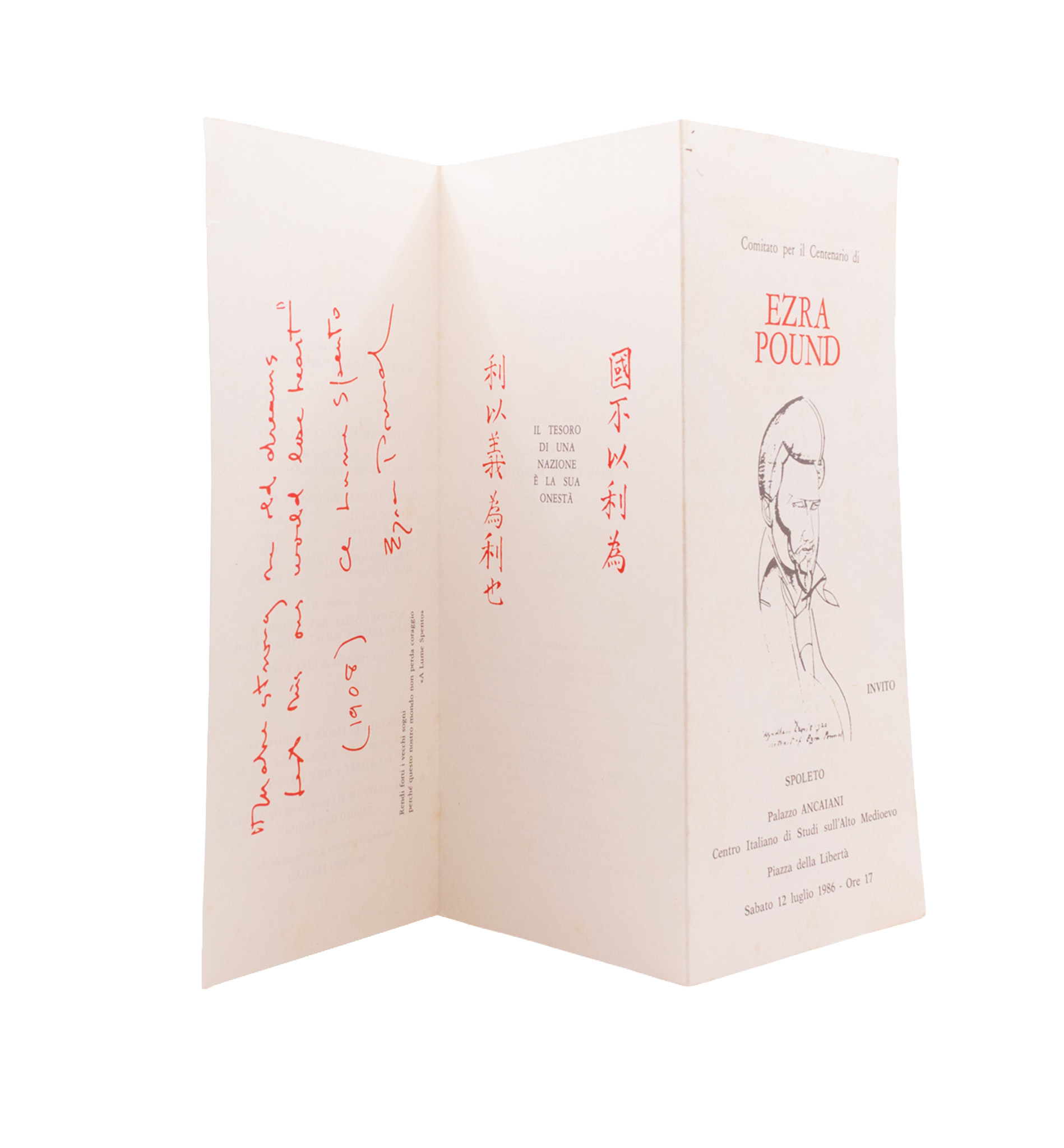
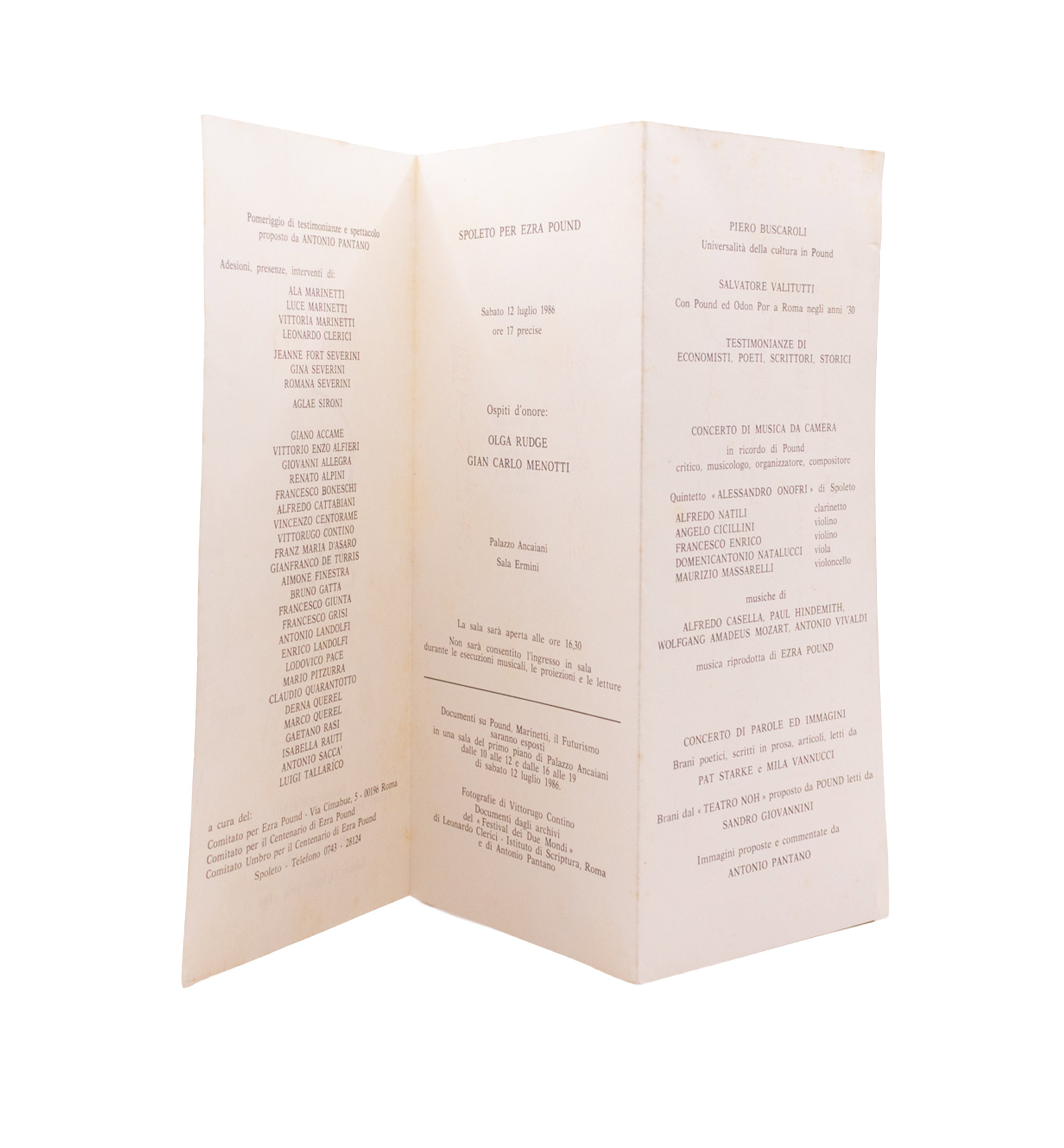
Giornata per Ezra Pound, Invito
Comitato per il Centenario di Ezra Pound; Antonio Pantano
Published Rome: Comitato per Ezra Pound, 1986
29.6 x 21.5 cm. Single heavy white paper leaf, printed in red and black; leporello.
Part of Ephemera
An invite to a Pound conference held on a Saturday, 12 July 1986 in the Palazzo Ancaiani, Spoleto, organised by three bodies, the Comitato per Ezra Pound, the Comitato per il Centenario di Ezra Pound, and the Comitato Umbro per il Centenario di Ezra Pound. The conference featured an afternoon of talks, as well as concerts and the exhibition of Poundian material, and a seminary with Olga Rudge as guest. Near fine; a little age mainly exhibiting light foxing to the outer pages.


tap to cycle
Celebrazioni Poundiane
Luca Gallesi, Dario Gaito
Published Vercelli: Associazione Culturale “Il Testimone”, 2005
29.9 x 21 cm. Single printed paper leaf; leporello.
Part of Ephemera
An pamphlet to accompany the Celebrazioni Poundiane held at Vercelli, 18-26 November 2005, under the title, “Ezra Pound, l’artista sociale,” organised by the Associazione culturale “Il Testimone” in collaboration with the Città di Vercelli, the Provincia di Vercelli and the Università degli studi di Vercelli on the occasion of Pound’s 120th birthday. Pound’s links with the city mainly resting upon his friendship with Vercellese painter Edgardo Rossaro, who alongside Pound signed the manifesto, “Scrittori del Tigullio” in 1944 (see Gallup C1668), reprinted by Pesce d’Oro in La repubblica italiana delle cosche: la decapitazione dello stato (1984), and Pound’s contribution of two economic articles to “la Provincia Lavoratrice,” a paper of the Federazione repubblicana di Vercelli (Gallup C1663 and C1667). The celebration commenced on the evening of Friday 18, hosted talks from a number of scholars held on one day, Saturday 19 November, being concluded by Mary de Rachewiltz, there followed by a “Rappresentazione Teatrale di Vertex Teatro” in the Teatro Civio, while the exhibiton of Poundian material, bibliographic and artistic, continued till 26 November. In fine condition.

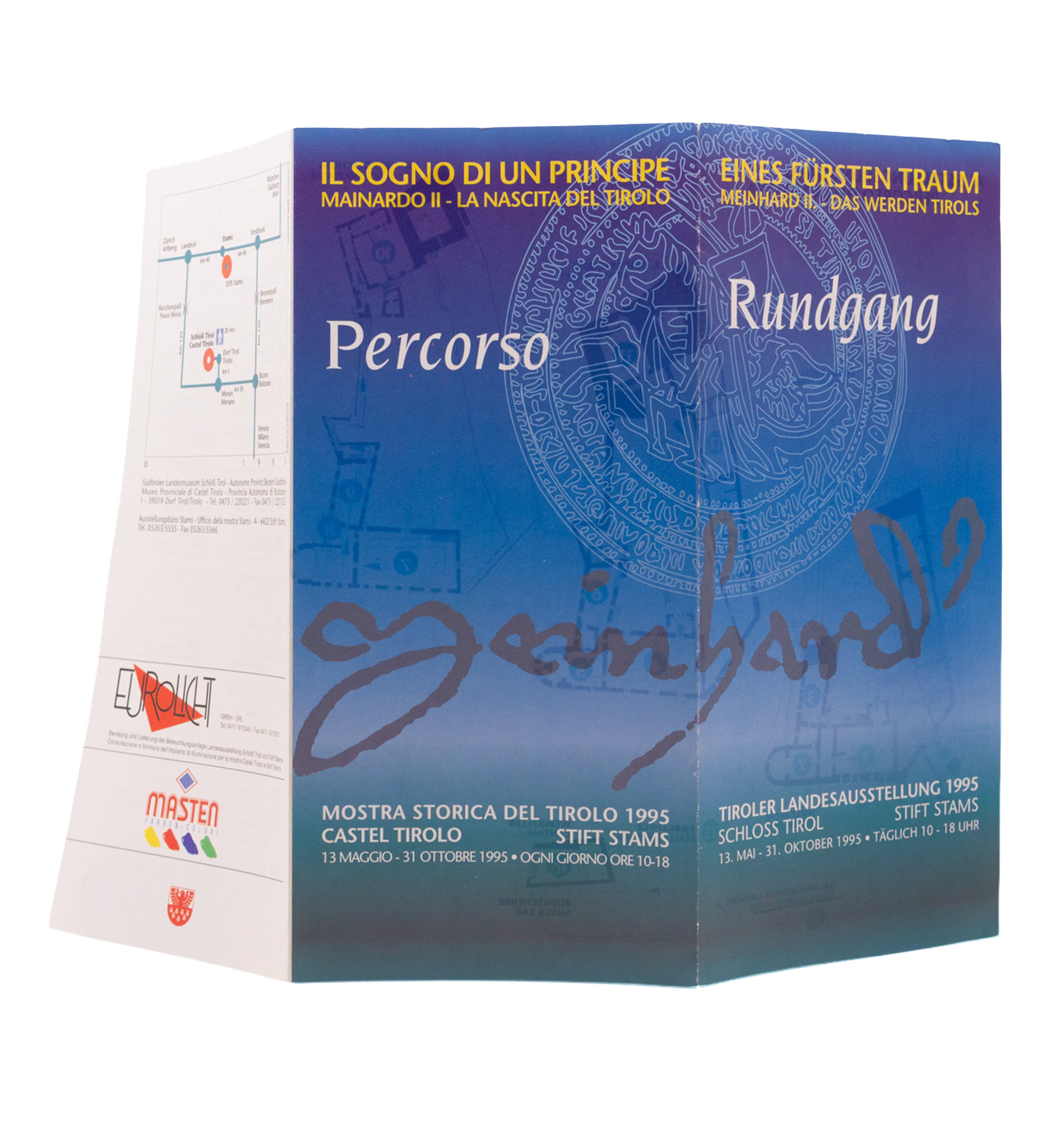
tap to cycle
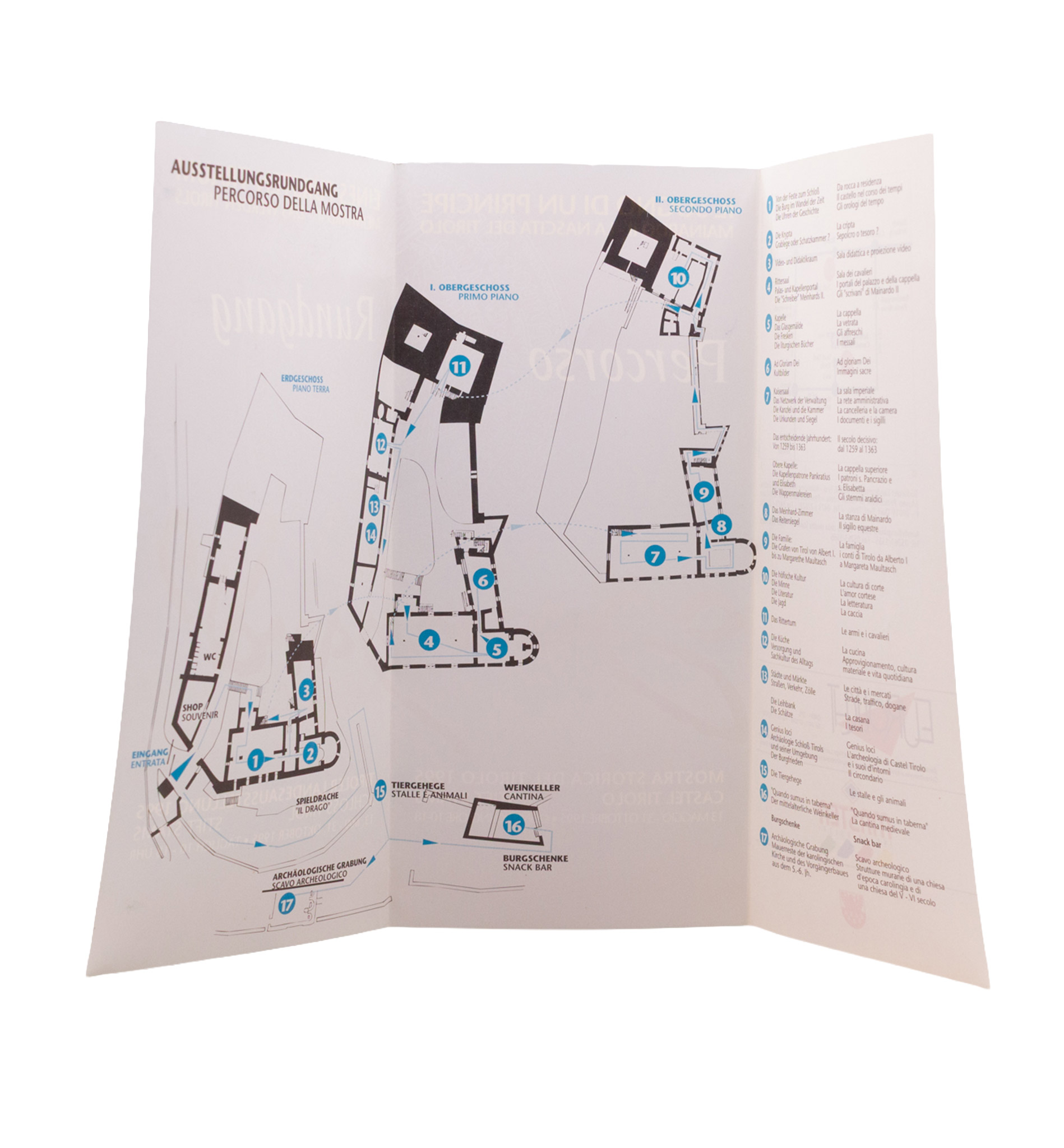
Eines Fürsten Traum Meinhard II. - Das Werden Tirols
Südtiroler Landesmuseum Schloß Tirol
Published Dorf Tirol: Schloss Tirol, 1995
29.7 x 21 cm. Single printed leaf; leporello.
Part of Ephemera
Guide leaflet to accompany the exhibition, Prince Meinhard II.’s Dream - That Will Be Tyrol’s, printed in both Italian and German, held at Schloss Tirol (the castle above Brunnenburg) 13 May - 31 October 1995. Meinhard II received the County of Tirol in 1271 when dividing possession of lands with his brother Albert (whose line was lost by 1500), and successfully ruled and promoted Tyrol, together with his wife Elisabeth von Bayern, till his death. With lay-in, reminding visitors to not forget the adventure area! Near fine, a very little wear at folds and edges.
tap to cycle
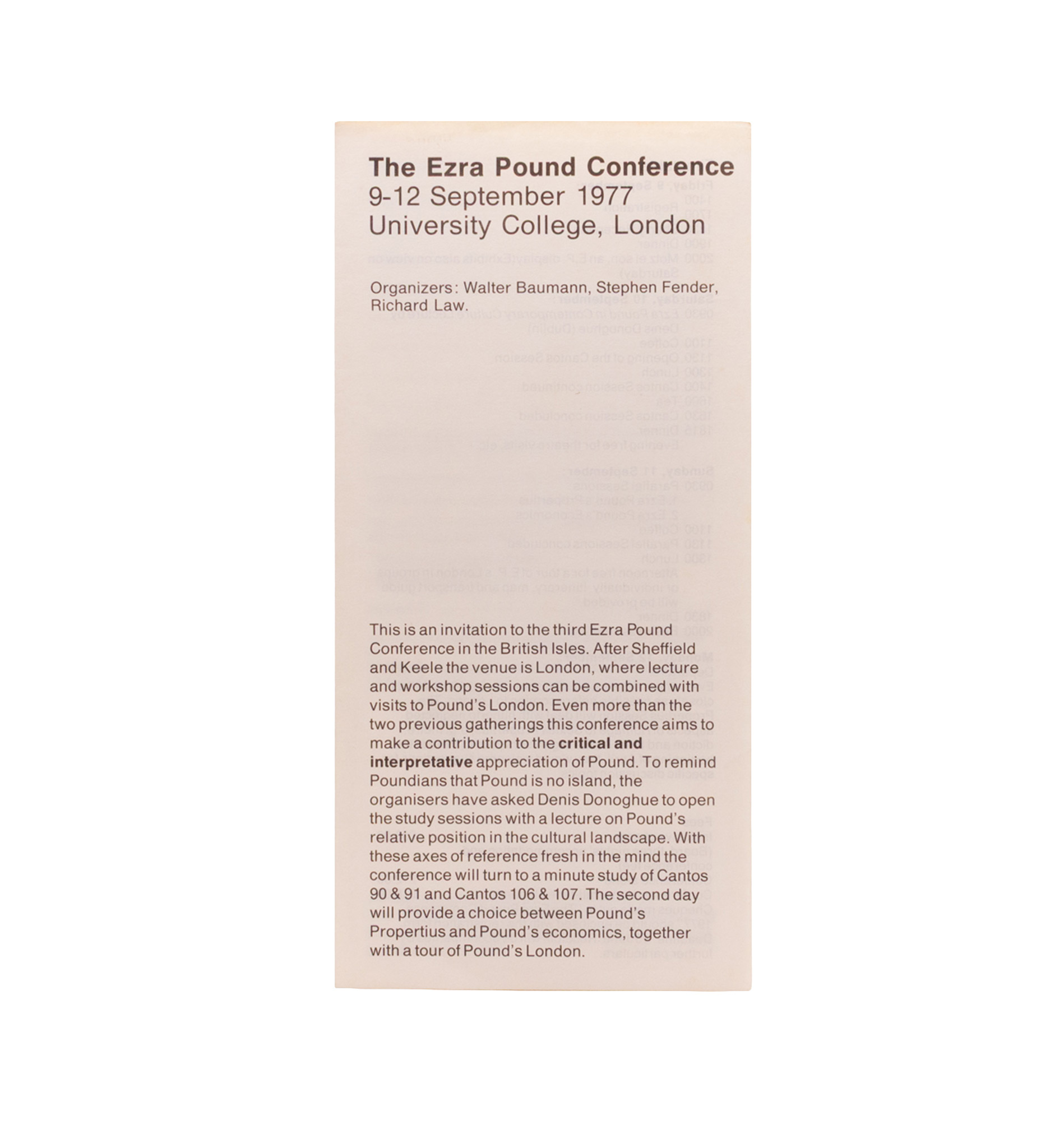
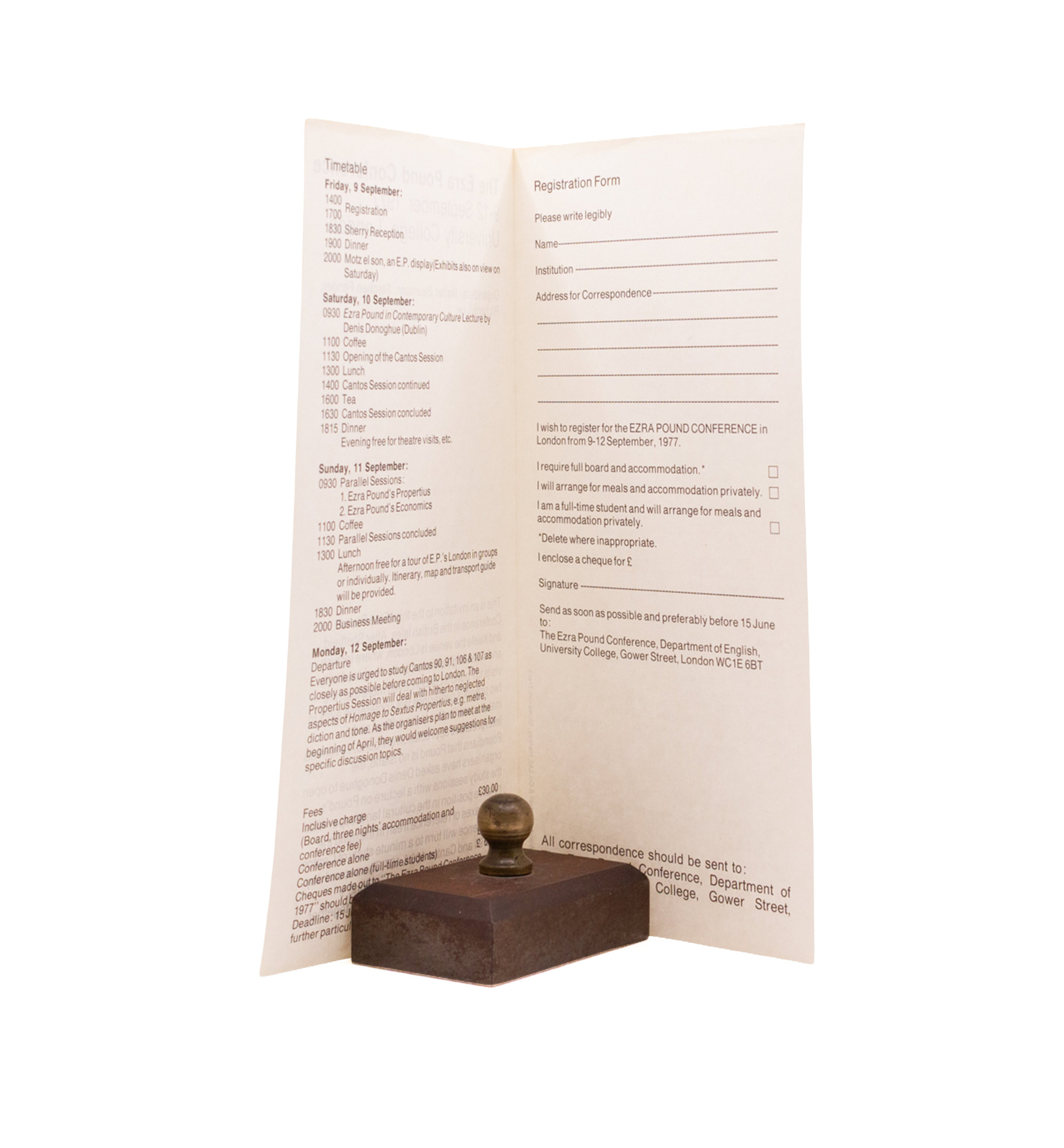
The Ezra Pound Conference, September 1977
Walter Baumann, Stephen Fender, Richard Law
Published London: The Ezra Pound Conference, 1977
21 x 20.1 cm. Single white paper leaf printed in black, folded once.
Part of Ephemera
An invitation to the third British Ezra Pound Conference, to be held 9-12 September 1977 at University College, London. The weekend programme saw a “minute study of Cantos 90 & 91 and Cantos 106 & 107,” together with sessions on Pound’s Propertius and Pound’s economics, an exhibition entitiled “Motz el son” and a tour of Pound’s London. Lightly aged, but mostly fine.
tap to cycle
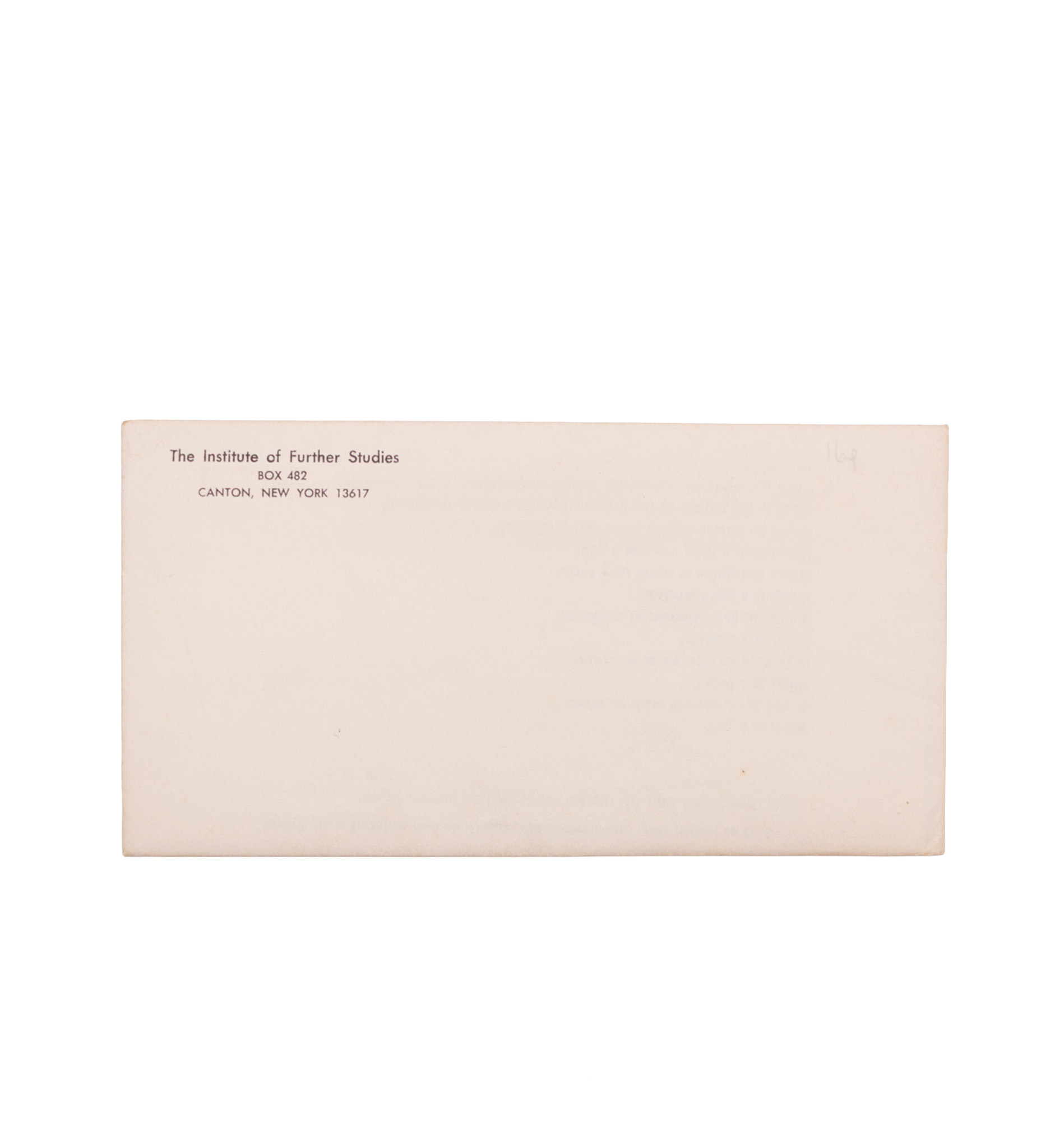
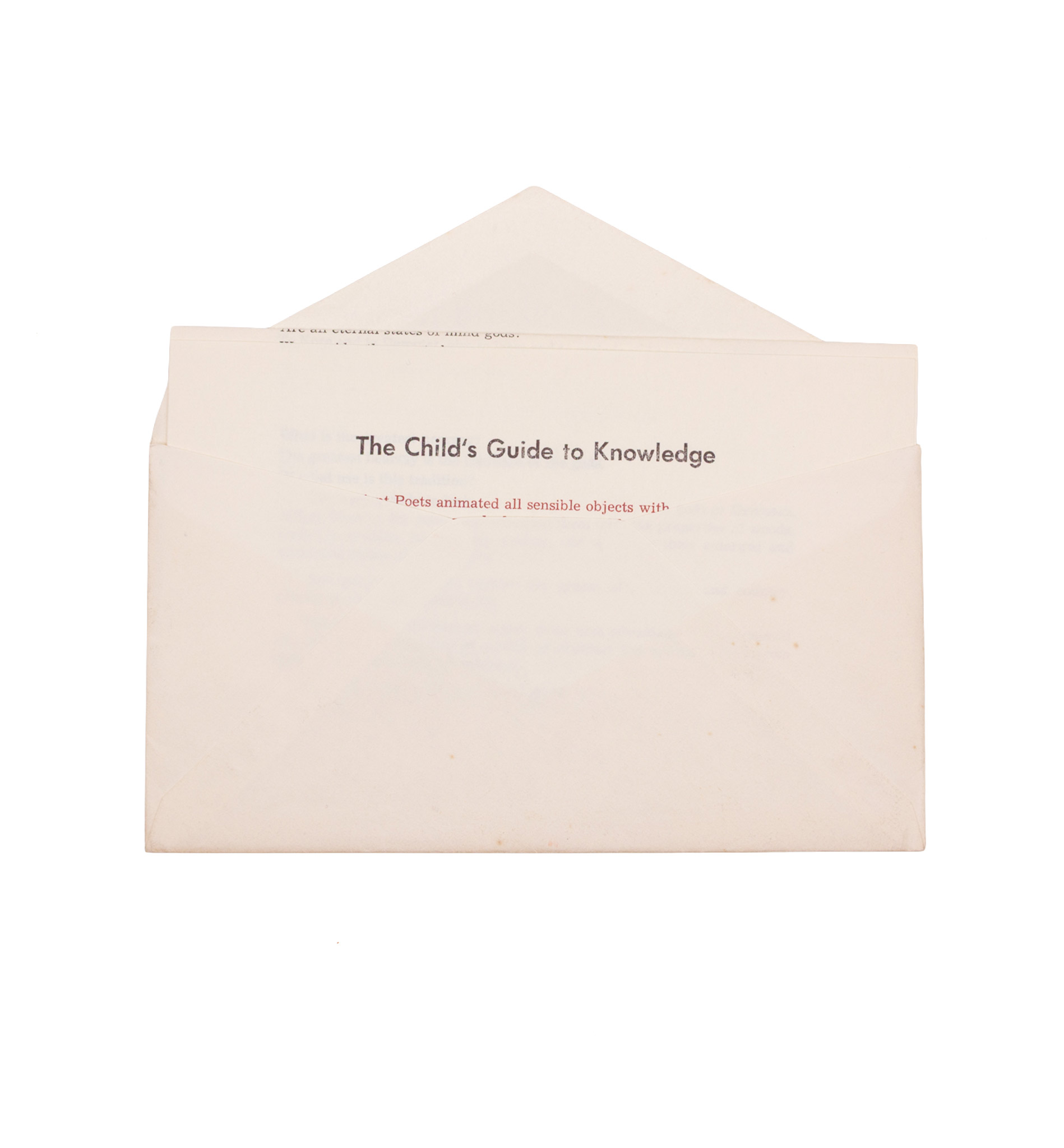
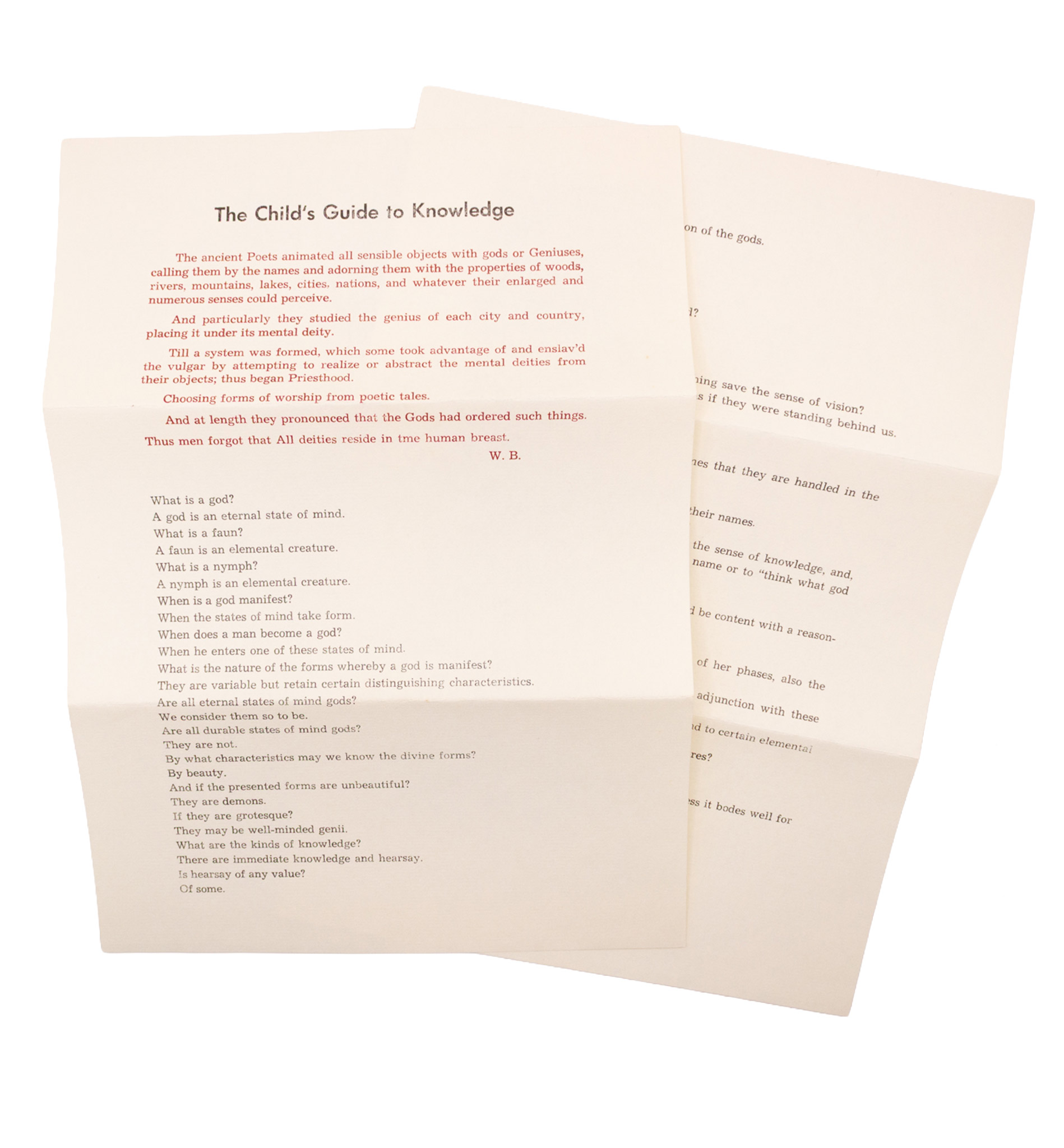
The Child’s Guide to Knowledge
Ezra Pound
William Blake, introduction
Published Canton, N. Y.: The Institute of Further Studies, [1969]
2 leaves, 26.2 x 18.6 cm, printed in red and black, folded; with envelope printed in black.
Part of Ephemera
An ephemeral reprint of Pound’s “Religio, or The Child’s Guide to Knowledge,” originally appearing in the New Freewoman I. 9, 15 Oct. 1913 (Gallup C106a) and later in Pavannes and Divisions (1918, Gallup A15). Here preceded by an extract from The Marriage of Heaven and Hell (1790) by William Blake, signed W. B. A rare item with only three recorded institutional holdings. Abides by Gallup E2zf, if Gallup hadn’t seen the envelope. Fine, the envelope with countable spots to the back.
tap to cycle
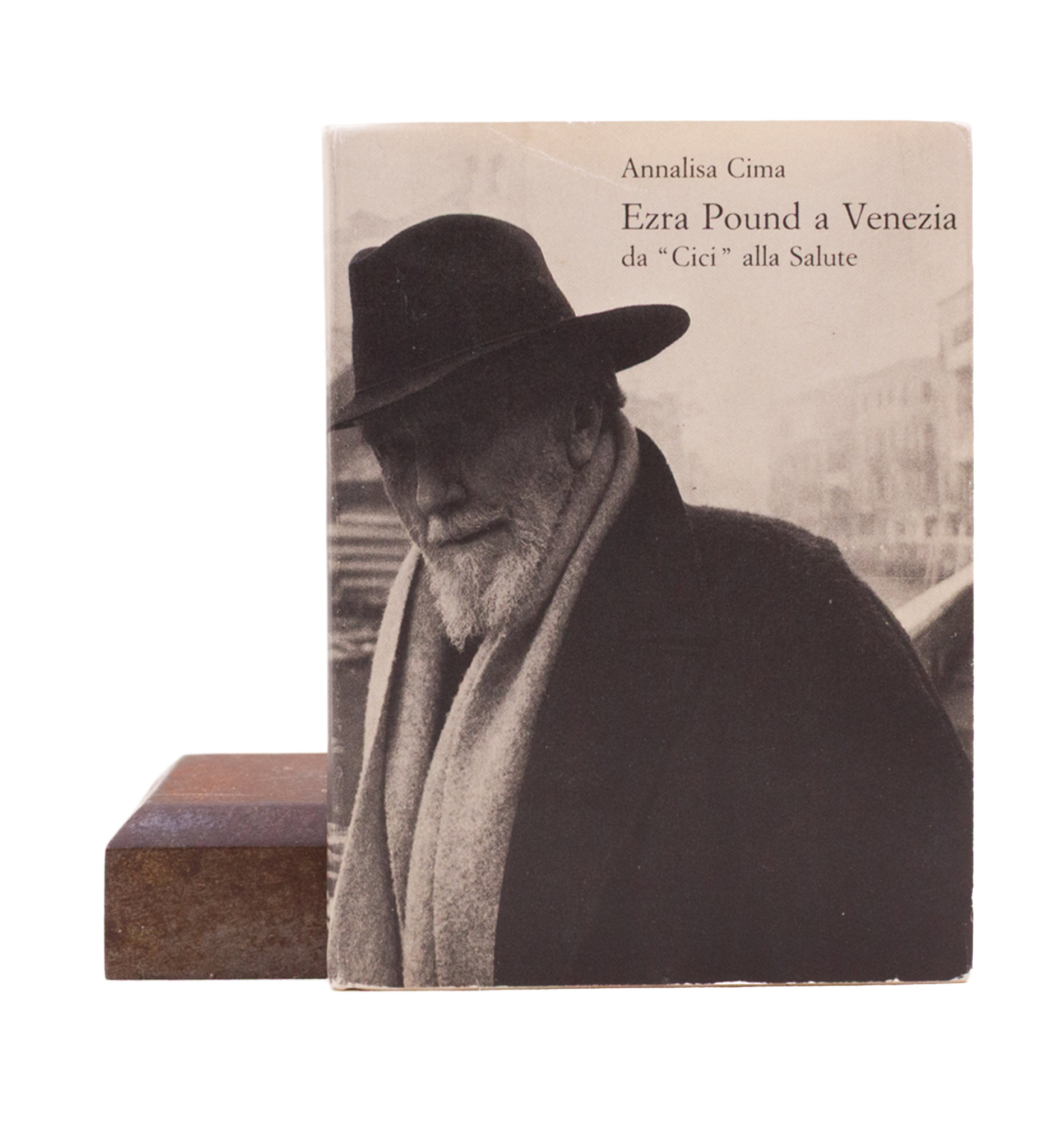
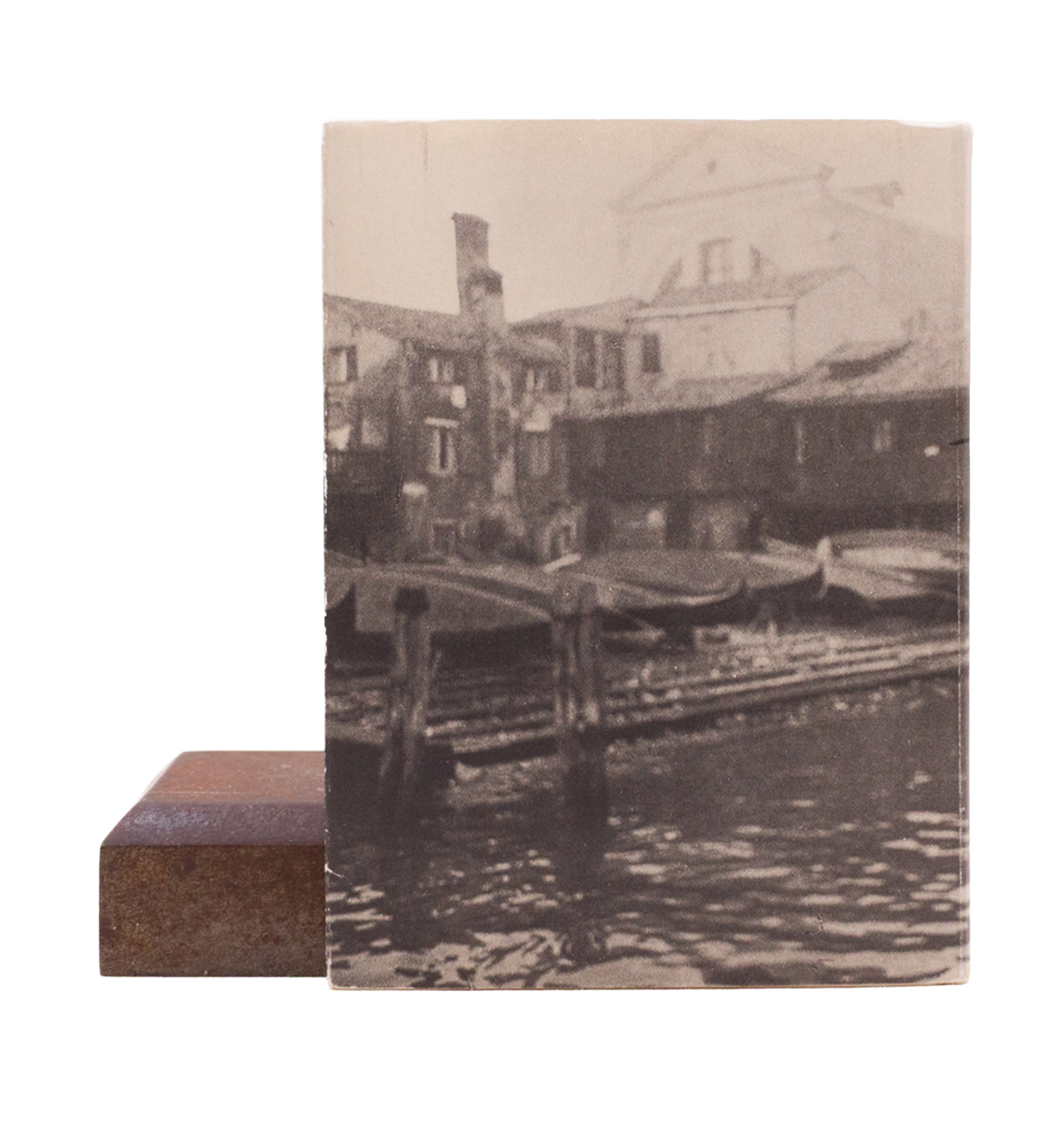
Ezra Pound a Venezia
Annalisa Cima
Walter Mori, photographer
Published Milan: All’Insegna del Pesce d’Oro, 1985
44pp.; 10 x 7.5 cm. Plain white paper wraps. White dust-jacket printed in black with portrait of Pound.
Part of Ephemera
Opening with a poem by Cima (in Italian, on Pound and Venice), then with Pound’s essay I livelli di Venezia (dug up by Mary de Rachewiltz), and 10 photographs by Walter Mori of Pound in Venice, some across double-page spreads, one of Pound reading The Scrolls and Christian Origins. A fine copy save a small, light crease to the front cover. One of 3000, and No. 13 in occhio magico (Serie fotografica). Too late for Gallup.

tap to cycle
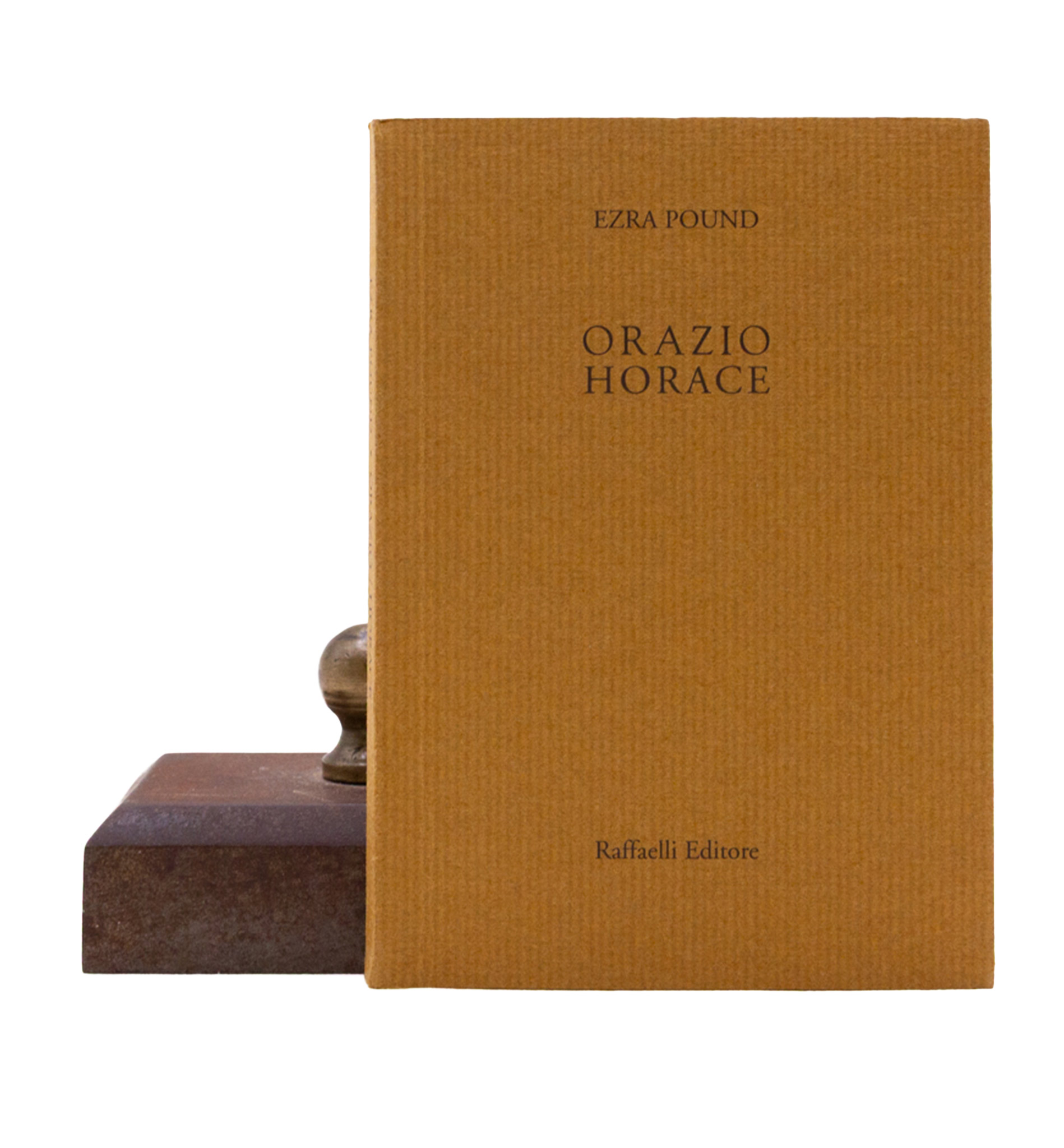
Orazio Horace
Ezra Pound
Caterina Ricciardi, a cura di
Published Rimini: Raffaelli Editore, 2009
64pp.; 10.7 x 7.7 cm. Brown laid-paper wrappers printed in black.
Part of Ephemera
“Against the granite acridity of Catullus’ passion, against Ovid’s magic, and Ovid’s sense of mystery, Horace has but the clubman’s poise and no stronger emotion than might move one toward a particularly luscious oyster. His jibes at old women are like petty personal fusses lacking the charm of Palladas’ impartial pessimism or the artistic aloofness, the Epicurean and really godlike impersonality of Catullus’ poem containing the phrase, ‘habet dentes’, which is the first Wyndham Lewis drawing, perhaps the only Wyndham Lewis drawing, in literature.”
An Italian translation of Pound’s “Horace,” originally published in The Criterion, January 1930, printed vis-à-vis the original English. The English was also reprinted in Arion, Summer/Autumn 1970 (see Gallup C756), and was translated into French by Michel Beaujour for Les Cahiers de L’Herne (1966, Gallup D23r) and into Japanese by Ryozo Iwasaki (Gallup D173a). First Italian edition thus. A fine copy, save for light creasing at the gutters as the covers open, as expected. With a frontispiece portrait of Pound (also included in reflection to rear), possibly by Arnold Genthe.

tap to cycle
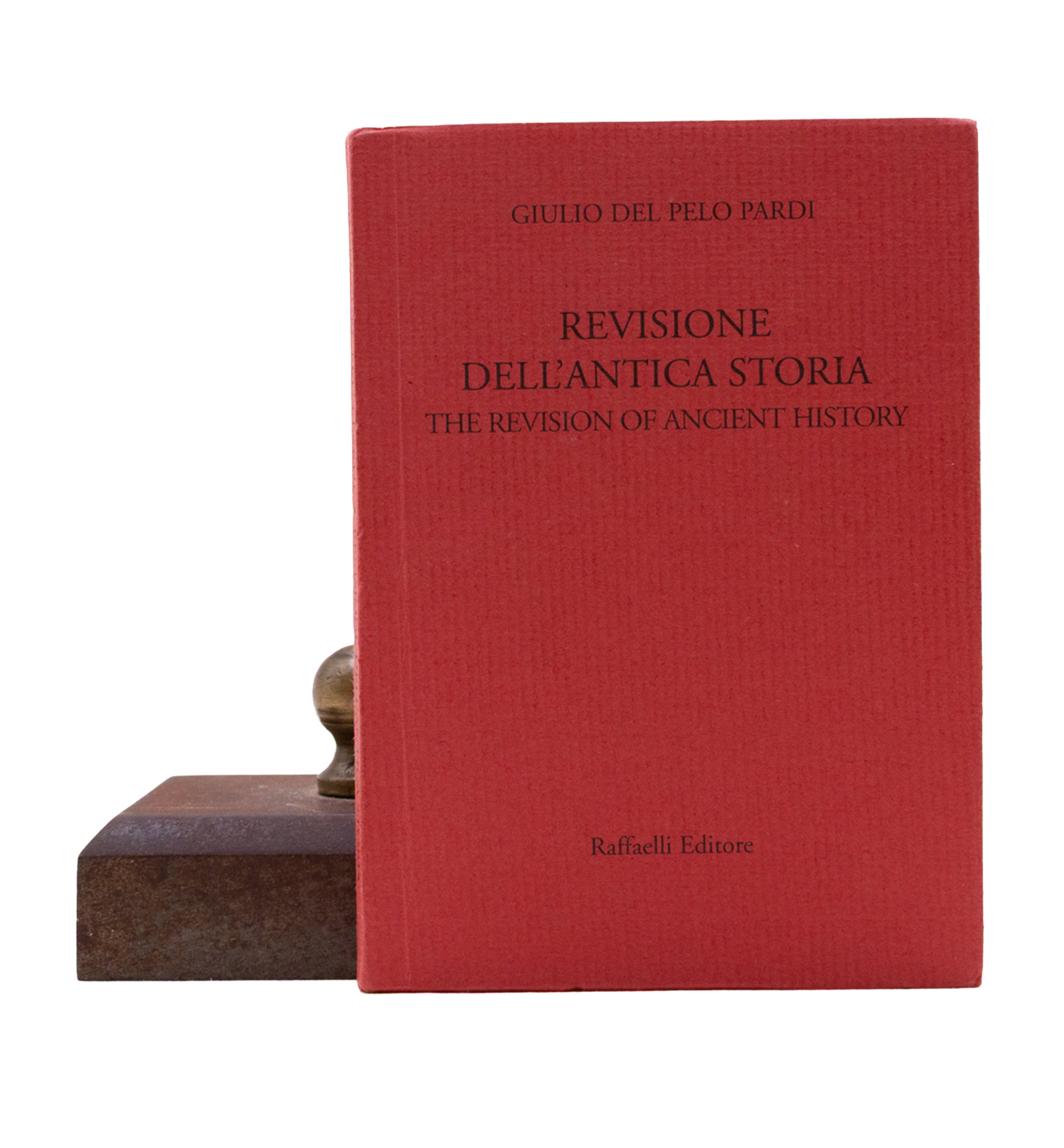
Revisione dell’Antica Storia (The Revision of Ancient History)
Giulio Del Pelo Pardi
Caterina Ricciardi, a cura di
Flavia Sabina Molea, translator
Published Rimini: Raffaelli Editore, 2009
74pp.; 10.6 x 7.7 cm. Red laid-paper wrappers printed in black.
Part of Ephemera
“… but among the fields to be especially drained there is Latin literature that should be revived, and ploughed once again by a Latinist such as Pelo Pardi. (Writers from the little salons do not know Pelo Pardi? What a pity.) Also America went into putrefaction when the presidents were no more able to draw the plough as, on the contrary, J. Q. Adams knew how to do.”
— Ezra Pound, “I classici dell’avvenire,” Meridiano di Roma, September 1940.
An English translation of Pound’s “Revisione dell’antica storia” by Flavia Sabina Molea, originally published in Il Meridiano di Roma, 4 October 1942, not included in Gallup (though would reside between C1640 and C1641) nor in the Contribution to Periodicals. Pelo Pardi, a contemporary of Leo Frobenius, was an agriculturalist and inventor (of a “universal plow” among other things) who in similar vein to Frobenius, “was driven to his inventions by his classical studies.” In the 1950’s Del Pelo Pardi and his son collaborated with Pound’s son-in-law, Boris de Rachewiltz on a archaeological survey of the ‘cunicoli’ of the Latium region (cf. Cantos 101 & 116). Further discussion throughout the O. R. Agresti letters. First edition. A fine save the light fold from the front cover from reading. With one jot pencil marginalia from A. David Moody. With numerous illustrations to rear.
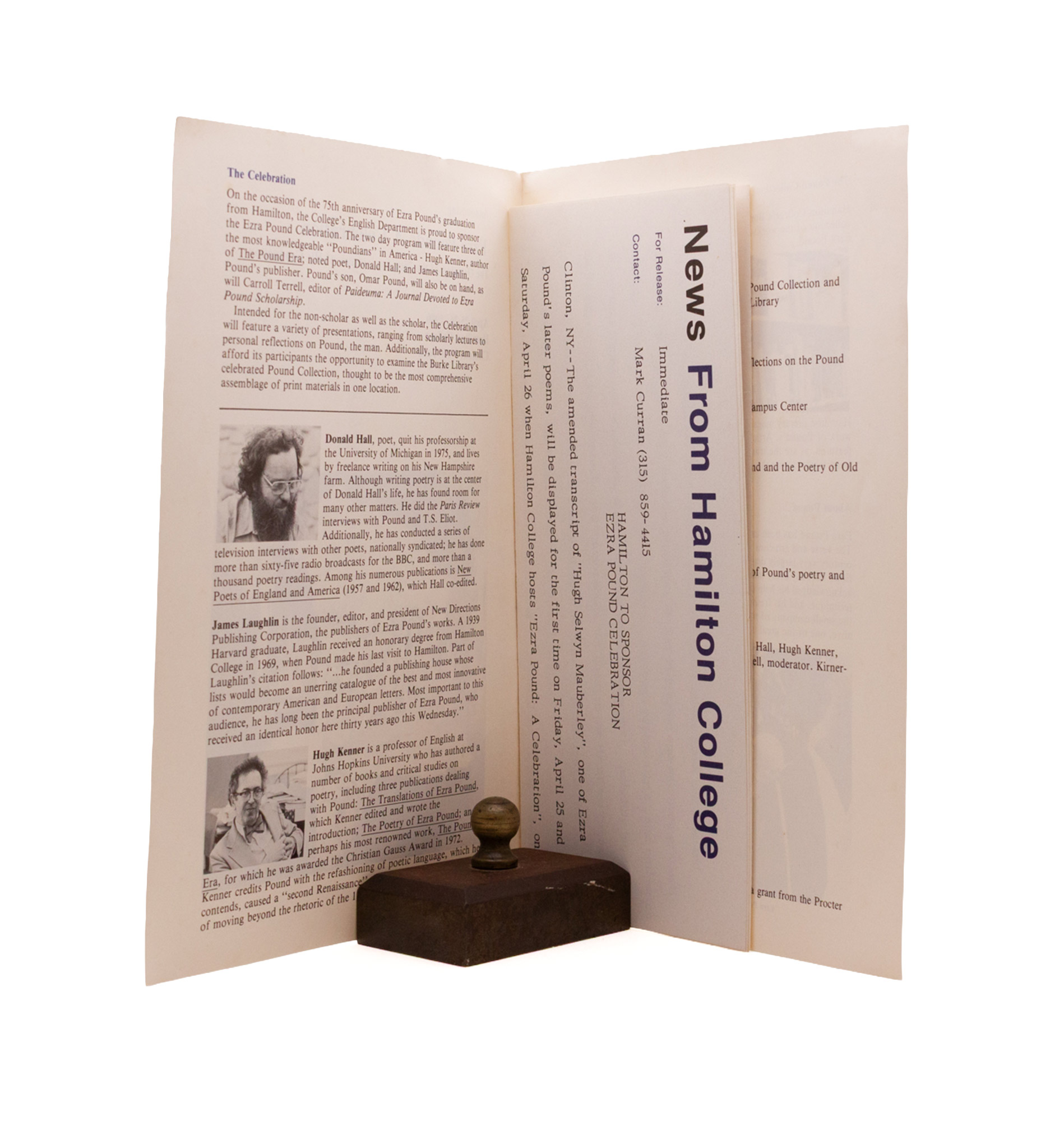
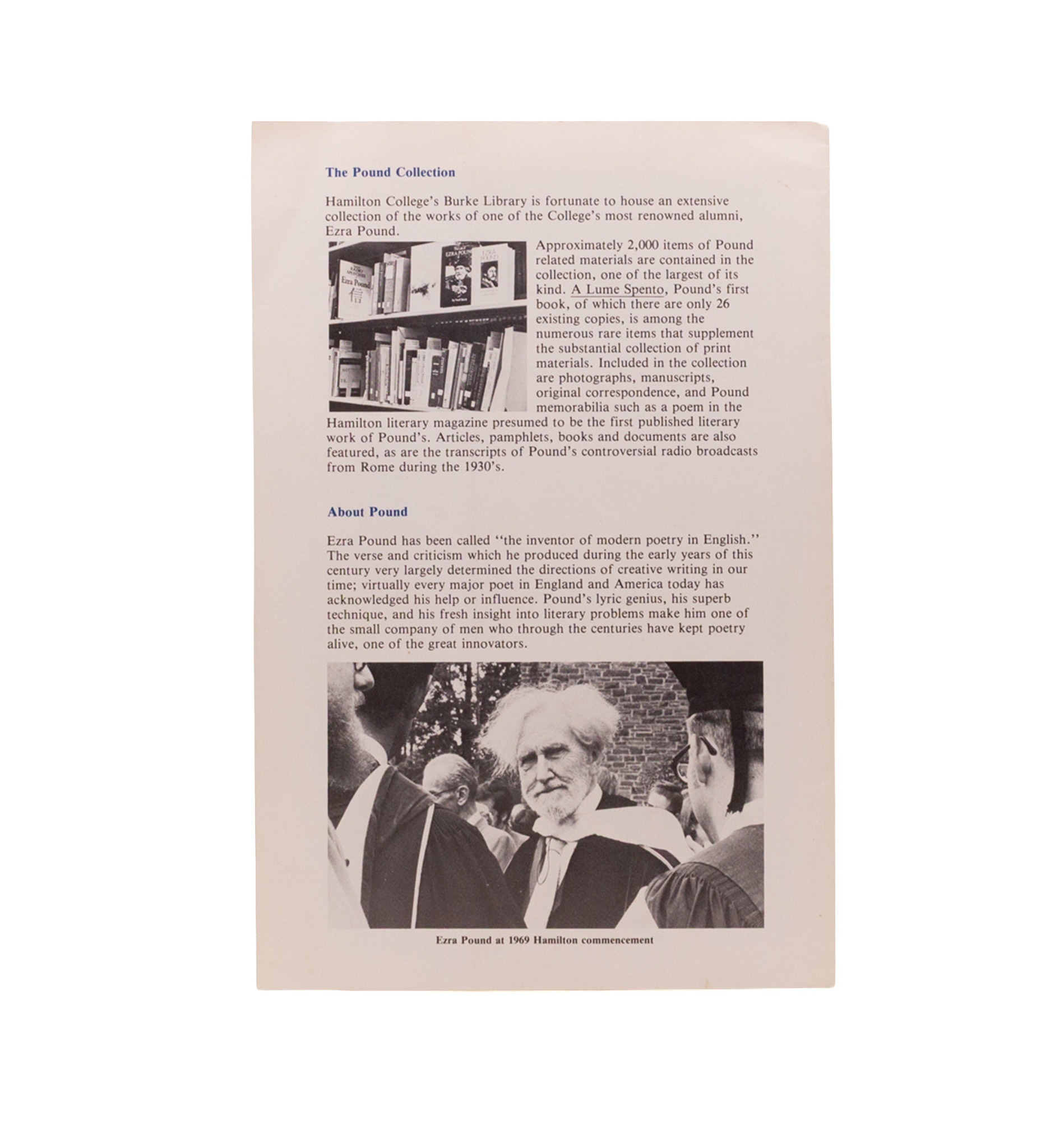
tap to cycle
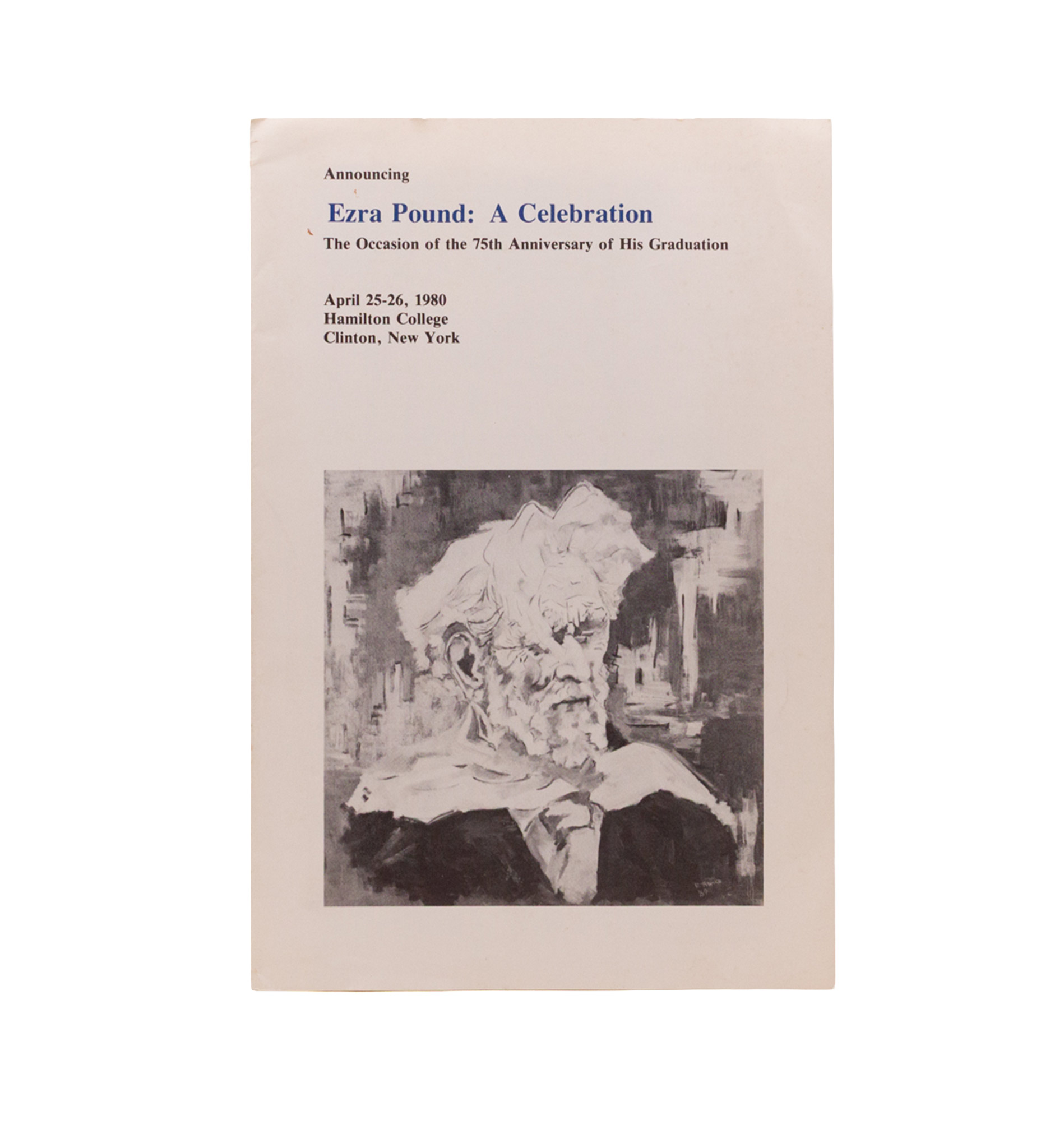
Ezra Pound: A Celebration
Published New York: Hamilton College, 1980
4pp.; 22.9 x 15.3 cm. Single leaf folded once, printed in black and blue. 3 leaves, 28 x 21.5 cm, printed in black and blue, folded and laid-in.
Part of Ephemera
Announcement leaflet for a celebration of EP held 75 years after his graduating from Hamilton College in June 1905, at the age of nineteen, with a Bachelor’s of Philosophy. “The Occasion of the 75th Anniversary of His Graduation,” April 25-26, 1980. The celebration served as a chance for Hamilton to exhibit their extensive collection of Poundian material, which began under Walter Pilkington in the 1950’s, including a copy of A Lume Spento (A. Antonini, 1908), drawings of Pound by Wyndham Lewis, and a corrected typescript of Hugh Selwyn Mauberley (these latter two having been donated by Omar Pound, also a graduate of Hamilton). With a laid-in communication dated March 24, 1980. Some age and creasing.

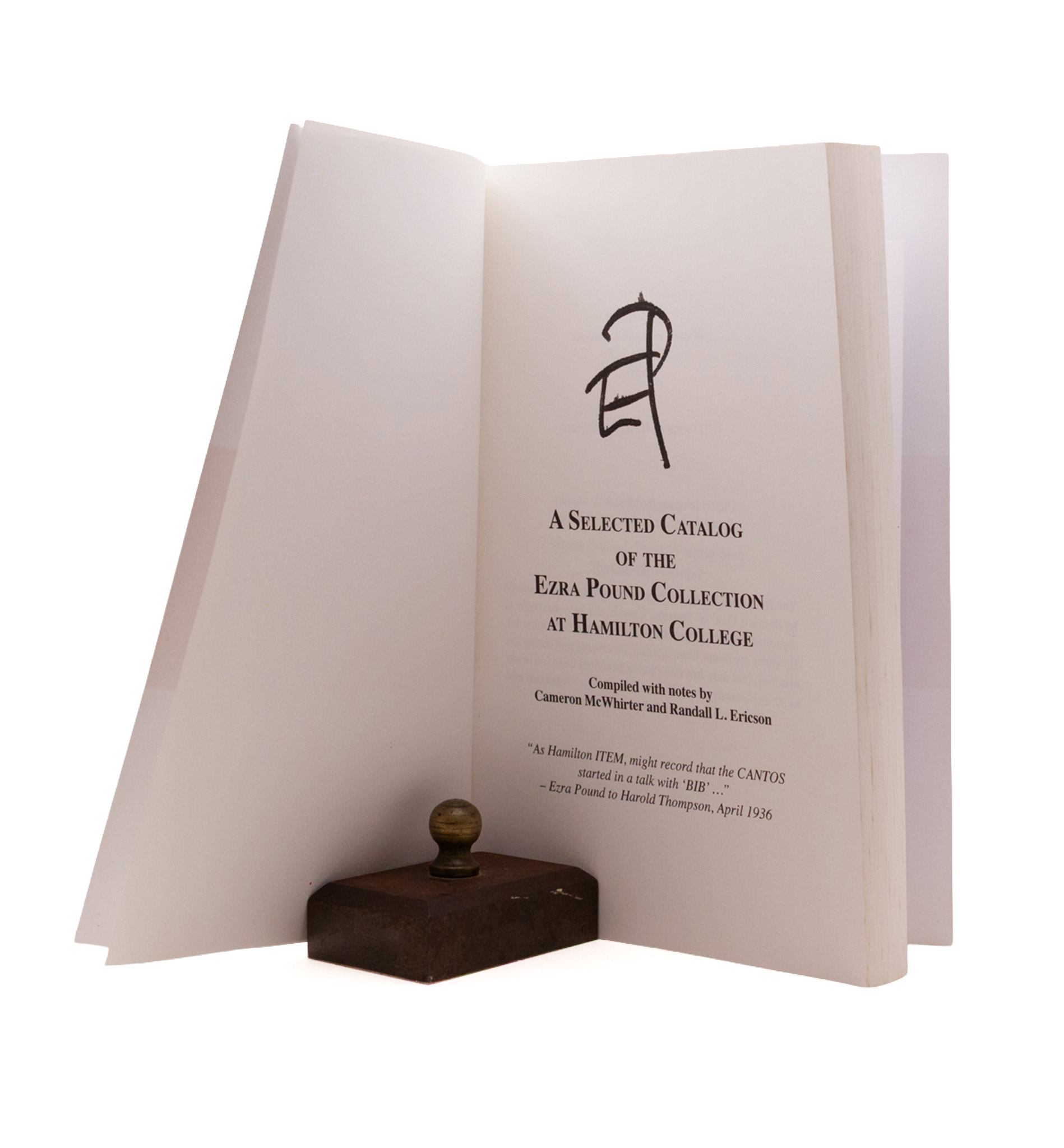

tap to cycle
Ezra Pound: A Selected Catalog from the Ezra Pound Collection, Hamilton College
Cameron McWhirter and Randall L. Ericson, editors
Published Clinton, N.Y.: Hamilton College Library, 2005
299pp.; 21.7 x 13.9 cm. Stiff white paper wrappers printed in black and red.
Part of Ephemera
A selected catalogue of the Pound collection at Hamilton, Pound’s alma mater. Manuscripts, correspondence, artworks, books owned by Pound, Poundian publications… many with illustrations. Showcase of an unbelievable collection; highlighting any single item would instantly require a slew of others. Many not in Gallup. “Selected” for convenience... e.g. 1200 items from Dorothy Pound unlisted. First edition, first printing, one of 500 copies. Front cover lifting, light fox on the fore-edge.
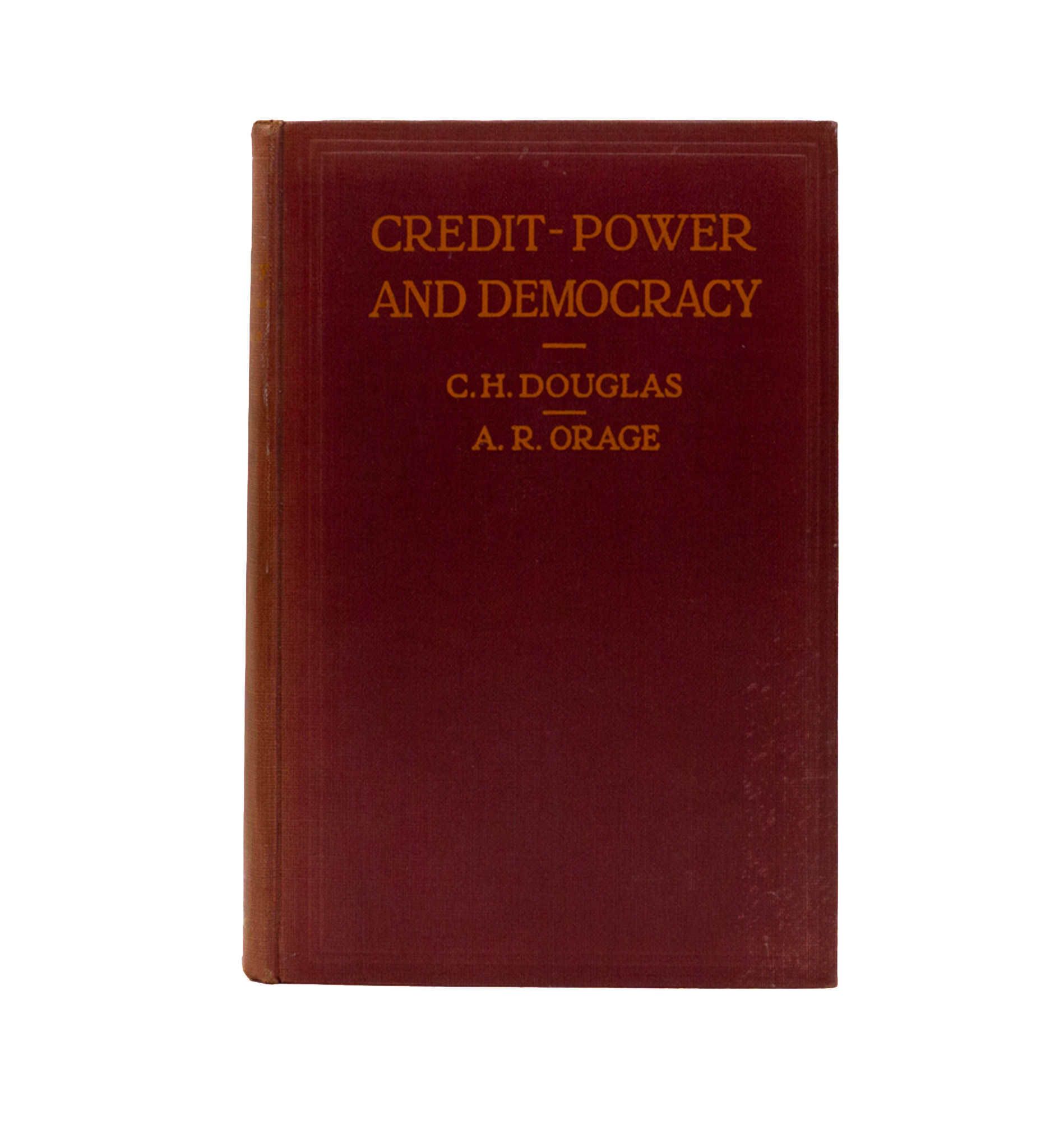

tap to cycle
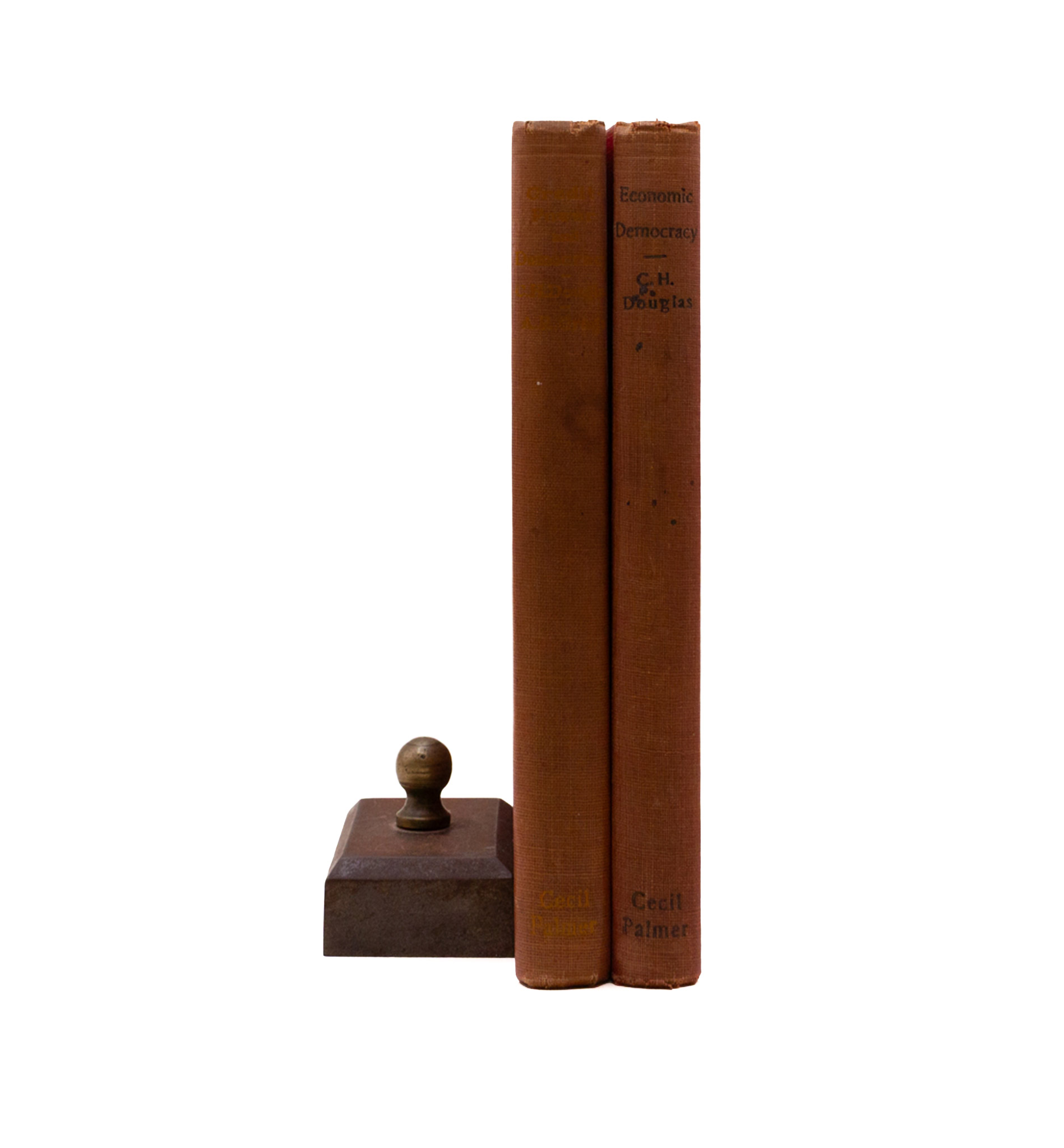
Credit-Power and Democracy & Economic Democracy
C. H. Douglas
Published London: Cecil Palmer, 1920
212pp.; 19.1 x 13.2 cm. Red cloth boards lettered in orange to front and spine.
158pp.; 19.1 x 13.2 cm. Red cloth boards stamped in black to front and spine.
Part of Money, Politics, & America
Two books from the Major C. H. Douglas, economist and pioneer of Social Credit, fostered in A. R. Orage’s New Age magazine, both of which highly influenced Pound’s early economic theories and which he reviewed, promoted, and suggested were translated into French in an article for Les Ecrits Nouveaux titled “Le major C-H Douglas et le situation en Angleterre,” 1921, lated reprinted by Piere Aelberts as Être Citoyen Romain / était un privilége / Être Citoyen Moderne / est un calamité, Gallup A84.
First editions each, both with identical contemporary ink ownership inscriptions. Both near fine, spines sunned and a little aging.
tap to cycle
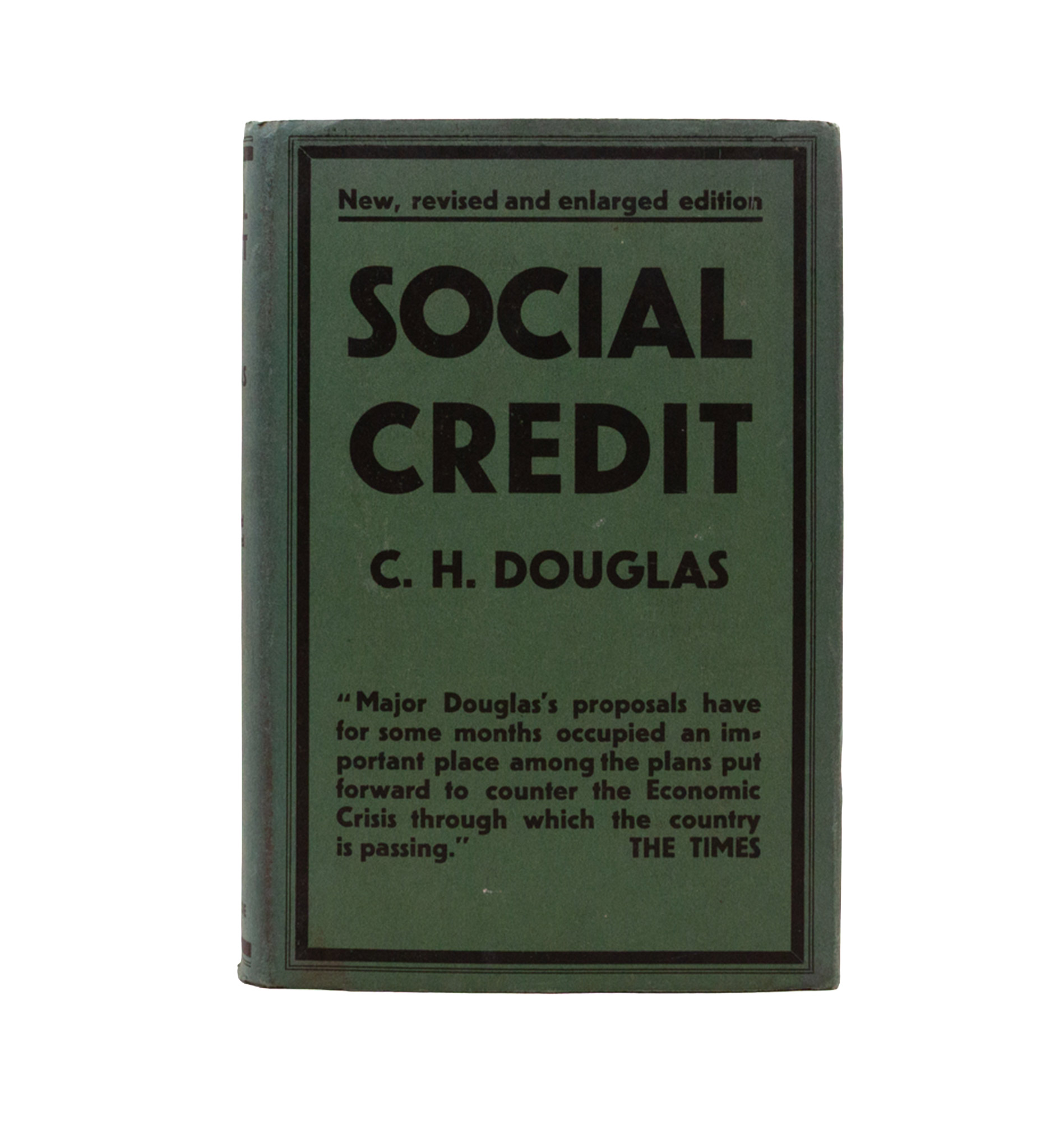
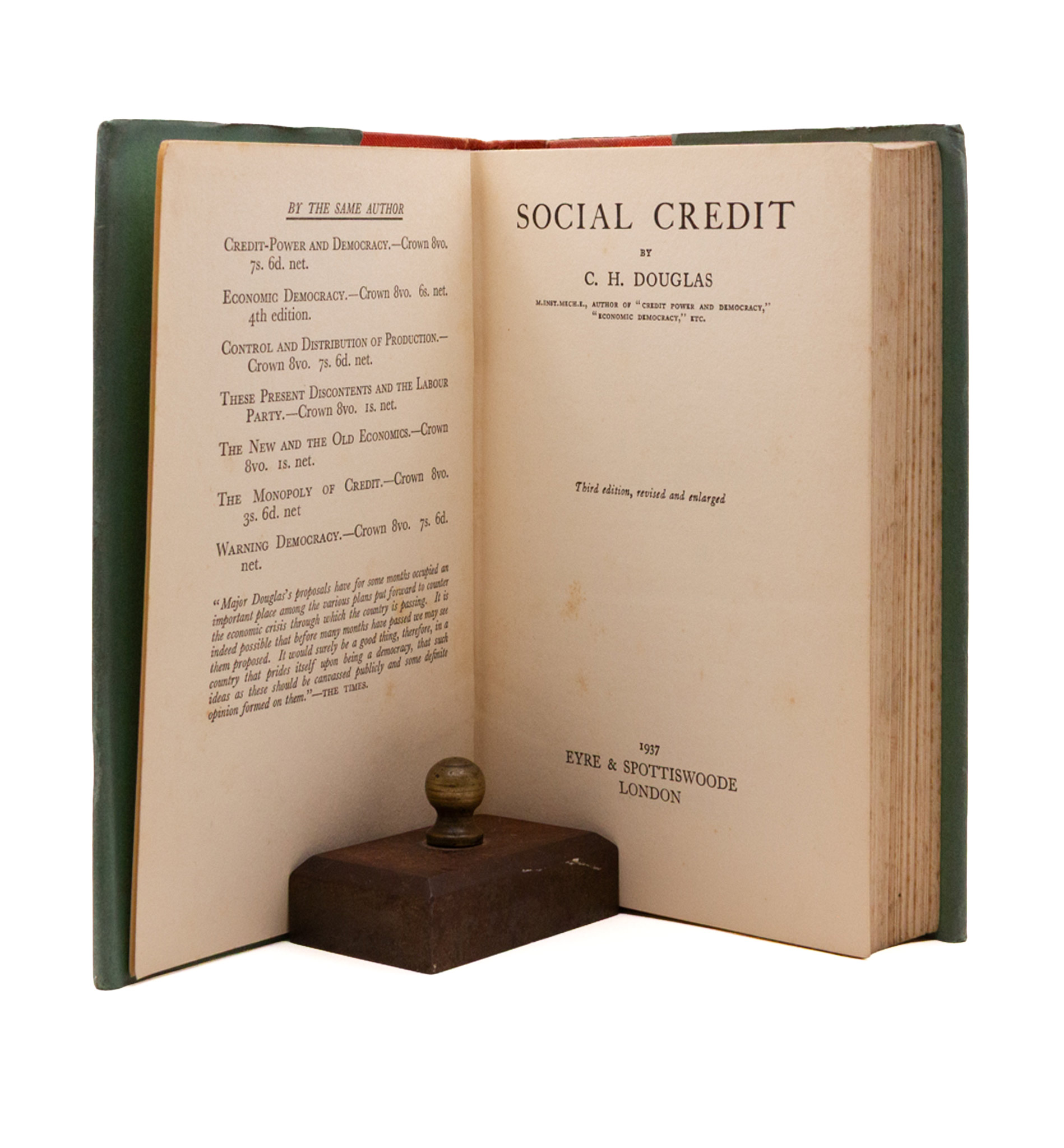
Social Credit
C. H. Douglas
Published London: Eyre & Spottiswoode, 1937
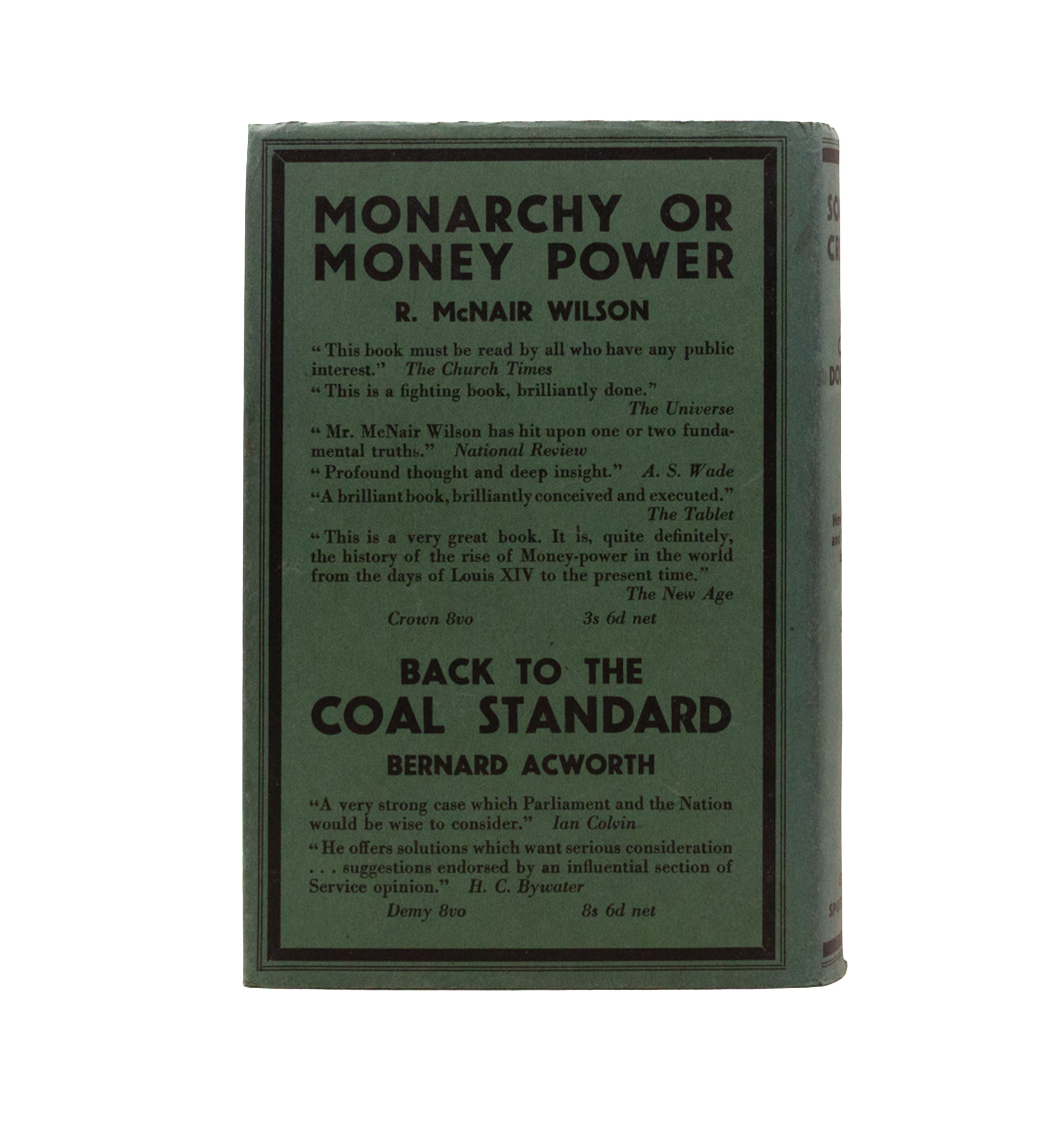
212pp.; 19 x 12.9 cm. Red cloth boards lettered in black to spine. Dark green paper dust-jacket printed in black.
Part of Money, Politics, & America
Douglas’s treatise on Social Credit, of which Pound was a proponent despite a tetchy relationship with Douglas himself. Third (revised and enlarged edition; May 1933), after the 1924 First, fourth reprint. Near fine in a wonderfully preserved original jacket.

tap to cycle
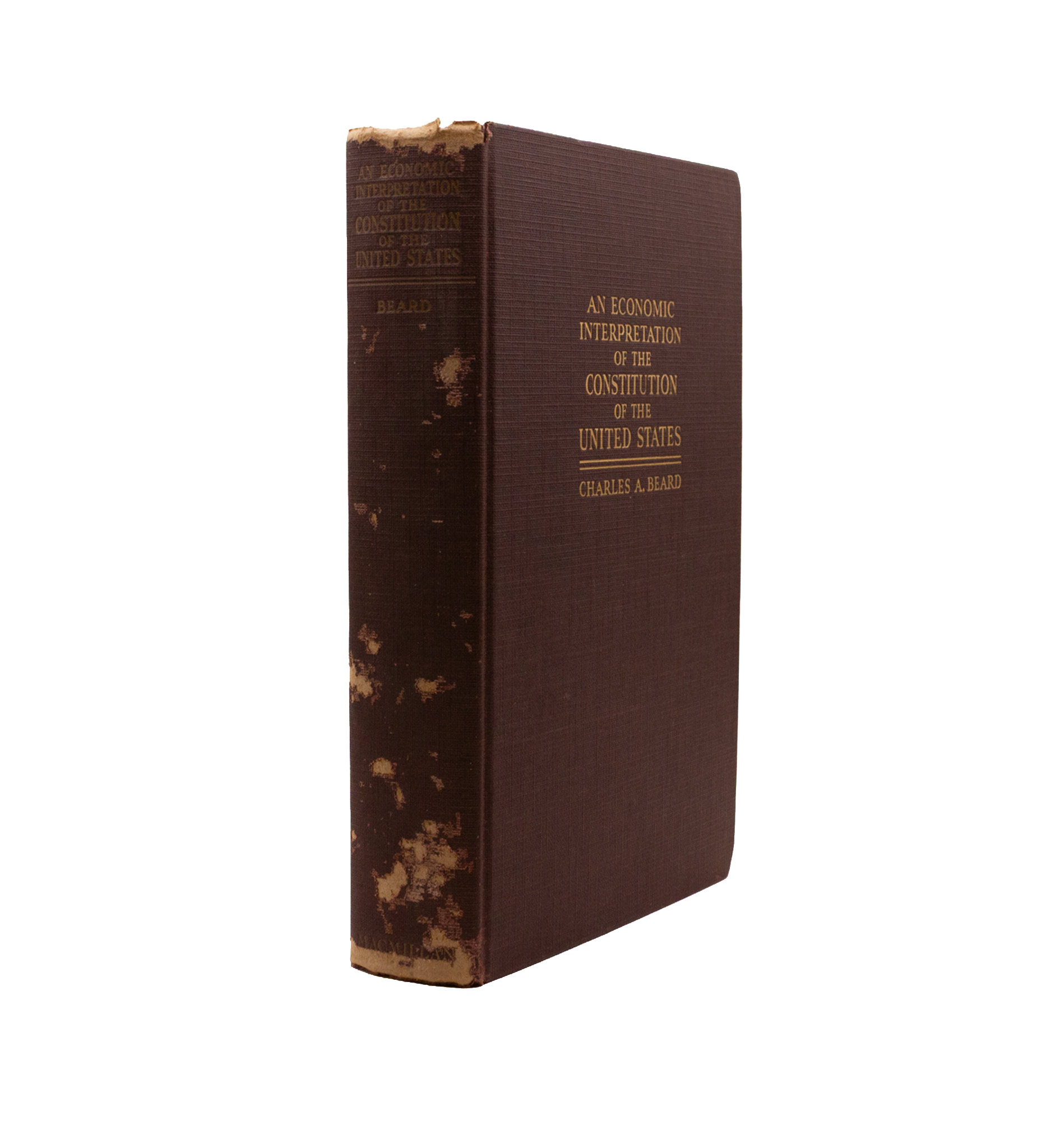
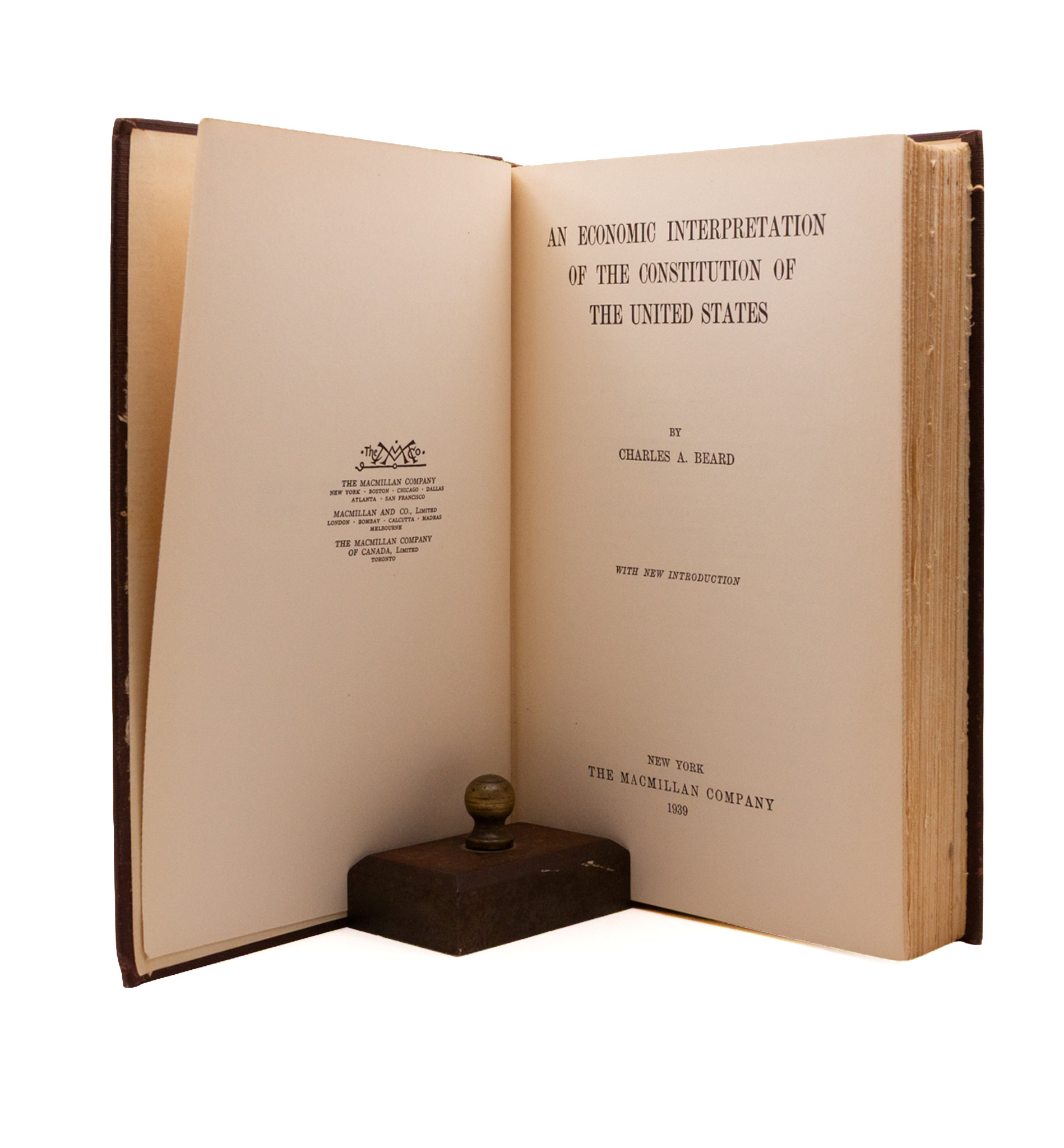
An Economic Interpretation of the Constitution of the United States
Charles A. Beard
Published New York: The Macmillan Company, 1939
330pp.; 21.9 x 15.6 cm. Brown cloth boards stamped in gold on front and spine.
Part of Money, Politics, & America
A survey of economic interests at the time of the declaration of independence, including studies of each of those members of the Constitutional Convention, hand-numbered in ink in the margin in this copy, totalling 51. Reissue (1935) with a new introduction, third reprint (Pound himself had a copy of the second reprint, see Tim Redman’s cataloguing of Pound’s Library). A very good copy save for the loss of a certain amount of cloth to the spine.

tap to cycle
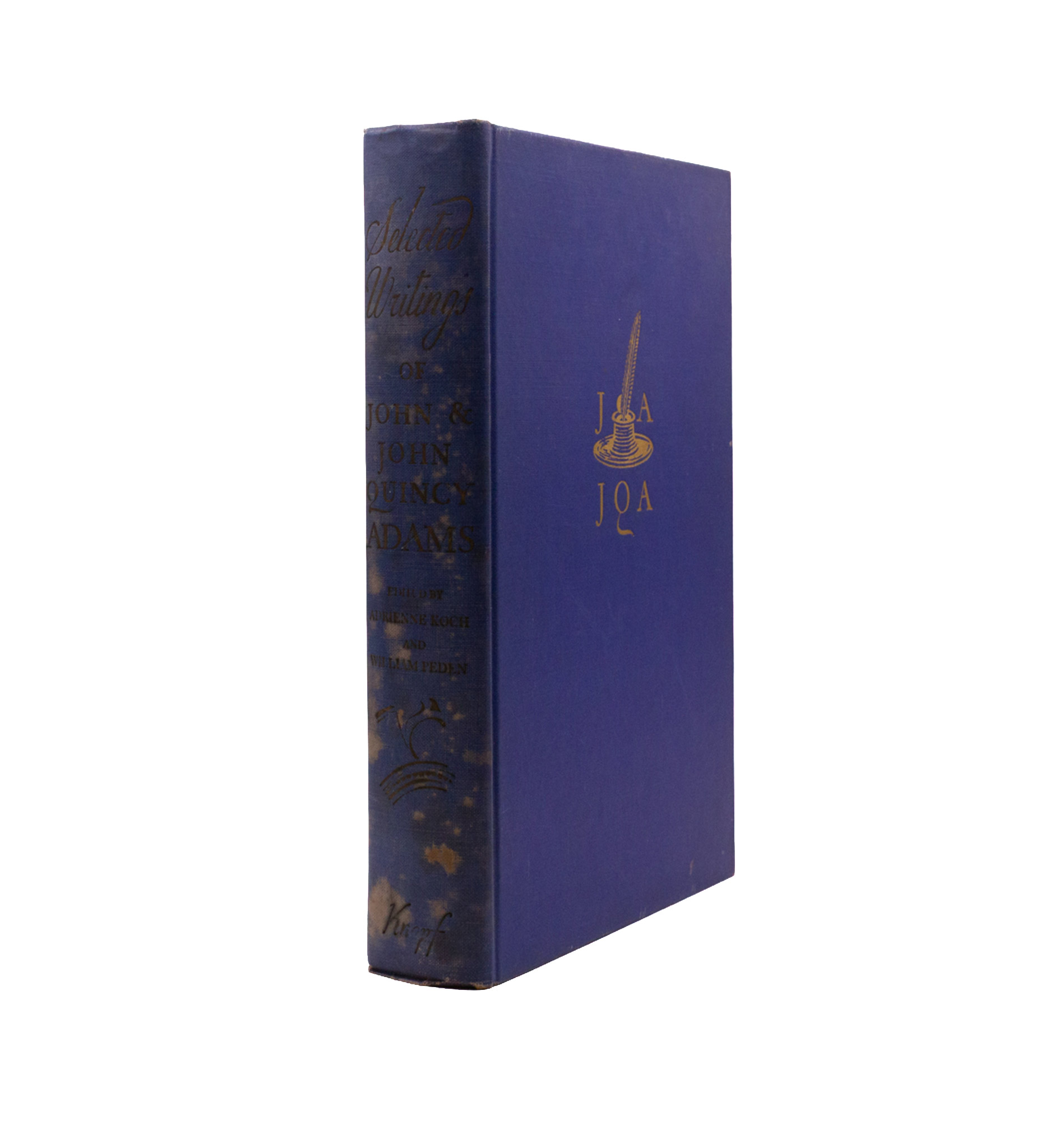
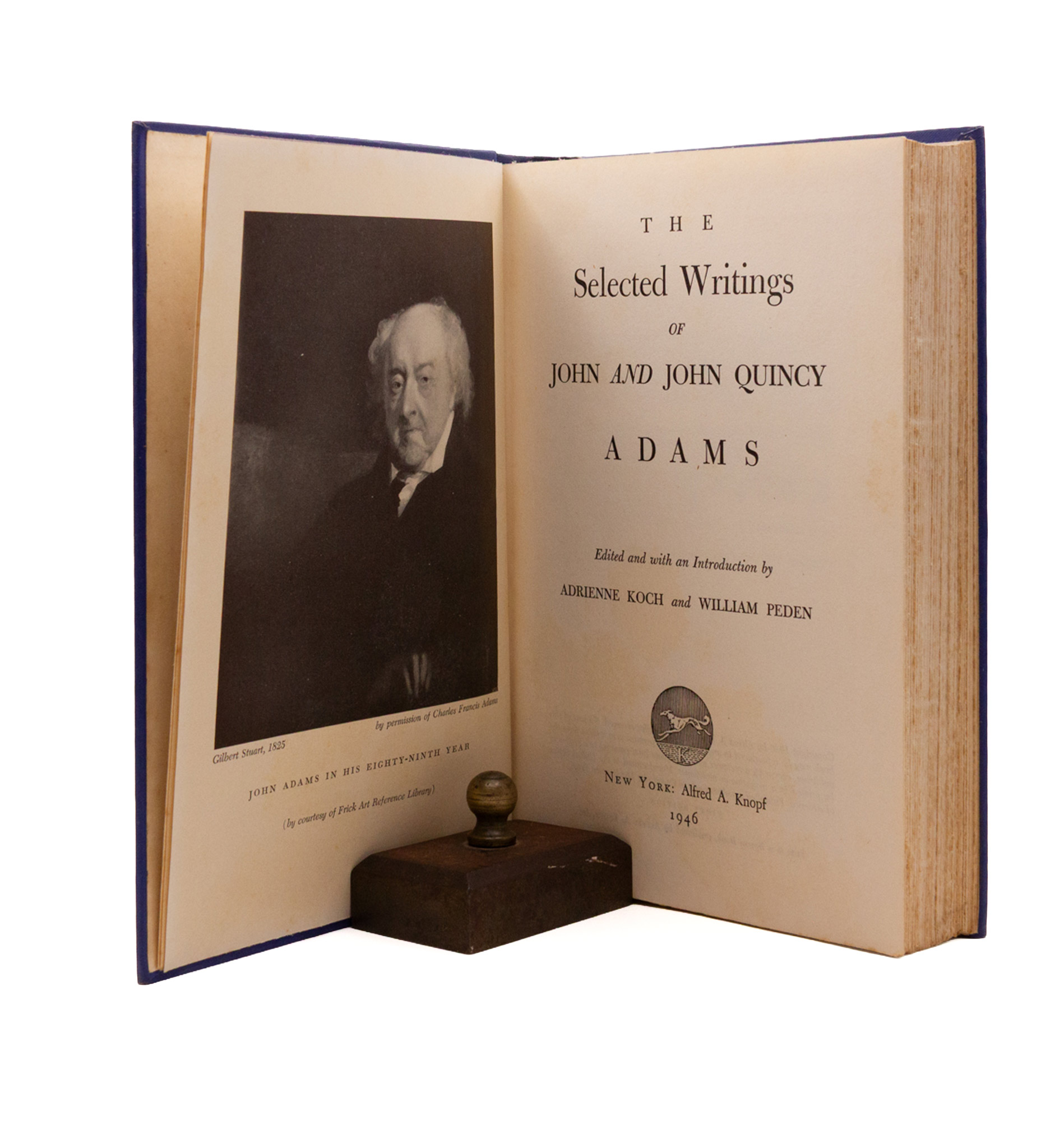
The Selected Writings of John and John Quincy Adams
Adrienne Koch, William Peden, editors
Published New York: Alfred A. Knopf, 1946
413pp.; 21.9 x 14.9 cm. Blue cloth boards stamped in gold to front and spine.
Part of Money, Politics, & America
Letters (many father from son), as well as a number of diary entries; a volume James Laughlin would’ve benefitted from owning. First edition, one flap of the dust-jacket printed to fpd; spine dust-soiled, otherwise very good.

tap to cycle
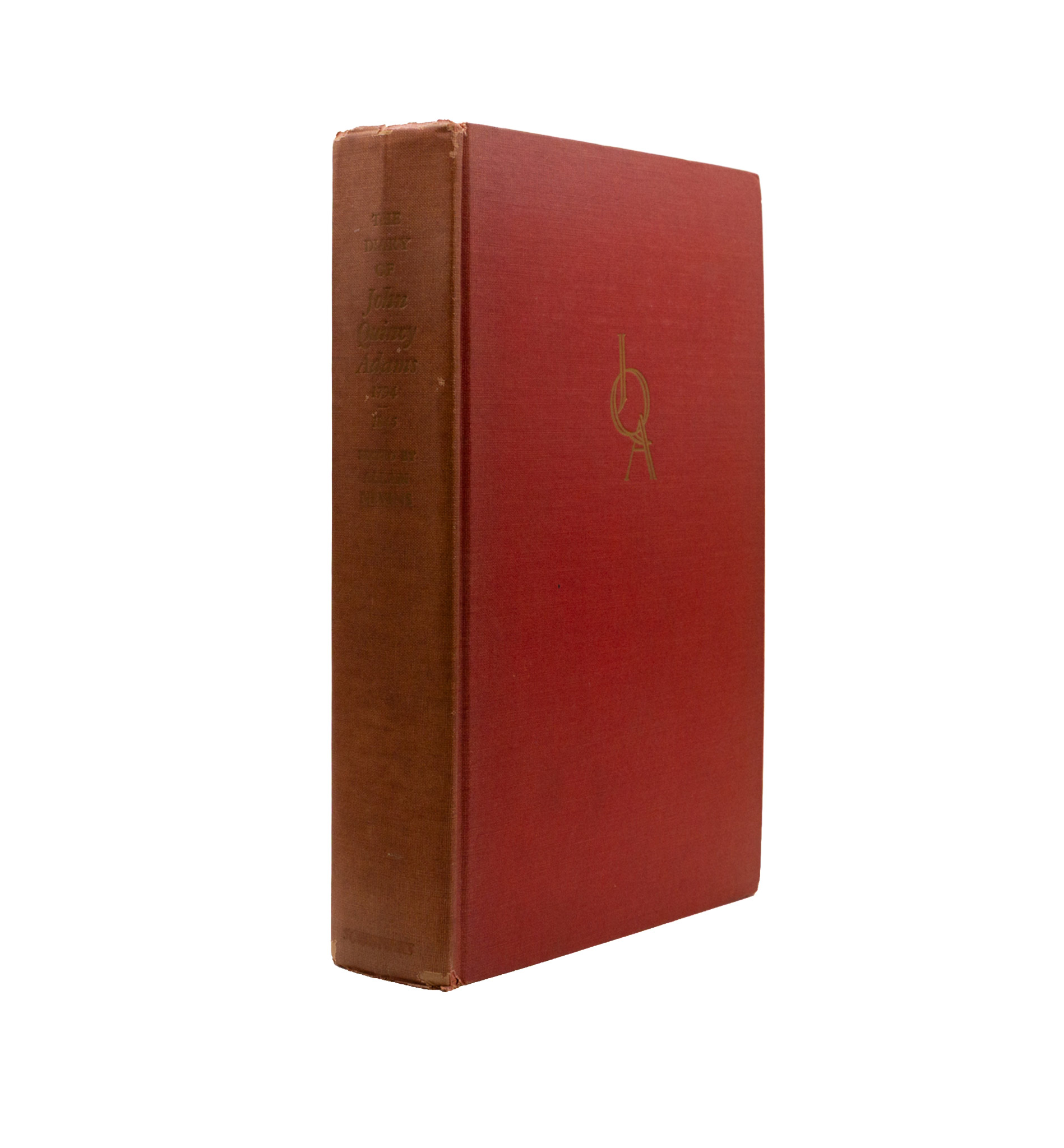
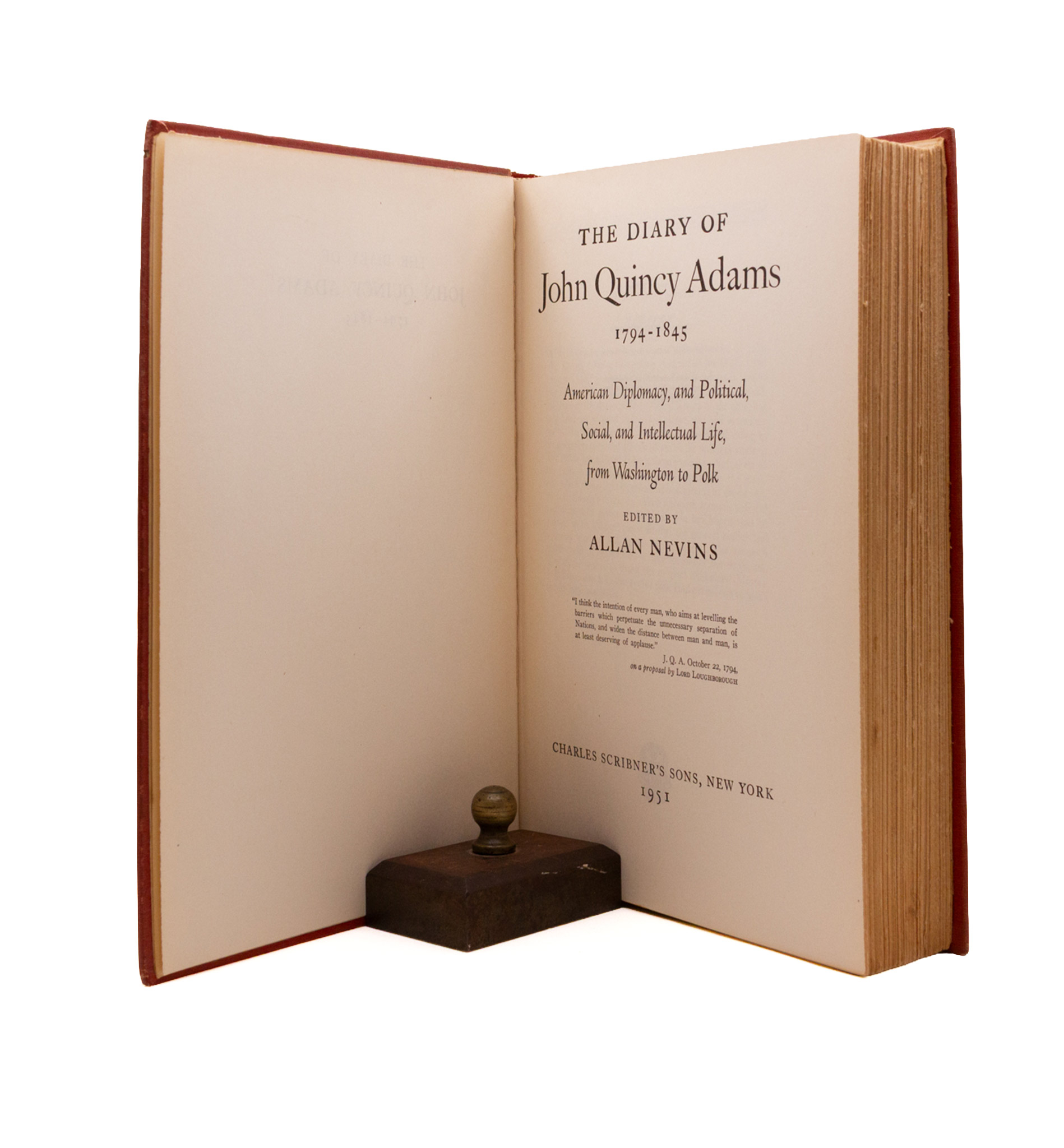
The Diary of John Quincy Adams, 1794-1845
Allan Nevins, editor
Published New York: Charles Scribner’s Sons, 1951
586pp.; 24.1 x 16.8 cm. Red cloth boards stamped in gold to front and spine.
Part of Money, Politics, & America
First Scribner edition, after the 1928 Longman first. Spine faded with a little of shelf-wear, clean throughout; generally a very good copy.
tap to cycle
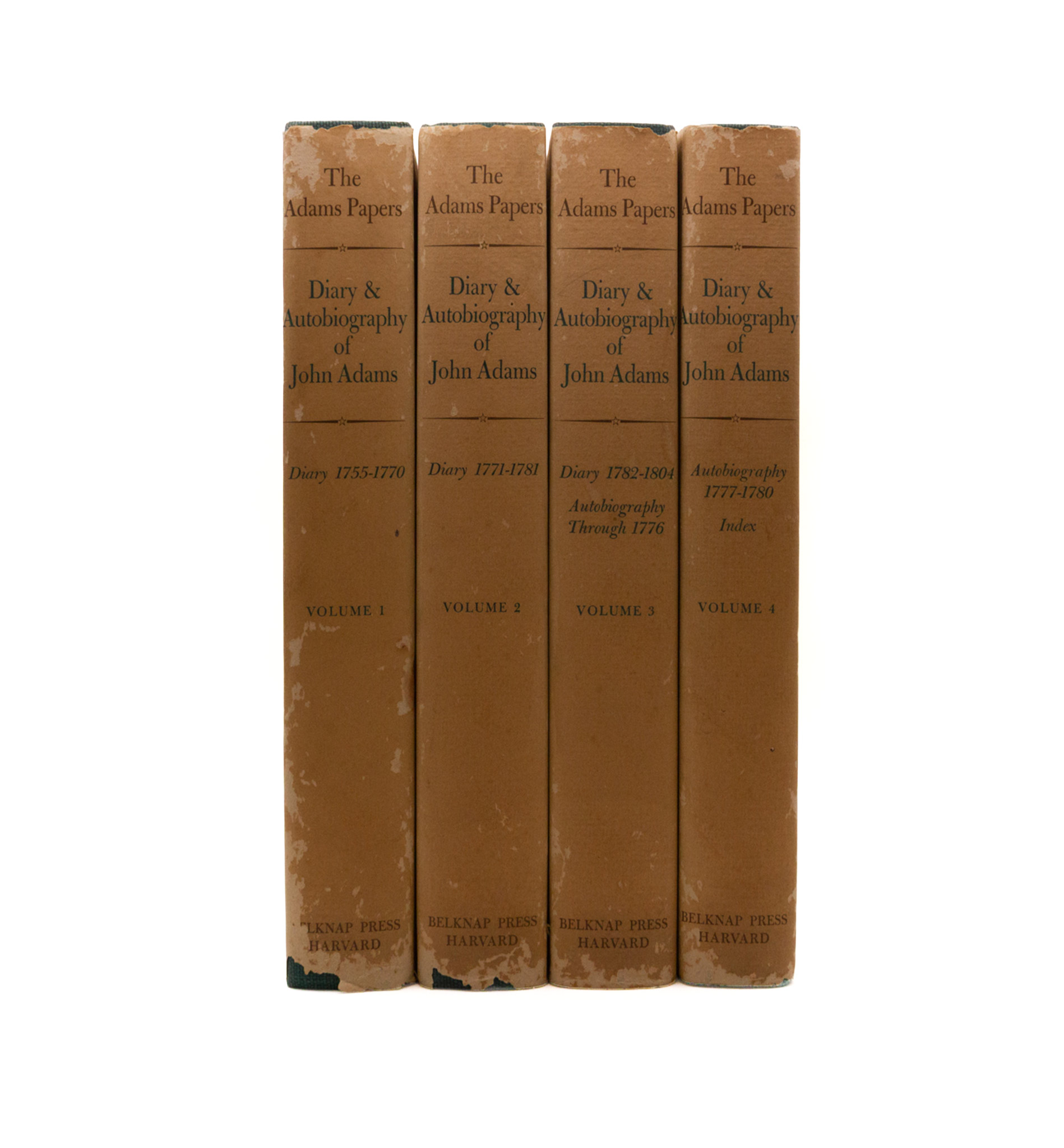
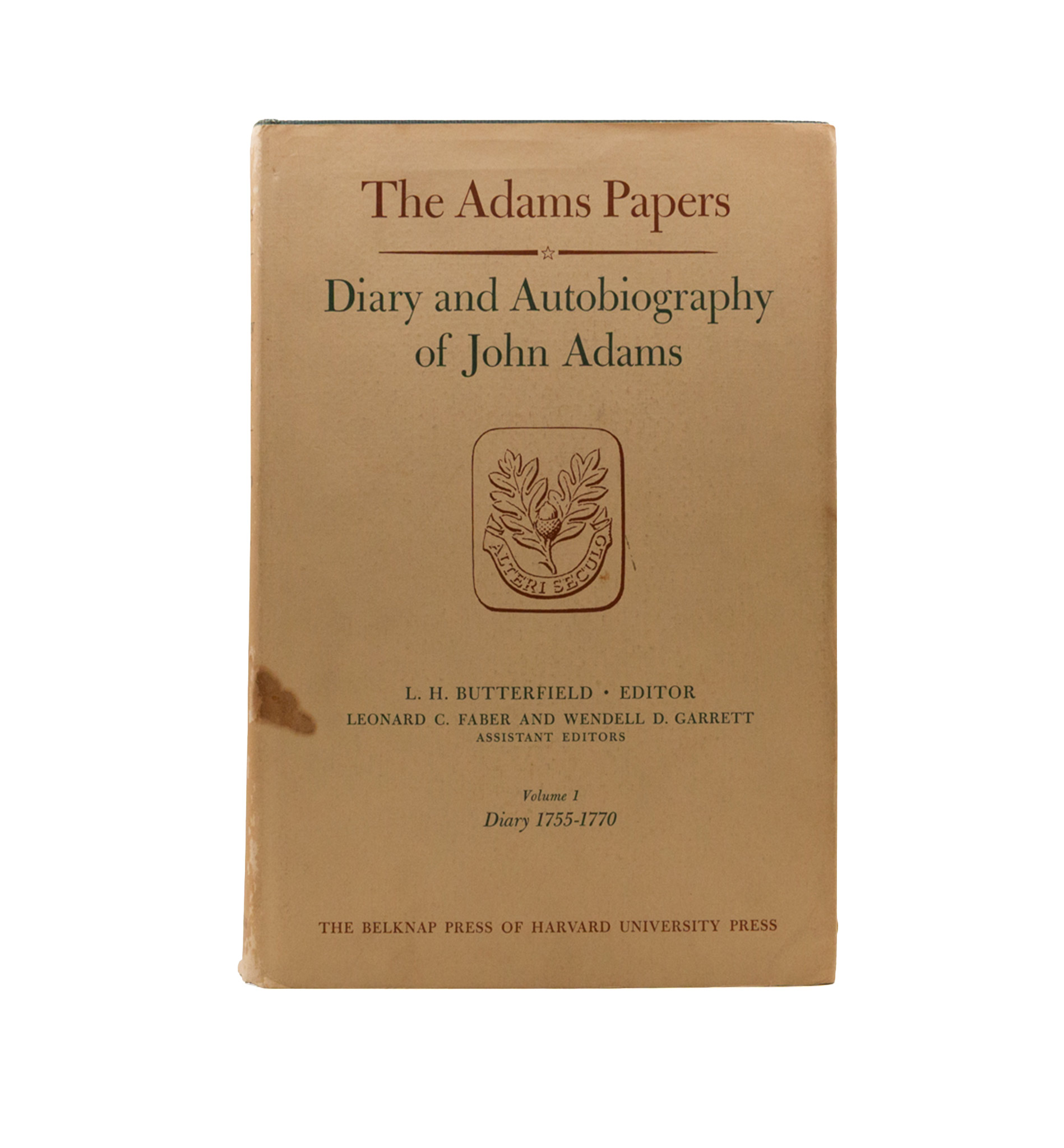
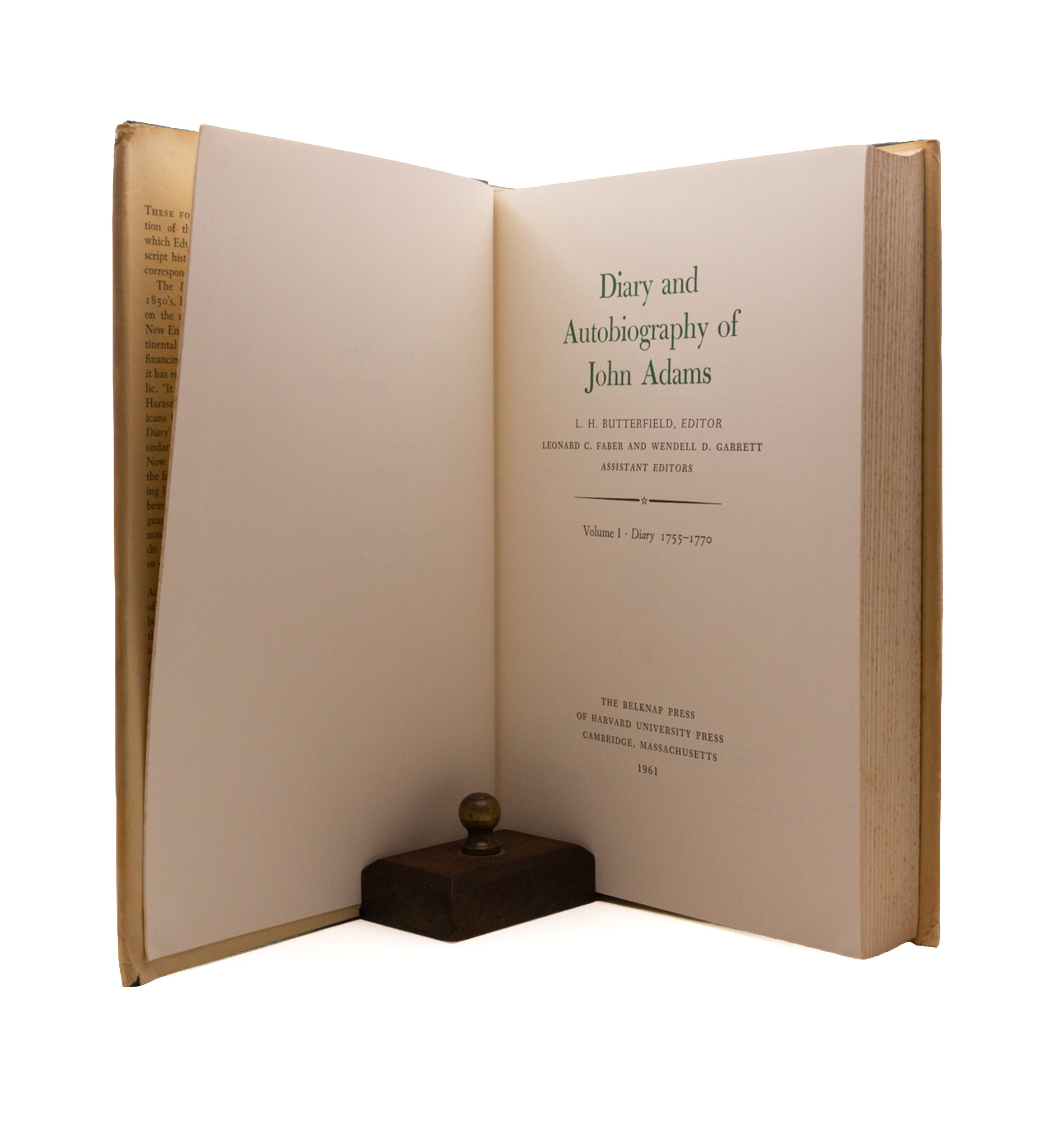
The Adams Papers: Diary and Autobiography of John Adams
L. H. Butterfield, editor
Published Cambridge: The Belknap Press of Harvard University Press, 1961
365pp., 458pp., 449pp., 403pp.; 25.5 x 17.3 cm each. Green-blue cloth boards stamped in blind to front and gold to spine. Tan laid-paper dust-jackets printed in brown and dark blue.
Part of Money, Politics, & America
A complete, four volume set of the Diary and Autobiography of John Adams as edited by L. H. Butterfield. First edition, each in their original jackets. Fine copies bar foxing to endpapers and pastedowns. Each jacket very good to near fine, with surface wear and occasional chips to spines, and a stain to the jacket of the first vol.

tap to cycle
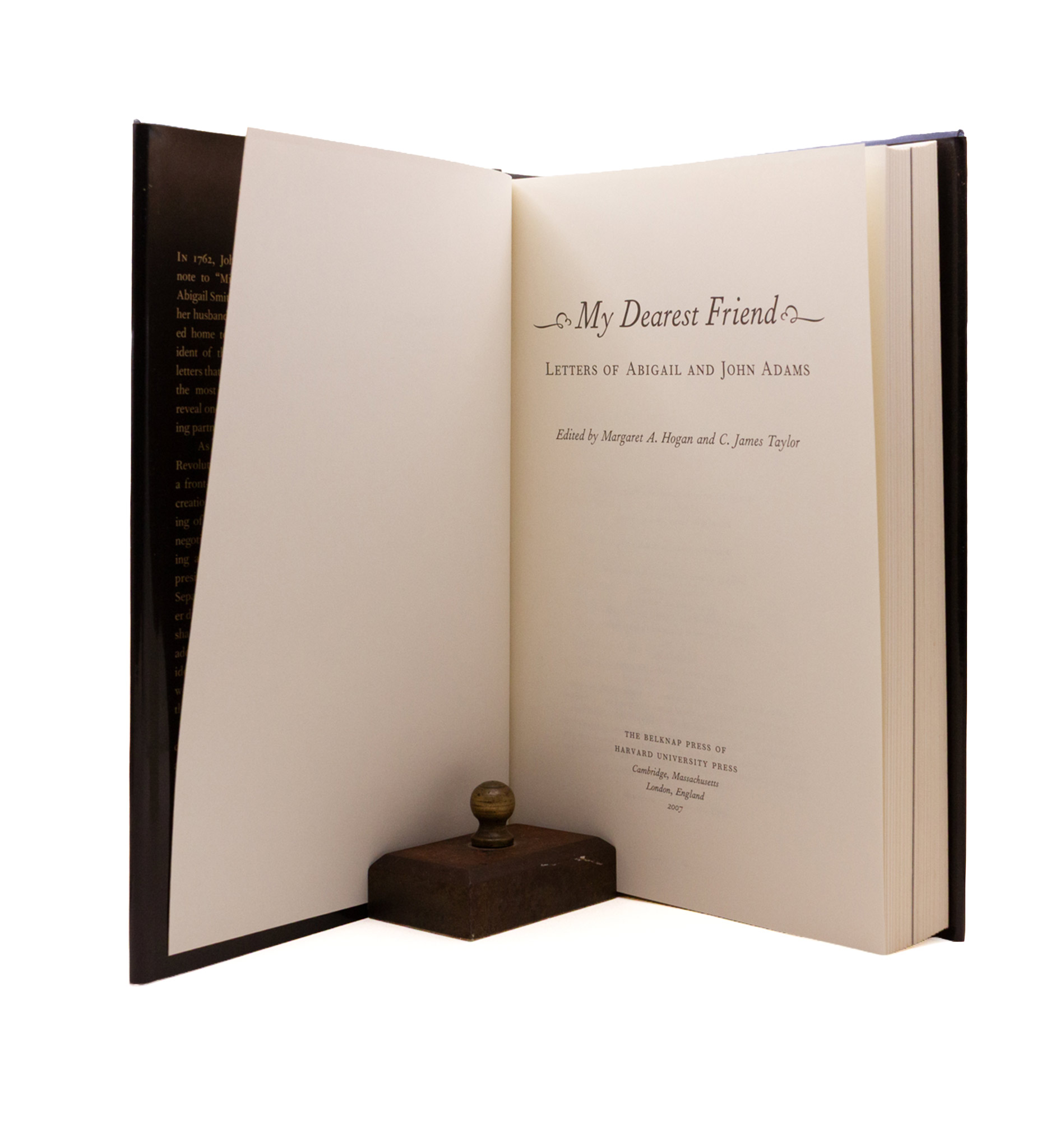
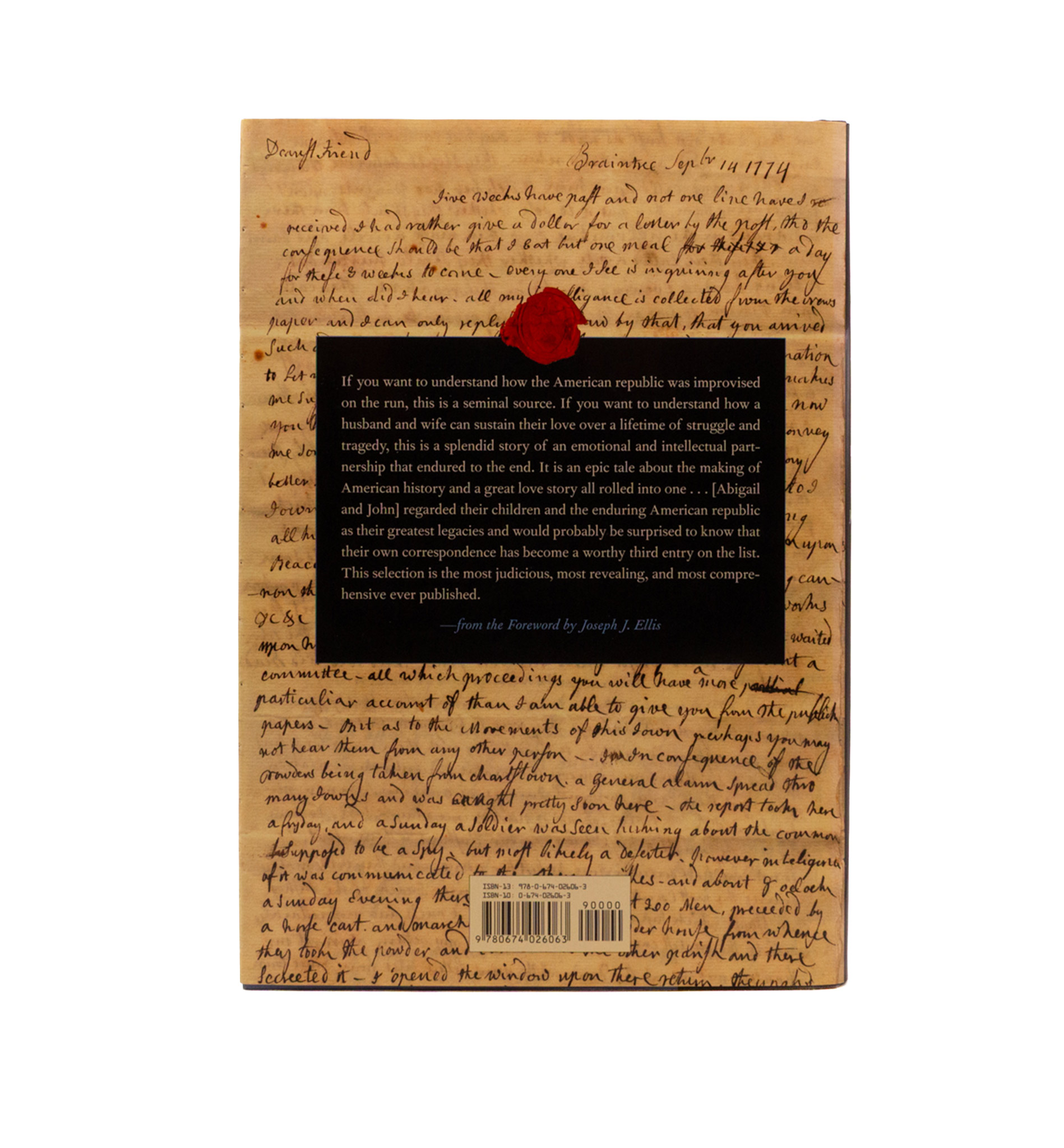
My Dearest Friend, Letters of Abigail and John Adams
Margaret A. Hogan, C. James Taylor, editors
Joseph J. Ellis, foreword
Published Cambridge: The Belknap Press of Harvard University Press, 2007
508pp.; 24 x 17.1 cm. Quarter backed, blue paper covered boards, lettered in gold on spine. White dust-jacket printed in black, blue, beige and illustrated.
Part of Money, Politics, & America
Fourty years of letters between the second president and his wife, with insights into the drafting of the Declaration of Independence and the raising of president-to-be JQA. First edition. A fine copy of a fine, illustrated production.


tap to cycle
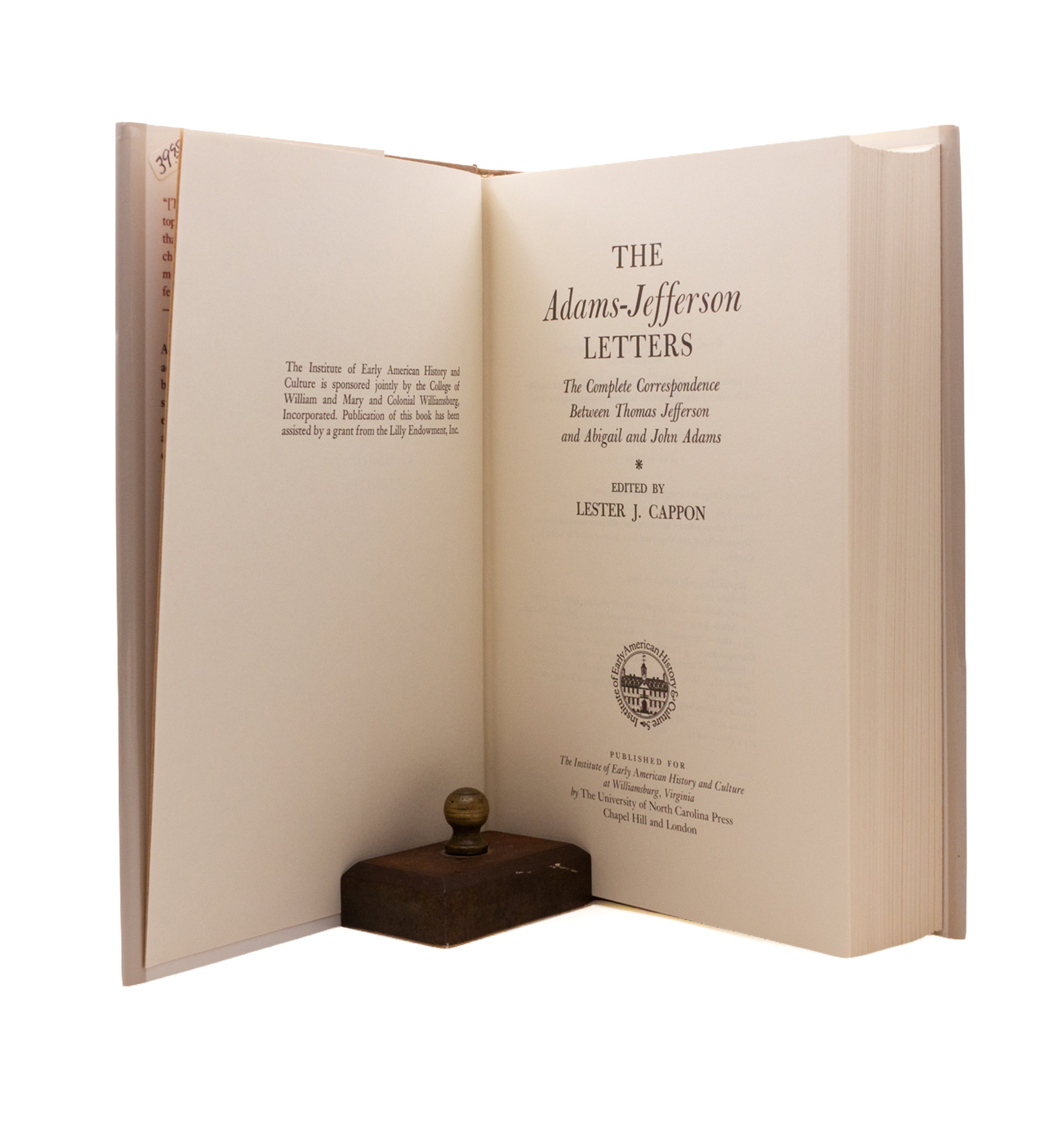
The Adams-Jefferson Letters
Lester J. Cappon, editor
Published The University of North Carolina Press, 1988
638pp.; 24.1 x 16.4 cm. Brown cloth boards lettered in brown down spine. White dust-jacket printed in beige, brown and black.
Part of Money, Politics, & America
A quality tome of some of the most significant correspondence in American history. Reprint after the 1959 first edition. A fine copy in fine jacket.


tap to cycle
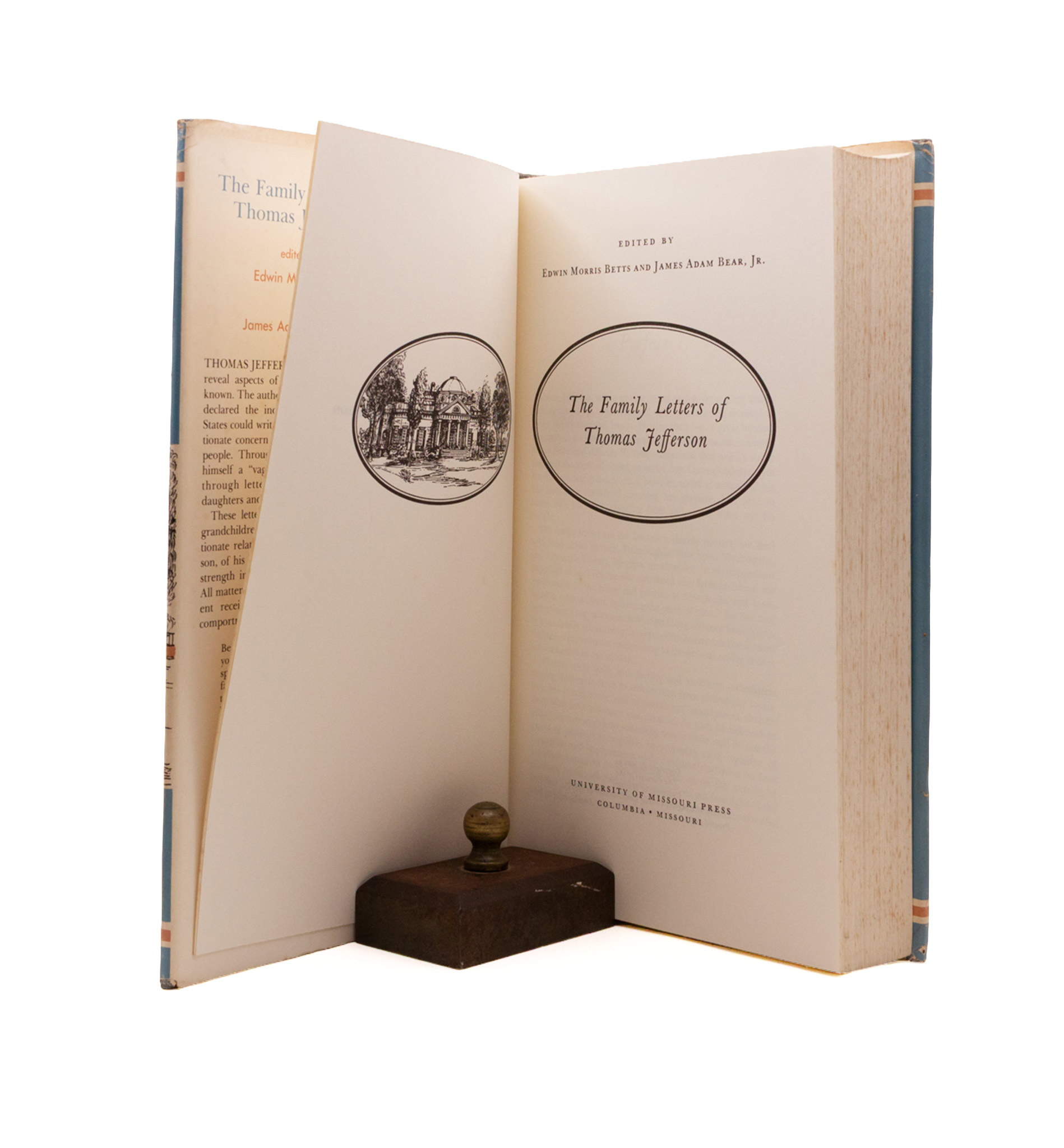
The Family Letters of Thomas Jefferson
Edwin Morris Betts and James Adam Bear Jr., editors
Published Columbia: University of Missouri Press, 1966
506pp.; 24.2 x 14.8 cm. Grey cloth printed in gold and blue to front and spine. White dust-jacket printed in blue, brown and black.
Part of Money, Politics, & America
Letters not only of farm problems, gardeners & french horns, but also of political affairs both sides of the Atlantic. A fine copy in the original jacket rather edge-worn with a loss top & tail of spine. With a Suggestion Form from the University of York Library for a copy of James Parton’s Life of Thomas Jefferson, Da Capo 1971 laid into rear, dated 14-8-75, unascribed but David Moody’s.
tap to cycle
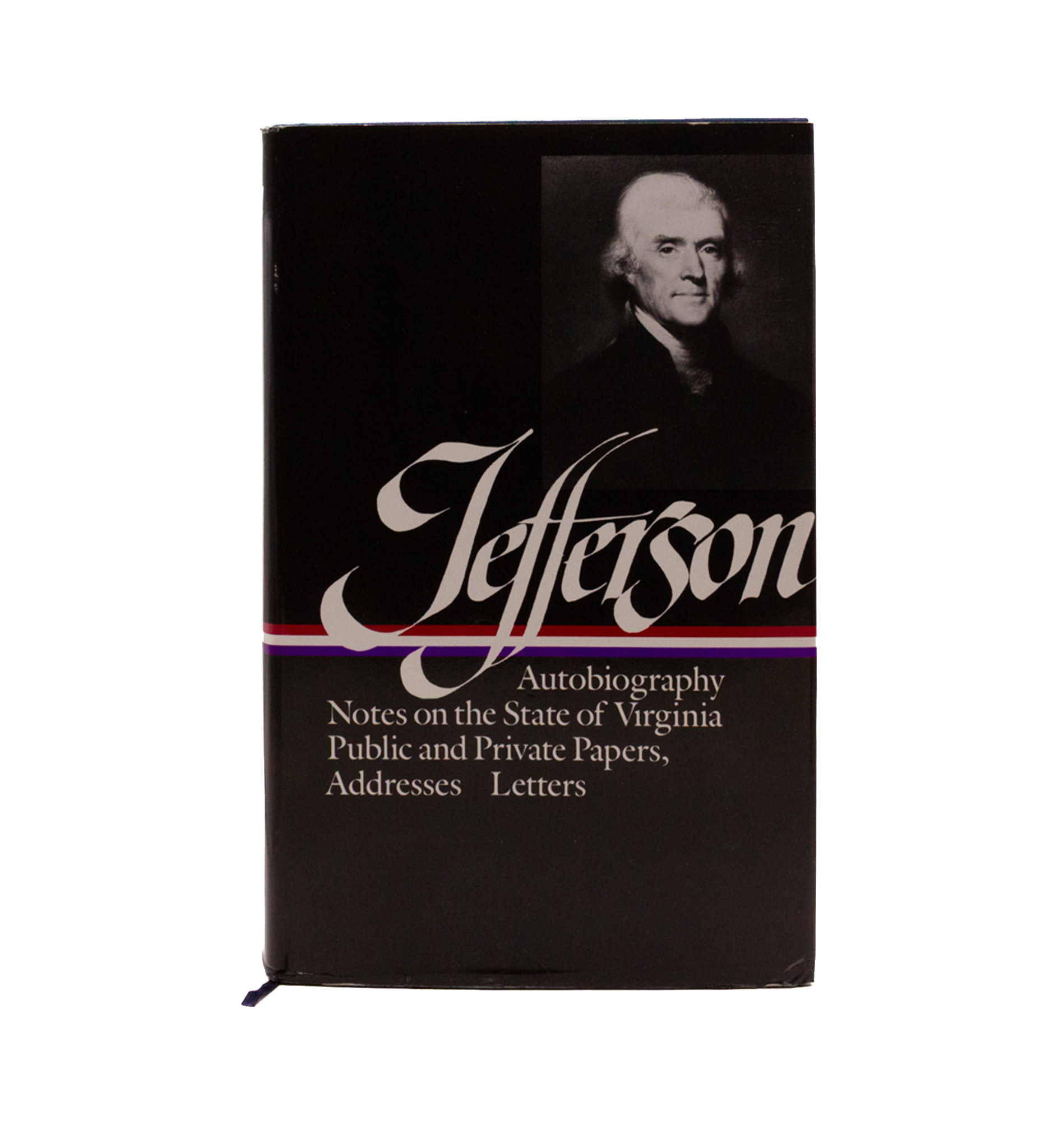
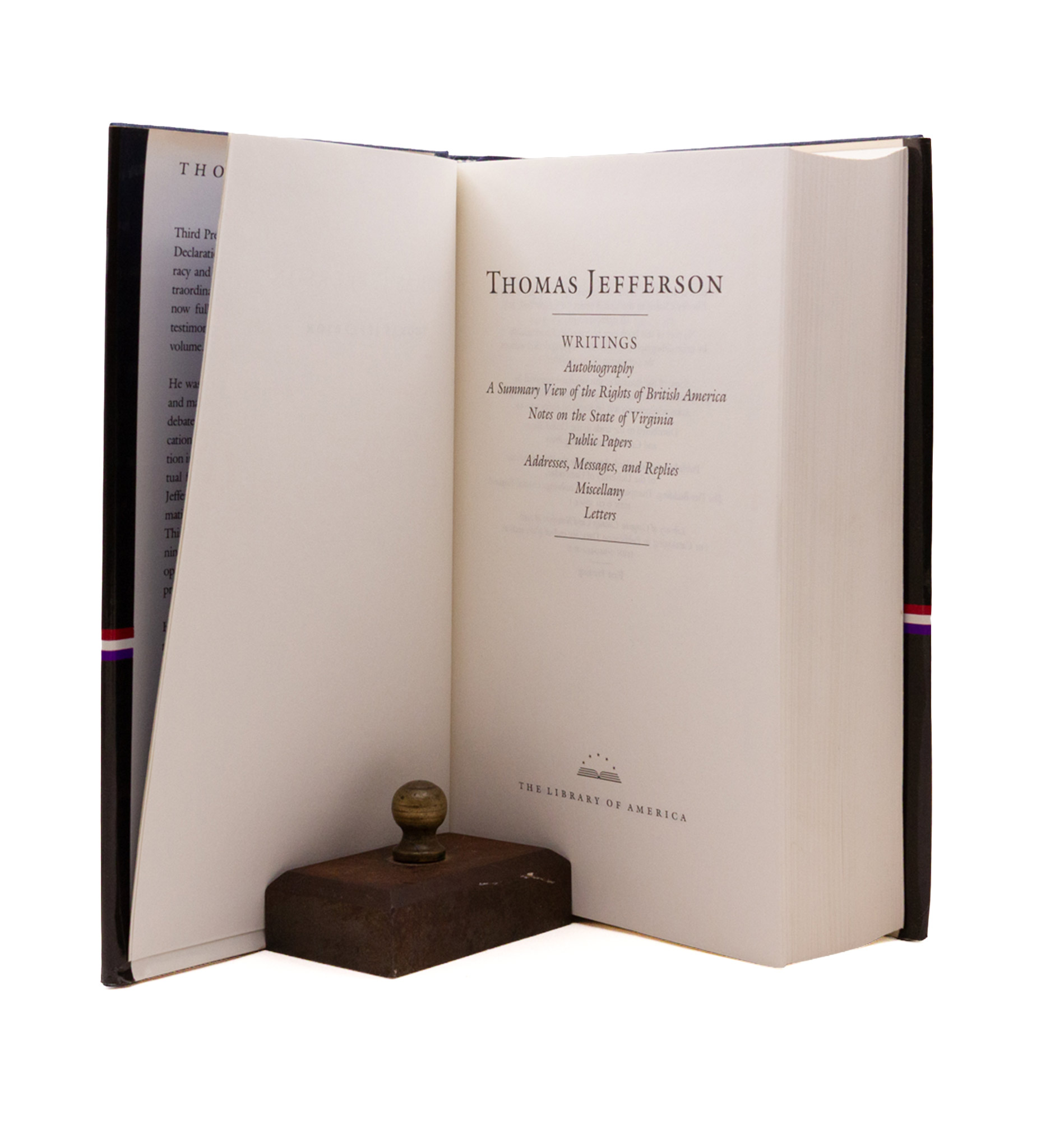
Thomas Jefferson: Writings
Merrill D. Peterson, editor
Published The Library of America, 1984
1600pp.; 20.6 x 13 cm. Blue cloth boards stamped in gold and black on spine. White dust-jacket printed in black, red and purple.
Part of Money, Politics, & America
Containing his Autobiography; A Summary View of the Rights of British America; Notes on the State of Virginia; Public Papers; Addresses, Messages, and Replies; Miscellany; Letters. First edition, first printing, on India paper with a map of north-eastern America inserted at rear. A fine copy in a lightly worn jacket.
tap to cycle
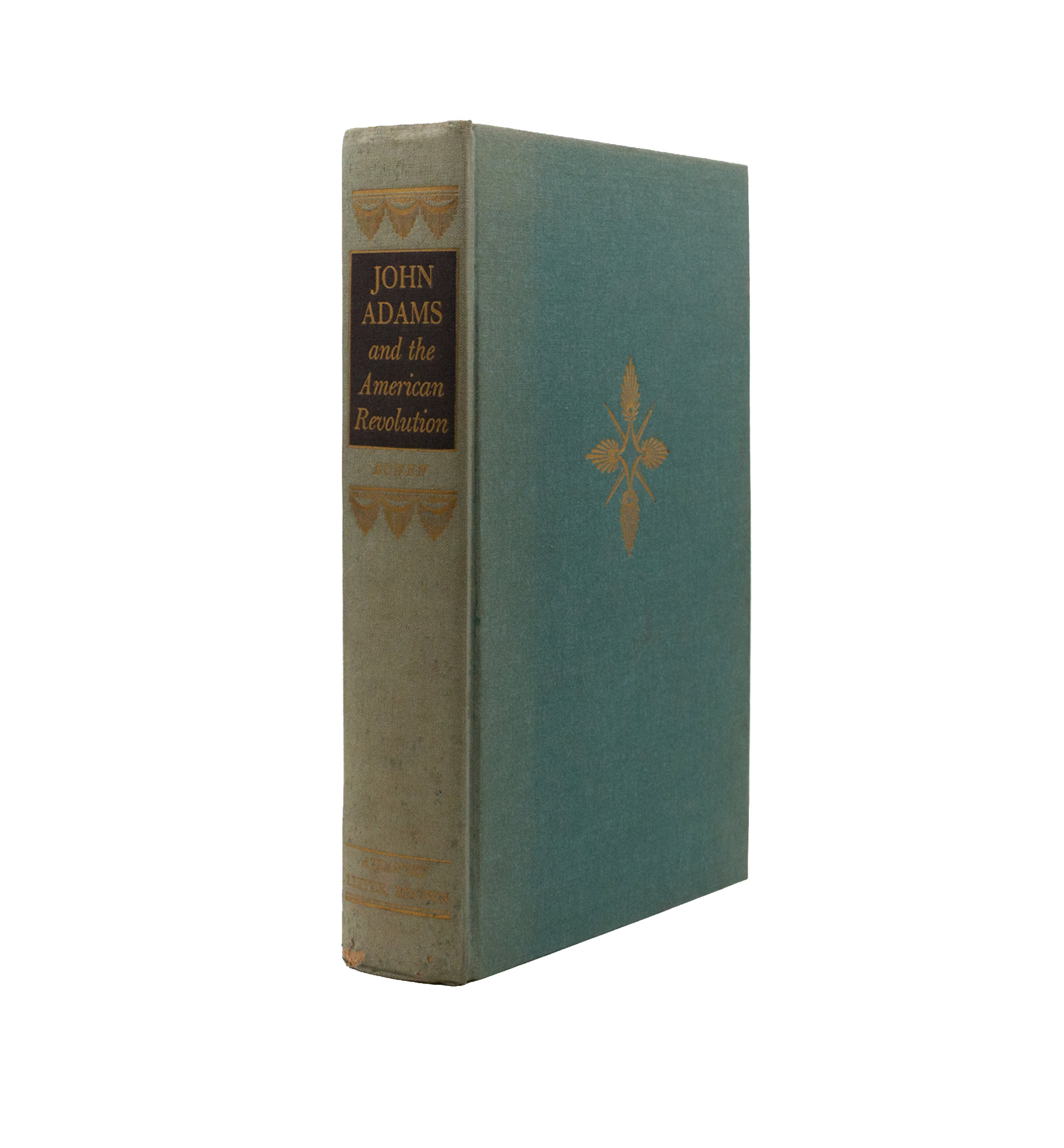
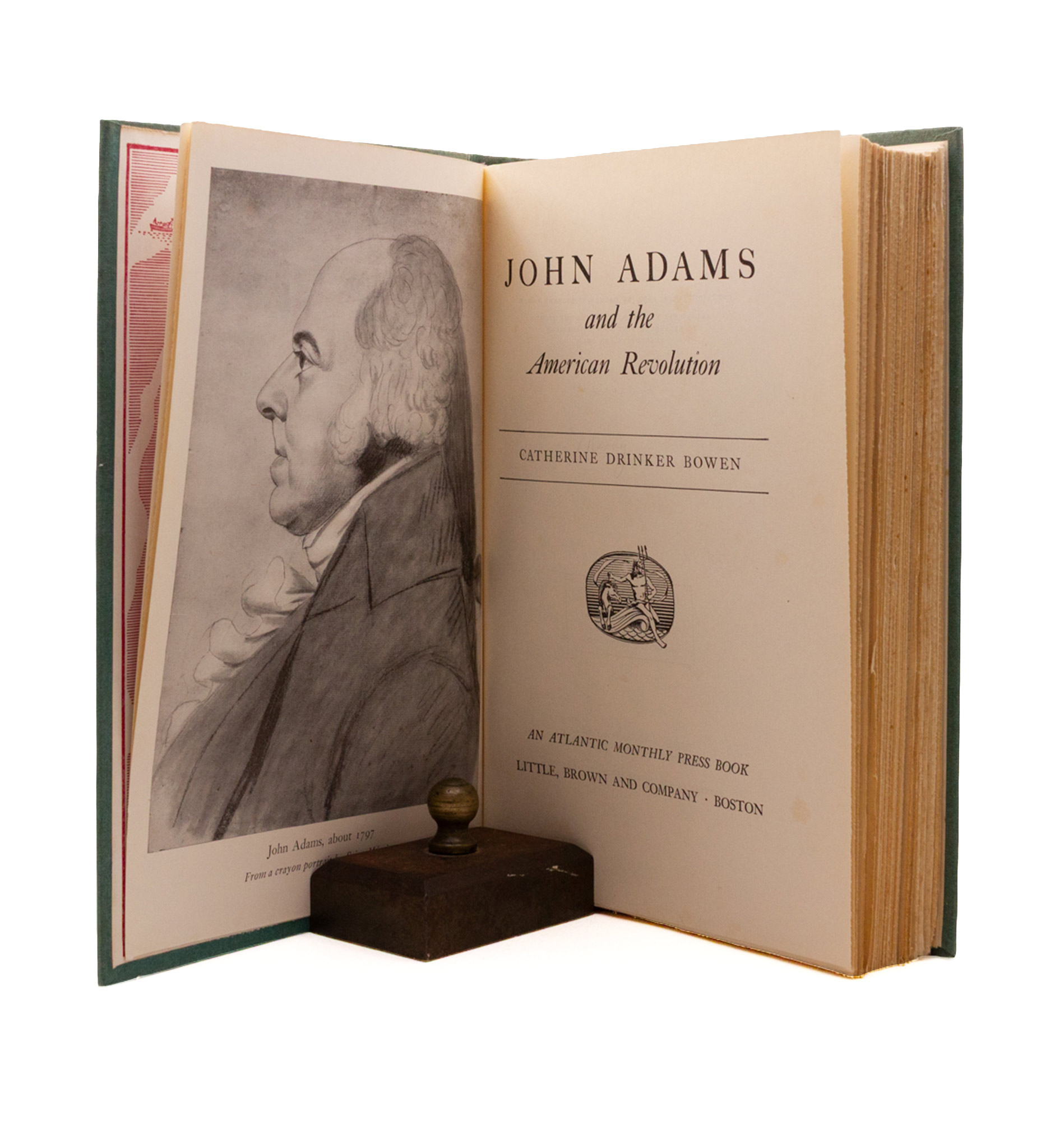
John Adams and the American Revolution
Christine Drinker Bowen
Published Boston: Little, Brown and Company, 1950
699pp.; 22 x 15.1 cm. Green cloth boards stamped in gold to front and in gold and black on spine.
Part of Money, Politics, & America
First edition, fifteenth printing. Near-contemporary ink gift inscription verso of the frontispiece. Spine-side sunned with a small loss of cloth at bottom of spine. Pages of the prologue torn without loss.



tap to cycle
The Lion and the Throne: The Life and Times of Sir Edward Coke
Christine Drinker Bowen
Published Boston: Little, Brown and Company, 1985
652pp.; 20.9 x 14 cm. Stiff white paper wraps printed in blue, black and pink.
Part of Money, Politics, & America
The third and final biography by Bowen, following Justive Oliver Wendell Holmes and John Adams, giving the history of American independence; Coke providing the English background to the Constitution. Reissue after the 1957 first edition. Light crease to front cover.



tap to cycle
Bank of England, Selected Tracts 1694-1804
Published Farnborough: Gregg International, 1969
178pp.; 27.4 x 17.4 cm. Red cloth boards stamped in gold on spine.
Part of Money, Politics, & America
Facsimile reproductions of seven publications held at Goldsmith’s Library of Economic Literature from A Brief Account of the Intended Bank of England (1694, the year of the bank’s establishment) to critical observations in as late as 1804. First edition, second impression after the 1968 first. A mostly fine copy.


tap to cycle
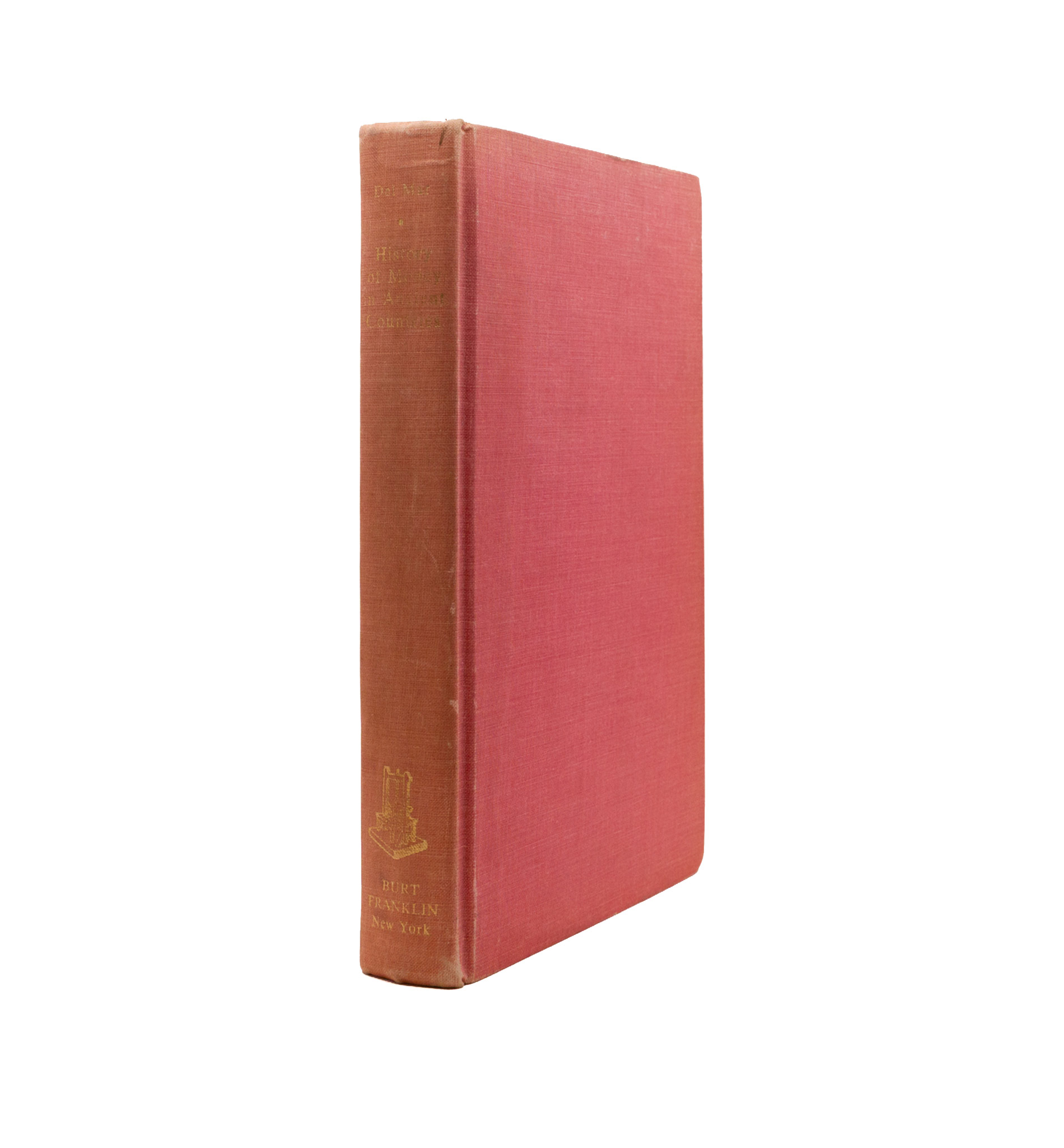
A History of Money in Ancient Countries
Alexander del Mar
Published New York: Burt Franklin, 1968
358pp.; 23.3 x 16 cm. Salmon-pink cloth boards lettered in gold on spine.
Part of Money, Politics, & America
Reprint after the 1885 first edition. With one ink ownership inscription to the fpd, and another pencil of George Kearns, Pound scholar, to ffep. A fair copy, generally clean but with some staining to the pastedowns and a little ripple to the first twenty pages suggesting light but not debilitating water damage. Cloth rubbed on edges.

tap to cycle
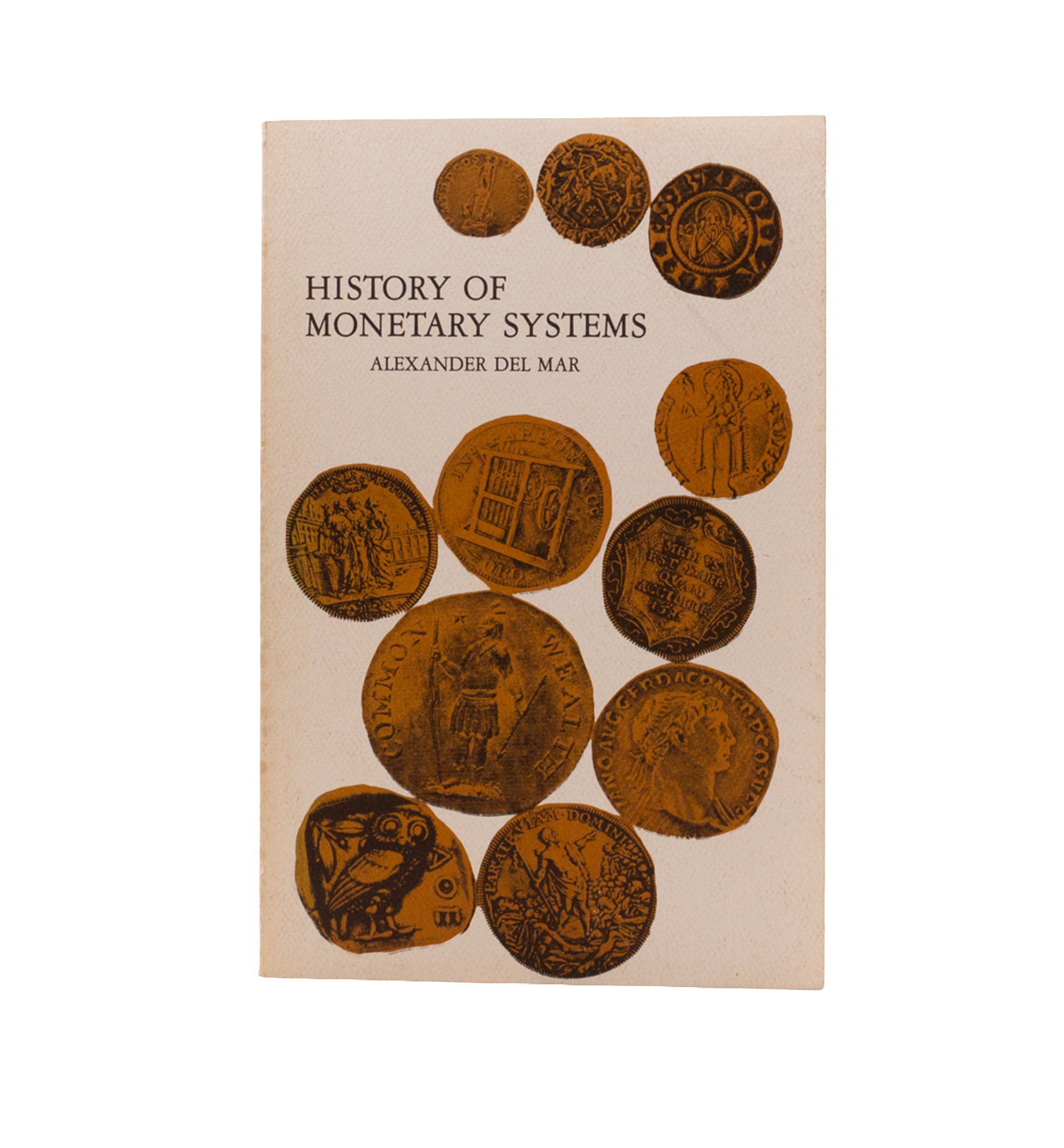
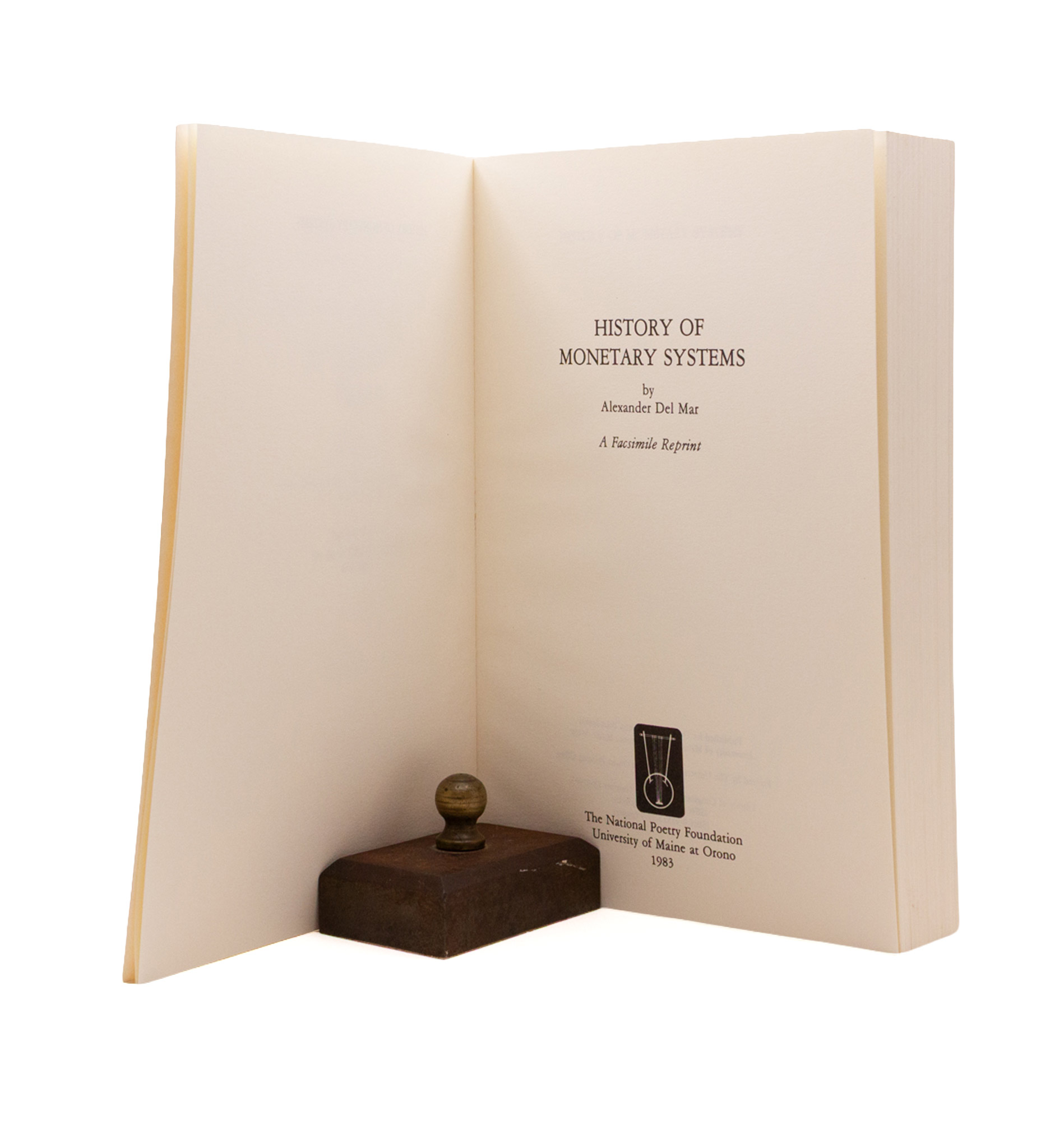
History of Monetary Systems
Alexander del Mar
Published Maine: The National Poetry Foundation, 1983
444pp.; 21.5 x 14.1 cm. Heavy paper wraps printed in black and browns.
Part of Money, Politics, & America
A survey of the development of money and monetary systems. Two of del Mar’s books, Roman and Moslem Moneys and Barbara Villiers: A History of Monetary Crimes were included in Kasper & Horton’s Square $ Series, Pound’s six must (but hard to) have books. A facsimile reprint of the 1896 first edition, published under the directorship of Carroll F. Terrell; a rare edition. Lightly aged.


tap to cycle
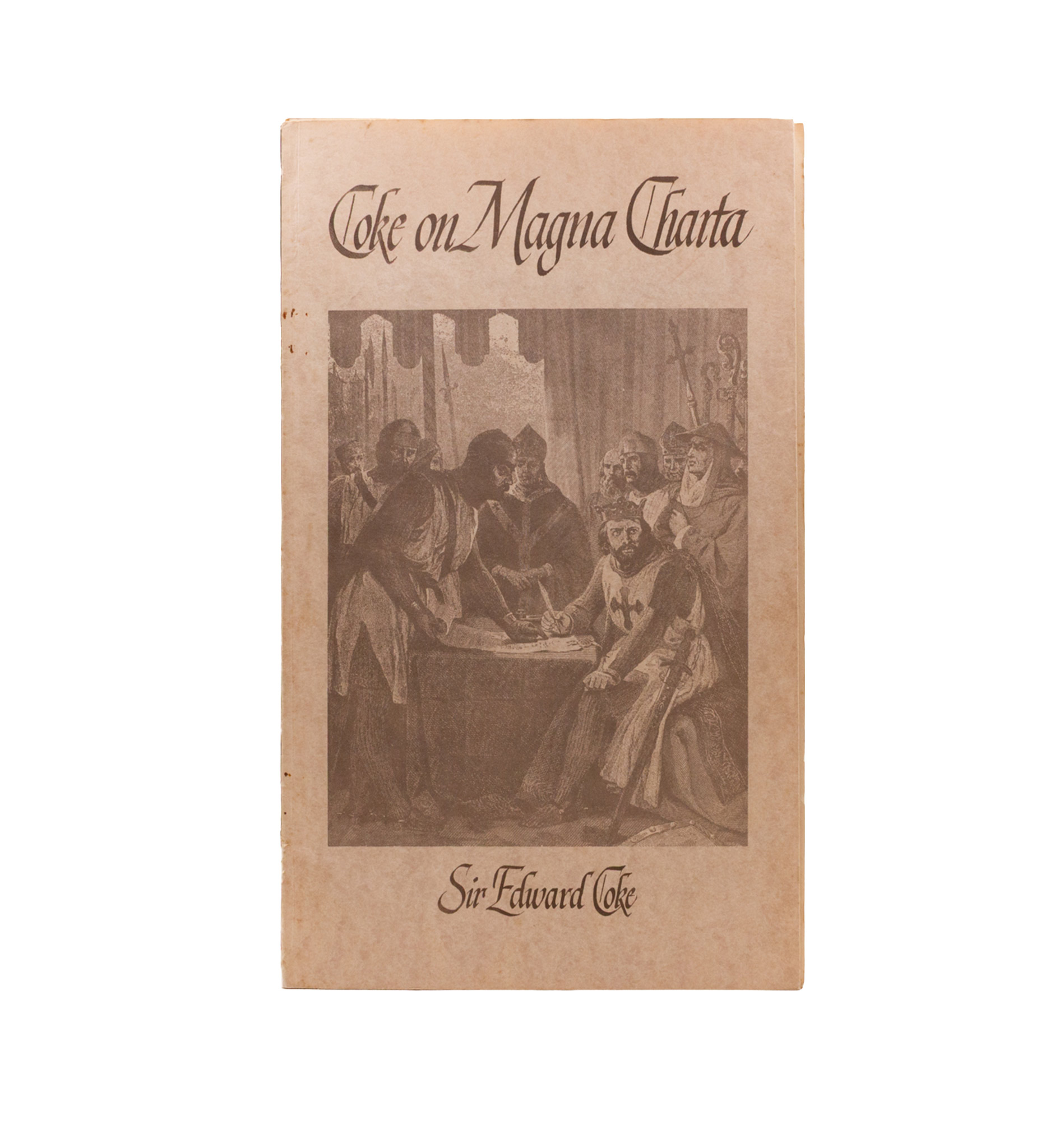
Coke on the Magna Charta
Sir Edward Coke
Published California: Omni Publications for the Square Dollar Series, 1974
78pp.; 27.9 x 16.8 cm. Stiff printed wrappers with french folds.
Part of Money, Politics, & America
Facsimile reproduction of the second part of Sir Edward Coke’s Institutes of the Laws of England being an argument on the limits of royal power (Coke in trouble with King James), which was used again by John Adams during the American Revolution. Rare Omni edition. Wear to the spine; the first two gatherings disbound (the binding only glue). With quotes from T. S. Eliot and (anonymously) Pound to the wraps.

tap to cycle
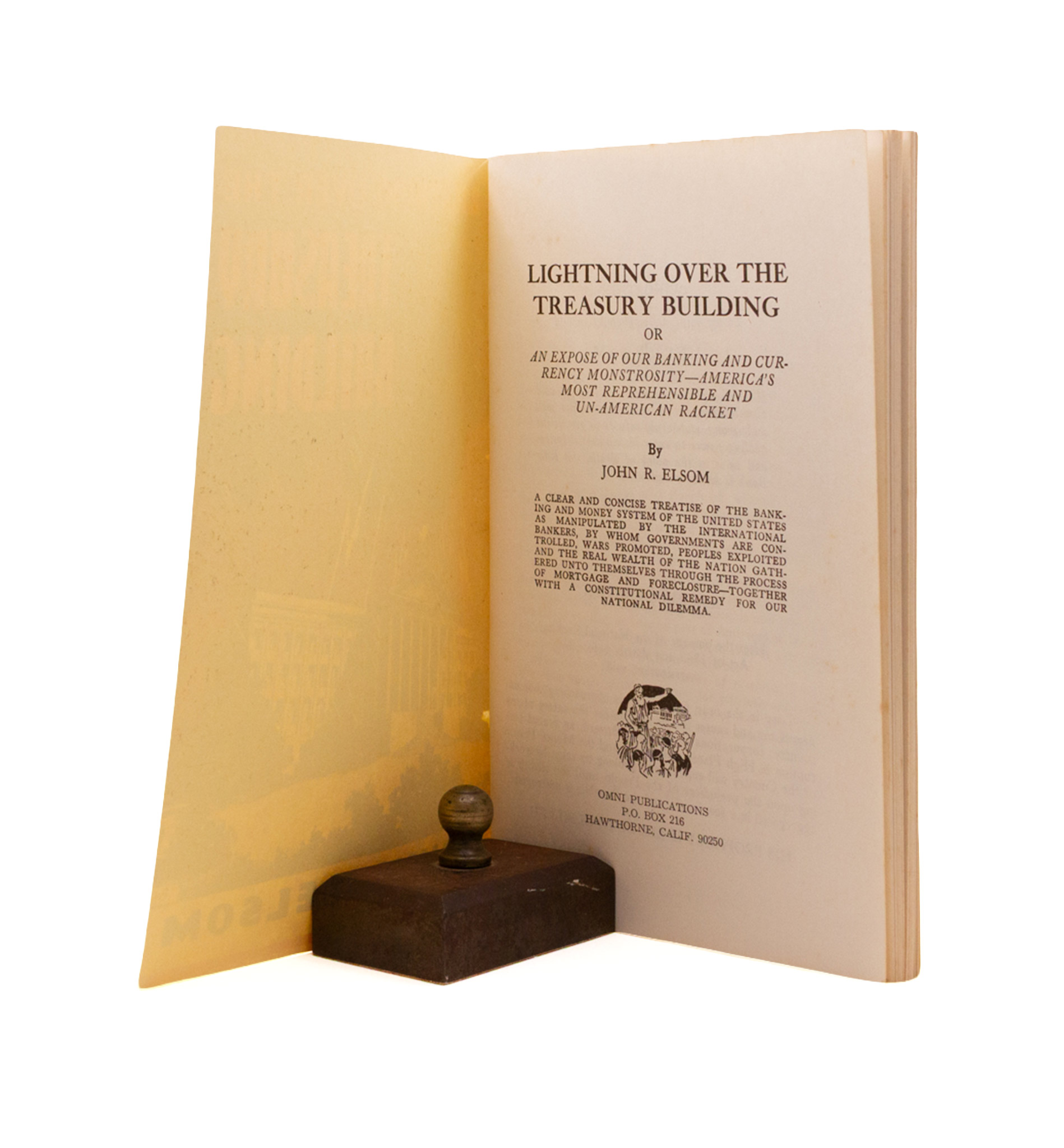
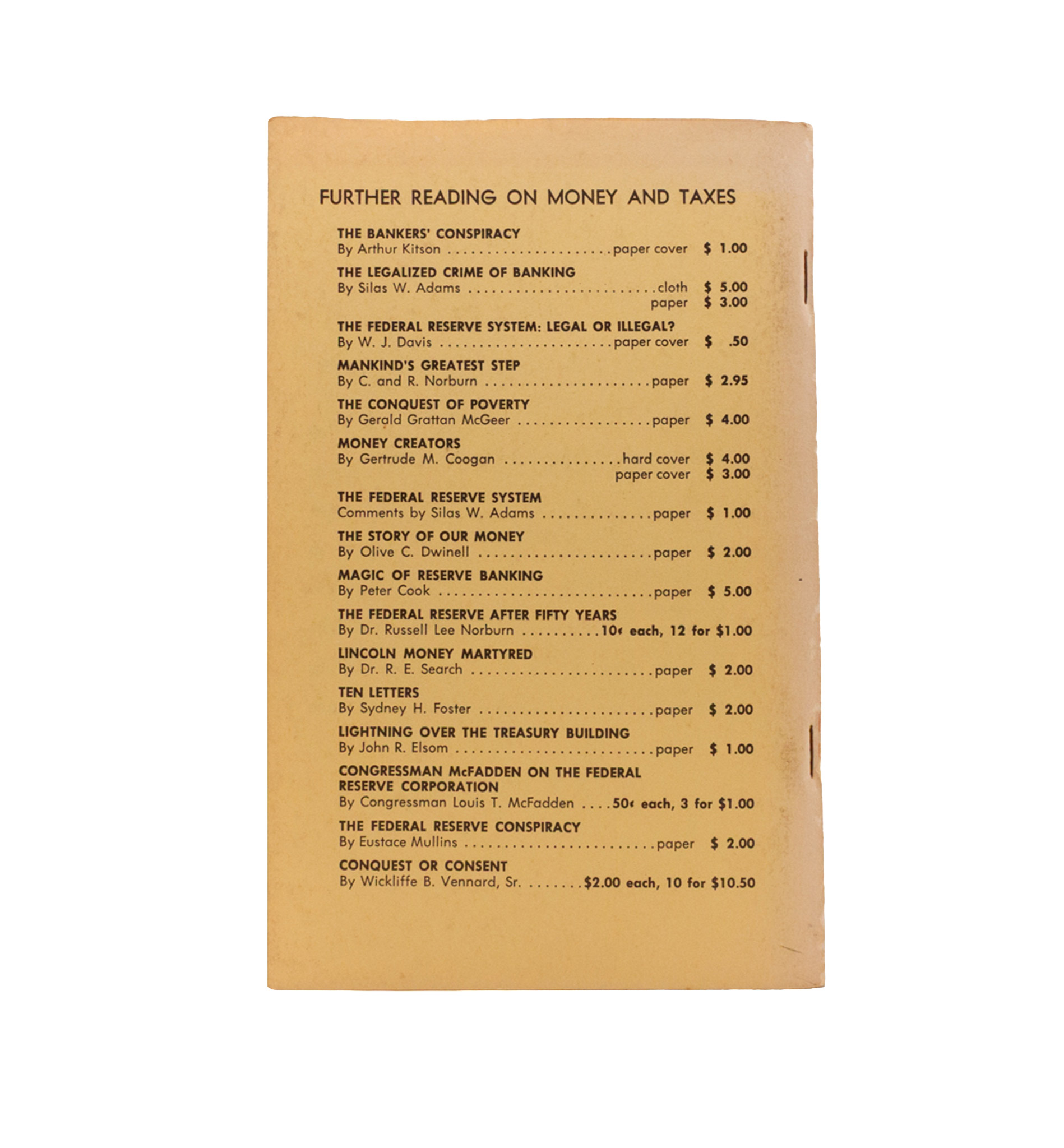
Lightning over the Treasury Building
John R. Elsom
Published Hawthorne, California: Omni Publications, [no date]
110pp.; 21 x 13.2 cm. Stiff yellow paper wrappers printed in white, red and black.
Part of Money, Politics, & America
Or An Expose of our Banking and Currency Monstrosity—America’s Most Reprehensible and Un-American Racket
On the history of the banking system in America and its manipulations in favour of the few, with accusations against the Rothschilds family. With such tales as the founding of the Bank of England as we read elsewhere in Pound. The Rare Omni Publications edition (spiritual successors to Kasper & Horton’s Square $ Series), undated after the Meador Publishing Company first edition, 1941(?). Slight fading at edges to back cover and spine, otherwise as published.
tap to cycle
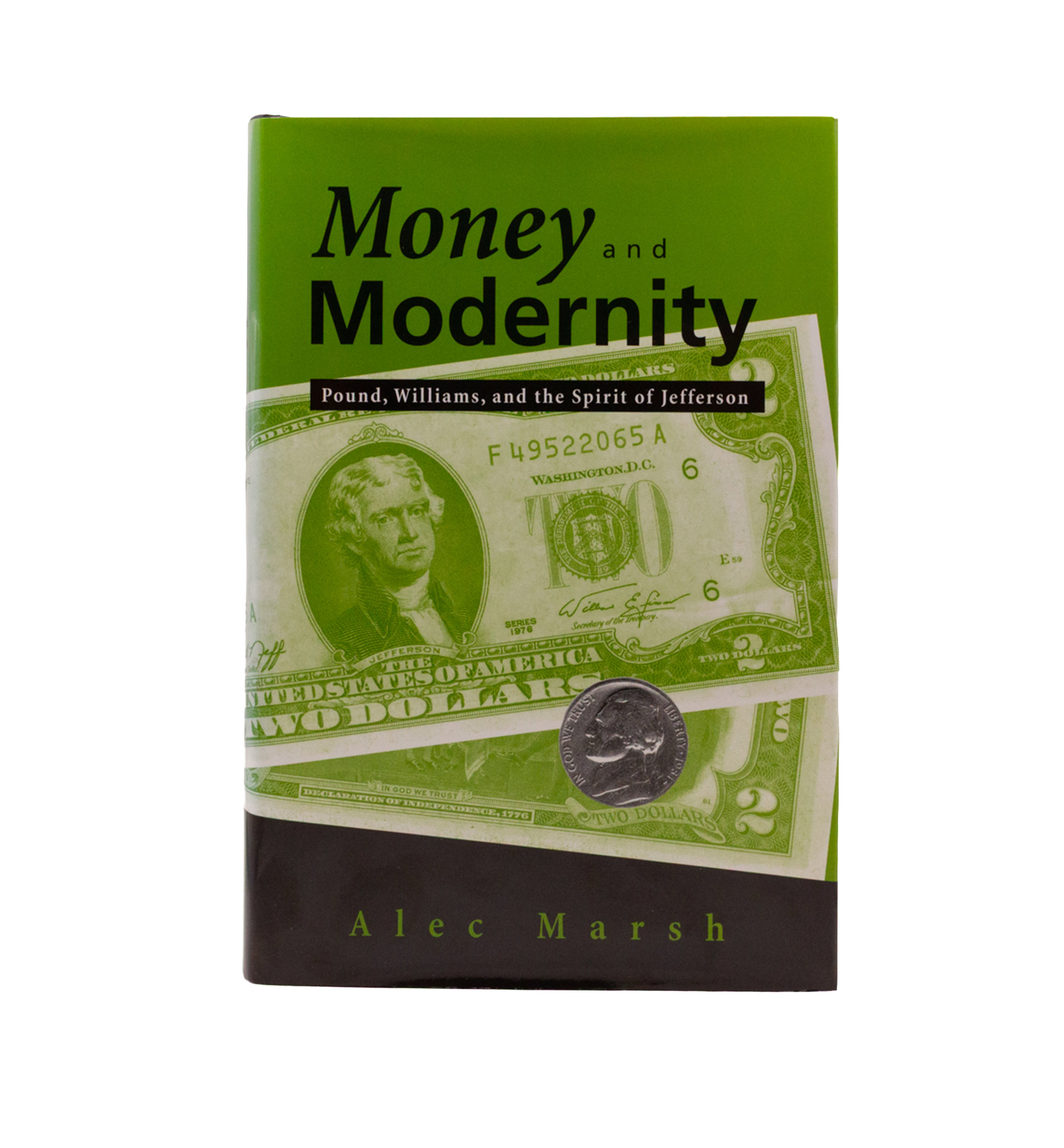
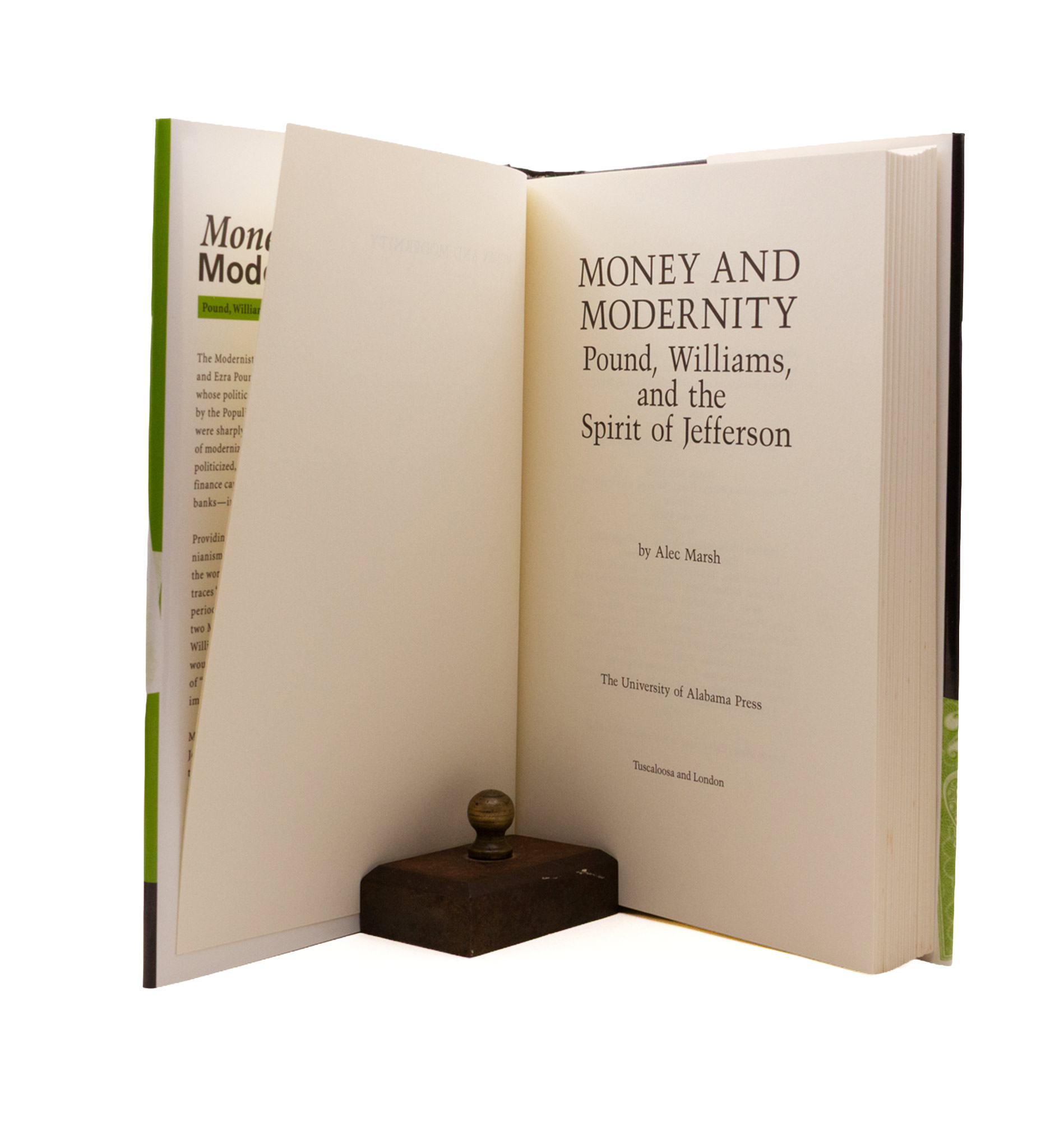
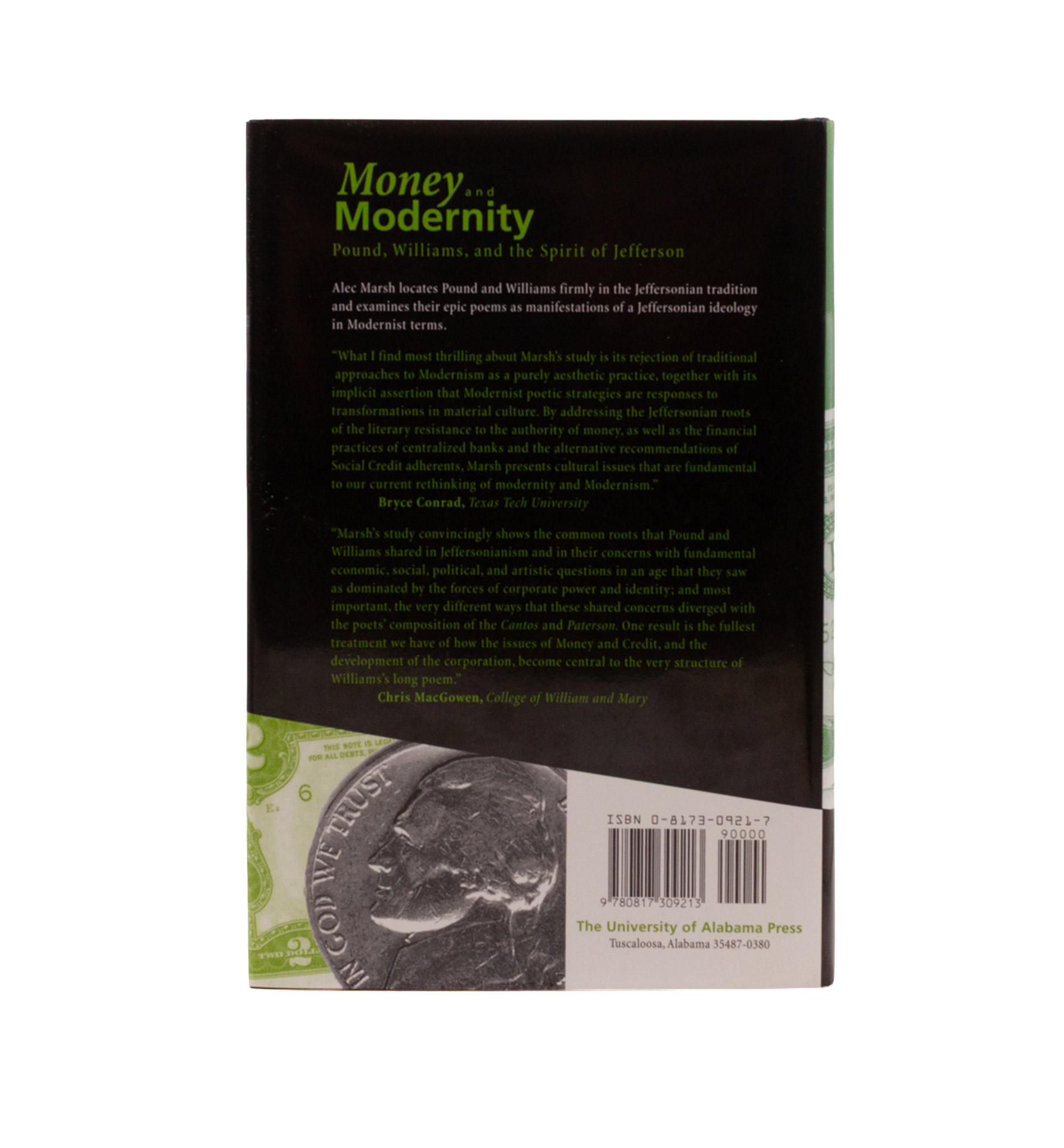
Money and Modernity; Pound, Williams, and the Spirit of Jefferson
Alec Marsh
Published Tuscaloosa and London: The University of Alabama Press, 1998
290pp.; 23.6 x 16 cm. Black cloth boards lettered in gold down spine. White dust-jacket printed in green and black.
Part of Money, Politics, & America
Pound and Williams in the Jeffersonian tradition, and the divergent effects on Paterson and The Cantos. First edition, a fine copy. With David Moody’s extensive pencil marginalia throughout.
tap to cycle
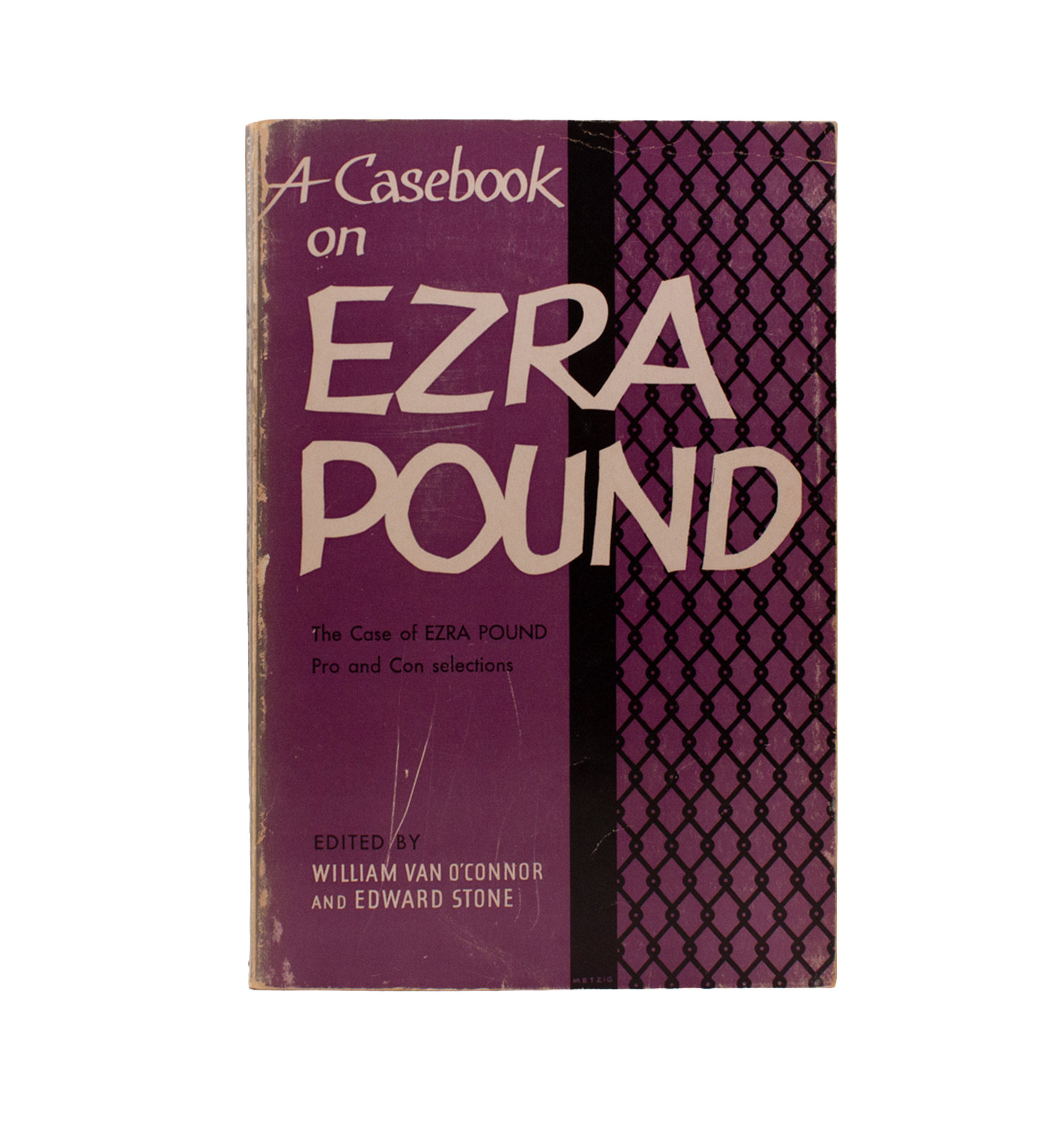
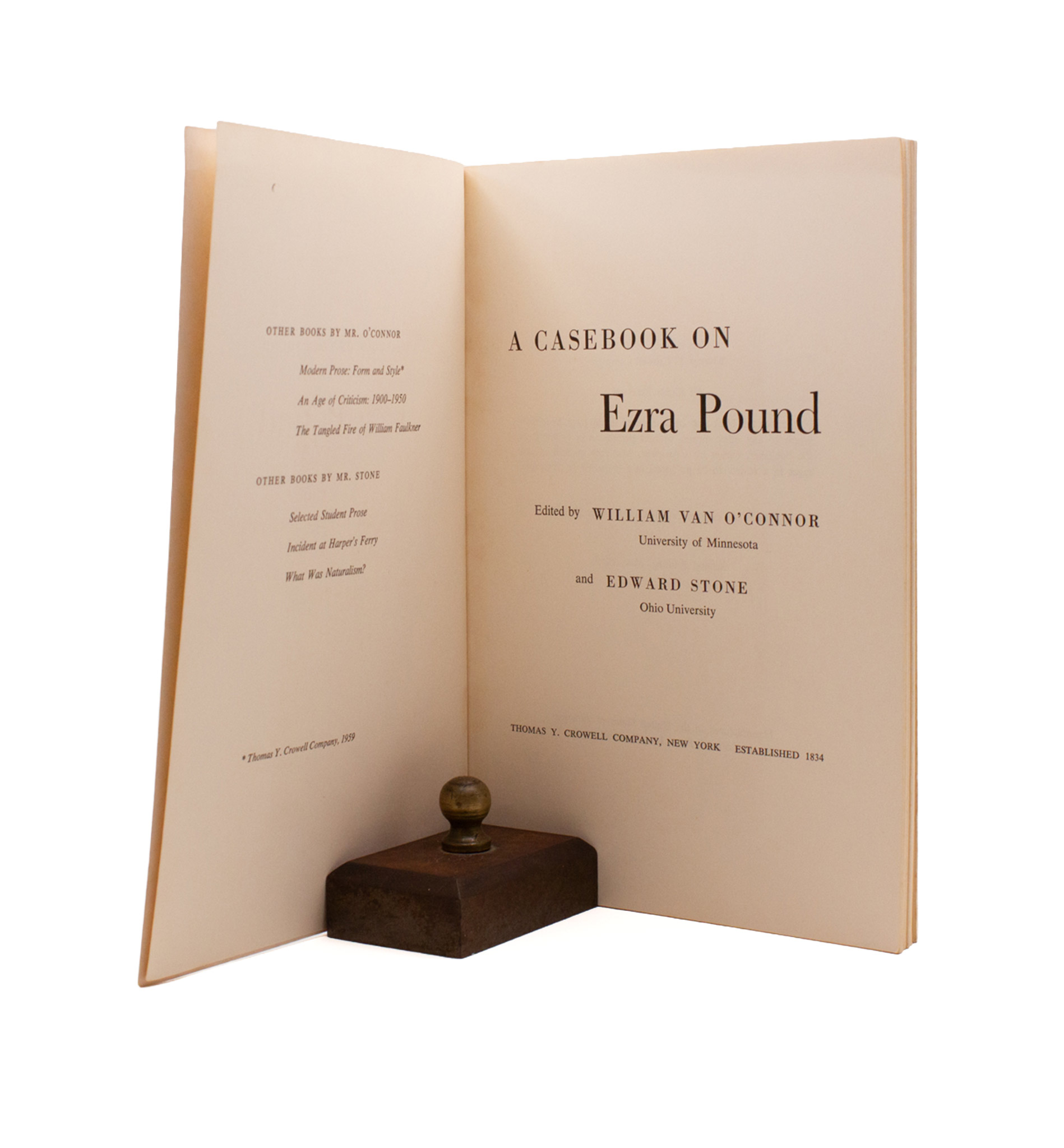
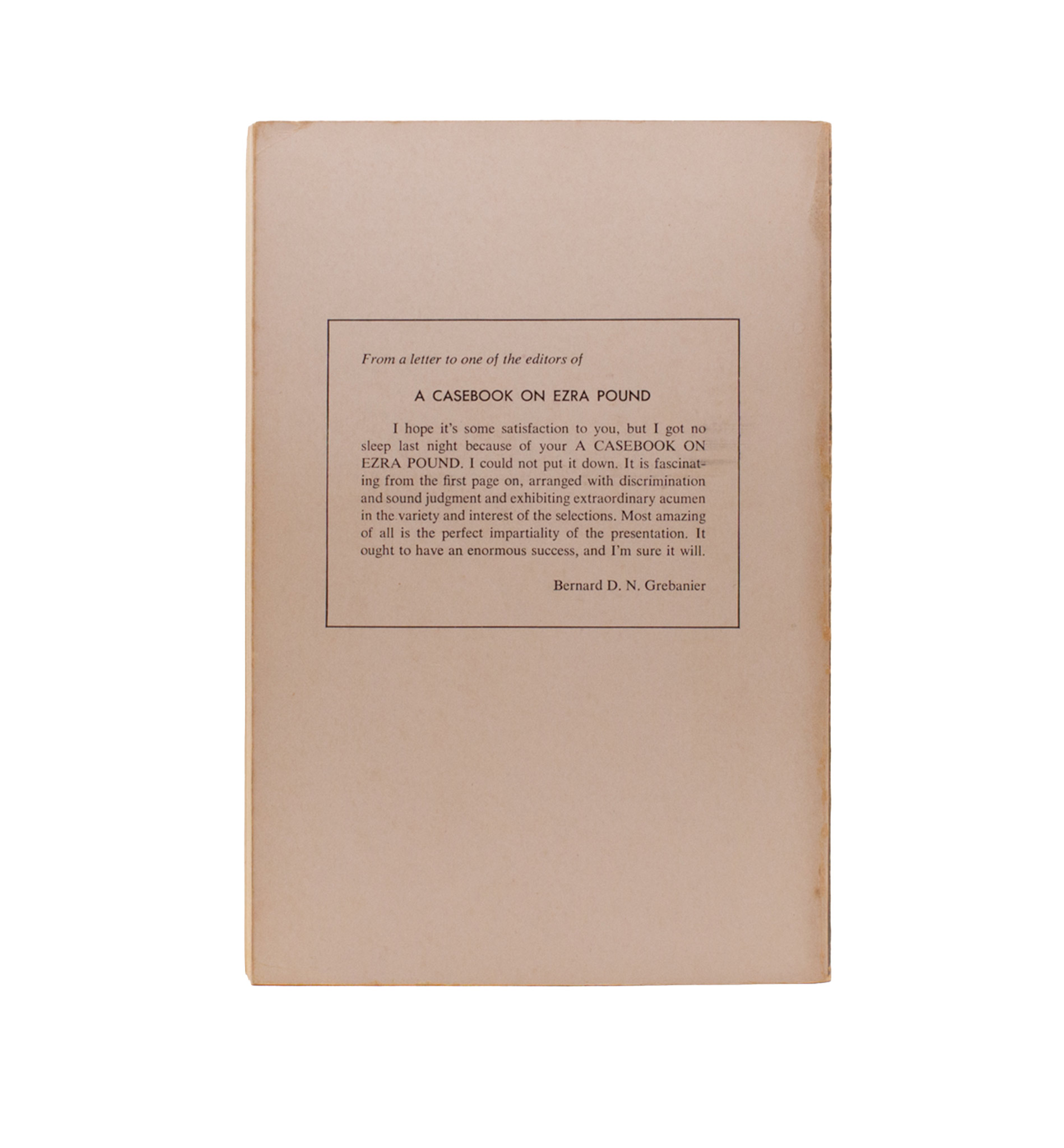
A Casebook on Ezra Pound
William Van O’Connor, Edward Stone, editors
Published New York: Thomas Y. Crowell Company, 1959
179pp.; 21.2 x 14.3 cm. White paper wraps printed in purple and black.
Part of Scholarship, III
A selection of material related to Pound’s reputation mainly in post-war America, with newspaper articles, medical reports, responses to the Bollingen Award, and reactions to Pound’s indictment. First edition, second printing, May 1959. Covers worn. With pencil annotations from David Moody throughout, and a newspaper cutting from The Guardian, Friday 11 April 2008, “Leader: Ezra Pound,” laid in.
Contents: “Citation with Honroary Degree from Hamilton College”; Nathaniel Weyl, “The Strange Case of Ezra Pound”; Time, “Treason”; Newsweek, “Impounded Records”; New York Times, ‘Pound’s Mind “Unsound”’; “Medical Report on Pound”; George Dillon, “A Note on the Obvious”; Book Review Digest, “Reviews of Cantos and Pisan Cantos”; Robert L. Allen, “The Cage”; David Park Williams, “The Background of The Pisan Cantos”; Library of Congress Press Release, “The Pisan Cantos Wins for Ezra Pound First Award of Bollingen in Poetry”; Dwight Macdonald, “Homage to Twelve Judges (an editorial)”; William Barrett, “A Prize for Ezra Pound”; W. H. Auden, Robert Gorham Davis, Clement Greenberg, Irving Howe, George Orwell, Karl Shapiro, Allen Tate, William Barrett, “The Question of the Pound Award”; Ray West, “Excerpts from a Journal: 1949”; Aline Louchheim Saarinen, “The State and Art”; Earle Davis, “Ezra Pound, Traitor and Poet”; Archibald MacLeish, “Poetry and Opinion”; Peter Viereck, “Pure Poetry, Impure Politics, and Ezra Pound”; David Rattray, “Weekend with Ezra Pound”; Jack LaZebnik, “The Case of Ezra Pound”; New York Times, “Ezra Pound May Escape Trial”; The Nation, “What the Pound Case Means (an editorial)”; New York Times, “U.S. Asked to End Pound Indictment”; Statement of Robert Frost; New York Times, “Court Drops Charge Against Ezra Pound”; New York Times, “New Canto for a Poet”; Washington Star, “Ezra Pound Still Sees Mad World Out of Step”; New York Times, “Pound to Live with Daughter”; New York Post, “Ezra Pound’s Canto to Run in Yale Mag”; Babette Deutsch, “The Teacher”; plus appendices, containing selections from cantos, from radio broadcasts, a primary and secondary bibliography, and research exercises for students.

tap to cycle
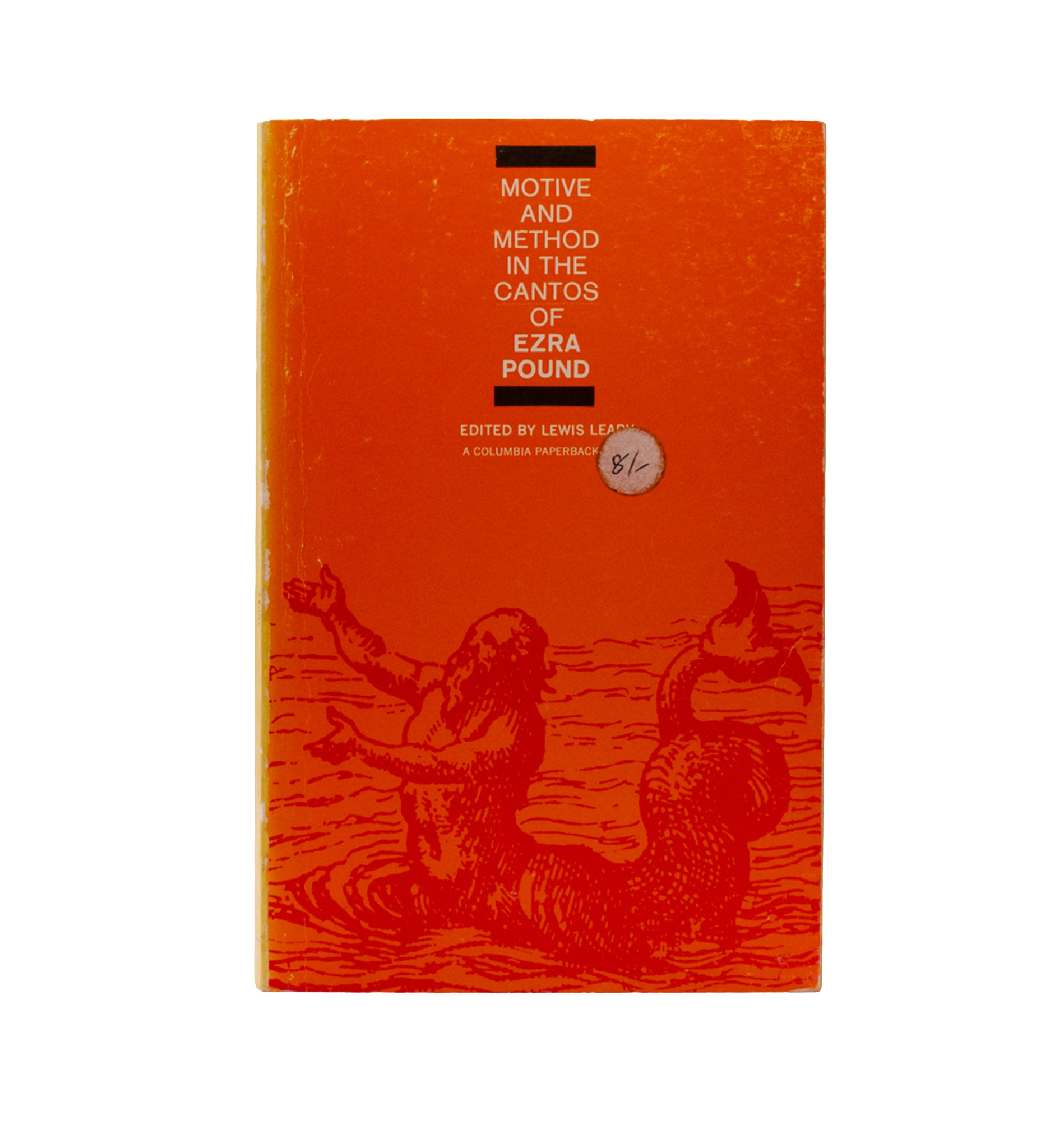
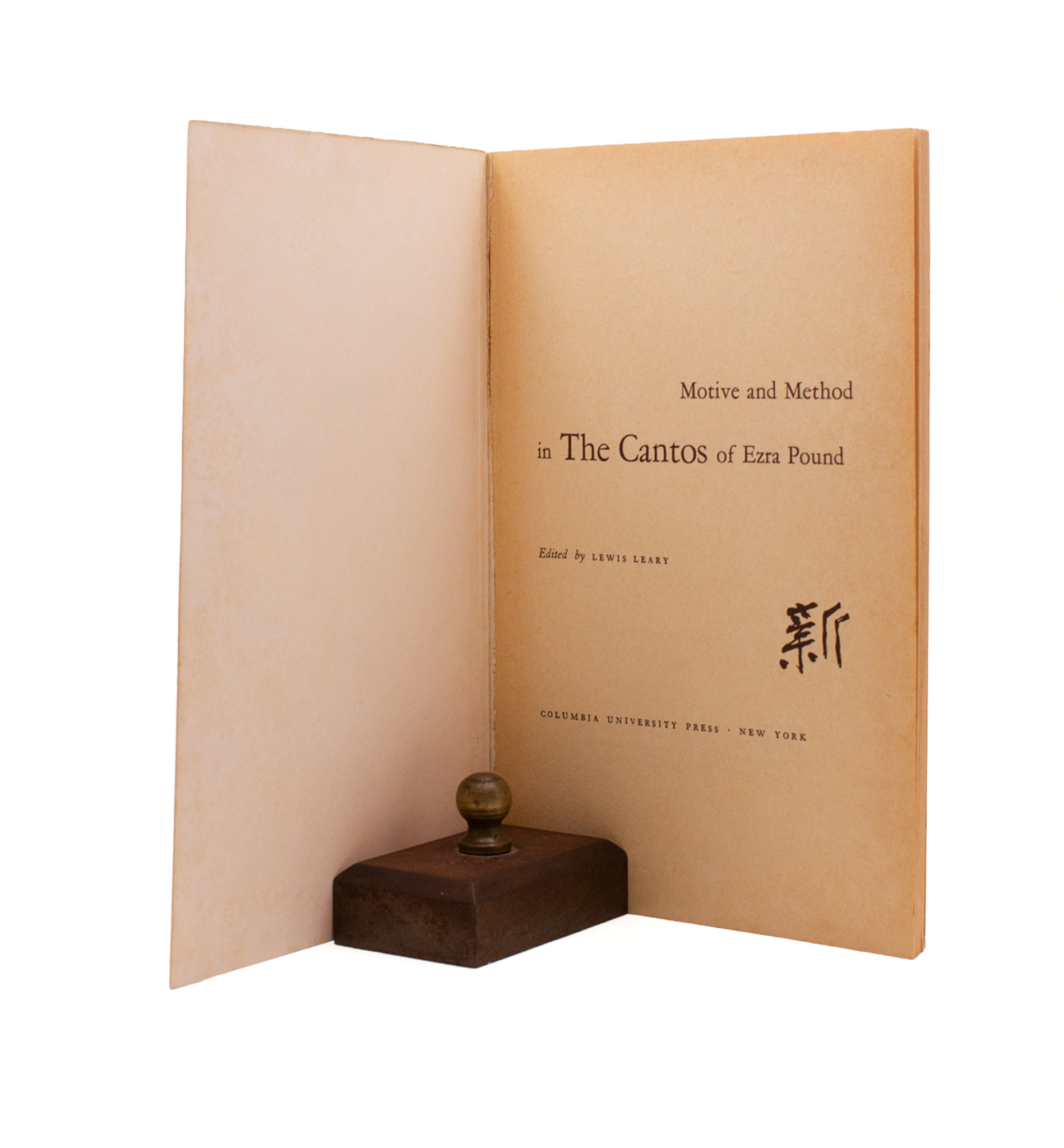
Motive and Method in The Cantos of Ezra Pound
Lewis Leary, editor
Published New York: Columbia University Press, 1961
123pp.; 20.3 x 13.3 cm. Stiff white paper wraps printed in orange and black.
Part of Scholarship, III
A small but essential collection of essays of The Cantos. First edition, second printing and paperback edition, 1961. Lightly browned at page edges; wraps worn, the spine sunned, with a price sticker to front cover.
Contents: Hugh Kenner, “The Broken Mirrors and the Mirror of Memory”; Guy Davenport, “Pound and Frobenius”; Sister M. Bernetta Quinn, O.S.F, “The Metamorphoses of Ezra Pound”; Forrest Read, Jr., “A Man of No Fortune.”


tap to cycle
Ezra Pound, A Collection of Critical Essays
Walter Sutton, editor
Published New Jersey: Prentice-Hall, 1963
184pp.; 20.4 x 13.9 cm. Stiff white paper wrappers printed in red and black.
Part of Scholarship, III
A selection of literary criticism on Pound, with first class contributors. First edition, paperback issue. Wraps lightly worn, spotting along the edges of the text-block, but otherwise a nice, clean copy.
Contents: Walter Sutton, “Introduction”; W. B. Yeats, “Ezra Pound”; W. C. Williams, “Excerpts from a Critical Sketch: A Draft of XXX Cantos by Ezra Pound”; T. S. Eliot, “Ezra Pound”; F. R. Leavis, “Ezra Pound”; Hugh Kenner, “Mauberley”; M. L. Rosenthal, “The Cantos”; Forrest Read[, Jr.], “A Man of No Fortune”; David W. Evans, “Ezra Pound as Prison Poet”; W. M. Frohock, “The Revolt of Ezra Pound”; Harold H. Watts, “Reckoning”; Earl Miner, “Pound, Haiku, and the Image”; Murray Schafer, “Ezra Pound and Music”; J. P. Sullivan, “Pound’s Homage to Propertius: The Structure of a Mask”; George P. Elliott, “Poet of Many Voices”; Roy Harvey Pearce, “Pound, Whitman, and the American Epic,” together with a chronology of important dates and a selected bibliography.
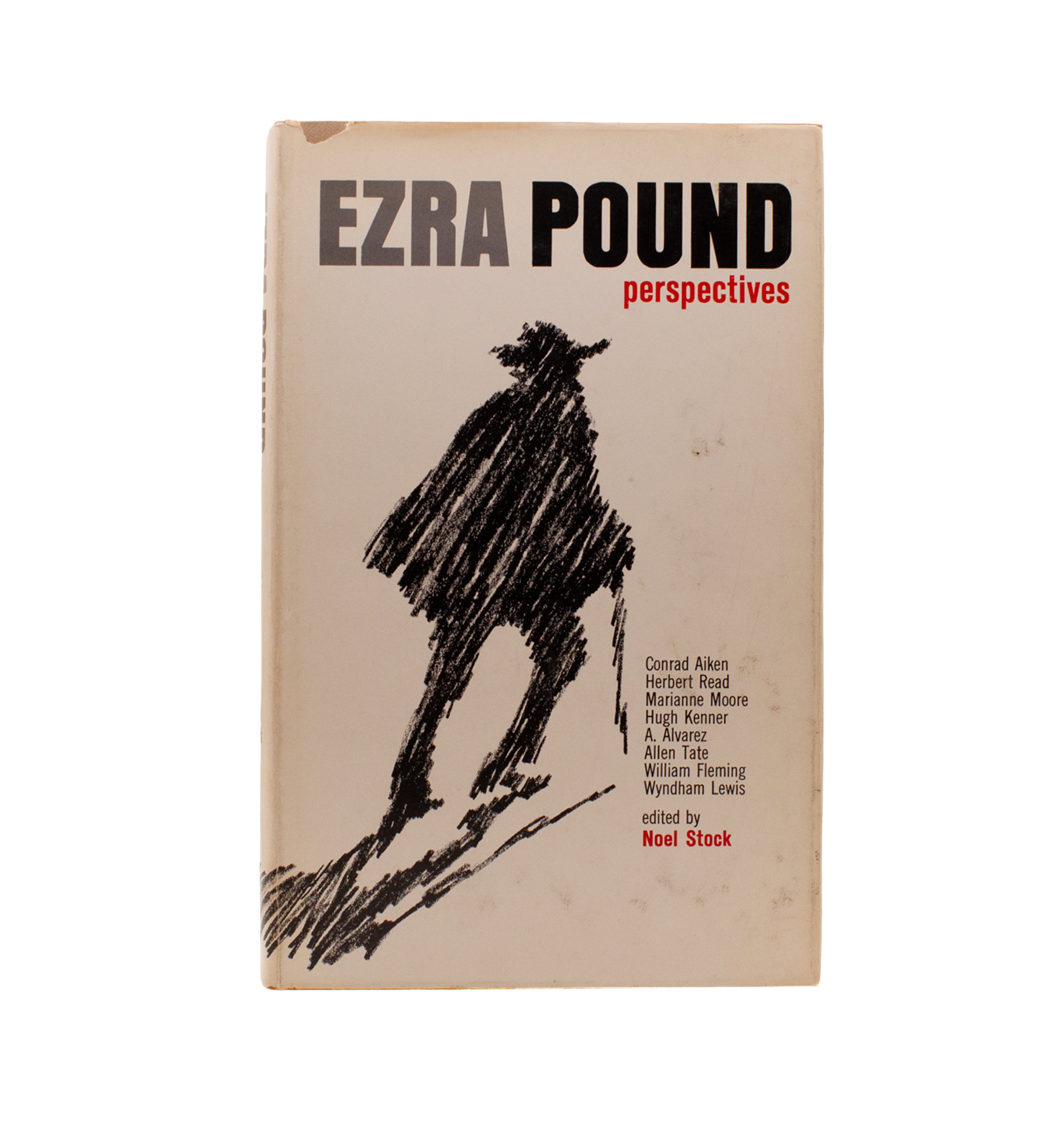

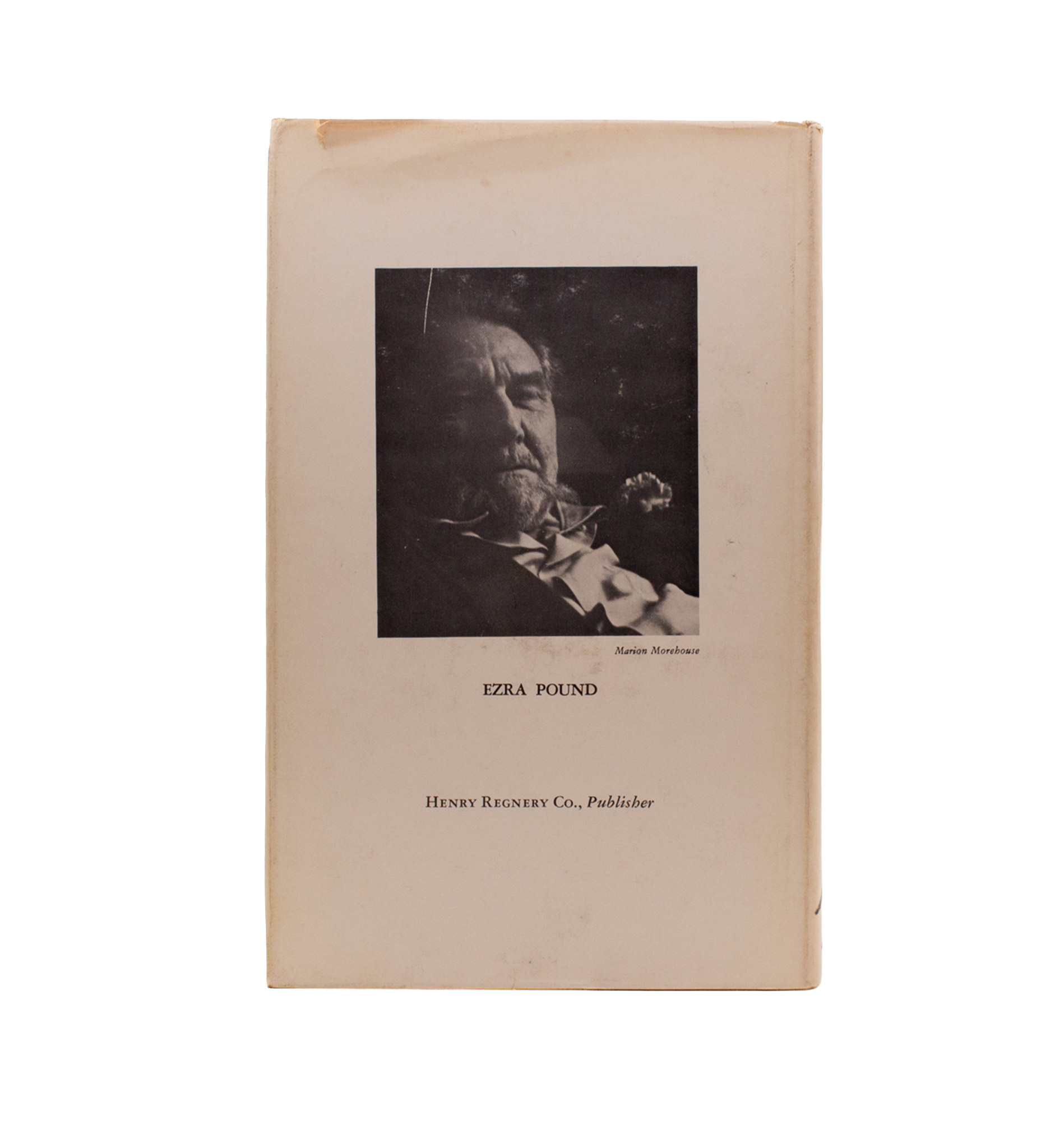
tap to cycle
Ezra Pound, Perspectives
Noel Stock, editor
Published Chicago: Henry Regnery Company, 1965
219pp.; 24.2 x 15.7 cm. Tan cloth boards lettered in brown down spine. White dust-jacket printed in black and red.
Part of Scholarship, III
A compilation of personal reminiscences, analyses and commentaries; a tribute for the poet’s eightieth birthday. First edition. With numerous illustrations, including a number of manuscripts and the front wrapper of Orientamenti (1944), “one of the rarest of all Pound’s books.” The very occasional marginal note, and a note in ink laid in to rear from David Moody, referencing “the custodian of Ezra Pound’s papers,” which was how Stock was described on the rear flap before that being blacked out. A near fine book in a very good jacket, with a little rubbing, a small tear to the back, and a little loss to the front.
Contents: Noel Stock, “Introduction”; Conrad Aiken, “Ezra Pound: 1914”; Herbert Read, “Ezra Pound”; Marianne Moore, “Tribute”; Hugh Kenner, “Leucothea’s Bikini: Mimetic Homage”; A. Alvarez, “Craft and Morals”; Peter Whigham, “Ezra Pound and Catullus”; Donald Gallup, “The Search for Mrs. Wood’s Program”; Allen Tate, “Ezra Pound and the Bollingen Prize”; Hugh Mac Diarmid, “The Return of the Long Poem”; Rabindranath Tagore, T. S. Eliot, Wyndham Lewis, James Joyce, Marianne Moore, Henry Newbolt, W. B. Yeats, Richard Aldington, W. C. Williams, F. M. Ford, e. e. cummings, “A Bundle of Letters”; William Fleming, “Ezra Pound and the French Language”; Ernest Hemingway, “A Note on Ezra Pound”; Christine Brooke-Rose, “Piers Plowman in the Modern Wasteland”; Tom Scott, “An Appreciation”; Wyndham Lewis, “The Rock Drill”; Joseph Fetler Malof, “Ez Pound, Inc.”; Denis Goacher, “BBC THIRD PROGRAM: Ezra Pound—Translations from the Chinese.”
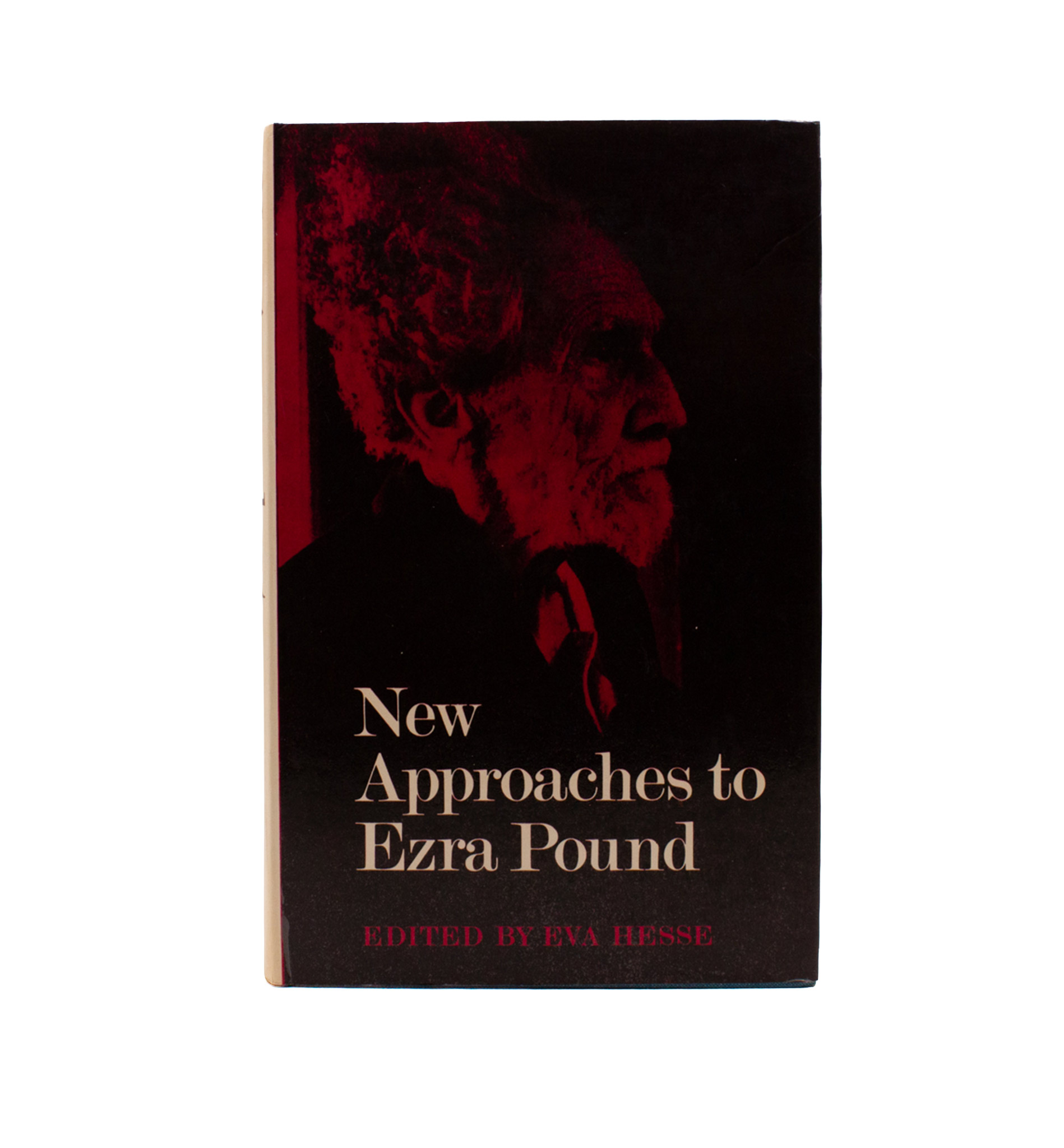
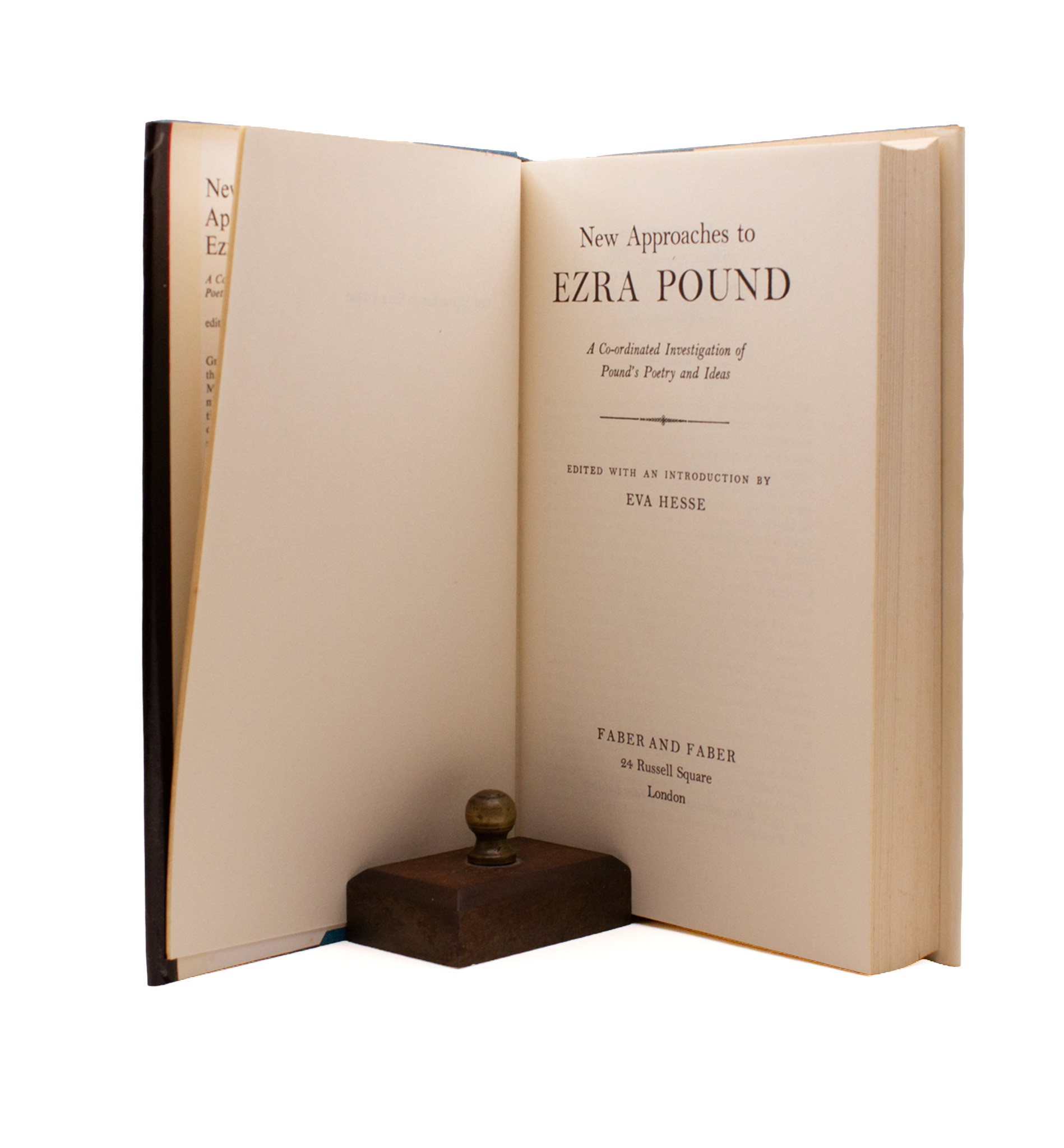
tap to cycle
New Approaches to Ezra Pound
Eva Hesse, editor
Published London: Faber and Faber, 1969
406pp.; 22.3 x 14.2 cm. Blue cloth boards lettered in gold on spine. White dust-jacket printed in black and red with a photograph of Pound by Lisetta Carmi-Genova to front.
Part of Scholarship, III
A collection of essays from an A-list line-up, most in the manner of the review appearing here for the first time. First edition. Near fine. The very occasional pencil annotation from David Moody.
Contents: Eva Hesse, “Introduction”; Richard Ellmann, “Ez and Old Billyum”; N. Christoph De Nagy, “Pound and Browning”; Forrest Read, “Pound, Joyce, and Flaubert: The Odysseans”; Guy Davenport, “Persephone’s Ezra”; Boris de Rachewiltz, “Pagan and Magic Elements in Ezra Pound’s Works”; Donald Davie, “The Poet as Sculptor”; J. P. Sullivan, “Ezra Pound and the Classics”; Christine Brooke-Rose, “Lay me by Aurelie: An Examination of Pound’s Use of Historical and Semi-Historical Sources”; George Dekker, “Myth and Metamorphosis: Two Aspects of Myth in The Cantos”; Walter Baumann, “Secretary of Nature, J. Heydon”; John Espey, “The Inheritance of Tò Kalón”; Hugh Kenner, “Blood for the Ghosts”; Albert Cook, “Rhythm and Person in The Cantos”; Leslie Fiedler, “Traitor or Laureate: The Two Trials of the Poet.”

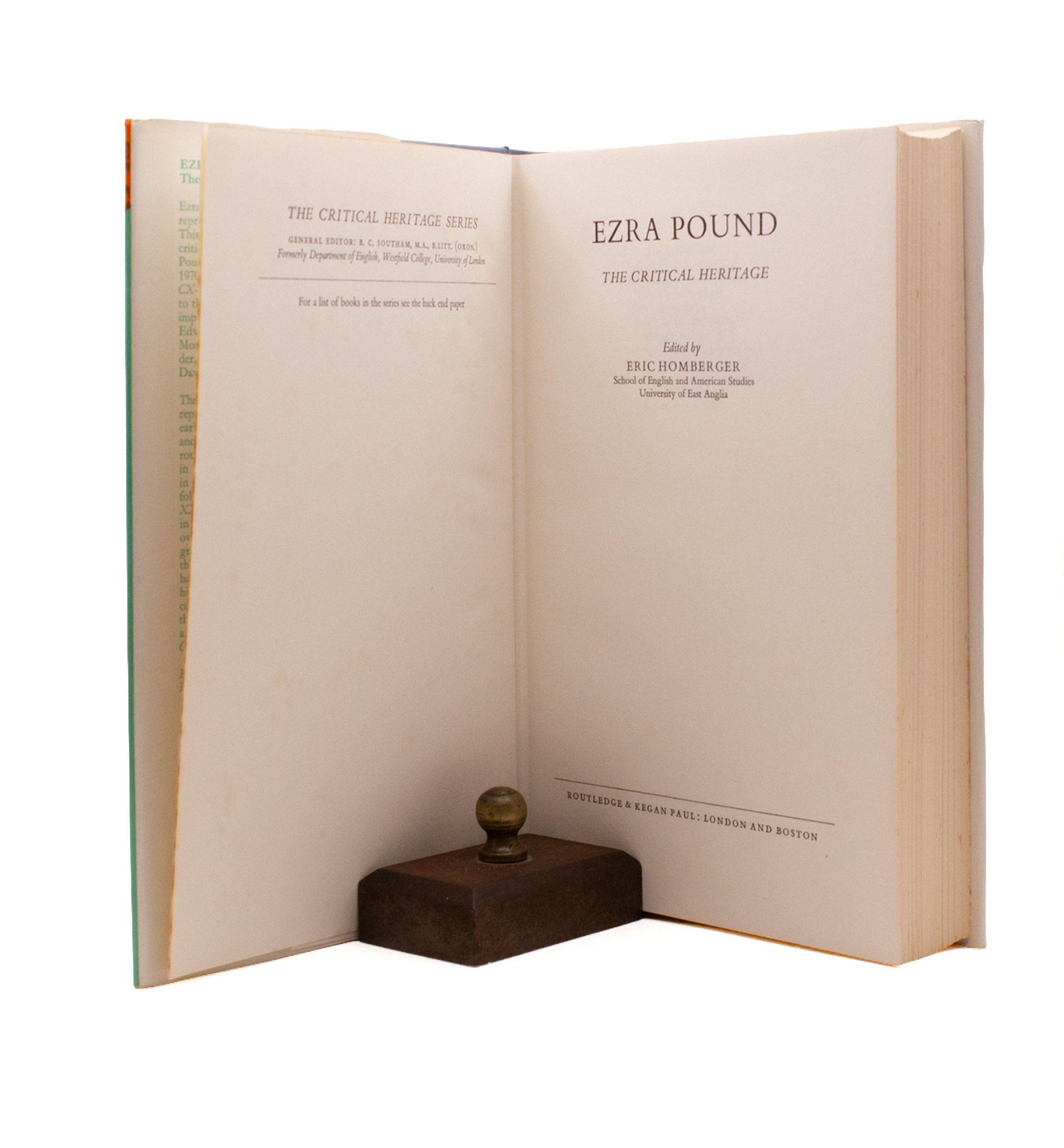
tap to cycle
Ezra Pound, The Critical Heritage
Eric Homberger, editor
Published London and Boston: Routledge & Kegan Paul, 1972
500pp.; 22.2 x 14.7 cm. Blue cloth boards lettered in gold down spine. White dust-jacket printed in green and orange.
Part of Scholarship, III
A collection of critical reviews to Pound’s editions, as detailed as to include publications such as Sonnets and Ballate of Guido Cavalcanti (1912) and Instigations (1920), commencing with a number of written portraits of Pound, then passing from ALS right up to Drafts & Frags.; the contents too many to list. A number of pencil annotations from David Moody, some notably more extensive. First edition. Foxing to the prelims, very light edge-wear to the jacket, otherwise fine.
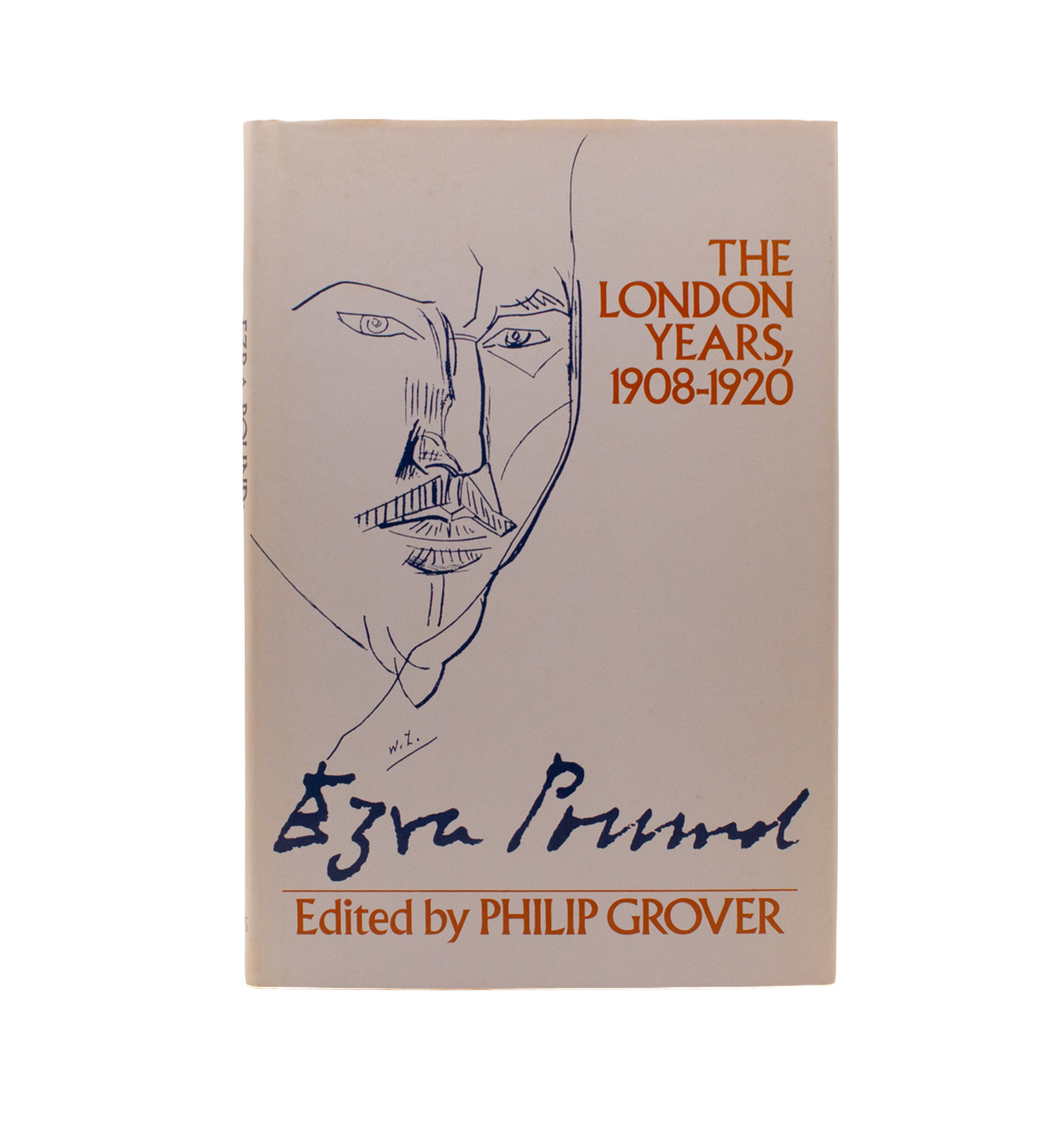

tap to cycle
Ezra Pound, The London Years, 1908-1920
Philip Grover, editor
Published New York: AMS, 1978
166pp.; 23.6 x 16.1 cm. Red cloth boards lettered in black on spine. White dust-jacket printed in black, red and blue.
Part of Scholarship, III
A small collection of essays regarding Pound’s work in London, compiled from talks given at the first* Ezra Pound Conference, held in Sheffield 1976, at which an exhibition of materials was also shown, in collaboration with Omar Pound. First edition, a fine book in a near-fine jacket, and a beautiful production. With one ephemeral note in ink from David Moody laid into near the rear.
Contents: Eric Homberger, “Modernists and Edwardians”; William Pratt, “Ezra Pound and the Image”; Peter Makin, “Pound’s Provence and the Medieval Paideuma: An Essay in Aesthetics”; Donald Monk, “How to Misread: Pound’s Use of Translation”; Ian F. A. Bell, “Mauberley’s Barrier of Style”; Walter Baumann, “The Structure of Canto IV”; with a further “Catalogue of a Pound Exhibition (Sheffield University, 23 April 1976),” which, among other things, is a great resource for Pound’s trips to France at the time.
* The first actually seems to have been held in Orono, Maine, 1975, which Grover does not recognise.

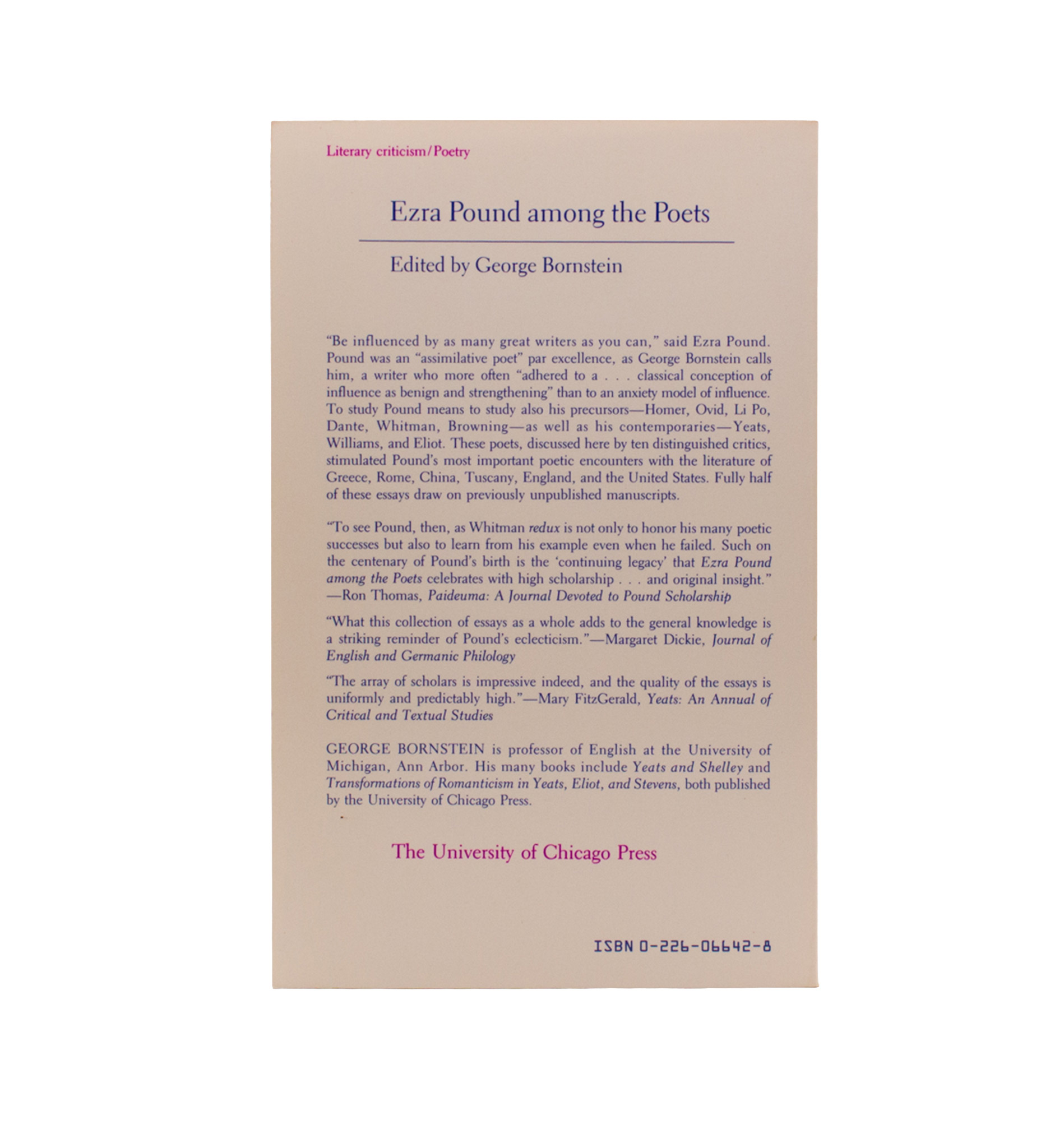
tap to cycle
Ezra Pound Among the Poets
George Bornstein, editor
Published Chicago and London: The University of Chicago Press, 1985
238pp.; 20.6 x 13.7 cm. Stiff white papers wrappers printed in blue and pink.
Part of Scholarship, III
Pound and [Poet]; essays relating Pound’s relationships to other poets, prior or contemporary. Occasional pencil symbol from David Moody in the margin. First edition, paperback issue. A fine copy.
Contents: George Bornstein, “Introduction”; Hugh Kenner, “Pound and Homer”; Lillian Feder, “Pound and Ovid”; Ronald Bush, “Pound and Li Po: What Becomes a Man”; Stuart Y. McDougal, “Dreaming a Renaissance: Pound’s Dantean Inheritance”; Hugh Witemeyer, “Clothing the American Adam: Pound’s Tailoring of Walt Whitman”; George Bornstein, “Pound’s Parleyings with Robert Browning”; A. Walton Litz, “Pound and Yeats: The Road to Stone Cottage”; Thomas Parkinson, “Pound and Williams”; Robert Langbaum, “Pound and Eliot”; Marjorie Perloff, “The Contemporary of Our Grandchildren: Pound’s Influence.”
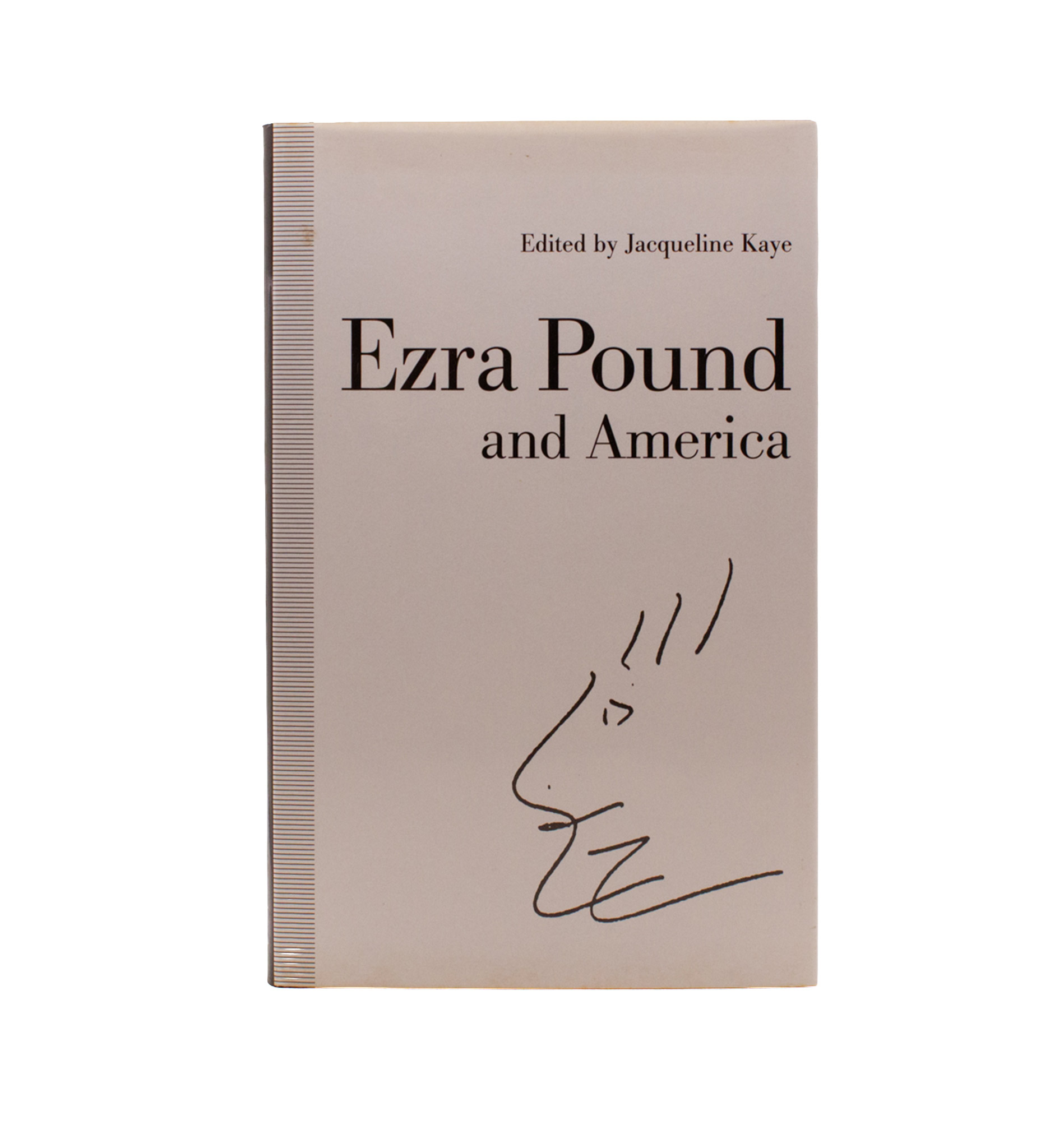

tap to cycle
Ezra Pound and America
Jacqueline Kaye, editor
Published Macmillan, 1992
203pp.; 22.2 x 14.1 cm. Black cloth boards lettered in gold down the spine. White dust-jacket printed in black.
Part of Scholarship, III
Essays following talks from the 13th EPIC, “Pound and America,” held at the University of Essex, September 1989. With a contribution from Richard Dean Taylor who spent years in effort of constructing a Variorum for The Cantos (see The Tragi-Comical History of the Variorum Project and its Betrayal by Cambridge University Press here, and the prototype hypertext here). First edition, a fine copy in a near-fine jacket, back flap a little dirtied.
Contents: Maria Luisa Ardizzone, “Some Additions and Corrections to Ezra Pound e la scienza”; L. S. C. Bristow, “‘God, my god, you folks are DUMB!!!’: Pound’s Rome Radio Broadcasts”; Angelia Elliott, “The Eidolon Self: Emerson, Whitman and Pound”; Peter Makin, “Americanus Natione non Moribus”; A. D. Moody, “Composition in the Adams Cantos”; Eric Mottram, “Ezra Pound in his Time”; Nick Selby, “Revolutionary Figures in Canto XXXI”; Richard [Dean] Taylor, “Reconstructing Ezra Pound’s Cantos: Variorum Edition — Manuscript Archive — Reading Text”; Demetres P. Tryphonopoulos, “‘That Great Year Epic’: Ezra Pound, Katherine Ruth Heyman and H.D.”; E. P. Walkiewicz and Hugh Witemeyer, “Ezra Pound, Bronson Cutting and American Issues, 1930-5”; Stephen Wilson, “Pound’s American Revolutions.”



tap to cycle
A Guide to Ezra Pound and Ernest Fenollosa’s Classic Noh Theatre of Japan
Akiko Miyake, Sanehide Kodama, Nicholas Teele, editors
Published Maine: The National Poetry Foundation and Shiga University: The Ezra Pound Society of Japan, 1994
453pp.; 22.8 x 15.2 cm. Stiff white paper wraps printed in green and black.
Part of Scholarship, III
A large collection of essays on Pound’s use of Fenollosa and his love and work on Noh. A fine copy, with the publisher’s advertisment for “New Titles - Autumn 1994,” and a postcard from an exhibition, “V O U: Visual Poetry of the Japanese Avant-Garde from the collection of John Solt, January 22 - June 10, 1990,” featuring a work by Kitasono Katue (Kit Kat, to Pound), night of figure (1975) laid-in.
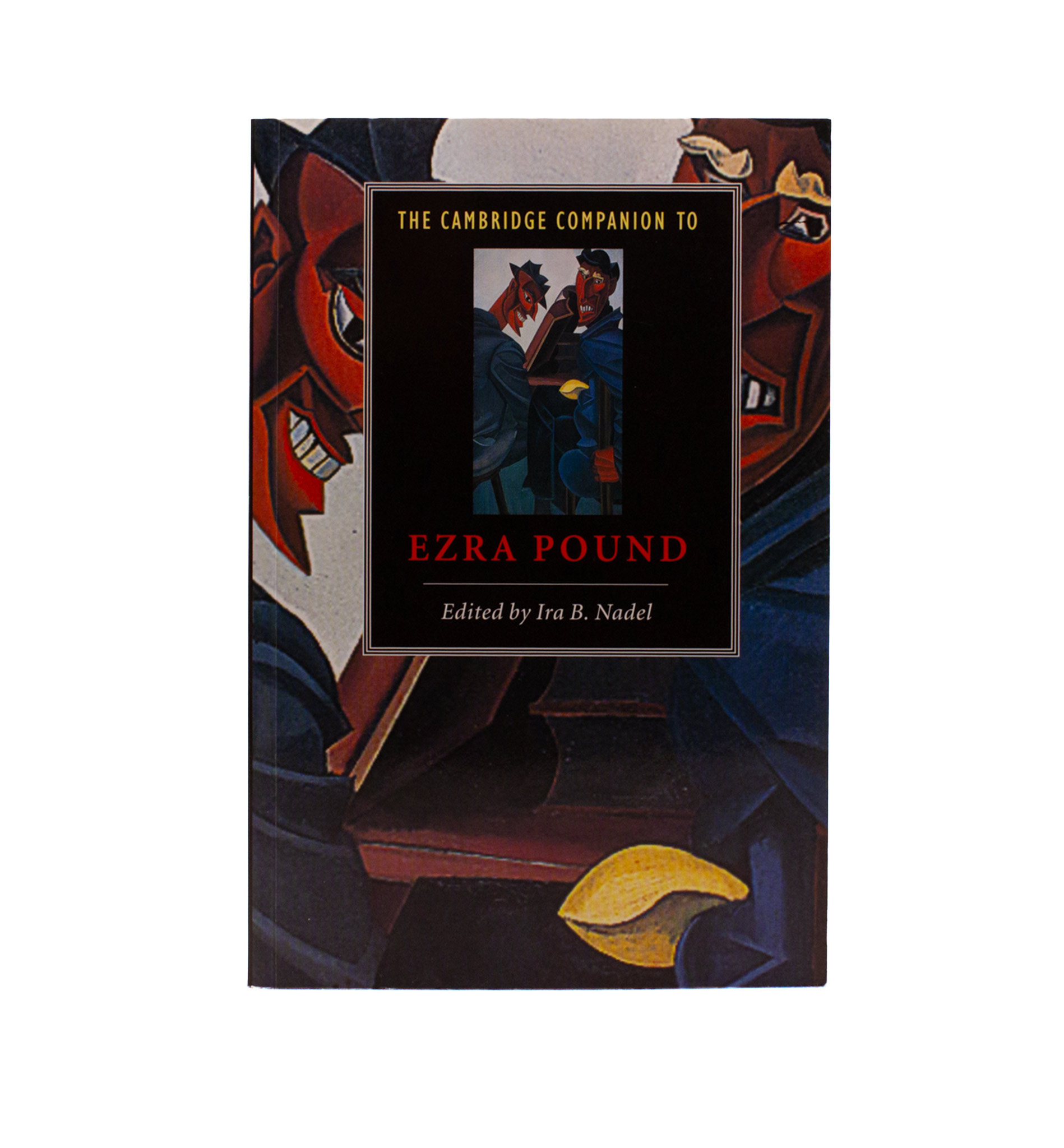

tap to cycle
The Cambridge Companion to Ezra Pound
Ira B. Nadel, editor
Published Cambridge University Press, 1999
318pp.; 22.7 x 15.2 cm. Colour printed stiff white wrappers.
Part of Scholarship, III
“This Cambridge Companion to Ezra Pound contains fifteen chapters by leading international scholars, who together reflect diverse but complementary approaches to the study of Ezra Pound’s poetry and prose. They consider the poetics, foreign influences, economics, politics and publication history of Pound’s entire corpus [!], and reveal his importance in developing some of the key movements in twentieth-century poetry. The book also situates Pound’s work in the context of modernism, illustrating his influence on contemporaries such as T. S. Eliot and James Joyce. Taken together, the chapters offer a sustained examination of one of the most versatile, influential and certainly controversial poets of the modern period.” First edition, paperback issue. A fine copy save the slightest edge wear to the back wrap. With the occasional pencil marginalia from David Moody, including lots of disagreement with Nadel’s Chronology.
Contents: Ira B. Nadel, “Introduction Understanding Pound”; George Bornstein, “Pound and the making of modernism”; Hugh Witemeyer , “Early poetry 1908-1920”; Daniel Albright, “Early Cantos I-XLI”; Ian F. A. Bell, “Middle Cantos XLII-LXXI”; Ronald Bush, “Late Cantos LXXII-CXVII”; Peter Nicholls, “Beyond The Cantos: Pound and American poetry”; Richard [Dean] Taylor, “The texts of The Cantos”; Massimo Bacigalupo, “Pound as critic”; Ming Xie, “Pound as translator”; Reed Way Dasenbrock, “Pound and the visual arts”; Michael Ingham, “Pound and music”; Tim Redman, “Pound’s politics and economics”; Helen M. Dennis, “Pound, women and gender”; Wendy Flory, “Pound and antisemitism.”
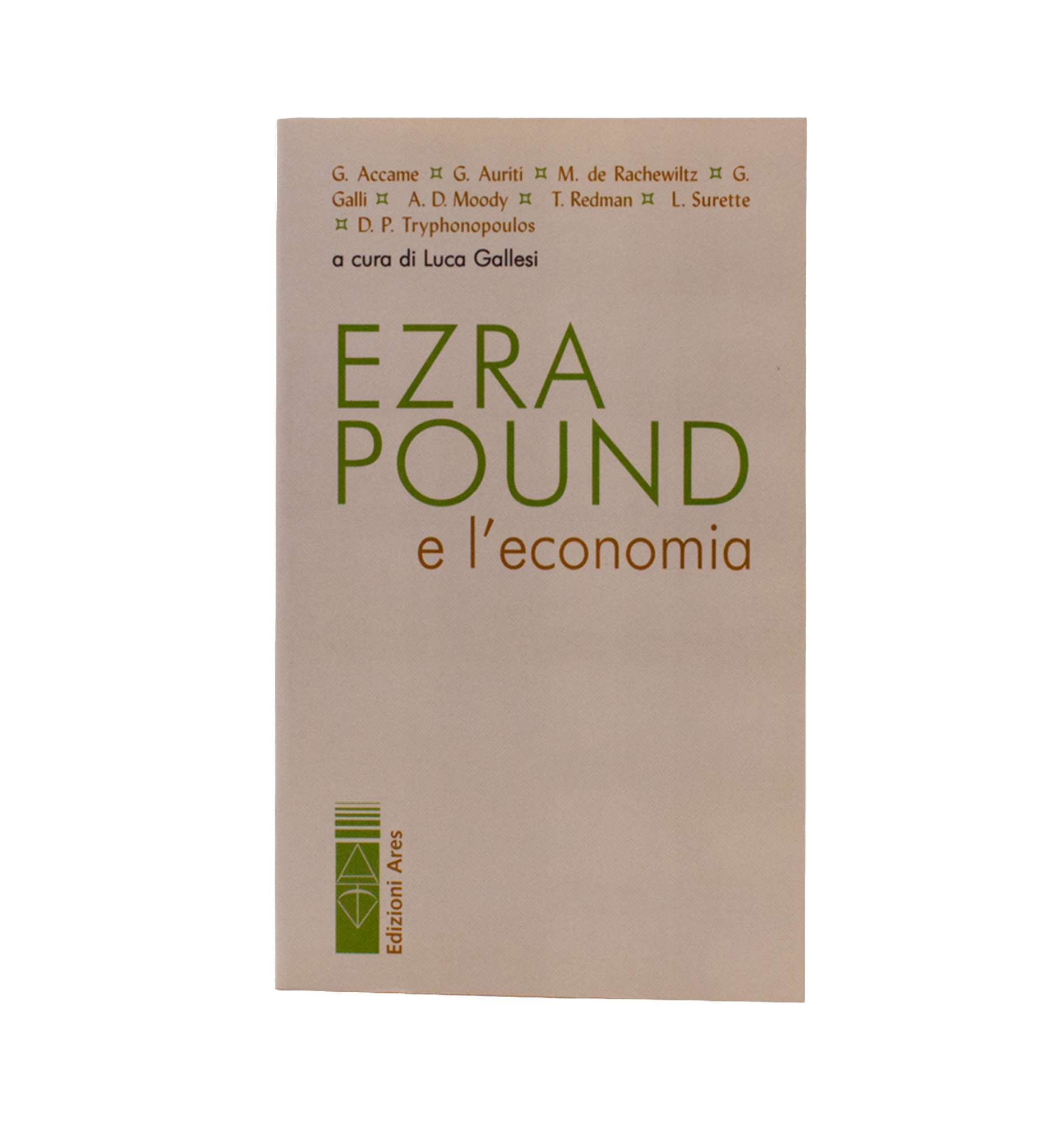

tap to cycle
Ezra Pound e l’economia
Luca Gallesi, a cura di
Published Milan: Edizioni Ares, 2001
208pp.; 18.1 x 11 cm. Stiff white paper wraps printed in grey, green, black and bronze.
Part of Scholarship, III
A sweet little book containing essays in English and Italian on Pound’s economics, with political bent where applicable. A little aged but mostly fine.
Contents: Luca Gallesi, “Introduzione”; Giano Accame, “Attualità di Pound economista”; Giacinto Auriti, “L’anno sabbatico, valore indotto, valore creditizio e signoraggio”; Mary de Rachewiltz, “La virtù nell’economia di Ezra Pound”; Giorgio Galli, “Ezra Pound tra economia ed esoterismo”; David A. Moody, “Directio voluntatis. Pound’s economics in the Economy of The Cantos”; Tim Redman, “Opere recenti su Pound economista: Accame, Marsh e Surette”; Leon Surette, “A Dangerous Difference: Pound, Douglas & Proudhon”; Demetres P. Tryphonopoulos, “«The State Is Corporate / as with Pulse in its Body»: Ezra Pound’s Byzantine and Fascist Paradigms for an Economic Program.”

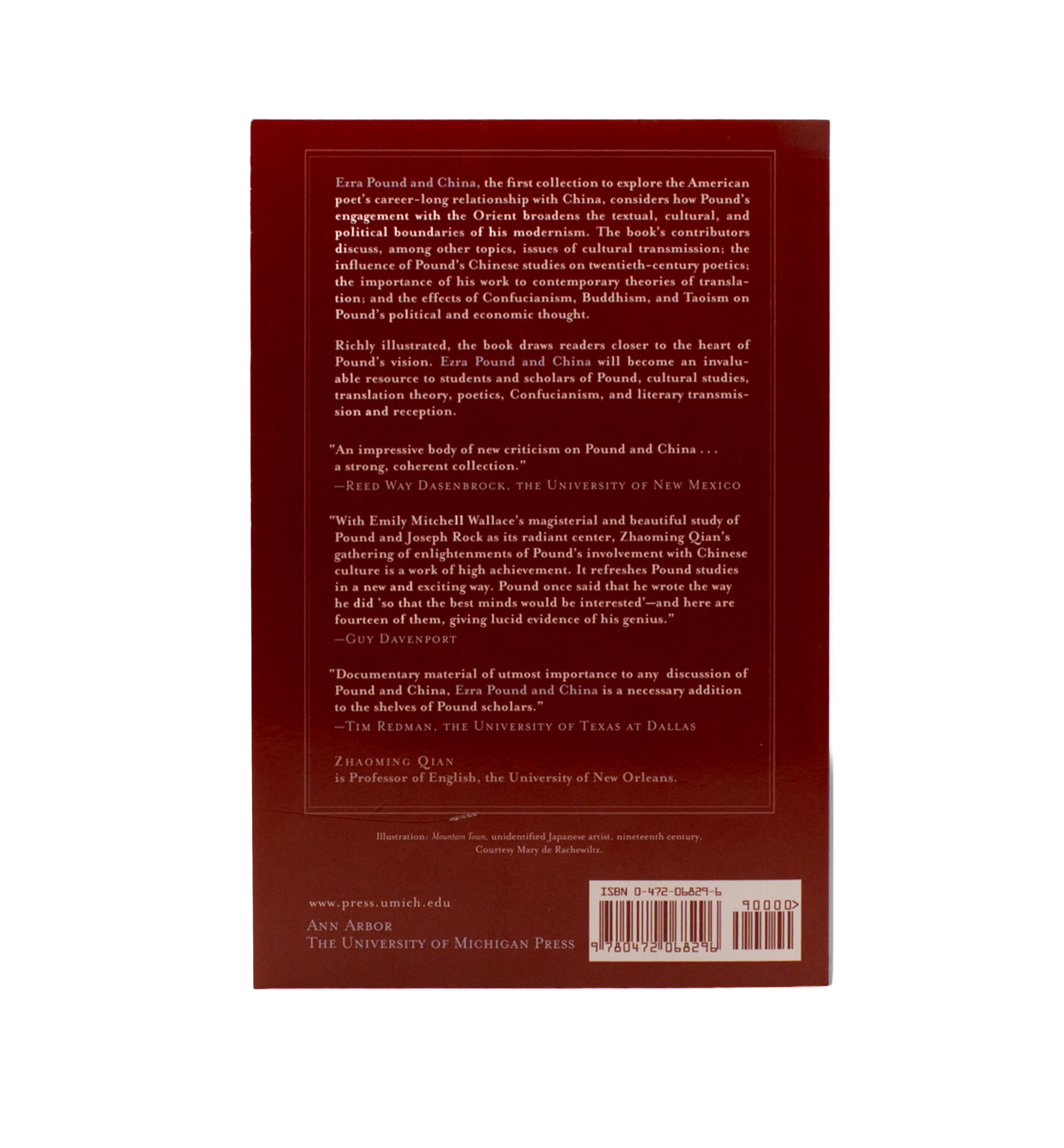
tap to cycle
Ezra Pound and China
Zhaoming Qian, editor
Published Ann Arbor: The University of Michigan Press, 2003
297pp.; 22.5 x 15.1 cm. Stiff paper wraps printed in lilac and red.
Part of Scholarship, III
Essays after talks held at the 18th EPIC, Beijing, July 1999. A fine copy save a scratch to the back cover. With David Moody’s annotations to “Confucius and Confusion” and “Confucius Erased.”
Contents: Zhaoming Qian, “Introduction”; Ira B. Nadel, “Constructing the Orient: Pound’s American Vision”; Barry Ahearn, “Cathay: What Sort of Translation?”; Christine Froula, “The Beauties of Mistranslation: On Pound’s English after Cathay”; Peter Makin, ‘Ideogram, “Right Naming,” and the Authoritarian Streak’; Wendy Stallard Flory, “Confucius against Confusion: Ezra Pound and the Catholic Chaplain at Pisa”; Ronald Bush, “Confucius Erased: The Missing Ideograms in The Pisan Cantos”; Britton Gildersleeve, ‘“Enigma” at the Heart of Paradise: Buddhism, Kuanon, and the Feminine Ideogram in The Cantos”; Emily Mitchell Wallace, ‘“Why Not Spirits?”—“The Universe Is Alive”: Ezra Pound, Joseph Rock, the Na Khi, and Plotinus’; Patricia de Rachewiltz, Yang Lian, Kim Jong-Gil, “Poems”; Mary de Rachewiltz, “Afterword: Kung Is to Pound as Is Water to Fishes.”

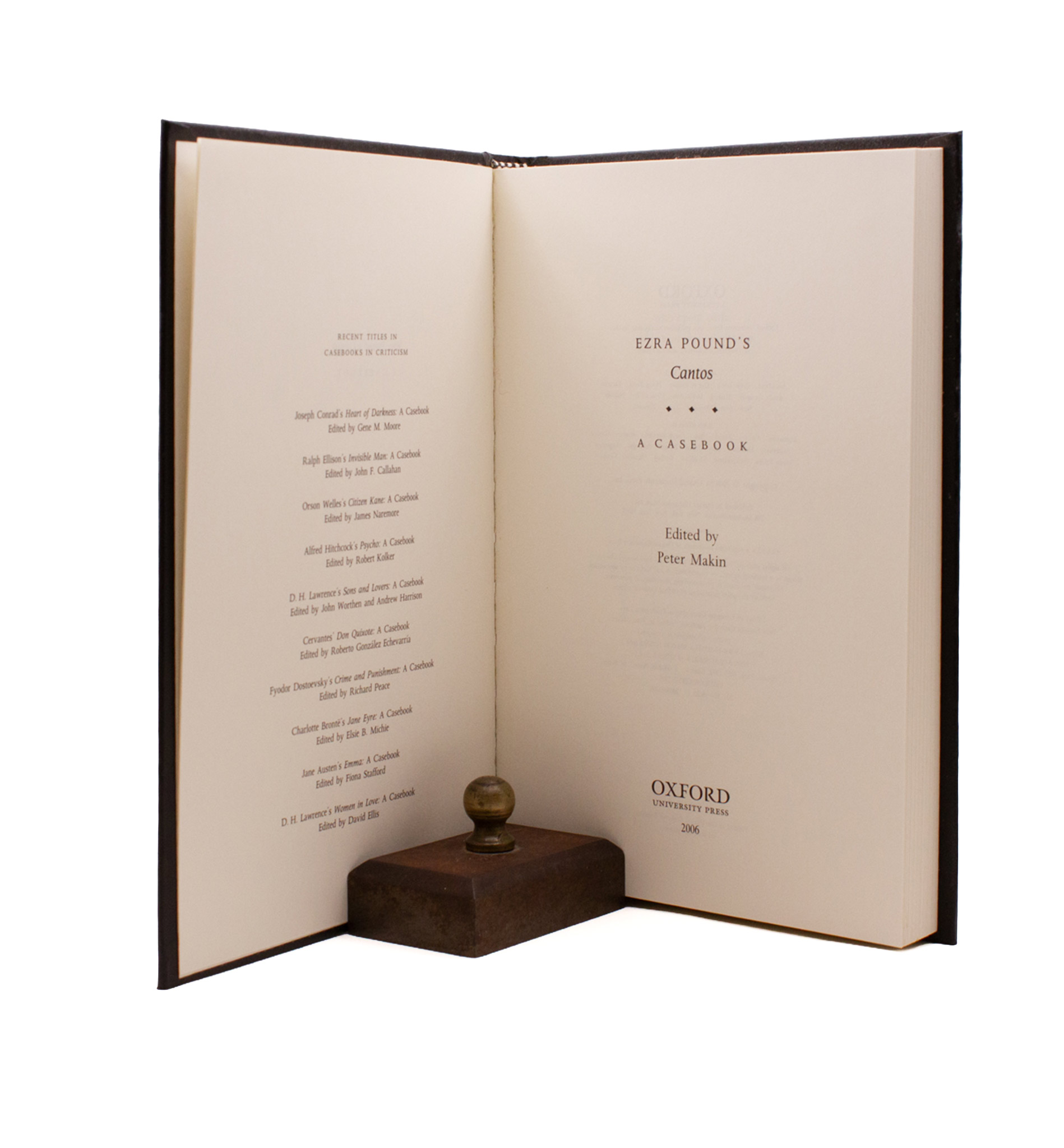

tap to cycle
Ezra Pound’s Cantos, A Casebook
Peter Makin, editor
Published Oxford University Press, 2006
264pp.; 21.7 x 14.7 cm. Black paper covered boards lettered in silver to front and down spine.
Part of Scholarship, III
A range of essays on The Cantos showcasing the numerous aspects by which the poem can be approached. With an unusual contribution against the Commedia as model. First edition, the only available in hardback. With a little light wear to the boards. David Moody’s annotations, mostly to Makin’s introduction.
Contents: Peter Makin, “Introduction”; Hugh Kenner, “Ezra Pound”; Guy Davenport, “Persephone’s Ezra”; Girolamo Mancuso, “The Ideogrammic Method in The Cantos”; Reed Way Dasenbrock, “Why the Commedia Is Not the Model for The Cantos and What Is”; Peter Makin, “History and Money, Fact and Hysteria”; Massimo Bacigalupo, ‘“Safe with My Lynxes”: Pound’s Figure in the Carpet?’; Kevin Oderman, “Extracts from Ezra Pound and the Erotic Medium”; Peter Nicholls, “A Metaphysics of the State”; Hugh Kenner, “Inventing Confucius”; D. S. Carne-Ross, “The Music of a Lost Dynasty: Pound in the Classroom”; Donald Davie, “Res and Verba in Rock-Drill and After”; Ronald Bush, ‘“Unstill, Ever Turning”: The Composition of Ezra Pound’s Drafts & Fragments’; D. G. Bridson, “An Interview with Ezra Pound”; Donald Hall, “Ezra Pound: An Interview.”

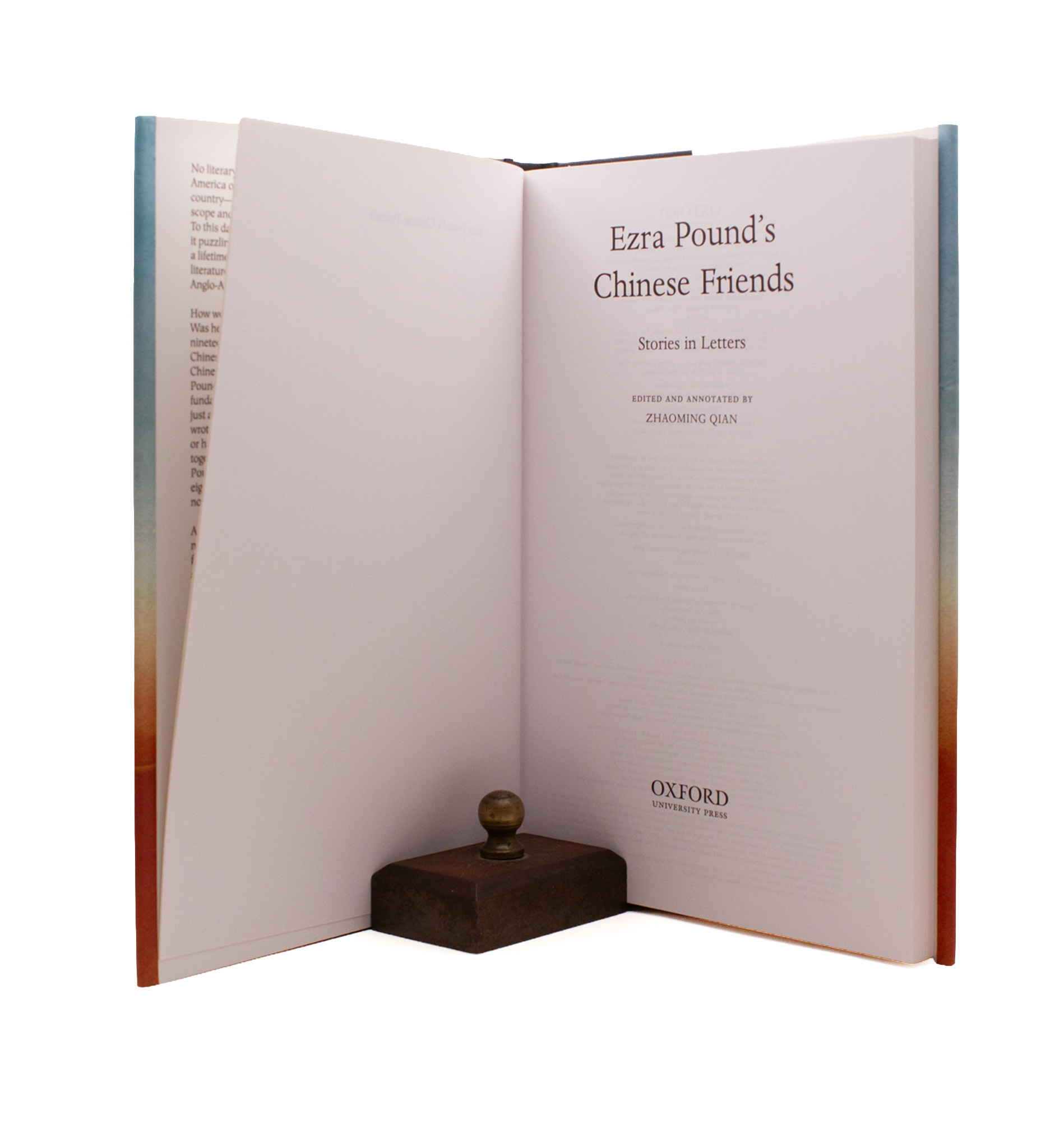
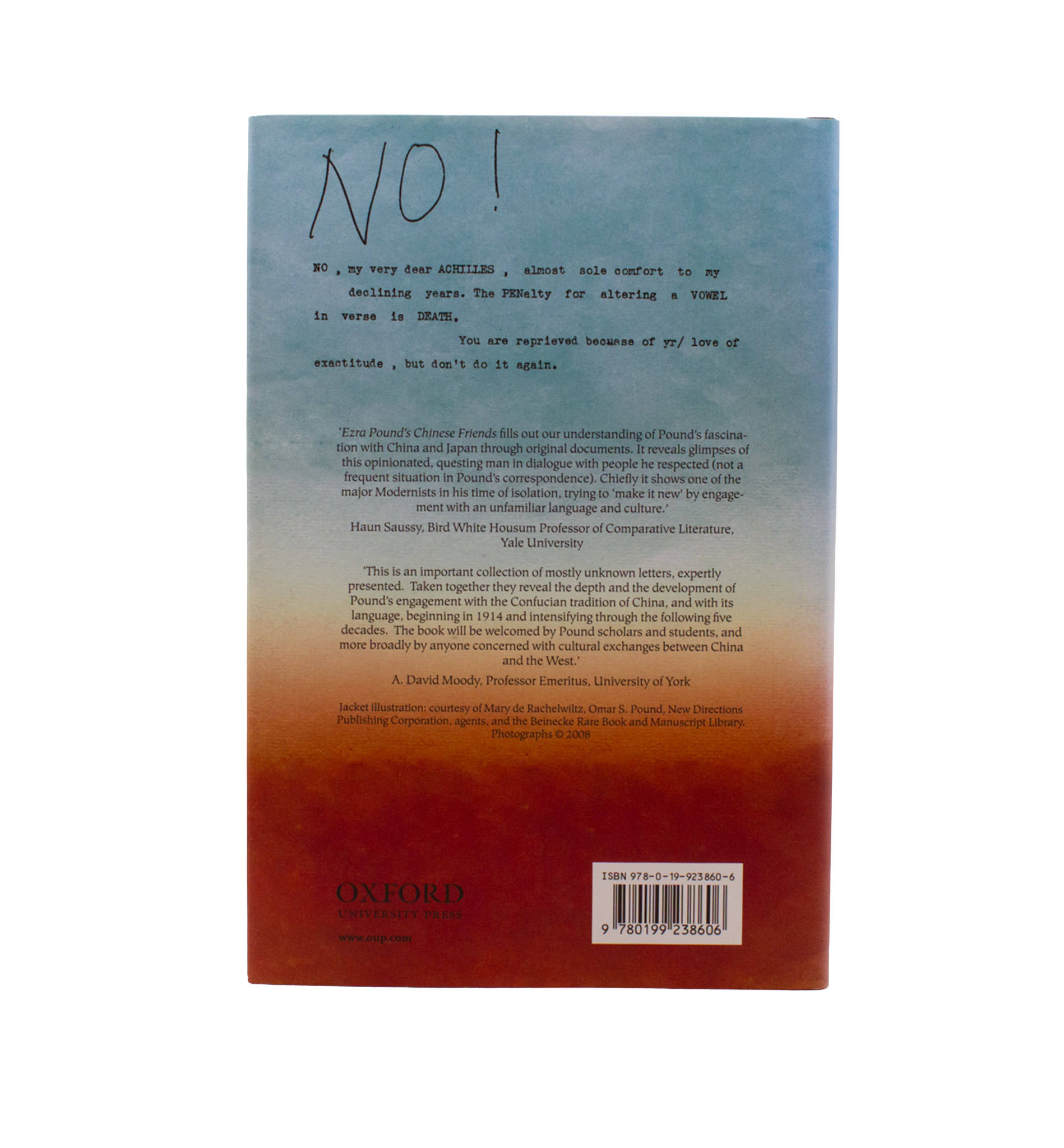
tap to cycle
Ezra Pound’s Chinese Friends
Zhaoming Qian, editor
Published Oxford University Press, 2008
242pp.; 24.1 x 16.2 cm. Black cloth boards stamped in gold down spine. White dust-jacket printed in black, red and blue.
Part of Scholarship, III
Not of contributors, but Qian’s compilation of materials (mostly letters, annotated) relating Pound and his correspondents and colleagues in China. First edition. A fine copy, one bump to the jacket, with the occasional pencil and note laid-in from David Moody.


tap to cycle
Ezra Pound in Context
Ira B. Nadel, editor
Published Cambridge University Press, 2010
497pp.; 23.5 x 15.9 cm. Black cloth boards stamped in gold down spine. White dust-jacket printed in yellow and black.
Part of Scholarship, III
A three part collection being “Biography and Works,” “Historical and Cultural Context,” and “Critical Reception,” with contributions from a number of contemporary scholars. First edition, a fine copy in a near fine jacket, with a bookmark laid in at John Gery’s Venice.



tap to cycle
Ezra Pound, Ends and Beginnings: Essays and Poems from the Ezra Pound International Conference, Venice, 2007
John Gery, William Pratt, editors
Published New York: AMS Press, Inc., 2011
234pp.; 23.5 x 16.2 cm. Black cloth boards stamped in gold down spine. White dust-jacket printed in black.
Part of Scholarship, III
A four part compilation after talks given at the 22nd EPIC. First edition, a fine copy, and a beautiful production.
Contents: Part I, Pound in Venice: Tim Redman, “Mussolini’s First Years and Last Months: What Did Pound Know about Il Duce’s Beginning and End?”; David Barnes, “‘Ct/Volpe’s Neck’: Re-approaching Pound’s Venice in the Fascist Context”; Massimo Bacigalupo, “City vs. Country in Pound: Venice, Fortuna, and John Law”; Anne Conover, “Deliverance! Ezra Pound’s Last Days”; Part II, Pound’s Poetry: Réka Mihálka, “Appropriate Orientation: Whistler and Pound”; Peter Liebregts, “‘Bricks thought into being ex nihil’: Ezra Pound and Creation”; Helen May Dennis, “Primitivism in Poundian Poetics: The Modernist Quest for Ancient Wisdom”; Peter Nicholls, “Beginning the End: Ezra Pound and the Poetics of Survival”; Robert Rehder, “The End of The Cantos”; Part III, Pound’s Legacy: William Pratt, “Beyond Modernism: Pound as Vatic Poet”; H. R. Stoneback, “‘I Would … Be Hanged with You’: Ernest Hemingway and Ezra Pound”; Ian S. MacNiven, “Poetry and/or Publishing: Pound, Stein, and the Evolution of James Laughlin’s New Directions”; Peggy L. Fox, “Mission Impossible: James Laughlin, Ezra Pound, and the Founding of New Directions”; Part IV, Poems in Honor of Pound: Patricia de Rachewiltz, “Sumer 1958”; Robert Rehder, “Entropy”; Robert Rehder, “The Surface of the Water”; Biljana D. Obradović, “Lunch in Venice”; Biljana D. Obradović, “Evening Light”; Hoshang Merchant, “Tagore Meets Pound VIII”; Kevin Kiely, “Mary Pound de Rachewiltz”; John Gery, “Il Redentore”; John Gery, “Miracoli”; H. R. Stoneback, From “For EP: In Our Time”; Mary de Rachewiltz, “I Was There.”

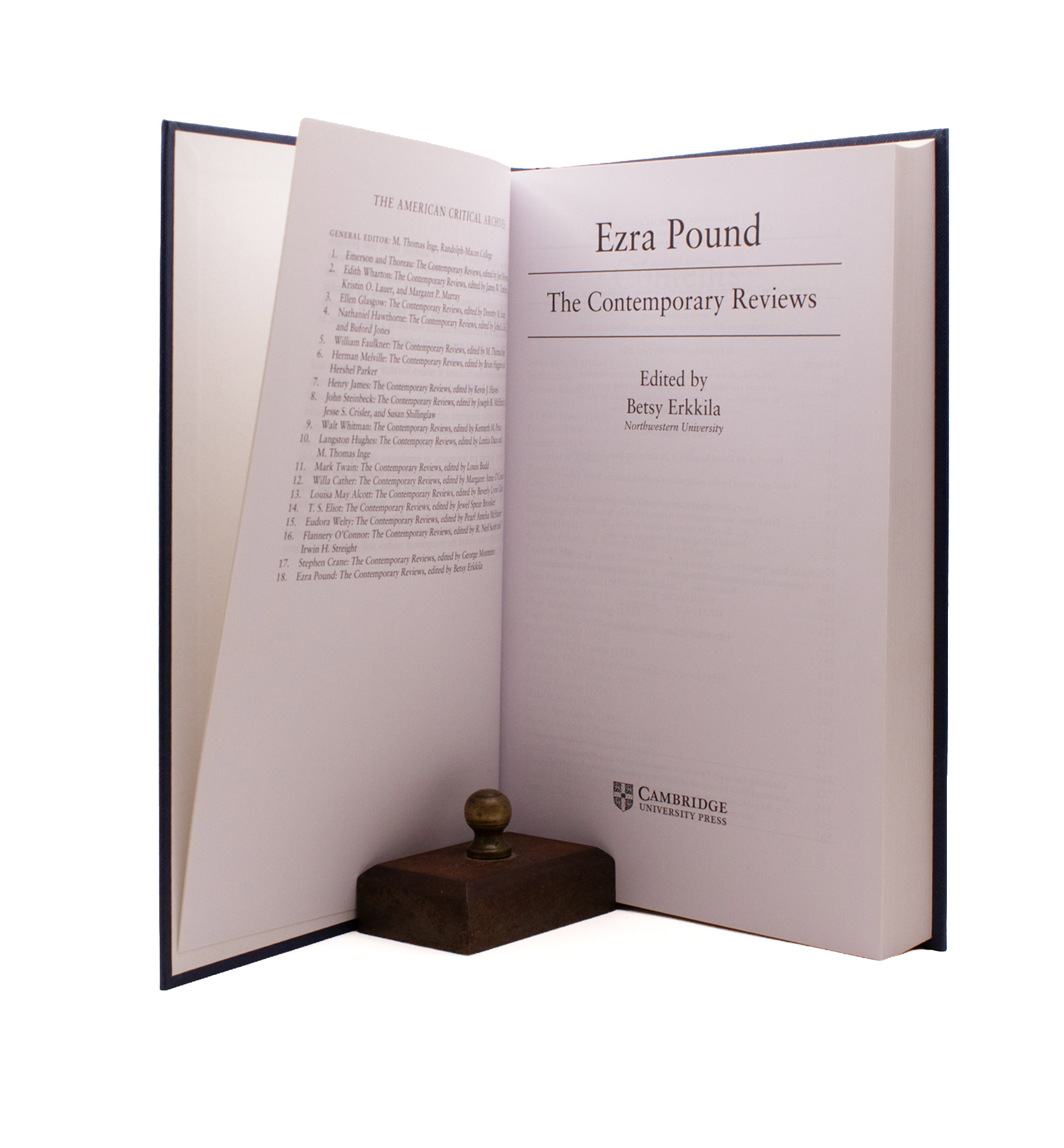

tap to cycle
Ezra Pound, The Contemporary Reviews
Betsy Erkkila, editor
Published Cambridge University Press, 2011
418pp.; 23.5 x 15.8 cm. Blue cloth boards stamped in gold to front and spine.
Part of Scholarship, III
A compilation of reviews, either from newspapers or little mags, of an amazing c. 37% of Gallup A items (later limited editions and Italian publications certainly omitted). Printed in an appeasing double-column format. First edition, without jacket as issued. A fine copy save a couple of spots of white paint on the back. A couple of marginal notes from David Moody.

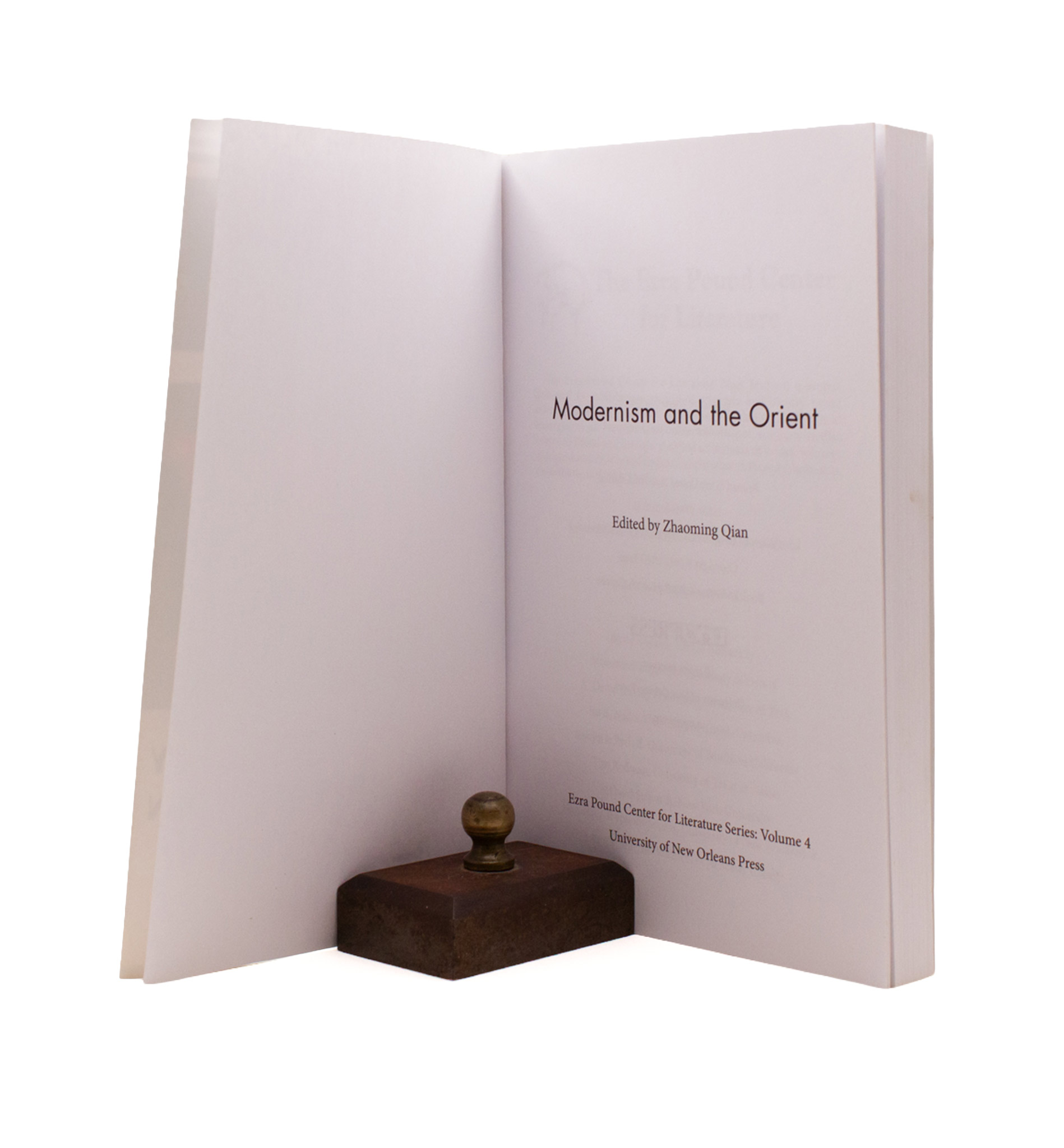

tap to cycle
Modernism and the Orient
Zhaoming Qian, editor
Published University of New Orleans Press, 2012
294pp.; 21.7 x 14.1 cm. Stiff white paper wrappers printed in black, green and pink.
Part of Scholarship, III
Volume 4 in the The Ezra Pound Center for Literature Series, edited by John Gery. A selection of essays on a range of Modernist writers in their relation to China. First edition, an uncommon publication. A fine copy, the front cover slightly lifting.
Contents: Zhang Longxi, “Elective Affinities? On Wilde’s Reading of Zhuangzi”; Sabine Sielke, ‘“Orientalizing” Emily Dickinson and Marianne Moore—Complicating Modernism?’; Daniel Albright, “The Flute—East/West—in Modernist Music and Poetry”; Christine Froula, “Proust’s China”; Qiping Yin, “Chu Shi and Ru Shi: Robert Frost in Taoist Perspective”; Ira B. Nadel, “The Modernist Page: Joyce and the Graphic Design of Chinese Writing”; Fen Gao, “Virigina Woolf’s Truth and Zhenhuan in Chinese Poetics”; Christian Kloeckner, “Re-Orienting Impersonality: T. S. Eliot and the Self of the Far East”; Ronald Bush, ‘“Young Willows” in Pound’s Pisan Cantos: “Light as the Branch of Kuanon”’; Zhaoming Qian, “Mai-mai Sze, The Tao, and Late Moore”; Richard Parker, “Louis Zukofsky’s American Zen”; Tony Lopez, “The Orient in Later Modernist English Poetry.”

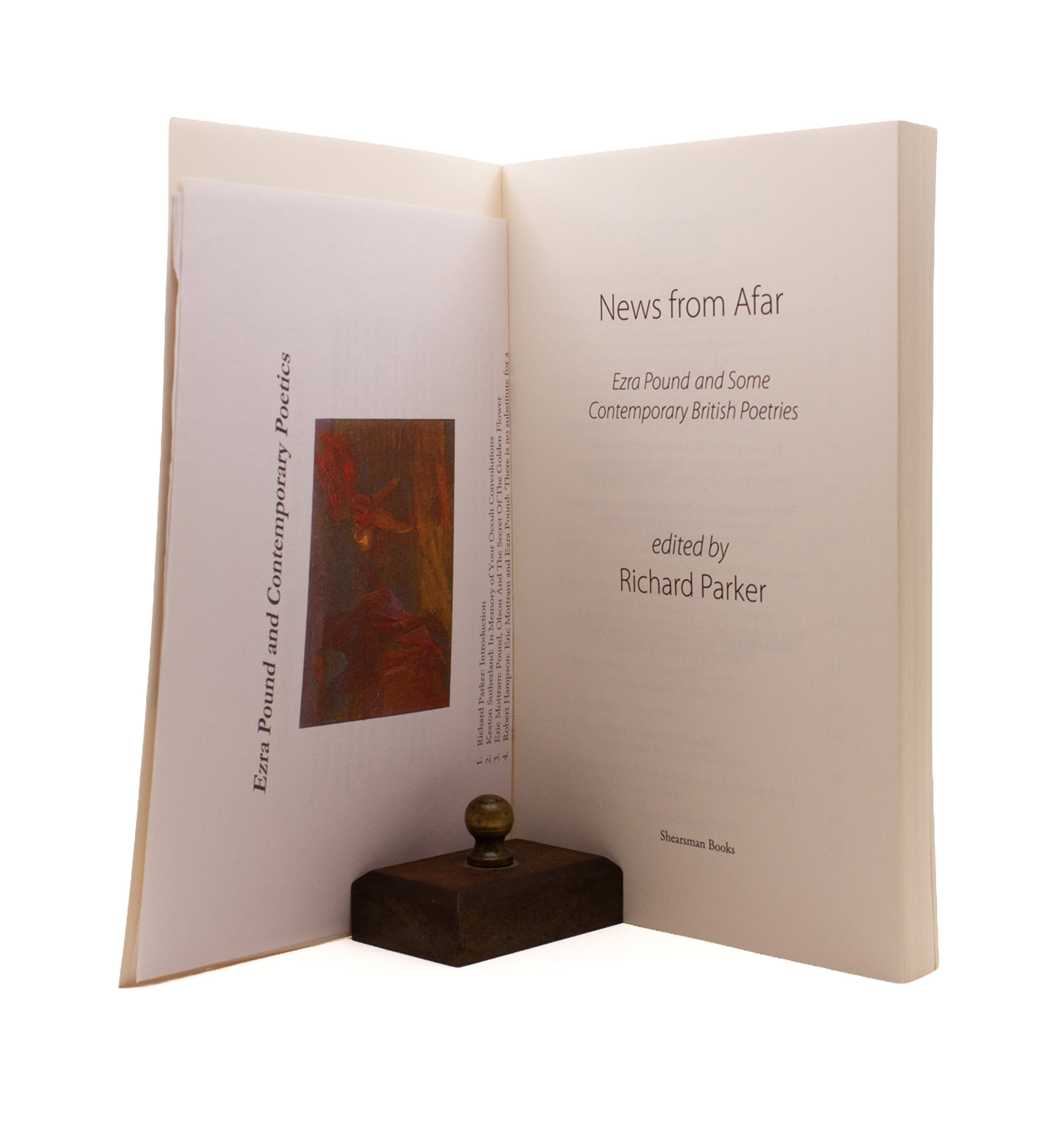

tap to cycle
News from Afar: Ezra Pound and Some Contemporary British Poetries
Richard Parker, editor
Published Bristol: Shearsman Books, 2014
328pp.; 23 x 15.3 cm. Stiff white printed paper wraps printed, illustrated with oil on canvas by Allen Fisher, “Here’s your fucking light, Shithead: Marie Curie runs towards Ezra Pound with a flask of light.”
Part of Scholarship, III
An ecclectic and modern compilation of essays in relation to Pound and contemporary British poets, a sequel to Sons of Ezra: British Poets and Ezra Pound (McGonigal and Alexander, ed., 1995). First edition, review copy with an A4 folded leaf from the publisher laid-in. A fine copy. With a number of pencil highlights in the margin from David Moody.
Contents: Richard Parker, ‘“Here’s Your Fucking Light Shithead”: Ezra Pound and Contemporary British Poetry”; Keston Sutherland, “In Memory of Your Occult Convolutions”; Amy Evans, ‘“So I think a beginning has been made”: Ezra Pound, Robert Duncan and Eric Mottram”; Eric Mottram (ed. Amy Evans), “Pound, Olson and The Secret of the Golden Flower”; Robert Hampson, ‘Eric Mottram and Ezra Pound: “There is no substitute for a life-time.”’; Alexander Howard, “Compacts, Commerce, and a Few Remarks Concerning Andrew Crozier”; Mark Scroggins, ‘The “half-fabulous field-ditcher”: Ruskin, Pound, Geoffrey Hill’; Josh Kotin, “Blood-Stained Battle-Flags: Ezra Pound, J.H. Prynne and Classical Chinese Poetry”; Ryan Dobran, “Myth, Culture and Text: Ezra Pound’s Homer and J.H. Prynne’s Aristeas”; Gareth Farmer, ‘“Obstinate Isles” and Rhetorical Sincerity: Veronica Forrest-Thomson and Ezra Pound”; Laura Kilbride, ‘“Real Games With Books”: On Anna Mendelssohn and Ezra Pound”; Allen Fisher, “Atkins Stomp”; Juha Virtanen, ‘Allen Fisher Reading: Facture, “Atkins Stomp” and Ezra Pound’; Gavin Selerie, “Pound and Contemporary British Poetry: The Loosening of Form”; Gavin Selerie, “Poems from Hariot Double”; David Vichnar, “P.S.: Pound and Sinclair’s Intertextual Ley Lines”; Harry Gilonis, “Second Heave — Fracture Syntax”; Tony Lopez, “Darwin in Rome: Pound and Stein”; Tony Lopez, “From Darwin, a section of Only More So”; Robert Sheppard, “The Li Shang-yin Suite”; Sean Pryor, “Some Thoughts on Refrigiration”; Danny Hayward, “Or Storming the Shopping Centre: Poetry, Competition, Pound, Quid”; Alex Pestell, ‘“All in for folly and mustard”: Pound, Zukofsky and Word is Born”; Tim Atkins, “Happiness / The Art of Poetry Being a translation of the 10 Buddhist Ox-Herding Poems.”
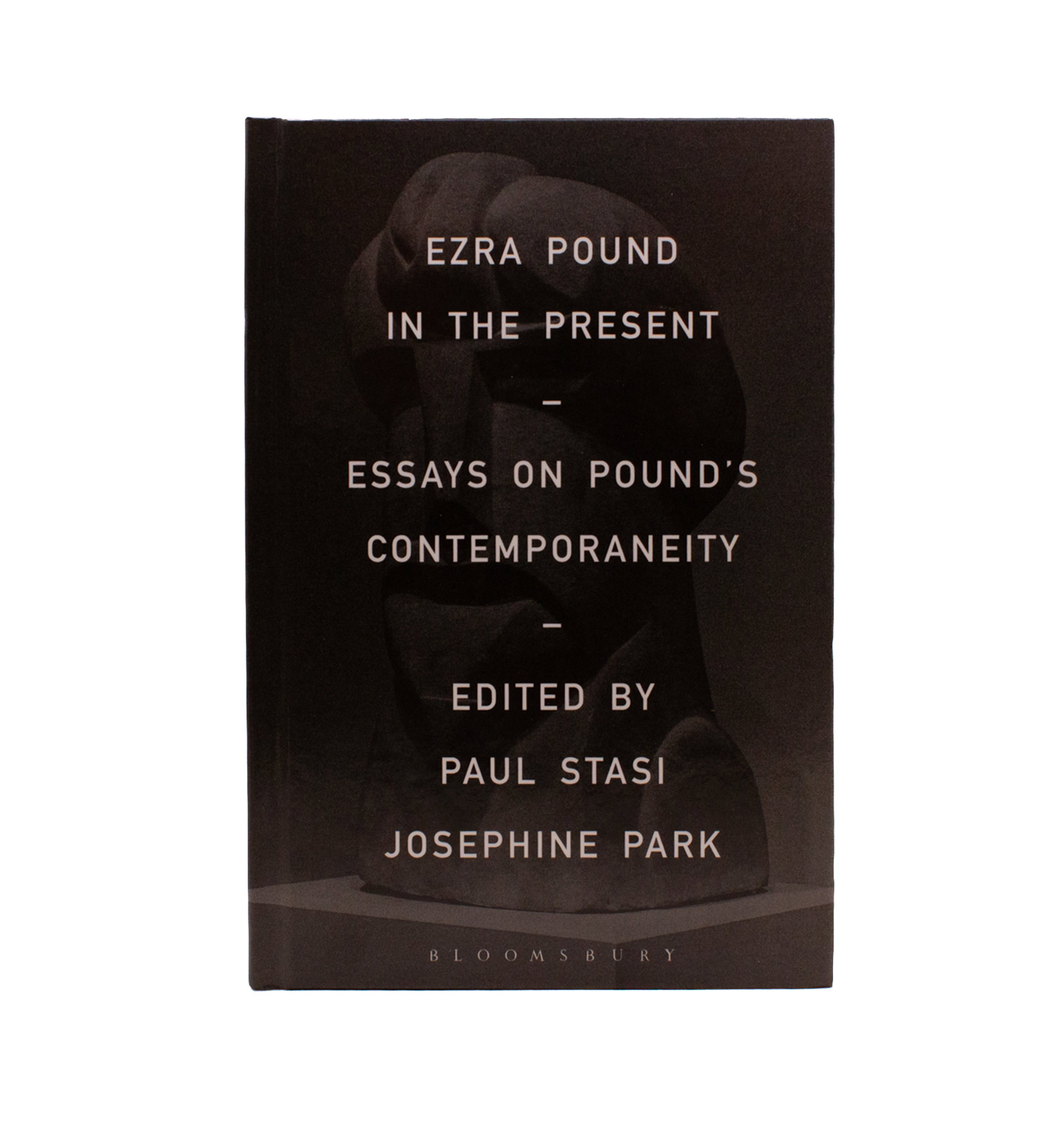


tap to cycle
Ezra Pound in the Present; Essays on Pound’s Contemporaneity
Paul Stasi and Josephine Park, editors
Published London: Bloomsbury, 2016
251pp.; 23.6 x 16.3 cm. White paper covered boards printed in grey.
Part of Scholarship, III
Essays upon Pound’s relevance Today (2016). First edition, a fine copy, with David Moody’s marginalia to the introduction.
Contents: Part I, Pound’s Methods: Charles Altieri, “Why Pound’s Imagist Poems Still Matter”; Josephine Park, “Not-So-Distant Reading”; Aaron Jaffe, “Paleolithic Media: Deep Time and Ezra Pound’s Methods”; Part II, Pound’s Worlds: Christopher Bush, ‘“I am all for the triangle”: The Geopolitical Aesthetic of Pound’s Japan’; Jean-Michel Rabaté, “Ezra Pound and the Globalization of Literature”; Christine Froula, “Ezra Pound and the Comparative Literature of the Present, or, Triptych Rome/London/Pisa”; Part III, Pound’s Values: Paul Stasi, “Ezra Pound and the Critique of Value”; C. D. Blanton, “Ezra Pound’s Effective Demand: Keynes, Causality, and The Cantos.”
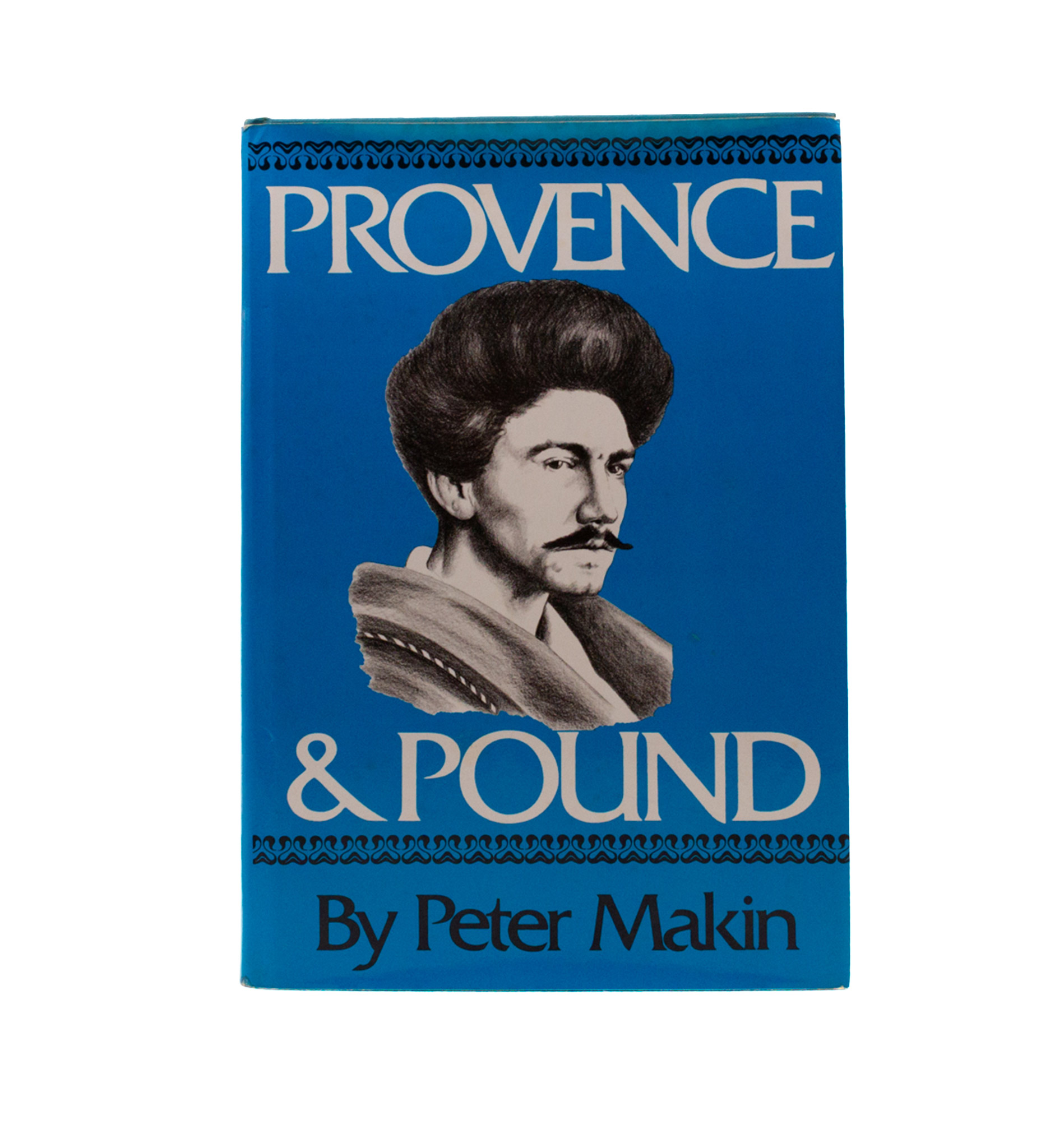
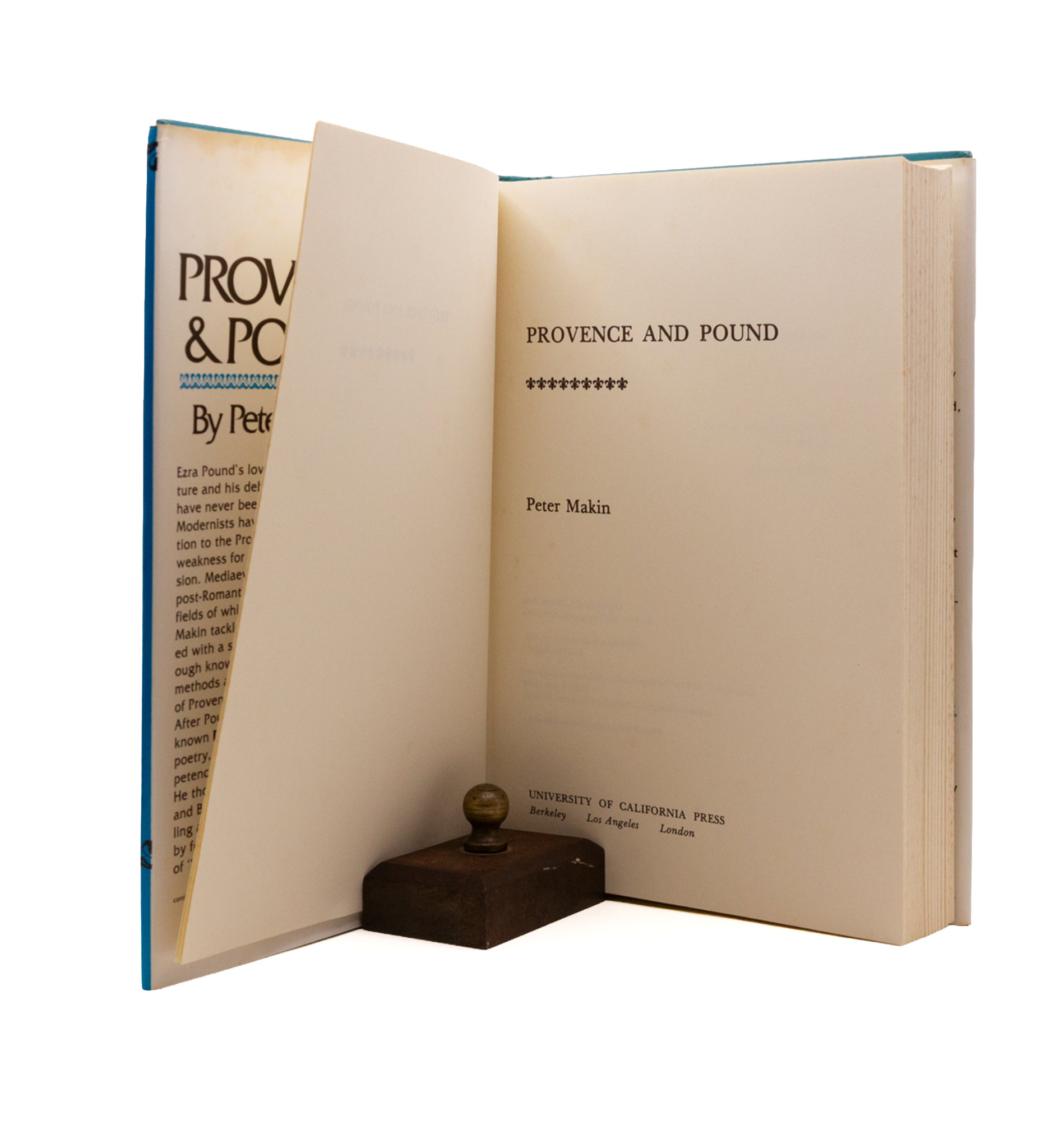

tap to cycle
Provence & Pound
Peter Makin
Published University of California Press, 1978
428pp.; 23.5 x 15.9 cm. Teal cloth boards lettered in black down spine. White dust-jacket printed in black and blue.
Part of Scholarship, II
Though he trapse through the mud, his mind is set on higher things. A study of the troubadours, their influences on Pound in his poems and earlier cantos, and Pound’s belief in the cult of Amor. First edition. A near fine copy with the occasional fox and a light wear to the jacket. With David Moody’s occasional pencil marginalia.
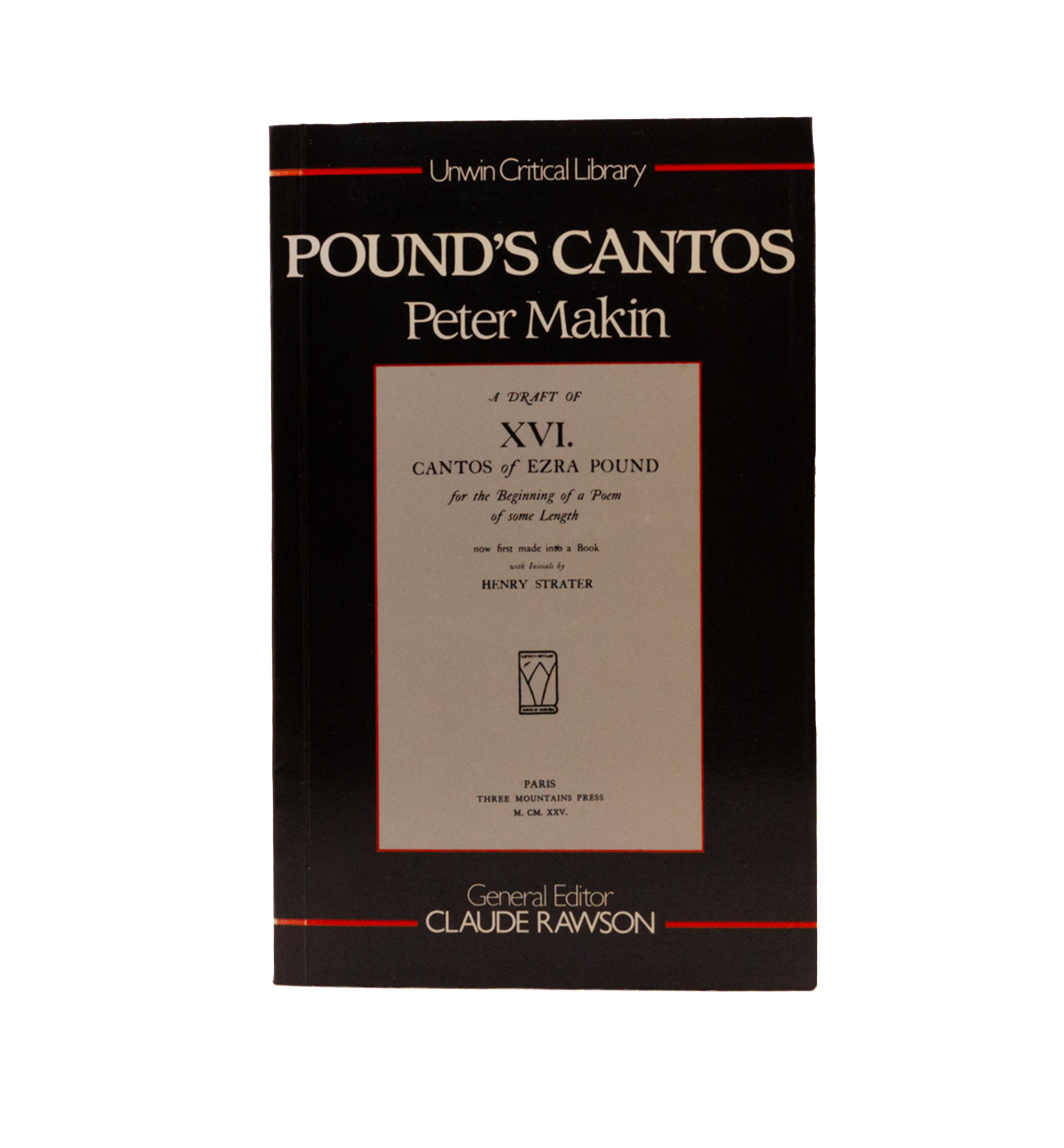
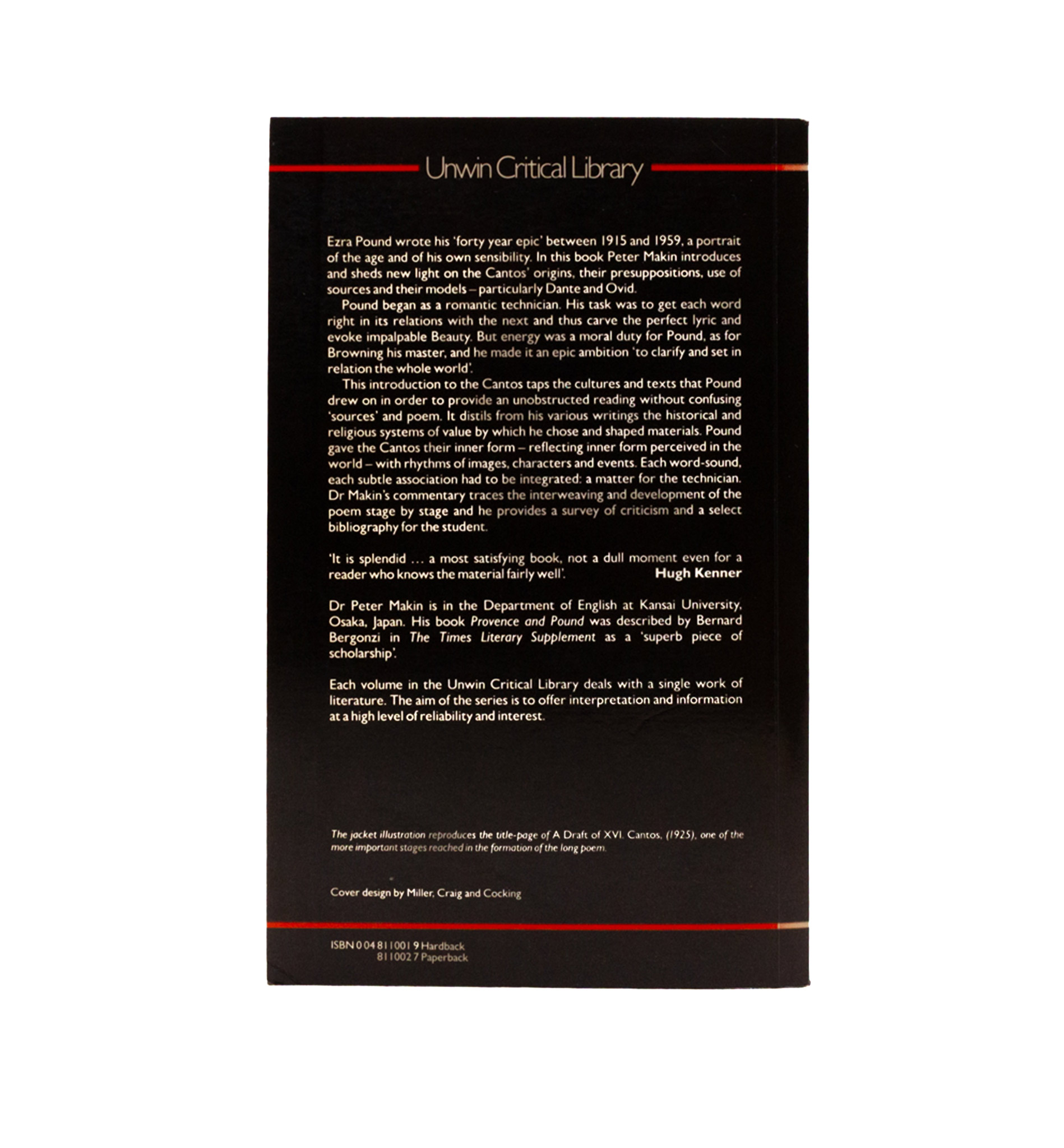
tap to cycle
Pound’s Cantos
Peter Makin
Published London: George Allen & Unwin, 1985
331pp.; 21.5 x 13.6 cm. Stiff white paper wraps printed in red and black.
Part of Scholarship, II
A commentary on Pound’s Cantos, from their preparations to their final fragments, followed by a short chapter on the trends in Poundian criticism over the years. First edition, with the errata slip bound before the contents page. A near fine copy, hardly opened though with the occasional pencil annotation by David Moody.
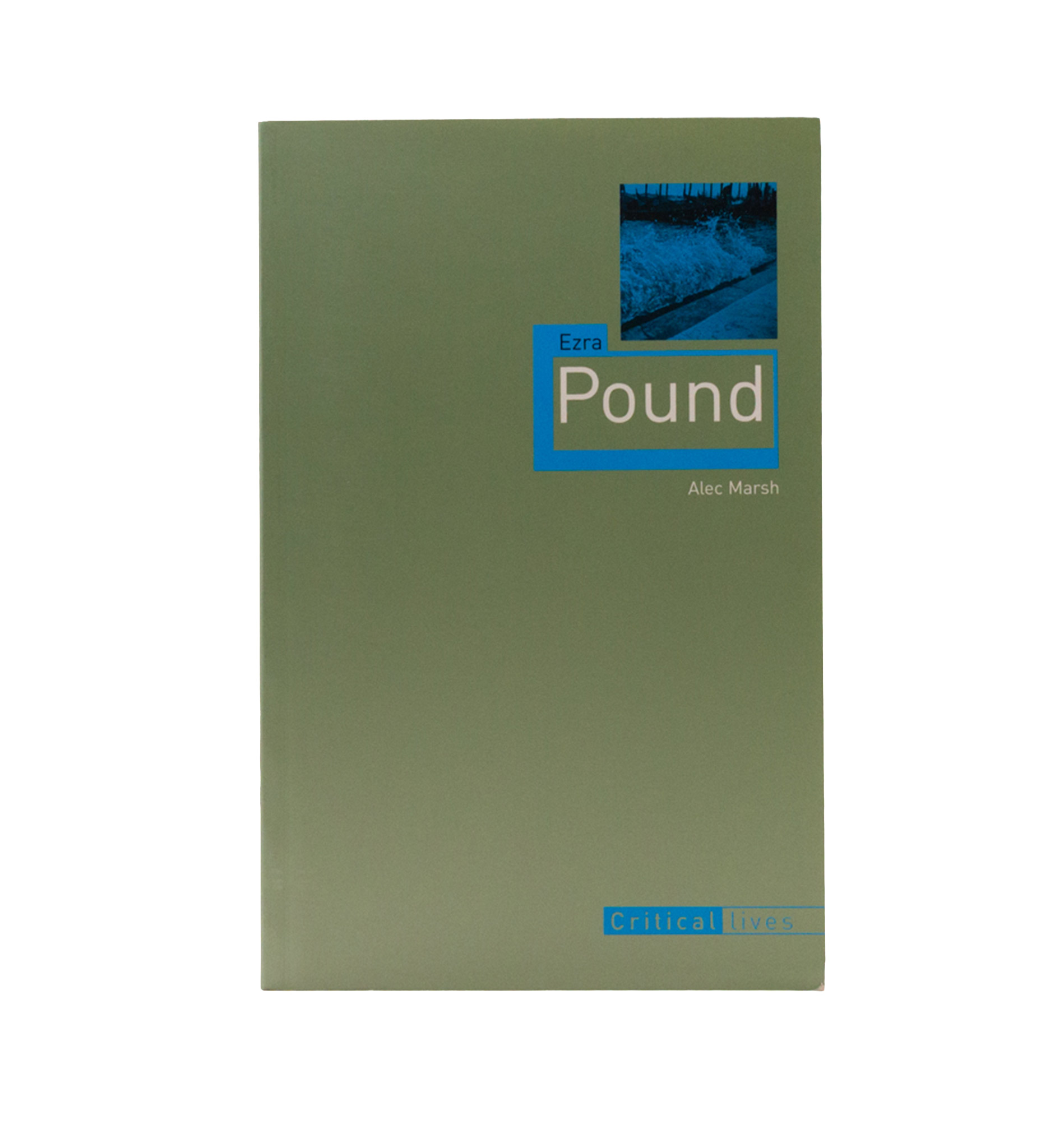
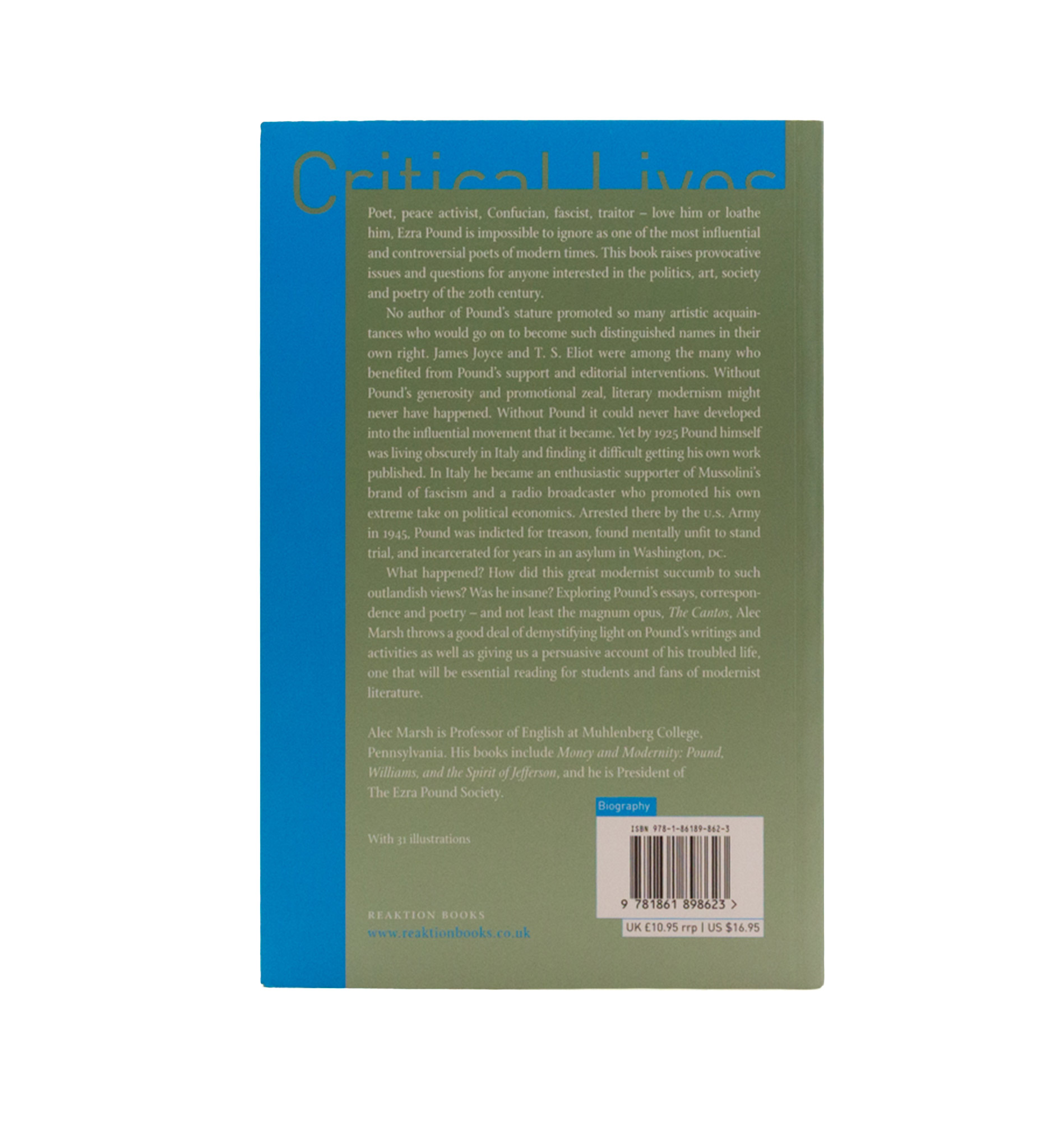
tap to cycle
Ezra Pound
Alec Marsh
Published London: Reaktion Books, 2011
247pp.; 20.1 x 13.1 cm. Stiff white paper wraps printed in green, blue and black.
Part of Scholarship, II
Marsh’s biography of Pound, with annotations by David Moody partly critical of the book’s political lean. First edition, a near fine copy.

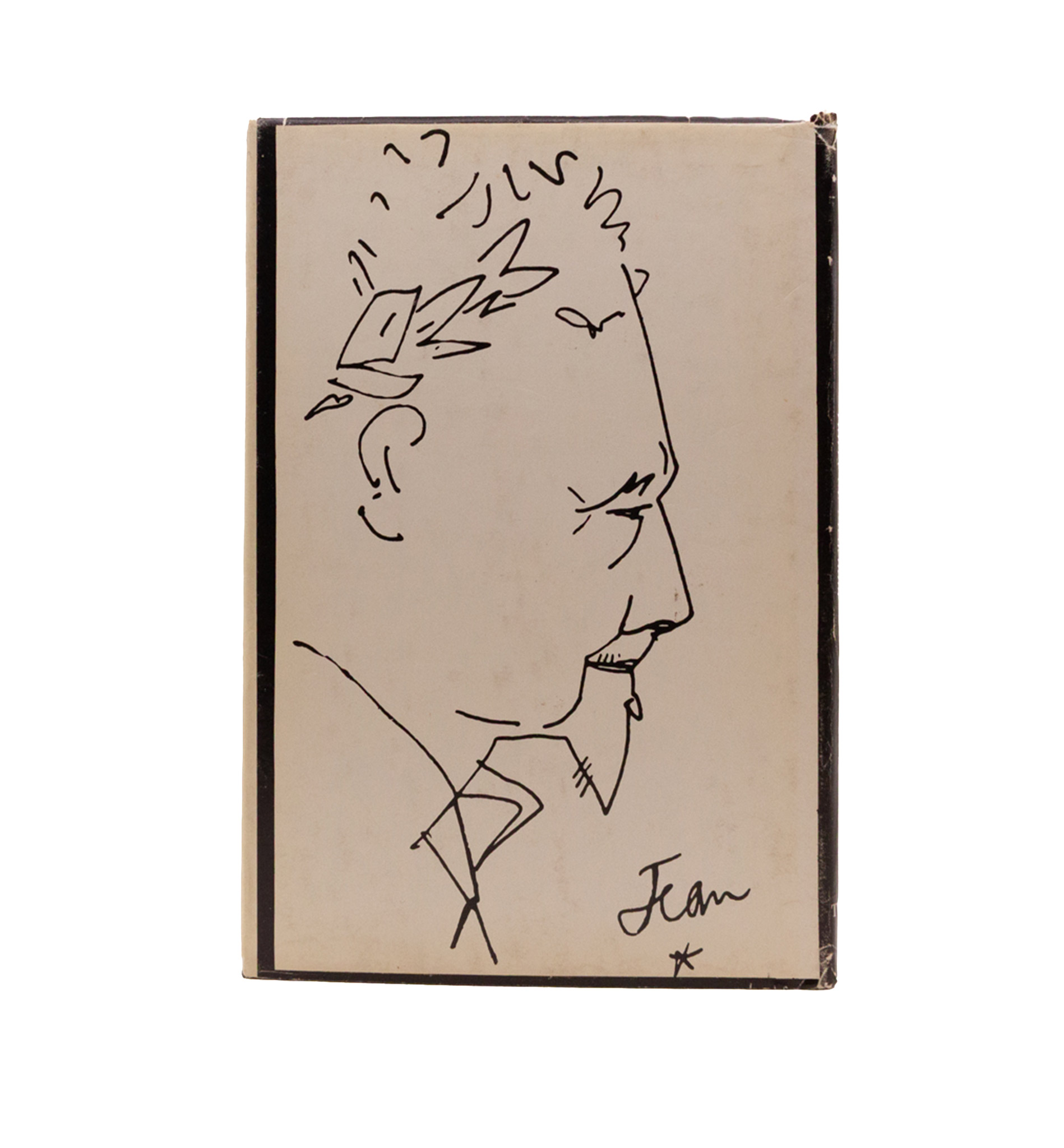
tap to cycle
The Caged Panther, Ezra Pound at St. Elizabeths
Harry M. Meacham
Published New York: Twayne Publishers, 1967
222pp.; 21.4 x 14.7 cm. Grey cloth boards stamped in gold to front and spine. White dust-jacket printed in black, grey and red.
Part of Scholarship, II
Letters from Pound to Meacham, a sales manager, poet and critic, from 1957 to 1960, with commentary by Meacham and a little further correspondence from Archie MacLeish and a reproduction of a letter from Robert Frost, T. S. Eliot and Ernest Hemingway to the Attorney General imploring Pound’s release. With facsimiles of some of Pound’s letters, and portraits. First edition; a beautiful production, fine throughout; jacket a little nicked.
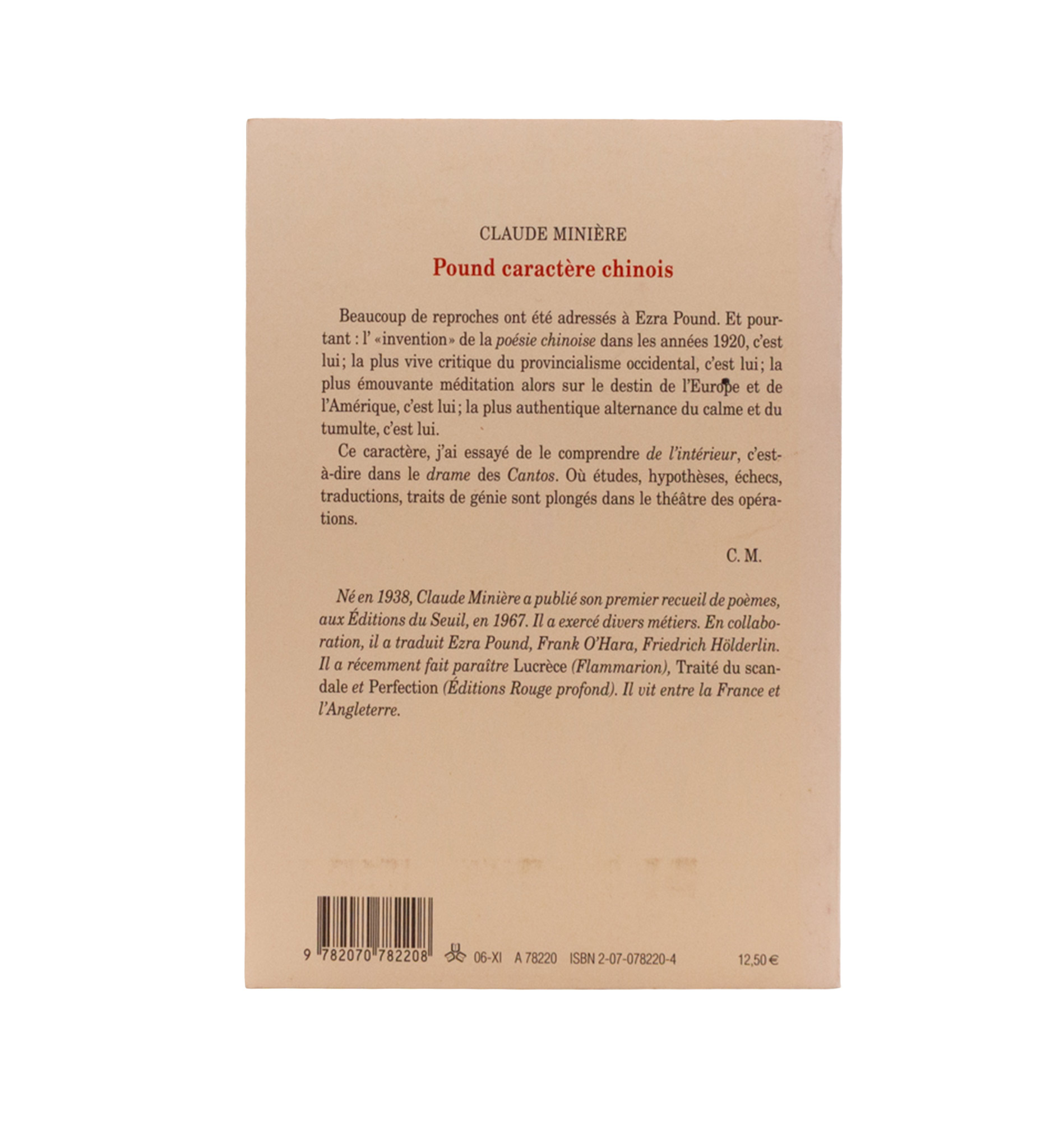
tap to cycle
Pound caractère chinois
Claude Minière
Published Éditions Gallimard, 2006
107pp.; 20.5 x 14.1 cm. Stiff off-white paper wraps printed in black and red.
Part of Scholarship, II
« a maunderin tongue in a pounderin jowl »
— James Joyce
A neat essay, or series, on Pound’s treatment of Chinese characters and how to read them. A rare and pretty book, fine.

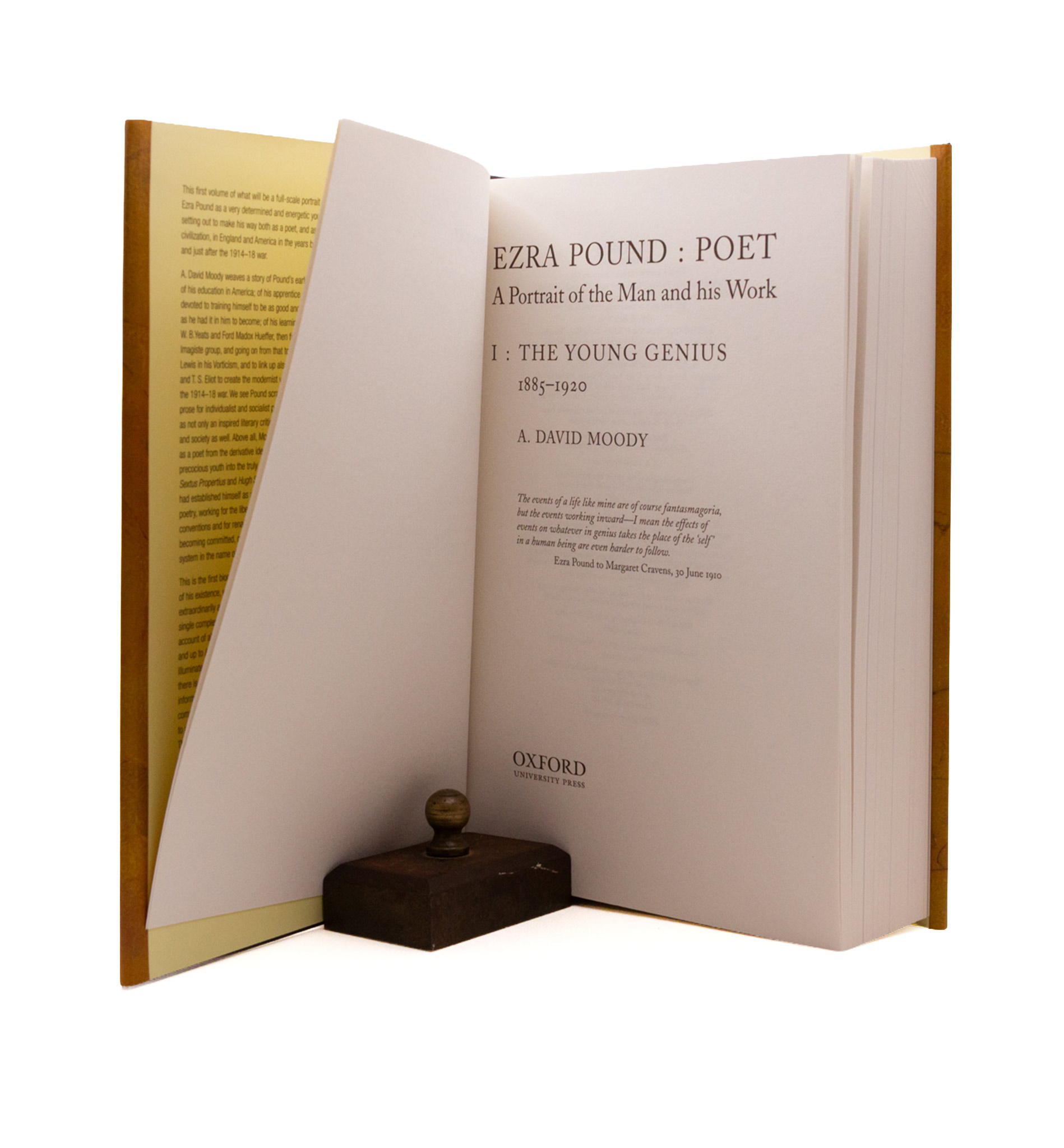

tap to cycle
Ezra Pound: Poet; Volume I, The Young Genius 1885-1920
A. David Moody
Published Oxford University Press, 2007
507pp.; 24.1 x 16 cm. Black paper covered boards lettered in gold on spine. White dust-jacket printed in black, with Sheri Martinelli’s self-portrait as Zagreus.
Part of Scholarship, II
The first volume of David Moody’s three part biography of Pound, the result of at least this entire library on offering. First edition. New.

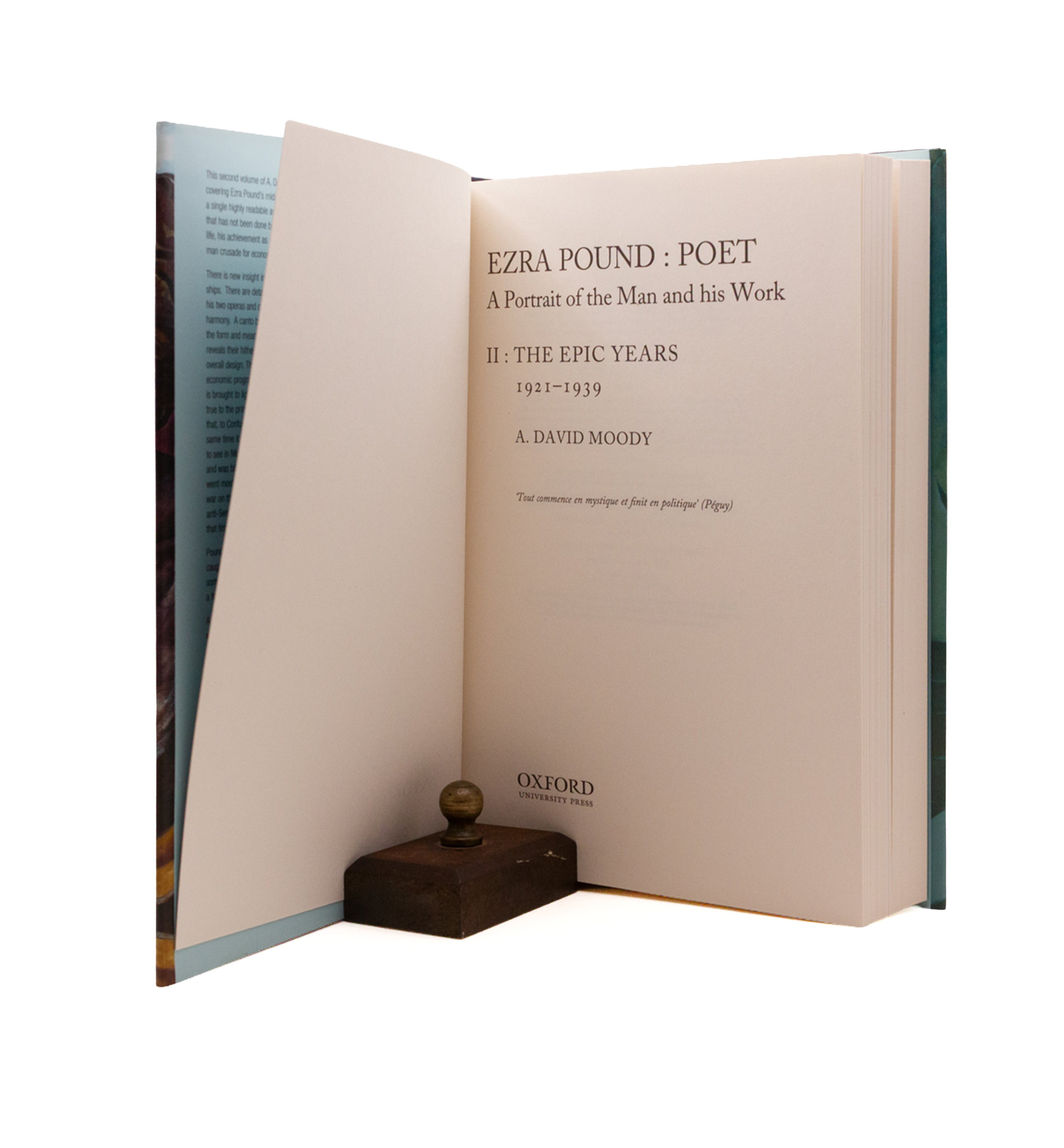

tap to cycle
Ezra Pound: Poet; Volume II, The Epic Years 1921-1939
A. David Moody
Published Oxford University Press, 2014
421pp.; 24.1 x 16 cm. Black paper covered boards lettered in gold on spine. White dust-jacket printed in black, with Wyndham Lewis’s portrait of Pound.
Part of Scholarship, II
The second volume of David Moody’s three part biography of Pound. First edition. New.


tap to cycle
Ezra Pound, A Literary Life
Ira B. Nadel
Published Basingstoke: Palgrave Macmillan, 2004
218pp.; 21.6 x 13.9 cm. Stiff white paper wraps printed in purple.
Part of Scholarship, II
Biography of Pound, replete with criticisms and corrections by David Moody; another good document of professorial correctness. First edition, near fine.


tap to cycle
The Cambridge Introduction to Ezra Pound
Ira B. Nadel
Published Cambridge University Press, 2007
148pp.; 22.7 x 15.4 cm. Stiff white paper wraps printed in blue, orange and black.
Part of Scholarship, II
With a particularly interesting chapter on “Critical Reception”. First edition, paperback issue. Near fine.



tap to cycle
Blossoms from the East; The China Cantos of Ezra Pound
John J. Nolde
Published Maine: The National Poetry Foundation, 1983
458pp.; 23.6 x 16.1 cm. Red cloth boards lettered in gold on spine. White dust-jacket printed in orange and black.
Part of Scholarship, II
Part of the Ezra Pound Scholarship Series edited by C. F. Terrell. One of the two books on the China Cantos to be published in ’83, marking the advent of developed studies of that section. First edition. A fine copy with a little forward lean, in an unevenly sunned jacket with some edge-wear.
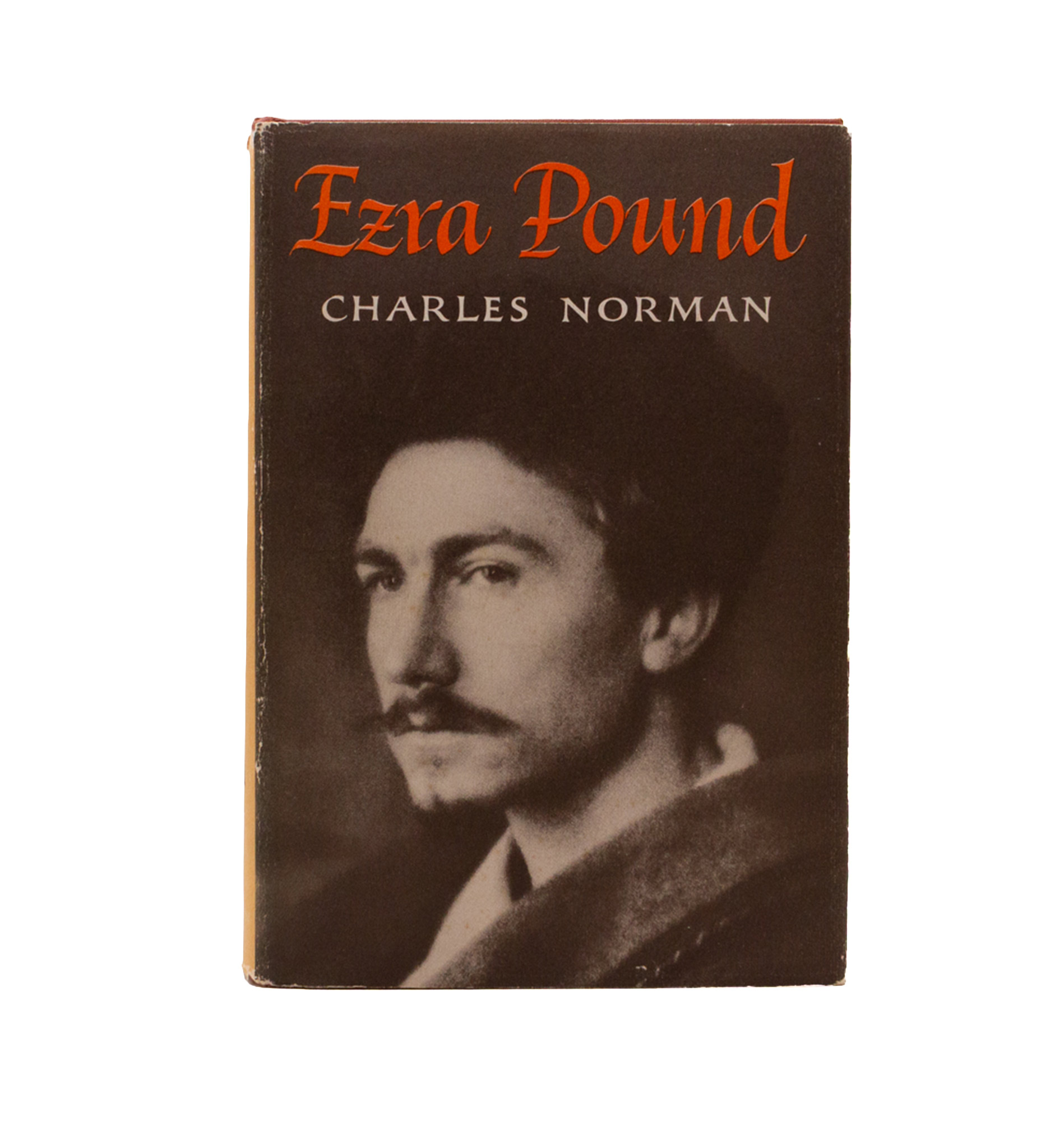
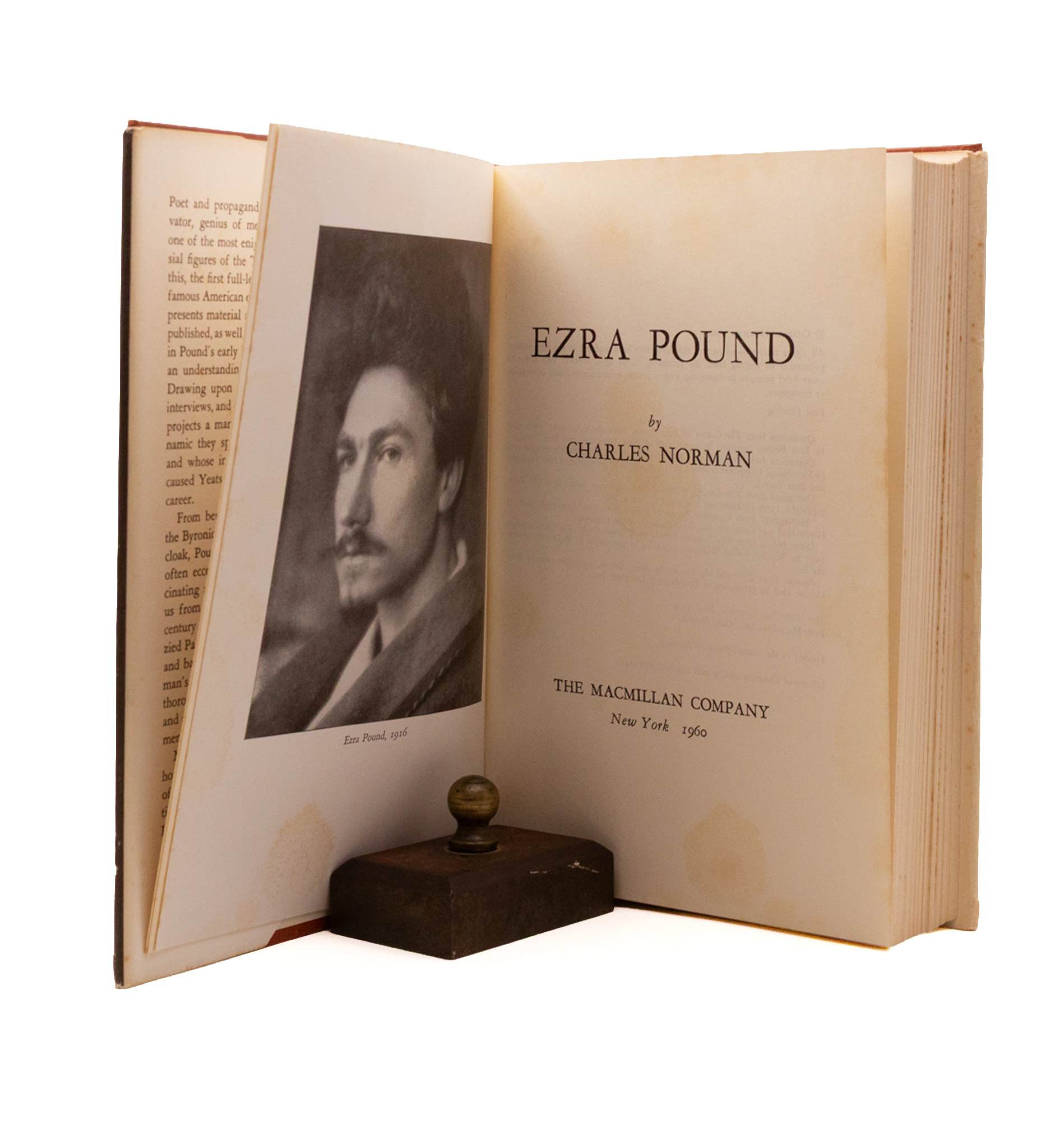
tap to cycle
Ezra Pound
Charles Norman
Published New York: The Macmillan Company, 1960
493pp.; 21.5 x 14.7 cm. Red cloth boards with gilt device of EP by G.-B. stamped to front; title stamped in gold and brown on spine. White dust-jacket printed in grey-brown and orange.
Part of Scholarship, II
Biography of Pound to date, this one with divisions by relation, such as Pound and Yeats, Pound and Frost, Pound and Eliot, and a chapter given over to Pound’s 1939 visit to the USA. First edition, near fine with blooms of foxing to first few and last few pages, in a good jacket with one tear to the back of the spine. With the occasional factual correction by David Moody.


tap to cycle
The Case of Ezra Pound
Charles Norman
Published New York: Funk and Wagnalls, 1968
209pp.; 23.4 x 15.9 cm. Brown linen covered & backed boards lettered in gold on spine, with a red circular device stamped on spine. White dust-jacket printed in gold, red and black.
Part of Scholarship, II
A study of Pound’s world view, political, economical etc. with “Points of View” by cummings, Williams, Zukofsky and more (contributed to the 1948 ed.), leading up to a number of chapters on Pound’s trial which are annotated by David Moody with one note laid-in. With a short advert for the book by Julien Cornell (Pound’s attorney) laid in at the half-title. An expansion on Norman’s 1948 book by the same name. A fine copy in a worn jacket.

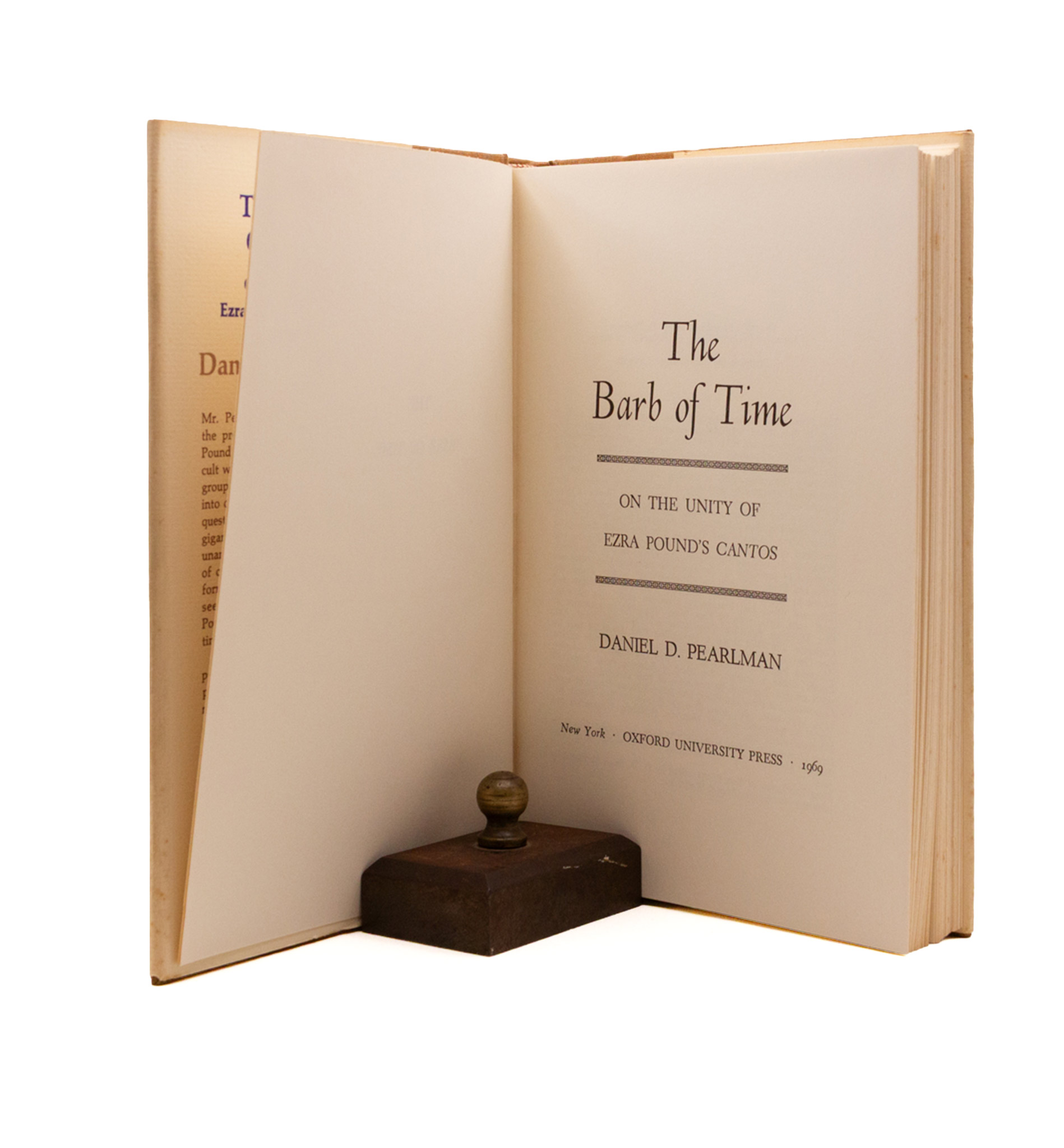
tap to cycle
The Barb of Time
Daniel D. Pearlman
Published New York: Oxford University Press, 1969
318pp.; 21.4 x 14.7 cm. Brown cloth boards lettered in gold on spine. White laid-paper dust-jacket printed in blue and brown.
Part of Scholarship, II
One of the great works of Poundian scholarship (of its day; or at least, one of the few on the shelves at the London Library). A study of the coherence of the form of The Cantos with the Commedia, and Pound’s developing treatment of time throughout the poem. First edition, a fine enough copy with the very occasional tick from ADM.
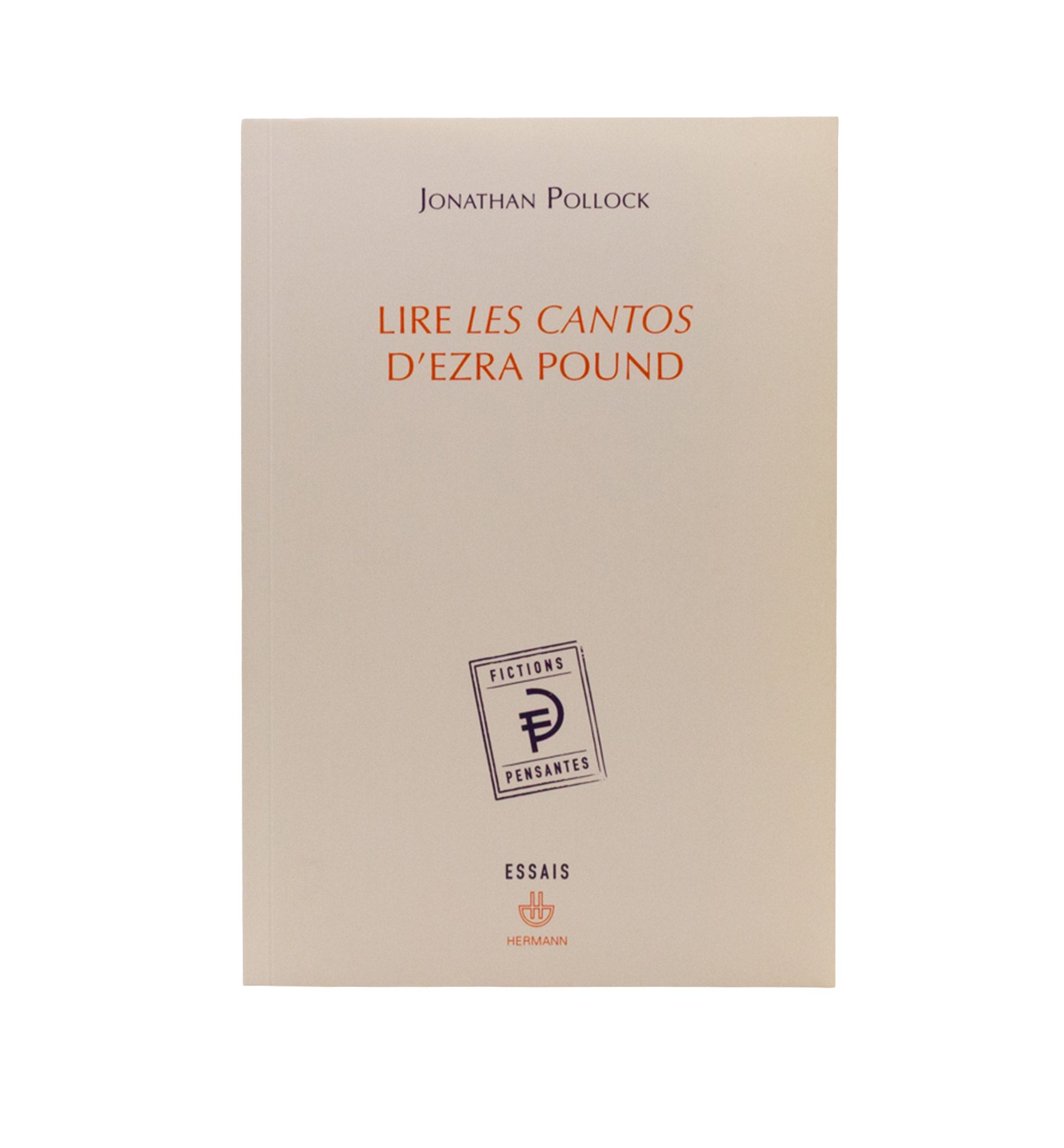
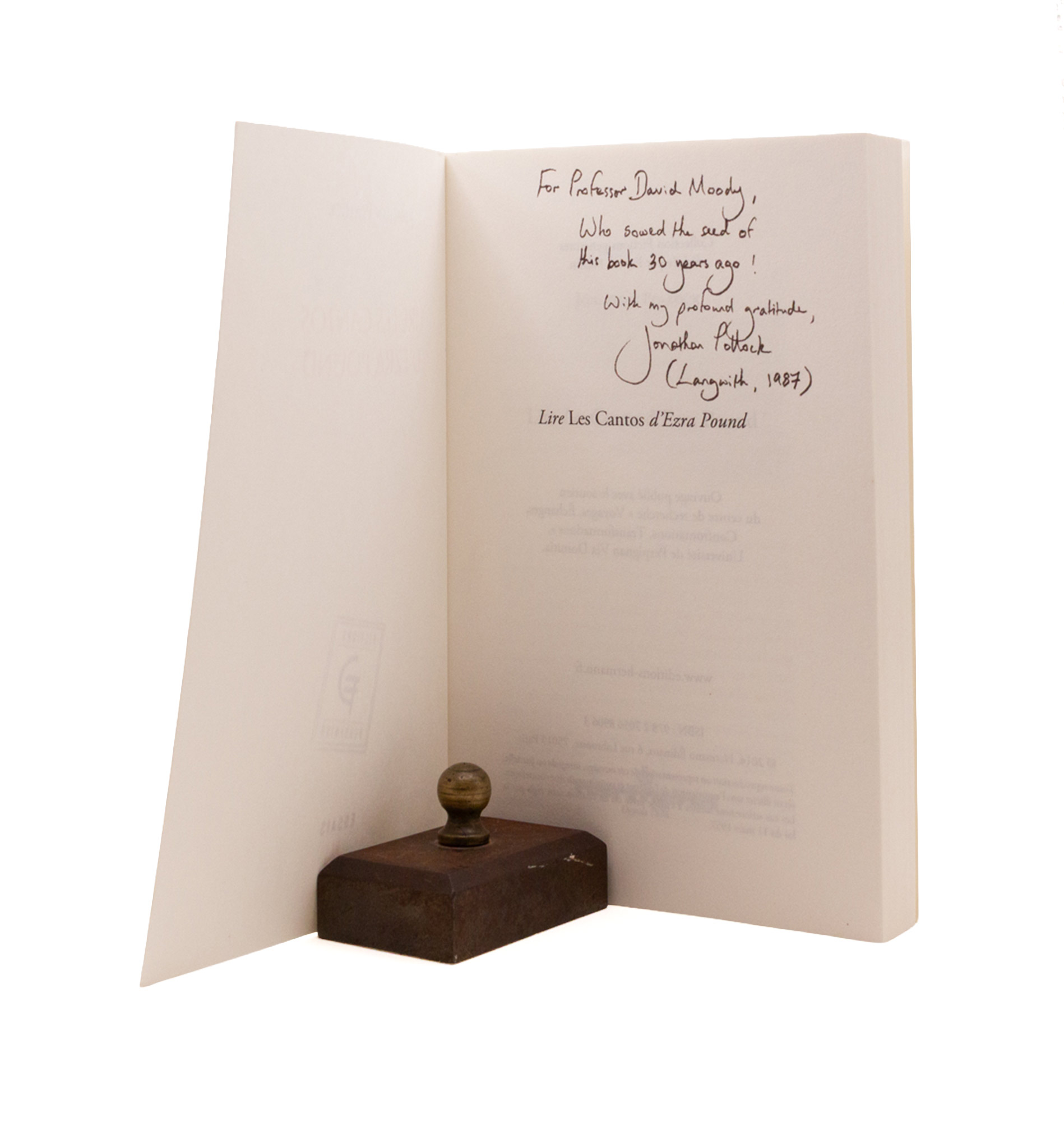
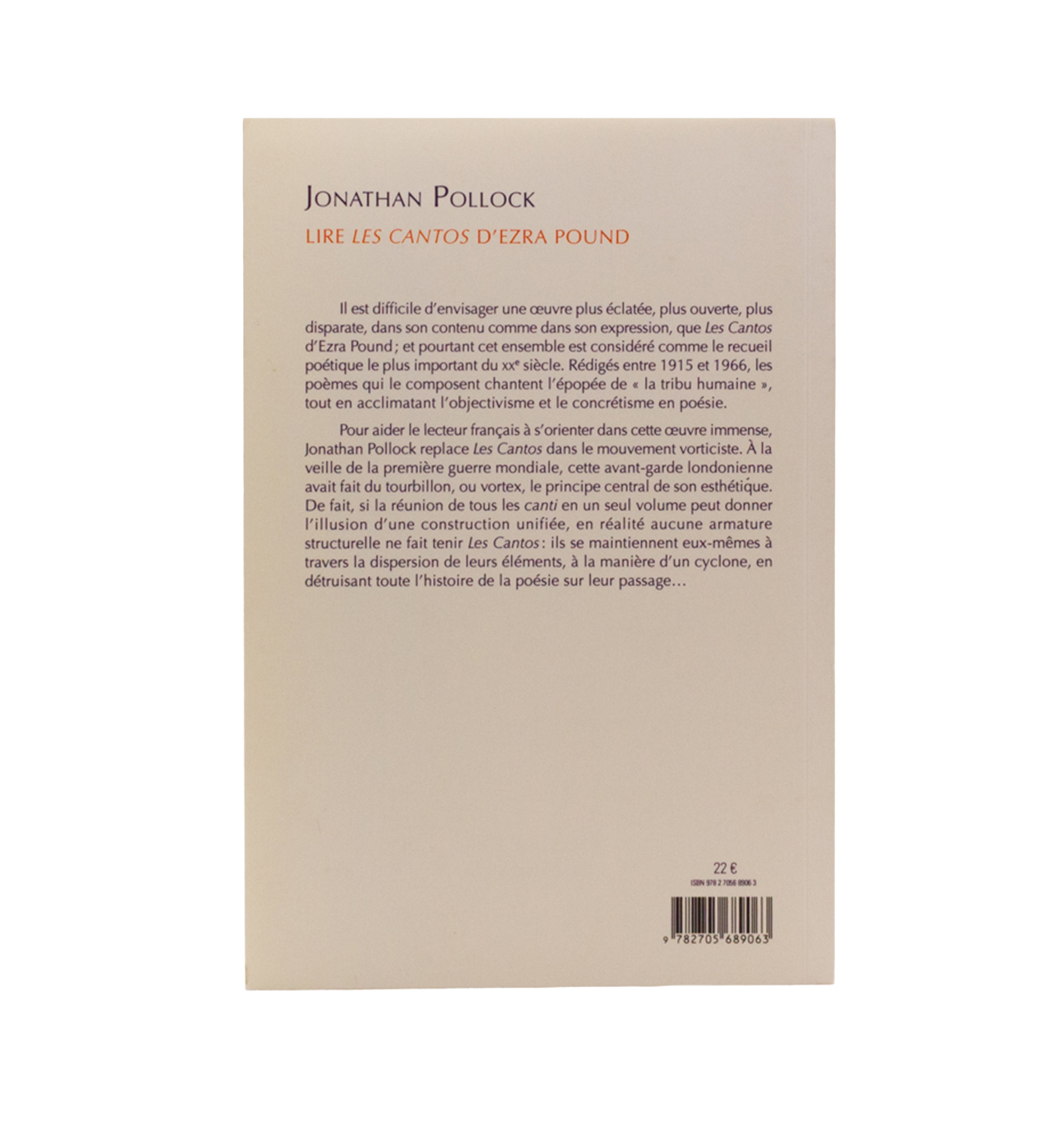
tap to cycle
Lire Les Cantos D’Ezra Pound
Jonathan Pollock
Published Paris: Hermann, 2014
269pp.; 20.6 x 14.1 cm. Stiff white paper wraps printed in purple and orange.
Part of Scholarship, II
“For Professor David Moody,
Who sowed the seed of
this book 30 years ago!”
First edition, lightly read with David Moody’s annotations. With a gift inscription from the author to David Moody backdated to, one presumes, the sowing.



tap to cycle
Language, Sexuality and Ideology in Ezra Pound’s Cantos
Jean-Michel Rabaté
Published Basingstoke: Macmillan, 1986
339pp.; 22.4 x 14.6 cm. Green paper covered boards stamped in gold down spine. White dust-jacket printed in green and black.
Part of Scholarship, II
“My belief is that only a detour through Heidegger can permit one to understand the ‘foundational’ position of Pound as a poet.” First edition. A near fine copy with light shelf-wear and the jacket’s spine sunned. With David Moody’s light marginalia.


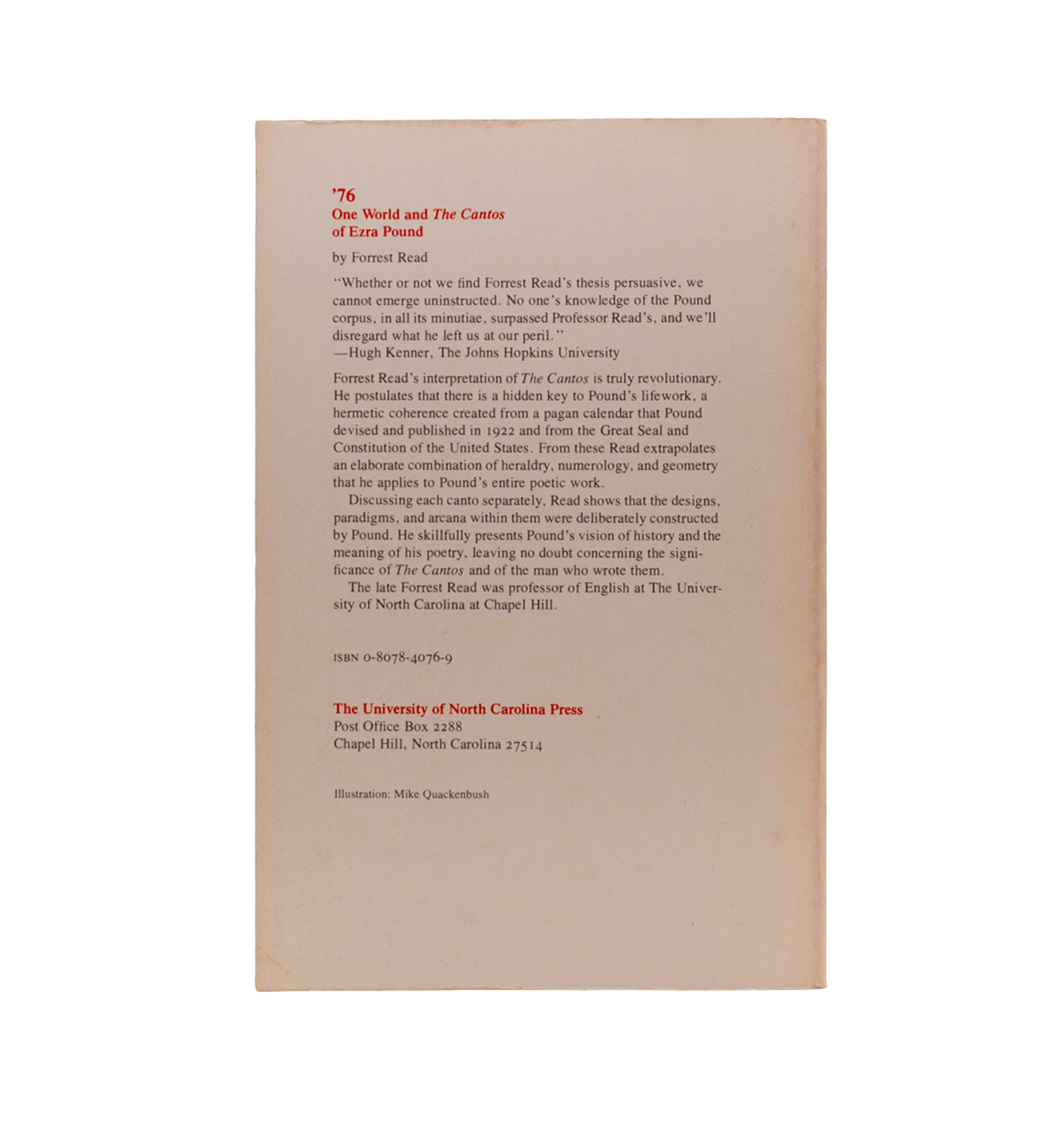
tap to cycle
’76: One World and The Cantos of Ezra Pound
Forrest Read
Published Chapel Hill: The University of North Carolina Press, 1981
476pp.; 22.8 x 15.6 cm. Stiff white paper wrappers printed in red and black.
Part of Scholarship, II
A megalithic piece of Poundian scholarship, and to me one of the finest for its divergence and (you might argue) delusion. Read argues for The Cantos’ coherence, discovering Pound’s plan to be based upon a Calendar he published anonymously in The Little Review, Picabia Number, the Seal of America, the Constitution & Declaration of Independence, and the Four Tuan. First edition, paperback issue, with light paperback-usual creasing.

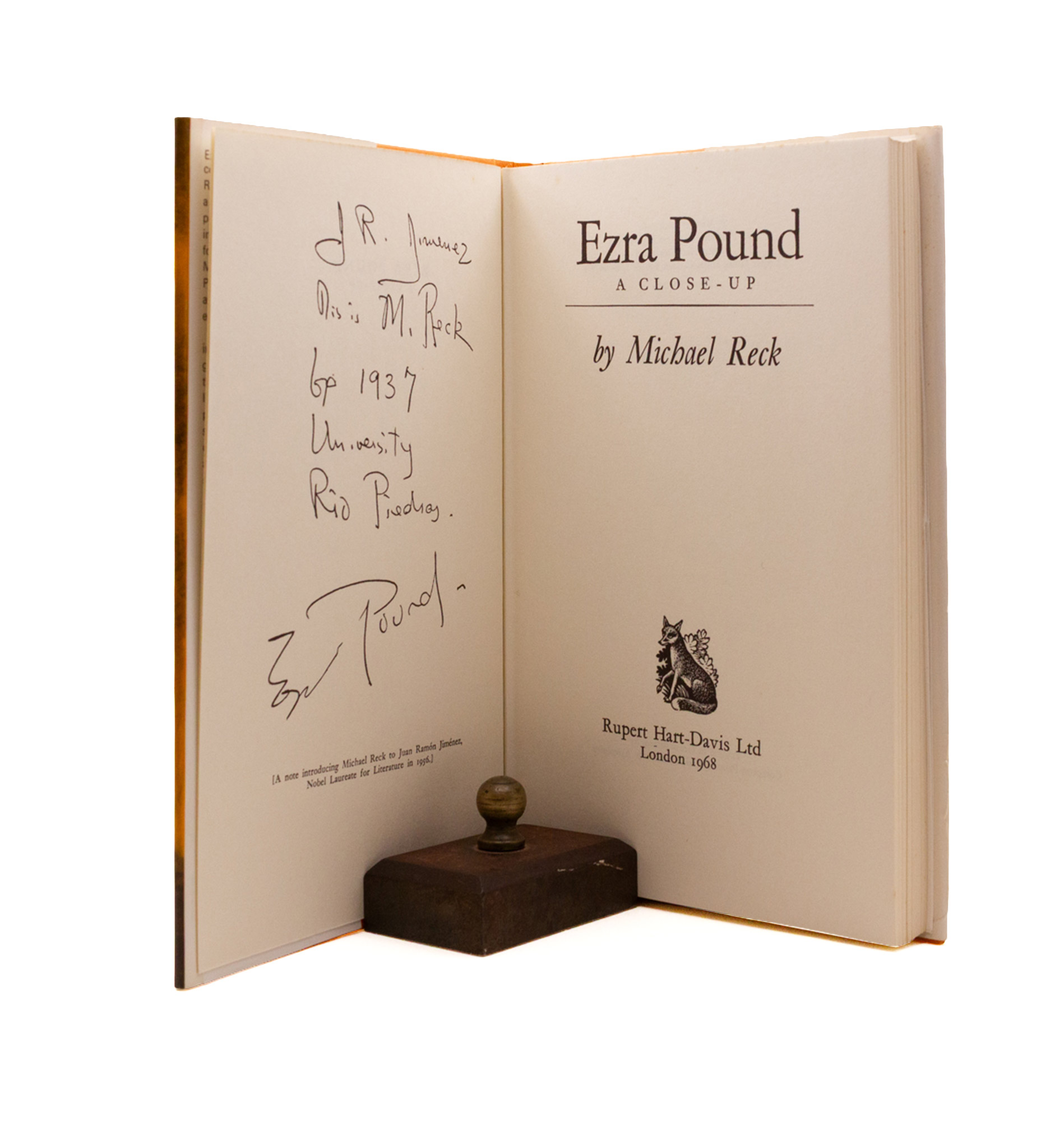

tap to cycle
Ezra Pound, A Close-Up
Michael Reck
Published London: Rupert Hart-Davis Ltd., 1968
205pp.; 22.3 x 14.5 cm. Orage cloth boards lettered in gold on spine. White dust-jacket printed in black and orange.
Part of Scholarship, II
A kind of biography of Pound, with a personal account of Reck’s knowing him at St. Elizabeths. Reproduces a letter from Pound to Reck (who was then in Japan with the Army) guiding his translation of the Women of Trachis into Japanese; and, interleaved verse by verse with Pound’s, Fenollosa’s translation of Li Bai’s “Exile’s Letter” (partial) and “The River Merchant’s Wife.” First English edition, one year after the American. A fine book with Moody’s occasional annotation in a very good jacket, a few scratches to the back cover and one small tear to the front. With a photocopy of Michael Reck’s Memoirs of a Parody Perry from the Appendix of Ezra Pound & Japan, pub. Black Swan Press 1987, laid in to rear, dedicated in felt from Reck to Moody, 1983.

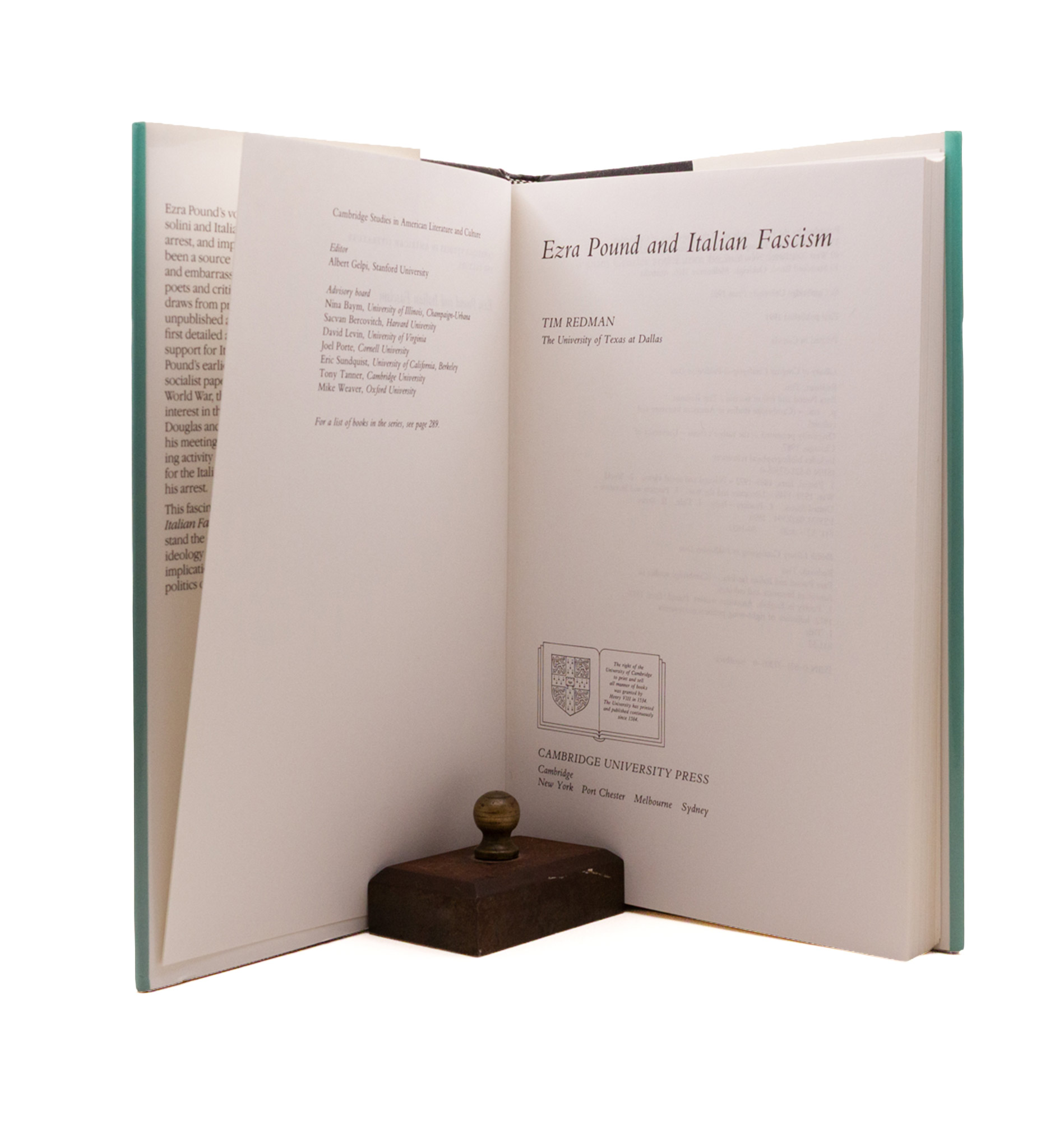
tap to cycle
Ezra Pound and Italian Fascism
Tim Redman
Published Cambridge University Press, 1991
288pp.; 23.6 x 16.1 cm. Black cloth boards lettered in gold down spine. White dust-jacket printed in green and black.
Part of Scholarship, II
On Pound’s support of the fascist regime, and how he got there, through Orage, Douglas, and Gessell. First edition, a fine copy in a near fine jacket suffering only from sunning and a little shelf-wear. With David Moody’s marginalia throughout.
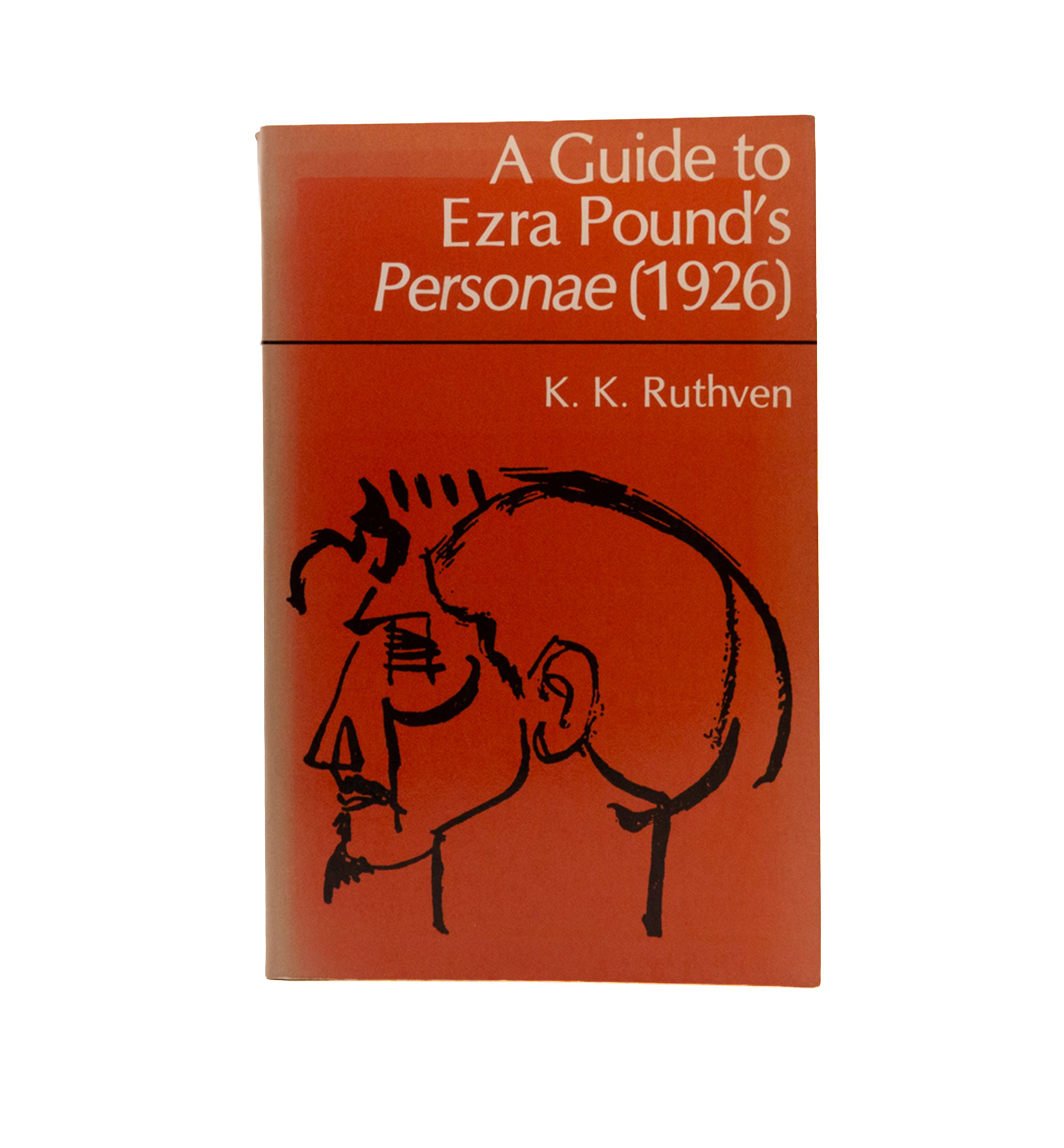
tap to cycle
A Guide to Ezra Pound’s Personae (1926)
K. K. Ruthven
Published Berkeley: University of California Press, 1983
281pp.; 20.8 x 13.5 cm. Stiff white wraps printed in pale red, black and grey.
Part of Scholarship, II
Annotations, explications, and variorum for the poems in Pound’s Personae (1926). First paperback printing. Wraps faded, spine sunned, otherwise fine with the occasional annotation from David Moody.
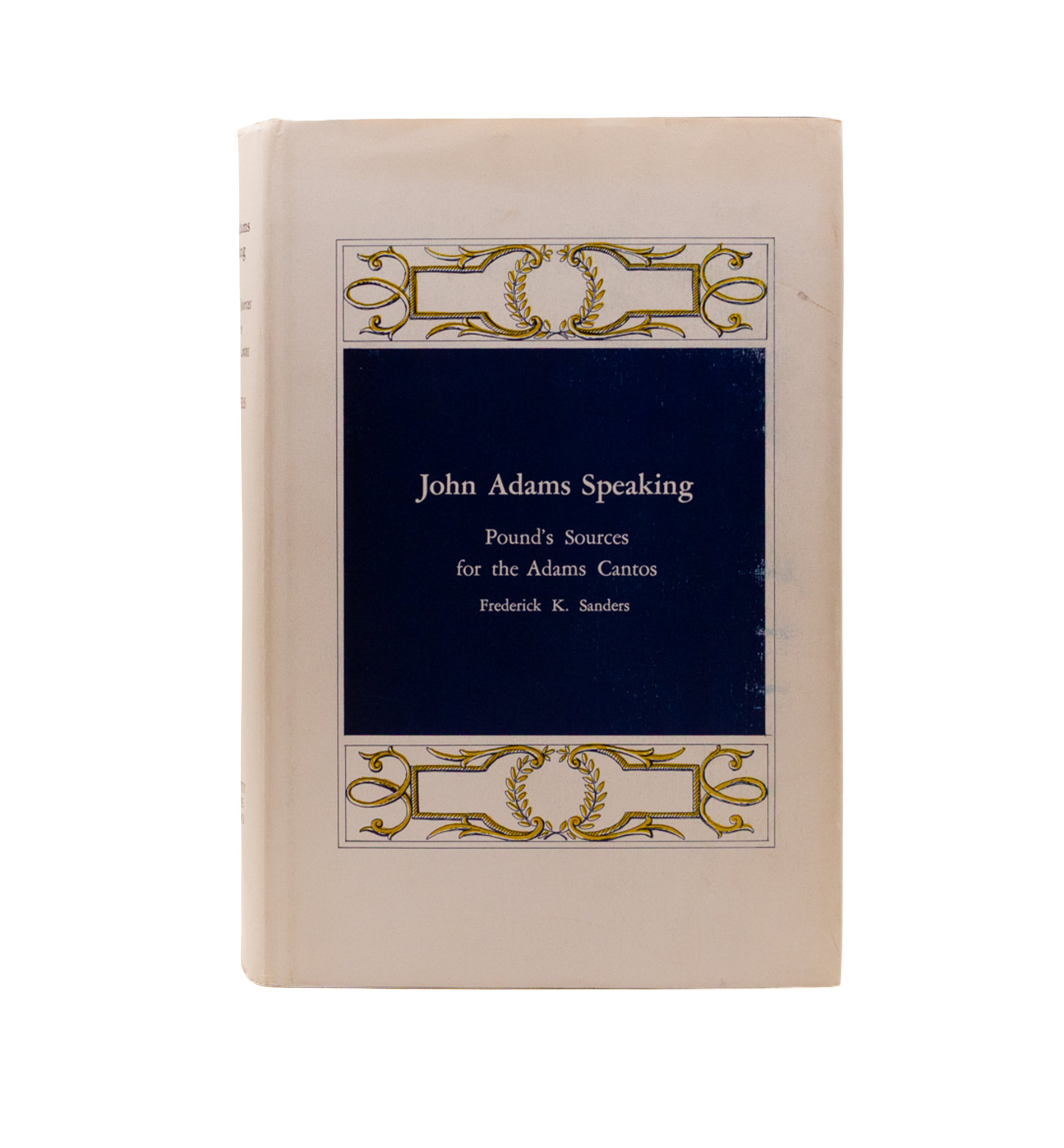
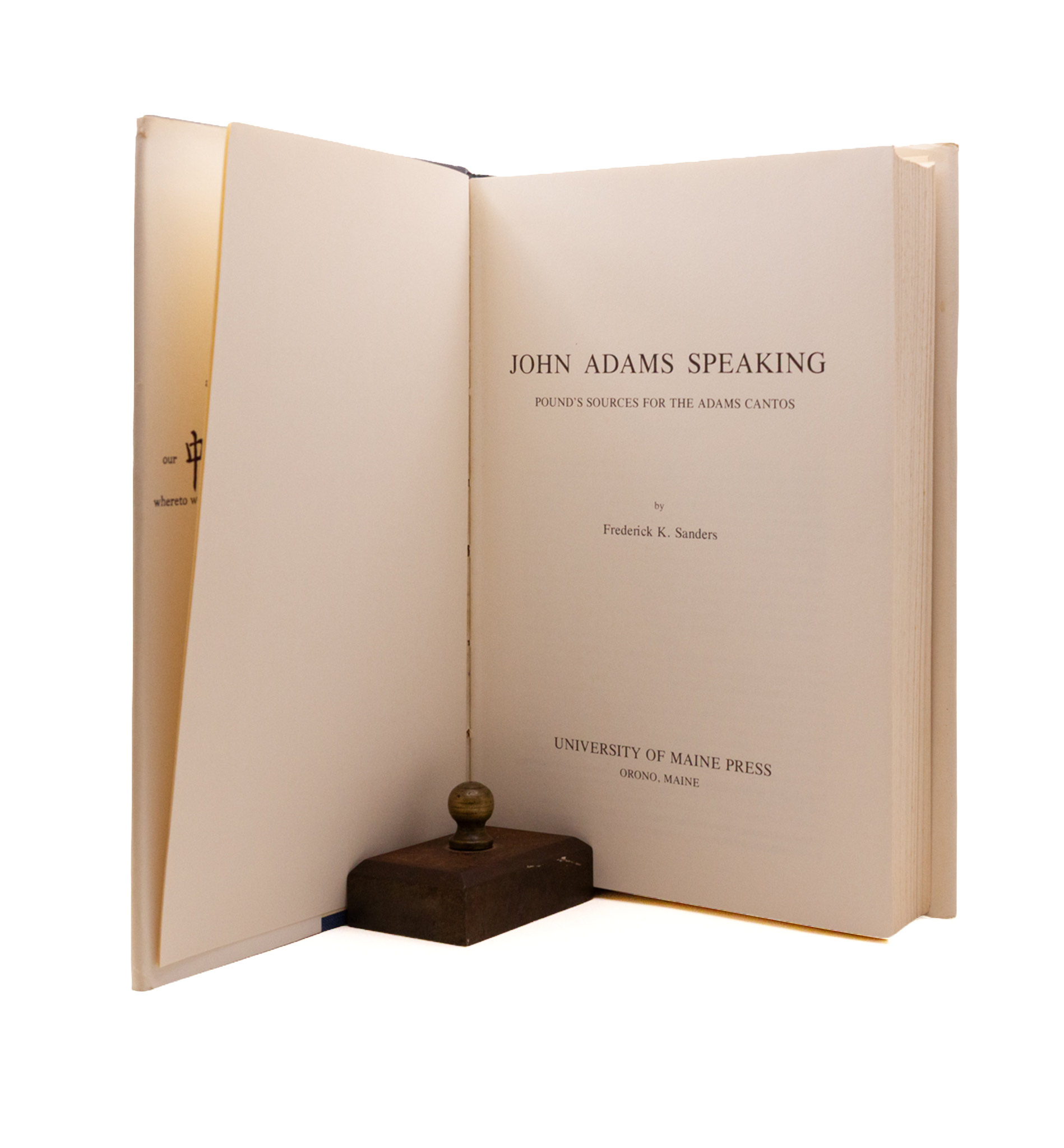
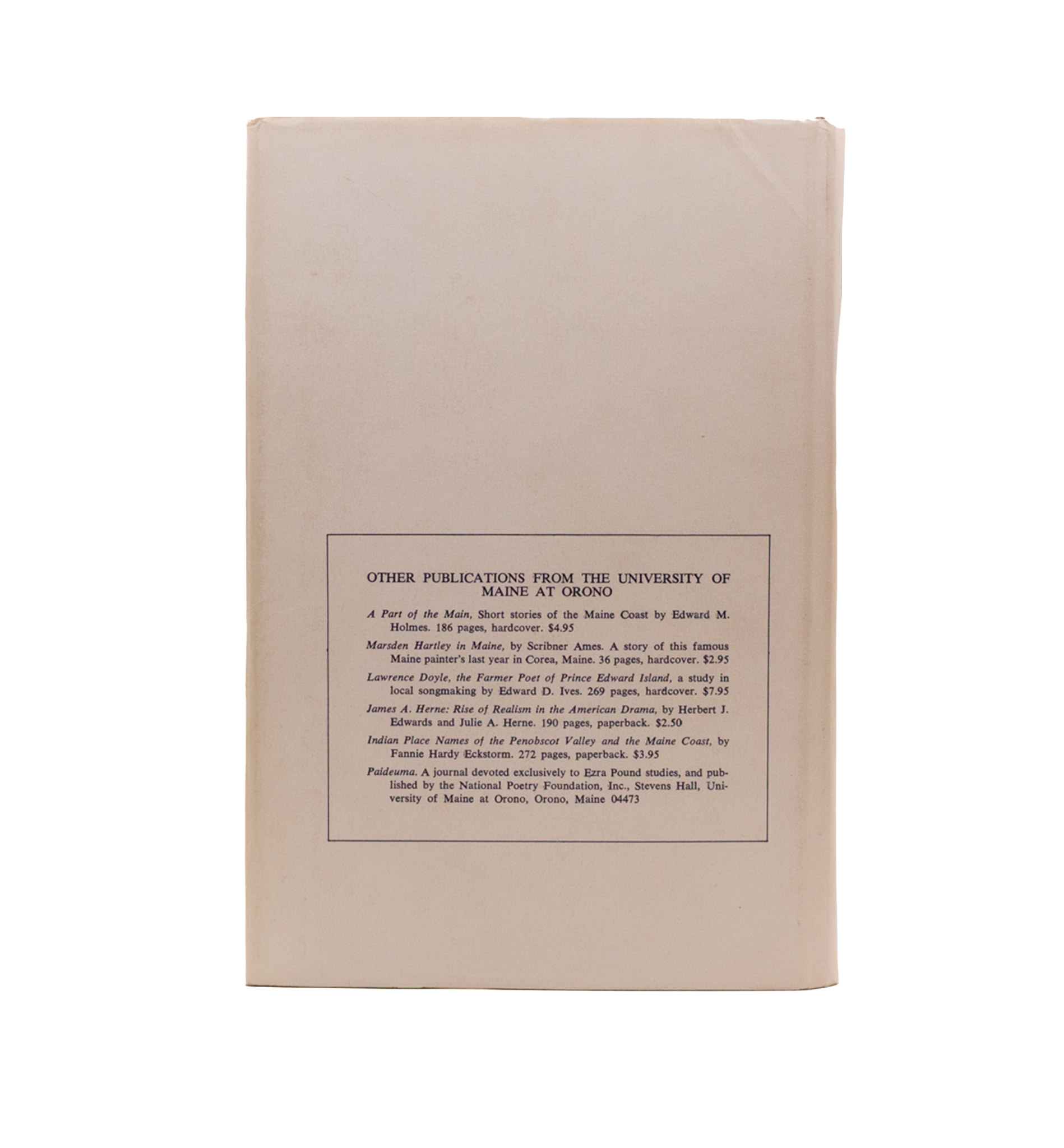
tap to cycle
John Adams Speaking: Pound’s Sources for the Adams Cantos
Frederick K. Sanders
Published Maine: University of Maine Press, 1975
530pp.; 23.5 x 16.1 cm. Blue cloth boards stamped in gold on spine. White laid-paper dust-jacket printed in blue and gold.
Part of Scholarship, II
For the 80 pages of Adams Cantos, Sanders provides over 500 in per-canto commentary, elaborating Pound’s selection of the diaries of John Adams etc. to guide the reader to the understanding of the American Revolution that Pound demands. First edition, a near fine copy in the original jacket, lightly annotated by David Moody.
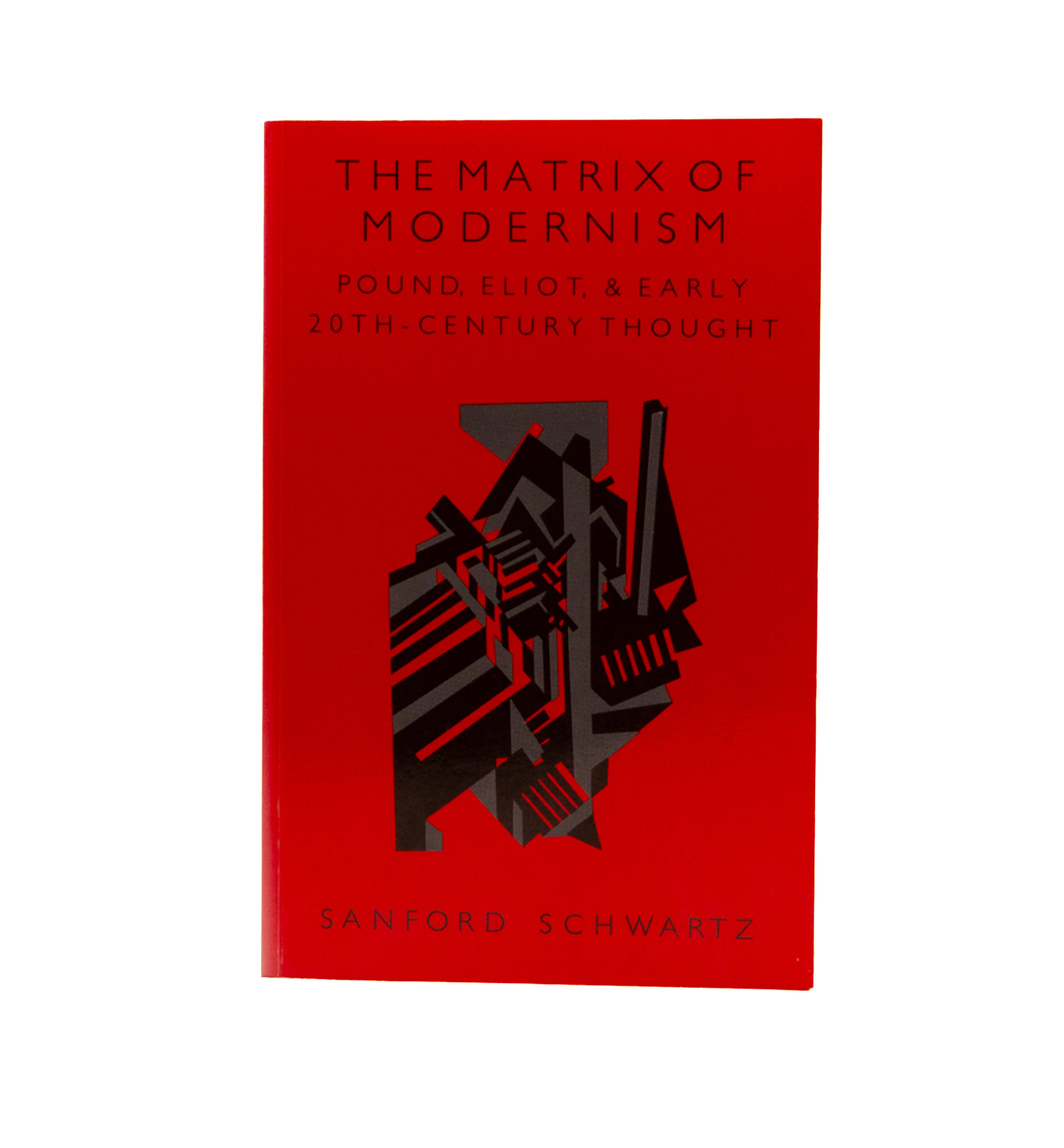
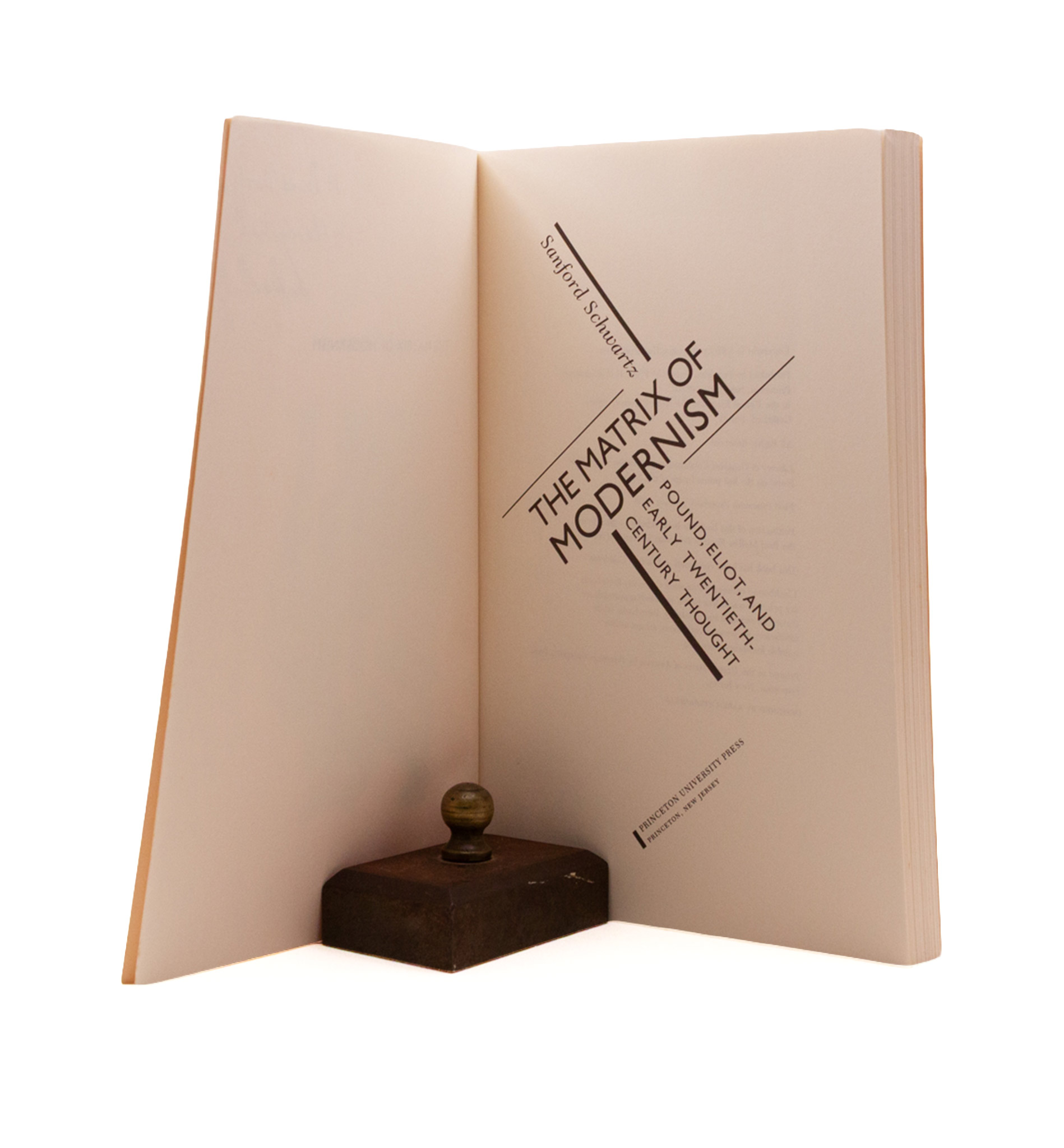
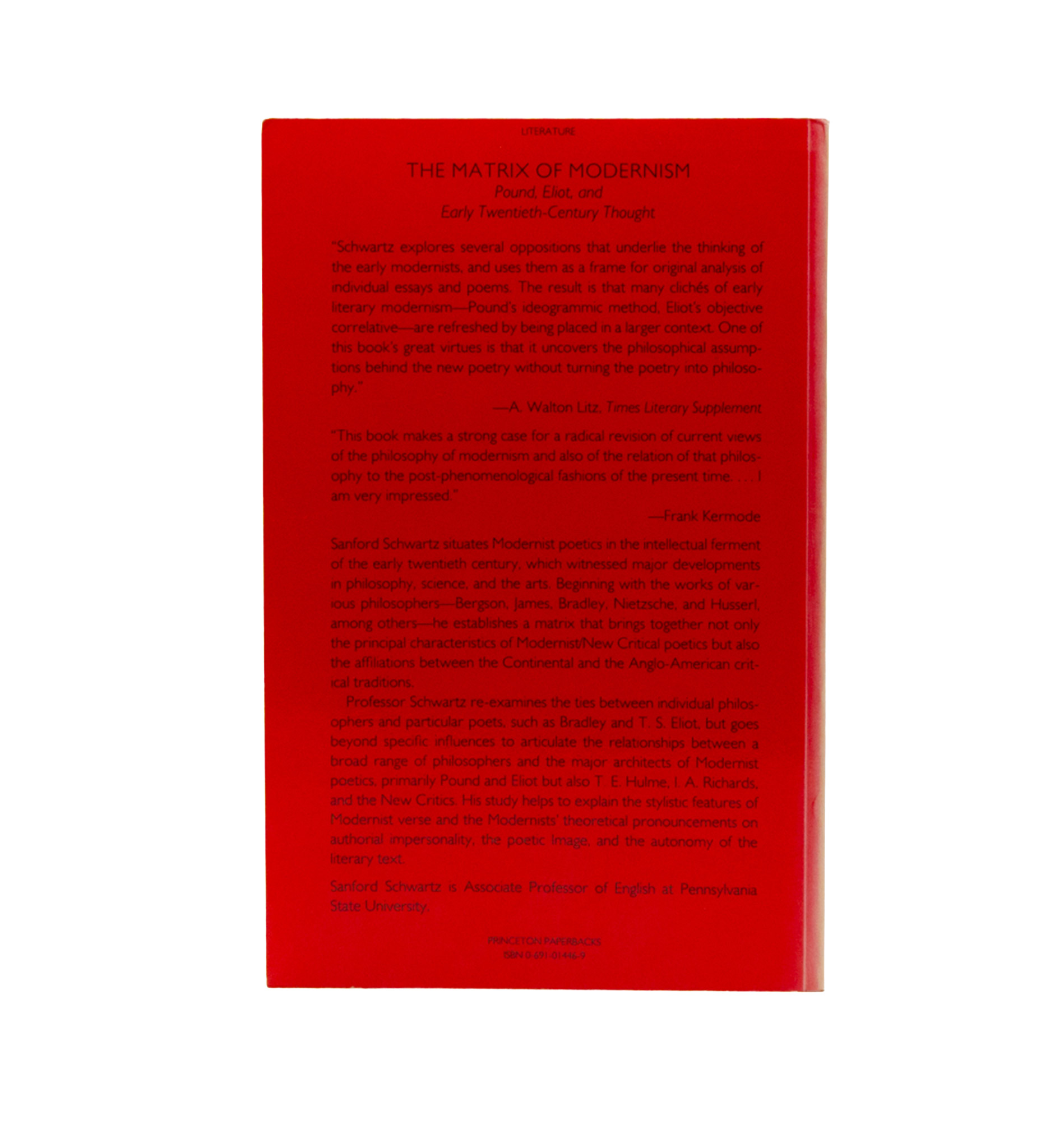
tap to cycle
The Matrix of Modernism: Pound, Eliot, & Early 20th-Century Thought
Sanford Schwartz
Published New Jersey: Princeton University Press, 1988
235pp.; 21.6 x 13.9 cm. Stiff white paper wraps printed in red and black.
Part of Scholarship, II
A study of the influences of the cultures of poetry and philosophy on each other in the Modern era. First paperback edition, lightly read, the spine sunned, with annotations by David Moody and an ink dedication from the author to David Moody on the half-title reading, “To David Moody, / On the same trail, / Sandford Schwartz.”
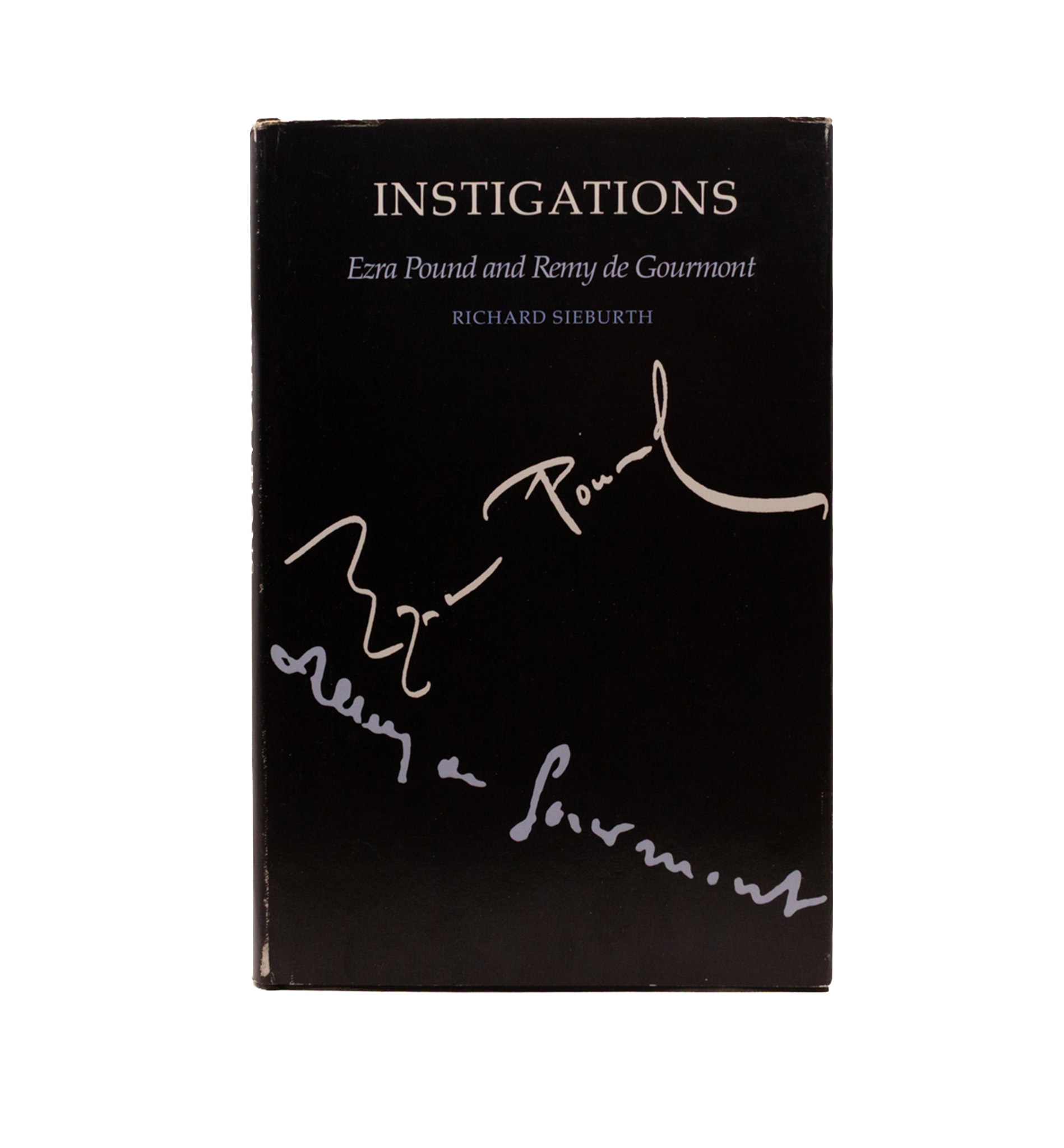


tap to cycle
Instigations: Ezra Pound and Remy de Gourmont
Richard Sieburth
Published Cambridge: Harvard University Press, 1978
197pp.; 24.2 x 16.1 cm. Black cloth boards stamped in silver down spine. White dust-jacket printed in black and blue.
Part of Scholarship, II
As per Kenner, “One of the basic items of Pound scholarship.” A juxtaposition of de Gourmont’s and Pound’s works, revealing new aspects of Pound’s political ideas and the late cantos. First edition, a fine book in a lightly worn jacket.
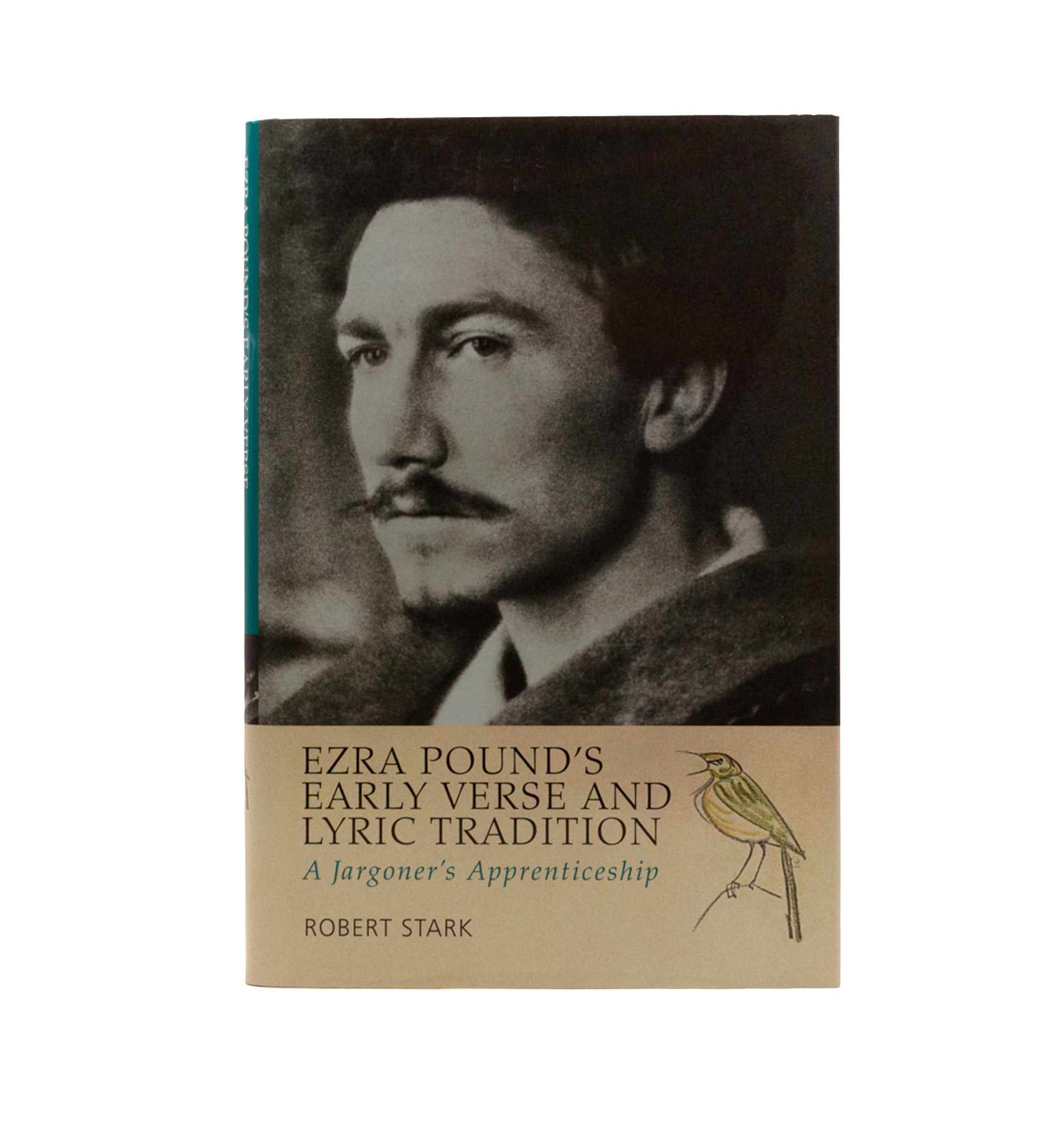
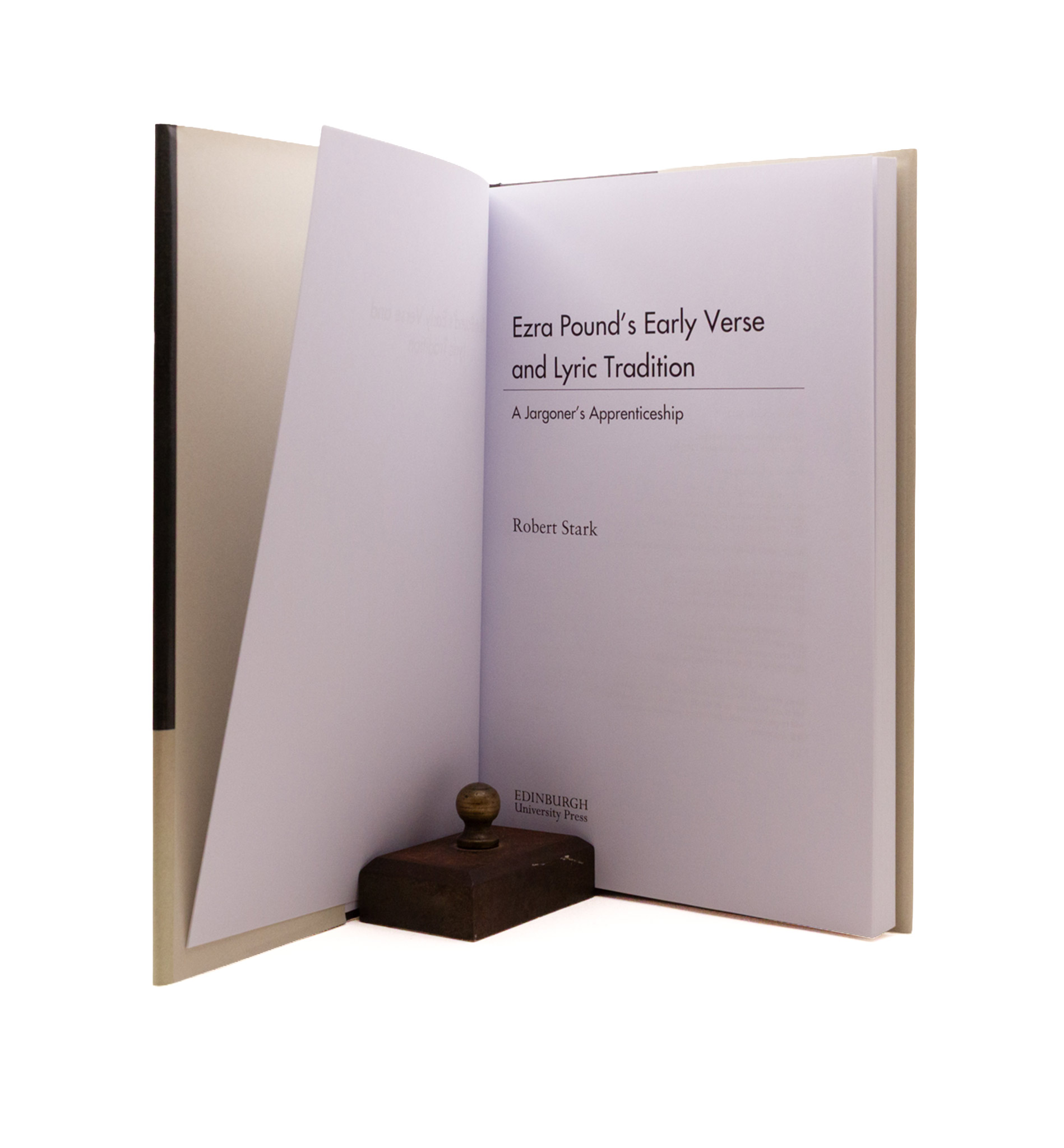
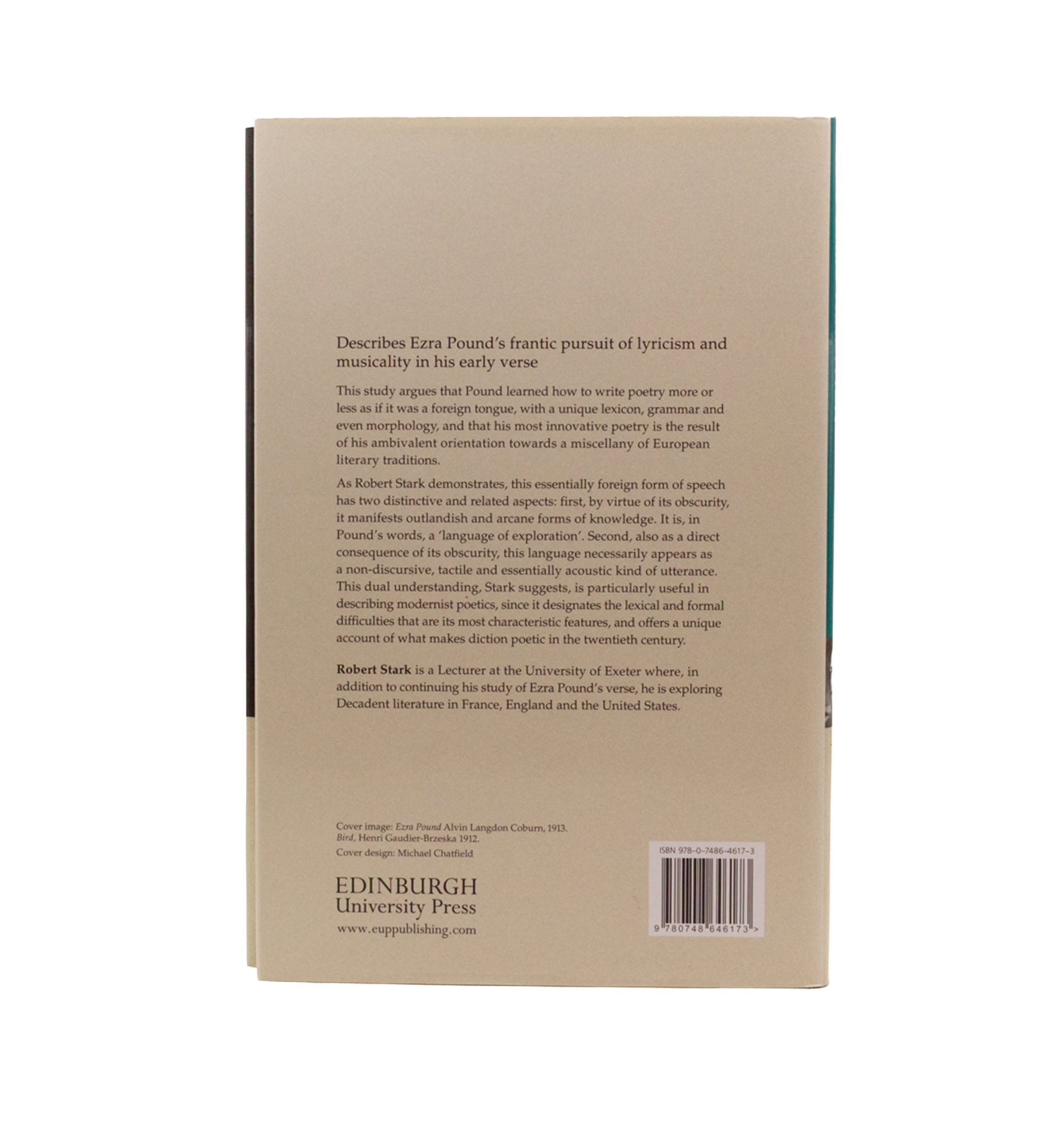
tap to cycle
Ezra Pound’s Early Verse and Lyric Tradition, A Jargoner’s Apprenticeship
Robert Stark
Published Edinburgh University Press, 2012
230pp.; 24.1 x 16 cm. Black paper covered boards lettered in gold down spine.White dust-jacket printed in black and green.
Part of Scholarship, II
“Nor doth it follow, that they cannot speake, because we cannot heare, or that they want language, because we want understanding.”
— Thomas Fuller, Ornitho-logie; or The Speech of Birds
A study of the sound and language of Pound’s poetry, from Hilda’s Book to The Cantos. Sole edition, a fine copy.
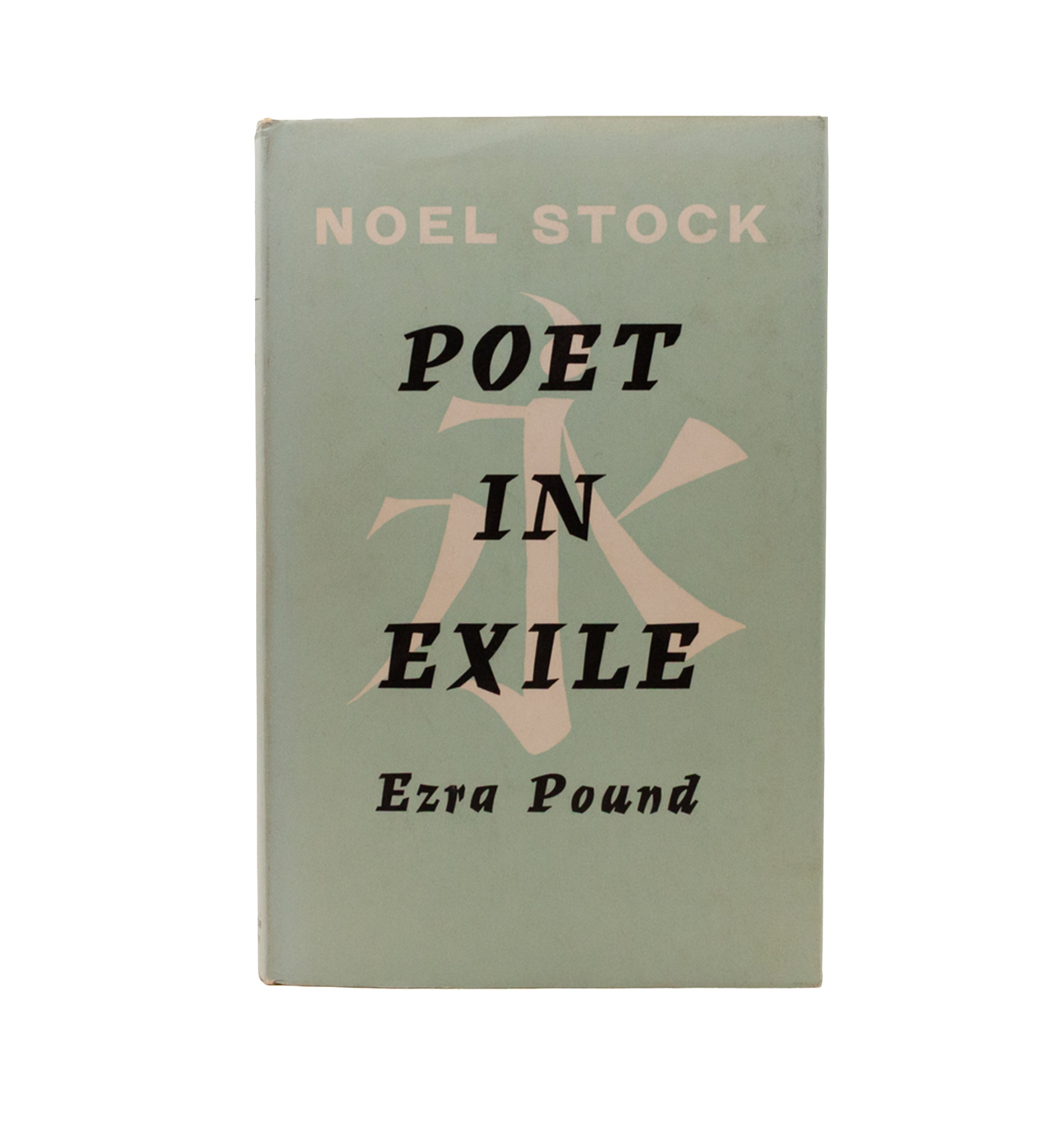
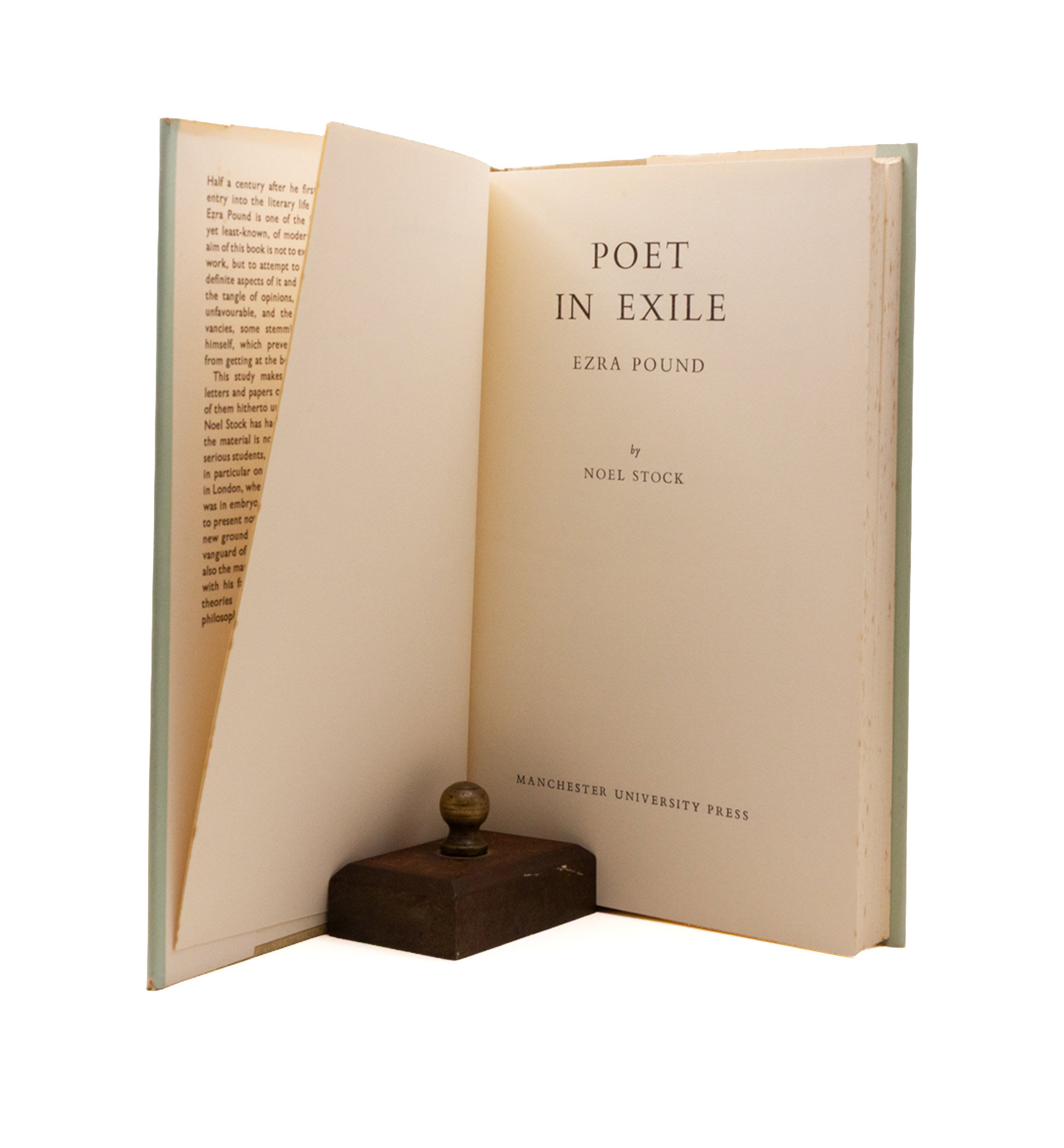

tap to cycle
Ezra Pound: Poet in Exile
Noel Stock
Published Manchester University Press, 1964
273pp.; 22.3 x 14.7 cm. Beige cloth boards stamped in gold on spine. White dust-jacket printed in light sea green and black.
Part of Scholarship, II
Stock’s first book on Pound, after a decade of collaboration and editorials (Edge, Impact, Love Poems of Ancient Egypt), composed using unpublished manuscripts at Brunnenburg. First edition, a fine copy save spotting on the edges (not the pages) in a very near fine & beautiful jacket, unforuntately price clipped (cutting out history).
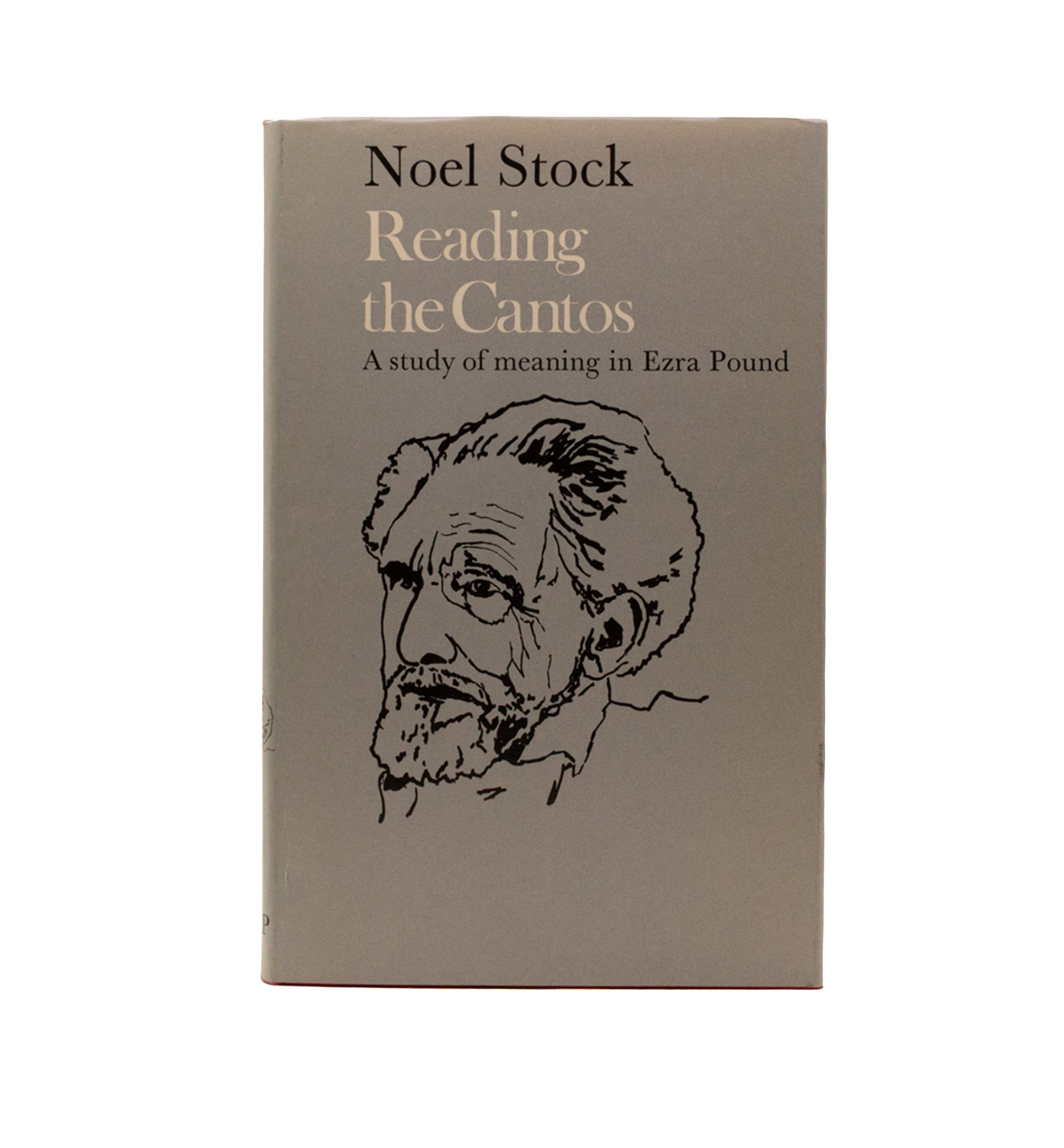
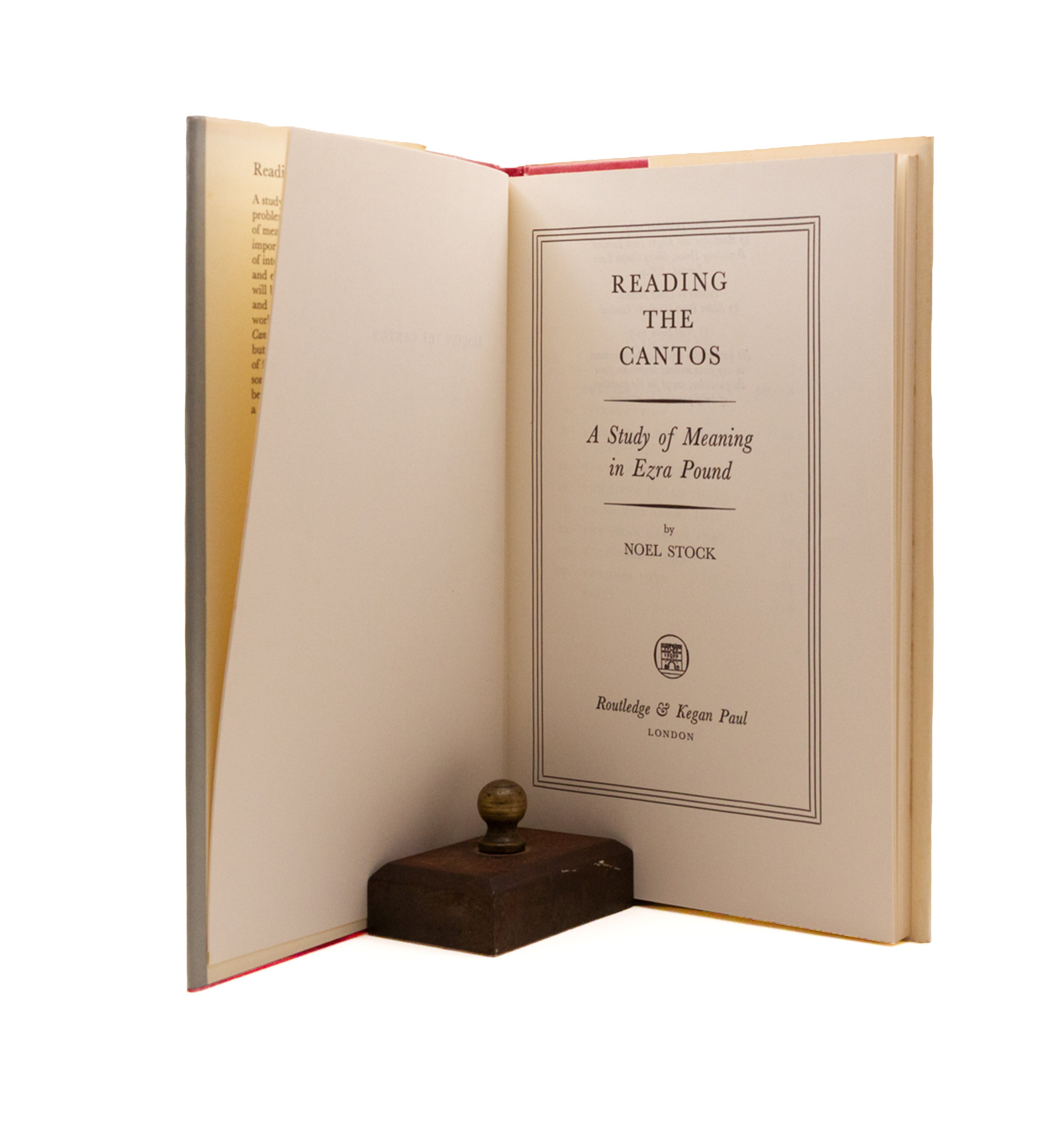
tap to cycle
Reading the Cantos: A study of meaning in Ezra Pound
Noel Stock
Published London: Routledge and Kegan Paul, 1967
120pp.; 22.2 x 14.5 cm. Red cloth boards stamped in gold up spine. White dust-jacket printed in grey-green and black.
Part of Scholarship, II
Stock’s tour through The Cantos, preceding Drafts & Fragments. First English edition, one year after the American. A fine book in a very clean jacket with one small puncture.


tap to cycle
The Life of Ezra Pound
Noel Stock
Published London: Routledge and Kegan Paul, 1970
472pp.; 24.1 x 16.1 cm. Black cloth boards stamped in gold on spine. White dust-jacket printed in black.
Part of Scholarship, II
Stock’s biography of Pound, composed in part using unpublished material housed at Brunnenburg. First edition, fine in a troubled jacket with a few tape repairs.

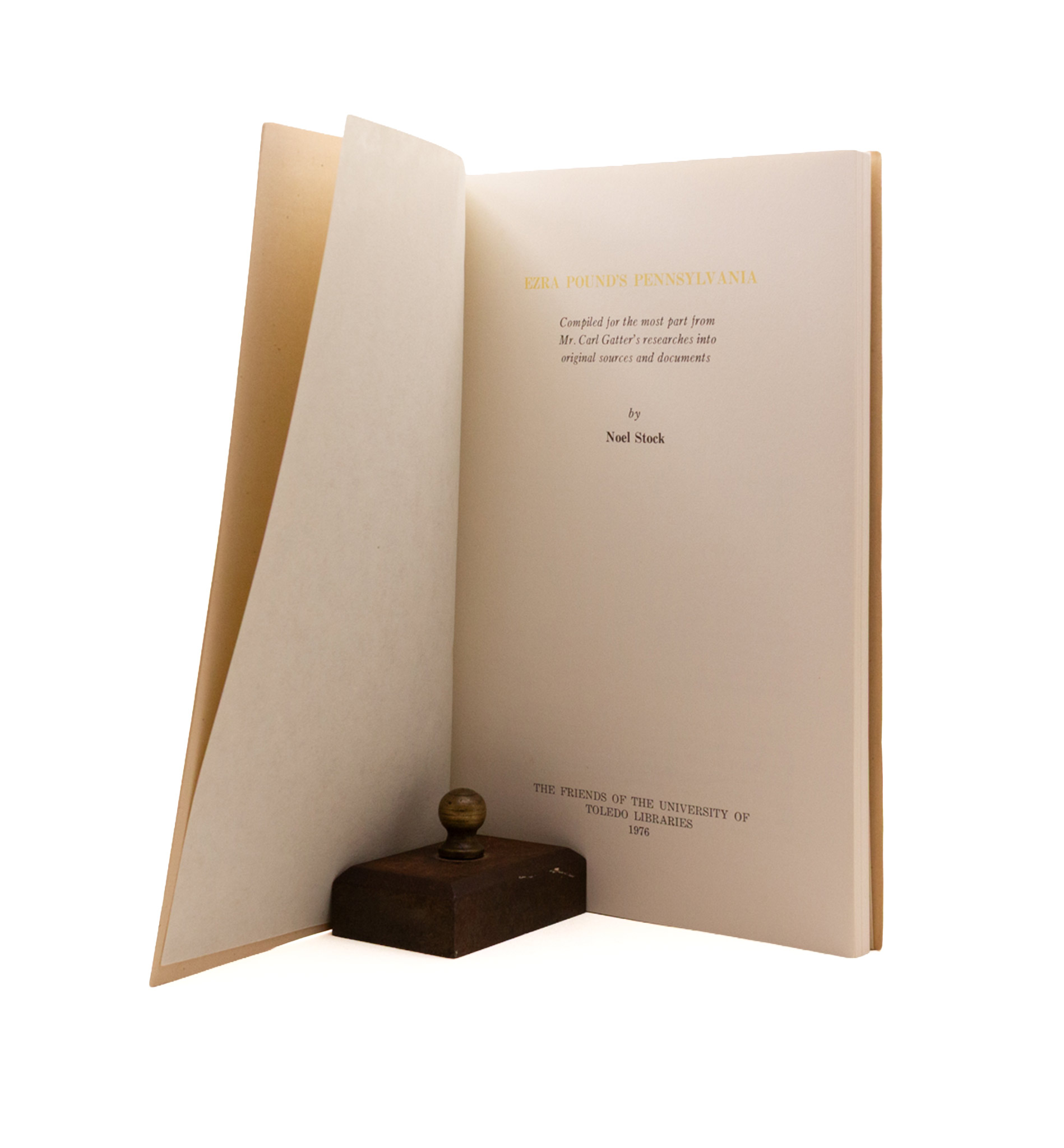
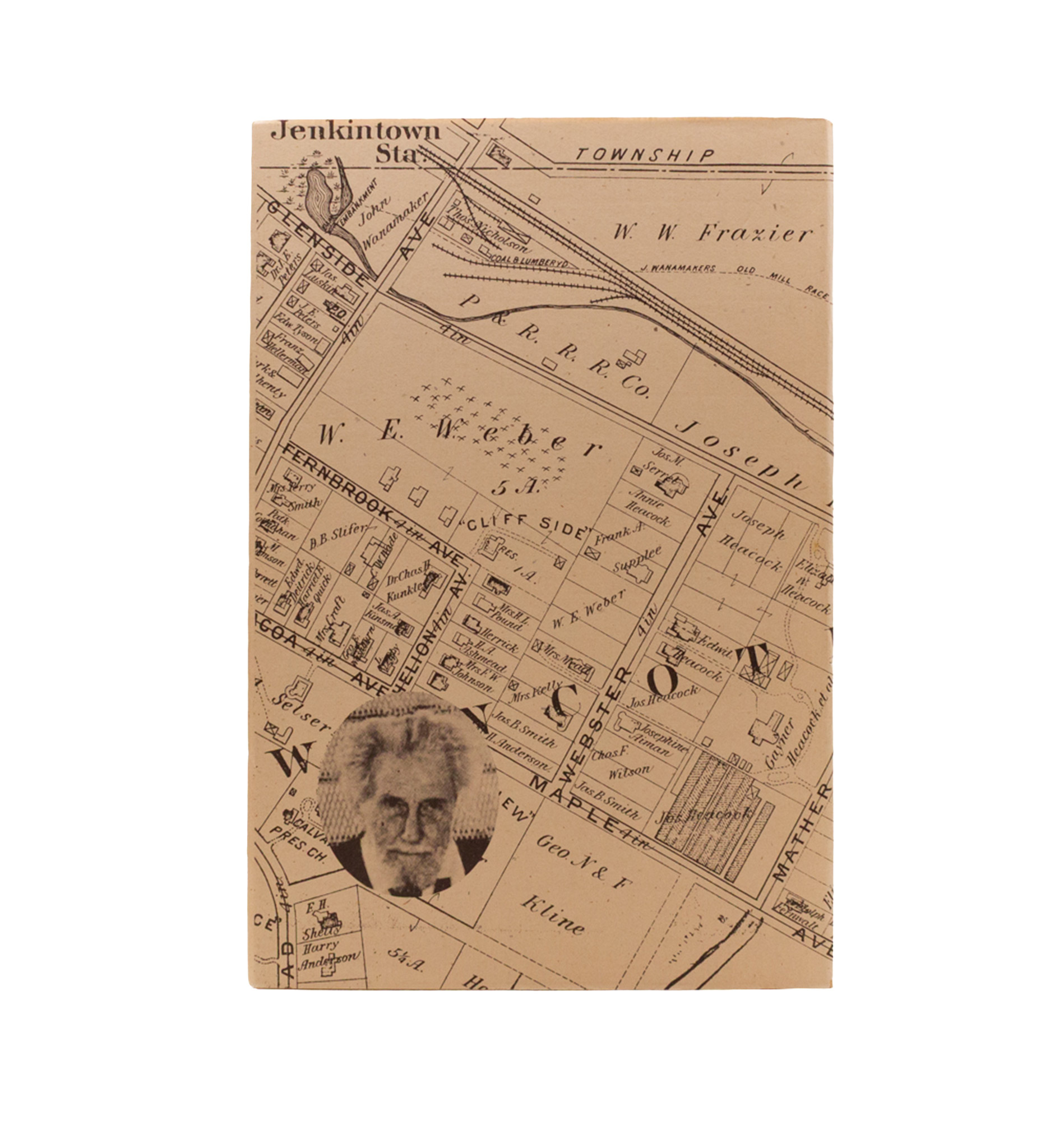
tap to cycle
Ezra Pound’s Pennsylvania
Noel Stock
Published The Friends of the University of Toledo Libraries, 1976
111pp.; 22.9 x 15.3 cm. Heavy tan paper wraps printed in black. Lighter dust-jacket printed in black, with cut-out, folds & attached at spine.
Part of Scholarship, II
“Ezra Pound was born in Hailey, Idaho, in 1885, but he grew up in Pennsylvania.” Drawing from such a wealth of material that Stock thought this account worthy of a separate book from his Life of Ezra Pound. First edition, no. 533 of 1000 copies. A near fine copy, just a small nick to the cutaway framing Pound’s face on the front-cover. With the occasional marginal note from A. David Moody.

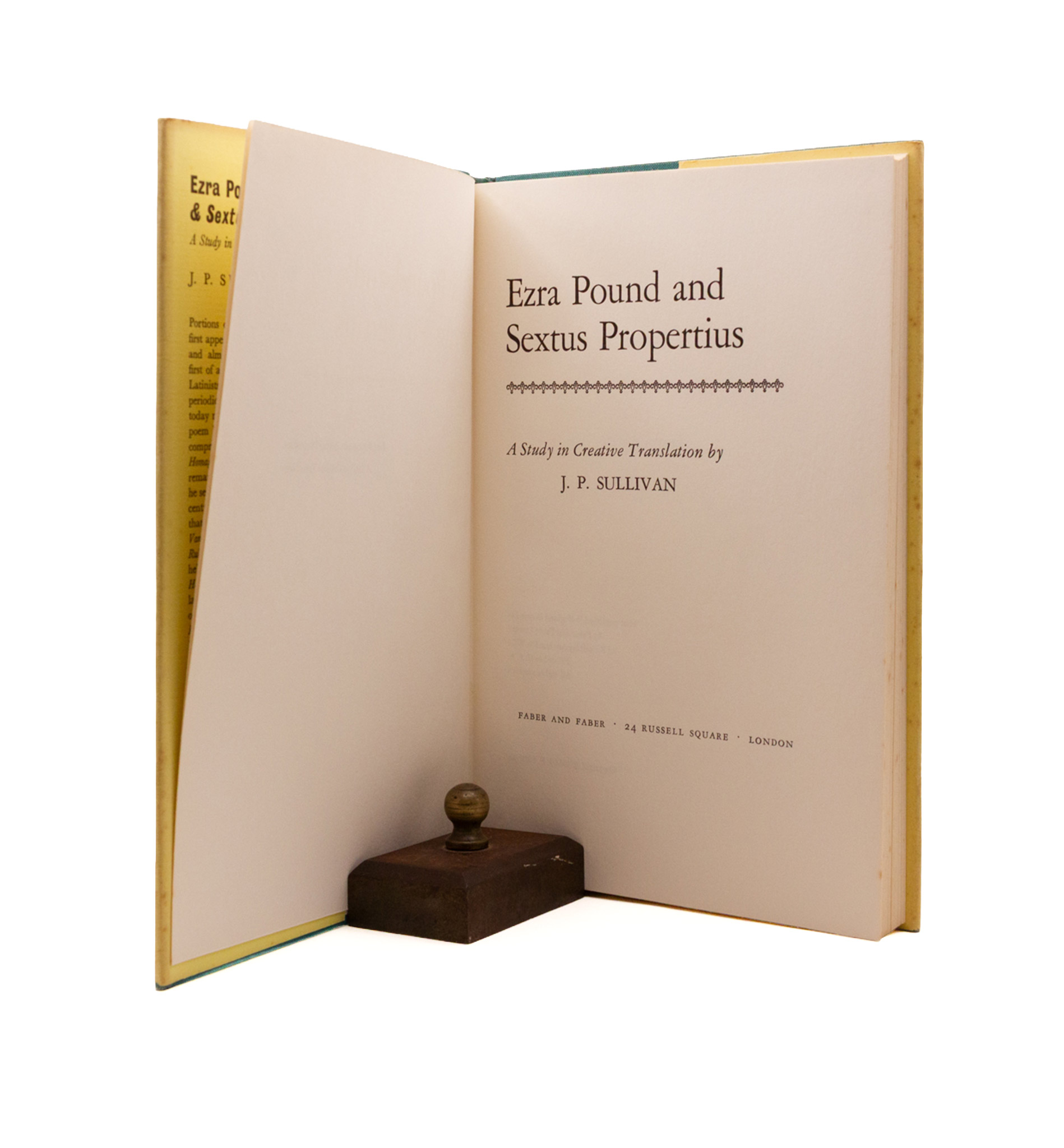

tap to cycle
Ezra Pound & Sextus Propertius, a study in creative translation
J. P. Sullivan
Published London: Faber and Faber, 1965
192pp.; 23.8 x 16 cm. Green cloth boards printed in red & stamped in gold down spine. Yellow laid-paper dust-jacket printed in black, red and blue.
Part of Scholarship, II
“If Ezra Pound were a professor, there would be nothing left for him but suicide.”
— W. G. Hale of The University of Chicago to Harriet Monroe, 1919
With the Latin & English vis à vis. First English edition, published one year after the American. A mostly fine copy, the jacket a little worn, the occasional marginal note from David Moody.

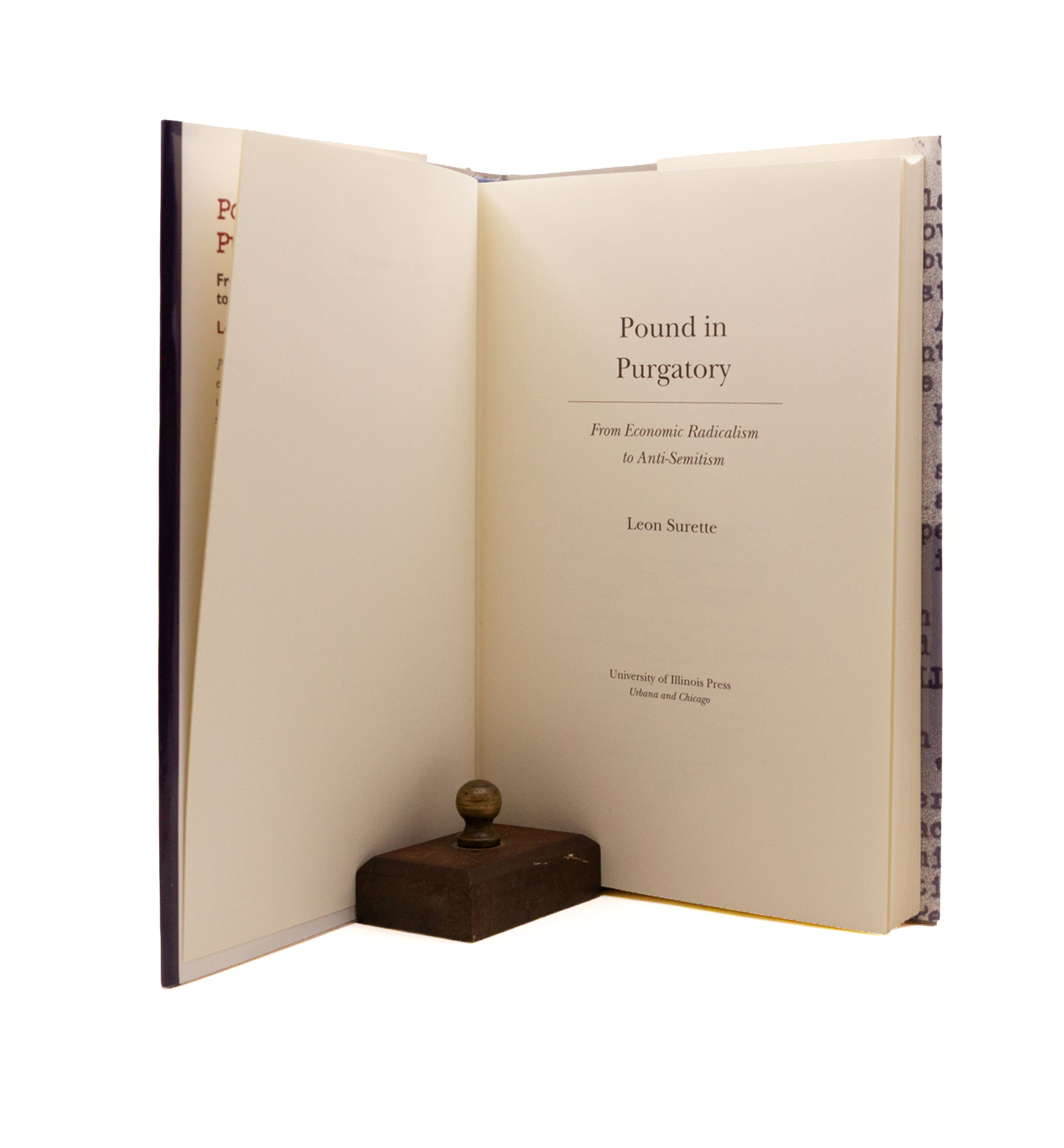
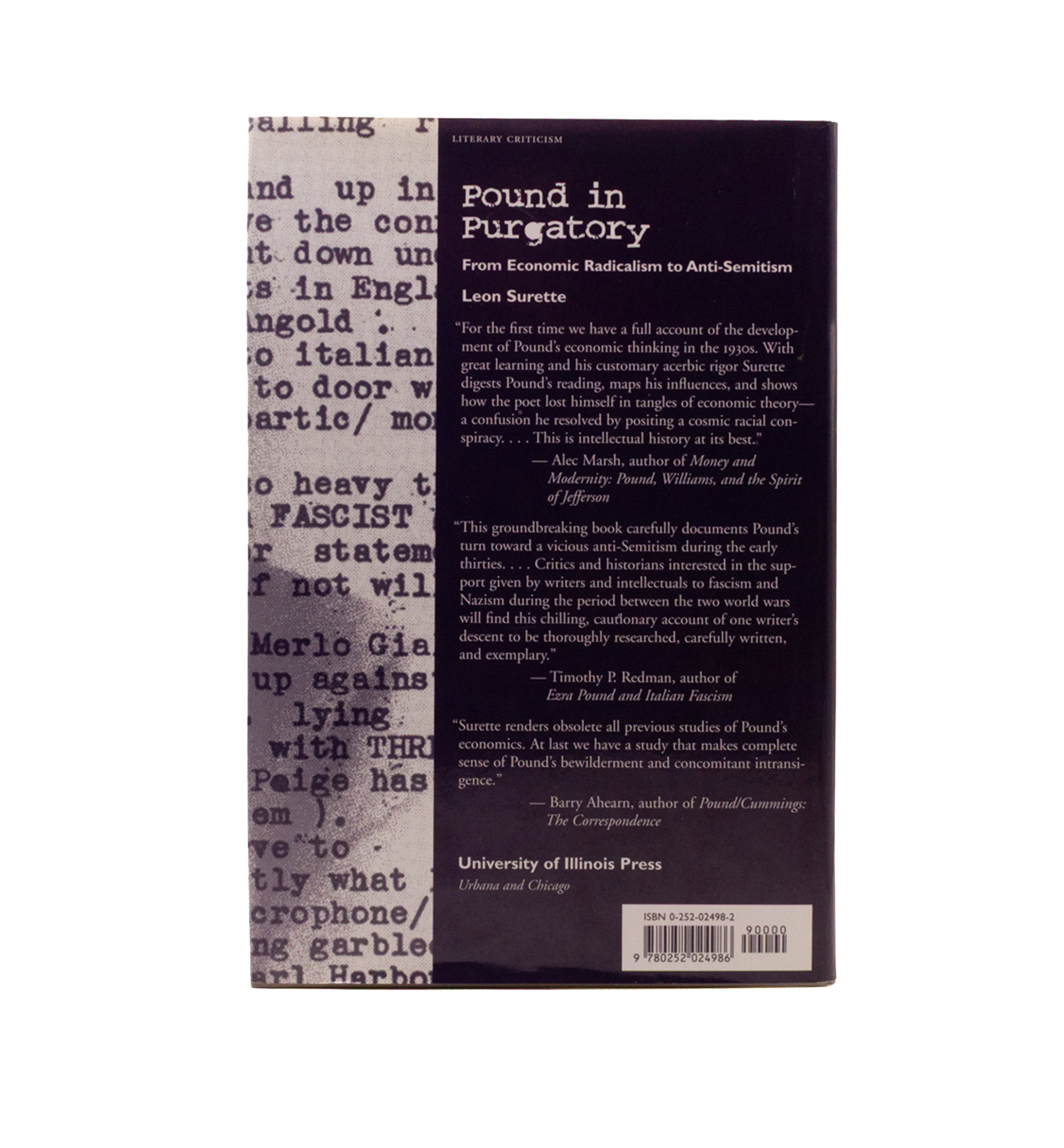
tap to cycle
Pound in Purgatory; From Economic Radicalism to Anti-Semitism
Leon Surette
Published Urbana and Chicago: University of Illinois Press, 1999
314pp.; 23.6 x 16 cm. Light grey cloth boards lettered in black down spine. White dust-jacket printed in black and red.
Part of Scholarship, II
Surette’s third book on Pound, a study of the development of Pound’s economic theory (alongside those political and racial) from 1931 to 1936. Something of a development from Tim Redman’s Ezra Pound and Italian Fascism, extending the corpus of Pound’s correspondence to the previously unstudied letters with Arthur Kitson, Hugo Fack and E. S. Woodward, each anti-Semites. Surette characterises this period as Pound’s entry into confusion. First edition, a fine copy with David Moody’s marginalia throughout.


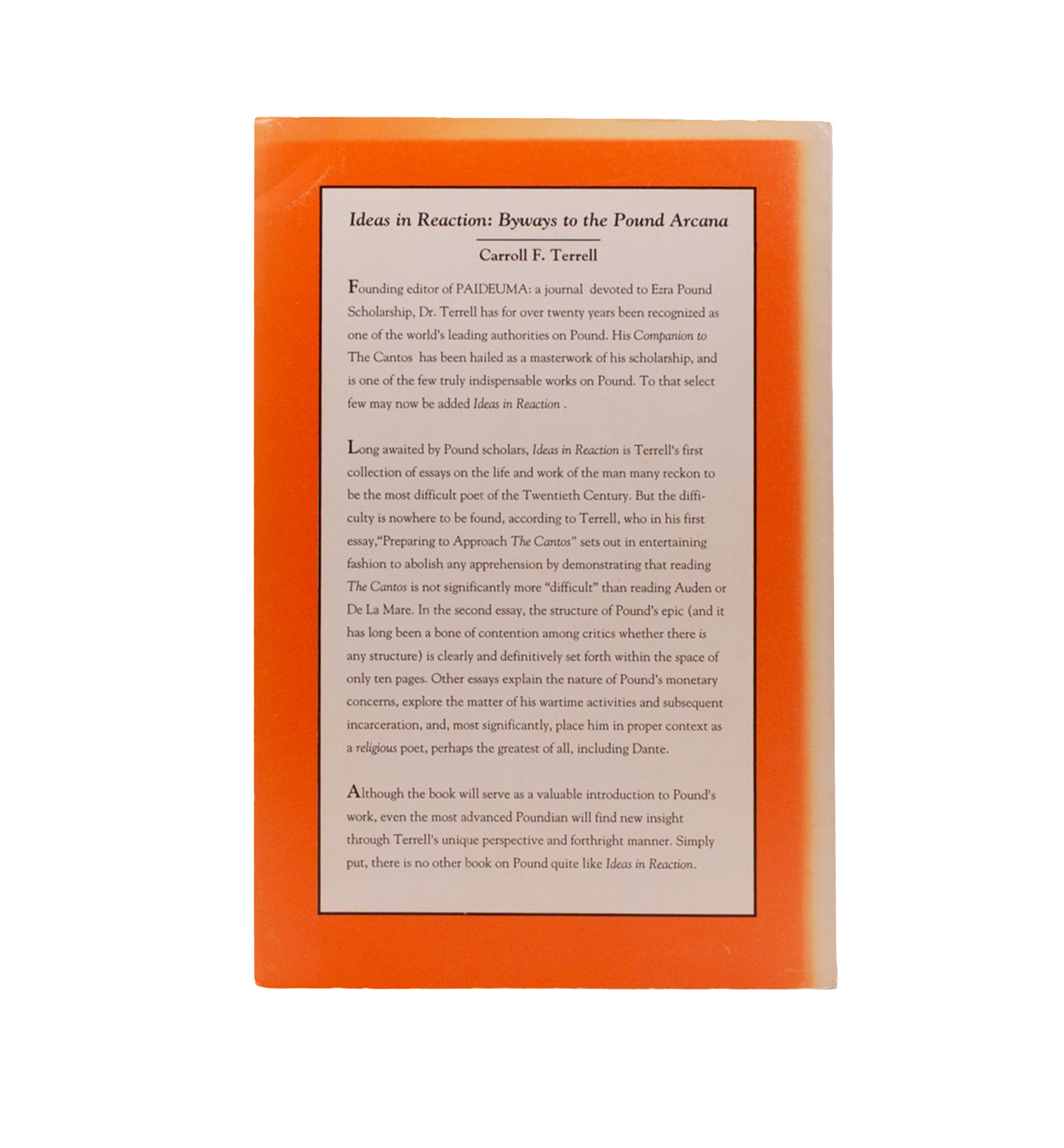
tap to cycle
Ideas in Reaction: Byways to the Pound Arcana
Carroll F. Terrell
Published Maine: Northern Lights, 1991
236pp.; 22.7 x 15.1 cm. Stiff white paper wraps printed in orange and black.
Part of Scholarship, II
A set of essays by the great annotator on The Cantos. A chapter on “The Structure of The Cantos” presents venn-diagrams, wheels within wheels, traingles, and tetraktys arrangements for the China and Adams Cantos; the book not, however, including Forrest Read’s ’76 in its bibliography. Further essays on “Pound vs. Reductionist Orthodoxies,” “Debt-Free Money,” “The Divine Mystery,” a seminar-conversation student to expert, a review of EP and DS: Their Letters, Pound-Joyce, Pound and his silence, madness vs treason. First edition, lightly read with the top corner gently leafed; sunning to spine spilling over onto covers.



tap to cycle
The Roots of Treason; Ezra Pound and the Secrets of St Elizabeth’s
E. Fuller Torrey
Published London: Sidgwick & Jackson, 1984
339pp.; 23.4 x 15.4 cm. Stiff white papers wraps printed in black, green and yellow.
Part of Scholarship, II
A biographical study of Pound marking the path that lead him to the Gorilla Cage and the bughouse. First edition, paperback issue. A fine copy with the very occasional annotation from David Moody.


tap to cycle
Ezra Pound: The Solitary Volcano
John Tytell
Published London: Bloomsbury, 1987
368pp.; 24.1 x 16.5 cm. Green cloth boards stamped decoratively in gold to front and down spine. White dust-jacket printed in black and green.
Part of Scholarship, II
Biography of Pound, with a critical note from David Moody laid-in, and his further pencil marginalia. First edition, a fine copy.



tap to cycle
Dante and Pound, The Epic of Judgement
James J. Wilhelm
Published Maine: University of Maine Press, 1974
187pp.; 23.6 x 25.7 cm. Red cloth boards lettered in gold down spine.
Part of Scholarship, II
Wilhelm’s first book on Pound, a comparison between the two epic poets who, as Wilhelm identifies, are the only to write judgement at every step of the way. With due chapters on Guido Cavalcanti, mentor to Dante and mask to Pound. Readers may aso be interested to find Wilhelm’s Il Miglior Fabbro: The Cult of the Difficult in Daniel, Dante and Pound (1974). First edition, the spine sunned with a touch of shelf-wear, otherwise fine, lacking the jacket. The occasional pencil note by David Moody.



tap to cycle
The Later Cantos of Ezra Pound
James J. Wilhelm
Published New York: Walker and Company, 1977
221pp.; 23.4 x 16.2 cm. Blue paper covered boards stamped in gold down spine. White dust-jacket printed in blue and gold.
Part of Scholarship, II
On Los Cantares and Drafts & Frags., an explication via Pound’s interests in Dante, Neoplatonism, Confucius, John Adams and Thomas Jefferson, Medieval Architecture, Byzantium etc. First edition, a near fine copy in a smart jacket.



tap to cycle
The American Roots of Ezra Pound; Ezra Pound in London and Paris, 1908-1925; Ezra Pound, The Tragic Years 1925-1972 (3 vols.)
James J. Wilhelm
Published New York: Garland Publishing, Inc. and The Pennsylvania State University Press, 1985
230pp.; 22.4 x 14.6 cm. Red cloth boards lettered in black on front and down spine. White dust-jacket printed in red and black.
383pp.; 23.6 x 16.1 cm. Green cloth boards stamped in gold down spine. White laid-paper dust-jacket printed in black and blue.
390pp.; 23.5 x 16 cm. Blue cloth boards stamped in gold down spine. White laid-paper dust-jacket printed in black and lilac.
Part of Scholarship, II
A three volume biography of Pound by J. J. Wilhelm. The first part a climbing up Pound’s family tree, which Pound himself claimed stood for a miniature “social history of America”; the second part largely focused on Pound’s social circles, with incredible chronological research; the third on the remainder, as we all know, and composed in chapters given over to single years or small spans of years. First editions all (1985, 1990, 1994), each fine in near fine jackets (spines sunned, third with a mark to front cover), with occasional pencil annotations from David Moody and a number of notes in ink laid into the first volume.
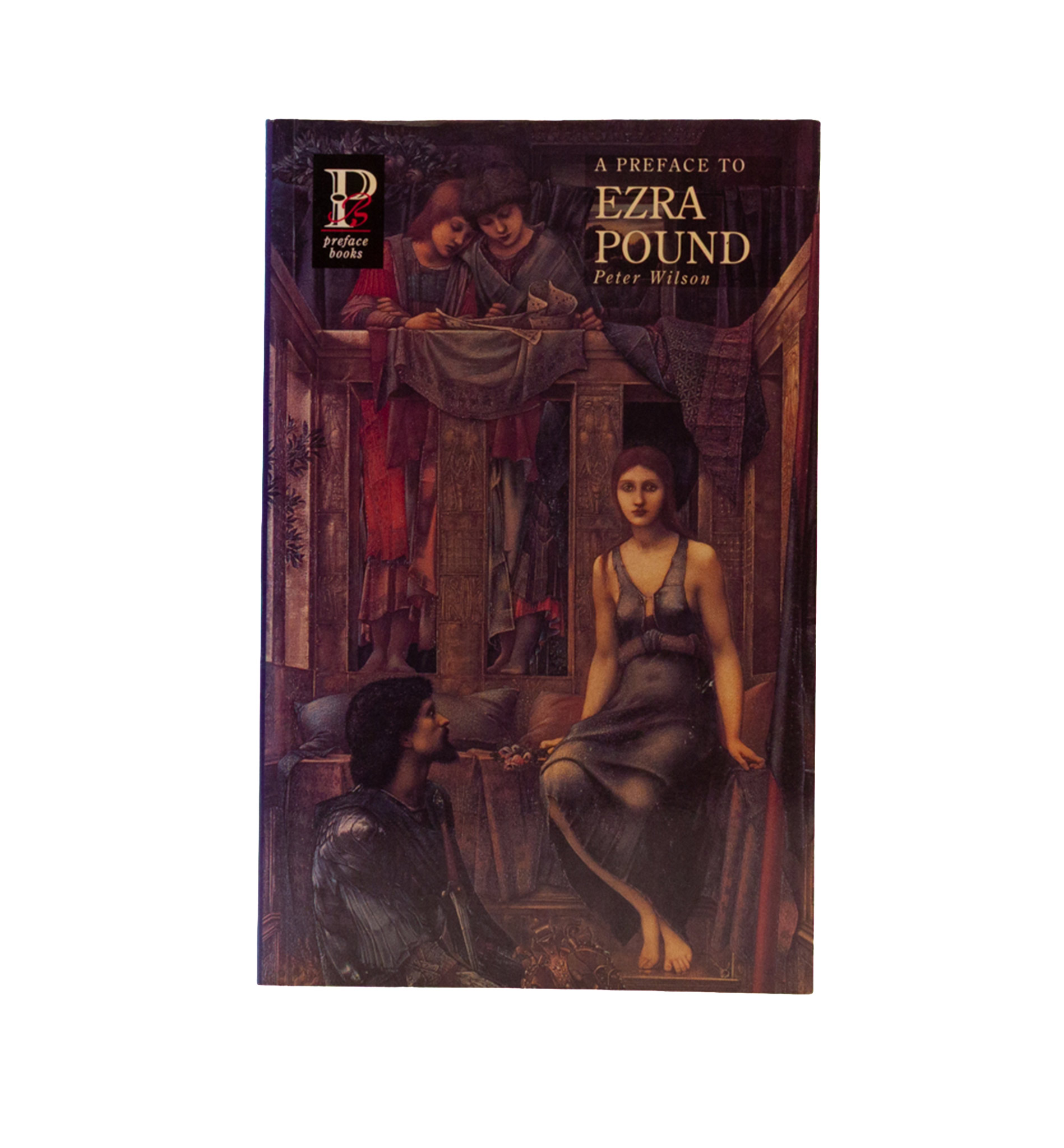


tap to cycle
A Preface to Ezra Pound
Peter Wilson
Published London: Longman, 1997
255pp.; 21.7 x 13.9 cm. Stiff white printed paper wrappers, illustrated with Burne-Jones’s King Cophetua and the Beggar Maid (modelled by Georgiana Burne-Jones).
Part of Scholarship, II
An introduction to the life and works, with a little on the Italian Cantos. First edition, not terribly common, & mostly fine.

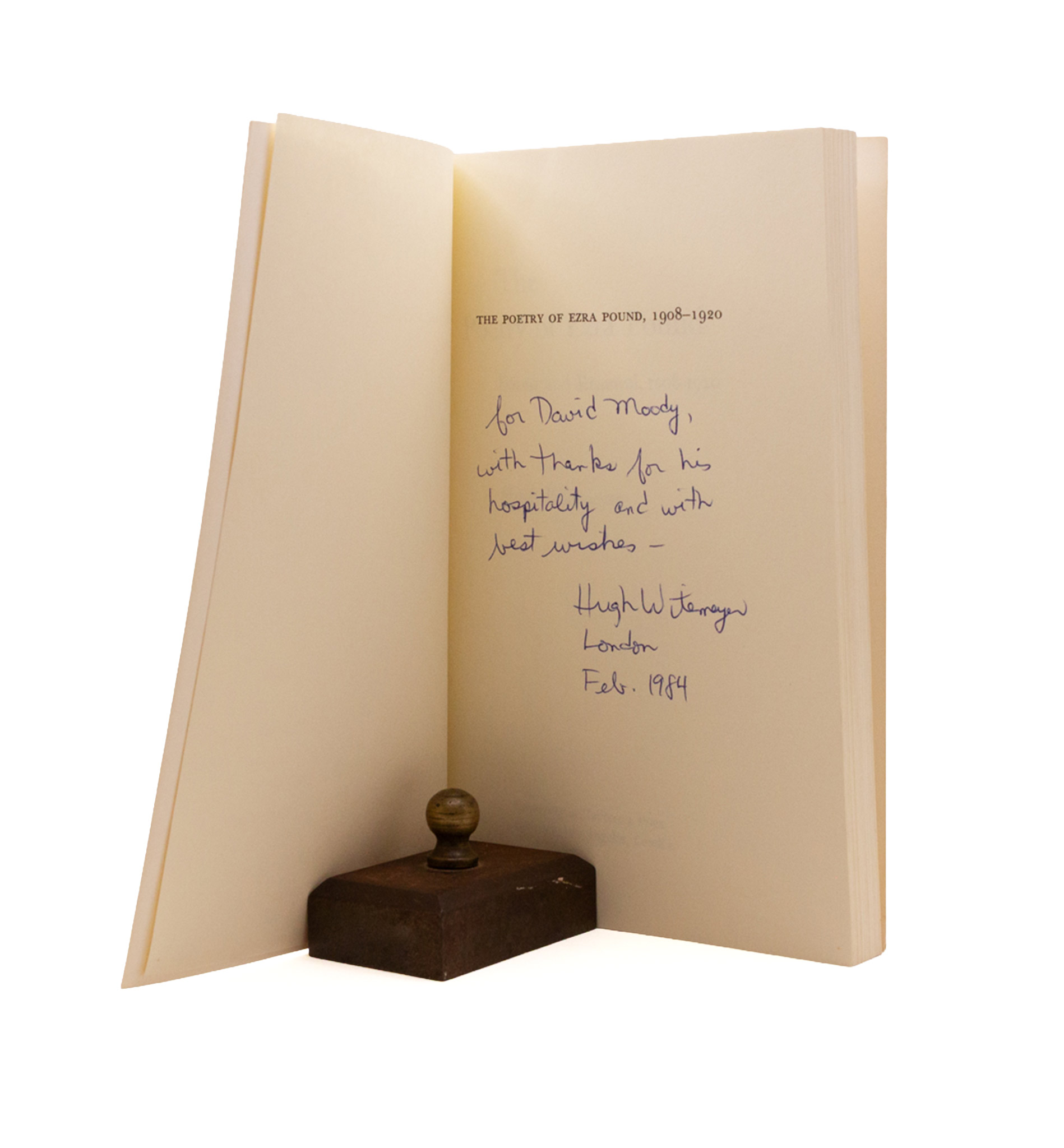
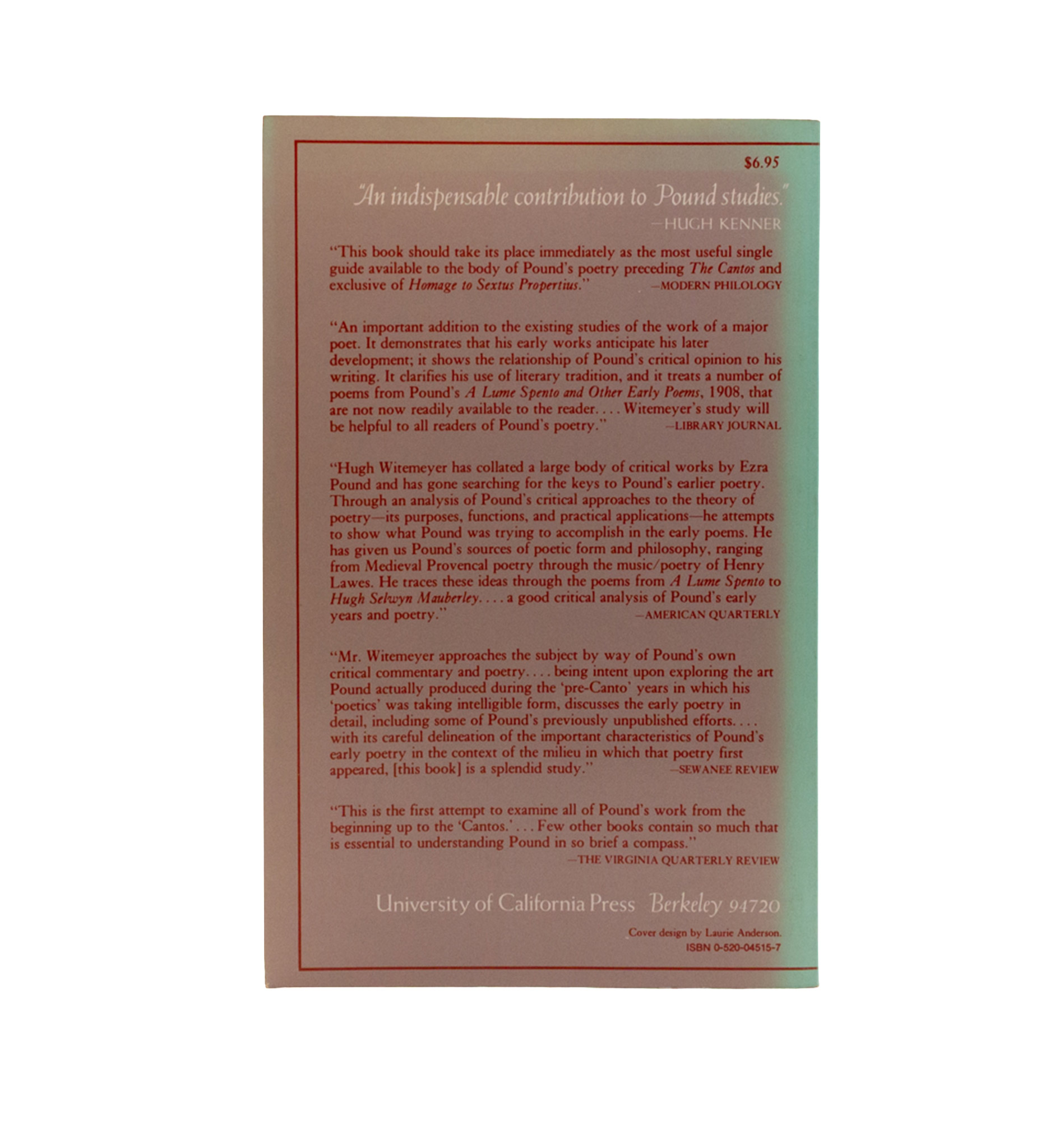
tap to cycle
The Poetry of Ezra Pound, Forms and Renewal 1908-1920
Hugh Witemeyer
Published Berkeley: University of California Press, 1981
220pp.; 21.4 x 23.7 cm. White paper wraps printed in grey and red.
Part of Scholarship, II
“Indispendable,” in Kenner’s words. A study of Pound’s poetry from ALS to HSM, including pieces unpublished. Inscribed to David Moody on the half-title, “with thanks for his hospitality,” dated 1984. The usual noughts and crosses in the margin from David Moody. First paperback edition after the 1969 first. Spine sunned from grey to green, touch of damage at top of spine, front cover lifting; with the occasional pencil from David Moody.

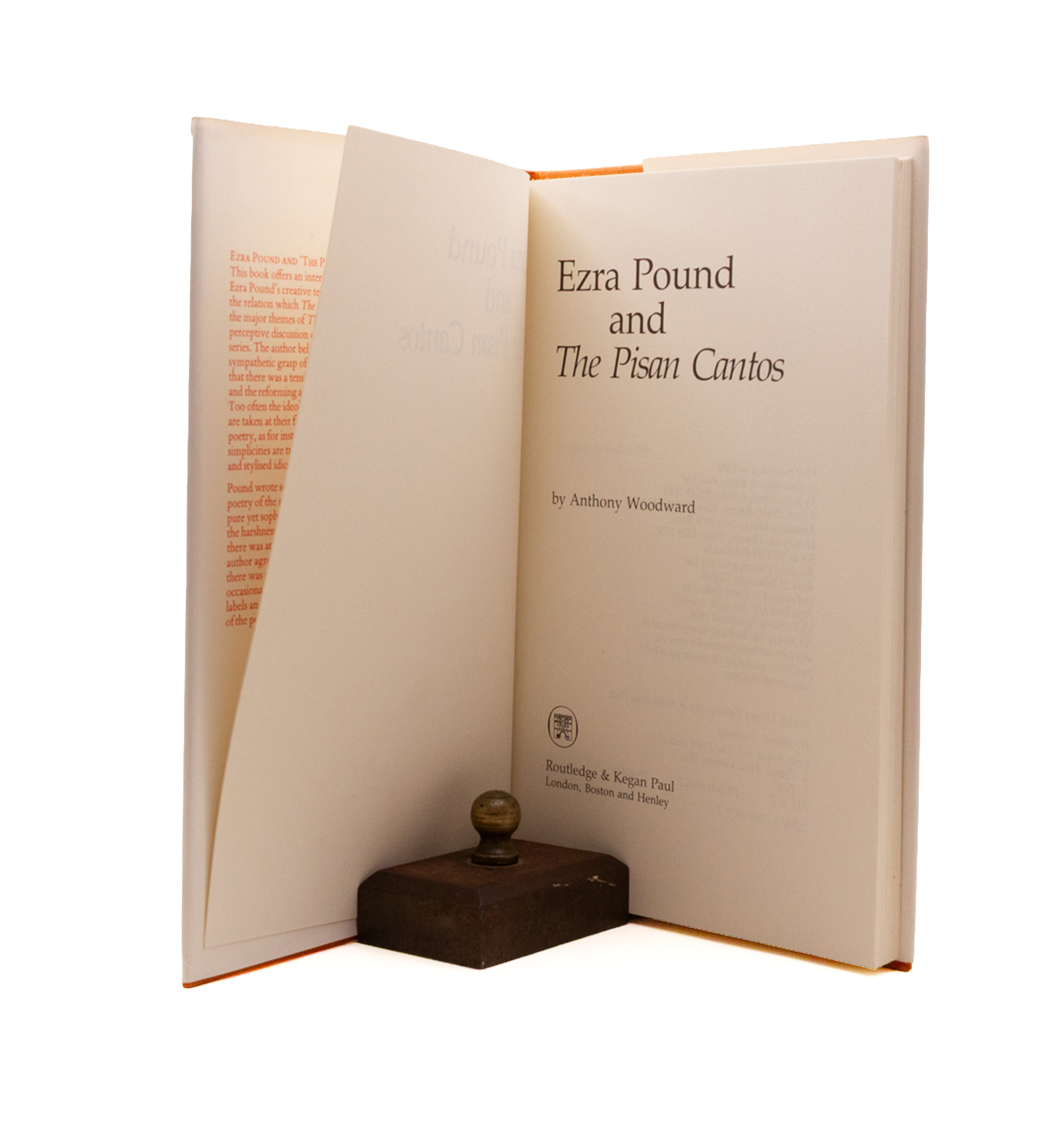

tap to cycle
Ezra Pound and The Pisan Cantos
Anthony Woodward
Published London: Routledge & Kegan Paul, 1980
128pp.; 22.3 x 14.2 cm. Orange cloth boards stamped in gold down spine. White dust-jacket printed in red.
Part of Scholarship, II
On Pound’s “temperament,” which is a nice word to use on the poet in his tent, watching wasps. First edition, a fine copy in a near fine jacket, the spine sunned. With a little pencil from David Moody.
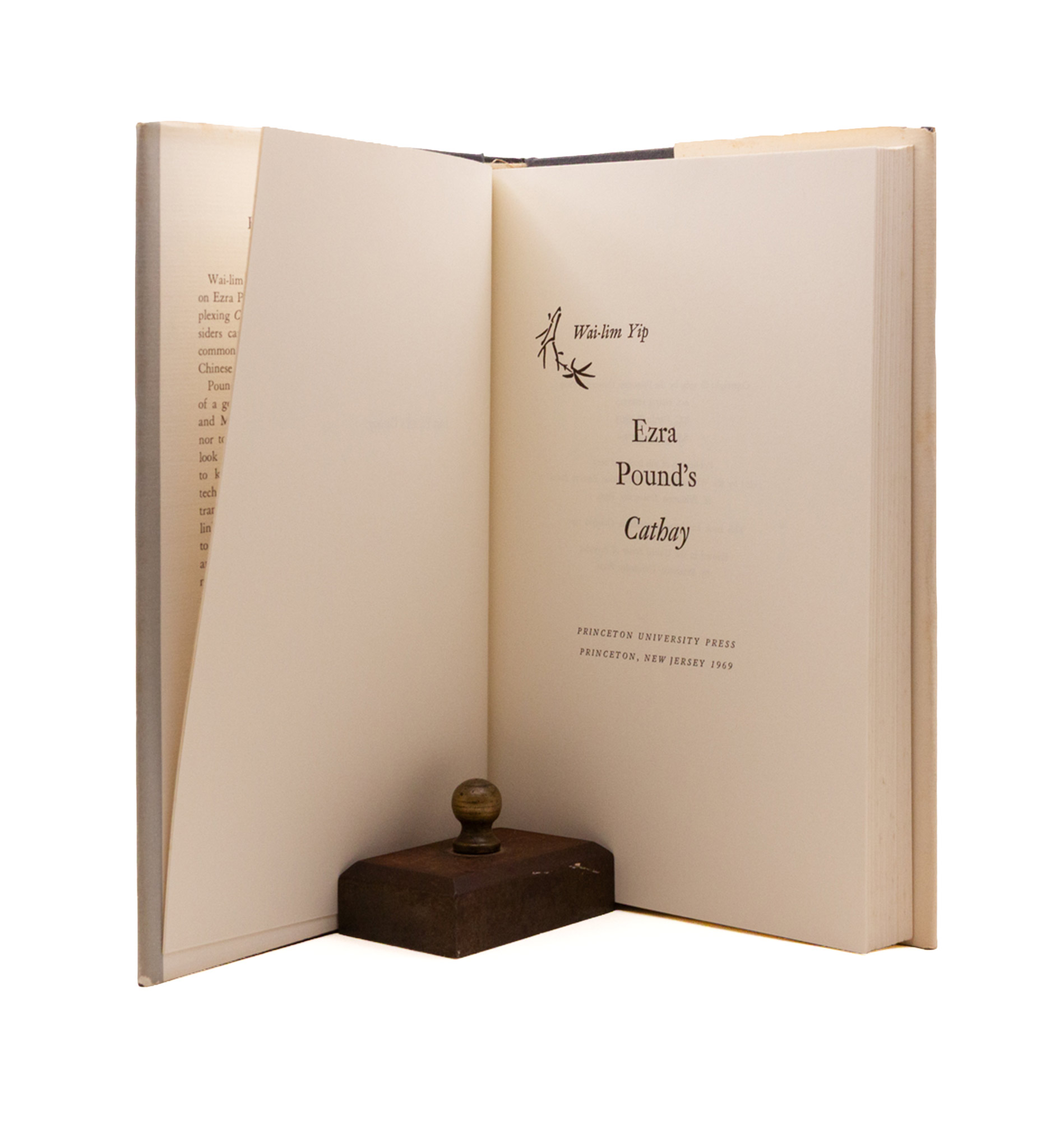
tap to cycle
Ezra Pound’s Cathay
Wai-lim Yip
Published Princeton: Princeton University Press, 1969
260pp.; 22.3 x 14.8 cm. Black cloth, printed in gold and black to spine; white dust-jacket printed in eggshell blue, black, gold and white, with Princeton Paperbacks adverts verso.
Part of Scholarship, II
Translations or translucencies; Yip’s deep dive into Pound’s highly influential Cathay (1915) and, given the influence Fenellosa had on Pound, a study of Pound’s lifelong poetic technique. First edition, near fine in a good price-clipped jacket, lightly browned along the top-edge, edge-wear at the top and tail of the spine, and a repaired break to the back. With one note in ink from David Moody laid-in.


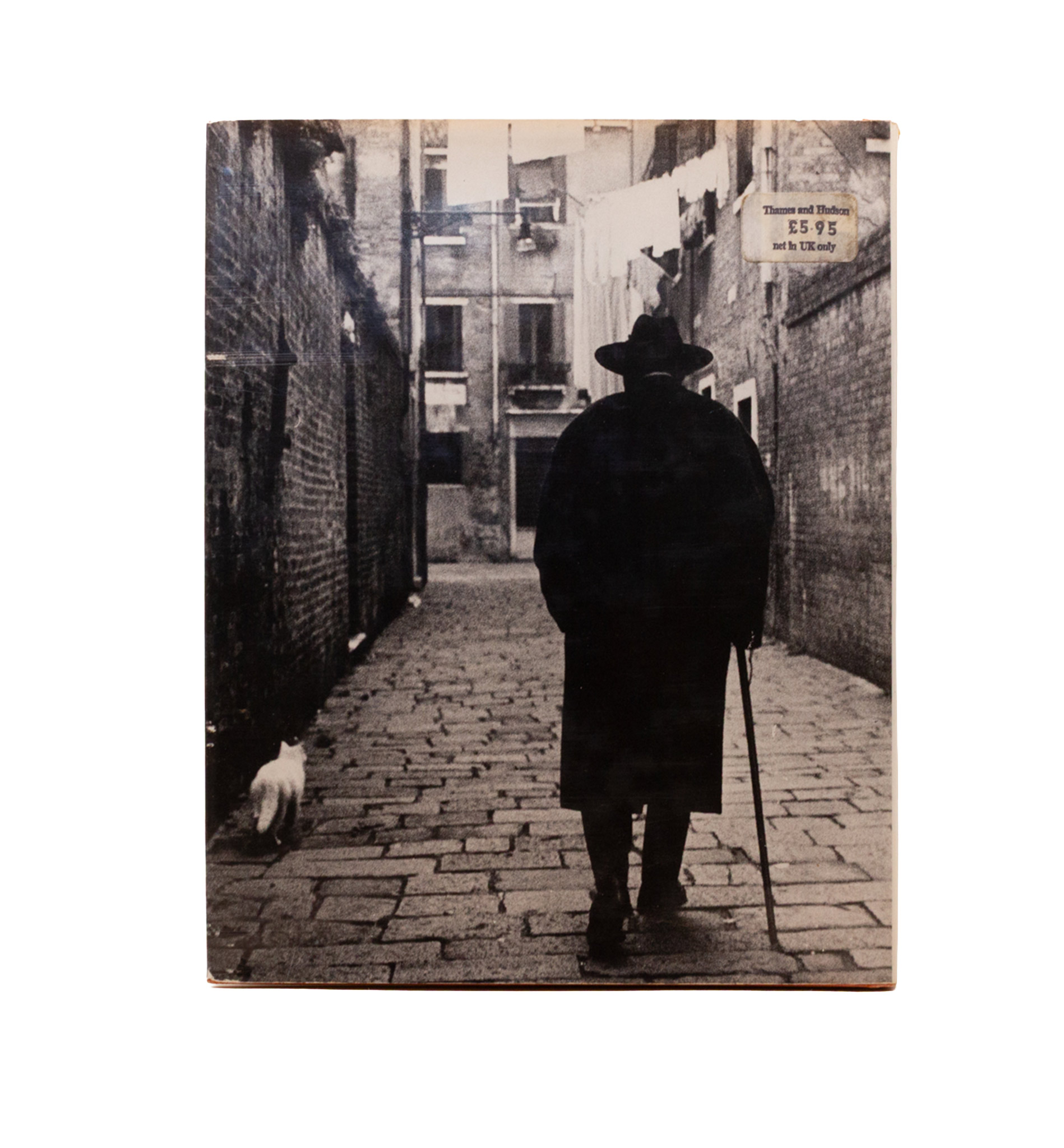
tap to cycle
Ezra Pound and his World
Peter Ackroyd
Published London: Thames and Hudson, 1980
128pp.; 23.8 x 19.2 cm. Orange cloth boards stamped in gold down spine; white dust-jacket printed in black, grey and blue.
Part of Scholarship, I
An easy & enjoyable biography of Pound, profusely illustrated. First English issue, with Thames and Hudson’s price sticker to the rear, and their publisher’s logo in gilt to the front of the cloth. A touch of foxing to the title page, otherwise near fine. With the very occasional marginal symbol from David Moody, in one place correcting a reference.

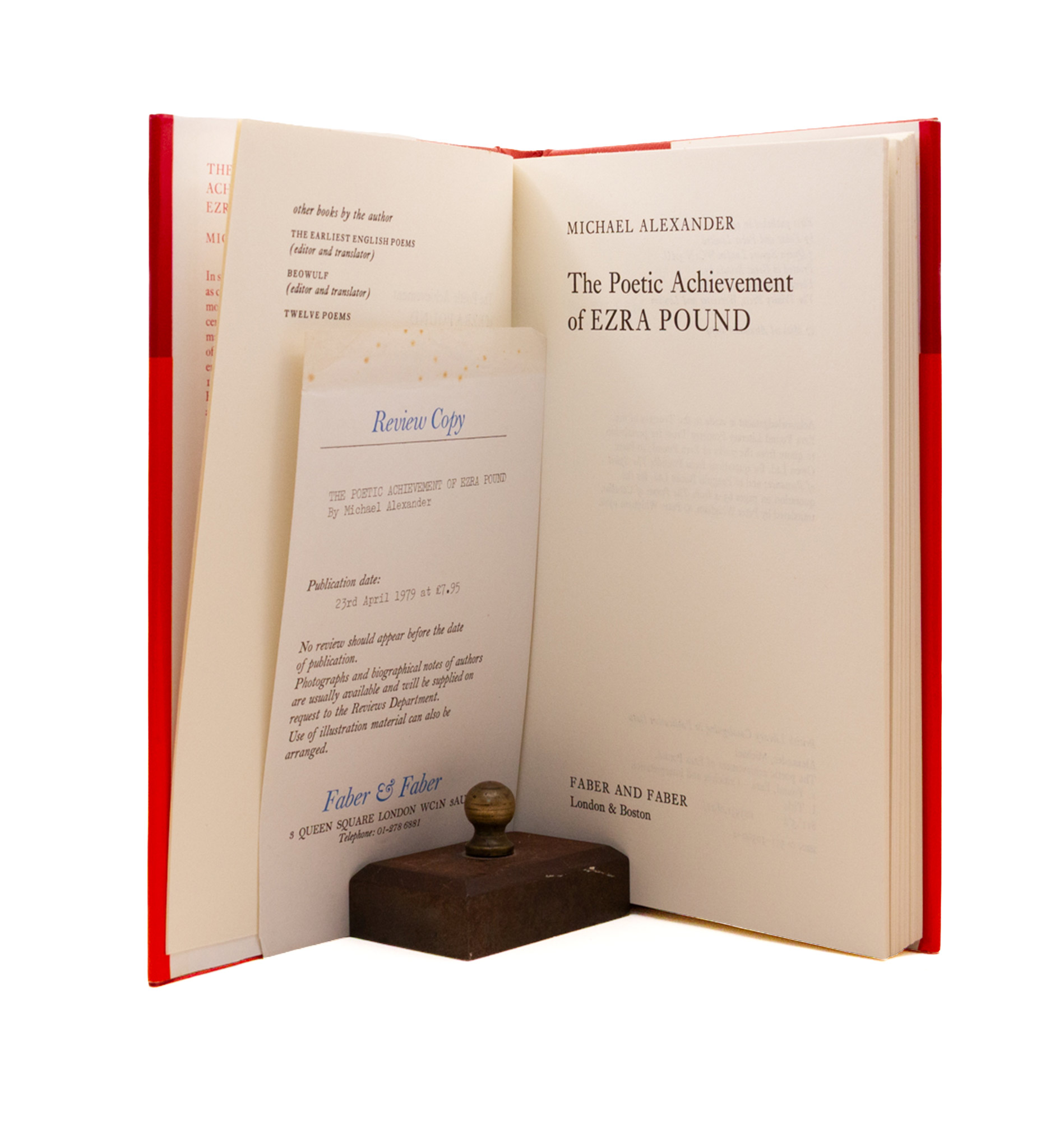

tap to cycle
The Poetic Achievement of Ezra Pound
Michael Alexander
Published London: Faber and Faber, 1979
247pp.; 22.2 x 14.4 cm. Red cloth boards stamped in gold down spine. White dust-jacket printed in two tones of red, and white.
Part of Scholarship, I
A walk through Pound’s poetry from Personae (1909) to Draft & Fragments (1970). A study on The Cantos via the earlier poetry, and how Pound’s epic grew out of those poems. Annotated by David Moody with small pencil marginalia throughout, highlighting, questioning, disagreeing or correcting the text; marks of great erudition. Review copy, with the publisher’s slip laid-in. Light foxing around the prelims, but otherwise fine.
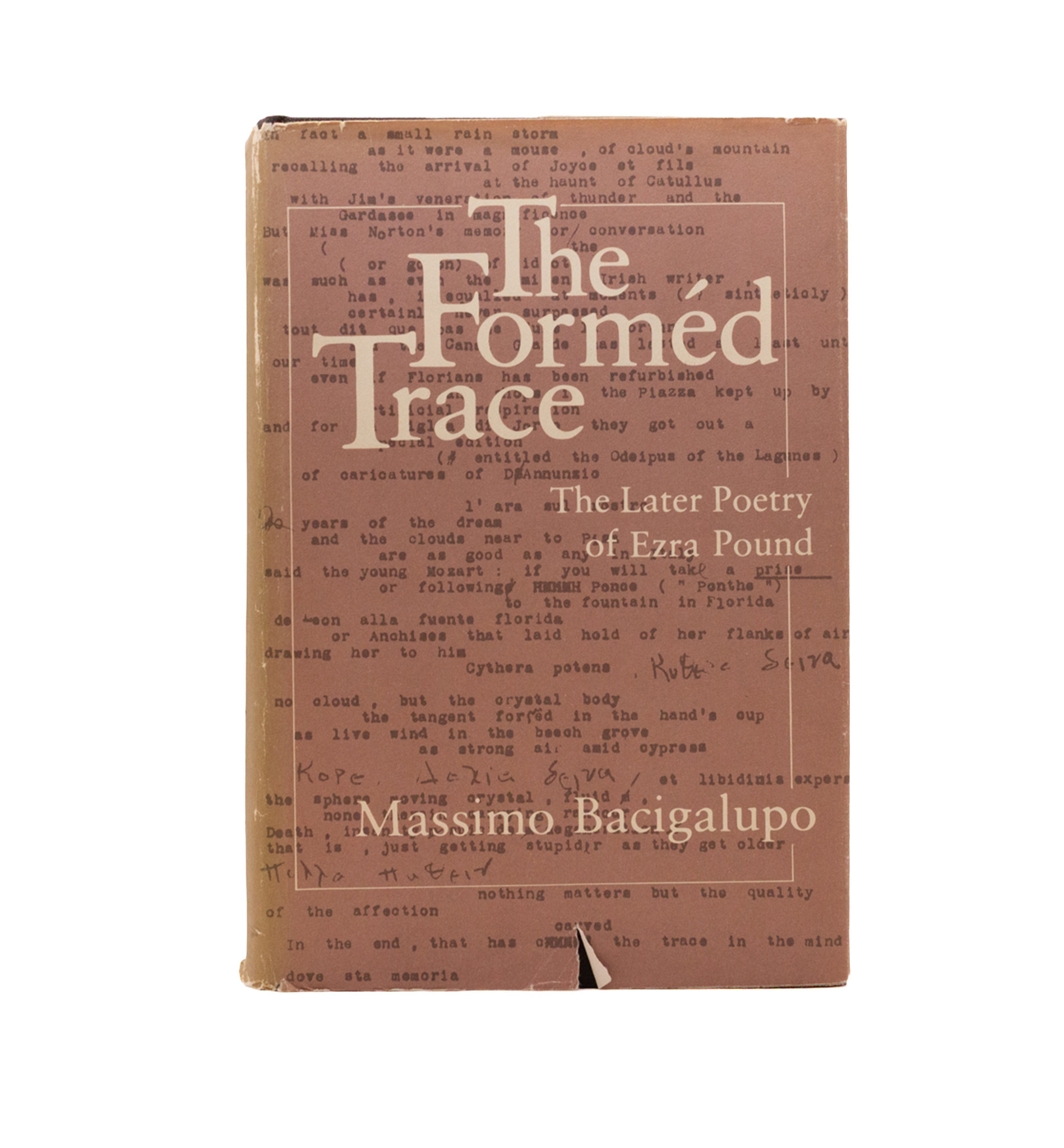

tap to cycle
The Forméd Trace; The Later Poetry of Ezra Pound
Massimo Bacigalupo
Published New York: Columbia University Press, 1980
512pp.; 23.4 x 16 cm. Black cloth boards lettered in pink down spine. Off-white dust-jacket printed in black and an oriental pink.
Part of Scholarship, I
Bacigalupo’s study of the Pisans, Rock-Drill and Thrones for those for whom these cantos divert too greatly into Cavalcanti’s “dove sta memoria” — Pound’s repeat, recontextualised, teaches by the same method we learn language (credit due). Annotated thoroughly, if often symbolically, by A. David Moody throughout; another great example of scholars reading scholars. With an ADDENDA & CORRIGENDA photocopy (or fax?) laid-in, footed “M.B., April 1981.” Dust-jacket a little worn with one tear.

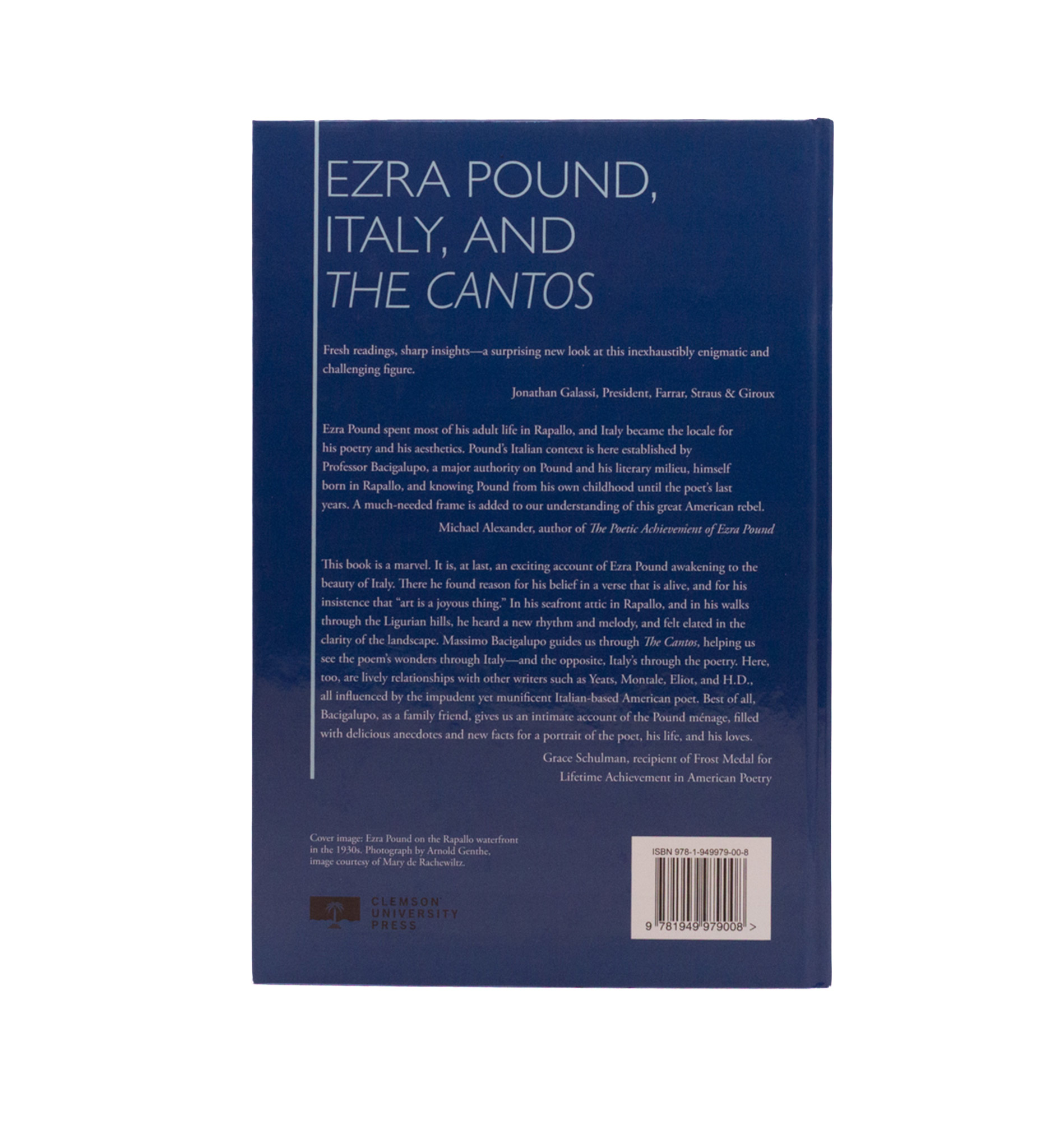
tap to cycle
Ezra Pound, Italy, and The Cantos
Massimo Bacigalupo
Published Clemson University Press, 2020
346pp.; 23.6 x 15.9 cm. White paper cover boards printed in blue and black.
Part of Scholarship, I
An Italian lens on the poetry, and the poem’s lens on Italy, by the Rapallese scholar and Pound expert Massimo Bacigalupo. First edition (only hardback edition), a fine copy, as new.



tap to cycle
James Laughlin, New Directions, and the Remaking of Ezra Pound
Gregory Barnhisel
Published Amherst and Boston: University of Massachusetts Press, 2005
272pp.; 24 x 16.4 cm. Blue cloth boards stamped in silver down spine. White dust-jacket printed in blue and black.
Part of Scholarship, I
A detailed account of New Directions’ marketing of Pound. First edition, a fine copy; the spine sunned to white. Annotated lightly throughout by A.D.M.
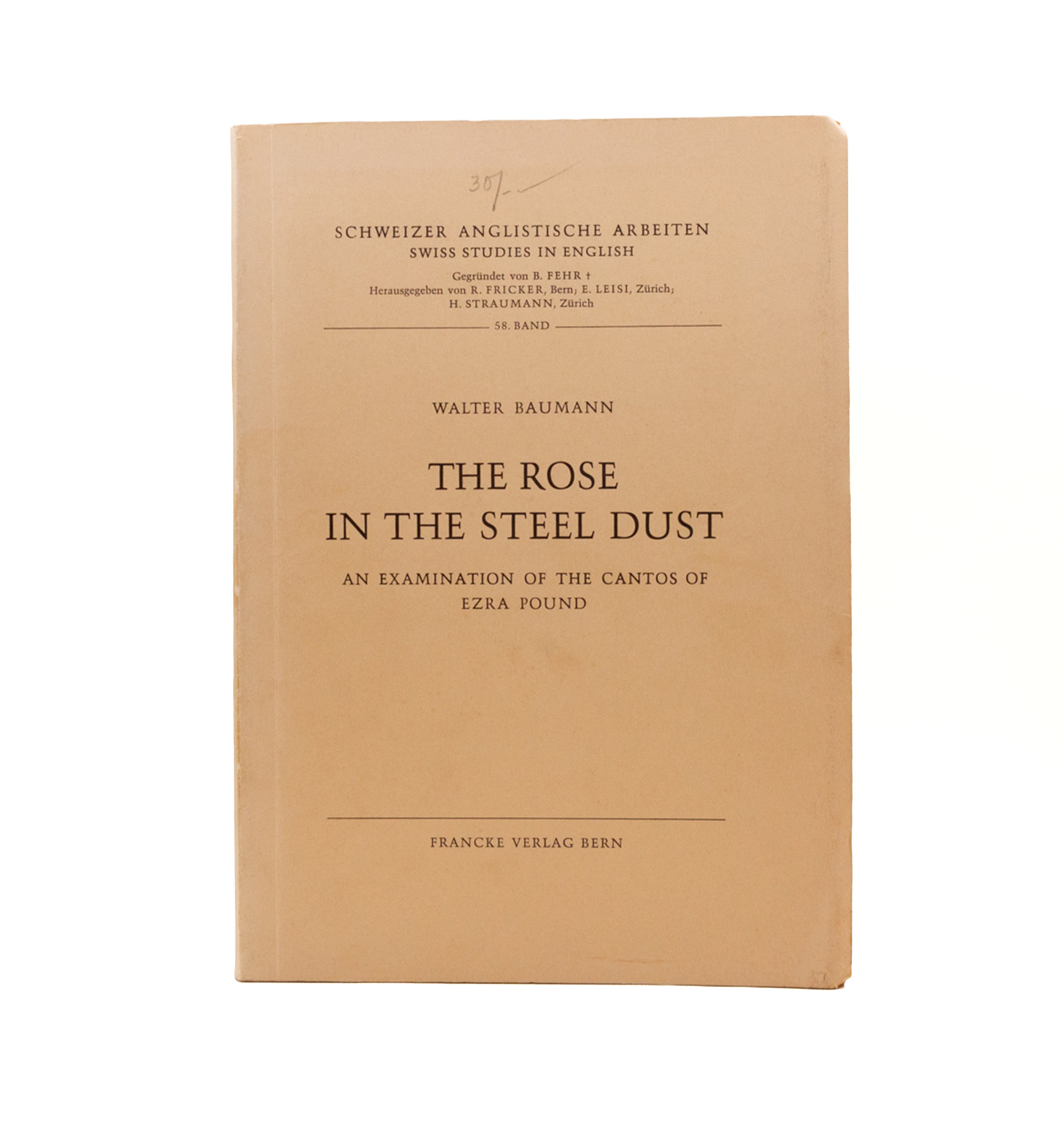
tap to cycle
The Rose in the Steel Dust
Walter Baumann
Published Zürich: Francke Verlag Bern, 1967
211pp.; 23.5 x 16.5 cm. Oversized paper wraps printed in black.
Part of Scholarship, I
Walter Baumann’s seminal study of Cantos IV and LXXXII, and The Cantos under the Odyssean guise. Baumann explores both the divisibility of the poem into inter-referential fragments, and the availability of more singular aspects of the whole. First edition. A touch of pencil to each cover; light foxing to first and last few pages; some light wear to the wraps, otherwise nice.


tap to cycle
Critic as Scientist: The Modernist Poetics of Ezra Pound
Ian F. A. Bell
Published London: Methuen & Co., 1981
302pp.; 22.2 x 14.5 cm. Blue paper covered boards stamped in silver down spine. White dust-jacket printed in purples.
Part of Scholarship, I
In Pound’s final semester at Hamilton College, he studied Old Spanish, Old French, Old Provençal, Old English, German, and Physics; the last being a college requirement, and maybe this education also stuck. Critic as Scientist is a study of the scientific vocabulary and method EP harnessed in his work as critic of the arts. With chapters of geometry, laboratories, vortices, and memories. First edition. Light foxing to endpapers, spine of jacket sunned.


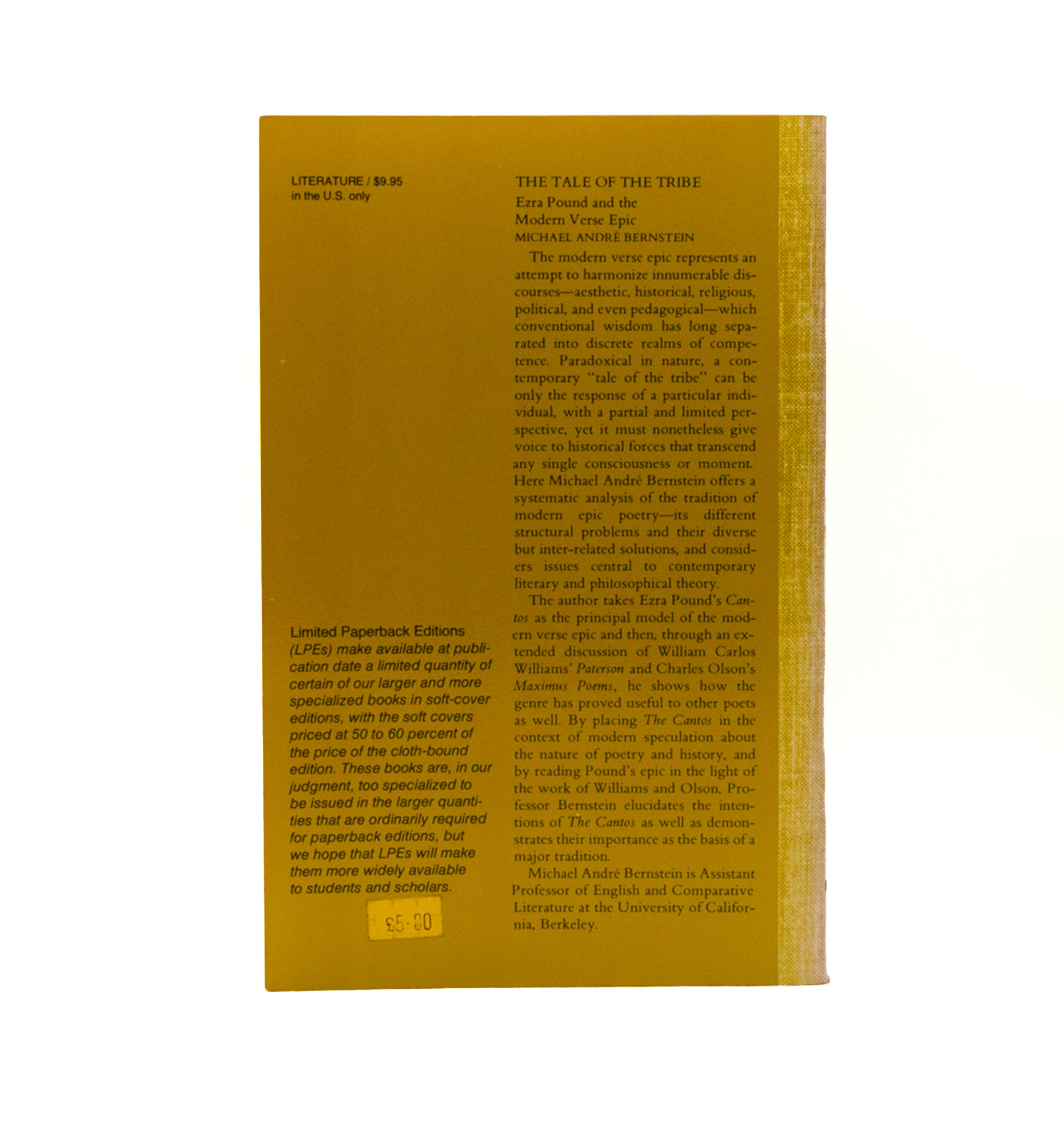
tap to cycle
The Tale of the Tribe: Ezra Pound and the Modern Verse Epic
Michael André Bernstein
Published New Jersey: Princeton University Press, 1980
320pp.; 21.6 x 14 cm. Stiff white paper wraps printed olive and black.
Part of Scholarship, I
Bernstein, “Far from being absolutely autonomous and divorced from daily reality, the “tale of the tribe” is intentionally directed towards reality, and is expressly fashioned to enable readers to search the text for values which they can apply in the communal world. The ideal relationship between history and the tale, therefore, is one of perfect interpenetration.”
On Pound’s Cantos, Williams’ Paterson, and Olson’s Maximus Poems. First edition, paperback issue, a “Limited Paperback Edition” which the publishers deem to be “too specialized to be issued in the larger quantities that are ordinarily required.” A largely fine copy, spine presumably sunned (not green).
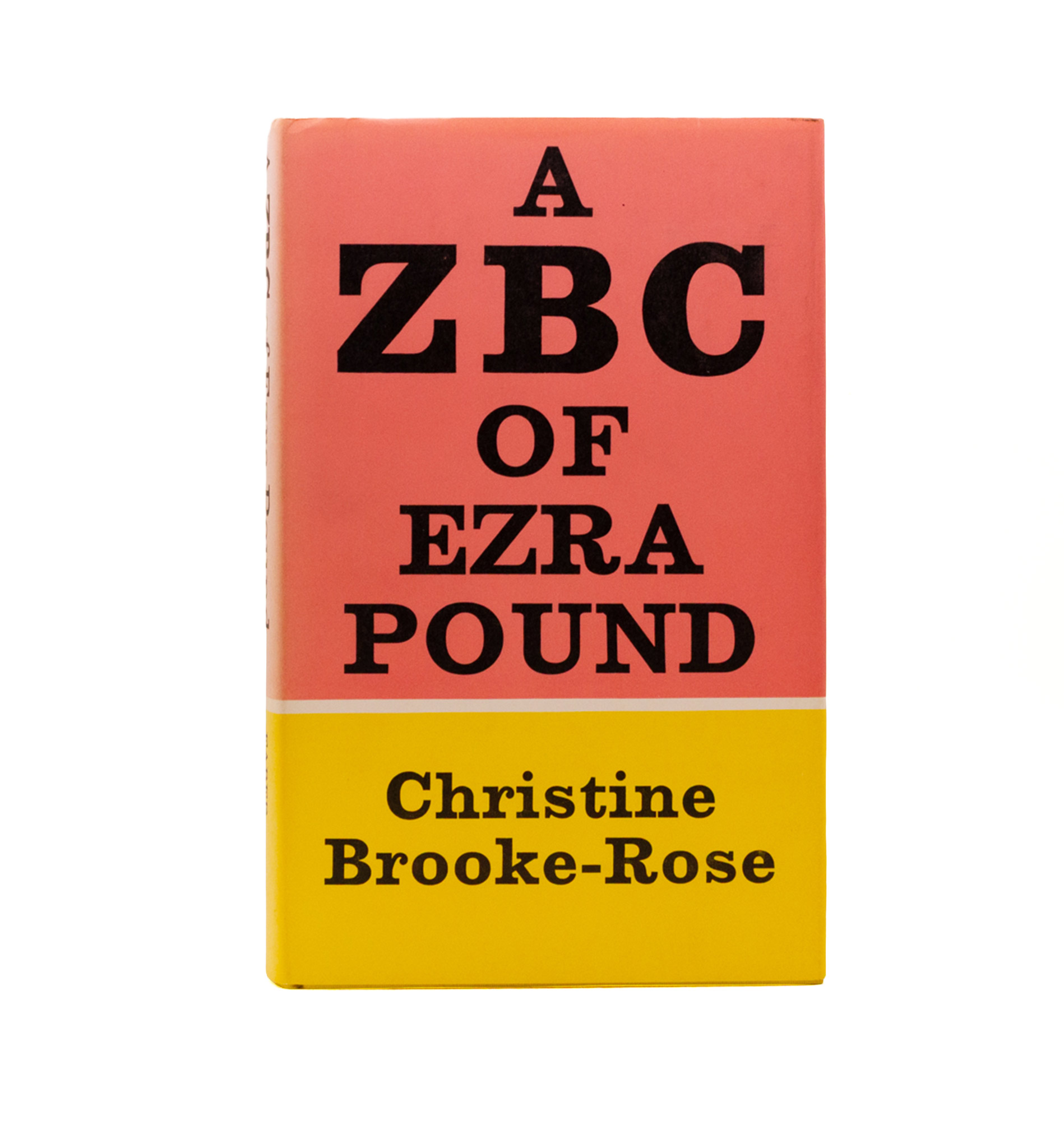
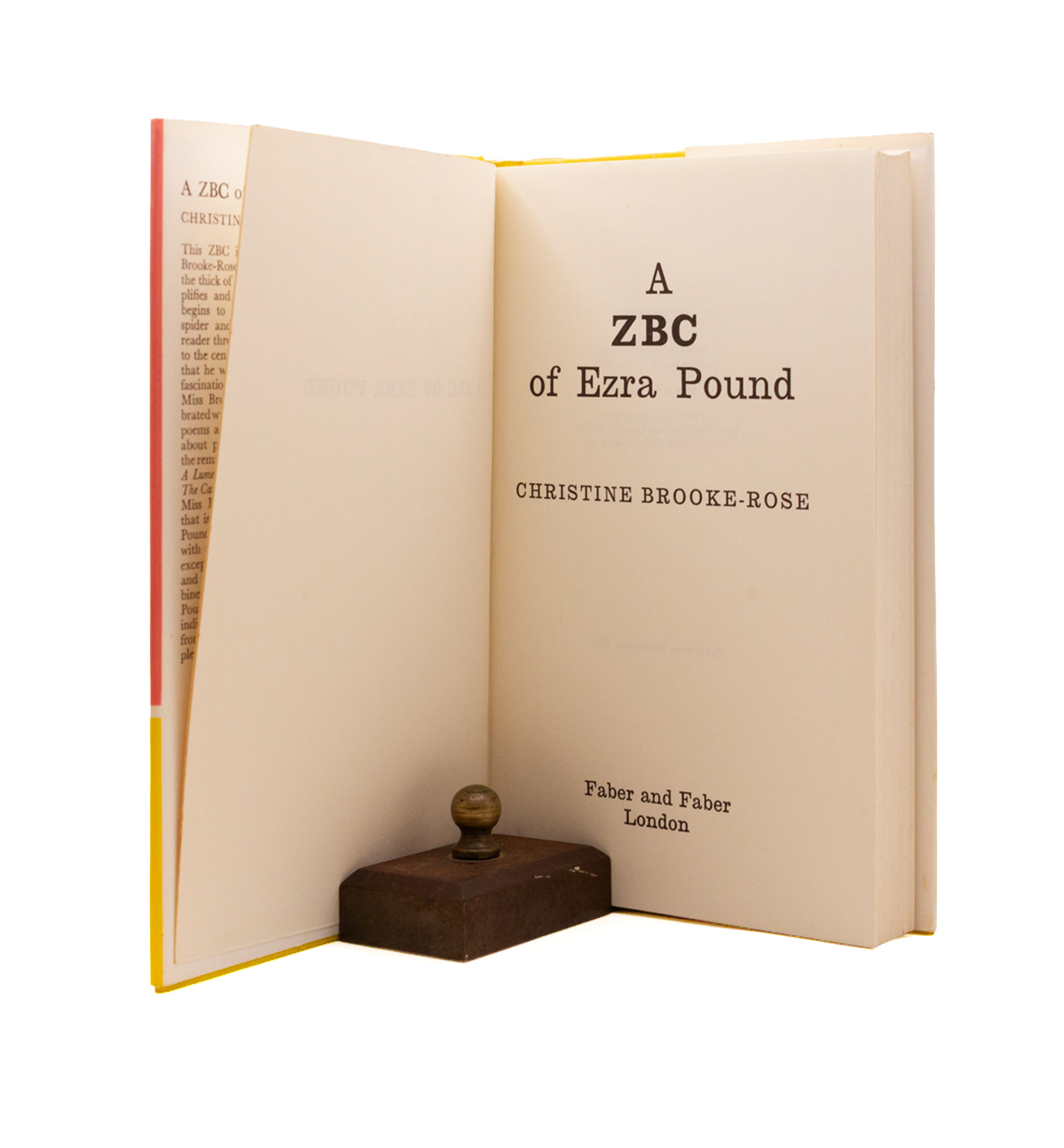
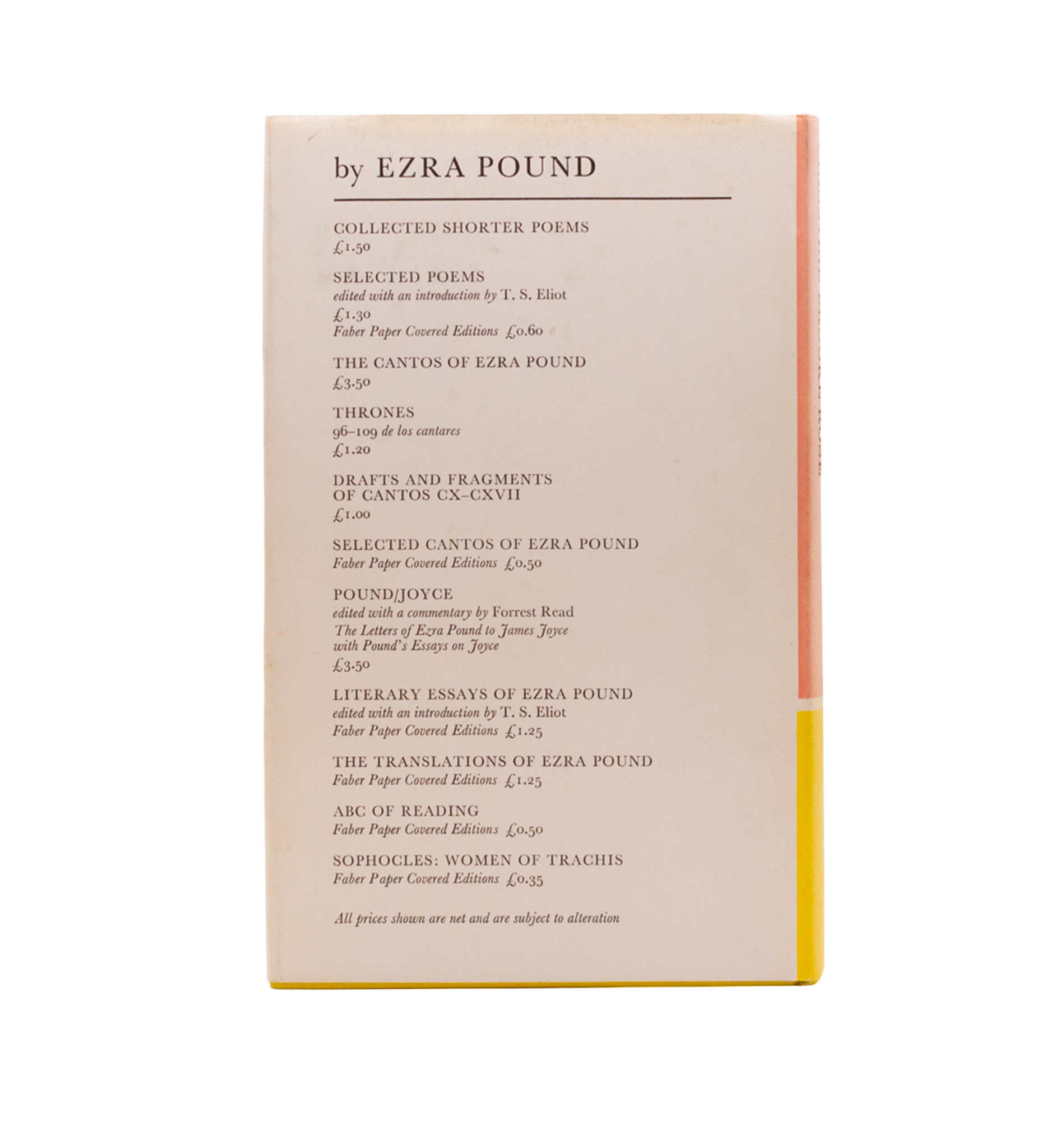
tap to cycle
A ZBC of Ezra Pound
Christine Brooke-Rose
Published London: Faber and Faber, 1971
297pp.; 22.3 x 14.3 cm. Yellow cloth boards stamped in silver on spine. White dust-jacket printed in pink, yellow and black.
Part of Scholarship, I
The unorderly student’s guide to Pounding, and an energetic entry (angle of entry, not first time encounter) to EP. First edition. Jacket very lightly worn, a little sunning to spine; some foxing around the first few pages, otherwise very nice.

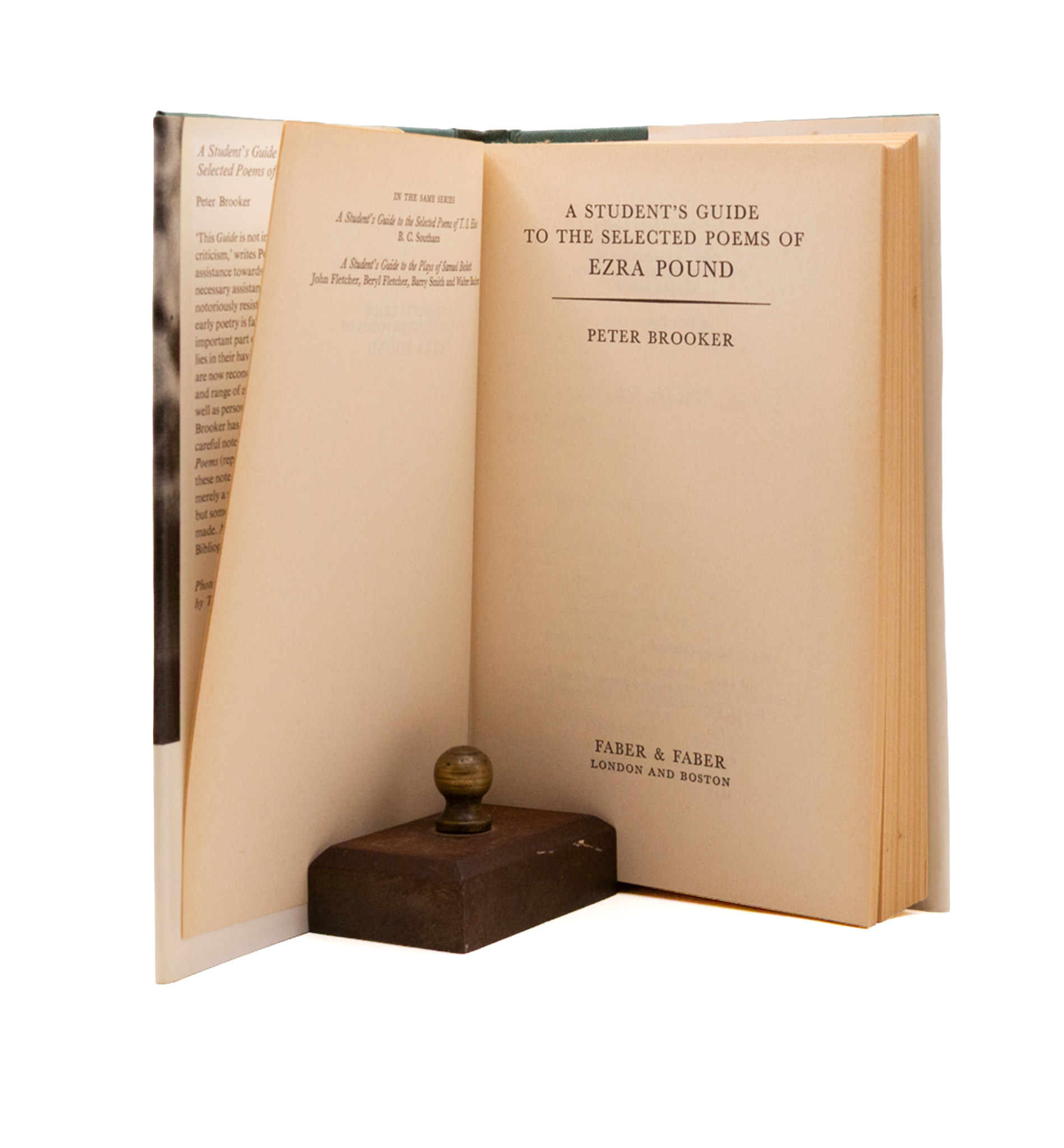
tap to cycle
A Student’s Guide to the Selected Poems of Ezra Pound
Peter Brooker
Published London and Boston: Faber and Faber, 1979
367pp.; 19.3 x 13 cm. Green cloth boards lettered in gold down spine. White dust-jacket printed in green and black.
Part of Scholarship, I
An attempt at non-interpretive annotation to Pound’s poems, being a selection from Personae, Ripostes, Lustra, Cathay, Sextus, Selwyn, and The Cantos. With marginalia from A. David Moody particularly to The Cantos, often corrections. First edition. A fine copy save a small nick to the top right of the jacket.
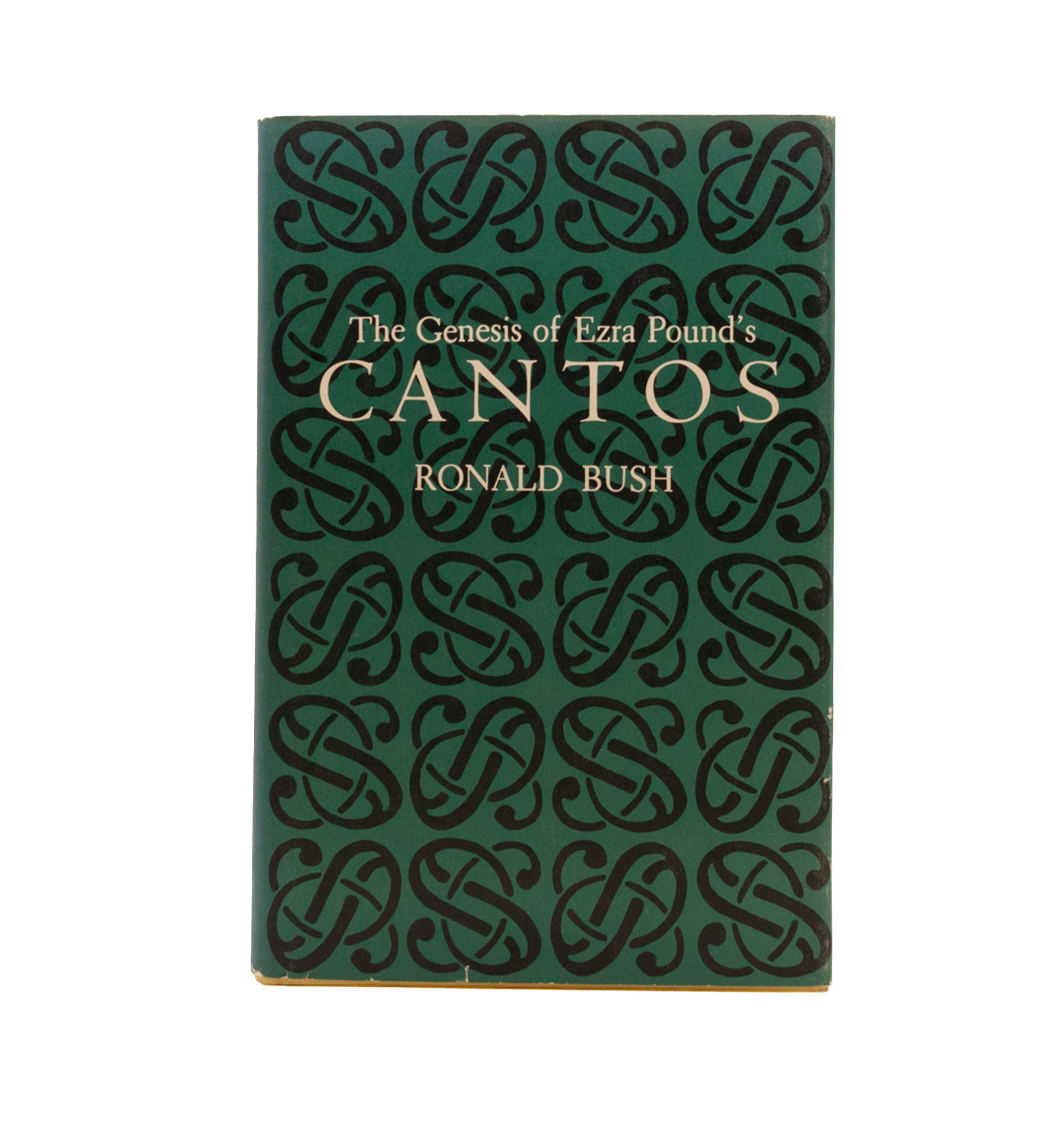
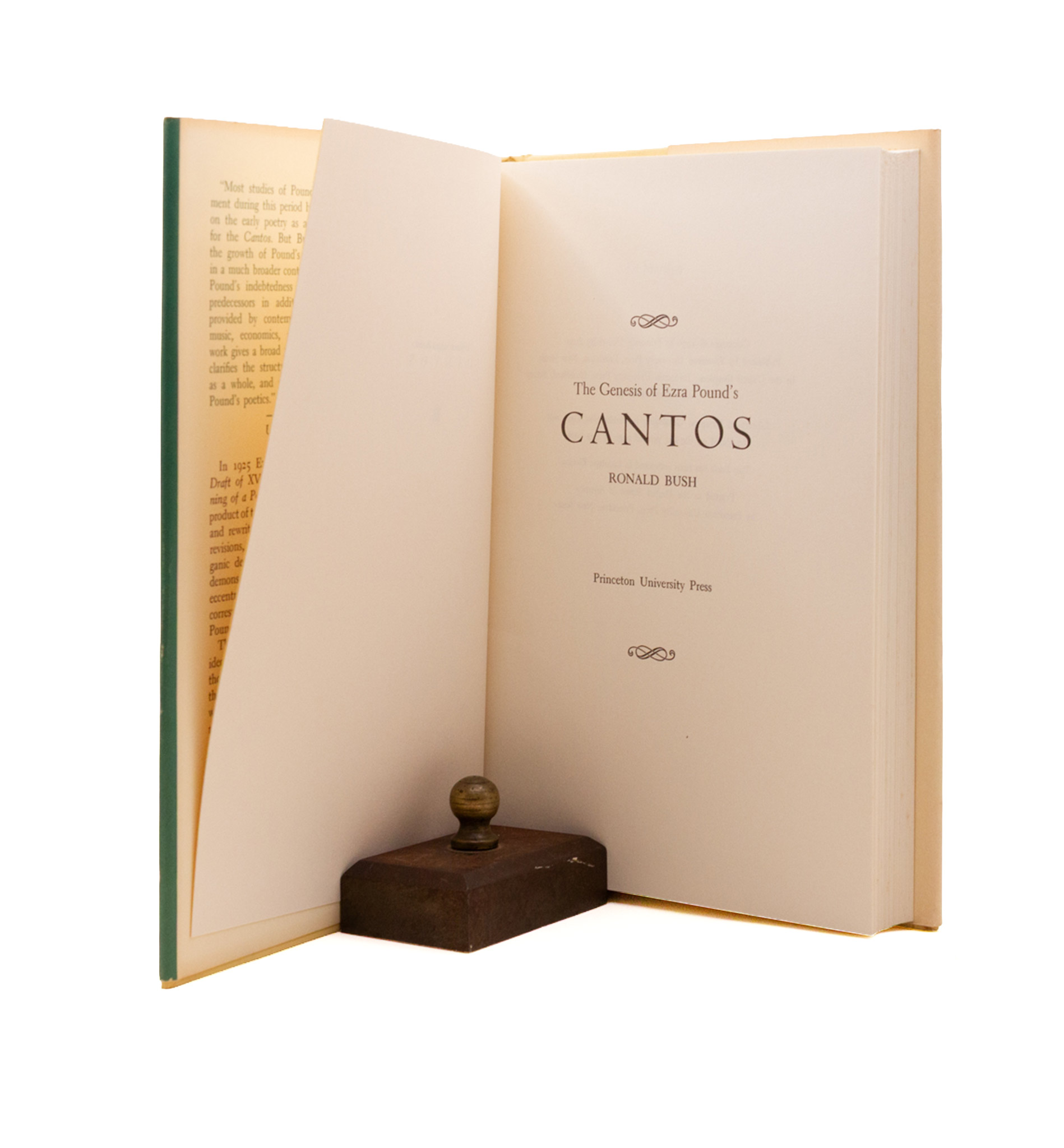
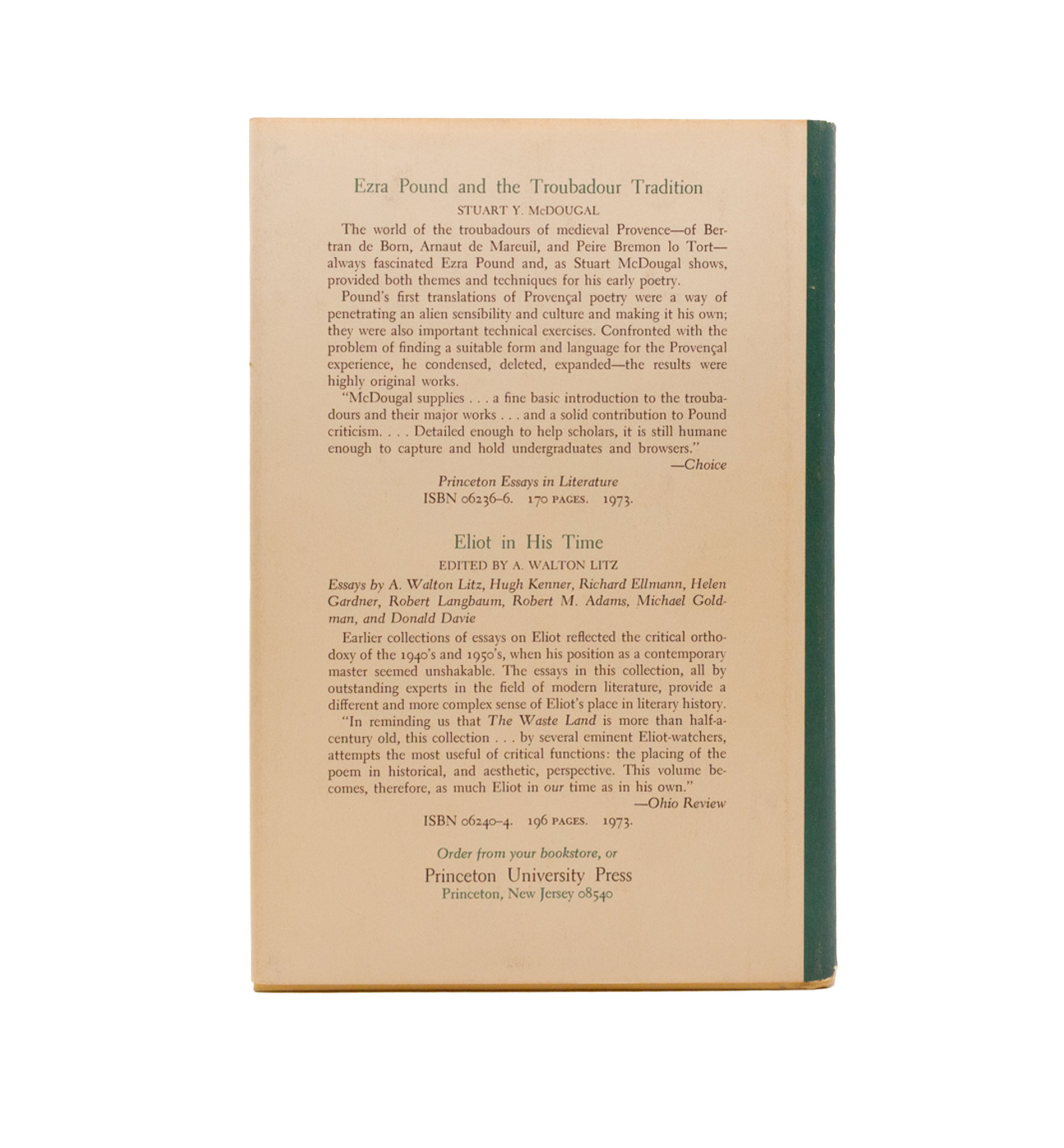
tap to cycle
The Genesis of Ezra Pound’s Cantos
Ronald Bush
Published New Jersey: Princeton University Press, 1976
327pp.; 22.3 x 14.7 cm. Cream paper covered boards stamped in silver down spine. White dust-jacket printed in green and black.
Part of Scholarship, I
A broader study of the genesis of Pound’s Cantos, not by just the early poetry but by painting, music, economics and history. First edition. A fine copy save a little edge-wear to the jacket, with a handful of marginal notes by David Moody.



tap to cycle
A Serious Character: The Life of Ezra Pound
Humphrey Carpenter
Published New York: Dell Publishing, 1990
1005pp.; 23.5 x 15.5 cm. Stiff white printed paper wraps.
Part of Scholarship, I
Nigh 1000 pages of Poundian biographical study, with the occasional marginal note by David Moody. Reprint, after the 1988 first. Wraps a bit worn.
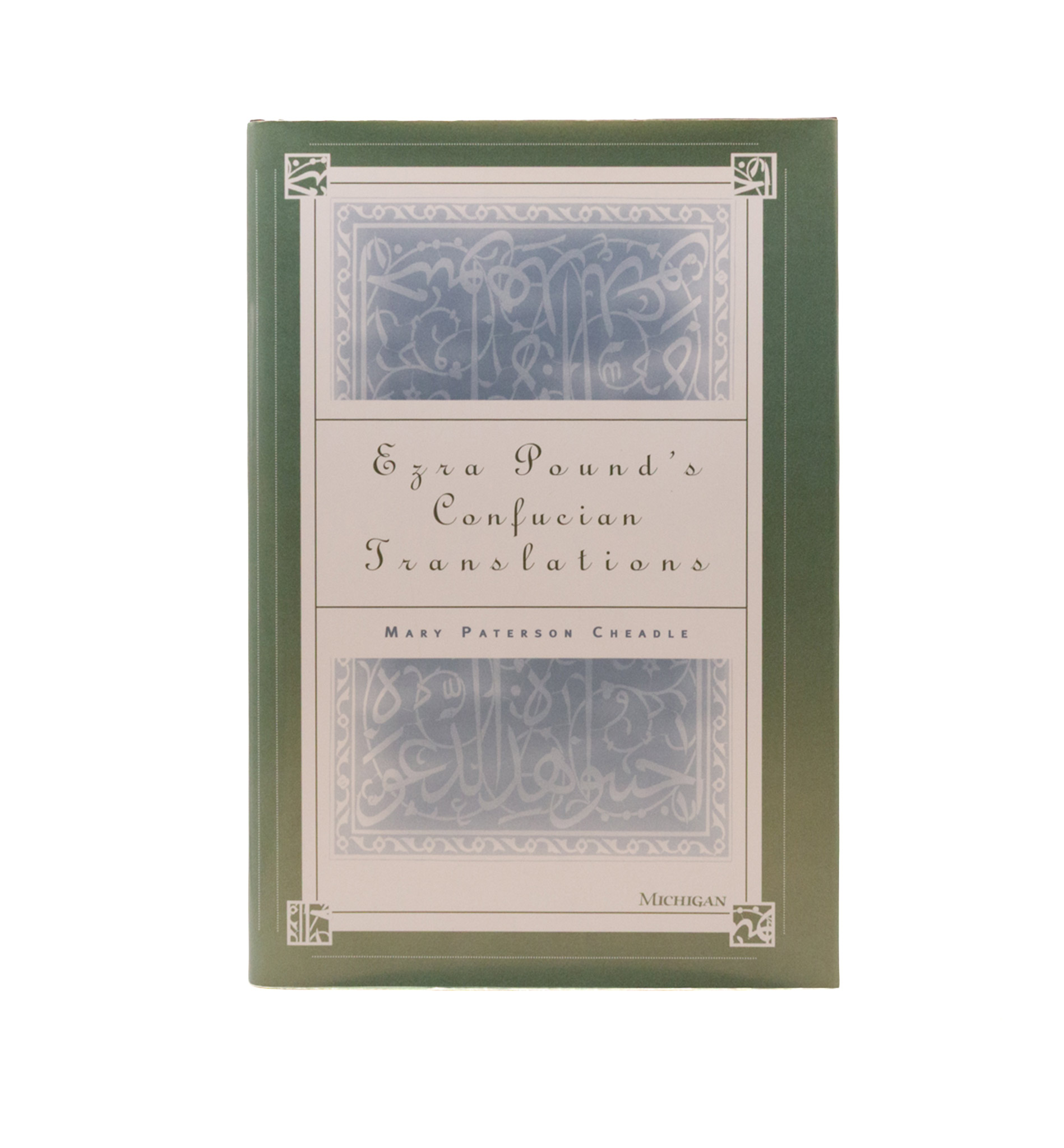
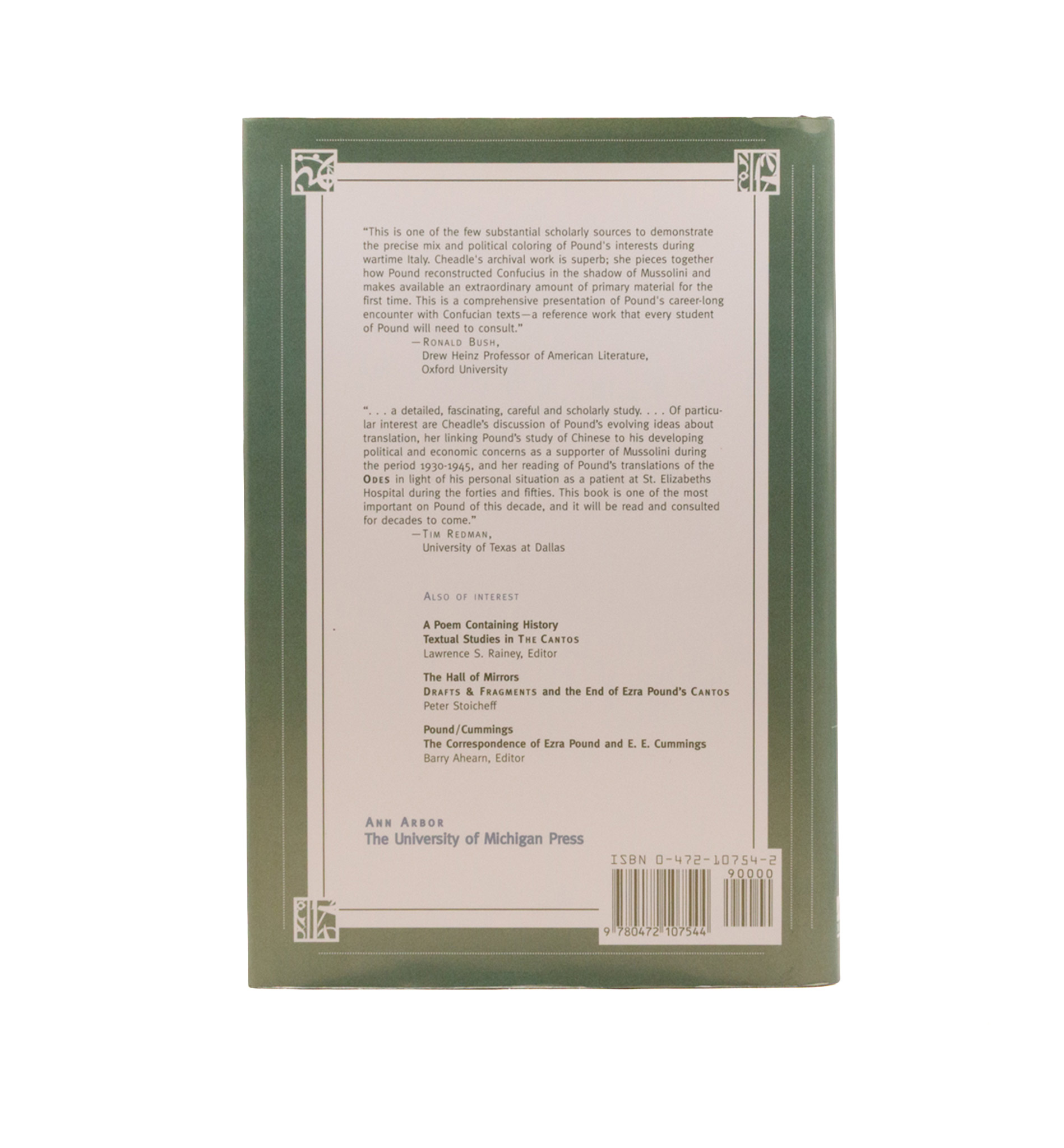
tap to cycle
Ezra Pound’s Confucian Translations
Mary Paterson Cheadle
Published The University of Michigan Press, 1997
323pp.; 23.6 x 16 cm. Black cloth boards stamped in silver down spine. White dust-jacket printed in green and blue.
Part of Scholarship, I
A study of the translation, history, and the political and religious setting of Pound’s Confucian translations, with a further chapter on “Confucianism in The Cantos.” First edition, a fine copy; the dust-jacket folding outwards slightly; with a couple of marginal notes by A. David Moody.
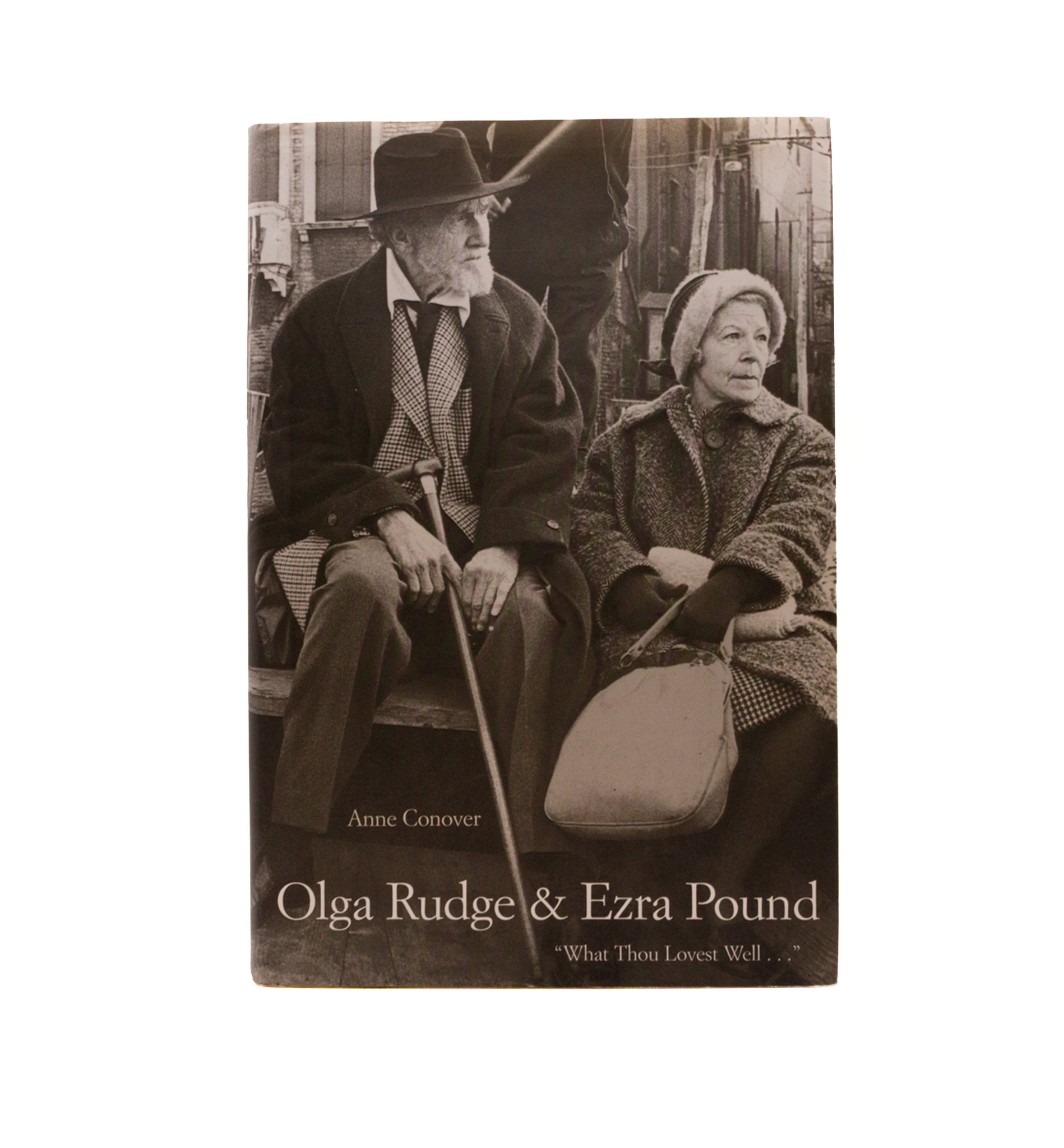

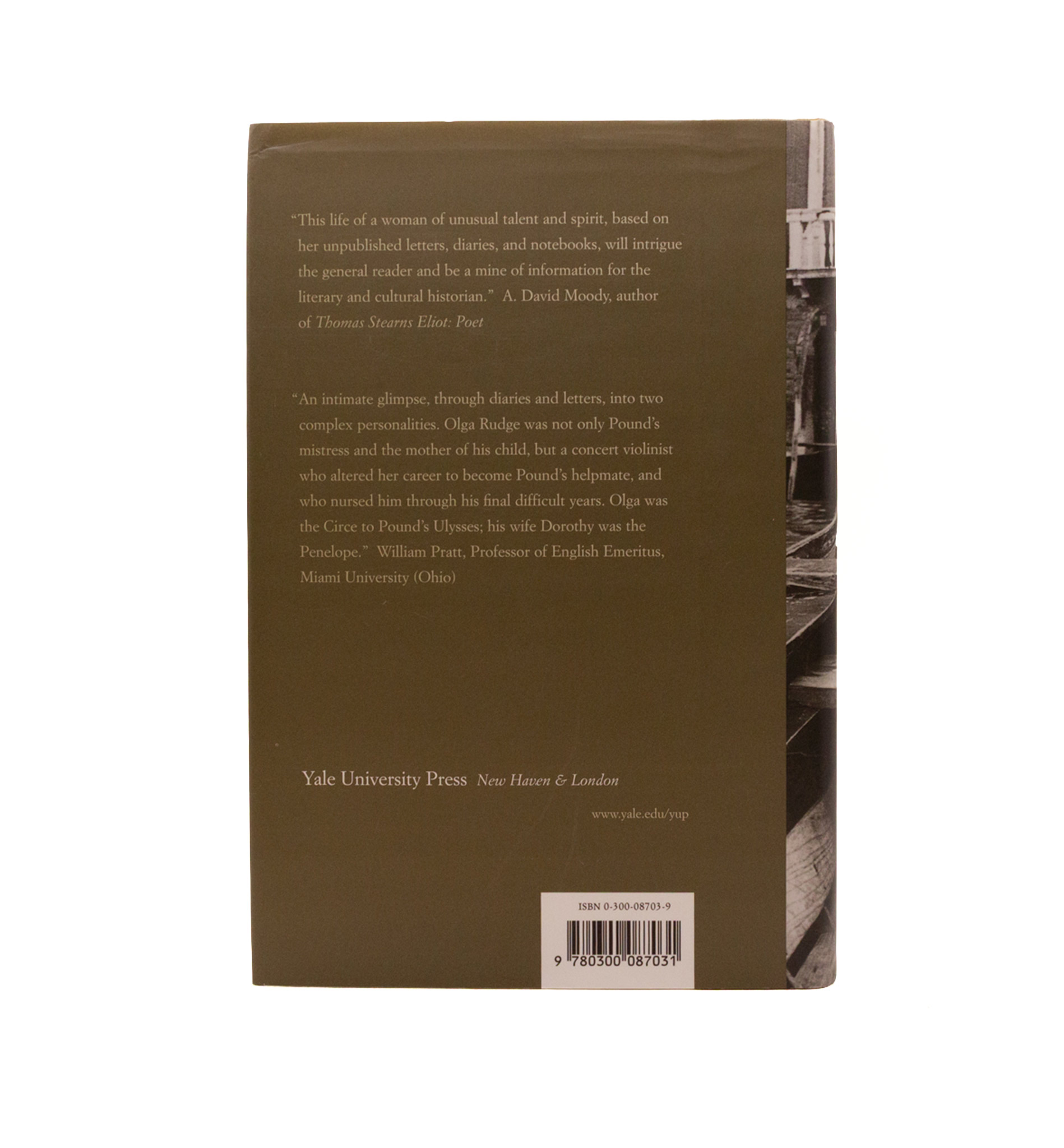
tap to cycle
Olga Rudge & Ezra Pound, “What Thou Lovest Well…”
Anne Conover
Published New Haven: Yale University Press, 2001
352pp.; 24.2 x 56.5 cm. Buff paper covered cloth boards, stamped in green on spine; white dust-jacket printed in khaki and white.
Part of Scholarship, I
First edition. A near fine copy, the top edge a little bumped. With annotations and corrections by David Moody, from around the middle of the book on.
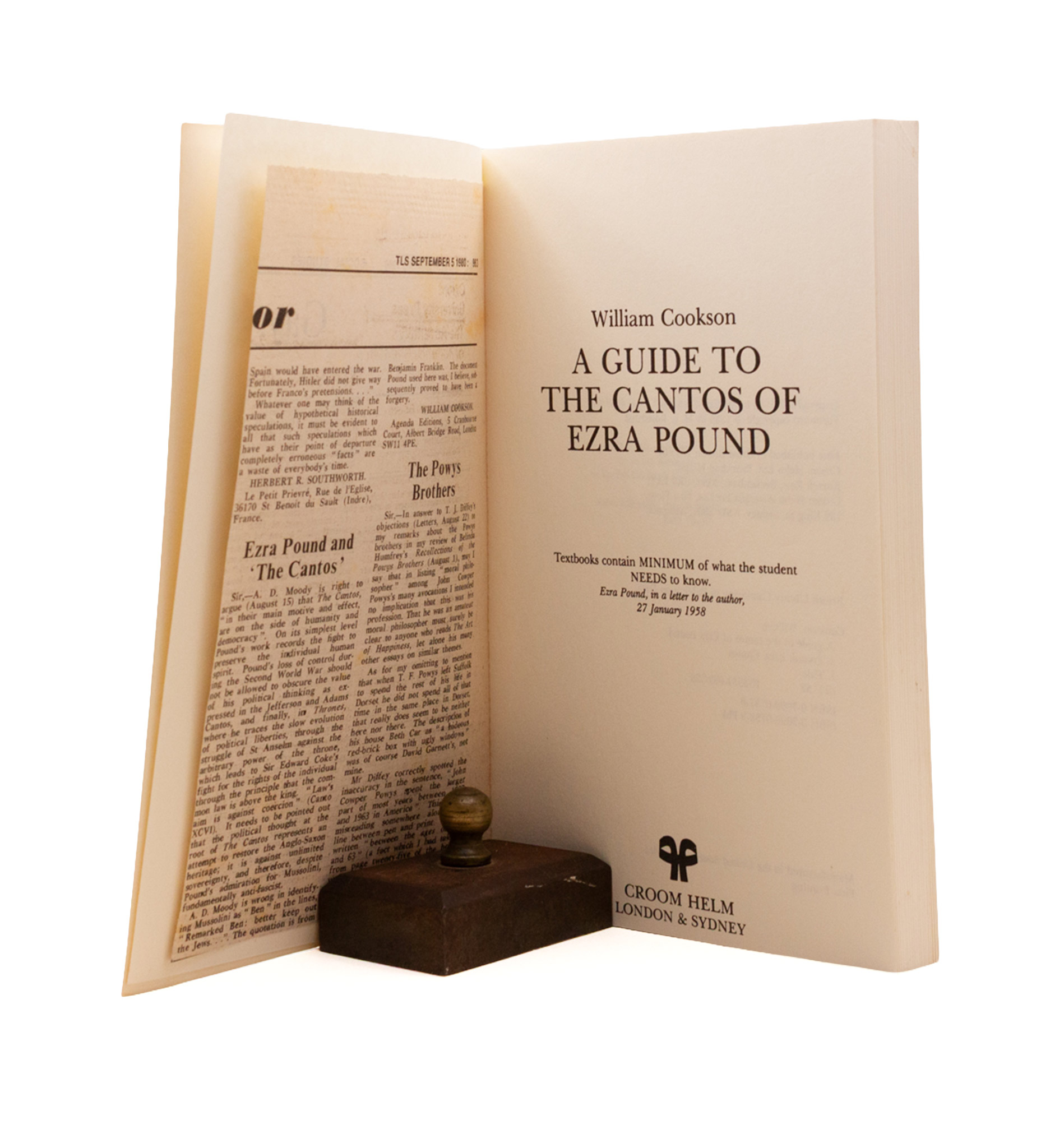
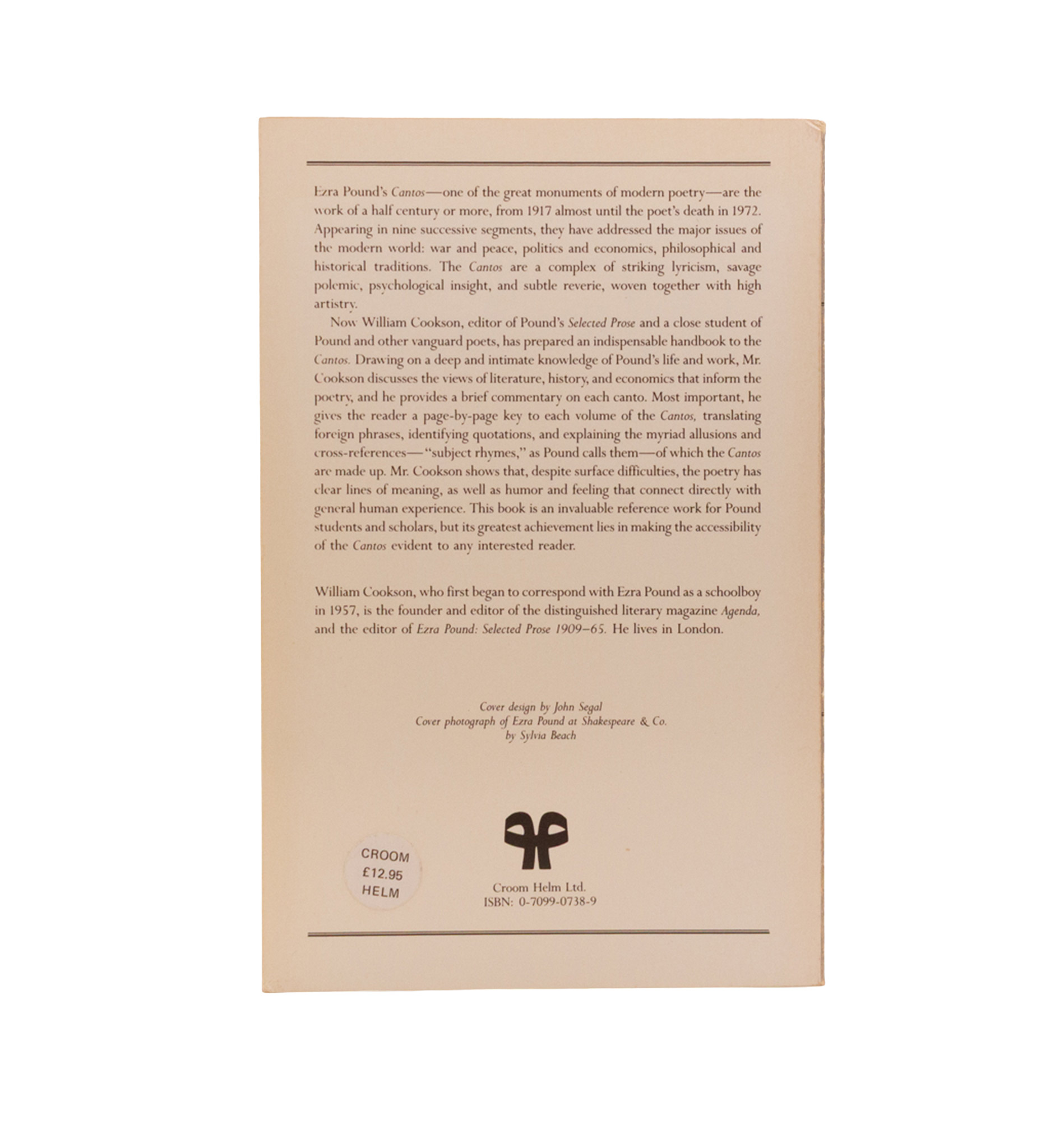
tap to cycle
A Guide to The Cantos of Ezra Pound
William Cookson
M. L. Rosenthal, foreword
Published London: Croom Helm, 1985
177pp.; 21.5 x 14 cm. Stiff white paper wraps printed in grey and black.
Part of Scholarship, I
Cookson’s blurbs and annotations to The Cantos. First edition, paperback, published simultaneously with the hardback. A near fine copy. With a few corrections by David Moody, and a cutting of the TLS September 5 1980 laid-in featuring a letter to the editor, signed William Cookson, commencing, “Sir,— A. D. Moody is right to argue (August 15) that The Cantos…”


tap to cycle
The Trial of Ezra Pound
Julien Cornell
Published London: Faber and Faber, 1967
215pp.; 22.3 x 14.3 cm. Blue cloth boards stamped in gold on spine. White dust-jacket printed in grey and black.
Part of Scholarship, I
Documents and letters relating to, and a full transcript of Pound’s trial, “by the Defendant’s Lawyer.” First English edition, in a lightly worn jacket. Regularly annotated by David Moody, with a couple of laid-in notes, and a modern photocopy of a letter from Cornell to Dr. Wendell Mucie, dated 1945 (reproduced in full on p.29).

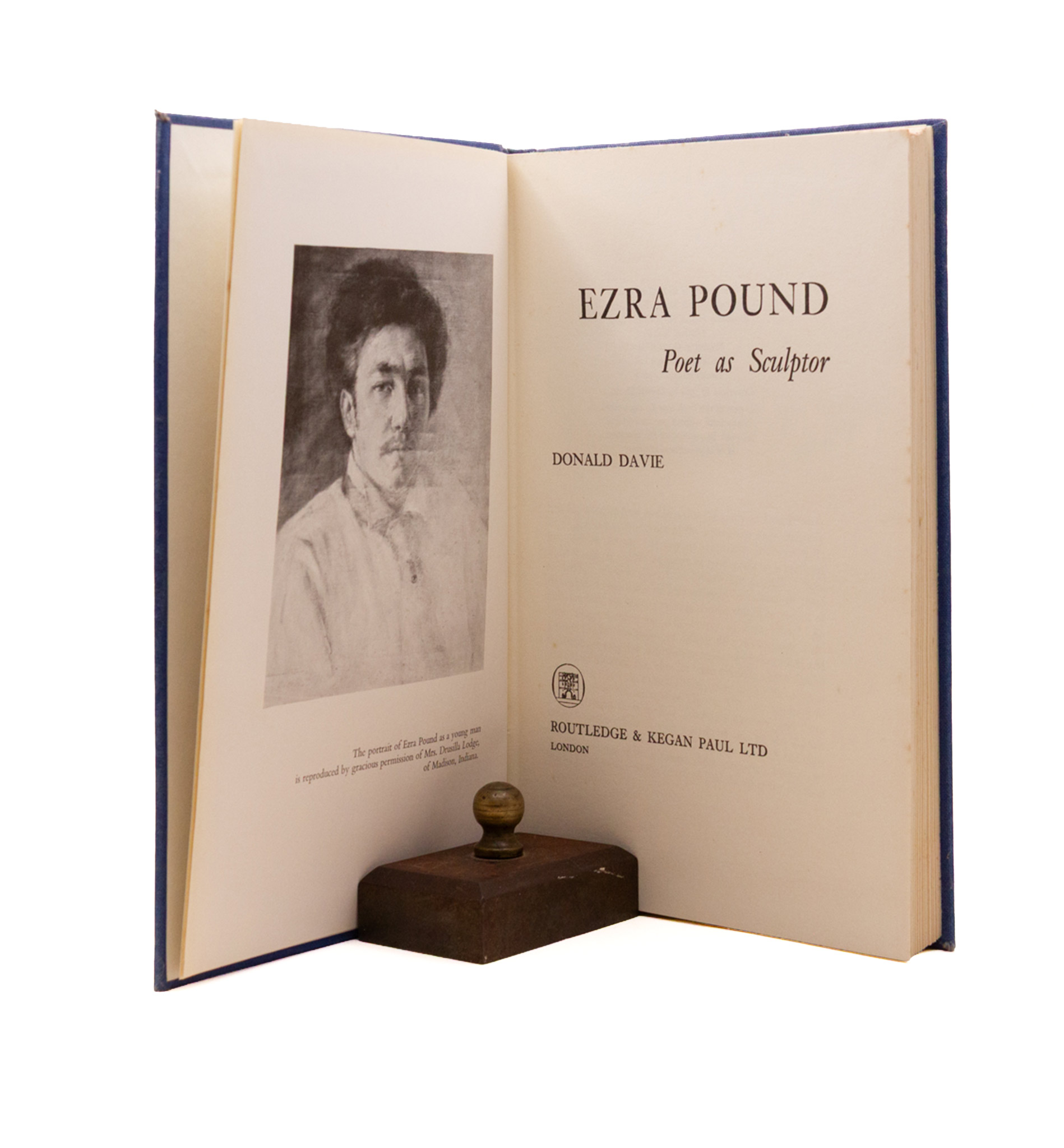

tap to cycle
Ezra Pound, Poet as Sculptor
Donald Davie
Published London: Routledge & Kegan Paul, 1965
261pp.; 22.1 x 14.7 cm. Blue cloth boards stamped in gold on spine.
Part of Scholarship, I
Davie’s first book on Pound. First edition, published concurrently with an American edition. Spine mottled with a small hole in the cloth; clean inside. With A. David Moody’s pencil ownership inscription to ffep.
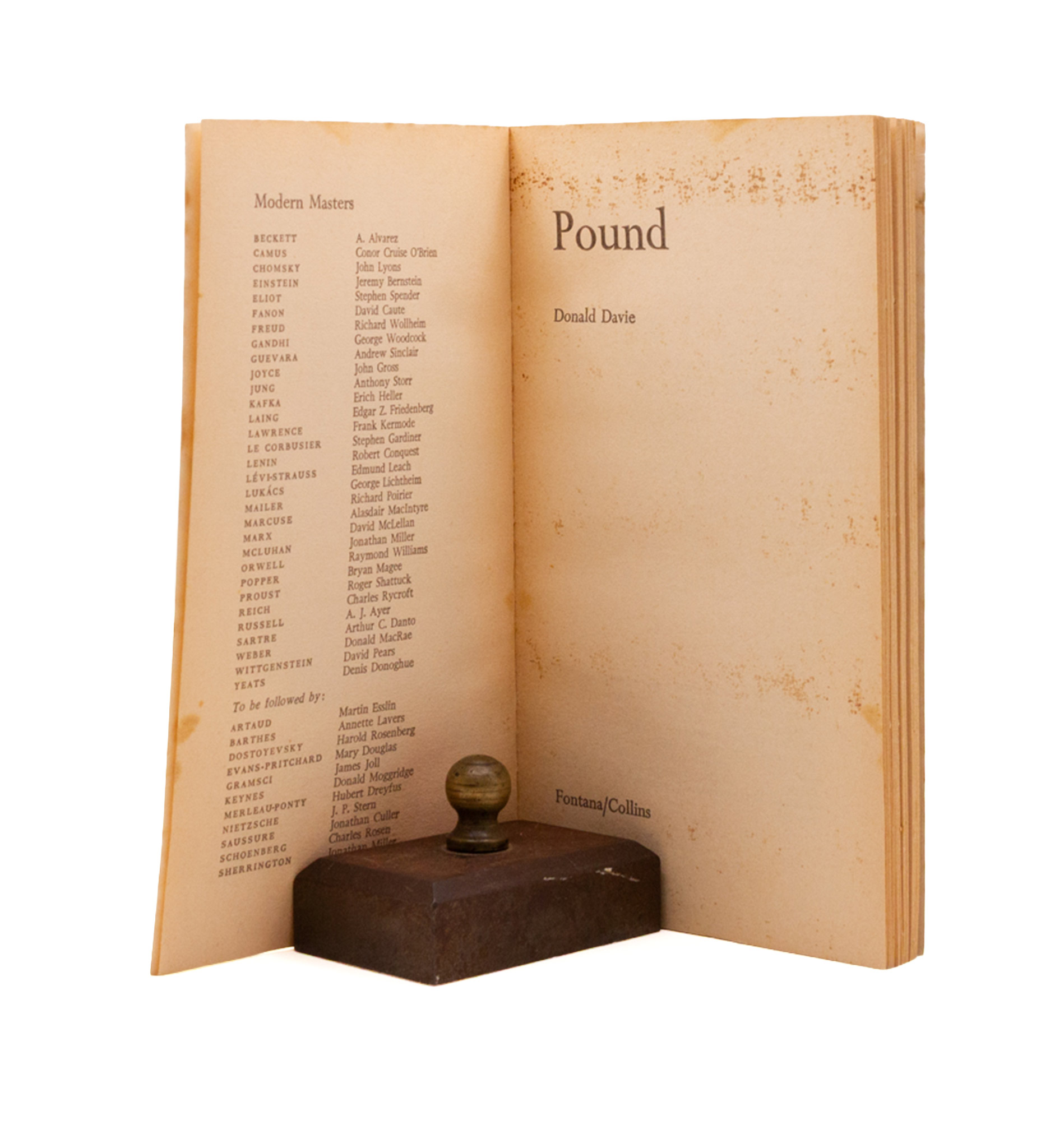

tap to cycle
Pound
Donald Davie
Published Fontana, 1975
125pp.; 18 x 10.9 cm. Stiff white printed paper wraps.
Part of Scholarship, I
Davie’s second book on Pound, a bus book. Stock browned, with the very occasional note by ADM.
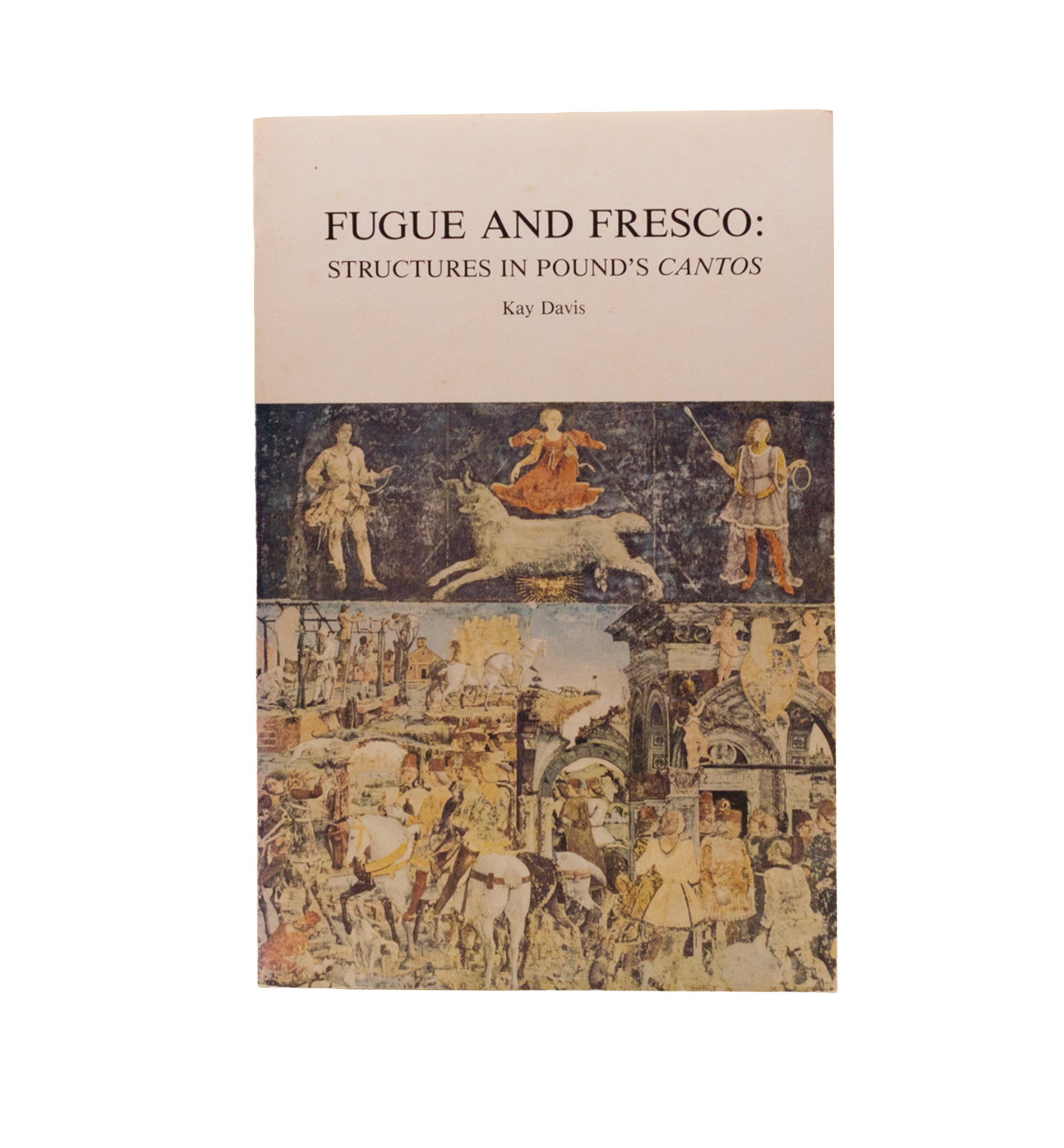

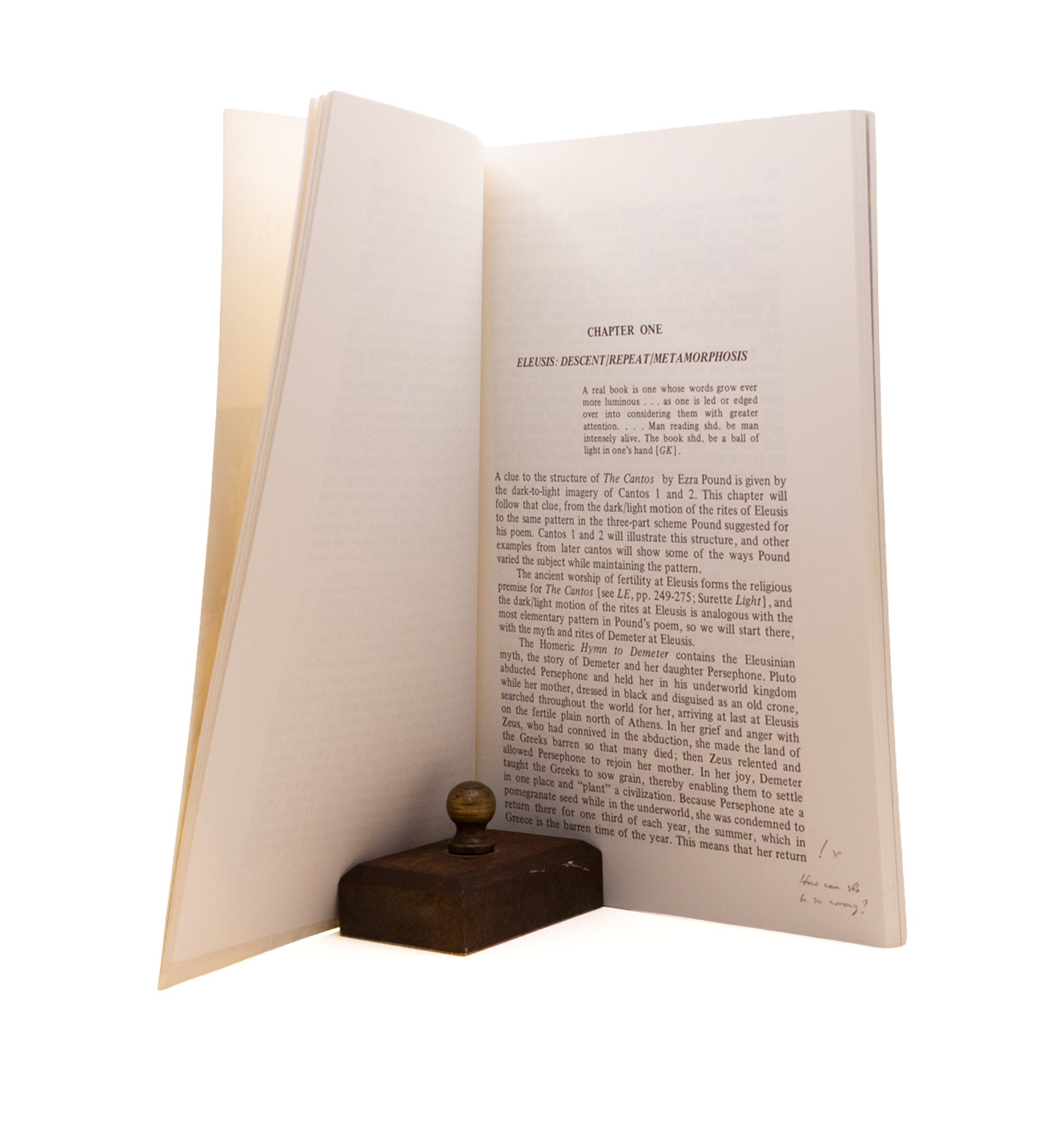
tap to cycle
Fugue and Fresco: Structures in Pound’s Cantos
Kay Davis
Published Maine: National Poetry Foundation, 1984
125pp.; 22.8 x 15.2 cm. Stiff white printed wrappers.
Part of Scholarship, I
K.D.’s influential formal hypothesis upon The Cantos. A wonderful copy, with the occasional positive annotation by David Moody, though starting on p.1 with “!x How can she be so wrong?” A fine copy, first edition, paperback issue.

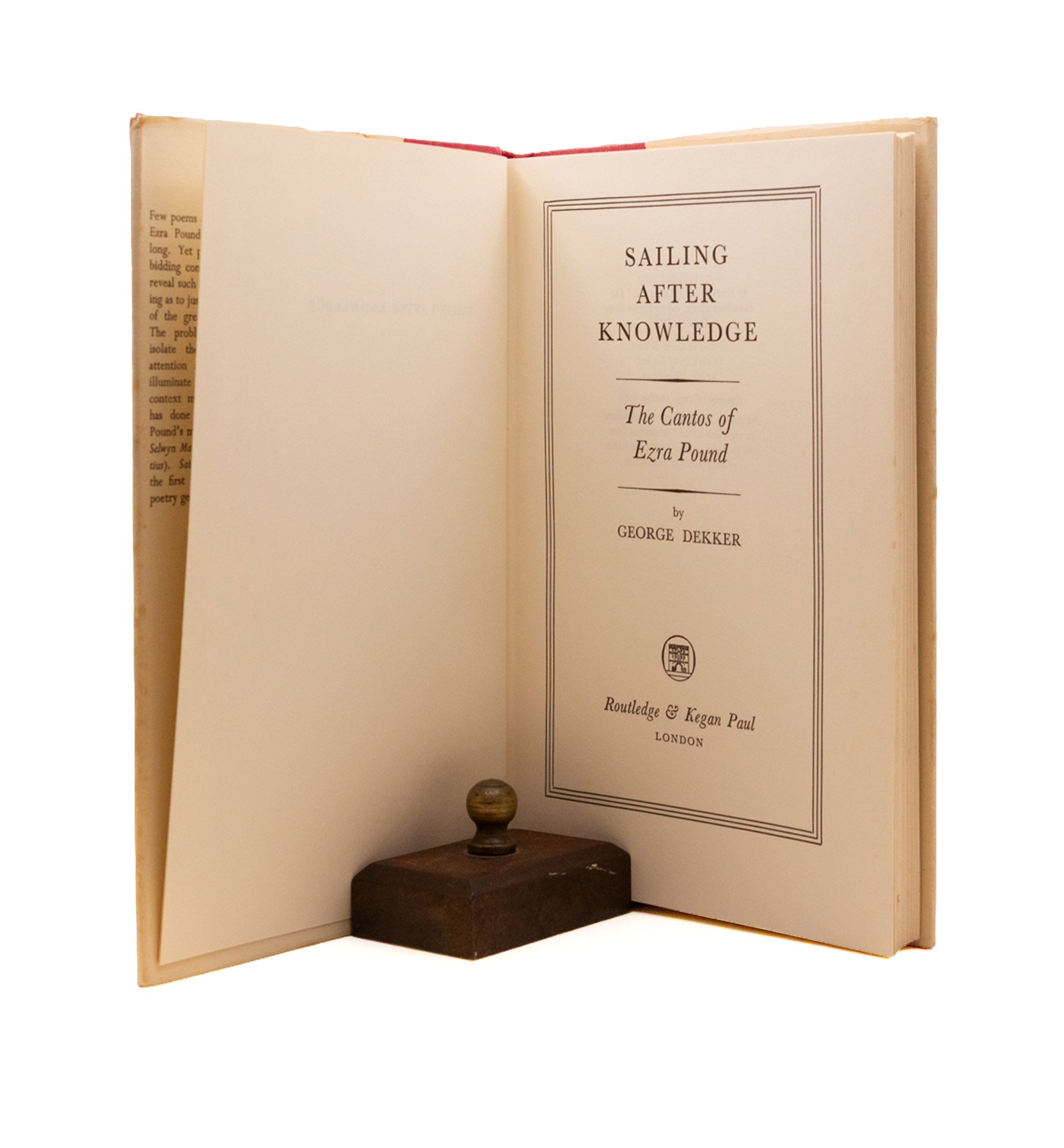
tap to cycle
Sailing After Knowledge: The Cantos of Ezra Pound
George Dekker
Published London: Routledge & Kegan Paul, 1963
207pp.; 22.2 x 14.7 cm. Red cloth boards stamped in gold on spine. Cream dust-jacket printed in black and gold.
Part of Scholarship, I
Dekker’s study of The Cantos, with exegetical intent but much a close reading. First edition, the jacket a little split at the top of the spine but overall a beautiful copy. With A. David Moody’s pencil ownership inscription to ffep.
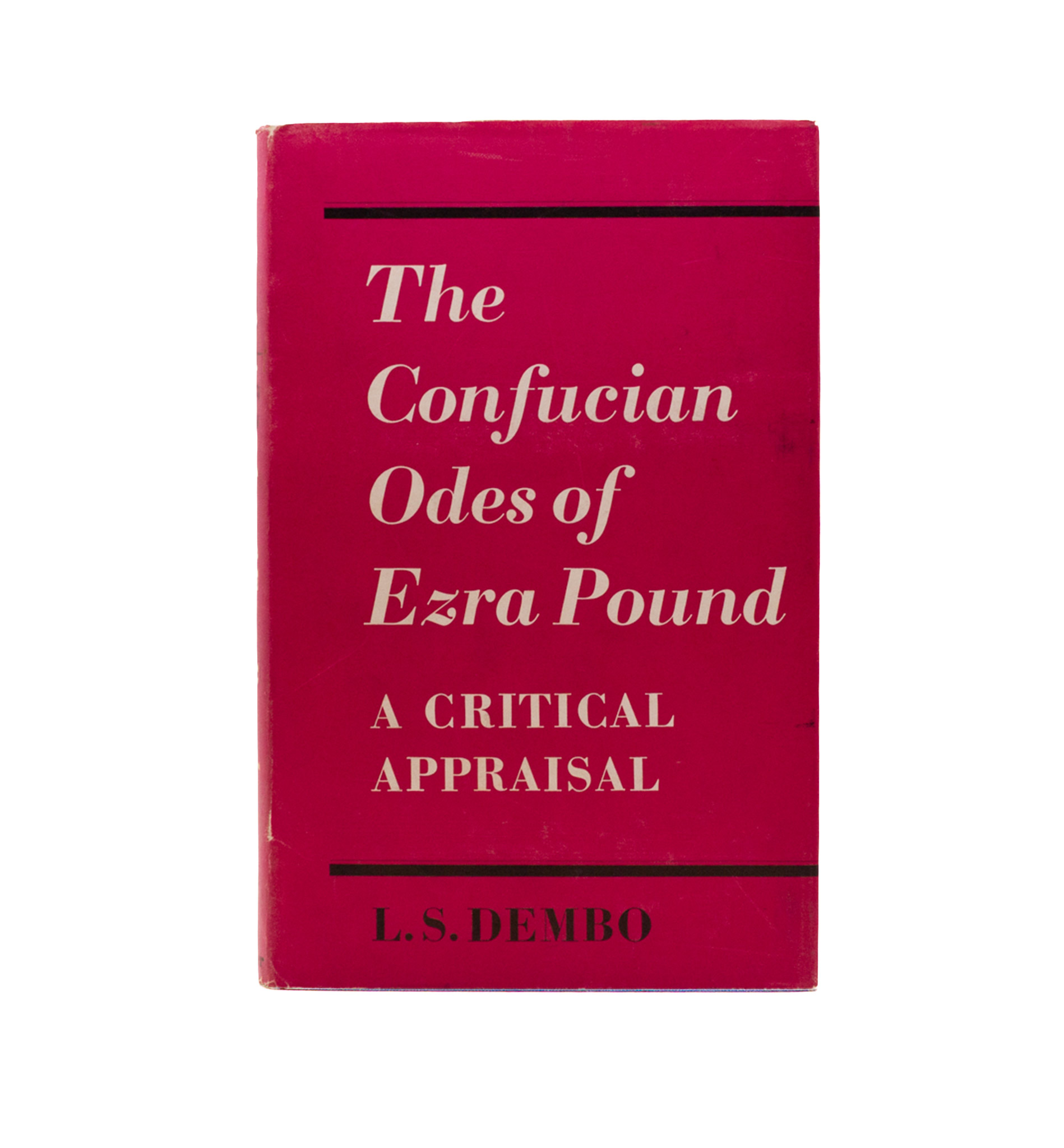
tap to cycle
The Confucian Odes of Ezra Pound
L. S. Dembo
Published London: Faber and Faber, 1963
111pp.; 22.3 x 14.4 cm. Blue cloth boards stamped in gold down spine. White dust-jacket printed in pink and black.
Part of Scholarship, I
An analysis of Pound’s translation for their feng and cheng (that is, their right wind and its correcting effect). First English edition. A fine copy in a rubbed jacket with “3 / Jan” written in pencil down the spine. A cutting of the TLS, April 2 1964 laid-in, featuring an unsigned review, titled “Translating the Wind,” of Dembo’s book.
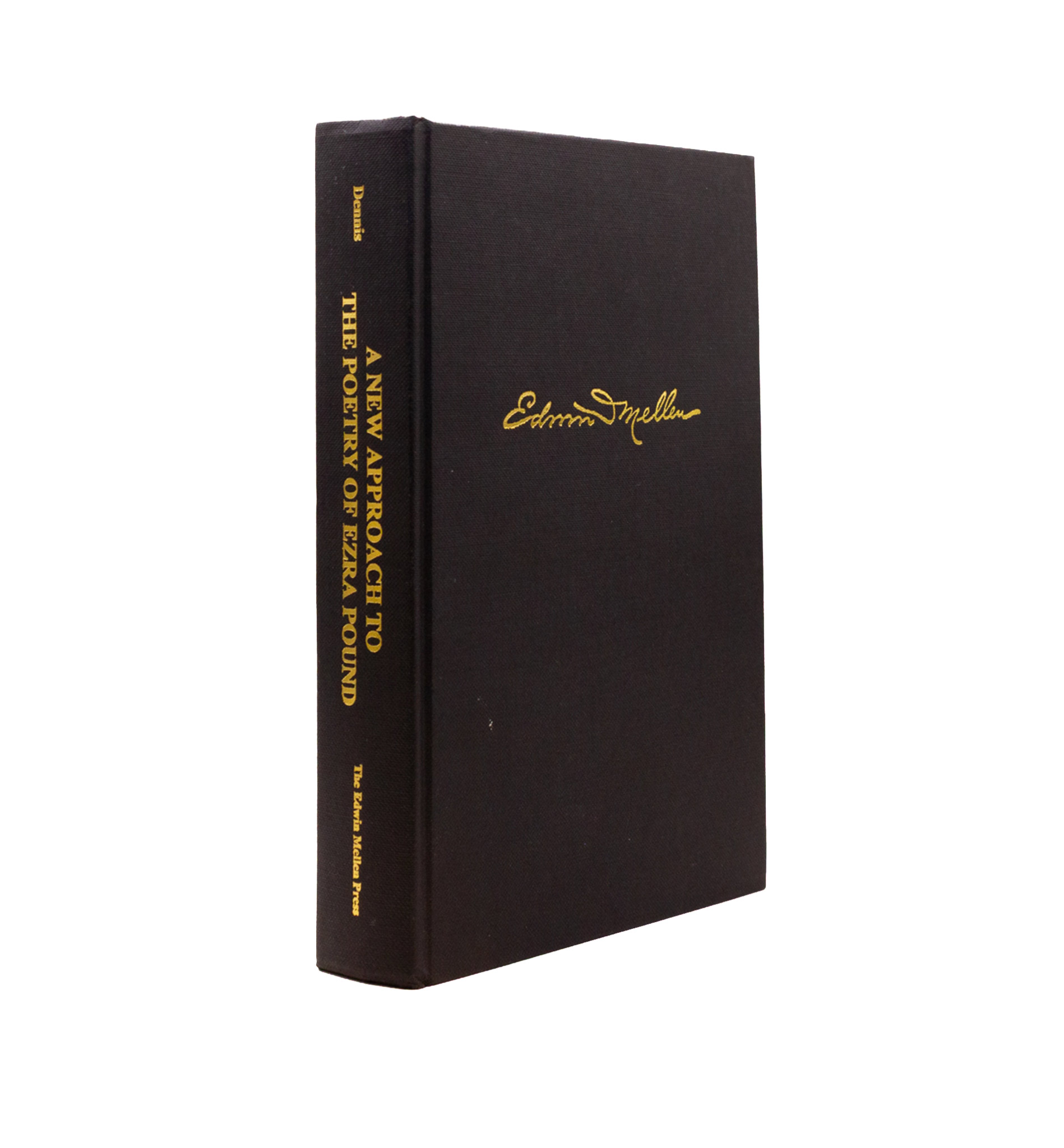
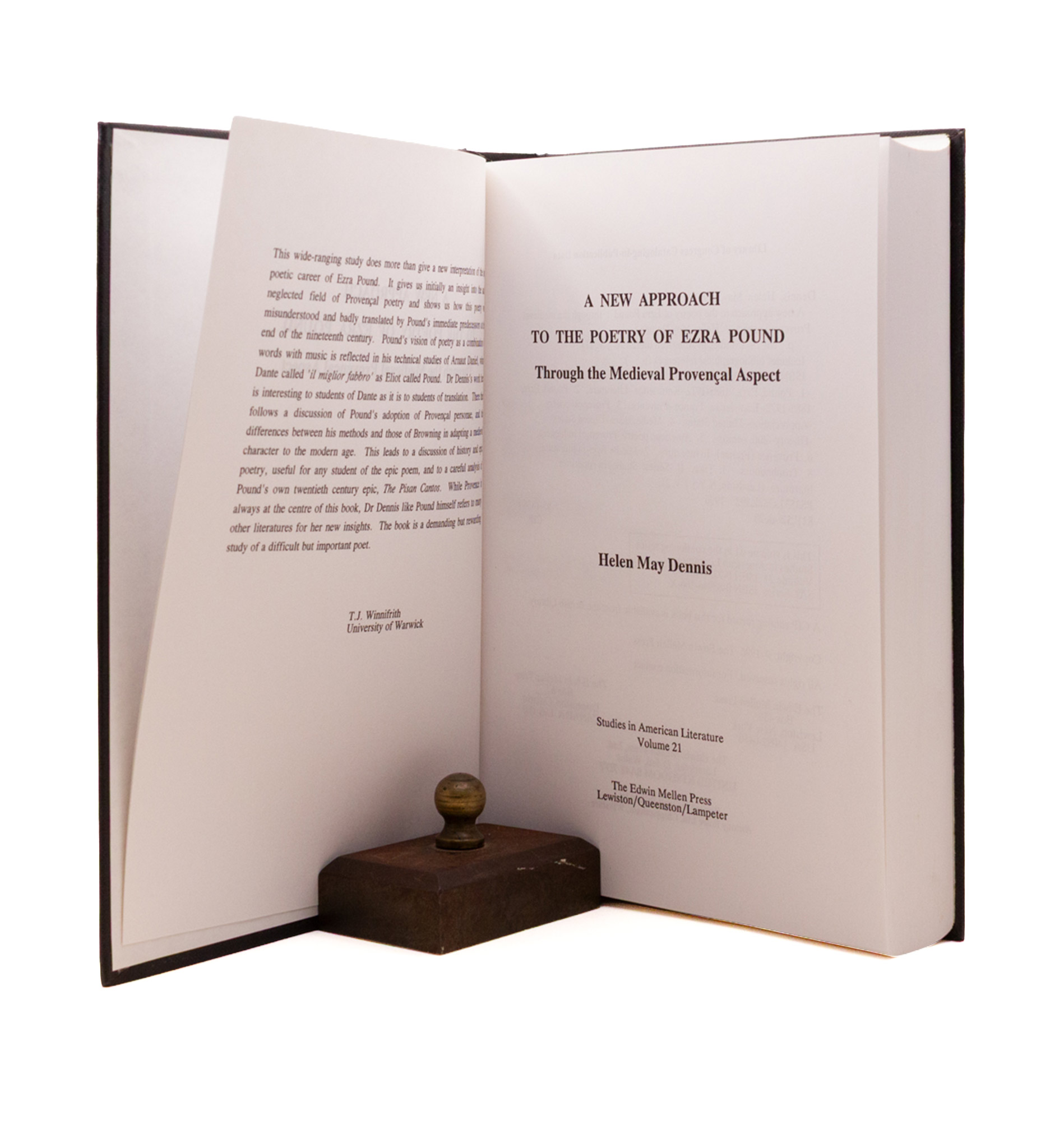

tap to cycle
A New Approach to the Poetry of Ezra Pound (Through the Medieval Provençal Aspect)
Helen May Dennis
Published Lampeter: The Edwin Mellen Press, 1996
487pp.; 21.7 x 15.4 cm. Black cloth boards stamped in gold to front and down spine.
Part of Scholarship, I
“In true troubadour tradition Pound sings love, war, politics, and ideals all in one canto. The poetry indicates the potential fusion of the ideal lady and ideal city, but recognises that actual government and the ideal civilisation are not yet synonymous. The love ethos and visionary ideal contradict war ethics and are posited as a means of ameliorating culture.”
Dennis’s first book, presumably her thesis, a study of Provençal literature elucidating Pound’s own use, from the poems in A Lume Spento riding right up to the Pisan Cantos. Volume 21 in the Studies in American Literature series by The Edwin Mellen Press, dedicated, in print, to A. David Moody. First edition, back cover with one bit of damage. A very uncommon book, available at institutional prices from the publisher.



tap to cycle
The Route of All Evil: The Political Economy of Ezra Pound
Meghnad Desai
Published London: Faber and Faber, 2006
154pp.; 22.3 x 14.1 cm. Black paper covered boards lettered in white down spine. White dust-jacket printed in blue-greys and red.
Part of Scholarship, I
Described by Alec Marsh as a “lamentable book,” a glimpse into the scholarly prowess of the House of Lords. First edition, near fine.
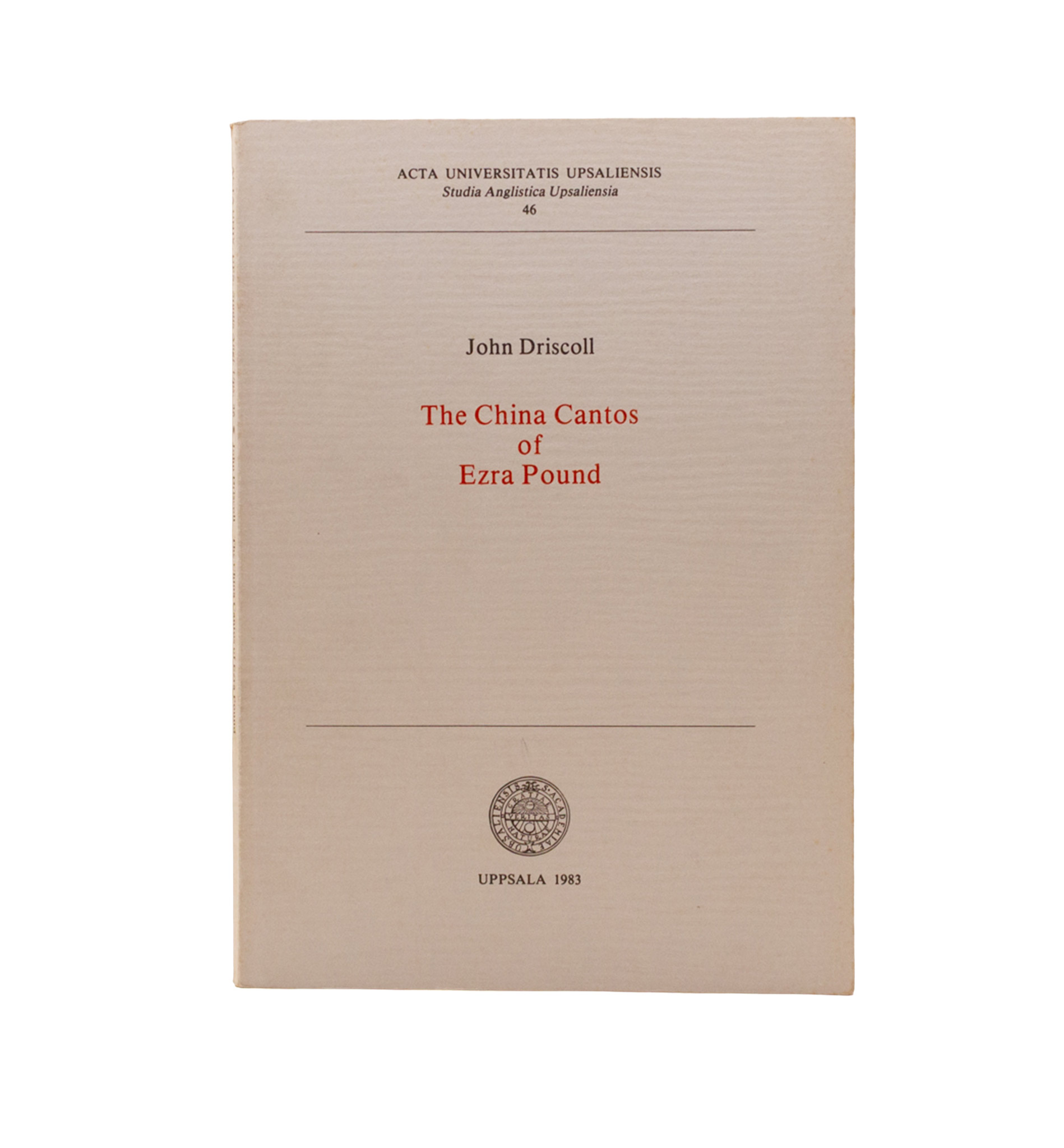
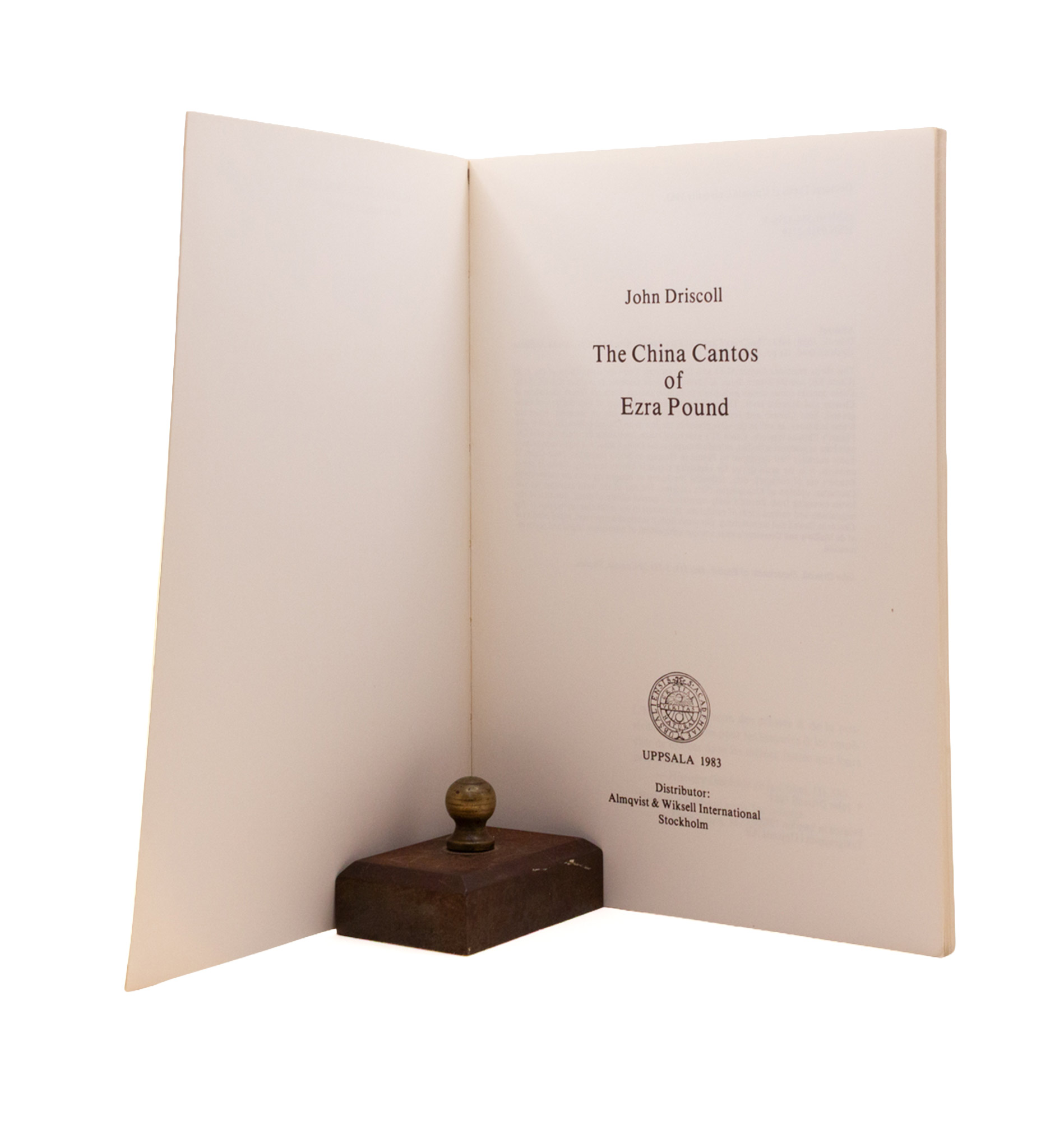
tap to cycle
The China Cantos of Ezra Pound
John Driscoll
Published Uppsala, 1983
166pp.; 21.9 x 15.8 cm. Heavy grey paper wraps printed in red and black.
Part of Scholarship, I
John Driscoll’s thesis at Uppsala University, first edition, under the university’s press. Published in 1983, the same year as John Nolde’s Blossoms From the East, marking the advent in Poundian scholarship of studies dedicated to the China Cantos. A study of the process between poet and source, particularly on Pound’s use of de Mailla’s Histoire Génèrale de la Chine and the reflection of its form (vols. X and XI are composed by de Mailla and his editors from available contemporary documents, while I to IX are a direct translation of the Manchu text) in The Cantos. A very faint handling crease to the front cover, but a fine copy.
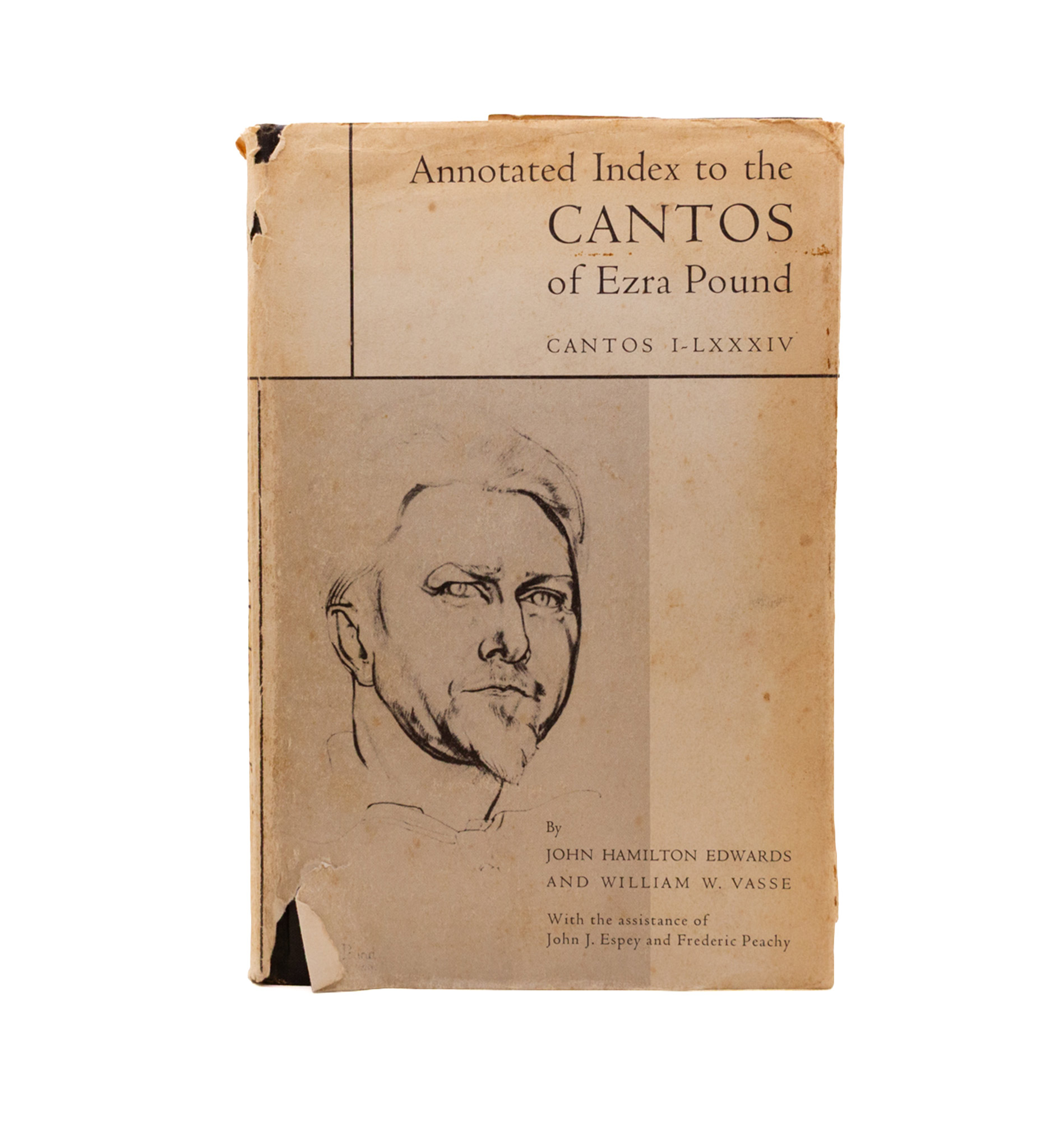
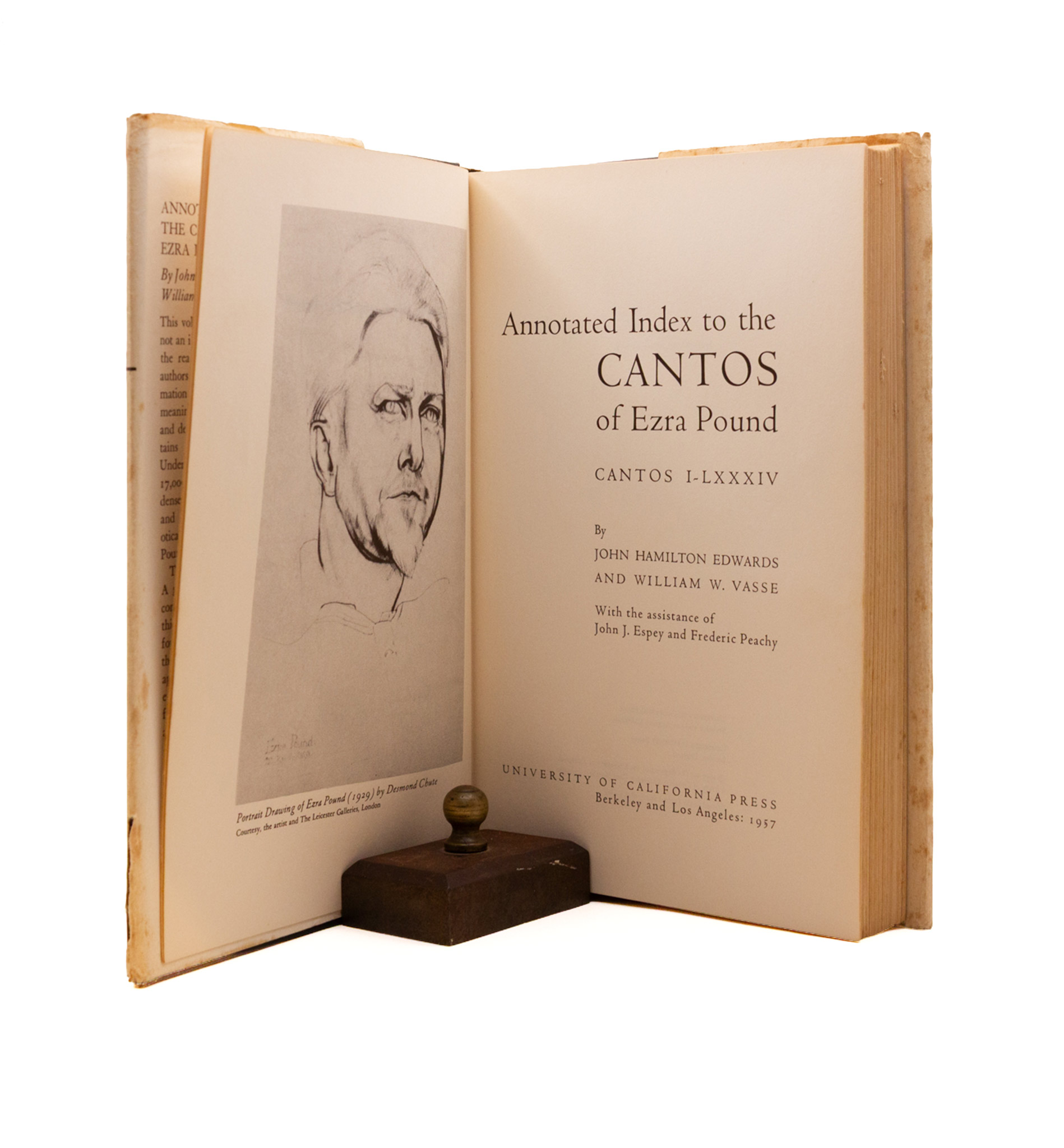
tap to cycle
Annotated Index to the Cantos of Ezra Pound, Cantos I-LXXXIV
John Edwards and William Vasse
Published University of California Press, 1957
322pp.; 24.1 x 16.2 cm. Black cloth boards stamped in silver on spine. White dust-jacket printed in black.
Part of Scholarship, I
The first major gloss of The Cantos, grown out of an effort by Edwards & Vasse in The Pound Newsletter. First edition, review copy with the publisher’s slip pasted upside-down to rfep. With an unidentified ownership inscription in pencil to ffep, and the very occasional annotation by A. David Moody. Cloth slightly worn, in the original soapy jacket a little torn.
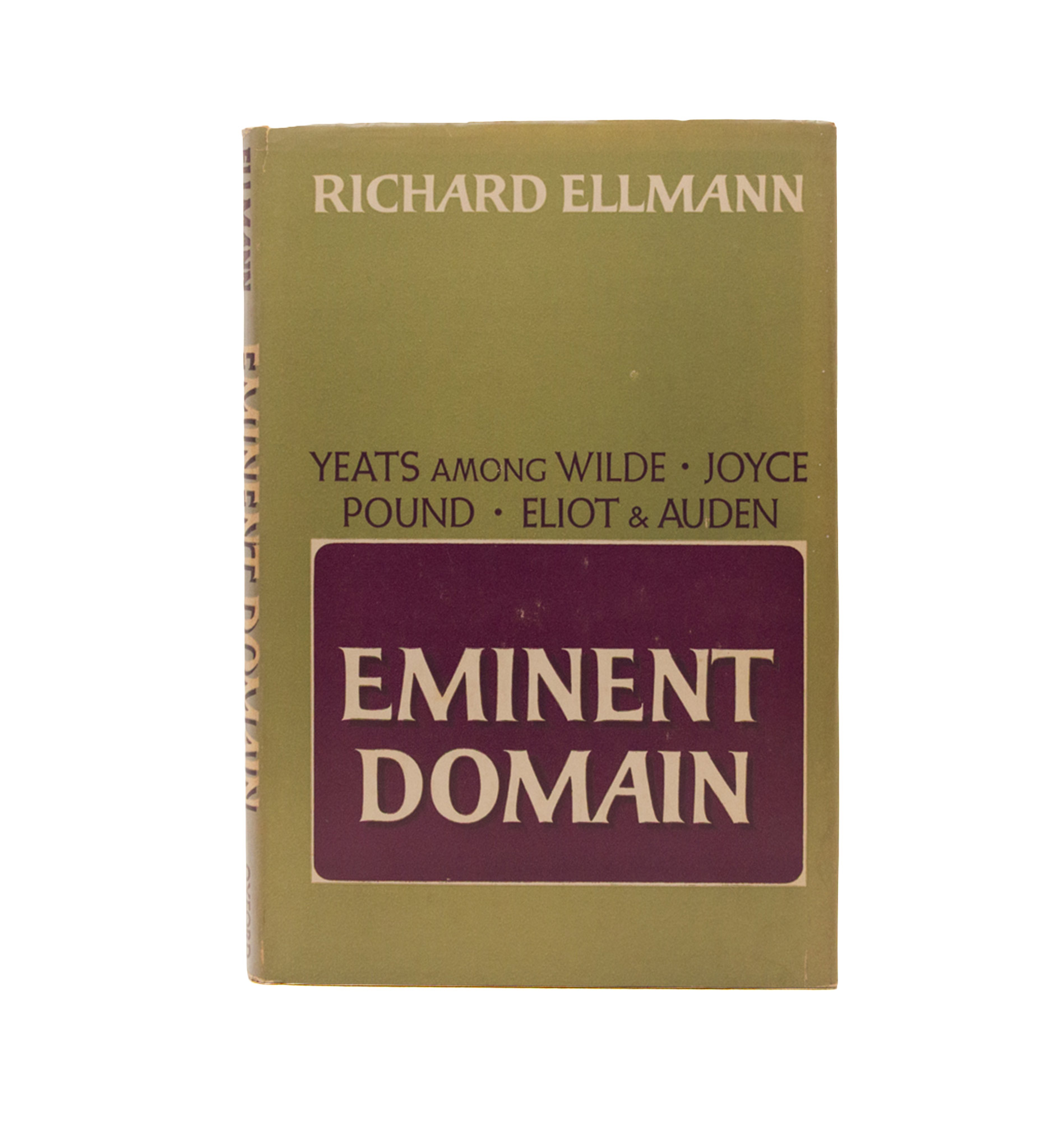

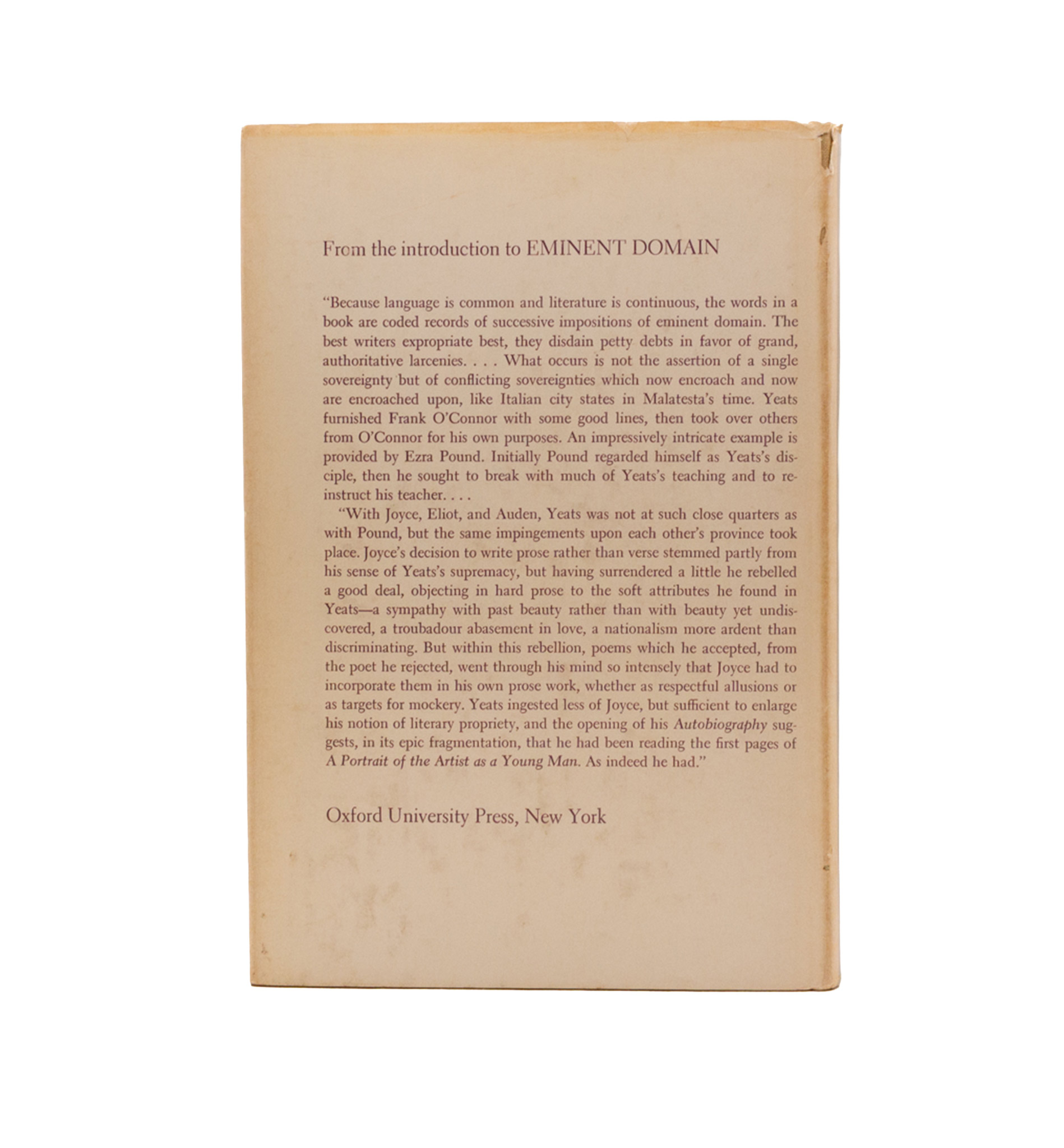
tap to cycle
Eminent Domain: Yeats among Wilde, Joyce, Pound, Eliot & Auden
Richard Ellmann
Published New York: Oxford University Press, 1967
159pp.; 21 x 14.5 cm. Light sea green cloth boards stamped in red and grey to front and down spine. White dust-jacket printed in purple and green.
Part of Scholarship, I
On the mutual influence of these modernists. First edition, with one reference resolved by A. David Moody. Very pretty out of its jacket, but also in a very nice jacket (a very small break top-back of spine).
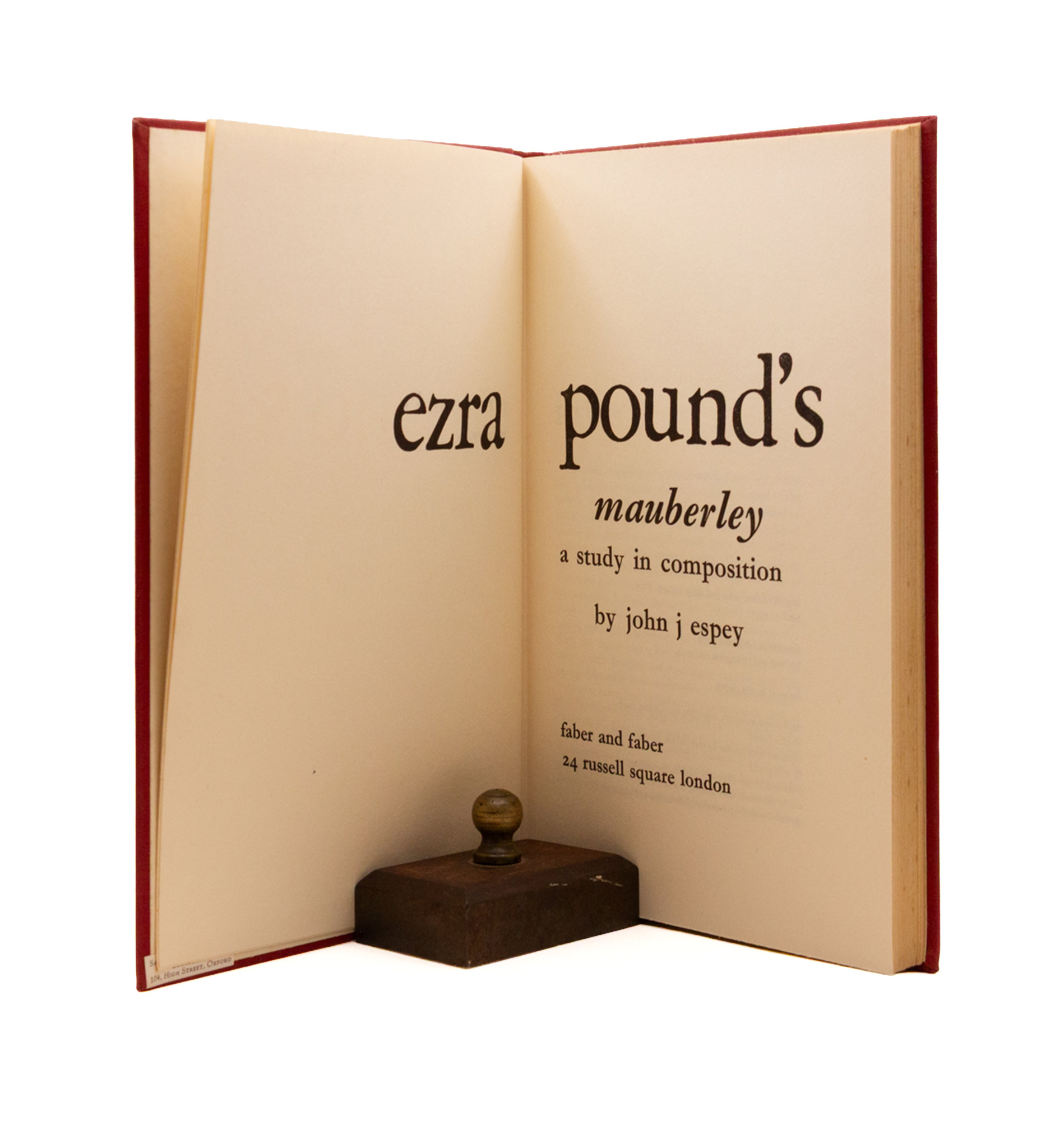

tap to cycle
ezra pound’s mauberley
John J. Espey
Published London: Faber and Faber, 1955
139pp.; 22.4 x 14.6 cm. Maroon cloth boards stamped in gold down spine.
Part of Scholarship, I
The most popular study of Pound’s Hugh Selwyn Mauberley, first edition before the corrected (under Pound’s instruction) second edition. Light annotated by David Moody with three notes in ink laid-in. A fine copy.
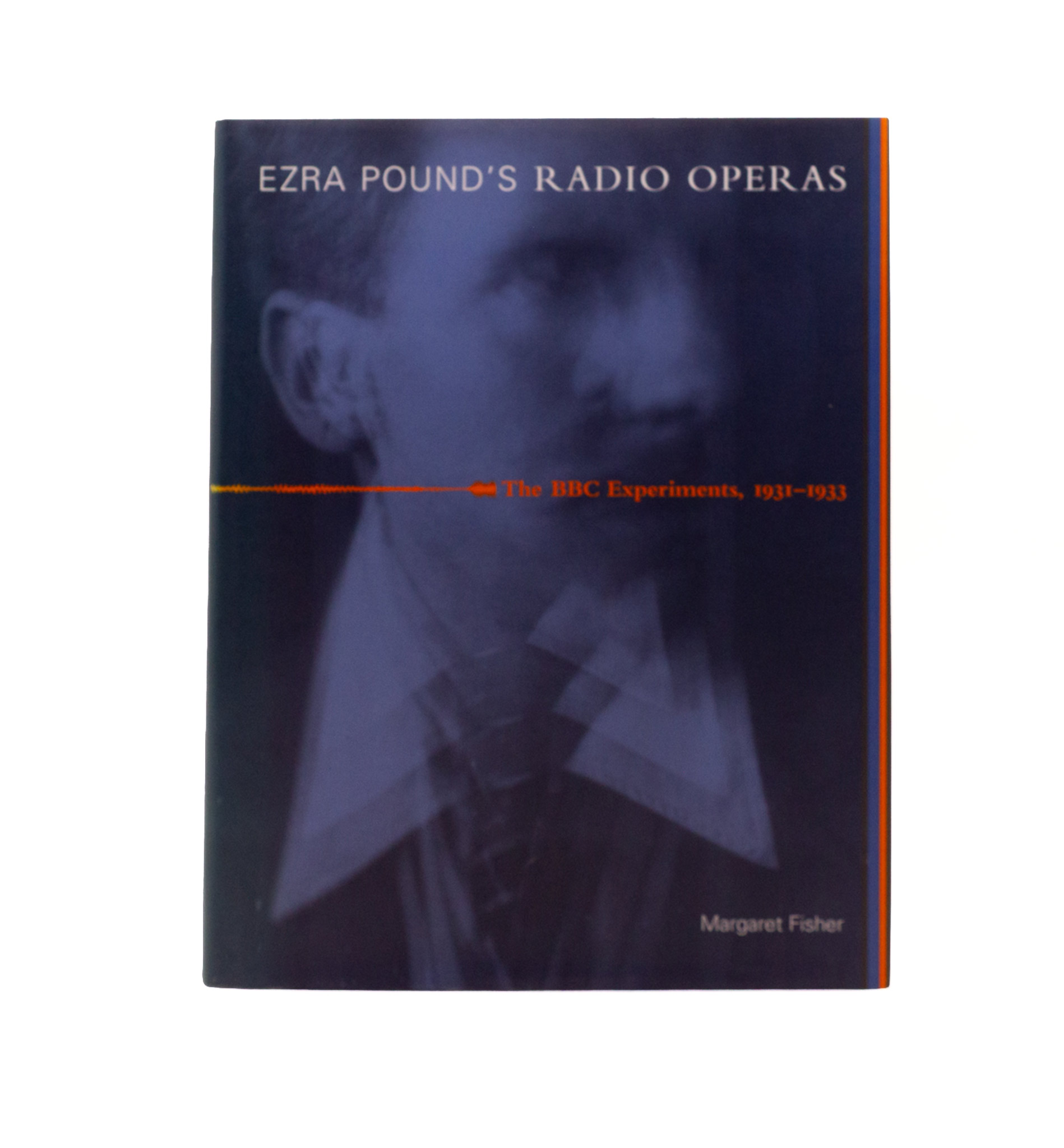


tap to cycle
Ezra Pound’s Radio Operas: The BBC Experiments, 1931-1933
Margaret Fisher
Published Cambridge: The MIT Press, 2002
319pp.; 23.4 x 18.6 cm. Blue cloth boards stamped in orange down spine. White dust-jacket printed in black, orange and blue.
Part of Scholarship, I
On Le Testament and Pound’s lesser-known, later discovered Cavalcanti, as well as small fragmentary compositions and their musical, technical, and publication history. Fine in a near fine jacket, the spine sunned, with a few pencil annotations by David Moody throughout.

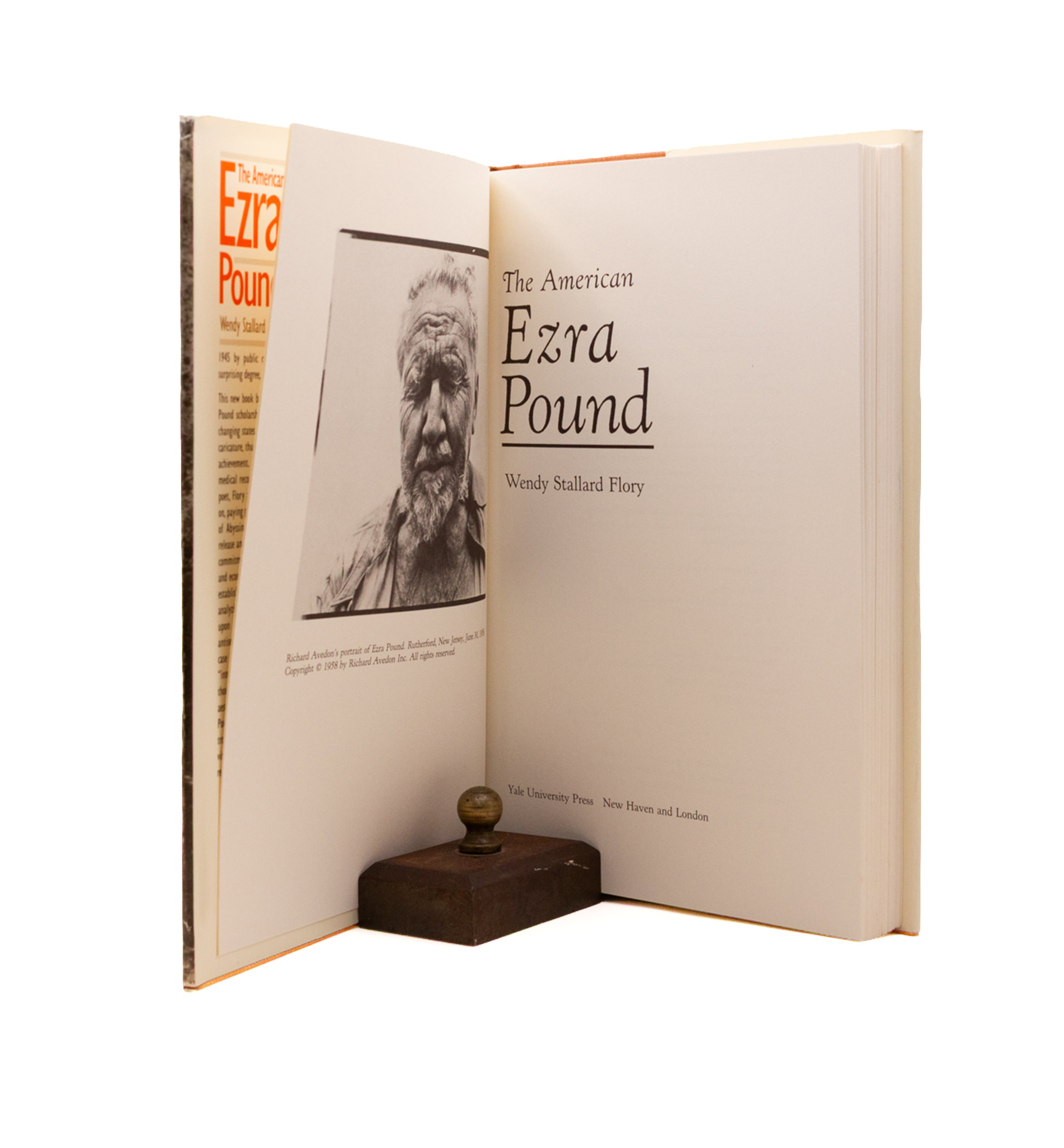
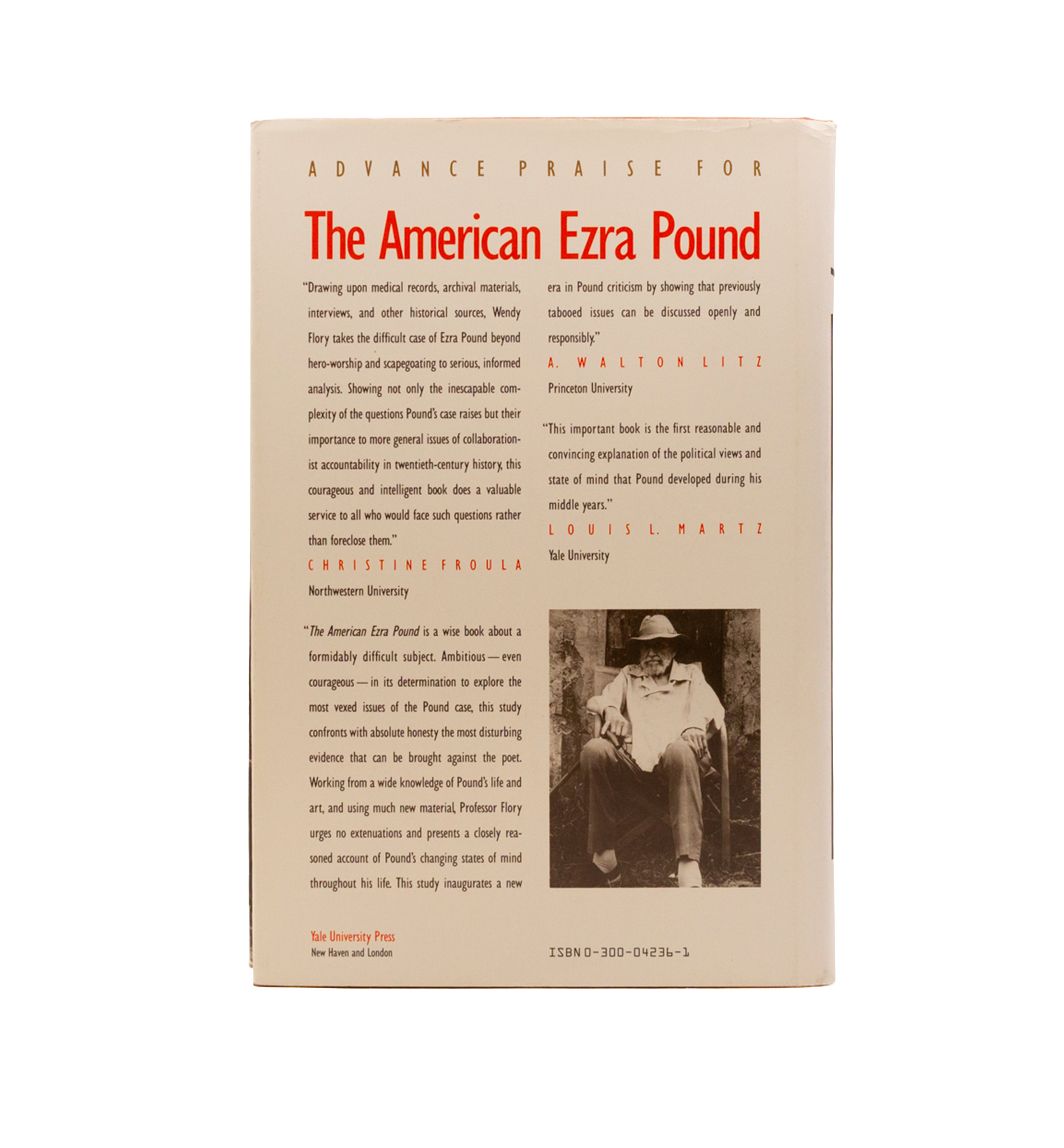
tap to cycle
The American Ezra Pound
Wendy Stallard Flory
Published New Haven: Yale University Press, 1989
246pp.; 24.2 x 16.5 cm. Orange cloth boards lettered in black down spine. White dust-jacket printed in brown, black and red.
Part of Scholarship, I
A study of Pound’s psyche from an early age, with emphasis on his reaction to the Abyssinian Crisis, his incarceration in St. Lizs, and his return to Italy. Staining to pages 221-224, otherwise a fine copy with David Moody’s occasional marginalia.
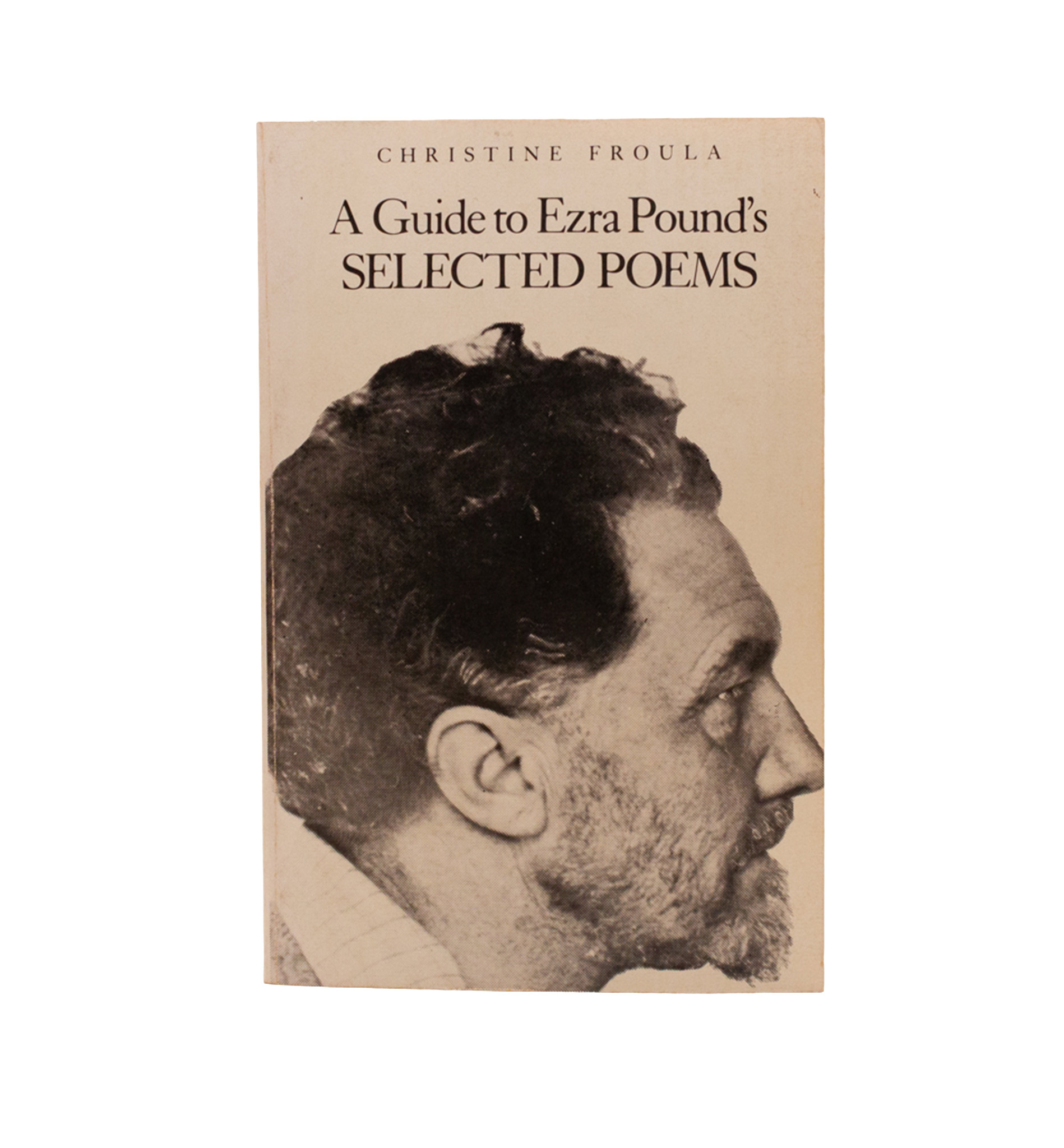
tap to cycle
A Guide to Ezra Pound’s Selected Poems
Christine Froula
Published New York: New Directions, 1983
258pp.; 20.2 x 13.1 cm. Stiff white paper wraps printed in black.
Part of Scholarship, I
Sixth in the line of glosses to Pound’s poetry. With a brief study of the Women of Trachis. NDP548, light aging, with the occasional pencil by David Moody.


tap to cycle
To Write Paradise: Style and Error in Pound’s Cantos
Christine Froula
Published New Haven: Yale University Press, 1984
205pp.; 24.2 x 16.4 cm. Red cloth boards lettered in gold on spine. White dust-jacket printed in black.
Part of Scholarship, I
But whats all this to us? The modern world ……… !”
Here is your modern world, and I’m no Stendhal :
“Napoleon lands from Elba, north upon Lake Come
An ignorant boy sets out … how wild the fire ran,
Fabrice, falls upon Waterloo, Chartreuse de Parme,
the first eleven chapters.
— EP, Canto IV mss., 1915
A study of the composition of The Cantos by its unpublished manuscripts, particularly that of Canto IV, the first completed. With interesting diagrams of variorum. First edition. A fine copy save one small tear to the jacket. Annotated throughout by David Moody.
tap to cycle
Pound
P. N. Furbank
Published Milton Keynes: Open University Press, 1985
99pp.; 21.5 x 13.6 cm. Stiff white paper wraps printed in blue and black.
Part of Scholarship, I
From the Open University’s Open Guides to Literature series, a short introductory book covering Pound’s work up until 1920, the final chapter being “Approaching The Cantos.” With the occasional annotation by David Moody. First edition, a fine copy.

tap to cycle
Pound’s Cantos Declassified
Philip Furia
Published University Park: The Pennsylvania State University Press, 1984
153pp.; 23.5 x 16 cm. Dark grey cloth boards lettered in silver down spine. White dust-jacket printed in brown and black.
Part of Scholarship, I
A study of Pound’s use of documents in The Cantos, passages often quickly dismissed for their lack of poetry, though as Furia argues they are the “luminous details” provided by EP. A fine copy, the spine sunned.

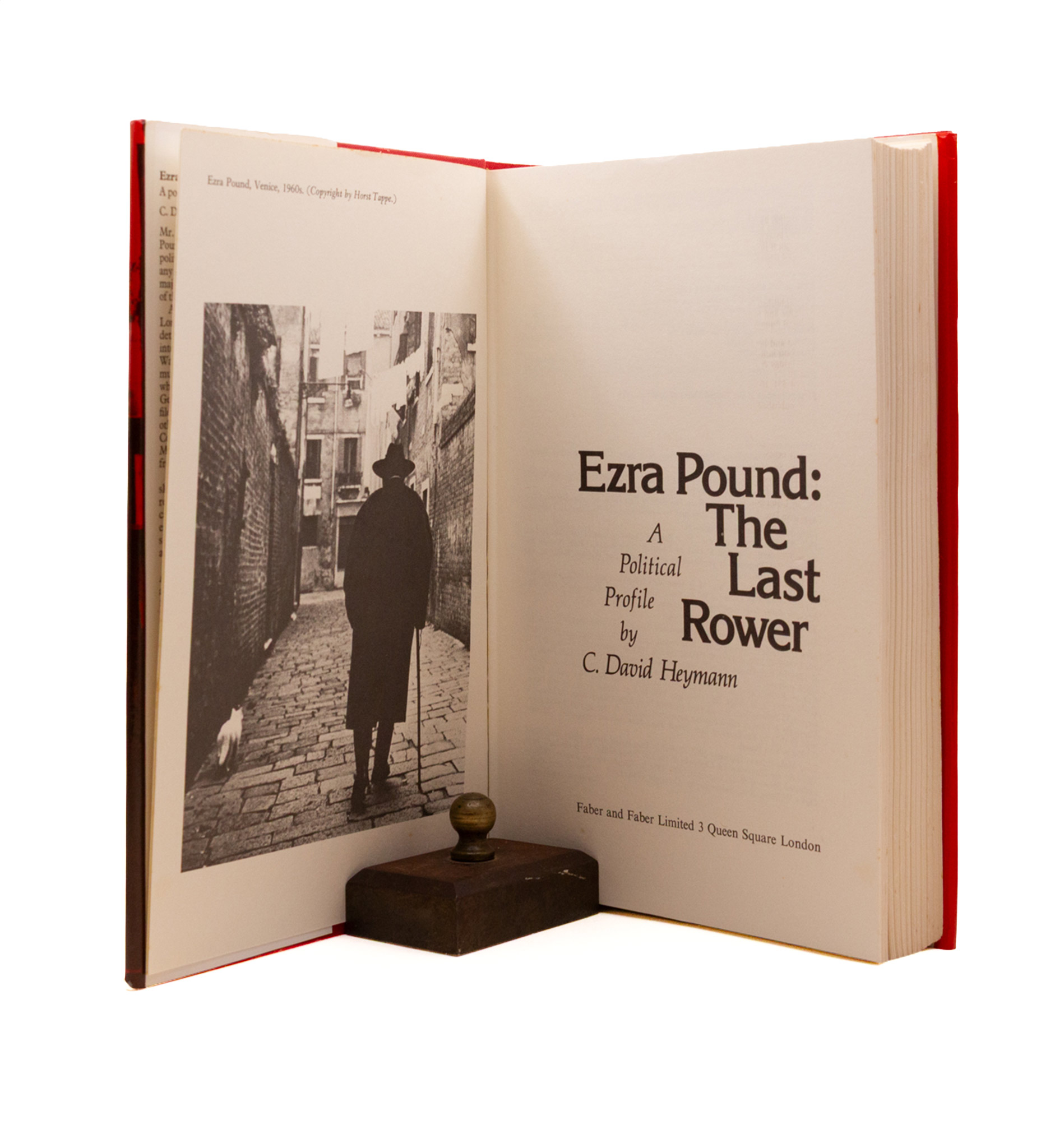

tap to cycle
Ezra Pound: The Last Rower, A Political Profile
C. David Heymann
Published London: Faber and Faber, 1976
372pp.; 24 x 16.1 cm. Red cloth boards stamped in gold down spine. White dust-jacket printed in red.
Part of Scholarship, I
A biographical pass focusing on the politics and economics, mainly Italy on. First edition. Near fine, spine sunned. Annotated lightly throughout by David Moody.
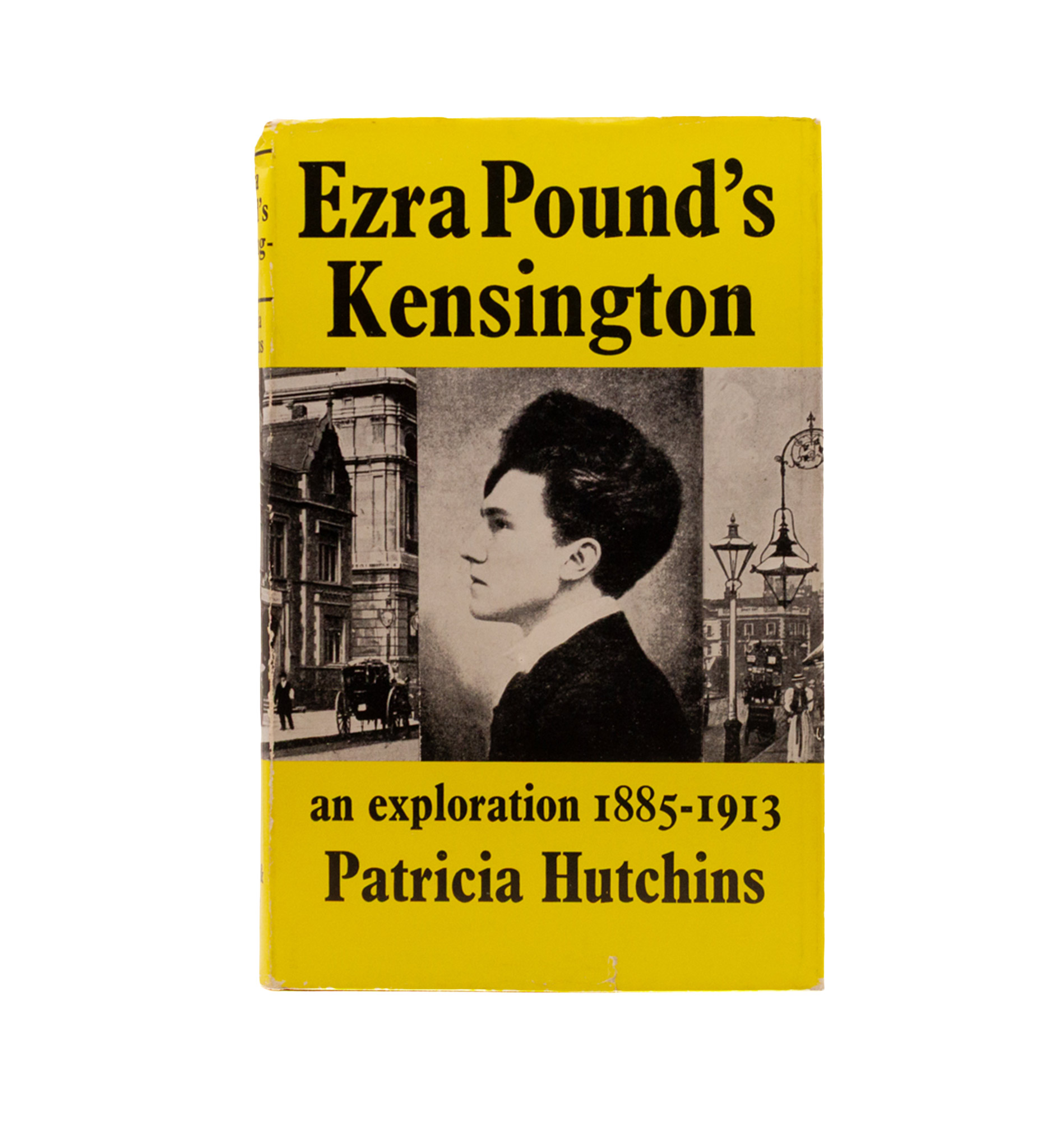
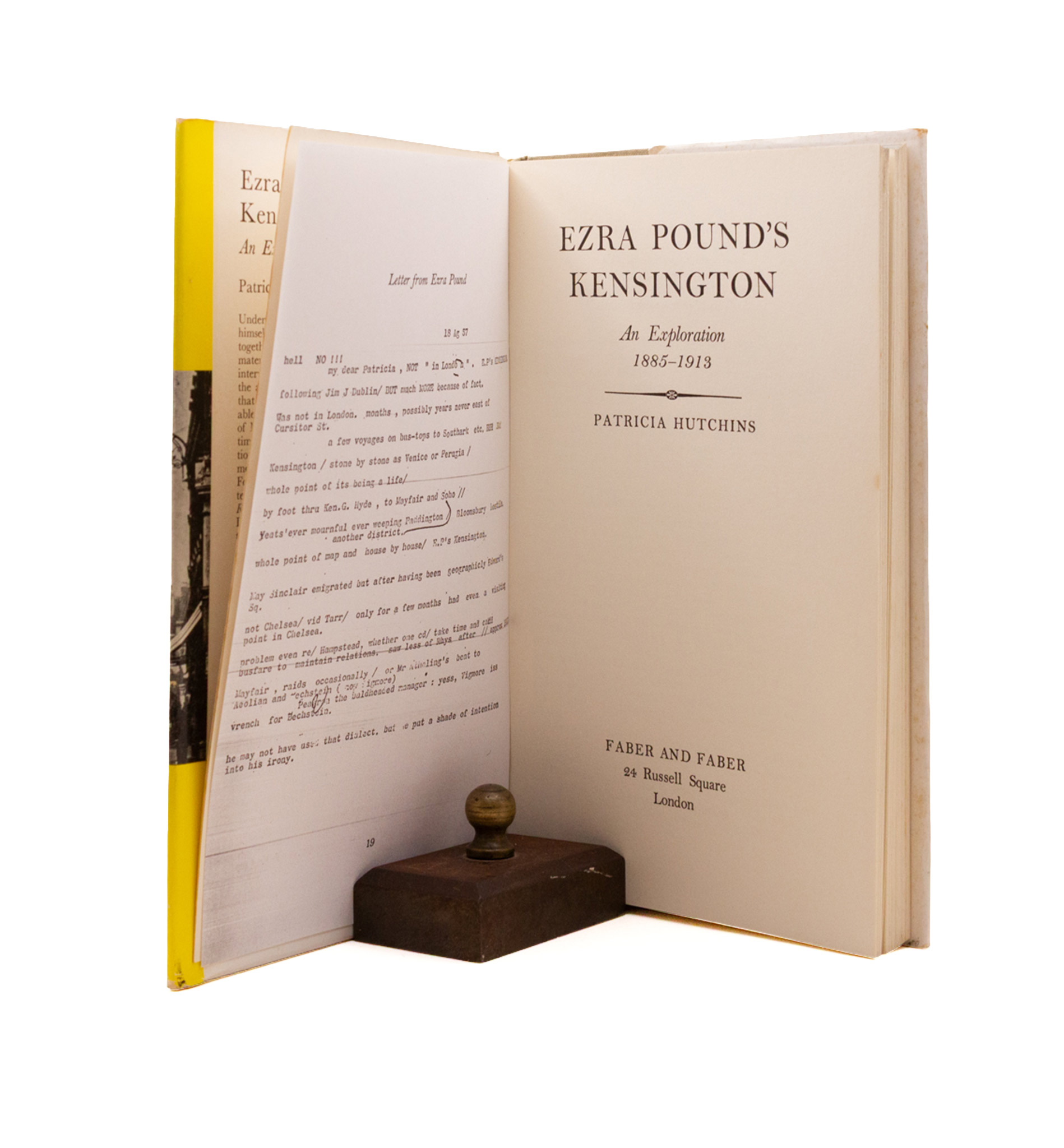
tap to cycle
Ezra Pound’s Kensington: An Exploration, 1885-1913
Patricia Hutchins
Published London: Faber and Faber, 1965
180pp.; 22.2 x 14.3 cm. Grey cloth stamped in blue and gold to spine; top edge stained blue; white dust-jacket printed in yellow and black.
Part of Scholarship, I
A popular account of the young poet’s first five years in London. A good copy, head of spine bumped, jacket a little aged, otherwise clean & fresh throughout. With a photocopy of a printed letter from EP to Hutchins emphasising E.P.’s KENSINGTON, NOT London. “Was not in London. months , possibly years never east of Cursitor St.” Gallup B79.
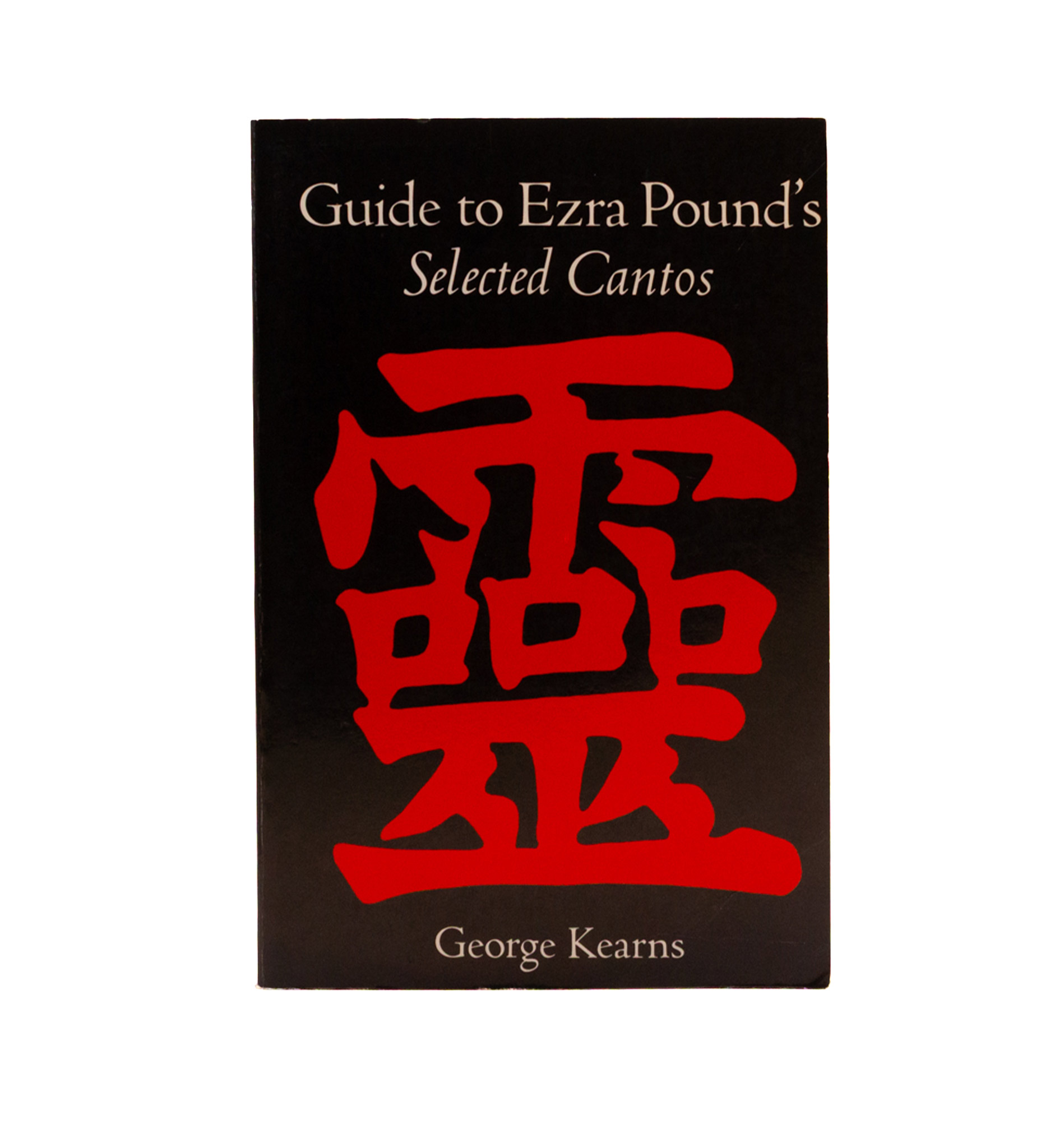
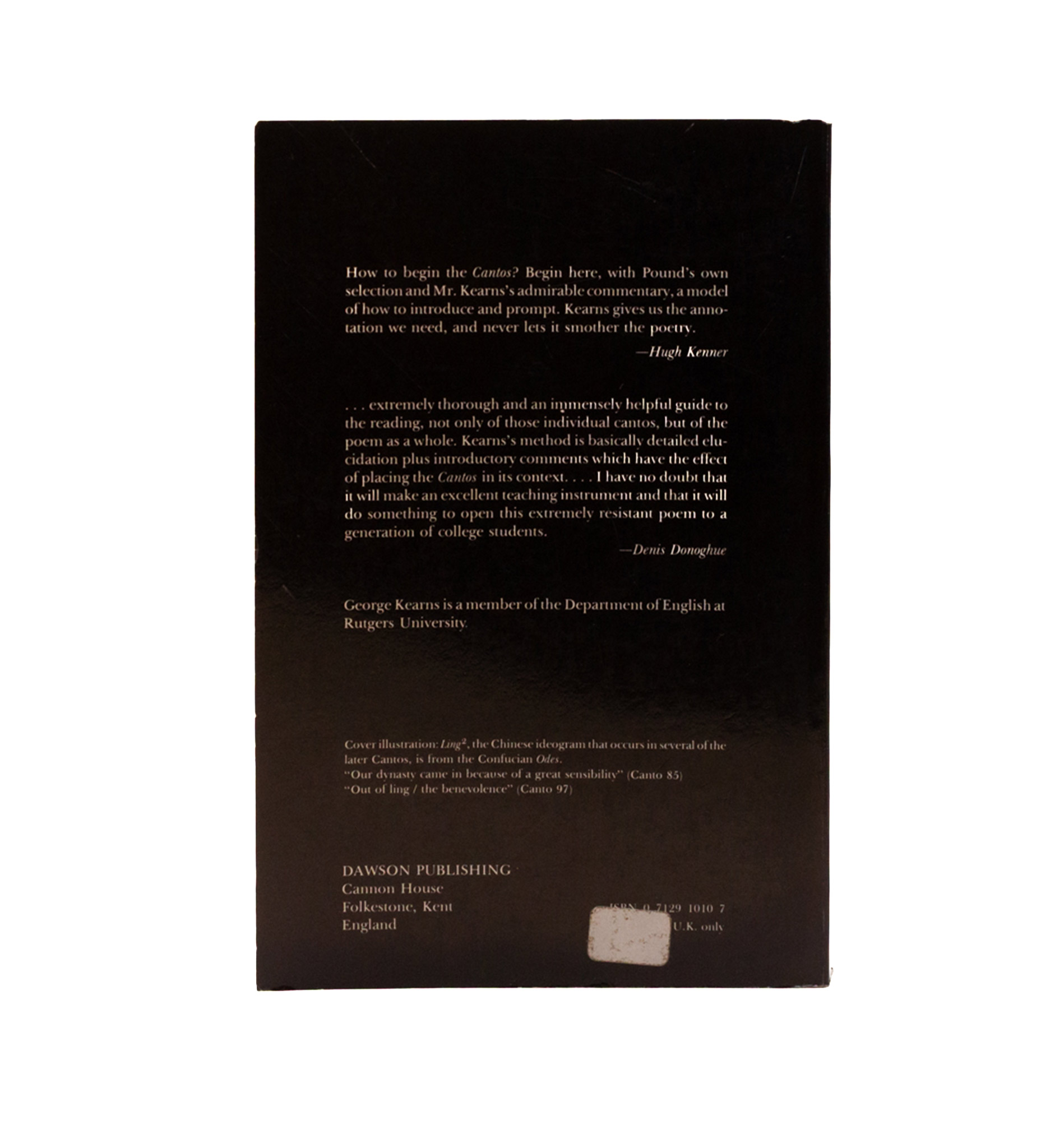
tap to cycle
Guide to Ezra Pound’s Selected Cantos
George Kearns
Published Folkestone: Wm Dawson & Sons, 1980
306pp.; 20.3 x 13.4 cm. Stiff white paper wraps printed in black and red.
Part of Scholarship, I
The second gloss to The Cantos, building on Edward & Vasse’s and published just before Terrell’s. Not, for the most part, annotations, but instead short essays on meanings and contexts. First edition, a very good copy, the front cover lifting slightly, top and tail of spine lightly bumped. Fleetingly annotated by A. David Moody.
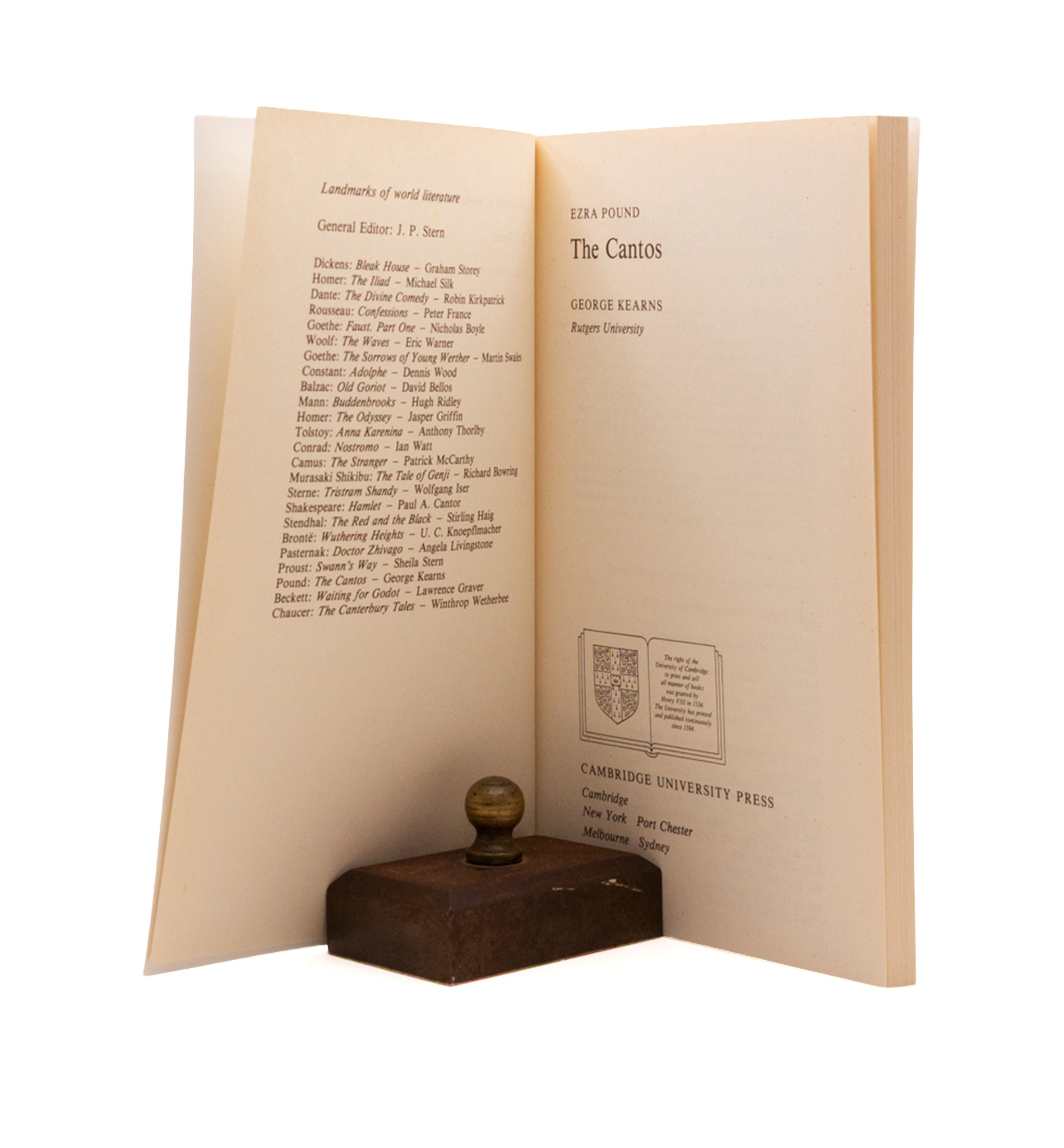

tap to cycle
Ezra Pound / The Cantos
George Kearns
Published Cambridge University Press, 1989
118pp.; 19.7 x 12.9 cm. Stiff white paper wraps printed in blue and yellow.
Part of Scholarship, I
A small book on The Cantos, most useful for its last chapter which studies each of the poem’s “Representative figures,” Conf., Fen., Ovid, Erigena, Cavalcanti, Douglas, Adams, and Mus. First edition, a fine copy.



tap to cycle
The Poetry of Ezra Pound
Hugh Kenner
Published New York: Kraus Reprint, 1968
342pp.; 23.6 x 16.1 cm. Red cloth boards lettered in gold on spine.
Part of Scholarship, I
Kenner’s first book on Pound. First Kraus reprint edition, following the 1951 first edition. With A. David Moody’s neat pencil ownership inscription to ffep, his very occasional pencil annotation elsewhere; a large bottom corner of the ffep removed.
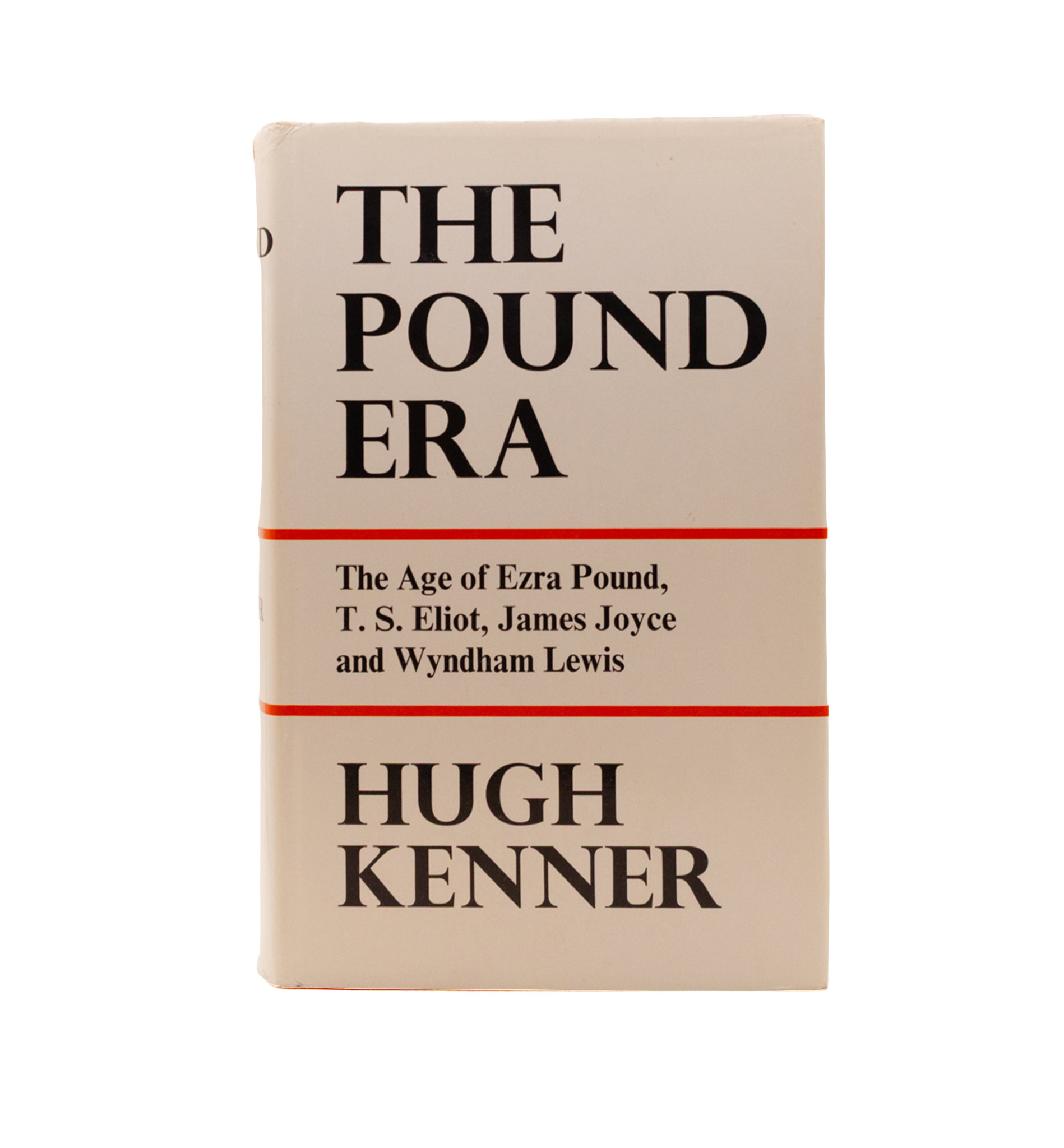
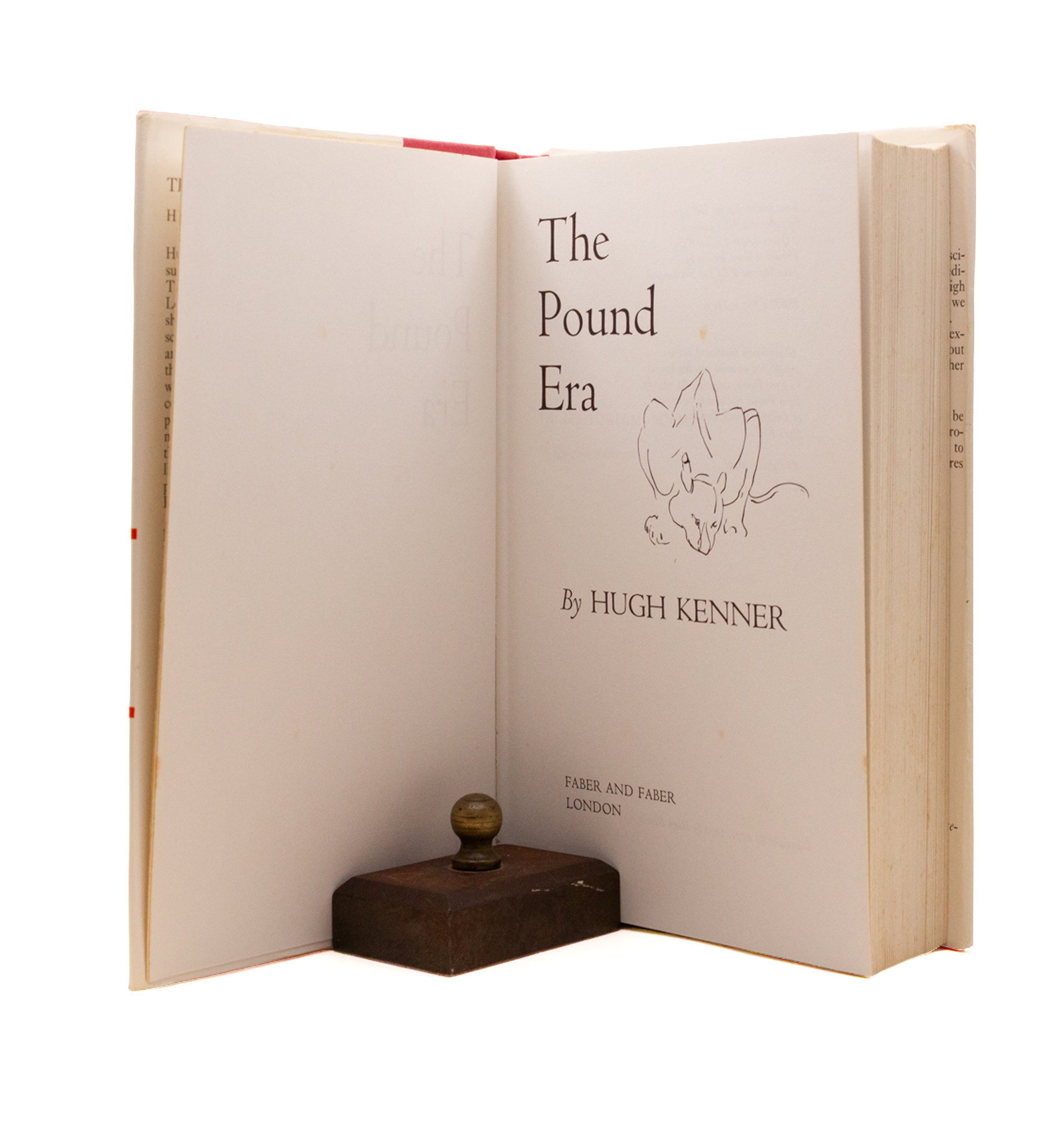
tap to cycle
The Pound Era
Hugh Kenner
Published London: Faber and Faber, 1972
606pp.; 22.3 x 14.2 cm. Red cloth boards stamped in gold on spine. White dust-jacket printed in black and red.
Part of Scholarship, I
First English edition. Tiny bit of trouble to the top of the jacket’s spine, foxing to flaps, light foxing to endpapers, pencil scores to the bottom edge. With the neat pencil ownership inscription of A. David Moody to ffep, his further pencil annotations to pp. 151, 323, 351, 379, 391, 451, 453, 458, 468-9, 475-6, 495, and a photocopy of a letter from HK to EP laid-in.



tap to cycle
Winter Love: Ezra Pound and H.D.
Jacob Korg
Published The University of Wisconsin Press, 2003
236pp.; 23.6 x 15.9 cm. Brown cloth boards stamped in gold down spine. White dust-jacket printed in browns and black.
Part of Scholarship, I
On the friendship between EP and HD which lasted their lifetimes, and various parallels in their poems. First edition, the top edge of the jacket turning outwards slightly, otherwise fine, with a couple of pencil annotations by David Moody.

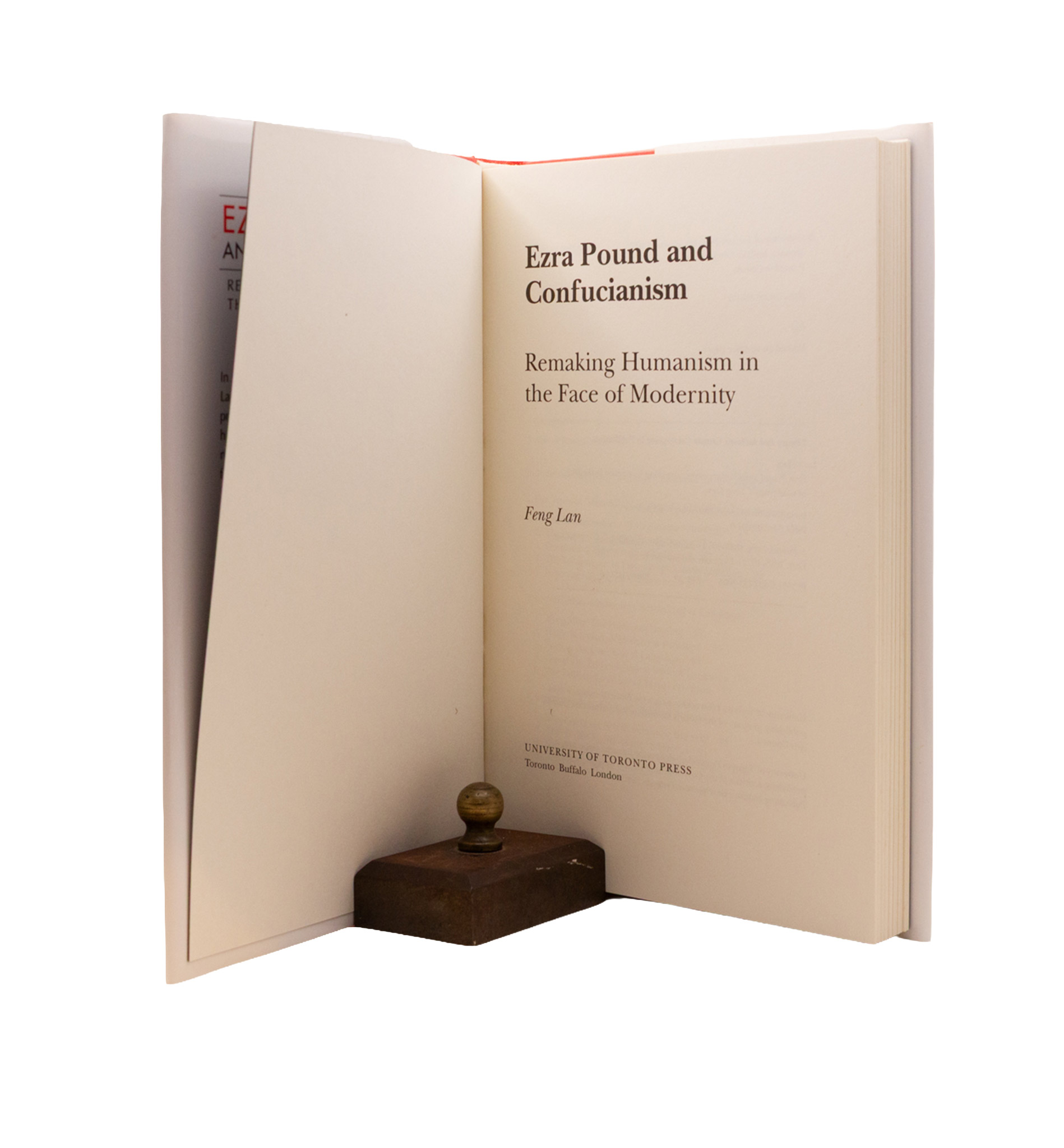

tap to cycle
Ezra Pound and Confucianism
Feng Lan
Published Toronto: University of Toronto Press, 2005
245pp.; 23.6 x 15.8 cm. Red cloth boards stamped in black down spine. White dust-jacket printed in red and black.
Part of Scholarship, I
On Pound’s translations, the “Five Types of ‘Misreading’” there-in, and the political and spiritual readings of Kung-Pound. First edition, clothbound issue in dust-jacket, fine. With pencil marginalia throughout by A. David Moody.

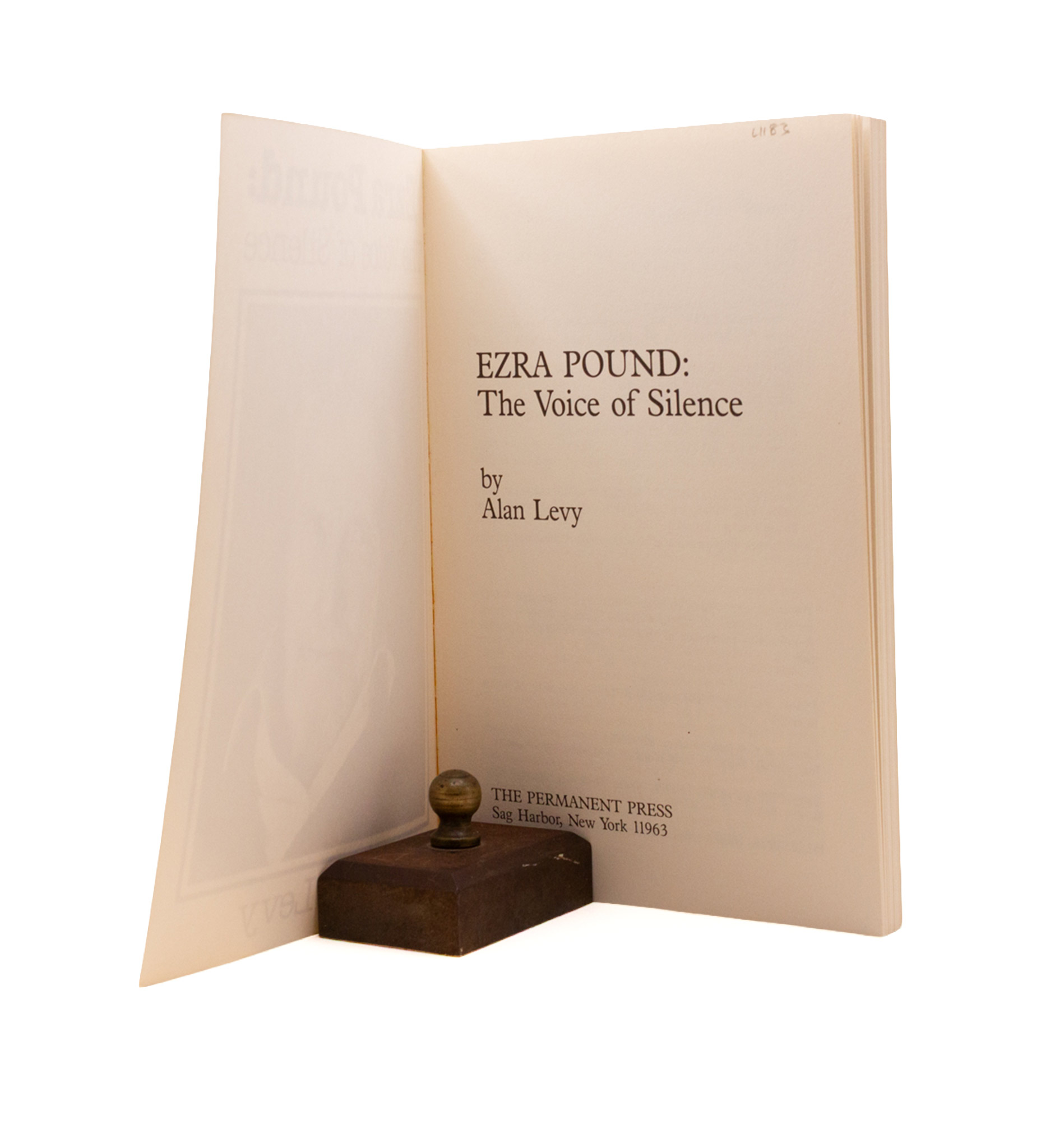
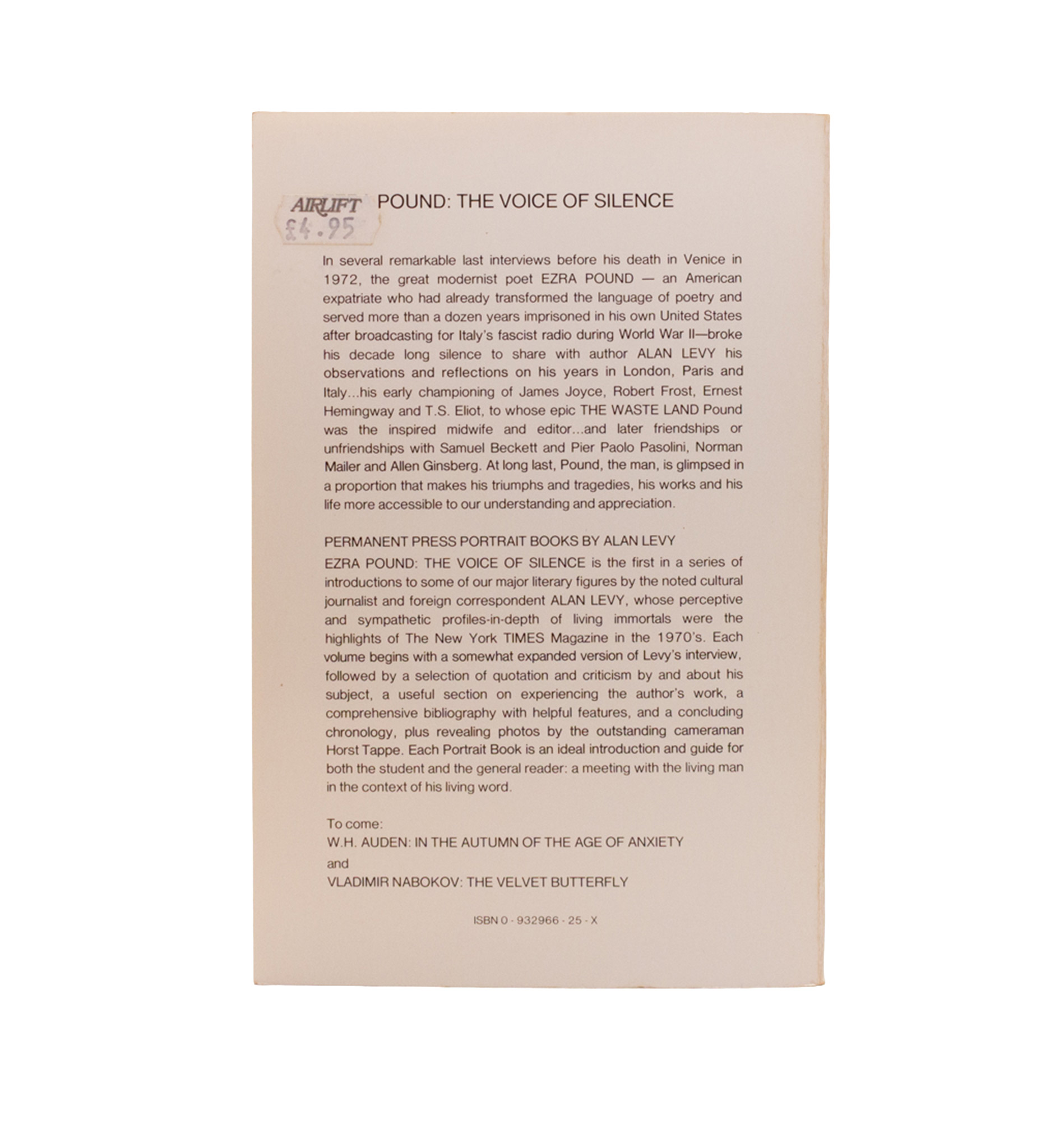
tap to cycle
Ezra Pound: The Voice of Silence
Alan Levy
Published New York: The Permanent Press, 1983
149pp.; 21.4 x 14.1 cm. Stiff white paper wraps printed in black.
Part of Scholarship, I
The first of three “Portrait Books” by Levy, this split into five parts, a biography, a mosaic of quotes, an essay on “experiencing” EP, a bibliography (primary and secondary) and a chronology. With a couple of disagreements from David Moody in the margin. A fine copy.
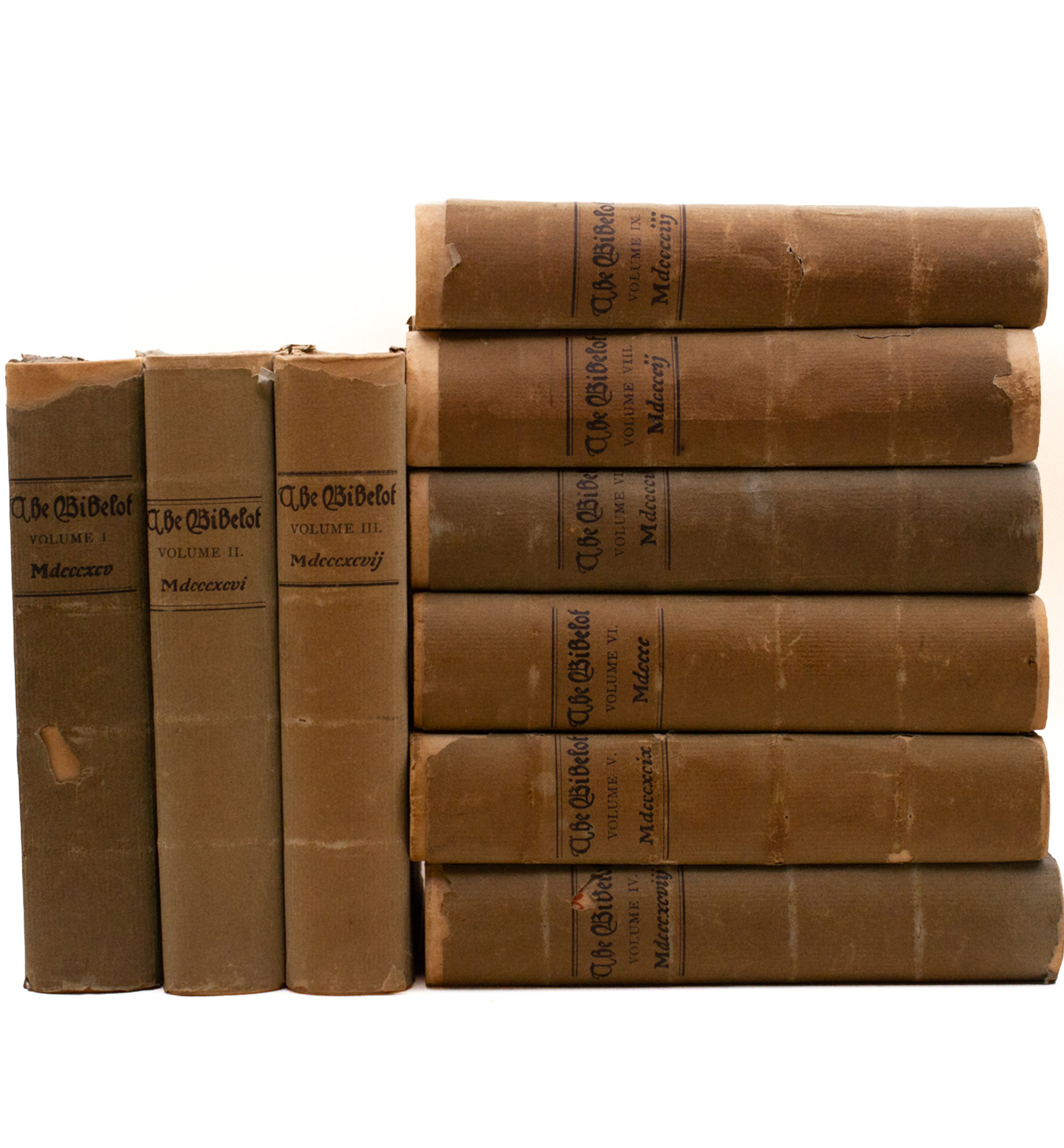

tap to cycle
The Bibelot
Thomas B. Mosher, editor
Published Portland, Maine: Thomas B. Mosher, 1895
20 volumes, two as monthly issues, two rebound, thirteen of the remaining sixteen with dust-jackets.
Part of Sources, I
A Reprint of Poetry and Prose for Book Lovers, chosen in part from scarce editions and sources not generally known
The Bibelot was a monthly publication of literature curated by Thomas B. Mosher, each issue given to a single work or author, and generally of the highest quality. Volume 1, for example, contains Lyrics from William Blake; Ballades from François Villon; Fragments from Sappho; Hand and Soul: D. G. Rossetti, and so on. Running from 1895 to 1914, for a total of 20 volumes (all present), Ezra Pound was surely a subscriber to the magazine, receiving monthly recommendations and reading from the editor. Before leaving America for Italy in 1908, Pound approached Mosher with some fourty poems, hoping for publication. Mosher never printed Pound, those fourty later becoming A Lume Spento, but Pound, later recording his early reading and influences, wrote, “One was guided by Mr. Mosher.”
These are all first editions, as opposed to the 1925 Testimonial Edition reprint one will find more commonly on the market. The most original are the two volumes of individual monthly issues, which are Vol. XIV (1908) and Vol. XVI (1910). These, as noted, were Sold by Subscription only, thus available only to subscribers. Inside these issues can be found adverts for “Bound Volumes… 4to, antique boards,” which are what these other volumes are, not subscriber material but back-ordered. These 18 Bound Volumes are each year’s monthlies bound together, with volume-specific paper wraps enclosing the issues. The issues in the Bound Volumes, unlike in the monthlies, do not have their wraps bound in, nor their adverts, order forms, etc., but are simply divided by their half-titles. Thirteen of these Bound Volumes have retained their dust-jackets, two are accompanied by their slipcases, though the slipcase to Vol. VII needs repair, and that of Vol. IX has lost its top and bottom parts. Volumes XVIII and XX have been rebound, the first in an attractive green patterned cloth, the latter in red leather, both with gilt to spine, each without the printed wrappers; Vol. XX with the bookplate of Eleanor R. Brankin to fpd; Vols. VII, VIII & IX also with the bookplate of John Aldred to fpd. The condition of all is generally very good, some volumes, including the monthlies, are stunning; some with foxing or mild water damage (the minority); dust-jackets generally with minor edge-wear and the occasional break to spine, some cut short; some openings occasionally uncut, including in monthly issues. Without the index issue, but with a photocopy as replacement. With a note by A. David Moody laid into Volume VIII at the Essay on Percy Bysshe Shelley by Robert Browning.
A true source of Pound’s.
tap to cycle
Rubáiyát of Omar Khayyám
Edward Fitzgerald, translator
Published Portland, Maine: Thomas B. Mosher, 1898
102pp.; 18.1 x 10.3 cm. Parchment binding with decorative front cover, printed in brown to front and spine; yapp fore-edge.
Part of Sources, I
Our contact with oriental poetry begins with Fitzgerald’s Rubáiyát.
— EP, How to Read
Fitzgerald’s translation from the Persian of Khayyám, a poem on dust, drink and death, made famous by D. G. Rossetti after his purchasing a copy from Bernard Quaritch. Its poetic qualities aside, the Rubáiyát has since performed as fodder in the book trade, with umpteen editions existing, variously bound and illustrated; it was a jewel clad copy designed by Sangorski & Sutcliffe that went down with the Titanic. This copy comes with a nice Poundian assocation, being published by Thomas B. Mosher (“One was guided by Mr. Mosher,” EP), who published The Bibelot and whom Pound tried as publisher for some fourty poems written in 1903 and 1904 before leaving for Venice where he would extend the collection into A Lume Spento.
Fifth edition on Van Gelder paper, one of 925 copies. With a neat, contemporary ink ownership inscription to title-page. Fine throughout, light rubbing to the front cover; spine darkened, with streaks resulting from leafing.
tap to cycle
Clara d’Ellébeuse, ou l’Histoire d’une ancienne jeune fille
Francis Jammes
Published Paris: Société du Mercure de France, 1899
242pp.; 15.1 x 9.8 cm. Original publisher’s paper wraps printed in yellow and black.
Part of Sources, I
With an air of Clara d’Ellébeuse,
— Canto XXVII
Clara d’Ellébeuse wakes up yawning against her naked arm, eternally young and already dead; at 16 she commits suicide, an imitation & repeat of a family fate, driven by love and curiosity. A little music, Pound’s choice, as compliment. Possibly the first edition, a very French publication, pocketable in yellow wraps, but in rather fragile condition with the binding only just holding and significant chipping from the paper on the spine. With a small handwritten note laid-in from A. David Moody noting other works in which Jammes mentions Clara.
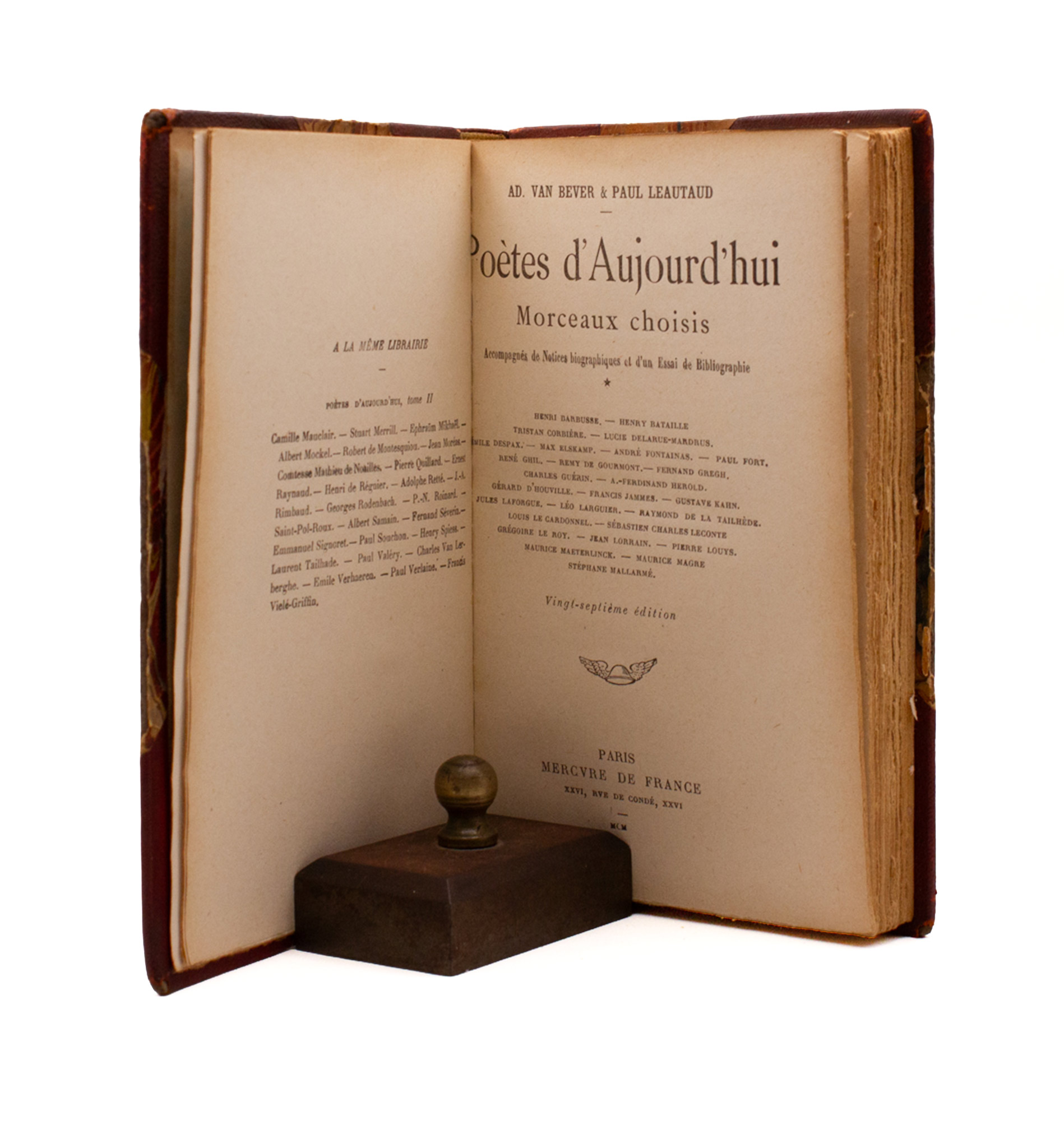
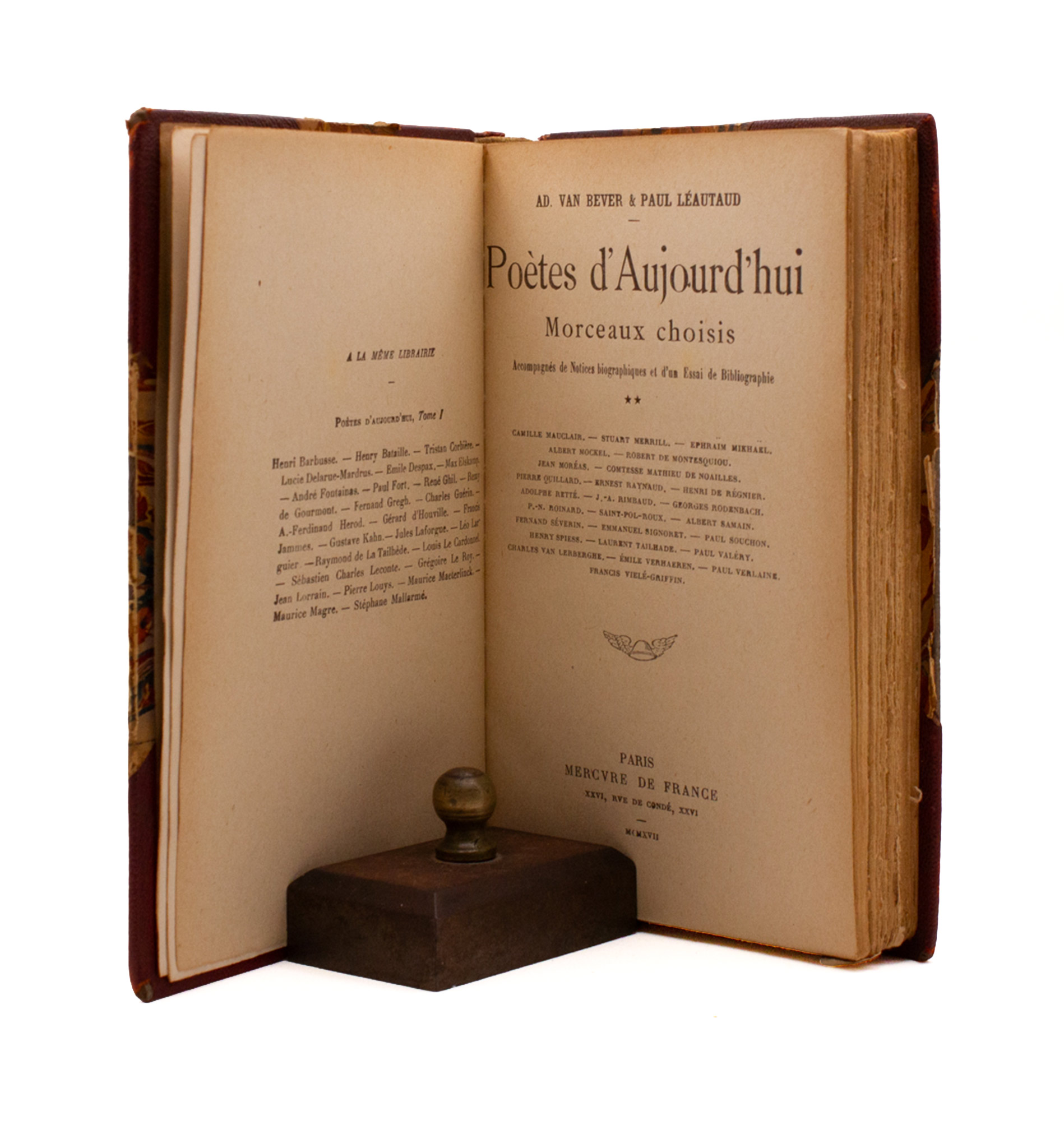
tap to cycle
Poètes d’Aujourd’hui; 2 vols.
Adolph Van Bever & Paul Leautaud, editors
Published Paris: Mercure de France, 1900
358pp., 392pp.; 18.5 x 12.3 cm each. Three quarter red leather covered boards, decorated with marbled paper and gilt. Ornate gilt to banded spine. T.e.g., others roughly trimmed.
Part of Sources, I
A collection of French poets, including Remy de Gourmont, Arthur Rimbaud, Jules Laforgue, and so on. Published originally in paper wraps, this set rebound into three quater leather somewhat worn. With a pencil score toward the end of the inclusion from Francis Jammes in Volume 1, wherein are found mention Clara d’Ellébeuse.
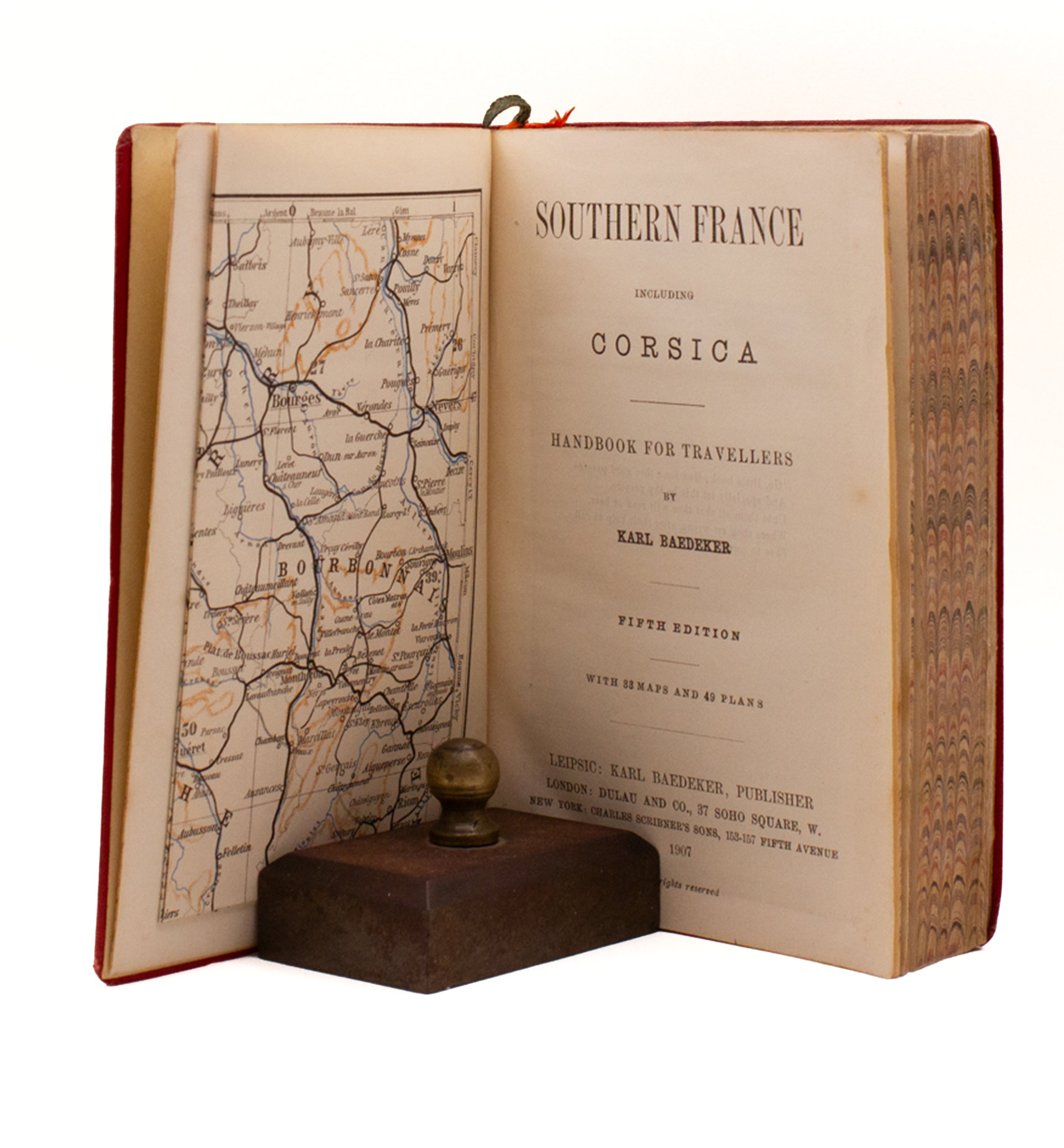
tap to cycle
Baedeker’s Southern France
Karl Baedeker
Published Leipsic: Karl Baedeker, 1907
578pp.; 16.1 x 11.3 cm. Red cloth gilt and blind.
Part of Sources, I
I have said:
‘Here such a one walked.
‘Here Coeur-de-Lion was slain.
‘Here was good singing.
‘Here one man hastened his step.
‘Here one lay panting.’
— Provincia Deserta
One of the two books, alongside Justin Smith’s The Troubadours at Home, that directed Pound’s 1912 walking tour of Southern France; the Baedeker particularly used to plan his routes. Fifth edition, with 33 maps and 49 plans; some light wear to spine.
tap to cycle
Apollo, An Illustrated Manual of the History of Art Throughout the Ages
Salomon Reinach
Florence Simmonds, translator
Published London: William Heinemann, 1907
351pp.; 18.5 x 12.7 cm. Dark greeen cloth boards lettered in gold to front and spine, with decorative medallion to front.
Part of Sources, I
First English translation of Salomon Reinach’s popular History of Art, with a postcard to A. David Moody laid-in, dated Crete 14.9.73, “to greet you with a sense of things Greek & peaceful,” from Joe Oldroyd, with the same illustration of a “Young Cretan Girl” found as a fresco in the Palace of Cnossus. Cloth to spine broken at the bottom, but otherwise a good copy.
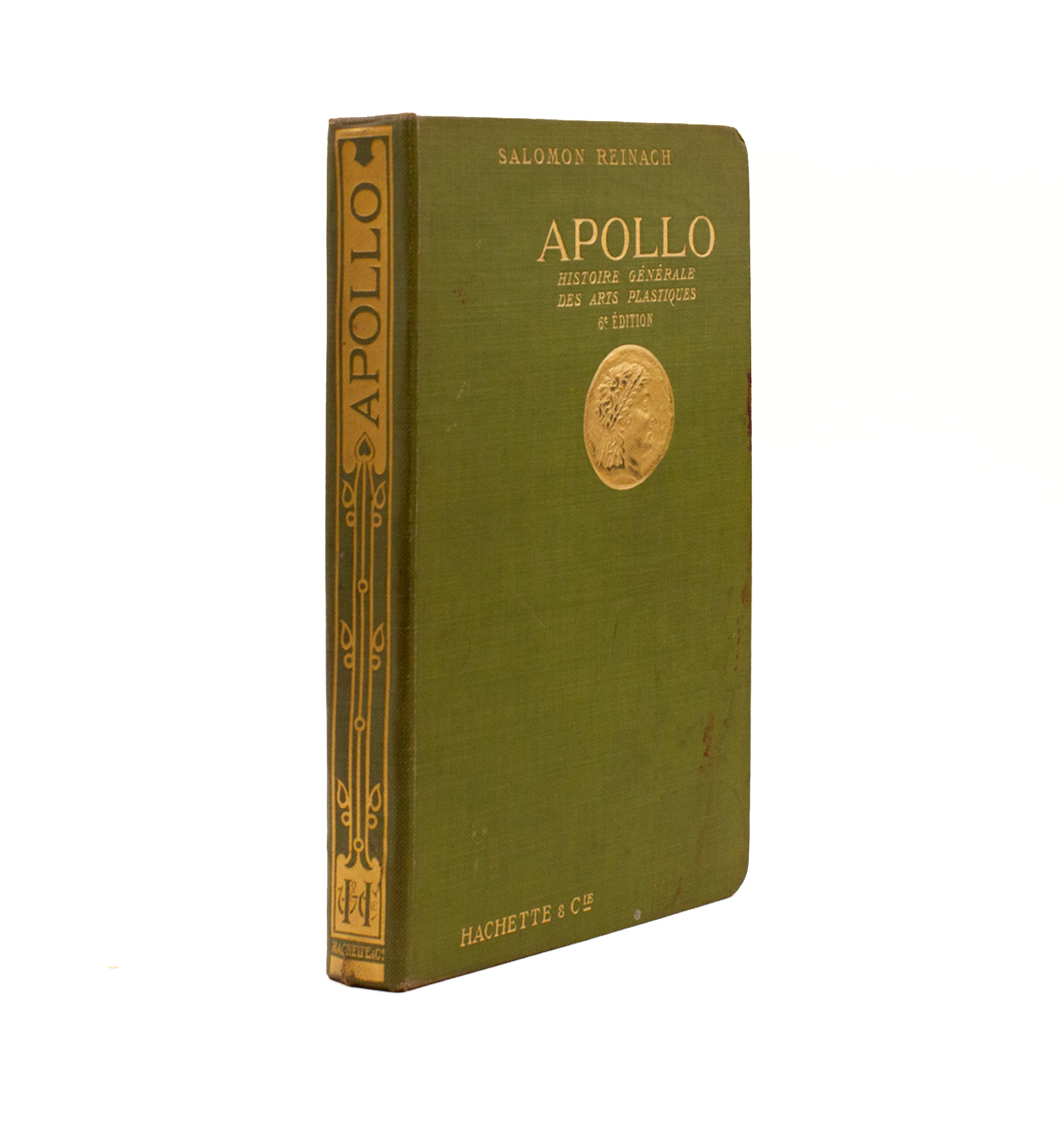
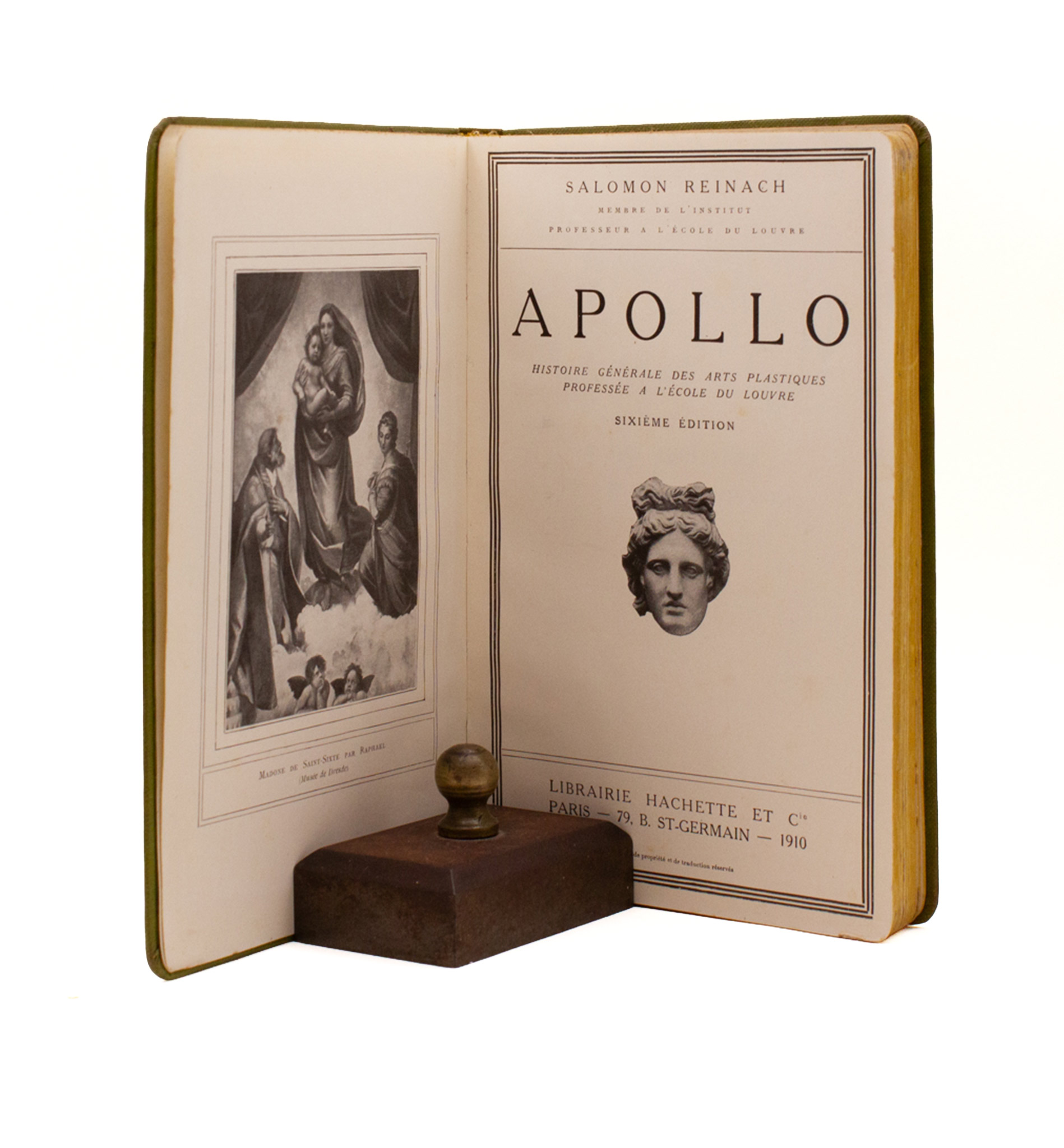
tap to cycle
Apollo, Histoire Générale des Arts Plastiques
Salomon Reinach
Published Paris: Librairie Hachette et Cie, 1910
334pp.; 18.1 x 12 cm. Green cloth boards lettered & decorated in gold to front and spine.
Part of Sources, I
Sixth edition, in the original French. A very good copy, some marks to the boards. The naming of this book, Apollo, is a reference to an earlier text of Reinach’s, Minerva, but the content explores English, French, Italian and German art too.
tap to cycle
Émaux et Camées
Theophile Gautier
Published Paris: Bibliothèque Charpentier, 1911
226pp.; 18.7 x 12 cm. Paper wraps printed in black.
Part of Sources, I
Turned from the “eau-forte
Par Jaquemart”
To the strait head
Of Messalina:
“His true Penelope
Was Flaubert,”
And his tool
The engraver’s.
— 1920 (Mauberley)
A later edition of the Édition Définitive (first in 1872) which carries this eau-forte by J. Jacquemart. With a note in pencil by A.D.M. to the title page to this effect. Lacking the front cover; some loss to the paper covering the spine, but sound. In a paper envelope with a note in ink referencing “Mauberley 1920.”
tap to cycle
Le Livre de Jade
Judith Gautier
Published Paris: Éditions Jules Tallandier, 1928
263pp.; 19.2 x 14.5 cm. Heavy white paper wraps printed in black and stamped in red to front and spine.
Part of Sources, I
A collection of 71 poems by 23 poets from the Tang and Song dynasties, first published in 1867 by Judith Gautier, daughter of Théophile, painted by Sargeant, and inspiration for Wagner’s Tristan und Isolde. Hugh Kenner suggests Gautier might have been the first European to suspect that “there might be in Chinese modes of poetry never so much intuited by the West.” Contains translations before Pound of Li Bai’s “The Jade Staircase” and “Taking Leave of a Friend.” Split to the spine, resulting in the two parts of the book shifting a little, but sound and otherwise a nice copy with a little foxing.
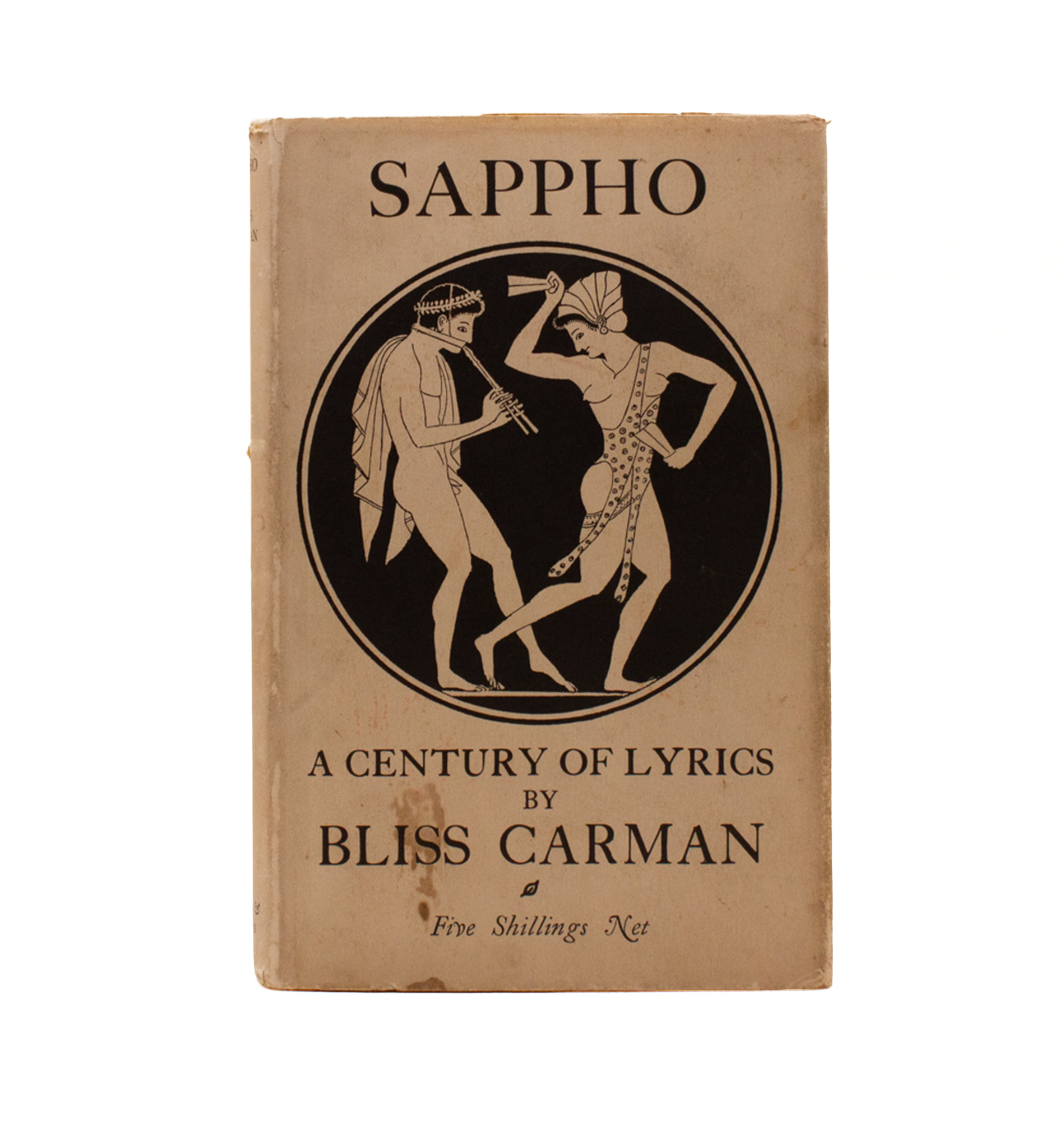
tap to cycle
Sappho, One Hundred Lyrics
Bliss Carman
C. G. D. Roberts, introduction
Published London: Chatto & Windus, 1930
129pp.; 17.5 x 11.7 cm. White paper covered boards stamped in gold to front and spine. White dust-jacket printed in black.
Part of Sources, I
“The brief, crisp lyrics of the Sappho volume almost certainly contributed to the aesthetic and practice of Imagism.”
— D. M. R. Bentley, Minor Poets of a Superior Order
First published in 1904, Carman’s translation, which involved imagining greater poems from fragments, was an influential volume on modernist poets. The “brief, crisp lyrics,” without ornament, as D. M. R. Bentley, Professor in Canadian Literature at the University of Western Ontario, believes “almost certainly contributed to the aesthetic and practice of Imagism.” New impression, a fine copy in a lightly worn dust-jacket with an unfortunate stain to front cover. With an unascribed Christmas letter laid-in.
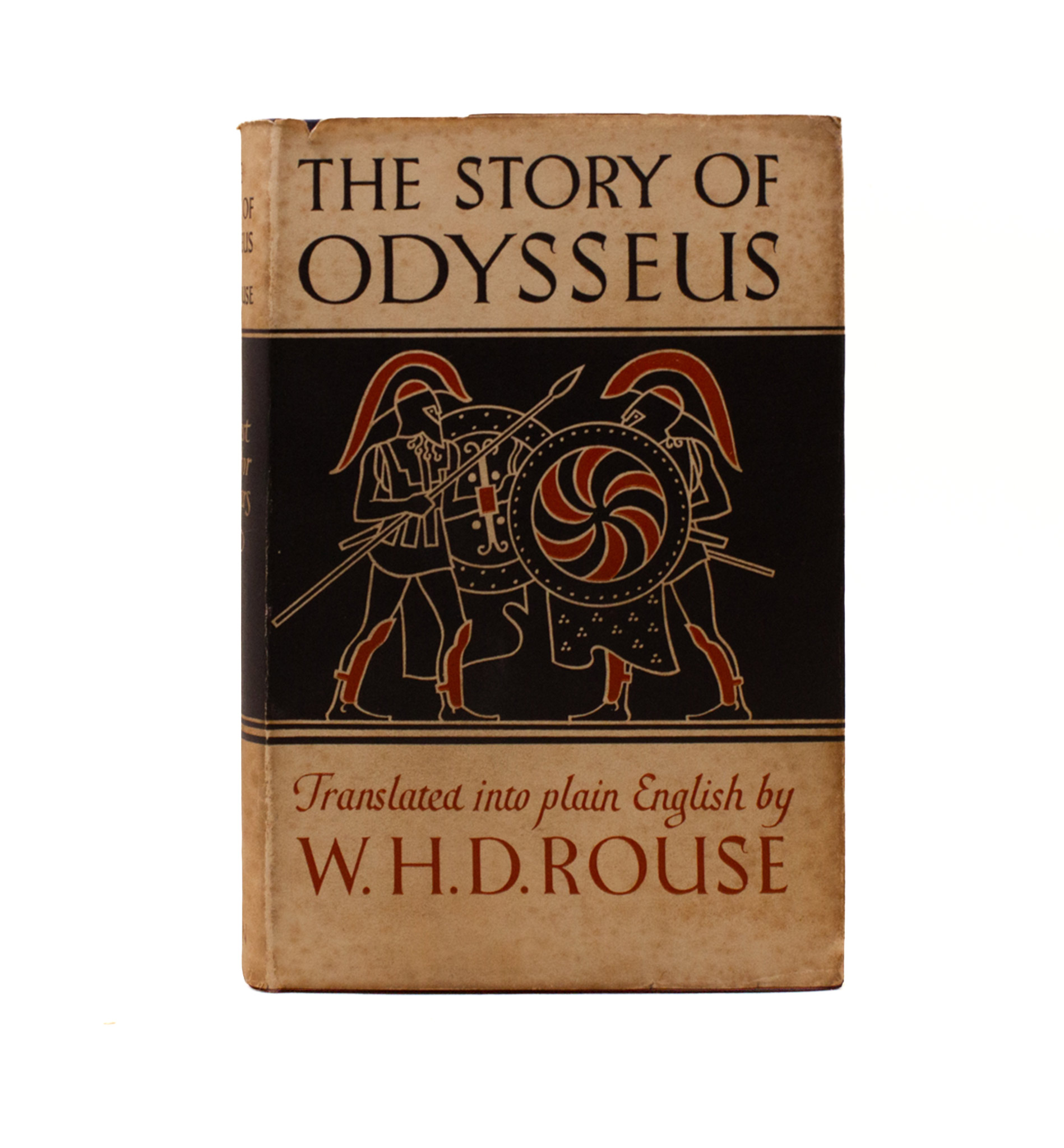
tap to cycle
The Story of Odysseus
W. H. D. Rouse, translator
Published London: Thomas Nelson and Sons, 1937
463pp.; 18.9 x 13 cm. Blue cloth boards stamped in blind and gold to front, and in gold to spine. White dust-jacket printed in brown, red and black.
Part of Sources, I
“Mr. Ezra Pound is the onelie begetter of this book. He suggested it, and he read the first part with Odyssean patience; his trenchant comments, well deserved, gave me the courage of my convictions, and I hope he will now find it a readable story, that is, a story which can be read aloud and heard without boredom.”
— W. H. D. Rouse, p. v
Rouse’s modern prose translation of Homer’s Odyssey. First edition. A fine copy in a faded and spotted dust-jacket with a little edge-wear. Contemporary ink gift inscription to ffep. A number of contemporary newspaper clippings laid-in to the front and back of this book, each relating to either this translation, Rouse’s Story of Achilles, or other Homeric publications.


tap to cycle
Séraphita (and Louis Lambert & The Exiles)
Honoré de Balzac
Clara Bell, translator
David Blow, introduction
Published Cambs: Dedalus, 1995
361pp.; 19.9 x 12.8 cm. Stiff white printed paper wraps.
Part of Sources, I
“Most of all they [EP & HD] read Balzac’s Swedenborgian romance Séraphita, about bringing the human soul fully alive by teaching it to see through earthly things to the divine goodness and beauty behind and beyond them. There may have been as much of Swedenborg as of Rossetti [La Vita Nuova and “The Blessèd Damozel”] behind ‘Hilda’s Book’. For Hilda, Ezra was at that time the very image of ‘adolescence in its Ariel, or Séraphita stage’.”
— A. David Moody, Ezra Pound: Poet, Volume 1
English translation, mass market paperback. With a laid-in note from A. David Moody referencing his own biography, and H.D.’s End to Torment.


tap to cycle
A. R. Orage, Selected Essays and Critical Writings
Herbert Read and Denis Saurat, editors
Published London: Stanley Nott, 1935
216pp.; 23.6 x 15.5 cm. Red cloth boards stamped in gold on spine.
Part of Contemporaries, II
A selection of essays by Orage, editor of The New Age and later the New English Weekly, starting with Orage’s many-parted Art of Reading. Pencil ownership inscription from previous owner to ffep, and occasional marginal notes throughout. Light foxing, light rubbing to the boards, but all very good.


tap to cycle
A. R. Orage, A Memoir
Philip Mairet
G. K. Chesterton, introduction
Published London: J. M. Dent and Sons, 1936
132pp.; 22 x 14.8 cm. Blue cloth boards stamped in gold to front and spine.
Part of Contemporaries, II
“He was, in the true sense, a man of action; and his works follow him, even if nobody thinks of them as literary works—which they were.”
— G. K. Chesterton, Introduction.
A memoir of this well respected and slightly shadowed figure who often published his diagnoses anonymously, and cultivated action rather than style, by Philip Mairet, a colleague of Orage’s during his last years as editor of the New English Weekly. First edition; a little dark stain top and tail of the spine, and at the bottom of the front-cover, but overall a nice, clean copy.

tap to cycle
Orage and the New Age Circle
Paul Selver
Published Ruskin House, Museum Street London: George Allen & Unwin Ltd, 1959
100pp.; 19.2 x 13.1 cm. Red cloth boards stamped in white on spine. White dust-jacket printed in green and black.
Part of Contemporaries, II
Reminiscences and Reflections by Selver, a translator of Slavic poetry who published in the New Age for many years. With a “full-length portrayal of Ezra Pound,” who approved of Selver’s translations of the Czech poet Petr Bezruč, the first contribution of Selver’s to the New Age, and the cause of his introduction to Orage. Selver found himself among EP’s les jeunes, an evening gathering of Imagistes (H.D., Aldington, Flint), but, having missed the Imagiste memo, his own recital failed. As Selver says, “[I] came to pray and remained to scoff.”
These twain are Shakespeare’s equal. O blessed are the meek!
For Pound has little Latin, and Aldington less Greek.
First edition, a fine copy with an old bookseller’s label of Henry Sotheran’s to fpd. Jacket lightly worn.
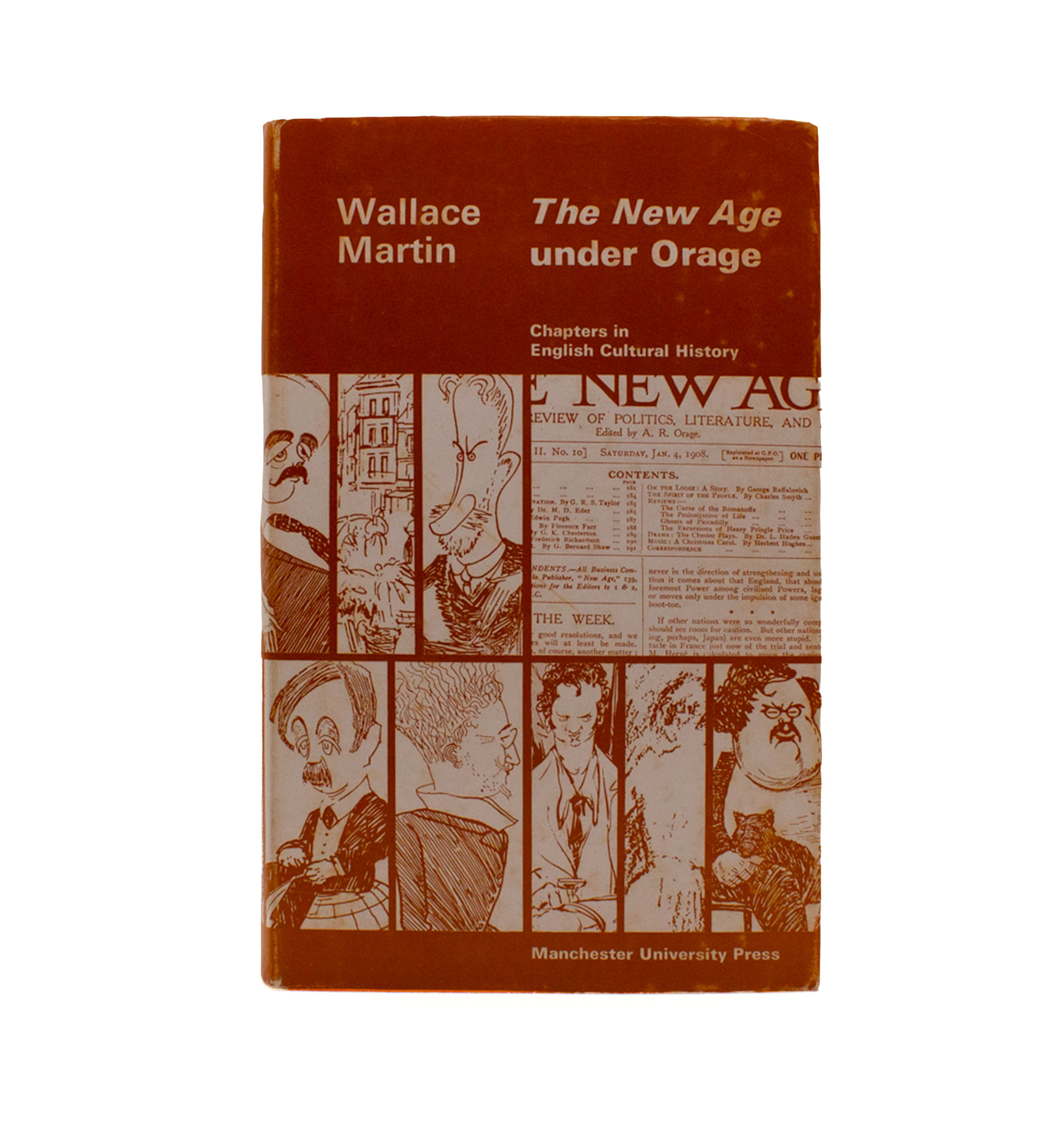
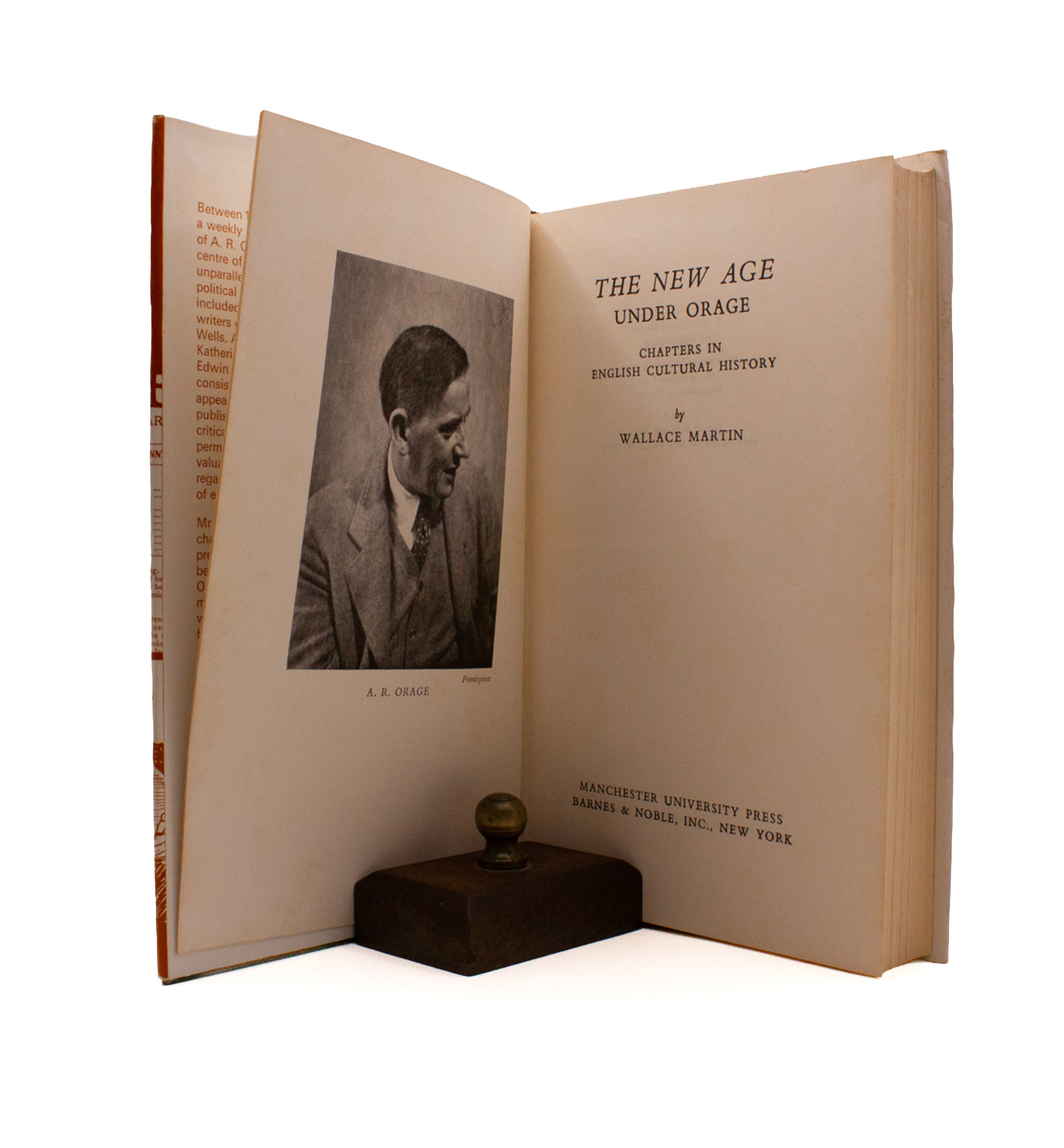
tap to cycle
The New Age under Orage
Wallace Martin
Published Manchester University Press, 1967
303pp.; 21.1 x 13.6 cm. Green cloth boards stamped in gold on spine. White dust-jacket printed in orange.
Part of Contemporaries, II
“He did more to feed me than anyone else in England.”
—EP
Orage developed the periodical as a mediator between specialised subjects & public understanding, encouraging the relationship between literary tradition and literary experimentation, publishing Shaw, Wells, Beloc & Chesterton, as well as Pound, Flint, Hulme, Mansfield, W. Lewis, and Richard Aldington. Described as “the left-wing paper” of the day by Margaret Cole, Orage, alongside his contributors, diverted from the ‘collectivist premises’ of Socialism to develop Guild Socialism, publishing C. H. Douglas and later Pound on Douglas.
First edition, with numerous illustrations including, among other charicatures, a drawing of EP by Tom Titt. Dust-jacket lightly rubbed, else very nice.


tap to cycle
From the Life
Phyllis Bottome
Published London: Faber and Faber, 1944
100pp.; 20.8 x 14 cm. Red cloth boards stamped in gold down spine.
Part of Contemporaries, II
A personal portrait of EP by Bottome who first met him in pre-war London, and then again in Rapallo in 1935. An English novelist of Pound’s age, Bottome writes of Pound’s nervous energy as a youth and his critical facility which outstripped everyone elses, setting down three criticisms Pound gave her at the time which she says only grew more true. An active anti-fascist, when Bottome visited Pound in Rapallo she found him relaxed and even more appealing, with political solutions that she largely attributes to his upbringing as a single child, his isolation in Italy, and his being ‘fried’ by Mussolini.
Together with similar essays on Alfred Adler, Max Beerbohm, Ivor Novello, Sara Delano Roosevelt, and Margaret MacDonald Bottome. First edition, lacking the jacket, with the ink ownership inscription of Rosalind Hesselberg (?) dated June 1945 to ffep. From the library of A. David Moody, with a small referential note of his laid-in to the essay on Pound.
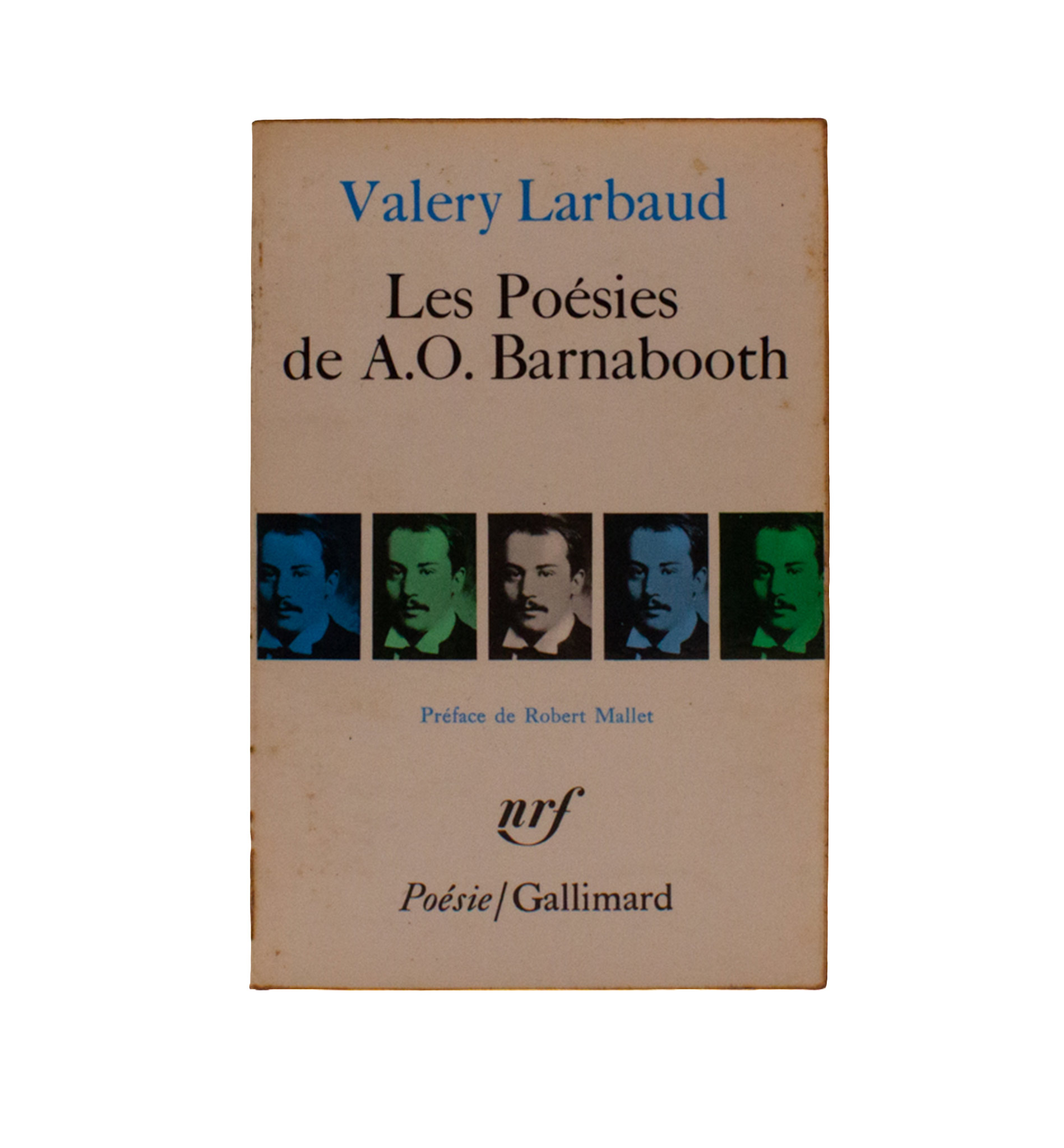

tap to cycle
Les Poésies de A. O. Barnabooth
Valery Larbaud
Robert Mallet, preface
Published Éditions Gallimard, 1966
123pp.; 16.5 x 11.1 cm. Stiff white paper wraps printed in black, green and blue.
Part of Contemporaries, II
Poems by A. O. Barnabooth, one of Valery Larbaud’s (1881-1957) pseudonyms. Pocket edition, with a new preface by Robert Mallet. Clean throughout with grubbied covers.



tap to cycle
Harold Monro & the Poetry Bookshop
Joy Grant
Published London: Routledge and Kegan Paul, 1967
286pp.; 22.8 x 14.7 cm. Brown leather covered boards stamped in gold to spine. White dust-jacket printed in red.
Part of Contemporaries, II
As TSE describes him, Harold Monro was “One of the few poets [that cared] more for poetry in general than for their own work.” Monro played a vital part in London (“DEAH OLD London, [the] place for poesy” — EP to WCW, 1909) at the time, founding & running the Poetry Bookshop which published Pound’s Des Imagistes anthology, and volumes of Imagist poetry by Aldington & Flint, passing, however, on Eliot’s Prufrock. First edition, a fine & tight copy in a v.g. d.j. with a little foxing to the flaps.
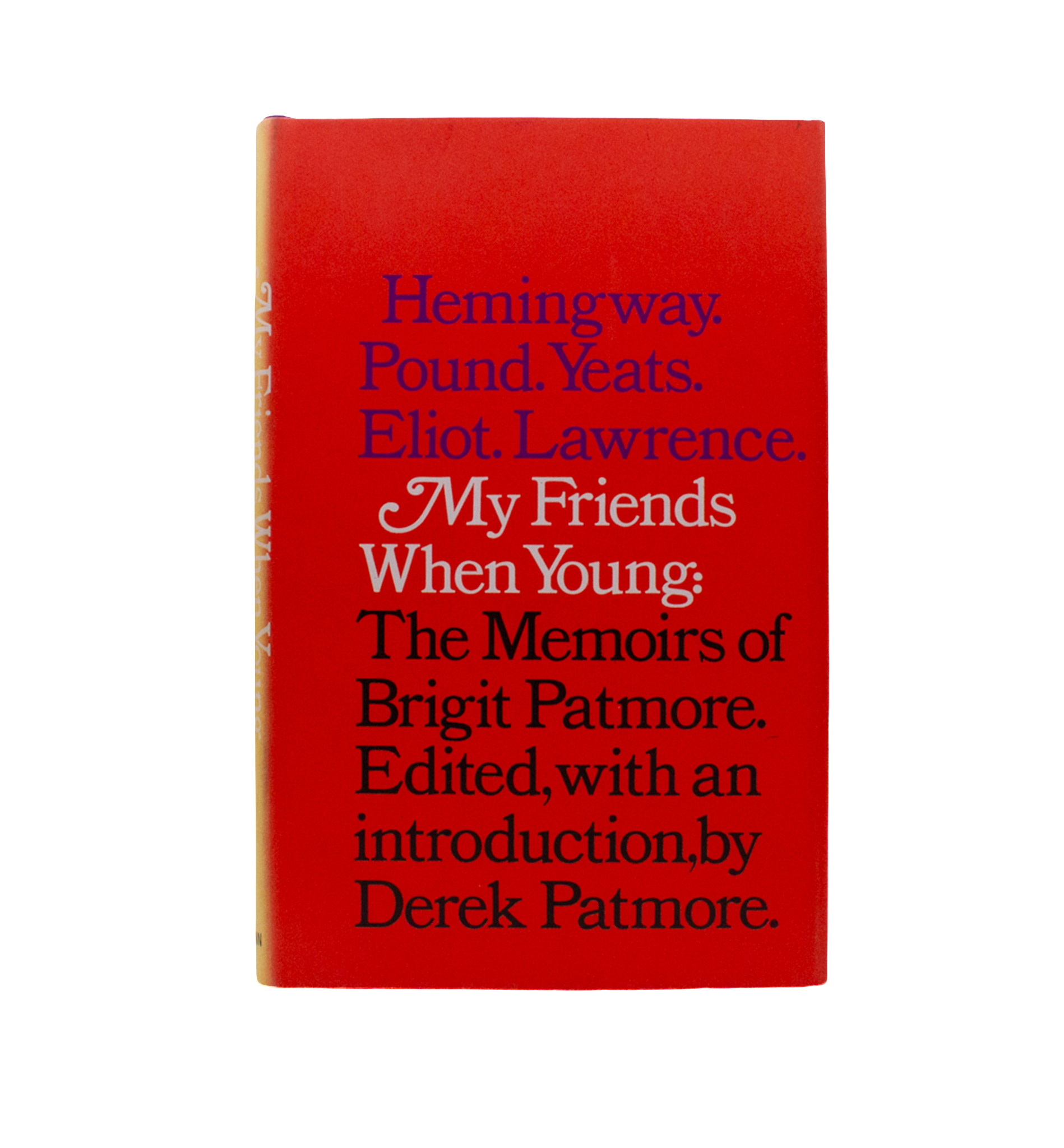
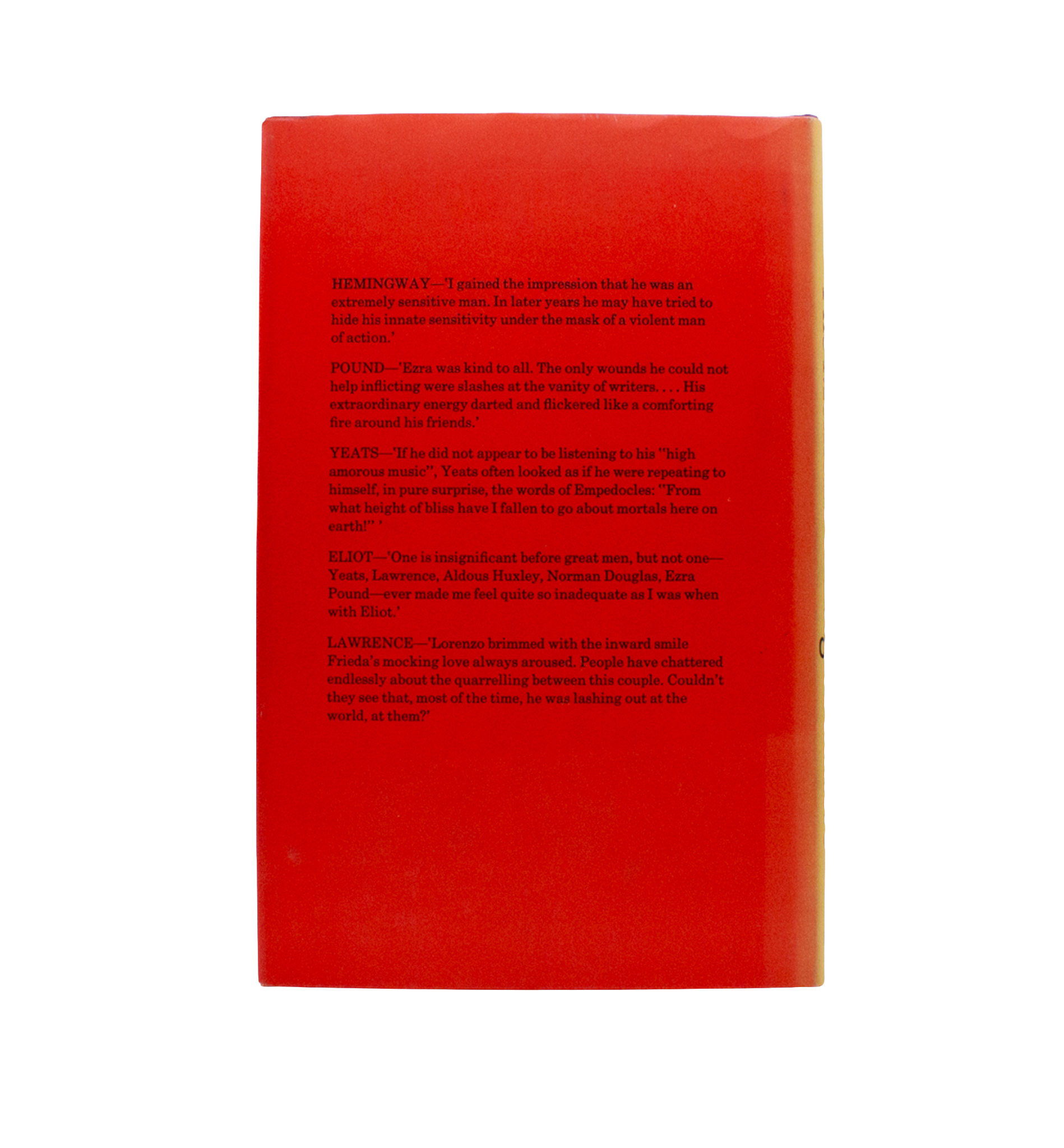
tap to cycle
My Friends When Young: The Memoirs of Brigit Patmore
Brigit Patmore
Derek Patmore, editor
Published London: Heinemann, 1968
159pp.; 22.3 x 14.6 cm. Purple cloth boards stamped in gold down spine. White dust-jacket printed in orange, purple and black.
Part of Contemporaries, II
A composition of Brigit Patmore (1888-1965)’s papers, which she was encouraged to write by bookseller Betram Rota, by her son Derek Patmore (1908-1972), full even in his introduction of all the names of the age whom Derek had known as a child. Brigit Patmore, Richard Aldington, EP, and H.D. once “made a four [who] would go around together most afternoons.” After Aldington and H.D.’s divorce, Patmore lived and travelled together with Aldington. First edition, a fine copy, the spine of the jacket sunned, with the very occasional pencil note by David Moody.
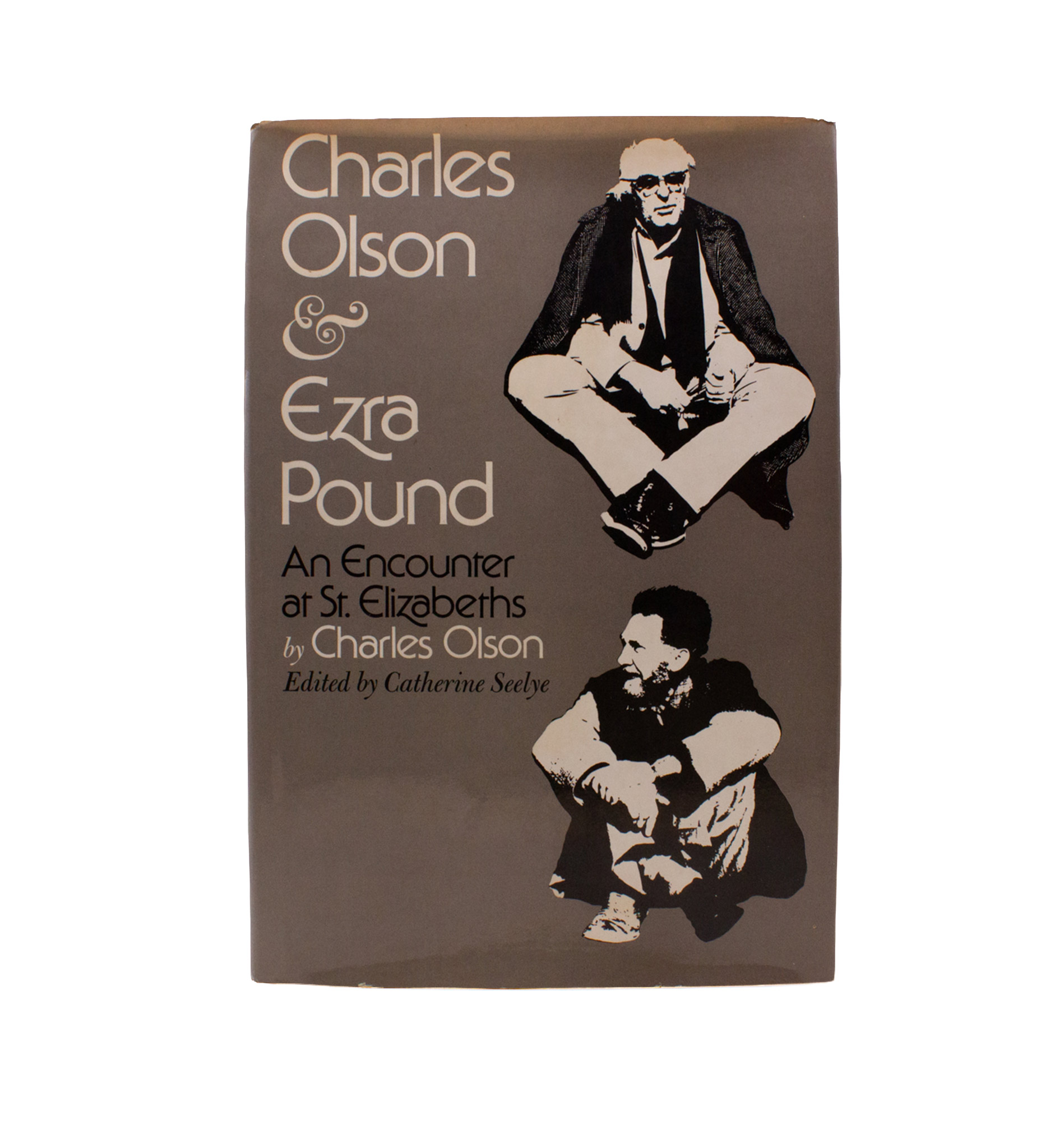
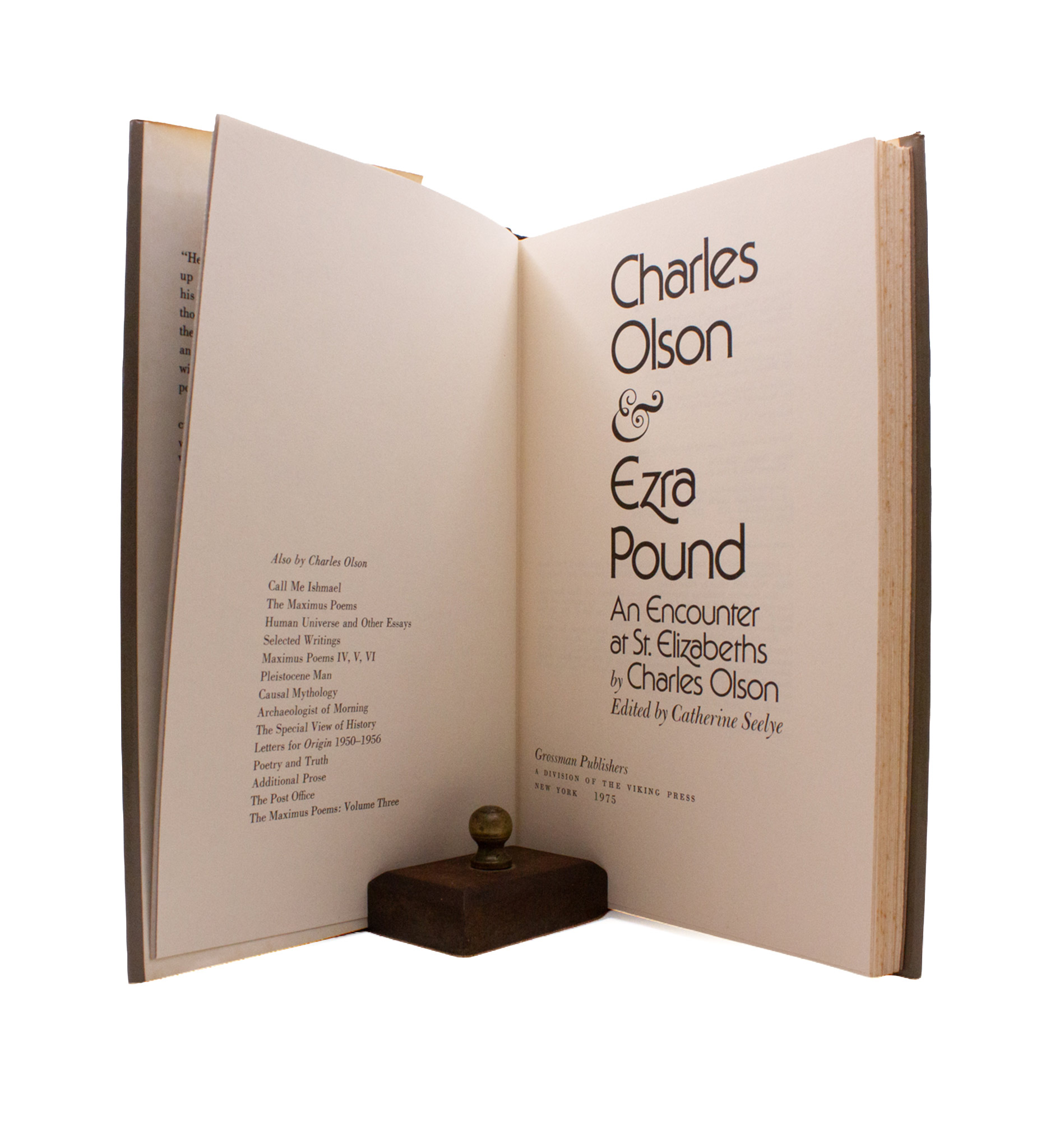
tap to cycle
Charles Olson & Ezra Pound: An Encounter at St. Elizabeths
Charles Olson
Catherine Seelye, editor
Published New York: Grossman Publishers, 1975
147pp.; 24.3 x 16.7 cm. Black cloth stamped in silver and blue down spine. White dust-jacket printed in grey and black.
Part of Contemporaries, II
A collection of Olson’s writings on EP, during Olson’s visits to Pound at St. Elizabeths from 1946 to 1948 when Olson was at the start of his career as a writer. Olson’s writing is typical of a student fighting against the rhetoric of their teacher, and a great document of what it is to evaluate Pound personally. First edition. A very good copy with the edges of the jacket folding outward slightly.


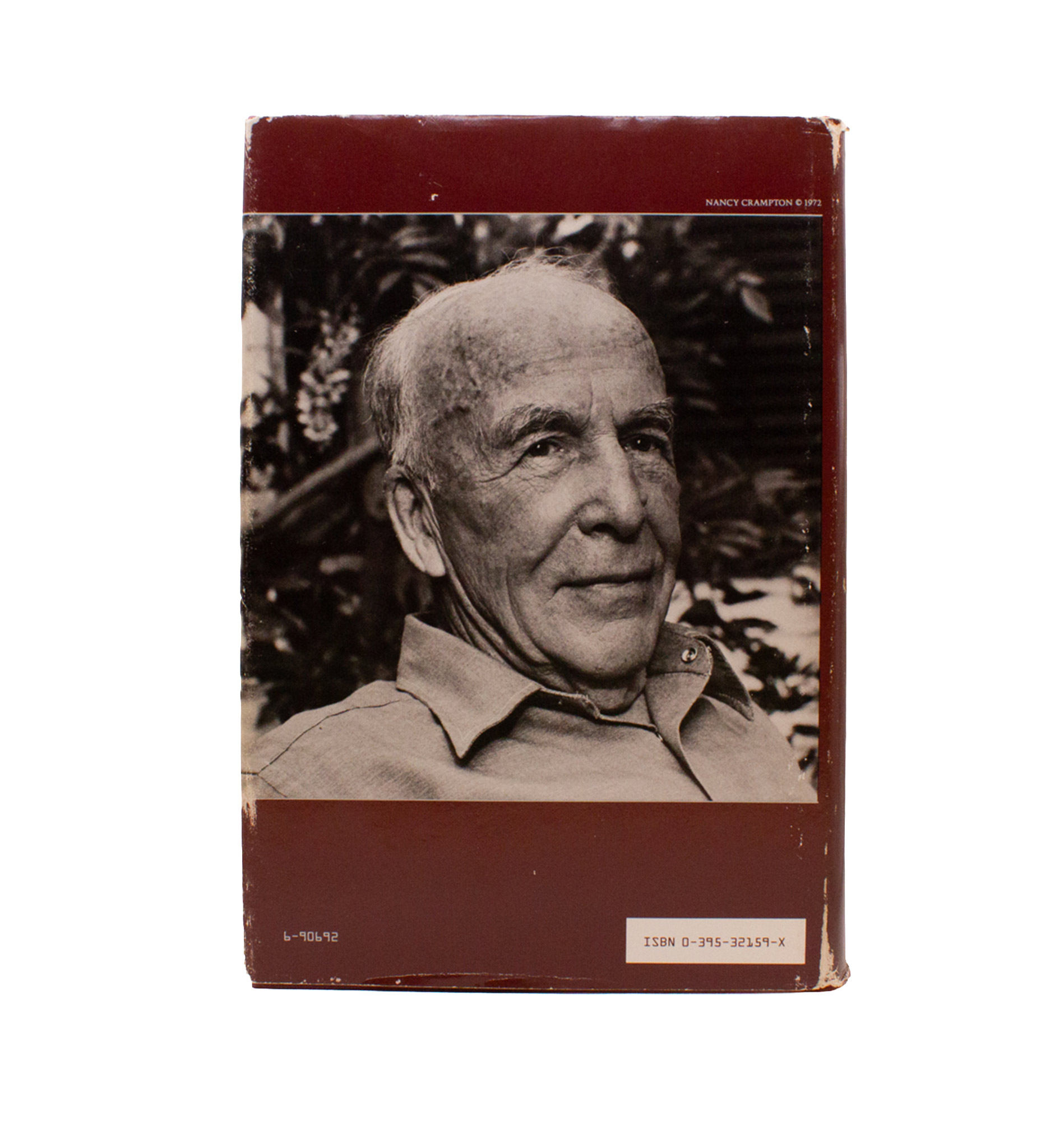
tap to cycle
Letters of Archibald MacLeish, 1907 to 1982
R. H. Winnick, editor
Published Boston: Houghton Mifflin Company, 1983
471pp.; 23.4 x 16.1 cm. Maroon cloth boards stamped in silver to front and on spine. White dust-jacket printed in maroon, black, blue and yellow.
Part of Contemporaries, II
A young writer in Paris of the 1920’s, a journalist teaching at Harvard, Librarian of Congress under Roosevelt, a liberal accused of fascism by communists & of communism by Senator Joseph McCarthy, but above all a poet (who won the Pulitzer price thrice), these 400 letters, the editor’s best, make up an autobiography of this important and widely achieving man. Included are efforts by MacLeish to get EP released from St. Elizabeths, though Pound disdained MacLeish’s poetry, and MacLeish Pound’s politics. First edition, mostly fine in a slightly worn dust-jacket with one tear at the front of the spine.

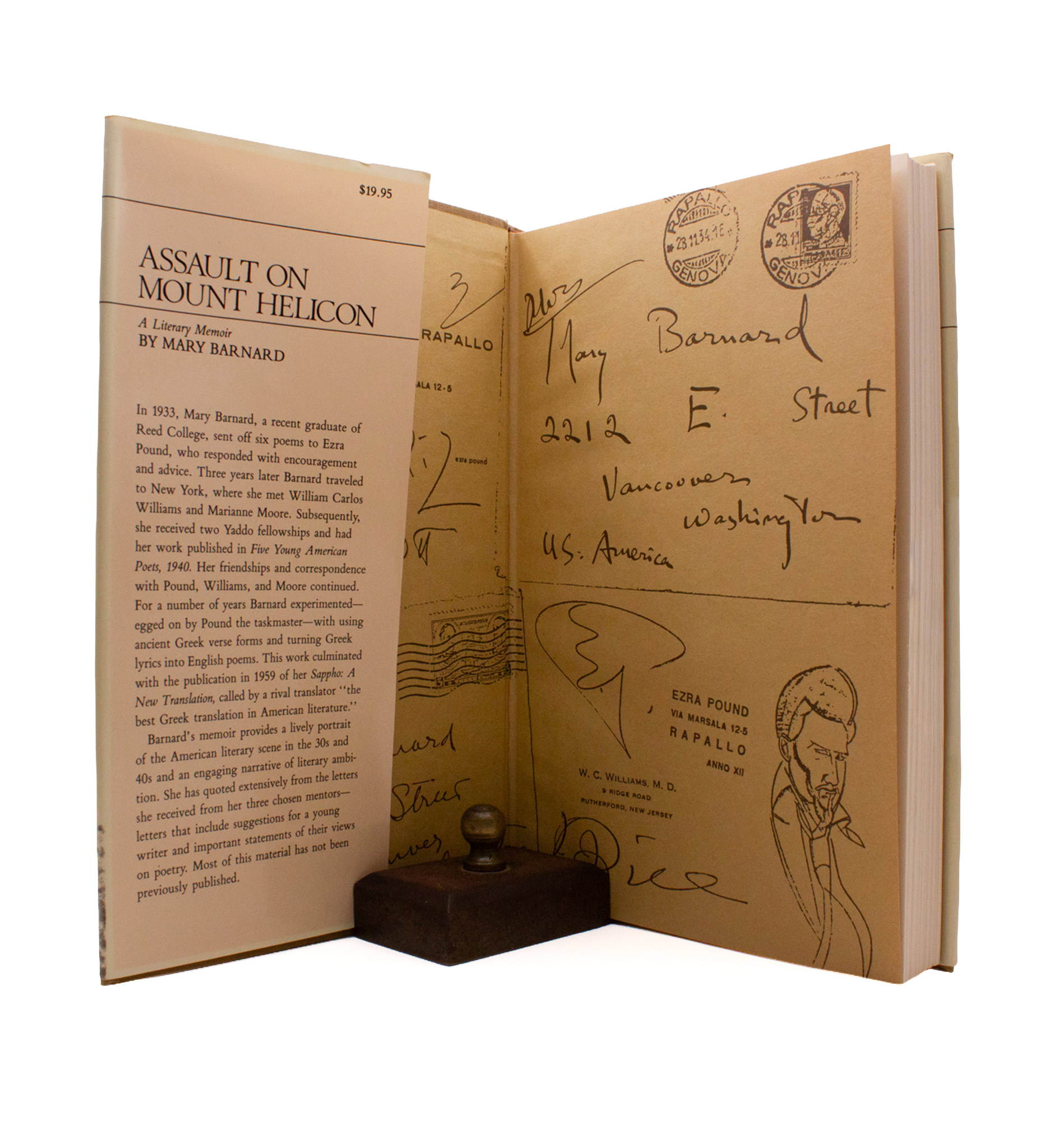
tap to cycle
Assault on Mount Helicon, A Literary Memoir
Mary Barnard
Published University of California Press, 1984
331pp.; 23.4 x 16 cm. Beige cloth boards lettered in black down spine. White dust-jacket printed in beige and black.
Part of Contemporaries, II
Memoirs of Mary Barnard who, after graduating from Reed College, sent off six poems to EP in 1933 who kept up correspondence with Barnard for years, encouraging her to the use of ancient Greek verse forms and translation in English lyric, culminating in her 1959 publication Sappho: A New Translation which has been hailed “the best Green translation in American literature.” With further letters from W.C.W. and Marianne Moore. First edition, with a few marks in pencil by A. David Moody. A fine book; one tape repair to the jacket, sunned to spine.



tap to cycle
The Autobiography of John Gould Fletcher
John Gould Fletcher
Lucas Carpenter, editor
Ben Kimpel, introduction
Published Fayetteville: The University of Arkansas Press, 1988
415pp.; 23.6 x 16.1 cm. Pea green cloth boards lettered in black down spine. White dust-jacket printed in green and black.
Part of Contemporaries, II
JGF’s Autobiography, accounting for his days in London among Orage, Pound, Gaudier-Brzeska, the Imagistes who appealed in vain for his inclusion in Des Imagistes, his success with Amy Lowell, a detailed account of the imagist dinner at the Dieudonné, 1914, where EP presented the group with a bathtub, announcing imagists nageists, after Lowell’s “In a Garden,” and on. New edition, after the 1937 first, with the added introduction; a fine copy.
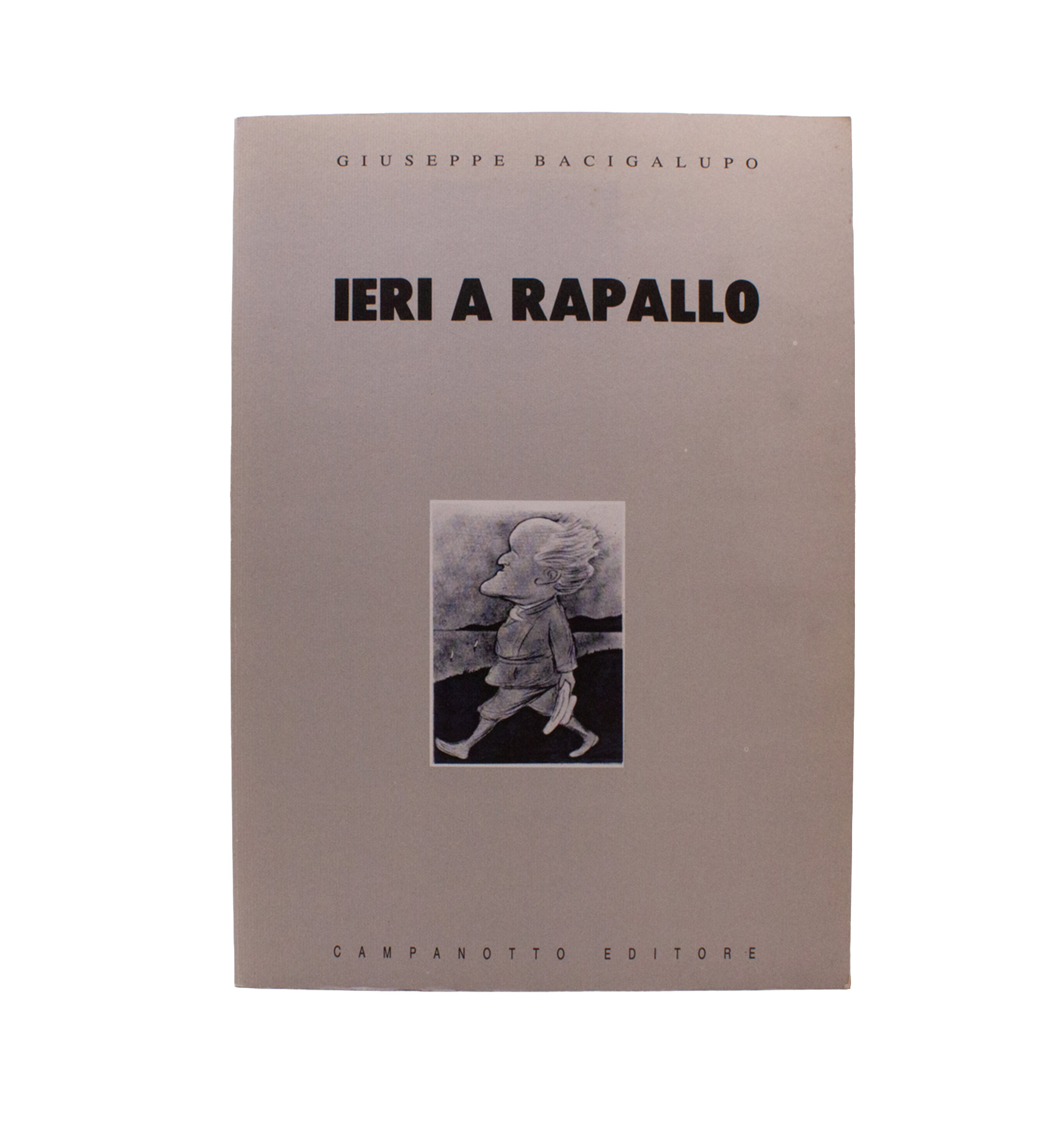
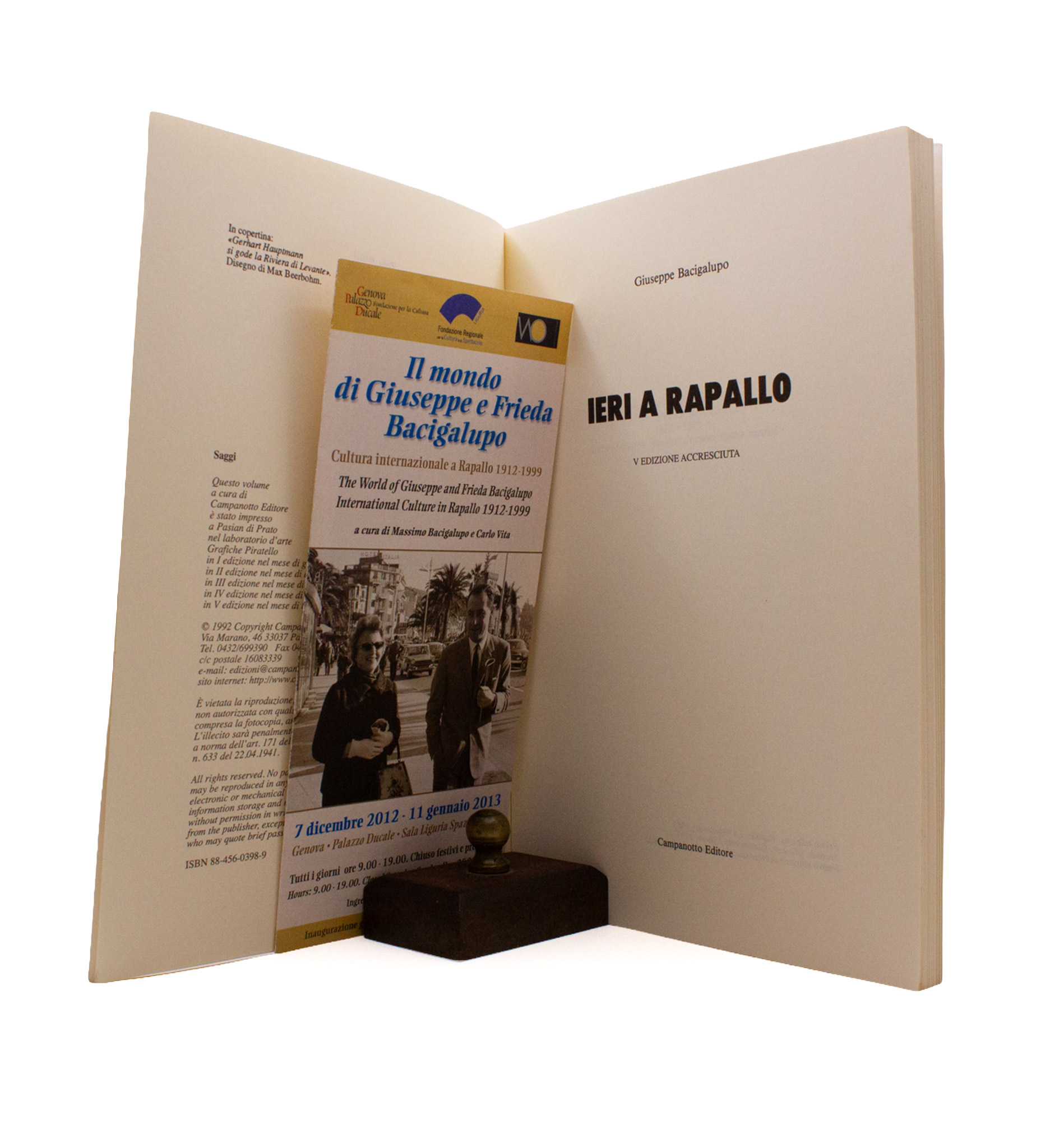

tap to cycle
Ieri a Rapallo
Giuseppe Bacigalupo
Published Campanotto Editore, 2002
190pp.; 24 x 17.1 cm. Heavy grey laid-paper wraps printed in black.
Part of Contemporaries, II
Bacigalupo, a tennis champion in his youth, an accomplished doctor, and a local Rapallese describes the many (mostly) foreigners who gravitated to the coastal town, including EP as tennis champion in his own right, and James Laughlin flirting by the sea. The chapter on EP annotated in the margin by David Moody. With an exhibition leaflet, Il mondo di Giuseppe e Frieda Bacigalupo, Cultura internazionale a Rapallo 1912-1999 a cura di Massimo Bacigalupo e Carlo Vita, 7 dicembre 2012 - 11 gennaio 2013 laid in.



tap to cycle
Ezra Pound, Éducateur et Père: Discrétions
Mary de Rachewiltz
Claire Vajou, translator
Published Pierre Guillaume de Roux, 2005
423pp.; 22.5 x 14 cm. Stiff white paper wraps printed in blue-greys and pink.
Part of Contemporaries, II
First French translation of Mary de Rachewiltz’s account of her childhood and life with her father. A fine copy.

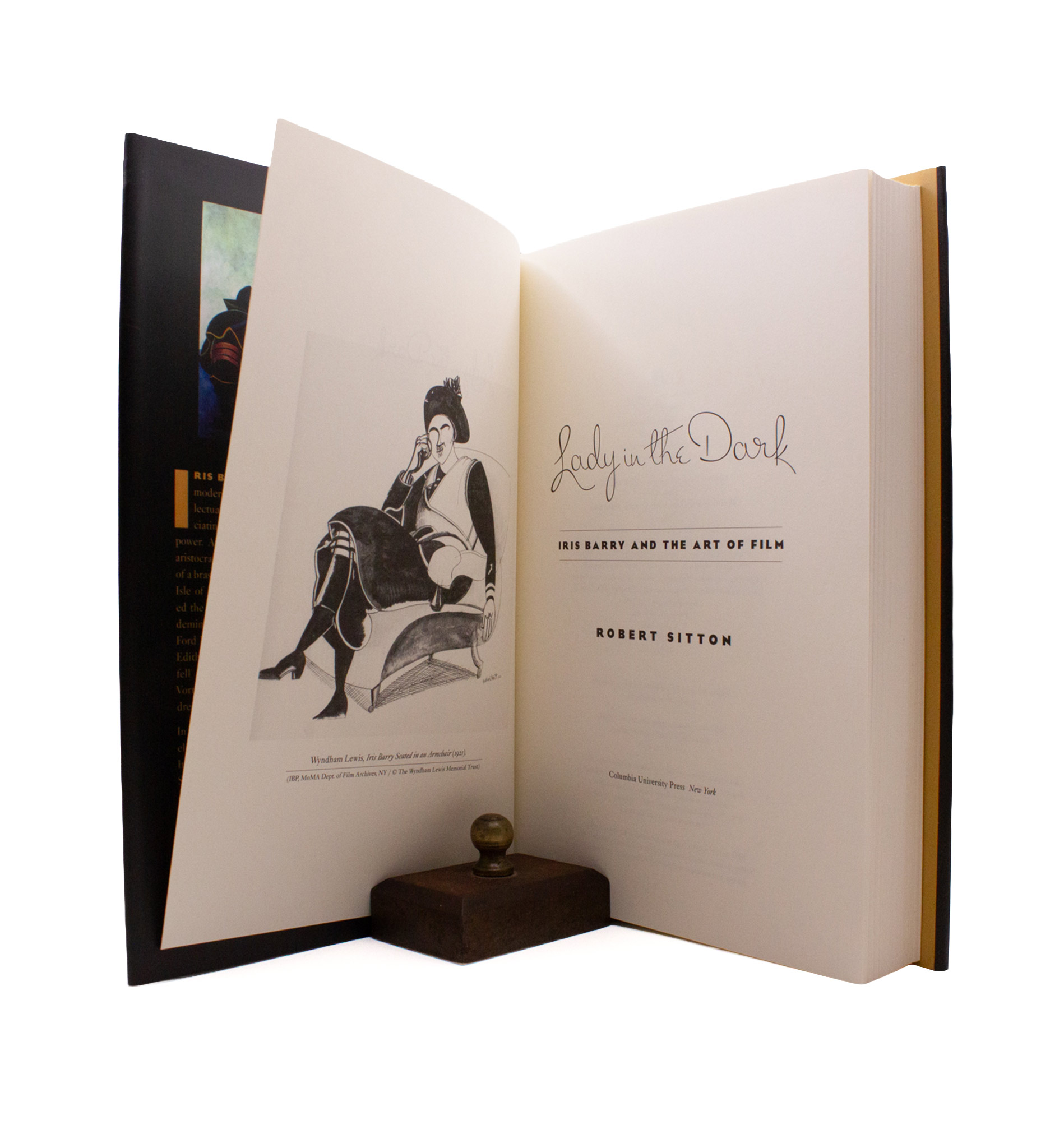
tap to cycle
Lady in the Dark; Iris Barry and the Art of Film
Robert Sitton
Published New York: Columbia University Press, 2014
475pp.; 24.2 x 16.5 cm. Black paper covered boards printed in bronze down spine. White dust-jacket printed in bronze, green and black.
Part of Contemporaries, II
A biography of Iris Barry, one of the first intellectuals to perceive and promote film as an art-form. First edition, with numerous illustrations including portraits of Barry by Wyndham Lewis, with whom she had 2 children. Near fine, the occasional pencil jot in the margin by David Moody.



tap to cycle
“Literchoor is my Beat”; A Life of James Laughlin, Publisher of New Directions
Ian S. MacNiven
Published New York: Farrar, Straus and Giroux, 2014
584pp.; 23.5 x 16.1 cm. Beige paper covered boards printed in black on spine. Beige dust-jacket printed in black, white and red.
Part of Contemporaries, II
A brilliant biography of “J”, who founded New Directions after Pound’s suggestion on Laughlin’s leaving the Ezuversity (Rapallo, 1934), poet, and skier; both extensive & intimate. First edition, generally fine save a little edge-wear to the jacket, with the occasional pencil score in the margin by David Moody.

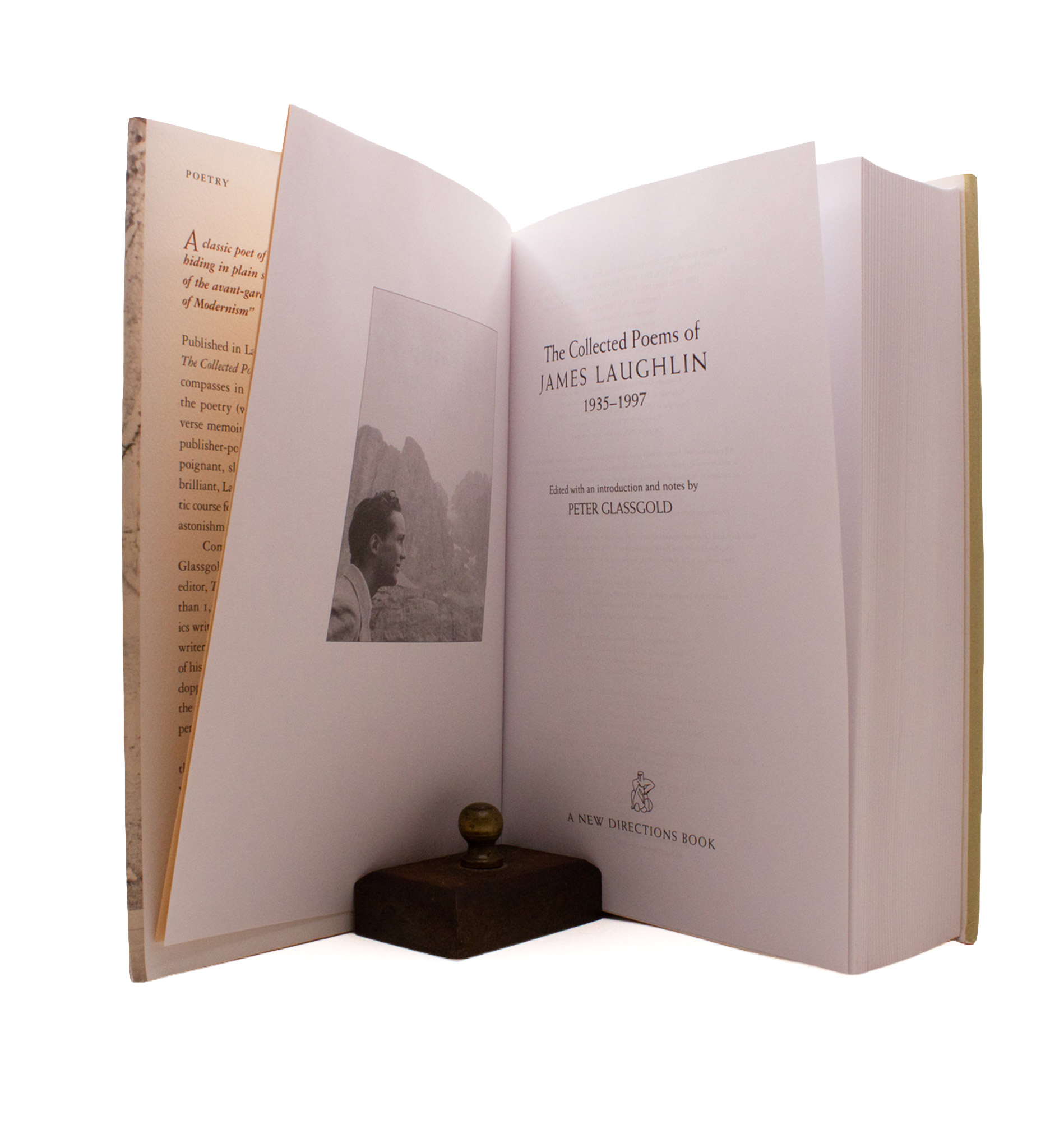

tap to cycle
The Collected Poems of James Laughlin
Peter Glassgold, editor
Published New York: New Directions, 2014
1214pp.; 23.5 x 16 cm. Red paper covered, linen backed boards stamped in gold on spine. White dust-jacket printed in black and red.
Part of Contemporaries, II
For one whom EP dismissed, after a term at the Ezuversity in Rapallo around 1934-5, as hopeless poet (but hopeful publisher), this heavy volume stands testament to Laughlin’s lifelong walking “a long corridor of closed doors.” A style we might attest more to W.C.W. than EP, who encouraged Laughlin to compose later on in life. First clothbound edition. A fine copy in a lightly bumped jacket.
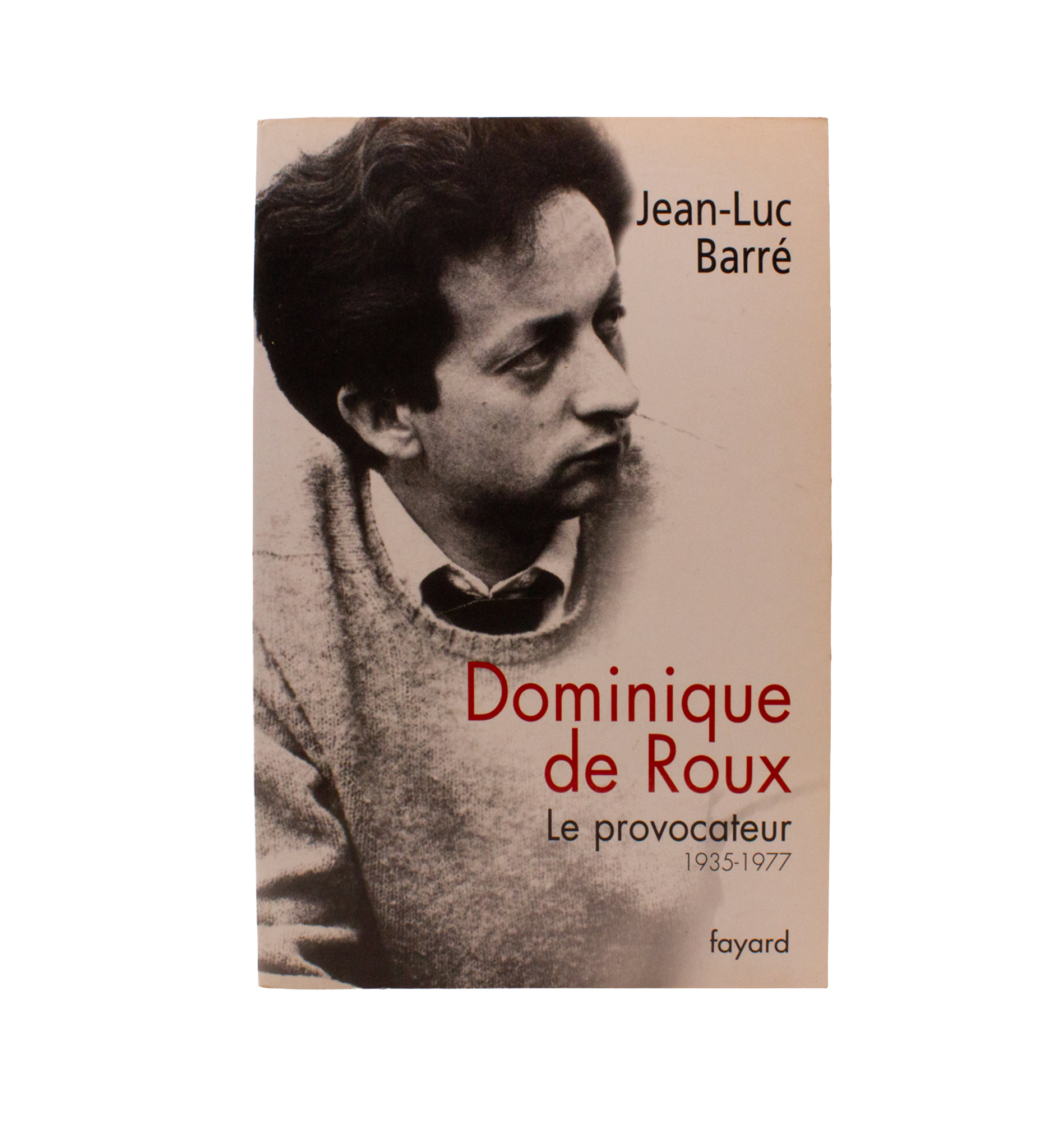
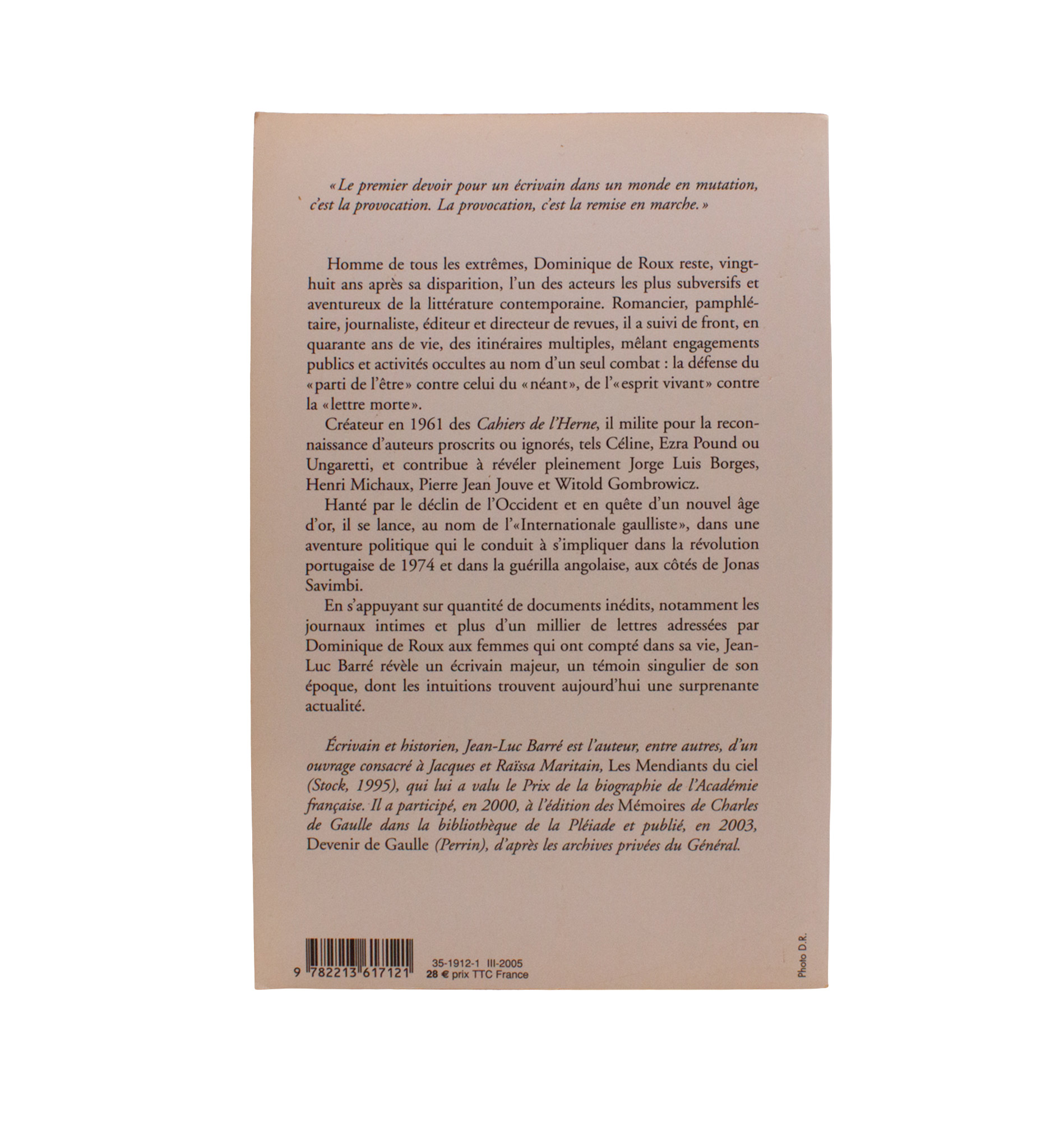
tap to cycle
Dominique de Roux, Le provocateur 1935-1977
Jean-Luc Barré
Published Librairie Arthème Fayard, 2005
651pp.; 23.5 x 15.4 cm. Stiff white paper wraps printed in red and black.
Part of Contemporaries, II
A biography of de Roux, writer, publisher, and editor of the EP Cahiers de L’Herne. With one chapter given over to de Roux and Pound’s first meeting in 1963. A good copy a little grubby on the extremities.
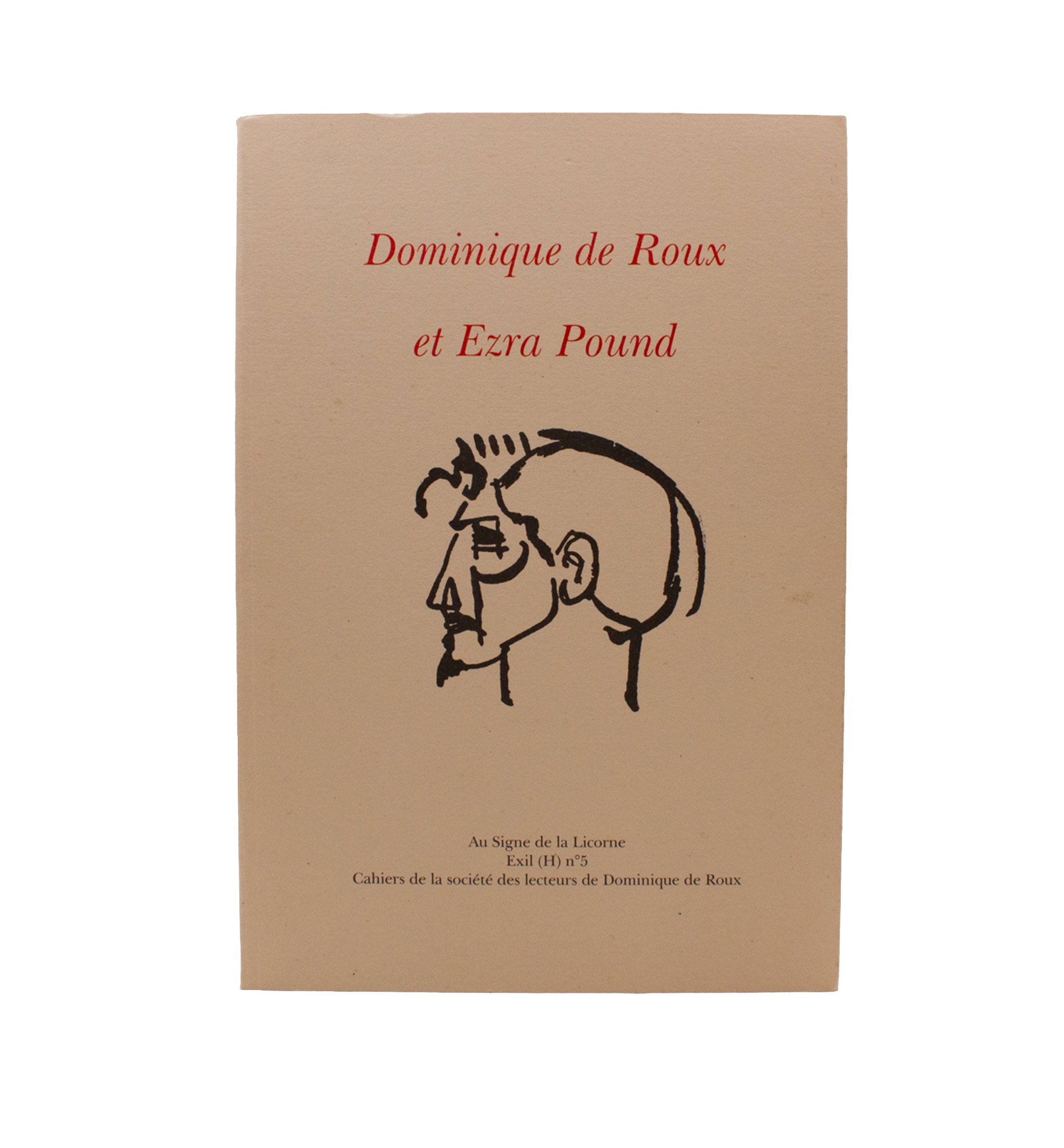
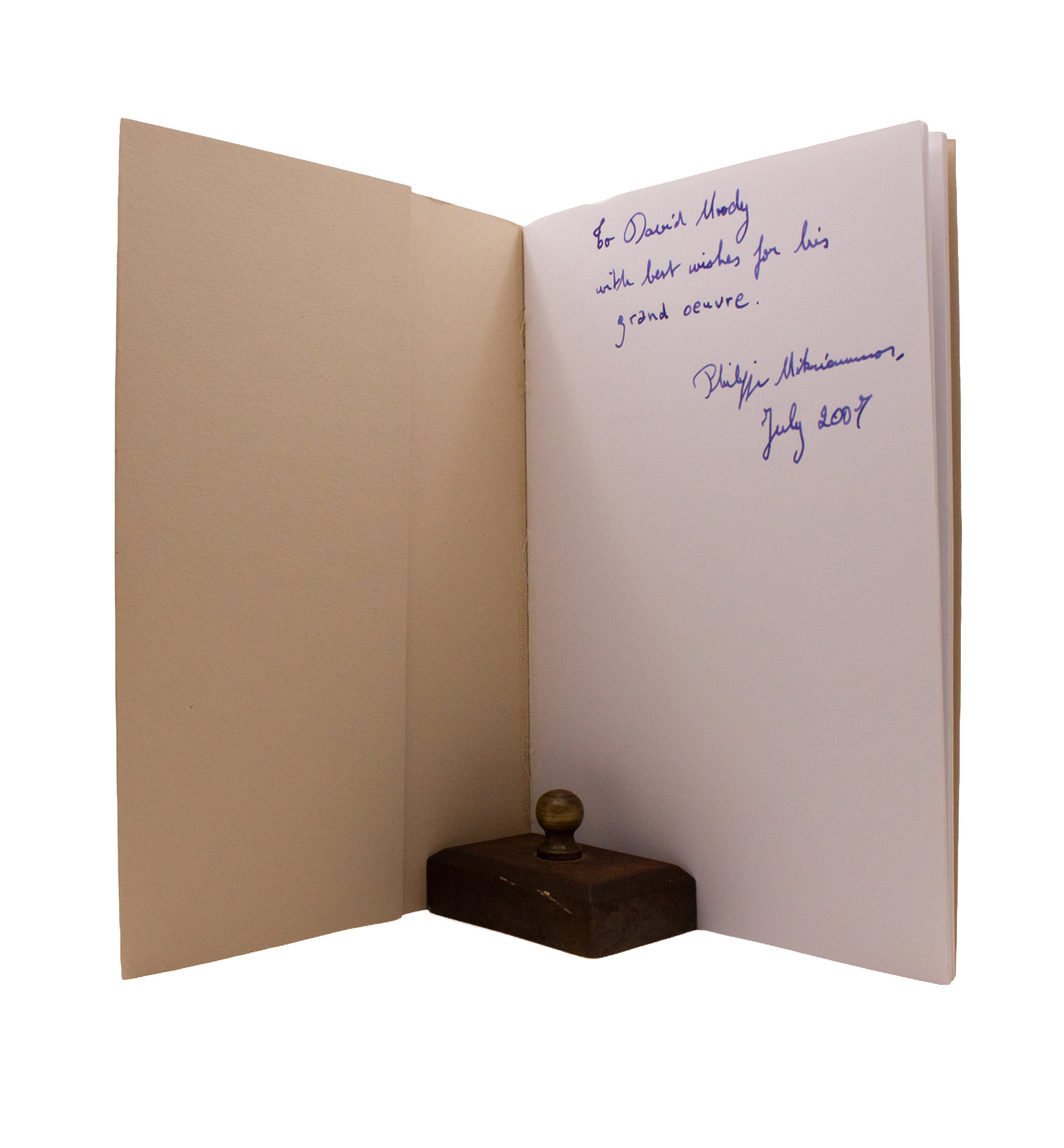
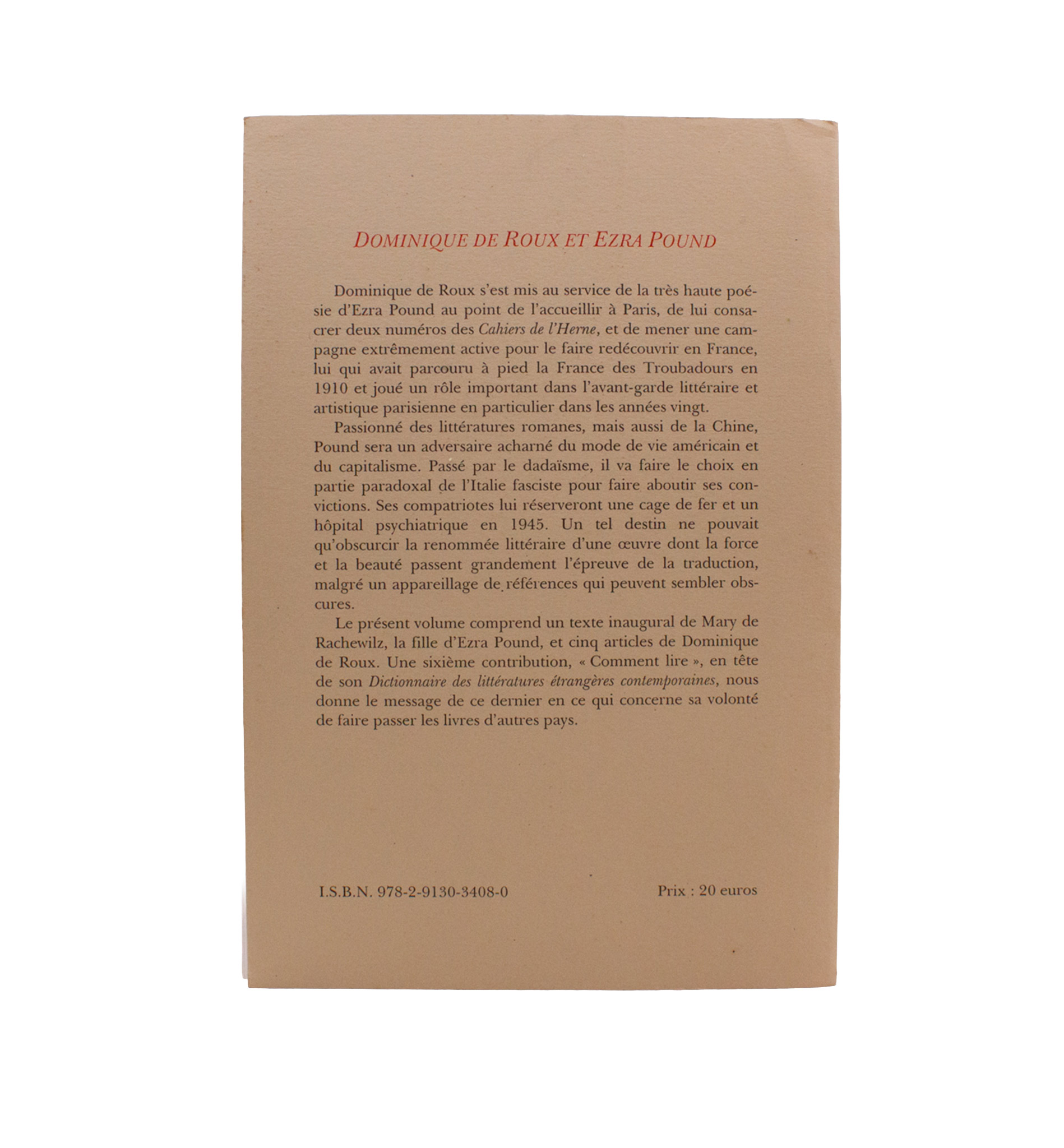
tap to cycle
Dominique de Roux et Ezra Pound
Dominique de Roux
Pascal Sigoda, editor
Mary de Rachewiltz, foreword
Philippe Mikriammos, translator
Published Tusson: Au Signe de la Licorne, 2007
71pp.; 22 x 15.3 cm. Buff paper wraps printed in black and red.
Part of Contemporaries, II
A collection of essays by Dominique de Roux, in French, on EP; with foreword by M. de R., translated to French by Philippe Mikriammos; a further essay by the editor, a calendar of the encounters between D. de R. and EP by Mikriammos, and a small amount of correspondence between D. de R. and EP and Olga Rudge. One of 300 copies “sur offset,” a further 33 were printed on vergé. Inscribed in ink to the ffep from Philippe Mikriammos to David Moody, “with best wishes for his grand oeuvre.”
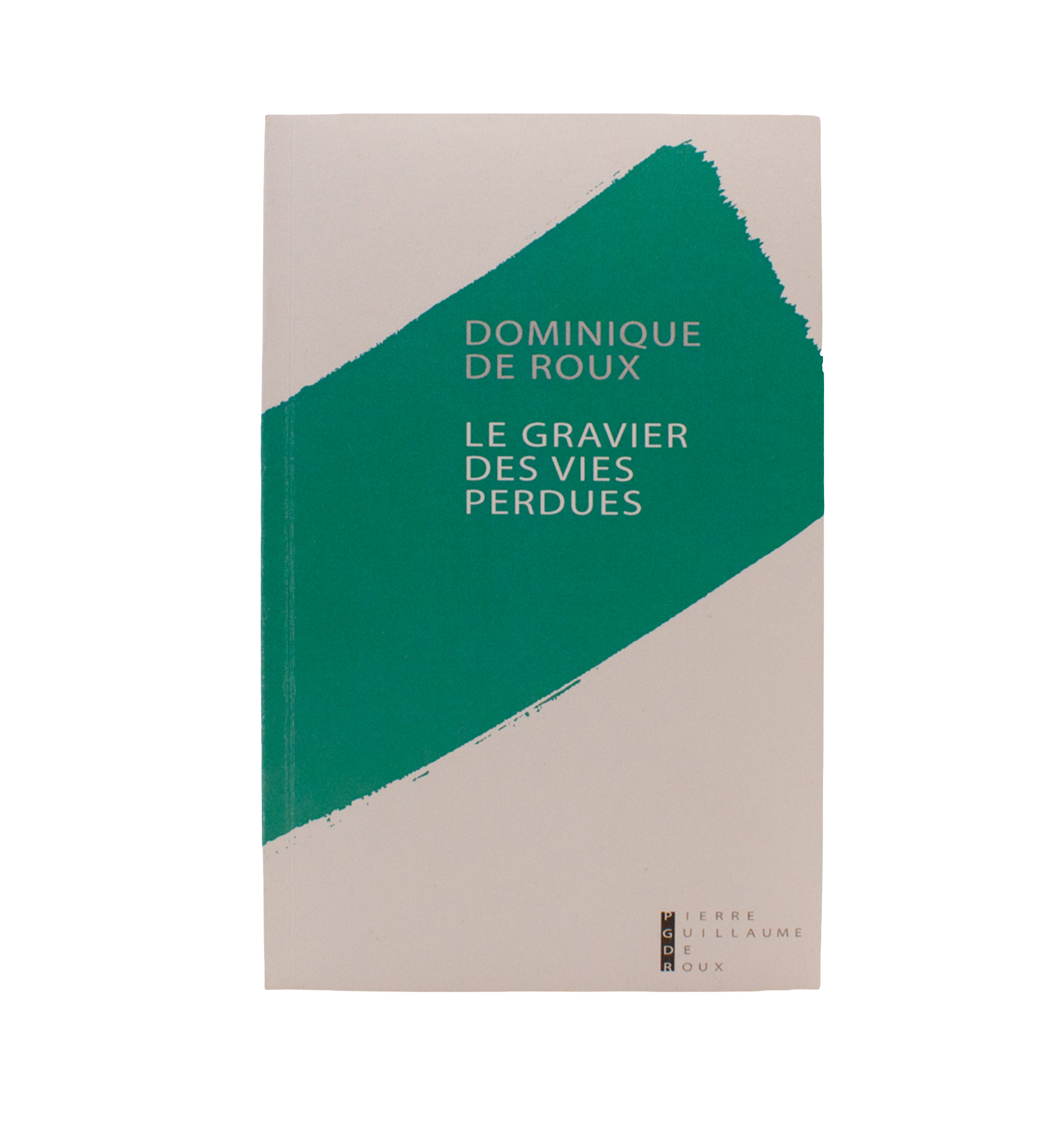

tap to cycle
Le Gravier des Vies Perdues
Dominique de Roux
Published Paris: Pierre-Guillaume de Roux, 2017
54pp.; 19.6 x 12.5 cm. Heavy white paper wraps printed in green and grey.
Part of Contemporaries, II
A small book of poetic prose by de Roux upon two lost lives, Mao Tse-Tong & Ezra Pound, both poet statesmen; with a brief essay by de Roux on EP dated 1973, and a bibliography of the author’s works. Third edition, after a first in 1974 and a second in 1985. A very pretty printing with shining black ink.

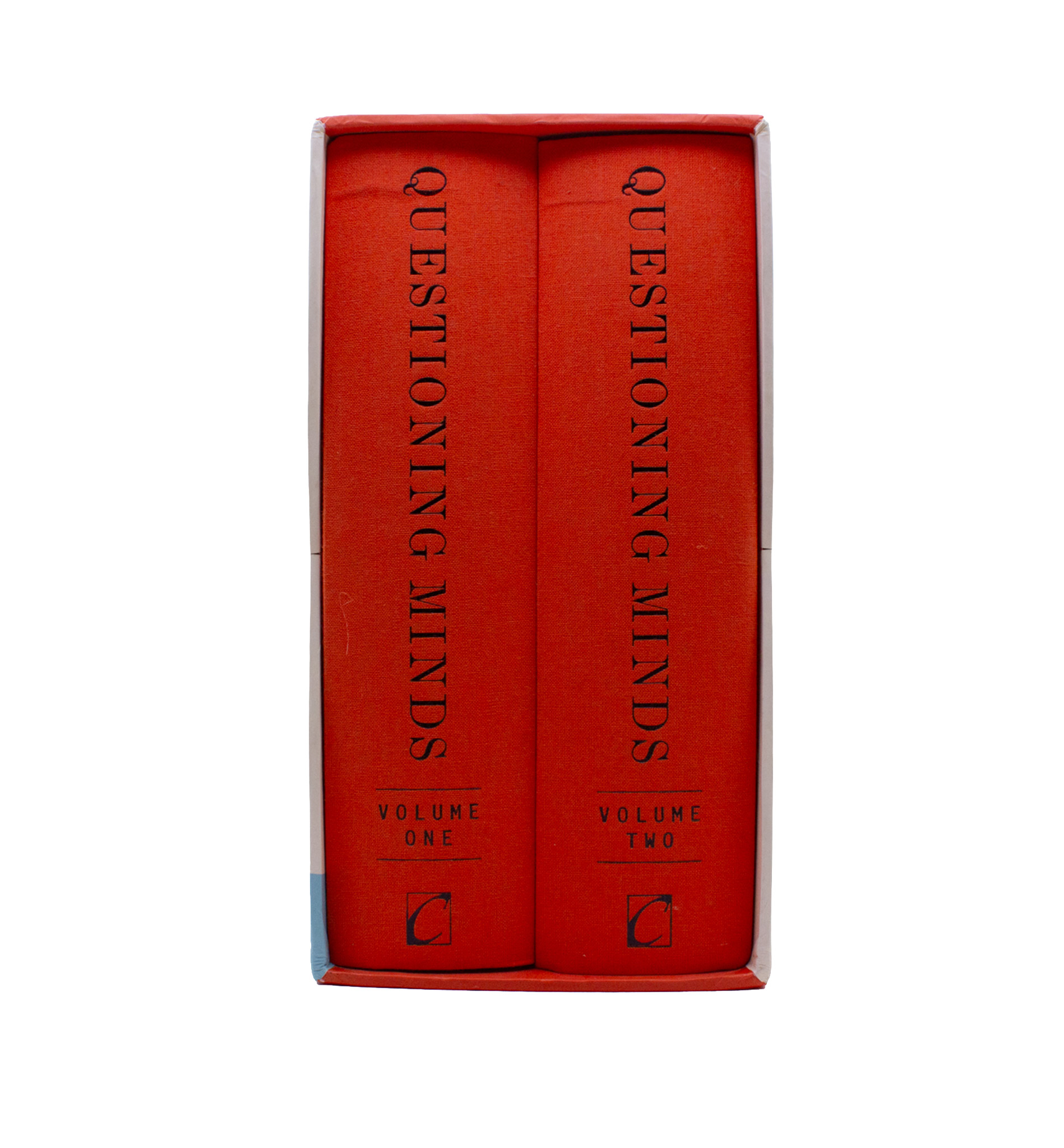
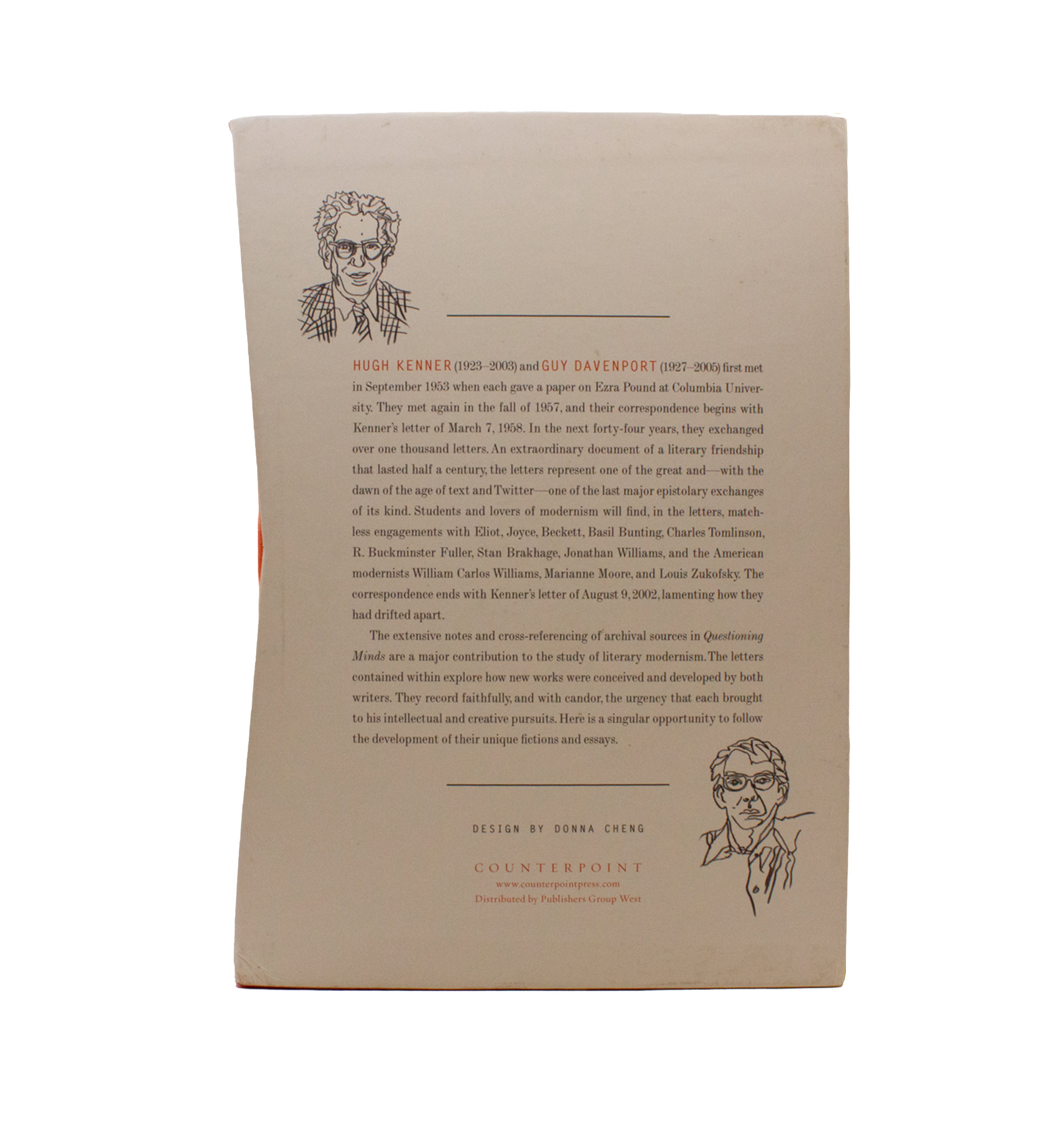
tap to cycle
Questioning Minds; The Letters of Guy Davenport and Hugh Kenner
Edward M. Burns, editor
Published Berkeley, California: Counterpoint, 2018
868pp., 949pp.; 23.6 x 16.1 cm each. Orange cloth boards stamped in black to front and down spine. Paper covered card slipcase.
Part of Contemporaries, II
“Shall two know the same in their knowing? Thought is a labyrinth.” Thus ends The Pound Era with two quotes, the first, of The Cantos, the second from a letter from Davenport to Kenner in 1963. These one thousand plus letters, with extensive endnotes, document the rare harmonising of two equally isolated thinkers. Together Kenner & Davenport liberated each other into publishing works composed as they had learned to from the modernists, and not as the universities then expected them. A fine set, in the original slipcase.
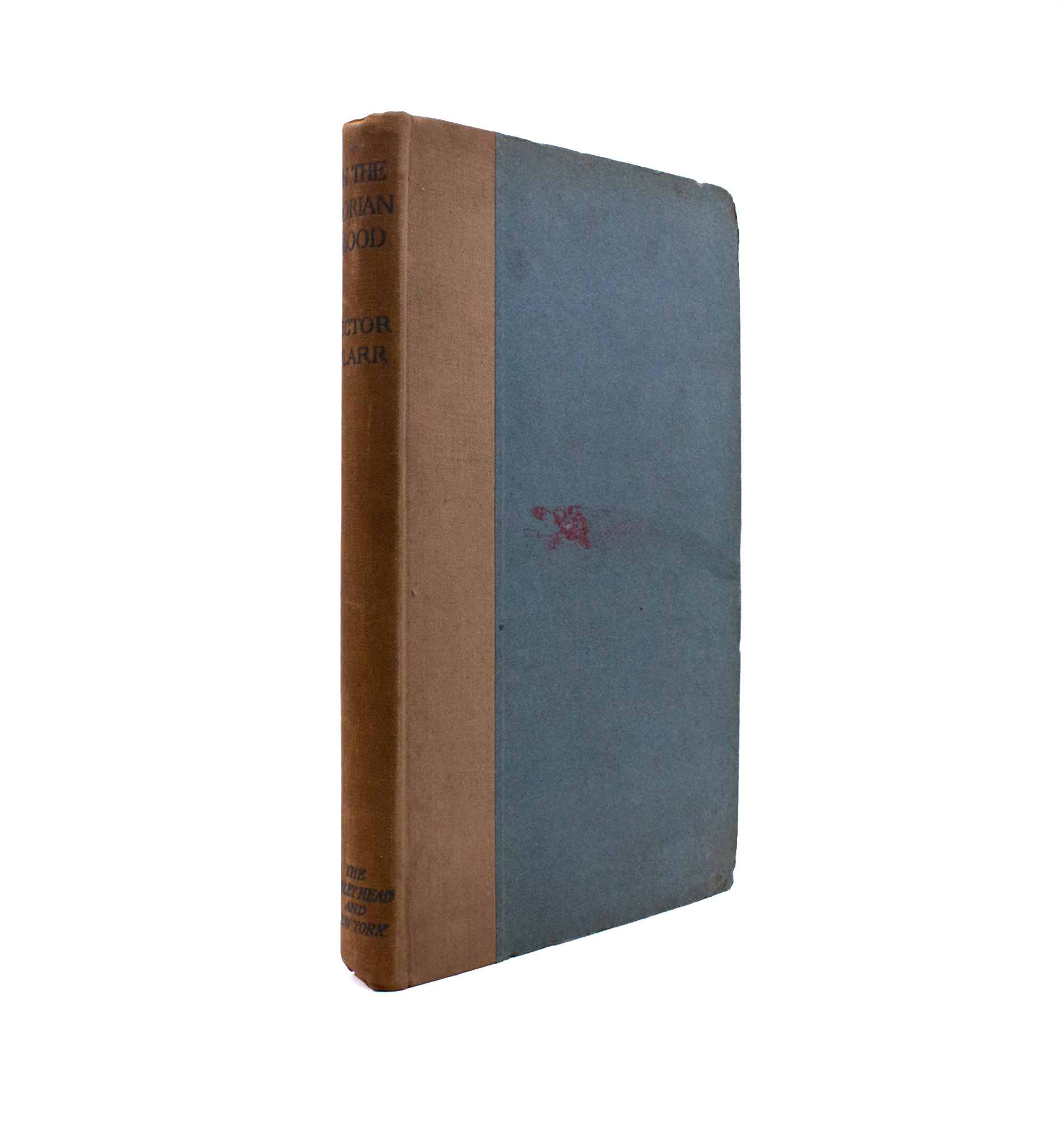
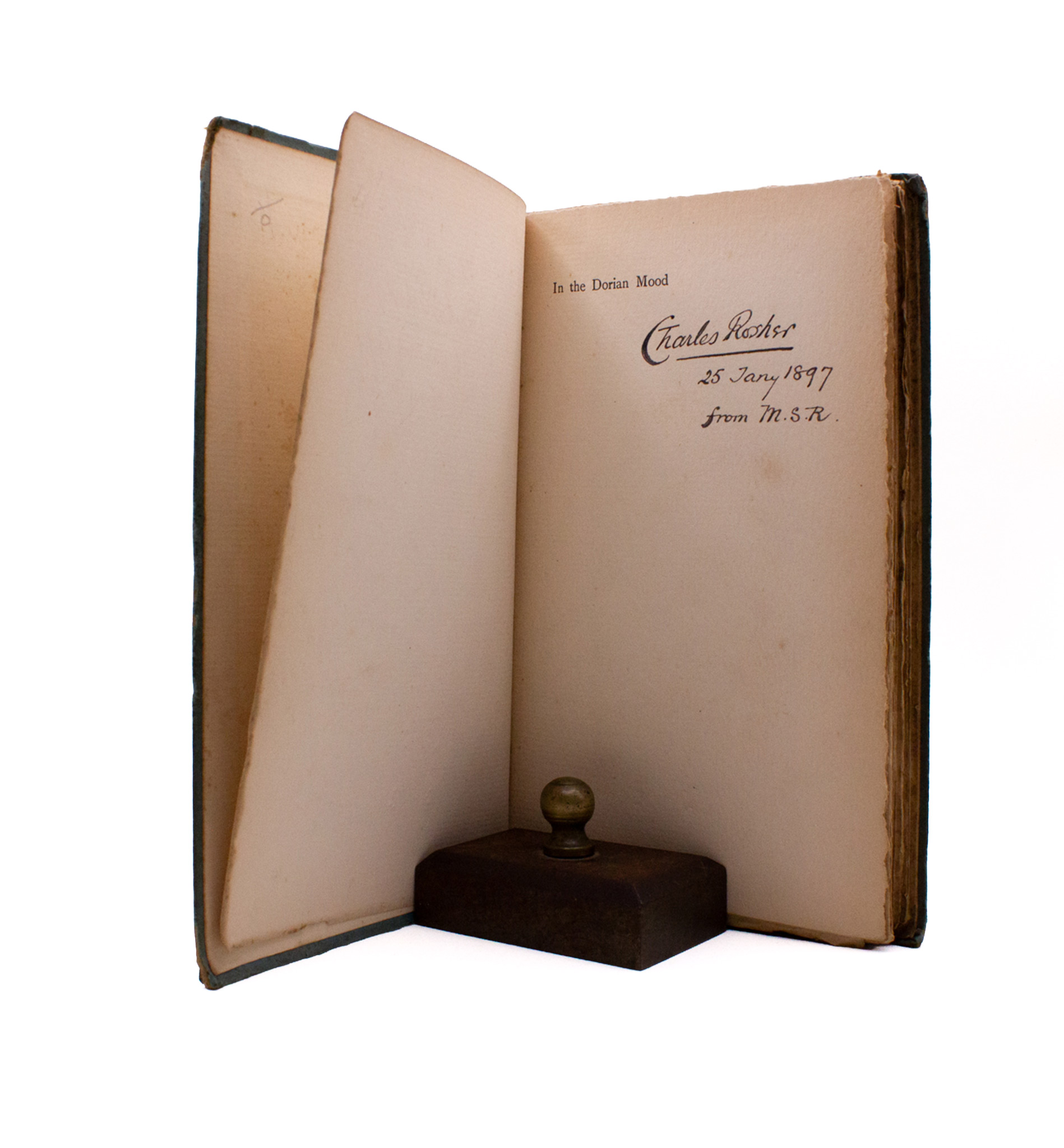
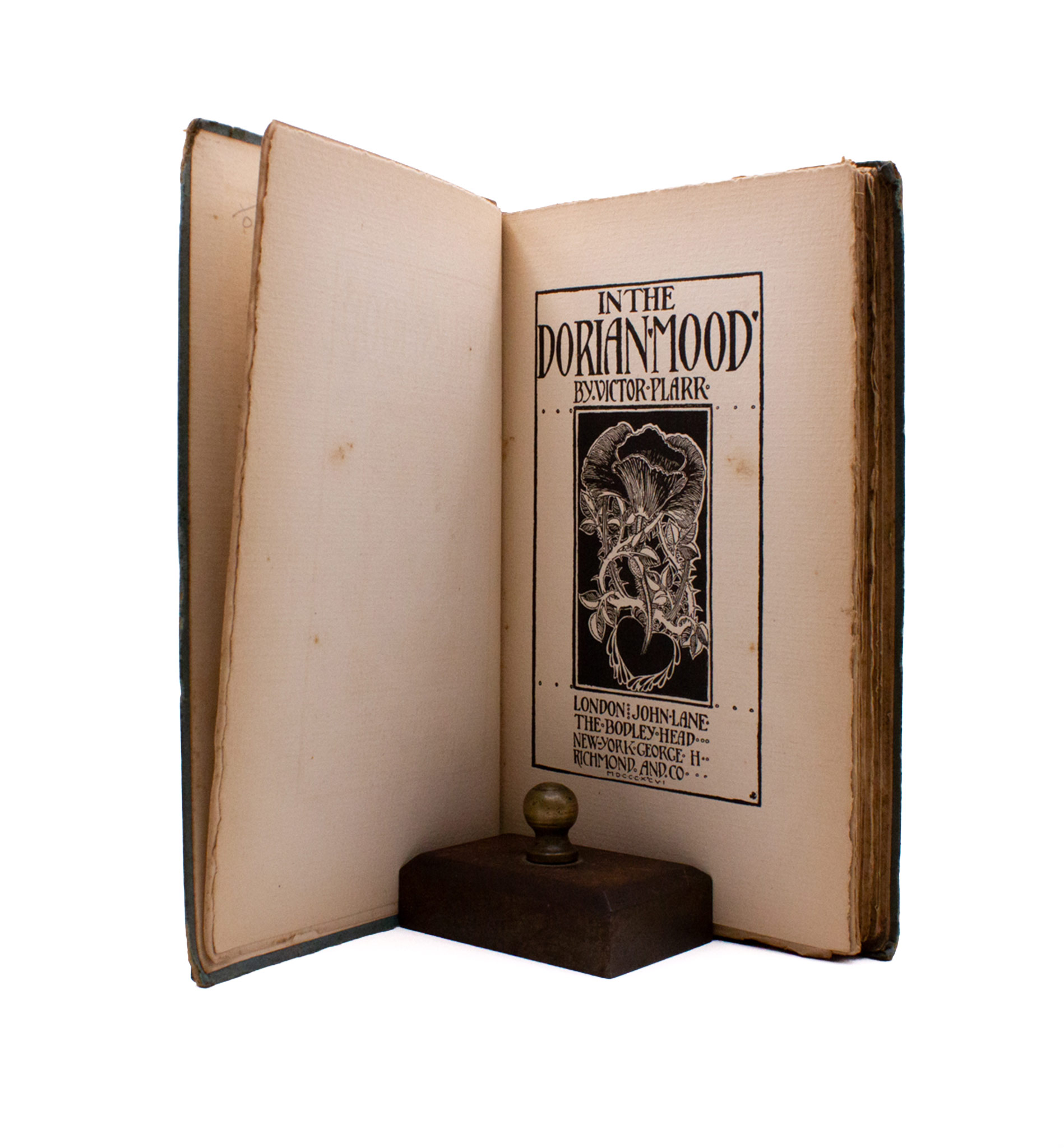
tap to cycle
In The Dorian Mood
Victor Plarr
Published London: John Lane, The Bodley Head, 1896
111pp.; 20 x 12.8 cm. Blue paper covered, linen black boards, lettered in blue on spine.
Part of Contemporaries, I
“SIENA MI FE, DISFECEMI MAREMMA”
Among the pickled foetuses and bottled bones,
Engaged in perfecting the catalogue,
I found the last scion of the
Senatorial families of Strasbourg, Monsieur Verog.
For two hours he talked of Gallifet;
Of Downson; of the Rhymers’ Club;
Told me how Johnson (Lionel) died
By falling from a high stool in a pub …
But showed no trace of alcohol
At the autopsy, privately performed—
Tissue preserved—the pure mind
Arose toward Newman as the whiskey warmed.
Dowson found harlots cheaper than hotels;
Headlam for uplift; Image impartially imbued
With raptures for Bacchus, Terpsichore and the Church.
So spoke the author of “The Dorian Mood,”
M. Verog, out of step with the decade,
Detached from his contemporaries,
Neglected by the young,
Because of these reveries.
Monsieur Verog’s first book of verse, and in other faculties librarian at King’s College (1890-1896) and the Royal College of Surgeons of England (1897-1929) where he wrote the biographies of 300 Fellows of the Royal College of Surgeons. Plarr was a founding member of The Rhymers’ Club which had passed into legend by the time Pound arrived in London.
First edition, with a contemporary ink gift inscription to half-title, “Charles Rosher / 25 Jan[uar]y 1897 / from M.S.R.” and with a further ownership inscription to rpd, “Charles Rosher / 6.3.27.” Charles Henry Rosher (1858-1936) was a poet and occultist, and “Magus of Fire” in the Rosicrucian Hermetic Order of the Golden Dawn whose members included Florence Farr, Maud Gonne, and William Butler Yeats.
Light shelf-wear and splitting of the paper over the bumped corners; a red (wax?) stain to front cover; light spotting to endpapers and pastedowns, otherwise fine throughout. With a small laid-in note from A. David Moody reading, “cf. ‘M. Verog’ in ‘H. S. Mauberley.’”

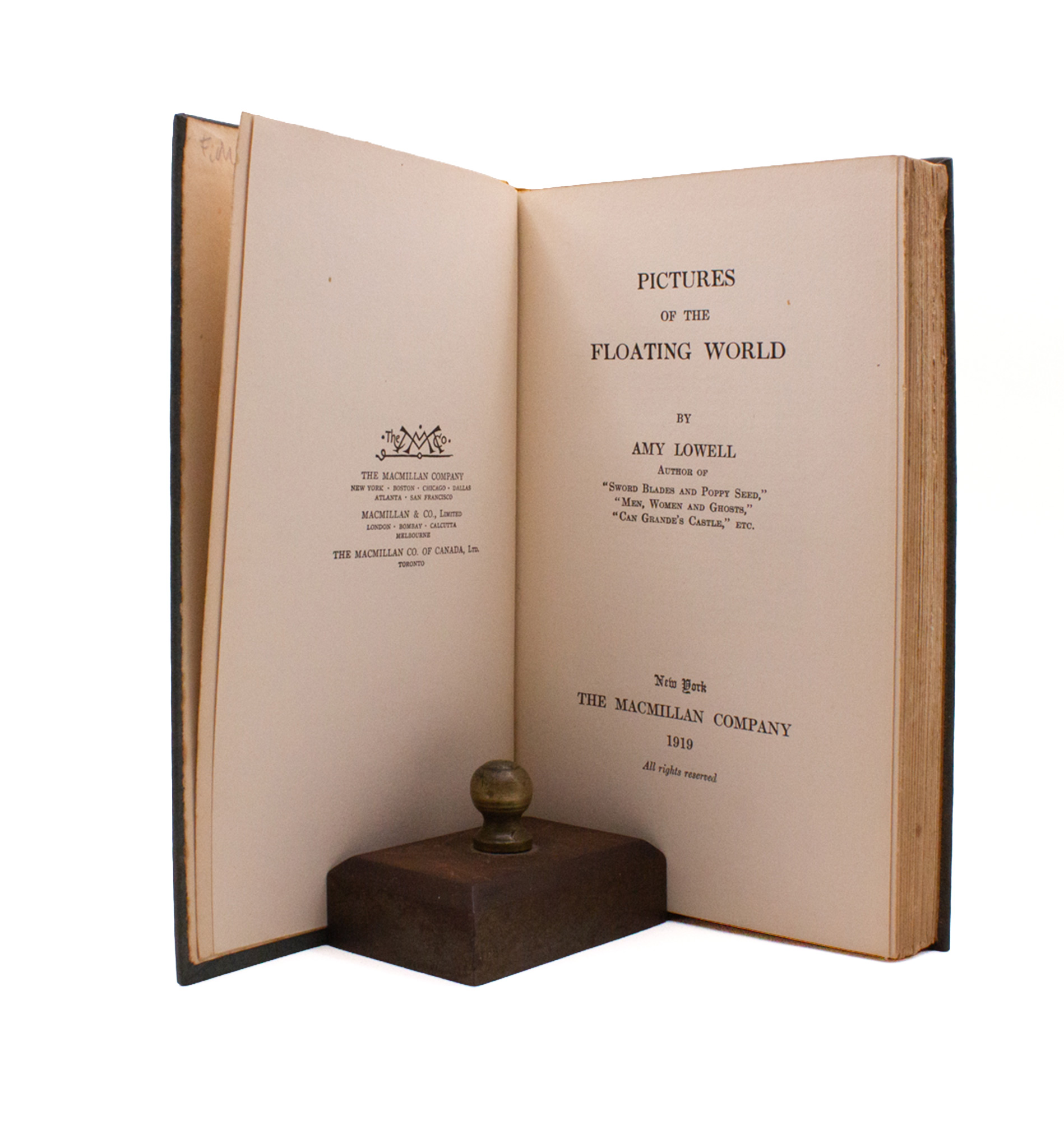

tap to cycle
Pictures of the Floating World
Amy Lowell
Published New York: The Macmillan Company, 1919
257pp.; 18 x 11.5 cm. Blue paper covered, orange cloth backed boards. White paper labels printed in black to front and spine.
Part of Contemporaries, I
On discovering Imagisme in Poetry, Amy Lowell travelled to London with her partner Ada Dwyer Russell, where she invited EP to her apartment overlooking Green Park and, while driving him about town in her automobile, made various promises to fund anthologies of the Imagistes. Though Pound did not consider Lowell an Imagiste, her poem “In a Garden” was included under his editorial in Des Imagistes. By the time of the anthology’s first appearance in The Glebe, the group had already begun to disentangle. Pound, who refused to democratise criticsm, was forced out, declaring Imagisme dead, threatened to sue Lowell for using the anglicised term Imagism, and resorted to denunciations of Amygism. Imagism flourished after Pound, the three qualifications of Imagiste verse by Pound spreading into six, with verse as equally unpointed.
First edition, first printing, light marks to paper and cloth backing; label a little lost at the edges; spotting to pastedowns and endpapers but otherwise fine inside, and very good out.
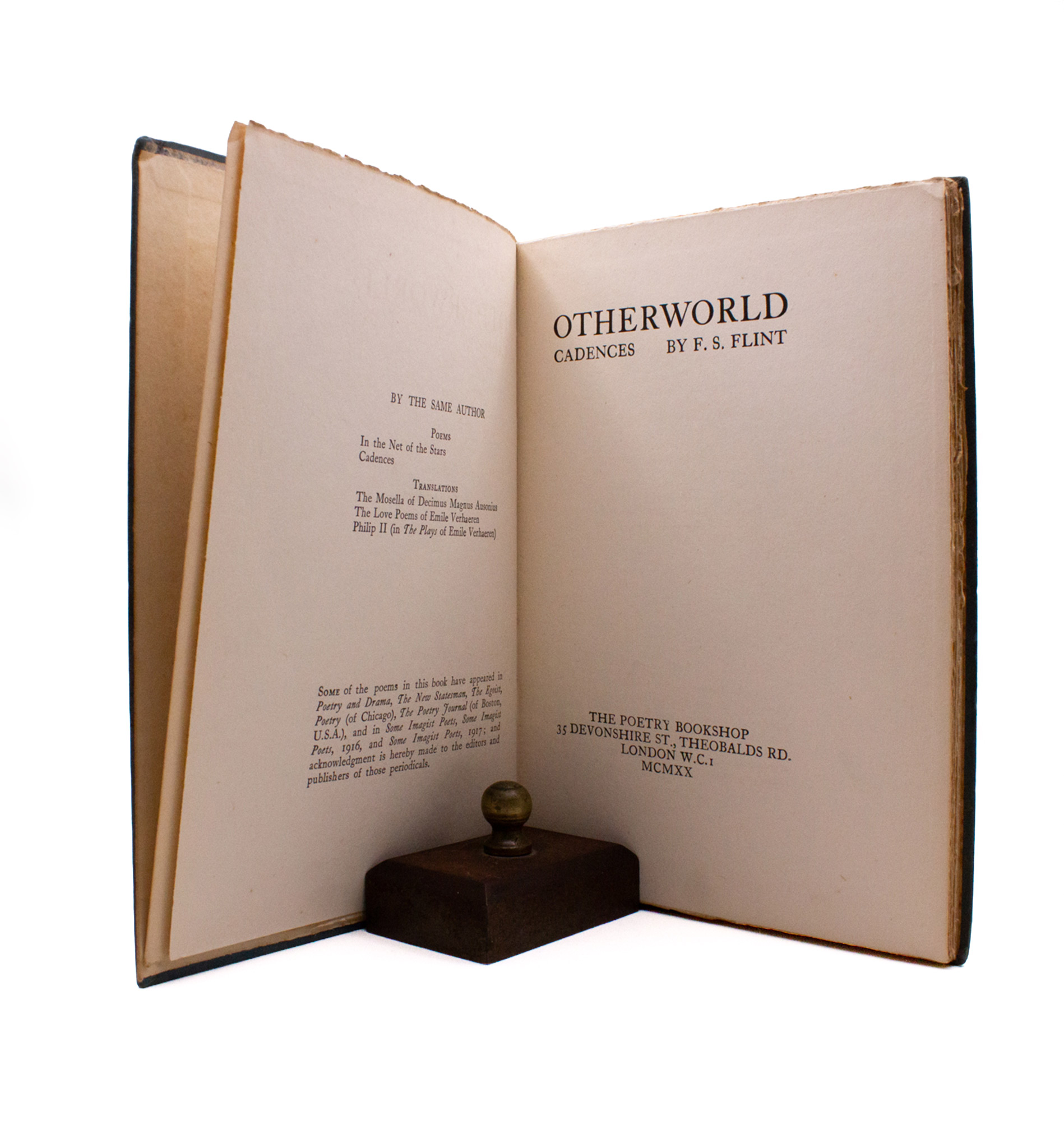

tap to cycle
Otherworld: Cadences
F. S. Flint
Published London: The Poetry Bookshop, 1920
66pp.; 20.4 x 14.6 cm. Blue paper covered boards printed in black to front and up spine.
Part of Contemporaries, I
F. S. Flint was a member, alongside Pound, of T. E. Hulme’s “School of Images.” Hulme, “wanting an intuitive poetry freed from cliché and from convention [called] for the abolition of metre and regular forms of verse; and [for] a language of direct visual images ‘which would hand over sensations bodily.’ And ‘the poet’, he argued, ‘must continually be creating new images’, because the life force in images quickly dies out as they become received associations.” (Quite Lucretian; Moody, Vol. I)
In Poetry, March 1913 Flint and Pound published Imagisme and A Few Don’ts by an Imagiste, Flint later featuring in Pound’s 1914 editorial Des Imagistes; but by 1915 their friendship had soured, and Flint claimed Pound had contributed nothing to the discussions under Hulme but had stolen the whole school of Imagisme from the meetings.
“You have not been a good comrade, violà!”
In 1915 Flint published his second volume of poetry, Cadences (London: Poetry Bookshop) whose cover image of a swan headed the renewal of his 1909 poem, “A Swan Song” into an unrhymed ‘cadenced’ version, the method of composition the collection was based upon. Flint found that an unformed verse whose thread lay in the cadence of words was a technique in poetry as old as Chaucer and Cynewulf which had been lost to dead formal variation, and claimed to not have discovered anything new except to have rediscovered a verse essentially human.
This is Flint’s second book of cadences, and his third and final volume of poetry (Flint was to go on to become an economist). For poets who defaulted to formal verse at the time, Flint’s cadences may have been relieving, but to we who have seen what poetry is capable of it is little more than an unusual approach to the same pavement. Lacking for me is the thing, but this may be Flint’s rebellion, writing instead a rambling day.
First and sole edition. Light marks to the paper with two breaks along the front gutter; top corner bumped; endpapers browned but clean throughout.
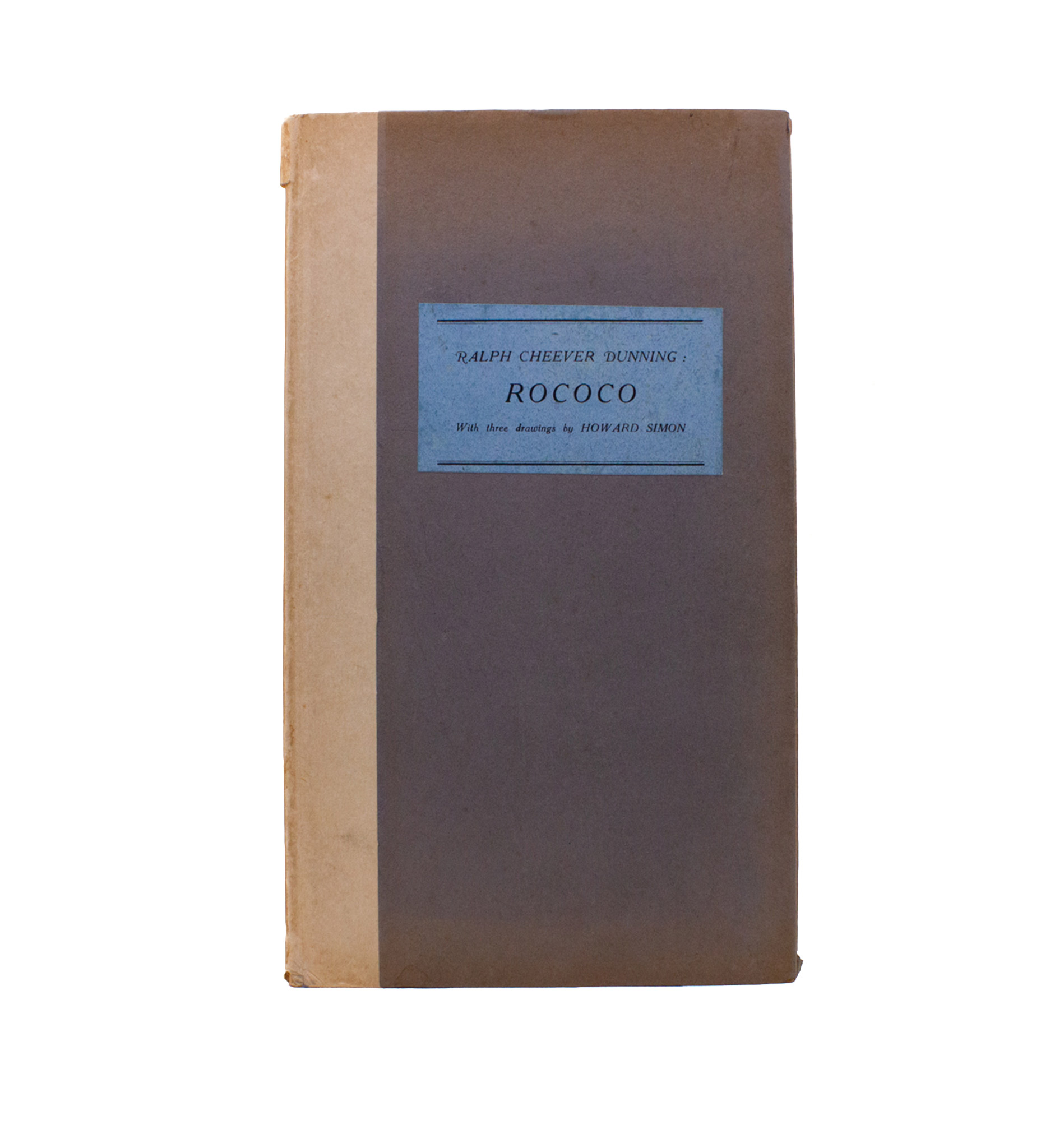
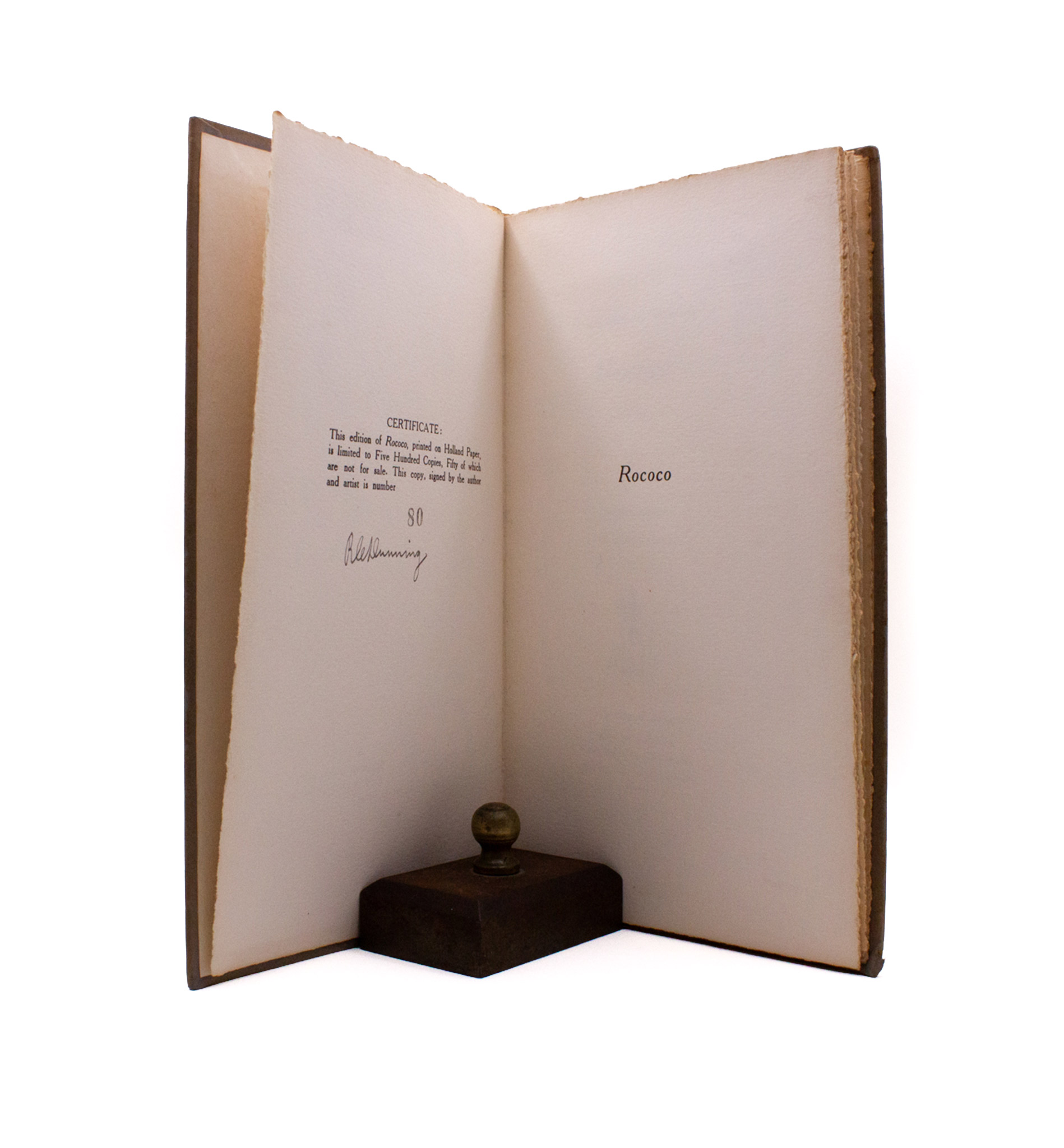
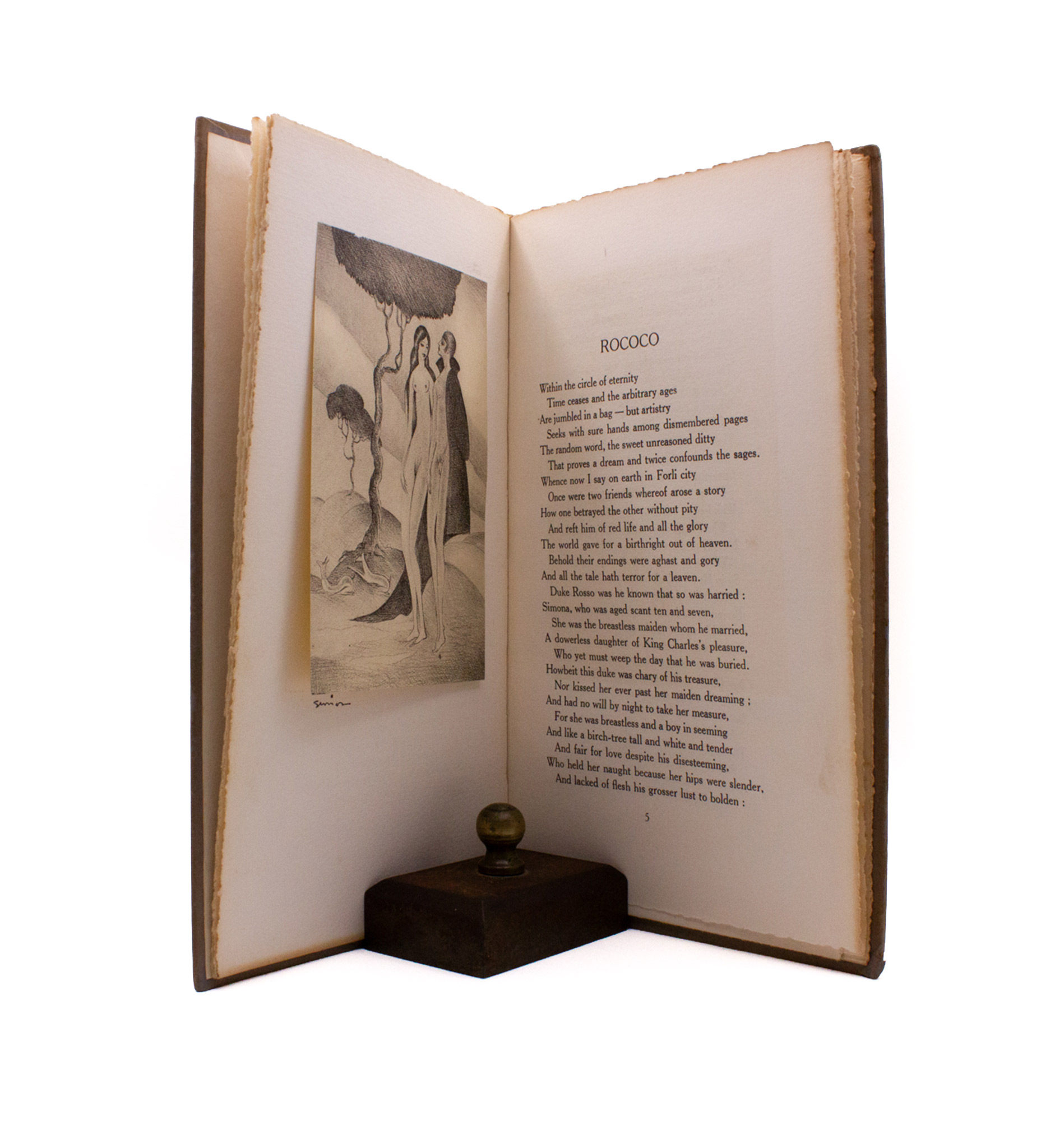
tap to cycle
Rococo, a poem
Ralph Cheever Dunning
Howard Simon, illustrator
Published Paris: Edward W. Titus, 1926
22pp.; 22.7 x 13.2 cm. Original blue-grey three-quarter boards lettered in gold up a white parchment spine. Blue paper label printed in black to front.
Part of Contemporaries, I
The second of only three volumes of poetry to be published by Dunning during his lifetime and since. A Detroit native, Dunning (1878-1930) moved to Paris in 1905 where he dedicated his time to only a small group of poems, composed in the style of the late Victorian era, publishing his first collection of poems Hyllus: A Drama in 1910 (London: John Lane, The Bodley Head). Around 1924 Ezra Pound ‘discovered’ Dunning, a recluse and an addict, and ensured his publishing in the journals of the day; I have read even that EP supplied Dunning with drugs, which, considering Pound’s mansarde et potage, one might believe. After Dunning received the Helen Haire Nevinson Prize from Poetry, A Magazine of Verse in 1925 the literati of the Left Bank began to heatedly debate Dunning’s poetry. The push for vers libre, as had been happening for 20 years, had left the public finally numb to any vers à la Victorien; Dunning’s advance of a style yet older struggled to be received, though it reads with a precision worthy of the Ancient Mariner.
This book was the inaugural volume of The Black Manikin Press, one of the key expatriate presses of Paris in the 1920’s later to print Anaïs Nin, D. H. Lawrence, Djuna Barnes, Henry Miller and more. No. 80 of 500 copies all printed on Holland, the first fifty not for sale, with three illustrations by Howard Simon. Signed by Dunning on the limitation page and by Simon under the frontispiece. Spine mottled with a small break at top (nothing lost); light fading to the edge of the boards; endpapers browned spilling over to adjacent blanks where cut short; stock otherwise fine throughout. No bibliography has been composed for Dunning.
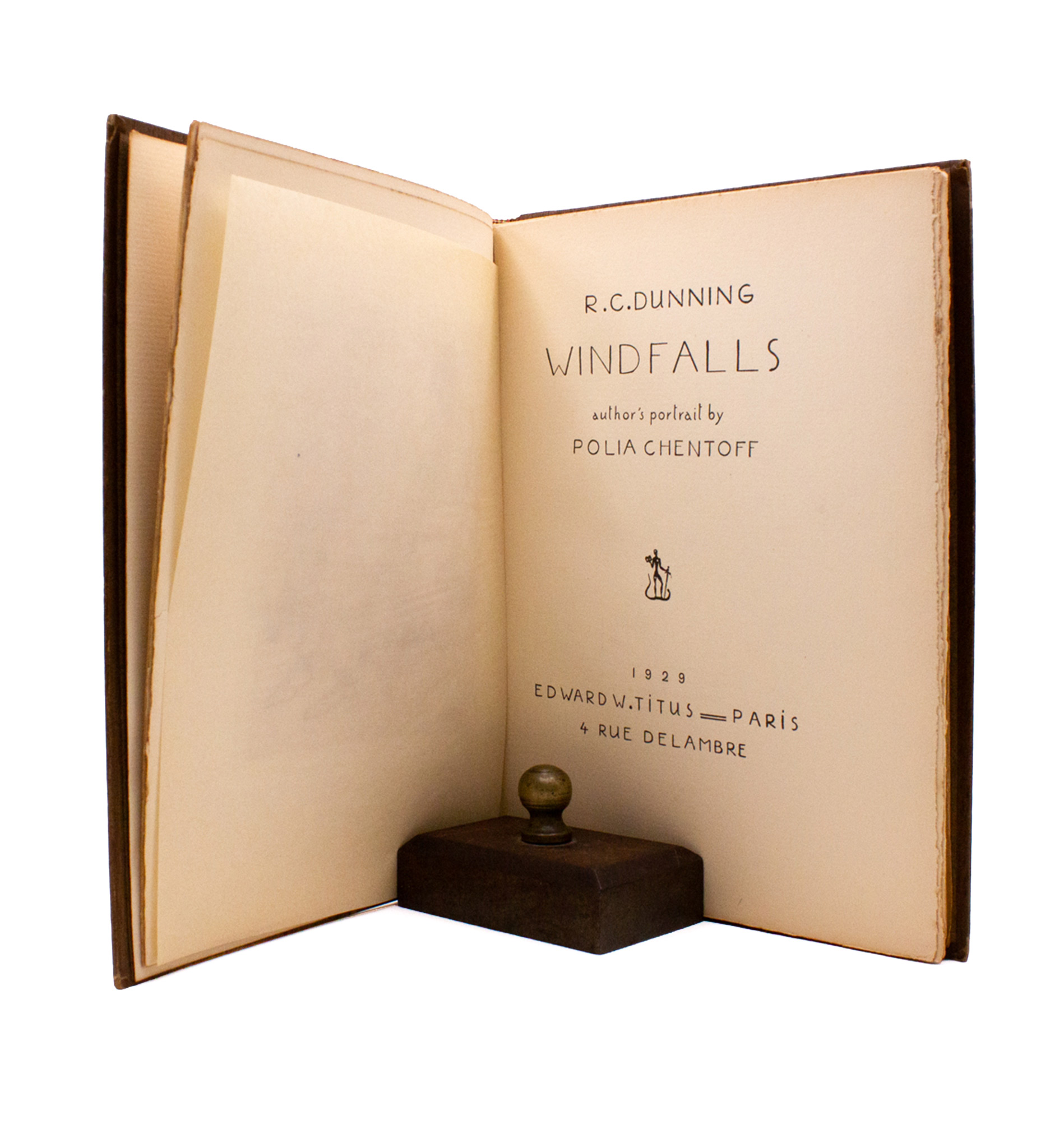

tap to cycle
Windfalls
Ralph Cheever Dunning
Published Paris: Edward W. Titus, 1929
56pp.; 19.5 x 15 cm. Wood veneer paper over boards. Blond wood verneer paper labels printed in black to front and down spine. Brown paper endpapers and pastedowns.
Part of Contemporaries, I
The third and final volume of poems to be published by Dunning before his death in Paris, 1930. A long-term opiate addict, Dunning was rarely seen in public, and only then at the busiest cafés with a glass of milk and book. His addiction caused an aversion to food, and though he was suffering from tuberculosis, Hemingway said of his death that he simply “forgot to eat.” After Rococo (a single poem), Windfalls was the release of years of poetry under a deathly susurrus.
THE PENALTY
Bleed, O my heart, bleed slowly but take care
That no one hears thy bleeding. In the night —
Let not thy bedfellow divine thy plight.
Bleed softly, O my heart, and in the glare
And heavy silence of high noon, beware
Of good Samaritans — walk to the right
Or hide thee by the roadside out of sight
Or greet them with the smile that villains wear.
Bleed slowly and bleed softly, O my heart,
Go hide in nameless mountains of the north
Or deep in the monstrous cities play thy part,
O Bleeding Heart whereby the world’s aflood —
But shun all congregations loving blood
Lest some fool on a banner bear thee forth.
First edition, no. 106 of 500 copies (the first 25 on Japon). With a frontispiece portrait of the author by Polia Chentoff, printed by Martin Kaelin. Letter Press by Imprimerie Crété, “both of Montparnasse.” Beautifully clean throughout, with ten small pencil scores highlighting poems on the contents page, and slight printer’s shadow to the poem of p.11, Drowned. One section (from frontis to p.12) loosened off spine without damage. Front gutter cracked, the binding remaining sound. Boards lightly rubbed. Paper label on spine complete if a little rubbed. Again, I find no bibliographical records, and very little scholarship.


tap to cycle
The Spirit of Romance
Ezra Pound
Published London: Peter Owen, 1970
248pp.; 22.1 x 14.2 cm. Brown cloth boards stamped in yellow down spine. White dust-jacket printed in orange and brown.
Part of Ezra Pound, VII
A late, revised edition, 3rd impression, of Pound’s first book of prose, upon the poets & playwrites that inspired him in Romance languages. Printed with spacious margins begging to be scrawled in. Jacket spotted & lightly stained, book fine within. Missed by Gallup, otherwise under A5.
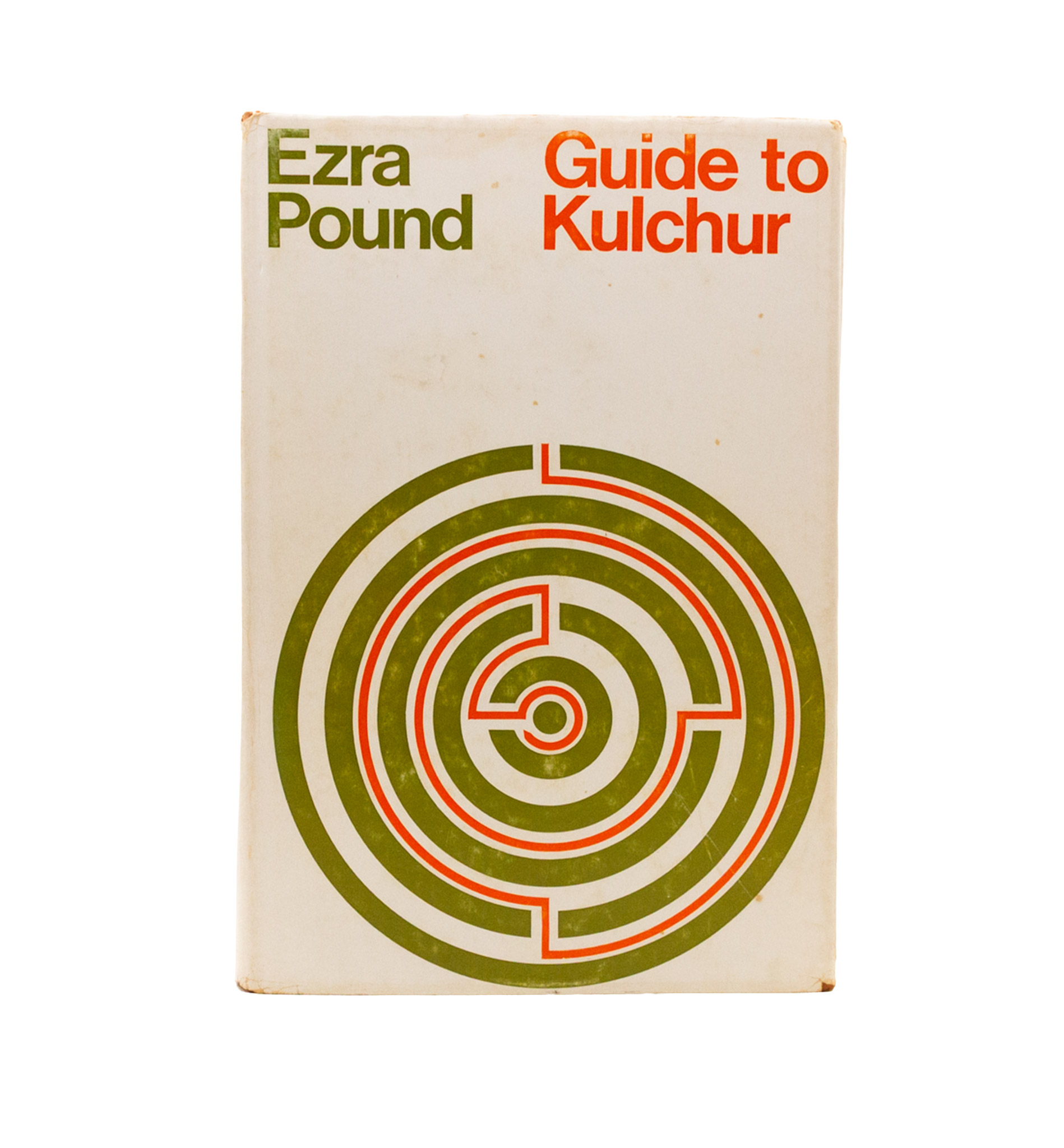
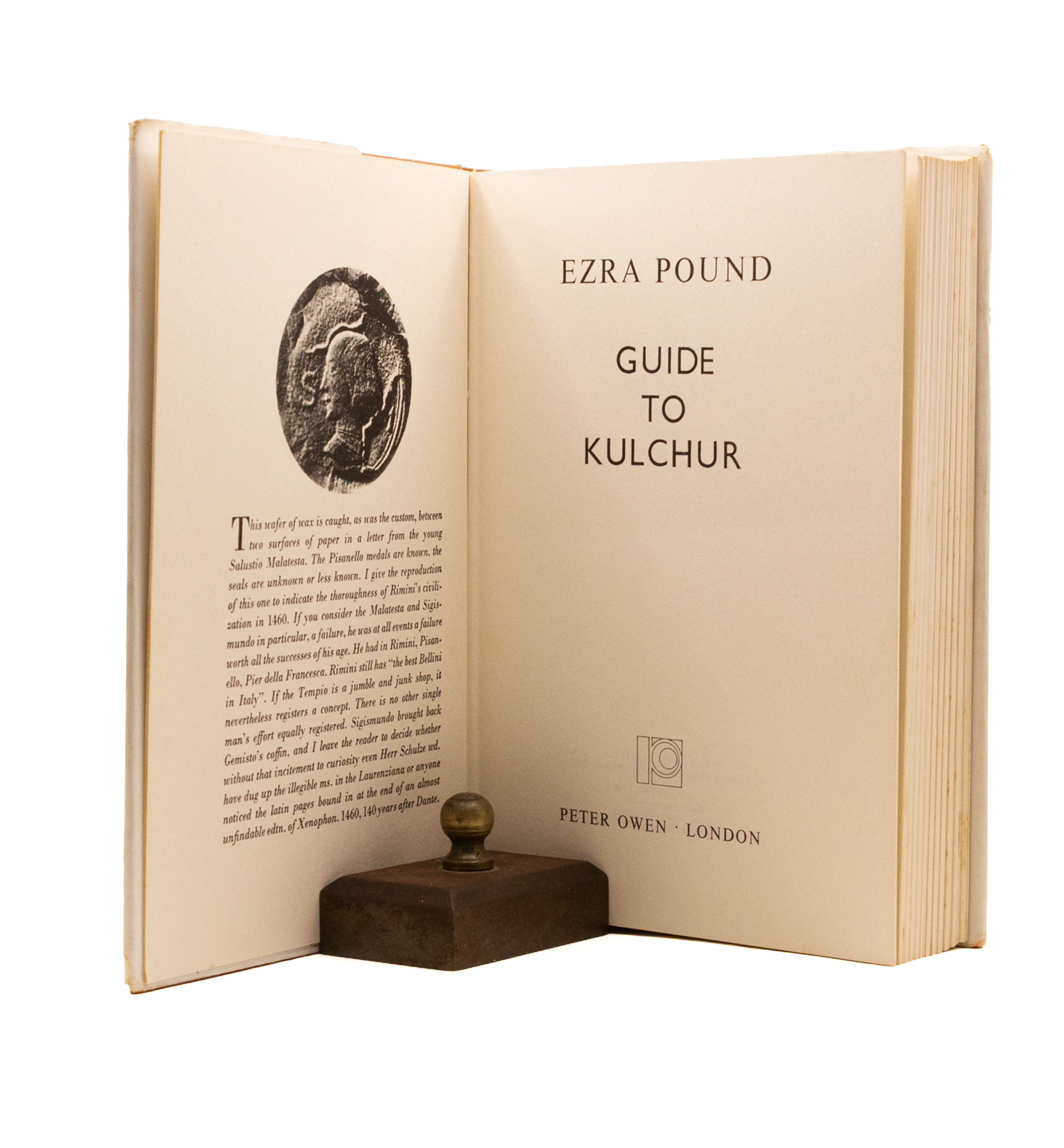

tap to cycle
Guide to Kulchur
Ezra Pound
Published London: Peter Owen, 1966
379pp.; 21.1 x 14.3 cm. Brown cloth boards stamped in gold to spine. White dust-jacket printed in green and orange.
Part of Ezra Pound, VII
Pound’s offering to those who want to know more by the age of fifty than he knows “today”. A few pencil notes in the margin by David Moody. Jacket lightly spotted with edge-wear; book fine within. Fourth impression, so stated on front flap, also not in Gallup, otherwise A45.
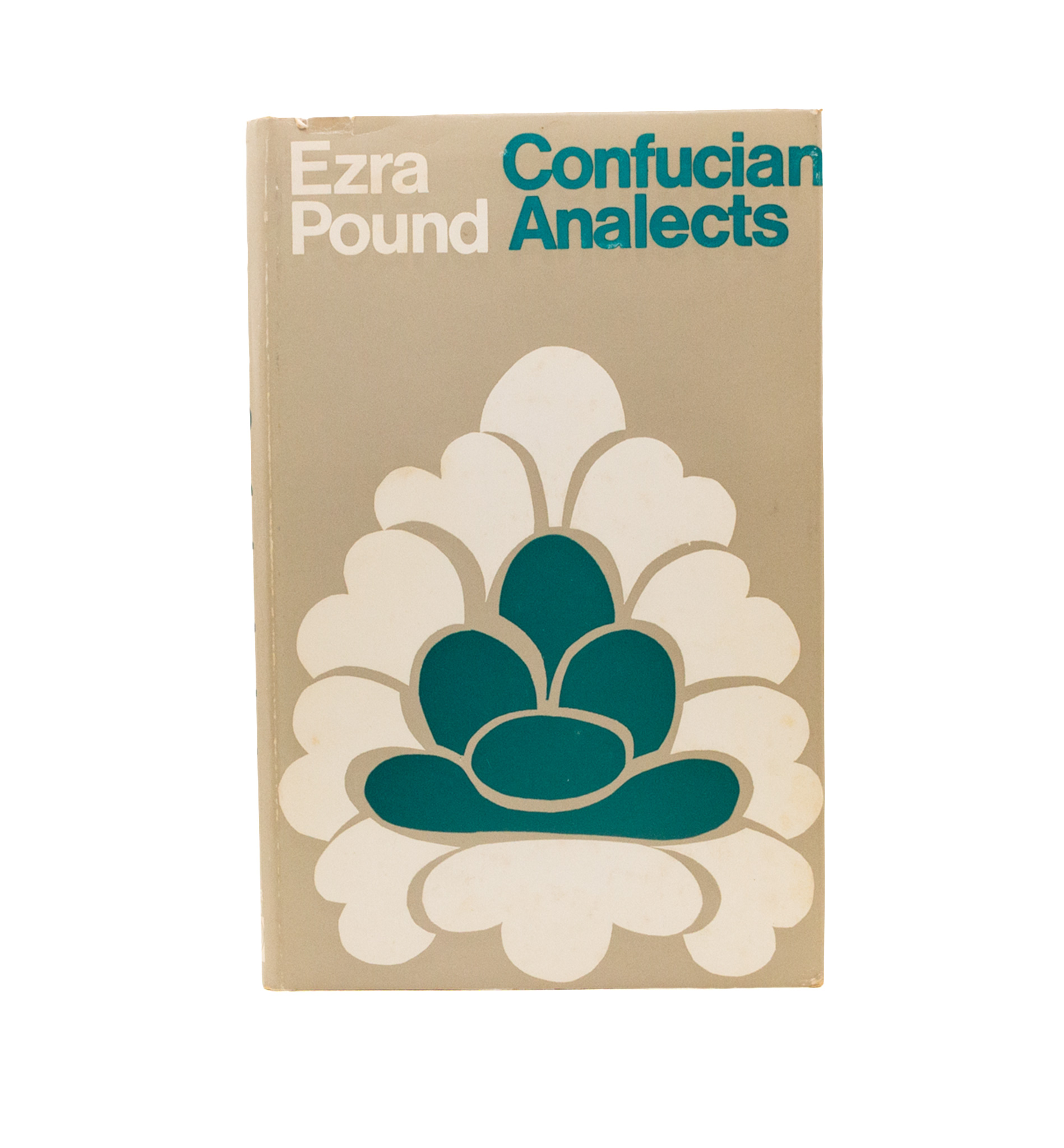
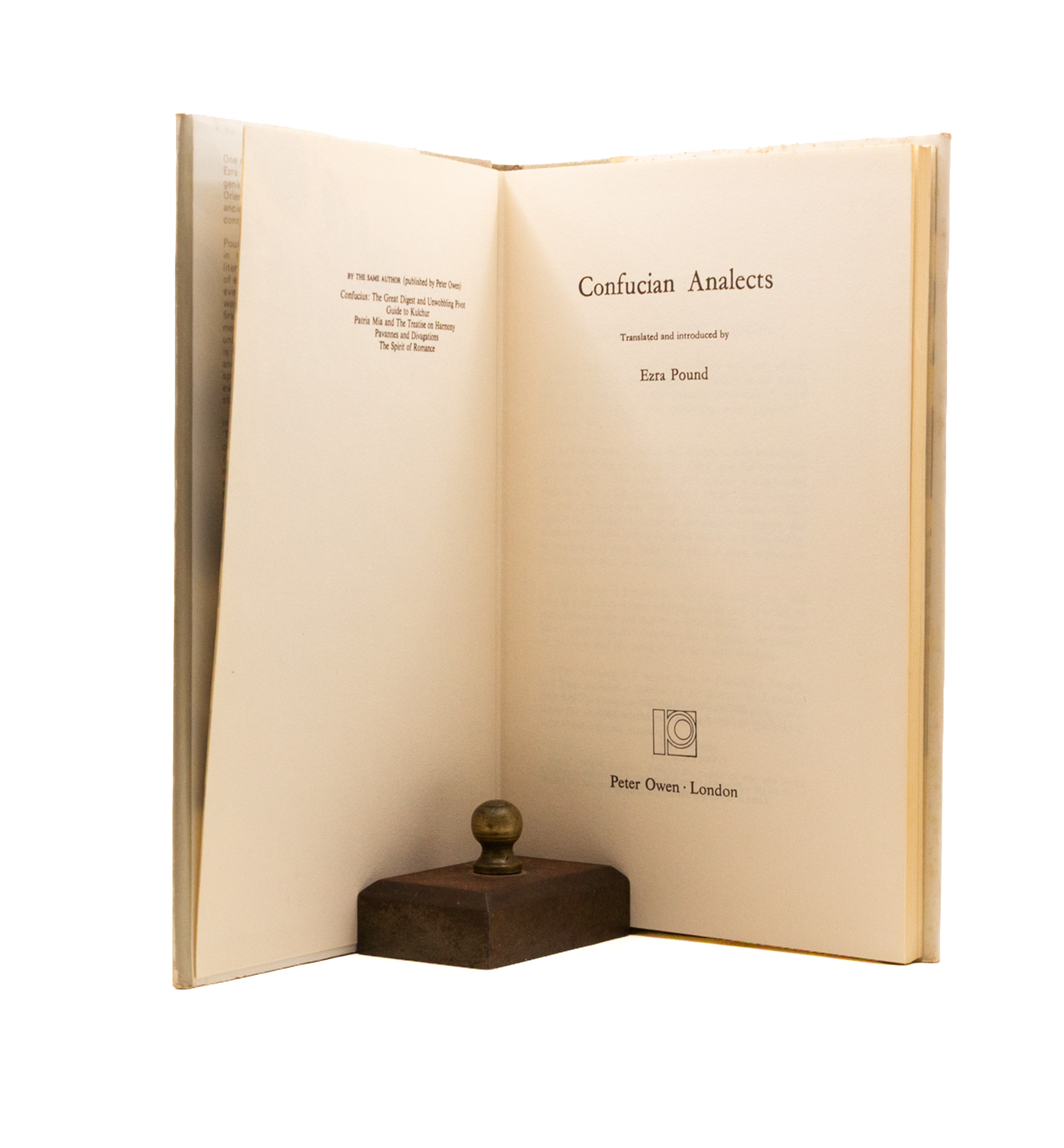
tap to cycle
Confucian Analects
Ezra Pound
Published London: Peter Owen, 1970
136pp.; 22.1 x 14.4 cm. Grey cloth boards lettered in teal down spine. White dust-jacket printed in grey and teal designed by Zette Braithwaite.
Part of Ezra Pound, VII
“The Analects… are the oddments which Kung’s circle found indispensable, and for 2,500 years the most intelligent men of China have tried to add to them or to subtract… Aristotle OR Plato, as if there were no other roads to serenity.”
— Procedure, p.7
First English edition, reprinted. One or two pencil annotations by David Moody near the start. A fine book; jacket with minimal wear. Not in Gallup.
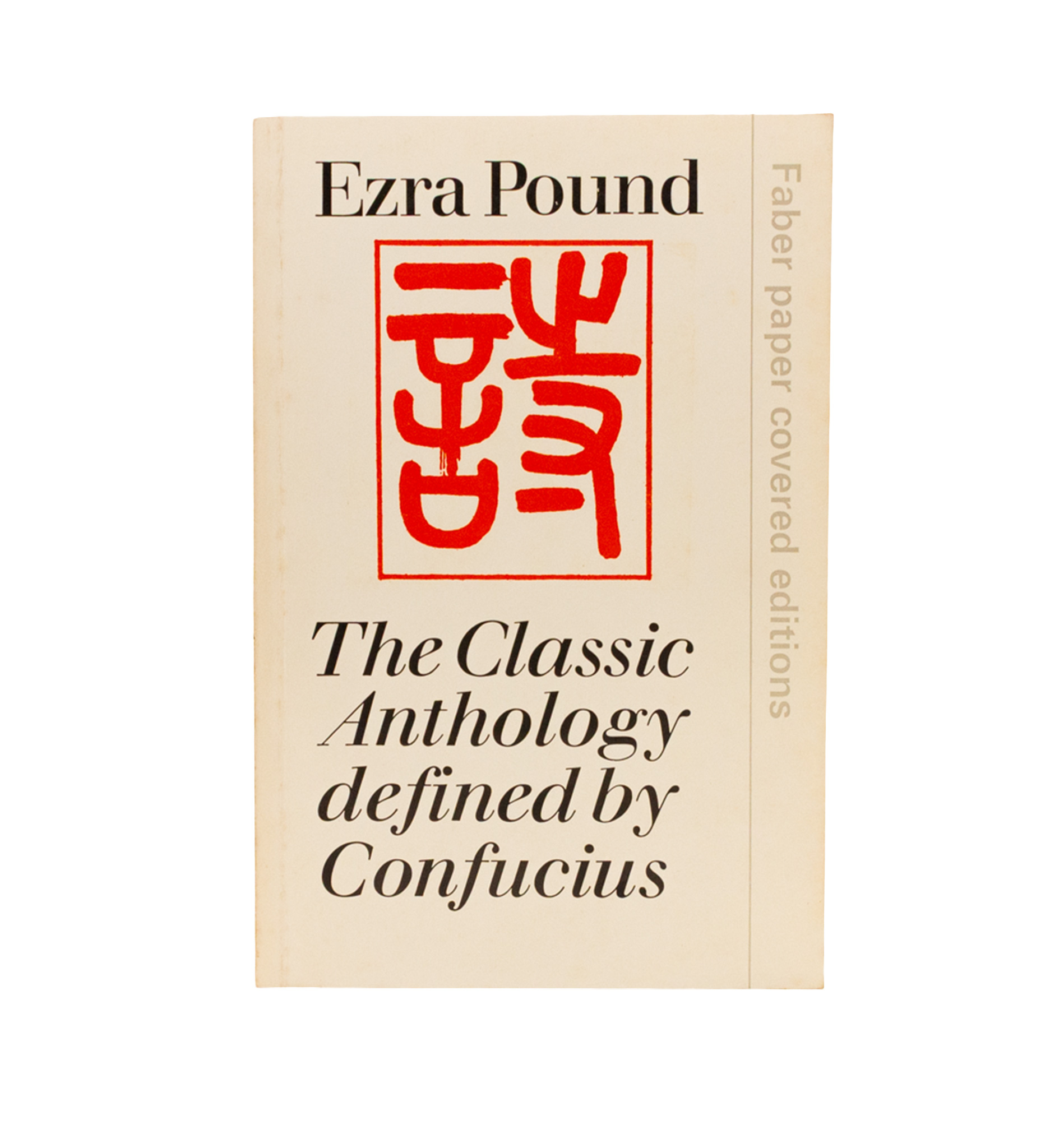

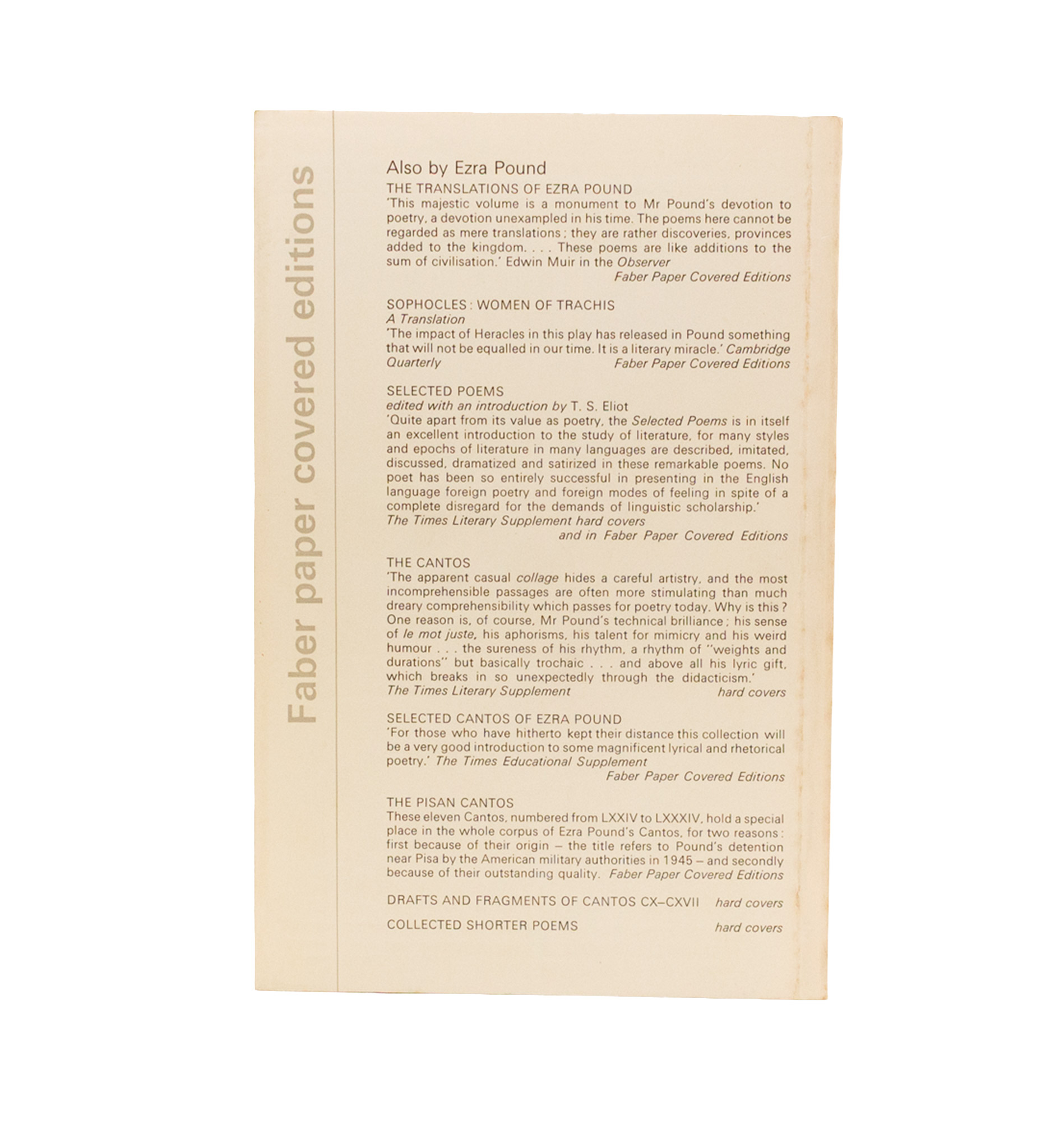
tap to cycle
The Classic Anthology defined by Confucius
Ezra Pound
Published London: Faber and Faber, 1974
306pp.; 19.7 x 12.9 cm. White wrappers printed in black and red.
Part of Ezra Pound, VII
A later publication of the 1954 edition; 305 Confucian poems translated into English by EP. Slight wear / creasing to the wraps, but fine inside. Detailed under Gallup A96b but not indexed.
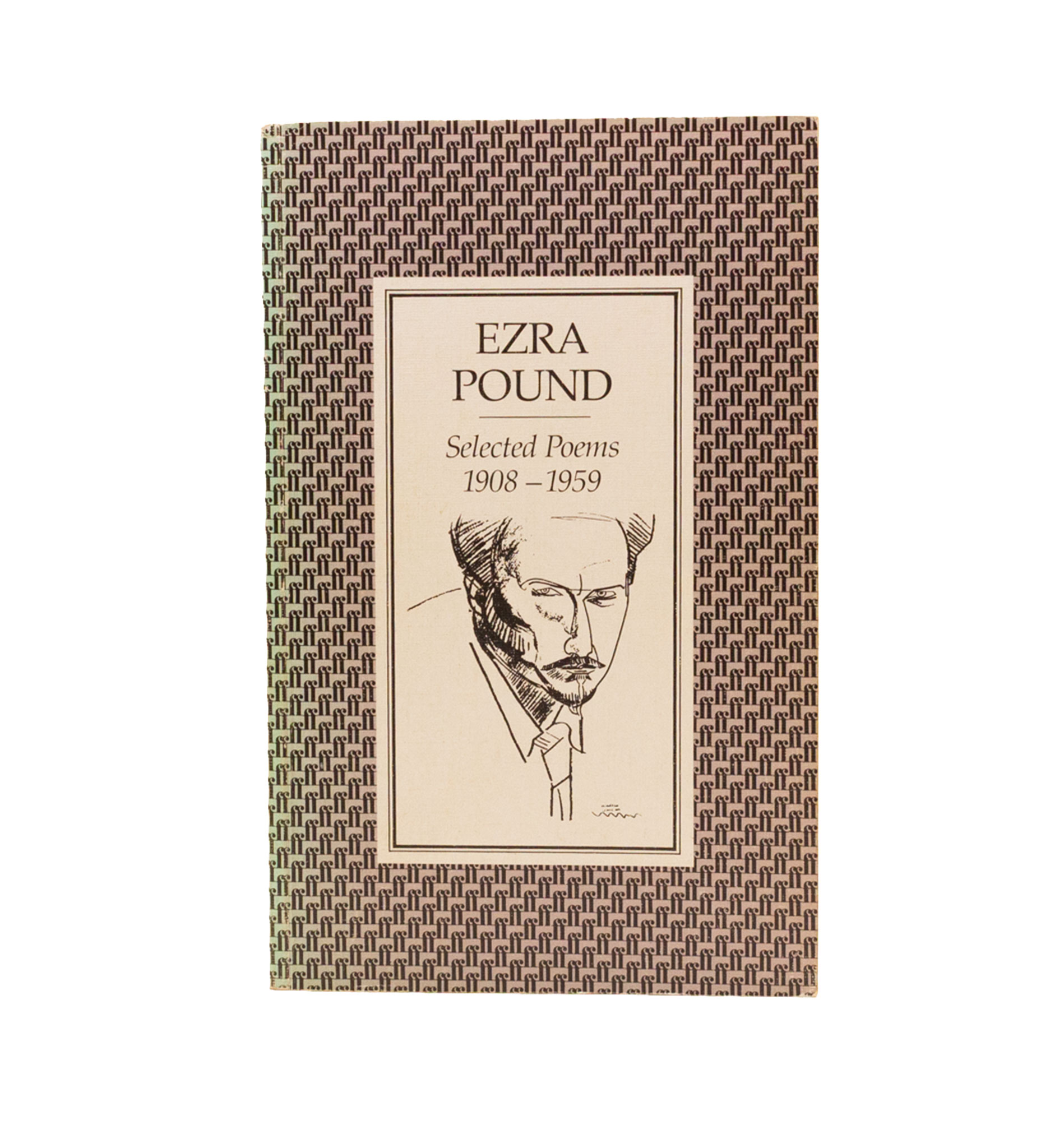
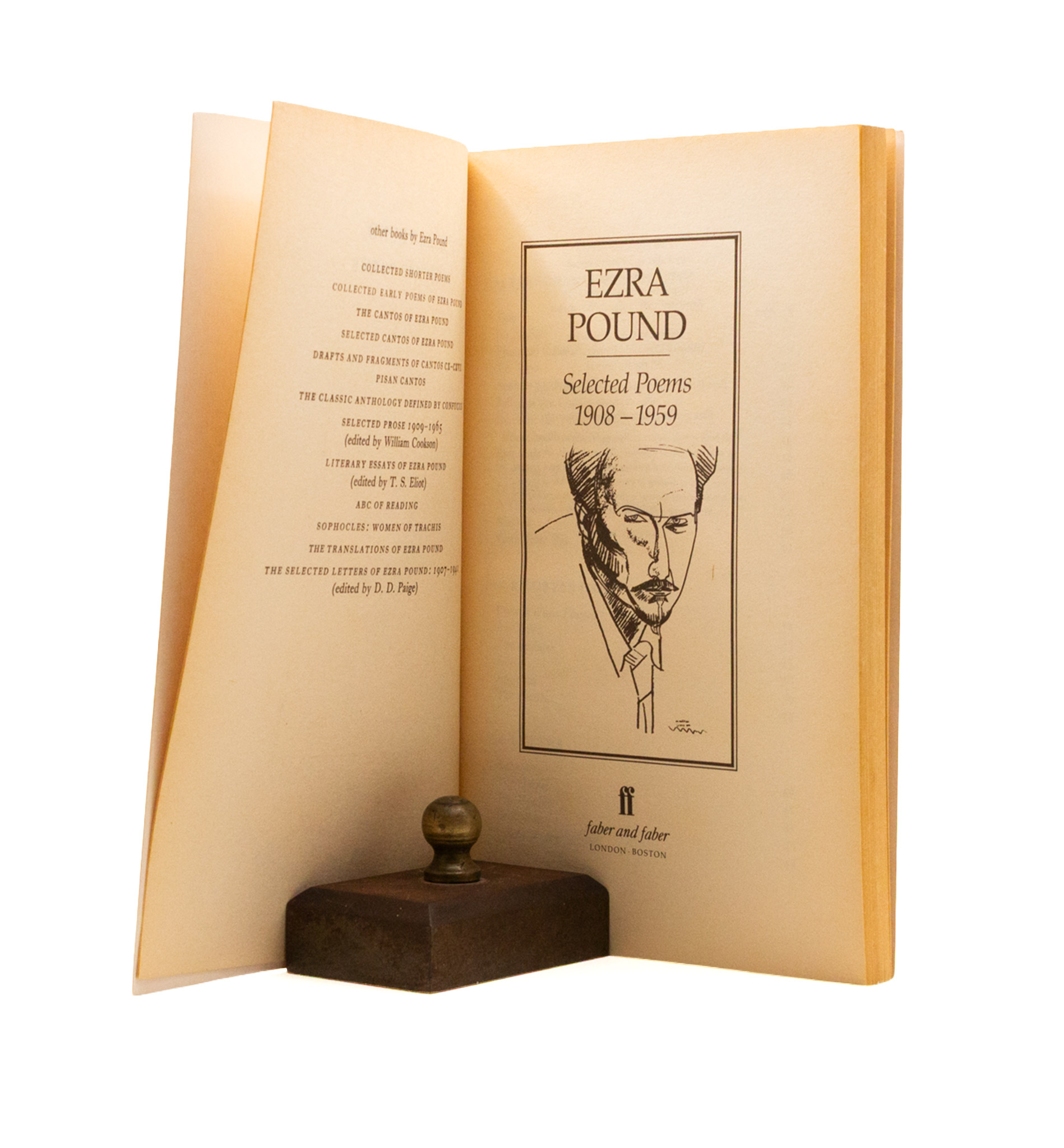

tap to cycle
Selected Poems, 1908-1959
Ezra Pound
Published London: Faber and Faber, 1990
192pp.; 19.8 x 12.6 cm. Stiff white paper wraps printed in black and purple.
Part of Ezra Pound, VII
A fourth reprinting after additions of Faber’s paperback Selected Poems, with David Moody’s brief pencil annotations to the contents pages noting Cathay as “complete” and denoting the order of appearance of the poems in Personae, 1908, 1909, 1910. Fine save discolouring and light creasing to the spine. This printing too late for Gallup, but otherwise A97b.


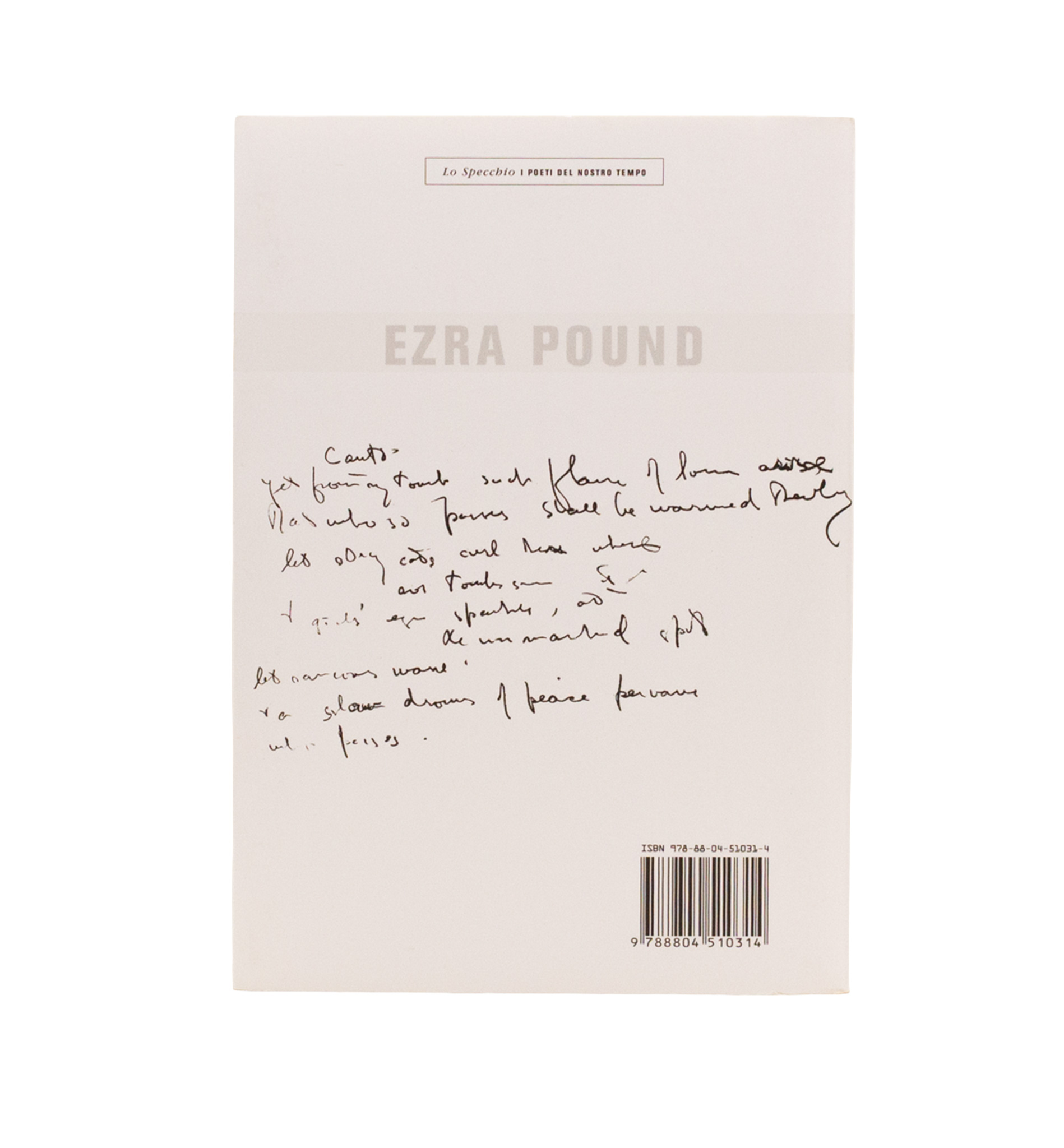
tap to cycle
Canti Postumi
Ezra Pound
Massimo Bacigalupo, editor
Published Milan: Mondadori, 2012
298pp.; 18.1 x 12.9 cm. Stiff white paper wrappers printed in black and grey, french folds.
Part of Ezra Pound, VII
Second edition of the Posthumous Cantos, vis-à-vis Italian translations presumably by Massimo Bacigalupo. Occasional ingiallendo to the edges, top right corner bumped, but overall very nice. Much too late for Gallup.

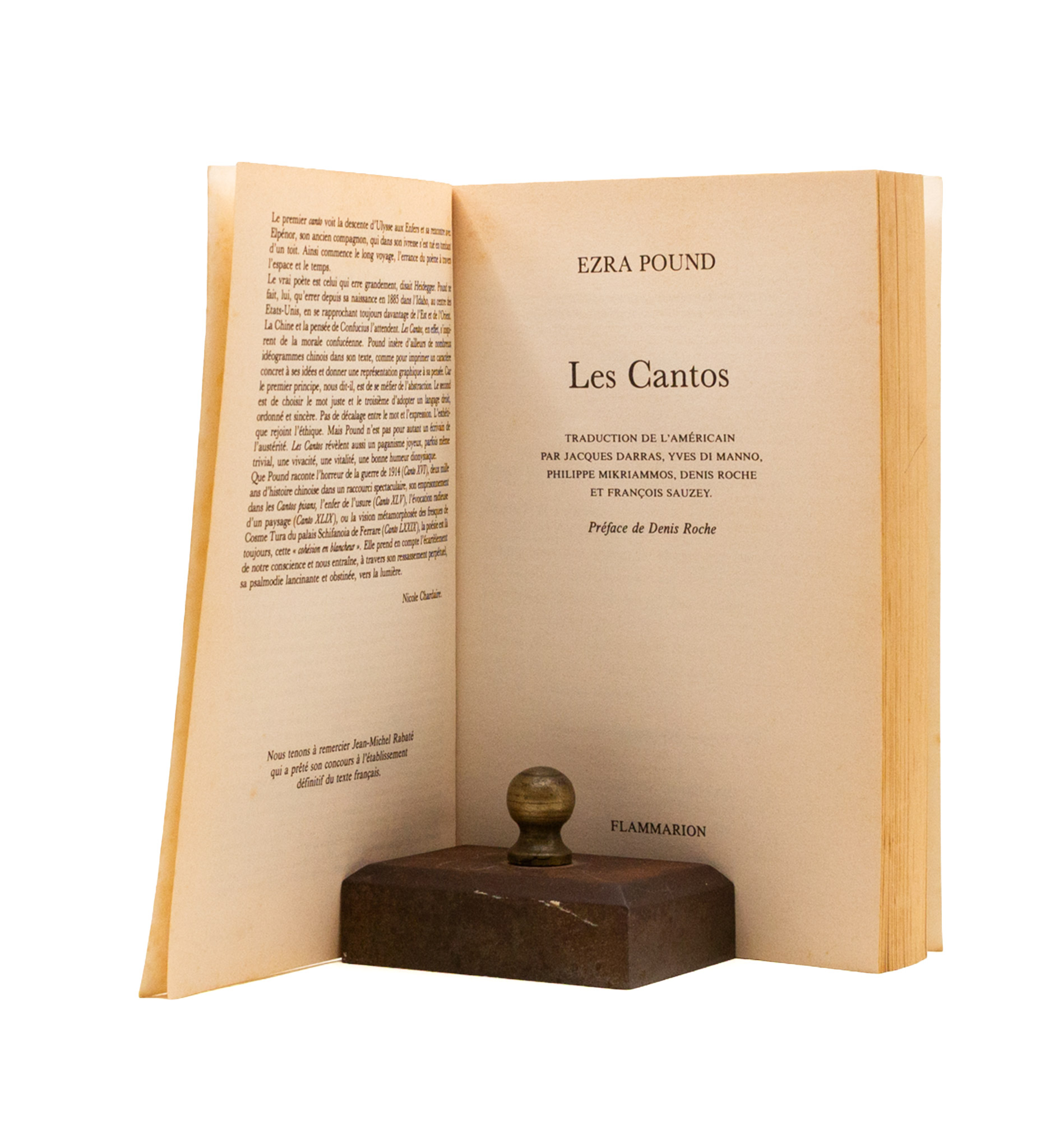
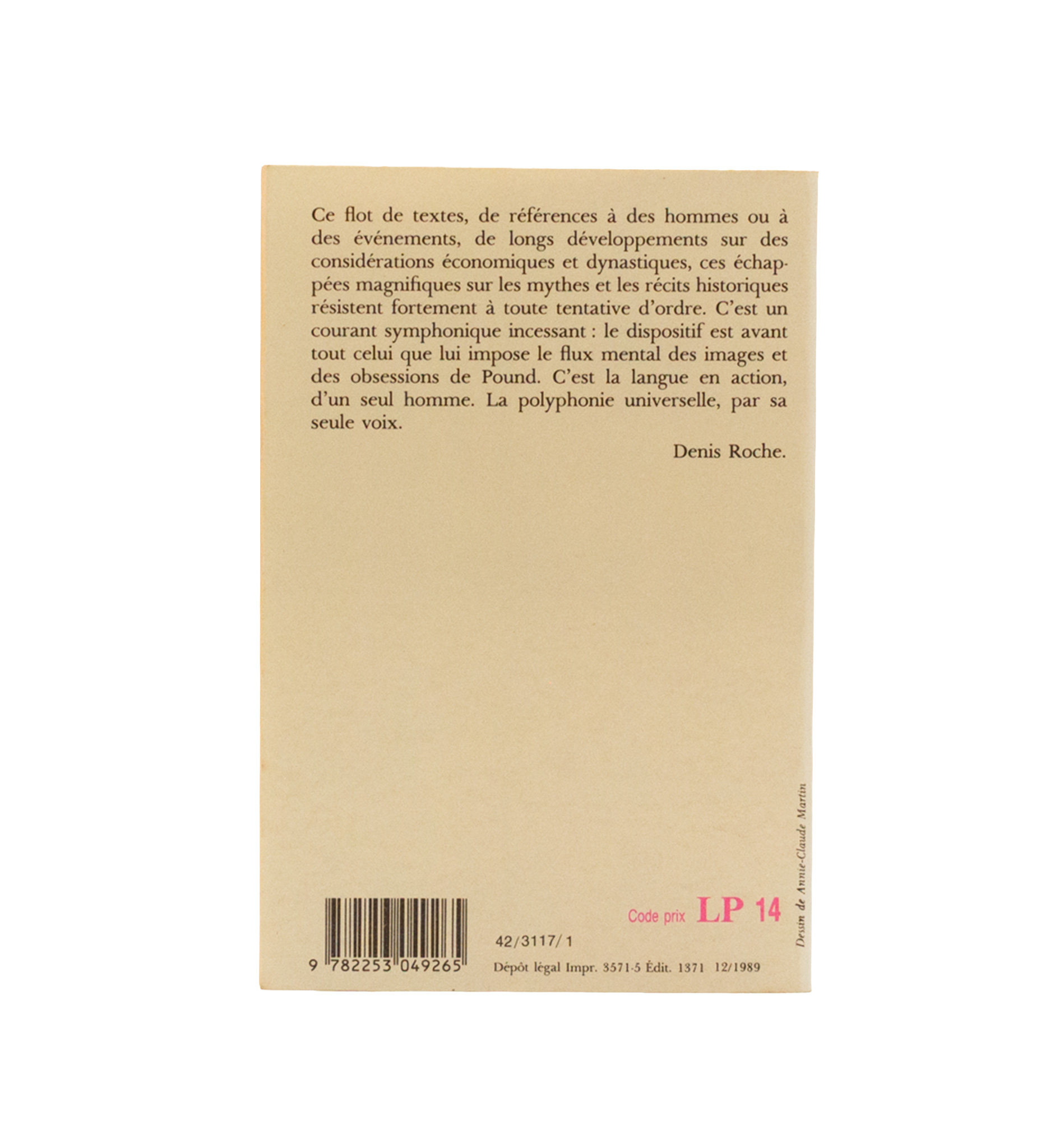
tap to cycle
Les Cantos
Ezra Pound
Jacques Darras, Yves di Manno, Philippe Mikriammos, Denis Roche, François Sauzey, translators
Denis Roche, foreword
Published Flammarion, 1986
384pp.; 16.5 x 11 cm. Stiff white paper wraps printed in grey, brown, red and black.
Part of Ezra Pound, VII
French translations of select cantos from XXX to Thrones, by five translators. Scarce pocket edition. A very good copy slightly browned at the edges of the paper. Too late for Gallup.
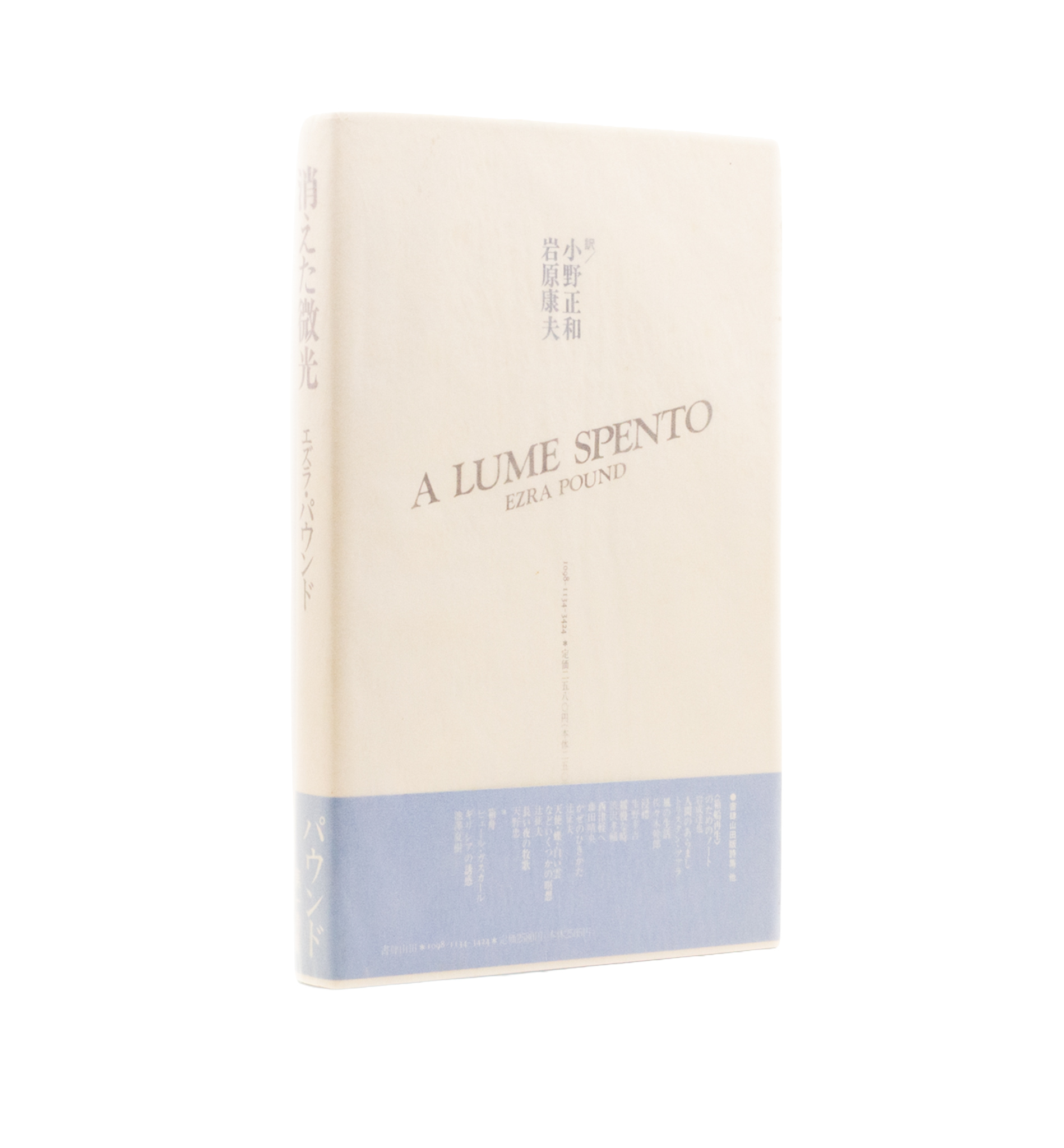
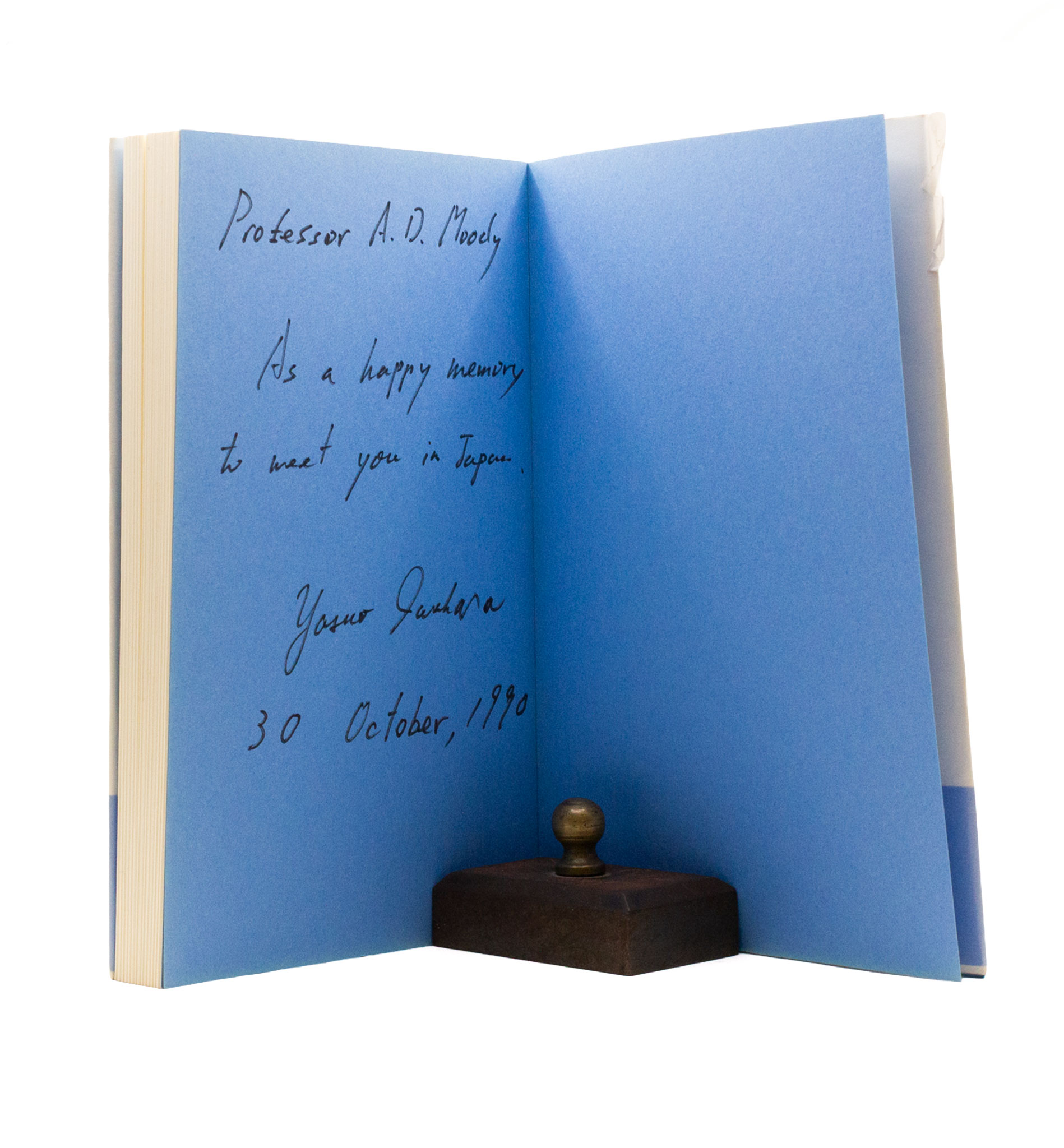
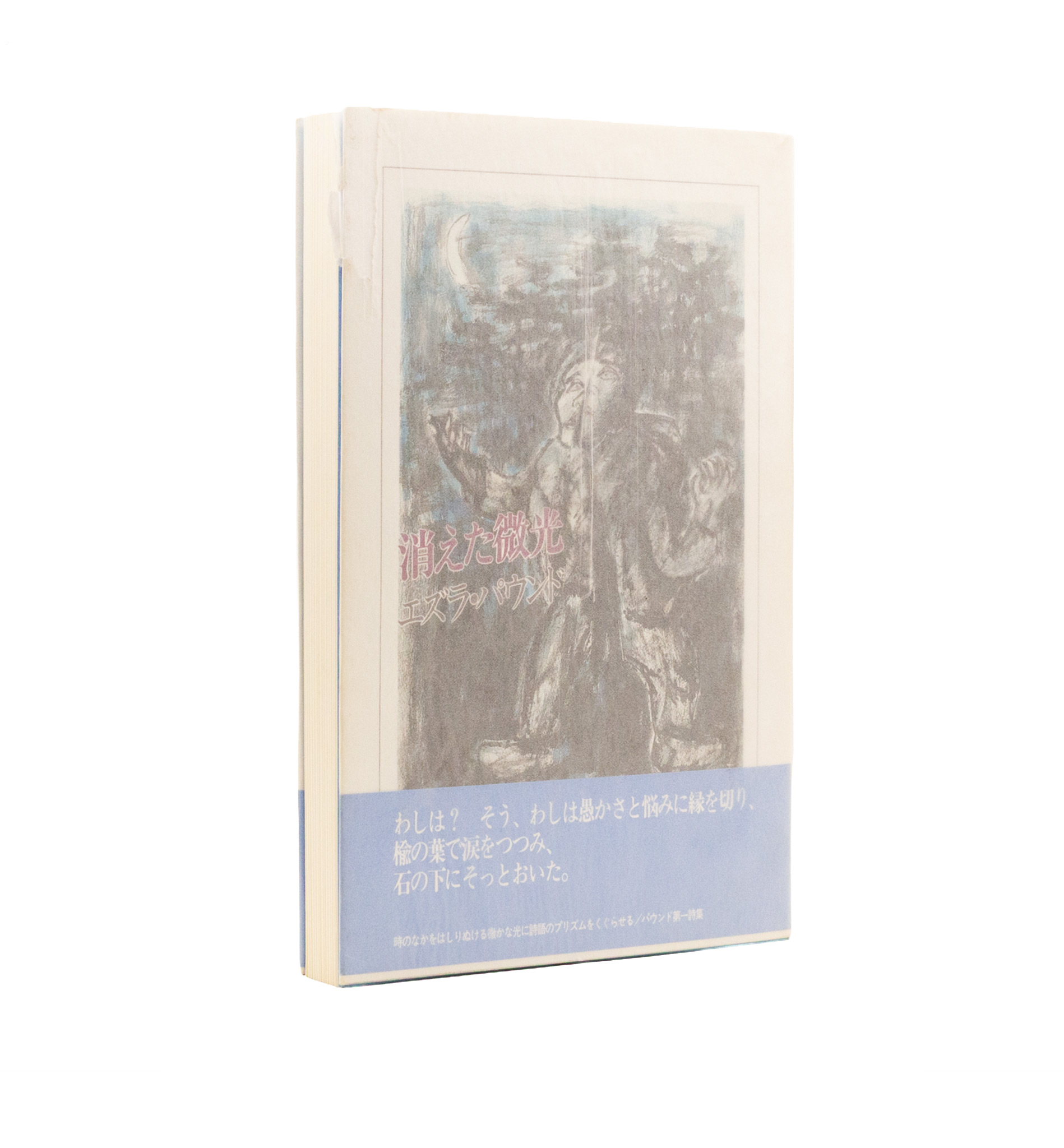
tap to cycle
A Lume Spento
Ezra Pound
Yasuo Iwahara, translator
Published Tokyo: Shoshi Yamada, 1987
213pp.; 21.8 x 14 cm. Blue buff paper wraps printed in dark blue to rear. White dust-jacket printed in black and blue, wrapped in glassine.
Part of Ezra Pound, VII
First Japanese translation of Pound’s first book of poems. With a small white postcard and two price lists laid-in. Inscribed to A. David Moody by the translator on second ffep (leafing right to left), dated October 1990. A small break to the tissue on (back to) front cover. Too late for Gallup.
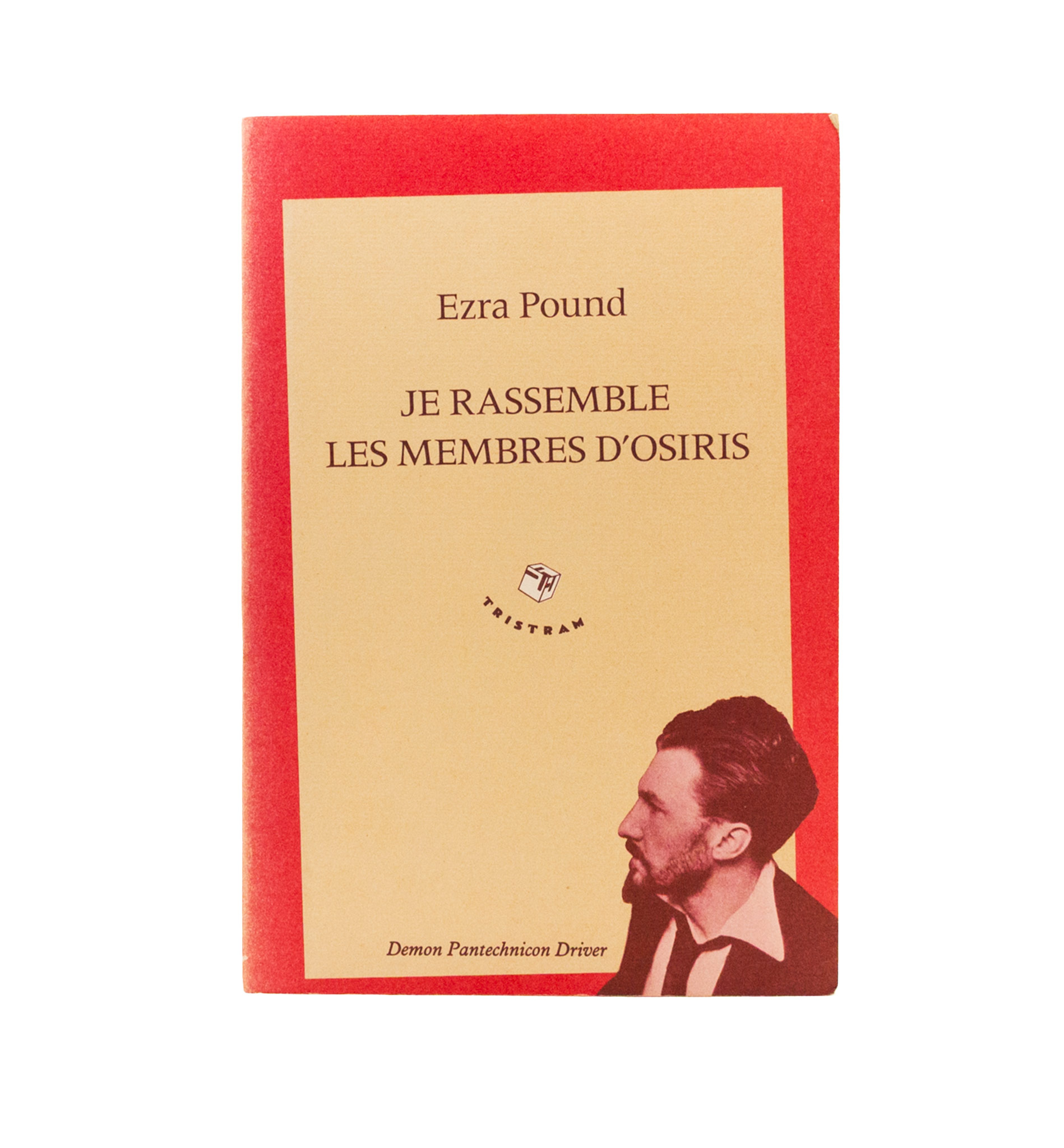
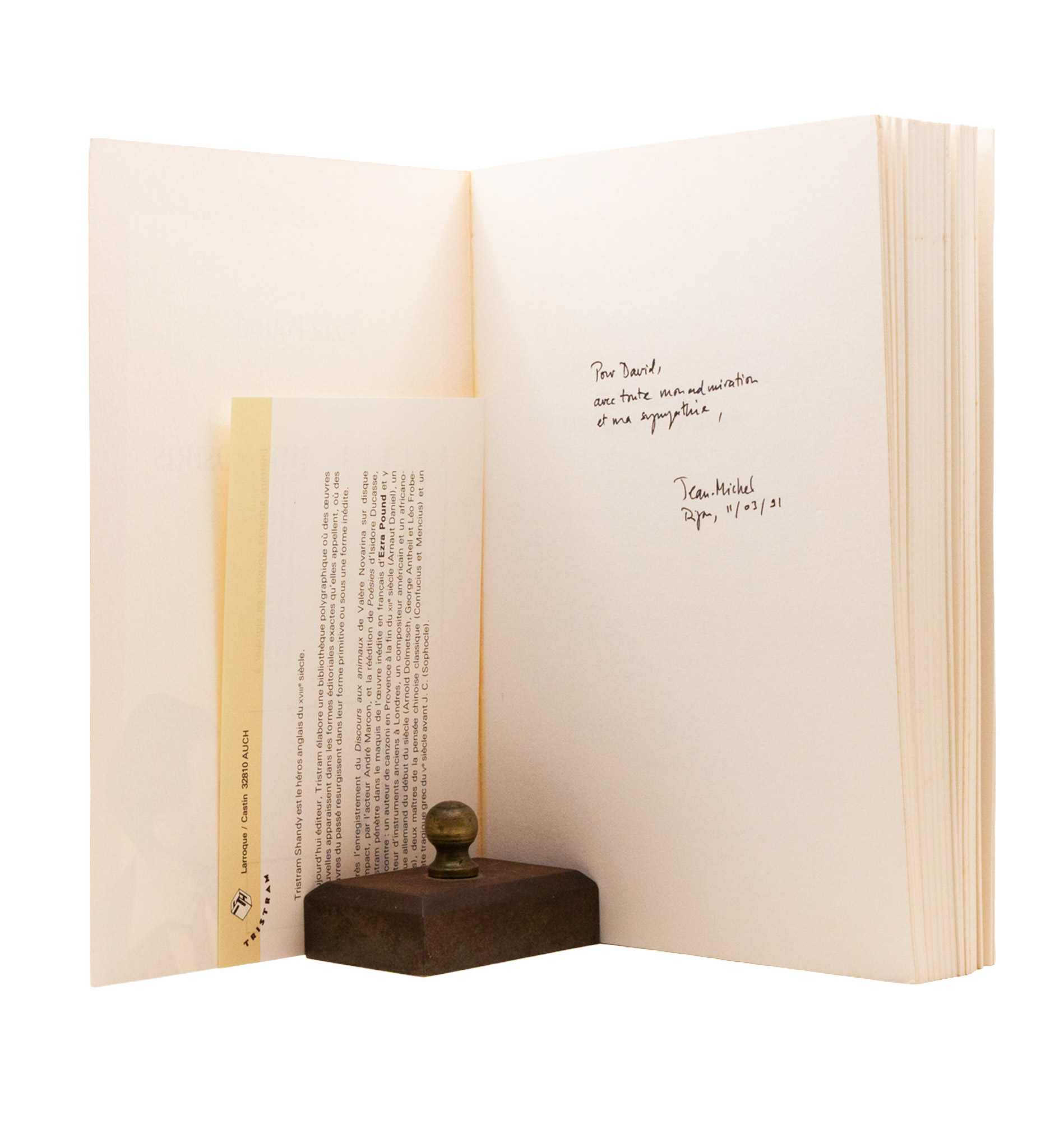
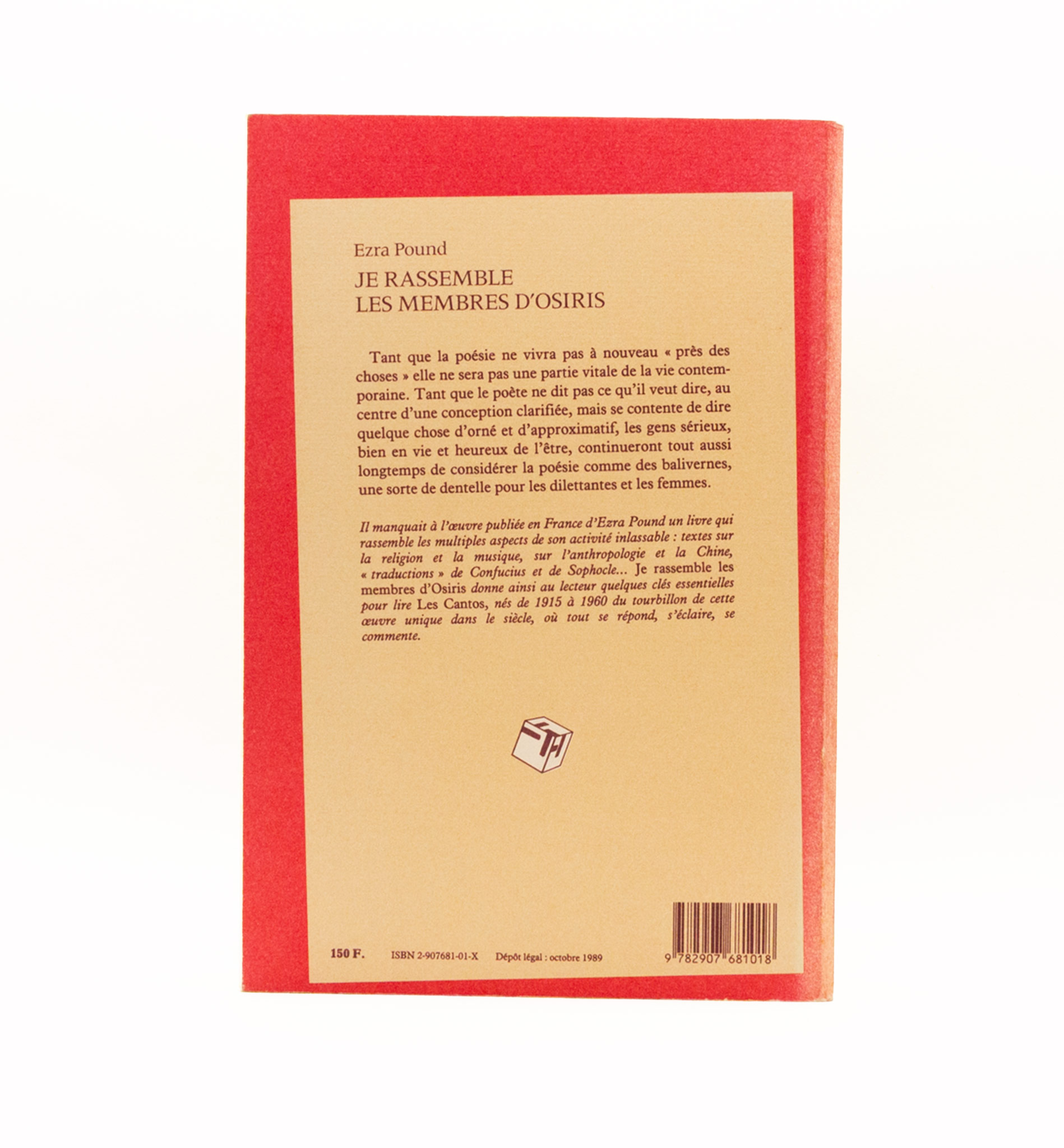
tap to cycle
Je Rassemble Les Membres d’Osiris
Ezra Pound
Jean-Paul Auxeméry, Claude Minière et Margeret Tunstill, Jean-Michel Rabaté, translators
Jean-Michel Rabaté, introduction
Massimo Bacigalupo and Joël-Peter Shapiro, contributors
Published Tristram, 1989
372pp.; 21.6 x 14.7 cm. Heavy white paper wraps printed in brown, yellow and red.
Part of Ezra Pound, VII
First French translation of Pound’s essay, I Gather the Limbs of Osiris, containing Pound’s early scholarly method, Luminous Detail, first appearing in the New Age, Nov. 1911 to Feb. 1912. Inscribed to A. David Moody by Jean-Michel Rabaté on the ffep, dated Dijon, March 1991. With David Moody’s occasional pencil inscription and a handwritten note laid in. A further postcard announcement laid-in from the publisher. Some light sunning at edge of spine, and a light crease to spine. Too late for Gallup.
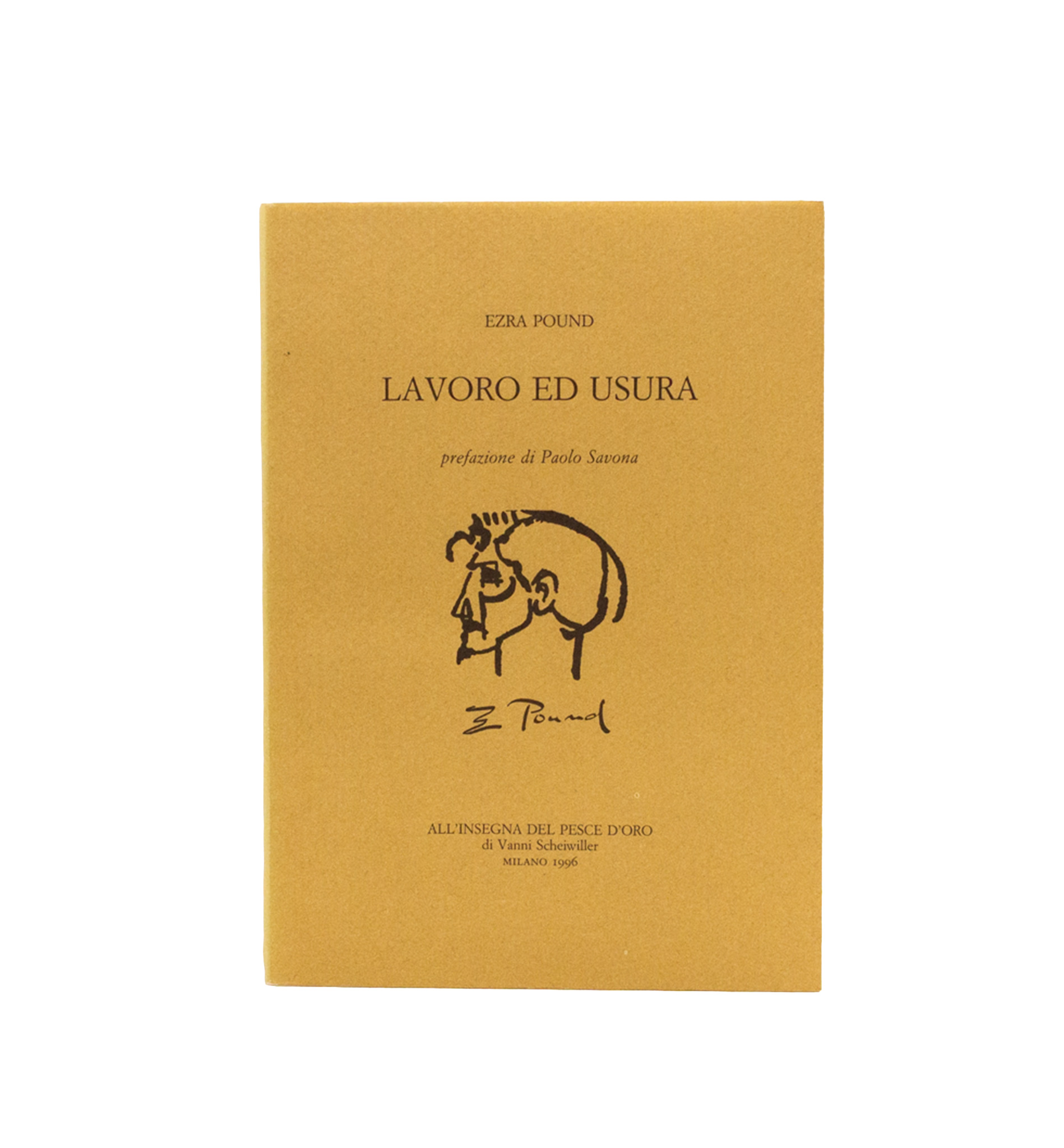
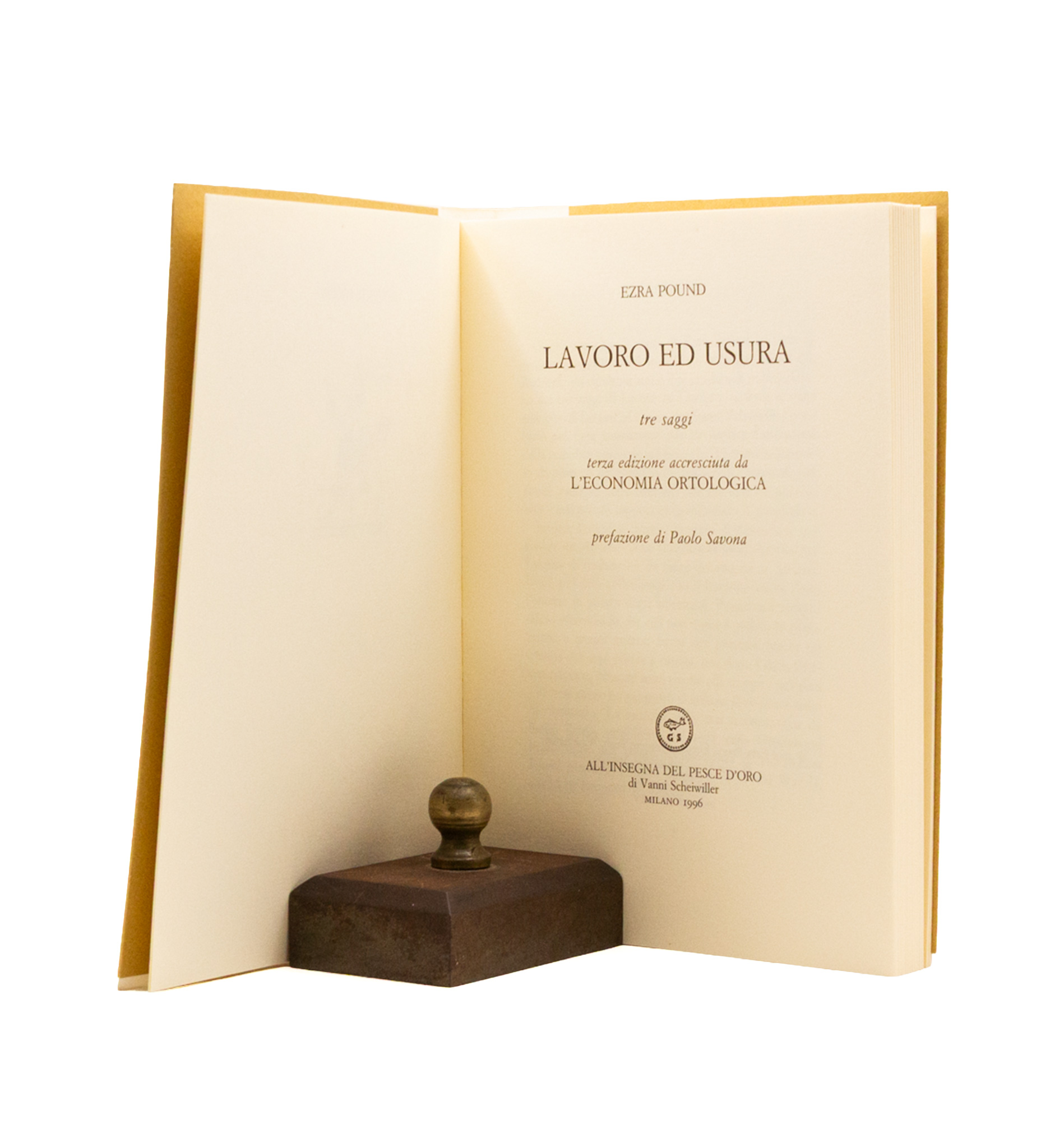

tap to cycle
Lavoro ed Usura
Ezra Pound
Paolo Savona, foreword
Published Milan: All’Insegna del Pesce d’Oro, 1996
207pp.; 17 x 12.1 cm. Plain white paper wrappers. Buff, tan paper dust-jacket printed in black.
Part of Ezra Pound, VII
Three essays of Pound’s written between 1933 and 1944, all composed originally in Italian, being Lavoro ed Usura (consisting of: Oro e Lavoro, L’America, Roosevelt, e le cause della guerra presente, Introduzione alla natura economica degli S.U.A), L’Economia Ortologica and Nuova Economia Editoriale. Third edition after Pesce d’Oro’s 1954 and 1972 editions, with an added preface by Paolo Savona, Italian economist and politician. A fine copy. Too late for Gallup (give us Henderson!).

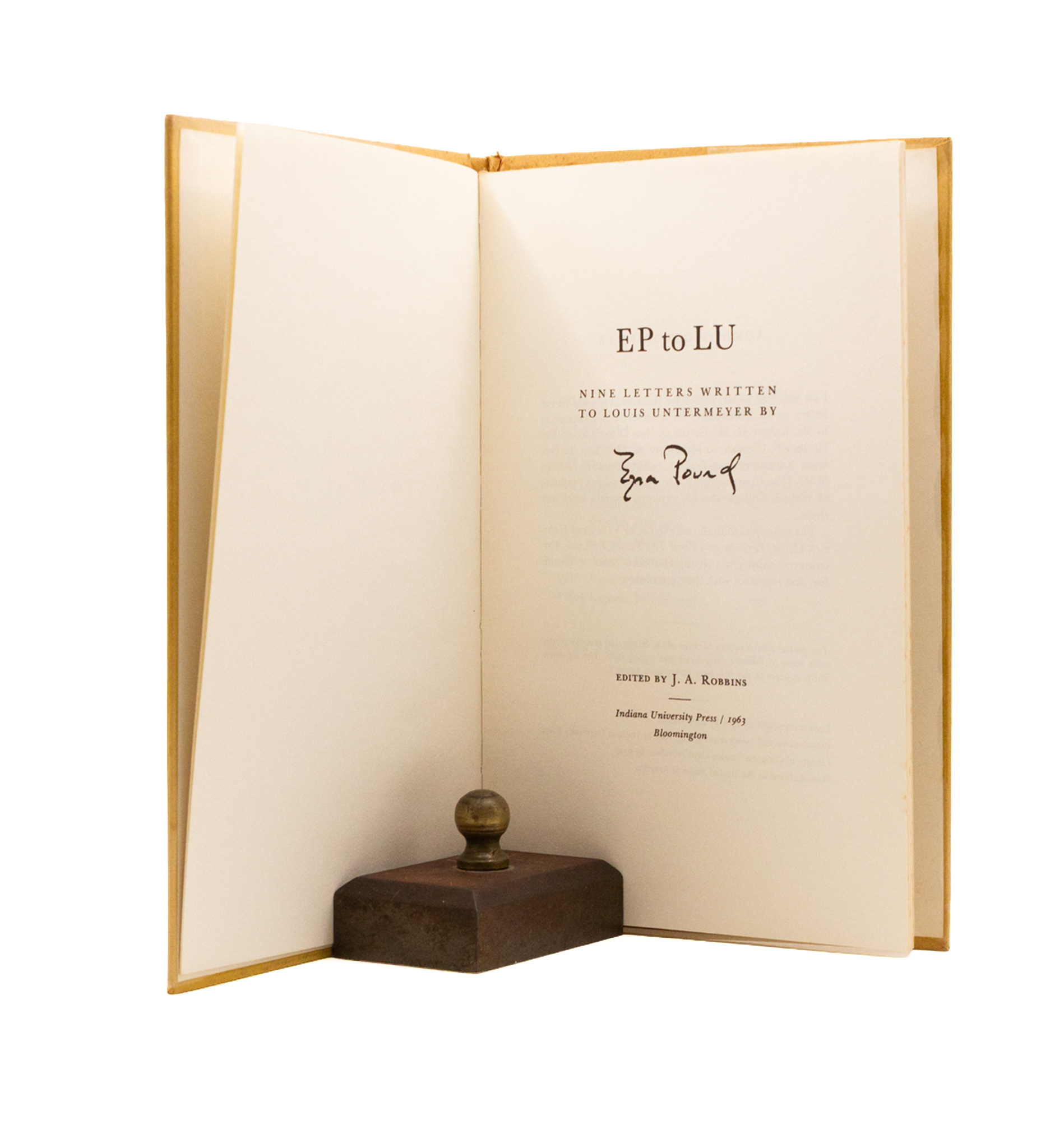
tap to cycle
EP to LU
J. A. Robbins, editor
Published Bloomington: Indiana University Press, 1963
48pp.; 21 x 13.6 cm. Brown paper boards stamped in blue on both covers and spine; plain acetate dust-jacket.
Part of Ezra Pound, VII
A selection of 9 letters from Pound to Louis Untermeyer, with reproductions of the originals. First & sole edition, mostly fine save spotting to top-edge, in the original acetate wrapper with two tape repairs to rear and well preserved. Gallup A81.

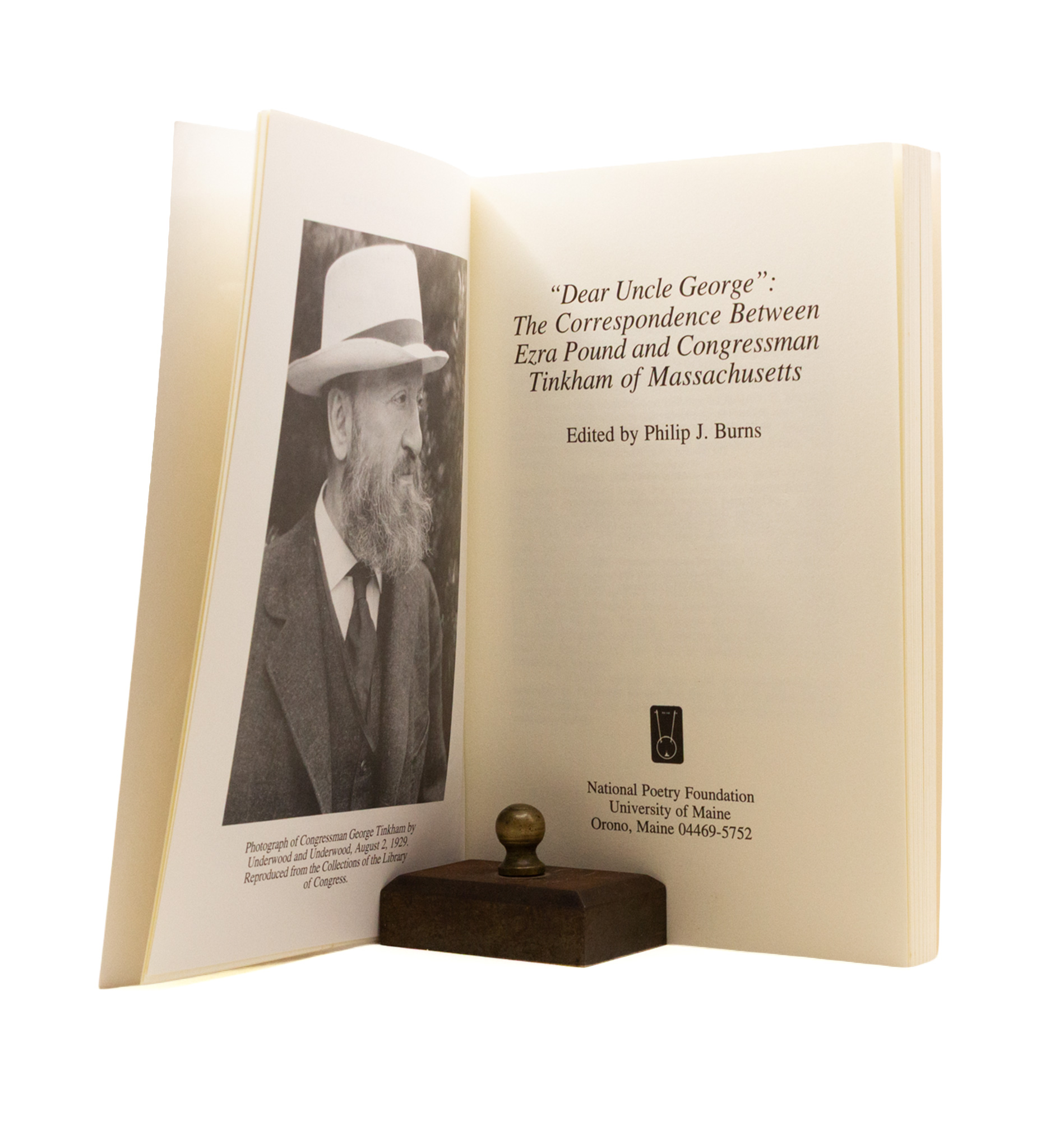
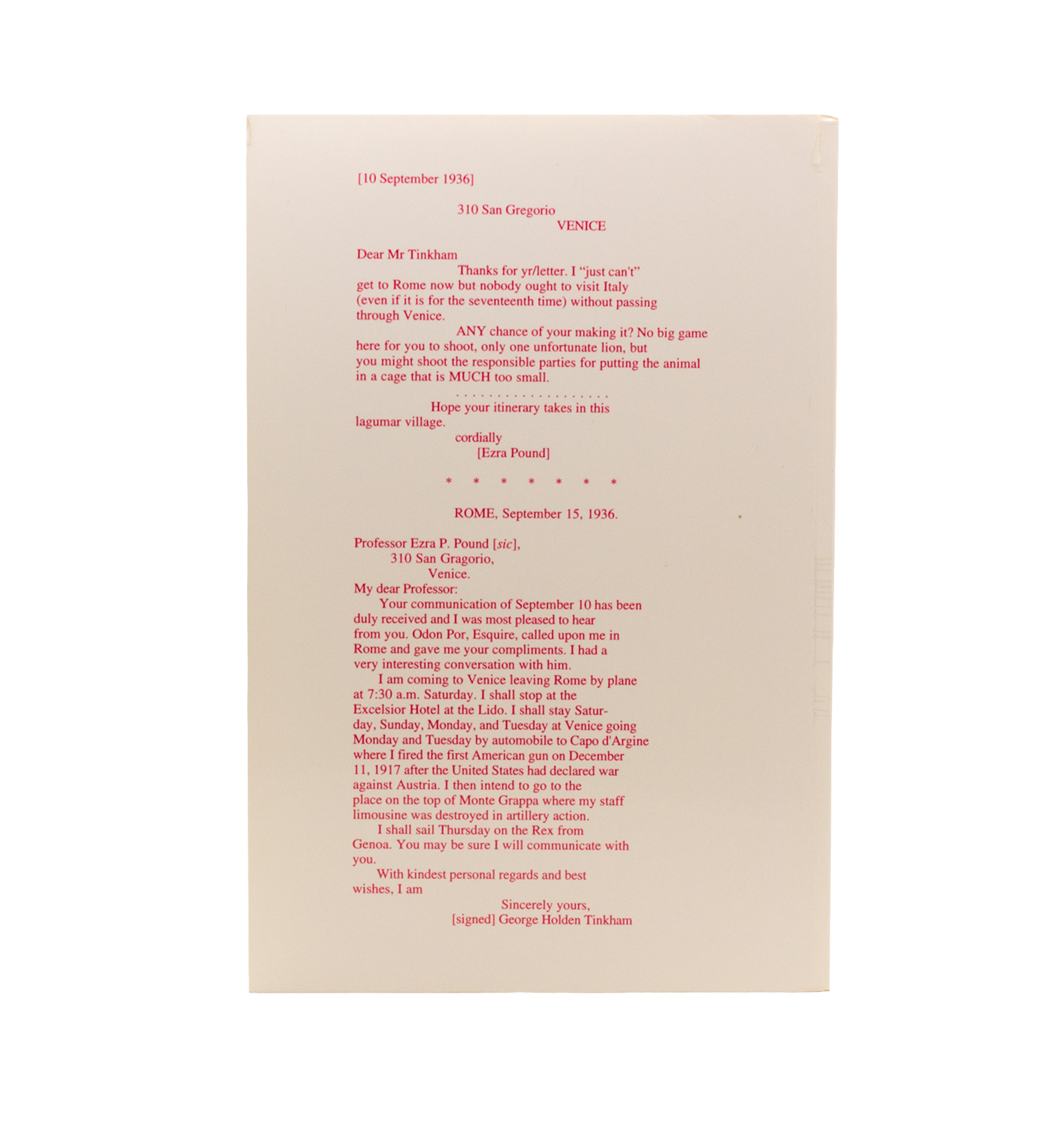
tap to cycle
“Dear Uncle George”: The Correspondence Between Ezra Pound and Congressman Tinkham of Massachusetts
Philip J. Burns, editor
Published Orono, ME: National Poetry Foundation, University of Maine, 1966
234pp.; 22.75 x 15.3 cm. Stiff white wrappers printed in pink and greyscale.
Part of Ezra Pound, VII
The last edition of letters, together with those to William Borah and Bronson Cutting, to make up the largest corpus of correspondence between Pound and American politicians. Letters concerning Pound’s anti-Roosevelt campaign, opportunities found in Tinkham to withold America from the League of Nations, and preparations for Pound’s visit to America in 1939. A fine copy, the spine faded, with a few pencil marks by A. David Moody to the introduction.
tap to cycle
Pound/Joyce, The Letters of
Forrest Read, editor
Published London: Faber and Faber, 1968
314pp.; 22.2 x 14.7 cm. Blue cloth boards lettered in gold on spine. White dust-jacket printed in black, red and green.
Part of Ezra Pound, VII
The first volume in The Correspondence of Ezra Pound series by New Direction, letters of EP to JJ with Pound’s essays on Joyce. Edited by Forrest Read, author of the megalithic ’76: One World. First English edition, published one year after the American. A mostly fine copy, slight shelf-wear at top & tail of spine, and a smudge on the copyright page. David Moody’s occasional pencil marginalia throughout. Gallup A88b.

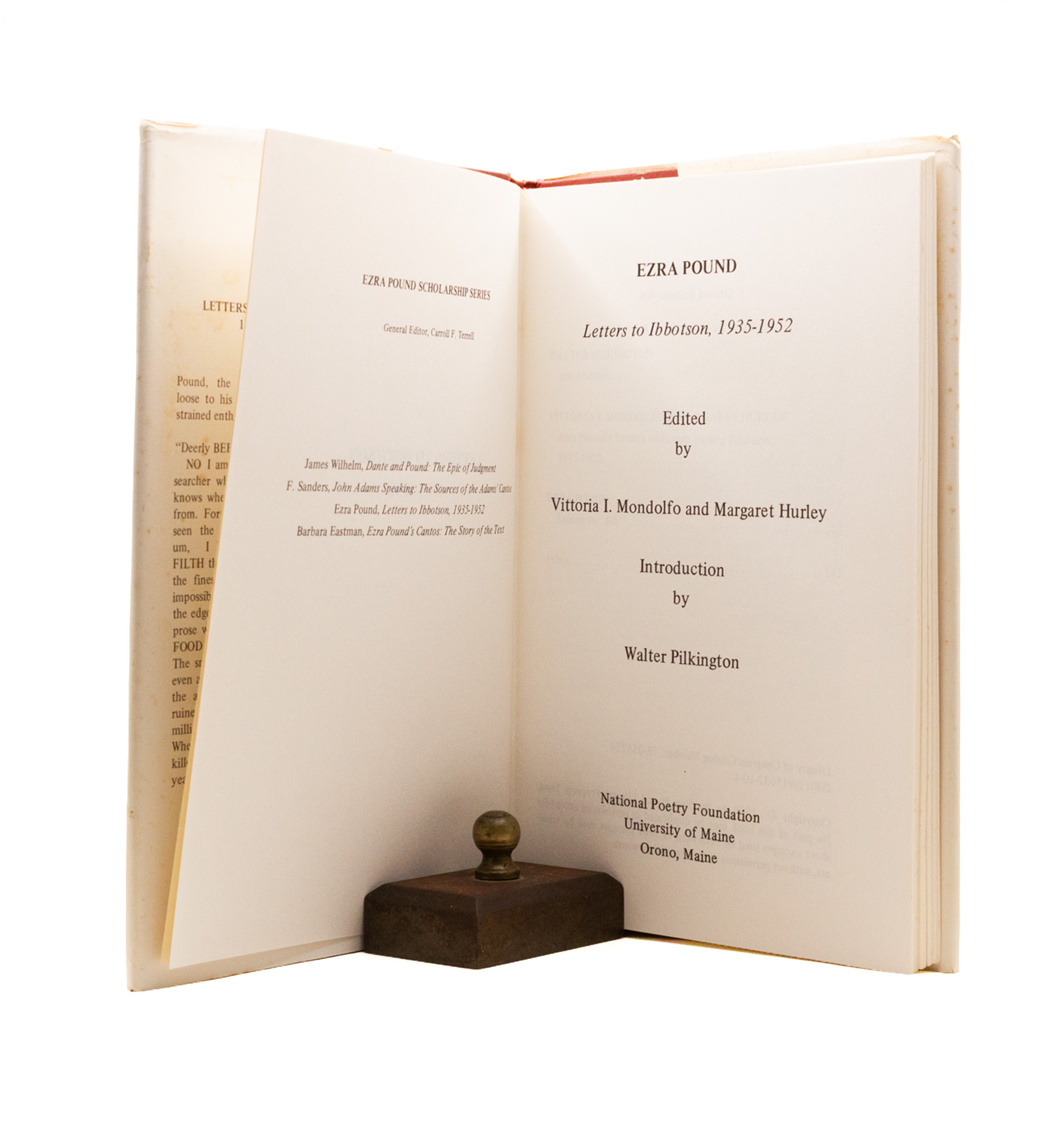
tap to cycle
Ezra Pound: Letters to Ibbotson, 1935-1952
Vittoria I. Mondolfo, Margaret Hurley, editors
Walter Pilkington, introduction
Published Maine: National Poetry Foundation, 1979
142pp.; 23.7 x 16.2 cm. Red cloth boards lettered in gold down spine. White laid-paper dust-jacket printed in black and orange.
Part of Ezra Pound, VII
Joseph Darling Ibbotson (1869-1952), or “BIB” to Pound, was a Professor of English Literature, Anglo-Saxon & Hebrew as well as Librarian at Hamilton College, and one of the three faculty members who influenced Pound’s career and remained friends for life. Pound’s photograph in the 1905 Hamiltonian is captioned “Bib’s pride,” and as Pound wrote to Prof. Harold W. Thompson of Cornell, “The CANTOS started in a talk with BIB.” These 36 letters, all from EP to Ibboston, with the occasoinal from DP, begin in 1935, with Pound in Rapallo, and end in 1952 on Ibbotson’s death. With scans of the originals. One of 400 copies, with the publisher’s errata slip laid-in. With pencil annotations by David Moody. Jacket lightly foxed, blooming on flaps, top-edge lightly worn; top-edge of leaves spotted. Gallup A102.

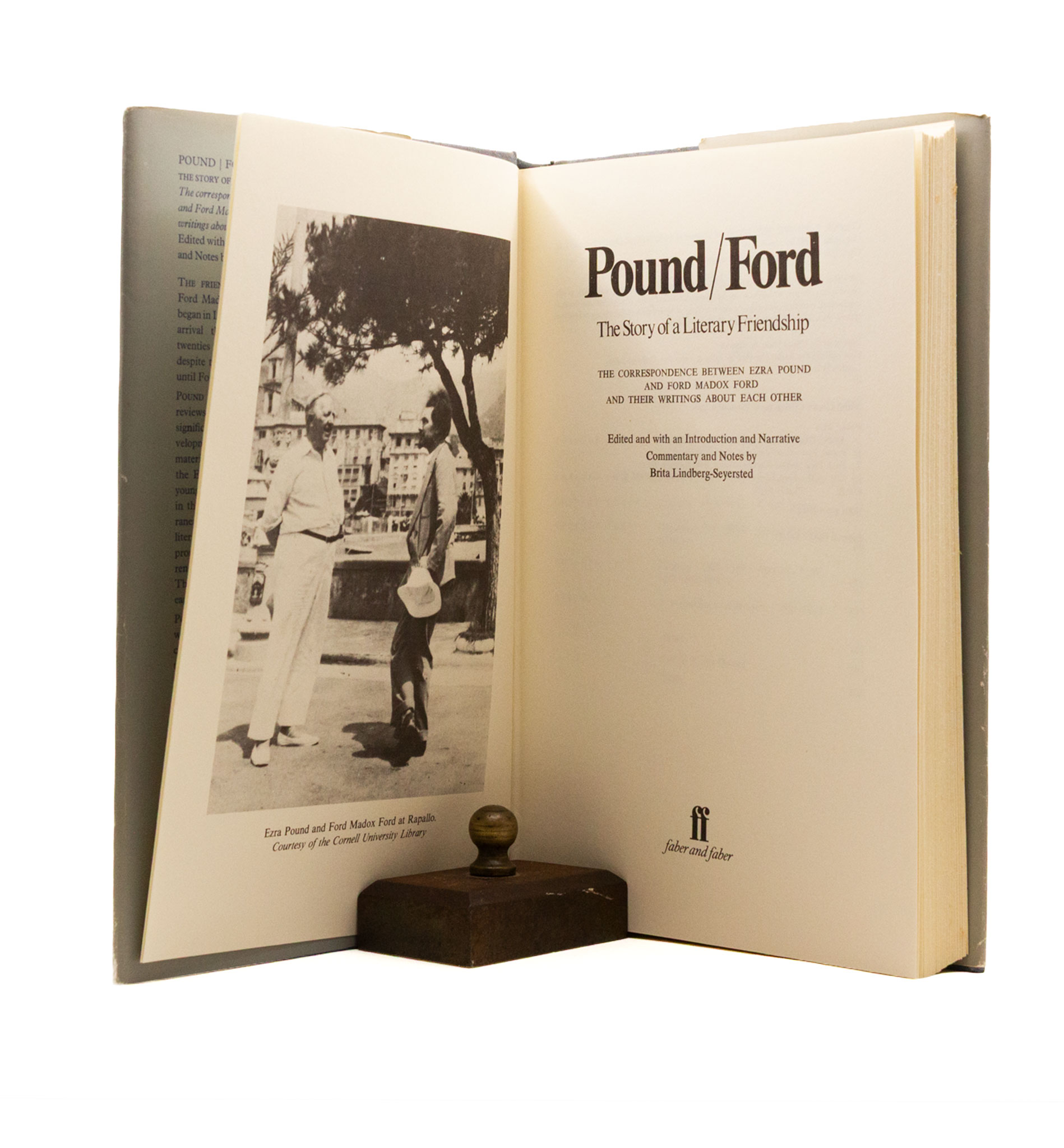
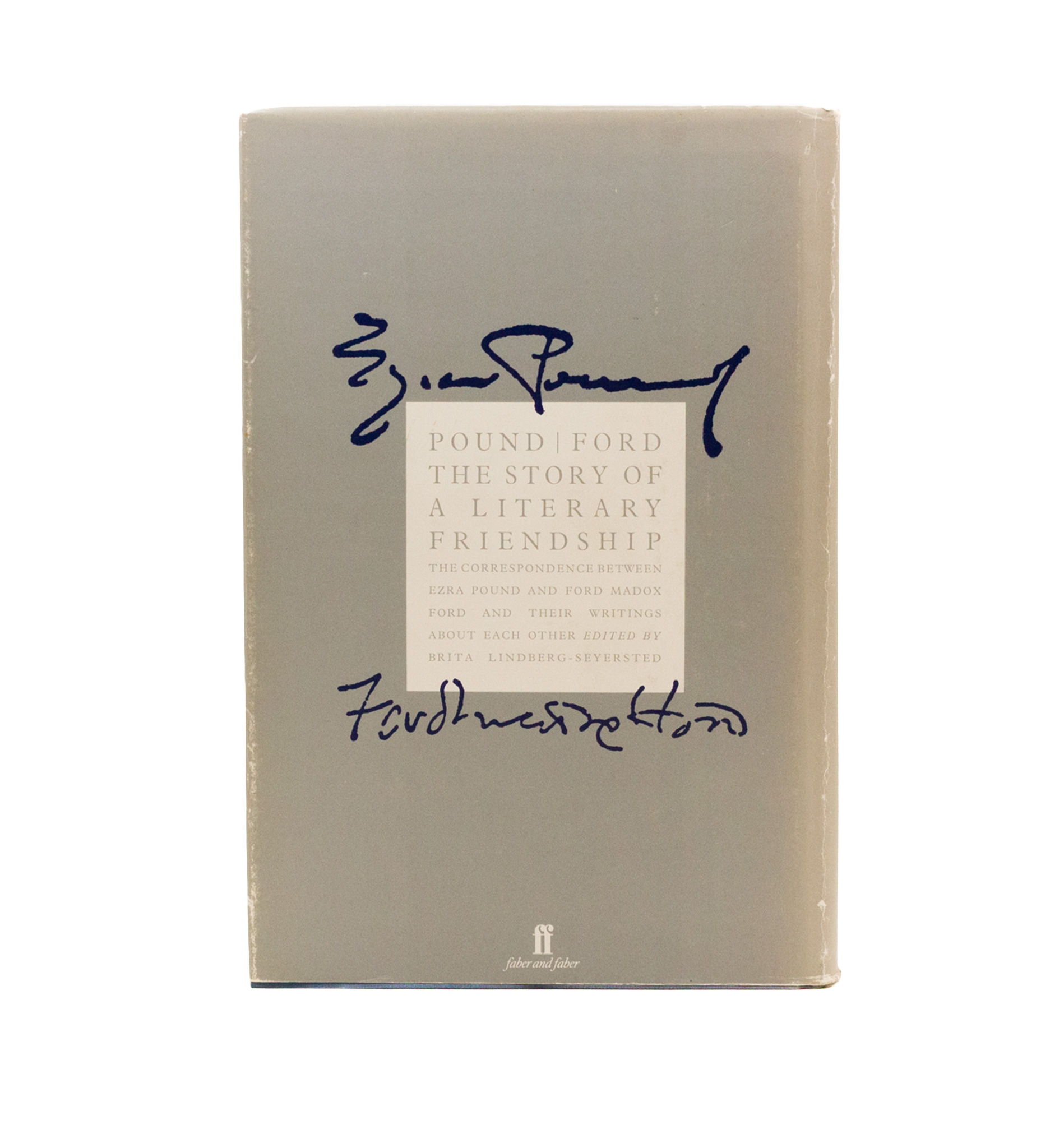
tap to cycle
Pound/Ford: The Story of a Literary Friendship
Brita Lindberg-Seyersted, editor
Published London: Faber and Faber, 1982
222pp.; 23.6 x 15.9 cm. Blue cloth boards stamped in gold down spine. White dust-jacket printed in grey and blue.
Part of Ezra Pound, VII
The second instalment in The Correspondence of Ezra Pound series by New Directions, this here the first English edition published concurrently with the American. Very occasional symbolic pencil annotation by David Moody in the margins. Light wear to fore-edges and spine of jacket. Too late for Gallup.

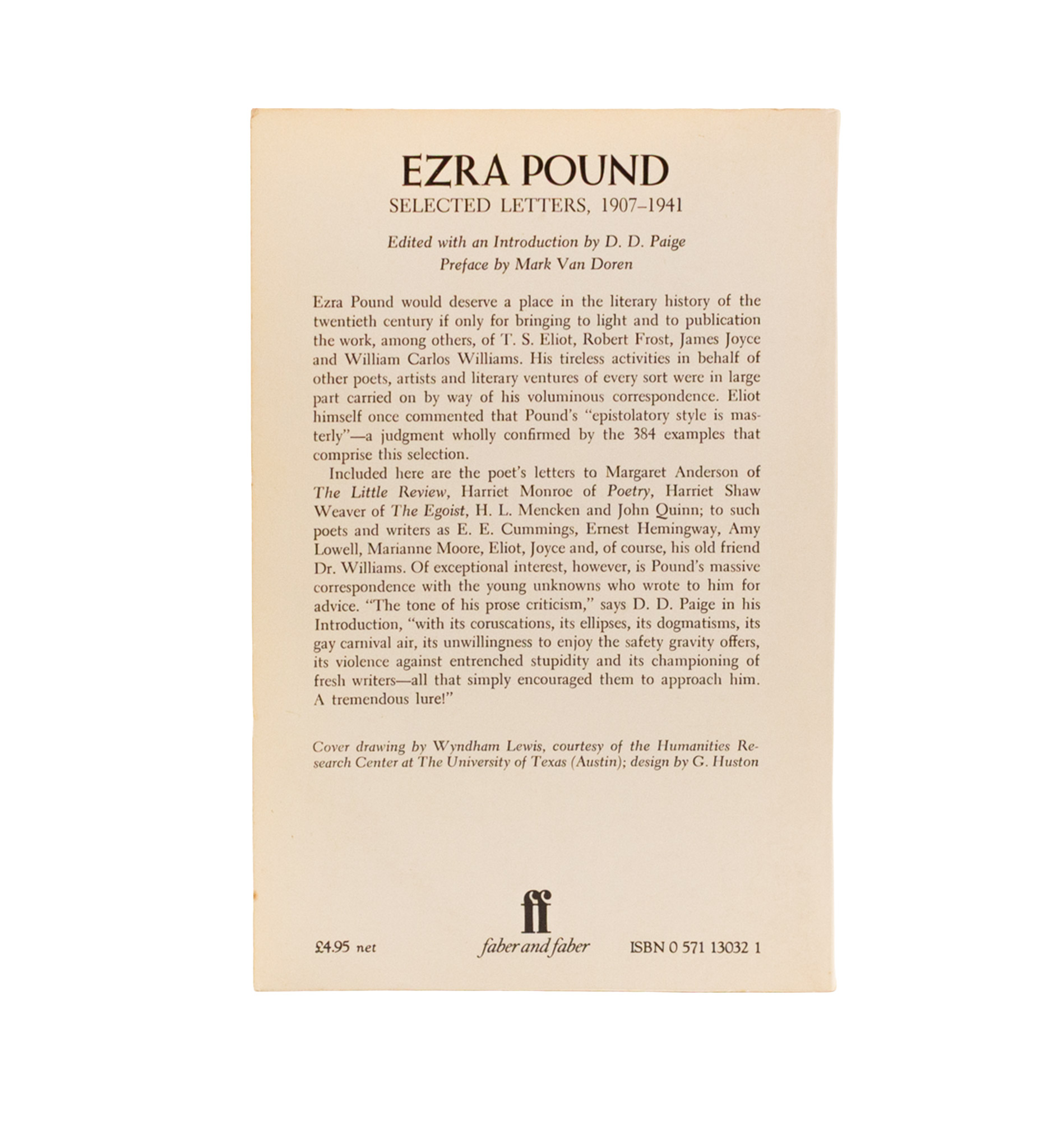
tap to cycle
Selected Letters of Ezra Pound, 1907-1941
D. D. Paige, editor
Mark Van Doren, preface
Published London: Faber and Faber, 1982
358pp.; 20.1 x 13.3 cm. Stiff white paper wraps printed in black.
Part of Ezra Pound, VII
Paige’s attempt to document Pound as the seminal modernist whose exchanged letters with the most influential and successful artists of his day, often aiding in their success. Edition for those who prefer a paperback. Could even be shelved outwards. A little streaking to spine & spotting to edges; covers gently opening. Too late for Gallup, otherwise A64.
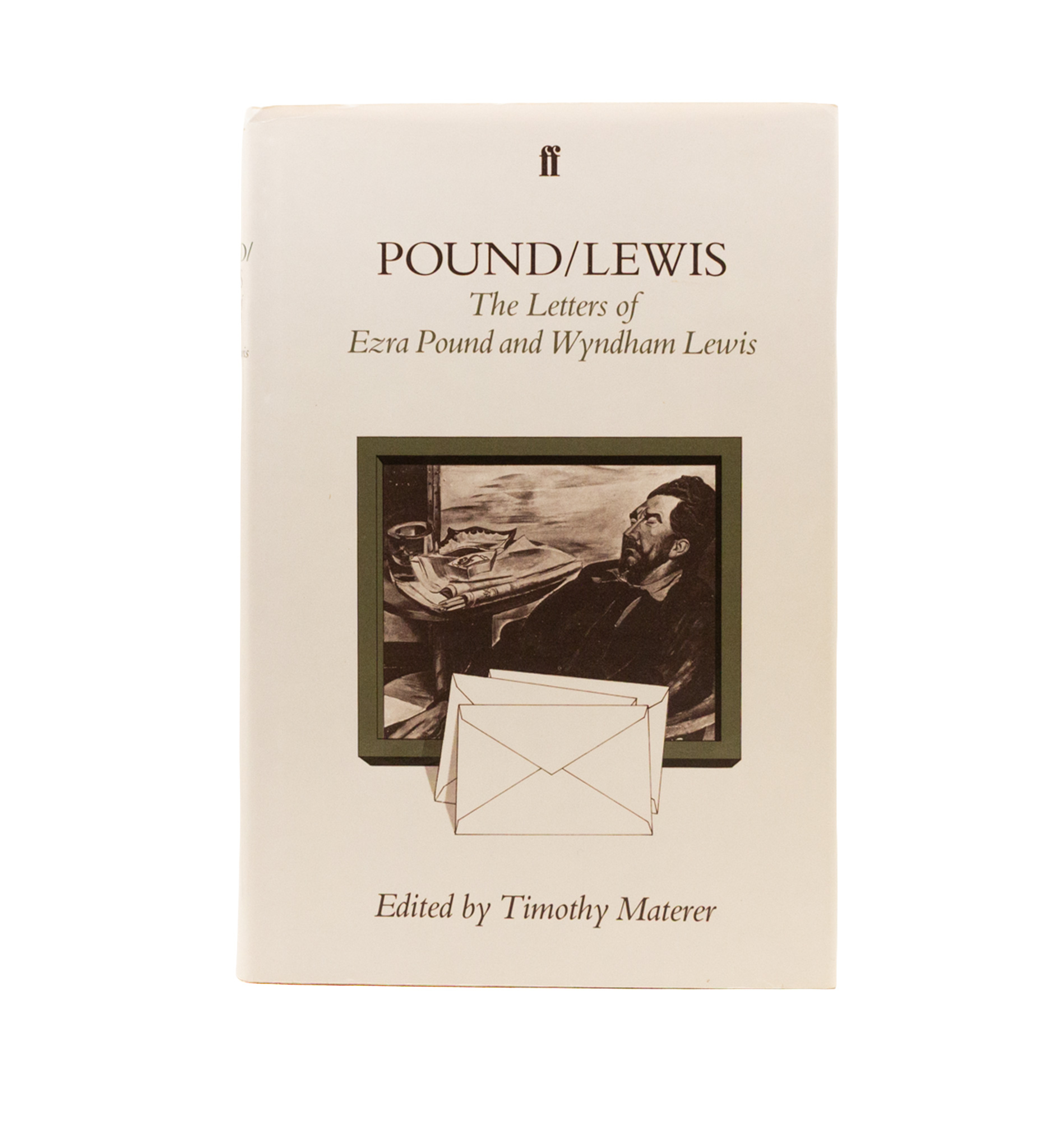
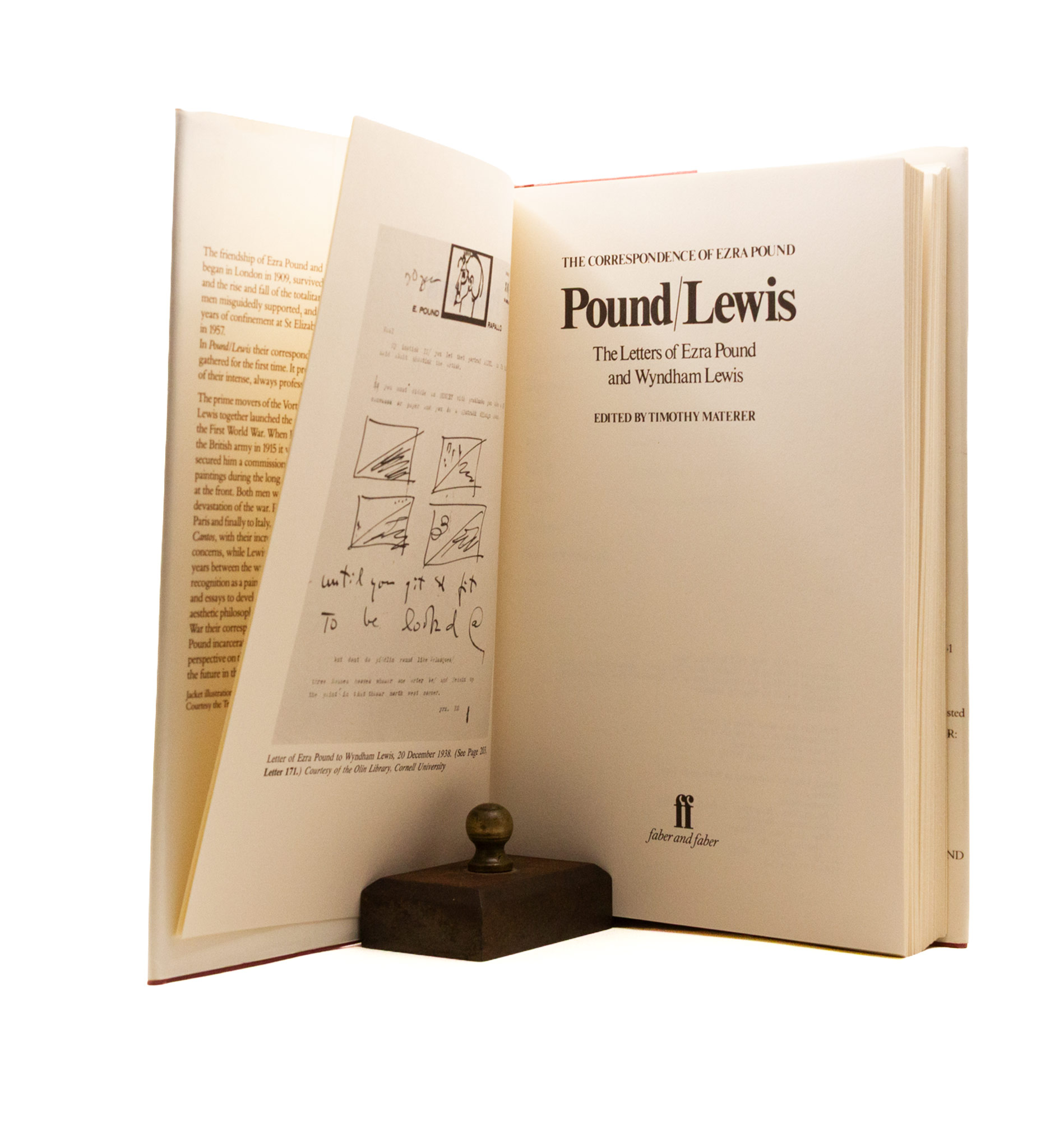

tap to cycle
Pound/Lewis: The Letters of Ezra Pound and Wyndham Lewis
Timothy Materer, editor
Published London: Faber and Faber, 1985
346pp.; 23.6 x 16.7 cm. Maroon cloth boards stamped in gold on spine. White dust-jacket printed in brown and green.
Part of Ezra Pound, VII
Letters from 1914, commencing with the editing of Blast, till Wyndham Lewis’s death in 1957. First English edition, concurrent with the American. With the occasional pencil annotation by David Moody, and a small note in ink laid-in. Jacket with a little light, inconsequential wear. Too late for Gallup.
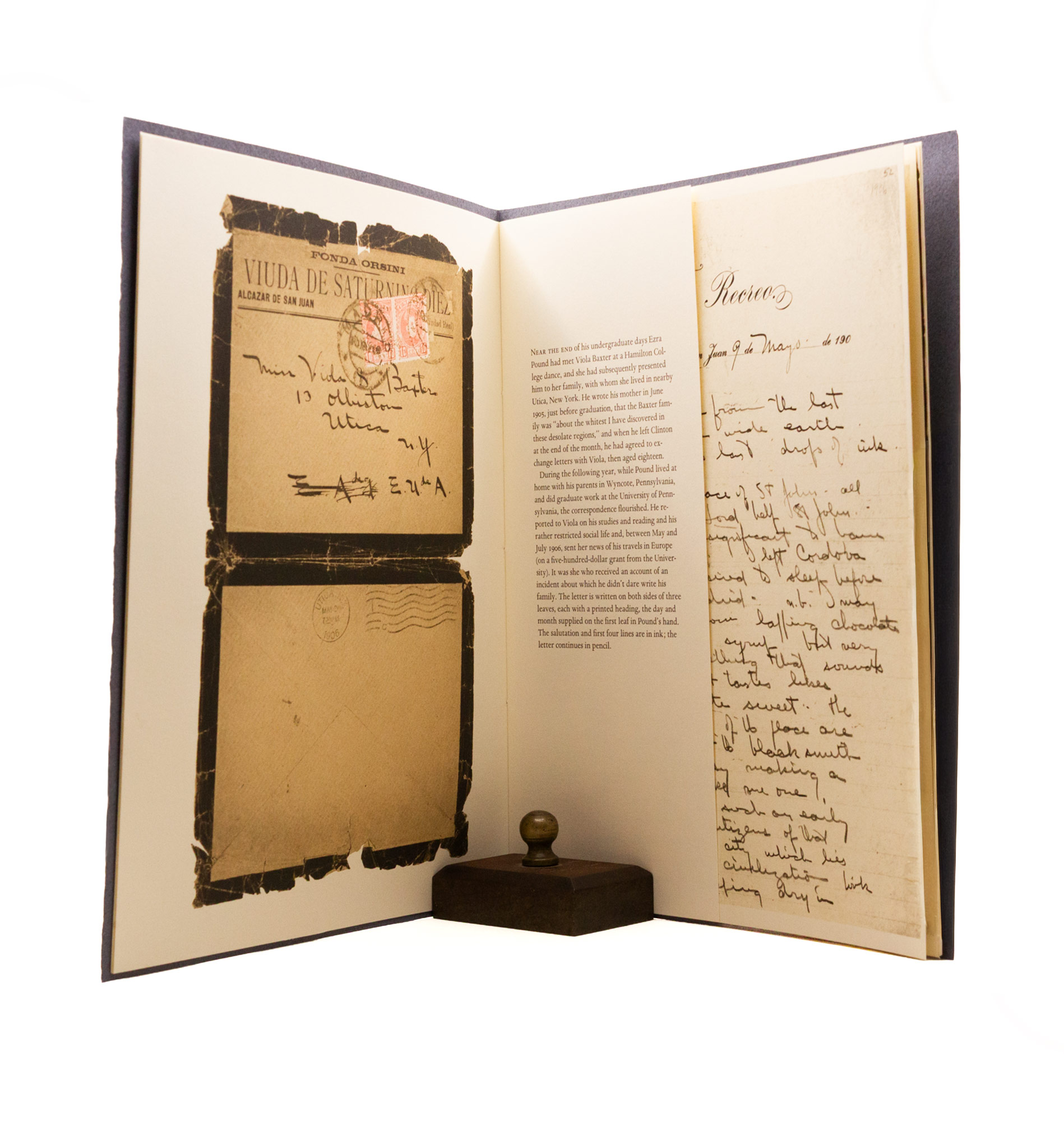
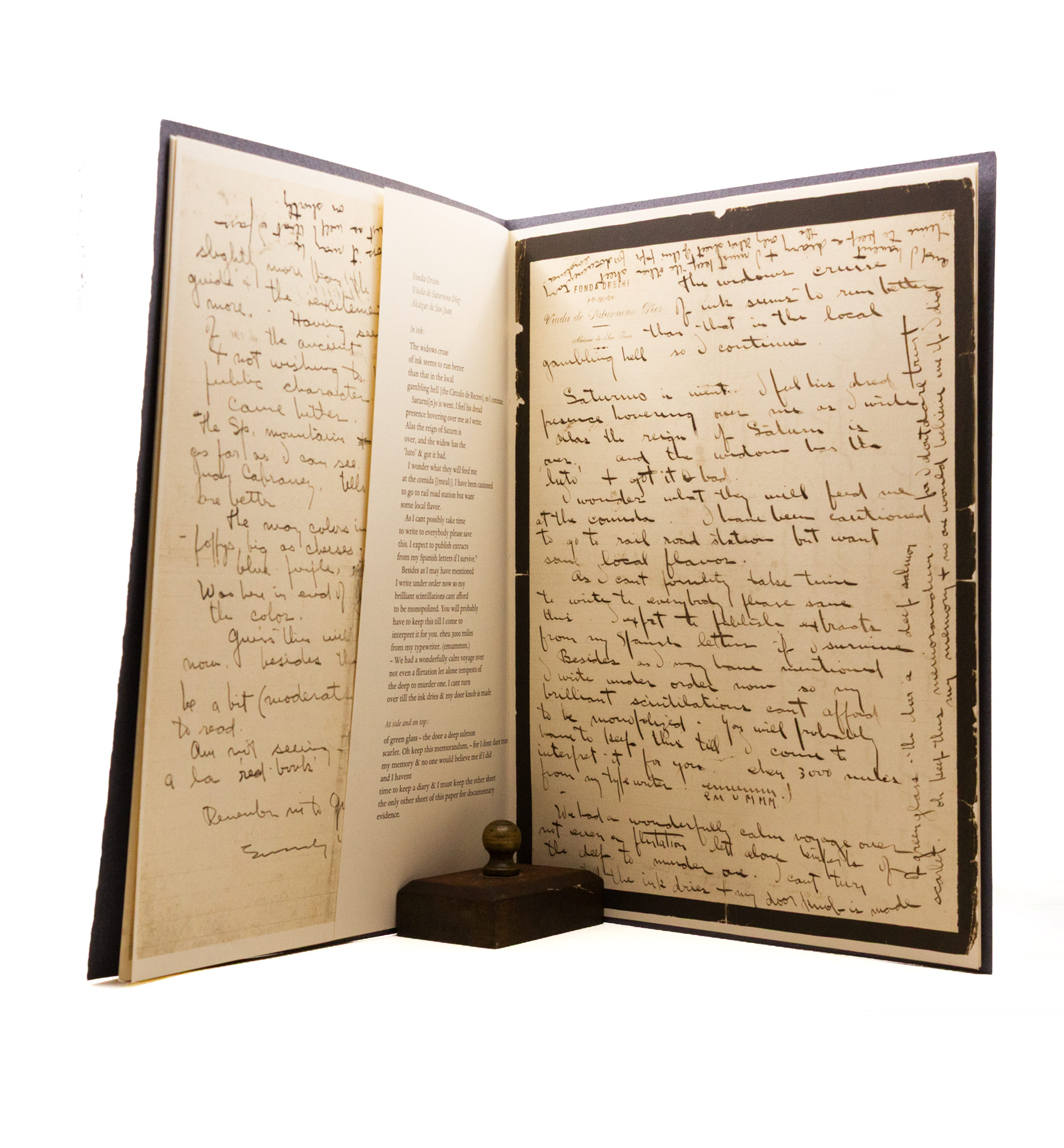
tap to cycle
At the Circulo de Recreo with Ezra Pound. A Letter from Ezra Pound to Viola Baxter, May 9 1906
Donald Gallup, editor
Published New Haven: The Beinecke Rare Book and Manuscript Library, 1985
13pp.; 7 full-page illustrations; 26.7 x 20.8 cm. Violet paper wraps, stitched, with white sticker printed in black to front.
Part of Ezra Pound, VII
and the hostess grinned: Eso es luto, haw!
mi marido es muerto
(it is mourning, my husband is dead)
when she gave me paper to write on
with a black border half an inch or more deep,
say 5/8ths, of the locanda
of which was sent to Viola Baxter, who met Pound at a Hamilton College dance, in May of 1909 from Alcazar. A tale or two of Pound’s touristic trouble with the locals, against good hospitality & his travelling forth. One of 500 copies printed in celebration of Pound’s 100th birthday, with colour reproductions of the letter and envelope. Fine in the original card and clingfilm packaging.



tap to cycle
Pound/Zukofsky: Selected Letters of Ezra Pound and Louis Zukofsky
Barry Ahearn, editor
Published London: Faber and Faber, 1987
255pp.; 23.6 x 16.1 cm. Black cloth boards stamped in silver down spine. White dust-jacket printed in black and bronze.
Part of Ezra Pound, VII
Letters between Pound and fellow poet and protégé Louis Zukofsky. The fifth volume in The Correspondence of Ezra Pound series by New Directions. First English edition, concurrent with the American. With the very occasional symbolic pencil annotation by David Moody (circles and arrows). Head of spine a little pressed, otherwise fine. Too late for Gallup.
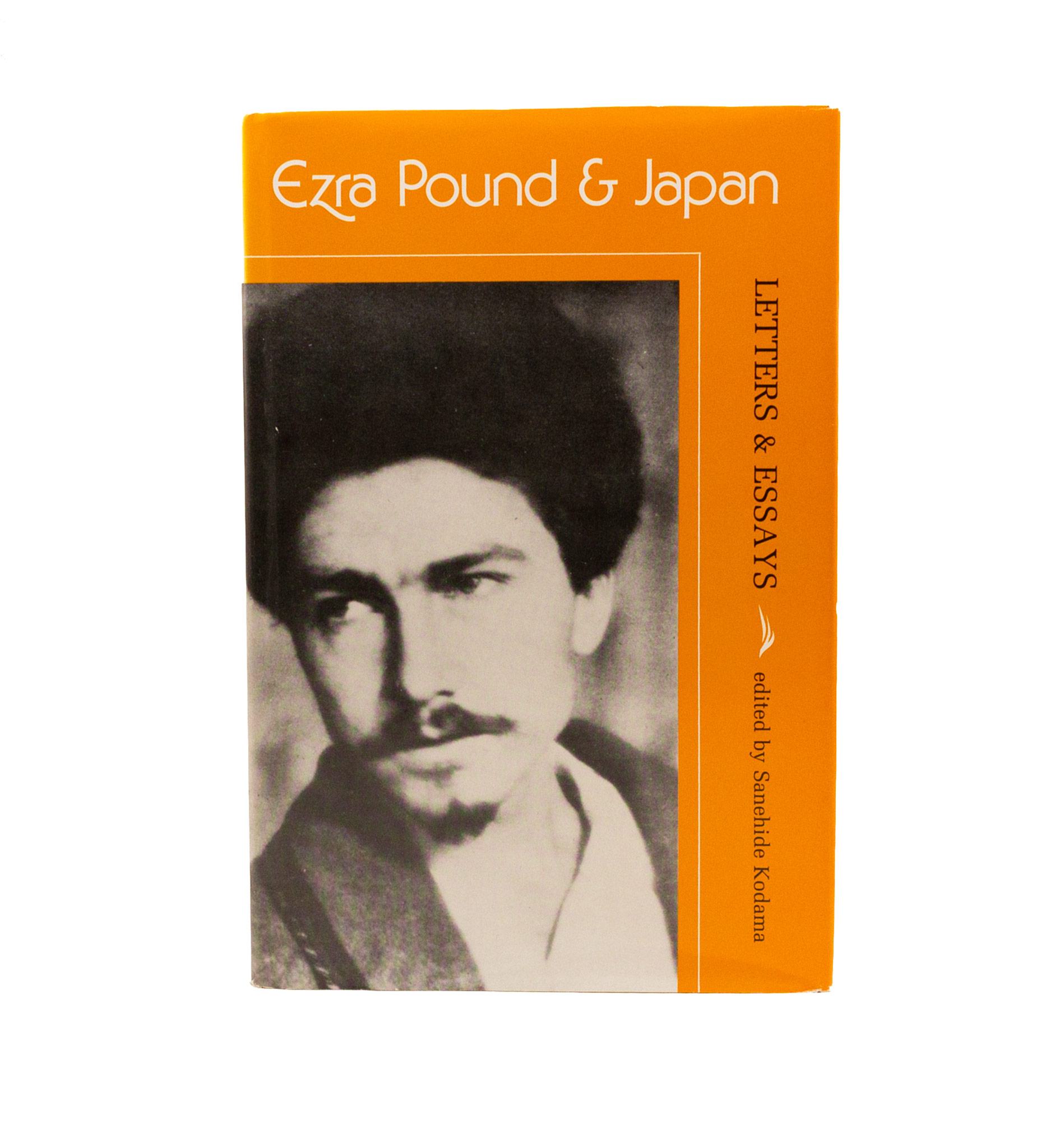

tap to cycle
Ezra Pound & Japan
Sanehide Kodama, editor
Published Redding Ridge, Conneticut: Black Swan Books, 1987
256pp.; 23.6 x 16cm. Milk cloth stamped in gold to front cover and spine. White dust-jacket printed in black and orange.
Part of Ezra Pound, VII
A collection of letters and essays documenting Pound’s involvement in art, literature, and culture in Japan, extending from 1911 to 1968. First edition. Jacket a little scuffed at the top of the spine. With the occasional pencil annotation from David Moody. Too late for Gallup.

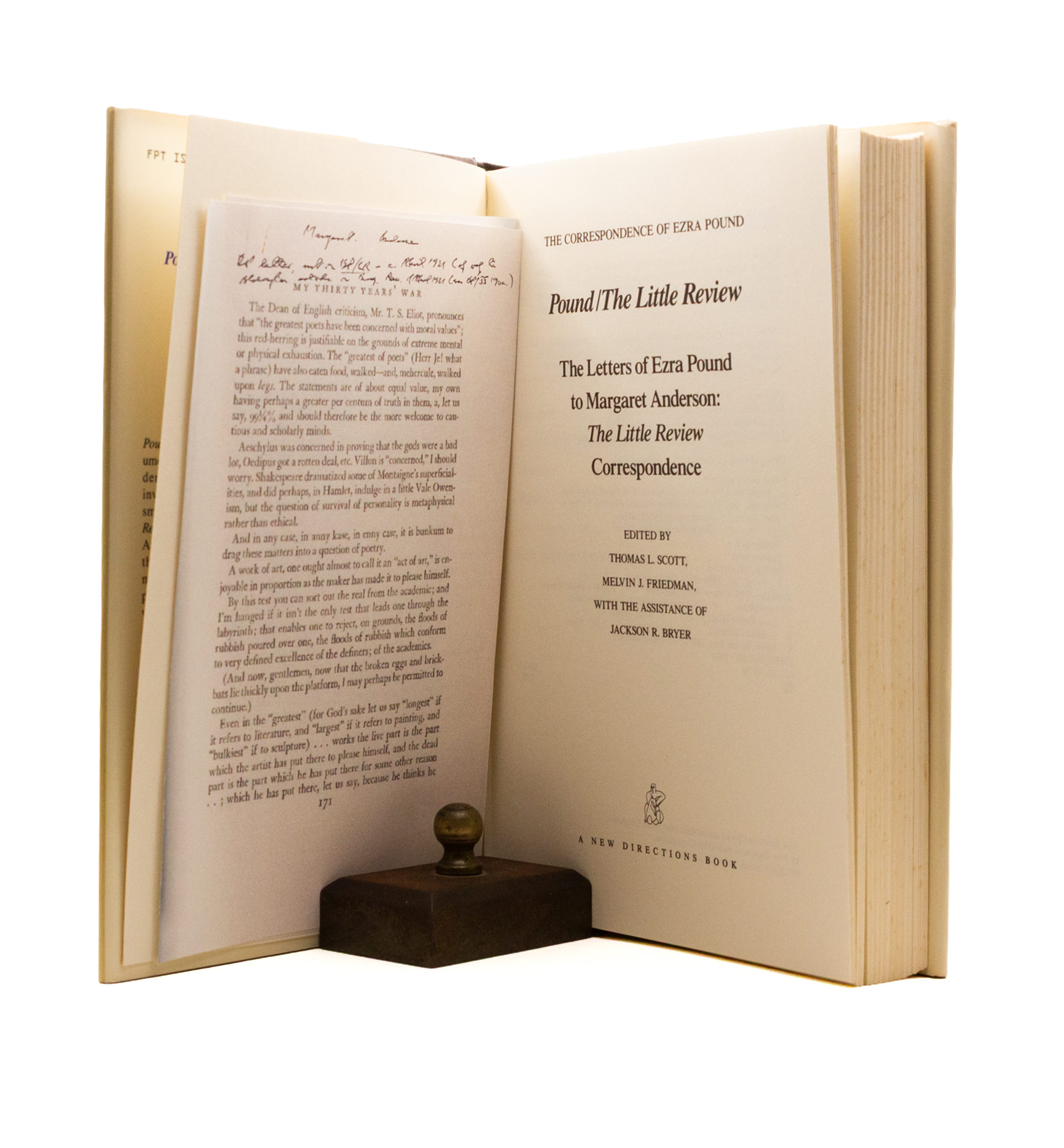

tap to cycle
Pound/The Little Review: The Letters of Ezra Pound to Margaret Anderson
Thomas L. Scott, Melvin J. Friedman, editors
Jackson R. Bryer, assistant
Published New York: New Directions, 1988
368pp.; 23.5 x 16.2 cm. Grey cloth stamped in silver to spine. Custard dust-jacket printed in black and blue.
Part of Ezra Pound, VII
The sixth volume in New Direction’s series The Correspondence of Ezra Pound. Mostly Pound’s letters to Anderson, concerning the promotion of Joyce, Hemingway and Breton. David Moody’s very occasional pencil annotation, and photocopies of two pages of Margaret Anderson’s My Thirty Years’ War laid in to front, annotated in ink. Too late for Gallup.
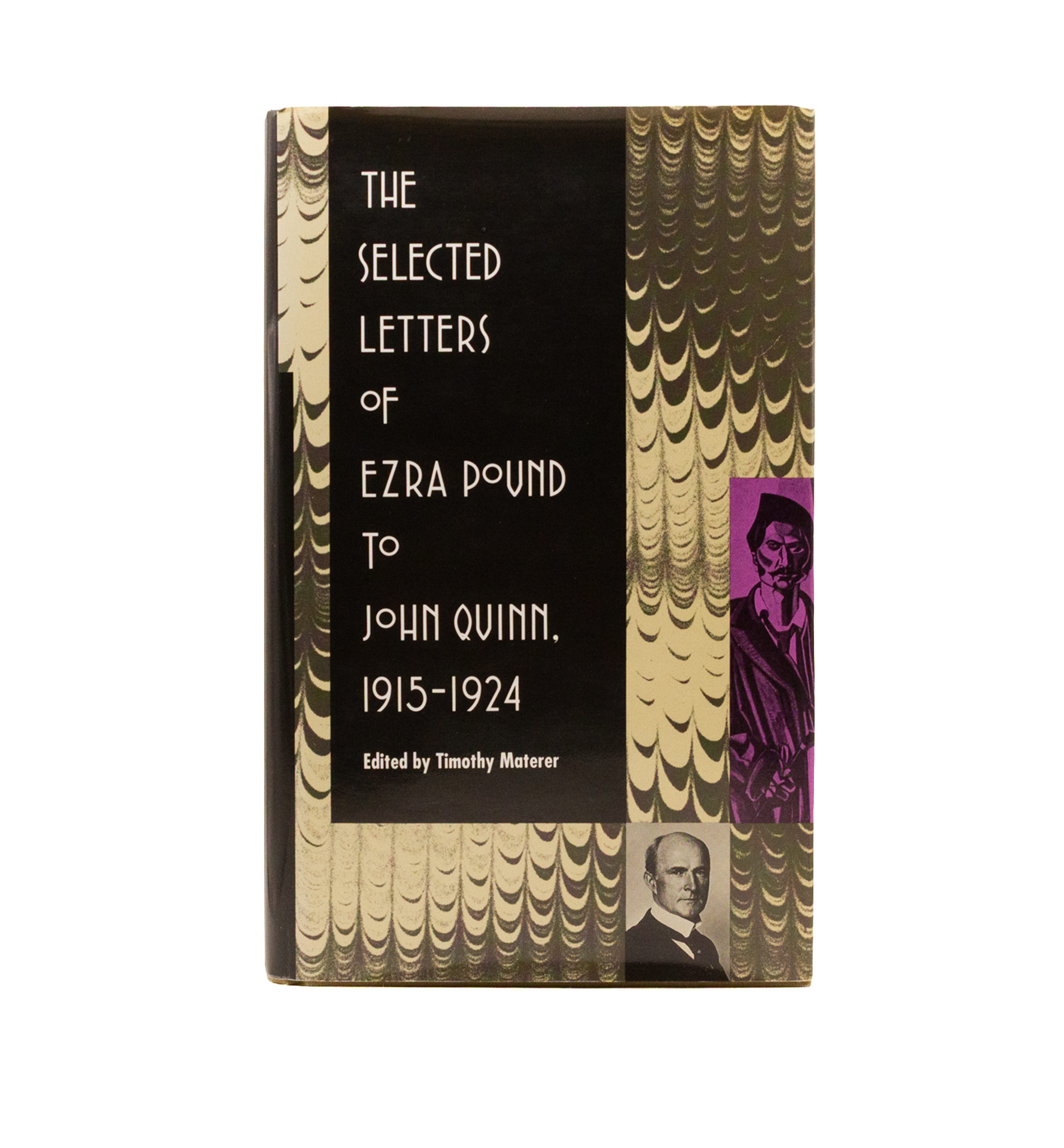
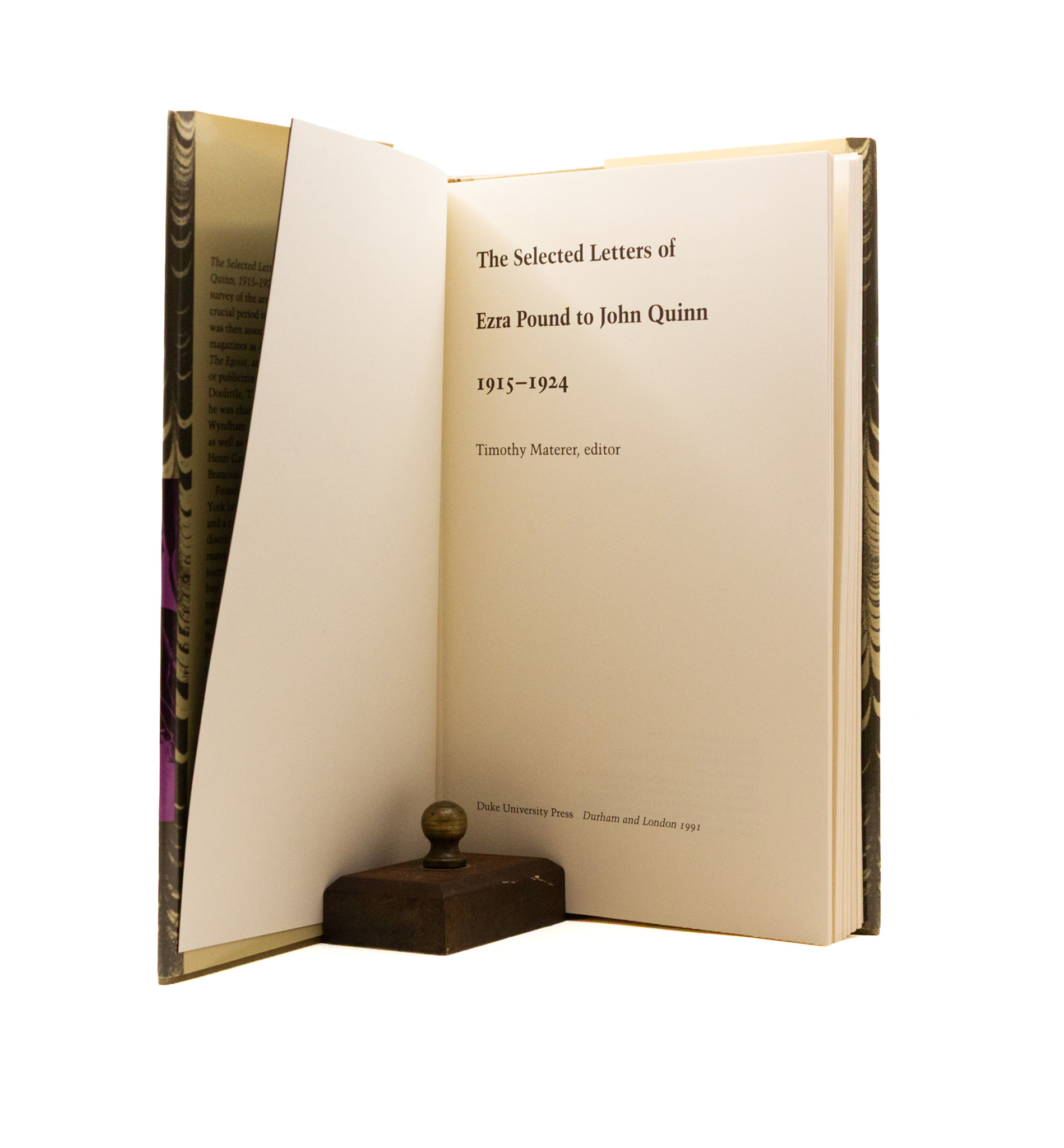
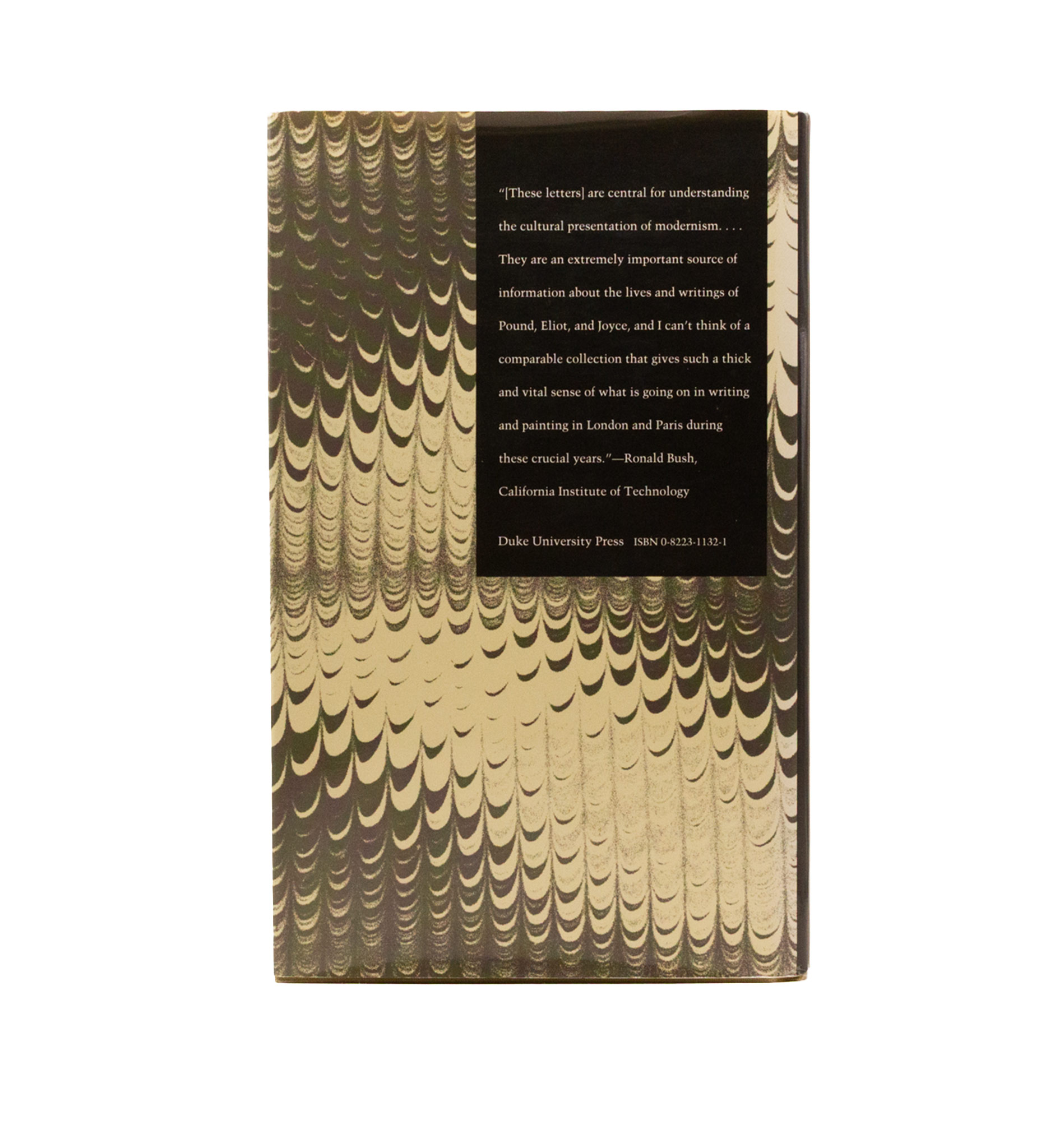
tap to cycle
The Selected Letters of Ezra Pound to John Quinn, 1915-1924
Timothy Materer, editor
Published Durham: Duke University Press, 1991
240pp.; 24.2 x 15 cm. Olive cloth boards printed in black down spine; black endpapers and pastedowns; white dust-jacket printed in black, cream, white and purple.
Part of Ezra Pound, VII
Pound’s letters to John Quinn, American lawyer and patron of the arts who defended the editors of The Little Review when charged with publishing obscene content, being Joyce’s Ulysses. Illustrated and annotated. With small pencil marginalia by David Moody, and a few notes in ink laid-in. A very near fine first edition. Too late for Gallup.
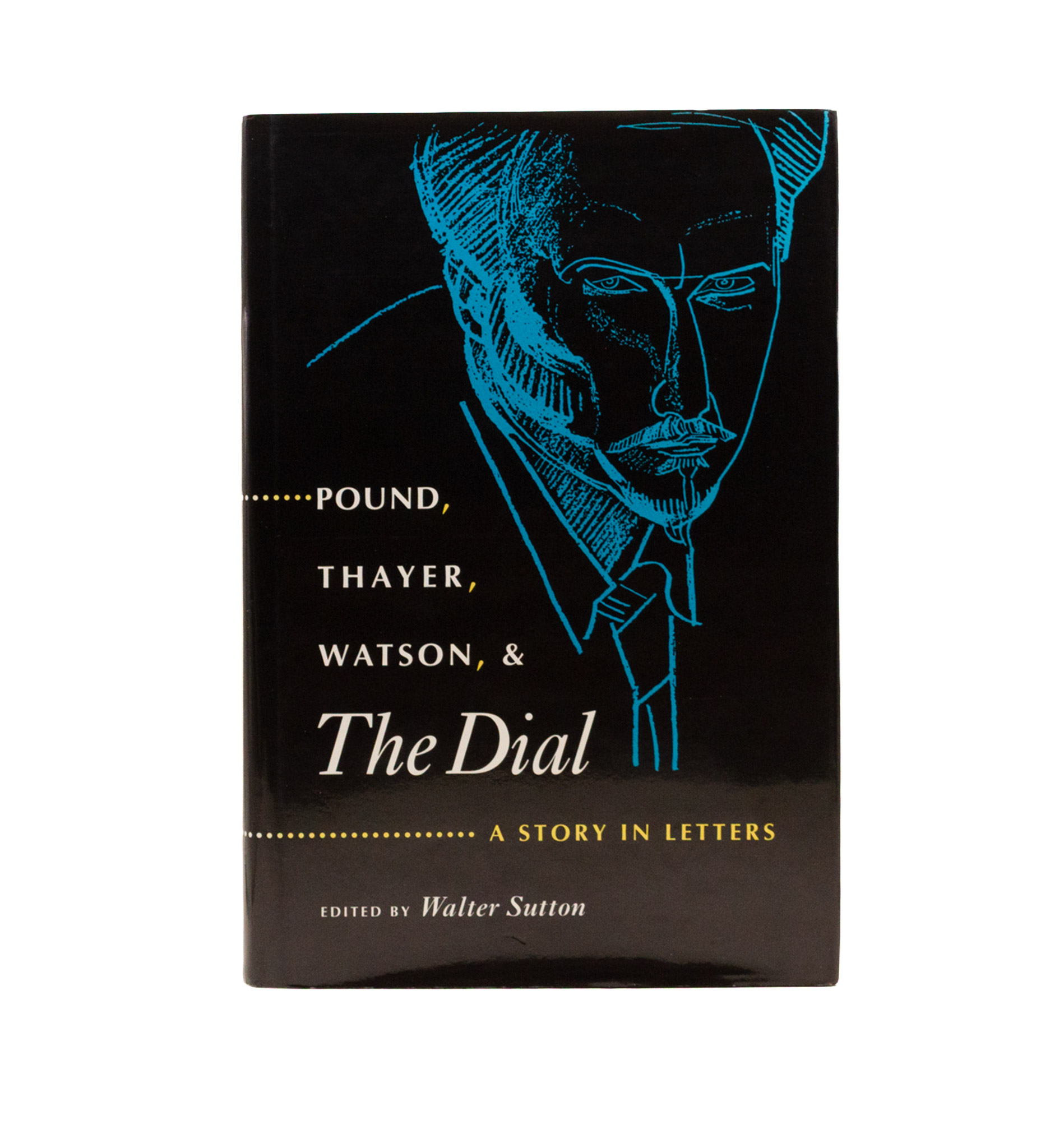
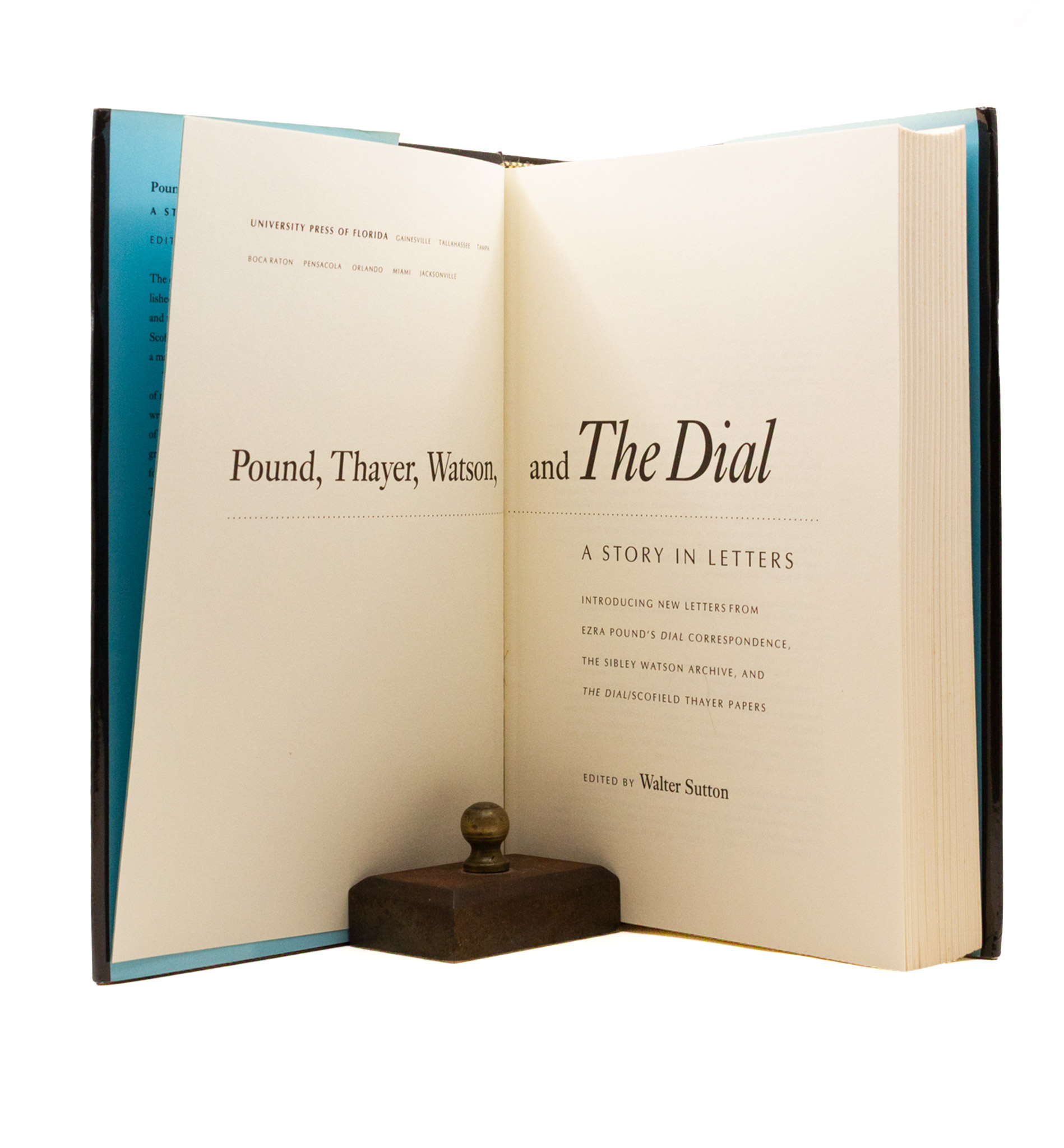
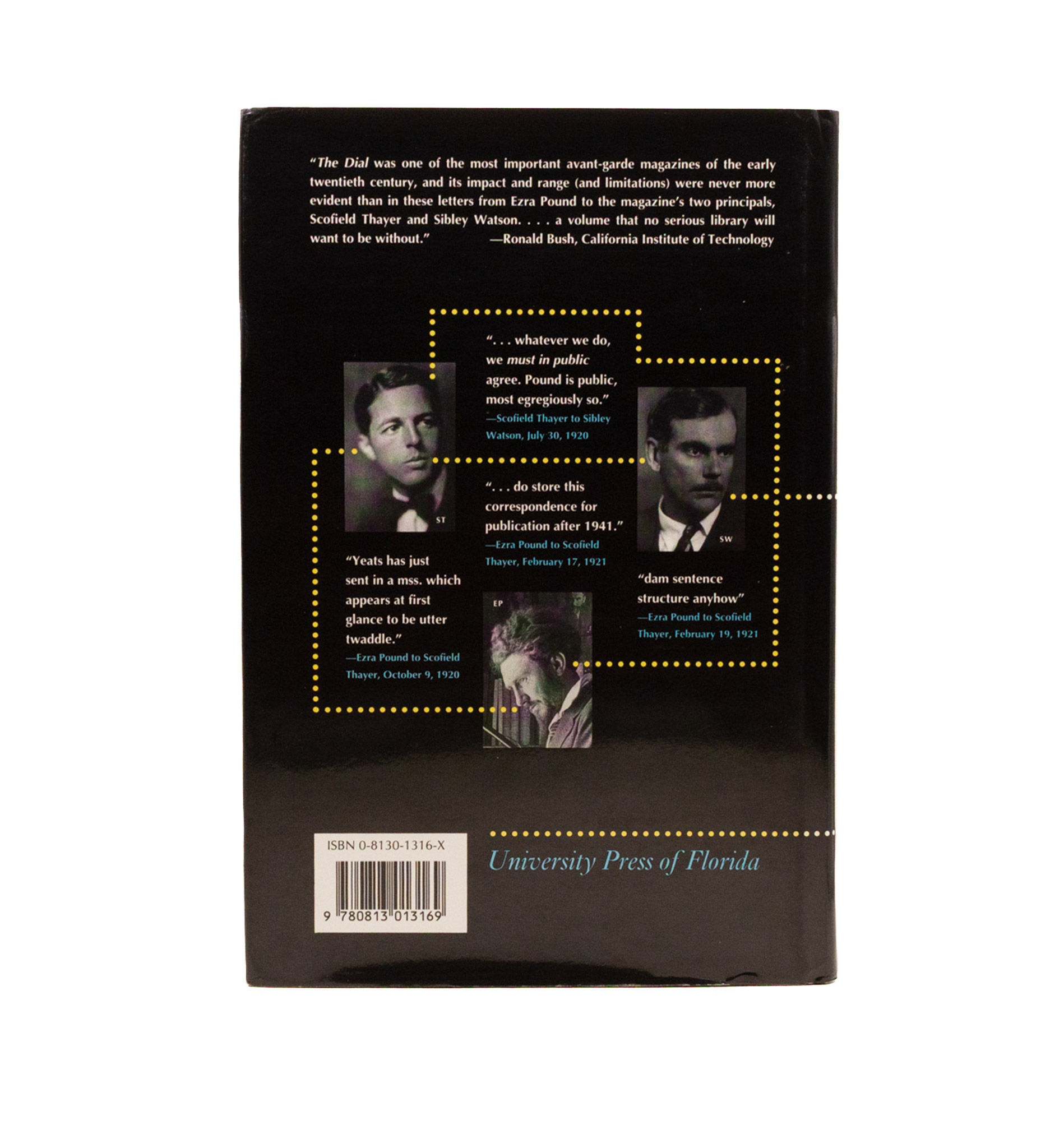
tap to cycle
Pound, Thayer, Watson, & The Dial
Walter Sutton, editor
Published Gainesville: University Press of Florida, 1994
386pp.; 23.8 x 16.6 cm. Black cloth boards lettered in gold to spine; white dust-jacket printed in blue, black and yellow.
Part of Ezra Pound, VII
Previously unpublished letters between Pound and the editors of The Dial, Scofield Thayer and Sibley Watson, showing Pound to be responsibly for practically all the foreign contributions published. Includes holographs of the original letters. With very occasional pencil marginalia by David Moody, as highlight, reference, or correction. A mostly fine copy. Too late for Gallup.
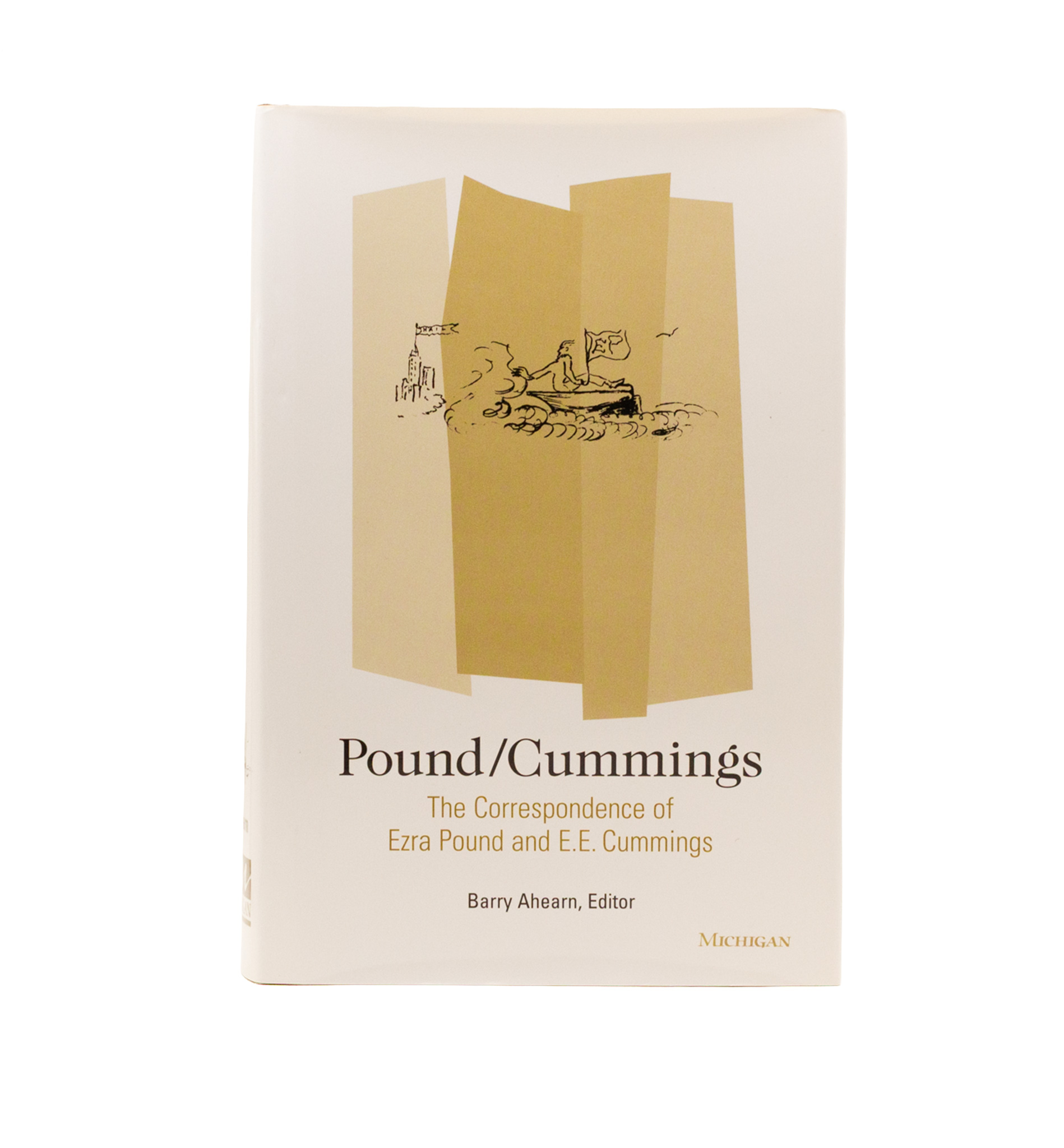
tap to cycle
Pound/Cummings
Barry Ahearn, editor
Published Ann Arbor: The University of Michigan Press, 1996
442pp.; 24.2 x 16.4 cm. Dark grey cloth boards lettered in gold down spine. White dust-jacket printed in beige and black.
Part of Ezra Pound, VII
Hunders of letters between EP and e.e. c. who met first in Paris in 1921, starting from 1926 when Pound was in Rapallo. A very near fine copy; top edge of jacket slightly folding outwards. Too late for Gallup.

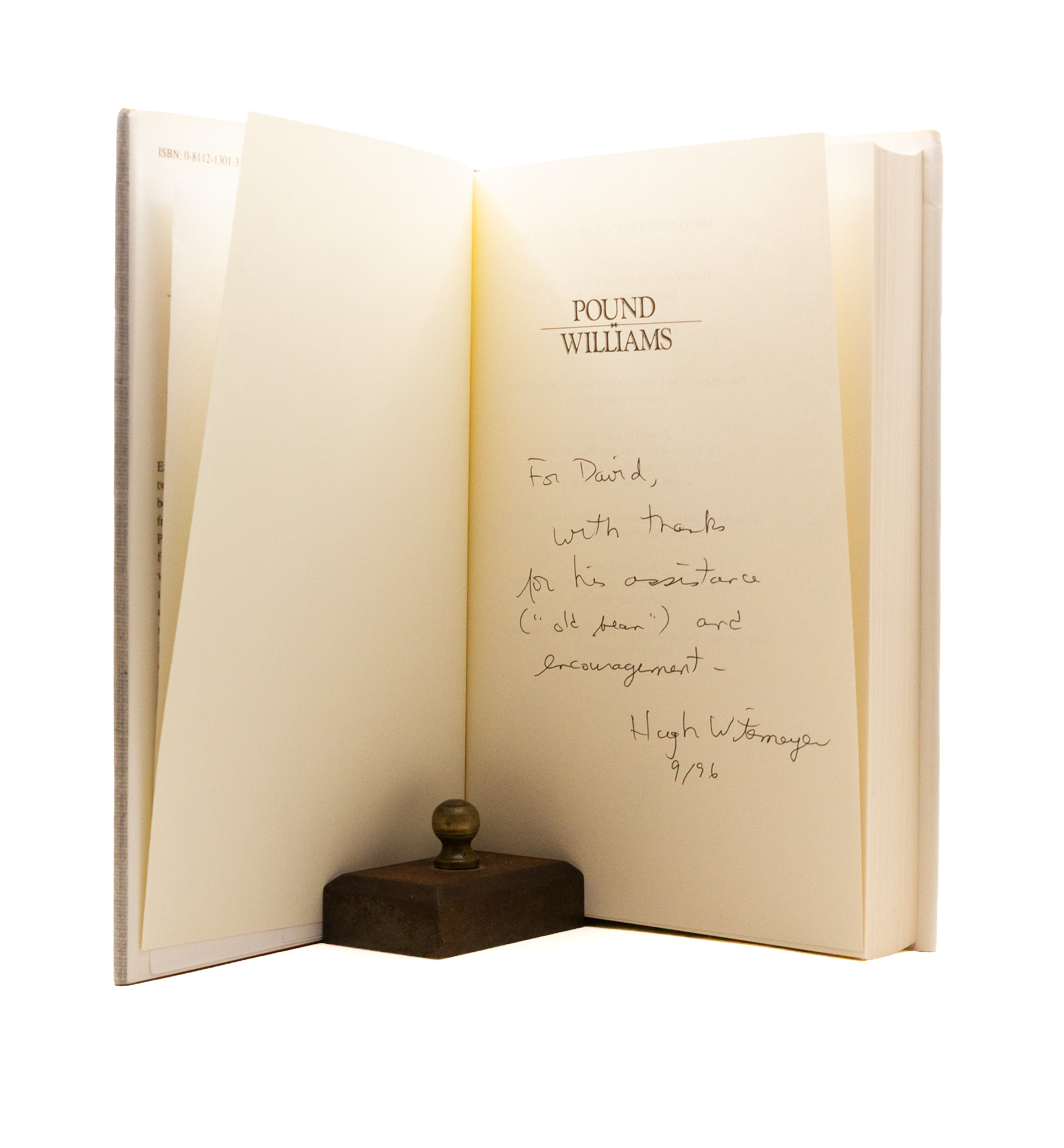

tap to cycle
Pound/Williams: Selected Letters of Ezra Pound and William Carlos Williams
Hugh Witemeyer, editor
Published New York: New Directions, 1996
352pp.; 23.6 x 16 cm. Pink cloth stamped in gold to spine. White dust-jacket printed in grey, black and red.
Part of Ezra Pound, VII
Selected letters between these lifelong friends and fellow poets, who first met while at the University of Pennsylvania together; from 1907 to 1963. First edition, with gift inscription from Hugh Witemeyer to David Moody, the very occasional pencil annotation in David Moody’s hand, and a scan of a letter from David Moody to Hugh Witemeyer laid-in at front, dating November 1996.
Dear Hugh,
I am at work here in the HRC, till mid-December, Pounding as you might suppose -
having pounded for five weeks at the Lilly in Bloomington…

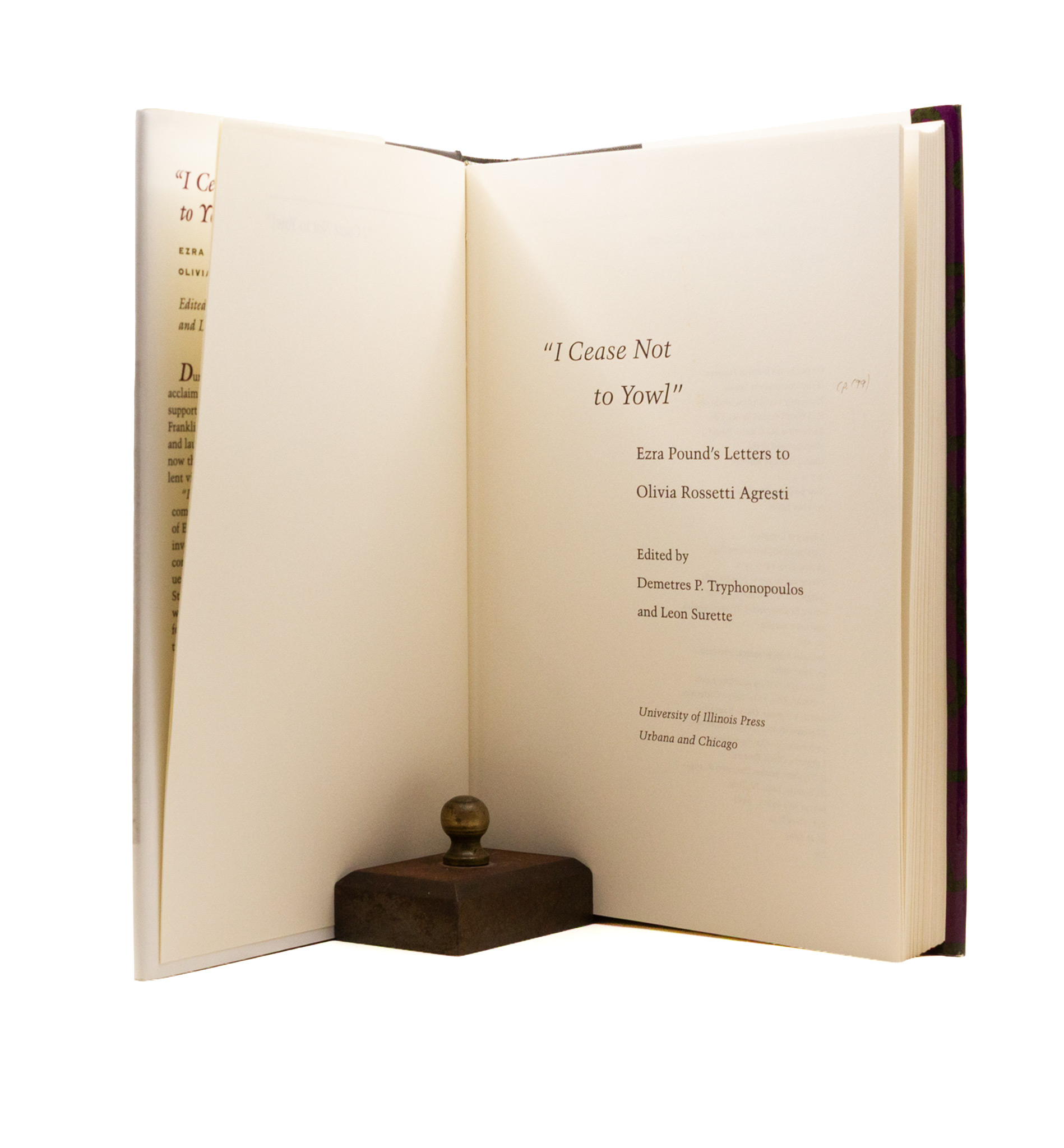

tap to cycle
“I Cease Not to Yowl”; Ezra Pound’s Letters to Olivia Rossetti Agresti
Demetres P. Tryphonopoulos and Leon Surette, editors
Published Urbana: University of Illinois Press, 1998
330pp.; 23.6 x 16.1 cm. Dark grey cloth boards stamped in gold to spine; white dust-jacket printed in black, green and purple.
Part of Ezra Pound, VII
One of the most important sets of Pound’s letters. Olivia Rossetti Agresti was a British-born Italian loyal citizen, a sympathiser of Fascist ideals, and a critic of Mussolini’s politics. Their correspondence began in 1937 and continued throughout Pound’s incarceration at St. Elizabeths. A fine copy, annotated quite extensively in pencil by David Moody. Too late for Gallup.
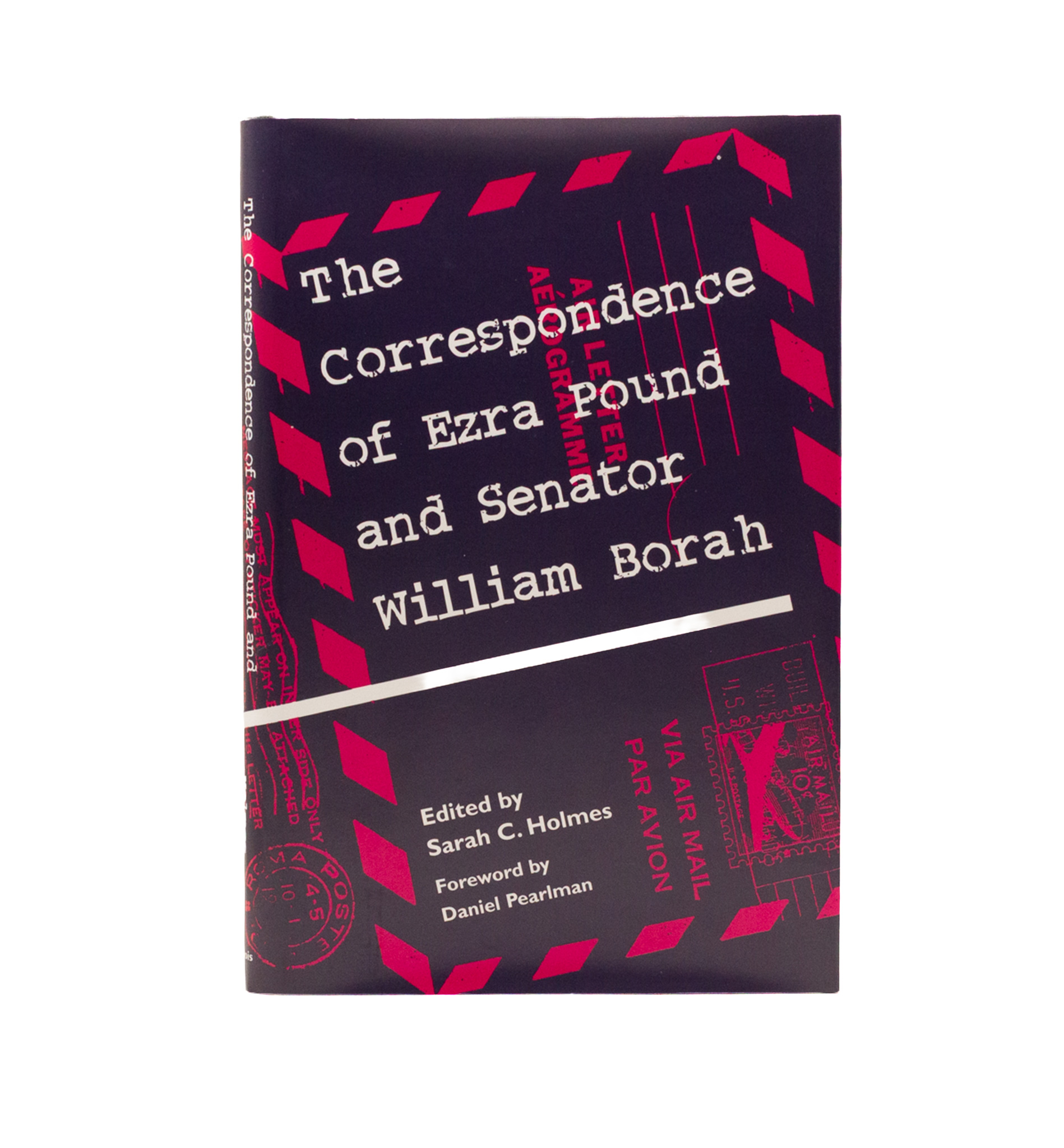


tap to cycle
The Correspondence of Ezra Pound and Senator William Borah
Sarah C. Holmes, editor
Daniel Pearlman, foreword
Published Urbana: University of Illinois Press, 2001
95pp.; 23.4 x 15.8 cm. Grey cloth boards lettered in silver down spine. White dust-jacket printed in purple and pink.
Part of Ezra Pound, VII
A blitz of letters from Pound to Borah to take your breath away, as Holmes puts it, in simultaneous reverence and insult. Borah (1865-1940) very occasionally responds, cordially, but never engages EP. Unlike the Cutting letters, which show a great collaboration, these letters reveal more exclusively Pound’s own economic and political ideas measured against the contemporary stage. A fine copy, the jacket lightly lifting; David Moody’s very occasional pencil circles in margin. Too late for Gallup.