de Beaumont Rares
debeaumontrares@gmail.com
tap to cycle
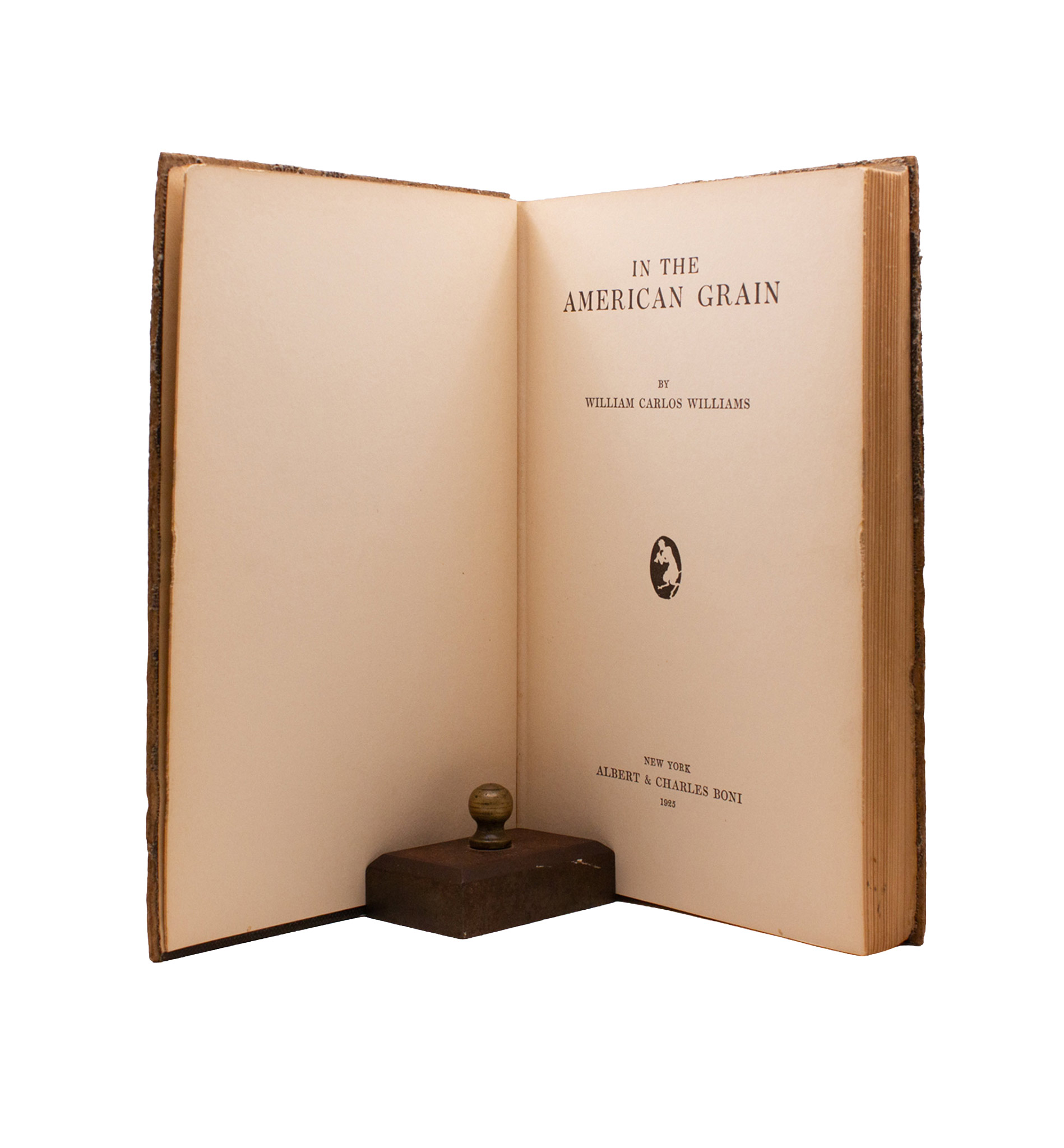
In The American Grain; inscribed to Bill Bird
William Carlos Williams
Published New York: Albert & Charles Boni, 1925
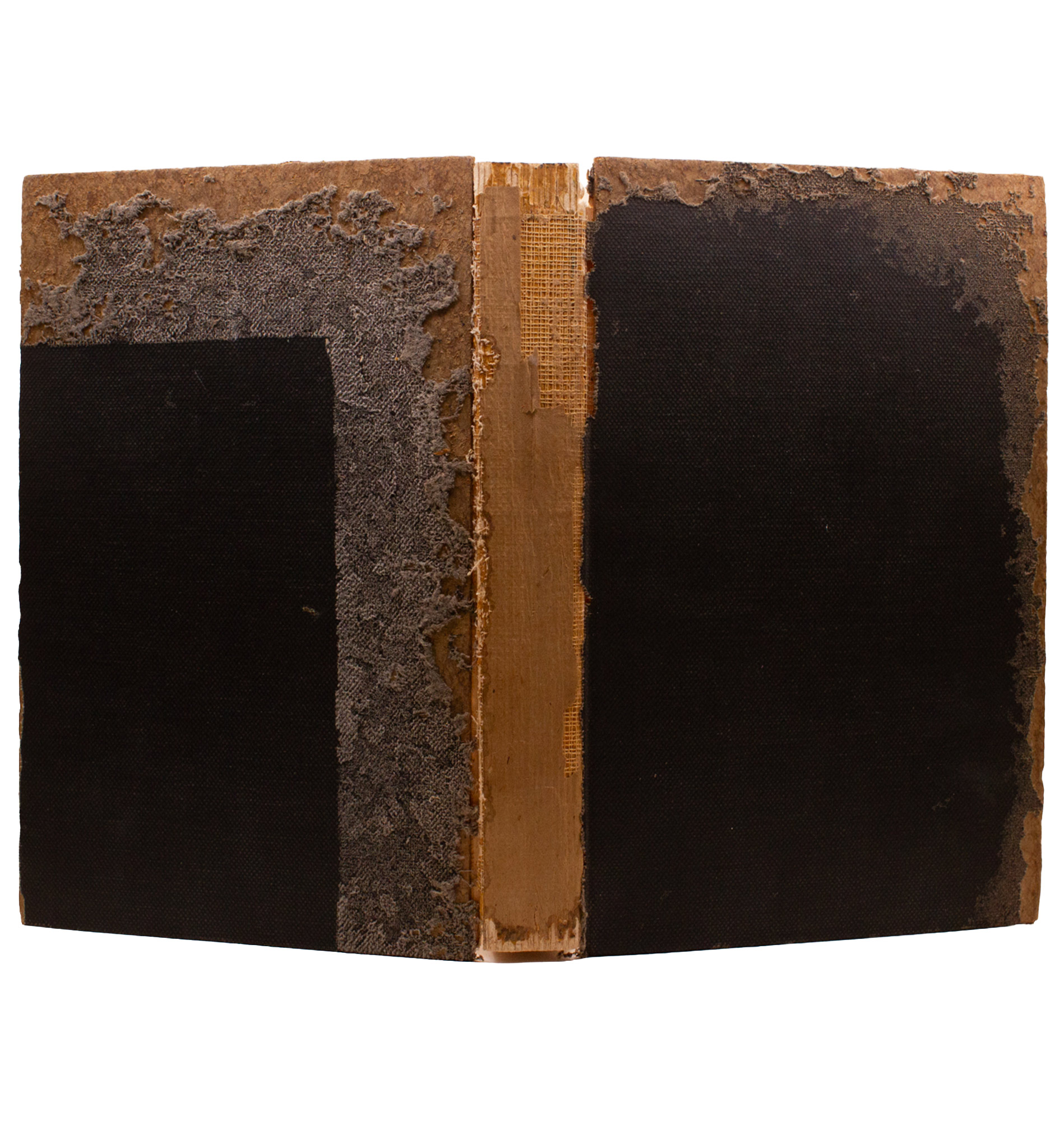
235pp.; 23.5 x 15.6 cm. Black cloth boards, undressing.
Part of Contemporaries, III
A deviant copy of Williams’ collection of unconventional readings of the history of the Americas, written in nigh novelistic, declamatory prose. Williams’ first book to be published by a major, commercial publishing house, Williams praised the quality but criticised the lack of any and all marketing. The book became influential where received, with at least Martha Graham and Alfred Stieglitz writing to Williams to tell of their found inspirations.
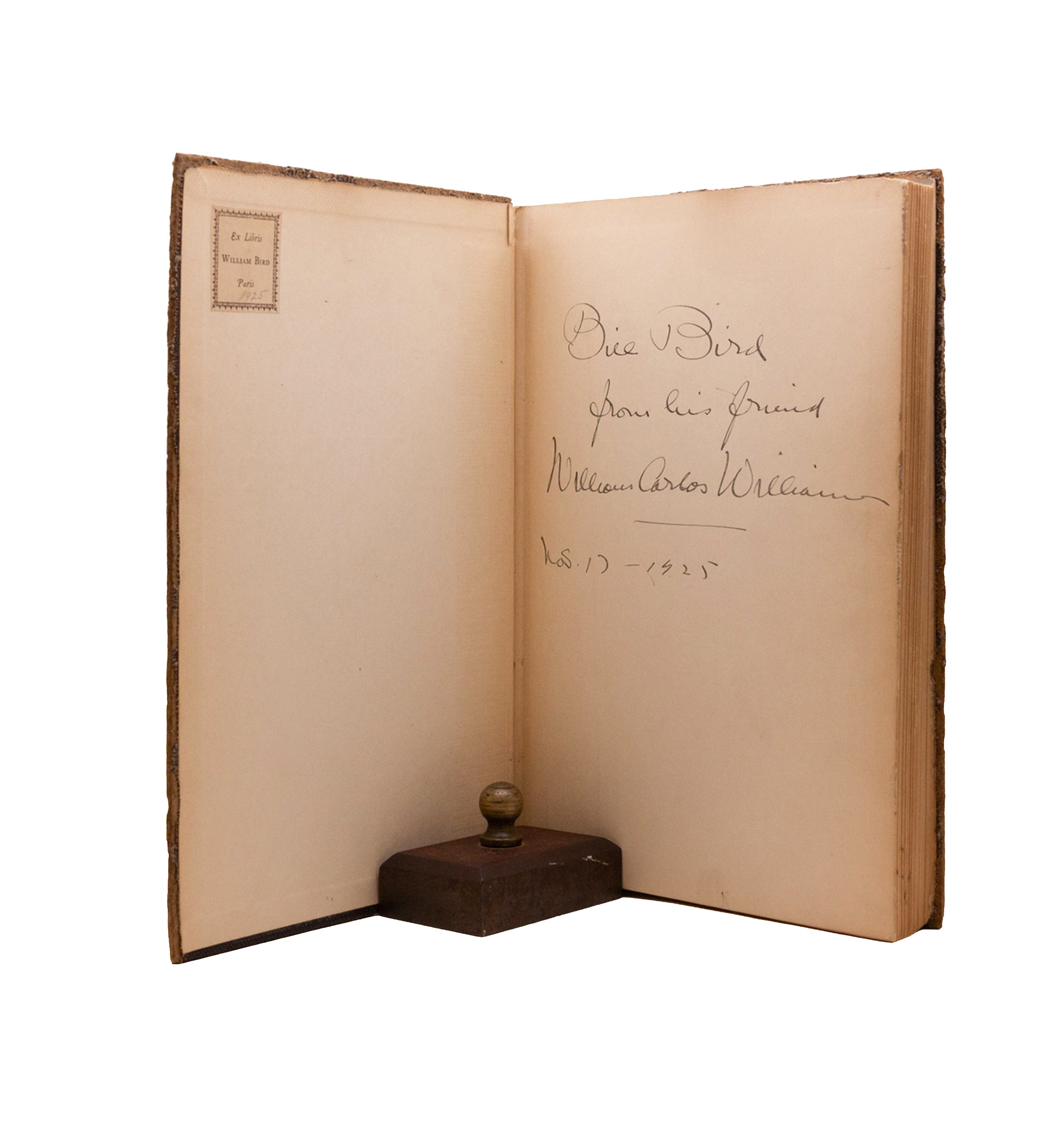
This copy inscribed in the year of publication from Williams to William Bird in a large and ornate hand to the ffep. The two first became associated in 1923 when Bird published Williams’ The Great American Novel under Ezra Pound’s editorial, later meeting on Williams’ trip to Paris in 1924. There is no record of Williams having been in Paris at the time of this dedication; it is more likely that the book was mailed. At this time, however, Bird and Robert McAlmon of Contact Editions (also publisher to Williams) had both moved their quarters to 29 Quai d’Anjou, Île Saint-Louis, where also Ford Madox Ford wrote at a desk on the metal mezzanine.
This book remained in Bird’s possession till his death, following his displacement from Paris in 1940 to Spain and then Tangiers—where it appears to have fed the local locusts—before returning to Paris, and by descent in the States. Bird’s ex-libris is pasted to fpd, annotated in pencil, “1925.”
The contrast between the condition of the textblock and binding is amazing. The paper remains totally clean and straight, with a little darkening at the prelims. There are however a small lengths of loss to the fore-edge around the first few and last few pages. The boards are obviously the statement to which the inscription is an accompaniment, with loss of the cloth to both boards by insect, and total loss over the spine. The cloth on the front board is eaten only on the edges, suggesting the book may have been laid face-down. The cloth on the back board sees more loss, but with a striking border from probably another book having been lain on top, producing a result reminiscent of partial sunning. The boards remain securely attached by the pastedowns, and in general the binding is very sound.