de Beaumont Rares
debeaumontrares@gmail.com
Contemporaries, III
All caught in the currents of the 20th century.
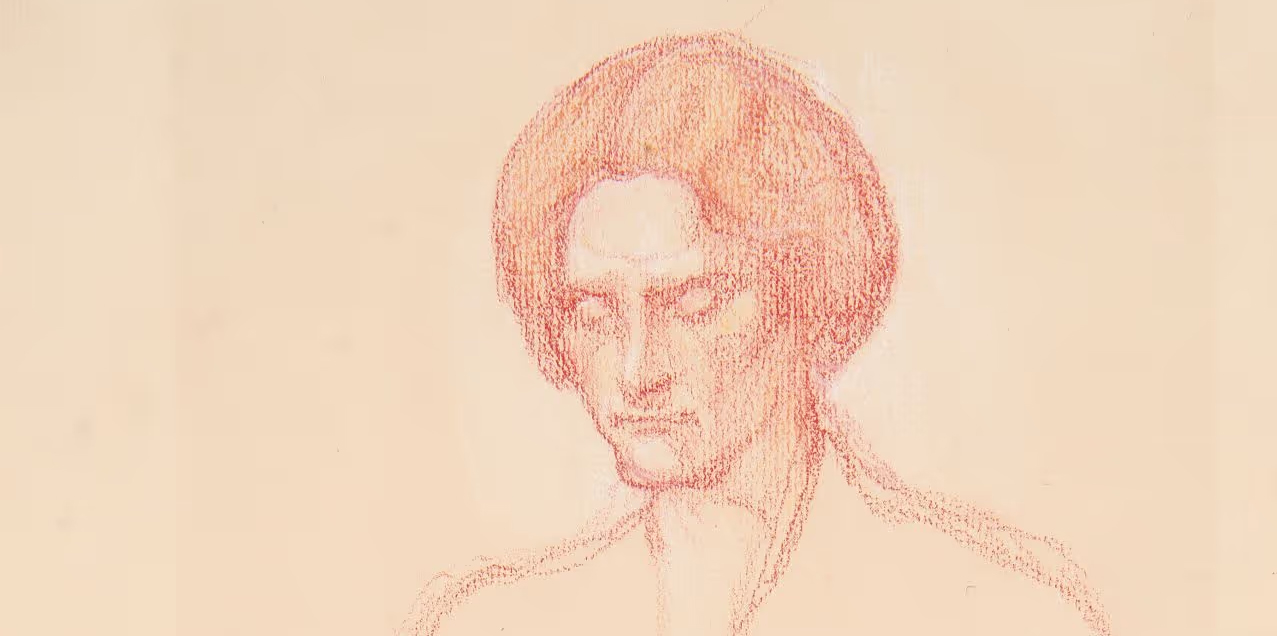
Cover, a portrait of Olivia Rossetti Agresti, then interpreter for the League of Nations and International Institute of Agriculture, by Violet Oakley, 1927.
22 June 26
tap to cycle
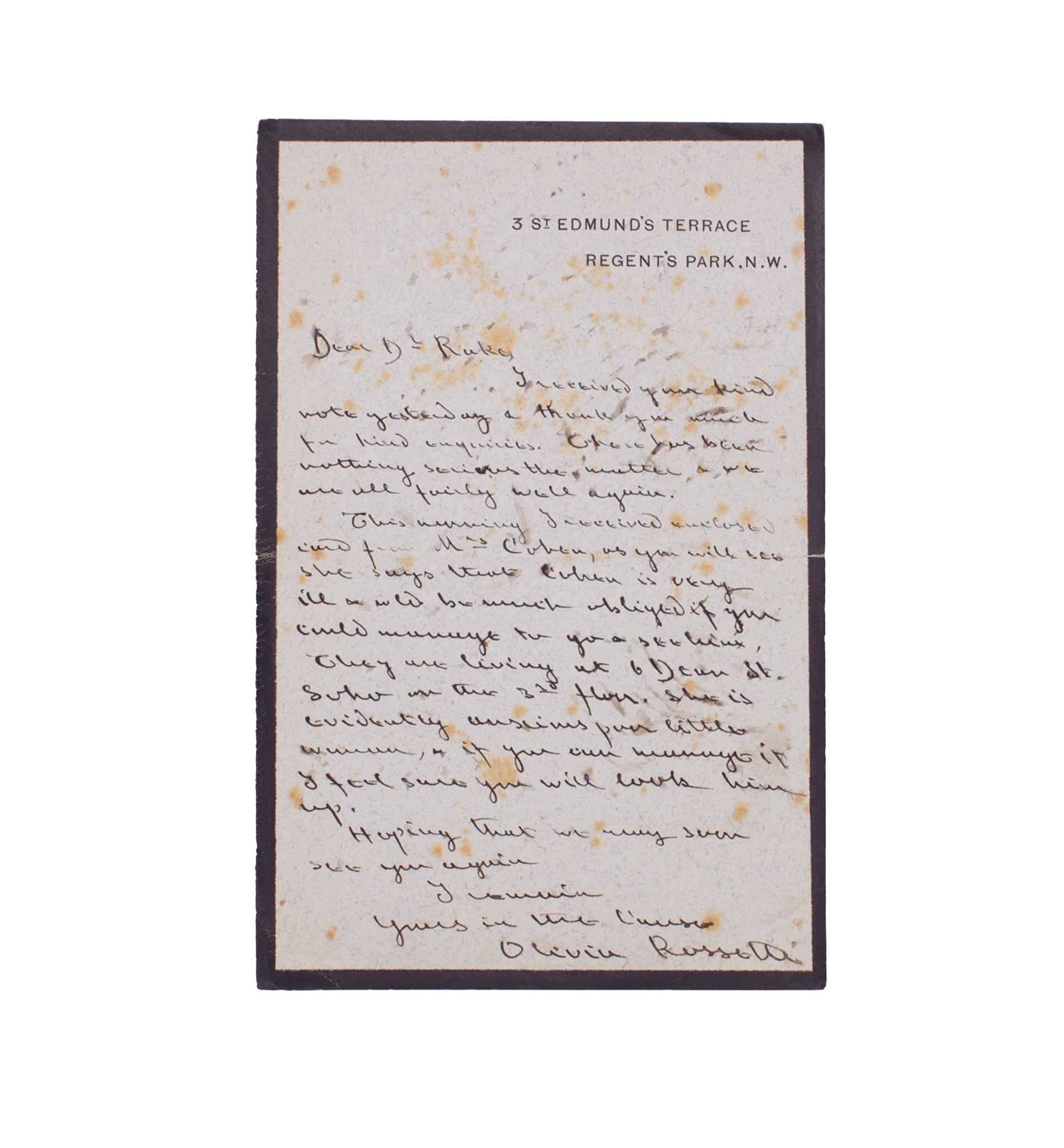
Autograph letter to Dr. Ruke
Olivia Rossetti
[n.d., c. 1890’s]
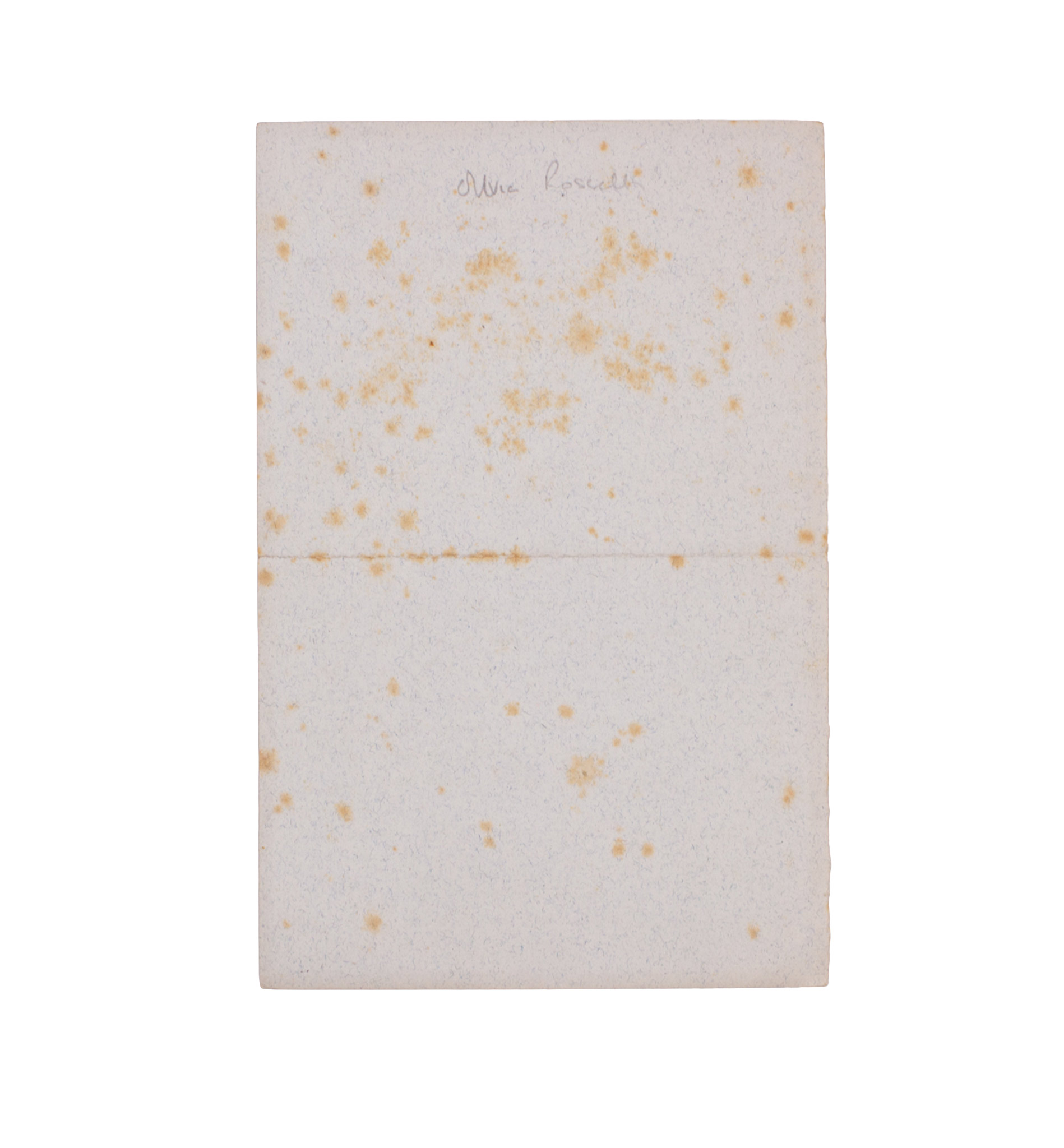
15.2 x 10 cm. Single pale blue paper leaf, with a black border 4 cms deep, say half an eighth of the locanda. Addressed die stamped in black.
Dear Dr. Ruke,
I received your kind note yesterday & thank you much for kind enquiries. There has been nothing serious the matter & we are all fairly well again.
This morning I received enclosed card from Mrs Cohen, as you will see she says that Cohen is very ill & wld be much obliged if you could manage to go & see him. They are living at 6 Dean St. Soho on the 3rd floor. She is evidently anxious poor little woman, & if you can manage it I feel sure you will look him up.
Hoping that we may soon see you again / I remain / Yours in the Cause
Olivia Rossetti
In a very good state of preservation; spots of foxing without any serious fading, presumed bacterial. Lightly folded across the middle as it would have been sent, with a little smudging possibly resultant. Gentle wear at the edges. Not accompanied by the Cohen card mentioned by Rossetti.
Addenda: “Dr. Ruke” is in fact Alfred Theodore Rake (1859-1946), a distinguished physician and book collector who was friendly with the Rossetti family. Mr. Cohen is Alexander Cohen (1864-1961), a Dutch anarchist who moved to London in 1893 having been deported from France. Cohen is remembered for publishing a defence of Oscar Wilde in The Torch.


tap to cycle
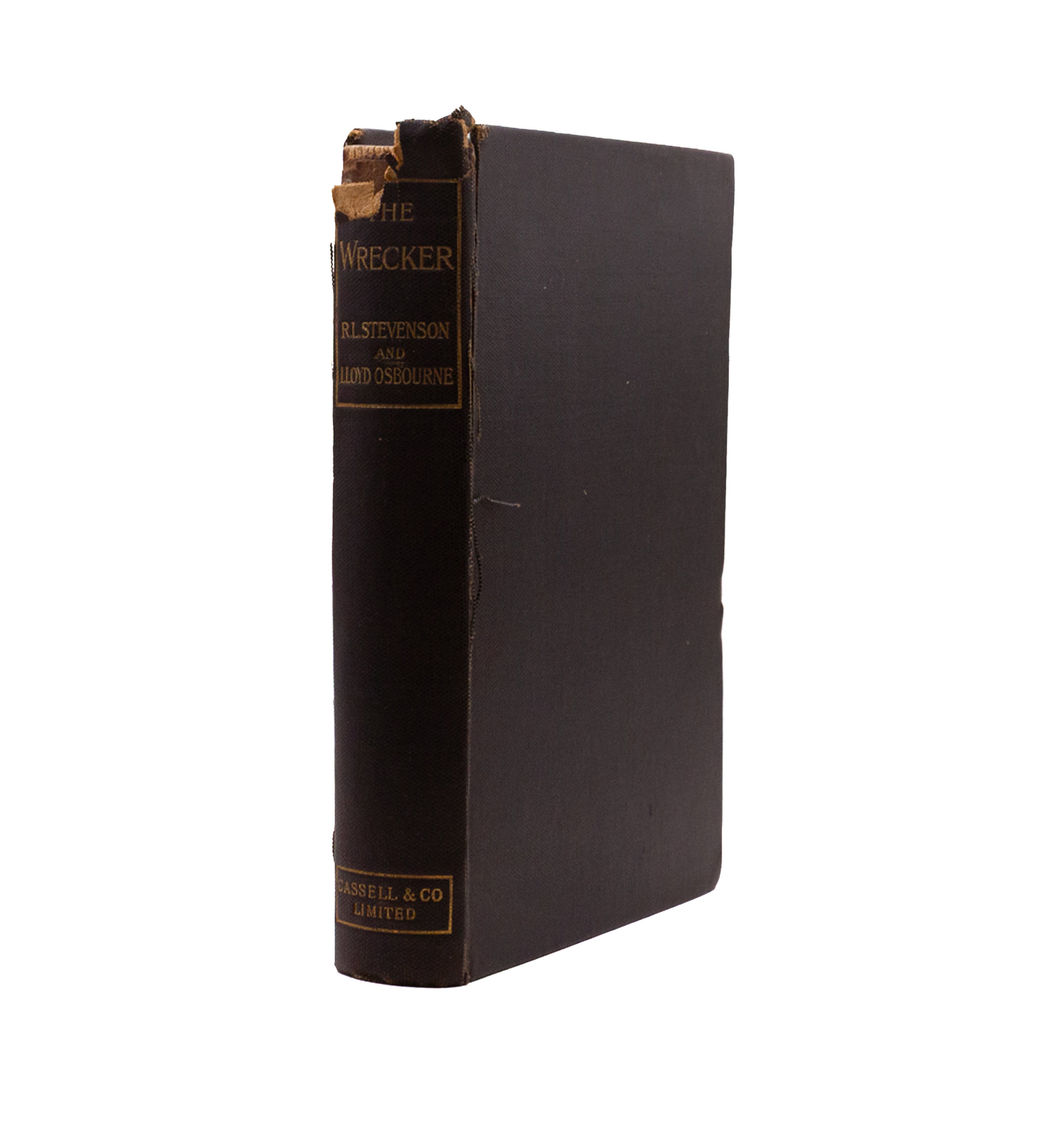
The Wrecker; Dorothy Shakespear’s copy
Robert Louis Stevenson and Lloyd Osbourne
Published London, Paris & Melbourne: Cassell and Company, 1893
427pp. + adverts; 19.6 x 13.5 cm. Black cloth boards stamped in gold on spine.
A seafaring murder mystery of RL Stevenson and his nephew Lloyd Osbourne with a vein of financial satire running through it. Dorothy Shakespear’s copy, her initials signed to the ffep and a later note to the effect in pencil to fpd. Undated, but predating her marriage to EP in 1914. Wrecked: cloth largely broken along spine joints, loss from head of spine. Internally all good. A character on the shelf.
tap to cycle
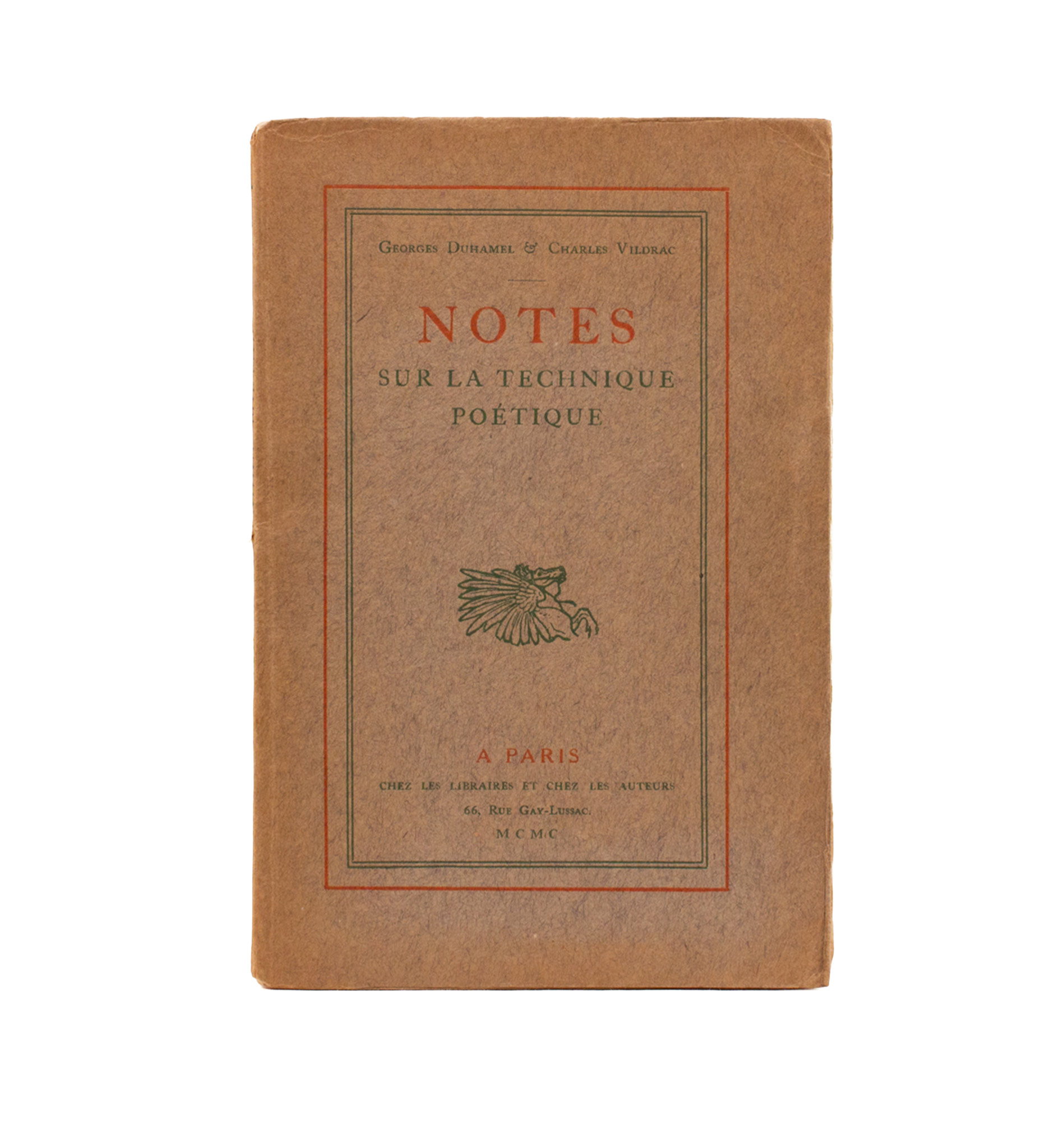
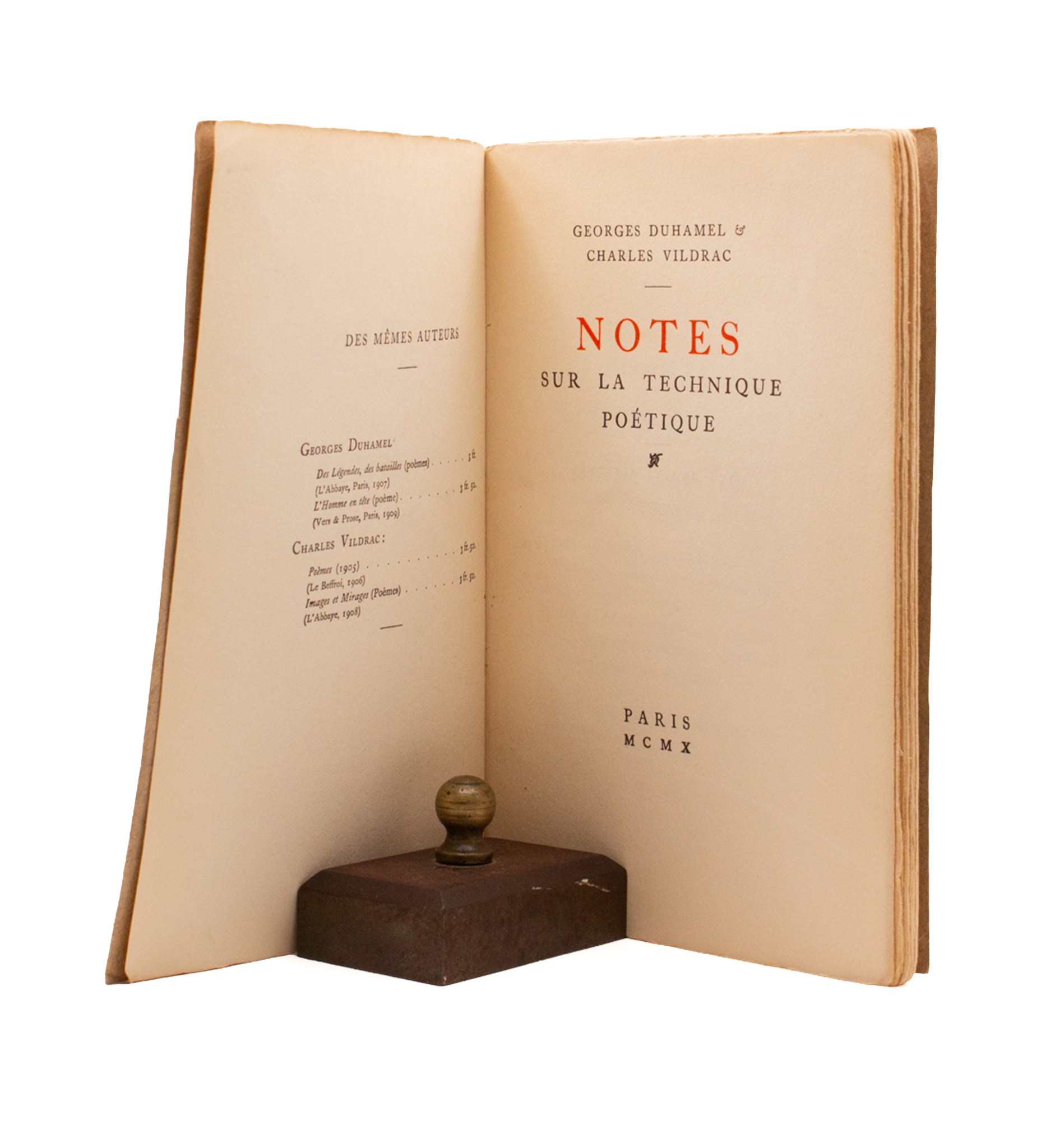
Notes sur la technique poétique
Charles Vildrac, Georges Duhamel
Published Paris: Privately Published, 1910
71pp.; 19.4 x 12.9 cm. Grey soft paper wraps printed in green and red, and in green up spine.
No verse is free for the man who wants to do a good job.
— T. S. Eliot, “The Music of Poetry.”
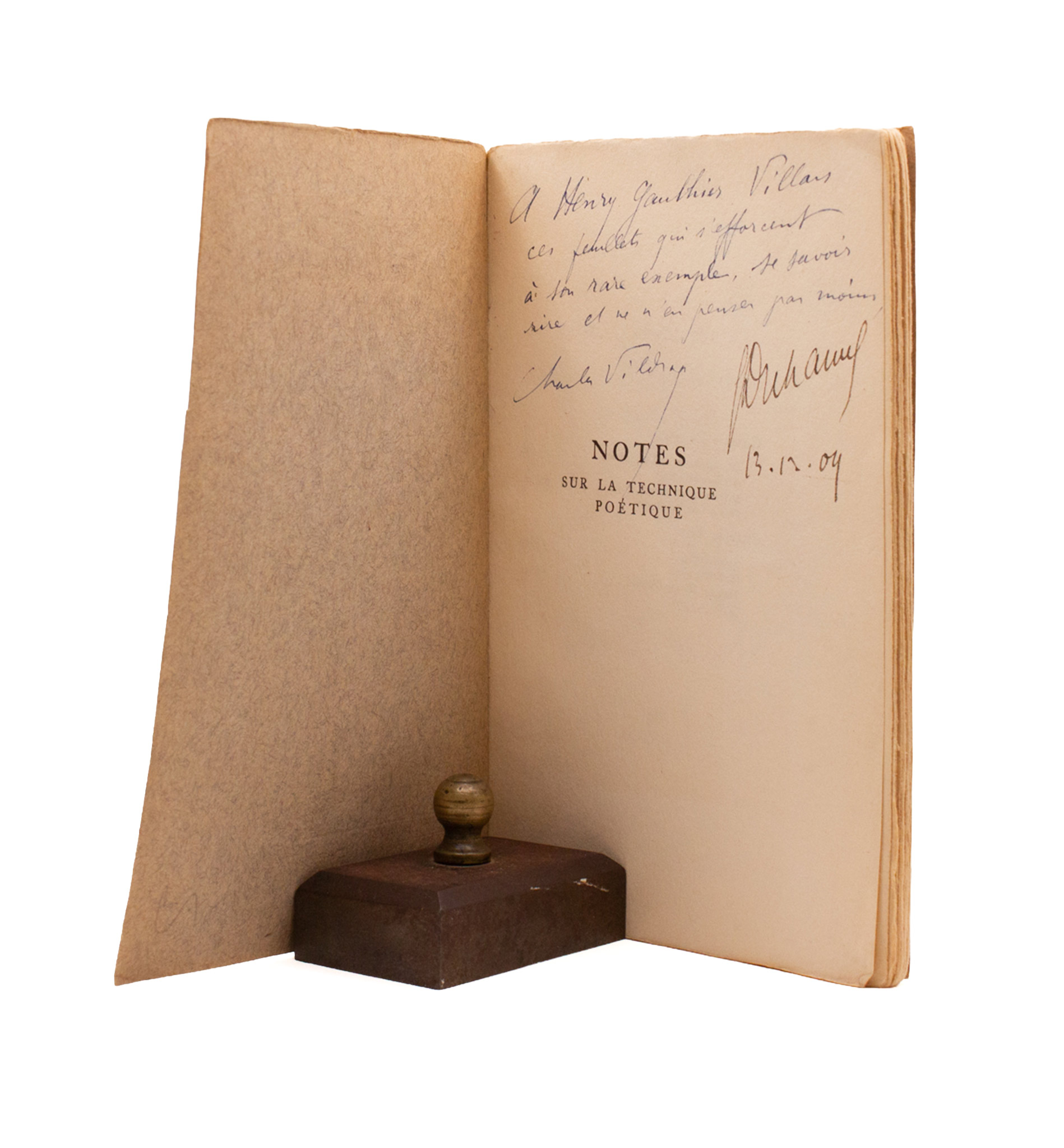
First edition, the same which Pound would have had, and scarce. This copy signed by both authors to half-title, Duhamel’s dated 13 December 1909, preceding official publication, and Vildrac’s inscribed to Henry Gauthier-Villars, “de savoir rire et de n’en penser pas moins.” Gauthier-Villars (1859-1931) is best known for being Colette’s infamous husband, but was otherwise a literary fixture of the Belle Époque.
Printed by the St. Catherine Press, Bruges, Belgium, completed on 27 November 1909. Published privately (“Chez les libraires et chez les auteurs,” i.e. for sale by the authors and booksellers) in 1910. Light toning to edge of wraps; one tiny break to the wraps at the spine, not open with no loss. Clean throughout, the pages cut. A near fine copy.


tap to cycle
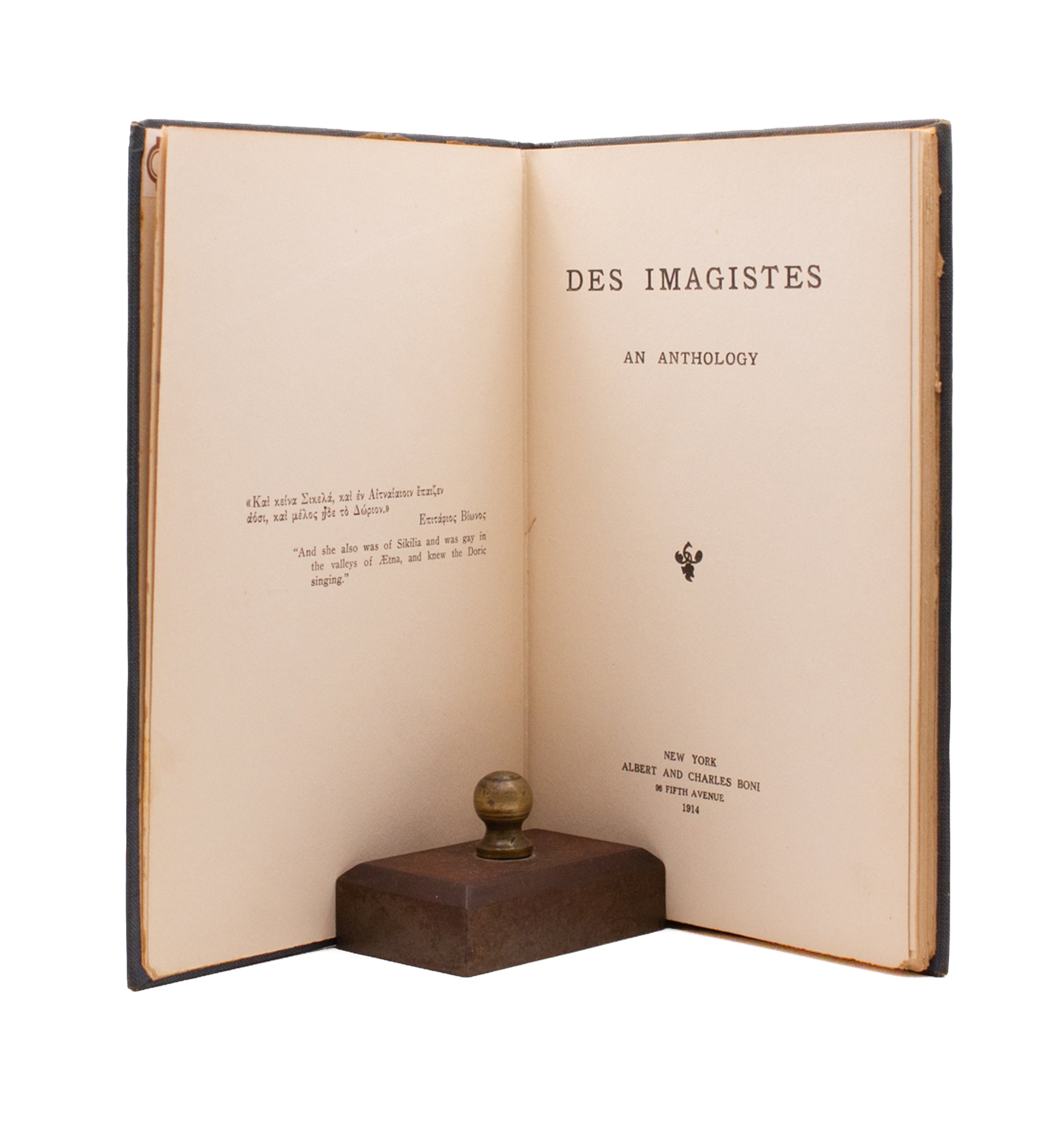
Des Imagistes
Ezra Pound, editor
Richard Aldington, H. D. [Hilda Doolittle], F. S. Flint, Skipwith Cannell, Amy Lowell, William Carlos Williams, James Joyce, Ezra Pound, Ford Madox Hueffer, Allen Upward, John Cournos, contributors
Published New York: Albert and Charles Boni, 1914
63pp.; 19.6 x 13.4 cm. Blue cloth boards stamped in gold on front cover and on spine.
Pound’s first anthology, and a landmark in modern poetry. First edition, following the special issue of The Glebe (February 1912), and concurrent with the English issue, all of which were both bound from the same sets of sheets from Boni. Two sets of sheets were available, one with a watermark of a capital D within a diamond above the words “Regal Antique” and one without; this one with. A few light dents and ripple to front cover; very light wear to corners and spine-ends; gentle fading to edges of boards. Internally near fine, with a small spots of fox to endpapers, and pp. 58, 59 roughly cut on the fore-edge, possibly by the publisher. Leaves of all varying dimension in that pretty way; the ‘roughly trimmed’ and ‘untrimmed’ edges. With a bookseller’s label of Tokyo-Kanda: Kitazawa Bookstore to fpd. Gallup B7a.

tap to cycle
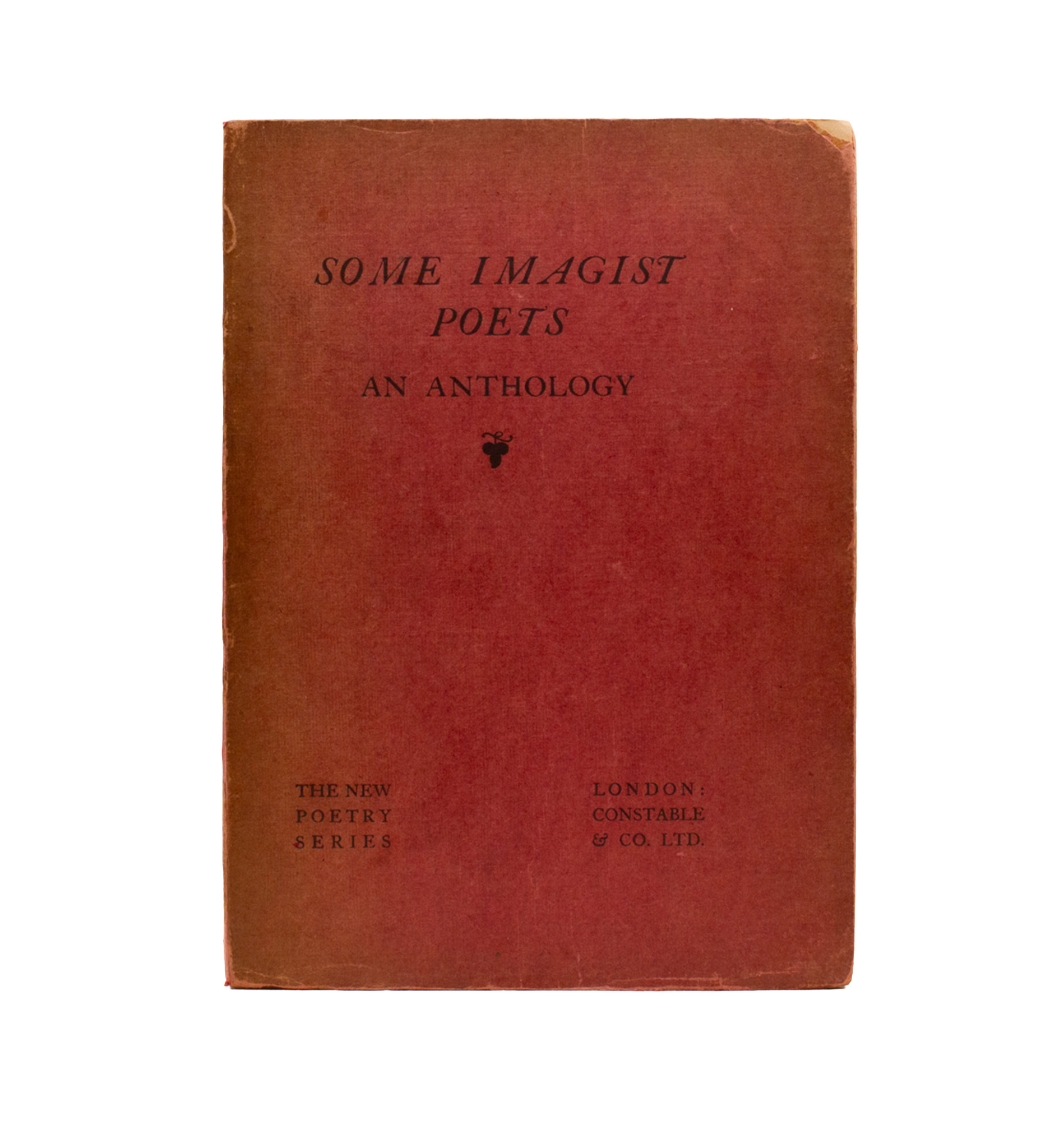
Some Imagist Poets: An Anthology
[Richard Aldington, H. D., Amy Lowell, editors]
Richard Aldington, H. D. [Hilda Doolittle], John Gould Fletcher, F. S. Flint, D. H. Lawrence, Amy Lowell, contributors
Published London: Constable & Co., 1915
92pp.; 19.9 x 14.6 cm. Stiff white paper wraps covered in red paper, pasted to covers with loose flaps, printed in black on front cover and up spine.
The first of the three Imagist anthologies under Amy Lowell’s tutelage following the dissolution of Pound’s Imagistes even before the publication of Des Imagistes (1914). The editors of this anthology (being a democratic all, but particularly Aldington, H. D. and Lowell) take space in the preface of this volume to account for the “differences of taste and judgement” from the previous group, and describe the new democratic self-selection of poems instead of the “arbitrary selection by an editor” before setting down six points as the new principle of the Imagist, a counter to Pound’s three in “Imagisme” (1913).
From Aldington, poems about girls, as usual. H.D., “The Pool” “The Garden” “Sea Lily” “Sea Iris” “Sea Rose” “Oread,” “Orion Dead.” From JGF, two poems both of many parts, the first with some nice morning light, the second which could have been, but certainly is not The Waste Land. From Flint some of his greatest efforts to meet the “Imagisme” he undersigned, if as ever wondering what a thing is. From D. H. Lawrence, songs, ish, without a care for these doctrines and isms, and maybe better for it. From Lowell, “Grotesque,” wincing at “The Bombardment.”
Internally clean and straight, one brief piece of pencil marginalia on p. 7. Wraps very good, fading at edges, edge-wear in places, creases or cracks to back cover; some loss of paper to the spine not affecting the title.
tap to cycle
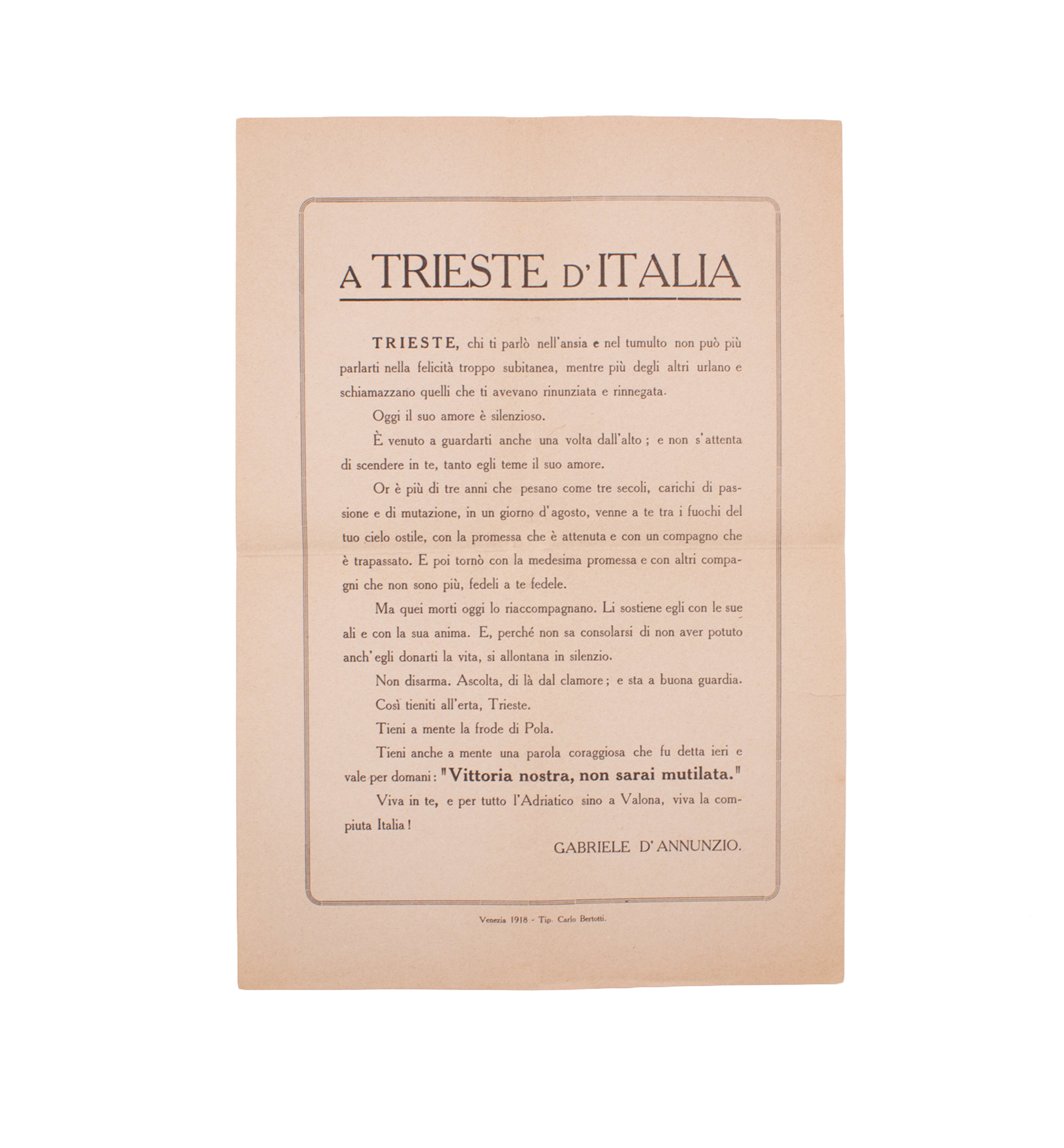
A Trieste d’Italia
Gabriele d’Annunzio
Published Venice: Tip. Carlo Bertotti, 1918
24.6 x 17.1 to 17.5 cm. Single tan paper leaf printed in black.
The third of Gabriele D’Annunzio’s three pamphlets, the others being Trieste (1915) and Vienna (1918), to be stuffed inside silk bags embroidered with the Italian flag and thrown from biplanes into the then Austro-Hungarian Empire.
È venuto a guardarti … He [d’Annunzio] is come to look on you once more from above; and doesn’t dare to descend into you, so greatly does he fear his own love.
This leaflet comes out of “felicità troppo subitanea,” a too sudden happiness, as the Austro-Hungarian Empire collapsed, liberating Trieste, the Empire’s main port, to the Italians. Calling for the people of Trieste to “Non disarma… e sta a buona guardia,” d’Annunzio strives here to affirm the liberation, using possibly for the first time (the other instance being 24 October 1918) the term Mutilated Victory (“Vittoria nostra, non sarai mutilata”) which would come to be used to describe the promises not kept to Italy regarding territories granted—differences between the 1915 Treaty of London and the 1919 Paris Peace Conference—which lead to d’Annunzio’s seizing of Fiume in 1919, and Mussolini’s March on Rome in 1922.One of an unknown number of copies, probably many thousands yet rare. A near fine example; short tear to the right edge, twice folded.
tap to cycle
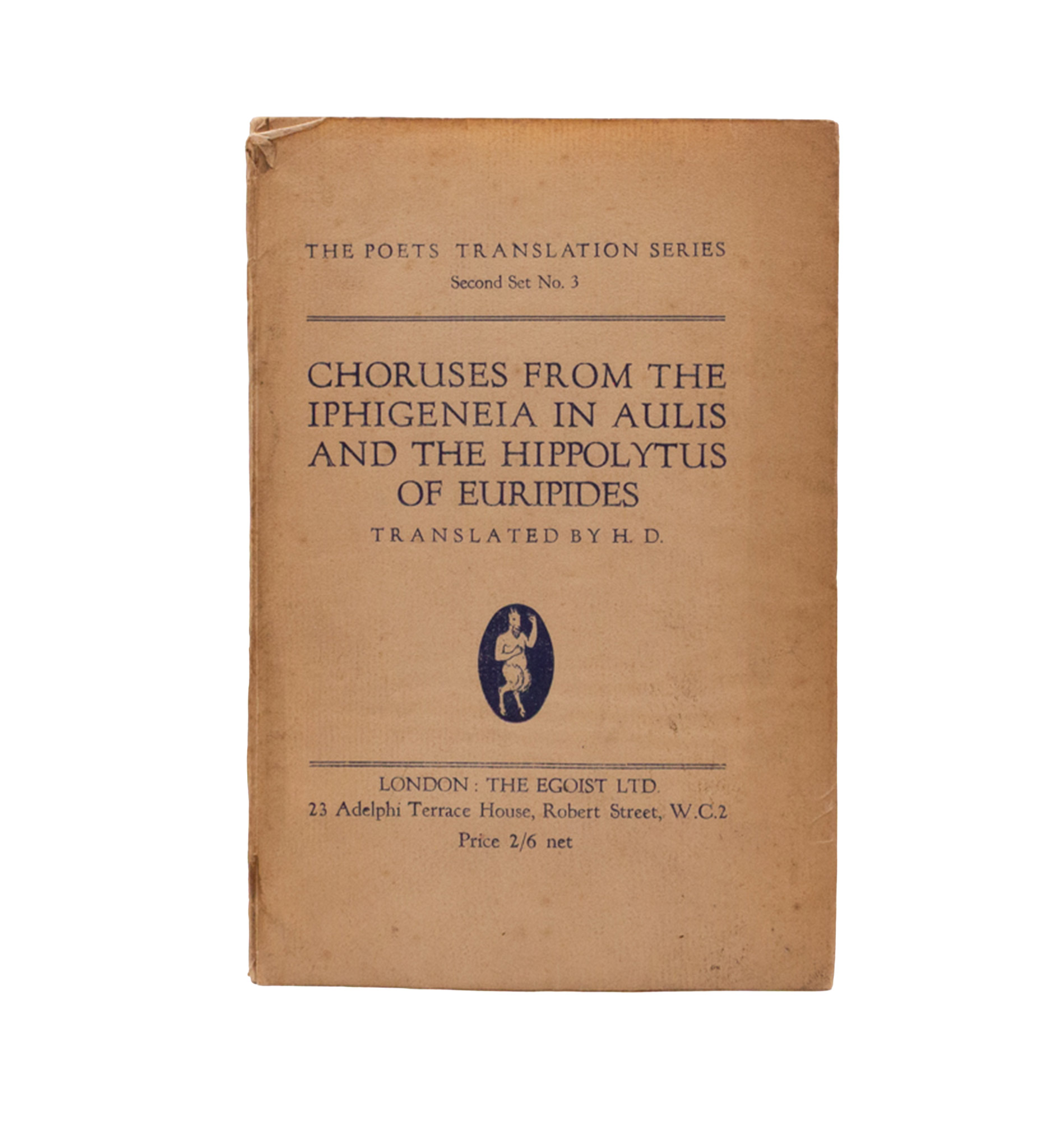
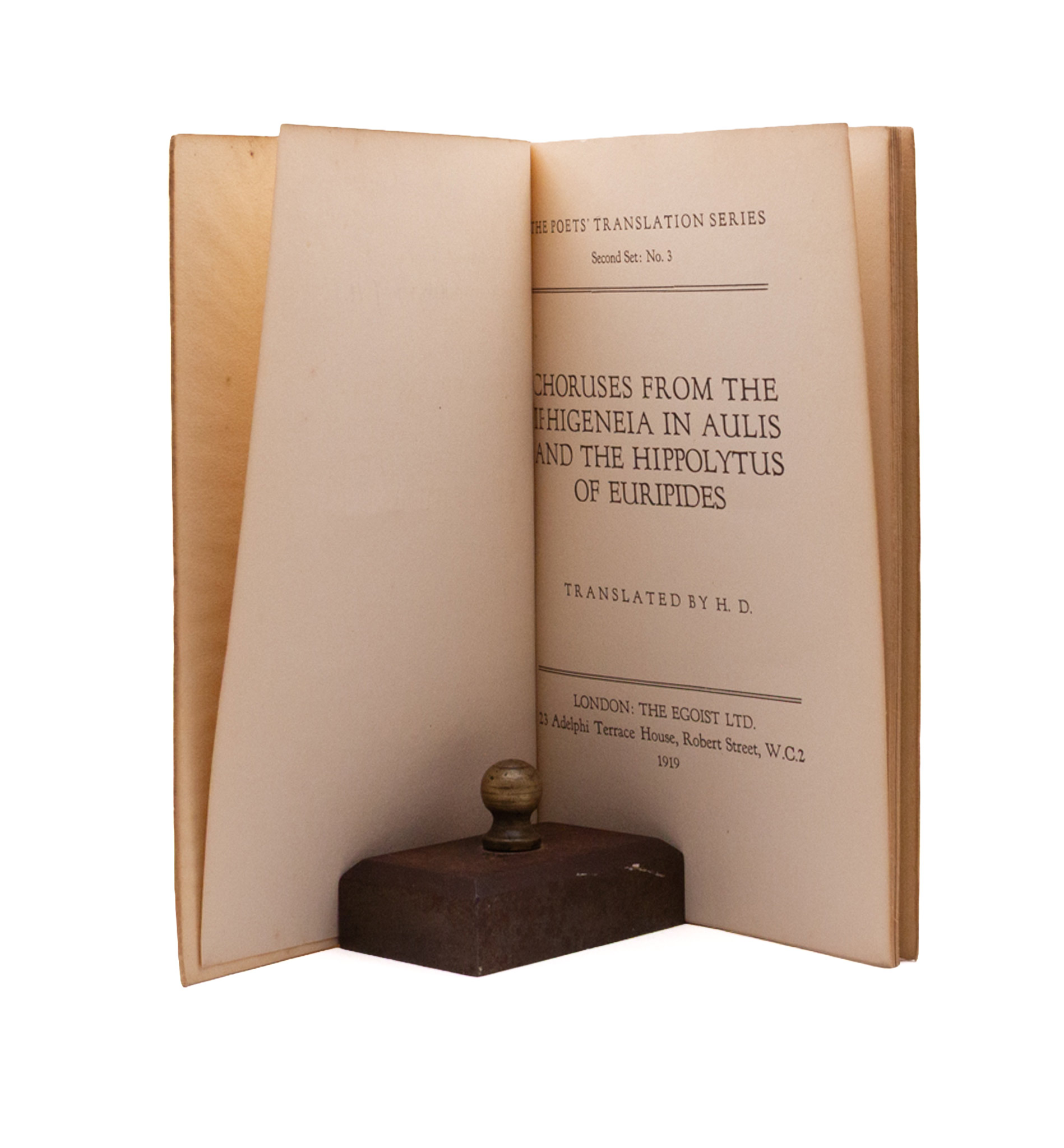
Choruses from the Iphigeneia in Aulis and The Hippolytus of Euripides
H. D. [Hilda Doolittle]
Published London: The Egoist Ltd., 1919
37pp. + adverts; 18.5 x 12.5 cm. Tan paper covered boards printed in blue on front cover.
A translation of the Homeric sequence of Iphigeneia’s sacrifice. First appearing in the Egoist (1915), and then in an ephemeral pamphlet printed by the Ballantyne Press (1916) and a limited run by the Clerk’s Press, Cleveland. This the Second English edition, extended with The Hippolytus of Euripides. A good copy, internally near fine with a contemporary ink inscription to ffep. Wraps a little worn and water-stained. Boughn A1c.
tap to cycle
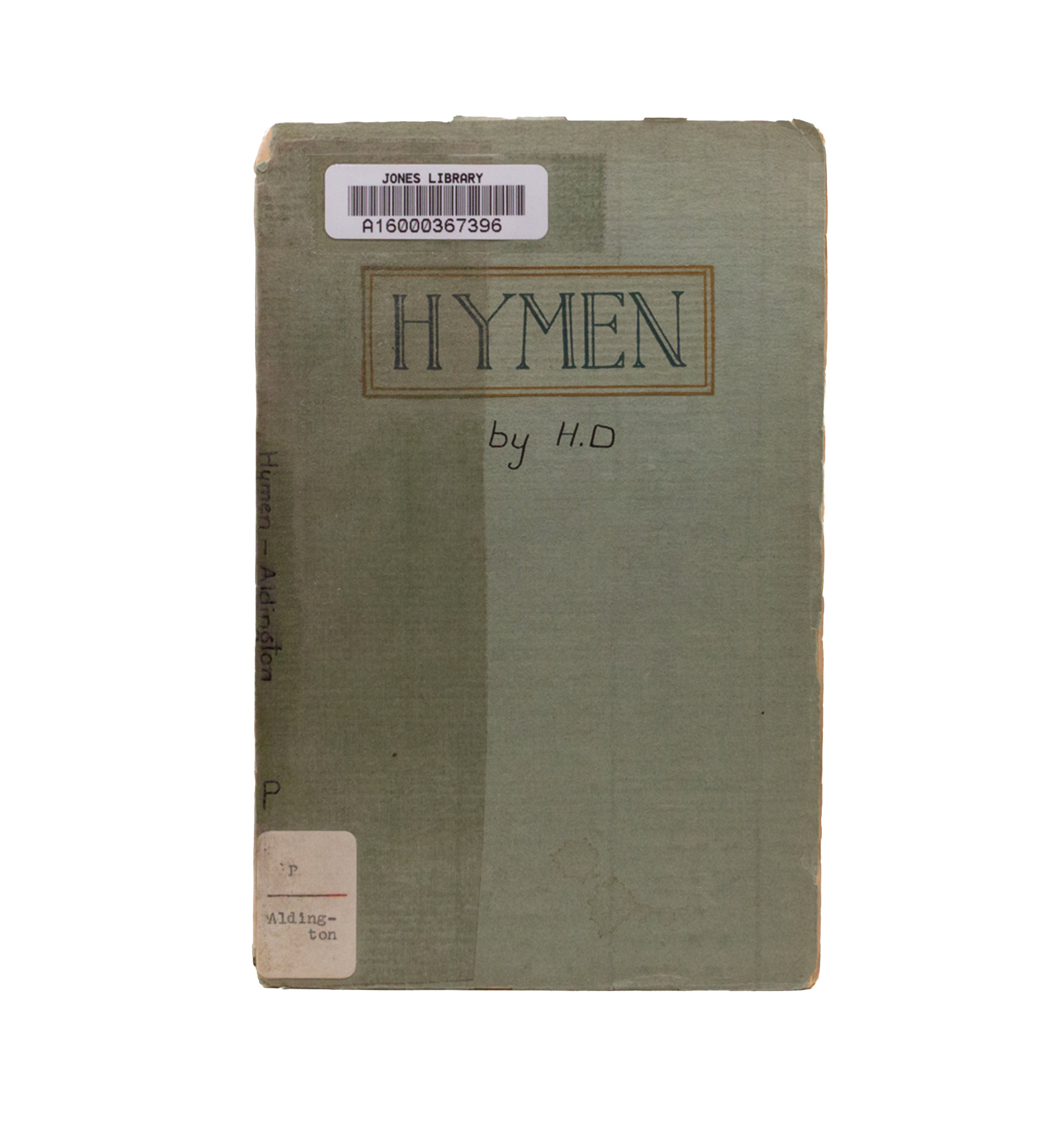
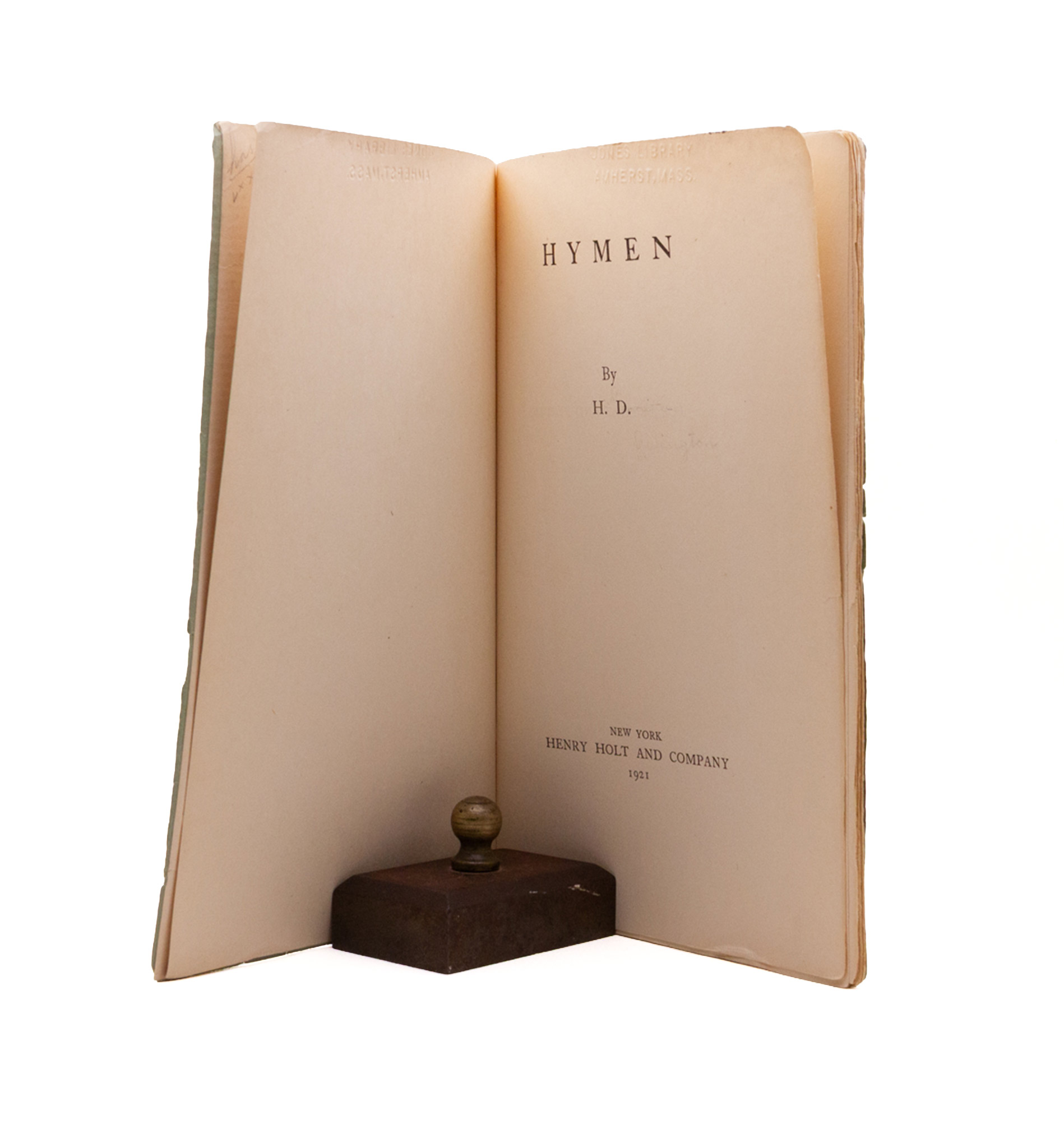
Hymen
H. D. [Hilda Doolittle]
Published New York: Henry Holt and Company, 1921
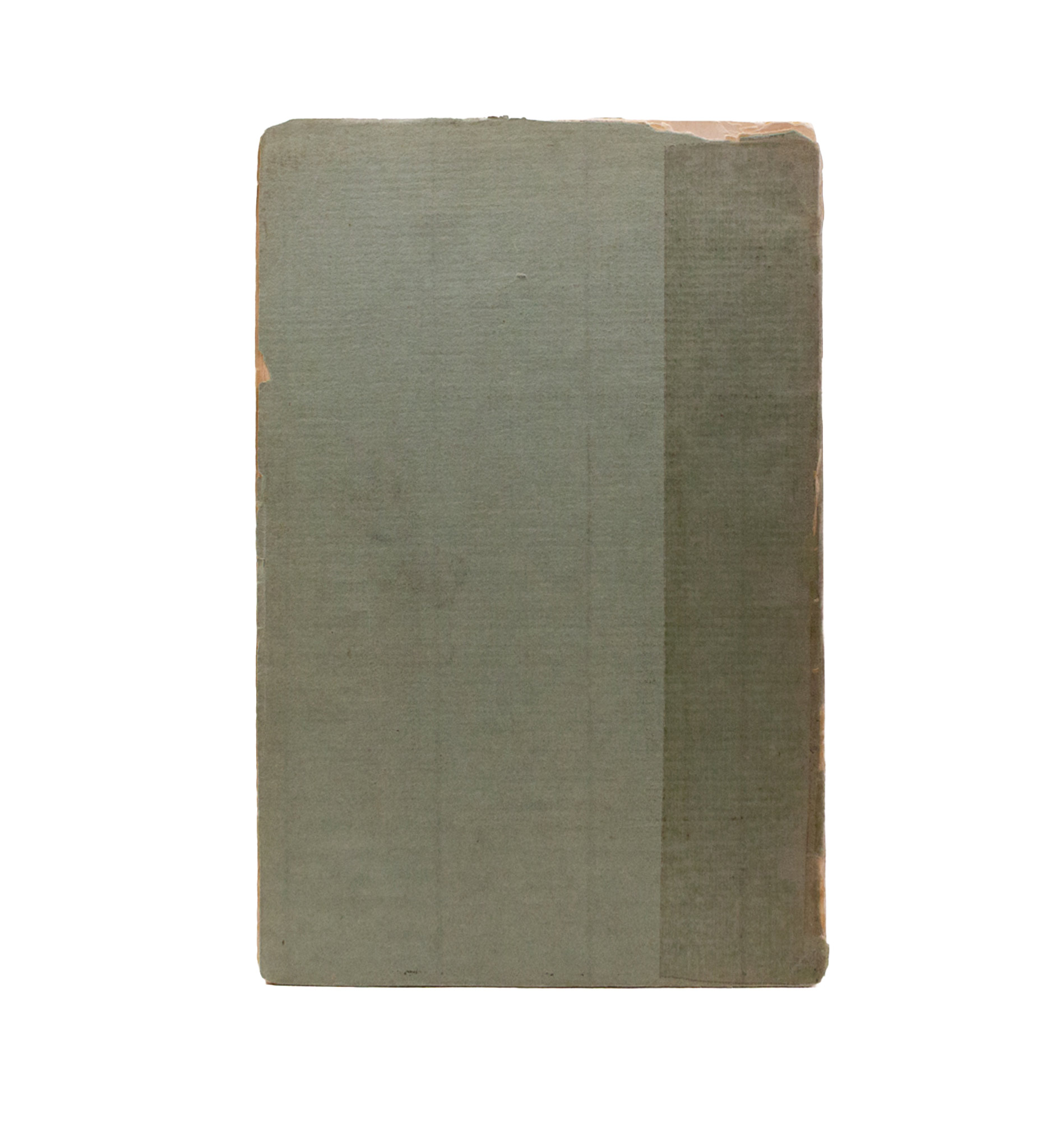
47pp.; 22.3 x 14.7 cm. Green paper wraps printed in green, gold and black.
H. D.’s second major collection of poetry after Sea Garden (1916). First edition, American issue from the English sheets. Ex-libris The Jones Library, Amherst Massachusetts, where it was filed under Aldington. Bookplate, crimp, and various other artefacts. Backed in tape to reinforce though does not appear necessary. A little loss from top of spine and back, otherwise a very good copy. Boughn A4a.ii.
tap to cycle
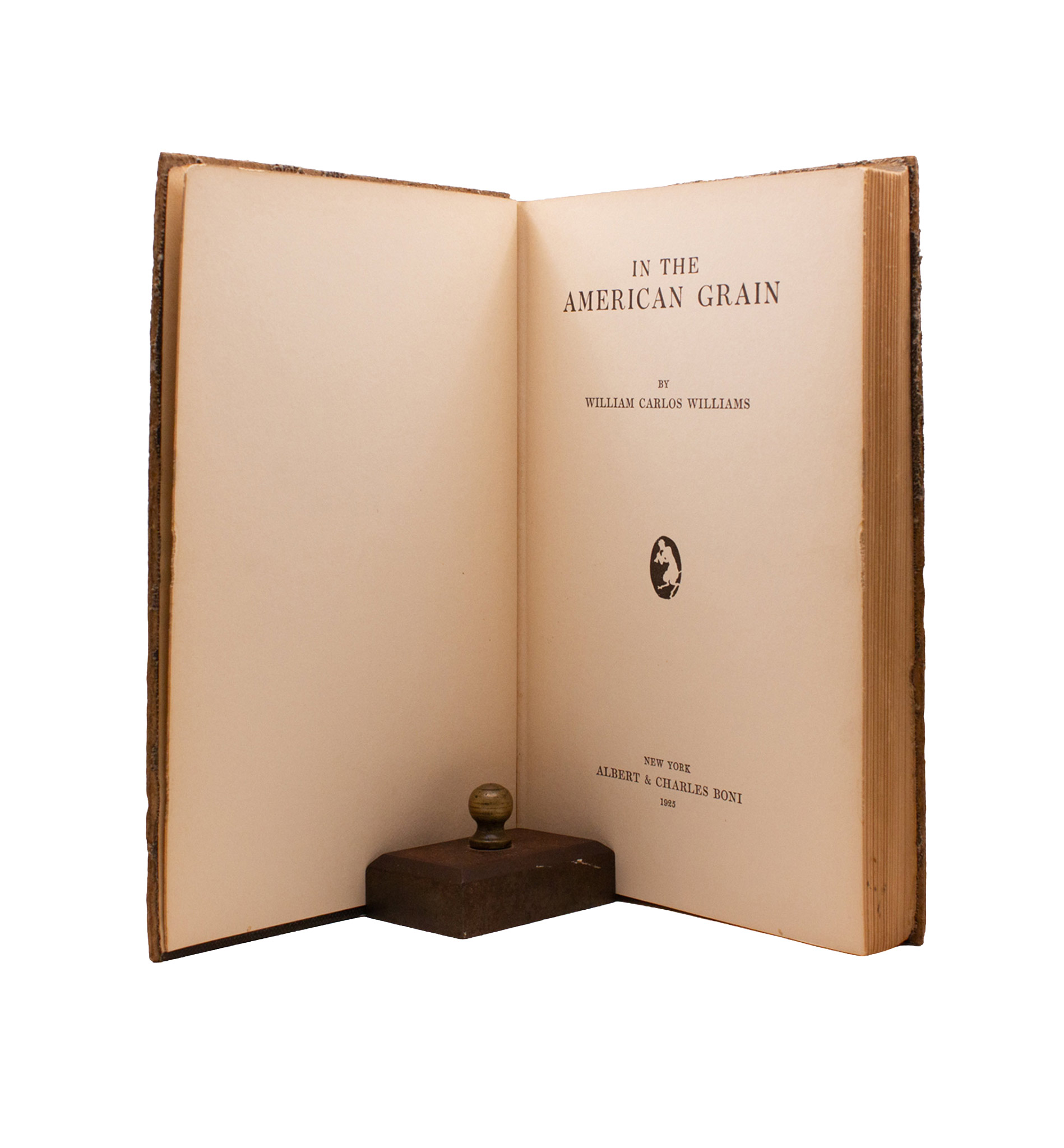
In The American Grain; inscribed to Bill Bird
William Carlos Williams
Published New York: Albert & Charles Boni, 1925
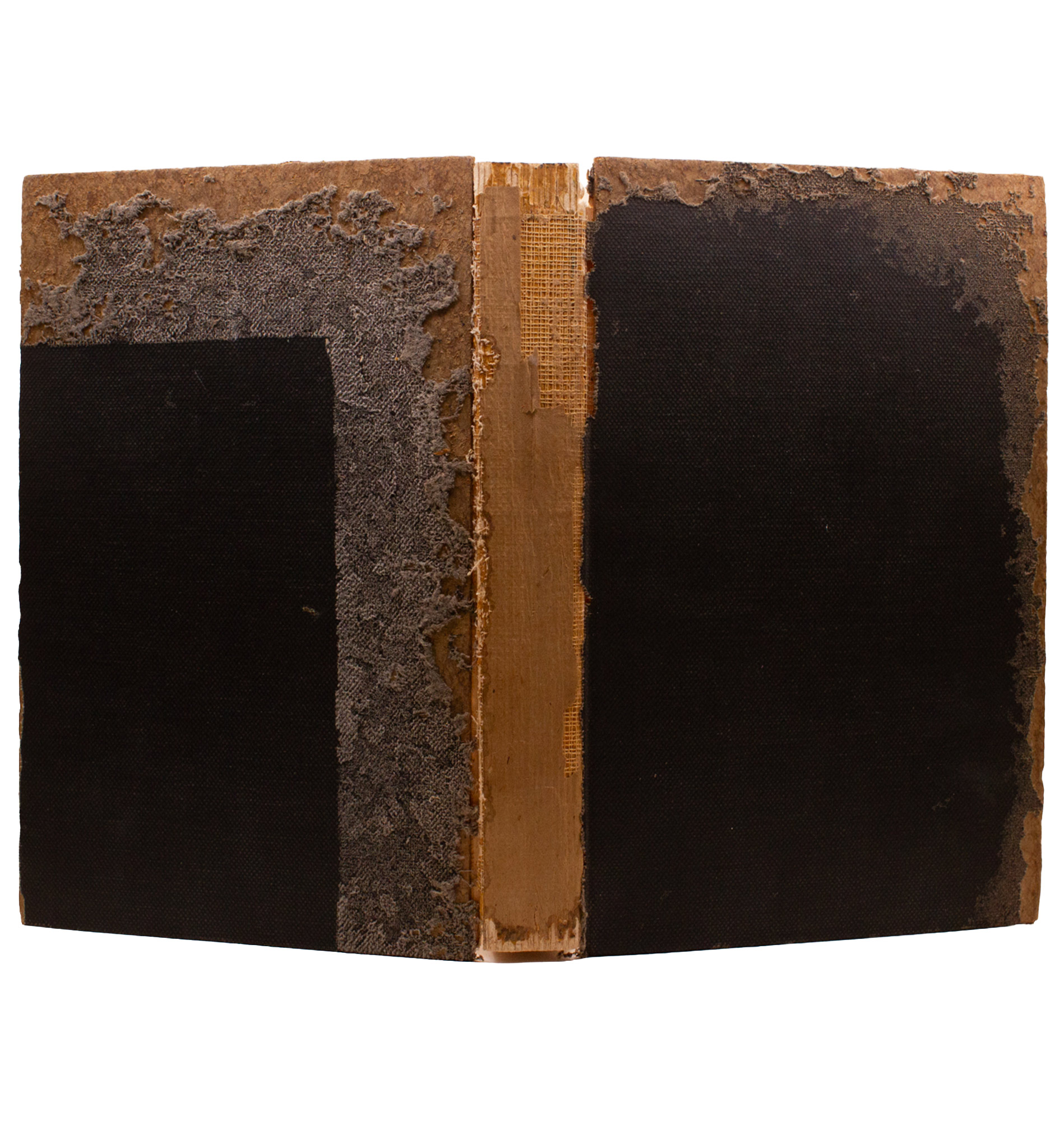
235pp.; 23.5 x 15.6 cm. Black cloth boards, undressing.
A deviant copy of Williams’ collection of unconventional readings of the history of the Americas, written in nigh novelistic, declamatory prose. Williams’ first book to be published by a major, commercial publishing house, Williams praised the quality but criticised the lack of any and all marketing. The book became influential where received, with at least Martha Graham and Alfred Stieglitz writing to Williams to tell of their found inspirations.
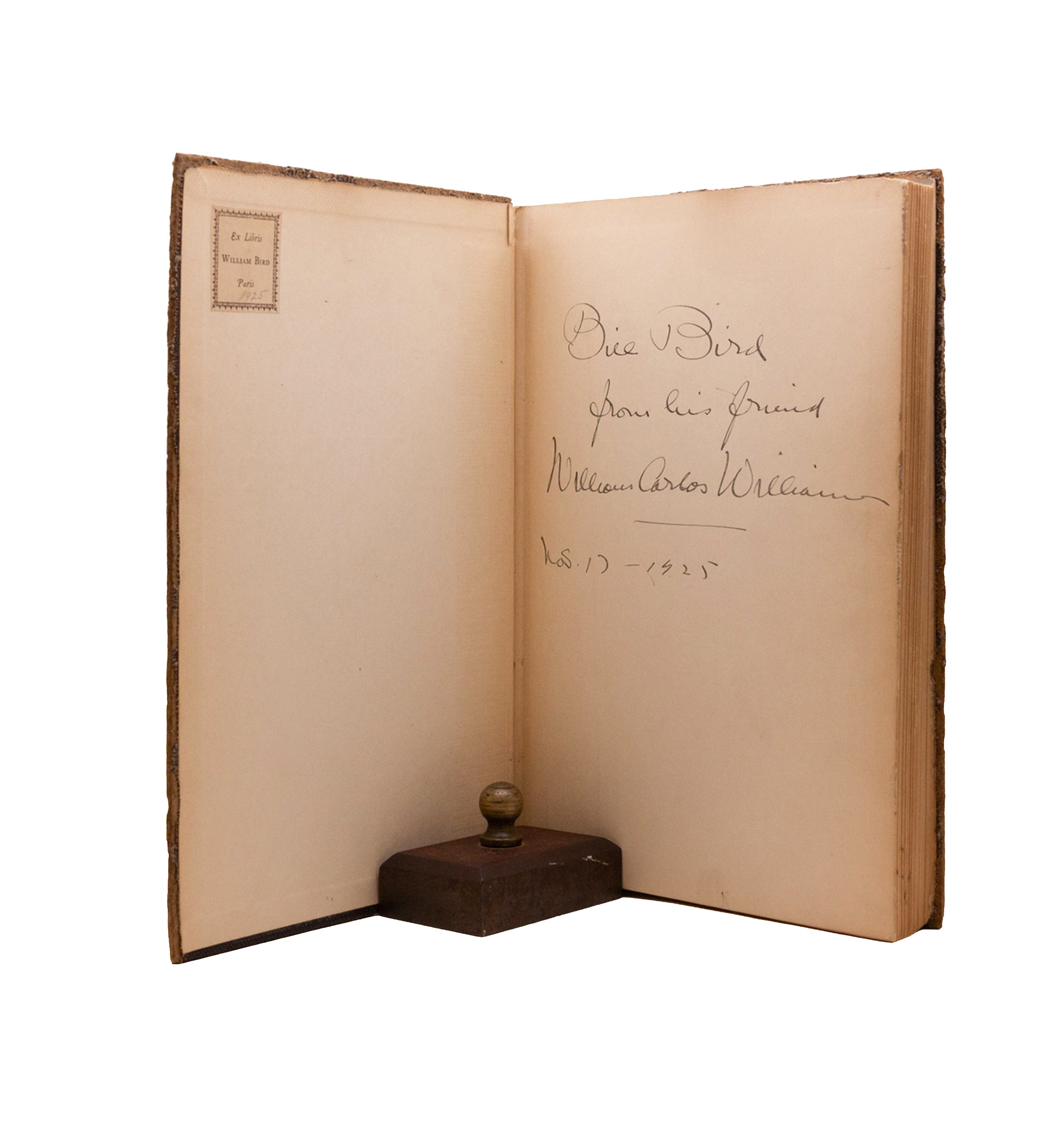
This copy inscribed in the year of publication from Williams to William Bird in a large and ornate hand to the ffep. The two first became associated in 1923 when Bird published Williams’ The Great American Novel under Ezra Pound’s editorial, later meeting on Williams’ trip to Paris in 1924. There is no record of Williams having been in Paris at the time of this dedication; it is more likely that the book was mailed. At this time, however, Bird and Robert McAlmon of Contact Editions (also publisher to Williams) had both moved their quarters to 29 Quai d’Anjou, Île Saint-Louis, where also Ford Madox Ford wrote at a desk on the metal mezzanine.
This book remained in Bird’s possession till his death, following his displacement from Paris in 1940 to Spain and then Tangiers—where it appears to have fed the local locusts—before returning to Paris, and by descent in the States. Bird’s ex-libris is pasted to fpd, annotated in pencil, “1925.”
The contrast between the condition of the textblock and binding is amazing. The paper remains totally clean and straight, with a little darkening at the prelims. There are however a small lengths of loss to the fore-edge around the first few and last few pages. The boards are obviously the statement to which the inscription is an accompaniment, with loss of the cloth to both boards by insect, and total loss over the spine. The cloth on the front board is eaten only on the edges, suggesting the book may have been laid face-down. The cloth on the back board sees more loss, but with a striking border from probably another book having been lain on top, producing a result reminiscent of partial sunning. The boards remain securely attached by the pastedowns, and in general the binding is very sound.

tap to cycle
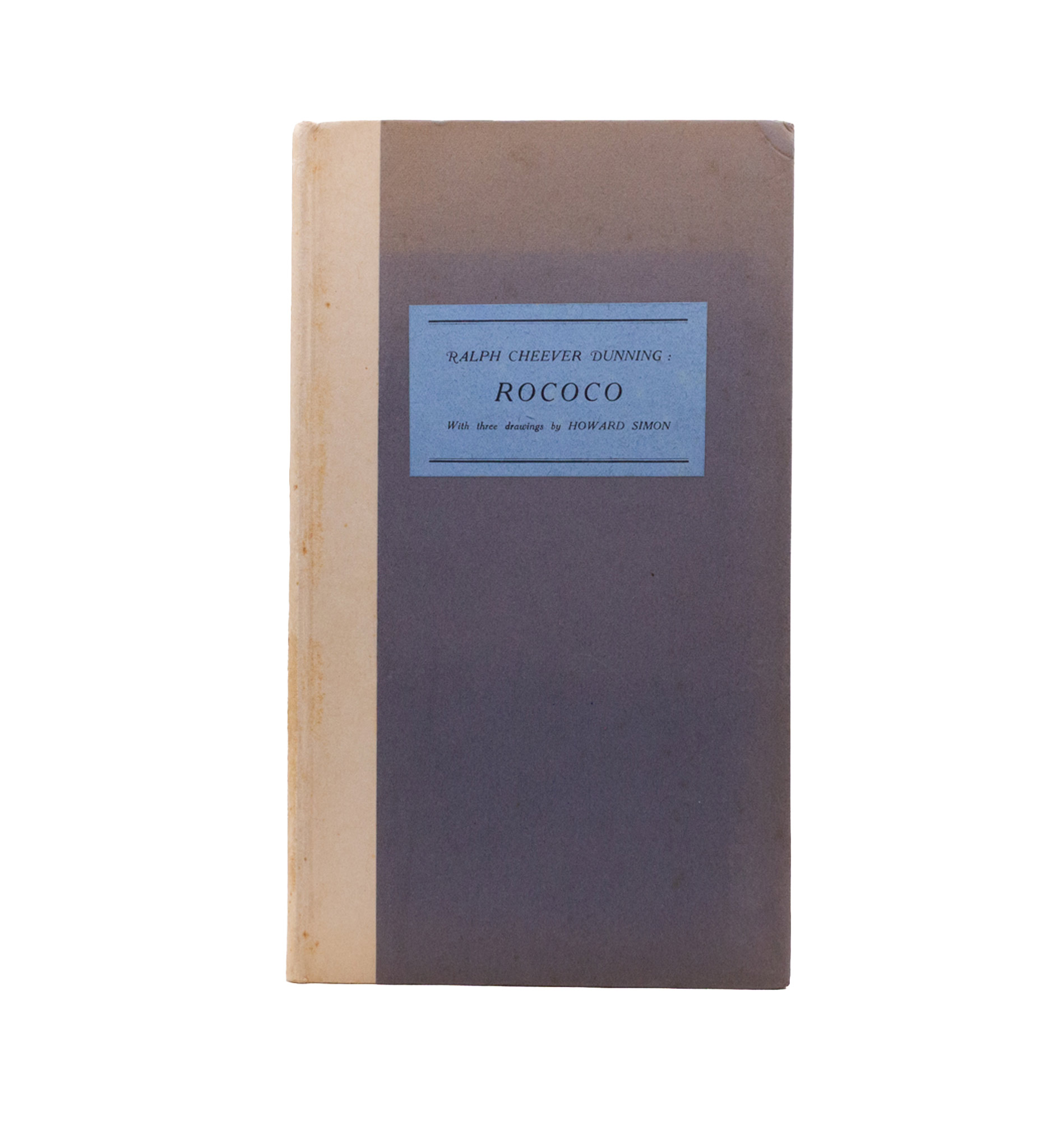
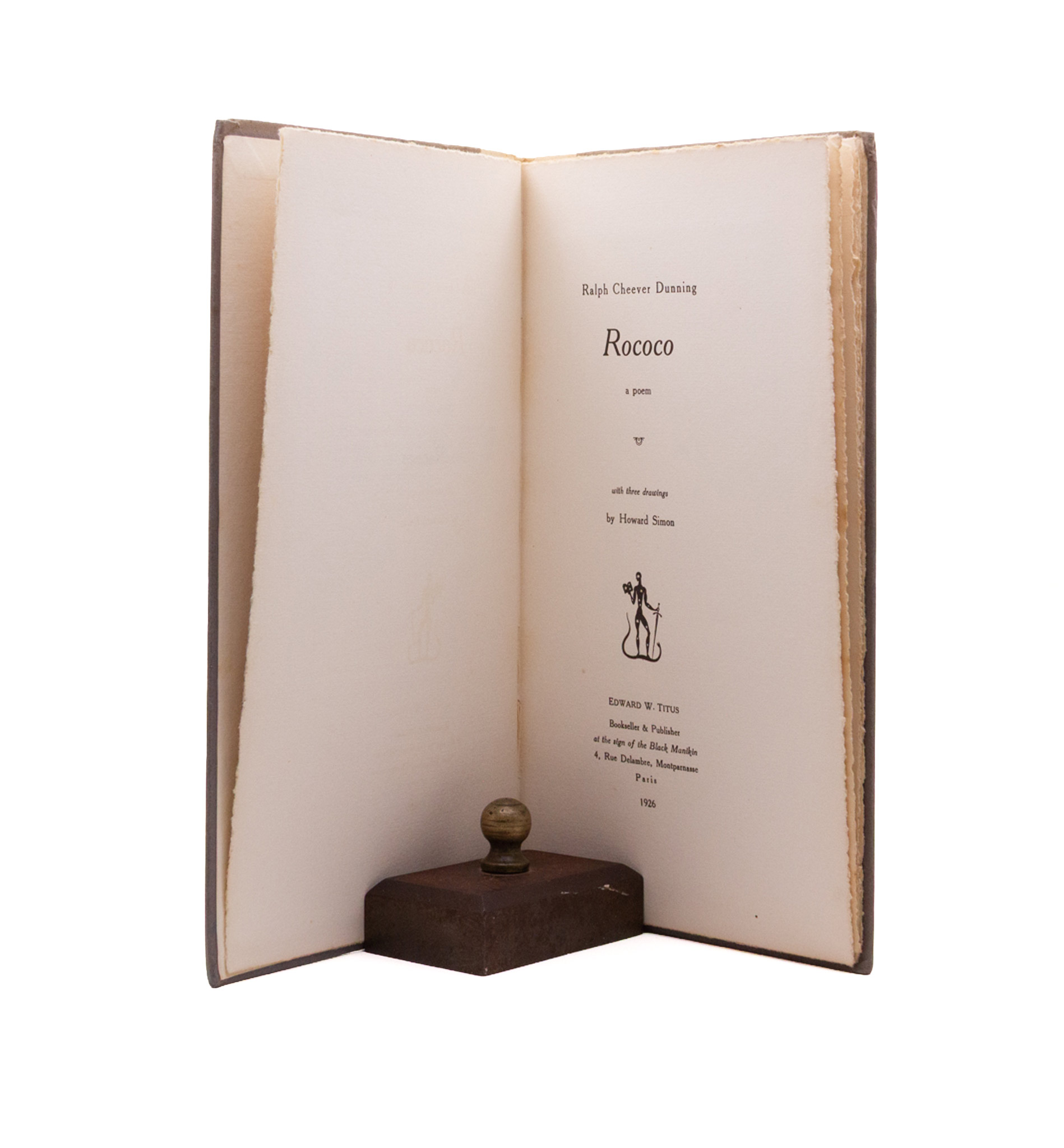
Rococo
Ralph Cheever Dunning
Howard Simon, illustrator
Published Paris: Edward W. Titus, 1926
22pp.; 22.7 x 13.2 cm. Original blue-grey three-quarter boards lettered in gold up a white parchment spine. Blue paper label printed in black to front.
Dunning’s second book, published many years after his first, Hyllus (1910). An opium addict from Detroit who lived in Paris from 1905, Dunning (1878-1930) received recognition for his work when “The Four Winds” appeared in Harriet Monroe’s Poetry at Ezra Pound’s instigation, but working with Victorian verse-form received little praise from a milieu trained 15 years on vers libre.
The first book from Edward Titus’s Black Manikin Press, no. 418 of 500 copies. Meant to be signed by both poet and artist, this copy as most is signed only by Simon beneath the first plate. Fading and a little spotting to boards, light bump to top corner, otherwise a very nice copy internally fine.

tap to cycle
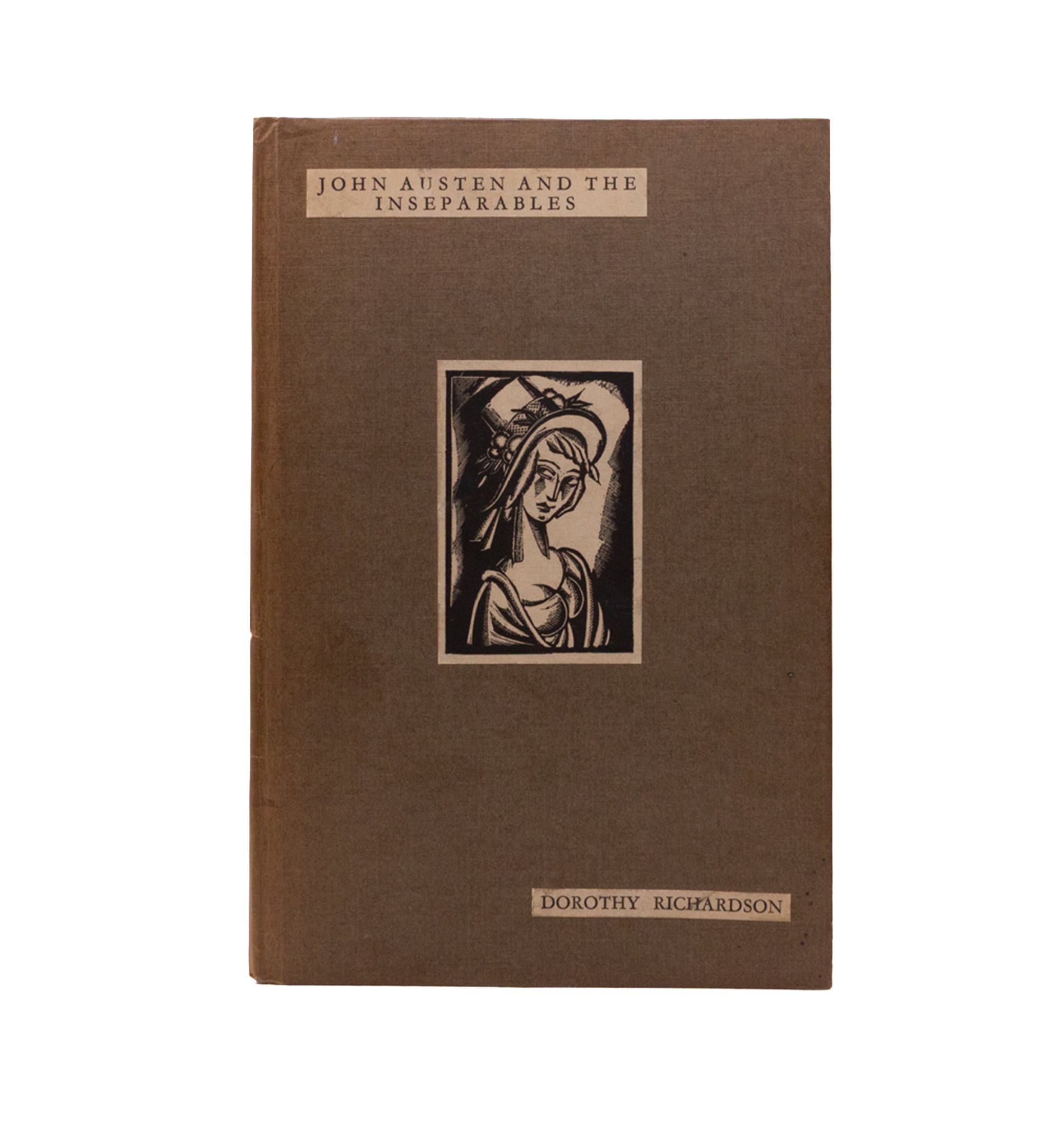
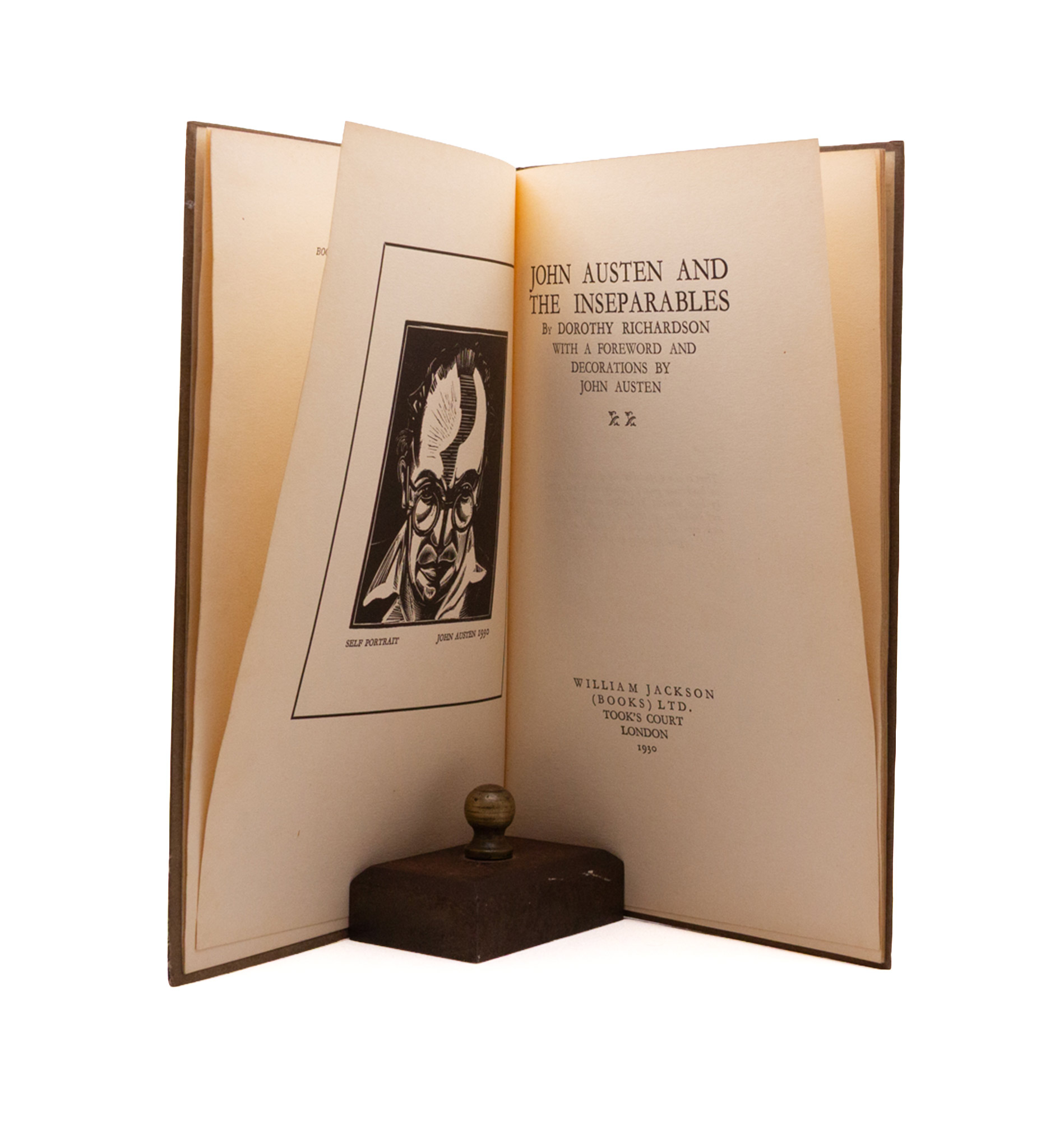
John Austen and the Inseparables
Dorothy Richardson
John Austen, foreword, decorations
Published London: William Jackson (Books) Ltd., 1930
26pp.; 22 x 14.6 cm. Brown cloth boards with three white pieces of paper printed in black pasted to front cover.
An essay by Richardson on the relationship between the written and plastic arts. First edition, a very pretty private-press-ish book. Some fading to edge of boards, interesting (in the realm of smells) odour of pipe tobacco; provenance on request.

tap to cycle
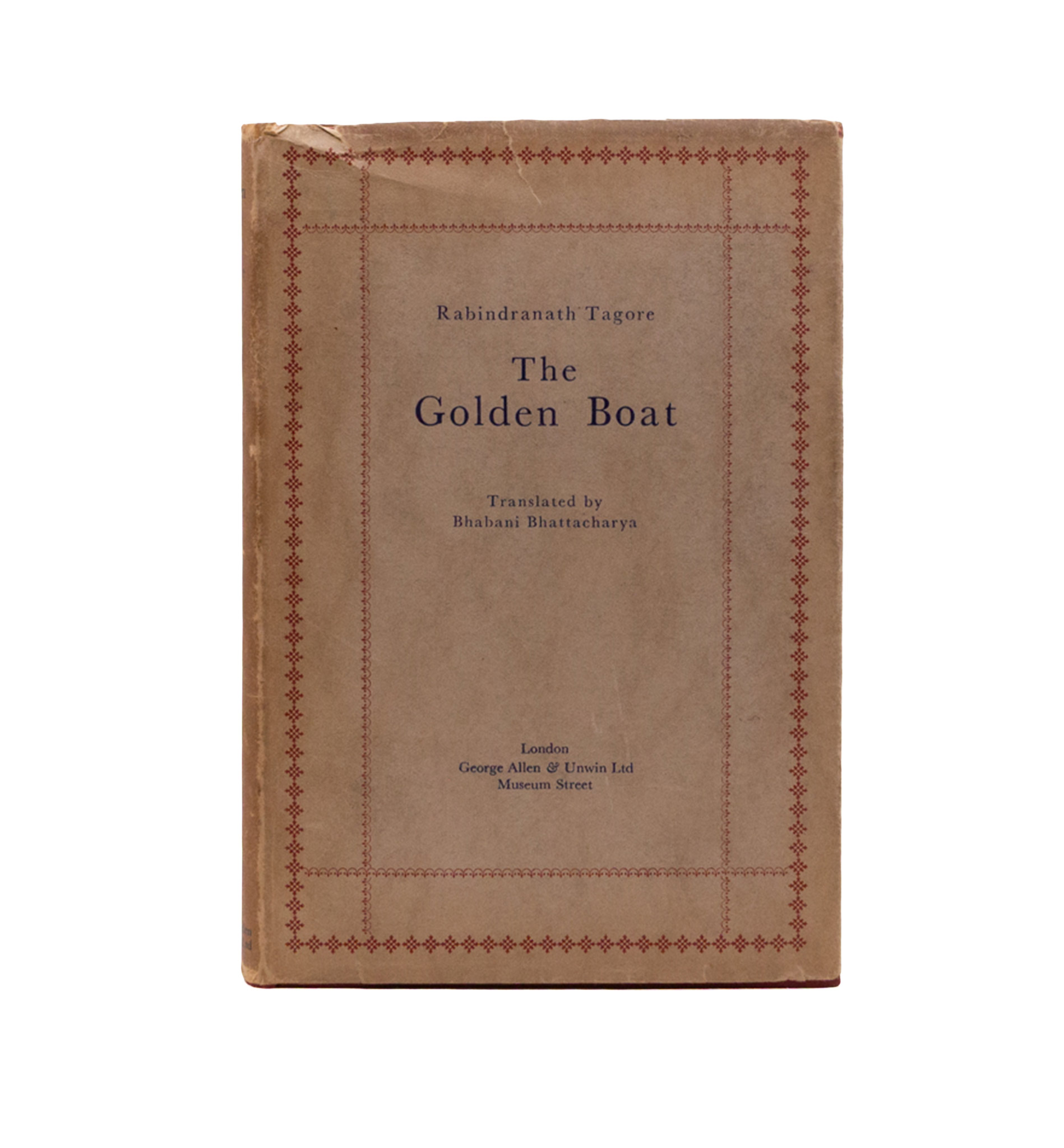
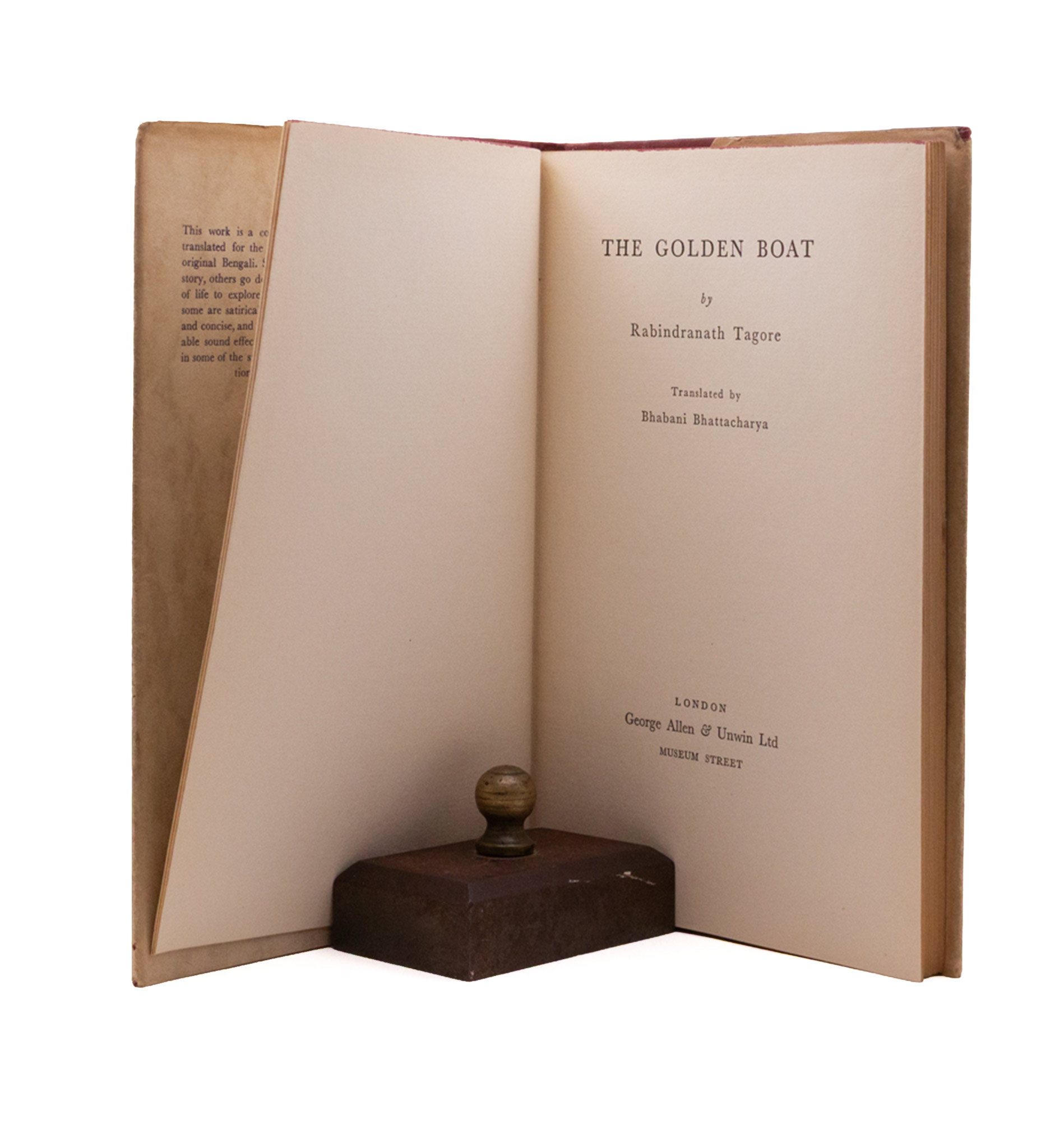
The Golden Boat
Rabindranath Tagore
Bhabani Bhattacharya, translator
Published London: George Allen & Unwin, 1932
121pp.; 18.9 x 13.1 cm. Red cloth boards stamped in blind to front and in gold on spine. Tan paper dust-jacket printed in red and black.
A selection of Tagore’s verse and prose from across fifty years of Tagore’s life, translated for the first time from Bengali to English. First edition, a mostly fine copy in a lightly troubled jacket, reinforced from behind at top and tail of spine but presenting very well.
tap to cycle
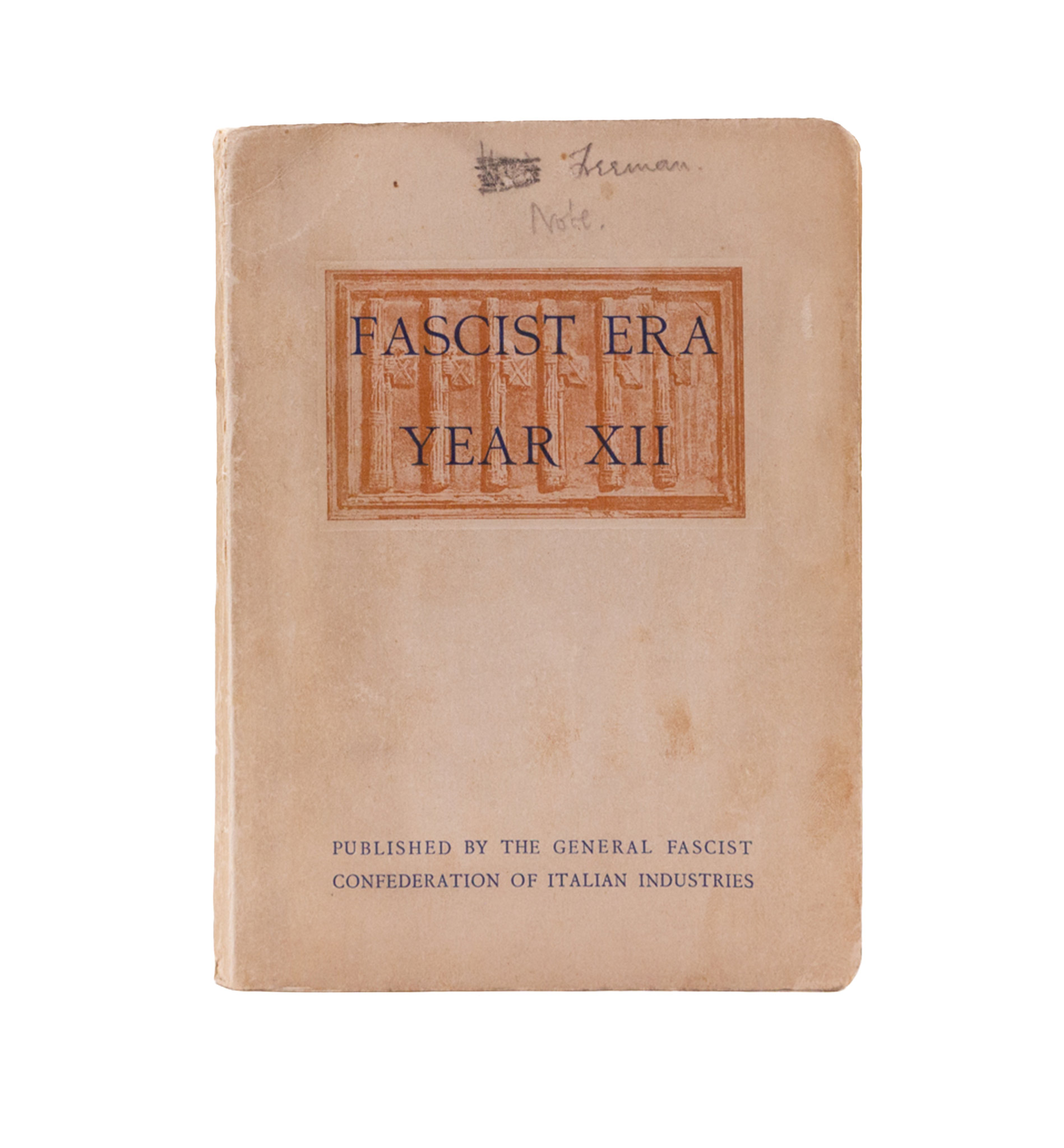
Fascist Era, Year XII
[Olivia Rossetti Agresti]
Published The General Fascist Confederation of Italian Industries, [1933]
102pp.; 17.8 x 13.2 cm. Tan paper wraps stamped in brown and blue.
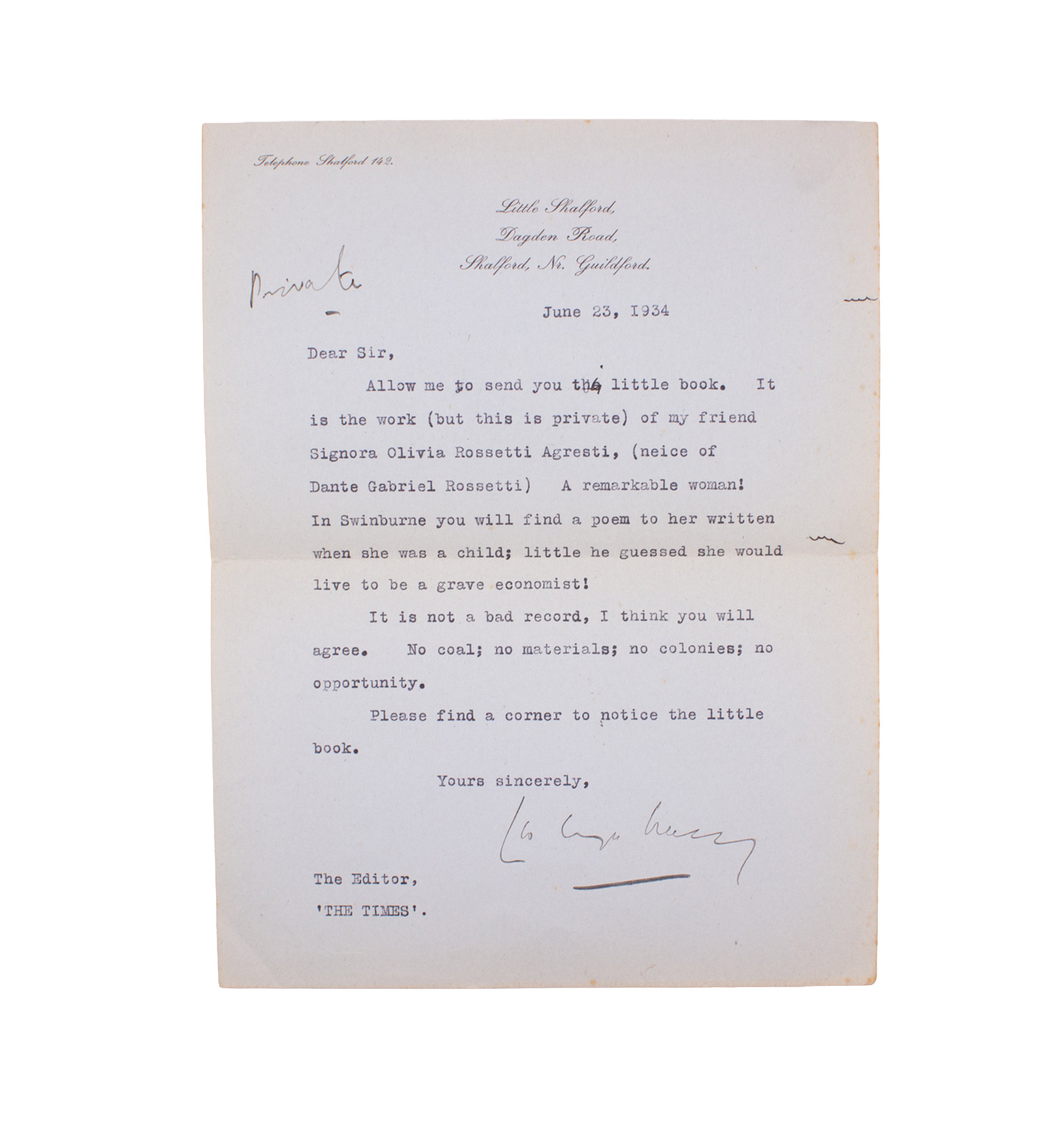
23.1 x 17.7 cm. Single pale blue leaf, folded once, printed in black.
A report on Italy’s progress in Fascism and the Guild State, now that the “daring experiment… is no longer a project but an achievement.” Discusses a number of aspects of national activity such as land, agriculture, social services, the lira, freetime, guilds and the appointment of their representatives; financial figures throughout.
Accompanied by a letter, typed and signed, attributing this previously unascribed book to Olivia Rossetti Agresti, and requesting the Editor of The Times [Geoffrey Dawson (1874-1944)] to recognise the book in his paper. The signature remains illegible; electoral records suggest it could be one Mary Meanley but remains unconsolidated.
From the library of J[ohn] H[enry] Freeman (1889-1964), who was a journalist for The Times for 36 years from 1926 to 1962, working his way up from apprentice to foreign correspondent. Freeman reported on the surrender of the Flensburg Government in 1945, and later became the first Bonn correspondent. An admirer of Konrad Adenbauer, the first chancellor of West Germany and one of the founding fathers of the European Union, Freeman helped to communicate the commitment of west Germans to the West. Freeman’s work before the war was largely as a foreign sub-editor, often in charge of the foreign sub-editor’s room, and so it is likely this book was received and entrusted to his care. The book does not seem to have found mention in the paper.
Apparently the first of three Fascist Era publications, being Years XII, XV and XVII, each published in English and perceivable thus as propaganda. As I understand it, Agresti’s association with this book is totally novel and entirely reliant on this letter, and begs the question of her involvement in successive issues.
Light browning to the edge of the letter. Wraps age-worn, but very good.
tap to cycle
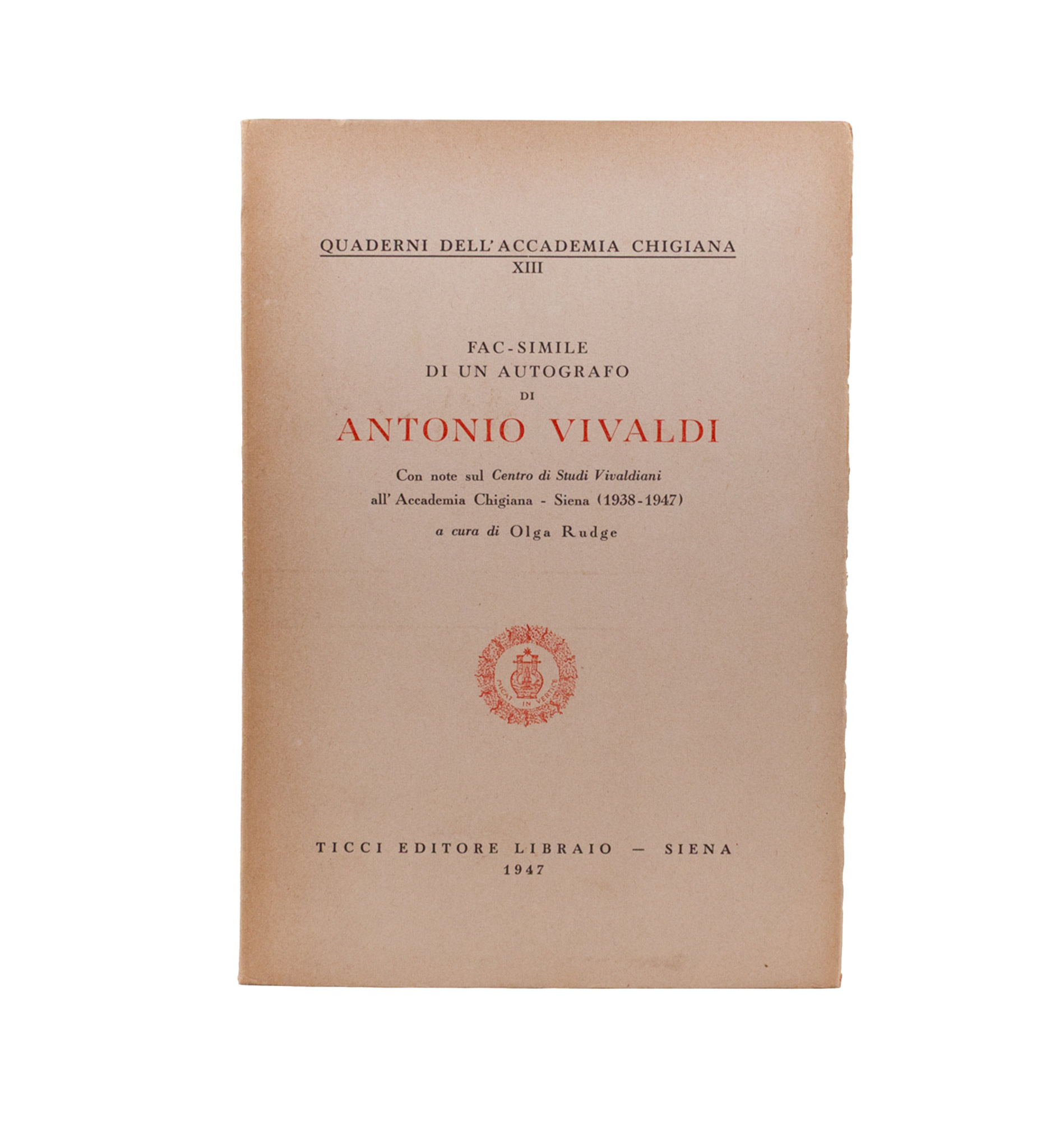
Fac-Simile di un Autografo di Antonio Vivaldi
Olga Rudge, editor
Alfredo Casella, contributor
Published Siena: Ticci Editore Libraio, [1947]
49pp.; 24.5 x 17.1 cm. Tan paper wraps printed in black and red.
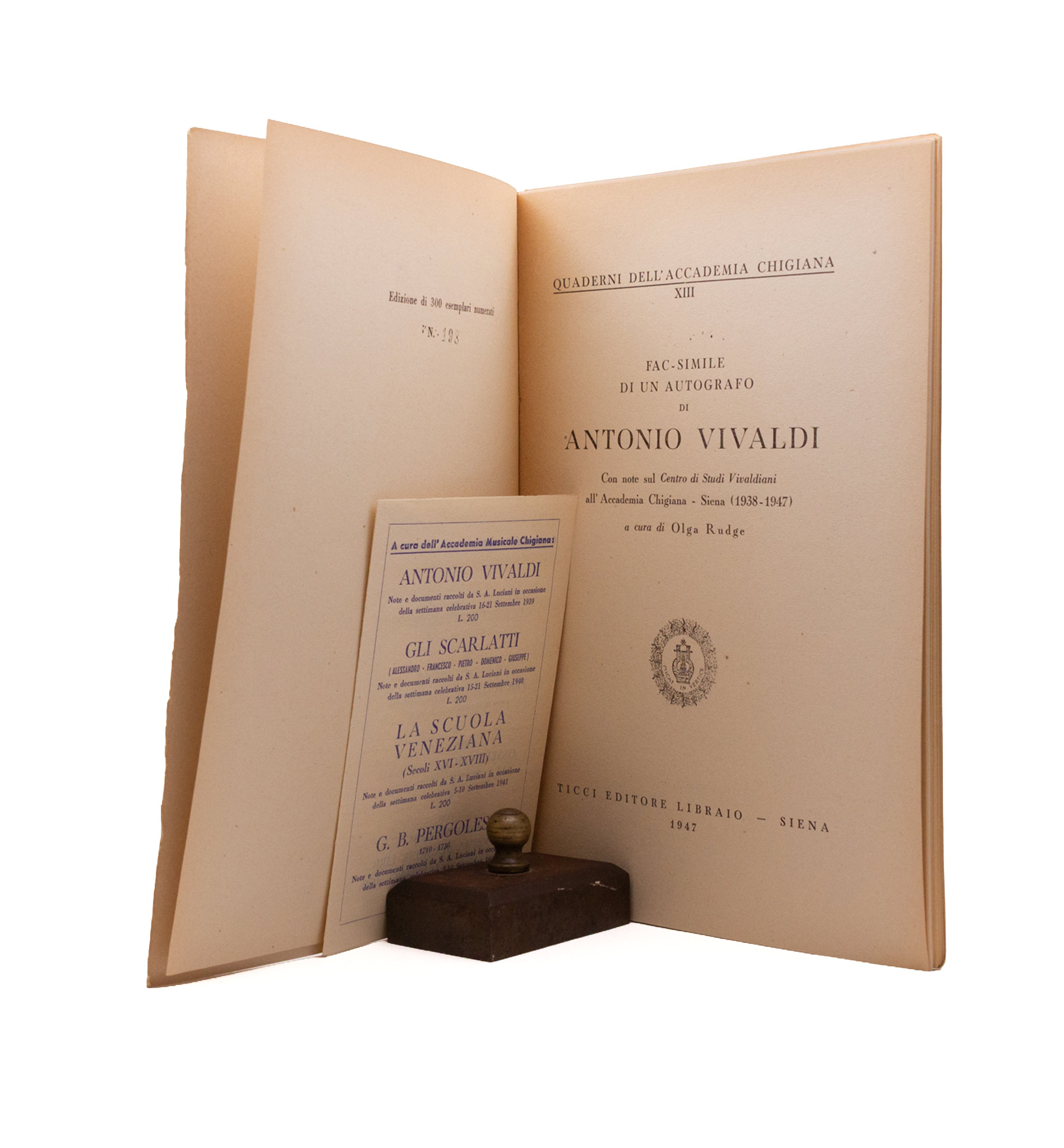
14.5 x 10 cm when folded. Single strip of white paper printed in blue, folded in thirds.
A reproduction of a manuscript of a concerto of Vivaldi’s by the Accademia Musicale Chigiana in Siena, for whom Olga Rudge worked from 1933 until the late 50’s. The study, and discovery of Vivaldi’s music was central to Rudge’s work, and carries the greatest legacy. Rudge used her role as Secretary to procure microfilms of Vivaldi’s manuscripts held at various Italian (and in this case English) institutions. In 1938, Rudge founded the Centro di Studi Vivaldiani at the Academy, and in 1939 organised the first Settimana Musicale Senese, a festival dedicated entirely to the revival of Vivaldi’s music, much of which had not been performed since the 18th century. Rudge’s work continued post-war, here taking shape as part of the Quaderni, no. XIII. With further essays, two also translated into English, notices for upcoming concerts, bibliography, and so on. Reproduces a quote from Ezra Pound,
« Nell’arte di farsi odiare non conosco modo più efficace che il lodare quei momenti memorabili, quei trionfi eccezionali che non possono ripetersi. Tutti gli artisti o gli esecutori che non vi hanno partecipato, rimangono sdegnati, non potendoli utilizzare per la pubblicatà a loro proprio beneficio. »
(E. P. « Meridiano di Roma » 26-II-39)

tap to cycle
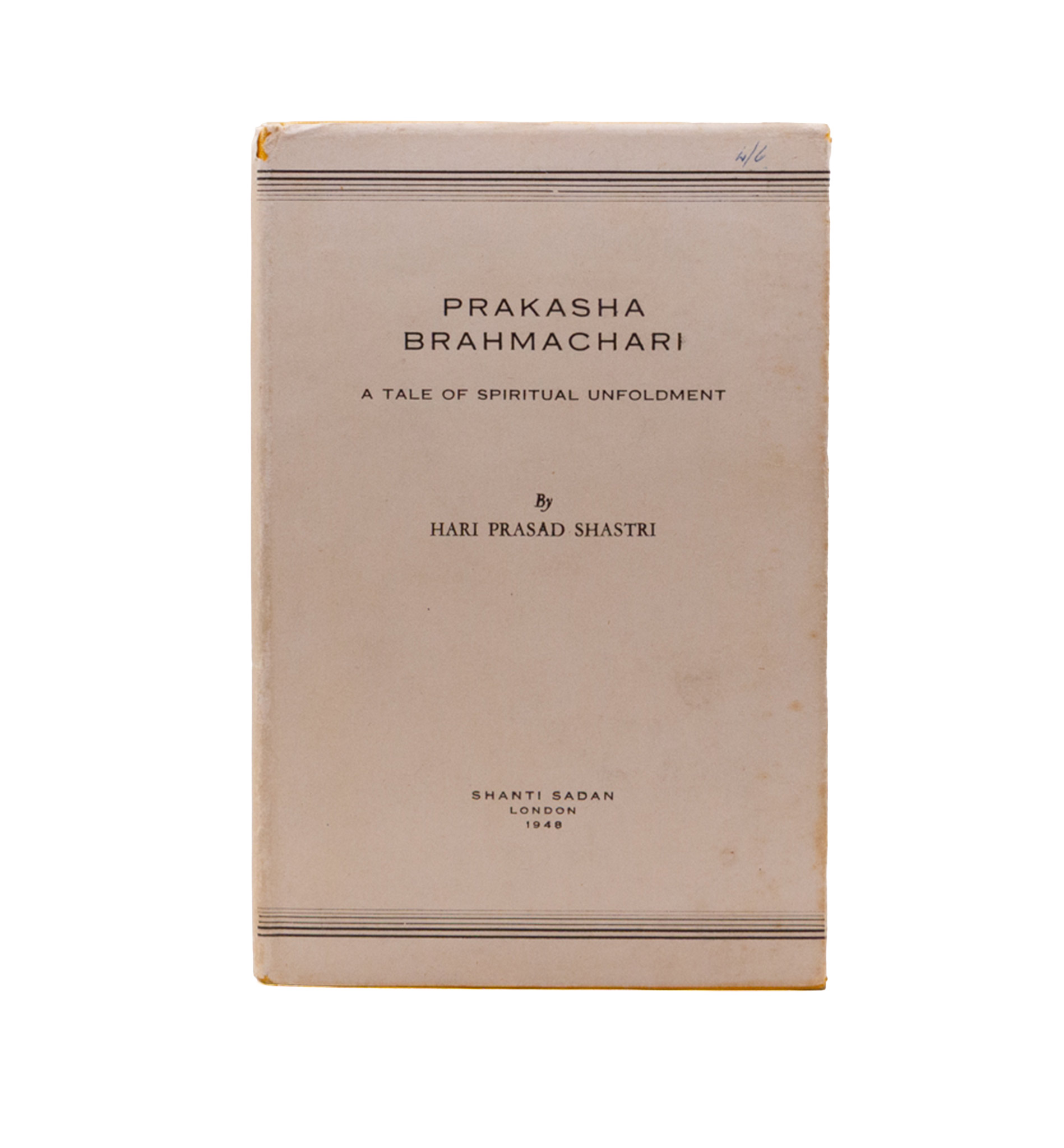
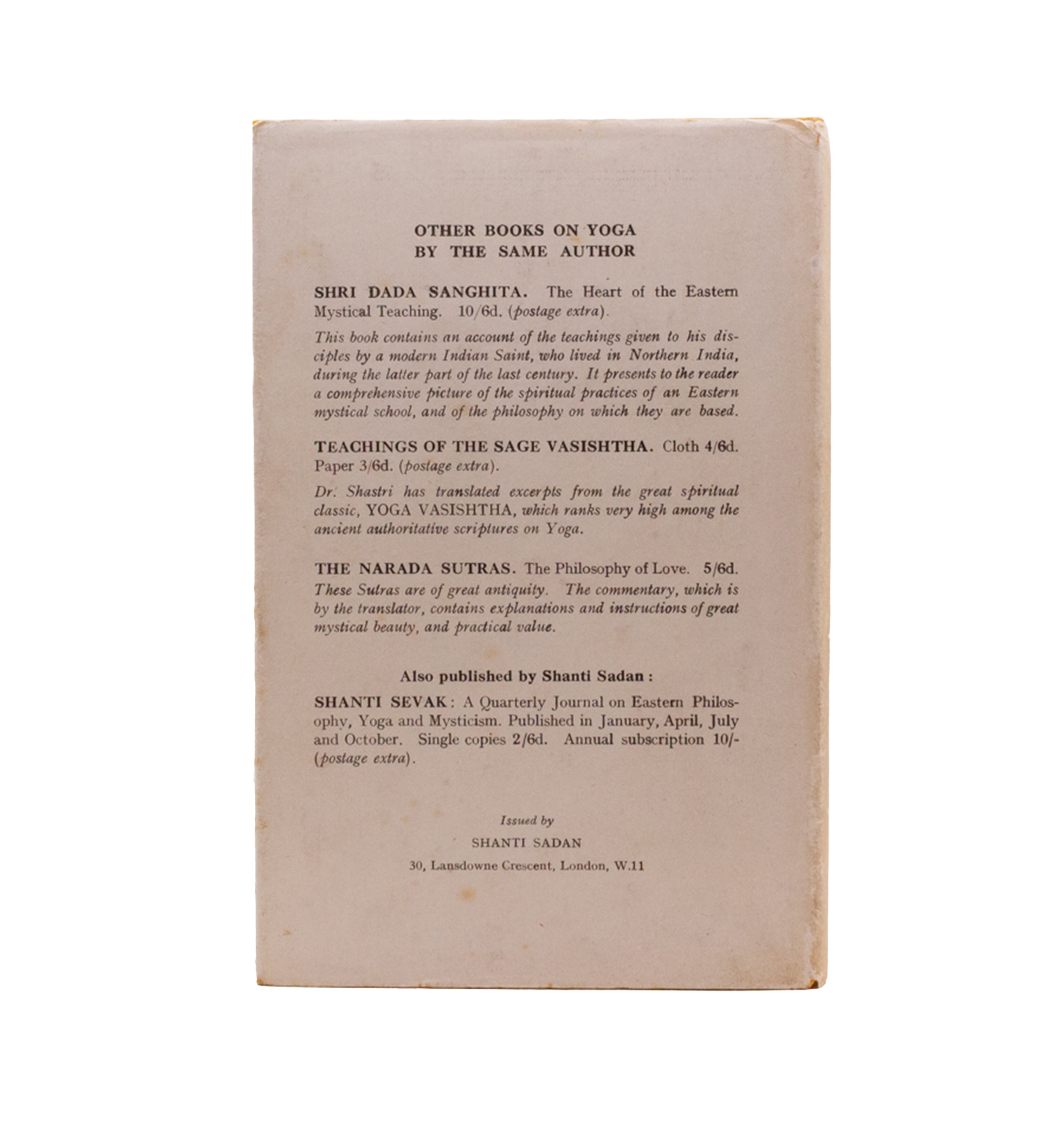
Prakasha Brahmachari, A Tale of Spiritual Unfoldment
Hari Prasad Shastri
Published London: Shanti Sadan, 1948
127pp.; 19.1 x 12.6 cm. Yellow cloth boards stamped in gold on front cover and up spine. White dust-jacket printed in black.
On the principles of Advaita Vedanta (Nonduality) and the path of spiritual discipline. Published by Shanti Sadan, a “Centre of Nonduality” founded by Shastri in 1933. First edition, in dust-jacket. With the ink ownership inscription of William Howard Livens to ffep, and a Marleybone Spiritualist Association sticker to fpd. A near fine copy with light foxing to prelims and the spine-ends bumped, in a clean jacket, lightly rubbed, with a little edge-wear.

tap to cycle
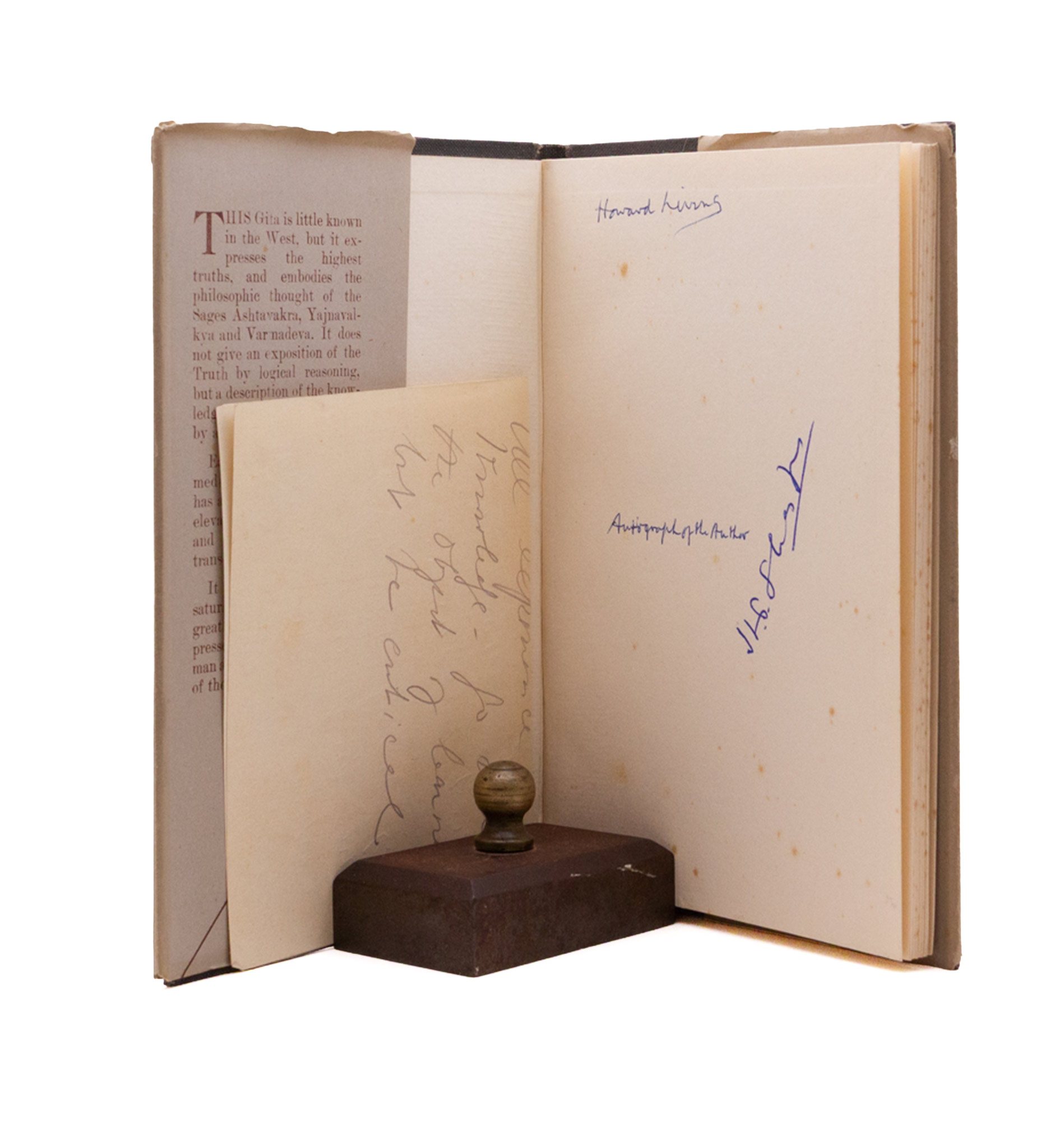
The Ashtavakra Gita
Hari Prasad Shastri, translator
Published London: Shanti Sadan, 1949
66pp.; 18.6 x 12.8 cm. Black cloth boards stamped in gold on front cover and up spine. Grey dust-jacket printed in red.
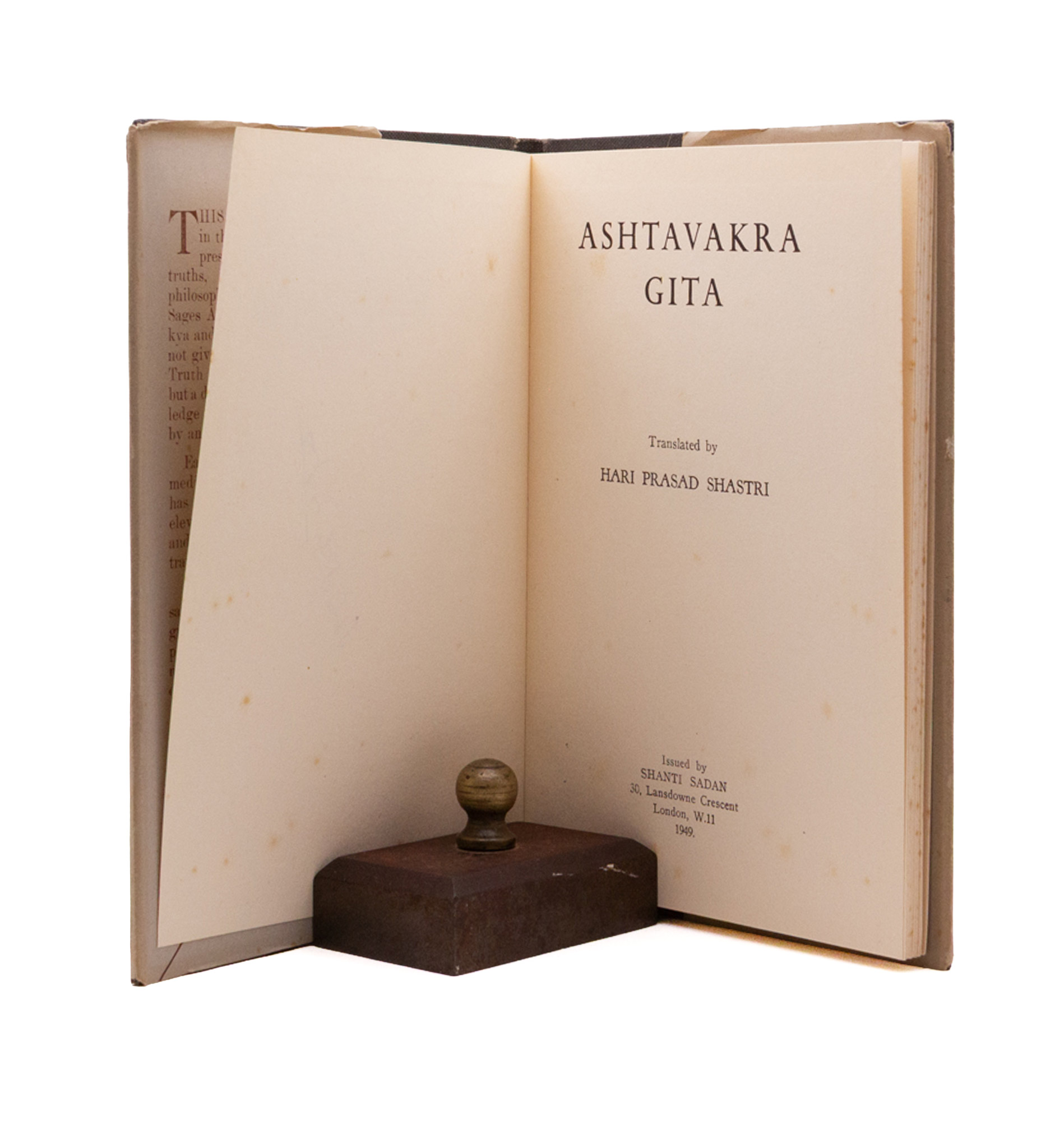
A treatise on Brahman and Atman in the form of a dialogue between Ashtavakra, a revered Hindu Vedic sage, and Janaka, king of Mithila. First translated into English in 1907 by Lala Baij Nath. Translated into English here by Shastri and published through his own Shanti Sadan Centre of Nonduality (Advaita Vedanta) which continues to this day. First edition, with the wonderful wild gilt titling to cloth, in the original dust-jacket. Ink ownership inscription of William Howard Livens, and also his annotation next to the signature of Hari Prasad Shastri to the ffep. With a single leaf folded and laid in, containing the spiritual thoughts, presumably of Livens, in pencil. A near fine copy with light foxing to prelims and spine-ends bumped, in a very good jacket with some trouble top and tail of the spine.

tap to cycle
Sculptures, Paintings and Drawings by Gaudier Brzeska
John Betts, foreword
Published Wales: Cardiff Gallery, 1953
21.5 x 14 cm. Single pale blue leaf, folded once, printed in black.
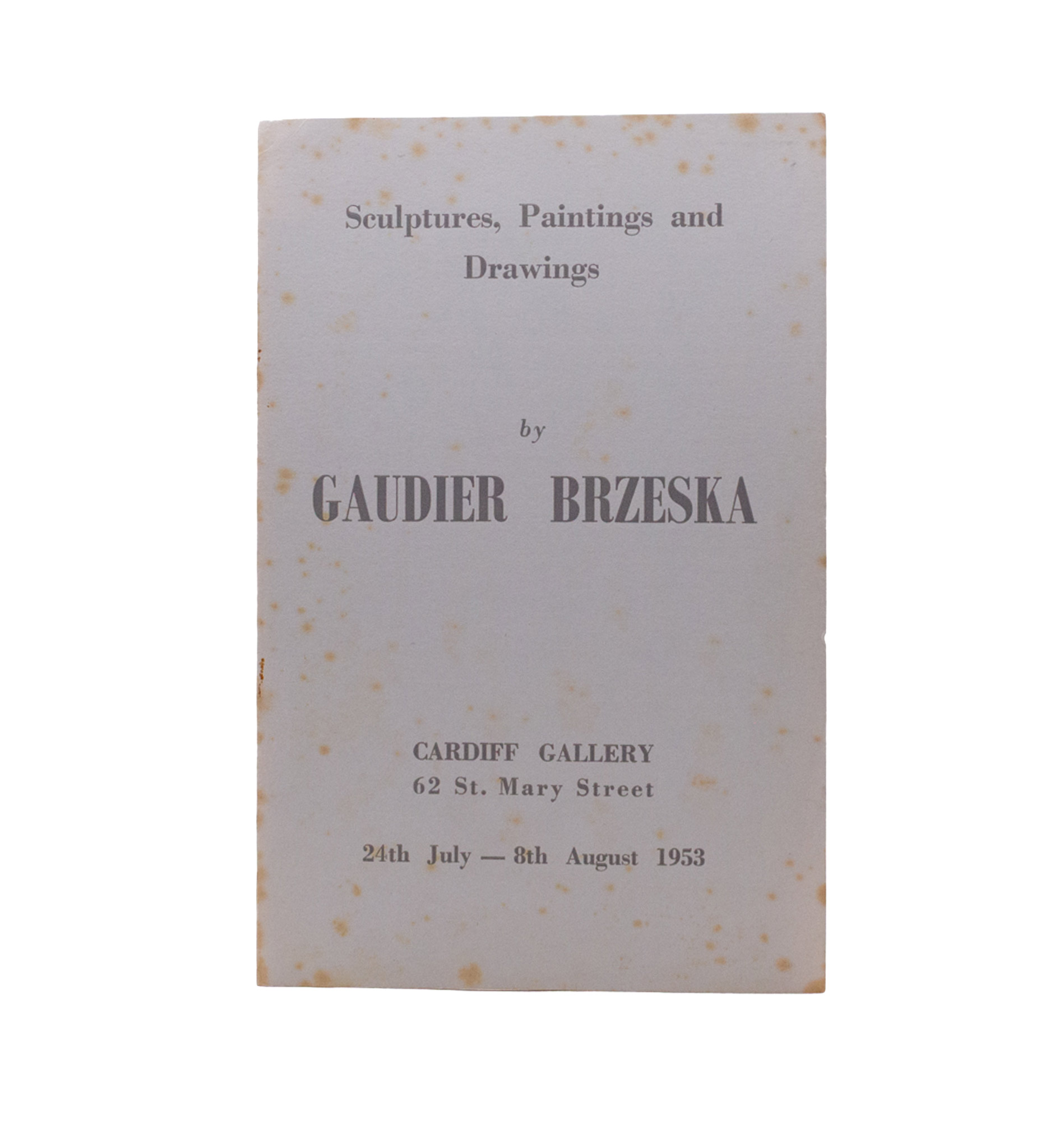
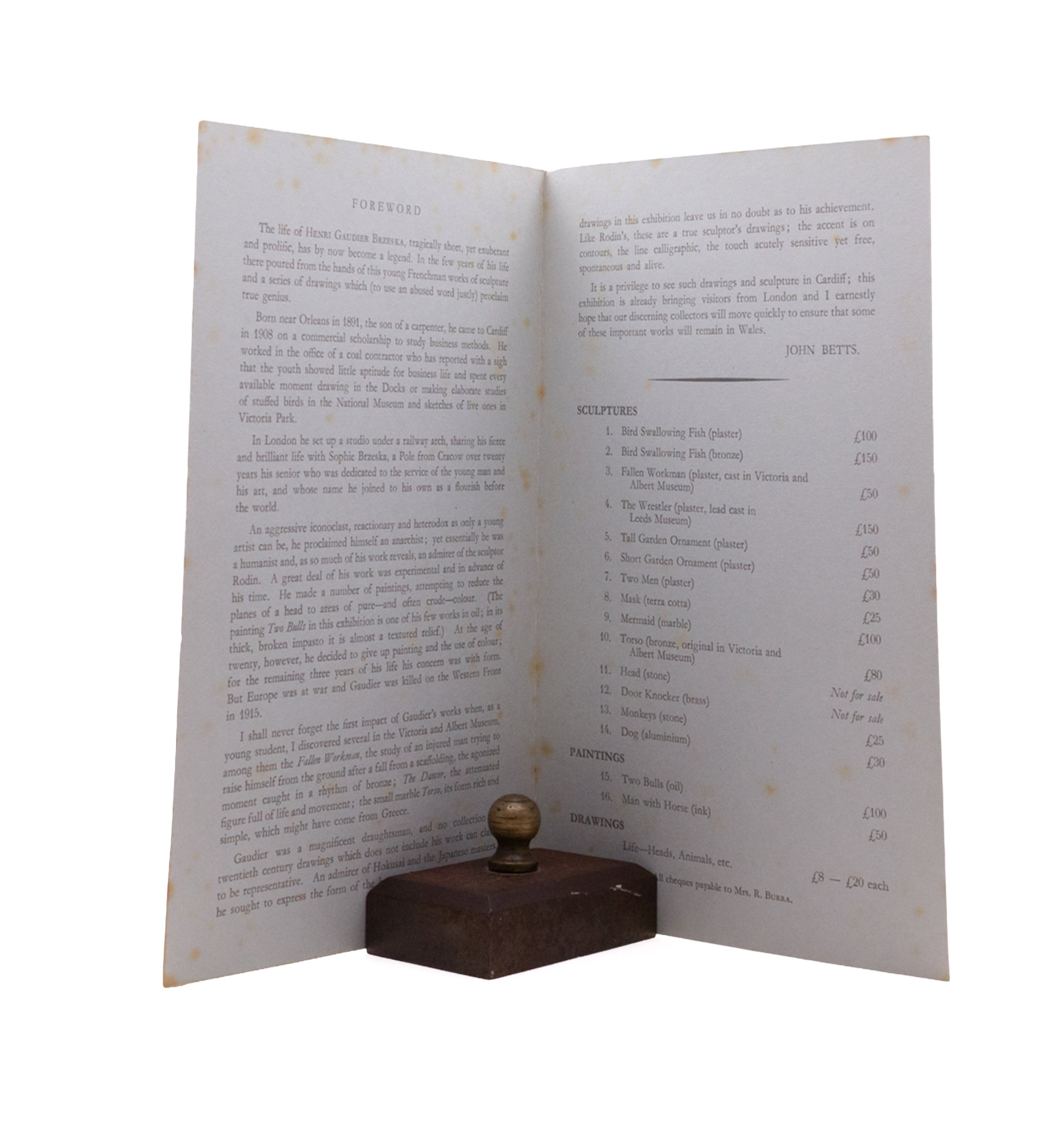
A catalogue, including price-list, of an exhibition of the works of Henri Gaudier-Brzeska at Roggie Burra’s Cardiff Gallery, 1953. Artworks seemingly from the collection of Jim Ede, who acquired Gaudier-Brzeska’s estate in 1927; see also this lot at Bonhams for further evidence of Ede selling through Burra at this date. A beautiful, rare and ephemeral object; foxing but otherwise fine.


tap to cycle
Antibiennale; Requisitoria
Fortunato Depero
Published Printed by Arti Grafiche R. Manfrini, 1955
34pp.; 24.3 x 17.2 cm. Cream paper wraps printed in black.
Depero’s argument against the Venice Biennale for marginalising Futurist art in favour of emerging arts. With a number of plates depicting Depero’s work, and the Depero Exhibition held in Rome, 1916. Followed by a proposal for a Depero Museum by Lionello Fiumi, and a letter to Depero by Carlo Accetti praising his criticism. Privately published, an unknown number of copies. Light toning, little smoke, overall very good.

tap to cycle
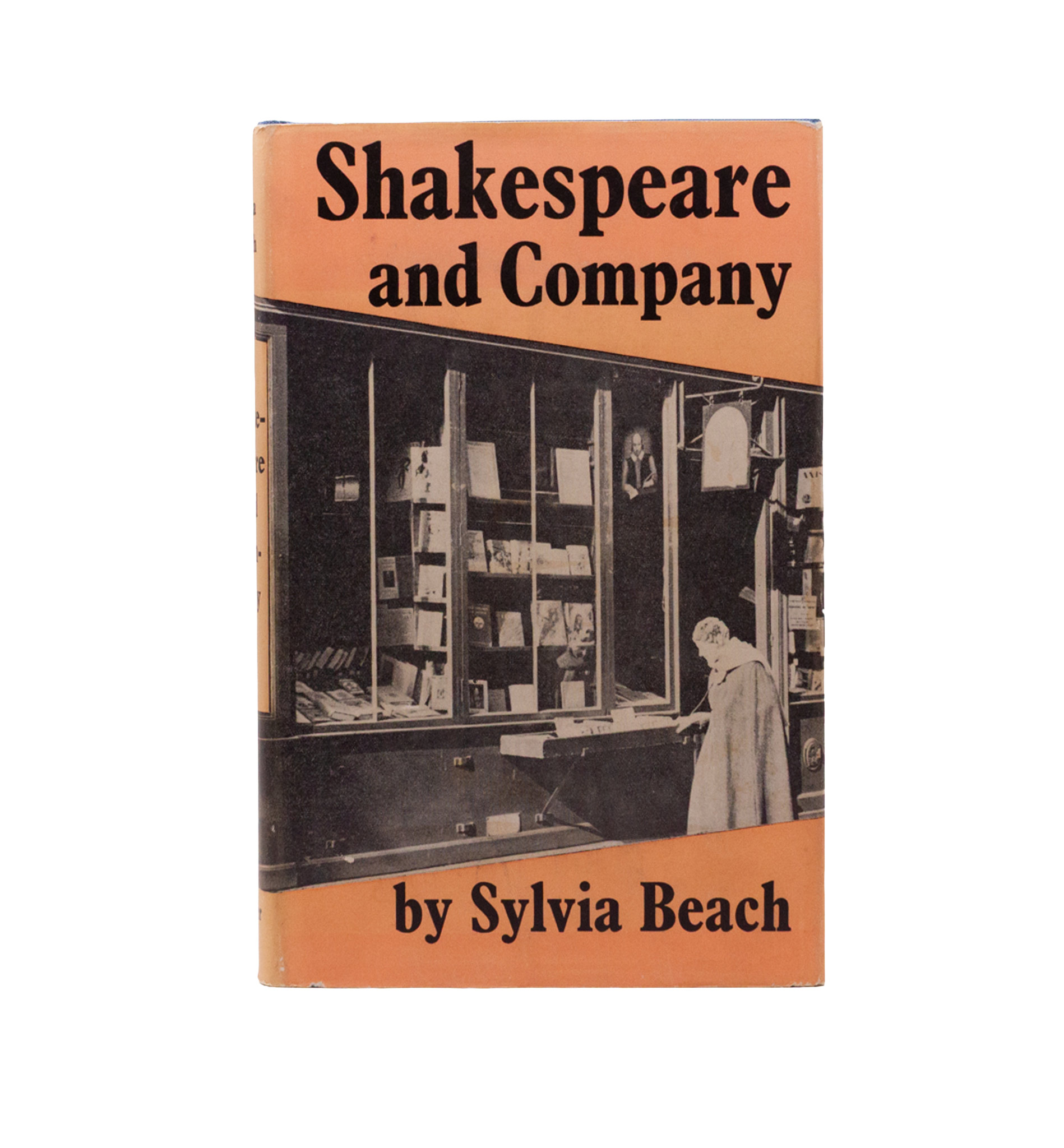
Shakespeare and Company
Sylvia Beach
Published London: Faber and Faber, 1960
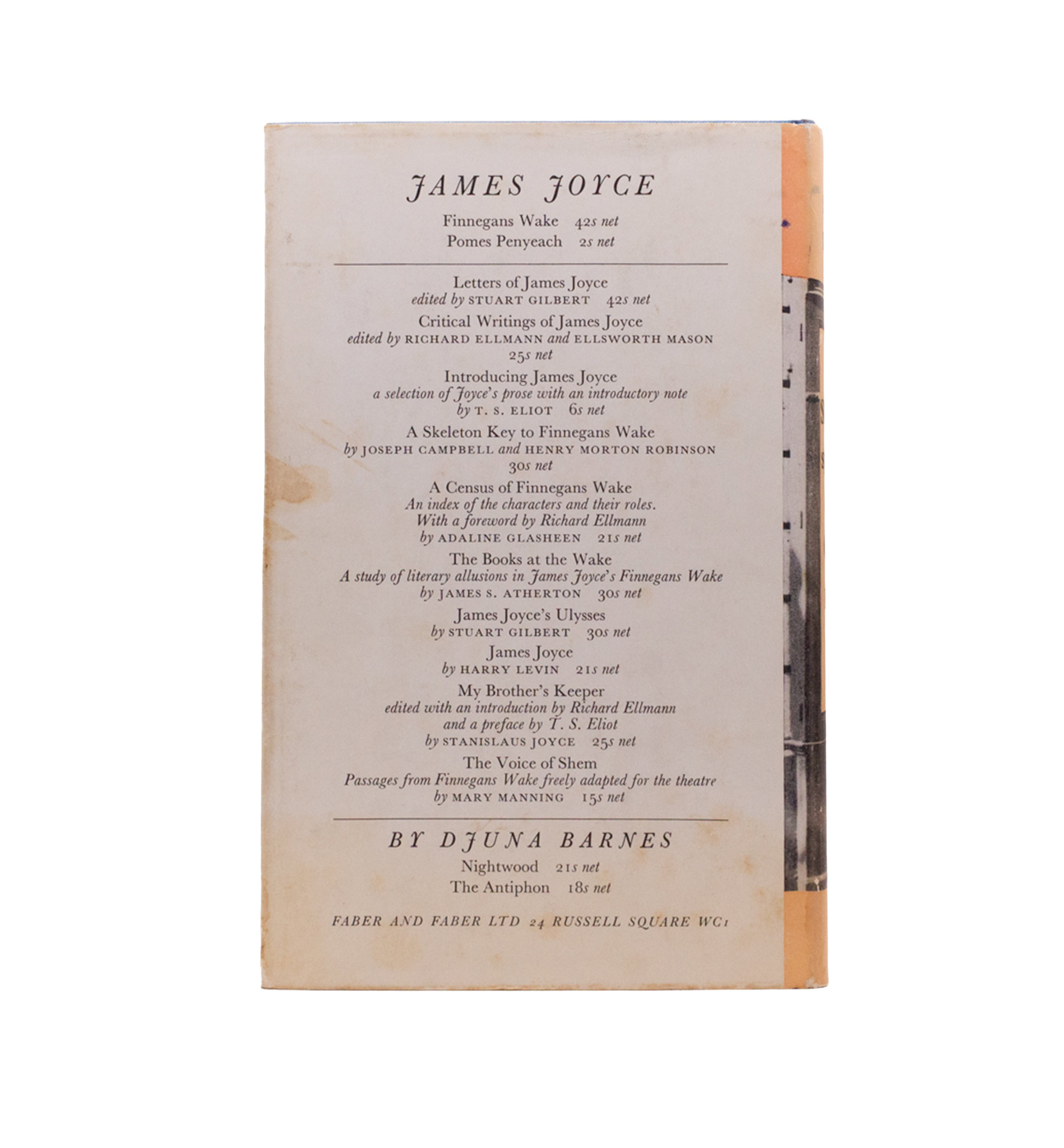
232pp.; 22.2 x 14.5 cm. Blue cloth boards printed in black and stamped in gold on spine. White dust-jacket printed in salmon pink and black.
From the library of A. David Moody
First edition of Sylvia Beach’s memoir of her Left Bank bookshop, an epicentre of literary modernism between the wars. A fine book in a very good just with a tiny bit of edgewear and some marks to the back cover.
tap to cycle
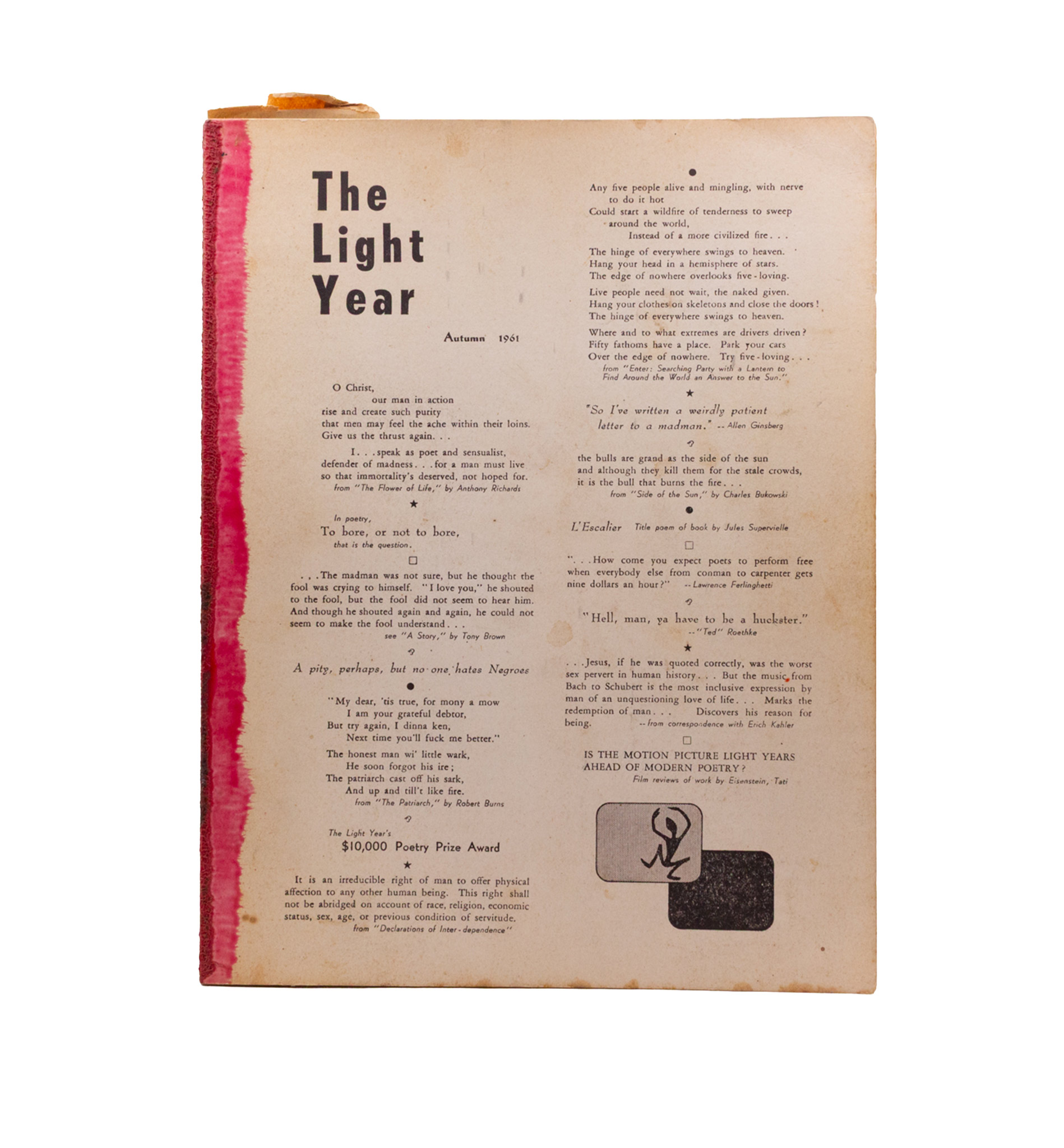
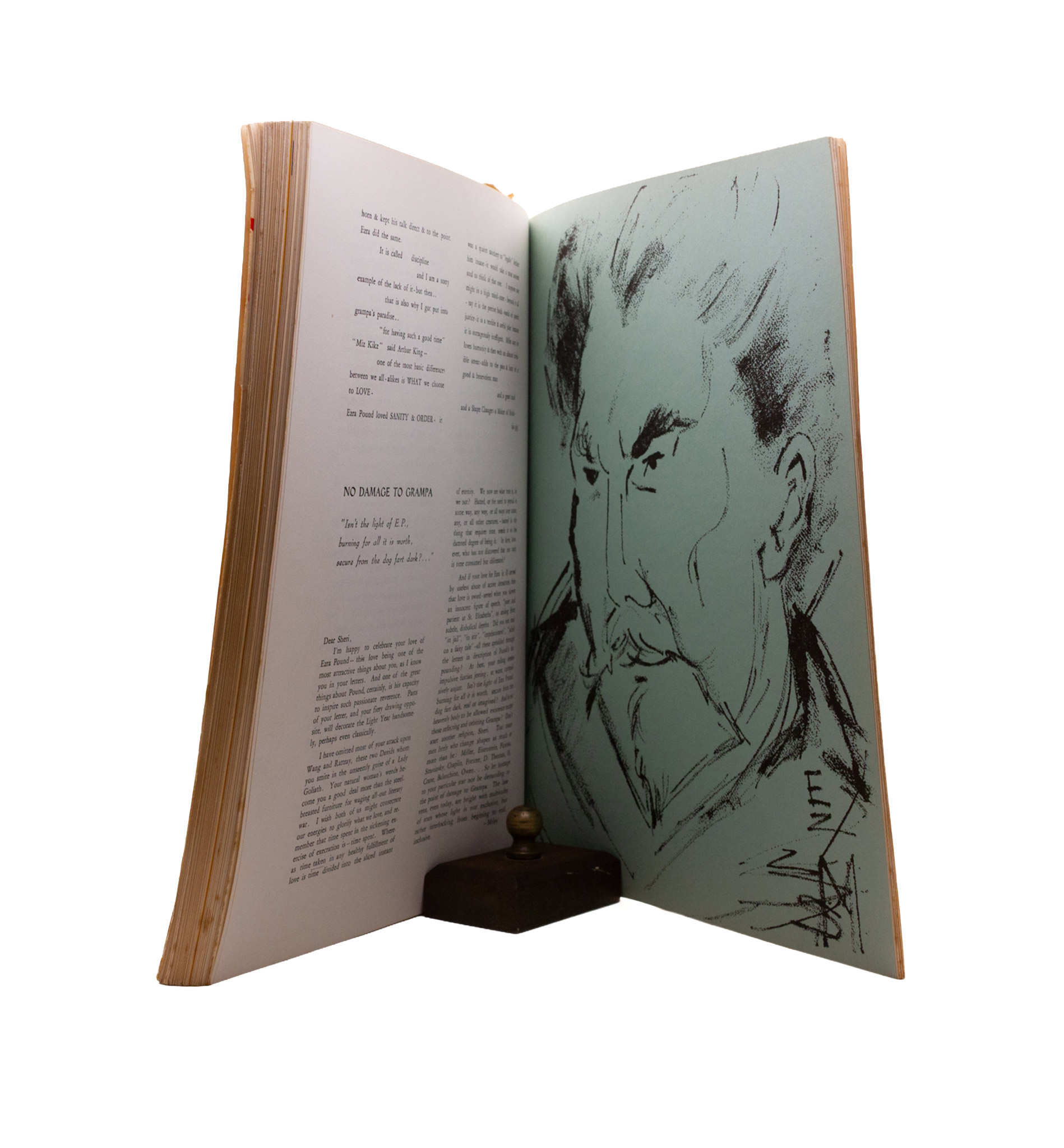
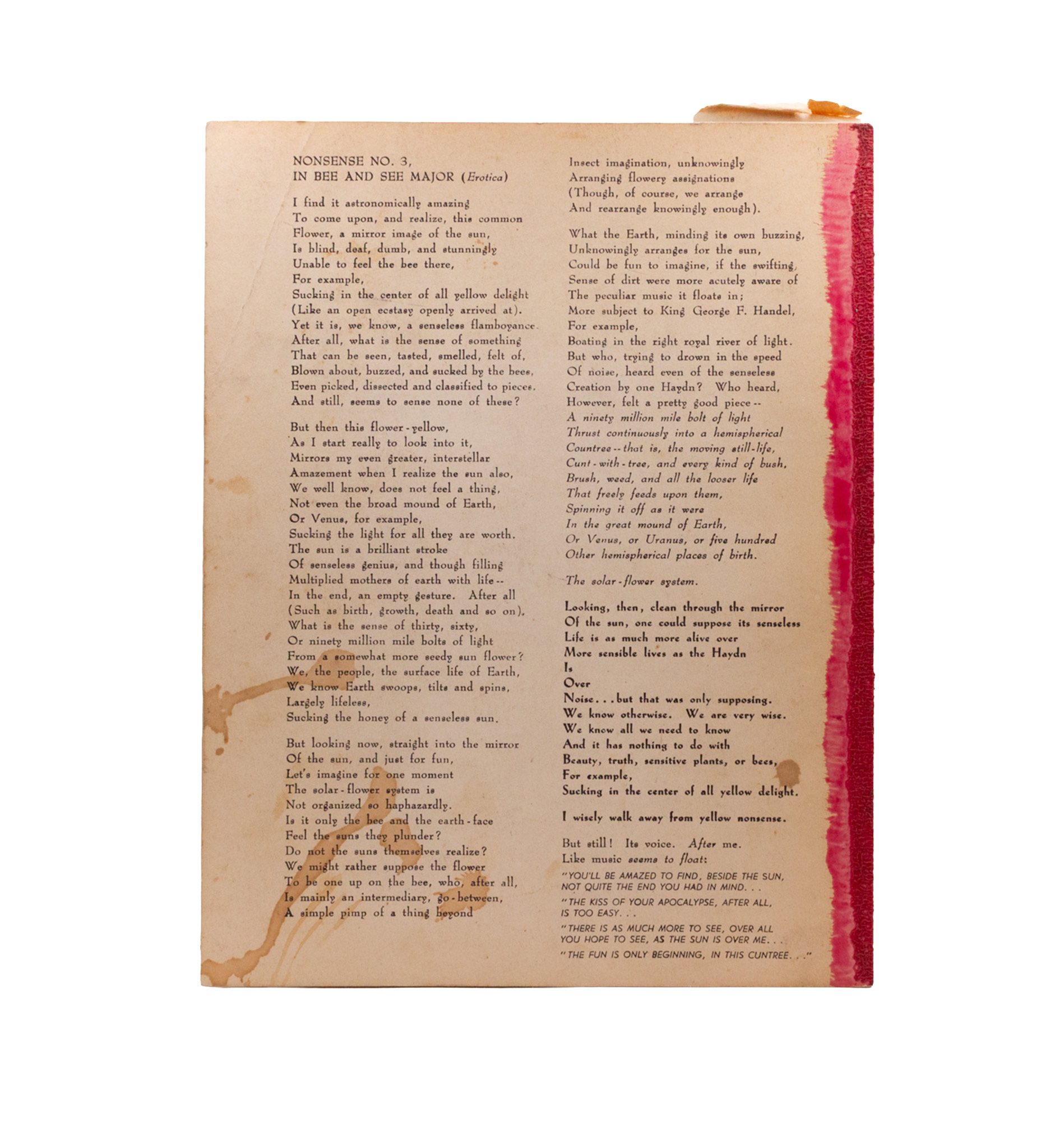
Homage to Grampa; in The Light Year, Autumn 1961
Miles Payne, editor
Sheri Martinelli, Charles Bukowski, Lawrence Ferlinghetti, contributors
Published San Diego: The Light Year Press, 1961
95ll.; 28 x 22 cm. Heavy paper wrappers printed in black; open binding, bound by fibre and glue, dyed in red.
The Poundian’s issue of Miles Payne’s The Light Year, which ran from 1958 to 1962. The whole magazine is wild and erratic, in the main consisting of short articles or statements by, apparantly, Payne, quoting variously from Pound, Mary Barnard’s Sappho, from R. P. Blackmur (on Pound), the Bible, Dylan Thomas, Longinus, and so on.
Payne also reproduces letters to him, and prints his response. Lawrence Ferlinghetti, for example writes, “Listen, how come you take me seriously and expect the poets to eat if you consume their books free and so forth?” with Payne responding, “Jesus Christ!, Larry, I don’t ‘consume’ poetry books like ice cream cones or brassiere cups!” It is in this context that Sheri Martinelli’s “Homage to Grampa… excerpts from a letter to the light year editor” is printed. Martinelli is apparently responding to Payne’s response to a letter The Light Year received and published from Pound, accusing Miles of being “part of that circle of Dog Farts who smeared Ezra,” and goes on,
I’d like to record this fact…
that Ezra Pound..agish 69 to 72 ish..
could fuck better than any man
& that includes men of many colours..
Ezra Pound is
the best fuck that ever got born & he has
the MOST adequate prick & he loveth a
woman’s smell & he balls like a fierce wild
eagle
and the ideas he flows through a woman’s
mind whilst he flows through her body..ah
that..
With an unidentified torn strip of colour paper drawn on in pen and ink as bookmark. In the original binding, in very good condition; a little spotting, staining and discolouration to the card covers, more-so on the back with a light crease; the first plate detached but present. Signed by Payne with a later San Francisco address verso front cover. Scarce.

tap to cycle
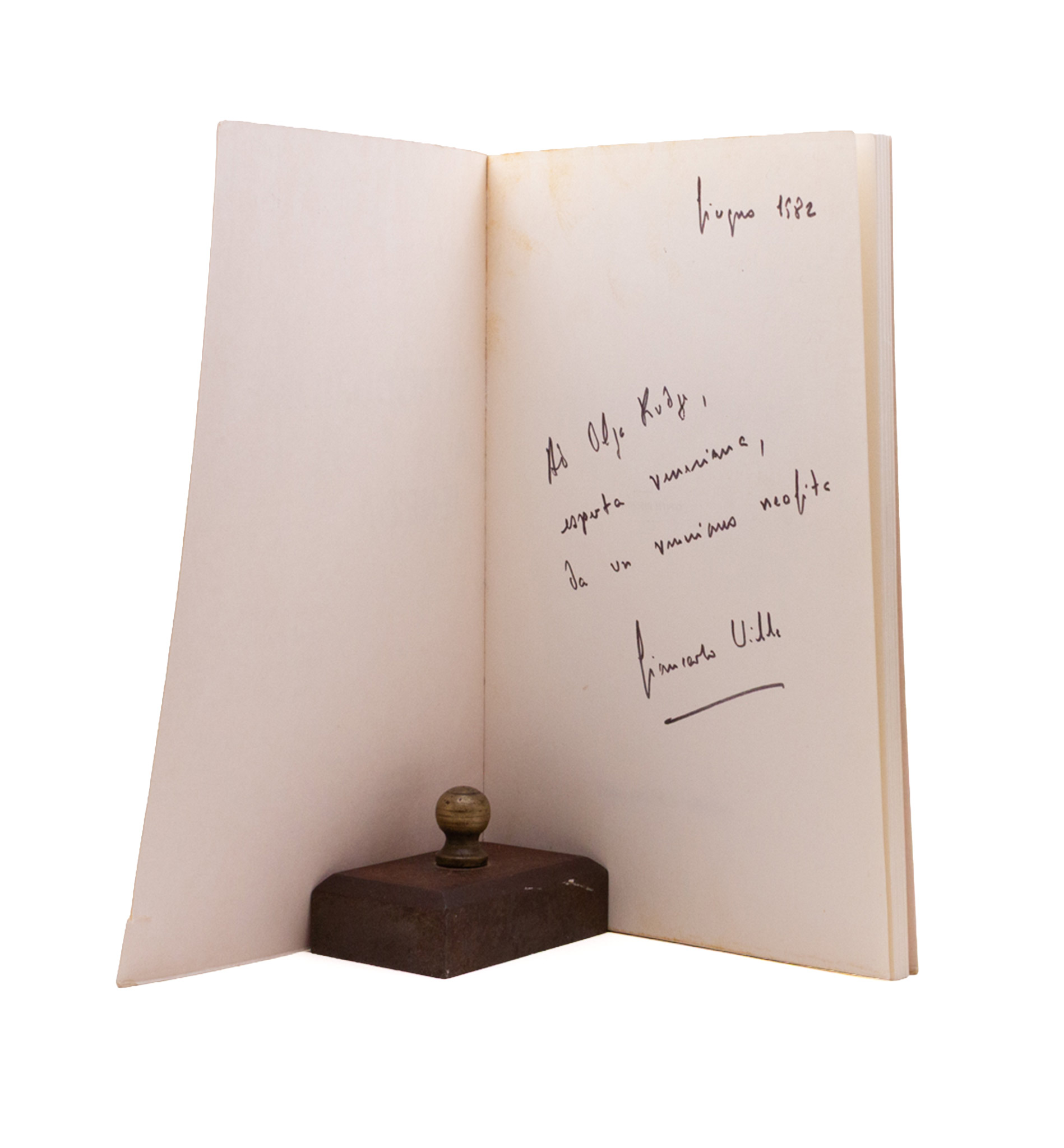
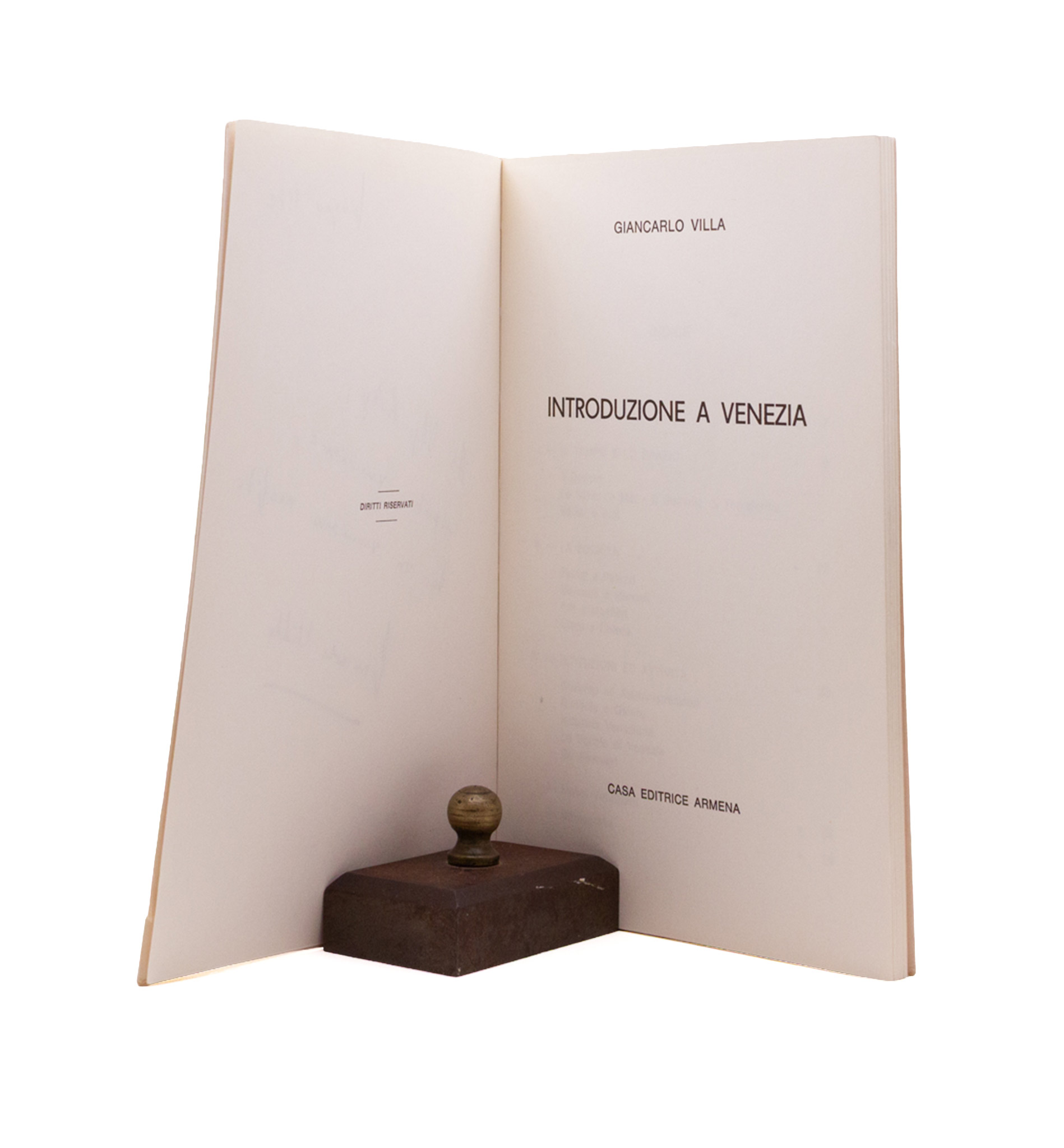
Introduzione a Venezia; inscribed to Olga Rudge
Giancarlo Villa
Published Venice: Casa Editrice Armena, 1982
61pp.; 21 x 13.7 cm. Stiff white paper wraps printed in black.
On Venice, its art, industry, church, people and history. This copy inscribed by the author to Olga Rudge in the month of publication, “To Olga Rudge, Venetian expert, from a novice Venetian.” Lightly toned to edges, ffep marked, bottom corner of front cover bumped.

tap to cycle
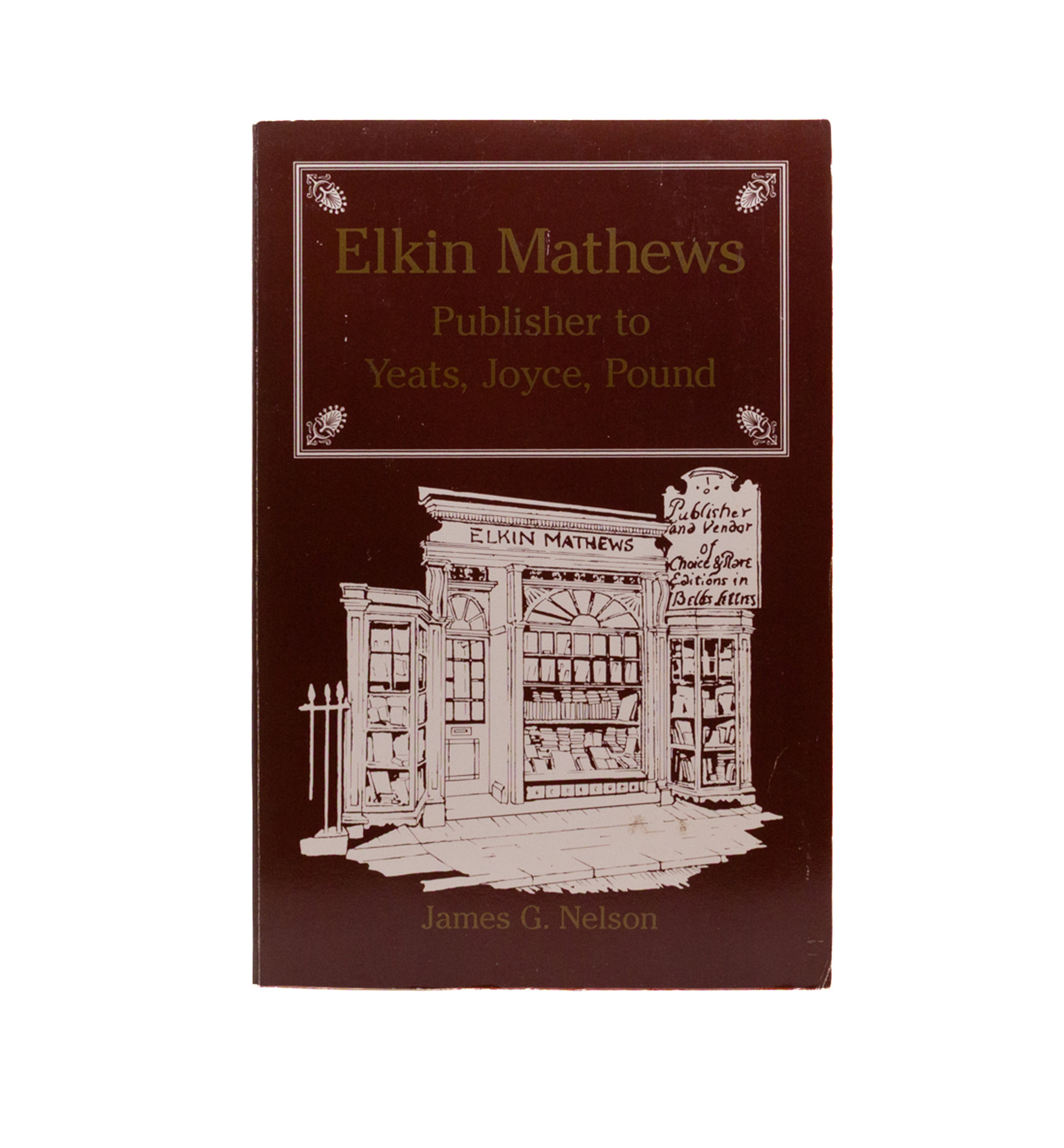
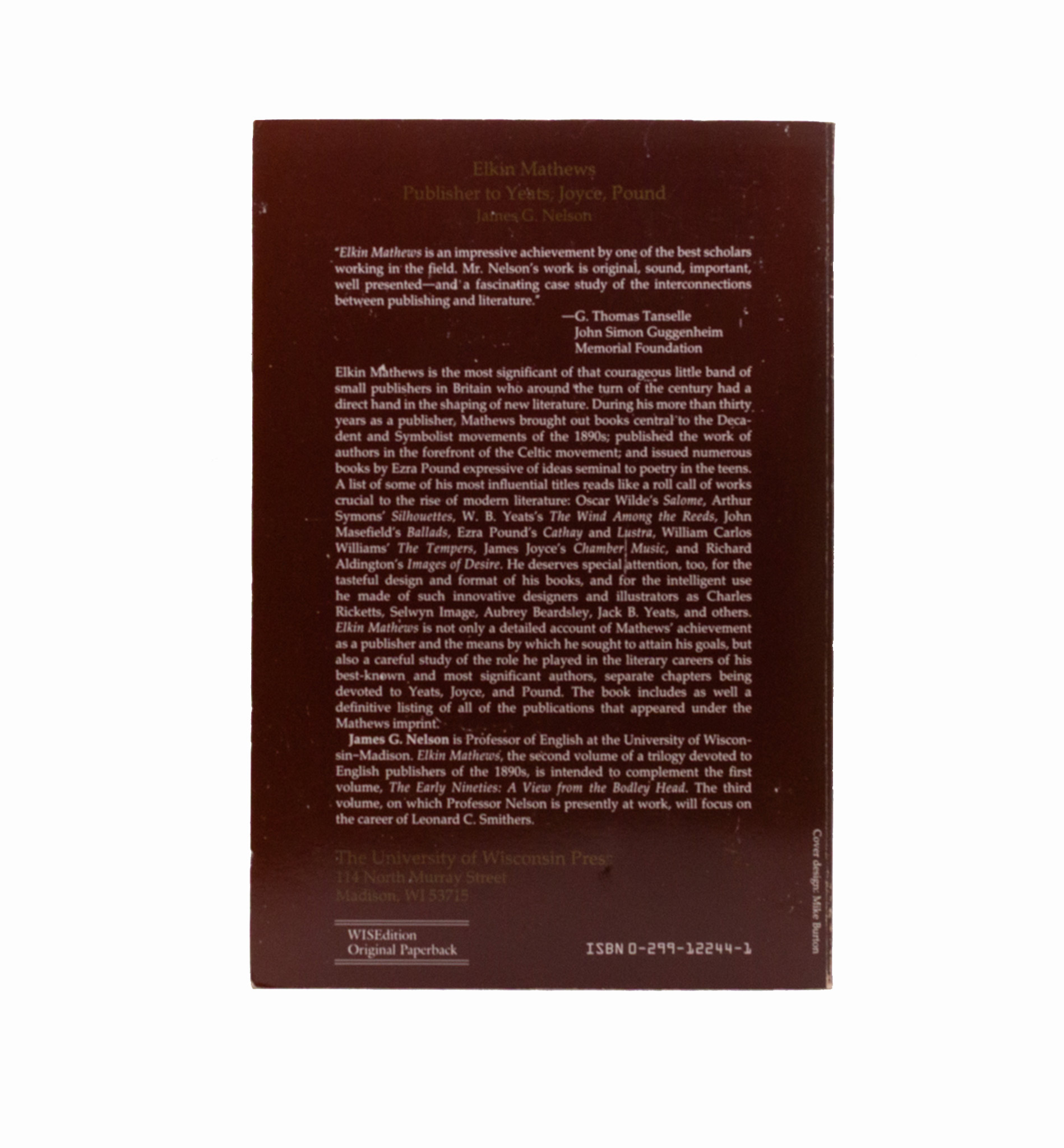
Elkin Mathews, Publisher to Yeats, Joyce, Pound
James G. Nelson
Published The University of Wisconsin Press, 1989
299pp.; 23 x 15.4 cm. Stiff paper wraps printed in brown and gold.
From the library of A. David Moody
On Charles Elkin Mathews and the Elkin Mathews publishing house, Pound and Joyce’s first publisher. First edition, paperback issue; light wear to wraps. From David Moody’s library, with extensive annotations and notes laid-in in places.
tap to cycle
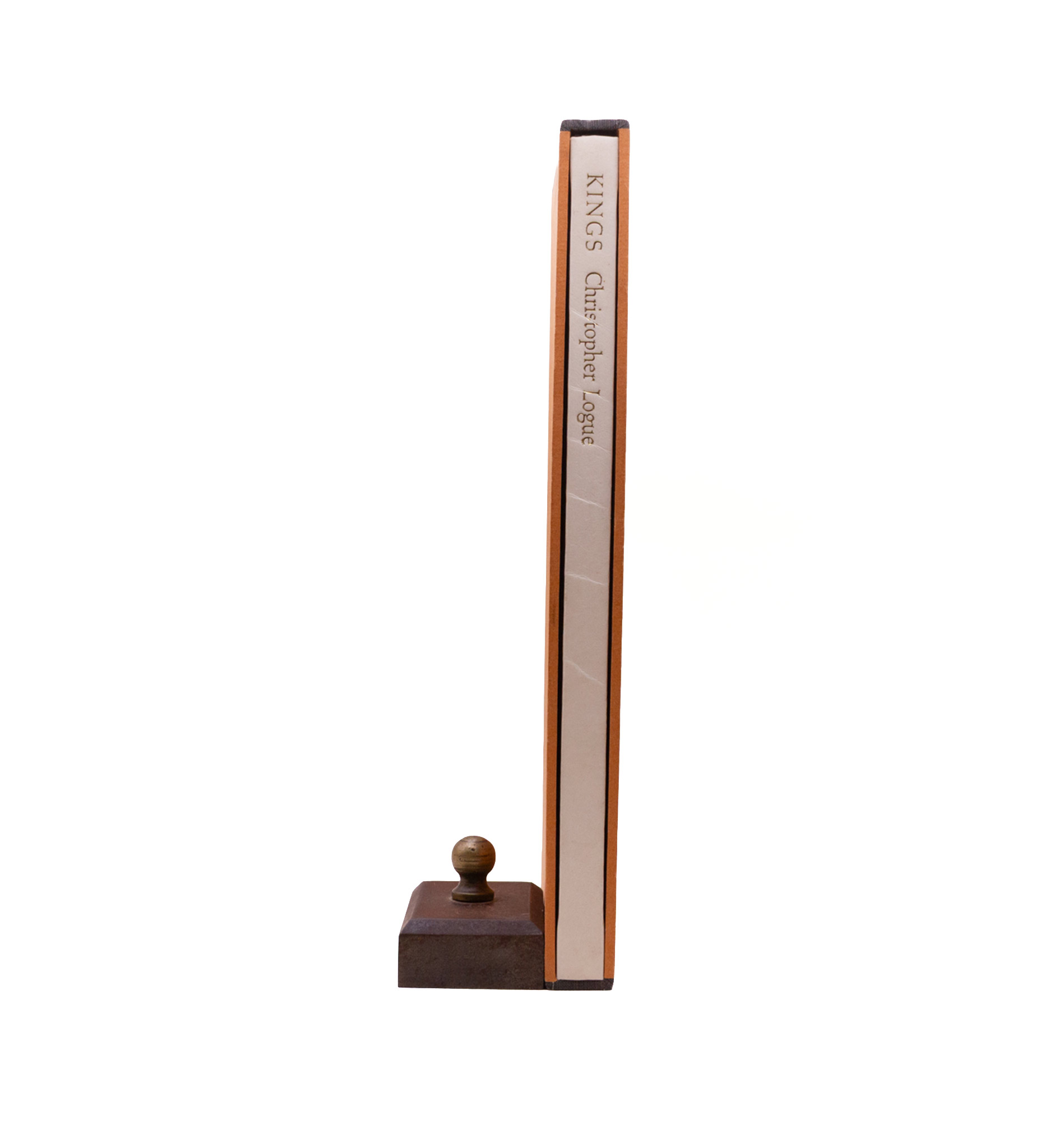
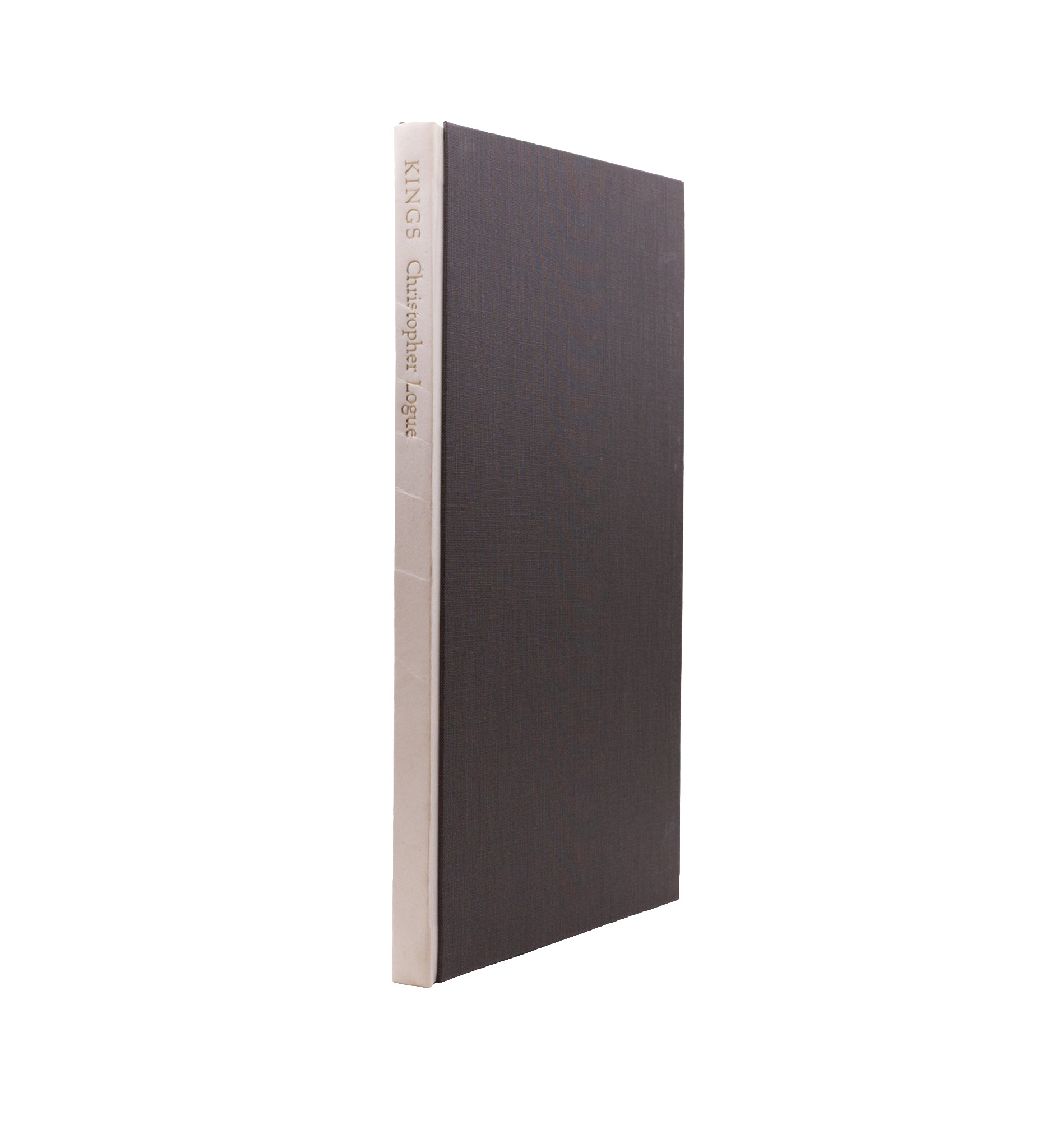
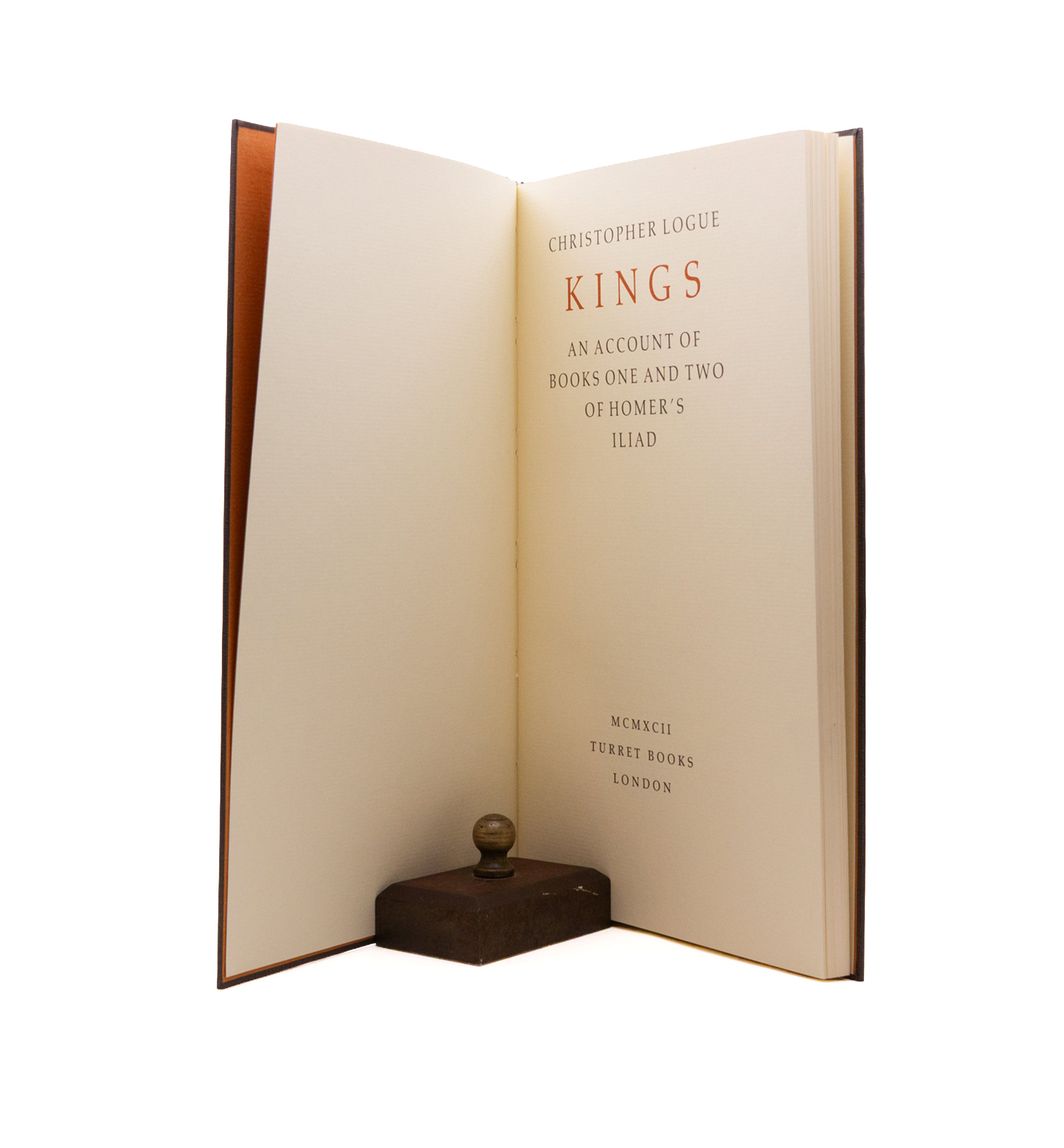
Kings: An Account of Books One and Two of Homer’s Iliad
Christopher Logue
Published London: Turret Books, 1992
85pp.; 25.9 x 15.6 cm. Grey cloth boards backed in vellum, stampled in gold down spine. Heavy board slipcase covered in orange paper to sides, and grey cloth top and bottom.
The first two books of the Iliad by Logue, a lifelong translator of the Iliad whose section PAX (1967) is some of the greatest poetry in the wake of Pound. First revised edition, after the Faber first one year prior. A fine press production, one of an unnumbered run of 85 issues signed by Logue, ten of which were reserved for the author’s gifting. A fine book in a very good slipcase which has taken a few scuffs as tasked with.
tap to cycle
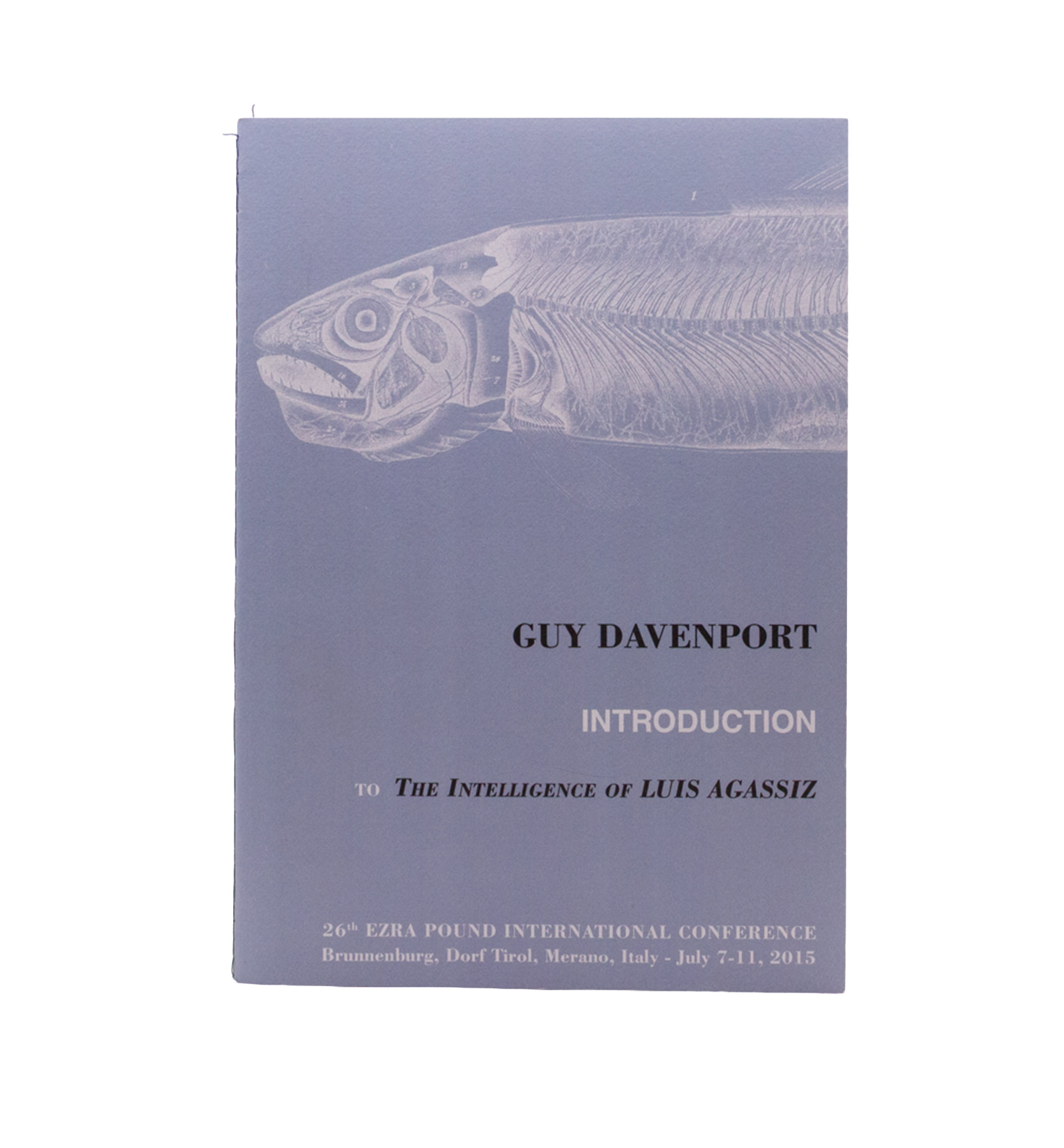
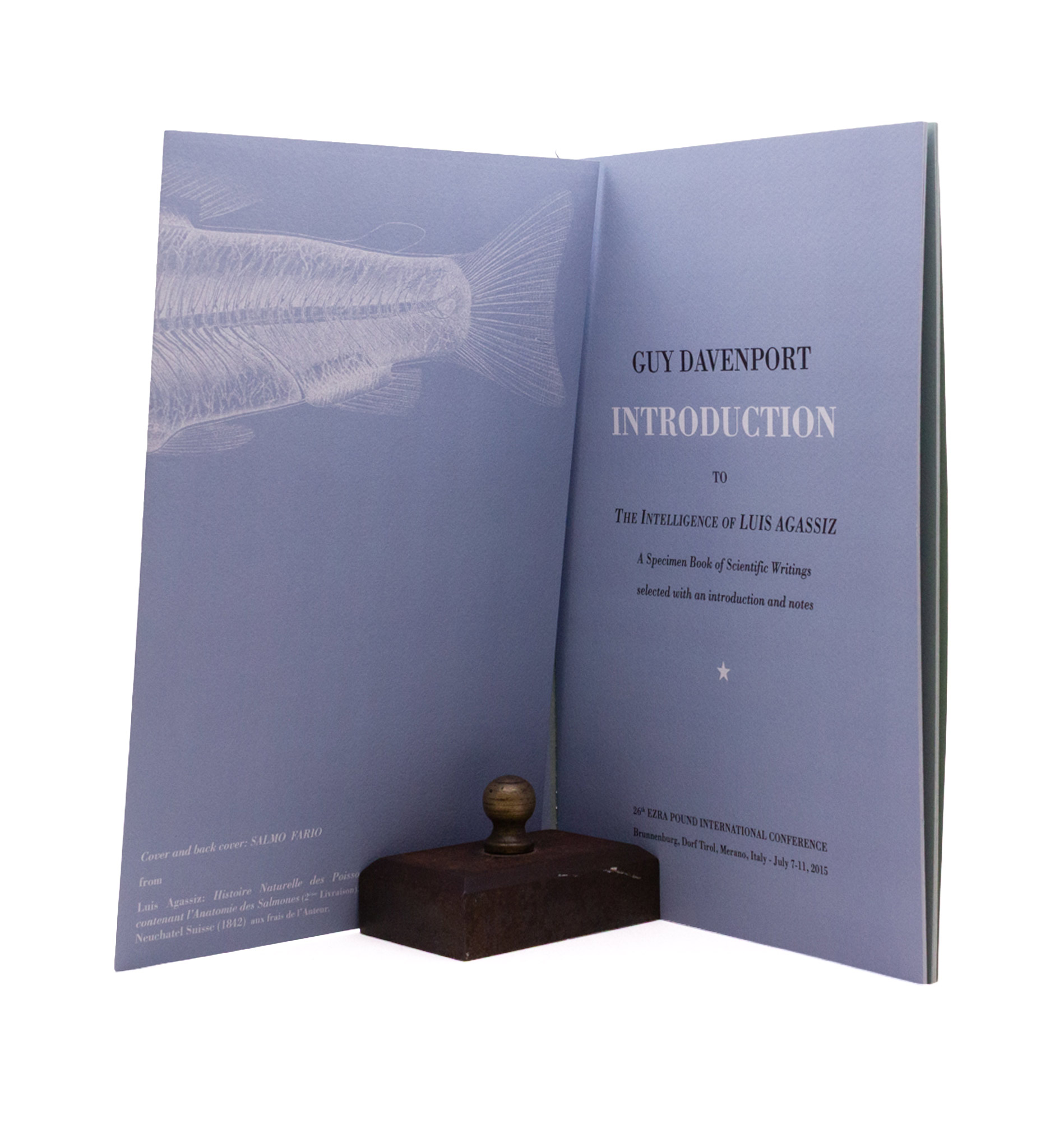
Introduction to the Intelligenze of Luis Agassiz
Guy Davenport
Published Rome: Addenda, 2015
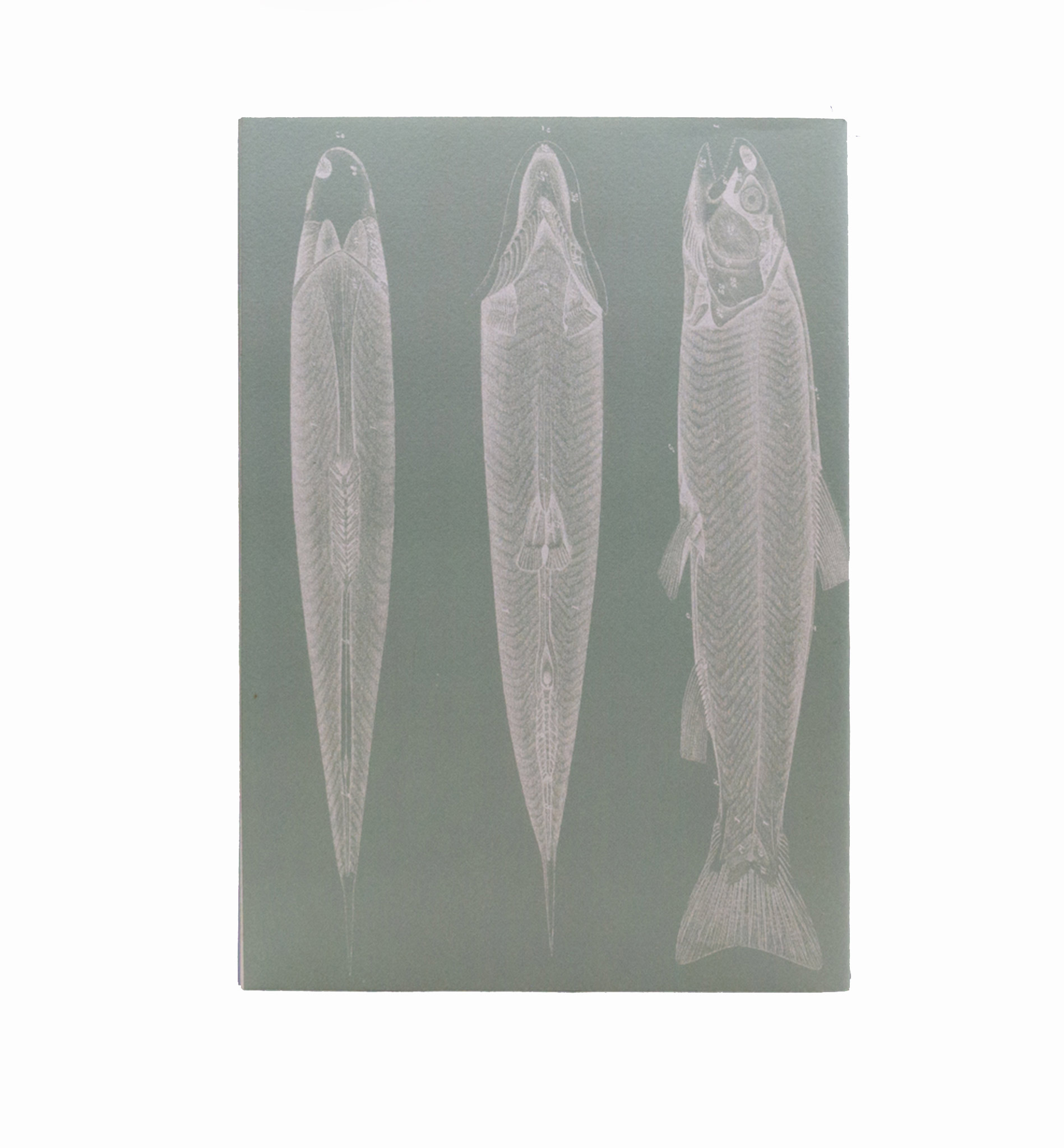
25pp.; 21 x 14.9 cm. Two-part blue-green paper, printed in black and white; finely stitched up spine with blue thread.
From the library of A. David Moody
An anastatic reprint of Guy Davenport’s 25 page introduction to The Intelligence of Louis Agassiz first published by Beacon Books in 1965, and Davenport’s first publication outside of journals. Reproduced here by the small Poundian printhouse Addenda for the 26th EPIC, in an edition of 200 not for sale. An unusual production printed on two-toned paper, the first half of the book thus blue, the latter half green. Near fine; light handling and a small scratch to the front-cover.